Beautiful Beast

Like most kids in America I grew up with some form of Disney. We couldn’t afford to see many movies, but those we could often originated from the acknowledged master of childhood viewing. When I became a parent I naturally turned to Disney as one of the components of constructing a happy environment for my own child. Who doesn’t want better for their children then they had themselves? This was, however, in the days of VHS tapes. Disney frustrated more than one attempt to see a movie that was currently “locked in the vault”—a marketing tool used to glut the already overflowing coffers on demand. The heart wants what the heart wants, as the saying goes, and you knew that if you didn’t purchase the movie when it was available you might never see it again. Regardless, Disney does produce memorable work.
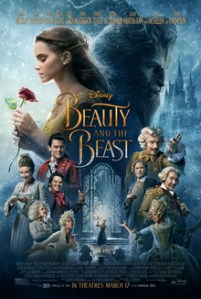
One movie that we missed until the vault unlocked was the animated Beauty and the Beast. We didn’t want to send the message that girls should be the captives of men, but Belle is a strong character, and we eventually realized that withholding much of childhood culture would isolate our daughter from what everyone else knew. Old habits die hard, as Disney knows. Our daughter is now grown, but a new Beauty and the Beast is in theaters and what was once vault material has softened into nostalgia. Recently I’ve begun to notice differences between original films and remakes when it comes to religion. In the new Beauty and the Beast there are only a couple of such instances, but they did make me wonder. In the opening sequence, as Belle is returning her book to Père Robert, a large crucifix stands in the background. Indeed, the camera keeps Belle off-center so as to make the cross obvious in the scene. Clergy and books make sense, and, of course, Belle offers to sacrifice herself for her father—a biblical trope.

When Gaston riles up the angry villagers, Père Robert is once more shown, objecting to the growing violence. Then, unexpectedly, as the castle transforms at the end, a gold finial of Michael the archangel slaying the dragon appears atop one of the towers. Again the symbolism is clear as the beast has allowed Gaston to escape, but the 45-inspired antagonist, unwilling to let grudges go, shoots the beast anyway. As the movie opens the famous Disney castle shows itself topped with that same finial. Is there a deeper message here? It’s just a children’s movie after all. Yet Père Robert is black and there are two interracial couples in the film. We should be, if I’m viewing this correctly, entering into a more tolerant and accepting world. Prejudice has no place in fantasy. Or reality. There are dragons to be slain here. If there is a deeper conscience at play it’s likely only to be found locked away in a vault.


Stamp Collecting

Like most awkwardly shy children, I used to collect stamps. Even today a bright one will catch my attention although it’s been years since I actively sought them in a household not really important enough to receive much more than bills. To make up for not getting our own mail, I’d go to the local hobby store (not Hobby Lobby, thank you) and get those cheap packages of cancelled stamps from countries I’d never heard of. Using special strips designed for introverts, I’d mount them carefully over their black-and-white image in my stamp album. Looking at those carefully engraved pieces of miniature art was a way of traveling for a kid in a lower-income family who considered a trip to Pittsburgh the big time. I’ll still save a flashy stamp although the album was lost decades ago.

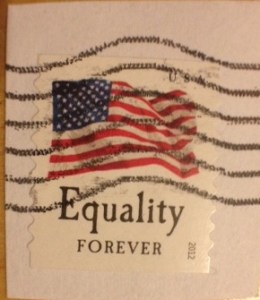
The other day I saw a Liberty forever stamp. Looking at the headlines, I think the stamp has been lying to me. The idea of liberty doesn’t seem to involve using “Nuclear Options” to stack the Supreme Court after illegally refusing a hearing for the lawful candidate our last true president nominated. Liberty doesn’t involve beefing up security so we can deport those we normally exploit and then firing our missiles at those we personally dislike. No, my philatelic informant seems to be sadly misinformed. Nothing is forever. Indeed, some of the stamps I purchased before the price went down are now more expensive than they need to be. We can always use the surplus to buy more missiles, I suppose. But wait, the price has gone back up! All reprieves are short-lived.

As I daily watch our government dismantle the freedoms we’ve so carefully built over the past two centuries, I glance at my liberty forever stamp and wonder what went wrong. When did hatred of others trump the desire to be free? When did the slimmest of crooked margins become a mandate? When did braggadocio become a sufficient substitute for intelligence? When you place “forever” as the value of a stamp, you no longer know just what it’s costing you. I was born in the age of the 4-cent stamp. Since 1885 the price had never gone over 3 cents. Stamps were more honest in those days. They didn’t say “forever” on them since, it seems, we all knew that nothing lasts forever. Not even liberty.


Witching Well

Salem, Massachusetts, brings to mind images of intolerance and a culture ossified in superstition. That’s not really fair, of course. Even in the late seventeenth century the people of Salem were living during the Enlightenment and they understood enough of science to question the legitimacy of the spectral evidence of the kind that would stand in Washington DC today. With twenty direct deaths due to witchcraft accusations and many more lives disrupted or ruined, this tragic episode has perhaps unfairly cast New Englanders as credulous rubes willing to believe just about anything. If you’re like most of us, you may not be aware that other witch trials were going on around that same time period, but with differing results. Richard Godbeer’s Escaping Salem: The Other Witch Hunt of 1692 recounts the events in Fairfield County, Connecticut in Salem’s haunted year. As in Salem a young woman began experiencing fits. Medical explanations—rudimentary as they were—didn’t explain everything away, so supernatural causation was considered. Witchcraft was suspected. Accusations were made.

In the case of Kate Branch of Stamford, as Godbeer shows, Connecticut was learning the lessons of Salem in real time. The belief in witches and witchcraft was just as real, but realizing the bad press their northern neighbors were receiving, the Connecticut Yankees insisted on more stringent evidence. Indeed, judges dismissed the jury to reconsider their decision and even overturned it based on reason. These were people who knew that human lives were at stake. They also knew that Salem was doing nothing to vindicate the cause of either Puritans or justice. We don’t hear about it so much, I suspect, because those in power did the right thing. Given present circumstances, reading about Americans who actually learned from history is encouraging. We read daily of a president woefully unaware (and proudly so) of his own nation’s history. What could possibly go wrong?

Witch hunts are sad miscarriages of justice in the best of times. In days when minorities are being scapegoated for the problems capitalism itself causes, we have to wonder if, apart from those in contemporary Connecticut, we’ve learned anything from Salem at all. Wasn’t it clear that targeting women—many of them social outsiders, and pretty much all of them recently descended from immigrants—was in itself just plain wrong? We pride ourselves on having outgrown belief in magic, and yet we go into that voting booth without a rational reason to elect a self-evident bigot and abuser of women and do it anyway. Reading, knowing where we’ve come from, prevents all kinds of tragedies. And this isn’t alternative factual history. It happened in the very shadow of the calamity of Salem, Massachusetts.


Russian Watchtower

From time to time I’ve good-naturedly poked fun at the Watch Tower Society members who used to visit with some frequency. I don’t belittle anyone’s belief system, however. Believers of any faith are generally sincere and certainly entitled to follow the dictates of their own consciences and reasoning. Still, as John Cale sings, “nothing frightens me more, than religion at my door.” Some of us prefer to keep our religious preferences private, while musing publicly about the wider world of religious diversity. The Jehovah’s Witnesses have come to mind again because of an article in the New Jersey Star-Ledger my wife clipped out for me. According to Amanda Erickson, writing for the Washington Post, Russia has now classified the Witnesses as religious extremists. She points out the irony since the Watch Tower Society is officially a pacifist group, opposed to any violence. It’s difficult to radicalize a pacifist.

I’m not at home enough any more to be here when the Jehovah’s Witnesses stop by. I know they still come because I can see their tracts. There is a Witness who occasionally stands outside my gate at the Port Authority Bus Terminal in New York. He stands, patiently smiling, next to the entrance holding up the Watchtower while anxious commuters and day trippers give him nary a glance. He seems like a nice guy to me. Always neatly dressed. One day I noticed him commenting to a New Jersey Transit employee that a particular denizen of the Post Authority was acting oddly. He was right, and, as a daily user of that facility, I know it takes quite a lot to earn that kind of notice. Ports, after all, bring in many with diverse outlooks on life.

What’s behind the Russian rage against the “extremist activities” of a peace-loving sect? I suspect the real problem has to do with the fact that Jehovah’s Witnesses are so typically American. And, like the Mormons, a fairly successful New Religious Movement. Religions, it seems, do grow a bit stale with age. Once in a while, something new comes along and revitalizes old systems of belief. Russia, however, is not the Port Authority. There is a repression there that is the envy of New Jersey Transit and every other carrier, I’m sure. Right, United? If only people would conform. Wouldn’t we all be happier if everyone else just believed like us? I’m not sure that history concurs on that point. Perhaps the safest alternative is to remain private. You don’t, however, grow a religion that way. If Russia wishes to inherit these States, they’ll need to learn a bit about the joys of religious diversity. Pacifism is a risk you have to take.


Who Knows What?

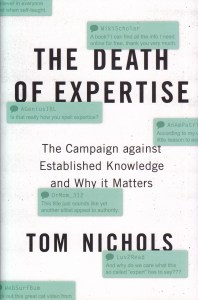
Nobody likes to have their shortcomings pointed out. I suspect that’s why many people might find Tom Nichols’ The Death of Expertise: The Campaign against Established Knowledge and Why it Matters a little uncomfortable. Nichols doesn’t pull any punches. Nor does he claim to be an expert on everything. What he does claim, however, is very important. He shows how America has taken a distinctly hostile attitude toward experts and specialists. Somewhere along the line hoi polloi began to mistake everyone has a right to their opinions for “everyone has the right to be an expert on what they express in those opinions.” This isn’t a new problem, but there’s no doubt that the Internet has exacerbated it. We’ve got people arrogant of their lack of training claiming alternative facts that are “just as good as” established facts. One of them resides in the White House. There’s no arrogance in claiming you have extensive, highly specialized training if you do. It’s a simple, non-alternative, fact.

A perfect book for our times, The Death of Expertise should be—must be—widely read. It’s not likely to change the minds of those who’ve already decided that with the Internet giving them a voice they’ve become the gurus of a new generation of the “Know Nothing Party.” The rest of us, however, should read and ponder. Nichols doesn’t shield himself in his ivory tower—he admits there’s plenty that he doesn’t know. He’s not shy, however, in saying he’s an expert on what he does know. I remember when facts used to stand for something. Winning at Trivial Pursuit was a matter of pride. Now everyone’s a contestant on Jeopardy and Alex Trebek has taken the express train home. All answers are right, for all people are experts. Seems like we have a surplus economy in arrogance these days. And that surplus just keeps growing.

An area where Nichols isn’t an expert is religious studies. He wouldn’t claim he is. I did find it interesting, however, that when he wants to make some of his strongest points he quotes C. S. Lewis. Any evangelicals out there should read The Screwtape Letters again and check what Nichols says. Lewis would not have been a Trump supporter. Not by a long shot. And he uses the word “ass” in his books, even when he’s not referring to literal donkeys. He may have been onto something. We have an anti-expert president who has appointed anti-experts at the head of major government agencies. He anti-expertly launches missiles at Syria illegally. C. S. Lewis was an expert Anglican. 45 may be an expert of the sort Lewis wasn’t afraid to name. We need to be educated. Read Nichols and give our nation a fighting chance. There’s always more to learn.


Come Together

Although today is Easter for some, for many it generally isn’t. And I don’t mean just those who follow faiths outside Christianity. One of the hallmarks of religions is their tendency to fragment like a sugar egg under Thor’s hammer. Christians have long disagreed on the date of Easter depending on which time reckoning scheme they follow. That which makes it onto most work calendars is the first Sunday after the first full moon after the Vernal Equinox after the Gregorian calendar. After all those afters it’s easy to get confused, but the fact is this kind of precision makes it possible to date Easter until the Earth slows on its axis or Mitch McConnell learns to look at things from someone else’s point-of-view, although we all know which is more likely. This year, in a rare coincidence of the Gregorian and Julian calendars, however, Orthodox Easter is the same as Catholic Easter. Could it be sign of hope?

You see, calendars aren’t just markers of time. They’ve always been religious devices. In fact, our current calendar, the Gregorian, was introduced by Pope Gregory XIII. The world still marches to the beat of Rome’s drum. Nature, it seems, is indifferent to our calendrical needs. The point of all this time keeping was to help those who lived by the soil to know when to plant and when to harvest. That might seem simplistic, but if you follow how it feels outside there would’ve been some sowing going on in February around here. Global warming, for those who’ve advanced to the Gregorian calendar (that’s okay Mr. McConnell, you may leave the room) will throw that off, and maybe we’ll be needing a new calendar. Will we retain the one with it’s pagan month names or shall we adopt one with months of evangelical heroes? But wait, not all evangelical groups celebrate Easter!

I had a college roommate who believed all holidays were of the Devil. His sect of Christianity didn’t celebrate Christmas or Easter. So even as Orthodox and Heterodox join together in recognizing today as Easter, not everyone’s together on that point. Some mythologize bunnies and eggs while others dismiss them as hopelessly pagan. So it is that we have to agree to disagree. Teach the controversy, right Mitch? While some celebrate resurrection today others put their Peeps in the microwave just for the fun of having that kind of power over the weak.

Having your cake, and having it too.


Ode to Hubris

One-hundred-five years ago today, one of modernity’s great achievements sank alone in the icy waters of the chilled North Atlantic. While the ultimate cause of Titanic’s demise may have been an iceberg, the proximate cause was surely much more common. Human arrogance, we’re reminded daily, never learns its lesson. Despite what elected officials tell us, arrogance at the top will always lead according to its surfeit of self-confidence. After all, there are no icebergs this far south so late in the year. It seems that we’ll never forget Titanic and the hundreds of needless deaths, but somehow we’re not very good at transferring the lesson to other media. Let me give just a small example.

Yesterday I was in New York City. My family came during the day to celebrate my wife’s birthday. One of the benefits of New Jersey Transit is that after 7 p.m. on a Friday, a monthly bus pass also works on the train. I can meet up with my family after work and we can ride home in comfort instead of taking the bus, such as I usually do. We didn’t know that at 3:30 that afternoon a train had broken down in one of the limited number of tunnels under the Hudson. (Governor Chris Christie had famously stopped work on another set of tunnels to ease the commute.) About twelve-hundred passengers sat for an amazing three hours with no lights, air conditioning, or announcements. No trains could make it into New York’s Penn Station. When we arrived, oblivious, just before 7 p.m. there were people pouring out of the station. Coats and clothing were strewn all over the steps, as if the homeless had been raptured. The police told my wife and daughter not to go down. A few minutes later they said, “Definitely no shots were fired.” When we got to the platform all the monitors read about half-past five. Discarded clothing was everywhere. It was only when we finally got on a train that we learned that in the anxious terminal where crowds were restless, Amtrak police had tazed a man. People thought shots had been fired, and panicked. The video taken by those in the station shows people running, dropping clothes, luggage, and shoes in their haste to flee. Just after this, we’d arrived.

Titanic, it seems to me, is about building something so massive that it can’t be controlled. Human arrogance is like that. This week we heard about United Airlines security beating up a passenger to make room for company employees who needed to be on an oversold flight. Just a couple weeks back another New Jersey Transit train derailed in Penn Station, disrupting for days the insane commute some of us undertake daily. Who’s the captain of this ship? Oh. But we don’t have to worry. There are no icebergs this far south this late in the year.


Death Challenged

Long before the Walking Dead, and even before Twilight or Buffy the Vampire Slayer, people took the undead seriously. Now, I know ratings are important (they attract advertisers and their money, after all), but when the fear is reality the stakes are upped a bit. Two readers sent me a Guardian story this past week of Yorkshire villagers mutilating the dead. In the Middle Ages, that is—it’s perfectly safe to die in Yorkshire now. The story by Maev Kennedy describes how archaeologists have been studying deliberately defiled corpses, well, actually the bones from those corpses to be precise, to solve a centuries-old mystery. Their conclusion? Medieval folk really did fear the dead coming back from the grave.

Now, Easter’s just around the corner and resurrection’s on a lot of minds. Outside the context of the Bible, however, resurrection of the dead is one of the most ancient and persistent of human fears. Nobody’s quite sure why. Dreams and visions of the recently departed are extremely common. Belief in ghosts is ancient and fairly universal. The destruction of the bodies of people already dead is not. We treat our gathered ones with respect. To me it seems to come down to the puzzle of consciousness. Call it a soul if you like, but I have a feeling things would be getting rather crowded in here if too many distinct entities claimed this body as home. Mind, soul, spirit, psyche, consciousness. We don’t know what it is because it can’t be studied empirically. We know that something like it exists and opinions of what happens to it after death vary. The body, we can all agree, has a more prosaic end.

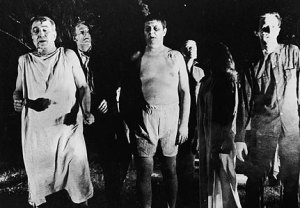
That’s what makes fear of the undead so fascinating. They are only bodies. Bodies without souls. Rather like leaders of the Republican Party. We fear them because when we look into their unblinking eyes we see no vestige of human warmth or sympathy. Those who walk among us and who don’t care about those of us not yet undead remain a perennial fear. In the case of the Yorkshire corpses these were people already buried. Putting them back in their graves seemed kind of pointless when they would only climb out again. We don’t know what it was like on the ground in the Middle Ages. History, however, has an ironic way of repeating itself. We’re entering a new age when I suspect we’ll want to make sure the remains of some remain well and truly gone once they’ve finally given up the ghost.


Publisher’s Breakfast

I recently had the opportunity to discuss publishing to a room full of academics. (Ooo, I can feel the envy rising already!) Although I discuss books quite frequently on this blog, I generally don’t discuss publishing much. One of the reasons is that publishing isn’t easy to tie into religion sometimes. Another—and this may be the bigger factor—is that publishing is work. This blog, which is technically a form of publishing, is more for letting my mind wander outside the paddock after being penned in at work for too much of my adult life. Still, I’m glad to give publishing advice for those who want it.

The focus of these talks (of which I’ve given precisely two) is how to get published. My main approach to this question is to point out that higher education and publishing are diverging rapidly. The reasons for this are complex, but simply put, publishers need to make money. Having been on the receiving end of tuition statements for a good deal of my life, I have no doubt that institutions make ready money. They may have trouble meeting the costs of all those administrators for whom they keep creating positions, like any good business, so each semester the bill creeps up a bit until suddenly you realize your bank account’s empty and you’d better get to commissioning some more academic books. After all, this is all about money, is it not?

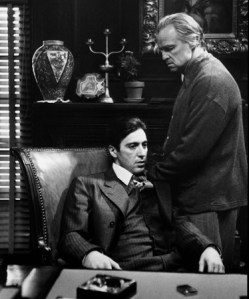
Like many in higher education, I courted academia as a hopeless romantic. I believed that love of subject and ardent devotion with ample proofs of said love would woo the academy into a permanent relationship. I’ve always been an idealist. Now I’m on the side of the desk where colleagues approach me to ask favors. It’s kind of like The Godfather, really. Only those who kiss Don Corleone’s ring tend to do so knowing that favors require some kind of reciprocity. The academy may not welcome you but would you mind helping us out now that you’re in a position to do so? No fear of horse heads here. Perhaps by now you understand why I don’t write much about publishing on this humble little blog. The focus of The Godfather, after all, is really young Michael Corleone and his devolution from an upstanding citizen (shall we say “academic”?) to a mafia crime boss. I’ll leave the other side of the equation blank. Trade secrets, after all, are worth money.


Dark Lite

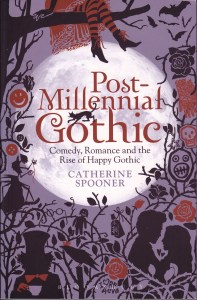
Maybe you’ve noticed it too. While certainly not universal, many forms of Gothic cultural expression (novels, movies, television, etc.) have a playfulness to them. As if taking the genre too seriously might be a misrepresentation. Even Edgar Allan Poe can be caught smirking from time to time. I’ve often wondered about this unusual combination of darkness and light. Catherine Spooner obviously has too. In Post-Millennial Gothic: Comedy, Romance, and the Rise of the Happy Goth she takes on a number of these cultural expressions—both Goth and Gothic—and tries to understand the lighter side that they often present. Sometimes it’s comedy and sometimes it’s irony, but those fascinated by darkness aren’t always as gloomy as they seem.

This book is a real hodgepodge of both British and American explorations of the smiling dismal. It’s a cultural contradiction, maybe, but it certainly feels authentic if you look closely enough. Although Spooner doesn’t discuss it directly, I couldn’t help but think of that great progenitor of the Gothic—the medieval church. Perhaps it was the very real fear of the plague and the nearly constant warfare of the time in Europe, but liturgy, when done right, has a palpable darkness to it. References to ourselves as “miserable sinners” begging God to “have mercy upon us” clearly call to mind some of the deeper elements of the Gothic sensibility. Having attended Anglo-Catholic services for years I came to know many who were compelled by this intensity. A Gothic chasuble is a thing of beauty forever.

Spooner, however, focuses on popular culture. Beginning with the Goth movement of the 1980s, a subculture formed that brought much of this darkness to light. She’s careful to point out that being Goth isn’t the same as being gloomy all the time. It is an expression of creativity, and, as Spooner notes, closely associated with Steampunk. Such things, however, require a recognition on the part of participants that in order to taken seriously, such expressions must become part of daily life. There are risks, however. Even in enlightened cultures we are not yet fully tolerant of those who are different. And really, much of the book is about this—accepting those who are not like ourselves. There is quite a bit going on here that’s beneath the surface. And depth is something the world could use a bit more of. There’s nothing wrong with having some fun while acquiring it, either.


Palms and Thorns

“Holy Week” affects only some. That thought may be disturbing to those who still think of religions as a one-size-fits-all phenomenon. So, although today is Palm Sunday for many, for others it’s just Sunday. Not even all Christians recognize the same Palm Sunday. The question that interests me, though, is the one regarding which religion is the right one. I personally suspect this is the behind the rise of the Nones, but I’m getting ahead of my story. How did we come to this impasse? How did we come to believe that only one winner takes it all, spiritually speaking? The answer may lie in evolution.

I don’t mean biological evolution. Borrowing a principal for how this factual occurrence works, however, may help to understand the diversity of religions. For species to differentiate, they must be isolated from each other somehow. Groups that are available for interbreeding will do precisely that. When populations are separated, subtle changes add up over the passage of time so that when they come together down the road mating’s simply an impossibility. Religions behave the same way. The difference, apart from biology, is that many religions allow multiple gods. They aren’t so different from each other. In fact, we’re not even sure if gods are sufficient to define “religion.” People from diverse cultures in ancient times, the evidence seems to indicate, tried to match up their gods. Your Zeus is our Odin kind of thing. Monotheism—the main form of religion that has a problem with evolution—is the ultimate exceptionalist belief system. Our one deity is the only deity and everybody else is wrong. When populations come together we can’t even agree that the God who’s historically the same is in reality the same. Ours is slightly better.

Amid all the chaos created by religions, academics have decided they’re a phenomenon not worth studying. Academics often lose sight of the larger picture. What happens outside the classroom or laboratory is real life too. And outside the walls of the ivory tower the faithful are gathering. Some today are doing it with palm branches in hand. Others are looking on, bemused. The important thing is we don’t talk about it because talking might lead to understanding. And understanding might make us concede that others have some good points to make with their religion as well. How can you feel special in the eyes of your own god when other people suggest other truths might also apply? No wonder someone will end up crucified by the end of the week.


Whither the Weather?

The weather which we’re having, showing the impact of imaginary global warming, has been quite dramatic of late. I recently had occasion to be out driving during one of the more intense weather events when the sun broke through only to reveal an impressive array of clouds heading in—all the way from the ground to the gray ceiling of the firmament itself. It was quite beautiful in a threatening way. Of course, I’ve been fascinated by the weather for years, going so far as to write a book about weather in the Bible. A friend recently sent me a story reminding me of an under-recognized aspect of witchery. Our standard cultural myth suggests witches are all about casting spells on your cow, or your family. In reality, many witchcraft accusations were about bad weather.

The story by Pollyanna Jones, “Storm Callers—The Art of Weather Magic,” describes beliefs in witches and weather magic. I couldn’t help but think of our current situation. We live in an age of empowered climate change deniers who also happen to be misogynists. Can this be mere coincidence? 45 and others of his caliber seems to think that women are the cause of all masculine problems, which are, after all, the only problems that really matter. The red states do seem to have a preference for the dark ages, overall. I don’t need to worry about them reading this because electricity is of the Devil and the internet doesn’t really exist. It’s amazing how liberating blinders can be. February was spring this year and April feels like January. Must be some woman to blame.

The truly tragic aspect of this tiresome repetition of misogyny parading as righteousness is that the myths behind it have been thoroughly debunked. The atmosphere’s so complex that even with all our understanding of fluid dynamics and chaotic systems we still can’t be sure what tomorrow’s weather will be like. The atmosphere, by definition, is larger than the surface of the earth and is constantly trying to adjust itself like a passenger on a long-distance commute. Yet we go from McCarthyism to Watergate to Reaganomics to 45 rpm, each one as tawdry as the previous attempts to blame the poor for the woes of the rich. “He maketh His sun to rise on the evil and on the good, and sendeth rain on the just and on the unjust,” Scripture saith. That doesn’t sit well with true believers, however. It’s much easier to hunt for witches than to deal with facts.


For Better Information

Government by Twitter is such a trendy thing. I’ve got a Twitter account and I can’t keep up with it most of the time. I wonder how anyone has time to get off the golf course long enough to let the thumbs fly these days. I got an article in my inbox stating that James Comey, the director of the FBI, has a hidden Twitter account. Well, you’d expect it to be hidden. This is the FBI, after all. The purpose of Twitter, however, is provide a steady flow of information—a stock ticker, if you will, of the radicalized normal. None of this is why I’m addressing the Hon. Comey today. It’s because those who suspect they’ve found his account believe he’s being using the name “Reinhold Niebuhr.” Those of us in religious studies with an interest in American religion can’t help but do a double-take.

Reinhold Niebuhr, along with his brother H. Richard, were prominent theologians. Reinhold was perhaps the last theologian, along with Martin Luther King, Jr., to whom anybody paid any attention. In fact, he was the rare academic who’d attained the sobriquet of “public intellectual.” He even taught in a seminary. Reinhold Niebuhr’s thought has influenced countless government officials who knew how to read, back in the days when being literate was a requirement for government office. Perhaps a little too Neo-Orthodox for today’s Nones, Niebuhr was nonetheless a pacifist and, dare I scrawl the word, a socialist. What’s more, Presidents in the days when the office had some dignity cited him as a source of political thought and contemplation. As much as they try to make us forget, I remember the days before a red hat was all you needed to dictate policy. The days of Reinhold Niebuhr.

Now, nobody really knows if this mysterious Reinhold Niebuhr account really does belong to James Comey. The FBI hasn’t been terribly friendly to the cause of freedom as of late. In fact, it may be the one government agency with timing even worse than mine. There’s a fair consensus that had the bureau not revived the passé email server scandal when it did we might still be living in a democracy. I have to try to be careful not to get too worked up. It’s easy to be anxious these days. When things start to get too oppressive, however, we can think of Reinhold Niebuhr, the last theologian. The man who gave the world the serenity prayer. We’re gonna need it.

Across the street from the J. Edgar Hoover building, Washington, DC


Being Boarded

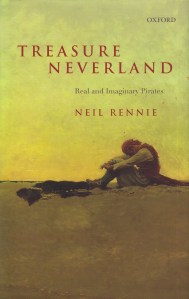
It might seem superfluous to be reading about pirates when such serious issues face us these days, but my answer to most of life’s problems is to look at the history. Besides, like many people in the early new millennium I was swept into the swashbuckling romance of the purified pirate. I suspect, given the time period, that I hadn’t really thought of pirates for a couple of decades. I knew that in reality a pirate was simply a thief on the seas, a bloke on the water who had looking out for number one down to a capitalist science. I thought maybe Treasure Neverland: Real and Imaginary Pirates, by Neil Rennie, might say a bit about the most famous fictional pirates of the modern era, but alas (or “avast”?). For a book that says in its cover copy “the long dissolve from Captain Kidd to Johnny Depp,” it has only a single paragraph about the modern Hollywood pirate from the Caribbean. That’s not to say that the historical and fictional information aren’t interesting—I especially enjoyed the chapters on Long John Silver and Captain Hook, and women pirates—but the book wasn’t quite what I was expecting.

Rennie does a good job of exploding myths that mostly trace their origins to a bottleneck of historical sources on the subject. It’s good for academics to revisit the origins of ideas, I find. Beginning with the days of Henry Every, the early material is quite interesting. I had no idea that Madagascar was such a pirate haven, being mostly aware of the Caribbean variety. But there are also contemporary swashbucklers about.

Consider, for example, that our country seems to be run by pirates. Thieves are those who claim for themselves what they have no right to take. We have a president and cabinet who are pretty much all of that description. We also have majorities in both houses of congress who seem, on many issues, willing to climb aboard a stolen vessel. In Iceland they have the probity to call themselves “the Pirate Party.” At least you know what you’re getting when you cast your vote for those who say what their intentions are so obviously. Not that Trump didn’t make clear in his words and deeds of a lifetime that he would only look out for himself. People can’t be troubled to check the facts, though. It’s better just to let your anger drive you when you’re behind the curtain. Who looks at Wanted posters anymore? Of course, I would say that. I’m the kind of person who looks at history to solve problems.


Radicalizing the Normal

Reading Orwellian headlines on a daily basis can wear you down. Think about it—we know because of the endless obfuscation that the Trump administration has deep entanglements with Russia. We know that Russians tried to sway the election toward Trump. We also know that the incumbent refuses to release his taxes or divest from his personal business interests and we can only infer that our tax-payer dollars are going into more personal pockets than ever before. We have on tape evidence that the commander-in-chief is a sexual predator who wants to remove the healthcare of millions so that his lackeys can get even more of that lucre. And when the White House speaks its message is that we, not they, are the problem. What used to be normal life in America is now radicalized. Fascism is the flavor of the term.

Photo credit: Bundesarchiv, Bild 146-1970-005-28 / CC-BY-SA 3.0, from Wikimedia Commons

I’m inclined to be philosophical about such things. After all, I lost my job at Nashotah House while doing things as I always had—the administration had changed, not me. Don’t get me wrong. I know that you have to be flexible and adaptable in the world these days. The policies I see being spewed from the corridors of power, however, are backward facing. Trying to make America as great as it was during the Depression. They call it the Great Depression, after all, don’t they? And the war before that, before it acquired an awful twin, was known as the Great War. Doesn’t everyone look back at those times with a rosy glow of nostalgia? The problem I’m having is trying to figure out what’s normal. You see, you’re born into life with no instruction book. If you’re from a working class family you’ll be told that an education will improve your job prospects. Who am I to question those who know better?

It used to be, back in the good old days, that you could count on the government looking out for your own best interests. You didn’t have to spend every day signing petitions and calling your congress-persons simply to avoid the next disaster. You didn’t spend your weekends at marches and huddles and organizing meetings. The little time you had for leisure has now become time we owe the government to make sure they don’t intentionally ram the iceberg straight ahead. What used to be normal—a drowsy weekend with time to work on your latest book—has now become a radical dream. Midterm elections, in my humble opinion, can’t come soon enough. I can’t wait to get back to normal.