What Did You Say?

inpraiseofprofanityThis driver and this passenger had interacted before. Unpleasantly. You could feel the tension mount when the passenger watched carefully to see who the driver was as the bus pulled up to Door 1. Although bus routes change drivers somewhat frequently, there is a regular driver to my route and this passenger, like a cat sensing the visit of a nasty relative, wanted to see if it was safe to come out. It was the driver he didn’t like. He got on anyway. An argument started, since he always sits in the front seat, just across from the driver. A profanity worked its way into the conversation. “No blasphemy on my bus!” the driver warned loudly. I couldn’t help but smile. I’ve sent author contracts from respectable academic presses where the author has to sign that nothing libelous, blasphemous, or obscene will be included in her/his book. Blasphemy still sets some people off.

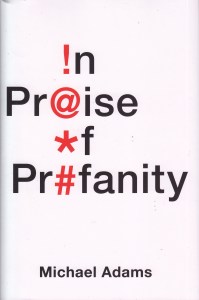
Michael Adams’ In Praise of Profanity isn’t an easy book to read on the bus. The dust jacket can be removed, and that’s a plus, but the guy who sat next to me on last night’s commute took a good, long leisurely look at the page I was on. Bad bus etiquette, but then so is falling asleep leaning on the stranger next to you (which he also did). Speaking of bad things, In Praise of Profanity makes the reasonable case that there are no “bad words.” Bad intentions, to be sure. Bad choice of when to utilize certain vocabulary, certainly. Bad words inherently, no. And the book will take you into some strange places to demonstrate this. The section on bathroom graffiti makes the point nicely.

Adams does discuss, briefly, the religious objections to classical profanity—taking God’s name in vain. Having grown up with all kinds of circumlocutions (more technically, I learned, euphemisms) for interjections one must not say, it was interesting to note that nearly all our pseudo-swears go back to violating this prohibition. Even “Jiminy Cricket” was a not so subtle riff on the name of the carpenter from Nazareth. Gosh, golly gee. All three disguised blasphemies. Being a linguist Adams takes this particular analysis with a healthy dose of fun, but there are many people I know who would be quite offended by this study of the vulgar way vulgar people speak. At the same time, looking at what words like “profanity,” “obscene,” and “vulgar” mean, we might need to head back to the lexicon to learn just what species of blasphemy it is to which my driver objects.

Colorful States

red_state_poster

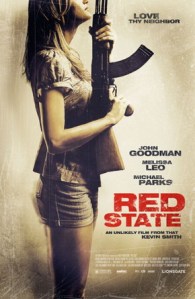
Kevin Smith is one of New Jersey’s own. I’ve always considered it one of life’s great ironies that Loki and Bartleby, the fallen angels in Dogma, move from Wisconsin to New Jersey, the exact same route my career took. (Feel free to read into this.) I was therefore curious when I heard, a few years back now, that Smith had come out with a horror movie. Now I’m not a fan of horror for its own sake as my sensibilities are more towards the ambiguities of gothic, but I finally decided to view Red State. I had no prior idea what the movie was about, but it speaks volumes that the title suggests quite a bit with just a simple adjective and noun. If there’s anyone out there even slower in getting to movies than me, and who is hoping to watch Red State, consider this a spoiler alert. Read further at your own risk.

Red State deals with religious fundamentalists—the Five Points Trinity Church, to be exact. The group is loosely based on the Fred Phelps gang, and the film actually makes reference to Phelps to say that Abin Cooper’s group is even worse. They’re weaponized. You’re probably starting to get the picture already. Cooper’s congregation is his extended family, and they’ve been protesting against homosexuality and other forms of what they consider immorality, but in an extreme way. They lure sinners into one of their sting operations, incapacitate them, and then murder them during church ceremonies. When the Feds discover evidence of a murder, a Waco-like Branch Davidian stand-off occurs with the predictably bloody gun fight that follows. There are moments of humor, but it is a bleak parable—yes, there is a wholesome message here—that speaks loudly about intolerance.

Analysts, well actually just some analysts, have realized that horror movies and religion are very close compatriots indeed. Reading the Bible may be a little easier on the eyes, but even some parts of the Good Book can inspire nightmares. Indeed, as Adin Cooper’s sermon emphasizes, fear of God is very important. As is fear of fear of God. The regression can go back as far as you wish. Religions develop in response to fears. Not only in response to fears, but clearly this is part of the mix. Horror movies show us what we fear the most. Is it any wonder that they cross paths with religion so often? The only unusual aspect for Red State is that it is so explicit about it. It is a traumatizing film in many ways. Maybe because (spoiler alert) the one who concocts the whole religion is alive and well at the end and is the last character that we see. Such are parables.


Banned Books

I feel short-changed. Cheated, if you will. This is Banned Book Week, and a story in Publishers Weekly over the summer touted the benefits of the local independent bookstore. Owners of indies know that these stores are centers of community. Gathering places for those who love literature. I feel cheated because my local town has no independent bookstore. Neither did any of the towns where I grew up. For a year when money was almost as scarce as it is now, I lived in Ann Arbor, Michigan. There were bookstores there. For a couple happy years before that I dwelt in Boston—a city in which books are never difficult to locate. Edinburgh is known as one of the literary capitals of Europe and my days in that magical city were inundated with books. Even Nashotah House, with its somewhat backward facing eyes, had a little bookstore. And there was another indie over in nearby Oconomowoc. I now live in the desert.

Oh, there are bookstores nearby. Independent ones, I mean. When’s the last time you saw a chummy conversation among locals at Barnes and Noble? Princeton has the Labyrinth. Bernardsville has the Bookworm. New Hope (while across the river in Pennsylvania) has Farley’s. There’s an indie in New Brunswick and I discovered Watchung Booksellers in Montclair just a couple of weekends ago. Clinton has a tiny little shop where my daughter once met a children’s author doing a book signing and I picked up some Ray Bradbury. These are my happy places. All of them require a drive of at least half-an-hour. I’m not a local. I don’t see anyone I know, except some of the clerks.

Analysts have been saying for decades now that we live in unhealthy isolation from our neighbors. I get up and jump on a bus before most houses show any lights in the morning. I stumble off and fall into bed after eating supper following the return trip. I’m not alone in my attempt to survive in this late capitalist purgatory. One thing that would help, I believe, is a local bookshop. There used to be a used bookstore in my town, called Chapter Two. I used to walk there of a Saturday morning, just to browse. Rent grew too high and it moved to the next town over and its name changed to chapter eleven. My local town is affluent. There are signs for Trump everywhere. What’s obviously missing is a local independent bookstore. I, for one, would be a regular patron.

img_2968


Thinking about Feeling

There’s a scene in Shrek where Lord Farquaad tells Princess Fiona “You don’t have to waste good manners on the ogre. It’s not like it has feelings.” That scene came to mind recently as I was pondering how we often use feelings—emotions—to claim superiority over others. During a course on Howard Thurman in seminary, we watched a video where he retold a story that appears in his autobiography With Head and Heart, where a young white girl was sticking an African American with pins because she believed they didn’t have feelings. Although it may be dangerous to attribute motive—let me call it interpretation then—Shrek is a movie about prejudice. Ogres are misunderstood. It’s a parable, if you will. Unfortunately there are people who still believe those not like themselves lack feelings.

This is a particularly disturbing idea for many reasons. Not only does it keep alive the unacceptable social situation where African Americans are shot when unarmed, and frequently in non-criminal situations, it perpetuates the idea that others are different in a way that makes them less than human. We can take this even further since one of the mainstays of science has been to deny feelings to animals, claiming that you need rationality to experience pain. Or at least suffering. Ironically, it’s the “reptilian brain” that provides us with emotions, and rationalists are quick to downplay emotions as a form of thinking. It’s easier just to kill a snake and ask questions later.

We deny others feelings as an excuse to mistreat them. Then we deny that feelings are important at all. Even Mr. Spock got angry once in a while. In a society that regiments an economic system that really benefits only a very few, we daily bask in the midst of this paradox. It’s clear that all it takes to have presidential aspirations threaten reality is money. Spend enough and anyone will believe whatever lies you happen to trumpet. After all, that feeling of superiority that fascism promotes is exactly the way to win a mass following. You’ll have to excuse me if I’m feeling just a bit out of sorts. It’s only a feeling, and it will pass. Unless we pay close attention to our emotions, however, we will never realize justice. We know that Shrek does indeed have feelings. It’s just that we’ve forgotten how to interpret parables.

Think about it.

Think about it.


Scary Pictures

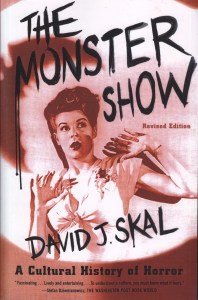
monstershowThroughout its history, until quite recently, one of the most serious natural enemies to the horror movie was the religious establishment. At times this antagonism seems well placed as horror films often take theological concepts and stand them on their heads. Within the last few years, however, thinkers of religious thoughts have come to an uneasy accord with some horror movies as vehicles for the kind of thinking promoted by traditional religions. The first half of this dynamic appears clearly in David J. Skal’s The Monster Show. Written before any kind of detente had been reached, his book chronicles skirmishes between the Production Code, religious groups, and even women’s collectives, against what was considered indecent and degrading. We have come to realize, however, that we are the monsters. We are the degraded. And seeing these films can lead to a strange sort of solidarity.

Most classic monsters, after all, have their origins in religions. Even the most recent of the lasting undead—Frankenstein’s monster and zombies—have origins in religious thought. Mary Shelley’s novel was subtitled The New Prometheus, a reference that anyone in the early nineteenth century would have understood. Zombies, on the other hand, are a product of vodou. Religion can’t get along very well without its monsters, and despite their less-than-stellar looks, their screen appeal is undeniable. Maybe it’s just we don’t like our dirty liturgical laundry being hung out where anyone might see it.

Skal’s treatment doesn’t stop at the cinema. He has a chapter on modern vampires, and Stephen King has earned his own chapter (or at least most of one) as the poet laureate of the novelistic form of the genre. More often than religion, Skal traces what’s happening in the monster world to the larger social issues of the day. Quite rightly so, as scary movies go nowhere without a receptive viewership. Looking around these days it’s easy to be scared. Even what was once a grand occasion of debate over higher principles as we ponder our next leader has become a farce in one of the parties that could make its own horror movie. Hitler, it is said, was a huge fan of King Kong. Large apes manhandling women never seem to go out of style. Some call it horror. Others try to get away with saying it’s politics. While the daily commute grows more and more dangerous, and the rhetoric grows even worse, is it any wonder we like to dim down the lights and watch monsters that we know really can’t get us at all?


My Fellow Americans

It’s important to keep the old gods happy. By now everyone probably knows that Stephen King composed a tweet suggesting that Donald Trump was Cthulhu. In response an angry tweet came from Cthulhu himself, since, as we know, he declared his intention to take over the world long before Trump. Cthulhu is no stranger to this blog, being the brainchild of H. P. Lovecraft. As I’ve suggested before, however, it is really the internet that gave life to the ancient one. His name is instantly recognizable to thousands, perhaps millions, who’ve never read Lovecraft or his disciples. In parody or in seriousness, the worship of Cthulhu is here to stay.

I’ve often wondered if the internet might participate in the birth of New Religious Movements. In an era when a completely unqualified plutocrat can run for president just because he has other people’s cash to burn, anything must be possible. Cthulhu, as we all know, lies dead but dreaming beneath the sea. His coming means doom for humankind, or, at the very least insanity. It seems that Stephen King might be right on this one. I’m getting old enough to recognize the signs; after all John F. Kennedy was president when I was born. I’ve seen the most powerful office in the world devolve into a dog-and-pony show where lack of any guiding principle besides accrual of personal wealth can lead a guy to the White House. At Cthulhu’s tweet indicates, reported on the Huffington Post, at least he’s honest. Unlike some political candidates, many people believe in Cthulhu.

img_2791

Perhaps the interest in Cthulhu is just a sophisticated joke. Long ago I suggested to a friend of mine in Edinburgh that perhaps the Ugaritians were writing funny stories (i.e., jokes) on their clay tablets, imagining what future generations would say when the myths were uncovered. Like Cthulhu, they were the old gods too. Like Cthulhu, there are people today who’ve reinstituted the cult of Baal and the other deities that would’ve led to a good, old-fashioned stoning back in biblical days. New Religious Movements are a sign that we’re still grasping for something. Our less tame, or perhaps too tame, deity who watches passively while charlatans and mountebanks dole out lucre for power must be dreaming as well. Of course, Lovecraft, the creator of Cthulhu, was famously an atheist. Belief is, after all, what one makes it out to be. At least Stephen King’s father reinvented his surname with some transparency. And those who make up gods may have the last laugh when the votes are all in.


Reflecting Ourselves

There once was an old man from New Hampshire. No, this isn’t a limerick. He was famous enough to get his face on the state quarter, back when they were doing that state quarter thing. Then he fell. The Old Man of the Mountain was no more. We like to see ourselves in stone. On a trip with my wife and a couple of friends in my post-grad days in Edinburgh, we were driving around the Isle of Skye. The largest of the Inner Hebrides, the island has a mysterious natural beauty. One of the most famous monuments on Skye is the Old Man of Storr. Postcards always show it to be a rock pillar jutting up by itself at the base of a mountain. As we approached the old man from the north, I got the joke. My friends still dispute it, but if you look at the mountain crest above the pillar, it forms a perfect profile of an old man’s face. Then what is the rock pillar? It’s just the right distance from the old man’s face to be, well, you get the picture. I’m convinced that those from Skye laugh at all the tourists taking a picture of the old man’s naughty parts.

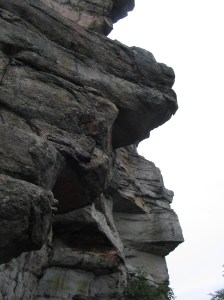
The technical term, as I’ve discussed before, for seeing that which isn’t really there is pareidolia. Some people call it matrixing. Our brains, wired to see other people, often see them where they don’t exist. The Old Man of the Mountain formed a passable human face before the rock face collapsed in 2003. This past week I read an article in the Washington Post of the collapse of Duckbill, a rock formation in Oregon’s Cape Kiwanda State Natural Area. Like many cases of pareidolia, this rock pillar was only seen as a duck by those whose brains make the connection. People like to go see that sort of thing. It makes us feel less alone.

Do you see it?

Do you see it?

The article by Cleve R. Wootson Jr., however, points out that Duckbill didn’t jump. He was pushed. A group of eight guys, caught on video, rocked the pillar until it toppled. This is why we can’t have nice things. The deliberate destruction of monuments is a crime, and the culprits are being sought. Make Way for Ducklings, the Robert McCloskey children’s classic, was cast in bronze in Boston’s Public Garden. In 2009 vandals stole one of the ducklings, which was quickly replaced. It’s difficult to understand the mentality of those who wish to destroy our duckbilled friends. Yes, Duckbill was only rock. No, I never had the chance to see it. As long as the Old Man of Storr lies recumbent in the Scottish highlands, however, we will have grounds to wonder.


Pay Attention

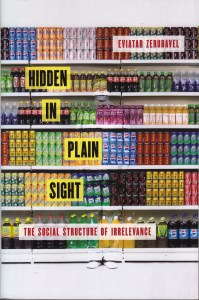
hiddenplainsightIt happened in seventh grade, but I remember it vividly. It was music class. I’ve always enjoyed music but have never been able to make it without the assistance of a device that plays recordings. This particular day, however, Mr. Butler gave us the assignment to write down whatever we heard for about ten minutes. He told us to start and I began listening. Hard. I didn’t want to miss a thing. When time was up he asked some people for their answers. The first person said the sound of Mr. Butler’s footsteps as he walked to his desk after saying “start.” I was utterly shocked. How had I missed that? More answers emerged and my sense grew that I was completely inept at hearing things—well nigh deaf—since I had only heard the sounds that I was listening for. Hidden in Plain Sight: The Social Structure of Irrelevance, by Eviatar Zerubavel, makes me feel a little better.

A lot has happened since seventh grade. I have now realized that I’ve missed most of it. We filter out stimuli constantly. What is really interesting about a sociologist’s look at what we fail to notice is that we often miss important things in life by assuming that figure is more important than background. Or that space between things is less important than the objects themselves. Or that we can indeed listen for silence instead of sounds. It is a matter of how we perceive things. There are millions of stimuli bombarding you right now. I’m flattered that you’re even bothering to pay attention to my musings here. Are you also feeling the clothes you’re wearing? The shoes on your feet? The taste of either your last meal or the toothpaste that might have followed it? We shove things into the “background” all the time, including other people. We can’t pay attention to everything.

Interestingly, Zerubavel raises the issue of moral inattention. We do sometimes consider things outside the realm of moral consideration. But should we? What are morals if not an indication of what society has taught us to value? Indeed, social attention, or inattention, teaches us from our earliest days what is safe to ignore and to what we must pay attention. It helps us survive. Reading this little book, however, has left me wondering about all the things I have habitually missed through the years. Some of them may have been important. Sitting in a silent room, after all, I failed to notice the sounds of my own pencil scratching on paper, writing down all the sounds I was hearing.


Nobody’s Business

Working in academic publishing some insights are available that academics typically miss. For example, it isn’t unusual for a professor to ask why royalties aren’t higher on ebooks because “they don’t cost the press anything.” Ah, my poor, simple academics! If only life were so kind. Ebooks don’t require any ink, paper, or binding. They require a whole lot more than that. Ebooks require publishers to hire entire new divisions to oversee the complicated, technical, and swiftly-changing business of having ebooks in the format that they can be accessed by various reader platforms. Think of it this way: instead of buying materials, publishers have to enter an entirely new business area to sell what they always sold without it before. Now let’s twist the letter-opener just a bit more. Ebooks have exploded exponentially. Anyone with an Amazon account can be an author. Who buys academic books? University libraries. How to libraries decide what to buy? Well, let’s just say “it’s complicated.”

Now let’s go a bit deeper. Have you noticed that instead of fewer presses there are more and more of them? Stop and think about this. Universities have been churning out more and more doctorates for a system that has had a shrinking number of positions for at least the last three decades. Yes, someone’s entire academic career could have been spent in a vanishing profession and they never noticed. There are no jobs out there, my dear professors. Why do you continue to churn out graduate students? The student knows that s/he will be expected to publish. A lot. Librarians, whose jobs have gotten a whole lot more complicated, face budgets that have been simplified. That is to say, administrators say “Ebooks cost less, so libraries need less money. Besides, there’s Wikipedia.” A doctoral dissertation on a single word in a single verse on a single book in the Bible is not likely to get noticed in such a situation.

The fact is society is hungry for new knowledge. It just doesn’t want to pay for it. That’s the illusion cast by the internet: knowledge should be free. Tenured professors, however, don’t come cheap. Just ask the professional adjunct living out of his car and eating Ramen noodles heated up with the cigarette lighter. We don’t think about her, however, because she’s not writing books. Society wants an alternative to consumer capitalism. It just doesn’t want to pay for it. Presses start up because there is plenty of content out there—all those dissertations you direct—and anybody can make an ebook cheaply. Print-on-demand alone can keep a press in business. The knowledge pours out the facet, goes over the hands and down the drain. Professors, comfortable in their paneled offices, will never complain. You’ve beat the system—congratulations! But I just can’t help you with those ebook royalties. If you’ll excuse me, my noodles are getting cold.

img_2401


Banned Truth

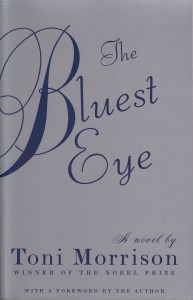
bluesteyeBanned Book Week is one of my favorite holidays. Don’t worry—you haven’t missed it—it occurs the final week of this month. I’m not very good, however, at guessing how long it will take me to finish a fiction book, so I start early, just in case. My banned book of choice this year was Toni Morrison’s The Bluest Eye. It’s not easy to read a novel which is so close to the truth. As any writer of fiction knows, just because something didn’t happen precisely as described doesn’t mean that it’s false. Indeed, fiction is often factual. It’s not easy to read because the “race”—a dubious distinction at best—to which I belong has often throughout history victimized others. While I’ve never knowingly participated in this criminal action—and despite what politicians might say, it is criminal—it’s never comforting to hear from the victim’s perspective. The Bluest Eye is about African American experience in the land of the free. At least in name.

What becomes clear from the beginning is that the families around which this story revolves are pushed to their limits. In an affluent society they are forced to live with less than their “white” neighbors have. Slavery may have ended, but the superiority mindset that permitted it in the first place hasn’t. I grew up in poverty but I didn’t have the added burden of being treated badly because of my “race.” Stories that remind us of that reality are never comfortable places to be. We’d rather think that since slavery ended prejudice went away with it. In reality, however, it is still here. Interestingly, the culture portrayed so vividly by Morrison is deeply biblical. Indeed, surveys of Bible reading in North America show that African Americans tend to actually read the foundational book more than their oppressors. The biblical worldview spills easily across the page.

Although the Bible made it onto the list of top ten banned books last year, The Bluest Eye was challenged because of its sexuality. That’s another defining aspect of the novel. It’s a frank exploration of the human condition. The protagonists are not only African American, they are also all female. Their perception of sexuality is, in many ways, inherently that of victims. Not that love doesn’t enter it, but rather that poverty often leads to a state where sexual gratification is held up as one of the few positives in a life that includes regular mistreatment, poor pay, and jail time. It isn’t an easy story to read. Morrison’s deft hand, however, prevents the story from becoming gloomy. It is like spending a sunny day knowing there’s something you shouldn’t see in the basement. Banned Book Week may be some time away yet, but it is always the right season to read about the truth.


Viewpoints

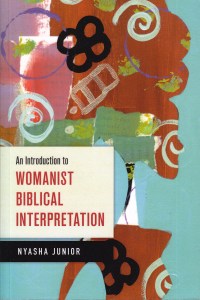
WomanistI first heard of feminism in seminary. Growing up as a poor, uneducated fundie in a small town, where would I have learned about it? I came to it naturally, though. Being raised for several years by a single mother I knew that women were just as smart and resourceful as men. I guess I was surprised to learn that others didn’t see it that way. This was in the eighties and angry feminism was around—I was occasionally attacked in class for my naiveté. After all, I had attended Grove City College not because of its conservatism but simply because I didn’t know any better. This is a lengthy preamble for a book that would’ve helped me a lot as a youngster, although I wouldn’t likely have known to read it. Nyasha Junior’s An Introduction to Womanist Biblical Interpretation is a very useful guide to those who don’t really know what womanism is.

I’ve been in biblical studies long enough to know that I really don’t know much. There are critical approaches to the Bible I’ve never even heard of. Not too shabby for a field that has already been written off as moribund by the academy. In any case, the title “womanist” doesn’t really say much beyond an implication of gender. Junior’s book explains that. Womanism didn’t really grow out of academia as much as it did out of African American women’s experiences. I admit that it took this book to teach me that. What is really being addressed, however, is how womanism is becoming, or is starting to become, an interpretive school. The Bible is in the public domain. It’s anyone’s book. Indeed, it strikes me as odd that translators copyright their work, especially if they believe it is the word of God. The word of God comes with a price tag, I guess. African American women have long been readers of the Bible. What, though, characterizes this method?

That’s the question with which Junior wrestles in this informative book. Just as being female doesn’t make a scholar a feminist, she notes, being an African American woman doesn’t make one a womanist. And we all approach texts with a method, explicit or not. “Objectivity” doesn’t really exist and even literalism is an interpretive approach. Junior traces the history of both feminism and womanism, especially in regard to biblical interpretation. Her struggle should reflect that of any scholar—how do I regard the text regardless of my demographic? While many churches have slumbered in doctrinal dreams, progress in reading the Bible has marched forward. The real danger often comes in the form of labels. This book, written just as a method is starting to be formed, is a trustworthy guide to both the history and to the larger questions.


Day Labor

It’s difficult to believe in Labor Day. Don’t get me wrong—I’m glad for the day off. It’s just that I don’t think people really believe in the idea any more. It’s hard to take professed goodwill for workers seriously in a plutocracy. Especially when money’s a fiction. When pay was in coin, although abstracted, you were literally handed something of value for your work. Now technicalities and loopholes and utter abstractions make some—including would be and actual politicians—wealthy. These are all tricks on paper, affirmed by accountants, and we watch like the audience of a magic show as the improbable is made out to be actual fact. And these who hold this imaginary wealth control the lion’s share of the waking hours of the rest of us. We’re given Labor Day off with a pat on the head and we’re told to go enjoy ourselves before summer is up and we really have to get back down to work.

DSCN5084

Many of us—I know because I can see the cars—use the holiday to travel. It’s not really so much a day of rest as it is a day of trying to get back home so we can be to work bright and early tomorrow. Since it’s the last break before Thanksgiving you’d better enjoy it. If there were really money in that pay envelope—not even real envelopes are used any more—it might be easier to buy the illusion. Like Amazon I take a small cut of the transactions between employer and debts I owe just to live near where I work, which isn’t really so near but as close as I can afford. At least today I can not go into the office. I can spend the day getting home instead.

I often wonder why we’ve let ourselves be fooled by a system that will only ever allow the very few to truly find financial independence. Like lemmings we run right after them, thinking that just beyond that cliff true prosperity lies. A chicken in every pot. A car in every garage. Right now all those cars are actually out on the road—I can see them—and they’re not really paid for because they cost too much to buy outright. Most of us need them to get us to and from work. Or to and from vacation. Summer’s winding down. Hurricanes are already spinning away in the Atlantic. I’ve grateful for the day off. I really am. I only wish I could believe that it meant something deeper about human nature.


Zoo or Farm?

It comes as no surprise, I hope, that I read lots of fiction. While not every book I read makes it onto this blog, a good many of them do, along with some I haven’t read yet. Bill Broun’s Night of the Animals is one of the latter. A suspicion is itching way down deep telling me that I’ll probably end up a fan. Part of my suspicion comes from having read a story on NPR about the book. First of all: dystopia. Need I say more? I admire those who try to paint a future with a lighter palette, but I’ve been observing the way those in power behave and it kind of makes me think optimism about improvement is just a tad naive. People are too easily lulled into apathy by things like sports and the internet. The Romans used bread and circuses. Meanwhile those in power help themselves to a bit more until you can’t even get on an airplane without a total stranger seeing you sans briefs. If I can’t be trusted by those I elect, what cause do I have for hope? But enough about me. The book’s the thing.

DSCN1969

Night of the Animals, according to the NPR piece, is kind of a reverse ark. The animals in the London Zoo are understood by a man and they ask him to release them. I don’t know what happens, but I sure hope to find out. When interviewers ask Broun what it was like to spend fourteen years working on a novel, he responded in a way that, I suspect, many writers would understand. He said that it was a spiritual journey. Writing this book was his search for God. Many of us must nod our heads to that.

Concentration is becoming a dying art. I’ve written a number of books in my life—by far the greatest number remain unpublished—and I know there’s nothing like the intense concentration you experience when lost in such a world. Yes, it is spiritual. It is also a cry to be heard. As George Orwell well knew, we are the animals hoping to be heard. Zoos represent entrapment. Broun states that he wanted to explore how people are trapped in his novel. Looking at a system that rewards greed and keeps workers in unfulfilling jobs just so they can keep the system going while their CEOs buy another hotel chain or sports team and decide to run for office, I begin to hear the oinks, whinnies, and neighs all around me. And I haven’t even read the book yet.


Evolving in Place

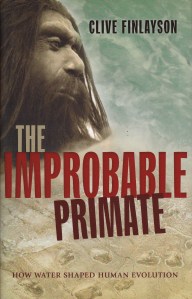
ImprobablePrimateEnvy is not a word I would use to describe how I feel about those trying to piece together the earliest stages of humanity. Evolution, naturally, is a given. Once beyond that, however, the landscape gets dicey. Clive Finlayson is an author I don’t envy. I just finished his The Improbable Primate: How Water Shaped Human Evolution, and it felt like he had to put this immense puzzle together while missing about nine-tenths of the pieces. Early human fossils are rare and it doesn’t take much to throw a laboriously constructed scenario into yesterday’s mistaken hypothesis bin. The central premise of the book, as stated already in the subtitle—human evolution followed water—seems about as firm as any idea. We need water daily and our bodies evolved to help find it efficiently. It’s a fascinating story. Along the way I learned that much of what I’d previously learned about ancient human development was probably wrong. I’m only a casual evolutionist.

Finlayson suggests—and not all biologists would agree with him—that all humans living on earth at any one time (with one possible exception) were of the same species. That is to say, the model I grew up with of separate species (Neanderthal and Cro-Magnon were the usual suspects) duking it out over scarce resources doesn’t match growing evidence very well. We Homo sapiens seem to share some Neanderthal DNA and that paints a somewhat more romantic encounter between the species than the violent one I learned. The same goes for other human ancestors, according to this little book. Our first instinct may not be to kill the stranger. We may have lived apart for a few thousand years, but when populations come back together they “share genes,” if you get my drift. This still happens, of course. The difference is today we’ve become politicized and entitled. We don’t want people not from around here to share our stuff.

Part of that is natural, I suppose. Finlayson points out that the feeling of belonging in natal territory is something we share with other primates. We feel that we belong where we’re born. That seems to me a difficult thing to quantify, but I feel it nevertheless every time I venture back to my hometown. It just feels right. Not that we can’t adjust to elsewhere, but our nature rewards us, in some measure, when we come home. This is a wide-ranging study for such a small book. I don’t envy all the meticulous jigsaw staring without a box-top that students of human origins must do, but the results are still quite interesting. Even if the picture, when enough pieces are finally found, ends up being something different than we thought it was.


The Neighborhood

583px-Ptolemaicsystem-small

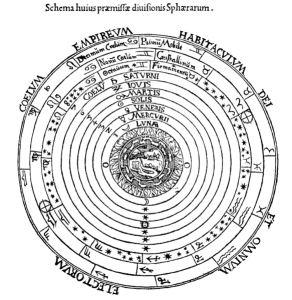
Let me send out a warm welcome to the neighborhood, I think. Not that I officially represent Earth—or anything for that matter. I’m just friendly, I guess. Now that astronomers have strong evidence that the nearest star to our own, Proxima Centauri, likely has a planet, it’s not premature to head over with a casserole. It’s not every day that a new solar system is discovered. We don’t know for sure that the planet’s there, but chances are pretty good. In reading about this discovery I learned that the orthodoxy has changed since I took astronomy in college. It seems now standard wisdom teaches that most stars likely have a least one planet. I can’t even count the stars—I usually start to trail off after I get to about ten—so I can’t imagine the number of potential planets out there. And where there are planets, there are gods.

Let me rephrase that. If there are billions and billions of planets it is very likely that there’s life out there. I know I’m racing ahead of the evidence here, but let me have my fun. If there’s life, there’s a chance, a glimmer of a chance at least, that given enough life we’ll find consciousness. I’ve always thought it was a touch arrogant on our part to assume we were the only ones out here. Perhaps it’s because the stakes are so, ahem, astronomically high we seem to be afraid to admit the possibility. We don’t really want to be alone in this cold, vast, universe after dark. Enter the gods. Conscious beings—even arrogant ones—have no trouble supposing that there is an even greater presence out there. I suspect this isn’t an earth-bound bias. I should hope that conscious life looks toward the stars with wonder, and even after they discover that there’s no lid on their planet they might still ponder what else might be out there.

Let’s suppose there are other creatures out there with other gods. When the meeting takes place we’ll need to have that discussion. You know the one I mean. We’ll need to ask whose deity is really real. Is it yours or is it ours? Hopefully we’ll enter into this with an open mind. I suspect it will depend on who’s in the White House, and all the other big houses, at the time. There are certainly those who claim their own almighty brooks no rivals. If it turns out that we can’t agree, I hope it doesn’t come to blows. There will always be other planets to explore, and maybe even new orthodoxies to accept. It’s an infinite universe, after all.