Tell It Straight

Apparently there is a burgeoning interest in swearing. Not necessarily in doing it, but in studying it. Over the past couple of years I’ve easily found a book every twelve months that devotes itself to the topic. After I finished reading the most recent one, my wife pointed me to a story on The Guardian that deals with the same topic. The story by Benjamin Bergen, “Well, I’ll be… There’s a real science to cussing and blaspheming but beware,” springs from his book on the subject, which I’ve not yet read. Interestingly, Bergen points out that there are four main classes of “bad words:” those that misuse religious concepts and names, those dealing with sex, words that denote various bodily effluvia, and finally, slurs. Today the final category, particularly when it comes to prejudicial slurs, is often considered the most offensive. Religious swears aren’t what they used to be.

800px-rembrandt_harmensz-_van_rijn_079

Why concern ourselves with such things? For me, I suspect, it is because of laws. Yes, laws. The religion in which I was raised was all about what you could or couldn’t do. One of those species of forbidden activities was swearing. Problem was, I didn’t know what all the words were. How could I not say them if I didn’t know them? And how could I know them if somebody didn’t say them? This vexed my young mind. I thought perhaps I should keep a written list, but this would be hard to explain if anyone ever found it. To make matters worse, some of the words were not swears sometimes and other times they were. “Hell,” referring to the fiery place, was not swearing unless you instructed someone to go there. Other uses beyond the literal were swearing. An ass was fine if it was an animal, but not if it was on an animal. And if you added one consonant that you couldn’t even hear onto a structure built to hold back water you were in hot water. Who made up these rules? The Bible didn’t say much about it.

In high school I heard there were seven words that you couldn’t say on television. Since we didn’t watch George Carlin I didn’t know what they were, but by this point I had collected more than seven. When I finally did hear his shtick (quite recently, at that) it contained some words I didn’t expect which, while rude, were never considered “swearing” on my canonical list. So it is we find ourselves with no definitive rules about what not to say. Professors are writing books about such things and even after having read some I’m no closer to my definitive list than when I started. It’s all a matter of laws, I suppose. Only the rules keep shifting. Best just to keep my mouth shut.

Life As We Knew It

The government does funny things when your back is turned. Back in January, reading Scott W. Gustafson’s At the Altar of Wall Street, I learned that the government treats corporations as people. It assigns certain rights and privileges to these collectives so that business can thrive without interference. A recent article by Chip Colwell in The Conversation asks, “What if nature, like corporations, had the rights and protections of a person?” This isn’t merely an academic question. As Colwell points out, New Zealand has recently accorded a natural area personhood status to protect it from exploitation. Meanwhile we in the United States live in a country where companies—those nasty people—are chomping to get their teeth into the “natural resources” of our national parks and wilderness areas. Not because it’s best for the planet, but because their corporate person has one of humanity’s greatest evils—greed. Gluttony used to be a deadly sin. Now it’s called economy.

One thing this corporate person doesn’t understand: we have only one planet and it belongs to everyone. Or no one. Our capitalist outlook has given an undue sense of entitlement to those who have the means to take without asking. They can frack the ground under your feet and you’ll never know it. Until the earthquakes or sink holes come. Meanwhile natural areas—as Colwell indicates, considered sacred by many Native Americans—are unprotected from fictional persons that have immensely more power than any individual. We know what happens when the sacred is engaged in battle by the economic. It’s an unfair fight.

img_2476

When the crush of work stress gets to be too much, nature is our balm. Many times my wife and I will head to the woods on a weekend just to regain the balance that is stolen by what we call civilization. Manhattan has its wonders, to be sure, but they pale next to a simple stretch of “undeveloped” land and a path to walk through it. There’s a reason that corporate executives have their vacation houses far from the towers they build. It’s not a question of whether the sacred forests are valuable, but rather who gets to own them. With the legalization of fiction—corporations are not people, no matter how logic may be distorted—we have doomed fact. The earth is our fact, and, at this moment our only fact. As Colwell suggests, if it were treated like a person we’d have to show it some respect. And with respect true civility can thrive.


Silence Fright

the_silence_of_the_lambs_poster

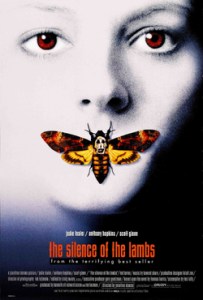
One of my first publications was a letter to the editor. The newspaper was The Scotsman, Edinburgh’s daily. We’d been hearing on the BBC that a new movie, The Silence of the Lambs, had inspired Milwaukee serial killer Jeffrey Dahmer in his gruesome habit of cannibalism. For whatever reason, the Dahmer case had a real fascination for the British. My letter, a rather young attempt to promote an important cause, suggested that such movies could be very dangerous. In the many years since then I’ve read quite a bit about horror films and their effects on people and have come to the conclusion that they don’t cause the crimes. The reasons are much more complex than simply watching a movie since most people who see them don’t “go and do likewise.” When I told friends in Edinburgh that I’d found a teaching job in Wisconsin they said “hopefully not near where that cannibal lived.” Of course Nashotah House is not far from Milwaukee.

My personal embargo of The Silence of the Lambs ran up against my current research project, which involves horror movies. Thinking it over in what I hope is a rational way, I decided that I needed to see my bête noire. Besides, while living in Wisconsin I had learned about Ed Gein, the local serial killer who’d inspired Psycho, a movie I had seen with no ill effects while in college. Movies are as much a part of life as cars and taxes and all kinds of things that impact our ways of thinking. I was surprised at how well done Silence is and the number of references it had spawned that I had missed for the past couple of decades. It won’t be my favorite film, but I’m not afraid of it any more.

The concept of relying on a criminal to catch a criminal is a classic theme, of course. And since the release of this movie some which are much worse have come across the silver screen. We play our anxieties out for all to see. Hannibal Lecter, the cultured killer, is an ambivalent character—a savior criminal. There’s a strange comfort in knowing he has the knowledge to save lives as much as he has the desire to take them. In fact, there’s an element of the divine in that. The capricious nature of a power that has the ability to give and to take is one with which religions constantly deal. Yes, The Silence of the Lambs is a scary movie. The reasons, however, lie more with implications than with imitations.


Love, American Style

If you’re going to thump the Bible, at least try to read it once in a while! Donald Trump, showing his true colors yet again, degrades women in the crudest terms imaginable and the religious right (what used to be called the Moral Majority) quickly falls in line. Videos swiftly emerged with conservative commentator Sean Hannity saying “King David had 500 concubines, for crying out loud.” Did he? David, I mean. Try to count that high and you’ll run out of fingers. But according to the Bible amorous King David stopped well short of 500. In fact, his affair with Bathsheba almost ruined him politically. And this was in the day when polygamy was supported by the law. I think Mr. Hannity was groping for the story of King Solomon, David’s frisky son. Solomon, famed for his 700 wives and 300 concubines, was underestimated by Hannity by half. And maybe if he’d read to the end of the chapter (come on, it’s only 43 verses) he might’ve stopped to think that the comparison did his candidate no favors.

Back in biblical times things were different. Even a monogamous man might have several wives since childbirth claimed a disproportionate number of young women’s lives. The average fella only lived to be about 40 himself. Lust existed, to be sure, but marriage was a practical affair. For the average citizen, you needed children to help out around the farm where you grew your own food. No golden arches in those days. Attitudes towards women back then were just plain wrong, in any case. The marriages of Solomon were political affairs, not prurient in origin. There are those with Trump signs in their yards that would like to see us return to such days, although they have no idea what such days were like. The consensus is that David had about 8 wives, but who’s counting?

Photo credit: Jörg Bittner Unna, Wikimedia Commons

Photo credit: Jörg Bittner Unna, Wikimedia Commons

Women are more than playthings for men. How have we ever reached the point where someone born in the last century doesn’t know that, and can get to less than a month before the election with that ignorant platform? This should make any American shudder. Make America great again? Treat women as equals. Treat people of color as equals. Treat those of differing sexual orientations as equals. Honor the principles upon which this nation was founded. Don’t just grab someone by the polls. And read your Bible, Mr. Hannity. The point behind King Solomon’s 300 concubines is that he died a sinful, disgraced king in the mere shadow of David. The next time you want to quote the Bible, try reading it first.


October Weekend

img_2973

Bright orange pumpkins under a cloudy gray sky. October is surely here. But this is an urban area of the kind in which northeast New Jersey specializes. As I approach I see that it’s a church. A church that has made a truce with Halloween. Judging from the number of people here, it’s a cordial detente. So much of American society lies mired in contradiction that I have to ponder this. Halloween in an age of nones may be simply fun. An opportunity to spend money on pumpkins that won’t be eaten and gourds that can’t be. Decorations for a mildly scary night that somehow makes us feel comfortable and snug at home. October is like that.

Churches have been struggling to maintain active memberships. And although the antagonism has been overblown, Halloween has been an uneasy part of the church calendar. It has, however, become a major commercial opportunity. Depending on the commodity, only Christmas or Easter will draw more lucre from people. The devils and demons and ghosts of Halloween sit awkwardly in the pew next to the victory over death that is the main draw to traditional Christianity. But people will predictably spend their cash for the privilege of carving a pumpkin. Just the memory of the scent, the feel, the contentment of creating a jack-o-lantern makes me want to stop and support whatever denomination this might be.

It is a weekend, however, and I have many errands yet to do. I content myself knowing there are happy people in this temporary pumpkin-patch. The faith of Linus is a powerful thing. To get ready for the week ahead in which I’ll have time only for working, commuting, and sleeping, I keep moving. The orange fades from sight. The cheerful memories of childhood pass. I go on to my next stop. My first errand began at 6 a.m.this morning. Noon is fast approaching. I need a tiny piece of hardware that can only be found in a big box store. I prefer to support the local economy but that shop is all the way across town. Inside the Depot plastic Christmas trees of every description fill the front of the store with winter dreams of even more spending. I forget what I came in here for.


Thousand Words

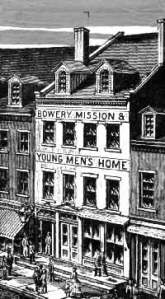
I could easily spill a thousand words, but I have no picture. You see, as a tuition-paying parent I seldom carry cash—pin money is a luxury I just can’t afford. I saw the perfect photo-op, but had to walk on by. On my way to work I saw a homeless man in Manhattan. That’s not so rare. In fact, it’s distressingly common. This man had written a sign: “Give me $1 or I’ll vote for Trump.” It was followed by a tasteful laughing face emoticon. Old school. On paper. I would gladly have paid him a dollar to take a picture, but I had no money on me and I was left to remember and ponder the implications of a statement that struck me as rather profound.

boweryrm

It isn’t at all strange that the homeless have a sense of humor. There’s a deep, deep irony that pervades a nation where even those who follow all the rules end up finding themselves unemployable. Exploitation is the new capitalism. What surprises us is when these dehumanized economic units show they have feelings. I try to read the many signs the homeless write. They’re not so different from me. I’ve sat on the other side of the desk and been told that I’m just not quite what the employer wants. These affable commodities sit on their shelves, expiration dates passed, trying to raise a smile. Perhaps open a wallet. Their stories could be written down, but who would buy such a book? Nobody likes a downer.

The nature of the sign’s threat is worth considering. The dismal science tells us that it’s all about goods and products that change hands. One fervent disciple of this crooked system wants to be our president. He doesn’t pay any taxes, but he’s never had to live in a cardboard box like so much breakfast cereal. And this poor man in front of me is casting the most noteworthy threat that the disenfranchised can—he’ll vote for this travesty if we don’t pay him. The fine interplay of threat, extortion, fear, hopelessness, and humor tell me that I’m in the presence of a man who has a valuable contribution to make. More valuable than that which is being offered to us by the guy who’s been benefitting from our dimes for nearly two decades while giving nothing back. And if I had a single, or even a five, I’d be glad to exchange it for a photo to remind me of what a true American looks like.


Majority Report

In your mind’s eye, picture American 500 years ago. What do you see? Even those of us who’ve studied history have trouble envisioning the past with so different a set of parameters. At least if we’re honest with ourselves. 1516. The Salem Witch trials are almost two centuries in the future. The landscape is occupied by Native Americans. There are some European settlements. Protestantism is something new. In fact we’ll need to wait another year for Martin Luther to drag out his hammer and nails, theses in hand. The America we see then, not called “America,” let alone “United States,” is a diverse—some might say “wild”—world of decidedly non-European sensibilities. Global warming wasn’t an issue, and King James hadn’t even been born yet, let alone been commissioning the most famous Bible in English ever. So why am I asking you to look back?

luther_at_erfurt_-_justification_by_faith

This presidential campaign has largely been a waspish one. During the turmoil, books have been published proclaiming the end of “white, Christian America.” In an interview on PBS one of the authors of such a book, Robert Jones, talks about how America has changed. He notes that what he really means is that white Protestants are, statistically speaking, no longer the majority. Just a few centuries ago that was also the case. Think about Protestants a minute. They’re the ones who invented the Bible as we know it. Oh, the book had been around, in some form or other, for a couple of millennia (well, a millennium and a half, back then). Other than scholars in need of more fresh air, few spent much time with it. The church told Europeans what God demanded and the majority of people just got on with their daily lives not worrying about what some book they couldn’t even read might say. How things have changed!

We worry about the end of our majority. I like to look back and see that this world we’ve built is one based largely on a book that was mainly the invention of those who had some discussion points with the church. Not quite a hundred of them, even. They were largely Anglo-Saxons. If they knew about “the New World” their knowledge was hazy and imprecise. From that perspective it doesn’t seem like much is being lost in the changing religious demographics of this country. Back in the old world, if one wished to feel nostalgic for such things, they would’ve taken their complaints and found the nearest church door. Now we nominate candidates who think this country was ours in the first place, without ever even reading the Bible used to support that myth. What a difference a few centuries can make.


Silverbacks

kong33promo

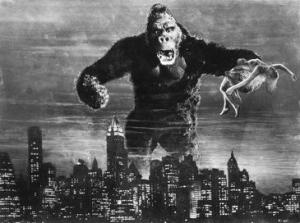
It’s been decades since I’ve seen the original King Kong. A none-too-subtle racist and sexist flick it may be, but it stands as one of the original “horror” films of the early thirties and it has had a profound influence on movies ever since. King Kong wasn’t very nice to Fay Wray, and had to be euthanized by biplane, if I recall correctly. I work one block from the Empire State Building, and sometimes I subtly glance up, looking for the giant ape. There are more fearful sorts in New York these days. I can see Trump Tower, for instance, from the pantry at work where I keep my lunch. But I digress. For its day, King Kong was a violent movie. Like many films, however, it is also a parable.

Recent studies have shown that some 98 percent of mass murderers are male. Men deal out, by far, more than their share of death to others. Some have suggested that when women experience failure they look internally, blaming themselves. Men, on the other hand, go postal. They seek someone else to blame. In our culture—maybe in all “western” cultures—man are acculturated to think of themselves in terms of success. Quite often this means business success—affluence and its discontents. Do you have more money than your neighbors? Good for you! You have succeeded, and, for some warped perspectives, God has blessed you. In reality, the system we’ve constructed has set many people up for failure. This is no excuse, but men who have no other way of measuring self-worth may find comfort in firearms. After all, it’s society that should take the blame. Right?

Gun lobbies claim that collecting firearms is a harmless hobby. Like collecting stamps, only a little louder. A bit of psychology might go a long way here. Might we not stop and think what happens when you give arsonists matches to play with? I suppose if we took away these toys, boys would use baseball bats, or rocks, to take out their aggression. I can’t help but wonder, however, if the problem might not be the system that measures a man by his money. Could there be a better way? There have been those throughout history who’ve made such a claim. They often die violent deaths. Once King Kong has begun his ascent with lust and violence in his eyes, we should all cast a wary eye on the Empire State Building and wonder what it all means.


Buying Faith

Can belief be quantified? Apparently yes. I’ve spent my life trying to avoid the dismal science, yet it seems that everyone else is pretty much agreed that money is the measure of all things. Higher education has certainly been chasing that rabbit for years. My choice of “careers” has always been aimed at those which downplay finance while paying enough to cover the bills. One has to be practical. My wife recently sent me an article in The Guardian by Harriet Sherwood entitled, “Religion in US ‘worth more than Google and Apple combined’.” At first, I have to admit, a kind of triumphalism overcame me. A vindication that I had chosen a valuable aspect of human existence with which to while away my years here on earth. Then came the troubling implications.

img_1264

We tend to hear only the bad news about religion. Religion, we’re told, is only super-sized superstition. It supports prejudice. It capitalizes on fear. And nobody really believes anymore. And so the trite truisms march past like tin soldiers on their way to a real war. You see, if we can’t put a dollar value on religion—or any belief system—then we have no way to assess whether it’s worth wasting our time on or not. Maybe people will begin to pay attention now. There’s gold in them thar hills. Yes, the religious are more likely to open their wallets and keep the economy moving than are the wealthy. Yes, those are antithetical groups, for the most part. When we can start toting up dollars and pence it is time for those with more dismal scientific interest to take notice.

Religions, like all human institutions, have faults. They are prone to takeover by self-interested individuals who look for the angle that will lead to personal power or fame. They do often insist that they alone have the correct interpretation of what life means and how we should go about pleasing a deity that only they truly understand. And they bicker amongst each other. It’s easy to forget that religions are based, without exception, on the belief that human life can be improved. We can do better, people. Takeovers, sometimes hostile, can occur. One sect may take out a contract on another. Love may be recast as hatred. Overall, however, religions are, to borrow a phrase from a sage, “our better angels.” And of course, the fact that you can put a dollar value on that only sweetens the deal. The dismal science has studied the matter and its conclusions are indisputable.


Two Thoughts

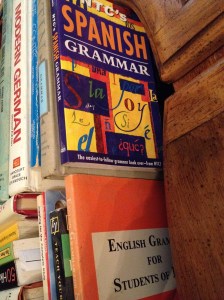
I recently read that efforts are underway, by some parties, to teach Arabic to Israelis. My limited experience of Israel led me to believe that most people were already bilingual, judging by the roadsigns. Like our progressive neighbor to the north, I supposed people were expected to know both languages passably well. Having forgotten more languages than I care to remember, I am a believer in language education. There’s no better way to get to know how people think than learning their language. In my hometown, which was small and not especially prosperous, there was only one language taught in schools. I suppose that was “practical” since we had no hispanic population and not even one ethnic restaurant.

Israel, in the modern sense, is a state formed where other people (Palestinians) had been living. I wonder if the conflict might’ve been somewhat ameliorated had the new neighbors spoken the same language as the residents. Thinking over the long and sad history of colonialism, I suspect that many of the world’s woes would have been less deleterious if those invading stopped to learn to speak to the locals. What would it have been like if, instead of taking their land and forcing them to assimilate, early American colonists learned to speak Indian languages? What if local schools were required to have been bilingual with the local nations? I can’t help but believe that things would’ve turned out much better for everyone involved. I can’t listen to the rhetoric of the right supremacists without seeking a safe place to throw up. Nobody is better than anybody else by virtue of their race. As they might say in Canada, “vive la différence!”

I’m not naive enough to believe that simply learning languages would solve the Arab-Israeli conflict. Nor do I think it would’ve stopped European imperialists with too much gold on their minds from taking the land that belonged to Native Americans. I do think that if people took the time to learn what their neighbors were saying, in their own words, we be less inclined to suggest that our program is the only way. Or to build walls. Or shoot unarmed citizens. We’ve lost the interest in learning to talk to one another. Language is more than just a bunch of words. Let the linguists argue about syntax. The rest of us might benefit simply from learning to listen, and to understand.

img_2969


Bad Theology

train_wreck_at_montparnasse_1895

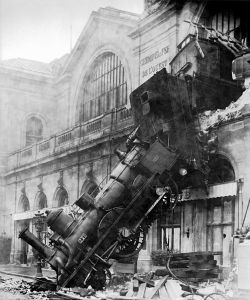
Perhaps the most overused simile for a real mess is that it’s “like a train wreck.” No doubt this is because train wrecks are messy, and deadly. Few things speak to human vulnerability more than airborne hunks of heavy metal flying in indeterminate directions. Trains don’t stop fast. If they do people get hurt. No, I wasn’t on the train that crashed into the Hoboken station yesterday during the morning commute. I’m just one of many thousands of people who make their way into the city every day, but I go by bus, which is more affordable. Still, there’s something in every commuter that mourns a tragedy like this. We’re not in competition for getting into New York. It’s only after we’re off our conveyances that we compete. The stories after the crash, however, emphasized something I’ve always known—people are basically good.

A strain of Christian theology makes the extremely dubious claim that people are “totally depraved.” Assaulted again and again with this misanthropic theology in college, I was bound to fight back. Some guys with minimal psychological training decided, in the early modern period, that God had created the vast majority of people for Hell. Because we share the primates’ evolved taste for fruit, we participated in “original sin.” It wasn’t exactly sex (since God had declared that good) but it was a consequence of it. We were born fallen and had to be redeemed. These theologians declared, however, that very few ever would be. Most of us were Hell-fodder and deserved to be since we’re so naturally evil. A few centuries earlier Jesus had said you’d know the righteous by their fruits. There’s no getting away from the fruit.

Life in the big city is impersonal. Commuters share their conveyances each day with many strangers. After the wreck, however, as my wife pointed out, those in the cars far enough back that the injuries weren’t grievous first turned to everyone else and asked if they were all right. If they need help. If they could walk. Strangers helping one another. Good Samaritans. It doesn’t sound like total depravity to me.

Our economic system thrives on hyped-up competition. When we’re taken out of that context and placed into a human one, we cooperate. We want to help one another. Perhaps it’s not the people who are totally depraved, but the system they’re forced into. No, I wasn’t on that train. My bus had pulled into New York an hour and a half earlier. But even from a distance I could see what I’ve known all along. People are basically good.


What Did You Say?

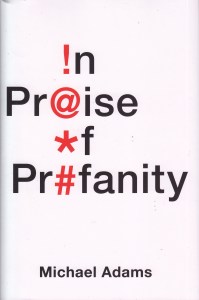
inpraiseofprofanityThis driver and this passenger had interacted before. Unpleasantly. You could feel the tension mount when the passenger watched carefully to see who the driver was as the bus pulled up to Door 1. Although bus routes change drivers somewhat frequently, there is a regular driver to my route and this passenger, like a cat sensing the visit of a nasty relative, wanted to see if it was safe to come out. It was the driver he didn’t like. He got on anyway. An argument started, since he always sits in the front seat, just across from the driver. A profanity worked its way into the conversation. “No blasphemy on my bus!” the driver warned loudly. I couldn’t help but smile. I’ve sent author contracts from respectable academic presses where the author has to sign that nothing libelous, blasphemous, or obscene will be included in her/his book. Blasphemy still sets some people off.

Michael Adams’ In Praise of Profanity isn’t an easy book to read on the bus. The dust jacket can be removed, and that’s a plus, but the guy who sat next to me on last night’s commute took a good, long leisurely look at the page I was on. Bad bus etiquette, but then so is falling asleep leaning on the stranger next to you (which he also did). Speaking of bad things, In Praise of Profanity makes the reasonable case that there are no “bad words.” Bad intentions, to be sure. Bad choice of when to utilize certain vocabulary, certainly. Bad words inherently, no. And the book will take you into some strange places to demonstrate this. The section on bathroom graffiti makes the point nicely.

Adams does discuss, briefly, the religious objections to classical profanity—taking God’s name in vain. Having grown up with all kinds of circumlocutions (more technically, I learned, euphemisms) for interjections one must not say, it was interesting to note that nearly all our pseudo-swears go back to violating this prohibition. Even “Jiminy Cricket” was a not so subtle riff on the name of the carpenter from Nazareth. Gosh, golly gee. All three disguised blasphemies. Being a linguist Adams takes this particular analysis with a healthy dose of fun, but there are many people I know who would be quite offended by this study of the vulgar way vulgar people speak. At the same time, looking at what words like “profanity,” “obscene,” and “vulgar” mean, we might need to head back to the lexicon to learn just what species of blasphemy it is to which my driver objects.


Colorful States

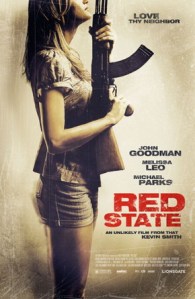
red_state_poster

Kevin Smith is one of New Jersey’s own. I’ve always considered it one of life’s great ironies that Loki and Bartleby, the fallen angels in Dogma, move from Wisconsin to New Jersey, the exact same route my career took. (Feel free to read into this.) I was therefore curious when I heard, a few years back now, that Smith had come out with a horror movie. Now I’m not a fan of horror for its own sake as my sensibilities are more towards the ambiguities of gothic, but I finally decided to view Red State. I had no prior idea what the movie was about, but it speaks volumes that the title suggests quite a bit with just a simple adjective and noun. If there’s anyone out there even slower in getting to movies than me, and who is hoping to watch Red State, consider this a spoiler alert. Read further at your own risk.

Red State deals with religious fundamentalists—the Five Points Trinity Church, to be exact. The group is loosely based on the Fred Phelps gang, and the film actually makes reference to Phelps to say that Abin Cooper’s group is even worse. They’re weaponized. You’re probably starting to get the picture already. Cooper’s congregation is his extended family, and they’ve been protesting against homosexuality and other forms of what they consider immorality, but in an extreme way. They lure sinners into one of their sting operations, incapacitate them, and then murder them during church ceremonies. When the Feds discover evidence of a murder, a Waco-like Branch Davidian stand-off occurs with the predictably bloody gun fight that follows. There are moments of humor, but it is a bleak parable—yes, there is a wholesome message here—that speaks loudly about intolerance.

Analysts, well actually just some analysts, have realized that horror movies and religion are very close compatriots indeed. Reading the Bible may be a little easier on the eyes, but even some parts of the Good Book can inspire nightmares. Indeed, as Adin Cooper’s sermon emphasizes, fear of God is very important. As is fear of fear of God. The regression can go back as far as you wish. Religions develop in response to fears. Not only in response to fears, but clearly this is part of the mix. Horror movies show us what we fear the most. Is it any wonder that they cross paths with religion so often? The only unusual aspect for Red State is that it is so explicit about it. It is a traumatizing film in many ways. Maybe because (spoiler alert) the one who concocts the whole religion is alive and well at the end and is the last character that we see. Such are parables.


Banned Books

I feel short-changed. Cheated, if you will. This is Banned Book Week, and a story in Publishers Weekly over the summer touted the benefits of the local independent bookstore. Owners of indies know that these stores are centers of community. Gathering places for those who love literature. I feel cheated because my local town has no independent bookstore. Neither did any of the towns where I grew up. For a year when money was almost as scarce as it is now, I lived in Ann Arbor, Michigan. There were bookstores there. For a couple happy years before that I dwelt in Boston—a city in which books are never difficult to locate. Edinburgh is known as one of the literary capitals of Europe and my days in that magical city were inundated with books. Even Nashotah House, with its somewhat backward facing eyes, had a little bookstore. And there was another indie over in nearby Oconomowoc. I now live in the desert.

Oh, there are bookstores nearby. Independent ones, I mean. When’s the last time you saw a chummy conversation among locals at Barnes and Noble? Princeton has the Labyrinth. Bernardsville has the Bookworm. New Hope (while across the river in Pennsylvania) has Farley’s. There’s an indie in New Brunswick and I discovered Watchung Booksellers in Montclair just a couple of weekends ago. Clinton has a tiny little shop where my daughter once met a children’s author doing a book signing and I picked up some Ray Bradbury. These are my happy places. All of them require a drive of at least half-an-hour. I’m not a local. I don’t see anyone I know, except some of the clerks.

Analysts have been saying for decades now that we live in unhealthy isolation from our neighbors. I get up and jump on a bus before most houses show any lights in the morning. I stumble off and fall into bed after eating supper following the return trip. I’m not alone in my attempt to survive in this late capitalist purgatory. One thing that would help, I believe, is a local bookshop. There used to be a used bookstore in my town, called Chapter Two. I used to walk there of a Saturday morning, just to browse. Rent grew too high and it moved to the next town over and its name changed to chapter eleven. My local town is affluent. There are signs for Trump everywhere. What’s obviously missing is a local independent bookstore. I, for one, would be a regular patron.

img_2968


Thinking about Feeling

There’s a scene in Shrek where Lord Farquaad tells Princess Fiona “You don’t have to waste good manners on the ogre. It’s not like it has feelings.” That scene came to mind recently as I was pondering how we often use feelings—emotions—to claim superiority over others. During a course on Howard Thurman in seminary, we watched a video where he retold a story that appears in his autobiography With Head and Heart, where a young white girl was sticking an African American with pins because she believed they didn’t have feelings. Although it may be dangerous to attribute motive—let me call it interpretation then—Shrek is a movie about prejudice. Ogres are misunderstood. It’s a parable, if you will. Unfortunately there are people who still believe those not like themselves lack feelings.

This is a particularly disturbing idea for many reasons. Not only does it keep alive the unacceptable social situation where African Americans are shot when unarmed, and frequently in non-criminal situations, it perpetuates the idea that others are different in a way that makes them less than human. We can take this even further since one of the mainstays of science has been to deny feelings to animals, claiming that you need rationality to experience pain. Or at least suffering. Ironically, it’s the “reptilian brain” that provides us with emotions, and rationalists are quick to downplay emotions as a form of thinking. It’s easier just to kill a snake and ask questions later.

We deny others feelings as an excuse to mistreat them. Then we deny that feelings are important at all. Even Mr. Spock got angry once in a while. In a society that regiments an economic system that really benefits only a very few, we daily bask in the midst of this paradox. It’s clear that all it takes to have presidential aspirations threaten reality is money. Spend enough and anyone will believe whatever lies you happen to trumpet. After all, that feeling of superiority that fascism promotes is exactly the way to win a mass following. You’ll have to excuse me if I’m feeling just a bit out of sorts. It’s only a feeling, and it will pass. Unless we pay close attention to our emotions, however, we will never realize justice. We know that Shrek does indeed have feelings. It’s just that we’ve forgotten how to interpret parables.

Think about it.

Think about it.