How God Became Male

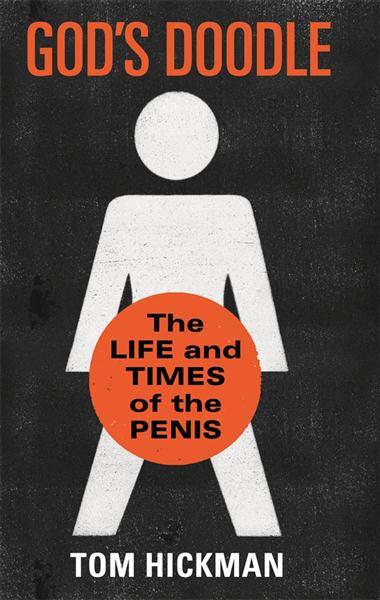
GodsDoodleWhat is gender? Okay, we all know about the mechanics of the thing, but gender is more than just sex. Indeed, it is a psycho-social construct that is difficult to pin down. Sexual reproduction is very common in nature, but we don’t really speak of gender among our fellow animals. Perhaps the decisive factor, in the human realm, is religion. Clearly religion is not the only element, but I often wonder if gender-based commandments didn’t lead many cultures into their current arrangements. The thought occurred to me as I read Tom Hickman’s God’s Doodle: The Life and Times of the Penis. As I informed students in my classes, religion has always shown an interest in sexuality, particularly on providing limitations for it. A recent issue of Christian Century has a cover story about marriage, noting that the widespread prohibitions about homosexual matrimony come from a religion that forbids it. When your stakes are eternal, many people won’t argue.

But I wonder if it goes deeper than that. Gender roles have traditionally been regulated by societies, often on the basis of their religious outlook. Meanwhile, biology, as Hickman reminds his readers, is somewhat more ambiguous. The line between the genders is somewhat of a line in the sand, easily erased. Humans come in a continuum of orientations and biological equipage. Those who don’t match the defined parameters have difficult questions to ponder with a male deity who could think of only two genders. What is a male without a female? Can a male deity exist without a goddess? What, otherwise, is the purpose of a deity’s gender? Wouldn’t a inter-sexual creator may more sense?

Male social behavior has often drawn its entitlement from a bad theology. When feminists first began to raise questions, the orthodox were quick to point out that Jesus was clearly male. As Hickman notes, however, representing him naked on the cross (as crucifixions were historically done) is still rare. Sounds like an effort at keeping the status quo tipped in the favor of one gender that doesn’t want to admit that it slowly morphs into another. We all begin life female, as biologists now understand. Some retain their original gender while males evolve into something different. And with that evolution they tend to make many unsubstantiated claims about the right to make decisions for the other half of the human race. Gender is a lot more complex than many religions would have us believe. Until we learn to treat all people as people, we will still have to ask, and will never adequately answer, how God became male.

Huge or Not?

The word “refugee,” I recently learned, was originally coined to refer to the Huguenots. As the Reformation began to take hold in Europe, although mostly associated with Germany and Switzerland, many French believers left Catholicism and became known as Huguenots. Early modernity was a time when religious persecution was rather openly practiced (as it still is in parts of the world) and many Huguenots were forced out of their homeland where Catholicism was the state religion. The word used to describe these unfortunates was “refugee.” For whatever reason, the plight of the Huguenots has never really captured the public imagination the way that many groups of displaced individuals has. We seldom hear of Huguenots any more, but generic refugees are daily in our news.

800px-Print_entitled_Horribles_cruautes_des_Huguenot_en_France_16th_century

While it is hardly a mark of pride or accomplishment to have Christians persecuting Christians as the origin of the term “refugee,” the fact that refugees are becoming more common rather than less so should be worrying. Borders, all of which are artificial, no matter how high we build our walls, lead to closed opportunities. Every once in a while, I ponder the phenomenon that none of us has any control over where we’re born. We might be fortunate enough to find ourselves in an affluent democracy (so I’m told) or equally beyond our control in a repressive totalitarian military state. The ability to see things from another’s point of view is essential to the concept of the refugee. Can we imagine what it is like to be persecuted for religious belief? For being born female in a chauvinistic society? For being poor when money seems to be everywhere for those who know how to extort it? Have we no sympathy for those who find themselves conceived under trying circumstances? If it were me, I’m sure I would think differently about it.

Historically, and by the numbers, the Catholic Church has been by far the most successful form of Christianity that the world has known. Claims to the title of “Christianity” are hotly contested, but the continuity, in some form or other, has hung together for a couple of millennia. In times past, those who differed, such as the Puritans in England and Huguenots in France, were encouraged to leave. The world was plenty big enough. Were the borders of today erected in early modernity, the plight of the Huguenots, like that of many untolerated religious groups, might have been far more dramatic. Largely assimilated today, the Huguenots are not much on most people’s minds and yet refugees still regularly approach the borders beyond which a more humane life awaits. Religious persecution gave the world the word; could its opposite provide the solution?


Campus Crusade

The Chronicle of Higher Education also chronicles the trials and travails of religion in academia. A recent edition of CHE reported on how California State University withdrew official recognition of InterVarsity Christian Fellowship because its leadership is, by definition and constitution, Christian. The organization contested the decision, and, in this thorny situation, I think, rightly. The disestablishment clause cuts both ways. Government can’t establish a religion, but it can’t prevent one either. InterVarsity, although not exactly to my taste, has been a fixture on campuses for decades. It offers alternatives to pong and related forms of diversion without being pushy about faith. Indeed, it does not insist that participants be Christian, and, in my experience, doesn’t try to convert them. It offers a service that is useful for undergrads and has every right to be on campus, as much as the young republicans do. Can an organization be banned for having Christian leadership? How much can we disestablish before we become oppressors?

I recently had a conversation with a college humanist chaplain. There aren’t many of these, but they are beginning to appear on campuses, offering the services traditionally given by religious organizations. Many people don’t know what to make of this. Not all rationalists, humanists, agnostics, and atheists are enemies of spirituality. We can be both spiritual and human. Some would argue that we have no choice in the matter but to be. Some express it as Christianity. Others as a non-doctrinal recognition that being human means wanting to affirm unions and weep at funerals. Maybe it is more than just chemico-electrical signals across gray matter after all. Colleges and universities should be places to explore. Like it or not, without the influence of the church, and before that the synagogue, the concept of higher education likely would never have developed at all.

How much of the baby do we throw out with the bathwater? Evangelicals cost me my first real job. I had, however, grown up among them. Although not in InterVarsity, I did participate in Christian groups in college. I don’t think it damaged my education. How can a person learn to compare when one of the options is displaced? Will Newman House be permitted to stay? Even government officials can’t agree on exactly what it means to have a religion-free government in a religious, if post-Christian, nation. Why antagonize an organization that is only trying to offer a service? Every time I pull up to a gas pump chances are pretty good that I disagree at a pretty visceral level with the ideology behind the company supplying me my fuel. And yet, here I am, running on empty. Ideologies and services, it seems to me, are very different things. Those that don’t cause harm should be the least of our concerns.

IMG_0066


The Open Sea

498px-Christopher_Columbus“In 1492,” they tell me, “Columbus sailed the ocean blue.” As a feat of science in the age of discovery, there is no doubt that this was an event worth celebrating. Over time, however, the luster has diminished somewhat. Although I can speak only for myself, I often feel that being a male caucasian is a decided liability. It certainly has been in my professional life. Although my ancestors were probably busy grubbing an existence from the soil as Columbus nobly stood on the forecastle, spyglass in hand and India in his heart, we are classed together. Attitudes toward divine destiny were much different then. The European powers that had made the world they discovered in their image could only see this as the will of the Almighty. That’s the liability of omnipotence. What happens is, by definition, God’s will. As technology led from success to success, Columbus set off to shrink his world. And get rich in the process. What’s so wrong with that?

The view among the displaced may be very different. People, if pagan, happened to be living in Canaan before Moses arrived, according to Holy Writ. They were, however, an annoying inconvenience to a God who had it all planned out. And since that torch had been passed to the Christian leaders of Europe, although contested by the Muslim leaders elsewhere, they had to follow their destiny to these sacred shores. Oh, I’m sorry! Were you sitting here? And those who march in the parades do it a bit more self-consciously while the majority of us continue to work in New Amsterdam as if nothing extraordinary had happened. As if a genocide hadn’t led to prosperity. As if, although God has disappeared, this wasn’t manifest destiny after all.

Humans can’t be blamed for being curious. It is part of our nature. I do wonder what will happen when we finally stop fighting one another and land ourselves on another inhabited planet. One where they haven’t achieved the technology that we have. Will we have learned anything from the St. Columbus Day massacre or will we still be guided by our confidence in lenses that can see billions of years into the past, see the havoc we’ve visited upon our own planet and still say, “it is good”? Even on the bridge of the Enterprise there is only one alien standing, and he is wearing earth clothes. Can we be disinterested observers when potential wealth lies below the feet of those we meet? We respect your culture, but hey, what’s that you’re standing on? Mind if we take it? You’re not using it. And once their voices have been silenced, we’ll seek other oceans blue to sail.


De Profundis

IMG_1591In a grocery store last week a friend pointed out how many magazines had pictures of Robin Williams on the cover. Although his suicide two months ago was tragic, I wonder about the message we send to young people (and maybe some older ones as well) about this fixation. As we probe, attempting to understand the sad clown (and they generally all are), are we inadvertently telling our kids that suicide will make you an icon? We often hear accusations that extremist Muslims “brainwash” their youth into thinking that a righteous suicide will lead to glory. Perhaps the glory we perceive is somewhat different here in the post-Christian west than it is in the post-Christian east, yet I wonder what the essential difference really is. Why can’t we see that the cult of celebrity seldom ends well? The worship of the successful does not really grant them eternal life, as much as we may think otherwise.

Call me a curmudgeon—I probably deserve that—but when I overhear office mates in their cubicles or young people on campuses talking about stars I feel not a little like Rip van Winkle. Most of the names I do not recognize, and even showing me a picture doesn’t really help. Of course, I enjoy movies as much as the next dinosaur, but apart from the bargain bin and the occasional indulgence in Amazon Prime I really can’t much afford them anymore. I walk into a bookstore (where they can still be found) and the authors I want to read are not on the shelves. They are gone and all but forgotten. Many of them having left profound ideas in their wake. I guess I could pick up a magazine. Robin Williams looks happy on the cover.

I used to watch some late-night television before my job required waking between three and four a.m. One of the things I quickly noticed is that those stars our society worships had little of substance to say. That’s not to say all actors and media darlings are shallow, but I often wondered why their interviews always seemed to come down to the lowest common denominators. Have we lost our interest in probing beneath the surface? Isn’t there some profundity left to explore? Don’t get me wrong—I find Robin Williams’s death a tragedy. He may have been a deep and philosophical man. Who really knew him? Nevertheless, I wonder if perhaps, if we challenged ourselves a bit more, we might just consider the messages that our media broadcast. After all, they have to turn a profit. Do we really mean what our magazine covers seem to imply?


Theological Cemetery

Implosion is a word frequently associated with demolition. Implosions are episodes where buildings collapse in upon themselves, in theory, harming no one on the outside. In 1992, as a starry-eyed, fresh Ph.D., I was hired by one of the then eleven Episcopal seminaries in the United States. Each had been around so long as to acquire a feel of almost biblical antiquity—something their governance models appear to reflect. Just over two decades later, the mythically wealthy Episcopal Church is watching its seminary structure implode. It’s not for want of funds, but from lack of will. With shrinking demand for clergy, some had to merge to maintain even their historic names. Others are effacing by degrees. The Nashotah House I was asked to leave was not the Nashotah House where I began my academic career.

General_Theological_Seminary_1890_crop

Within hours of hearing rumors of a mass firing of the faculty of the General Seminary—The General Seminary!—I received confirmations both personal and from the Huffington Post. Eight faculty who had concerns over the Dean committed the (in the Anglican world) unpardonable sin of requesting a meeting with the board of trustees. At Nashotah, I served two stints as a faculty representative to the board of trustees and my nightmares have taken on a different quality since. In the Episcopal system the Dean is also President. Not a whiff of democracy taints these hallowed halls. They claim the title Very Reverend, no matter how appropriate, and some, if they’ve ever read Acton, did it for instruction. There must be incredible power knowing that higher education is in crisis and that faculty with legitimate complaints are only setting themselves up for protracted purgatories of joblessness, should they question you. Trustees don’t want to be bothered with the “formation” that is happening within. O Captain! My Captain!

I am heartsick. This is how Christians treat their most highly educated and dedicated—no one takes a job at a seminary without knowing the risk it poses to a career. A more protracted dismissal of faculty, including yours truly, took place in Wisconsin almost a decade ago. I knew those who lost their jobs—fine scholars and decent human beings—as apocopated visions of a fictional future flashed before the credulous eyes of true believers. Where do discarded seminary faculty go? Back into the arms of Judas? I could not. I admire those wounded healers who returned to the cure of souls. We started, did we not?, with the best of intentions. The church, it seems, forgets that even faculty are human beings. “Enlighten,” the collect for education reads, “those who teach and those who learn, that, rejoicing in the knowledge of your truth, they may worship you and serve you from generation to generation.” Or, barring that, speak the truth, and lose their vocations.


Dirty Words

I don’t have any bumper-stickers on my car. As clever as I may think any particular one to be, driving down the highway is not the place that I want other drivers to get ticked off at me. A more judicious use of turn-signals would be my preference over mass-produced witticisms. I suspect that most readers know of my liberal leanings. Some have even bothered to inform me that they no longer read my musings precisely because of this. On the information superhighway, unlike the real highway, you can just click off and not be annoyed anymore. My bumper, therefore, will stay clean. While in a parking lot recently I saw a bumper-sticker reading “Not A Liberal.” I had to ponder this a bit.

IMG_1589

I grew up conservative, although, as working-class folk, we didn’t label ourselves with that word at home. I wouldn’t have even known what it meant. Liberal, in its basic form, has to do with generosity and being respectful of others. The media has built it up into a kind of evil juggernaut that intends to take over the safe, unchanging world of religion and politics. I wonder how liberal became a dirty word. Who, among your friends, would want to remain so if you disrespect their views and refuse to show generosity? I get the sense that even conservatives are liberal with their friends. When I walk past the homeless sleeping on a subway vent to keep warm, I wonder if conservatives ever read the parable of the good Samaritan. What bumper-stickers would the homeless wear?

A polarized society had better prepare for the big chill. In my admittedly limited experience, people come in a continuum of positions, not just one extreme or the other. It makes better news, however, when we divide into camps, the more clearly to spar with one another. What separates us is more important than what brings us together. Yes, I grew up conservative. I continued, however, to grow up. I suspect in some things I am still conservative, while in many I am liberal. I’m not sure what I’d put on my bumper-sticker. What do I want people to know about me while I’m driving? I think it might be better to suggest “I Respect You,” than an implied “I don’t like your views.” Then again, since it happens so often, I now look for a Jesus fish automatically when I’m cut off in traffic. Be careful of what you put on your bumper, because dirty words are in the eyes of the reader.


Casing the Promised Land

In one of the great ironies of the English language “flammable” and “inflammable” mean the same thing. Sometimes an extra syllable can make all the difference. “Ideas are incombustible,” wrote Ellen Hopkins in the final stanza of “Manifesto.” Unlike inflammable, that which is incombustible can’t be burned away. Most literally expressed in Ray Bradbury’s Fahrenheit 451, ideas are, however, endangered in a culture that claims to support them while secretly allowing them to be banned. Orwell called it doublespeak, and we all owe it to our heirs to fight it wherever we can. Sometimes the promised land may not be all that it seems. Can the brave truly be this afraid? Some politicians think “Born in the USA” is a complimentary song. Never has there been a better case for emphasizing literacy.

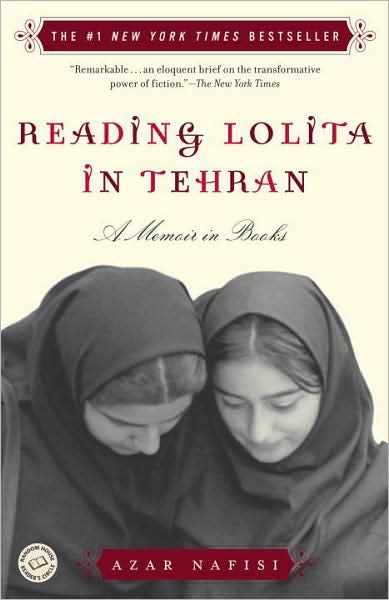
We fear the ideas our children might encounter, making them into the people they are meant to be. I’d like to return to an idea I broached at the beginning of this year’s Banned Book Week—the Bible has been a banned book. According to the antics of various preachers and vigilantes, so have been the Quran and the Book of Mormon. Destroying books or their authors, however, only creates martyrs. Until the world begins to understand that memes are more durable than genes we will fight our futile wars to drive the thoughts away. Azar Nafisi in Reading Lolita in Tehran tells of how some regimes want to control even our dreams. As if cutting the wings from angels were even possible. How do you physically cut an incorporeal being? Some may need to look “incorporeal” up in a dictionary.

I can’t remember when I started to read for fun, but I do know I haven’t been able to stop since. I have no idea how many books I’ve read, but it certainly comes out to more than the money I’ve ever been able to save. I write this with not an iota of regret. In my humble opinion people are products of the books they read, the songs they hear, the movies they watch. Ideas. Ideas permeate us and we, like sponges, absorb our nutrients from them. Inevitably we come to resemble the concepts we ingest. Ingesting concepts is perhaps the best way to think of Banned Book Week. Inflammable and flammable mean the same thing. Incombustible, however, is something completely different.

IMG_1497


Afraid for God

ReadingLolitaInTehranReading Reading Lolita in Tehran, by Azar Nafisi, is not easy. It is, however, rewarding. Appropriate for Banned Book Week, we might want to remind ourselves what a society that bans books actually looks like. Nafisi, an Iranian teacher of English literature, had broadened her mind and had traveled abroad. When she returned to her home country to take up a teaching post, she discovered that the world you always knew can be very unstable. It can change without you realizing it. (Mene, mene, tekel, upharsin, left even the sages scratching their heads.) The Revolution, as it was known in Iran, brought in the radical conservatism of religious outlooks that saw women as little more than temptations for men. The wearing of the veil was enforced by law. Nafisi was told it was a small price to pay for the greater good. The rhetoric is the same every time I’ve been frisked at the airport, although I’m a lifelong pacifist. In Iran, things were much worse.

Nafisi recounts gathering a group of her women students together after she was forced out of the university. They would meet at her apartment to discuss literature, including Vladimir Nabokov’s Lolita. How must it feel to be a woman reading about a man’s obsession with a girl so young? As Nafisi points out, girls of Lolita’s age are considered marriageable in some Islamic states. It isn’t Islam that’s the problem, it is extremism. When I read about how she became “irrelevant,” I literally shuddered. In my own way too, I had been made irrelevant to higher education by those who felt any means would justify religious ends. And the bookstores in Tehran were closed, for they sold dangerous ideas. The irrelevance of one woman, or even half the population, is a small price to pay for self-righteousness.

“You say you’re afraid for God,” Ellen Hopkins wrote in “Manifesto.” Afraid for the Almighty. Such a strange concept. Fundamentalists of all monotheistic stripes believe in an all-powerful God whom they arrogantly presume to protect. How can a human even conceive such hubris? We feel secure in our Bible-emboldened superiority, challenged when reminded that the Quran, the Book of Mormon, or even Science and Health came later, and by definition supersessionism inevitably takes hold. “Paranoia is in bloom,” Muse reminds us. Missiles fall on Tehran, killing women and children. We elect, however, officials who agree that healthcare for women is politically negotiable. The reason has nothing at all to do with justice. It has everything to do with using a black-bound book for power over those who are just twelve-year olds wondering how any of this is even possible.


Academic Freedom

Azusa Pacific University, 2013. Emmanuel Christian Seminary, 2012. Interdenominational Theological Center, 2012. University of Illinois, 2010. Carroll College, 2005. Nashotah House Episcopal Seminary, 2005. Unfortunately the list could go on and on. Academic institutions in the land of the free and the home of the brave dismissing faculty for saying or writing something that offended their doctrines. This is the land of my birth, and yet I’m still rocked by its permissiveness. That’s not permissiveness in that sense. I was latterly working on a paper called “the myth of academic freedom.” I know too many people for whom that myth has become a reality and all the while the governments, state and national, try to decide on more important issues such as whether or not to give children equal opportunity, our institutions crumble for petty points of pretentious pugilistic piety. Not only books may be banned, but those who potentially write them as well.

“You say you’re afraid for America,” Ellen Hopkins’s “Manifesto” suggests. Academics, of all people, should be afraid. Our society asks us to borrow thousands and thousands of dollars to become experts in some obscure topic only to release us from any possibility of finding employment that allows us to pay off said debt. “I don’t need no arms around me,” but I sure could use a podium in front of me. I am afraid for America. I am afraid for a nation that doesn’t defend its thinkers, instead following the wealthy to the peak of an unscalable Everest.

Academic freedom was once the guarantee that no question was disallowed, no thought anathema. We live in a time of pronounced conservative pushback, where those who feel threatened by knowledge persecute those who dare to think. Ironically in this situation many academics have become complacent. Having a place of your own, and the compunction not to make waves in this bathtub will allow your toy boat to float for many a year. Long enough to reach safe harbor. Beneath the surface shipwrecks lurk and books will never be written. Banned books are easiest to engineer at the aborted career stage. Even a pro-lifer knows that.

They don't write 'em like that anymore...

They don’t write ’em like that anymore…


Acts of Apostles

“Manifesto,” the poem that launched Banned Book Week 2010, was written by banned author Ellen Hopkins. As a perspicacious undergraduate I know pointed out, each stanza of this poem addresses an aspect of that strange cultural fear known as Banned Book Week. Her line, “false
patriots who live in fear of discourse,” in stanza one makes me tremble each time. You see, it is easy to believe that censorship applies only to Nazis goose-stepping around bonfires with books flying through the air like a Steven Spielberg movie, or even, more recently, The Book Thief (the book is better than the movie), or godless Communists. That fear, however, travels both forward and backward in time. The Patriot Act has been at work effacing liberty for several years now, and people too fond of fear are unwilling to withdraw it. The world of frightening ideas in which we live, however, is nothing new. Literary artists bring us to uncomfortable places. That’s why we read them.

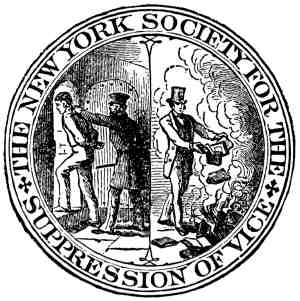
If we turn history’s pages back to the Nazis, we find ourselves sitting in judgment over their cowardly act of book burning. Those who never read of the phoenix are swift to recreate the myth. But we do history a disservice if we stop there. I was recently reminded that burning books has a biblical precedent. According to Acts 19.19, while Paul was performing miracles in Ephesus, those who were converted brought out their books of magic and burned them, to the approval of the nascent Christian movement. A Bible that advocates the burning of books is ironic, for the Bible itself has been banned in parts of the world. What greater crime against humanity can there be than the deliberate destruction of its own cultural heritage? We don’t believe in magic any more, but we still burn books.

NewYorkSocietyForTheSuppressionOfVice

Owen Davies, in his book Grimoires, shows that the practice goes back even further, with Romans burning books of magic as early as 186 B.C.E. There is a perverse symbolism at work here. As someone who admires, but can’t afford, antique books, the thought of ancient documents intentionally destroyed appears as one of the most easily preventable of cultural crimes. Sometimes as I hurry through the Port Authority Bus Terminal to reach my gate, I see the military guards with machine guns and full combat fatigues and I hope that they don’t stop me to search my bag. The only thing I’m carrying is books. Books, however, convey ideas. Banned Book Week reminds us each year that ideas are essential to the life of the mind. They may be burned or banned, but they will live on. The cost, however, may never be fully recovered by the society that permits its ideas to be incinerated.


All Things Being Equal

Today the light and darkness are equal. The equinox is the great equalizer of the year, the day that reminds us summer’s ebullience is always, and ever will only be, temporary. From this day forth, for six months, night will dominate day. Religions the world over have offered responses to the increasing darkness. Autumnal festivals are among the most poignant as we can see the light diminishing, but we know nothing we can do will prevent it. Time alone cures this growing tenebrous atmosphere, until, as the solstice arrives, we dance, and sing, and drink, and burn candles to encourage the light to return. Return it does, on our universe’s ever rotating axis, bringing us around once again to when days lengthen and we turn our thoughts toward shallower things.

IMG_1177

The ember months, September, October (by association), November, December, each with an increasing sense of solemnity, invite us to read. Today begins Banned Book Week. I’ll be posting about banned books since, although my books deemed fit to print are so mundane as to offend no one, I stand in solidarity with any writer who has ever been told that her or his book is too violent, sexy, or depraved to be read. What thoughts are too dangerous to think? Religions will tell you, and so will pseudo-religions. Thoughts, however, are not so easily stopped. As an editor, I am a gatekeeper of sorts. Still, I know as an author that those I turn aside will persist. They will find their publishers. Their words will not be banned.

As an erstwhile writer I know that some of myself resides in each work clacked out on this keyboard. Those lucky enough to court editors with their efforts find the larger readerships. Some authors don’t even write their own books any more. Anyone can be imitated. The truly original, however, will always end up on someone’s banned book list. Our minds resist being challenged. We don’t want assumptions to be wrong. It’s too much work to have to think through all of this. It is easier to ban books than to have to try to comprehend them. As the darkness increases over the coming months, I will stockpile candles and light bulbs and huddle down next to a stack of books, secure in knowing that most of them have offended somebody along the way. And reading those books will only cause the light to grow.


Bargain Basement

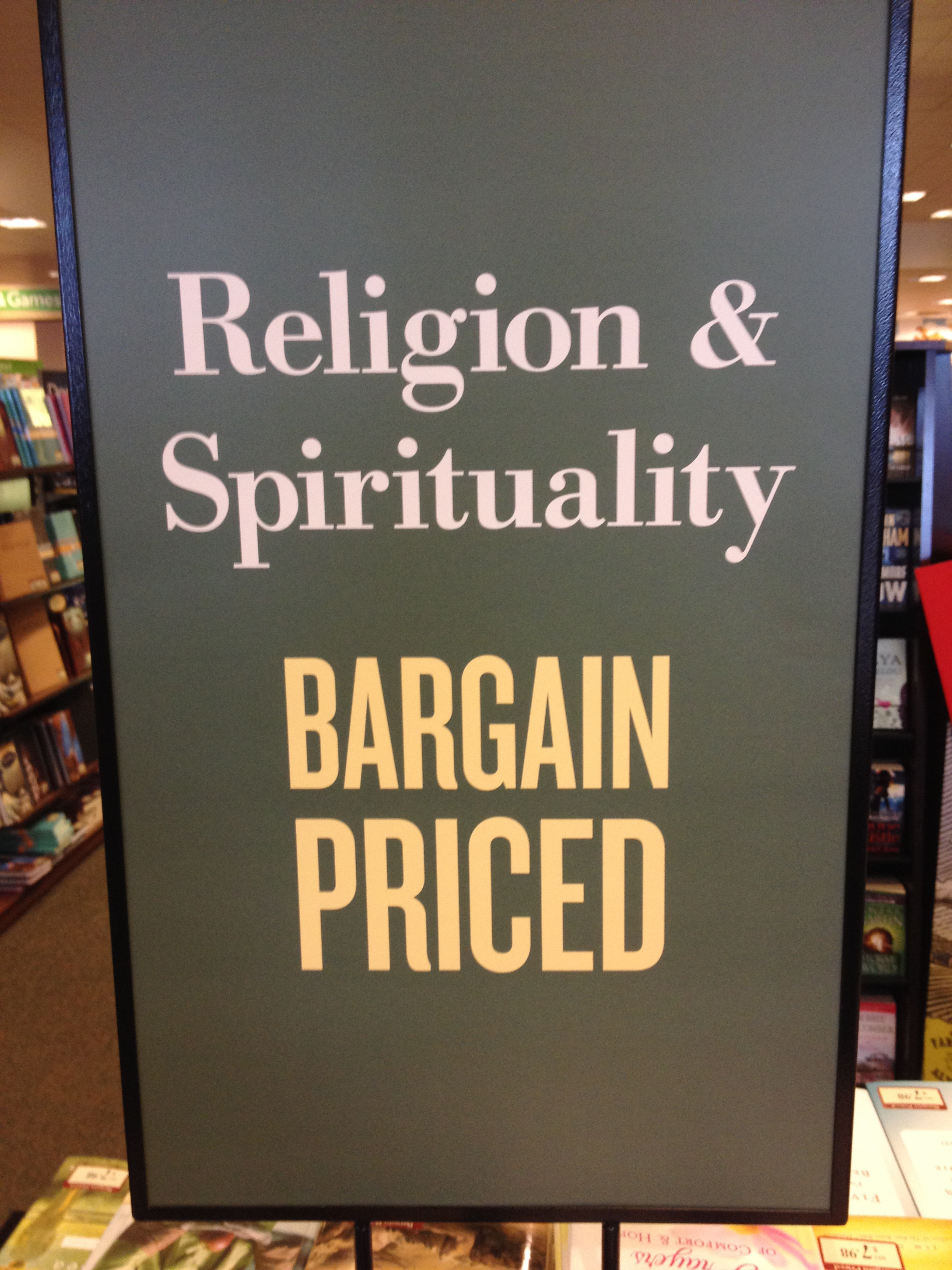
Signs, in my experience at least, lend themselves to being over-read. How often a heedless moment suggests something more than was intended—signs try to say too much in too few words. Indeed, poets rather than marketers ought to be sought. I found myself in Barnes and Noble recently, since Borders is gone. In all fairness, I attended two independent bookstores as penance afterward. Nevertheless, in the corporate atmosphere of the last major brick-and-mortar chain, I saw a sign. Several, actually. One of the most obvious is how many tchotchkes the store had, as opposed to wall-to-wall books. Barnes and Nobel has never been particularly imaginative in its selection of floor stock, but now it is a great place to buy toys, electronics, and coffee. Maybe pick up a book as an afterthought on your way out.

IMG_1550

The front space just inside the door of a bookstore is prime real estate. Publishers have to pay extra to have their books displayed immediately inside the doors—something they reserve for sure-fire rapid sellers. The average customer will walk in, down the center aisle and there they will find promoted (and demoted) items, laid out on their own tables. So it was that I saw a sign reading “Religion & Spirituality Bargain Priced.” In fact, they’re free. Not the books, but religion and spirituality. Even in this secular world, people are not shy about buying books in these categories. Step into the religion aisle sometime. You may be surprised how much you find there. In fact, those who track the industry often include Christian books as a third major category besides fiction and non. We trust those who know enough to write books about such matters. The Bible, despite its detractors, is a bestseller by any measure.

Do we, however, value religion and spirituality? So often religion is portrayed as the root of all extremism while spirituality is relegated to the weak-minded. The science section generally takes up only half the shelf space of religion. People want to know what it’s all about. The rates are anything but bargain priced. Some religion may indeed be simple, but most religions are unexpectedly complex. Those who engage them seriously know there is more to life than just fact and fiction. There are middle grounds and outer limits. There are places that have yet to be discovered, let alone explored. We are in the infancy of intellectual awakening. Of course that shows in how quickly we’ve abandoned our bookstores and gone off after less weighty things. If you have a moment, though, on your way to the coffee bar, you might pick up some religion cheap, and who knows where it might lead?


ET vs UAC

When I first heard of “unaccompanied alien children,” I hope I might be forgiven for thinking about ET. Or EBEs as they’re sometimes called, “Extraterrestrial Biological Entities.” Instead UACs are serious enough to be assigned their own acronym, and serious politicians are making themselves frantic over the proper response. Should we allow children refugees from Latin America into the “land of opportunity?” This is a matter that calls for immediate debate! But should it? I am an American, but I am also a human being. And a parent. To me few things are more depressing than politics getting in the way of care for children. We fear their Spanish-speaking ways and incipient indigence. At the same time we as taxpayers fund Fundamentalist Mormons in their polygamy, reproducing beyond their ability to pay for themselves. The IRS turns a blind eye to those who claim food stamps and eschew birth control. There are children with nothing in this world standing at the door, and we debate whether to let them in.

I saw a recent opinion survey of major Christian bodies in the United States and their opinions on whether the children should be allowed to enter. White evangelicals came in dead last for the compassionate response of sanctuary. Meanwhile, reading the humanist literature, there is a strong sense that the ethics of this situation demand a, well, humanistic response. These are children, not political chattels. We will not purposefully endanger our own children. In fact, it is a criminal offense to do so. When it comes to somebody else’s children, we fuss and fume and I don’t hear many Fundamentalists saying “What would Jesus do?” in this case. Probably because the answer is clear: let the children come unto me.

Some decisions should be easy to make. Children are not political liabilities. They are often victims of adult complications of a world where a hug would solve many more problem than a gun or a bomb. I’m not sure when compassion became so calculating. I’m old enough to know that there are no easy answers, but I do believe some difficult decisions can be made much easier. Excepting Native Americans, all of our ancestors once entered this continent, largely without permission, as outsiders. Granted, they felt compelled to come—some voluntarily, some not. When their hosts suggested the party was over, they refused to leave. Now their descendants can’t decide whether children are a threat or not. We insist on their right to be born, but we don’t necessarily want to give them a home. When ET went home we all cried. Our tears for our own kind, apparently, are a scarce resource on this planet.

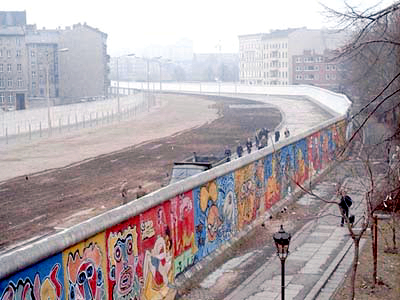
Are we all really just another brick in the wall? (Photo credit: Noir, WikiCommons)

Are we all really just another brick in the wall? (Photo credit: Noir, WikiCommons)


Disarmament

Maybe it’s just where I cast my attention, but debates over belief or unbelief seem to be everywhere these days. The word “militant” is used to describe belief (or lack of belief) systems with a worrying stridency. We want to prove what we believe, with violence, if necessary. So in anticipation of 9/11 Nick Cohen wrote a piece in the Guardian entitled “The phantom menace of militant atheism“. He points out, rightly enough, that you seldom hear of militant atheists being suspected of acts of terrorism. When a bomb goes off, we look for the religion behind it. For each pyromanic a religion can boast, it has a larger number of pacifists, in most cases. As Cohen points out, atheists aren’t blameless—Stalin and Mao remind us of that—but in today’s world of free agent religious ordinance missionaries we seldom, if ever, hear that the atheists have been plotting and planting explosives. In that Cohen is surely right. Humanists (to generalize) tend to hold humanity up, not blow it up.

By Creator:Tadeusz Cyprian (cyfrowe.mnw.art.pl) [Public domain], via Wikimedia Commons

By Creator:Tadeusz Cyprian (cyfrowe.mnw.art.pl) [Public domain], via Wikimedia Commons

There is, however, a strange disconnect that Cohen, and countless others, point(s) out—atheists (and I would broaden this to humanists) are considered immoral. As if the concept of deity were somehow a mark of moral maturity. Of as if a specific belief system were the default for humanity and the rejection of it somehow a willful attempt at evil. Humanists, however, have been around for a long time. We tend to overlook that fact because they weren’t busy plotting to destroy others. Being raised in a religious environment, I didn’t even realize that long before I was born quiet, ethical, good people had come to think that religion was a delusion. Sure, some humanists have weird peccadilloes, but as the headlines remind us, so do the religious. The problem comes in when militants are the measuring rod. “With what measure ye mete, it shall be measured to you again,” a pacifist once said.

At the root of all this blustering is the unrelenting urge to convert. Those who are truly convinced they’ve found the right way—believing or un—want others to see it their way. Problem is, others want the same thing, the other way around. Apart from Cohen’s observations, I would note that we never hear of tolerant believers or unbelievers attacking anyone. Physically or verbally. The mantra of live and let live applies up to the point that a belief system mandates harm and then the old contradictions begin to resurrect themselves. Some belief systems are, by dint of their very premises, immoral. The majority, however, are just fine. If the zeal for conversion can be kept under control. I can envision a world where evangelical atheists could exist side-by-side with those who believe and don’t believe at the same time. And they might even meet together peacefully if only we would leave the militancy at home.