Psychology of Religion

It’s so human.  Mistaking form for substance, I mean.  A recent piece in Wired that my wife pointed out to me is titled “Psychologists Are Learning What Religion Has Known for Years,” by David DeSteno.  As the title intimates, religion benefits individuals in many ways.  Church attendance, however, has been declining for a long time.  While not the point of the article, I do wonder how much of it is because mainstream churches are stuck in a form that no longer works and people aren’t finding the substance there.  The basic church service is premised on a specific religious outlook that no longer seems to fit how the world works.  Potential ministers go to seminary where age-old ideas are tiredly replicated, based on an incipient literalism that simply doesn’t match what people see in the world.
Wired?

I’ve experienced this myself.  Depending on who the minister is, a church can go from dynamic to dull several times in the course of a member’s life.  People still crave the substance, even if the form stops working.  The form, however, is seminary approved and seminaries are accredited by the Association of Theological Schools.  The folks are academics and academics are well aware of the developments that suggest the form doesn’t work.  Speaking as a former seminary professor, sermons just don’t do the trick when you’ve done your own homework.  As DeSteno points out, once you remove the theology science and religion tend to find themselves in agreement with one another.  For years I’ve been suggesting that secular seminaries are needed.  Churches that aren’t bound by form or doctrine.  Instead we swim in a sea of retrenched evangelicalism.

Religion is an effective survival technique.  It evolved, even while denying it did so.  Some time after the Reformation a resurgent literalism led Catholicism to modernize, removing the mystery that was perhaps the last tenuous grasp that form had to provide substance.  Religion, beleaguered as it is, still has substance to offer.  DeSteno’s article is adapted from his new book How God Works.  I haven’t read it yet, but from the summary I can see that I should.  There are religious groups that attempt what this article suggests.  From my experience, however, I see they easily get sucked into mistaking the form they settle on for the substance of what they do.  I had recently been toying with the idea of attending seminary again.  I found, however, form after form.  What I need is substance.

Starting September

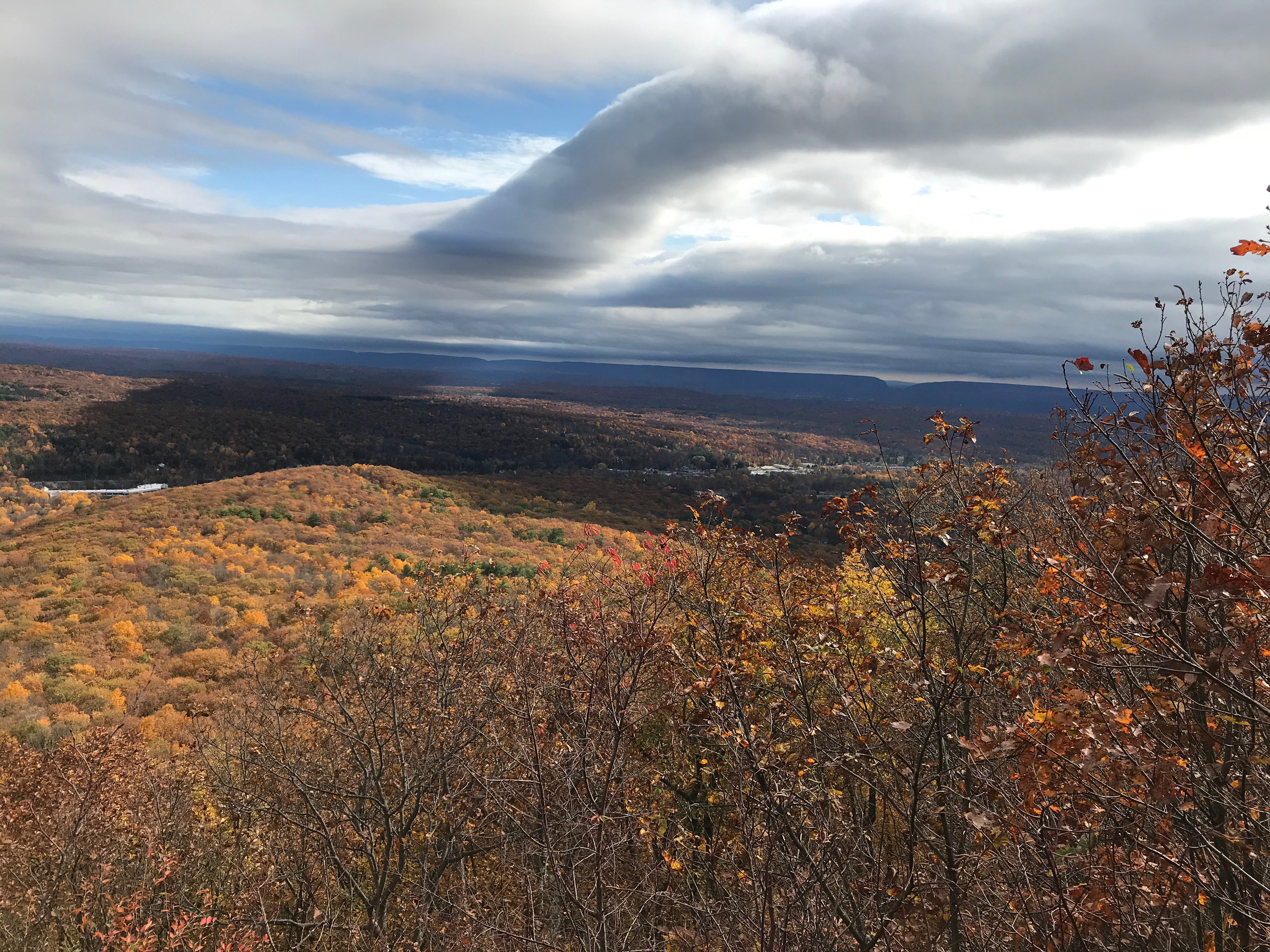
The deep green of late summer has been starting to brown at the edges.  The process is a slow one, but it’s urged along by the Halloween decorations beginning to appear in the stores and the spooky offerings showing up in various media.  Our second pandemic summer is winding down.  Autumn has always been my favorite season.  I like summer’s relaxed attitude.  Even winter’s chill is something I anticipate.  But autumn is so visceral that it’s spiritual.  Autumn catches in my throat.  I sniff the air expectantly.  I know the ghosts and ghouls are on their way.  I won’t feel so strange for watching horror movies when the season demands it.  Already light is scarce before work in the morning.  In order to accommodate my daily constitutional I’ve had to shift to the streets of our town where there’s a bit of artificial light at 5:30 a.m.

September has crept up on us under the guise of several heat waves and hurricanes crossing the country.  The season of scares is about upon us.  I have to admit to feeling a thrill when seeing orange and black in stores and on front lawns.  Halloween lights have begun to appear on some front porches and the candy has begun to spill out in grocery stores for those who want to shop early.  Outside, even with the heat waves and hurricanes, early morning declares that fall is on its way.  As early as August, like a squirrel I begin to horde away my autumnal reading and viewing.  Books and movies to see me through to what seems like the home base of spring when shivers cease and light begins to grow again.  Every year I tell myself I’ll be ready this time.  Every year it stuns me in its wonder.

The transitional seasons, unfortunately, are most under threat from global warming.  The periods between the extremes of heat and cold get foreshortened, making them even more precious.  I have to believe Halloween is capitalism’s attempt to sell autumn.  It’s a season of feeling, of pure emotion.  I almost fear its coming since I know it can’t last for nearly long enough.  There’s a beauty to the decline, and my migratory instincts for the classroom kick in.  If only it could be so forever.  Summer’s heat underscores autumn’s relief.  There’s treasure hidden here, even if it’s only temporary.  September is finally here.  And with it comes hope.

Things to come

Afghanistan

As much of the world watches in dismay, the Taliban have taken over Afghanistan.  Most religious rule ends up being harmful to women, it seems.  We have centuries of male-run Catholicism showing how both witch hunts and heretic murder became common in Europe.  Do we expect any better now that religious extremists have taken over a nation next door to Iran?  The mix of politics and religion has generally not been favorable and unfortunately if the Republican Party could have its way we would see a similar thing here in the United States.  An ill-executed coup d’état on January 6 of just this year led to the epiphany that the Republican jurists would protect those who tried to overthrow the US constitution in the name of religion.  And we know how they feel about women’s rights.  We should look at Afghanistan and tremble.

It seems difficult to believe that less than a century ago we went to war to defend democracy.  Senators alive to witnesses the privations of war are now recklessly trying to remake America in the image of a fascist state.  Instead of looking at Afghanistan as a mirror, the only thing they can see is this is a Muslim nation.  Christians would surely never try to take over a capital by force.  They turn a blind eye to our own insurrection, not yet nearly a year old.  Ironically the book they claim to follow contains a often quoted but more often ignored statement: “He that is without sin among you, let him first cast a stone…”   It’s no accident that their intended victim was a woman.

Religious politics can be maintained by force of arms or legal maneuvering. Both are evil.  The result is the same either way: women and thinking people suffer while the self-righteous rule.  Even such basic assumptions as protecting their own people from a horrible disease by the simple expedient of a free vaccine has been politicized for purposes of keeping in power.  When the moderates in their own party speak up they are shouted down.  How different is this than the shouts of triumph heard in Kabul?  The alternative—government that allows the freedom to believe what you will as long as all people are treated fairly—has been made out to be a sin.  The god worshipped both by Republicans and the Taliban has little sympathy for humanity.  He, and most certainly he is male, is all about power.  We watch in dismay.

Photo by Joel Heard on Unsplash

Looking In

There’s a real danger to the lifelong study of religion.  Learning to look at any tradition from the point of view of an observer will create a sense of being on the outside looking in.  I’m a member of a religious organization.  I occasionally consider pursuing ordination within it—this was my original sense of my calling in life—but I’m compelled to consider the phenomenon of being outside looking in.  When I was an Episcopalian (before the church showed its true colors in my particular case), I wrote a letter to my rector asking how I could get off of the church steps and be invited inside.  My rector wrote back with some insipid advice and was among those who voted, as a trustee, to oust me from my fourteen-year career at Nashotah House.  Outside again.

Studying the history of religions provides dangerous levels of insight.  Simple, mindless acceptance of teachings becomes impossible.  This isn’t arrogance, as any who know me can attest, but rather a form of hyper-awareness.  You can’t emerge from forty-plus years of reading about, and deeply pondering, religion unscathed.  Many, of course, dismiss any observations by those lacking the denominational seal of approval.  “If you knew what you were talking about,” so the reasoning goes, “you’d be a minister or a professor.”  So you speak from the sidelines at best.  Outside.  Even within my own group I have merely the role of “member,” lacking the official piece of paper from the seminary or other accrediting body that states I might know some things.

Of course, I have much yet to learn.  This religion thing is a tough nut to crack.  Were I younger and better paid I might consider undergoing college again to take a different path.  As it is, I’ve invested more than a half-century trying to get where I am, wherever that is.  I sit outside watching the birds.  They’re back pretty much in full force now.  They seem so certain about where they’re going.  How can you fly without a full level of commitment?  Earthbound, I muddle about with my head somewhere above the clouds I cannot reach.  I read about religious traditions unknown to me.  Often I find nuggets of great value in them.  Of course, I’m not clergy so you need not take my word for it.  I, after all, draw inspiration simply by sitting outside, always outside, and watching the birds. 


Considering the Time

Does anybody else find the name “Office 365” ominous?  Perhaps I’ve been reading too much about Orwell, but the idea that work is waiting for you every single day of the year is worrisome.  The way people unthinkingly buy into technology is a way of being used.  Like Cassandra, however, I get the feeling I’m just talking to myself.  365 could simply mean it’s always available.  For me, however, the PC is symbolic of corporate America.  And corporate America wants everything thing you have, at least if it can be liquidated.  That includes your time.  Now that the weather’s improving I spend beautiful days sitting at a desk behind a screen.  Before I know it that beautiful day’s gone for good and I’ve not stepped outside once.  I’ve been 365ing.

An organization I know has a dysfunction.  It keeps trying to plaster on technological bandages to solve its problems.  Such bandages only pull the wounds open again when they’re yanked off.  It’s the latest thing, the new communication technology that “everyone will use.”  Only it never is.  It’s just one more app that I’ll have to learn and yet another way to invade my private time.  Time I might otherwise spend outdoors.  Look!  The sun is shining!  All day long the birds and bees fly by my windows, celebrating.  I’m sitting here scratching my head.  Yammer or Slack?  And who comes up with these stupid names?  And are they available 24/7?  Do they even take into account that human beings have to sleep?

Studies now show that people my age who routinely get less than six hours sleep a night have a greater risk of developing dementia in their seventies.  Yet Office 365 will be waiting even for them.  Those whose retirement funds were never as secure as they hoped or thought they were face a future at the Office.  It will be there, always waiting.  Like Winston my time comes at a cost.  It’s the chill, early hours of the day.  Even as I work on my personal writing (which is not even done in Word, thank you very much), I know that the Office—which now includes Teams and even holds my calendar in its icy electronic fingers—is waiting.  Perhaps, if it’s a weekend, I’ll be able to stave it off a bit.  Even if I can, however, it will be waiting 24/7, 365.  Only time outside those parameters can be called one’s own.


You Are Data

The dark web.  The very idea conjures up images of extremely seedy technophiles with ambitions that run from illegal to just plain inhumane.  It’s a place I never want to go.  Still, it was brought to mind by a recent article in Threat Post.  (If you ever want an excuse to unplug and curl up with your head under the blanket, Threat Post might be a good place to start.)  The particular story was about the theft of millions of users’ data from LinkedIn.  This followed shortly after major data theft from Facebook.  In the world of the web-addicted the hacker is king.  Data are used for who knows what nefarious purposes, but primarily, I suspect, to try to sell you stuff.  Anyone who’s produced something (such as, say, a book) knows how difficult it is to get that product noticed.  Forcing it into someone’s inbox is one potential way.

What bothered me the most about this story was a line from an official in cyber-protection research (not a choice of major when I was in college).  It was noted there that although the data contained no financial information, it does contain information of value, “which is why it’s not published it for free.”  Those last two words: “for free.”  Data are, apparently, available for sale.  The computer people I know (all of whom are younger than me) tell me data mining is common on everything from social media to web browsers.  When you choose to go online you’re offering information about yourself to others.  Some of them dwell in the dark web.

Personally, I don’t know what they’d want from me beyond the scary thought of getting ahold of the digits that define me.  I’m not a fan of shopping and tend to buy only what I need.  (Yes, books are a necessity.)  I have probably succumbed to purchasing something seen in an online ad once or twice, but it is generally only if a holiday’s approaching or if it’s something I’d already thought I needed.  The fact is we can get along with a lot less.  If only we knew how to grow our own food.  Which is something, I suspect, that we could look up online.  But beware, your agricultural interest will be noted, and likely sold.  There’s money to be made on the web.  And before long you’ll end up with John Deere ads tailor made to suit your interests, and liquid assets.


Leap Night

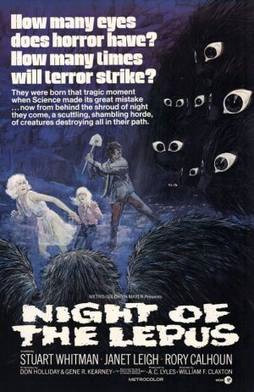
I was quite young when I saw Night of the Lepus for the first time.  Well, I had to have been at least ten, but when I recently sat down to watch it only one or two scenes looked familiar.  Like most poorly done horror films, Night of the Lepus has gained a cult following.  The story is loosely based on Russell Braddon’s comedic novel Year of the Angry Rabbit.  Without the comedy.  Or at least without intentionally being funny.  In an effort to control rabbit overpopulation in Arizona, a new virus is released into the population.  Instead of killing off the bunnies, it makes them grow as large as wolves and become carnivorous.  They go around attacking people with big, nasty, pointy teeth (to be fair, Monty Python and the Holy Grail wouldn’t be out for three more years).

Night of the Lepus was criticized for not being scary at all—a cardinal sin for a horror film.  I was kind of embarrassed when my wife walked in and found me watching it.  Nostalgia can do funny things to a person.  It is almost painful to watch the public officials make such obvious missteps each time they start to get an idea of what’s happening.  They’re almost as imbecilic as the Trump administration was.  Meanwhile rabbits are hard to make scary.  Perhaps William Claxton should’ve read Watership Down.  Ah, but Richard Adams’ classic was only published in 1972, the year the movie was released.  What was it about the mid-seventies and rabbits?  

Part of the problem is that Night of the Lepus takes itself seriously without the gravitas required to do so.  Who can believe actual rabbits are vicious when, to make them monstrous, the movie simply shows rabbits against miniature scenery?  Their human handlers occasionally smear their mouths with red, but a rabbit doesn’t appear cunning and vicious.  And to get them to attack people they had to use human actors in rabbit suits.  I’m a fan of nature going rampant as a vehicle for horror.  Hitchcock’s The Birds did it effectively.  So, I’m told, did Willard (which is remarkably difficult to access with HBO never having released it onto DVD).  The seventies were when ecology began to be recognized as perhaps the most important of global issues.  Half a century later we’re still struggling to reconcile ourselves with it.  Meanwhile the rabbits have begun to appear in our back yard.  They may nibble our perennials, but I’m not afraid.  At least as long as they don’t watch Night of the Lepus and start to get some ideas.


Clippings

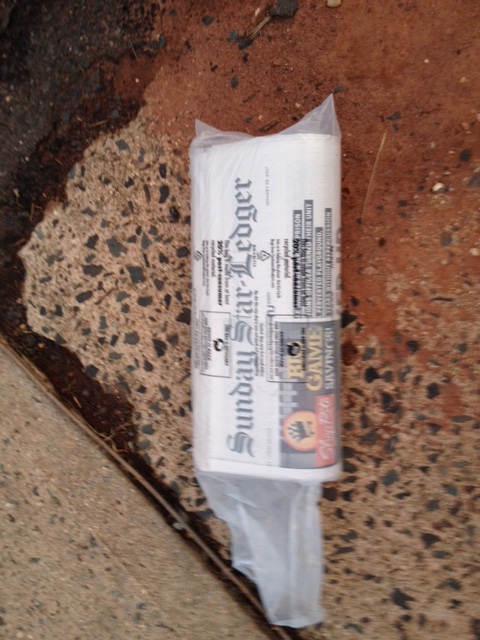
Weren’t newspaper clippings more fun than bookmarks?  For one thing, bookmarks are hidden away in your browser where they proliferate like bunnies in April.  Clippings were always limited in number, to the level of your interest.  Or physical storage capacity.  I once decided to organize all my bookmarks into “folders.”  I’m still not finished and some websites don’t seem to fit any category.  Still, the exercise is an eye-opening one.  I’ve been on thousands of webpages, hundreds of which I want to remember.  With newspaper clippings, there were a limited supply and they felt—let’s face it—real.  These words and images were printed on tangible paper.  Kept in a file (or in old movies, tacked to a bulletin board that inevitably contained clues), they were visible reminders of something that caught your attention.

I’ve seen movies made where research is being done on the internet.  They involve people who know they have to go beyond the top page of a Google search.  They may even go to the third page or further!  Such thrills.  Compare that to a scene where someone pulls open a desk drawer and finds a clipping.  Isn’t there real drama there?  No doubt the internet has made finding information easier.  It has also proliferated it so that we no longer have time to read it all.  I recall reading how Isaac Asimov read the entire encyclopedia when he grew up.  Who could read all of Wikipedia?  It changes every single day.  The clipping file, depending on the papers and magazines to which you had access, might be pretty slim but it helped to inform opinions and outlooks.  There were occasional hoaxes but nobody worried about fake news back then.  After all, reputations still meant something in those days.

There was a real thrill, growing up in a small town, to being mentioned in the newspaper.  In my case it was generally about being in the Cub Scouts, or, interestingly, being baptized in a river.  (This was a small town.)  Ironically I didn’t have a clipping of the baptism story; I found it online.  The Franklin News-Herald wasn’t a large circulation broadsheet, but it was paper closest to where the incident took place.  Perhaps it struck a locals as odd seeing a bunch of people wading into the river fully clothed, even though it was 1970.  It’s an event I remember well.  But most of my clippings have flowed away over time, like those sins that were washed downstream that day.  I must remember to bookmark that site.


Not the Band

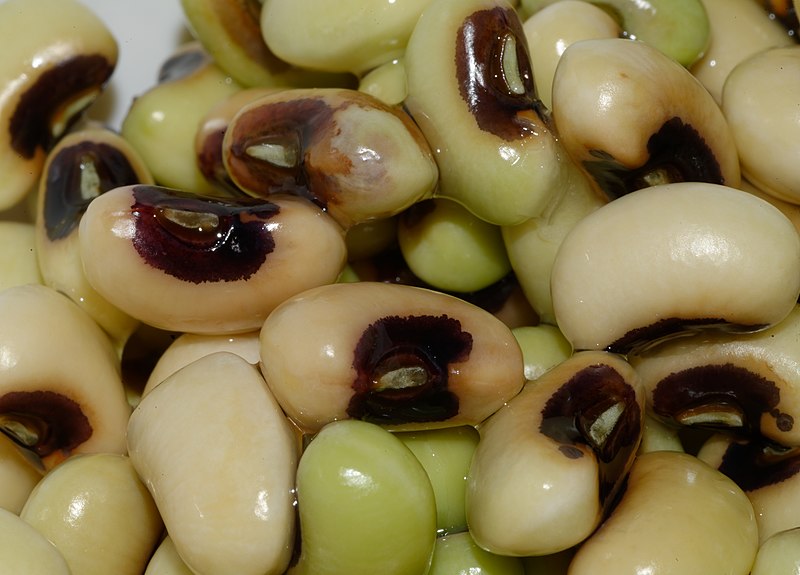
One of my favorite weekend treats involves black-eyed peas.  With a father from South Carolina, some of my earliest memories involve soul food.  As a present-day vegan, I eat a lot of beans.  That’s why I was disappointed to learn that Goya’s CEO, Robert Unanue, continues to be a big Trump supporter.  Shame on you, Goya!  Lest you get the wrong idea, we generally buy the store brand beans.  Of all the legumes, however, it seems the humble black-eyed pea is difficult to get right.  The generic brands always end up with the bottom part of the can being a kind of beige sludge where the beans have broken down and lost, as it were, their individuality.  The dish I make (one of my own invention, also featuring grits and hot sauce) requires that the beans maintain their integrity—take note, Goya!  Said brand seems to be the one that understands this aspect of canning beans.

For many years I avoided Bush beans for fear that they might be enriching the other *ahem* Bushes.  Right now, however, I’d rather have W run for a third term than the specter of Goya-supported Trump.  When did legumes become politicized?  Why can’t I sit down to a peaceful Saturday morning breakfast without a hideous four-year nightmare coming to mind?  The perils of being vegan!  In any case, I recently tried Bush black-eyed peas.  They weren’t as good as Goya, but I think I need to make the switch.  I’ve never had my somewhat simple culinary tastes disrupted by a president before.  Generic would be fine, but why, o why can’t they get the black-eyed pea right?

Image credit: Jud McCranie, via Wikimedia Commons

Perhaps somewhat oddly, I really like beans.  There are about 400 varieties and each has its own personality from sassy edamame to staid kidney beans.  I’ve even reconciled myself to the childhood nightmare of the lima bean (alien, without a hint of lime).  Now, I’m no foodie.  I eat to live rather than the other way around.  Whatever I do, however, I search my conscience.  Raised evangelical I know no way around it.  My conscience is the main reason for becoming vegan—I can’t support animal cruelty, especially for an industry that is the largest environmental polluter in the world.  So when I’m standing in front of the bean shelf, thinking ahead to Saturday’s breakfast, I’m struck with qualms.  I stare at the black-eyed peas and they stare back at me.  It’s a kind of test of the wills.  I see the Goya and decide to try something better for the world.  


Come People and Consider

“Thou, O king, sawest, and behold a great image. This great image, whose brightness was excellent, stood before thee; and the form thereof was terrible.  This image’s head was of fine gold, his breast and his arms of silver, his belly and his thighs of brass, his legs of iron, his feet part of iron and part of clay.”  So Daniel answered the megalomanic king Nebuchadnezzar, according to chapter 2.  This is some Scripture that CPAC has chosen to ignore, or at least not bothered to read to the end.  In truth I was always bothered when Daniel said “Thou art this head of gold”—which seems to be more brass-kissery, if you get my drift, than prophecy.  But dear CPAC, the statue of Nebuchadnezzar crumbles when the kingdom of God arrives, unable to stand on its feet of clay and iron.

Image in public domain, courtesy Wikimedia Commons

I’m not one to tout Daniel as prophecy, but seldom have we seen such things come true so literally.  If we turn to the other testament, in a somewhat politically incorrect aphorism a personage of the gospel of Matthew quoth, “they be blind leaders of the blind. And if the blind lead the blind, both shall fall into the ditch.”  Funnily, those who claim to support a “Christian” America have failed to read even the surface of the Good Book.  Without the Bible what is fundamentalism?  That image in Daniel 2 is considered an idol.  After all, when the Trump of antiquity built a statue all were required to fall down before and worship it.  Those who didn’t were thrown into the fiery furnace.

The Conservative Political Action Conference has sent shivers down the collective spine of our nation.  Even as it was going on I was standing in the rain signing petitions for local Democratic candidates because going inside meant being potentially infected by the Republican disease known as Covid-19.  Apparently half-a-million dead is never enough for those who believe in a social darwinism although they claim to base their lives on the book that says all this took a mere seven days.  Although Daniel gained great fame and wealth by telling the king what he wanted to hear, during a party a few short chapters later he saw a hand writing on the wall.  “And this is the writing that was written, Mene, Mene, Tekel, Upharsin.”  And although given a third of Belshazzar’s kingdom that very night it was all lost to Darius.  “Who hath ears to hear, let him hear.”


One Day or Another

Although normally a time for celebration, Mardi Gras, I’m told, was subdued this year.  Today is Ash Wednesday but many of us feel like we’ve been living a year of Lent already.  I once told a fellow office worker on Ash Wednesday, “I think about death every day, I don’t need a yearly reminder.”  Looking out at the old snow, melting, freezing, refreshed with occasional flurries, I’m reminded of the cycles of nature.  I’ve been watching the turn of the year’s wheel.  Over the solstice I looked into Yule, and just a few days ago considered Imbolc.  The wheel of the year is a symbol for modern earth-based religions seeking to be kept in sync with nature.  It is a cycle, slowly turning.  Death, in this way of thinking, is part of a larger system.  It seems appropriate to consider it this Ash Wednesday.

I say it’s Ash Wednesday but it would be more correct to say “for many Christians it’s Ash Wednesday.”  Cultural imperialism is difficult to shake.  With the pandemic still embracing us tight we haven’t had much reprieve from thoughts of death these many months.  Thinking of the wheel of the year, however, may bring hope.  A wheel in motion spins around to a new beginning that, in the nature of circles, is equally at every point.  New beginnings are offered every day.  While we’ve never been in a year of isolation before, there is nothing that hasn’t been before.  Self-aggrandizing dictators, world-wide pandemics, calls for social justice and fairness, have all come around before this.  They may come around again.  The main thing is to keep it moving.

It moves, in fact, without us.  One of our human foibles is being species-centric.  When we discuss, in a pique of teenage angst, of “destroying life on earth” we really mean destroying humankind and perhaps many other species as well.  Not all.  With a kind of collective insanity we go about warring against our own kind, exploiting all other species we deem valuable, and talk as if that’s all that matters.  Today, for some, it is Ash Wednesday.  For others it is World Human Spirit Day.  For many of us it’s just another workday among many very similar, cut from the fabric of a year that has no even spokes to keep it rolling.  Beneath our feet this orb spins on, regardless.  The cycles continue, with or without us.  How wonderful it would be if we could actively contribute to their progress.

Photo by Ameen Fahmy on Unsplash


BLM, MLK, and Justice

Martin Luther King Jr. was a martyr.  The word martyr means “witness.”  Given what we’ve all seen done by the Republican Party over the past two weeks, let’s hope they at least know the meaning of the word repentance.  King died trying to set people free.  Half a century later we’ve had to witness a sitting US president praising an armed mob, some of whom were carrying confederate flags, storm the Capitol.  Then, that very night, we watched Republicans still attempt to repress legitimate votes in order to keep white supremacy in power.  The set-backs of the Trump administration will take years to overcome.  King stood for equality.  He called for fair treatment.  He knew his Bible.  Now those who cynically hold the Good Book up for the camera can’t quote it but can tear down everything it stands for.

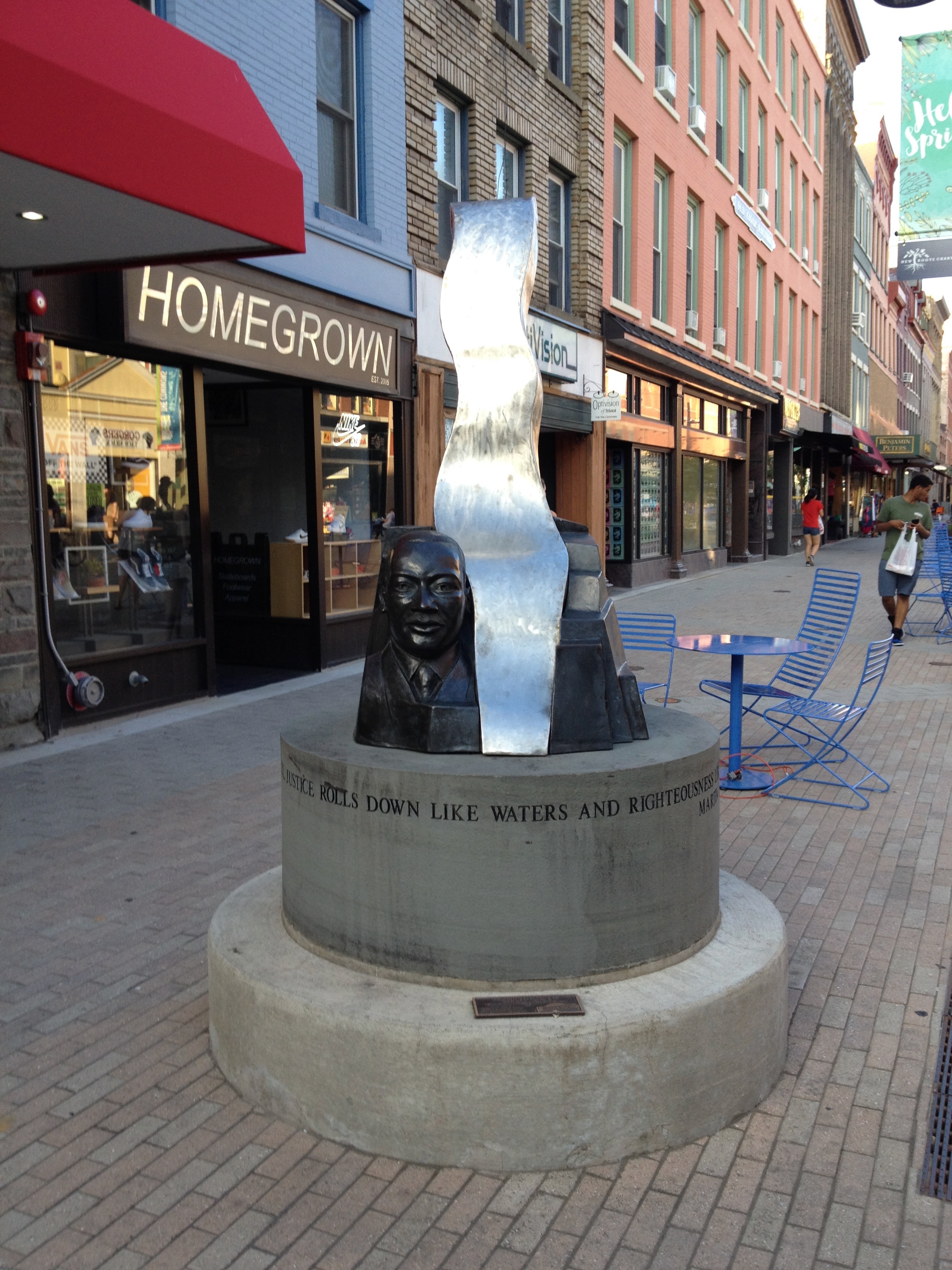
We need Martin Luther King Day.  This year especially.  We need to be reminded that all people deserve fair treatment.  Justice isn’t a meaningless word.  The color of one’s skin is no indicator of inherent worth—that belongs to everybody.  Throughout the country there are heartfelt memorials to King.  The various Trump towers—often segregated and reserved for the wealthy—are monuments of a different sort.  There is power in symbols.  Those who praise and crave money above human need will ultimately be remembered for how evil seeped into their bones.  How hatred of others and narcissism defined their rotten moral core.  Today we try to focus on a good example, but present reality keeps getting in the way.

Four years ago I joined about 1.3 million marchers in Washington, DC.  The Women’s March, as estimated by government officials on the ground, was more than twice as large as the media estimates still tout.  I’ve puzzled over this for four years—why when an oppressed group makes a stand officials and pundits feel the need to downplay it.  King made a stand and he had a dream that one day we wouldn’t have to make marches on Washington just so that everyone could have the equal treatment they deserve.  Human rights are the only rights we have.  Even as some haters are planning further acts of violence to object to a humanitarian president, we are given a necessary reminder that all people deserve fair treatment.  Black lives do matter.  Why has half a century not been enough to assimilate that simple message?  We need to sober up from the drunkenness of irresponsible power.  We need to learn the simple fact that nobody should be killed for being black.  That whiteness is toxic.  That we need to call out those who would use privilege to claim otherwise.


Turning Point

As the “Keep Christ in Christmas” crowd gears up for another Yuletide season, its capitalistic brother wonders about how good Christians will shop during a pandemic.  We’re not great materialists in my house, and our holiday spending tends to be modest.  Even so, the stocking stuffer is the kind of thing you find while browsing in stores.  I don’t feel comfortable indoors with strangers now.  Apart from groceries and hardware I haven’t been in any kind of store for at least a month now.  How to get ideas for those little, often inconsequential gifts that are demanded by homage to Saint Nicholas?  The holiday season is a wonderful amalgamation of differing traditions that should, in a perfect world, suggest openness to all and inclusivity.  At least this year we have that to look forward to.

Inclusivity is a gift worth giving.  Many of us are weary of the privileged “angry white man” who has held control of just about everything for the past several centuries but is still never satisfied.  The holidays around the winter solstice—itself the marker of days finally beginning to lengthen again—should be a symbol of the many traditions that make Christmas what it is.  There is no one “pure” idea of what this season represents (beyond shopping) because people all over have traditionally welcomed the return of light after many days of darkness.  Sometimes that darkness of exclusivity can last for years.  Now that we are beginning to spy a sliver a light on a distant horizon perhaps we can see enough to correct the error of our ways.  Perhaps.

That still doesn’t solve the dilemma of pestilence-filled stores where people want to huddle inside because it’s cold out there.  I can’t seem to recall where they hung the stockings in the manger, but surely they must’ve been there.  It’s how to fill them that’s the issue.  Our world has become so virtual.  How do you put streaming into a sock?  How do you stuff that cuddly subscription service into hosiery?  In a pandemic we’re reaping the fruits planted by a technologically-based society.  The art of browsing hasn’t been electronically replicated.  It’s the moment of inspiration in that curiosity shop that seems to be missing this year.  Most of us, I suppose, would be pleased to find a vaccine in our carefully hung stocking.  At least a government that takes the threat seriously will be something to anticipate.  Just a little longer, and the light will be coming.


Bethlehem

Now that the holiday season is upon us, I guess it’s okay to post about the upcoming.  It’s actually pretty hard to avoid, living so near Bethlehem.  While Easton claims the first Christmas tree in America, Bethlehem was settled on Christmas Eve and named accordingly by the Moravians.  It’s a tourist destination for Christmas aficionados everywhere, and, as my wife quotes about 2020, “we could use a little Christmas.”  So we headed to the Christkindlmarkt over the weekend.  Apart from an abundance of consonants, Christkindlmarkt is a chance for vendors to bring their wares to where tightly shut pandemic wallets are willing to open up a bit.  This year, however, the “markt” was completely outdoors rather than under the usual four large tents with heaters running.

It was an enjoyable morning out, with temperatures near sixty—certainly not something you can count on for late November.  There were fewer vendors here for a variety of reasons.  You get a boost, for example, by getting people gathered together.  Our herd instincts kick in.  Seeing others spending, we decide to take our chances.  Outside the great rusting behemoth of Bethlehem Steel’s famed stacks stands sentinel.  This year, however, socially distanced tents and booths meant having to walk and stay back while others browsed, all while wearing masks so that smiles could not be seen.  Gathering without gathering.  With no interest in leading a charge against the disease on a national level, we’re all left to muddle through.

Several of the vendors had novelties portraying the year 2020 as the disaster that it’s been.  Instead of ending it with wishes for national peace, the incumbent is trying useless lawsuits to prevent the voices of voters from being heard.  Stirring up his followers to protest against frauds that never happened, while having hundreds of lawsuits awaiting outside his own door as his actual deeds have been examined seriously for the first time.  Bethlehem reminds us that peace and hope ought to be in the air at this time of year.  Thinking of others rather than ourselves.  Do we see that being modeled by 45 and his ilk?  Instead I’m standing here outside where there used to be a warm gathering tent.  A place where we each donate our body heat to help keep everyone warm.  Giving, even as the Republican-controlled senate withholds any stimulus package they think is too generous.  Yes, we could use a little Christmas right about now.


Anticipation

My work computer was recently upgraded.  I, for one, am quickly tiring of uppity software assuming it knows what I need it to do.  This is most evident in Microsoft products, such as Excel, which no longer shows the toolbar unless you click it every single time you want to use it (which is constantly), and Word, which hides tracked changes unless you tell it not to.  Hello?  Why do you track changes if you don’t want to see what’s been changed when you finish?  The one positive thing I’ve noticed is now that when you highlight a fine name in “File Explorer” and press the forward arrow key it actually goes the the end of the title rather than just one letter back from the start.  Another goodie is when you go to select an attachment and Outlook assumes you want to send a file you’ve just been working on—good for you!

The main concern I have, however, is that algorithms are now trying to anticipate what we want.  They already track our browsing interests (I once accidentally clicked on a well-timed pop-up ad for a device for artfully trimming certain private hairs—my aim isn’t so good any more and that would belie the usefulness of said instrument—only to find the internet supposing I preferred the shaved look.  I have an old-growth beard on my face and haven’t shaved in over three decades, and that’s not likely to change, no matter how many ads I get).  Now they’re trying to assume they know what we want.  Granted, “editor” is seldom a job listed on drop-down menus when you have to pick a title for some faceless source of money or services, but it is a job.  And lots of us do it.  Our software, however, is unaware of what editors need.  It’s not shaving.

In the grip of the pandemic, we’re relying on technology by orders of magnitude.  Even before that my current job, which used to be done with pen and paper and typewriter, was fully electronic.  One of the reasons that remote working made sense to me was that I didn’t need to go into the office to do what I do.  Other than looking up the odd physical contract I had no reason to spend three hours a day getting to and from New York.  I think of impatient authors and want to remind them that during my lifetime book publishing used to require physical manuscripts sent through civilian mail systems (as did my first book).  My first book also included some hand-drawn cuneiform because type didn’t exist for the letters at that particular publisher.  They had no way, it turns out, to anticipate what I wanted it to look like.  That, it seems, is a more honest way for work to be done.