Sheep, Goats, and Preferred Customers

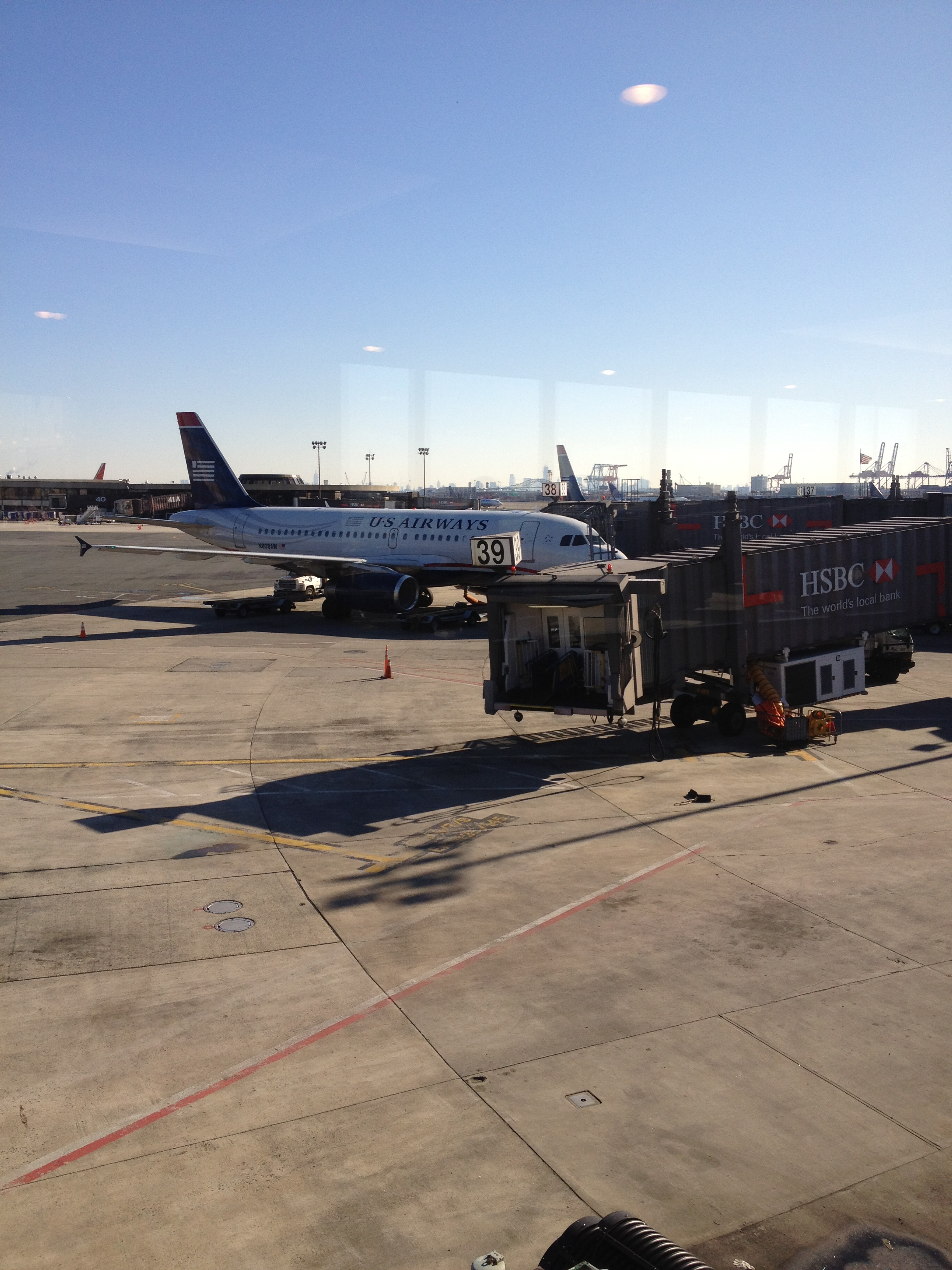
The American dream, at least for many idealists, includes a classless society. Class has less to do with individual wealth than it does with a sense of entitlement or importance. During an election year we hear politicians advocating such utopian ideals, at least until they get into office. When is the last time you’ve seen a politician flying coach? I have had to fly quite a lot lately, and nothing underscores the rampant sense of self-importance as flying. First class passengers are pampered and fussed over while those of us of more humble means—or who work for more frugal companies—are treated with such condescension that Amtrak actually starts to look pretty good. Nowhere is this more evident than the mythical construct of “boarding lanes.” Anyone who has flown knows that, like in death, we all have to pass through that same narrow jet-way to get to our destination. There is one door and we all walk through it—even the flight crew. I’ve flown several airlines that now offer preferred customers the dubious advantage of boarding the plane through some kind of special “lane” that is in reality a ratty looking carpet that reinforces that some passengers are more equal than others.

Even religions that began as egalitarian enterprises soon constructed their own stratified societies. When’s the last time a bishop came calling, or even deigned to look your way? It’s not leadership that is at issue here, but the sense of superiority that comes with it. Can someone lead without the need of putting others in their place first? I have known some wealthy people, and occasionally met some very wealthy people, who have laid aside pretension and confessed that they were lucky enough to get a good deal. Such people, it seems, are rare. The fact is that hard work sometimes only leads to backaches and headaches, not personal advancement. And yet we literally roll out the red carpet for those who want to board first. If the plane goes down, we all go down together.

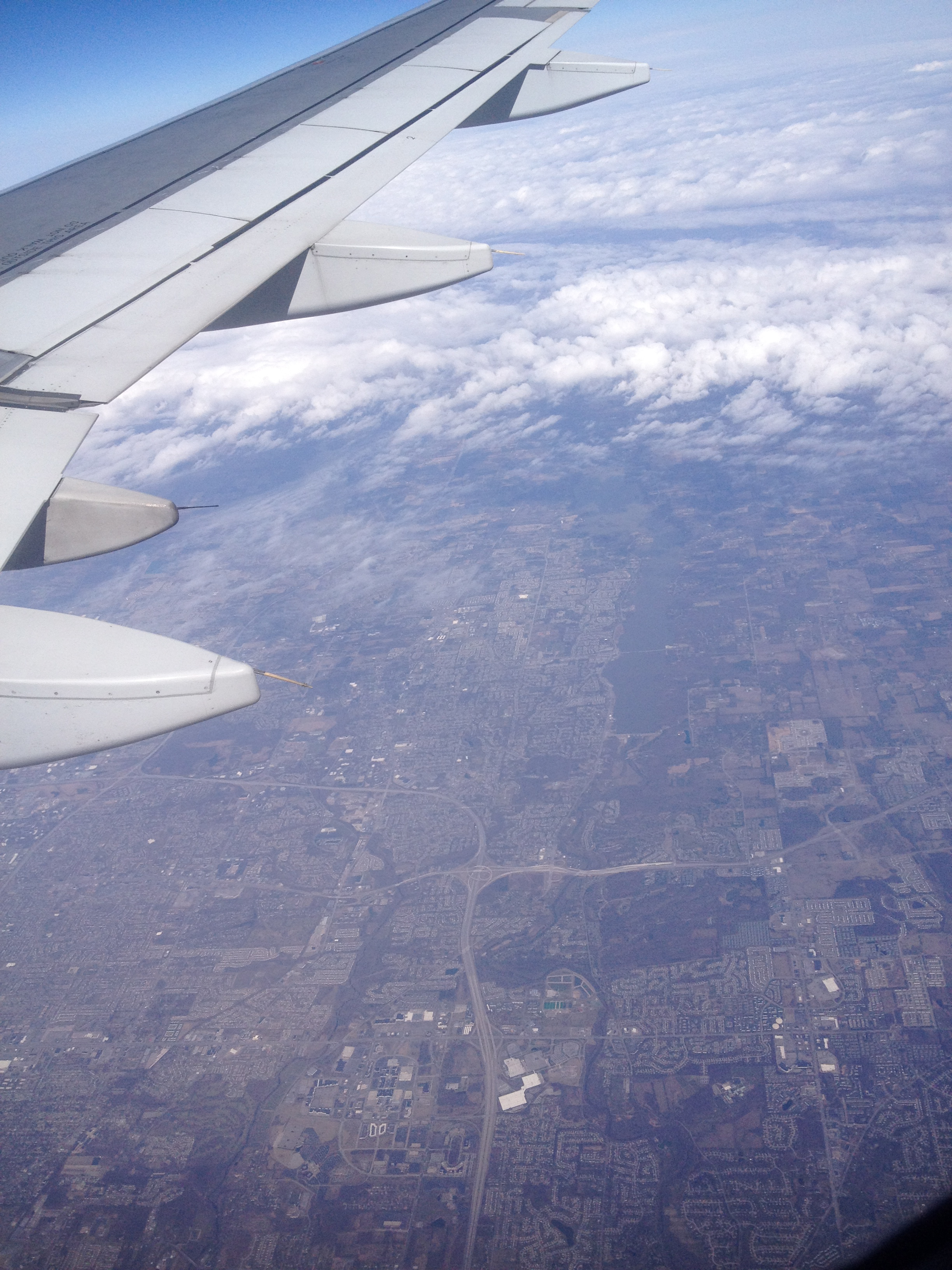
I realize that airline gimmicks are merely strategies to get some people to pay more for basically the same services as those in economy class. Oh, maybe your first class meal is complimentary, but it is still airline food. The pressurized cabin air we breathe we breathe in common, even with a thin curtain between us. Some of us have thinner wallets than others, and perhaps even thinner skin. But still we can dream. Looking down on the towns and cities of this great egalitarian experiment from 40,000 feet, everyone looks pretty small. Rich and poor alike are so tiny that you can’t even see one single individual even if you tried. That is the metaphor that perhaps sums up best the experience of flying. My sole has never touched the special carpet of privilege, I am frisked and prodded by strangers while first class customers are above suspicion, and I hear very wealthy men braying why I should elect them to lead this classless society. Time for a reality check. Step this way, sir, and spread your feet a little further. This will only take a minute.

Who's who?


California State of Mind

California, it is sometimes said, is a state of mind. I leave today after a few days in Santa Barbara with a bag of mixed impressions of one of our nations great schools. My first impression on the University of California Santa Barbara campus was almost a physical one. Literally. I had no idea of the bicycle culture and nearly stepped into a bike lane with the flow of a New Jersey storm drain during a Nor’easter. California is a culture of wheels. I’d never been to a campus before that has four traffic lanes for non-motorized travel: two bike lanes going opposite directions, a skateboard lane, and the humble pedestrian walkway. There are so many skateboards here that the counter-culture has become conformist. Sorry, Bart, it’s true. And concern for the environment is palpable. Reclaimed rainwater feeds the lush plant life, every possible recycled item is sorted and sent to the correct facility, students bicycle instead of drive, smart cars are very evident for the two-wheel impaired, and almost nobody smokes. And as I ate my supper alone in the student union two separate groups of Christian students were having very vocal conversations about their faith. Free spirits not realizing that they’re trapped.

One conversation with a Native American specialist stayed with me. She spoke of how missionary work has damaged indigenous cultures irreparably. I listened in fascination as she told me about the local history. How an historic Spanish mission was publicly adorned with the skull of a murdered Native American and how it took years of persuading to get them to take it down, even in the late twentieth century. Across campus students are praying to Jesus for the courage to continue witnessing. In Newark, I suspect, a couple of guys are still laughing.

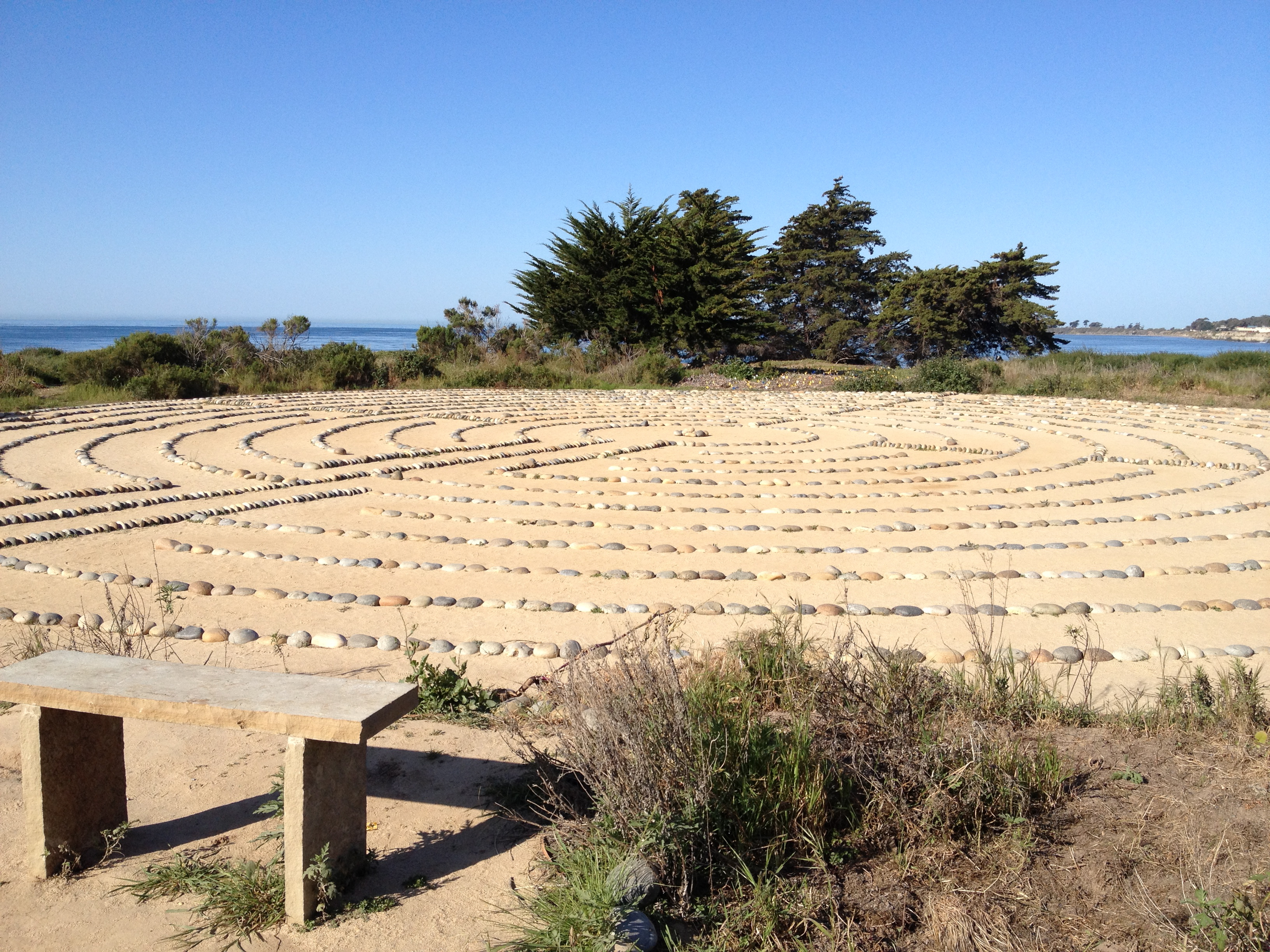
On a brief respite from my busy day of meetings, I walked the Lagoon (sorry, I can never see or say that word without thinking of Gilligan’s Island) Trail. Emphasizing the environmental features of this wetland habitat, the trail leads down to the ocean where flocks of pelicans and egrets fly overhead, unperturbed on the shores of the vast Pacific. In 1969 what had been to date the worst US waters oil spill took place from Platform A, still visible in the distance from the beach. My thoughts turn from Gilligan’s Island to Deepwater Horizon. My laughter to tears. The Lagoon Trail winds through the headland to a labyrinth. In today’s resurgence of interest in the labyrinth, it is viewed as a spiritual journey. Labyrinths appear in churches as early as the Roman Empire, but nobody knows what they mean. I silently stand beside the maze. What does it mean? Platform A leers from the ocean. Christian undergrads look to convert the world. And under the cross is not the skull of Adam, but that of an anonymous Native American. What does it mean?


Tortured Gospel

Tornadoes? I don't see any tornadoes.

It is a little difficult to force yourself to think of tornadoes when you’re in sunny California. On my flight into Santa Barbara I could see the tail end of the gray whale migration from a few thousand feet in the air. Outside the tiny municipal airport (with its full-body scanner) I see palm trees swaying in the wind. The air smells like flowers. Life is too easy in California for me ever to live here. I need more angst in my diet. I can’t come to the sunny coast, however, without the Eagle’s “Hotel California” replaying endlessly in my head. It was the running joke at Nashotah House that the real Hotel California was located in the woods just outside Delafield, Wisconsin. The haunting lyrics by Don Felder, Don Henley, and Glenn Frey managed to capture the witch’s brew of mind control, humiliation, and desire that laced that little, gothic seminary in the woods. Yet even sitting in California with its full greenery in March, I see that Pat Robertson is blaming the devastation of the recent tornadoes on lack of prayer.

Blaming the victim is a classic fascist technique, and it is very easy to proclaim one’s own righteousness when not in harm’s way. Herein lies the darkest sin of the self-justified; they think themselves specially blessed and therefore not responsible to help the victims. While flying over the Santa Ynez Mountains, seeing the smoke from California wildfires climbing like the terminal flames of Babylon, I could hear a voice like a choir of fascists singing, “Alleluia And her smoke rose up for ever and ever.” Schadenfreude fuels too much of the evangelical worldview. According the Gospel writers, when Jesus foresaw the destruction of Jerusalem, he wept. WWJD, Rev. Robertson?

Tornadoes look so much like divine judgment that it is almost understandable how a naïve believer might see them as coming from God. We, however, are the gods destroying our own planet with the accompanying degradation of the weather. Neo-cons deny the fact of global warming. It is not a myth or a theory, there is inconvertible proof that it is happening. Still, it is more convenient to blame God. After all, chances of him showing up to deny false charges, as history repeatedly shows, are very slim. Ask any innocent woman tied to a stake in Medieval Europe accused of being a witch. Apparently the divine calendar is too full to worry about the troubles of hundreds of thousands, or even a few millions who are falsely accused. Why not send some terror from the sky? It is hard to think of such things in sunny California. Yet as the “good news” of the televangelists spreads to the ends of the earth, even those forever in the sun will need to stand in judgment before a very capricious deity.


Religion Undisclosed

I’m getting to be a pat-down connoisseur. In Raleigh-Durham it was a more intimate affair with Mr. TSA—I don’t even have his name or number—narrating the intimate details. “I will move my hands up your thigh until I encounter ‘resistance,’” he said. At Newark the pat-down was quicker, more business-like, almost as if Mr. TSA were embarrassed. In Raleigh-Durham, nobody batted a lash when I said full-body scanners were against my religion. At Newark, they laughed. The gate attendants began asking me what my religion is. Private. My religion is as private as my “resistance.” And I was being ridiculed for it. This is the Patriot Act vision of America. Regular readers of this blog know that I have never revealed my religious convictions. They are a very private matter with me, and I had supposed that I’d been born in a nation where that was respected. Instead, I am laughed at.

We extend religious liberty to those who wish to handle rattlesnakes. To men who wear black dresses and have an historic penchant for young boys. To people who believe the world was created in six days. To people who believe golden tablets only seen by one man through rose-colored glasses are the basis for sacred scriptures. To the traveler who believes in the integrity of the human body and cannot divorce it from the respect and dignity of human modesty, this does not apply. Religions arm military forces. Religions rape women. Religions murder children as well as adults. Who’s laughing at them?

I wonder if I might have a legal case here. When has the free practice of my religion—which decrees that full-body scanners are immoral—been opened to public scorn? And don’t tell me it’s the price of security. I walked through “security” with my eyes open; first class passengers do not get scanned like hoi polloi. It’s not a matter of security—it’s about control and money. When will the people take back control of their own country from officials inebriated with power? I feel no safer with a stranger’s latex-gloved hand on my resistance. I feel no safer when people who couldn’t cut college get jobs in the US government and look at their fellow citizens naked. You’ll blank out my face? That makes it even worse. If someone’s going to violate my dignity I want him to look me in the eye and realize that it’s a human being he’s humiliating, not just a hunk of meat. Or in the language of the TSA, mere resistance.

First, show me yours


Watch Your Tower

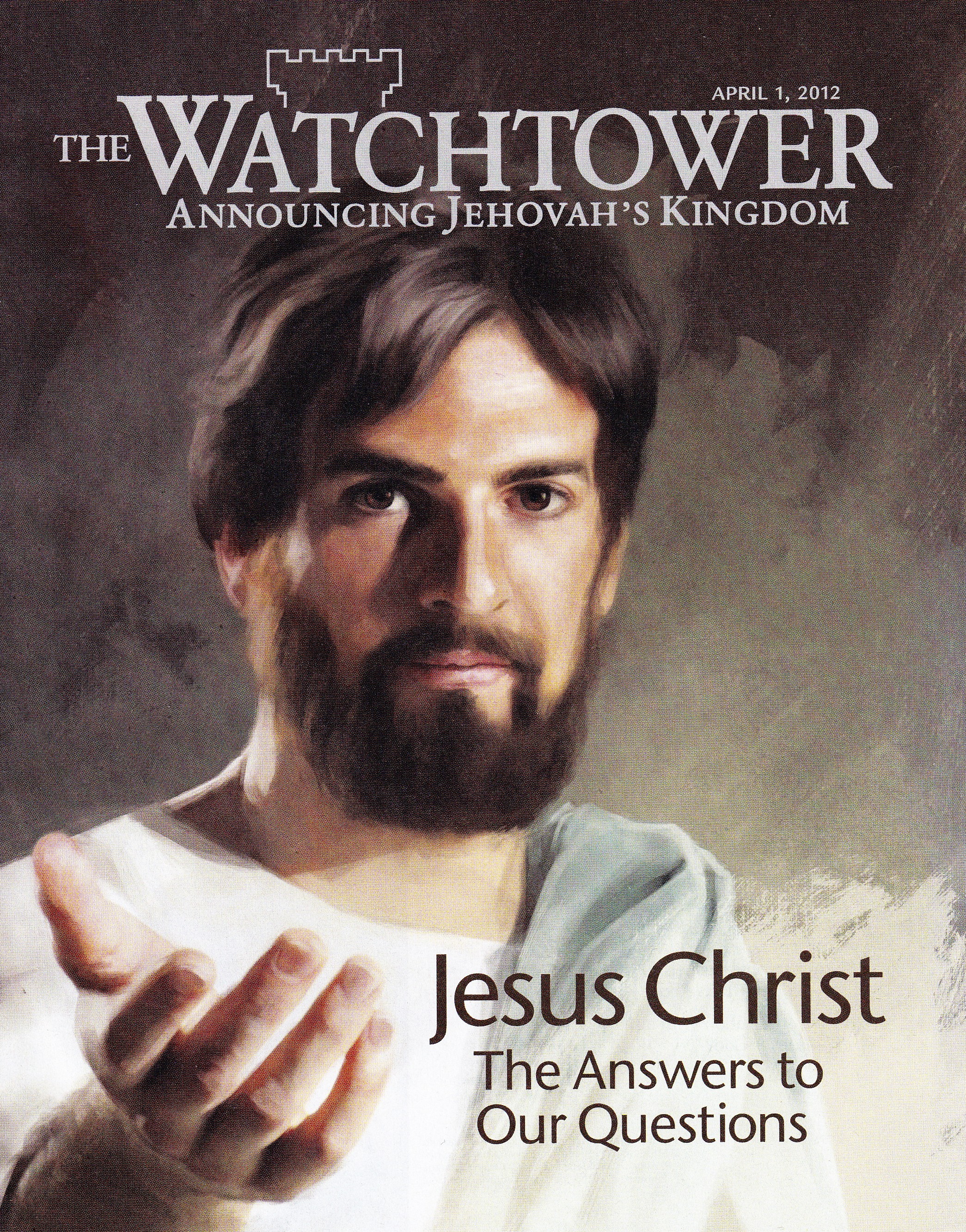
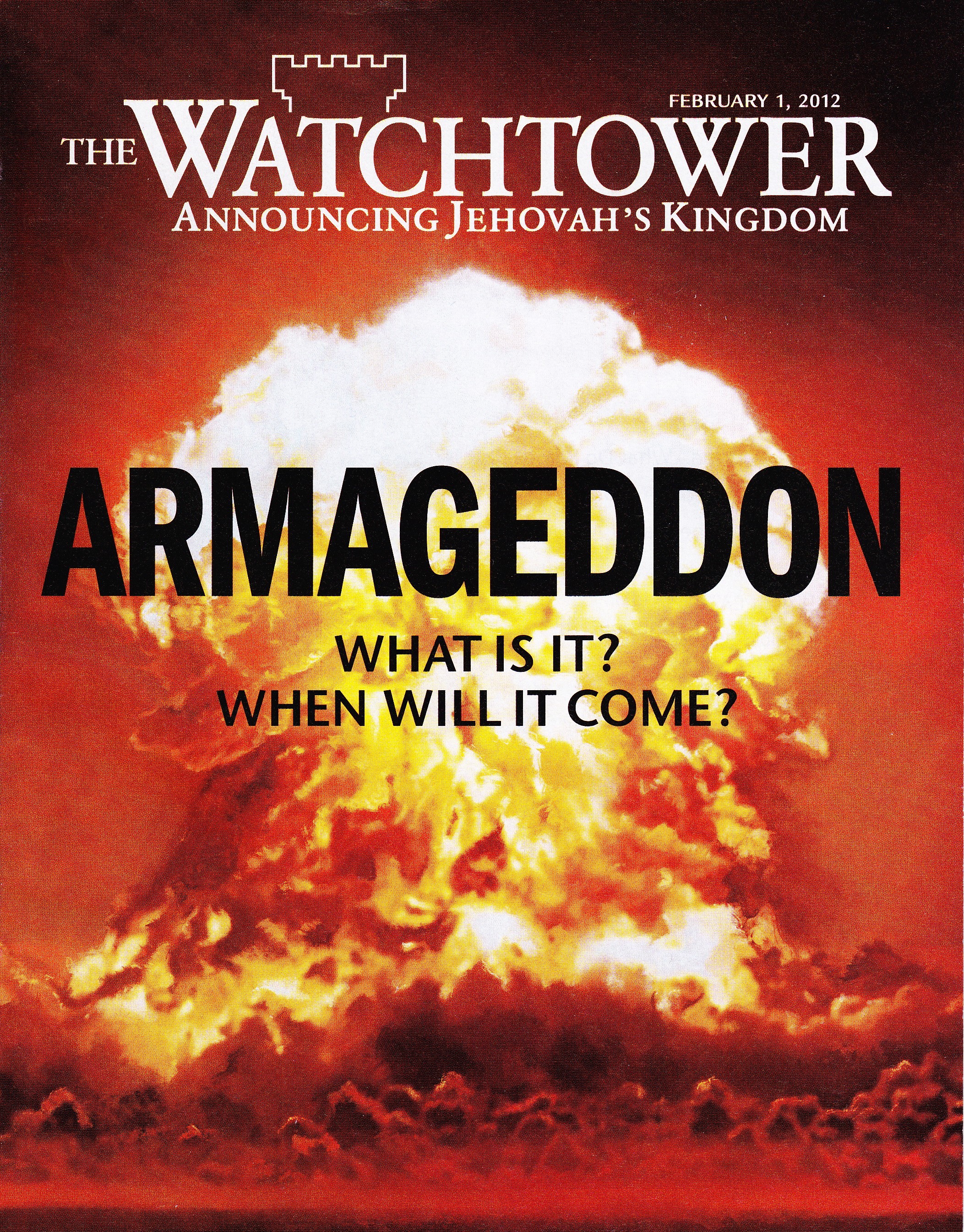
So when the smoke clears from another leap day barely survived, and my Apocalypse calendar tells me about the looming end of all things, and the Jehovah’s Witnesses stop by and leave a Watchtower with the headline “Armageddon” at my door, I start to get a little paranoid. Did I miss the memo on this? I tend to be suspicious of any religion that is less than 150 years old—call me a historical snob in that respect. By the time of the nineteenth century of the Common Era, we were getting industrialization, evolution, and the Whig party sorted out. It was hardly a propitious time to be starting new religions. Well, I was curious about Armageddon, so I read a bit of the Watchtower in any case. It goes best with salt.

“The original Hebrew word Har-Magedon literally means, ‘Mountain of Megiddo.’ Although no such literal mountain existed, a place known as Megiddo does exist.” So I learned. But there was a mountain at Megiddo. Literally. I’ve been there. It’s not an impressive mountain like the Front Range of the Rockies, but it is sufficient for the purposes of the Bible. Megiddo overlooks the broad plain of the Jezreel Valley. In ancient times such valleys were highly valued for fighting because of a basic engineering difficulty with chariots: they don’t work well on hills. Chariots have open backs, so falling out would hamper effective up-hill battles (literal ones), and your chariot bumping into your horses or chasing them downhill would have resulted when the fighting was done. Or when you were fleeing. Valleys like Jezreel were perfect for fighting. And Megiddo has a front-row seat on its little mountain. The site of Megiddo has been excavated by archaeologists and is well worth the time it takes to get there.

By coincidence (or is it?) my apocalypse wall calendar begins March by saying, “Make Archaeology Your Friend.” Hmm, is there a message somewhere in here? When the Jehovah’s Witnesses and the Mayan interpreters agree, should we not at least admit a little doubt? I don’t think so. Both traditions, as certain of special revelation as they may be, are human attempts to make sense of our world. We know of nothing that doesn’t end. The great Eastern religions seem to have caught on more readily to the idea of impermanence than Western cultures have, but they all share this in common—it’s gotta end sometime. I would, however, point out to Mr. Santorum, as he begins to think about his concession speech, that the Jehovah’s Witnesses seem to agree with the amateur Catholic on the part about Satan. My Watchtower says “Satan will marshal the nations for an assault on those who worship Jehovah God.” Perhaps politicians should stick to following the Mayans.


Nevermore

Once in a while an uncanny clarity penetrates this fog of an asphyxiating miasma that passes for a life in higher education. It was a rainy, gray day in February when I stood outside 13 West Range at the University of Virginia, looking into Edgar Allan Poe’s restored room. Poe, who is right up there with Melville and Moses among the greatest writers of all time, lived a life that was short, sad, and silenced. Or so it seemed. Dead by 40, with a career that never really got a foothold, Poe would seem to be the ideal model of a failure. His currency, however, has preserved the voice of unrest that pulses like the very life-blood through American culture. Even as a teenager, I identified with Poe. Knowing that I could never attain his level of polish and perfection, even listening to the cadences of “The Raven” can still reduce me to tears. So, standing outside his room in the gloomy rain was a private epiphany.

13 West Range

Undefined was the sense of loose ends and hopelessly tangled threads of a life I tried to weave without the blessing of Athena. I ended up at a small seminary where my influence was limited to the few students with open minds. It was truly a gothic experience, living at Nashotah House with its medieval mindset and matching physical setting. Daily watching my learning being shredded by the staunch dictates of undying dogma, I never forgot Poe. When my own career was jettisoned by a bloated theology that had no room for questions, I spent many months in a depression so deep that life had almost lost that spark of hope that makes it worth continuing. Again and again the waves crashed over me—this was the doing of the church. Those who putatively followed the teaching of a man who said, “Do unto others—” Fill in the blank.

Poe was forced out of school by an unloving foster parent who valued money more than his adoptive son. Traveling up and down the east coast looking for a place to fit his writings into a slot for a little money, he died from causes that will never be identified. Today we know he was a meteor—a brief, brilliant light in a darkened sky. He is the patron saint of all those whose voices have been silenced by an unfeeling establishment. Even in my wildest dreams, I never hope to approach the depth and grandeur of his pen, but I can stand here in the rain and commune with him. The emblem of the Raven Society stands perched in that room, and its single word is the dying word of hope in the face of an uncaring world. And that one word will be the epitaph of society that refuses, even now, to listen.


Jefferson’s Legacy

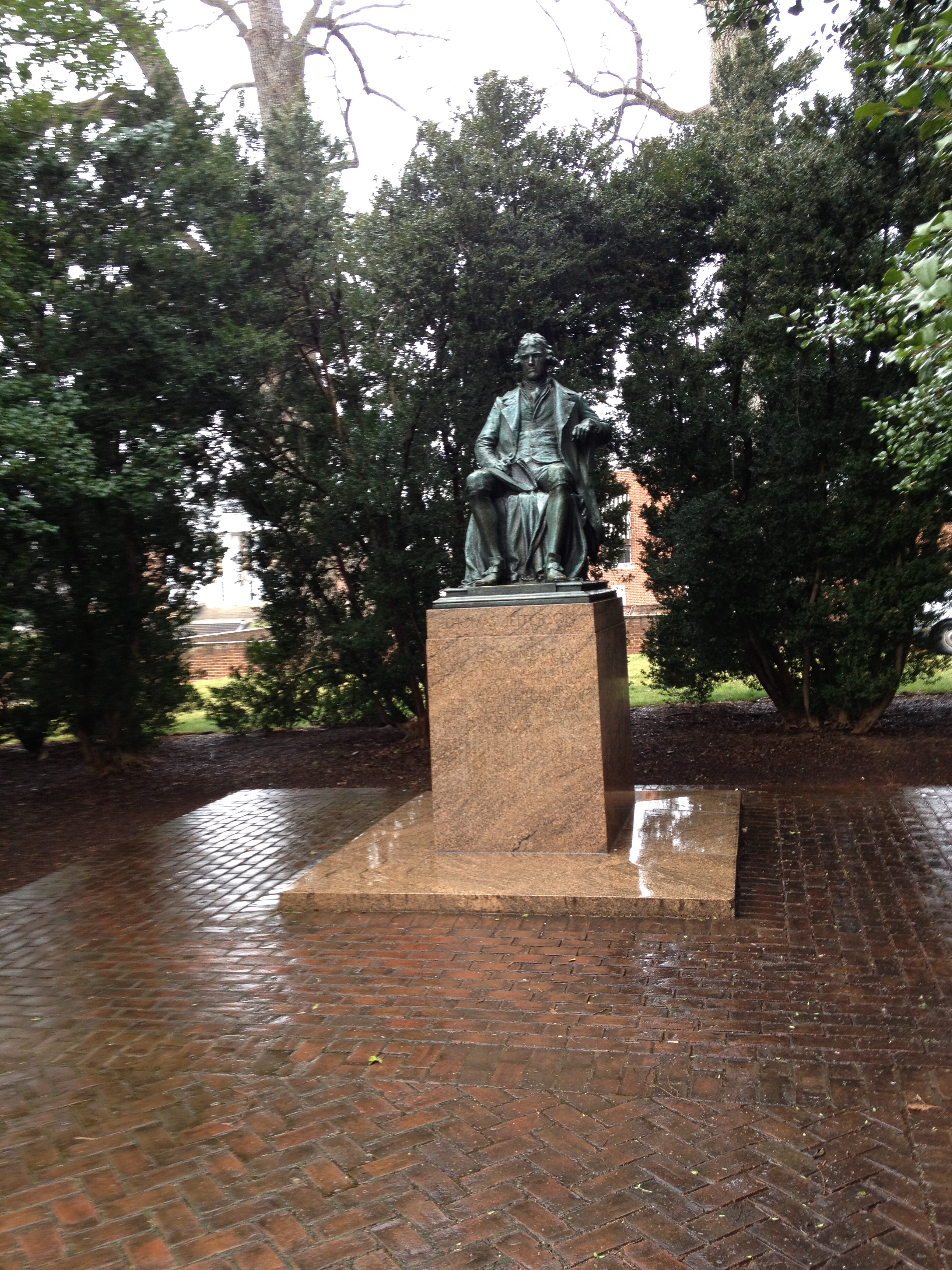
With the gears grinding in the political machine and candidates for the GOP nomination each trying to show they are more righteous than the others, the name of Thomas Jefferson gets used quite a bit. Jefferson’s famous Bible, literally cut-and-pasted together by one of our better presidents, removed miracles from the picture, and Jefferson’s writings leave open the question of whether Deist or Atheist is a more accurate description. I’m in Charlottesville, Virginia right now, home of that paean to Jefferson, the University of Virginia. For a state university, UVA has perhaps the largest religion department in the country. I noted with some irony, that the religion department is housed just above the political science department in Gibson Hall. While waiting for my first appointment, I sat in an alcove where two students began talking about politics. (This was in the religion department.) My chagrin grew as my grin faded with their lament about how poor the Republican candidates are, “but we have to get Obama out of the White House.” In order to do so, they’d elect a man whom they believe unqualified for the office.

Winston Churchill is often quoted as saying a person who doesn’t start out as a liberal has no heart, but who remains a liberal as an adult has no brain—or some such nonsense. The fact is, compassion never should go out of style. It seems to me that somebody changed the terms and what they mean. “Conservative” used to equate to a fiscal position that, while it favored the wealthy, still had sympathy—or even empathy—for those less well-off built in. Now it has come to define “selfish disregard of those different than me.” We see it all the time, not just in political speeches, but in acts passed in the name of Christianity. Jefferson’s Bible is being trampled underfoot. And we are told repeatedly that America was founded as a Christian nation. Of the students discussing politics here, the more conservative of the two was the woman.

Does she not realize that without the liberalizing tendencies of the suffragettes her own future would be limited? That does not excuse in any way the patriarchy that made suffrage necessary in the first place, but it does speak to how quickly we are taught to forget. Even in the land of Jefferson, there are those who would protect privilege and call it divinity. “It does me no injury for my neighbor to say there are twenty gods, or no god. It neither picks my pocket nor breaks my leg.” The words of Thomas Jefferson. In our great universities those who actually do learn are sometimes taught that empathy is weakness and fiscal gain is god. Unless it’s an election year. With great wealth going into the carnival we call the nomination process, we might legitimately ask what’s to become of us if those with no empathy are elected. After all, what are we, apes?

One of the few presidents worth casting in bronze


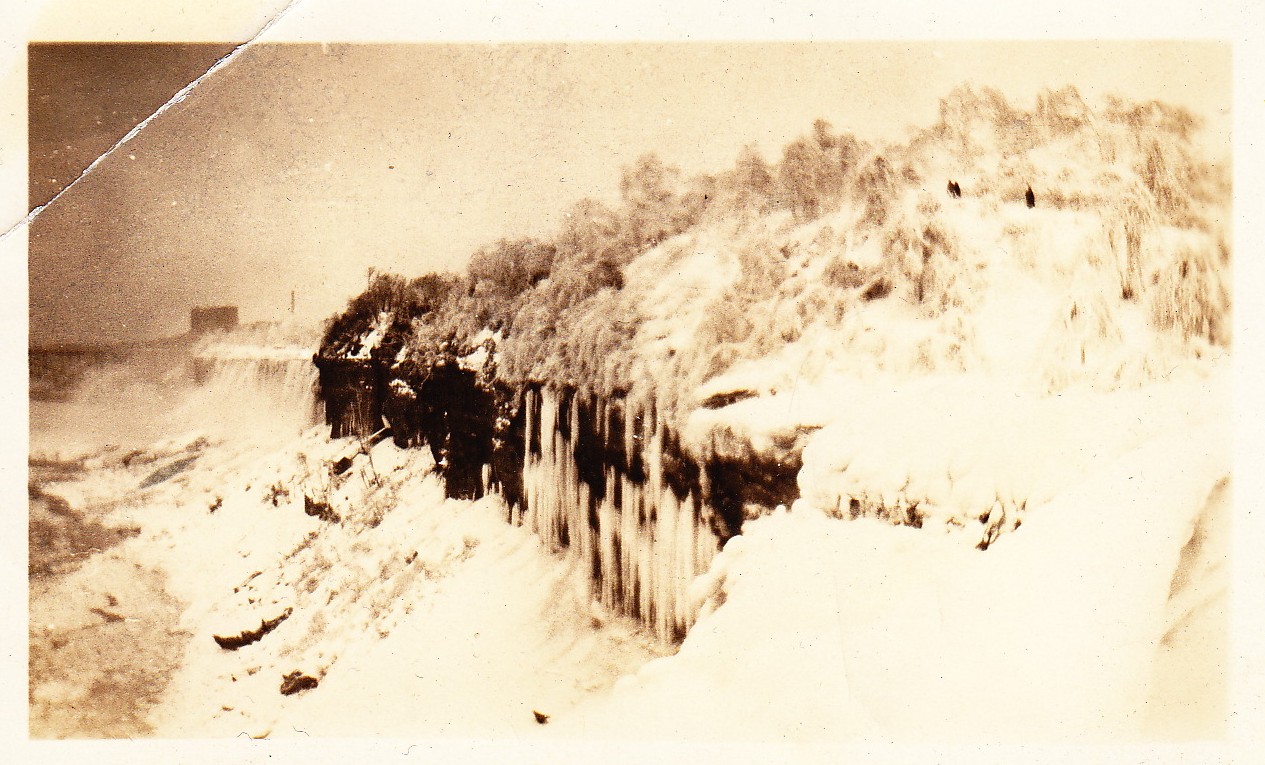
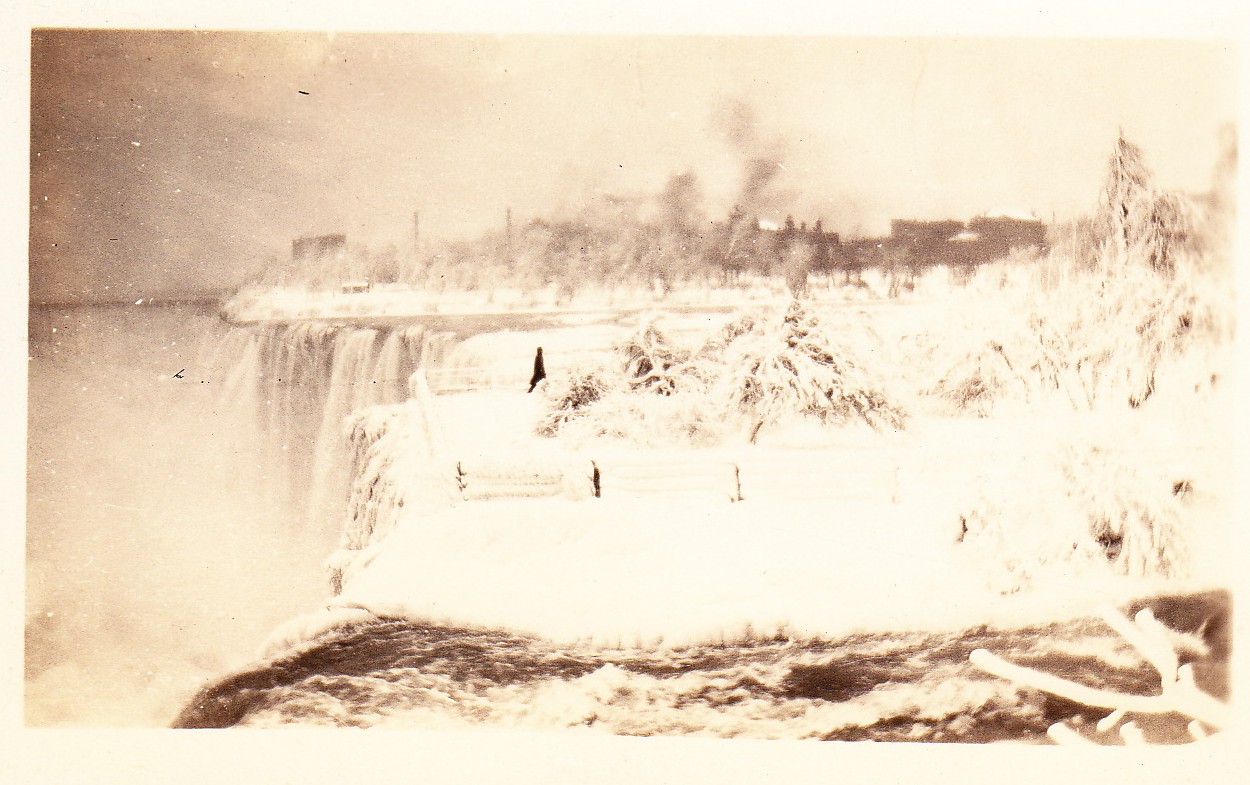
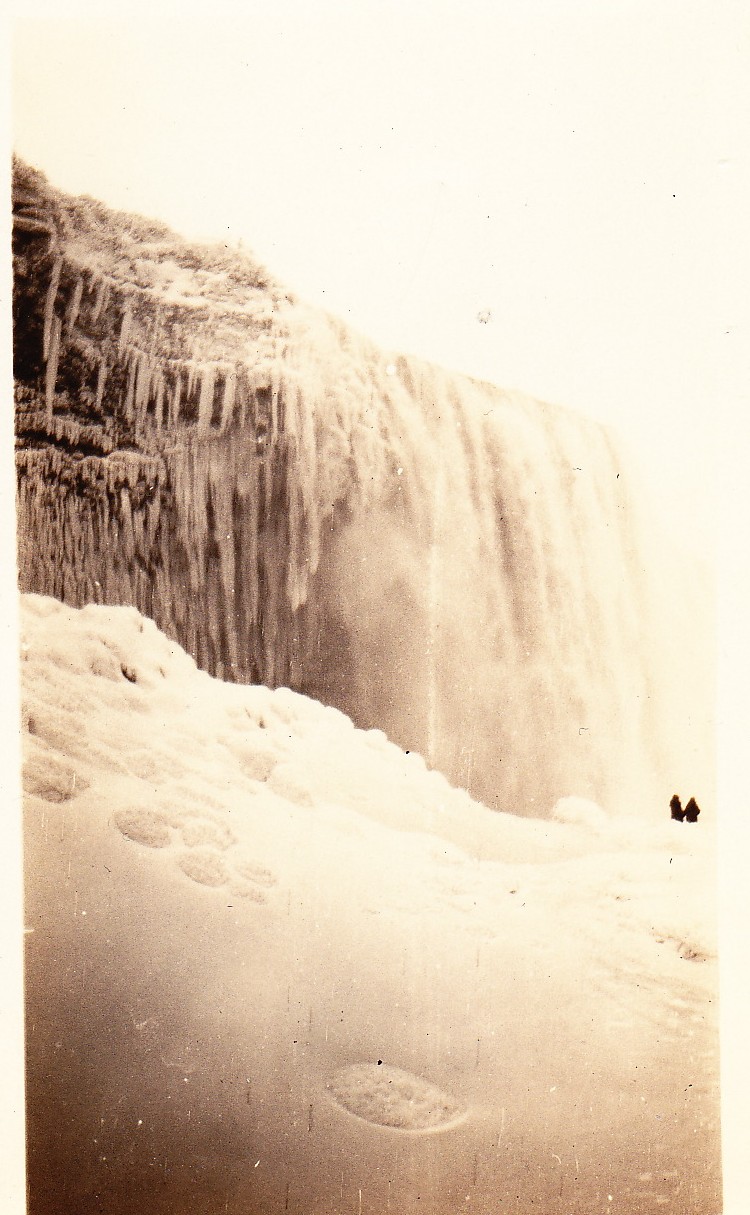
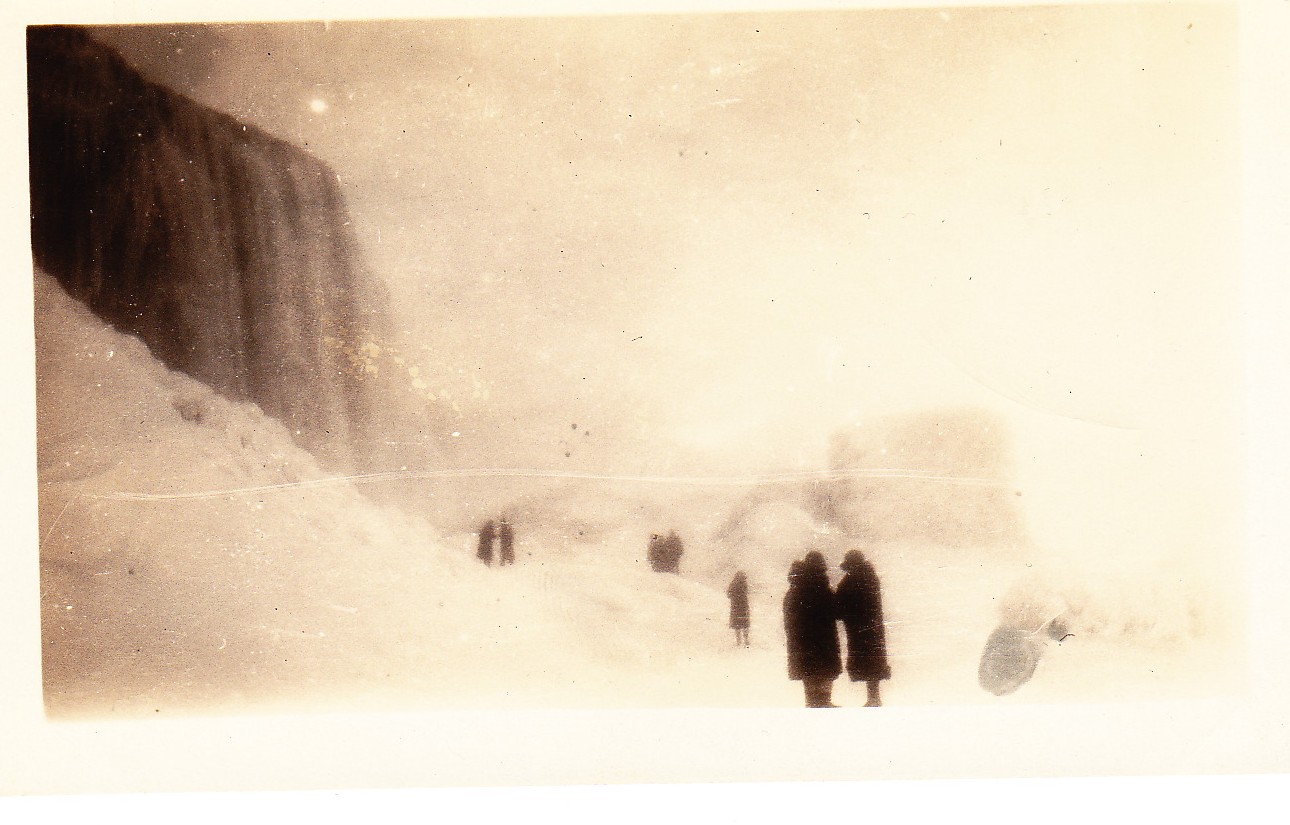
Frozen Falls

Some weather we’ve been having! New Jersey has just completed its mildest January on record. Weather has always been a favorite mode of resort to the divine since it is one of those things we people just haven’t been able to control yet. And it makes perfect sense. The atmosphere is, by definition, bigger than the planet’s surface itself, and we people are pretty tiny, all things considered. I’ve stood next to some trees in the northwest that give me a flea’s eye view of the world.

I remember one of my teachers telling us that Niagara Falls doesn’t freeze over. When I told my mother this, her response was to pull out these photos and send them to school with me. Someone in the family back in my grandfather’s younger days owned a photography business. The photos are unfortunately not dated, but they have been iconic images for me ever since that day in grade school. Yes, even Niagara Falls can freeze over. My best guess for the dates here must be sometime around 1920.

Back when we still had television, I was an avid fan of the PBS Naked Planet series. One of the episodes was on Niagara Falls. In the late 1950s and early 60’s the hydro-electric potential of the falls had been tapped to such an extent that now between 50 and 75 percent of the water flow of the thundering falls is diverted upriver. I first visited Niagara Falls as a child, but I have never experienced the falls with the full force that nature intended. Likely no one ever will again, at least as long as we are in charge of planet.

These pictures remind me of the awe of nature. They were taken when the falls were pretty much at full flow, and yet they are frozen solid and people are walking around on a river that boasts class 6 rapids, the highest the whitewater scale goes. Sometimes when people assert too much control on their planet, it is nice to be reminded that our tired orthodoxies aren’t always what they seem to be. It may be an unseasonably mild winter this year, but nature may still have a few tricks up her sleeves.


Best Prayer in the Air

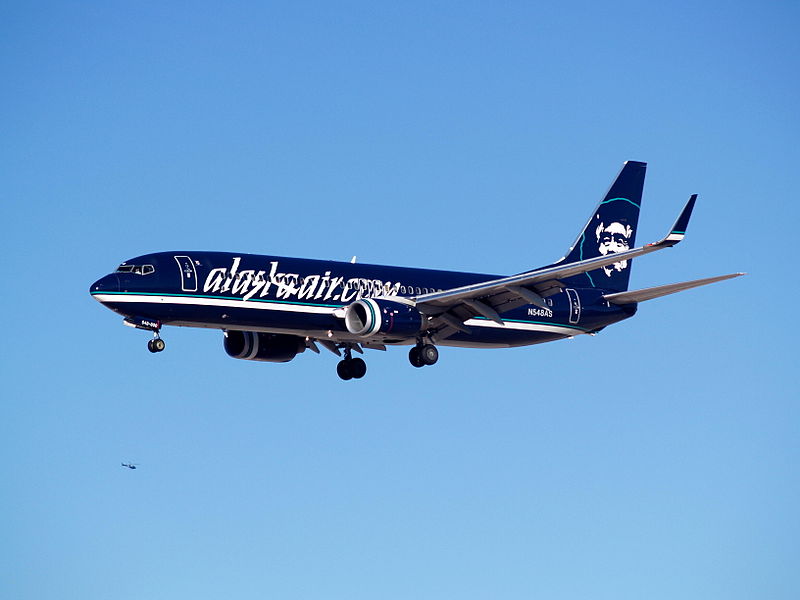
With my current job I travel quite a bit. With all the attendant time hanging around airports, I have time to think back to pre-deregulation days when flying meant some kind of care in the air. It has been in the news the last few days that Alaska Airlines is removing the prayer cards from its trays during meals. When I saw that, the real surprise to me was—airlines serving meals? When did they start doing that? A couple years back I flew coast to coast on Alaska Airlines with nothing more than a sack of peanuts. I would have been happy to have had a prayer card to eat. I agree with those who pointed out to the airline, when it served these alleged meals, that paying customers shouldn’t be proselytized. You can get enough of that by watching GOP debates. And I certainly hope the message wasn’t that the plane only flew on a miracle.

I’m sure that some people will say there’s no harm in a little non-invasive sermonizing. Therefore I must make my own confession; I was a teenage evangelical. Although I never actually did tracts myself, I hung out with kids who did. Once, on the way home from a youth meeting, a carload of us stopped to get a bite to eat in a diner. Now, we were high school kids, not flush with money, but even I knew it was right to tip—waitresses have to put up with a lot for little pay. One of my friends told us that if we really wanted to help the young lady out, we should leave a tract as a tip. What reward could be better than salvation? Surely that would help to feed her family or buy her kids a new pair of shoes. Indoctrinated as I was (and I hadn’t even been to college yet, Mr. Santorum), it seemed like a good idea. Still, I felt bad when we left.

These two situations are not dissimilar. In both cases someone would rather print cheap words on cheap paper with free sentiments rather than giving a person sustenance. It’s been a few years since I’ve darkened a pulpit, but I do seem to recall Jesus insisting that the hungry be fed. I don’t recall what he said about tracts and prayer cards.

Religions have a way of focusing on the forgettable minutiae while overlooking the real need right in front of them. In November I flew from New York to San Francisco, subsisting on a tiny bag of peanuts and some airline orange juice. If old Deutero-Isaiah were sitting next to me he might have said, “why spend money on what is not bread?” But I was thinking that maybe the karma of that tipless waitress was simply coming back full circle.


Wassailing

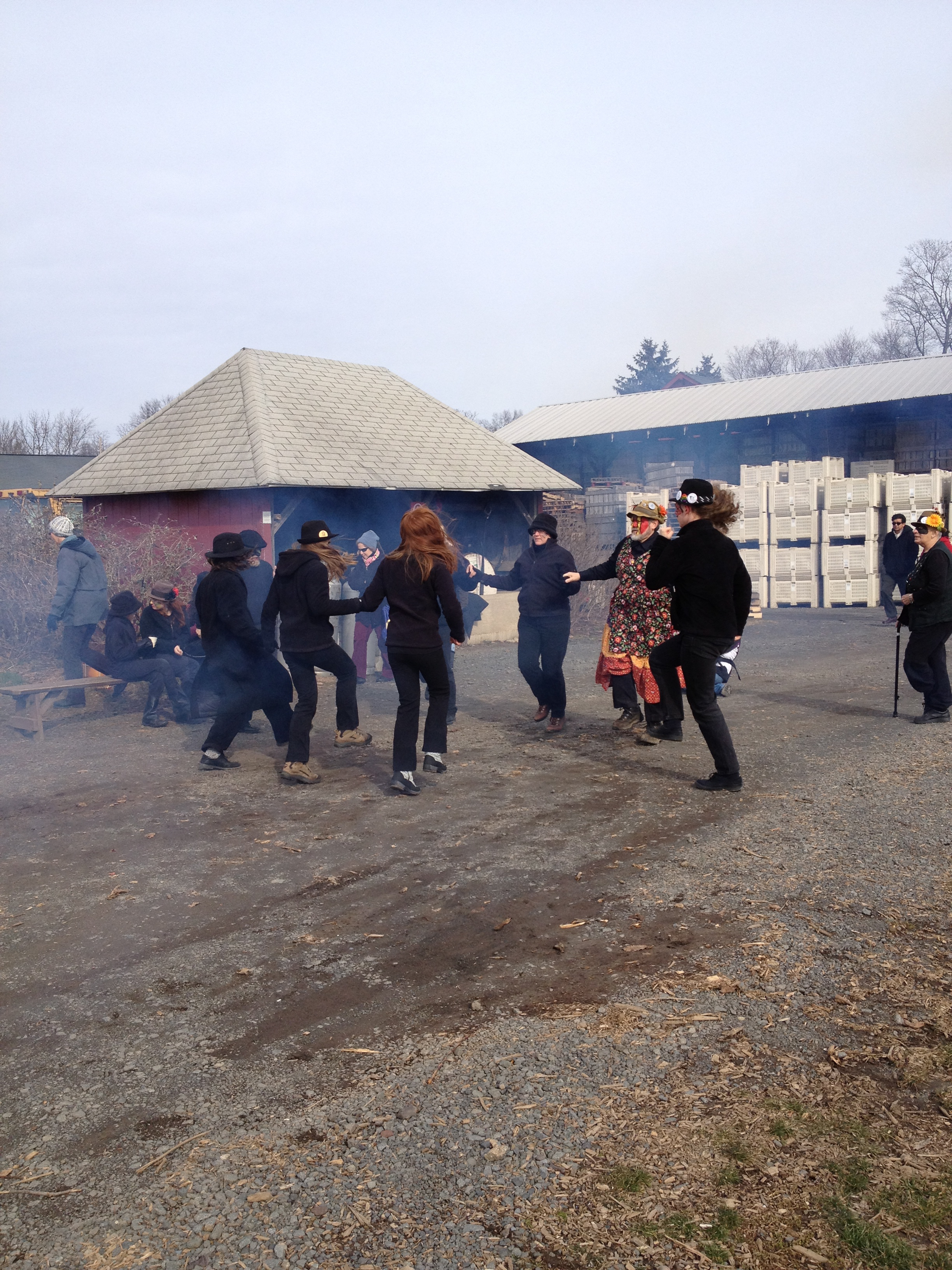
It was a nippy 42 degrees with a chill January breeze cutting through the brightly garbed crowd of maybe two-dozen stalwart souls. There were Molly dancers holding hands and skipping in a circle. Smoke from a bonfire caught the breeze as a woman with a painted face sang about the circle of the sun. The whole event had a Wicker Man sort of feeling to it, but participating in an ancient tradition is strangely fulfilling. A basket on the table held pencils and paper on with instructions to write your wish and burn the paper in the bonfire so that “Your message will travel into the cosmos.” The bare apple trees were seasonally pruned and discarded branches littered the ground. It all sounds suitably pagan for a Sunday afternoon in New Jersey.

Having grown up in a rather sheltered small-town environment I never even heard of wassail until planning for my December wedding nearly twenty-five years ago. A low budget affair with the reception in a church basement, my wife decided not to offend Methodist sensibilities by serving wassail, a spiced cider drink generally associated with Christmas. As I learned this midwinter, wassailing has a deep and mysterious ancestry that is a mix of pagan and Christian traditions. One aspect of wassailing is associated with Christmas carols and is based on the tradition of the wealthy sharing with the poor during the holiday season (a practice clearly extinct these days). The second type of wassailing goes back to nature religion and the blessing of the apple trees. It was observed on midwinter, which, before the Gregorian calendar, fell on January 17. At Terhune Orchards the festival fell on the 29th this year.

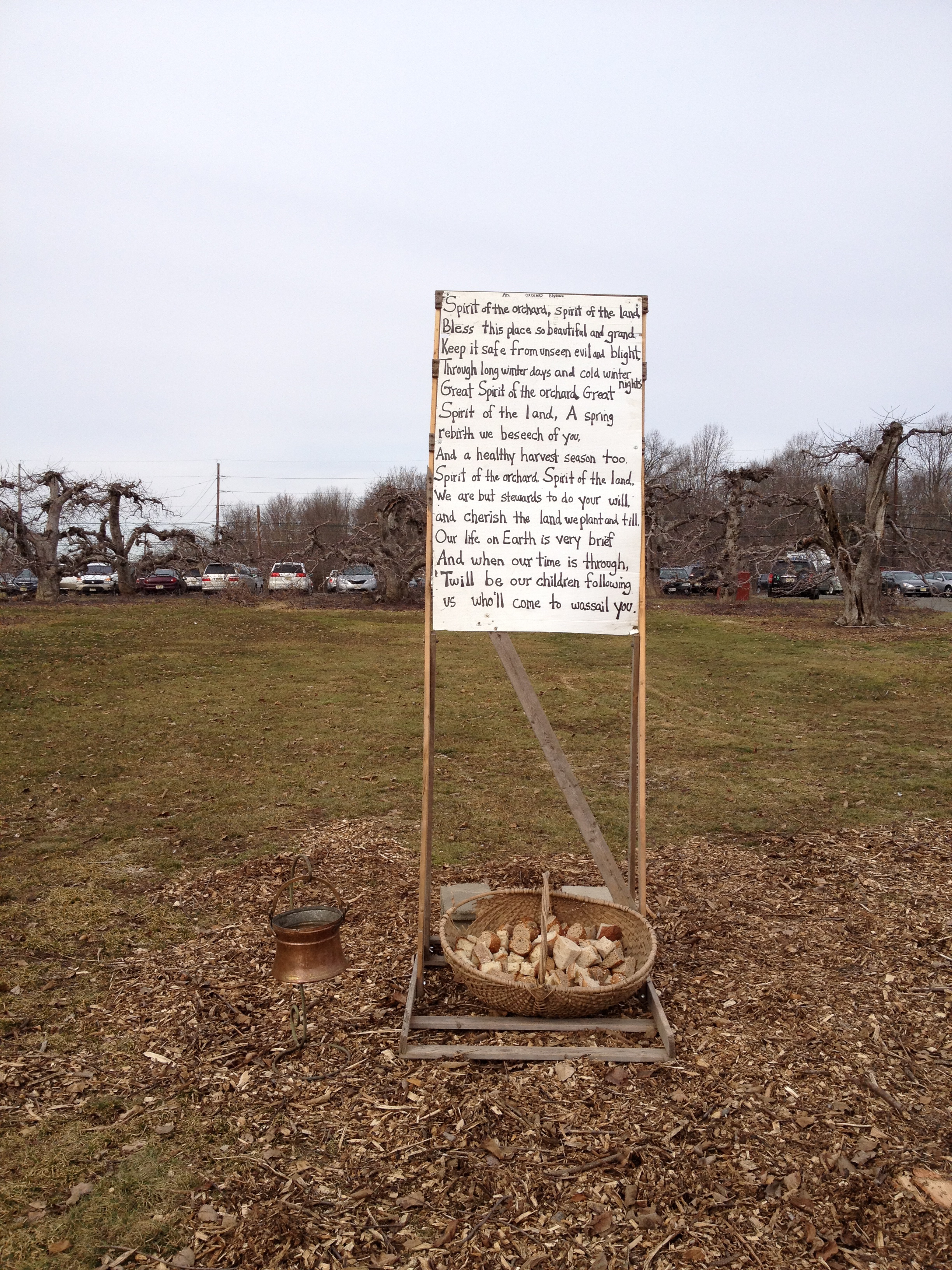
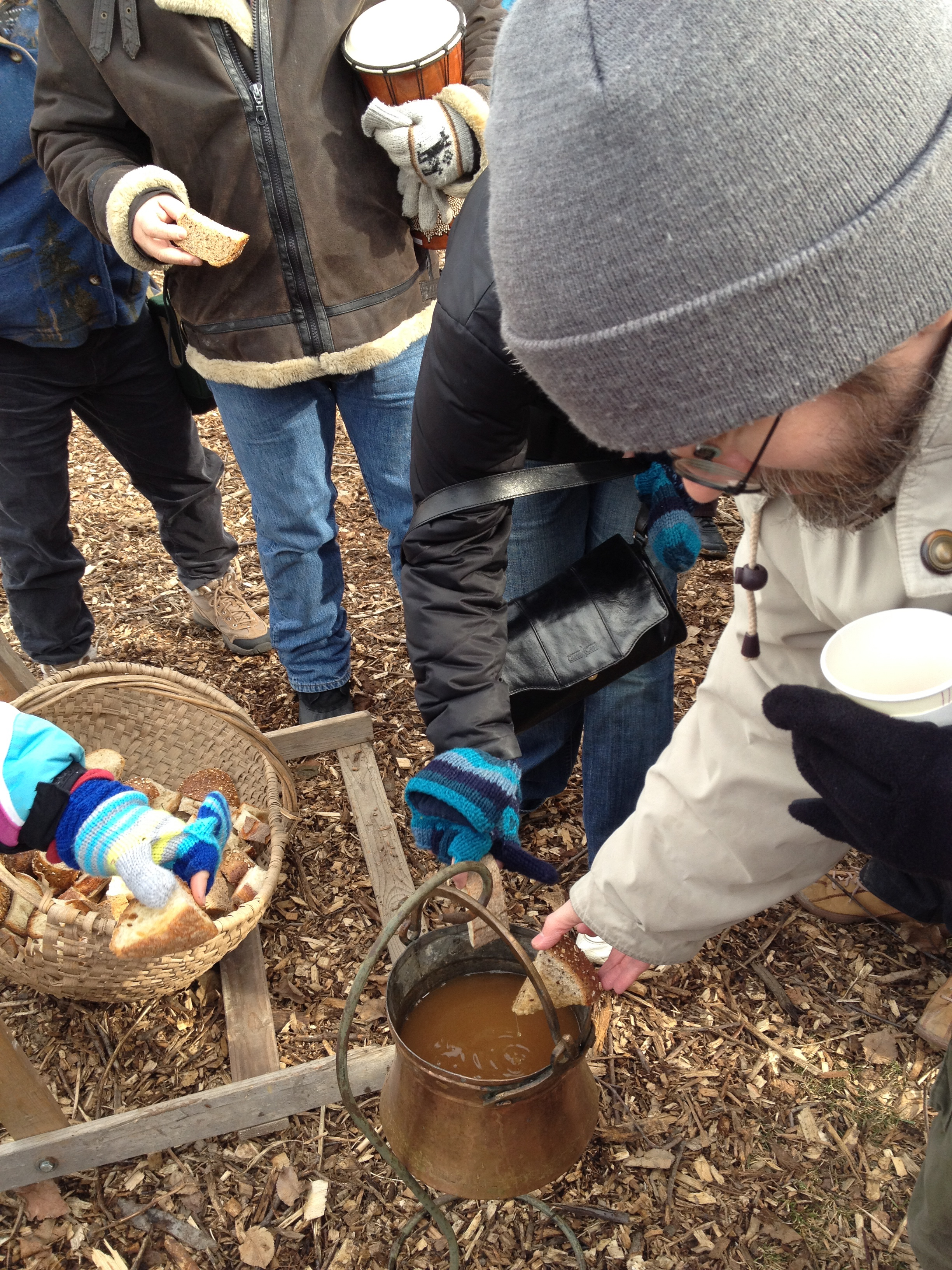
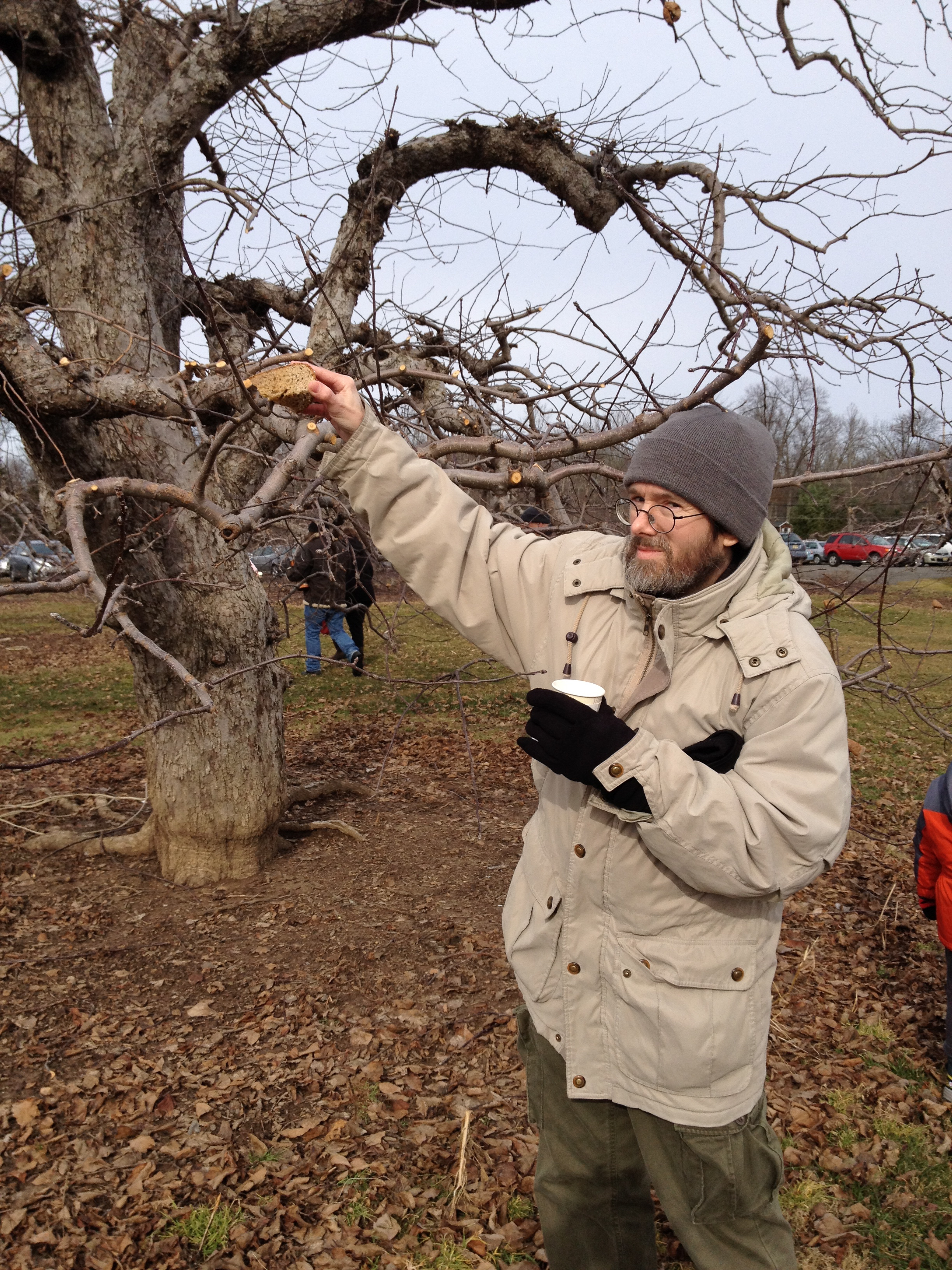
After watching the Molly dancers and sending our wishes up to the cosmos in the bonfire, one of the orchard proprietors gathered the crowd, now having about doubled to fifty, to sing the Somerset Wassail and then to make noise to drive out the evil spirits. This the crowd did with enthusiasm. We were then asked to recite the wassail prayer, printed on a signpost for all to see. Bread was passed out which we dunked in cider and hung on the naked apple trees. After a final blessing we headed to our car to preserve our own wassail. In England’s apple-growing regions, wassailing the trees is still practiced with a sincerity that marks the deeply mysterious. Some Christian sensibilities, I’m sure would be offended, but this ancient custom, like leaving a tree to stand in the midst of a plowed field to propitiate the spirit of nature, goes profoundly into human consciousness. I, for one, will lift a cup of cider and join the ancient rite to brighten a winter day.


Who Knows?

While I have nothing less than respect (and just slightly less than utter awe) for my alma mater of Edinburgh, I cannot help being bemused at times by the alumni magazine. Between my wife and I, when we fail to cover our tracks adequately, we receive almost as many alumni magazines as exclusive credit card offers. Anybody intelligent enough to graduate realizes that these magazines are attempts to raise money, but they maintain the illusion of giving actual news. Thus it was I found myself facing a pithy piece stating in no uncertain terms that “Near-death events are ‘tricks of mind.’” The rationale given is that psychologists at both Edinburgh and Cambridge have decided it is so.

Now, I’ve never had a near-death experience, nor do I really ever want to. I don’t know what to make of the stories of those who claim to have “crossed over.” The problem is, there can be no winner to the argument of authentic experience versus mind trick. Those who know, by definition, can’t tell. Each side has good points to make. Some religions, particularly those of western orientation, tend to offer an afterlife anyway, so when someone appears to have slipped over the edge and claims they saw a great light, well, why not? Scientists often make the equally valid point that the rapid images that occur in the brain may seem to stretch on into minutes or hours and may incorporate images that our culture lends us of what to expect when the darkness falls. The near-death experience is, they say, final jolts of electrical “noise” just before brain activity ceases.

Some things we just can’t know, even if we attended Edinburgh. “Near-death experiences are not paranormal but are triggered by a change in normal brain function, according to researchers.” So the article says. There seems nothing paranormal about death—it is as natural an event as exists. It is common to us all, including pets and pests. The “paranormal” is the idea that something continues after death. If that something includes a deity or two, it becomes “religious” rather than “paranormal.” Whether religious, psychological, or paranormal, intelligent people continue to debate what is actually happening to those who have been briefly dead and have the medical records to prove it. For my part, if there’s something on the other side, I hope it’s a lot like Edinburgh. Maybe with a few less alumni magazines, however.

Life, and then this.


Jesus for President

From my economical hotel to Duke University was maybe a twenty-minute drive. As a stranger in town I prefered to stay off the heavily traveled corridors during busy morning commute times, never being sure when exactly my exit was coming up. So I took the backroads. Along the way I started to see churches with denominational names I’ve never even heard before. I quickly lost count of just how many houses of worship I passed. With all this rich fare, perhaps it is time to tighten the old Bible belt a bit. The short drive reminded me of my one and only fact-gathering trip sponsored by Nashotah House. I was sent to Asbury Seminary in Wilmore, Kentucky for a technology conference. Accompanied by an Episcopal priest and a Lutheran pastor, I was not the only one of us to feel a bit besieged by the in-your-face evangelicalism of Kentucky. My Lutheran colleague wistfully commented, “but the ELCA is ‘Evangelical.’” A different species of evangelical entirely.

The chapel at Duke University easily dominates the west campus. The divinity school is one of the flagship seminaries of the United Methodist Church. Founded by the tobacco money of James Buchanan Duke (who also owned the estate in New Jersey where our ill-fated garden was planted this summer) and the fledgling Trinity College, Duke is an interesting mix of the sacred and profane; Eliade in quadrangles and limestone. The campus sports identity is the Blue Devils, and this diabolical emblem can be seen leering from tote bags and campus buses connecting east and west. Money and religion, devils and saints. Life offers many choices, and Duke, as an exclusive institution, serves the blended family of academics in Bible land.

One of my daughter’s favorite movies as a child was Disney’s Lilo and Stitch. In case you missed it, Stitch is an alien (you’ve got to love it already!), and Lilo is a little girl who loves Elvis, a true southern prodigy. The movie features Elvis singing Giant, Baum and Kaye’s “Devil in Disguise.” Although a song about love in crisis, “Devil in Disguise” seems a decidedly useful trope. Human institutions often disguise themselves as divine. After all, no suite trumps the God card. Religion is so prevalent in the Bible Belt that Christianity is less a religion and more a culture. That culture is at barbed odds with itself, for its deepest, darkest desires are out of line with the utter selflessness that Jesus seems to imply is at the heart of Christianity. Travel is one of the greatest teaching tools we have. Sometimes your own country can feel like foreign soil.


Poisonous Beliefs

When it comes to staying alone in hotels, I use the time to catch up on my reading. I suppose I did my time with television as a child, and there are so many books awaiting my attention that I just can’t see letting the time get away. Last night, however, I’d heard that Rick Perry was accusing God of changing His mind, and so I switched on the news. After that grew tiresome, I landed on Animal Planet where a woman was being chased out of her house by a snake. Being in North Carolina, the first thing that came to mind was snake-handlers, and within minutes my suspicions were confirmed. I’d stumbled on “Snake Man of Appalachia.” I was transfixed. Although I caught the show already in progress, it quickly became clear that the wife was terrified of snakes and her underemployed husband spent his ample spare time collecting rattlers and copperheads for church. The setting was rural Kentucky. Very rural.

This was a marriage between an unbeliever (she, Reva) and a true believer (he, Verlin). Reva’s love for Verlin was quite obvious, even as she told the camera she didn’t believe in snake-handling. “I worry every time he goes to church,” she lamented in the diametrically opposite words of the stereotypical housewife complaint. Meanwhile, some various relatives, apparently closely related, were out on their ATVs huntin’ snakes. They would praise Jesus when they found one, after stuffing it into the safety bag. If Mark 16.18 were truly to be taken literally, why would you need to use those snake-handling hooks and bags to carry the poor things in? It was a good day for snagging serpents, and when Sunday rolled around Reva was very worried as Verlin headed off to church with a Bible in the hand and a several snake carriers in the back of the 4-by-4. There were not many people in church—less than 10. I wondered what their death records read like.

Animal Planet has sunken to the lowest common denominator, adding shows about rusticated foils for sophisticated urbanites to laugh at. How else can you explain “Hillbilly Handfishin’”? What was sad to me was that Verlin and his family live in very humble circumstances. Very humble. He has trouble finding work and even his wife prays that the Lord might use his snake-gathering talent to earn a little money. They couldn’t even afford birthday presents for their kids, and we call it entertainment. Among the multitude of religious conflicts slithering through my brain as I watched, there was an even more troubling image: bread and circuses. When the Roman Empire had lost the unthinking adoration of the citizens, the ploy of making a spectacle of the suffering of others became common. Our society has clearly made the declaration that the wealthy are where they deserve to be and the rest of us should bask in their beneficence. You think you got it bad, watch those poor believers handling snakes while they live in shacks. After all, doesn’t that same Bible say, “blessed are the poor”?

Where is your faith?


Old Smoky

I don’t mean to hit below the Bible Belt, but I find myself in North Carolina for a round of campus visiting this week. Since I’ve only ever passed through North Carolina on my way elsewhere before, I wasn’t quite sure if I’d experience culture shock. Since I’m visiting multiple schools, I needed to rent a car. As I climbed in, it was clear that I was in tobacco country. The problem with the rich, satisfying taste of tobacco is that it doesn’t translate well. I grew up forced to inhale many cubic meters of second-hand smoke, and I can’t stand the wretched odor. It stands to reason from my previous sentence that I grew up knowing many smokers, and it was entirely obvious to me that they did not realize just what a legacy their habits left behind. I went to school smelling like burnt industrial waste, and when I climbed into my Hertz Nissan Versa in North Carolina all of that came back to me in an instant.

When tobacco was king, or at least Duke.

In my evangelical childhood I was taught that smoking was wrong, although, perhaps understandably, Jesus had little to say on the subject. This highlights one of the thornier aspects of drawing ethics from the Bible. Apart from the obvious damages to health, the Bible gives no guidance either way on the smoking issue. The same may be said for contraception, abortion, drug use and stem cells. For all its laws, the Bible is remarkably non-issue driven. What you choose to do with your body is less important than the impact your actions will have on somebody else’s body. God is the parent who is driving the car shouting at the kids in the backseat, “Keep your hands to yourself!” So, here in the land of tobacco, the teeth of my biblical argument are extracted. I can hear some readers objecting that Paul says your body is a temple of the Lord. Problem is, they used lots of incense in the temple—and that smoke can be even more choking than cigarettes (I write from experience here).

Morals, as ethicists are increasingly realizing, come from custom rather than scripture. Rules are based on what society holds to be of benefit to the greatest number. The Bible has a voice in this debate, but no vote. Rules handed down from on high lack the human touch. We share the planet with our fellow humans, so they must be our focus when it comes to ethics. Some habits, unfortunately, share a little too much. I’m not the kind of person to tell other people what to do, but when I climb out of my rental car smelling like burnt industrial waste I somehow feel slightly wronged here. Maybe one of those rules should be, if you don’t own it, don’t smoke in it. Is that smoke I see rising from atop Mount Sinai?


Sinking Feeling

Many readers are aware of the heavily metaphoric nature of many posts on this blog. Sometimes staring directly at something can be too troubling to handle, so metaphors come to the rescue. I was about to board a plane in LaGuardia yesterday when the news about the sinking of the Costa Concordia came onto the news. The wrecks of mass transit carriers—whether trains, planes, buses, or cruise ships—are tragic in terms of the potential for harm to many. Perhaps worse, they are reminders of our own anonymity. It is the rare John Jacob Astor who gets remembered as the victim of a specific mass tragedy. And he was already famous to begin with. We hear more about the Buddy Holly crash than we do the individual names of the many thousands wiped out in the Christmas Tsunami of 2004. What were their names?

As of this morning eleven people are reported dead from the Costa Concordia, one of them notably not being Captain Francesco Schettino, the man who would not go down with the ship. Seafaring lore—surely some of the richest and most inventive in the world—has rules about this kind of thing. The captain goes down with the ship. Ships were (are) generally given feminine names since they are the womb-like protectors of those aboard. Nature knows no better protector than a mother. The captain is the dedicated son who, when his mother sinks, accompanies her to Davy Jones. The Italian coast guard had to order Schettino back aboard his sinking ship after he’d abandoned rescue efforts.

We expect much from our leaders. Things are so complicated in this world we’ve constructed that many of us know we simply couldn’t get along without those smarter than we are. When the car won’t start. When I can’t connect to the Internet. When Wikipedia is shut down for a day. When I watch movies about the last person left alive in some post-apocalyptic scenario. At these times I realize just how little I know. I’ve occasionally been privileged to drive a boat—something I have no business doing—by those who trust my judgment more than I do. Even out on a wide lake the world seems out of control. We need a captain who will stay with the ship. And when all of this is over, whose name will be remembered? Is it the eleven (maybe more) who died? No, it will be Captain Francesco Schettino, the man who refused to go down with his ship.