The Newt Roars

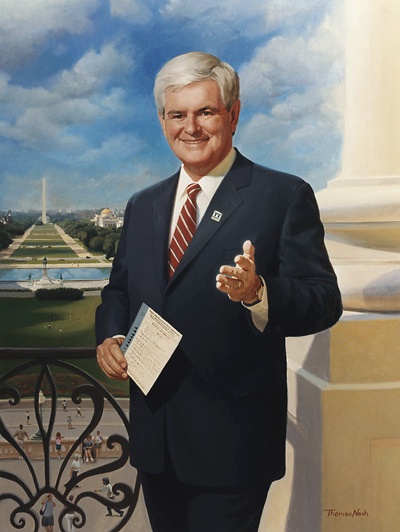
Today marks the final day of my Iowa odyssey. The state that is about as heart-of-the-nation as you can get is chaffing under the weight of political lard as the caucuses near. According to the Huffington Post, Newt Gingrich is roaring mad about the negative ads that are choking the airwaves. You’d think with a life in politics he’d be used to it by now. Religion, of course, is playing an undue role in this season’s GOP contest—everyone knows Mitt Romney is a Mormon and publishers are scrambling to get out books on that religion as fast as their authors can write. Rick Perry, to the chagrin of many, bears a Methodist affiliation and the religious sensibility of Genghis Khan. Of course, Newt appears relatively calm as a Catholic, at least for the time being. Jack Kennedy, however, he is not.

The Republican Party began a flirtation with religious conservatives as early as the Nixon years. Pundits realized that, like the Alaskan oil reserves, religious fundamentalists were an untapped resource to grease the rails to election day. Overjoyed to have a voice in high profile public office, the conservative Christian crowd began to wilt from the perceived failure of Jimmy Carter and began to glom onto the media image projected by Ronald Reagan. We all suffered through the Bush years, hearing more about God from the president than we heard about the soaring national debt or the coming crash that would implode upon the working class that elected him to office (so they say). Now, facing the choice of candidates wealthy enough to run for office, many are finding the choices on the shelves of the spiritual marketplace a little understocked.

Back in the days when America was young, the founders laid down rules declaring that no religious tests would be imposed on those running for public office. Their fears proved prescient and uncannily accurate. Today perhaps the biggest test any candidate has to pass is his or her religious affiliation. Can we imagine a Mike Huckabee, Sarah Palin, or Michele Bachmann without their Bibles tucked under arm? Religion has no corner on the market for sanity. Many, in fact, would argue that the indications sometimes point in the other direction. The corner America has painted itself into is not so much shaded with red, white, and blue, as it is with the muddy brown of religious slurry that has become the new politics. Newt, newly minted from his Southern Baptist heritage, is mad about mudslinging. I think Americans should be enraged about religion slinging instead.


The Self-Importance of Nothingness

Not that I’m aspiring to Sartre, but being in the presence of so many academics brings out the natural existentialist in me. Religion is a funny field to engage in higher education. We are studying an intangible. Many would say an illusion. If we are too bold about what we find, no shaking hand will deign to sign the paycheck, and so we carry on, innocuous, unperturbed, self-assured. At conferences like this I sometimes sit back and watch others walk by. Having entered the academic world from humble, uneducated beginnings, I have no pretensions about what I do. Or where I might go. Yet I hear idolatrous whispers following those who’ve made a name for themselves. God-struck grad students with that theophanic gaze leveled at the man (sometimes woman) whose name graces the cover of so many books. God’s very representative here on earth. Incarnate in this very room.

I entered religious studies because I arrived at college knowing nothing. An exasperated freshman advisor finally insisted I chose a major. I said I didn’t know. “But what are you interested in?” To me religion wasn’t as much an interest as an imperative. Some churches raise their young to believe that all else is vanity. Every moment should be spent seeking that elusive deity, the one whose very words the clergy speak. I fell into religious studies. I fell far. Reading the Bible multiple times as a teen, classes weren’t that challenging. Ideas were. There comes a time, undefined so as not to be pinpointed, when an invisible line is crossed. Then, when you look back, everything has changed. A dark secret has been planted deep in your psyche and you realize that you are a religion scholar. There is no turning back.

No Einsteins exist in the world of the academic study of religion, but gods abound. Watching colleagues who’ve achieved the dream, who’ve been tenured and pampered and paid well to deign to share their lofty thoughts with the rest of us, I feel like I’m watching shadow puppets against a blank wall. When will they get God into the laboratory and switch on their fancy, humming machines, and the one that goes “ping,” to uncover the truth of the universe? How much lower can we mere mortals stoop? It often feels like I missed that crucial first day of school. Having peered long over the ledge, however, I realize that we are all in this together. Has anyone ever bothered to count the homeless in San Francisco? Has anyone ever bothered to look into their eyes? And that guy with high name recognition? I’ll ask him to write a book. And I will fawn and coo. Why? Because I know the hand that signs the check, and I know the price of idolatry.


I Left my Bible in San Francisco

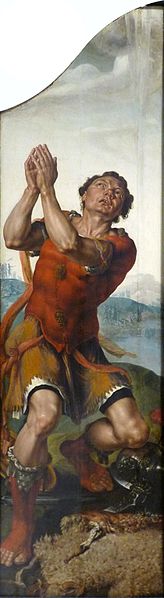
Gideon prays for a Bible

I’m staying at the Hilton, Union Square in San Francisco. Surrounding me are over 10,000 (is that a proper myriad?) religion and Bible scholars gathered for the American Academy of Religion and Society of Biblical Literature annual meeting. I travel light. Having left my Bible behind I went to look up something in the Gideon general issue. It is not here. The world’s largest academic conference focusing on the Bible, four hundred years after the King James Version hit the shelves, and I am Bible-less in my hotel room. Of course, once I get to work I will be surrounded by Bibles, some of them walking, talking resources who have the whole book memorized. Yes, the Society is that kind of place. The Gideon hotel Bible is an American institution. It feels like a constitutional right. When my daughter was very young and we stayed in a hotel, she found the Gideon Bible and asked what it was. We explained that the Gideons leave a Bible in hotel rooms all across the country. “That’s just weird,” she said with all the conviction of a pre-teen.

There are current movements to remove Gideon Bibles from hotels. They do, after all, represent a privileged position to Christianity in a nation founded on religious freedom. No one is forcing you to read that Bible, but it is there, like a tell-tale heart, in your bedside table drawer. Thumping incessantly. To read or not to read? What’s on the TV?

My favorite discussions at conferences like this are with scholars who find the privileging of one religion distressing. Our culture is so grown up in so many ways; we are more enlightened about sexuality and gender and race, and yet, and yet… We still like to have that Gideon Bible nearby. We like our political candidates Christian. Preferably Protestant, although a Catholic will do if he (inevitably he) is on the right side of the right issues. We are vaguely and implicitly afraid of those who don’t share our convictions.

In a moment of levity near closing time yesterday, a customer stopped by to say Routledge should have more gimmicks. Many publishers have giveaways, and some have little games that bearded, bespectacled professors sometimes even play. The customer suggest darts, or even a little shooting range. I said, “Guns and theology are sure to lead to trouble.” Although he laughed, I was serious. Few things in this world can be justified as easily as religiously motivated slayings, at least in the minds of the perpetrators. And to borrow a phrase from a budding genius, “That’s just weird.”


Layers

I’m all for not offending anyone. I became P.C. in principal just as soon as my consciousness was raised that the very basics of English grammar caused distress to others (often women), based on its androcentric orientation. It does seem, however, that God is even more easily offended than humans. This raises some tricky questions when it involves the highest perceived authority within or outside of the universe, the font of all morality. Some of the things that offend God, if the sources are to be believed, are most unusual. Last night I attended one of those you-should-send-your-child-to-Europe-while-in-high-school seminars that remind you that being a good parent always involves a touch of poverty. The trip is a very expensive bargain, giving your daughter or son a lasting set of life-changing memories. So far I’m on board. And, what is a trip to Europe without visiting some of the great cathedrals that exhausted local, medieval economies but left modern companions to Stonehenge all around the continent? Okay. Having seen my fair share of European cathedrals, that’s perfectly understandable. Then the kicker: since these are religious places, there is a dress code.

Anyone familiar with mainstream culture even in America is aware of this idea. To attend a place where God is supposed to be present, you must dress for the occasion. The Simpsons can throw around the phrase “Sunday clothes” and everyone knows what they mean. Attend a religious service dressed down and you’ll immediately discover it. Some traditions raise this to a high sartorial art—some Episcopalians I know are so fastidious that the very statues of Jesus seem decidedly underdressed. Since your child will be in Europe and be in cathedrals, you mustn’t offend God in a foreign land. No jeans. As the parent of a teen that means buying a whole new wardrobe to add to the pricetag. Apparently the Levi-Strauss tribe is not the same one in the Pentateuch. I spent some time in Israel a number of years back. The dress code is very strict around sacred spots. No shorts or visible shoulders. In the hot climate of the Middle East wearing excessive layers, well, it’s no wonder some folks get a little irritable. God’s standards are high. Celestial even.

Nowhere is God’s discriminating taste more evident in the required “modesty” of women. Nobody told me, but apparently women are quite a turn-on to gods. Read Genesis 6 and see if you don’t agree. The burden of public hiding beneath cloth falls on them. A man’s calf doesn’t excite God nearly so much as a lady’s. In Jerusalem they used to hand our hooded cloaks to wear over your street clothes for visiting holy places, just in case. Lord knows we wouldn’t want any unrest in the Middle East!

Having lived in Europe for three years, I know about and despise ugly Americans. At home I find our culture and manner of dress fascinating. Most of us don’t think what it says about our religion. If you ever catch a priest in church wearing jeans you’ll have your own local, mini culture-shock. I’d like to figure out why God is so easily offended by human fashion, but there is no time. I’m off to the street corner with my tin cup to try to raise money to buy clothes so my child won’t offend God in Europe.

No shoes, no shirt, no salvation.


Had my Phill

One of the pleasures of the editorial occupation is traveling to campuses to meet potential authors. Having no excuse not to go to Philadelphia, I jumped on a train this morning to spend the day on the campuses of the University of Pennsylvania and Temple University. I’d been to both campuses before, but they are a study in contrasts. Penn is Ivy League, of course, and the students appear confident and self-assured. Temple is a large, public university situated in a neighborhood that doesn’t exactly inspire the same confidence. The students appear happy enough, but of a rather different ethnic blend. I pondered these differences while waiting for a taxi. I hadn’t realized that PHL Taxi stands for “Prefer Hanging Loose”—after three calls and no vehicle, I had to call another company. To try to save Routledge a few pennies, I had opted for the Days Inn in north Philadelphia. A friend told me over lunch that this part of the city is probably not the safest.

In the taxi we drove through neighborhoods that politicians like to pretend do not exist. The sheer degradation of the buildings, sidewalks, and people was sad. The most common type of building, next to houses (many semi-demolished), is churches. Many of the churches bear their names in Spanish; most have heavy metal chain doors emblazoned with crosses. It seems that maybe Van Helsing would go to church in a place like this. The kind of place where a dead body does not astonish, and the people on the street corners look remarkably cheerful, given the circumstances. The Days Inn is in a more open and commercial area, and I don’t think anyone has actually been murdered in this particular room. On Temple’s campus I saw many signs for Occupy Philly.

Those who think everything is just fine with the ultra-wealthy in their heaven while we expect human beings to live like this are worse than naïve. Those who are privileged look on Occupy Philly with a sense of academic curiosity. Those who live next to poverty, hard up against it, see Occupy Philly as a mandate. We can’t keep pretending that everything is okay. If God has a plan for America, why have so many people been left out? People with more churches per block than any affluent neighborhood desires or supports? The movement may be ill-focused and leaderless, but the need is very real. Tomorrow I go back to Temple, back to where the struggle is often life and death and the need is very human. But for this evening, “Now I lay me down to sleep…” I’m sure you know how the rest of it goes.


Feeding the Multitudes (on a Budget)

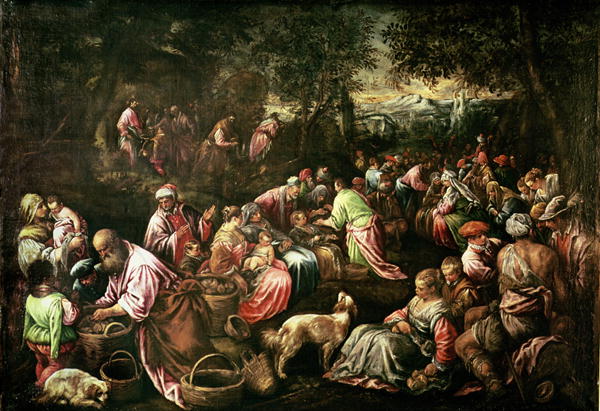
Commuting to New York City by bus can be an epiphany. When an hour-and-a-half scheduled ride stretches into two-and-a-half (I spent three-quarters as much time commuting as I did actually at work yesterday) you have plenty of time to look at the scenery. In New Jersey this translates into several towns and cities of differing socio-economic viability. The bus is a great leveler of people: corporate, business types sitting next to those who can’t afford a car or bicycle. As we trundled through Plainfield yesterday I spied a restaurant called Two Fishes & Five Loaves taglined Soul Food for all occasions. The name, of course, is borrowed from the story of the miraculous multiplication of food from the Gospels. This story fits particularly well in this setting.

According to the Gospel writers—this is the only miracle to appear in all four of the Gospels—a crowd following Jesus in a lonely place grew hungry. Instead of sending the crowds away, Jesus took the five loaves of bread and two fish they had with them and fed the crowd of 5,000 with that little morsel. When I was a student it was customary to interpret this story as one of a human-dimension miracle. The crowd, seeing Jesus sharing the food he had, each offered to share with their neighbors. Once the idea caught on, those without food had enough and those who’d brought extra had the right amount. They even had leftovers. This naturalized version of the story illustrates the message of Jesus quite nicely, although those who prefer supernatural intervention naturally reject it.

Plainfield is a town with stunning wealth and abject poverty. This situation is not unique to this location; indeed, it is a hallmark of capitalism. Those who have do not willingly give it up for the sake of those less fortunate. The free market is not really free. Today most readers like to see the story of the feeding of the five thousand as divine intervention. That matches our bail out mentality. When our circumstances make us too selfish, God comes to the rescue with conjured seafood and crumpets—or Tea Partiers—and the rest of us look on hungrily. By the end of the day, enduring that long bus ride home, I too was hoping for a miracle. Instead, as we crawled by Two Fishes & Five Loaves, loaded with people of every status, I was living in a Gospel story.


A Sense of Place

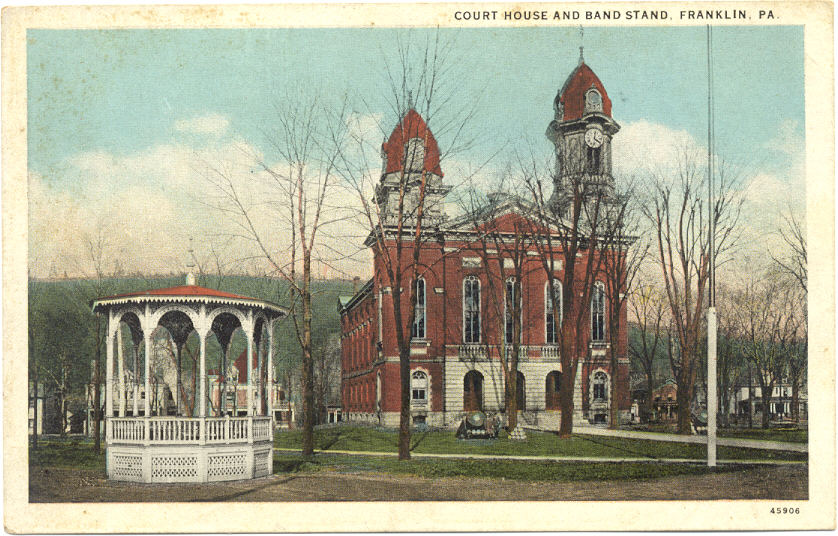
Franklin, Pennsylvania. The place I was born seems to participate in what is sometimes labeled “sacred geography.” No one really knows why people imbue certain places with a sense of particular significance, but we all do. Whether it is world-famous tourist sites or our humble hometowns, there are places for us that possess an emotional resonance that other places lack. By the time I was an adult I was eager to get away from my hometown, to stretch myself and see if there was more to this world than these ancient green hills were willing to disclose. But still I return. When something brings my town into prominence, it somehow still impacts me. In the second season of the X-Files Mulder and Scully came to Franklin. Of course, the episode was not filmed here, just set here. But that was enough. My small hometown had been validated. It is part of my personal sacred geography.

I recently learned about WestPA Magazine. While it still has a way to go before becoming mainstream, it needles into that sense of belonging that refuses to let me go. Reading about the grandeur that once settled over this town feels like reading my own biography at times. Last night, for example, I learned that one of the first steps of female equality—a small step, but we all must begin to walk somewhere—took place here. One of the inheritors of the oil wealth that originally put this region on the map was Charles Joseph Sibley Miller. He hosted two presidents on his yacht, partnered with John Astor and William Vanderbilt on a business venture, and had his car personally delivered by Louis Cheverolet. Although largely overlooked by history, Miller purchased a hot air balloon in which he took his wife, Mary Prentice Miller, for a ride, making her the first known woman aeronaut in history. One small lift for a woman, one giant lift for womankind.

There seems to be no scientific basis for sacred geography. It is simply something that we sense. I left my home region, the birthplace of the oil industry, a site of some importance in the Revolutionary War, to pursue a more tenuous, if abstract career track. And still I come back and find myself amazed. I suspect our sense of sacred geography evolved along with our penchant for territorialism, our desire for private property, and our need to find sanctuary of some kind. I can stake no claims for the accomplishments of those who settled this region, but for me it will always be a touch-point for sacred geography. When I make my occasional returns, it feels as though I might still belong.


Glass Act

One of the main cultural Meccas of central New York state is the world-renowned Corning Museum of Glass. I recall visiting the museum three decades ago, as a child. Since then the museum has continued to expand and diversify its programs and displays. The Corning Museum of Glass is perhaps the greatest collection of art glass in the world. The history of glass is laid out chronologically, and along about the Middle Ages, religious glasswork comes into fashion. Some of the pieces were manufactured as intentionally religious artifacts. Others acquire a religious significance through less orthodox means.

Traditional religious glass

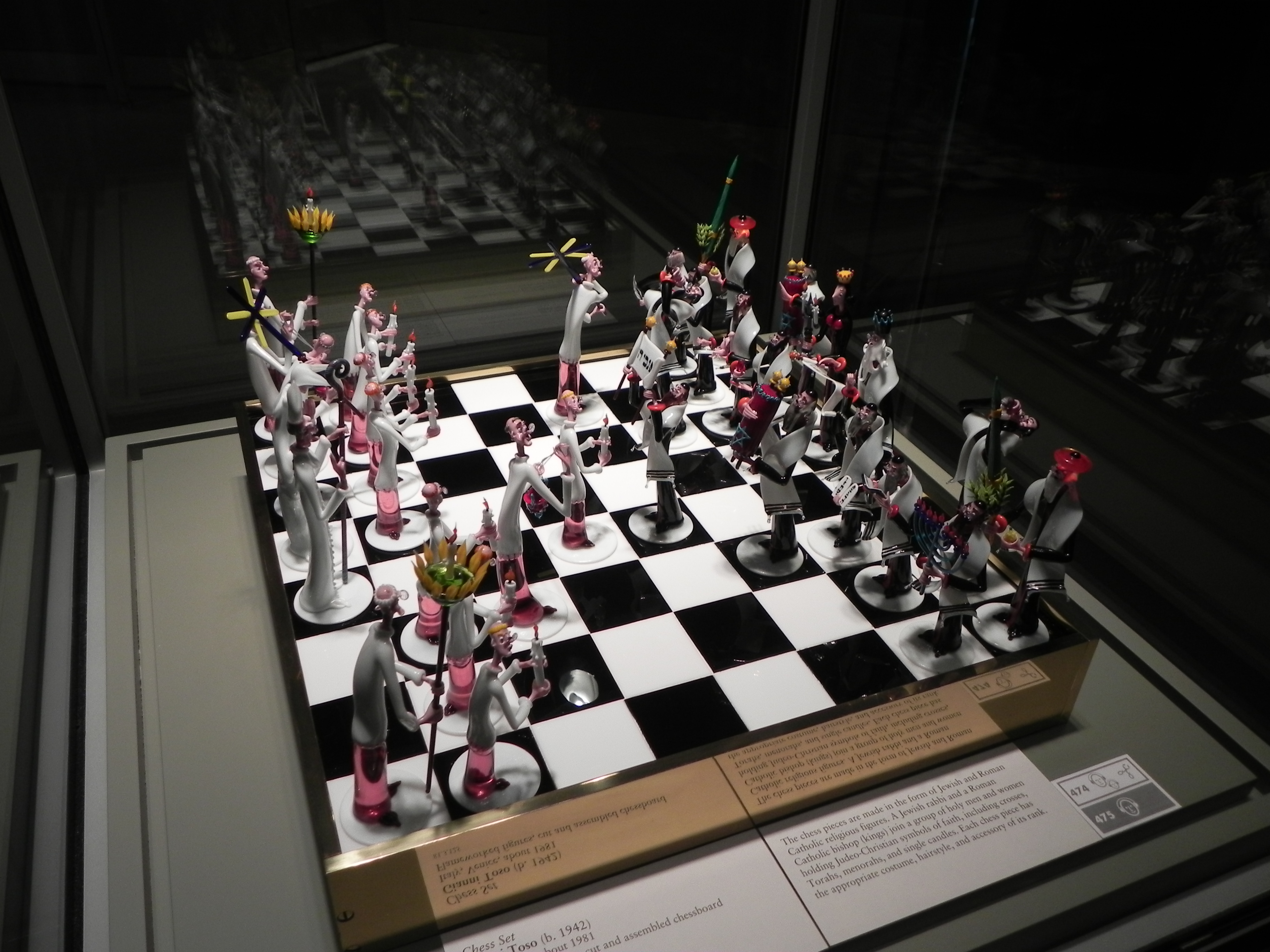
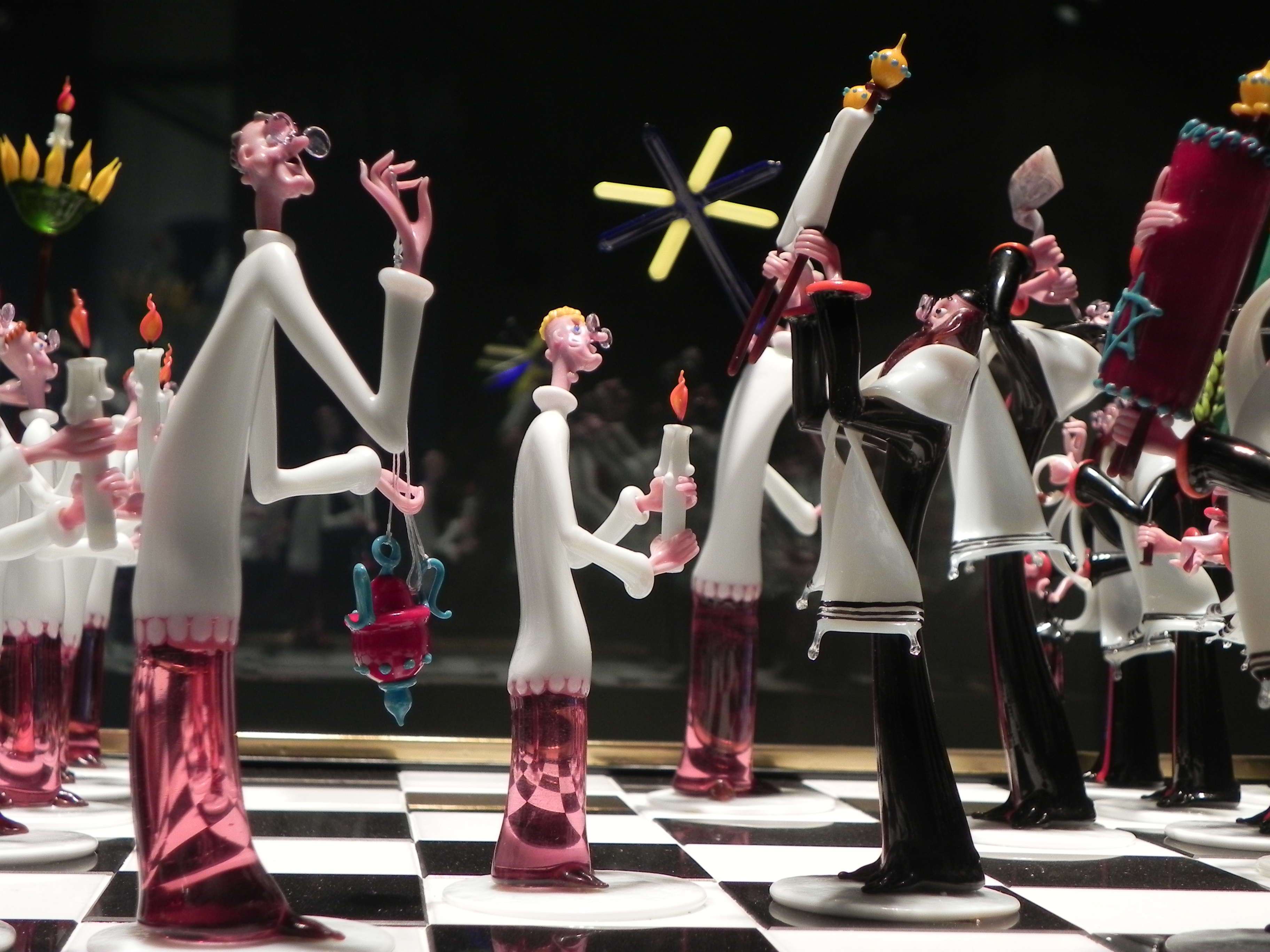
Near the end of the display is a piece by Gianni Toso, done around 1981. Entitled “Chess Set,” the glass sculpture features Roman Catholic pieces facing off against Jewish rabbinic pieces. The sculpture is intended to be comic as the expressions and the postures of the figures clearly indicate. Each piece bears some symbol of their faith: thuribles, lulavs, crosiers and Torah scrolls face off against one another, each side wearing unmistakable looks of superiority on their faces. Countless hours obviously went into the fabrication of such an intricate piece, and as with most art, it contains a serious message.

Toso's Chess Set

The figures here may be Jewish and Christian, but they could really be any religious traditions. The concept of putting them into a chess match is an inspired commentary on the constant struggle for superiority among religious traditions. In a world of differing religious outlooks, and where such outlooks are taken with deadly seriousness, no one is willing to relinquish religious superiority. The aggressors are difficult to discern since, as in life, any true believer must be a kind of missionary.

Toso's face-off

The medium of an artwork also makes a statement about its subject. Glass is a difficult medium to manipulate. Since it often must be very hot, the artist is familiar with the burns that accompany such intense heat. Glass produces a superior shine as an artistic medium, but it is also very fragile. Like the conflict presented on this chessboard, the religions behind it bear the limitations of the medium: they shine at times, yet they can also cause severe burns. And above all, they are fragile.


Failing Geology

Rocks of ages

Watkins Glen, New York, sports a natural wonder that has occasionally drawn me to the Finger Lakes region to refresh my memory of the view. The eponymous glen has been carved out of the relatively soft shale by a tireless stream that falls to the level of nearby Seneca Lake. The relentless persistence of this water has left a canyon of striated layers over a period of 12,000 years. Even today tourists from around the world flock to the site, captivated by its natural beauty. To assist walking the gorge, 832 steps have been added alongside a mile and a half of the stream, taking the visitor past, and occasionally behind numerous small waterfalls. When we visited yesterday, what struck me—beyond the sheer number of out-of-shape Americans complaining of the number of stairs (this was well before the hundredth riser), a number that continually thinned the further we climbed—was the special compensation that biblical literalists claim to accommodate their view. The typical response is that all geologic wonders are a result of Noah’s flood, despite the different erosional rates and dates of the sites. Watkins Glen is a fairly new piece of earth architecture.

Some years back while driving out to the western United States, my family camped in Makoshika State Park in Montana. This particular park, apart from its wild, arid, and rocky scenery, also boasts many dinosaurs. You can sidle right up to the exposed, fossilized backbone of a hadrosaurus, and triceratops skulls can be found in situ. Preparing to hike one of the trails, we stopped at the ranger station for a map. As usual, interpretive displays explained what we were about to see. As we entered, an older couple spoke with the ranger. One of them said, “How can that be, since the earth is only 6,000 years old?” Special compensation is required to refuse the evidence that lies all around us. The Fundamentalist movement seldom takes into account that this distorted and bizarre worldview is almost uniquely American. Religion drives their scientific outlook, even as they are relying on the factuality of actual science to prolong their lives with medical advances or to allow them to read this blog (although the latter is not likely).

The same flood had to carve out the buttes of Makoshika and expose its Cretaceous fossils of 65 million years ago at the same time as eroding the first 6,000 years of Watkins Glen, leaving the remaining 6,000 to be worn away during our world’s lifespan so that we might declare the great works of God. It is a worldview that demands a constant center stage for a feeble explanation based on the worship of a misunderstood book. And yet they come to see the beauty. No matter how many persuasive words might be penned, the possibility of changing this outlook will elude us. Reinforced by television personalities and politicians, this utter breakdown of reason is one of our national characteristics. As a nation we suffered through eight years of “leadership” by a president who did not believe in science, and we are still paying off his tab. In another 6,000 years or so we may succeed. By then, however, I expect, if I’ve learned anything from the movies, we will have reversed roles with the great apes.


Sanctuary

Sanctuaries are often difficult to get to, but are often even more difficult to leave. Various religions make use of the concept—a sanctuary is a safe place, somewhere away from the normal world. Perhaps this is one of the reasons humans devised religion to begin with; the world feels heartless and threatening much of the time, and a place where the unseen parent will keep us safe is a desideratum anxiously quested. The problem with sanctuaries is that too much safety inhibits growth. As history repeatedly demonstrates, sequestered religions grow stagnant and antiquated—frequently hindering more than helping.

The concept of a sanctuary is of a piece with the amorphous idea of sacred space. The idea that some places are different, special, or spiritually vibrant is one that admits of no testing or verification. Nevertheless pilgrims will seek out such places in order to recover a sense of balance or peace. Even scientists know the feeling, although it is frequently consigned to the psychologist’s couch. Finding that spot that gives momentary tranquility is big business, as any travel agent knows. While we may invest our sanctuaries with divine trappings, the practice is, at its roots, very human.

The world was not created for us. Congealing from a rapidly spinning mass of superheated rock and dust, it took a few billion years before life might even manage to float atop the cosmic embers. As part of this fascinating development called life, we have learned its hard lessons. Nature is beautiful and dangerous. We are its masters and its slaves. Some of us take great pains to escape to it and when it is time to leave we are ripped from it like a crying babe from its mother’s arms. Sanctuary is a human concept with divine implications.

A sanctuary


Metaphor

Author Neal Stephenson, inspired by fellow author George B. Dyson, built a baidarka a few years back. The baidarka, an Aleutian version of the sea kayak, was such a necessity of life among the Aleut that it was treated as a living being. Whenever I find myself at the same latitude and longitude as the baidarka Neal built, I like to take it out for a relatively safe lake voyage. I’m not much of a swimmer, and taking boats out on the big water always chills me before the water actually touches my skin, but this is a kind of ritual that I feel compelled to observe. It is a participation in the mythic world of the Aleut. As spiritual beings, kayaks were a necessary part of life for island dwellers. In their own way, I suppose, they are saviors.

Author and partner in the baidarka

Traveling by water, I find, is a spiritual experience that eschews scientific quantification. It is a feeling, not a measurable commodity. To quote the great sage Rat in Kenneth Grahame’s The Wind in the Willows, “There is nothing—absolutely nothing—half so much worth doing as simply messing about in boats.” We are born of water, mostly made of water, and ineluctably drawn to the water. Rachel Carson suggested in her classic, The Sea Around Us (always one of my favorite books), that having evolved from the sea we are forever yearning to get back to the sea. Water is life as much as blood is.

broken water

When water breaks by being forced into an unyielding shore or by being thrown over a cliff to become a waterfall, flinging refreshing spray into the air, its great energy is released. Although its flow may be interrupted it will break apart granite and basalt, literally moving mountains and carving coastlines. Water that is placid in the morning may be raging by the end of the day. Water is life, and if life is anything more than a metaphor no one has yet convinced me of it.


Patriot Games

Earlier this week I had the occasion to find myself in Newark’s Liberty Airport. I had mentally prepared myself for a government-sponsored groping (I find full-body scanners immoral and, no matter what the Patriot Act says, illegal) but I managed to make it through with just emptying my pockets and walking around in my stocking feet. Once I arrived at the gate area, I was once again struck by the duplicitous use of religion in America. Posted above each gate was a small banner reading “God Bless America” surrounding a stylized flag. I thought of the Hindus, Buddhists, and atheists flying out of that terminal (and in Newark I am certain there were all three species, in spades). Since 9/11 the staffs of the large New York City airports are justifiably cautious, but the blending of nationalism with divine will always makes me nervous. Especially since the weightier implications are so readily ignored.

In the biblical world the ideal was that travelers would be treated fairly. Someone away from home is already at a disadvantage. In ancient times the traveler deserved special consideration, not to be swindled or met with unfairness. Looking around at the prices merchants charge for those who’ve gone beyond the gate and have no choice, it struck me how when religion and economy collide, economy always continues on unscathed. The weary traveler, according to the Bible, especially deserves fair treatment. Charging extra to someone already at a disadvantage violates just about every biblical standard that echoes through those unread pages. God bless America? Only if it fills the coffers.

The sentiment expressed in “God bless America” is vastly at odds with the way we behave. Taking advantage of others is the bane of prophets and messiahs alike. Taking care of the poor, the disadvantaged, the traveler—this is the biblical ideal. Instead it is easier to band-aid over our sins with posters asking God’s blessing on our insincerity. Many people fear Islamic fundamentalists without taking into account the more subtle damage done by our own homegrown variety, giddily holding hands with an unfettered free market. Cheating the traveler may not be as wicked as blowing up an airplane, but both these tangled vines, in the biblical view, spring from the same root.


Malleus Practice

Misfortune takes a quiet seat in the back of the bus for many people, but it is always there riding behind you. My recent trip to Salem is now over, but it has left me with that haunted feeling that sometimes tragedy just won’t let go. Reading up on the history of witches and the belief therein, it is pretty clear that the whole idea began as a form of theodicy. Misfortune happens. When a one-to-one correspondence attends it, people don’t worry too much. (John has a stomachache. We know that John slapped Bob, and Bob punched John in the stomach so there’s no supernatural agent at work here.) When the adversity comes out of nowhere, to all appearances, we naturally look for a cause. As long ago as ancient Sumer, and probably before, the answer was sometimes the baleful influence of enemies with supernatural powers. The witch was born.

This idea has remarkable longevity. Even as the eighteenth century dawned, just a few short years after the tragedy at Salem, Puritans and politicians embarrassingly looked at their feet and admitted this mockery of justice had been an unfortunate error. Yet they still believed witches existed. The concept is alive even today in parts of the world minimally influenced by schooling in science and logic. (I taught at a seminary where various witch hunts still took place; books were even burned.) Who doesn’t know the feeling that a totally natural disaster was in some way targeting them? Whether tornadoes, tsunamis, or rain on your Memorial Day picnic, the normal human response is one of a minor (or major) persecution complex.

To solve the riddle of witches, horseshoes and witch bottles are not necessary, but education is. Witchcraft was not considered Satanic until the late Middle Ages when apocalyptic fever raged through Europe with the Black Death. Not understanding microbes, the populace supposed a great war presaging the end of times was escalating between God and Satan. The minions of the Dark Lord were spawned by witches and demons. (Add Tim LaHaye and you’ve pretty much got Left Behind.) To solve the problems of the righteous, sacrifice a few innocent victims. If we call them witches—actually any undesirable name will do, eh, Senator McCarthy?—we will feel justified in doing so. The real solution, namely, working together to overcome natural and human-made afflictions, is really just too hard.


Witch Kitsch

Salem is a town with a conflicted identity. The true history of the death of innocent women and men for a fictional crime is sobering. In a day when few take witches seriously—certainly not many believe that supernatural, green-faced hags fly the unfriendly skies—it is difficult to sense the utter terror the idea once comprised. We are still afraid, but our fears take more current forms. So with its lugubrious history, Salem now demonstrates itself as a model of tolerance. One local source cited the fact that eight or nine hundred modern witches live in the city. Modern Wicca, while taken very seriously by its practitioners, is laughingly appreciated by those who find release in the caricature of fictional, idealized witches. The police cars in the city of Salem even have witches riding broomsticks on them.

In this day of triteness and easy entertainment, it is easier to project the fictional image of the pointy-hatted witch and laugh at our past mistakes. Salem bills itself as “Witch Town” and hosts several witch museums, varying in historical accuracy. Shops throughout the town exploit this image of the harmless witch. It is difficult for the visitor to know which witch believes his or her establishment to be authentic and which is just out for a quick buck.

Places have a feel to them, as any pilgrim knows. The National Park Service, in its visitor center for Salem has a question-board that asks, “How Many Witches were Executed in Salem?” The answer underneath is “None.” Instead, twenty regular people were murdered for a crime they didn’t commit. The witch hysteria happened so early in the history of the town that it appears foundational for all its later developments. Who would go out of their way to visit yet another thriving mercantile port of the eighteenth century, were it not for the tragedy underlying it all? Like children laughing while making guilty eyes at their parents, those who prosper over Salem’s sad history realize that whether modern witches live there or not, religious intolerance is never a heritage to wear proudly. Exploiting a tragedy to make a profit is a time-honored American practice, and the real witch to fear is the one who says, “cash or credit?”


Lesson of Salem

I married a witch. I suppose I ought to clarify that a bit. My wife is descended from Rebecca Nurse’s brother Jacob. Rebecca Nurse was one of those unfortunately hanged as a witch in Salem, Massachusetts in 1692. My family has been spending the last couple of days touring Salem, seeking to get in touch with our heritage. Yesterday we had the rare opportunity to tour the home of Rebecca Nurse which, remarkably, still stands over 300 years after the tortured events of the late seventeenth century. Our tour guide was impressively knowledgeable about the witch hysteria. She noted that in the Puritan (Reformed) mindset, with no science to speak of, evil could only be explained by the Devil. If misfortune came, the Devil was to blame. Even after the “witches” were exonerated (too late to save 20 lives), it was understood that the Devil incited the girls to make their false claims against their ultimately and penultimately righteous neighbors. Without the Devil none of this made sense.

The Rebecca Nurse homestead

Salem was founded as a utopian community free to live out its Puritan religion. It was named after Jerusalem, a city of peace (!). As our guide noted, religious freedom was not the same as tolerance; the Puritans wanted the freedom to celebrate their own religion, but were extremely suspicious of all others. One of those hanged as a witch, George Jacobs, had nearly beaten a neighbor to death simply because he was a Quaker. Rebecca Nurse, however, at 72 years old, was no threat to anybody. She was a member of a Christian community that turned on her. Condemned for charges the nearly deaf woman could not even hear properly, she was hanged for consorting with a mythical Devil.

Rev. Parris's house, where the witch hysteria began

No doubt the religion of the Puritans was a harsh religion with a God nearly as unforgiving as that of Sweeny Todd. The problems occurred, however, when the law came into the hands of religious leaders. There is an allegory and a moral to this story. Today many of the tourist attractions in Salem focus on the need for true tolerance. They no doubt come closer to the spirit of the founder of Christianity than the Puritans ever did. As I stood looking over the hole in the ground that is all that remains of Rev. Parris’ parsonage—the very location the witch hysteria began as his daughter Betty started to act odd after hearing the stories of the slave Tituba—a profound sadness afflicted me. Twenty people died and many lost all their worldly possessions because of an uncontrolled mythology of a church convinced of its own righteousness. An allegory and moral for the twenty-first century indeed. Have we yet learned the lesson of Salem?