Heat’s Up

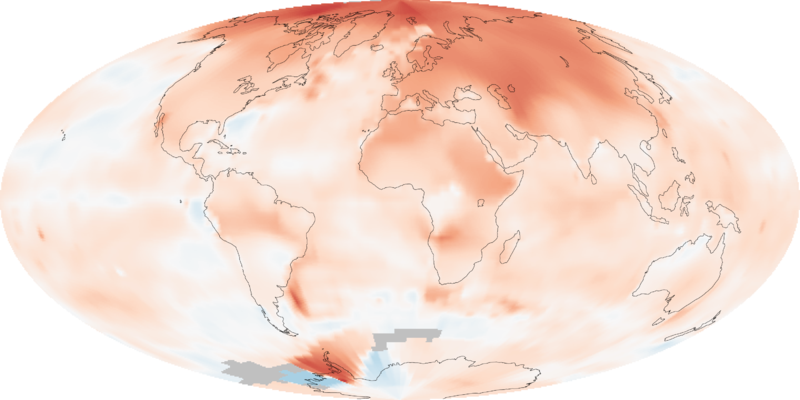
800px-GISS_temperature_2000-09_lrg

I must admit being perplexed. Days ago, although many of us have long known it to be true, climate scientists announced unequivocal evidence that human activity is responsible for global warming. I have perhaps been naive in my supposition that the “full speed ahead and damn the torpedoes” approach of some fundamentalist groups that welcome anything that speeds along the apocalypse, has played a major role. Maybe it was because so many politicians openly sided with such groups that that I supposed the two concepts to be connected. I suspect, however, that it may be something much more insidious. How can any intelligent person refuse to admit the facts when the consequences are nothing shy of catastrophic? How can elected officials turn a blind eye to the desolation of their own planet? It must be more than simple ignorance. But what?

Those in my generation—however we are currently classed—have been declared to be those attempting to make up for the excesses of the “me generation.” I’m not sure who the “me generation” is, but I know when I see individuals who allow their personal gain to endanger everything that has come along since the Sumerians invented the wheel, I feel a little queasy. What could the Zeitgeist have been that infected so many minds with such a godlike sense of entitlement? We call the younger demographic the “entitlement generation,” but when I taught them in college, they were much more environmentally conscious than many elected officials. They at least could see beyond their own wallets. They take pride in recycling.

It would seem to me that even if (and it doesn’t) the Bible suggested that the world itself would end to bring about a better one, we assume too much divine prerogative when we proactively destroy the only ground upon which we stand. Has any religion ever been so truly shortsighted? And that’s asking quite a lot, if you think about it. Or is religious faith just an excuse to gather wealth at the expense of others? Does God want you to be rich? If so, it would seem, God would also want you to act responsibly. According to a report in The Guardian, there is no longer any question that the climate blame lies with us. Perhaps now that the smoking gun is on the table we will do the right thing. But then again, I admit to being perplexed. Maybe it’s just my generation. Or maybe I’m just hopelessly naive. I’m entitled.


A Certain Man Went Down

Among the progeny claimed by Wabash College is Dan Simmons. I’ve read a couple of Simmons’ ghost novels, although in reverse order. I read A Winter Haunting, which I quite liked, and followed it up with Summer of Night. Having lived in the Midwest many years, it was easy to visualize the scenes. Then came the time for my trip to Crawfordsville, Indiana. I started the day in South Bend, finishing up my meetings at Notre Dame. I’d noted on the map that, as is often the case, the places I need to get to just aren’t connected by anything resembling a direct route. Although the forecast said “30 percent chance of rain,” I’d awoken at 4 a.m. to a thunderstorm and it had been pouring all morning long. I could swear they were making plans to convert the great Notre Dame stadium into an ark. Perhaps I’d forgotten just how persistent Midwestern storms can be. Soaked, I crawled into my rental car to tool down to Crawfordsville. At least the rain had finally stopped.

On one of those highways in the middle of corn fields as far as the driver’s eye dares look, the low tire pressure light came on. I dutifully pulled over and called Hertz. The suggestion was to find a gas station and put some air in the offending tire. Someone could be there in three hours. Looking about me at the amber waves, I thought of the spirits of Dan Simmons’ stories. A car breaking down in the heartland. No one around to offer assistance. The illusion allusion was shattered when a stranger pulled over and asked me if I needed help. I recall a priest friend once tearfully confessing to me that he had, on a rainy night, refused to stop to help someone with a flat because of fear for his safety. I understood completely—it can be a scary world out there. “And likewise a Levite, when he was at the place, came and looked on him, and passed by on the other side.”

With multiple stops to put air into my slowly leaking tire, I limped my way from town to town, reaching my destination after dark. Along the way a fierce rainbow appeared to the east as the sun began to set. Once you’ve abandoned the interstate in Indiana, there’s no going back. I began to notice just how many churches dotted each little village through which I drove. Samaritans, I thought. As I write this in Crawfordsville, I think of the corn, sorghum, and soybean fields that inspired Dan Simmon’s ghosts. I think of a stranger, a woman of minority demographics, stopping to see if I needed help along a lonely highway. She was among those our society would deem vulnerable, and yet she was the only one who stopped. And I think of parables. “But he, willing to justify himself, said unto Jesus, And who is my neighbour?”

IMG_0988


High Tide

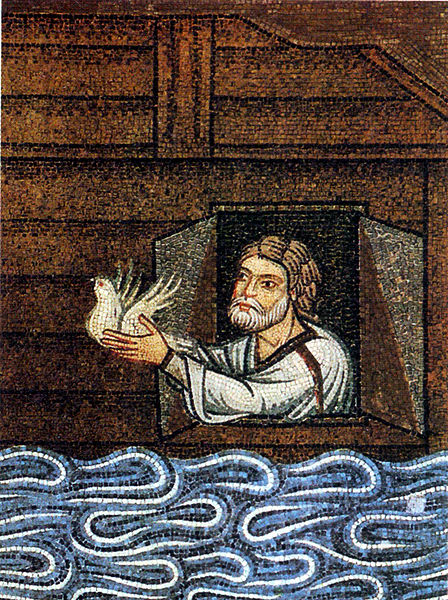
While the devastating rains in Colorado this month are a very serious concern, over the past several days I heard and read the adjective “biblical” associated with them several times. Even the National Weather Service made reference to “biblical rainfall amounts.” It’s true that the Bible does contain the most famous, if not exactly original, flood story in the modern world. The tale of Noah easily goes back to the Sumerians, and there are deluge stories from around the world that rival it in most details. Even in this secular age, though, we all still know that floods are the province of providence. It is of interest, however, how the word “biblical” has taken on a distinctly negative connotation. The most noteworthy of biblical materials are high literature of optimism and potential for good—and sweet heaven when we die. And yet, floods, droughts, plagues of insects, these are the “biblical” events in our lives.

Floods can indeed be devastating. They demonstrate the illusion of solidity under which we try to assure ourselves that the high ground is the safest place to be when the globe warms up, or God grows somewhat impatient with human antics. Biology has implanted deeply in our psyches the desire for a safe haven, a place where we can store our stuff securely. In fact, the “net worth” of an individual—so noteworthy when we die—is measured in terms of the material goods which we control, or “own.” The quality of a person’s inner life is not something of their “net worth” to society; it can’t be divvied up by lawyers and investors, and, in terms of legality, is unimportant. We are valued for our things.

That’s why floods are so pernicious. I don’t devalue the lives that have been lost, but the headlines declare the dollar amounts more loudly. Here is where the obvious clash between the days of Noah and our own come into play. The only goods the delugonaut took aboard the ark consisted of food and life itself (although the Sun Pictures version shows his family with anachronistic metal knives and even some furniture). When the whole world is flooded, the only property valued at all is that on the deck next to you. Our society values people by what they acquire rather than by who they are. Floods wipe out the former, leaving the latter harried but hopefully intact. If we were to build arks today, no doubt as the clear-cutting of rain forests with the subsequent extinction of countless species shows, we would use the choicest wood and would cram every last square inch with our stuff, while people and other animals outside beg for entrance onto the boats that we “earn.”

448px-Noah_mosaic


Treasure Hunting

It is raining in Midtown. On my lunch hour I’m in a deserted public square down on my knees with an umbrella over my head. My free hand is reaching under a piece of outdoor furniture feeling for something. At least this one is not located in the private regions of a metallic stag. What in the world am I doing here?

One of my sometime passions is Geocaching. Many years ago we started this as a family activity but with schedules changing and families being forced apart by work and school, I’ve taken to caching alone. For those not familiar with Geocaching, you many not be aware that in millions of places around the world tiny containers are hidden from view. There is likely one not too far from you. They are listed on different websites, but Geocaching.com is the main source. You set up a free account, get ahold of a GPS device and go looking. Some of the containers have goodies for the kids, while others are very, very small and your only reward is signing your name and logging the find online. As a family we found nearly 400 caches over the years. Since I spend my days in Manhattan I’ve been urban caching. Urban caches are very small and stealth must be used because those who don’t know about Geocaching who find the containers often take them, not realizing that they have a purpose. So that’s why I’m on my knees in the rain in the middle of New York City.

I raise Geocaching as a topic because of a recent article on NBC about Scouting. Girl and Boy Scouts often know about Geocaching. This is similar to what used to be called (probably still is) orienteering—learning how to find your way around. The NBC story, however, focuses on a different kind of finding your way around. Over the past several years, non-faith-based alternatives to the Scouts have been enjoying some measure of success. Not that Girl or Boy Scouts are explicitly Christian, but they did emerge from that social context. The article specifically cites the Spiral Scouts, a Wiccan-based group, as well as several secular, and even some overtly faith-based alternatives. Yes, it looks like many groups, regardless of religion, want to get kids used to the great outdoors.

DSCN2484

Some might fear that alternative movements signal a rend in the social fabric. I think the social fabric ought to be more like a quilt. If sewn properly, a quilt is just as functional as whole cloth, but much more interesting to look at. Girls, boys, gays, straights, Christians, Pagans, Jews, Buddhists, Muslims, Hindus—what is wrong with that? I think that after being out in the rain, I might just curl up under a quilt when I get home, and I’ll be thankful for all the diversity I see comforting me under the gray skies.


By Jove!

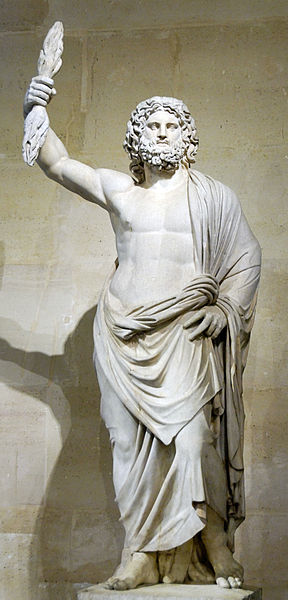
When Zeus is taken seriously in the New York Times, even the open minded scratch their heads. It’s not because any of us really believe Zeus is up their hurling thunderbolts, but because anyone would even dare raise the question. Yes, Gary Gutting’s Opinionator article is lighthearted and perhaps even a little cynical, but it does raise serious questions. Did our ancestors believe in the gods with no “proof”? I can’t help but think of the phenomenally expensive video, I Still Worship Zeus. There are, in this day of high technology and low tolerance for non-scientific outlooks, people who continue to believe in Zeus. Well, his name does come from the same root as the old Indo-European word that gives us the Latin Deus, or “God.” And, let’s face it, the stories of the Greek gods can be pretty cool (despite sub-par big screen renditions). But to take any of this seriously…Seriously?

Jupiter_Smyrna_Louvre_Ma13

As Gutting points out, some of the great minds of Greek science didn’t question the existence of Zeus. I certainly wouldn’t care to pit my puny wit against that of Plato. Those scientifically minded Greeks, apparently, believed in the gods because of their explanatory value. Too many coincidences and synchronicities and epiphanies suggest something more than meets the eye. We don’t see gods today, so Gutting asks how we know the world hasn’t changed. Now, I take uniformitarianism seriously. It is the basis for geology and much of evolution. Our old, old earth shows no evidence of a sudden change in the way things happen. What is malleable is human interpretation. As recently as a century ago, belief in some kind of divine world was very pervasive. Only in the past few decades—since World War Two, I would guess—has the premise of the Judeo-Christian god become suspect. The daily experience of living in a world where theodicy just can’t explain all the suffering has led us to a kind of stalemate with the gods.

I once had a scholarly exchange with a colleague over the nature of the word “evidence.” Our little tiff was published in the Journal for the Study of the Old Testament. My colleague had suggested that Yahweh—the god of Israel—was considered a solar deity. I averred that evidence did not exist. With rejoinder and riposte, we had to agree to disagree. The evidence I was seeking was stringent, but as we all know, absence of evidence is not evidence of absence. And that is the point that Gutting makes, whether seriously or not. The question is not “Is Zeus there?” but “Was Zeus there?”. I decline to offer an opinion. I do applaud the New York Times, however, for attempting to get us thinking about serious issues once again. If Zeus did exist, then it behooves us to consider all the implications. And perhaps to reconsider home-owners’ insurance in a world where gods may roam at large.


Am I Famous Yet?

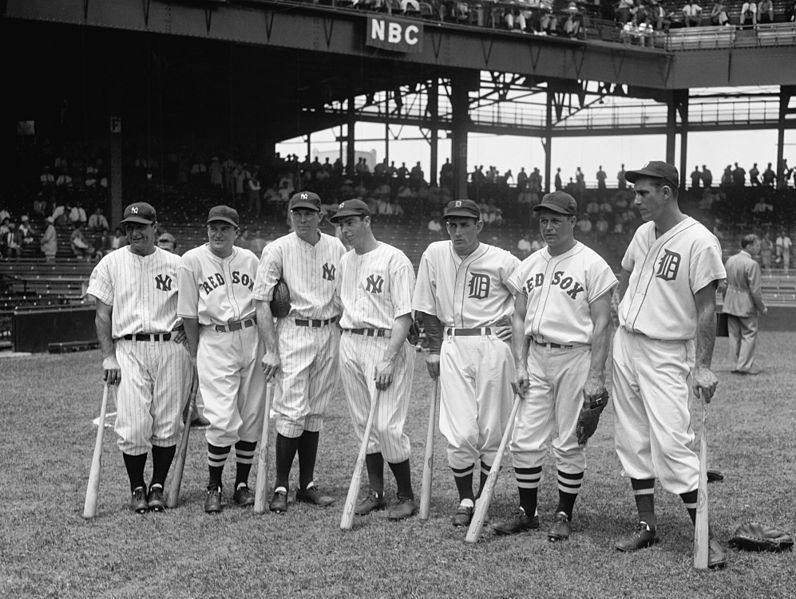
Sweat is running down my back and my chest.  The sun beating down on my head feels like a hammer of the gods.  East 42nd Street is clad with a wide, red carpet and drivers are honking in a way that assures you that they are seriously irritated.  I step out into Second Avenue when the little white person appears on the crosswalk sign; it is 93 degrees and I’m due back at work.  A motorcade stops me as three tour buses cascade by, and an NYPD officer waves mere pedestrians back to the baking pavement to wait another rotation of the lights.  Helicopters high overhead fail to stir this heavy, hot air.  Hazily I wonder if the president is in town, or royalty of some kind.  It’s clear that the plebeians are of less importance this afternoon in New York City.  Then I spy a banner-the All-Star Game.  I’m being broasted on this street corner for a bunch of baseball players, not one of whom I can name.  This is such a facile way to learn your place.

Chance often enters my thoughts.  There are those who become rich and famous because they are driven to it, but they happened to be in the right syzygy of circumstances to take advantage of that opportunity.  There are some who would say that attaining greatness is an act of God, and others who claim it is only fate, or luck.  The fact is, the only reason some people are more special than the rest of us is that they were offered an opportunity that opened a gate.  I’m not suggesting that hard work’s not involved, but hard word alone doesn’t suffice.  You need to have a leg up to get to ride in that air-conditioned luxury bus down Second Avenue while your fellow citizens, and not a few seriously sweating fans, step aside for you.

I’m sure it’s just sour grapes. Like most little boys I really enjoyed playing baseball. I never considered it a job, though. We were far too pedestrian in my neighborhood for that kind of thought. My goal was to be a janitor. It was only when I reached beyond this calling appropriate to my state that I ran into difficulties. The marionette dancing at the end of the strings of puppet-masters who had better opportunities than I. Sour grapes and hellish city streets—what wine will ferment from this alchemy? There go the All-Stars. In many parts of the world, as in my head, their names are unknown. Today, however, one of the busiest streets in Midtown Manhattan is stopped just for them. We’re all in the same oven, but some are in air-conditioned coaches while others are melting on the sidewalks. The red carpet is not for the likes of us.

1937_all_stars_crop_FINAL2


Miracle of the Sun

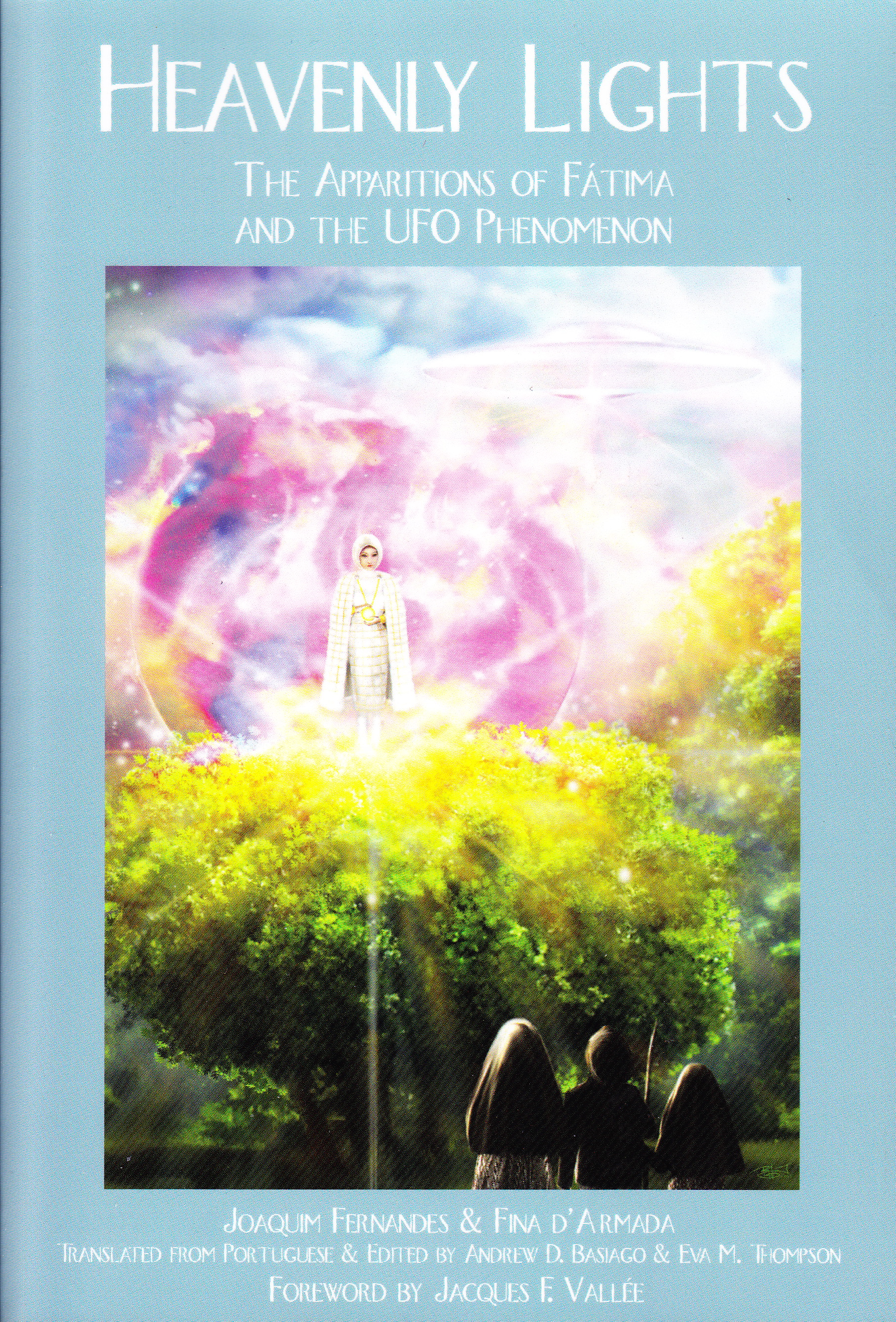
HeavenlyLights The events at Fatima in 1917 have occupied me on this blog before. Perhaps it is because of the haunting quality of the whole thing. Children, two of whom died young, saw a vision and the apparition made a prediction that was held in secret for decades. I’m not sure about you, but these days remembering most things for more than a few nanoseconds is a challenge. What was I saying? Oh yes, the Fatima incident. I recently read a book on Fatima, an unconventional book, but one which makes an intriguing case and raises a valid point. Heavenly Lights: The Apparitions of Fatima and the UFO Phenomenon by Joaquim Fernandes and Fina d’Armada draws compelling parallels between the many UFO reports that are in the public record and the strange events at Fatima, Portugal in the latter days of World War I. Immediately some people will be put off, since we have all been conditioned to ridicule the idea that, although there is almost certainly life in space, it would take the trouble to visit our neck of the universe. In the mantra of conventional thinking: it can’t be done. (Sounds rather like my career. What was I writing about, again?)

The valid point raised by the book is that many people are skeptical of the supernatural. That rules out a miracle for Fatima, since in a materialistic universe, miracles aren’t sanctioned. That leaves us with a crowd of at least 50,000 people, perhaps as many as 70,000, hallucinating at the same time. I mentioned this to a very bright college-aged student recently who responded, “Really? Who would believe that so many people saw the same hallucination at the same time?” That’s the official story, however, in the materialist camp. Just outside the tent are those who believe UFOs are material objects. They are in no way supernatural, just impossible (because nobody can fly fast enough to get here, what with light being so sluggish and all—and even if they could, why would they come here where we’re still pretty much all stuck to the surface of the globe?) I’m afraid I suffer from a surfeit of imagination. I like to wonder what might be possible.

The point Fernandes and d’Armada are making is that rural folk in 1917 had no language to describe what they saw apart from religious language. Interestingly enough, the children were always a bit cagey when saying the woman they saw was the Virgin Mary. They recognized that others said she was, but then, the others didn’t see her. The book does not explore the fact that UFOs and religion have a somewhat long association. That doesn’t make interstellar travelers supernatural, though, just out for cheap thrills. Buzz earth a few times and a century later people will still be talking about it. Some will call it a miracle. Others will say it was a mass delusion. And the rest of us will scratch our heads.


Horseshoes and Hand-grenades

When possible, I like to follow up on events I mention on this blog. A few weeks back I mentioned the plight of the horseshoe crab and red knot, the bird species that feeds upon the crab eggs. Hurricane Sandy put the world’s largest nesting area for horseshoe crabs, compromised by human development, in serious danger. Ecological scientists, concerned for the fate of these intertwined species, frantically tried to rebuild eroded beaches so that the Christian crabs could sacrifice their children to the ravenous red knots. (Nature’s ebb and flow, it turns out, doesn’t always favor the unborn.) The good news is, that thanks-at least partially-to the efforts of the environmental engineers, crabs turned out en masse this year, and the red knots, on their transglobal migration, had plenty to eat. It is encouraging to hear that once in a while people impact their environment for good.

Perhaps unwittingly, a member of the American Littoral Society (which I am glad to learn does actually exist) was quoted in the New Jersey Star-Ledger as saying, “There was the potential for a catastrophe after Sandy.” I’m taking his words, intentionally, out of context because of their wisdom. Many people had, on the basis of human losses alone, already declared Hurricane Sandy a catastrophe. This simple quote is perhaps the most honest assessment of the universe it which we find ourselves. From the viewpoint of the not-human, Sandy was a catastrophe averted. The crabs, perhaps unconsciously, did what their biology programmed them to do. The birds feasted, and nature resumed its usual course. Humans weren’t in the center of this picture. We were supporting characters behind the scenes. There had been potential for catastrophe. Nature survived. Thrived, even.

Photo credit Carbon NYC, from WikiMedia

Photo credit Carbon NYC, from WikiMedia

I do not in any way demean the material losses that many people suffered, and continue to suffer, because of the hurricane. Unlike us, however, horseshoe crabs have very limited options. They can’t fly to Las Vegas to propagate, legally or not. They can’t fell timber and build cabins in the woods. They can’t put up an igloo and survive Arctic winters. We the people have endless choices about where to settle. Every environment on the planet, except under water, we have explored, exploited, and populated. We are bound by the very statistics that we are told run this universe, to be in harm’s way once in a while. Human loss of life due to Sandy was not massive. We can rebuild. We do rebuild. The loss of horseshoe crab habitat could have spelled the end of two species of fellow inhabitants on this globe. Catastrophe was avoided. At least from the multiple eyes of the humble horseshoe crab.


Oklahoma

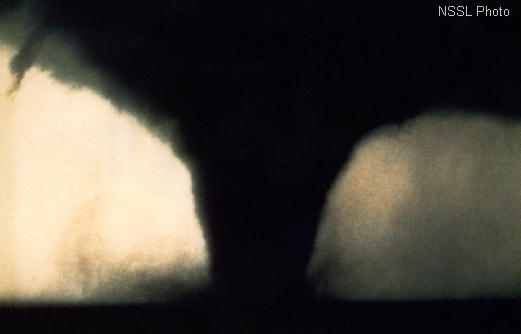
The tragedy outside Oklahoma City transcends petty human differences. Tornadoes, no matter how we dress them up, look like the wrath of God incarnate. The fifteen years I spent in the Midwest were filled with literal nightmares of tornadoes and even a few hours spent cowering in the basement. Such phenomena remind us that we are quite small in the face of nature, and the news reports are full of religious sentiment as people want assurance that God hasn’t abandoned them. Nature doesn’t favor humans over anything else that happens to be in the way of whirling 200 mile-per-hour winds. Even one’s belief might get blown away. Yet it doesn’t.

Although a tornado hit New York City last year, my terror of the storm evaporated when we moved back east. In the Midwest, although there were hills, I felt so exposed under the open expanse of the heavens. In the utterly flat part of central Illinois, I recall some truly awe-inspiring storms. The sky was so ubiquitous and overpowering, and you could see clouds towering thousands of feet over your head, throbbing with constant lightning. It was then I began having the idea for my book on weather terminology and the book of Psalms. Humans helpless in the face of nature. This is the raw material of religion. Like children we pray to God to make it go away. Storms do not obey prayers.

TornadoBlack

By their very nature tornadoes are capricious. We like to believe the good are spared and the evil punished, but as schools are destroyed and children killed we have to face the cruelty of nature. What happened in Oklahoma was a random act of nature, as much as hurricanes Andrew, Katrina, and Sandy were. We can’t help, however, any more than the people of the Bible, supposing that God must somehow be behind the weather. We may influence it, as global warming has repeatedly demonstrated, but seldom for good. And when we look for the divine in the fierce winds, we will end up facing tragedy.


Crab Walking

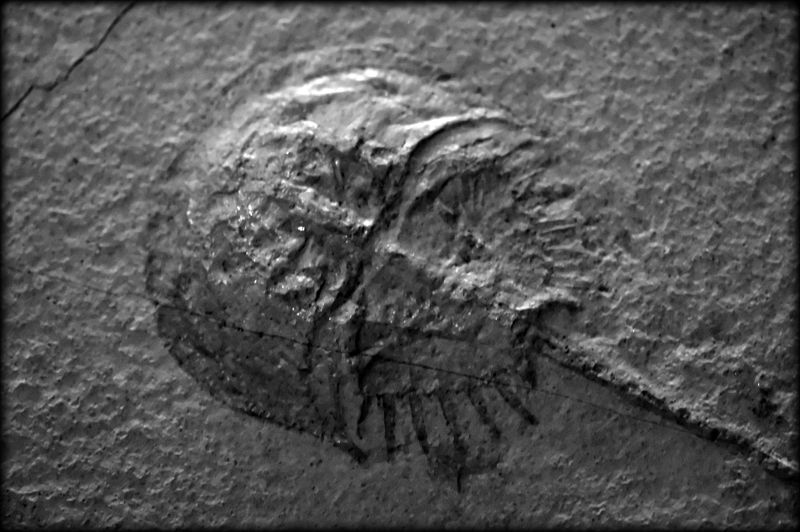
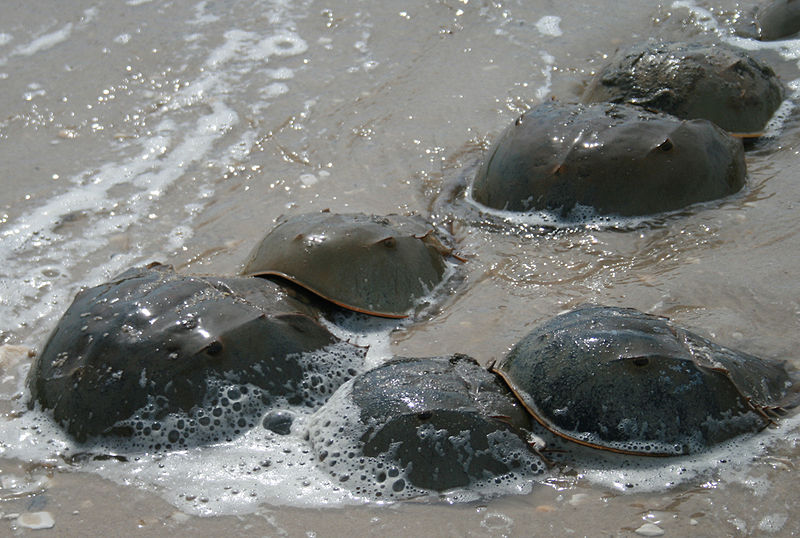
445 million years may seem like a long time. For the horseshoe crab, however, the eons have been spans of years with little change from a rather simple existence that involves lurking under the water and crawling out this time of year to breed. For many of us, Hurricane Sandy is already a somewhat distant memory of days (weeks for some) of no electricity, sitting in the dark, wondering when life would get back to normal. Some parts of the Jersey shore are still suffering from the after-effects, but many of us have had to “just get on with it,” and forget about the damage caused. For the horseshoe crab, however, it is not so easy. For creatures that have survived virtually unchanged for hundreds of millions of years, Sandy dealt a cruel blow. The largest concentration of hermit crabs in the world breeds in Delaware Bay, just down where New Jersey and Delaware nearly come together. Numbers had been declining in recent years as horseshoe crabs were used for bait by fishers, landing them on the “near threatened” scale of the countdown to extinction. Hurricane Sandy eroded the beaches where the crabs breed, and human detritus, left years earlier to protect expensive homes, now provided unsurpassable barriers for most of the crabs. Biologists are at work trying to rebuild the habitat in time.

Not only the time-honored horseshoe crab, but the American subspecies of the Red Knot, a migrating shorebird, has come under threat. The Red Knot, which stops in New Jersey to snack on horseshoe crab eggs on its way to the northern breeding grounds, has been declining in numbers. No crabs, no birds. While the troubles of two species may not seem like cause for concern, the fact that one of those species has been successful since millions of years before the first dinosaur even appeared should give us pause. Dinosaurs showed up some 200 million years after the horseshoe crab had been solidly established on the beaches of the pre-Triassic world. Nature would not be set to wipe out the crabs after a single hurricane, but human obstacles may do what nature would not—endanger a perfectly adapted species so that “valuable” real estate can be protected.

It is tragic when people lose what they’ve worked to attain. It is, however, shortsighted to think that we are the only important species on the planet. We have evolved in a system that includes all the other organisms on our world—our family tree goes beyond that cousin that always embarrasses us to the very crabs that crawl in the silty, brackish water of the Delaware Bay. We’ve all had an impact on each other. Even if you’ve never seen a horseshoe crab, just by reading this post they have come into your life in some way. When we start constructing our grand dreams for a fine life, it seems that we should take into account those who have been here long, long before us. Their requirements are modest, but their place in the cladistic tree of life is just as important as ours. Extinction is forever.

From Wikipedia, by Asturnut

From Wikipedia, by Asturnut


Bing Spring

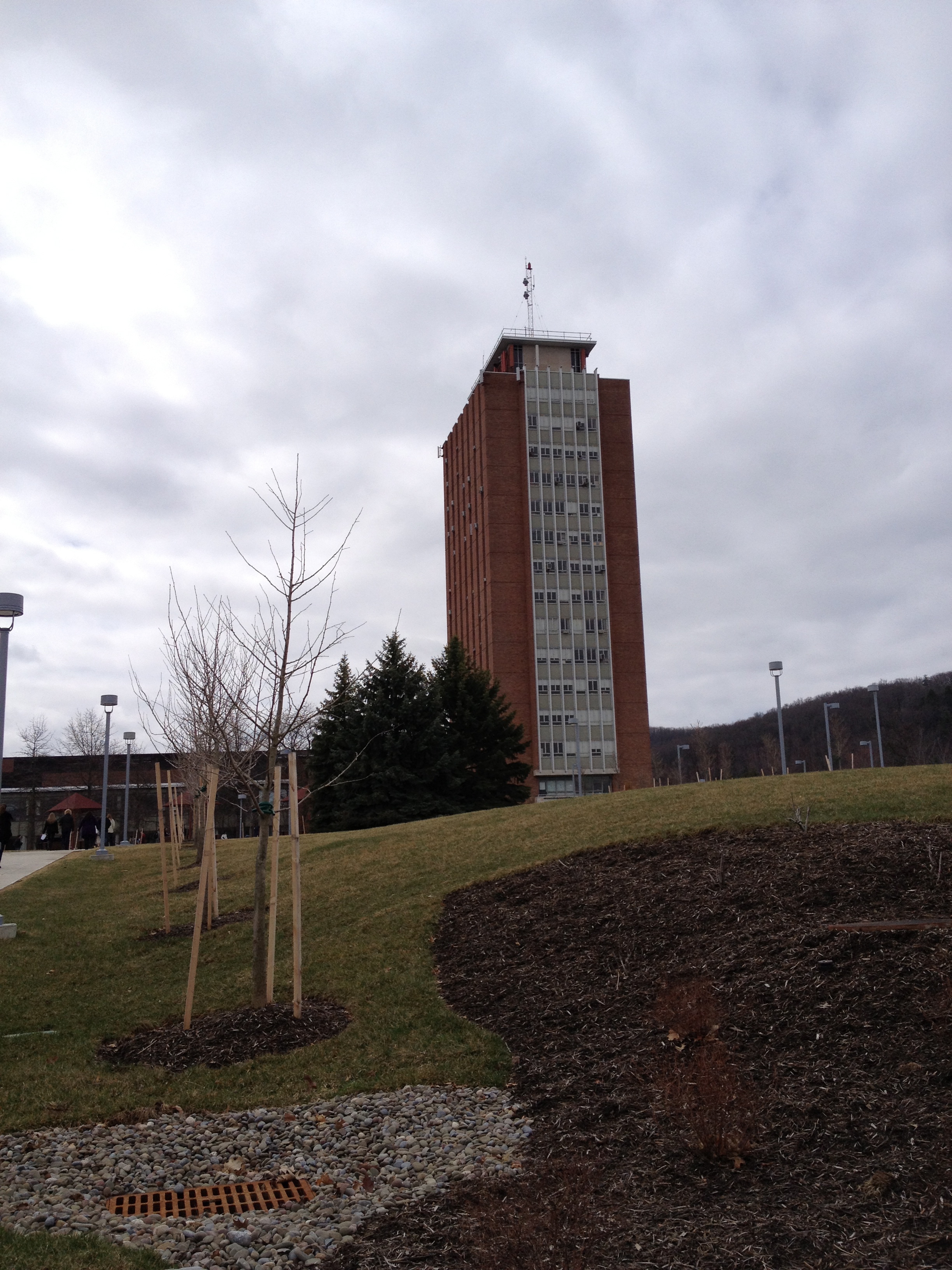
Binghamton University is, like most institutions of higher education, home to many rituals. Back around a century ago, anthropologists were convinced that religions began as a set of inchoate rituals that coalesced into primitive belief systems. Although most anthropologists today see this as an overly simplistic analysis, I found a recent story on Binghamton’s website an example of a nascent religion. It has to do with placating, or perhaps defying, the weather gods.

Like most good rituals, Stepping on the Coat has a practical pedigree. According to Bing’s own archives, the ritual began the year that I was born. An undergrad that year, overwhelmed by an April snowstorm, removed his coat and stomped on it. The snow stopped. As befits a scientifically inclined institution, this was initially chalked up as coincidence, but the same result occurred again the next year. Stepping on the Coat seemed to be a cure for late season snowstorms. In this year of lazy, lingering winter, many people—some of them not even students—must be seeking a cure for unseasonable weather. Perhaps Binghamton University students a half-century ago stumbled (stamped?) upon the solution. In the whimsical tributes given on the BU magazine webpage, the sacred and the profane are never very far apart.

Binghamton in spring

Binghamton in spring

I have done considerable research on the weather and its sacral implications. Most of my research has never been published, but the overarching idea, I believe, is sound. Our human perceptions of the divine are focused on the sky. Nietzsche declared that God is dead, but that death only really occurred when we penetrated our atmosphere and landed on the moon. Even then, looking up, we saw only blackness beyond. Infinity hangs, like Damocles’ sword, above our heads. We may pollute our skies, we may shut them out with artificial walls and ceilings. We may even punch through them with rockets. But our gods are up there, somewhere. And they are the ones who dictate our weather. The human response is up to us. Do we sit inside and complain, or do we stomp the coat in defiance of an uncaring deity? Binghamton is a green university, so that even amid the burgeoning religion of coat-stepping, there is a real awareness that when the weather goes awry in this industrial era, we know where the blame truly lies. As humans, however, our religious inclinations will insist that we continue to step upon the coat and claim the whole earth as our prize.


Human Show

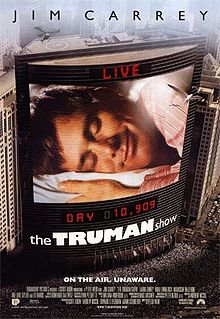
TrumanshowAt least a decade had passed since I watched The Truman Show. Jim Carrey has gone on to achieve an over-the-top kind of fame, but Truman is a thoughtful movie that raises several troubling questions. It is also one of the films of the 1990s that shamelessly cast an uncaring god (the not so subtly named Christof) against the goofy, but serious Truman Burbank. The movie is old enough not to worry about spoilers, so a quick run-down might refresh other hazy memories. Truman is the star of a show where a massive set that includes an entire island has been built around him. The vision of Christof, an unwanted baby is recorded from birth in an artificial, “perfect” world that revolves around him. Until he begins to notice events that, in the real world, would be paranormal. Objects falling from a clear sky, dead people reappearing, fake sets under construction. Determined to learn the truth, he faces his fear to escape by literally walking through a door in the sky.

Christof is “the creator.” From his base in the sky, he looks down on Truman as his star “son” grows to a Christ-like 30 years of age. He is protected from all harm, yet terrified of anything that might aid his escape from the ante-world he inhabits. When he slips the cameras and begins to make his way across the water, Christof, still not wanting to relinquish the ruse, throws a storm at Truman’s sailboat, striking it repeatedly with lightning. “Hit him again,” he growls to his crew. “Again!” It is difficult to watch as the loving god is angered to the point of destroying his only son. When Truman literally reaches the end of his world, he walks on the water to reach the stairway to heaven. Metaphors are flying thick and fast. Christof breaks in as a voice from the sky to convince Truman that his life will be perfect if he continues to pretend that reality is only what it seems to be. His devoted fans cheer as Truman ascends and walks through that door into another reality.

Many books on the theology of film have appeared over the past decade as it has become clear that people are very much affected by what they see on the screen. Our brains resonate with what we are seeing to such a degree that movies participate in our perceptions of reality. In an increasingly secular world, we have come to distrust our gods. This truth has echoed through many movies in the past several years. Although not living up to the hype, The Clash of the Titans—the remake—had classical heroes disputing the power of the gods. Truman doesn’t go that far. We are never informed about what life after the delusion is like. The hole in the sky is black. We know that on the other side, our world, there will be terrible disappointments and tremendous sadness. It may be that there will be no gods at all on this side of the studio. Although showing its age a little, The Truman Show still speaks volumes about the religious experience.


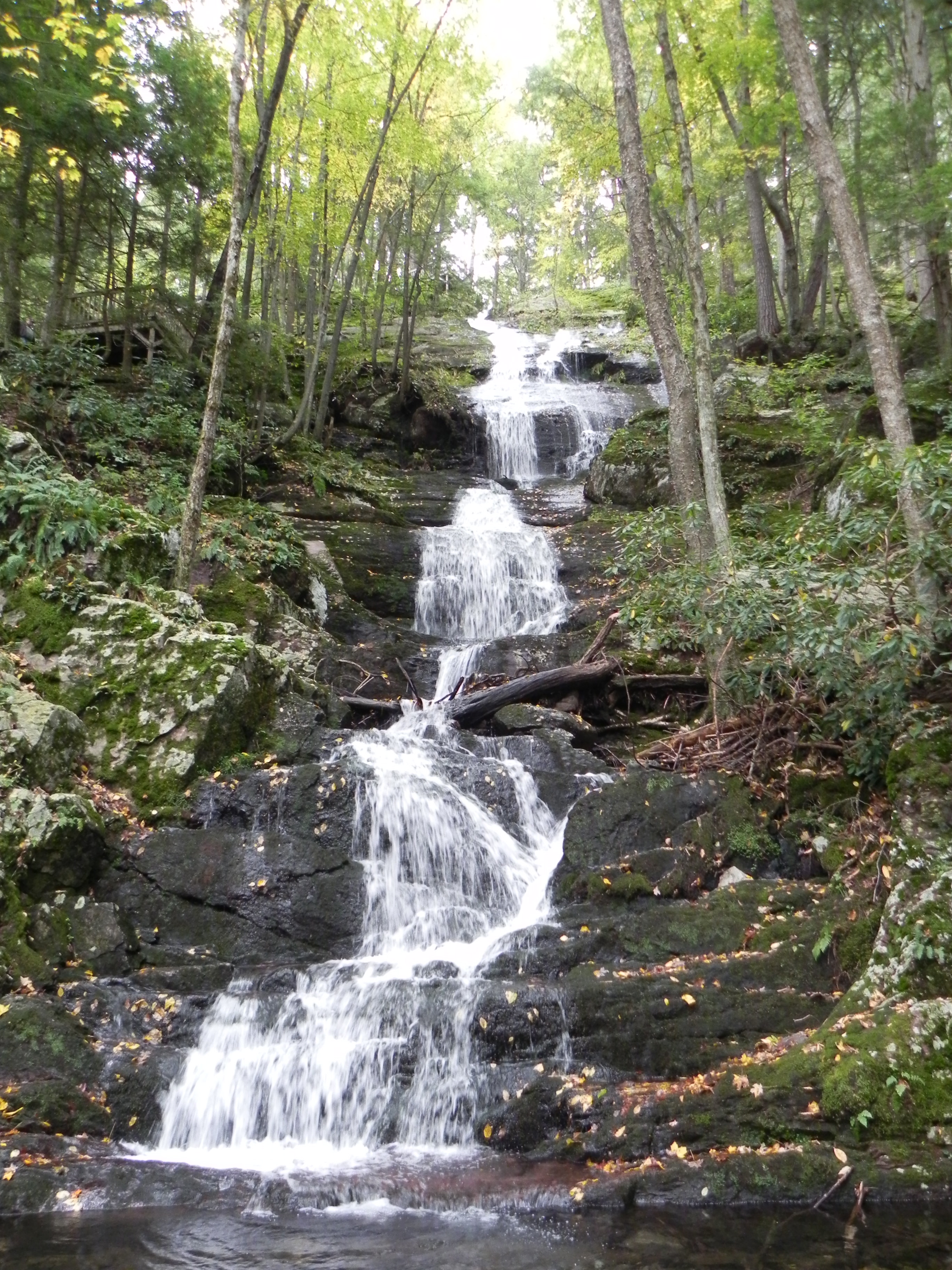
Flood Warning

If you’re like any number of others in North America, you may be wondering when spring will arrive. Not meteorological spring—that has flown past already—but the warm, salubrious air that bears no wind chill factor. You might, like many, turn to the Weather Channel website. While you’re there you might see a story about extreme weather and Noah’s Flood. (You might need to scroll down the page to find it; the link seems to have been cursed.) The flood myth is a pervasive story. It appears in countless novels, movies (even Titanic and The Poseidon Adventure, for those who are willing to believe), and many baby’s nurseries. The weather this year has many wondering about global warming, although, honestly, we’ve known about it for years. Some are speculating that floods will become more common, and that’s almost certain. The Weather Channel, however, uses the myth to point out that people have experienced extreme weather from “the beginning.”

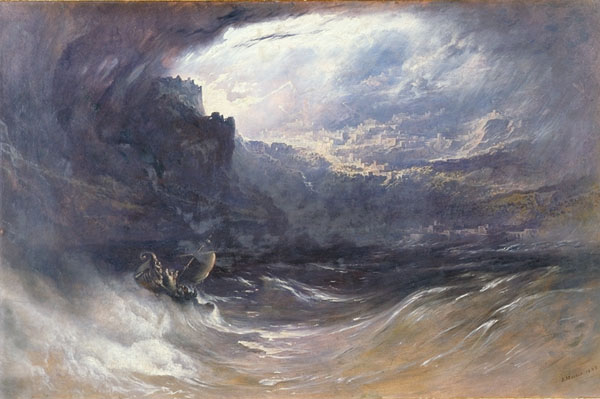
The trouble with this reasoning is that the story of Noah’s flood is not original to the Bible. It seems virtually certain that the writers of the biblical stories (there are two) knew the Babylonian version embedded in the tale of Gilgamesh. The writer of the Gilgamesh Epic knew the Sumerian version of the story, already centuries old by that point. And the story never really happened. At least not in historical time. Floods, yes. World-wide flood, no. The stories were told to make points, as most stories are. The point here seems to be that gods can be pretty petty if you neglect to offer them their due. Even minor sins can set you treading water for weeks at a time. Still, the Weather Channel considers the possibility that this could reveal ancient meteorology. Ancient morality is closer to the truth.

Every year around Easter the media peppers its workaday headlines with biblical tropes. It is the time to catch the quasi-religious thinking pious thoughts and click-throughs are more likely. Never mind that biblical scholars have known for many decades that this fetching tale is based more on a primitive Schadenfreude than modern science. Not that the Bible is devoid of ancient weather. I once wrote an ill-fated book about the topic. The people of ancient times knew that God has a special place in his sacred heart for the weather. It is one of the most awesome demonstrations of divine power. So it is in the story of Noah. For those of us in the twenty-first century it may still be a morality tale. This time, however, the flood is caused by human greed and lack of control. And this, when all is measured in the scales, may be among the worst sins humanity has ever committed.

Martin,_John_-_The_Deluge_-_1834


A Weird Resurrection

Driving through an unfamiliar city doesn’t allow for much time to appreciate what you’re seeing. Back in February when I was visiting Austin, Texas for the first time, it was 65 degrees outside. Given the irascible temperatures in New Jersey this year, that felt like summer. Of course, the locals were bundled up since it was, for Texans, unseasonably cool. The weather has been off this year. Of course, we know who to blame. Cthulhu. As I was trying to find the University of Texas with an impatient GPS as my co-pilot, I spied someone walking down the street wearing a Cthulhu ski mask. I can’t express how badly I wanted to pull aside and snap a photo, but pulling aside in a strange city can lead to unwanted adventures. Especially when your co-pilot is an opinionated GPS. I’ve been to north Philly and the south side of Chicago. I didn’t want to take any chances that Austin might hide such districts.

Cthulhu mask

H. P. Lovecraft, like most original thinkers before the computer age, was ignored in his lifetime. I wonder what he would have felt if he had divined that the internet would one day bring him world-wide fame. His writings, of course, had been appreciated before the computer was invented, but the web has nearly as much Cthulhu as it does LOL Cats. Even those who’ve never spent a dark night curled up with the Necronomicon recognize Cthulhu’s octopoid visage when they see it. Davy Jones of the Pirates of the Caribbean fame borrowed his unforgettable face from the Old Gods discovered by Lovecraft. Cthulhu has become a cultural icon of the chaotic, the cosmic, and the somewhat comic.

In a strange way Cthulhu stands for resurrection. In Lovecraft’s mythological world Cthulhu lies under the sea, dead but dreaming. A dying and rising god of utter terror. Lovecraft, an atheist, built his fiction nevertheless around a series of gods. Today his stories are noted for their moody portrayal of improbable worlds, and his storytelling has had an incredible influence on many of those who attempt to generate worlds that are fantastic but somehow still believable. Cthulhu’s resurrection, however, is not to be desired. Even if these he represents life anew, it is a life humans could not bear. In a deeper sense yet it is Lovecraft himself who has experienced a kind of resurrection. A writer forgotten in his lifetime, but rediscovered when it was too late for him to realize just what he’d created, the true master of Cthulhu, I like to believe, lies dead but dreaming, and he has already revealed that he will rise and the masses will tremble.


Blob Blog

Those who actually know something about movies occasionally complain that Hollywood seems to provide us with diminishing returns. How many movies have been remade? Can anyone even count all the sequels, prequels, and just plan quels? A similar trend is evident in publishing. A teen-vampire novel takes off and every publisher faces a twilight of the profits if it doesn’t spin off its own version. Sometimes I end up becoming familiar with a movie through its remake before ever viewing the original. The Blob is one example of this. I’ve seen the thirty-year remake 1988 version a few times. Just this weekend I saw the original 1958 version for the first time. It seems to me that teen movies of the late fifties and early sixties tried a little too hard to get the snappy, sassing dialogue of teens on the brink of the incredible cultural changes that were about to take effect after the extreme conservatism of the McCarthy Era. At times it is so hip that I can hardly stand it.

The_Blob_posterThe Blob falls into that category. A young Steve McQueen trades ripostes with his chums who think a drag race and a Bela Lugosi movie with your gal are pretty daring behaviors. Buried in all that innocence, however, I found a hidden warning tone. When I watch scary movies, I always keep an eye out for religious themes. Sometimes they fail to materialize. The Blob is about as secular as they come. I didn’t even spot a church or a priest (unlike the 1988 remake) in the typical American town. Just a bunch of kids that, Archie-like, try to convince the adults that they’re serious. A blob from space really is loose in town, and nobody has an idea how to stop it. All the adult men wear ties and the ladies all wear dresses. It is a world that follows the rules.

What of this warning tone I mentioned? Well, the blob itself is, apart from its disruptive raison-d’être, hardly more threatening than the stifling culture it attacks. It can’t be shot or burned, and nobody has any other ideas. It is unstoppable. Except for cold. And here’s the chilling part. As the carbon-dioxide drenched blob is airlifted to the Arctic by the military, Lieutenant Dave declares the world safe once more. Steve (Andrews, i.e., McQueen) chimes in with, “Yeah, as long as the Arctic stays cold.” The film ends with a trademark horror question-mark (this one literal) as the blob is parachuted onto a snow-covered landscape. Global warming was a future monster in 1958. The optimistic world could see nowhere but forward. Now, over 50 years later, our future looks a lot less cold. With politicians and some religious leaders decrying global warming as just another liberal myth, we might do well to remember The Blob. Something up there on our melting ice caps is waiting for us to return to the 1950s to begin its sequel of terror.