Literary Thoughts

A book is a physical object.  It is printed on paper and has a cover.  It has a publisher who undertakes to have it printed and bound (and with any luck, marketed and publicized).  This, I would contend, it what most authors have in mind when they sit down to write a book.  It isn’t just “content,” of which you can find far too much on the internet.  It is an object of pride that you can slot onto your shelf with a great sense of personal achievement.  It has taken a lot of work, and headaches, to get to this point.  Several months or even years of your life.  An idea that can’t be addressed in a couple dozen pages.  A book is born!

Publishers are more and more pushing the ebook, however.  The ebook is not a book in the same sense as a printed object is.  In some sense it may be more durable.  It’s certainly easier to get quickly.  But how do you get excited over writing an ebook?  Whenever I’m writing a book, there’s clearly an object in mind, not a cloud of electrons.  Ebooks have their place, but as people start talking about a post-literate future I start seeing visions of my own tombstone.  It gives me a strange kind of comfort to know that all of my books so far reside in the Library of Congress.  Some university libraries even buy copies.  Would a carpenter take pride in an electronic table she built?  Can you set your book on it?  If you don’t carve your “Kilroy was here” in stone, how will you ever prove it?

As handy as ebooks are, nothing matches the sensation of walking into a room full of books.  The sense of rapture is palpable.  Such rooms are monuments to our culture.  A screen with metaphorical tons of content may be a tribute to technology, but is any of it real without ink connecting with paper?  There’s nothing wrong with “content;” I produce some every day.  The thought process is different from book writing, however; just like the process of writing poetry differs yet again.  The publisher always looks at the bottom line.  (And I don’t mean the last line of a poem.)  And to keep “books” profitable the conversion to “content” seems attractive.  It breaks down, however, if writers no longer think in terms of books.  The book has a storied history and a long future, if we keep in mind that it’s something far more refined than mere content.


Another Article

Some insecure people feel the compulsion, but really don’t know why.  Speaking strictly for this insecure person it’s because (I think) I’ve been ignored most of my life.  I didn’t cause trouble so teachers seldom paid me any mind.  (I’m pretty good about obeying rules.)  I was a middle child with less than a year at youngest status.  I was abandoned in a house at the age of one for God knows how long when my father went out on a bender.  Who knows?  In any case, this piece isn’t really about any of that.  It’s about the compulsion to write articles.  I don’t know why I keep volunteering to do this.  They get me nowhere.  You’re not paid for them, and you get little exposure.  I seem to be addicted to appearing in print.

This blog is purely an electronic phenomenon.  It exists nowhere in print.  I post on it every day in the hope that, like a Pioneer probe, it will connect with somebody who comprehends.  As a non, but erstwhile, academic I am not compelled to write.  In fact, it sometimes complicates things.  (If you believe that freedom of written expression exists you’ve never read a publishing contract.)  So print publication appeals to me.  I had an email from a volume editor the other day and I couldn’t place the name.  I opened it to read that the volume had been accepted as I was struggling to remember what I promised I would write for him.  I had to do an email search to locate the chain.  So that’s what I said I’d do! (The previous article I’d committed to I remembered well, since the proposal was long overdue.) 

Print publication, you see, takes a long time.  An erstwhile editor (likely an academic), gets an idea.  They wrestle with it a while and then write it down.  Pitch it to a publisher.  The in-house editor has to pitch it to the editorial board.  Often after peer review.  It can, in my defense, take months—plenty of time to have forgotten I said I’d contribute.  Then the book has to be written.  That part can take years, but in edited collections many hands make light work.  After the disparate pieces are finally cajoled in (one editor had to keep after me for four months), the editor, well, edits them.  Then they finally get sent off to the publisher.  The production process takes about a year.  The volume comes out and you get a congratulatory email or two, and then it’s forgotten.  I’m not sure why I do it, but I’ve been published by university presses for taking these on.  When I was teaching I couldn’t seem to get their interest.  Now that I’m writing about horror they’re starting to notice.  But then, that’s how monsters behave.


At Last, Yule

It all depends on how you look at it.  Today is either the longest night or the beginning of the return of the light.  It’s the winter solstice, that time that has been considered haunted for centuries, when the spirit world is once again close to the “material world.”  Slowly, incrementally the light will increase from this point on.  It will take a couple months for the effect to be really noticeable, and the weather here in the northern hemisphere will trail a bit behind and grow colder as the sky starts to lighten up a little.  This juxtaposition likely led to the germanic festival of Yule, which has become conflated with Christmas.  Carols tell us of Yule logs at Christmas and some cultures call Christmas itself Yule.

If you consider this day there are again two ways to ponder—appreciating the dark for its own benefits or looking for the return of light.  No doubt, lights are everywhere.  My town has the central part lit with holiday lights and just this weekend Bethlehem had hundreds of luminaria lining the sidewalks, encouraging the return of light.  Yule, it seems to me, catches people at their best.  Christmas isn’t quite here yet and people are still kindly disposed to others, coming out to see the lights and feeling carefree, assured that light will return but making the most of life before it becomes humdrum again.  We put out our lights, perhaps a little afraid of all this darkness, but at the same time trying to appreciate the restfulness of long nights.  Darkness isn’t evil, even if it works that way as a metaphor.

Learning from the dark is under appreciated.  As a species we rely heavily on the benefits of sight.  It’s natural to be a little afraid when we can’t see.  Still, the dark has its own regenerative value.  Our bodies actually benefit from being in the dark a few hours each day.  Our minds can benefit from the rest.  I always think back to the days before electricity allowed us to chase away the night.  How much more intensely the night would’ve been felt.  Even with our artificial lights nothing can compare with the light scatter of our own skies as the sun’s powerful lumens flood our hemisphere.  Yule seems the appropriate time to think about the contrast, but not conflict between light and dark.  The idea that opposites must fight doesn’t really help us in this world of many contrasts.  Isn’t it better to ponder how we might learn from the dark?


Rats

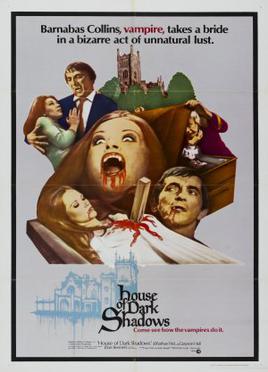
Small town living had its benefits but one of them wasn’t seeing movies.  In the seventies, before the local mall came in, there were scattered movie theaters about.  You could sometimes see reruns on television, if you were free and awake when they were aired.  VCRs weren’t widespread and DVDs and streaming were decades away.  One horror film I very much wanted to see was Willard.  Released in 1971, it did quite well at the box office.  I was only 9 at the time so I never saw it and by the time I became aware of it theaters had long lost interest.  Kids were still talking about it years later, probably from television showings.  When my second resurgence of interest in horror came around, it was still difficult to find.  The DVD wasn’t available and it took some time for it to appear on a streaming service to which I subscribe.

I have to wonder how we got through the seventies, but I finally had a chance to stream it.  The story, since there was a new millennium remake, is probably familiar.  A young man (the eponymous Willard) who doesn’t fit in eventually befriends some rats in the run-down property of his once opulent home.  He teaches them to understand him and eventually has a virtual army of rodents.  He’s a good lad, however, and only uses the rats to redress social inequities.  His boss, a real old school bad guy, stole the steel mill from his father and is trying to drive Willard out.  You can see the boss’s fate coming from afar.  It’s not much of a horror film by present-day standards, but it does have its moments.  It would likely have more impact had I seen it fifty years ago.

The theme song from the sequel, “Ben” (also the title of the next movie), performed by Michael Jackson, rose to number 1 on the charts.  Those of us in the seventies knew it was a song about a rat.  Well, at least some of us knew.  Horror, despite its detractors, often influences mainstream culture.  Indeed, Willard seems to have had some lasting knock-on effects, including the remake just into the new millennium.  Movies from the seventies, although some are excellent, often bear the brunt of the malaise of that period.  Did we ever think big, boxy cars were attractive?  Were men really such chauvinistic pigs?  Still, the story is a good one.  I wasn’t really interested in the 2007 reboot, but having seen the original I’m now curious.  It is, at least, fairly easy to find.


Not Really Nervous

Embarrassment is a not uncommon reaction.  People who knew me as a religion professor or who now know me as a volunteer leader in my local congregation wonder why I watch and read horror.  It helps to know that you’re not alone.  Mathias Clasen is an author I’ve mentioned before.  I read his first book on horror and I was excited to see his A Very Nervous Person’s Guide to Horror Movies, recently out.  I’m not really a very nervous person in this particular regard.  As those who know me will attest, I’m nervous in many aspects of life, just not this one.  Still, after having heard the author describe what his university sponsored fear lab does I was curious how he’d approach horror for the nervous.

Clasen is an academic who clearly enjoys writing.  He’s fun to read.  He admits to being somewhat nervous around horror himself, not watching horror alone.  In fact, the book has several tips—such as not watching horror alone—on how to survive the experience for the curious but cautious.  What I inevitably take away from studies such as this is a couple of things: watching horror isn’t something only I do, and it’s actually good for you.  Studies (and here’s where Clasen is able to point to actual sources) have repeatedly demonstrated that horror has adaptive benefits.  Kids like scary stories, and there’s a reason for that.  The interest in horror generally peaks at the onset of adulthood and tends to decline from there.  Some of us, however, are perhaps arrested at that stage.  Or rediscover it.

There’s a great utility in being able to discuss horror intelligently.  Another point Clasen addresses is that horror is often intelligent but since those who don’t watch it often set the social standards it’s addressed as if it’s juvenile and unsophisticated.  Yes, there’s trash out there.  There is in every genre.  For many people, however, the popularity of slashers in the eighties forever defined horror as naughty teens getting murdered by a bloodthirsty maniac with some kind of blade.  That’s only part of the picture.  Horror has a history as old as cinema itself and the earliest exemplars were based on literature.  It has been an innovative genre from the beginning and when a particularly noteworthy horror film comes out critics and pundits are quick to relable it as a thriller or drama or anything but horror.  We need to give horror its due.  It’s always a pleasure to read a book by someone who has an appreciation of what horror has to offer, even if he’s nervous about it.


Masking Identity

Who am I, really?  Identity has been on my mind quite a bit during this pandemic.  With millions dying I suppose it’s important that “the officials” know who we are.  At the same time I don’t feel comfortable taking my mask off in front of strangers.  It’s kind of like a facial striptease that puts you at risk for some communicable disease.  Because I had to fly for Thanksgiving this year I got to put my Real ID to the test.  I removed my mask for the photo—at the DMV, of all places—so there was risk involved to prove that I am who I’ve always been.  When I went to get a Pennsylvania license three years ago, the system remembered me from when I got my permit and asked if I still lived in the county where that had occurred.  They seem to know a lot about me.

At the airport the TSA guy told me to take off my mask.  He had to confirm that I was the same person my Real ID stated I was.  I wish our government would tell me who I am.  And of course my passport decided to expire also during this pandemic.  I went to a local pharmacy to get my passport photo taken.  (I know you can do this at home, but you need a printer that handles photo paper.)  Then you can send the application in by mail.  How do they know it’s really me in the photo?  I had an uncanny experience many years ago when a visiting team from the Association of Theological Schools (ATS) visited Nashotah House for an accreditation visit.  One of the inspectors looked very like me.  I think we both noticed the resemblance immediately.  It was like we were twins.  Later I found his photo on the school website and asked my pre-literate daughter who it was.  She said “Daddy.”

Who is that masked man?

So I’m standing here with my mask off in a store for confirmation that I am who I claim to be.  I wonder if this other guy’s photo were sent in would they know the difference?  In fact I’ve had the experience I suspect many people have had of being mistaken for someone else.  Helping a friend move to Kentucky after college, I had several people in a small town I’d never visited before identify me as Joe’s son.  I looked just like him.  Of course, that was way before the pandemic when our faces were public property.  Now I just wish I could put my mask back on so that I could feel a little less naked.


Ghosts and Puritans

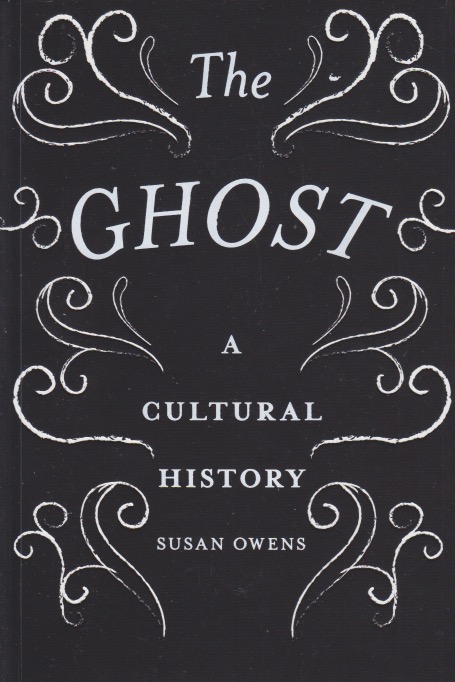
One of the victims of capitalism is the tradition of telling ghost stories at Christmas time.  We tend to relegate such downers to Halloween.  Christmas is a cozy time of getting new things, right?  Who wants to think of ghosts?  I recently read Charles Dickens’ A Christmas Carol.  An article in the Smithsonian  a few years back makes the point that Dickens was cashing in on a venerable tradition.  Instead of sending children to bed expecting Santa Claus, it used to be the custom to tell ghost stories on Christmas Eve.  That makes sense in context.  Christmas was established near the date of the Roman festival Saturnalia and the germanic Yule.  These festivities celebrated the passing of the equinox and the slow, but steady increase in light.  A liminal period.  It seems a natural time to tell ghost tales, no?

Image credit: Arthur Rackham, public domain via Wikimedia Commons

The article by Colin Dickey (who has a history of writing about ghosts), calls for bringing back the tradition.  Do we want our cozy capitalism interrupted by revenants?  Why not?  For me the Christmas season is largely about time off of work.  I spend the time working on fiction writing that I tend to put off when I have a book under contract.  Most of those stories I write are some species of horror, often ghosts.  The real haunting factor is I don’t have time during the rest of the year to do the amount of writing that recharges my batteries.  Work seems to take more and more time and the Scrooge-like results are, I think, pretty obvious.  It’s time to bring back the Christmas ghosts.

Dickey points out that one reason Christmas ghost stories never caught on in America was that Puritans had little taste for them.  The more I look at society the more amazed I am at how Puritan we still are, but without their religious ideals (apart from various prohibitions of human behavior).  The fact that this article appeared in the respectable Smithsonian makes me feel a little more accepted for my disposition.  I know there are many horror fans out there.  Poll after poll indicates that people like horror, but, it seems, most don’t like to admit it.  At least among those I know in the neighborhood.  There are a slew of Christmas monsters.  For those who keep track of holiday horror as a sub-genre the most common holiday represented is Christmas.  In fact, I just had a Christmas horror story published (under a pseudonym, of course).  Maybe ghosts will be able to frighten off the specter of capitalism and bring us back the holiday spirit.


Thinking Big

Depending on who you are the Bigelow Institute for Consciousness Studies (BICS) may set your eyeballs to rolling.  You might know that extremely wealthy Robert T. Bigelow made his fortune as a hotelier and then began investing his money in aerospace technology.  He publicly admits to believing that aliens are already among us, and has contributed to advances in space travel components.  (It seems that many of the uber-wealthy are looking for a way off this planet at the moment.)  Not an academic, Bigelow is keen to admit his interest in what is often laughingly labeled the “paranormal.”  If you’ve got money you really don’t need to worry about what other people say.  I recently ran across an announcement regarding the winners of a BICS essay contest regarding the survival of consciousness after death.

As I’ve noted before on this blog, the paranormal and religion are close kin.  Nevertheless it does me good to see that so many people with doctorates (both medical and of philosophy) entered the contest.  I’m glad to see not everyone is buying the materialist narrative.  We’ve been so misguided by Occam’s razor that we can’t see reality is more complex than they teach us in school.  Churches may not be doing it for us any more, but it does seem that “there’s something out there.”  With a top prize of a half-a-million dollars, there was certainly a lot of interest in this enterprise.  If you go to the website you can download the winning papers.

Consciousness remains one of the great unexplaineds of science.  Answers such as “it’s a by-product of electro-chemical activity in the brain” don’t mesh with our actual experience of it.  Indeed, we deny consciousness to animals because our scientific establishment grew out of a biblically based worldview.  Even a century-and-a-half of knowing that we evolved hasn’t displaced the Bible’s idea that we are somehow special.  Looking out my window at birds it’s pretty clear that they’re thinking, solving problems.  Dogs clearly know when they’re pretending, as in a tug-of-war with its weak owner.  We don’t like to share, however.  Being in the midst of my own book project I really haven’t had time to read the essays yet.  I do hope they come out in book form, even though they’re now available for free.  I still seem to be able to carve out time for a book, which is something I consciously do.  I’m not convinced by the materialist creed, although I’ve been tempted by it now and again.  I like to think that if I had money I’d spend it trying to sort out the bigger issues of life, no matter what people call them.


Human Agency

Goodreads Choice Awards elected John Green’s The Anthropocene Reviewed as the Best Nonfiction for 2021.  It’s easy to see why.  Green has long been known both as an internet personality and as a fiction author.  His fiction tends to fall into the Young Adult category, but I’ve read a couple of them as an adult and found them compelling.  Green has an uncompromising way of writing about difficult topics and evoking what it was like to be young.  His main fan base is probably much younger than me, but I always enjoyed his fiction, so why not non?  To understand the context of The Anthropocene Reviewed, it’s important to realize that it is a podcast.  Some of the segments have been written up into a five-star rating system that has been done with quite a bit of humor and some very real tears.  That’s the book version.

For me personally, reading this book was quite a bit like walking the mental paths already in my own mind.  Although we’ve led very different lives, John Green and I share many of the same anxieties, the same love of writing, and similar theological backgrounds.  I don’t know him, of course, but I get the sense that we both still wonder what we want to be when we grow up.  The selection of topics in this book represent Green’s interests well.  Topics are researched and fascinating stories emerge.  It takes quite an author to make me keep reading when sports are invoked.  Some of the topics are sentimental and some of those must be so.  In fact, some of the topics he addresses are things I’ve blogged about.  Some of them even use similar phrases to describe our experiences.

The book is subtitled Essays on a Human-Centered Planet.  From Green’s point of view, this human-centricity isn’t always a good thing.  He nevertheless never loses sight of the fact that humans are fascinating creatures.  Fascinating and disturbing.  We destroy our own environment and each other.  Yet we’re capable of such incredible feats and loving and caring.  Green wrestles with his own neurodiversity here.  He doesn’t shy away from the difficulties that mental illness can present.  He’s also an example of one of us who succeeds despite this liability.  Indeed, our neurodiversity is one of those unacknowledged things that make us so very human.  We expect a world to obey the laws of logic, which it stalwartly refuses to do.  When we notice this we can either cry fowl or we can think about it and invite others to do so.  Read this book and think.


Riddle

It’s an age-old question: how many Ph.D.s does it take to screw in a lightbulb?  I haven’t figured it out yet, so if you have the solution please let me know in the comments.  It’s like this—I’m a short person living in a tall house.  Even while living in apartments I had bought a six-foot ladder and an eight-footer, to reach various things.  A bit of an acrophobe, I tend not to use the latter ladder unless it’s really necessary.  Then the landing light went out.  It’s a dark time of the year and a light over the stairs is really a matter of safety.  The stairs continue up from the landing and this particular ceiling light is eleven feet above the ground.  Given how far I can safely (debatable) climb an eight-foot ladder, I can’t reach the ceiling with what I’ve got.

We had to buy a 28-foot extension ladder to reach the roof.  In its collapsed position it’s 14 feet and requires two people to carry.  I’m not sure we could get it around the corners in the house, and even if we did the math doesn’t work out to fit it in an eleven-foot space with stairs every direction.  I decided to ask YouTube.  The solution there is to buy several two-by-sixes and some heavy-grade plywood and build yourself a temporary platform.  With the pandemic-induced shortages, and therefore price increases, such a platform would cost about $100 to build, and then I’d need to unbuild it after screwing in the light.  Or we could buy another ladder.  Maybe a different house while we’re at it.

Imagine

The thing about ladders is they come in standard lengths.  Around here, anyway, a ten-footer isn’t an option.  The best bet is a multi-position ladder.  Retail cost somewhere upwards of $150.  To someone afraid of heights it feels like the safest of many less than optimal options.  Apart from perhaps carrying flashlights in the evenings that come so early now.  Still, that raises the specter of cost.  How much does it cost to screw in a 5-dollar (LED, of course, to help the environment) lightbulb?  It seems to be a $100 repair, no matter how you do it.  I could try custom-building my own ten-foot ladder.  Or I could try making some tall friends.  Apparently you can rent ladders as well, but of course we’d need to rent the truck to get it here as well.  Or we could learn to live with a shadowy stair this long winter that’s just getting started.  How many Ph.D.s does it take?  I don’t know, but the answer will be more than one.


Christmas Classic

While it’s a story I know well, I’d never read the book.  I suppose I tend to think of Christmas when it’s already hard upon me, or perhaps I’m just making excuses.  After all these decades I’ve finally read Charles Dickens’ A Christmas Carol.  The story is so well known there’s no point in laying out the action here.  A filmic version of this has been part of our family tradition for many years now and sometimes it’s difficult not to think the cinematic version has somehow got it right while the book might’ve somehow missed something.  I’m generally disposed to read the book before watching the movie, but I believe I saw this as a young person and we had no Dickens in the house.  Besides, who could miss the endless parodies?

It’s a ghost story, yes, but it’s primarily about redemption.  It’s difficult for me to watch (or read) without getting a bit misty about the eyes.  Our world, especially during the Trump years, seemed a hard and heartless place.  Winter all the time while somehow being Hell also.  It will take many years—perhaps I won’t live to see it—before people unlearn the bad habits they saw being modeled each and every day of those four long, long years.  Every year as I watched the movie I thought, “I wonder if 45 has ever seen this?”  Always the answer came back in a resounding “Humbug.”  A miser who cares only for himself doesn’t change as easily as Scrooge.  So the world had to suffer, and so it will suffer yet a good long time.

The thing about redemption is that it can’t be privatized.  It’s on free offer to anyone who desires it.  While A Christmas Carol may not be Dickens’ best work, it nevertheless bears a message well worth the repetition.  Perhaps there aren’t ghosts enough in the world.  We need to learn to listen.  Were it not for the haunting Scrooge never would have changed.  The sad part is that there are people actually of his ilk.  I hold out hope for redemption to all of them.  I’ve known too many people who seem to care only for themselves.  I need to remind myself that they may not have the reinforcement of this tale every year.  The world could perhaps be better if that were the case.  Dickens clearly had fun as a writer.  Sometimes it seems to get in the way.  But if it makes one’s heart light in December, what can the harm be in that?


Great Resignation

Although many people my age are retired, I’m looking at a couple more decades of work at least.  A large part of this is because I specialized in a field I didn’t realize was dying.  I suspect clergy in the eighties, when I had to decide on majors and education choices, thought the declines in church attendance were a blip—a statistical anomaly until things went back to the way they “usually were.”  I majored in religion as an undergrad and then went on to seminary and finally to a doctoral program, all along that trajectory.  At every step of the way I was assured there would be jobs.  I’m seeing now that religionists don’t always look ahead.  It’s important to look back, but society begs to differ.

The reason this comes to mind, apart from being part of my daily reality, is an article a minister sent me.  The piece by Melissa Florer-Bixler  in Sojourners is titled “Why Pastors Are Joining the Great Resignation.”  It explores a number of reasons around pay and working conditions that ministers are quitting.  My thought, unscientific but logical, is that many of them are realizing society has moved away from the standard church model.  They recognize that the insistent biblicism that led to a past of Americans being in church under threat of Hell has diminished.  “Worship,” as it is generally done, no longer speaks to people.  I’ve experienced a great many worship styles and venues.  (I still attend them, but I’m a creature of habit as well as obligated by profession.)  When the realities of the world sink in you start to see the old model of praising an angry God because he demands it just doesn’t make sense.  People like Trump get elected anyway, so what’s the point?

Many pastors are underpaid.  Unless you run a mega-church budgets are tight and the need of people is great.  Much of the effort of the congregation I attend is directed to social justice causes.  There are so many.  So very many.  People are in need and the pat answers of call to worship, opening hymn, and sermon just aren’t doing it for them.  Congregants need pastoral care, as do people unchurched.  I’ve been through seminary and a professor in one long enough to know that few really get the idea of how to inspire by their words.  These are folks looking for a living who don’t fit into the capitalist model.  So there’s a decline.  As I read the piece I wondered what jobs they were switching to.  If my experience is anything to go by, the options are limited.


Sects and Violence

Important books often suffer because of poor distribution.  There are really only five publishers in English (“the big five”) that can reliably get their books into commercial bookstores.  I was reminded of this when reading the very important book Sex and Religion: Teachings and Taboos in the History of World Faiths, by Dag Øistein Endsjø.  The book is virtually unknown here in the States for a number of reasons.  It was originally written in Norwegian.  The author isn’t a household name.  The publisher who bought English rights is British.  It’s not comfortably priced.  None of this, however, gainsays its importance.  This book has much to teach us about hypocrisy and how religions codify prejudices, and, despite rhetoric, still value women less than they value men.  Religion is intimately connected to sex.  As I’ve written before, no religion ignores it completely.

Endsjø offers here a reasoned, logical, and religiously expert analysis of several aspects of human (and to a degree, animal) sexuality.  Contrary to much monotheistic teaching, sex is often treated as a good thing—within limits—in world religions.  Of course, that allows monotheists to step in and claim all others are pagans and debased, a tactic as old as the Good Book itself.  Religions’ real enemy, it seems, is education.  We should be open to compare what others believe—the wisdom their elders have passed down, just like the disciples.  And we should be honest about the fact that we change the rules to suit our situation.  One of the starkest examples of this Endsjø points out is that the Bible is much more stridently against divorce (which evangelicals now freely use) than homosexuality.  But guess which is the political issue?

Religions change, no matter what any true believer says.  We adapt to all kinds of new situations and new information, except when it comes to sexual behaviors we don’t like.  Even though most religions prohibit murder, the punishment for sexual offenses is frequently more stringent.  In other words, as Endsjø points out, religions care less for human life than for their own sexual prejudices.  The fact is just about all monotheistic religions have a male god and favor males over  the other half of the human race.  It even seems likely that Muslim over-reactions to homosexuality arose from copying evangelical Christians in the west.  This is an important book and if religious leaders of all stripes read and comprehend it, we would find ourselves in a much more human, and humane, world.


Myth of Ownership

“Luddite” doesn’t really describe me.  I don’t have a problem with technology, but I often object to how its used.  Let me give an example or two.  You spend your hard-earned money on a device—smart phone, for instance, and/or a laptop computer.  These you use for your personal email, which you’re not allowed to check at work, and for paying bills and buying new stuff.  So far, so good.  But once these devices become ubiquitous enough, others presume the right to use them.  Never mind that you’re paying for the internet plan and your likely unreasonable monthly fees for using that phone.  Employers, for instance, concerned about their own security, require you to use your personal phone for some kind of authentication app to protect their assets.  Hmm, and who is paying for the data use on that phone?  And the wifi that makes it work?

Or consider a volunteer organization that’s taken over by a technocrat.  Suddenly you have to set up Dropbox on your laptop (with its attendant frequent emails asking you to upgrade until he seated on a white horse comes through the skies).  You can’t participate without access to the Dropbox.  Or maybe they want you to join Slack.  The problem, it seems to me, isn’t that we don’t have enough way to communicate.  No, the problem is we don’t communicate well with what we do have.  Terse messages may be understandable for smoke signals or telegrams, but a greeting, body, and closing aren’t too much to ask for an email.  I don’t text largely because too many misunderstandings occur from the brevity, and not infrequently, from auto-correct.

I use technology daily.  For about a dozen years now I’ve been posting daily right here on this very internet.  A have a neglected Twitter account and I glimpse Facebook for, literally, about two minutes per day.  I can be reached on LinkedIn (and no, I don’t have any jobs to offer), Instagram, and yes, even Slack.  We’re all available to each other constantly, but communication breaks down when we don’t communicate clearly.  A writer I greatly respect once told me emojis are cheating.  I tend not to use them, but they may help the terse text go down a little more smoothly.  We are all challenged for time.  There’s so much to do and we’re not getting any younger.  But I was born in an era in which if you use somebody else’s stuff you ask nicely first and said “thank you” after.  Especially if they’re paying for you to use it.

Who owns whom?

Behind Science

Science and religion have been sparring partners for a few centuries now, and I believe this is a generational conflict.  The child, science, arguing with the parent, religion.  You see, religion is all about worldview.  As secular as secular scientists declare themselves to be, their worldview was likely formed by their religious heritage.  Religion can’t be teased out of culture.  Here in the western world modern science was born in a fully Christianized cultural landscape.  That’s not to say that Judaism and Islam didn’t contribute, but European culture was based on some basic Christian ideals.  Creatio ex nihilo, for one—creation out of nothing.  Another aspect is that Occam’s razor accounts for the world we see.  This was a philosophical concept born of the Christian worldview.  And the list could go on and on.

Scientists, focusing on their specializations, generally don’t sit back to think about the origins of their basic cultural presuppositions.  Many of them came directly from their religion.  Ever since college I’ve tended to think back to presuppositions, and question them.  How do we know we know?  Epistemology is as useful as it is disturbing.  And if we discover that the basis for what we know was locked into a worldview we can no longer accept, what does that say about the underpinning method?  Our science is based on the idea that the world is rational because a benevolent deity wouldn’t make it absurd.  Would he?  And why are we still referring to the deity as a male?  Indeed, we still think of him as a human.

It’s difficult to get beyond our basic cultural propositions.  Religions such a Buddhism promote the idea that change is the only constant, yet the science in countries of the east is borrowed from the concepts of the west and its monotheistic sub-structure.  We tend to think that if humans can’t sense it, and quantify it, it doesn’t exist.  So it is that many scientists become atheists, but without perhaps questioning the cultural presuppositions that have led to the scientific outlook in the first place.  Some will go as far as saying philosophy is a waste of time when philosophy is the framework of all rational thinking.  And that’s not to forget that there’s emotional thinking as well.  The big picture is complicated by philosophers writing in lingo that the rest of us can’t understand.  And even they have presuppositions.  Maybe it’s time for me to go back to school and examine them again.