Everything’s a Nail

Taking my first, tentative steps into horror analysis, I had read a great many monographs on the subject.  I had watched many horror films over the years, but since my family has no love of the genre, and since habitually under-employed I can’t afford to pay for many, my quota is fairly modest.  I’ve missed out on many.  When I could afford it, I started out with either movies I’d heard of when younger but had never watched, or packs of ultra-cheap B (C or D maybe) movies that nobody has ever heard of.  As I lamented recently, British films were rare—Hammer, which held the English reputation for horror, was the undiscovered country.  Then I saw that Peter Hutchings’ Hammer and Beyond: The British Horror Film had come out in a second edition.  (The new edition contains three of Hutchings’ other articles as well as the original text.)  I had to read it.

Although I’ve not seen many of the movies discussed in the book (again, access issues) it was fascinating nonetheless.  Hutchings considers the elements of gender and Britishness in his readings of the films and there’s quite a lot there.  Horror is generally seen as a conservative genre (it tends to uphold typical social values) and for many Hammer and other films this meant that male prerogative was important.  Equally important, however, is that horror often disrupts this hierarchy.  There are strong, and even fatal, women here.  Horror embodies the acting out of the complex world of fear between women and men.  The study, as befitting a revised dissertation, is laid out chronologically for the most part.

Some readers of this blog have kindly pointed out ways to access Hammer films in the US.  Now all I need is the time.  I’ve been able to keep up with my reading, at least.  And this was a worthwhile book to read, even without having seen much Hammer.  It surprised me, however, that their list of classic horror wasn’t longer.  Having read about Hammer for many years,  I suspected their output was massive.  Instead it was mostly just impactful.  The essays following the main body of the book make the point that British horror was/is distinctive.  These days a lot of international cooperation takes place in the movie industry, and national cinema is becoming more global.  We could use a little less nationalism just about now.  So I’ll continue my quest for Hammer and try to make my way through the movies I really should add to my repertoire.  It’s a good book that can make you want to do that.


Ritual Time

Timeless, it is.  The internet I mean.  The ultimate 24/7.  No matter the time, day or night, it’s always here.  And that’s good because time’s about to change again.  Daylight Saving Time ends, for most of us, tonight.  Then a few short months later, it begins again, disrupting sleep, productivity, and good moods.  As this story on NPR shows, it really no longer serves any purpose and there’s a great will to change it.  But then politicians get involved.  So nothing really happens about it and we yawn and stretch and wish we were asleep as we dutifully move the hands forward or back, hoping we remember the correct direction.  So it goes with tradition.  Religions are filled with actions whose meanings were lost long ago.  We do them because we’re told to.

This particular futility always makes me ponder critical thinking.  Autocrats and others who enjoy authority don’t really encourage it.  Who wants the masses thinking “why am I doing this pointless thing?  Why can’t I do something that makes sense?”  I suspect that’s behind a lot of the decline in mainstream Christianity.  People are busy, frantic, and worried about getting everything done.  Why take an entire Sunday morning (and it takes all morning) of the precious two free days afforded on the weekend, and spend it doing something the same old way?  Religions, we as students learn, are inherently conservative.  Problem is the world outside is changing, and more and more rapidly.  Two day weekends seem hardly long enough and something’s gotta give.

Time is something we are powerless to control.  Change, as long observed in east Asian religions, is the way of things.  Changing clocks then, only to change them back later, is an effort to control that which controls us.  Many of us, I suspect, approach this pointless ritual with a literal sense of weariness.  There are other things we’d rather be doing.  And many more that we’re compelled to do.  Is this some kind of spiritual lesson or simply an exercise in futility?  How do you tell the difference?  Ritual, in the best of circumstances, is comforting.  It reassures us that things are progressing according to some kind of universal plan.  Changing clocks creates a glitch in those plans.  Darkness is about to get more aggressive for the next few months.  Politicians bungle around in the darkness too, powerless to alter that which we do, for once, have the ability to change for the better.


Horror Week

“Remember, remember, the fifth of November,” the old rhyme goes.  Earlier this week I advocated for Halloween being the start of the holiday season.  There’s been a lot going on this week and I’m now reflecting on how Halloween also took some of its identity from Guy Fawkes Day (or more properly Guy Fawkes Night), here on November fifth.  Halloween, as we know it, incorporates traditions from Samhain (actually November 1), All Souls Day (November 2), as well as Guy Fawkes (November 5).  All the while the Hispanic world is observing Dia de los Muertos, a multi-day holiday whose origins are somewhat uncertain but which shares similarities with Halloween.  In other words, it’s a veritable week of spookiness to get our November started off right.

Ironically, at least in corporate America, none of these are work-free holidays.  For the Celts Samhain was the most important day of the year.  A day when the dead might wander into our realm or we might stumble into theirs.  For the modern person it’s a day of checking email, making deals, trading and evaluating how well we did at it.  Pretty mundane stuff.  The message of all of these holidays is that there are matters of deeper import going on.  We should perhaps look up from our monitors and see.  Just as that veil between the living and dead thins at this time of year, so does that line between work and personal life, when our laptops are as omnipresent as a haunting deity set to keep our minds on the sin of not working.  

Guy Fawkes is about rebellion.  More specifically, putting down rebellion.  Keeping the status quo.  Halloween and its siblings are all about challenging the way things are usually done.  I often wonder what it would be like if people took it seriously.  The costumes are fun, yes, and the trick-or-treating, but there’s something more serious underneath.  Perhaps symbolically we pretty much ignore All Saints to Guy Fawkes, or Dia de los Muertos as pleasant diversions.  There’s some spiritual heavy lifting going on behind the scenes, however.  It’s not all about fun and games, because fear is always with us.  We know there are problems but it’s more comfortable keeping things as they are.  Guy Fawkes, perhaps for a cause we see as obsolete—restoring a Catholic monarchy—was trying to change things for the better.  What’s more, his motivation was religious.  There are spooky parallels here, even today.  It might be good to take a day off work to ponder the implications.


Story Time

Why am I so nervous about this?  I’ve done it hundreds of times.  Perhaps it’s because it’s a public place in a pandemic.  Maybe it’s because I’ve never used this particular branch before.  Or the thought of all the people having touched this book ahead of me, leaving God knows what germs on it.  I would’ve never made it through my years of higher education, let alone fatherhood, without having gone to the library.  This is the first time I’ve used this one and I’m not sure what I’m looking for.  My Modern Mrs. Darcy reading challenge is complete but for one last category—a book checked out of the library.  So here I am, mask on face, standing fretfully outside the public library.  Nervously I note that it’s story hour.  My wife assured me libraries are never crowded.  Taking a deep breath, I go in.

The library is a fine institution.  A marker of civilization.  Perhaps I’m afraid of having to take care of somebody else’s book for three weeks.  Maybe it’s because I’m an embarrassingly slow reader and these books all look so big to me.  I’ve fallen into the habit of buying (generally used) the books I need.  We’ve donated quite a few to the little free library across the way, passing it forward, as they say.  Still, it is good to be in here with all of these books.  Even though pangs of guilt come, knowing that the yard requires attention.  And I’ve gotta get that squirrel out of the garage.  But there’s now a book in my hand.  I can go someplace else.

I can’t image a world without books.  A world like Star Wars where nobody reads and everyone lives in a Campbellian fantasy where good overcomes evil.  Our world is more Republican than that.  It would be a better place if people read more.  Maybe let the grass go just a little bit longer.  It’s not going to be the end of the world.  Reading may give crucial insights.  It may even help you to be a better person.  Stepping out into the autumn air I have a book in my hand.  It’s one I’ve never heard of, but one that I’m excited to read.  The library wasn’t crowded.  The children were in a separate room.  The leaves are changing and the breeze is fresh.  There’s a lot to do, I know.  But it is always worth the time to read a book.


Holiday Season

Halloween, in some ways, is the unofficial kick-off of the holiday season.  This was made clear to me when someone recently played the song “Soul Cake” in the context of Halloween.  I’d only ever heard the song in a Christmas context before, and a little research led to the discovery that asking for soul cakes originated as a Halloween custom (before it was called Halloween, even) but was considered appropriate anywhere from All Hallows through the twelve days of Christmas.  The common thread here is, of course, gift giving.  We tend to keep our holidays discrete for commercial reasons but there is a natural continuity from All Hallows Eve through what used to be known as Epiphany (now Insurrection Day).

Holidays help us prepare for things that we know are coming.  For the Celts, Samhain—which led to our Halloween—was the start of winter.  With no Daylight Saving Time to oppress them with the changing of their clocks and throwing everything off for weeks at a time, this was the dark part of the year.  Holidays are helpful in getting through times when natural light is lacking.  From Halloween you can almost see Thanksgiving.  At Thanksgiving we anticipate Christmas.  The winter solstice holidays see us through the shortest, darkest days of the year.  I’m no fan of capitalism, but as long as we’re stuck with it I wonder why we don’t advocate for Halloween as an official holiday.  The start of the holiday season.  In my local town the Christmas lights went up on November 1.

East and south Asian religions spend considerable energy teaching that change is the only permanent aspect of life.  Western cultures, on the other hand, focus on the status quo, the assumption that once something is established, it will, or should, remain as it is.  Time reminds us that change is constant.  We can allow entropy to win by sitting by and letting things fall apart, or we can try to build something useful to prevent a collapse.  Holidays change over time and over religions.  Halloween was a pre-Christian new year celebration.  From there it changed into a solemn holy day to remember saints and then the dead.  Incorporating aspects of Samhain and some customs such as soul cake begging and guising, it grew to a more fun celebration.  Now it’s a commercial occasion to rival Christmas.  The year is constantly changing.  Just when I start looking for my sweaters I see my light summer clothes haven’t yet been put away.  I look forward to Halloween as the start of the holiday season until we get past the longest night just before Yule.


What’s Poppin’?

“How are things in the world of finance?” Admiral Boom calls to a passing George Banks.  The bland answer of fine as everything is good with the pound sterling assures the seaman that everyone is doing their job properly.  This may be a throwaway scene from Mary Poppins, but it captures an anxiety I’ve been experiencing for some time now.  Admiral Boom doesn’t have to be an expert in finance—he knows that Banks and his ilk are taking care of that so that he can oversee his household, keeping it ship-shape.  With the shenanigans of the Republican Party, however, all of us—bankers, seafarers, editors, it doesn’t matter—have to become experts in politics.  Why?  Politicians can no longer be trusted to do their jobs.  Corruption is so rife that they saw no problem with Donald Trump (“How are things in the world of finance?”) being elected.

The internet has given people the idea that they know more than they do.  If you read enough you soon realize just how little you actually know, and that humility (note, Mr. Trump) is the only proper response.  Now we have people all jazzed on the idea that you can express your personal hatreds and be rude to others because, well, that’s what 45 did.  Now we all have to learn about what schemes (and they are schemes) the Republican Party is up to at all times to try actually to steal power.  Come on folks, gerrymandering is a blatant attempt to game the voting system, as is the retention of the electoral college.  And the filibuster.  

Sure, voters should be informed.  We are responsible for gathering facts, and not alternative facts, before we head to the polls.  Beyond that we used to be able to trust politicians to do their jobs.  Yes, there was always corruption—power inevitably leads to corruption—but there were checks and balances.  Those checks and balances are gone.  Now instead of keeping his house Bristol fashion, Admiral Boom must spend hours a day trying to sort out lies handed out like candy on Halloween, trying to figure out what is the truth and what is republicanism.  Don’t be listening for that boom on the dot anymore.  Mr. Binnacle is too busy trying to memorize the names of everyone running for the school board who are anti-masker, anti-vaxxers who stand for Trump and his original stolen election.  How are things in the world of finance?  How can we ever possibly know since we now all have to spend our time back in civics class?


Horror Show

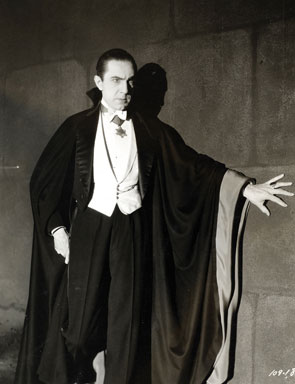
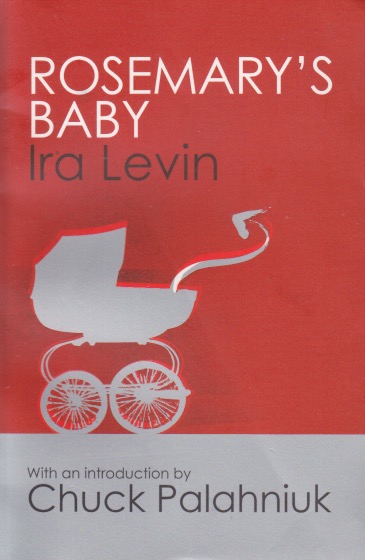
The horror film history narrative runs something like this: although there had been some scary movies in the silent era, the term “horror” was first used to describe Universal’s 1931 release of Dracula and Frankenstein.  Some other studios got in on the action and creature features were a staple of US cinema until the fifties when they began to peter out.  By that point a UK horror industry took off, largely due to Hammer Studios.  While these Hammer offerings often remade the standard creature features, they also branched out into less commonly explored areas such as films set in contemporary times focused on the occult.  This phase faded in the sixties just as “modern horror” was taking off with classics like The Night of the Living Dead and Rosemary’s Baby.  Modern horror quickly grew.  Further divisions can of course be made, and the modern period has gone through several transformations as well.  It’s a rich coffer.

There’s a real problem with this, however, for those who might’ve missed a decade or two somewhere in there.  Many of the UK films are still not available in the US for anything like a fair price.  Part of the reason for this is copyright law, but another is apparently the ignoring of demand.  I saw maybe one Hammer film (on TV) growing up.  Saturday afternoon fair was more often American B movies like Zontar the Thing from Venus.  I’ve got a hankering to watch some of those Hammer films, but even in the 2020s they’re difficult to find.  Even with the internet.  Often the DVDs are (because of differing copyright laws) coded so they can’t be viewed in North America.  You can buy a player to see them, but when you think of the inevitability of streaming it hardly seems worth the cost.

Streaming might be the solution, but much of the Hammer oeuvre doesn’t stream in the US, at least not that I’ve found.  If I’m wrong please let me know in the comments!  You see, I spend time reading about horror and when you do this recommendations often arise.  Some Hammer classics are as expensive as the academic books that discuss them.  Is it possible to be a horror connoisseur?   And can you truly be a connoisseur without sampling what’s on offer overseas?  We tend to forget that the world is culturally divided by copyright laws.  If nobody’s watching the movie anymore what’s the harm in making it free?  If people do want to see it, why not sell it to them at industry standard price?  Even trying to watch horror, it seems, has become a horror show.

Photo by Michael Mouritz on Unsplash

Spirit of Halloween

So it’s Halloween.  It’s also Sunday.  I’ve been thinking quite a lot about the spirituality of this particular day.  Now it’s often treated as a trick, a consumerist holiday with too much candy and befitting spooky decorations.  Like all holidays Halloween has evolved from its origins to how we celebrate it today.  Other than Wiccans and Neo-pagans, however, not too many take it seriously.  At Nashotah House, and therefore likely at some parishes scattered around the world, All Saints Day—which is tomorrow—was a day of obligation.  What we call Halloween was the day before this major festival of praising the faithful.  There is some evidence that All Saints was moved to November 1 to counter the lively celebration of Samhain, or the Celtic fire festival marking the onset of winter.

The Celts included an intellectual class known as Druids.  Druids seem to have been the “theologians” (oh, that word!) of the Celts and they mandated that their teachings not be written down.  A great deal of information was passed on by intensive memorization and only became known to us outsiders because after Christianization it began to be written down.  Their idea of the afterlife seems to have been that it was being born into the other world.  In the otherworld life was different and apparently in some respects better.  When our time there drew to a close, our death led to our birth into this world.  The cycle continued on and on.  Samhain was the time when crossing between worlds could occur.  Death wasn’t a cause for sorrow since the otherworld awaited.  Birth into this world was more problematic.

Fear of death seems natural enough to us.  Even though it’s inevitable and this world’s graveyards are full, somehow we seem to think we can avoid it ourselves.  Our evolved survival instinct runs out of control since we’ve eliminated many of the causes of death that have plagued our species (and many other species) for millennia.  Eons.  As we’ve done so we’ve distanced ourselves from death—dying in hospitals, our corpses prepared in funeral homes, buried and eventually forgotten.  To me, the Celtic idea, from a world where death was likely much more close to hand, seems a more healthy outlook.  Instead of fear, why not consider it a day of wonder and celebration?  To many, I know, that is a spooky thought indeed.  It’s more than a day of masks and candy, however.  And we might learn from it if we stop and ponder.


Angel of Harvest

It’s been a few weeks ago now, but one October Saturday we attended the Lehigh Valley Vegstock.  Autumn is the season for harvest festivals and a surprising number of them are now catering to vegetarians, or even vegans.  When I say that, it probably calls to mind a certain kind of individual—perhaps an aging hippie who’s probably into New Age and alternative spiritualities?  If so, you’re not the only one whose thinking goes along those lines.  Among the recycled, reused, and other earth-friendly tents was one that offered contemporary spirituality.  A lot was going on behind my mask so I forgot to take the name of the actual vendor, but I did find the use of angels interesting.

No, I haven’t been living under a rock.  Well, maybe I have.  Even so, I know that angels are popular and have been for several years.  Some people who find themselves uncertain about God are still down with angels.  Back in college—who knows anything at that age?—I did an independent study on angels.  The professor (who’s still at Grove City) didn’t provide much direction, and I soon found there wasn’t too much in our library about the subject.  Like demons and other monsters, scholars tend to shy away from the topic.  That, and I hadn’t yet learned how to use Religion Index One.  Now, of course, there’s the internet.  In any case, the idea of angels stayed with me through my teaching career.  After all, studying ancient gods does bring you into close proximity with other spiritual beings.  Even so, I was interested to see Archangel Metatron on the Vegstock vendor table.

Metatron isn’t biblical.  He makes his first appearance in Jewish literature, including the Talmud and Kabbalah.  Although my research interest was always toward the earlier era of the spectrum, it seems that much of our angelology was percolating during the period after the Hebrew Bible was written.  Jewish scholars were working out the complex spiritual world and later Christian writers would attempt to systematize it.  It is possible, and it appears in some traditions, that Metatron was actually Enoch, translated.  Enoch, who is biblical, receives just a few words in Holy Writ, but he eventually grew in importance.  Genesis indicates that he walked with God and was no more.  What happened to him?  Metatron was one possible answer.  There are other Metatron origin stories, I’m sure.  And one of them was right there in Tatamy in the midst of a harvest festival.


Author Talks

Author talks are one of my favorite perks.  While work obligations mean I often can’t attend, I was glad to have caught this week’s visit by Mathias Clasen.  Clasen has been writing books on horror movies for Oxford University Press, and his talk strangely made me feel less alone.  Let me explain.  First of all, lots of people came.  Yes, Halloween is merely days away, but I get accustomed to thinking I’m the only one who watches horror.  Nobody close to me does.  Learning that many colleagues enjoy the genre was a boost.  Clasen runs the Recreational Fear Lab at Aarhus University.  Their survey of Americans found that 55 percent liked horror films.  I’m actually in the majority, which felt affirming.  

The Recreational Fear Lab studies various aspects of why people seek things that make them afraid.  This ranges from thrill seekers to those who cower in the corner of a theater to watch the latest slasher.  There were several takeaways from his talk.  One was that two main types of people subject themselves to horror: “adrenaline junkies” and “white knucklers.”  Adrenaline junkies are pretty self-explanatory—they like getting scared for the rush of it.  White knucklers, on the other hand, enjoy steeling themselves from fear while subjecting themselves to it.  They try not to scream, but keep control.  I was putting myself in the latter category when he mentioned that further research had revealed a third personality type: the dark copers.

Dark copers are those who use horror as therapy for themselves.  I immediately knew this was my group.  Some people, for whatever psychological reasons, find horror movies therapeutic.  They help us cope.  Interestingly, and in line with other materials Clausen has published, horror is good for people.  It has many benefits and if we deprive children from any stressful situations in their young lives they tend towards neurotic behaviors when they’re faced with stress as adults.  The Recreational Fear lab is a place for the scientific study of voluntary fear experiences.  They operate by grants and have many programs of study from a variety of disciplines.  And some of them watch horror.  Perhaps because when I started this blog I tended to write mostly about religion, I suspect many of my readers don’t really care for the horror posts.  They’ve been there from the beginning, however; my first month I wrote about werewolves, zombies, and Barnabas Collins.  Religion and horror are closely related, even if it makes me feel a bit alone to say so.


Not Quite Quetzalcoatl

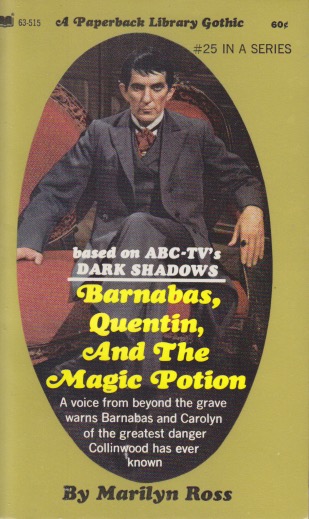
It must be difficult to write the same basic story over and over.  And nostalgic adults like me can be tough critics as we try to recapture faded childhood glories.  Those memories fade like afternoon shading into evening, but still I can’t help myself.  Marilyn Ross wrote 33 gothic tales of Dark Shadows in the spinoff series from the long-running television program, and I’m determined to read them all.  In small doses.  The one, Barnabas, Quentin and the Serpent is actually a bit distinct.  The writing is still journeyman, that of a tired potboiler author, but the plot offers something a little different.  As in the last volume reviewed, Barnabas is free from the vampire curse for a time, allowing him to emerge in the daylight.  And his arrival at Collinwood is actually dramatic and well-timed.  The story is set in the nineteenth century.

Gerald Collins, a professor of archaeology, unexpectedly inherits Collinwood along with his daughter Irma.  They head to Maine from Mexico taking exotic creatures with them, including a dimetrodon that escapes and tries to eat them.  The story revolves around rumors that the professor caught and transported back a flying serpent.  At Collinwood (and let’s think about this a minute—if you add up the body count from all the novels you’ve got to wonder why there’s been no federal investigation) people start to die and reports circulate of a flying snake.  The professor’s going to be driven out of town because angry villagers think he brought this creature back with him.  It’s all very melodramatic.

As in the last novel, Barnabas acts as a detective.  Quentin, who is the werewolf cousin, manages to allude detection by disguising himself.  Even Barnabas is fooled.  The story tries to avoid invoking the supernatural—there’s no such thing as flying serpents—while allowing a werewolf to perpetrate a hoax.  It’s all good fun (except for that body count).  There’s a bit of vim here from our weary journeyman writer, but there are nine novels yet to go in the series.  Writing a series seems to be smart money.  Children (and I first read several volumes of this series as a child) like to complete things and can be loyal series fans.  I never read the full series when I was younger; they were haphazard finds at the local Goodwill book bin.  Of course they were still being published at that time.  I have to admit that I’m curious where it will go from here.  And I do miss Barnabas as a vampire.


Feeling Used

It may be perverse of me, but it makes me happy that used copies of all my books can be found on Bookfinder.com.  I discovered Bookfinder many years ago and it is a wonderful site for cash-strapped ex-academics, or anybody who loves books.  There is almost nothing you can’t find here.  Some of the books are very expensive (if they’re rare), but generally you choose the condition you’re willing to accept and how much you’re willing to spend.  The other day I was looking for a research book there and decided to type my own name in, just for fun.  I suppose some authors, having received next to no royalties, might be upset to find themselves on the used market.  For others it’s a kind of validation that their books are overpriced.

I’m a book keeper.  (Not, I hasten to add a bookkeeper.)  If I read a book I want to be able to refer to it again.  That’s one, but not the only, reason I don’t quite trust ebooks.  I’ve had electronics die on me and they can cost many books’ worth of dollars to replace.  Even then you can’t be sure some software upgrade hasn’t deleted the content you paid for.  At least sitting on a shelf you can find an actual book again.  I know some people prefer to read a book and then set it free—a kind of read and release method.  I suspect some folks buy used books just to sell them.  Still, to know that books are available is cause for celebration.  We may survive this after all.  At least our words will.

Bookfinder has been a lifesaver for us independent scholars who don’t have university library privileges or research expense accounts.  The collections of books individuals amass are as unique as the person her or himself.  A family friend was once won, I’m guessing, by visiting us years ago and saying, “You’ve got interesting books on your shelf.”  (In that apartment shelves covered all available wall space in every room except the bathroom.)  Having books around is kind of like having kids.  Some are new, some adopted.  A few you’ve even produced yourself.  They make you glad when they’re around.  Bookfinder occasionally has items that not even Amazon can find.  It doesn’t sell books directly, but puts you in touch with vendors who work with vendors who actually have the goods.  It’s all very complicated but it works.  It actually seems to showcase one of the things the internet does particularly well—puts people in touch with actual books, to be read offline.


In Praise of Paper Maps

One of the tricks, I’ve mentioned before, for getting around accessing books I can’t afford, is the used book market.  Now Amazon is probably just about as bad for small business as Walmart is, but it does seem to have its logistics down.  (Most of the time, anyway.  Early in the fall I ordered some horror movie DVDs.  One of them was out of stock and Amazon eventually sent me a notice that it was lost in shipping.  Would I like another, at no extra charge?  Shipped to the same address?  Of course I said “Yes!”  But they shipped it to my mother instead.  Most of us are probably embarrassed about what we watch and don’t want our mothers to know.  In any case, she had it forwarded on and I received it a mere two months after ordering it.)  They also let you track it.

If, however, you buy used books from Amazon, you may need to go with a separate vendor’s shipping.  (I tend to use BookFinder.com, but lately it’s been routing me back to Amazon.)  So it was I ordered something with a projected delivery date of October 25–29.  Not too bad.  It’s not like I need it for a book I’m writing or anything.  I was cheered, then, when on October 14 it was tracked to Secaucus, New Jersey.  I used to go through Secaucus every day on the bus.  Twice.  Surely I would have my cheap source before the 25th!  But my package likes Secaucus, apparently.  Once it got there every day the USPS tracking system assured me it hadn’t moved at all.  “You signed up for delivery on October 25–29 didn’t you?  Well, you’ll get it then.  Perhaps.”  Wouldn’t it be nice if shipping had the option of “Your package is pretty close, do you want to collect it yourself?”  Then on the 22nd I learned it was in Glendale Heights, Illinois.  It arrived on the 25th.

Why do I write these things?  (This isn’t the first time, young man!)  It’s because I think they’re funny.  To me, a society that has lost its heart to technology has to be ready for some laughs now and again.  (Some of my critics think I’m complaining; I guess I need more irony in my diet.)  Life during a pandemic has become one of having stuff shipped.  From last year’s toilet paper from China to my current academic book that’s just too expensive to buy new, I sit with my ear cocked for the Amazon footstep on my front porch.  And occasionally getting into my car to drive to a distant post office just because, well, it’s easier for me to find them than for them to find me.


Listening to History

One thing fascists around the world are attempting to do is rewrite history.  Inevitably white, they want to paint themselves as good and superior.  Actual history, however, shows just how destructive and cruel “civilization” has been, particularly to original inhabitants of colonized nations.  Over the past several months I’ve been reading about indigenous peoples.  We’ve been led to believe they were unfortunately wiped out, that they no longer really exist, or that our governments treat them fairly to make up for past injustices.  Such myths must be dispelled and we need to hear from those who’ve lived their experiences.  Follow the Rabbit-Proof Fence by Nugi Garimara, or Doris Pilkington, is the record of one such remarkable experience.  Although made into a film in Australia, it’s a story with which I was unfamiliar.

Garimara is the daughter of an indigenous aboriginal woman who experienced life under the “civilizing” of West Australia.  Molly, the author’s mother, and two of her sisters—Daisy and Gracie—were separated from their family at the ages of 14, 11, and 8, respectively.  They were sent 1600 kilometers—very nearly 1000 miles—away to a school that was run as if the government believed Jane Eyre was an instruction manual.  Although they knew that runaways, who were always caught, were shaved, whipped, and put in an on-campus jail on bread and water, Molly decided to escape with her sisters.  Over nine weeks they managed to avoid the trackers and walk the 1000 miles home.  This all took place in 1931.  Follow the Rabbit-Proof Fence is an engrossing book that should be widely read.

Many questions remain.  Since the story is written from the memories of an aging Molly, there are gaps.  After making it home Gracie was “captured” and sent back to the school.  Molly was eventually tracked down and also returned, but she again escaped and followed the same route back home.  The authorities, implacable, believed that whites knew the best way to handle indigenous peoples, calling the department responsible “the Protector of Aborigines.”  We need to listen to the voices of those whose land was stolen.  We need to ask them how to make current circumstances more just and fair.  Yes, the indigenous lifestyle clashes with capitalism.  We’re becoming aware that their lifestyles tends to be healthier and more fulfilling, and yet we persist.  We are, it seems, living through the slow crumble of the capitalistic system.  When it all comes down we would be wise to learn from those who know alternative ways of being in the world and can find their way home in hopeless circumstances.


A Day with Books

A day with books.  Is there any better kind of day?  Before I lapse into poetry I want to put in one more plug for the Easton Book Festival.  Today is the last day for this year, but keep an eye out for next October.  And you can still catch the videos from this year’s session on the Festival website.  Writers can be skittish creatures, you see.  We spend time alone and try to get our thoughts into words.  We don’t always have regular gatherings.  That’s what makes book festivals, well, festive.  I didn’t want to appear in person to plug Nightmares with the Bible—it’s too expensive.  As a friend said, “What’d you do to make it that expensive?”  I was glad, however, to be in person to interview my friend and colleague Robert Repino.  The interview will be posted on the Festival website.

An unexpected pleasure is finding acquaintances that you didn’t know were writers.  As I said, some of us spend most of our time alone.  And even for someone who spends so much time with words it’s difficult to describe the species of euphoria that talking about books evokes.  It makes me wonder why we don’t do it more often.  Since the pandemic is still with us—the pandemic that interrupted the natural progression of the Book Festival, which began in October 2019—in person events were held outdoors.  It was a bit on the cool side yesterday, with some sprinkles of rain, but few sensations match spending a day outdoors in October.  If you’re not in this area, please support your local book festival.  If you don’t have one, maybe talk with your independent bookstore owner.  It can happen.

As I’ve mentioned before, many of us who write make very little money at it.  When people ask why we do it, pointing to events like the Book Festival supply the reason.  Call it fellowship, or communion, or just a gathering of the hive mind, but finding the other book lovers in your community is a worthy way to spend a Saturday.  Book and Puppet has the distinction of hosting the event, with support from Lafayette College and a few local sponsors.  It’s also the only bookstore in which I’ve seen my actual books on the shelf.  I know it’s a sacrifice to order stock that moves slowly.  Halloween, however, is nearly here and that’s the crowd for whom I tend to write.  Why not spend a day with books?  It’s the best kind of day.