Skin In

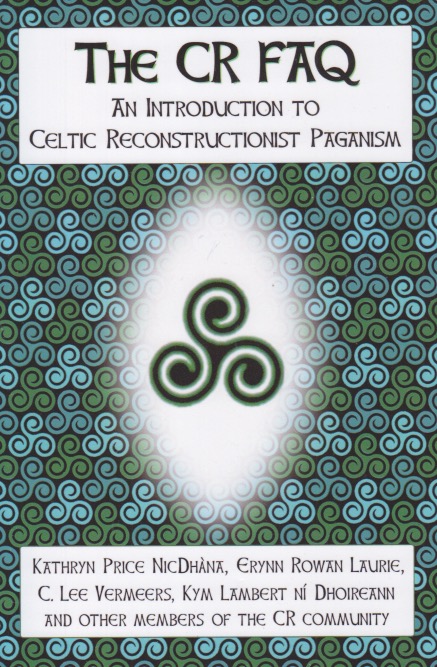
It took me back to my younger years.  Tanya Krzywinska’s A Skin for Dancing In: Possession, Witchcraft and Voodoo in Film.  Wide ranging and insightful, this book was a delight to read.  Published in 2000, it discusses many movies that I watched in the eighties and which had somehow managed to be overrun by other stimuli since then.  I like to think that, even if recall isn’t instant, that we never truly lose the books we’ve read or movies we’ve watched.  (Some we may wish to forget, but that seems a sure way not to achieve that goal!)  As her subtitle says, Krzywinska’s book analyzes possession, witchcraft, and voodoo.  Since there are so many examples of these the discussion has to be selective, but she’s got a keen eye for choosing evocative films.

As any of my regular readers know (both of you!) I don’t really review the books in my “reviews.”  I limit myself to about 500 words and I don’t like to give spoilers.  A Skin for Dancing In would require quite a few words even to summarize.  Krzywinska covers demonology, possession, sacrifice, paganism, witchcraft, voodoo, and more, in several movies.  What really struck me in reading this was that she comes to a similar conclusion to what I’ve found—people learn about these things through film.  Scholars tend not to write much about such things (although this has improved somewhat since the turn of the millennium).  The average person doesn’t read academic books, and since culture has become “rational” there’s not much talk about such things from discoursing heads.  Still, movies.

These topics make for great movies.  One of the points I’ve made in my own work is that what we know about demons comes from the cinema.  It seems that we should pay close attention to what movies tell us.  They’re the “public intellectuals” that many academics want to be.  A Skin for Dancing In is a good example—it’s compelling, if a little academic, but very hard to find.  It’s difficult to lead public discussion if your book is limited to university libraries and those who have access to them.  Of course, you don’t need a talented scholar to tell you how to watch a movie, but I was reminded here of many films I thought I had forgotten.  And what’s more, I have a deeper understanding of how they fit into the larger world of cinematic possession.  This is one of those books I wish I’d found sooner.


EBF

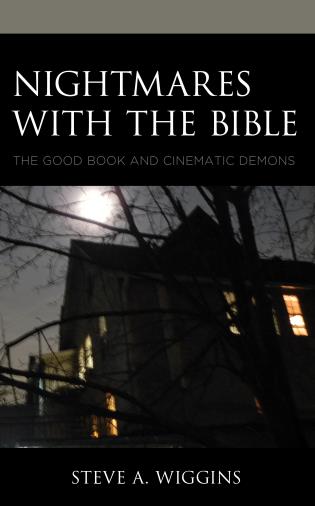
The third annual Easton Book Festival is underway.  As part of it Eric Ziolkowski, the chair of the Religious Studies department at Lafayette College, interviewed me about Nightmares with the Bible.  You can watch the interview here.  And be sure to check out the other offerings of the EBF—it’s hybrid this year so much of it is online for those who can’t make their way to Easton.  We’re all looking forward to the day when the festival can be in person again, as it was in 2019.  As part of tomorrow’s program I’ll be interviewing my friend Robert Repino about several of his novels.  That event will be live and outdoors, but I suspect it will be posted on the festival website later.

The EBF is a shining example of what books can do for a community.  People have been turning back to books with the pandemic.  Those of us in the publishing industry are keeping an eye on this.  While academic usage has shifted to electronic, the wider market has been favoring print books because, well, people like books.  Andy Laties, one of the proprietors of The Book and Puppet Company, has spearheaded efforts to continue this celebration of books even as a pandemic has changed the way we do everything.  Easton isn’t a huge city, but the Lehigh Valley is a book-friendly place.  When the will to organize book lovers exists, wonderful things can happen.  Books can build a community as well as be a community.

A friend recently said that the problem with writing books is that too many people do it.  I don’t see this as a problem.  Many self-published books do far better than those I’ve sent through more traditional channels.  They may put pressure on traditional models, but pressure isn’t always bad.  The route to publication is actually full of roadblocks—some accidental but many intentional.  One of the largest barricades is the fact that the publishing industry is a rather small one.  Major publishers have been monopolizing for years, bigger companies buying out successful smaller ones, so that the highway to publication now has many toll booths that require exact change.  There have always been those who can find their way through by an alternate route.  There’s nothing wrong with wanting to be part of the conversation.  If you’re near Easton come on out in person—bring a mask—and see what’s happening tomorrow.  If you’re not in the area take a look at the free content online.  I’m sure you’ll find something you like.


New Monster

The Babadook is a horror film about loneliness.  Written and directed by Jennifer Kent, it has an arthouse cinema feel to it.  I missed it when it came out in 2014—it didn’t receive major billing and publicity in the United States—but it gained critical acclaim as intelligent horror.  It follows the small family of Amelia and her son Samuel, who has special needs.  I’ll try to avoid too many spoilers here because I think you should see it if you haven’t already.  Amelia’s husband died in a car crash taking her to the hospital to have their first child.  That haunting tragedy drives the film.  And when you throw a monster called the Babadook into the mix, loneliness and sleeplessness make the dark something to fear again.

With wonderful acting, the story of childhood monsters highlights the continuing plight of single mothers.  How are you supposed to survive when you have a child that requires constant supervision and yet you need to make ends meet?  And if sleeplessness begins to distort your sense of reality all kinds of things seem possible.  

Hollywood hasn’t been a friendly place for female directors.  This film was shot in Australia.  I’m not sure that sexual parity is better there, but this movie is a great example of what can happen when a woman shows what horror means to her.  Not too many horror movies have female directors, yet.  It seems to me that women have many things to fear and have much to show us about what horror can be.  It seems to me that loneliness, although often part of horror, isn’t often the focus.  We would rather look away than to see it because it’s too painful.  Horror compels us to look at what we’d rather not see.

Aside from all of this, the film gives us a new monster.  The Babadook was invented for this film and although we don’t have to worry about whether it’s real or not, the issues it brings to the fore certainly are.  There is darkness inside people.  Even those of us who try to do what is right struggle against it.  Often it takes quite a lot even to admit as much.  This movie lets the dark out and finds a new narrative path through which it might flow.  Although a box office success—earning more than it cost—The Babadook is still little known.  It should be discussed more because intelligent horror has some important lessons to teach us.


Interview Two

October turns the northern hemisphere mind toward Halloween.  It must be strange to receive northern media while living in the global south—Halloween occurs just as spring is getting underway.  I guess that’s what May Day’s for.  In any case, in the United States Halloween thinking is in nearly full swing.  My last two books, while not Halloween themed, look at horror films which, in keeping with October, are on everyone’s mind this season.  And it’s been quite a week for interviews.  The second half of my podcast interview on The Incarcerated Christian was posted yesterday.  If you want to hear more fun Q & A with Robin and Debra, click here.  I’ll post more about this Friday, but tomorrow my interview with Eric Ziolkowski of Lafayette College will air as part of the Easton Book Festival.  The festival’s going on right now, so be sure to check out the offerings online.

One bit of advice that I give as an editor: if you want to make it as an author you need to promote your own work.  Some of us were reared to believe that it’s in poor taste to do this, but in the internetted world it’s pretty much a requirement.  Something I learned from political activism is that every election is local.  Getting noticed also has to start in your own backyard.  I love doing interviews.  It’s always flattering to know that someone’s read your book and wants to know more about it.  I’ve started to explore the newish area of religion and horror.  From what we see in the news, it seems like it’s an area that’s likely to take off.  But only if those who work in it get their stuff out there where it can be seen.  (Or heard.)

Neither Holy Horror nor Nightmares with the Bible have sold very well.  They’re expensive, and academics, who will spend money on books, are still trying to decide if this area’s worth exploring.  I admit that there’s a puerile kind of naughtiness to taking monsters and “low brow” entertainment as a subject of study.  Horror, however, has lots of fans.  Perhaps not in the academy, but in the real world.  I like to think such marginal areas bring people together.  Horror, like demons, isn’t going away any time soon.  Instead of running away from what you fear, why not try embracing it?  If not even that, please consider the free content available on The Incarcerated Christian and the Easton Book Festival.  After all, Halloween’s just about here…


Kindred Spirit?

Possession stories have a poignancy to them that perhaps other horror stories lack.  The loss of self-control is a frightful thing.  Lisa Tuttle sets this up well in her novel Familiar Spirit, a tale that has recently been reissued.  The threat against a young women—the usual target of possession—leads to some scary moments here.  As the story unfolds Sarah has to deal with personal loss as she learns that the house she’s just rented is inhabited by an unfriendly spirit that seems to be a demon.  This is a haunting story that features a strong protagonist who ultimately has to decide what she really values most.  It’s a book that stays with you.

I discovered Tuttle by reading a book on female horror writers some time ago.  One of the points I make in Nightmares with the Bible is that female victims of possession match Poe’s dictum about the most poetic topic being the death of a beautiful woman.  That may sound sexist to modern ears, but Poe was a product of his time and he was a keen observer of what made stories memorable.  Possession has largely become a female phenomenon over the centuries.  The biblical stories about possession tend to have male victims, but by the Middle Ages the balance had shifted.  That gender imbalance continues today.  A friend recently asked whether shifting awareness of the gender as not strictly binary might change this in the future.  It’s a fascinating question, especially since we really don’t know what demons are.

Possession is a clash of the unknowns, which is fertile ground for fear of the unknown.  Feminist studies have begun to share space with studies of masculinity and both have been joined by analysts who study gender as nonbinary.  I suspect many of us really didn’t know about such things before the internet began to bring them to our attention.  Many people don’t want to accept such facts.  The world is easier to live in when everything is black or white, male or female, this or that.  Most things, we’re beginning to learn, are on a scale.  Human society, as it takes this into account, will inevitably, if slowly, change.  The old guard (angry white men, mostly) refuse to accept facts, trying to equate them with the person with the loudest voice.  This too is a kind of possession.  I don’t want to give too many spoilers for Familiar Spirit, but if you’re like me it’ll give you many things to think about.


Documenting Horror

Watching documentaries always seems to raise questions.  I recently found A History of Horror with Mark Gatiss on YouTube.  Produced by the BBC in 2010, the set of three episodes is a selective walk through the horror genre through the eyes of an insider in the film industry.  Divided over three segments, he covers early horror (primarily Frankenstein-related movies), British horror, and the American horror revival beginning in the late 1960s.  It occurred to me while watching this that horror is often—but not always—an intellectual genre.  Many of the plots and ideas are sophisticated and puzzling.  At one point Gatiss says it is nearly the perfect genre for movies.  I would tend to agree.  Many of the payoffs of horror are the reasons I go to see a movie.

Of course, documentaries involve interviews.  While discussing religion and horror—the two are closely related—in the third segment, he considers the impact of what I termed the “unholy trinity” in Holy Horror: Rosemary’s Baby, The Exorcist, and The Omen.  His primary interview for this set was with David Seltzer, the screenwriter for the last of these.  At this point my memory took me back to an interview on one of the extras for my DVD edition of The Omen.  In that interview Seltzer mentions that the antichrist is at that moment (clearly this was shot shortly after the movie came out) walking the earth.  In my mind I compartmentalized this to interpret his stance as that of a religious conservative.  The idea of the Antichrist, after all, is post-biblical, at least in the sense that end-time scenarios are developed.

The Gatiss interview was filmed many years later and he asked Seltzer if he believed in the Devil.  “No,” Seltzer laughed, stating that if he did he wouldn’t work on movies like The Omen.  People’s opinions change over time, of course.  And the Devil and the Antichrist are two separate characters as they develop after the Bible was completed.  Still, I had to wonder if his earlier interview included that comment about the Antichrist being alive now wasn’t intended as a bit of spooky propaganda for the movie.  It’s difficult to know what someone really believes.  Most people mouth what their ministers say, not really considering where said clergy get their information.  For these many years I’ve been thinking that The Omen was considered as some kind of documentary by the screenwriter.  Documentaries always seem to raise questions.


Steel Industry

It was a building on Broadway, just south of Times Square.  I don’t know the name of the building or remember what business it may have housed, but I did notice on my quick walks through Manhattan on my way to the bus that it was being renovated.  The facing had been removed and an exposed I-beam bore the words Bethlehem Steel.  From coast to coast, and even to ships at sea, Bethlehem Steel was a major supplier.  Today the factory is still.  There’s a poignancy about such giants falling.  The world as we know it was largely constructed from the products of the still impressive, rusting reminder of days of glory.  No doubt the air is healthier to breathe and the noise level much more suited to humanity, but standing here next to this behemoth it’s easy to fall into a reverie.

I grew up near heavy industry.  Nobody in my family was directly involved, but my hometown had a steel mill just across the river and my next hometown housed an oil refinery.  Both are closed now and the area has been in an economic depression that has lasted for decades.  Industry on this kind of scale requires workers willing to sacrifice much in order just to survive in an industrial world.  Over 500 workers died over the years at the Bethlehem Steel plant.  Factory life involved dangerous jobs with machinery containing material at over 3,000 degrees, and single pieces of equipment that could easily crush a person beyond recognition.  Workers were in some sense expendable as the collective, the nation, grew.  The factory never shut down, running all through the night, seven days a week.  The profits were enormous.  So were the costs.

Global warming was well underway as the greenhouse gases belched into the sky.  Bethlehem Steel wasn’t the only polluter, of course.  Heavy industry, industrial farming, individual cars—we seem to be determined to poison the air we breathe in order to make money.  If the pandemic has taught us anything it’s that we’re all connected.  Rising prices and supply chain breakdowns have underscored that we all depend on each other worldwide.  Climate change has already assured that disruptions will continue and likely worsen.  There’s a kind of autumnal beauty in desolation.  These great steel stacks stand rusting and silent beneath a leaden but too warm sky.  Actions have consequences, and those that affect many create ripples that become waves.  We have created monsters but we can’t control them.


Face Away

I’m avoiding Facebook for a while.  Here’s why.  I started a Facebook account when I first got involved in social media.  (Publishers say you have to build a platform.)  The instructions were very basic and I checked my feed once a day for a total of about 5 minutes.  I still do that.  Some people contact me on Facebook, and often I don’t see it.  In fact, I seldom open it after 6:30 a.m.  I’m pretty easy to reach on the internet.  I have a blog and a Twitter account, Linked-In, Goodreads, and Academia.edu.  They all send me email notices when someone messages me.  Facebook doesn’t.  Also Facebook keeps telling me people have sent friend requests.  It was manageable up until recently.

I thought it was because of the Incarcerated Christian podcast.  (There’s another one coming up on Tuesday!)  The next day I started to get 20+ friend requests a day.  You’ve got to build a platform, right?  I tend to accept friend requests because I spend very, very little time on Facebook.  Then more requests came.  And more.  And more.  Just yesterday I had 846 pending friend requests.  That’s a lot of clicking!  I was going to have to hire an assistant just to say “you’re all welcome.”  Or maybe, “why not follow me on Twitter?”  I would devote my 5 minutes on Facebook to clicking friend requests.  I quickly grew bored with it.  Then the friend requests started coming from other academics.  “Cool!” I said, “people I actually know!”  But when I clicked on the “Accept” button it said, “Friend request sent.”  No, no, no!  That’s not what I wanted to do!  I was responding to a request sent to me, not the other way around.

Lead us not into Facebook…

I quickly clicked out of Facebook in embarrassment.  I don’t want a bunch of academics to know how needy I am—that’s just for you blog readers to know.  I know Facebook sends updated instructions from time to time.  I don’t have time to keep up with them.  If they just sent me a tweet I might read it.  My main social media channel is this blog.  You can read it on Facebook, or Twitter, or even Goodreads.  I think it also shows up on my Amazon author profile page.  I may be needy but I’m not hard to find.  So I’ve decided to retreat from Facebook for a while.  The price of building a platform, it seems, has gone up with just about everything else.


Paywall

They were my former employer, for goodness sake!  Here’s how it happened.  It begins with research.  Nobody is born knowing all they need to learn.  Research teaches you to question what you read and check sources.  That’s how bibliographies are built.  So I came across a reference to an article I needed to read.  The problem was it was behind a Taylor & Francis paywall.  (Taylor & Francis own Routledge.)  The cost to read one article in an academic journal?  $45.  That’s usually my upper limit for buying an entire book.  Working in publishing I know the reason for this.  They want you to go to your library (I don’t have one) and ask them to subscribe.  If you need access, probably somebody else will too.  This particular author isn’t on Academia.edu.  Should I risk Sci Hub? I mean the article is right there, but I’m not allowed to see it!

I did find that you can ask the author for a copy on Research Gate.  First you have to join Research Gate.  They want your institutional email.  My email doesn’t have a .edu extension.  I therefore had to go through a lengthy process of verifying that I am a researcher.  I had to claim papers I’ve authored.  I had to explain why I don’t have an affiliation.  I had to have them email me, twice.  Each time I had to provide further information.  I swear, it’s like getting a Real ID all over again.  All this so that I can ask an author for a paper that’s only available for $45 on the publisher’s website.  Every time I start a new research project I ask myself why I keep at it.  I guess I want to be part of the conversation.

The open access movement is gaining steam.  The idea is that research should be free.  Very few object to paying nominal fees for access, but often prices are extortionate.  Publishers are caught in this web because overheads are so high—they have to pay employees—and the cost of materials isn’t cheap.  Traditionally this has been overcome by passing some of the expense on to customers.  That’s why academic books are so pricy.  With journals, such as the one I need, the scenario’s a little different.  Journals are purchased by libraries via subscription.  “They wouldn’t subscribe to them,” so the argument goes, “if researchers could get the contents for free.”  Still, putting in place a free article or two before dropping the price bomb would seem to be in the best interest of actually moving knowledge forward.  Hey, T&F, don’t you remember me?


It’s Thorpe, Jim

On a rainy fall day we found ourselves in Jim Thorpe, Pennsylvania.  We’d been through the touristy town before, but had never had any luck finding parking so getting out to explore was problematic.  Named after perhaps the greatest all-round athlete America has ever produced, the town bore the American Indian name of Mauch Chunk prior to the communal name change.  Once the greatest eastern vacation attraction after Niagara Falls, it’s now a town that caters to a regular stream of tourists and supports the small, boutique shops that thrive in such an environment.  Whenever I’m in a new place, I look for books.  Perhaps an illness, it is one I have no wish to cure.  Sellers Books is small but I didn’t walk out empty-handed.

A few yards later a sign at Emporium of Curious Goods caught my eye.  A store of mystical, magical whimsy, it had a posted note saying the owner had been friends with Ed and Lorraine Warren.  I hadn’t anticipated such a thing—we were here with friends and really just expecting to enjoy the quaint ambiance.  Being October, nearly every house and shop on Broad Street was decorated for Halloween, creating that frisson that only this time of year offers.  I stepped inside the shop and looked around.  I asked the owner how he’d met the Warrens.  He said that many years ago they’d lectured at East Stroudsburg University.  Introducing himself, he’d invited them over to his place and soon they became long-time friends.  They agreed to do a talk there in Jim Thorpe.

The brief conversation made me aware that as much as reading reveals, it never conveys the full story.  The store advertised having all the Warrens’ books.  I have all of them myself, but I had never seen all of them together in a single store before.  I wished I had something magical or mystical to buy to support the owner so willing to share information, but I had little time to look around with friends waiting outside, probably wondering what I was doing in such a place to begin with.  The Warrens are both deceased but their legacy lives on through the Conjuring movies.  More than that, in the lives they’ve influenced.  Yes, they may have been using their fame as a way of making living, but many celebrities do that.  It doesn’t mean they were any less sincere in attempting to help people with their ghosts and demons.  A rainy day in October reveals so much.


Dark Academia

Genres can be slippery things.  Those of us who dabble in fiction sometimes find it difficult to describe what we do.  Writing is individual expression and it may have elements of this and that.  Given my disposition, much of my fiction has some horror features but I tend to think of it as something else.  My wife recently sent me an article on Book Riot about the genre Dark Academia.  The piece by Adiba Jaigirdar begins by asking the question of what exactly dark academia is.  The label conjures up books about something untoward happening in the halls of learning, and that certainly qualifies.  It’s difficult to be more precise because it’s different things to different people.  Some of my fiction, in my own mind, falls into that category.  Things go wrong in higher education all the time.  Why not preserve it in fiction?

I’ve attended, and worked at some gothic places.  The contemporary university, such as Rutgers—although it’s old by American standards—has continuously modernized and although I don’t know it’s history well, I suspect gothic was never its aesthetic.  The same is true of Boston University where I went to seminary.  Edinburgh University, while also modernizing, has retained much of its gothic feel.  That’s certainly true of New College, where I studied, in the heart of the medieval old town.  There’s a gravitas to such dark settings.  They invite strangeness.  My first teaching job was at the intentionally gothic Nashotah House.  Although I didn’t agree with the politics I loved the setting.

I seem to have slipped from Dark Academia into Gothic Academia.  Indeed, it’s difficult to keep the two distinct in my mind.  When I taught I maintained the tweed jacket and somewhat disheveled look of someone who has something else besides grooming in mind (this is entirely genuine).  Indeed, that’s one of the great charms of higher education.  You need not constantly worry about each hair being in place—they’ll take care of that when they shoot the movie.  Not many people, and probably a diminishing number given the state of things, experience full-time life in academia.  It can be well lit and modern.  If done right, however, it should take you into odd places.  Discovery is generally messy.  Perhaps that’s part of the dark of dark academia.  When we use our brains we end up in unexpected places.  I’m not sure I understand dark academia, but I have a feeling that I’ve lived it even without my fiction.


Eve’s True Desire

Psst—don’t tell anyone!  There is a free copy of my first book available on Academia.edu.  I thought I was kind of radical for doing that, but people who write books want people to read them.  Having a book priced $70 or more, heck, even $30 or more, means only diehards will buy it.  Nightmares with the Bible promptly sank at $100 cover price, released during a pandemic.  I’ve always admired scholars who’ve bucked conventions to make their work available.  Recently I needed to consult a book.  I won’t say what it is because I fear a take-down order will be issued where I found it.  The author, aware the book was hard to access, actually photocopied the entire book and put it on a website.  I stand up and cheer!  Photocopying an entire book is a lot of work, a labor of pure love.

Now, I’m all for authors getting royalties.  It takes a lot of time and energy to write a book.  It can cost years of your life.  You ought to get something back for it.  It seems to me, however, that a different model is required for academic books.  Why are they so expensive?  Not only that, but smaller publishers without the distribution channels often publish worthwhile books, but in small quantities and they go out of print after the initial run is sold.  The academic enterprise (knowledge for knowledge’s sake) has become a captive of capitalism.  There’s no other way to trade in that market.  Books that have willing, even eager, readers are sequestered in libraries only accessible to employees.  Is there anything wrong with that picture?

Academics at less wealthy institutions often find ways around the rules.  I did my research for Weathering the Psalms at a small seminary that had trouble getting unusual items on interlibrary loan.  Bigger schools were distrustful of this tiny enclave called Nashotah House.  Would they ever get their rare property back?  Meanwhile worldwide mail service crisscrossed with offprints sent for free from scholar to scholar.  It was like your birthday, or Christmas, when a long-awaited piece of research landed in your mailbox.  Nobody was in it for the money.  We were beguiled by learning.  Eve looking wistfully up into the tree.  Now it’s all business suits with dollar signs for eyes.  The academic who puts their book up for free on the internet is nothing less than a saint.  Seeking knowledge is never really a sin.

Tasty fruit of knowledge

Taking Part

It’s always a pleasure to be invited, even if not as a proper guest.  To an academic conference, I mean.  Most of us sit around feeling pretty obscure most of the time, even if we do write books.  I am literally genuinely surprised when sometime contacts me to tell me they’ve read my work.  It was, therefore, a complete surprise to be asked to attend the “Ancient and Modern Ideas of Possession” conference hosted by the University of Innsbruck.  I wasn’t an official participant, but the organizers, somewhat surprisingly, knew of Nightmares with the Bible and thought I might be interested in, well, possession.  Because I work “nine-to-five” and because Austria is several hours ahead of the Eastern Time Zone, I couldn’t Zoom in for all of it, but what I did hear I really appreciated.

One of my suspicions was confirmed, and that is that the idea of possession remains an outlier in academia.  The sixteen or so presenters represented several academic fields, none of which boasts of being interested in such things.  What surprised me, but then really didn’t, was that a comment or question came up several times: do any of us believe in the ontological reality of demons?  At least for the time I was able to sign in the question was never fully discussed but I had the sense that one or two of these academics were willing to lean in that direction.  We all know that individual observation is often faulty and subject to biased interpretations.  We may, however, know that many such accounts have been written by highly reputable individuals with nothing to gain by making spurious claims.  Academics should remain curious.

I learned that at least two of the presenters had written books that it would’ve been useful to have read for my own book.  Books are part of a conversation.  Seldom is any single volume the last word on a subject.  It was a privilege to be among other academics, if I may classify myself as one, even if erstwhile, that had come to a similar place in their explorations of the world of spirits.  Women and men who were willing to ask that most shunned of questions, “what if?”  Human experience moves ahead and some ideas are left behind.  That doesn’t mean those ideas should never be revisited.  Nobody at the conference mentioned my book, but at least one person in the room was aware that it was, in some form, part of the discussion.


What’s Class Got to Do with It?

As an editor you get to read synopses of nascent books across a wide variety of disciplines.  A live topic in sociology and poli-sci is class.  As in “the hidden injuries of.”  So I’ve been grinding class in the machinery of my mind and the product always seems to be a question mark.  Neither of my parents finished high school.  My father worked, when he did, as a house painter.  With three children and no money for childcare (and not even a GED), my mother was of the stay-at-home variety.  I saw neither parent, and this would include my step-father, sit down to read a book for enjoyment.  My mother read the Bible for consolation, and read us children’s books before bed, but literature wasn’t really part of our lives.  I still think of myself as working class because that’s what I learned growing up.  Working class with books.

I recently posted about a contract for my fifth book.  The previous four have earned total royalties of well under four figures (combined).  I’ve been asked why I do it.  It’s not an expectation of my job.  It takes up most of my time outside an unrelenting nine-to-five.  Where does it get me?  None of my books (so far) have sold more than 300 copies.  I can see why—they’re either expensive or obscure (perhaps both).  But I love books and reading and I want to give back.  The truth is I don’t know why I do it.  Working class folk wind down from work in different ways.  Some of us do it by writing, I guess.

Learning, for me, works best if someone shows me how to do it.  I expect that’s why I did so well as a teacher.  Explaining things works for me.  I still run into this all the time—people come at you in media res and suppose you’ll know what they’re talking about.  At work, in extra-curricular organizations, just about everywhere.  My working class response is “whoa, back up!”  There’s no better place to start than the beginning.  It’s folk wisdom, I suppose.  In this world where everyone middle class is too busy, they don’t like to stop and tell you what you need to know to get started.  I don’t know how to be middle class.  One of my early jobs involved using a sledge-hammer.  I’d never done it before and I learned by watching others.  I’m not qualified to theorize about class, but I do know that by the end of the day that blisters will accompany any new task.


Quest for Quest

The Quest for the Wicker Man is a rarity.  Not only is it very difficult to locate and very expensive if you do find it, it’s also a collection of essays where each one is worth reading.  I’d read some of it before, but since I’m writing a book on the movie I thought I ought to sit down and go through it cover to virtual cover.  I had to settle for a Kindle version—please bring this back in print!—and was reminded yet again why a paper book is so much more satisfactory as a reading experience.  You see, I’m a flipper (not the dolphin kind).  I like to flip back and forth while I’m reading.  Clicking and swiping (both of which, coincidentally, dolphins do) isn’t satisfying.  And if you underline in a Kindle everybody else can see it.  I prefer the privacy of a print book.

In any case, if you’re interested in probing a bit into The Wicker Man you’ll find quite a lot of information here.  (Available on Kindle for a reasonable price, if not a comfy reading experience.)  Many aspects of the film are covered here.  One thing I won’t be discussing in my book is the music.  Firstly, I’m not qualified to do so, and secondly, it is done well here.  Essays also discuss religion (which I will discuss in my book), paganism (ditto), and many other aspects.  This is a book of conference proceedings—a boon for fans, but bust for most publishers.  It’s also a boon for those who like marking up used books to the tune of 64 cents per page (the lowest price on Amazon).  

Some of us believe a page is an ontological entity.  Once narrative writing began those responsible for clay tablets soon settled on a size that is, well, handy.  You can hold it easily.  That concept translated to the codex, or “book” as we know it.  Scrolls were cumbersome, but books offered many advantages.  For hundreds of years they were the standard-bearers of accessible knowledge.  I miss page numbers when reading an ebook.  I don’t want to know the percentage of screens I’ve swiped.  I want to know how many pages I’ve read, what page I’m on, and how many pages there are to go.  (The best of electronic books preserve that information.)  The book was not a form that required improvement.  Well, at least that digression kept me from giving up too much information about my book.  If you want to read it, when it comes out, I recommend the print form.