Festive Books

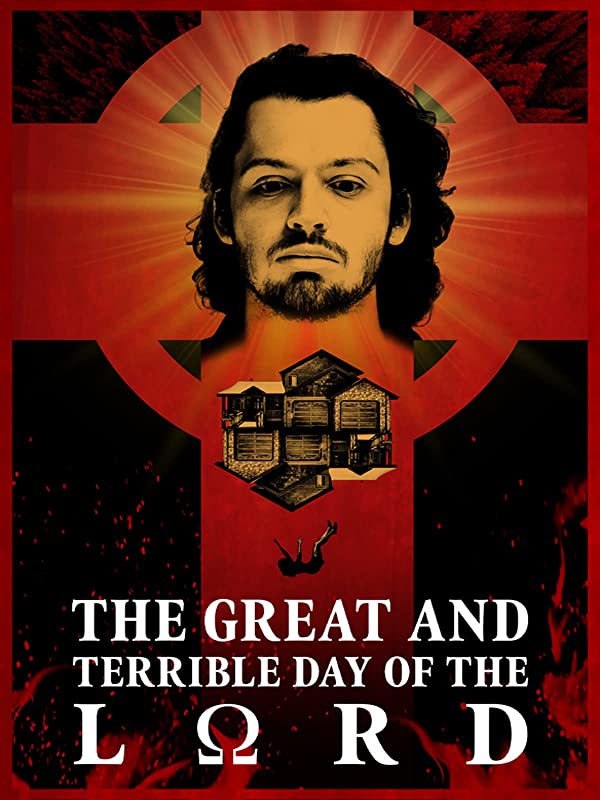
The Book and Puppet Company, a small independent bookstore in Easton, Pennsylvania is unique.  Other bookstores may have puppet shows and other forms of theater.  Others may have the obviously tasteful and intelligent selection of books.  Others offer items other than books.  Book and Puppet is unique in at least three ways.  First, and most (I promise) self-serving, it is the only bookstore in the world with Holy Horror on its shelves.  I know how it got there, which ties into the second unique feature—the Easton Book Festival.  The Easton Book Festival is the brainchild of the third unique element, the store’s owners—Andrew Laties and Rebecca Migdal.  

So let’s piece this all together.  The Easton Book Festival launched in 2019.  Being local to the event, I volunteered to present because Holy Horror had missed Halloween in 2018 when it came out, and it was still technically a front list book.  As with any event that wishes to grow, the Festival was extremely inclusive.  Despite its price point Andy had ordered copies to have on hand to sell.  He assigned me to a panel discussion and even gave me a time slot to talk about the book.  The event was one of the highlights of my true calling—being a writer of books.  Weathering the Psalms was less expensive but more technical.  Holy Horror is for a general readership, although the publisher sees it differently and prices it accordingly.  You have to start somewhere.  In any case,  it was part of a book festival that contains memories that still make me glow.

his year, like many events, the Easton Book Festival (October 16-24) is going hybrid.  As we start to regather, is there any better place to coalesce than around books?  Wouldn’t the world be a better place if that were true?  A recent visit to the shop led to a conversation that seems likely to result in a chance to plug Nightmares with the Bible, the more expensive sequel to Holy Horror.  Well into the writing of my next book, my attention has momentarily turned from demons to more human horrors.  Nevertheless, books are what my lifelong goal has always been.  I thought that I would be writing as a professor, but even editors can make some modest contributions, I hope.  Regardless, since much of the Festival will be online, it’s accessible from the comfort of your chair.  Why not tune in?   In any case, supporting your local bookstore will do nothing but improve society.


Mabon

Given the immense popularity of Halloween, and the attention lavished on the solstices, it’s a little odd that Mabon is so infrequently observed.  Unlike its twin, the Vernal Equinox, the Autumnal Equinox has really only recently been added to the natural calendar observed by Wicca.  The ancient Celts, from whom many Wiccan traditions are drawn, celebrated Samhain, which became our Halloween.  Their other holidays divided the year into seasons, but perhaps the Autumnal Equinox was a little too subtle to merit much attention.  Or it simply fell between their own four-fold divisions of the year.  Starting today, however night will be longer than day, a situation that will last until the Vernal Equinox.  In other words, we’ve entered the dark half of the year.

As someone who enjoys horror, I often ponder the benefits of living in the dark.  Theologically the dark is often cast as evil compared to the light.  We have taken that metaphor and made it literal.  This makes sense, I suppose, given our natural fear of the dark.  The only real predators in the night, however, are now of our own kind.  The dark can also be peaceful, a time for contemplation.  One of the things adulthood has on offer is disrupted sleep.  Many of us find ourselves awake at some point in the night.  We need to become comfortable with it.  I’m not a Wiccan, but I appreciate the naturalness with which Mabon acknowledges the fact that half the year is darker than the other half.  It’s also a harvest-themed holiday, one of the many that stretch to Thanksgiving and on to living off the stored supplies through the winter.

No doubt there is some melancholy associated with Mabon.  The lessening of the light brings a chill with it.  Summer’s ease is at an end and we will need to start layering our clothes and adding blankets back on our beds.  Already it is dark when I begin work, which means the brightest part of the balanced day and night is spent indoors at the computer.  I will need to leave the harvest, so obvious in the fast-approaching October, to others.  Mabon and Halloween aren’t company holidays, but that fact won’t stop the encroaching dark.  There’s a wisdom associated with acceptance and even melancholy can been sweet.  The leaves, while still mostly green, have begun to turn.  The bright songbirds of summer have given away to ravens and crows.  We need to learn to walk in the dark again.  Perhaps it’s time to consider what Mabon can mean.


Psychology of Religion

It’s so human.  Mistaking form for substance, I mean.  A recent piece in Wired that my wife pointed out to me is titled “Psychologists Are Learning What Religion Has Known for Years,” by David DeSteno.  As the title intimates, religion benefits individuals in many ways.  Church attendance, however, has been declining for a long time.  While not the point of the article, I do wonder how much of it is because mainstream churches are stuck in a form that no longer works and people aren’t finding the substance there.  The basic church service is premised on a specific religious outlook that no longer seems to fit how the world works.  Potential ministers go to seminary where age-old ideas are tiredly replicated, based on an incipient literalism that simply doesn’t match what people see in the world.

Wired?

I’ve experienced this myself.  Depending on who the minister is, a church can go from dynamic to dull several times in the course of a member’s life.  People still crave the substance, even if the form stops working.  The form, however, is seminary approved and seminaries are accredited by the Association of Theological Schools.  The folks are academics and academics are well aware of the developments that suggest the form doesn’t work.  Speaking as a former seminary professor, sermons just don’t do the trick when you’ve done your own homework.  As DeSteno points out, once you remove the theology science and religion tend to find themselves in agreement with one another.  For years I’ve been suggesting that secular seminaries are needed.  Churches that aren’t bound by form or doctrine.  Instead we swim in a sea of retrenched evangelicalism.

Religion is an effective survival technique.  It evolved, even while denying it did so.  Some time after the Reformation a resurgent literalism led Catholicism to modernize, removing the mystery that was perhaps the last tenuous grasp that form had to provide substance.  Religion, beleaguered as it is, still has substance to offer.  DeSteno’s article is adapted from his new book How God Works.  I haven’t read it yet, but from the summary I can see that I should.  There are religious groups that attempt what this article suggests.  From my experience, however, I see they easily get sucked into mistaking the form they settle on for the substance of what they do.  I had recently been toying with the idea of attending seminary again.  I found, however, form after form.  What I need is substance.


Seedy Delivery

Call it a weird indulgence, for that it surely is.  I’ve been slowly re-collecting childhood books—really what we call “tween books” these days, but there were no tweens back then.  Since these are out of print and somewhat difficult to find, I order them when I can afford to, and have been doing so for over a decade now.  The latest one shipped from Minnesota, via the US Postal Service.  Since these are not easily replaced, I follow the tracking.  The seller indicated a delivery date of September 16-18, only to send an early delivery notice when it was mailed.  Indeed, I’d ordered this on the 8th and by the 10th it was in Pittsburgh.  In case you’re not familiar with Pennsylvania geography, I’ve sketched a map.

Pittsburgh is about 6 hours away from where I live.  It was now scheduled for delivery on the 11th.  I had my doubts.  I awoke on the eleventh to find that it had overshot and was now in Baltimore.  Baltimore is only about two-and-a-half hours away, but still, the thought that it could reach the local post office and get out for delivery that same day seemed slim.  The next day was Sunday, so I figured maybe Monday.  Sure enough, on Saturday the 11th it had reached the dreaded Lehigh Valley Distribution Center, in Allentown.  Allentown is only ten miles from here, within actual walking distance.  The tracking site said it would be delayed.  On the 14th it had been shipped back to Pittsburgh (where it had been less than a week before), from there to Warrendale (which I had to look up on a map), and from there to Johnstown.  Barring another flood, it was due here on the 16th.  Of course, it may have to go through the horror-inducing Lehigh Valley Distribution Center again.

That same center had shipped a package to East Stroudsburg, over thirty miles away, just the week before and had sent a notice that it had reached its final destination.  I’m not one for squandering money, but I would gladly buy the Lehigh Valley Distribution Center a map.  They could look and see that Bethlehem is a mere 20-minute drive to the east.  That could prove useful information.  The package arrived the 15th.  The next day I received a status update alert that it was out for delivery and would arrive that day.  I’m a Post Office booster.  I believe the government should fund the postal service adequately and quit trying to win elections by cheating.  And maybe they could throw in a map while they’re at it.  I’ve got one they can have for free.


Before Current Parameters

I recently had cause, for a work project, to survey which Episcopal seminaries are still around.  You see, I began my teaching career at Nashotah House.  (There were few teaching jobs in the early nineties, although we’d been promised a glut in the late eighties when I set out on that career track.)  In any case, I remembered marveling that the Episcopal Church had eleven seminaries.  For perspective, one of the largest Protestant denominations, the Methodists, only had thirteen.  Enrollments were high in those days.  Before the rise of the Nones, seminary teaching was a viable, if perhaps staid, option for a career.  Or in the case of some of us, it would be a holding pattern until something more suitable came along.  (I’ve always thought of myself as a small college professor.)

So the list of Episcopal seminaries is now down to ten, but those ten are much diminished from what they were back in the nineties.  Seabury, the nearest competitor to the south of Nashotah, has merged with Bexley Hall to make a very small federation.  Berkeley at Yale is a Jonah in the whale.  Episcopal Divinity School had to vacate campus and merge with Union in New York, leaving the tradition Episcopal stronghold of Boston.  The others seem to be clinging on.  In the midst of all this I learned that the Anglican Church in North America, a conservative break-away denomination, has reissued the Book of Common Prayer.  The BCP, as it’s fondly known, has a long and venerable history.  The 1979 edition has both a more conservative and a more modern liturgy, but even that doesn’t seem to be enough to prevent fracturing.

Photo credit: Church of England, via Wikimedia Commons

Fracturing.  Estimates for the number of denominations in North America set the figure at about 40,000.  No wonder Nones are among the fastest growing category!  If you’re going to place your eternal salvation on a bet, and there are that many options to choose from, the odds seem awfully long.  In some cases it’s a matter of being in the right state, or city, where the “one true church” exists.  If you miss it by thirty miles you could end up in Hell.  And all this with shrinking numbers.  The landscape has changed since I entered the seminary world.  Even as the numbers go down the fragmentation increases.  From a bird’s eye view this looks pretty odd.  Even if you look to the Prayer Book for solace you have to ask which one.  I just make the sign of the cross and move on.


Reading Memory

I recently wrote about writing too much (as if such a thing were possible).  After posting that I thought of how much the same can be said of reading.  I like to believe that whatever I’ve read is stored in my brain somewhere, rather like my writing on all those external drives.  I get some hopeful hints of this when a fragment of something read long ago suddenly reappears.  It’s good to know it’s there somewhere.  What brought this to mind is that a book I’m currently reading used a significant term.  Overly confident as I only am when reading, I figured I’d remember where it occurred.  A few days later I’d forgotten.  “No problem,” I thought, “the index.”  Indexes are never perfect and I’m always amazed by what strikes me as being so important failed to make the author’s cut.  So it happened.

This particular book was compactly written, but even so, it was more than sixty pages ago.  It took a few days of skimming, and finally going through line-by-line to find the word again.  It was a capitalized word and I thought mere skimming would be able to pick it out.  No such luck.  Part of the problem, I suppose, is that since I’ve left academia I’ve pretty much stopped writing in books.  I always did it in pencil, but still—there’s something about that pristine page so carefully typeset and laid out.  Well, if I had all the time in the world I could re-read those first sixty pages again, but I don’t have time to read all the books I need to, so I grabbed my old Pentel and began marking the spots I wanted to remember.

When we age it’s recall that suffers.  I tend to think the memories themselves are still there, sometimes distorted, sometimes altered, but present.  Books, after all, can be reread.  If I read something while commuting to Manhattan, there is a good likelihood that some of it was occluded by the worries of work lying ahead, coupled with the anxiety of catching the bus back home at the end of the day.  Not to mention anything that might’ve been happening in real life—that place outside of work that you really care about.  I’m glad for the commute reading; I regularly read over 100 books a year.  You couldn’t take notes while on a New Jersey Transit bus, though.  It’s not possible to read too much, but reading memory, it seems, is a sometimes a scarce resource.


Mental Health

Dark Shadows was a formative part of my childhood.  I don’t recall specifics, or even how I found out about it, but I do recall watching it after school and being completely taken by it.  When I do the math I realize I had to have been watching it primarily before I was ten, and then after that I started reading the books when I found them in the used bin at the local Goodwill where they usually cost a quarter or less.  Now they’re collector’s items.  That fact doesn’t change the reality that they are journeyman writing through and through.  William Edward Daniel Ross, under the pen name Marilyn Ross, wrote thirty-three novels in the series as part of his oeuvre of over 300 books.  The stories are formulaic and feature odd word choices, but they are gothic.  Sometimes gothic is just what you need.

Barnabas, Quentin and the Scorpio Curse is a fun romp through a period when Barnabas has—with no explanation in the novel—overcome the vampire curse.  It introduces some Collins cousins who come to an asylum conveniently located next door to Collinwood where murder breaks out and mayhem ensues.  I have to keep reminding myself to put my critical faculties aside when I read these guilty pleasures.  There are gaps and incredulities that are simply glossed over, and that’s part of the world in which they take place.  Astrology plays a part in this episode, as the title indicates.  It features a psychologist who, it would seem, doesn’t know how to do background checks.

The truly scary part of this Scooby-Doo tale is that the protagonists, Diana and Barnabas Collins, aren’t believed because they’re voluntarily admitted to the asylum.  Mental illness is a serious matter, of course, and it can be difficult to diagnose.  The difficulty here is that it’s used simply to dismiss what Diana observes.  Time and again, as the Scorpio murders continue she’s dismissed as “a mental patient.”  It’s all part of a plot, of course.  It does raise serious issues, though.  In the late sixties and early seventies there was a real stigma attached to mental illness.  There still is, in fact.  Ironically, the more we learn about mental disorders the more common they become.  Just about everyone has some neurosis or worse.  In our efforts to define the “normal” we dismiss those with actually diagnosed conditions.  We’ve come a long way since then, but we still need to work at dispelling the stigma.  One way to do it is, I suppose, to put conflicted vampires into the mix.


Perspective on Distance

Thirty miles can be pretty close or pretty far, depending.  This time it was pretty far.  I know the Post Office has been having trouble, but when the tracking number on the package said it was “being held by customer request” (wrong) at a Post Office thirty-plus miles away, I had to wonder.  I still remember when zip codes were made mandatory for mail.  They would give the Post Office a more precise set of coordinates to get to your house or apartment.  The funny thing is they’ve been vastly outdone by other delivery services.  Amazon makes mistakes too (they recently delivered something I’d ordered for myself to my mother—thankfully it wasn’t too embarrassing), but less often.  It would seem that if you pay someone to bring you something, they should be able to manage a bit closer than thirty miles.

I went to the website where delivery instructions was an editable field.  In it the PO had helpfully written “DI not available for this delivery.”  If you want it, you have to drive over sixty miles round trip to get it.  Only during office hours.  Don’t get me wrong—I’ve always been a supporter of the Post Office.  They generally get things to you—it’s pretty remarkable.  (Junk mail inevitably arrives, of course.)  I even used to collect stamps.  I’m still reluctant to not save one or two that catch my fancy.  But thirty miles?  You’d lose at both hand-grenades and horseshoes with that kind of accuracy.  When I called they offered to put it back in the system, but that would add several days to the delivery schedule.  Who’s to say that it might not end up even more than thirty miles afield?

If it were an atomic bomb, or a volcano, thirty miles would hardly seem far enough.  It’s a matter of perspective, I suppose.  So it is with most things in life.  Nine hours isn’t long if you’re engaged in a task you really enjoy.  In fact, the forty-eight hours of the weekend go by so fast that you’re left wondering where they went.  If you take nine hours and put them toward a dull and tedious task, however, they stretch to monstrous proportions.  Science tells us that the amount of lapsed time—or space—is the same.  It’s just our perception that changes.  In the larger scheme of things thirty miles in the middle of the day can take only a couple hours, with traffic.  From that perspective it’s better than a nine-hour drive to the original shipping location.  It’s all in how you look at it.

It depends on your perspective

Thinking Plants

Consider your sources.  As an erstwhile professor I grew accustomed to repeating that, and this was before the internet started up, making claims of all kinds.  Certain news sources—think New York Times, or the BBC—earn their reputations slowly, over many, many years.  That doesn’t mean they don’t make mistakes, but it does mean they’re often on the mark.  So an article on plant consciousness on the BBC is worth considering.  Consciousness is still something we don’t understand.  We have it, but we can’t always say what it is.  Many, if not most, people tend to limit it to humans, but it’s become very clear than animals share in it too.  Why not plants also?  A few years back I read a book by philosopher Thomas Nagel.  He made the argument that human consciousness must come from somewhere, and as we look down toward animals, and plants, what we see are smaller pieces of the same thing.

I’m not stating this as eloquently as Nagel did, but the idea has stayed with me.  The BBC article  notes how plants seem to react to human interaction.  And they seem to communicate back.  We lack the natural range to hear their responses, but some experiments indicate that plants at least communicate among themselves.  Being the BBC, the story reports but doesn’t necessarily advocate this point of view.  Still, it makes sense.  For too long we’ve supposed human beings to be the only intelligent creatures on this planet, taking the arrogant view that animals are automatons with no thinking ability.  To give them that would be to make them too human-like.

That particular viewpoint still exists, of course, but more and more scientists are starting to consider whether consciousness isn’t emergent from, as Nagel put it, smaller building blocks.  I tend to be on the more imaginative end of the spectrum—consider your source here—but it seems to me that plants could well have a consciousness too.  Trees move.  They do it too slowly for our species to notice it, fixated as we are on our own brief time in the world and our human affairs, but that doesn’t mean they don’t move.  It simply means that if we want to see it we need to shift our perspective.  Communication, it would seem, pervades nature.  If it does, isn’t consciousness somehow implicated?  Plants may respond when we pay attention to them.  To me that makes the world an even more wonderful place.


Rebranding

Established in 1583, Edinburgh University has been a world-class research institution for centuries.  It appears in pop culture as a place of great learning and innovation.  While the newest of Scotland’s four (in contrast to England’s two) ancient universities, it has risen to the point of greatest name recognition.  Even as a kid in rural western Pennsylvania, born into an uneducated family, I’d heard about it.  Little did I dream that I’d actually attend it one day, skulking its time-honored halls and walking the same streets as so many worthies that I couldn’t count them.  It was an inspirational place to live and learn.  While it may not get you a job, a doctorate from it will keep you curious for the rest of your life, and that’s a fantastic gift.

Just as I was preparing to graduate that venerable institution announced it had decided to rebrand.  Wait, what?  A four-centuries’ old university known world-wide felt it had to have a brand?  At great expense, they hired a consulting firm to make them more modern looking while retaining the trusted tradition stretching back to the late middle ages. It wanted to attract “modern” students (since this was in the early nineties those modern students are now adults).  I felt crushed under the commercialism of it all.  Branding?  If a kid from remote foothills of the Appalachians can know and dream of a place, why does it need to get the word out about itself?  Ah well, these wee bairn be wantin’ somethin’ flashy.

I’ve lived through other corporate rebrandings.  They seem to me a waste of good money, especially if you’ve been around for a long time.  Some people, I suppose, look at an old logo and say “looks outdated, not with it.”  Others of us fall down and worship.  You see, staying power is something rare these days.  Corporations come and go.  Even higher education institutions sometimes close down, but the old ones keep on.  You can pick up a book from 1600 and read about Edinburgh University.  It won’t have the new logo—in fact, it may not have a logo at all—but it will still be around four centuries later.  If you get something right at the beginning, why do you need to change it to impress those who think present-day branding (which will only have to be rebranded again at some point in the future) is superior?  Perhaps our ancient institutions need to learn that old lesson—trust yourself.


A Life of Writing

One problem with being a graphomaniac is forgetting what you’ve written.  I’m glad to know I’m not alone in this.  Once we had the eminent historian Owen Chadwick to our house for dinner.  We of course had invited some students as well.  At one point one of the students asked him about something in one of his books.  The famed historian shook his head, not recalling it.  “One writes so much,” he replied.  Now, I’m not comparing myself with a knighted academic of international fame, but his remark in our living room has stayed with me all these years.  There are over 4,400 published posts on this blog, over a million and a half words, by my calculation.  Not even I remember everything I wrote.  “One writes so much…”

Just the other day I was looking for something I wrote.  You see, when I get an idea for a book (which happens frequently) I start writing it.  Inevitably, since I have very little time for writing on a daily basis, given my job, it joins many other partially written books.  Unless something like a book contract happens, my interests shift from one project to another, slowly building each up to near book length.  Once a project reaches that point I try to finish it off.  This involves writing and countless edits.  Holy Horror, for example, went through fifteen rewrites, some of them extensive.  Before it was sent to the publisher other books had already been started.  A conversation the other day reminded me of a book I’d started and I couldn’t find it.

My backup discs are a jumble of projects that take up too much memory on my laptop.  I try to organize them, but when a computer warning comes on while in the middle of a project one tends to cram things aside until one has room to finish up what one’s currently working on.  All of this authorial drama takes place before the sun rises, and when enough time passes I don’t always remember which file I put that old project into.  What did I even call it?  Writing, you see, requires constant practice.  Working nine-to-five creates a sense that you owe a great deal of time to your employer.  (Ironically, in my case, helping other people get published.)  The people I talked to the other day thought that that unfound idea sounded like a viable book.  Perhaps it is, if only I could remember where I put it.  Meanwhile I remember Sir Chadwick’s words from a quarter-a-century ago.


Thoughts on Job

The book of Job has been on my mind lately.  Leave aside the remarks of Eliphaz, Bildad, Zophar, and Elihu, it is one of the most honest books ever written.  Many people think Job is trying to answer the question of why the good suffer.  If so, it does a poor job.  No, Job is an exploration of suffering, and Job really isn’t looking for an answer why.  Instead, he simply wants his pain to be heard.  No fixers, no advice.  Simply to be heard and to know he’s been heard.  You see, in the world of the Bible words were significant.  Many prophetic utterances were simply that—utterances because it needed to be said.  Job ups the ante quite a bit, however, when he begins to wish that God would answer him.  God, after all, is responsible for his pain.

William Blake’s Job

The world is full of sadness.  Some people feel the sadness of others deeply.  We all strive for some kind of equilibrium, some balance.  There are, however, a lot of people out there that truly do suffer and for no particular reason.  Job is a polarizing book.  Many people dislike it intensely.  I suspect that some of them don’t like to think of the world in this way.  Those who do good should be rewarded.  (The book makes plain that Job is perfect.)  Those who do evil should be punished.  Job makes clear that that’s not the way the world actually works.  For reasons we can’t know (who’s privy to the divine council and its deliberations about our fates?) we may end up losing our hopes, dreams, health, and wealth.  Job is kind of a horror story.

There are those who read Job and argue from the point of view of his friends.  In the book itself God condemns the outlook of the friends, noting that Job—no matter how challenging his words were—spoke honestly.  Life is seldom fair.  We as human beings must strive for fairness as best we’re able since we sense that it’s morally good.  Indeed, much of the Bible upholds fairness.  The book of Job questions it.  Not it’s goodness or morality, but rather why the world doesn’t reflect it.  When someone is suffering one of the most helpful and difficult things we can do is listen to them.  We need not open our mouths to fix, suggest, or advise, like Eliphaz, Bildad, Zophar, and Elihu.  We simply must let the words be said.


Healing Time

Twenty years ago today I walked into the refectory at Nashotah House after morning mass and wondered why the television was on.  Normally people had their own theological issues to hash out over breakfast, so this was unusual.   When I saw what was happening, I skipped breakfast and went home to my family.  I remember the feeling of shock and terror of those days.  America, I knew, wasn’t the innocent nation it projects itself as being.  We had provoked, but none of that mattered as the isolationism of over two centuries on a mostly friendly continent crumbled.  We were vulnerable.  Living in the woods of Wisconsin there was no immediate danger, but the sense of confusion—and certainly the feeling that a less-than-bright president wasn’t up to handle this—made us all feel weak, even with the most powerful military in the world.

Yesterday the New York Times headlines ran a consideration on whether we’ve emerged better in the ensuing two decades.  Looking at where we are—a deeply divided nation because a narcissistic president that the majority of voters voted against put (and still puts) his ego ahead of the good of the country—the answer seems obvious.  It will take years, if not decades, to heal the damage that one man did.  His putative party (really his only party is himself), seeing his popularity as their means to power, refuse to distance themselves.  We simply cannot move forward.  Not in the midst of a pandemic where Trump followers won’t get vaccinated causing new waves of the virus to surface and thrive.  I’d like to think that on September 11 we might reflect—yes, I know it’s hard work—on how we all need each other.

Photo by Jesse Mills on Unsplash

Little could I have guessed in 2001 that a mere ten years later I would find myself working in Manhattan.  Somewhere in my mind on every day of that long commute I wondered if something might again go wrong.  On the bus I was thrown together with people of every description—well paid and just getting by, women and men, gay and straight, from all around the world—and we knew our fates were linked together.  Differences had to be put aside.  Selfishness has no room on a crowded bus.  That was my introduction to life in New York City.  Those who hear only the poison rhetoric of 2016 through 2020 should try commuting with an open mind.  If we all took the bus, life after 9-11 might’ve turned out very differently.


All About Merch

Although I’d heard of it uncomprehendingly when I was in seminary, I first joined the Society of Biblical Literature in 1991, while a doctoral student.  I religiously *ahem* attended the annual meetings until I lost my job and my ability to afford it.  When I landed in publishing I started attending again, and over all these years I’ve started to notice a lot of swag creeping in.  Publishers sell bauble headed theologians (aren’t they all?), playful knick-knacks, and even socks bearing the cover design of established commentary series.  It’s as if we want to tell the world that studying the Bible is cool.  (Why not purchase some nice warm socks?)  So I wasn’t really surprised when the society itself, fondly known as SBL, started selling its own merch.

On most SBL electronic newsletters there’s a link to the vendor that produces shirts and mugs with jokes that only other biblical scholars will get.  (I never found this a very humor-laden community, being under duress, as it is, and as deeply conflicted as the country that hosts it.)  Eventually I grew curious and clicked on the link to the novelty tee-shirts and mugs.  It took me to a company called Redbubble.  SBL Press has its own page there with a strange header photo, apparently of a G. I. Joe and G. I. Jane reading some of SBL’s books.  Weird marketing is fine, of course.  Some of us have almost a connoisseur sensitivity to the bizarre.  As for the merch itself, it includes limited designs since, I suspect, most professors aren’t novelty tee-shirt fans.  What caught my attention was the button at the bottom that said “Mature content: hidden.”

Did the Society have some top shelf items?  The Bible certainly has quite a bit of mature content itself.  Questionable stuff as well as scenes that are, well, let’s just say scenes that are left out of children’s Bibles.  Of course I clicked the link.  It took me off the SBL Press page, naturally.  Redbubble has, I’m sure, many clients.  SBL’s demographics are slowly changing but the field is one still dominated, in numbers at least, by white men.  They’re the ones who benefit the most, I suspect, from a society that bases itself on the biblical outlook of the world.  At least as far as how it’s been applied in northern Europe and its colonial enterprises.  SBL tries to attract younger scholars, of course.  And everyone like knick-knacks and inside jokes. 


Ancient Near Ideas

Looking backwards has its issues.  I still think about the Ancient Near East.  My reputation on Academia.edu is based entirely on it.  (From the user stats, nobody’s really interested in my horror writing there.)  Let’s face the facts, though.  If you an expert in a field (mine is Ugaritic mythology, a form of history of religions), you can’t just write things off the cuff for publication.  I need to be very precise and accurate.  I like to think that’s why my articles on Academia get attention.  To do that kind of writing you need time—when I was a professor most of my “free time” was spent reading in that field—and either research funding or an incredible library.  Professional researchers (i.e., professors) get paid to do that kind of thing.  I don’t do it anymore but that doesn’t mean I don’t think about it.

The other day I saw an article about Mehrdad Sadigh.  Although this antiquities dealer operated mere blocks away from where I worked when I commuted to Manhattan, I’d never heard of him.  It turns out that he had (has) a full-scale forging operation right in the city that never sleeps.  He has made a living, allegedly, for years by selling fake antiquities as genuine.  The story is tragic, but it underscores the point with which I began—people are interested in antiquity.  We want to be in touch with the past.  I can attest that there’s nothing quite like the thrill of being the person who unearths something on an archaeological dig.  Touching an artifact than no human hand has touched for two or three thousand years.  Looking back.

Looking back makes it easy to get distracted.  As much as I enjoy and appreciate my friends who still get to do Ancient Near Eastern studies for a living, I sometimes think how it’s good to move on.  Who knows, maybe I have another Ph.D. left in me yet.  Moving on increases the breadth of your knowledge.  Since university jobs are as mythical as the texts I used to study, doing a doctorate for a job is a fool’s errand.  Doing it to learn, however, is something I still heartily recommend.  There’s nothing like immersing yourself into a single topic for three-to-five years so that you come out with more knowledge than is practical about it.  I still think about the Ancient Near East.  I’m still tempted to buy new books that come out on the topic.  Instead, I watch horror and think it might be fun to earn a doctorate in monsters.