Screaming Season

The signs are all around.  The orange and black Spirit Halloween signs are appearing where vacant storefronts stand.  Advertisements for autumnal activities are cropping up.  Brochures broadcasting local haunted festivities now adorn store counters, free for the taking.  I picked up a leaflet for the local Field of Screams the other day although I really don’t like to be in scary situations.  I do appreciate the spooky sense that they generate, however.  This local event runs from early September through early November—the two months enterprising farmers can draw urbanites to their land, cash in hand.  Halloween has been a major money-maker for many years now.  The less doleful minded wonder why, but I think that lots of us are really afraid.  Halloween says it’s okay to be so.

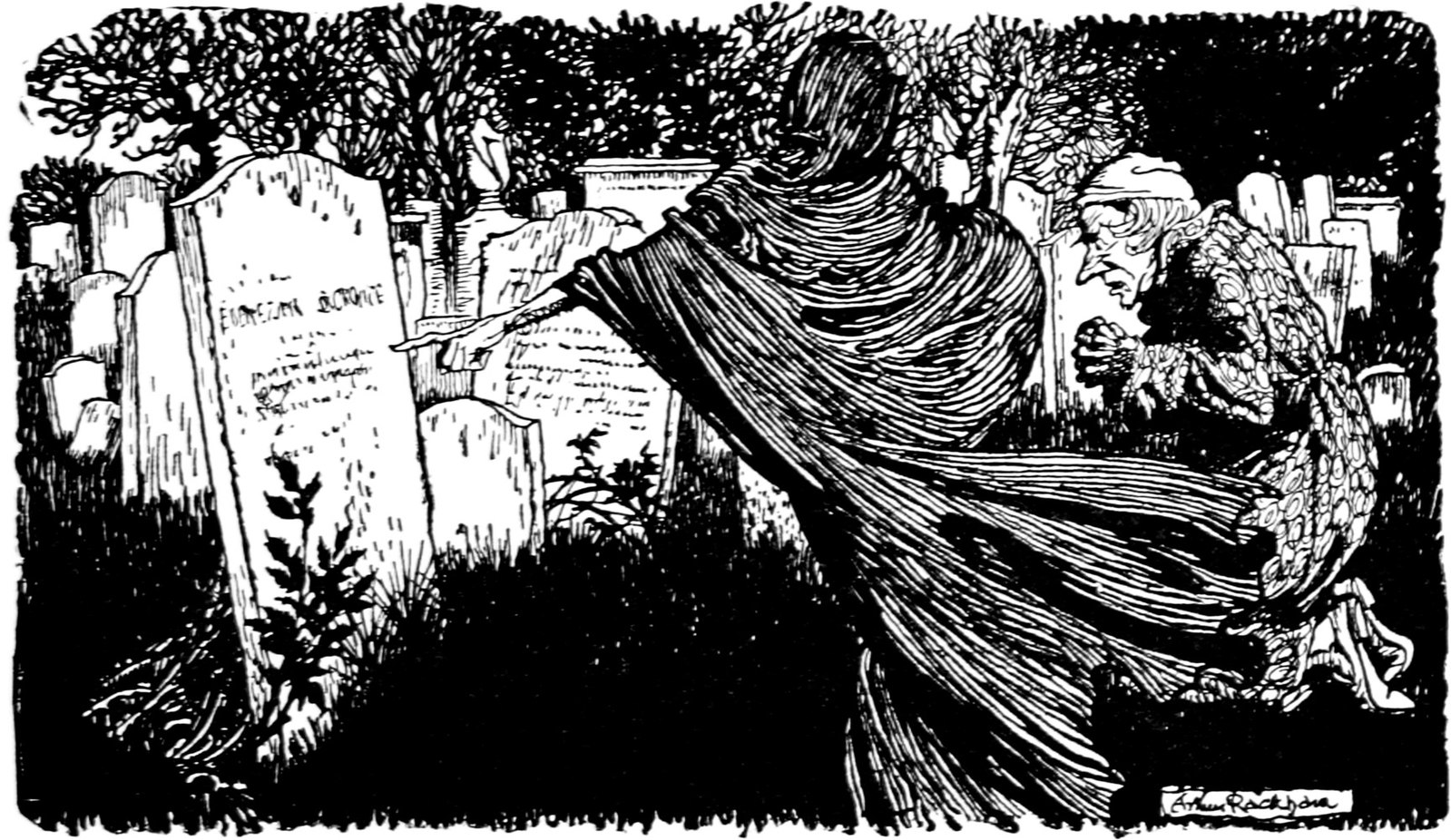
Perhaps it’s the realization that it’s all in good fun and nobody will really hurt you.  I’ve attended a few of these haunted events over the years, but it was more fun to participate in them.  Perhaps it goes back to Nashotah House.  I’m guessing that most of you’ve never been.  Nashotah is a gothic campus, at one time pretty isolated, out in the woods.  Halloween was, once upon a time, a real celebration there.  Our maintenance crew would offer a hayride through farm fields owned by the school, then through the cemetery on campus.  I used to dress in a grim reaper costume and carry a kerosene lamp through the graveyard, awaiting the tractor.  Nobody instructed me to do it, but we all knew it was in good fun.  And I wasn’t the only volunteer who’d pop out from behind headstones.  Students got into the spirit of it too.

These days remembering such shenanigans is more appealing than actually going out at night to have other people scare me.  The last time I went to a haunted maze it was really too unnerving for me to enjoy.  I volunteered instead for a local haunted house in New Jersey.  The run up to Halloween was usually an intensely creative time of designing and fabricating homemade costumes, and thinking of ways to make pumpkins look scary.  Now it’s become a season in its own right.  An important segment of the economy.  I won’t be going to our local Field of Screams, but I will understand those who do.  Changes are in the air.  It’s dark quite a bit earlier these days.  The air is chilly in the morning.  And the local fear fields open this weekend.


Moral Bankruptcy

Last Thursday, apart from being the day after the plumber came, Tropical Storm Ida dumped on us, and the first day of September, the New York Times headlines were disturbing.  I don’t have time to read many news stories in depth, but I glance at the headlines to inject just enough worry into my day.  After discussing the flooding, Afghanistan, and a few other stories a particular quote caught my eye and kicked my gut: “Kevin McCarthy, the House Republican leader, threatened to retaliate against technology companies that comply with the inquiry into the Capitol attack.”  This was a bit much after reading how much suffering is going on in the world.  Republicans threatening retaliation to keep the truth hidden in plain sight.  Is there any term for this but moral bankruptcy?

I simply can’t understand how any moral Republican can hold their head up proud.  I grew up Republican.  I was conservative most of my way through college.  I would never have stood up for a politician of either party that said “I’ll get you back if you tell the truth.”  Lies are the most insidious of acts.  How can you ever believe someone after they establish a reputation of being untruthful?  How can you believe he actually does support your cause?  How can you believe anything he says?  Not only that, but threatening his own fellow Americans for wanting to find out what his party supported on January 6.  There’s a reason the day is known as Epiphany—“the manifestation.”  When truth becomes clear.

A political party that has nothing to offer but lies and violence has become an organ of organized crime.  Perhaps our legislators should be given a dictionary open to the entry titled “perjury.”  We now have Republicans who lie under oath to become Supreme Court justices.  Who try to start rebellions with mobs ready to murder their colleagues and who then sit back and claim the rectitude of God Almighty when it’s over.  What have we come to here?  People were drowning in basement apartments and people were suffering loss of power and damaged homes.  Republicans meanwhile were working up threats of retaliation against people for simply trying to get at the truth.  The plumber did the job he said he would.  Those who projected and tracked Ida told the truth to try to save lives and property.  In the sewers of Washington, however, those loyal to the party vowed to keep their secrets safe. 


Witches of September

I’ve never read any John Updike before.  I understand that his novels foreground religion, which I didn’t realize.  I have watched The Witches of Eastwick, in movie form, a time or two.  In fact, I wrote a bit about the film in one of my books.  This got me curious to read the novel and I found a copy at a used book sale up in Ithaca some months back.  Now that September’s here, it seemed like an opportunity to see what the original story had to say about witches.  There is a problem, of course, in having watched the movie first.  Not only does it tell you which actors the characters should look like, but it also predisposes your orientation to what will happen.  In this case all that will mislead you.

The movie centers on Jack Nicholson’s Darryl Van Horne—like most Nicholson movies, his character takes over—whereas the novel is definitely centered on the three witches, Alexandra, Jane, and Sukie.  They don’t fall into the background, but neither do they always work in concert.  The movie tells, in other words, a very different story.  Updike’s literary treatment focuses on female characters and the mischief they cause.  Nor is it entirely clear that Van Horne is demonic, as in the movie.  A church features prominently in both versions, amusingly Unitarian in the novel, with Van Horne not upstaging the sermon but giving an invited one himself.  No fear of sacred places here.

The wrath of the witches isn’t directed toward Van Horne either.  A character left out of the film, who marries Van Horne and whose brother is his real target of affection, is hexed and killed by the witches instead.  In many ways this could be construed as a kind of gentle horror story, although it’s never marketed that way.  I kept waiting for certain scenes in the movie to be narrated, as it were, in the flesh.  This led to the revelation that these scenes were invented for the cinematic version.  Both novels and movies are stories.  When shown on the big screen, we expect them to be adapted.  My personal preference is for the film to present the same story.  It can’t always be done, of course.  In this case the movie left some questions open that I hoped the novel would answer.  Since the stories are so different, the questions remain.  I have a feeling I’ll read more Updike down the road, but I’ll avoid watching the movie first.


Insect Inside

It seems a shame we don’t have an accurate name to classify all of them.  Insects, arachnids, and arthropods, I mean.  Those creatures smaller than us that inspire fear.  I suspect I’m not alone in experiencing a profound ill-at-easiness for some time after a close encounter with various of these small creatures.  Some experiences can be sublime, such as the other day when praying mantis on the glass of our front door provided a wonderful opportunity to look at a marvel from a seldom seen angle.  More often, however, the response is one of terror at being outnumbered, out-gunned, or out-run.  Spiders can be speedy as well as scary and I often yield the floor to them.  If I’ve got an empty peanut butter jar handy I try to catch and release, but I’ll look with worry at the spot of the encounter for days.

Photo by Rosie Kerr on Unsplash

Or the flying, stinging things.  Mostly they’re good for the environment and I don’t like to kill anything.  The other day, however, while returning the recycling bin to the garage I failed to notice paper wasps had built a nest (in just a day, since I’d taken the bin out only the afternoon before) above the door.  They were offended that I’d invaded their space—their concept of time is completely off from that of creatures that tend to live decades and want to stay in the same location for years at a time—and decided to attack.  This was a new stinging experience for me.  One flew down and stung my face then quicker than lightning landed on my right hand and bit again.  Its poison burned, I can tell you.  I’ve had run-ins with lots of stinging things in my time, but the shock probably added to the hurt.  I couldn’t even get the garage door shut, as previously mentioned.  

The next morning I awoke unsettled.  Houses have cracks and crevices.  They settle over time and critters can find their way in.  I understand.  Everyone needs a home.  But opening a door and being unexpectedly attacked hardly seems fair to me.  I hadn’t even seen the nest.  It’s easy to forget, in this virtual world of pandemic proportions, that we share the planet with a wide variety of others.  The large predators are mostly gone.  The countless small ones are still here, however, and many of them enjoy the way we’ve warmed the place up for them.  I have a feeling that when we finally outlive our welcome on our home, the insects, arachnids, and arthropods will be glad to stick around.


A Symphony of Horror

Horror season is upon us.  One could argue that it never left since summer has its fair share of horror when air conditioning is required.  The one horror director my wife seems to like, apart from the departed Alfred Hitchcock (and some would say he’s thriller, not horror), is Robert Eggers.  Eggers’ breakout The Witch worked on so many levels, even for non-horror fans.  The attention to historical detail and the solemnity of his approach and the slow build all helped.  The Lighthouse was moody and profound, with superb acting throughout.  The Northman, his viking epic shot in Iceland, is due out next year.  Rumor has it that his fourth film will be Nosferatu.  Anya Taylor-Joy, it is said, will be returning for it.

Nosferatu has, as of next year, a century of credibility.  F. W. Murnau’s classic, released in 1922, was technically a violation of copyright and was very nearly lost as copies were ordered destroyed.  This now iconic film, despite its subtitle A Symphony of Horror (eine Symphonie des Grauens), appeared before the category of “horror film” was assigned, and so it’s normally not considered as part of the genre.  The original was given a shot in the arm by Werner Herzog’s Nosferatu the Vampyre in 1979.  My long-suffering wife once agreed to watch it with me.  There are parts of the movie that are distinctly disturbing, but it remains one of the best vampire films ever made.  Many would classify it as an art film more than a horror film, just as Murnau’s was considered Expressionism rather than horror.

It remains to see how Eggers will handle this script.  The original plot was based on Bram Stoker’s Dracula, one of the formative novels of the western canon.  The story of an unassuming individual unexpectedly encountering, through a small conspiracy (in the films), the supernatural.  That which we’re all told is not really there.  Many are beginning to wake, after the election of Trump revealed that evil does really exist, to the understanding that not all is as it seems.  It’s hard not to sympathize with the vampire in the movies, particularly when he’s the victim of a curse.  A vampire’s got to eat, right?  The original, of course, made him out as a devil.  That was in the days when selfish bloodsucking was considered evil, not business as usual.  We have a lot to learn from vampires, and I, for one, am eager to see how Eggers will handle Nosferatu.

Image credit F. W. MurnauHenrik Galeen, and Fritz Arno Wagner; Public Domain in the United States, via Wikipedia

Like a Hurricane

Around here we welcomed September in with the remains of Hurricane Ida.  For the second summer in a row, far inland, we’ve sustained hurricane damage.  For storms like this it’s not so much a question of if there will be damage, but rather “how much?”  It was complicated by the paper wasps.  It’s like a 1970s natural disaster movie.  It starts at the end of August.

I was going out to put the recycling bin away (more on this later).  When I opened the garage door I was stung three times by a paper wasp (or maybe two)—twice on the face and once on a finger.  The previous day when I’d taken the bin out there hadn’t been a nest, but 24 hours later, angry waspids were protecting their territory.  I couldn’t even get the door closed.  We don’t have any bug-killing spray on hand since we believe in live and let live.  But I do need to get into the garage.  Due to my weekly schedule I couldn’t get to the hardware store before Friday.  Fine, let the Hymenoptera have the garage.

The next day—actually later that day—Ida began to arrive.  We’ve had extensive roof repairs since moving in here.  We’ve had two-thirds of it replaced entirely.  Then the rain started.  The plumber came before it got bad to replace a cast-iron radiator that we had moved so I could repair the drywall behind it.  While doing that I repaired the ceiling where water from ex-Hurricane Isaias leaked through.  The roofer had patched this part after Isaias, so we thought we were good.  By mid-afternoon there was water dripping from the ceiling again and the repairs I had made crumbled into the bucket set there to catch the water.  So it goes.  Outside the street was closed due to flooding.  I couldn’t get into the garage to check for damage because, you know, wasps guarded the only door (still open).

It used to be that weather was a neutral topic to discuss.  Of course, it’s become politicized now.  Having a climate-change denier in the White House for four years made the topic dangerous to raise.  This area used to never get hit too badly by hurricanes.  Global warming, however, has changed everything.  I got up the morning after wondering where to start.  It was still dark and a cricket had come inside to get out of the weather.  It chirped as I came down stairs.  Everything will be all right.

Our unofficial rain gauge

Who Ya Gonna Call?

The haunting season is nearly upon us.  Apart from the usual fun of ghost stories, those of us with appreciation of science wonder about whether there’s any hope of confirming some of these tales.  Benjamin Radford’s Investigating Ghosts: The Scientific Search for Spirits is a handy guidebook for those who don’t wish to be gullible.  Radford demonstrates just why much of popular ghost hunting reality television really isn’t scientific at all.  Knowing how science works, Radford is unusual in that he’s open to the possibility of ghosts.  He points out, however, that from the point of view of science there’s a conundrum—there is no consensus on what a ghost actually is.  Different readers and experimenters and experiencers have different ideas about them—everything from the spirits of the dead to “recordings” made by the environment to demons to time-travelers.  Radford’s quite right that to test an hypothesis you need to agree on what you’re testing for.

Ghost hunting groups, as he points out, are actually gathering evidence hoping to prove the existence of ghosts (whatever they are).  Evidence gathering isn’t the same as science, however.  If you’ve ever watched any of these shows you’ll likely enjoy Radford’s take-down of their flawed methodology.  Wandering an unfamiliar location at night with the lights off and gadgets in hand, they go here and there, possibly contaminating each others’ “evidence.”  Their theories behind why ghosts do this or that—make cold spots, turn lights on and off, make white noise into EVPs, or electronic voice phenomena—don’t match the science of basic ideas of ambient temperature, wiring, and audio pareidolia.  These things are well understood, but you have to read about them to apply them. 

The larger question, however, remains.  If ghosts exist, and if they choose (if they have will) not to cooperate, how can we learn about them?  Radford makes the valid point that coming in for one night with lots of equipment and little knowledge of what we might term “the deep history of a location” stands very little chance of achieving results.  It may be fun, and entertaining, and it may catch a legitimate anomaly or two, but it doesn’t, can’t scientifically prove the existence of ghosts.  We still seem to be stuck with the materialism that only measures the physical.  This fact may indeed fuel skeptics to suggest it’s “only this and nothing more.”  But science isn’t the only way we know the world.  It’s a pleasure to read a book from an investigator of this topic who has his head on straight.


Starting September

The deep green of late summer has been starting to brown at the edges.  The process is a slow one, but it’s urged along by the Halloween decorations beginning to appear in the stores and the spooky offerings showing up in various media.  Our second pandemic summer is winding down.  Autumn has always been my favorite season.  I like summer’s relaxed attitude.  Even winter’s chill is something I anticipate.  But autumn is so visceral that it’s spiritual.  Autumn catches in my throat.  I sniff the air expectantly.  I know the ghosts and ghouls are on their way.  I won’t feel so strange for watching horror movies when the season demands it.  Already light is scarce before work in the morning.  In order to accommodate my daily constitutional I’ve had to shift to the streets of our town where there’s a bit of artificial light at 5:30 a.m.

September has crept up on us under the guise of several heat waves and hurricanes crossing the country.  The season of scares is about upon us.  I have to admit to feeling a thrill when seeing orange and black in stores and on front lawns.  Halloween lights have begun to appear on some front porches and the candy has begun to spill out in grocery stores for those who want to shop early.  Outside, even with the heat waves and hurricanes, early morning declares that fall is on its way.  As early as August, like a squirrel I begin to horde away my autumnal reading and viewing.  Books and movies to see me through to what seems like the home base of spring when shivers cease and light begins to grow again.  Every year I tell myself I’ll be ready this time.  Every year it stuns me in its wonder.

The transitional seasons, unfortunately, are most under threat from global warming.  The periods between the extremes of heat and cold get foreshortened, making them even more precious.  I have to believe Halloween is capitalism’s attempt to sell autumn.  It’s a season of feeling, of pure emotion.  I almost fear its coming since I know it can’t last for nearly long enough.  There’s a beauty to the decline, and my migratory instincts for the classroom kick in.  If only it could be so forever.  Summer’s heat underscores autumn’s relief.  There’s treasure hidden here, even if it’s only temporary.  September is finally here.  And with it comes hope.

Things to come

Classic Plural

You might think that with our modern lifestyles, looking back would become passé.  Recently an article on Hyperallergic discussed “Ancient Greece and Rome Are Hot in Animation Right Now. Here’s Why.”  The article by Chiara Sulprizio notes that themes central to history—namely, sex and violence—animate ancient mythology.  This allows modern interpreters to explore where we are by looking back.  At the same time, in higher education, such topics and departments are being cut.  The humanities in general have come under fire lately.  Where are we going to learn about such things as the classics if we cut off the only people who spend their time studying such things?  This isn’t the only instance where universities seem to misread what hoi polloi find to be of interest.

The classics have been known as such because of their formative role in our culture.  As this Hyperallergic story shows, they can bring in money (for this is the measure by which all things are assessed).  Again it seems that higher education has followed the way of the dollar, so why not invest in the study of what makes us human?  I guess I’m a bit of a curmudgeon here because it was the humanities that came up with the idea of higher education in the first place.  Universities were places to study theology and law, and even the original concept of “humanities” included arithmetic, geometry, astronomy, and logic.  Only when these topics started to split off into what we would eventually call “STEM” did the humanities begin to suffer neglect.

Looks like a good story

It was, after all, the Greco-Roman world that gave us what we call the classics.  I fully agree that we can’t constantly look back—we’d never move forward then—but our heads turn for a reason.  Understanding what it is to be human seems to be something we’ve grown less interested in since the sterile clean room has given us gadgets and toys we can’t seem to live without.  Living, however, is such a human aspiration.  We want fulfilled lives.  Mythology gives us meaning.  That’s why we keep coming back to it.  In my own lifetime I’ve seen several resurgences of interest in the classics, and experts always seem surprised.  They needn’t be, however.  People have found these stories powerful well before the Greeks and Romans gave them the shapes we recognize.  Many of them go back even further to the early civilizations of the Levant.  The classics have, in other words, earned that name.


Durable Goods

So you bought something that worked.  It was a simple thing, but you bought it many years ago.  Then something happened and the thing got broke.  (This could be just about anything here, so please bear with me.)  You go to replace said item that worked so perfectly for your needs, only to find fashions have changed and your item is no longer in style.  In fact, not even Amazon has anything like it.  Or eBay.  What is one to do?  This recently happened to me again—it doesn’t matter what the item is—and I once again reflected on how changing styles make it difficult to live a life not encumbered by having to keep up with change.  Some things need not change styles to be functional, but they do nevertheless.  And trying to replace them with exact duplicates can be difficult.  Perhaps the solution is to buy two of everything.

The speed of change is amazing.  Head-spinning, in fact.  Having studied ancient history, I often ponder how civilization got along with minimal change for well beyond a lifespan of an individual.  Or generations, even.  Take pottery, for example.  Innovation was so slow with pottery that—along with its extreme durability—it can be used as a means of dating events in antiquity.  There was very little improving an ancient bowl.  Its shape was functional and served its purpose well.  Why change it?  When it was discovered that, say, a rim, made spillage a little less common, that innovation spread and stayed in place for centuries.  Until perhaps someone discovered a spout would make for easier pouring.  Again, no other “improvements” for centuries.

Today things change, it seems, just for the sake of change.  I tend not to replace things unless they really aren’t functional any longer.  (That’s how I can afford to buy books, I guess.)  My car is old.  So is our furniture.  To me it seems more eco-friendly to keep things than to be constantly throwing them away to upgrade them.  Then something breaks.  If that particular item was an impulse purchase in some forgotten store in another state decades ago, good luck trying to replace it.  It may be out there somewhere on eBay, I suppose, but hours spend searching for that purchase that was almost an afterthought shouldn’t take hours and hours, and it likely will be even more expensive than anticipated if actually found.  Such is the nature of fashion.  Some durable goods are just fine the way they were.


Friendly Food

The rain felt like relief after the most recent heat wave.  We’d long planned to attend the Easton VegFest regardless.  Summer is the season for street festivals and it’s always a strange kind of affirmation to find one dedicated to vegans.  And to see so many people at it.  The cities of the Lehigh Valley have quite a few animal-friendly options for eating, and although the VegFest isn’t huge it’s a good place to find others who realize that our food choices matter.  So it was that we came upon the booth for NoPigNeva.  Now, if you’ve ever tried to shop for vegan food—I know there must be a few of you out there—you know how catch-as-catch-can it is.  Around here lots of grocery stores carry vegan items, but what you’re looking for may not be there.  Even WholeFoods in Allentown has a limited selection.

NoPigNeva is a supply company run by black women.  It supports worthy causes.  And it makes finding what you’re looking for essentially one-stop.  I’m no businessman, but I do wonder why, when they keep selling out of vegan stock, stores don’t get their orders refilled right away.  It’s almost as if we don’t want to believe people will buy it.  Vegan food has come a long way even in just the last five years.  I know that when I became a vegetarian almost two decades ago now I felt there was no way to get enough to eat as a vegan.  Options seemed so limited.  That’s no longer the case.  I’m guessing the success of the Impossible Whopper caught everyone (except consumers) by surprise.  Even now, if you order one (hold the mayo, please) you’re pretty much guaranteed it won’t have been sitting on the warming shelf.

There’s big money in the food industry.  I’m not a foodie, although it’s become fashionable to be one.  I do, however, think about whether my food is causing harm.  There is, I realize, no way not to impact the environment or other living creatures when eating.  Lessening that impact, however, and supporting historically oppressed groups feels good.  There is a morality to mastication.  Most animals, it seems, have evolved a fear of being eaten.  Perhaps we’re only starting to understand that breaking chains might have to begin with us.  Any industry (big agriculture) that tries to make it illegal to see where your food comes from is hardly to be trusted.  I trust more those willing to come to a street fair on a rainy Saturday afternoon to show that there is a better way.


Making Excuses

The internet, and computers in general, seem to think we’re dumb.  I say that because of the false information they routinely give.  I was recently on a website run by a reputable *ahem* agency.  It turns out that the information they gave me was incorrect.  The next week when I went to check the status of my transaction, it said I couldn’t do so because cookies were blocked on my computer.  Well, cookies aren’t blocked.  I had to call said agency to ask about the status.  I was then told that what I’d requested was valid “only during the pandemic” (excuse me, I thought we were still in a pandemic?) and that was the reason I couldn’t check the status online.  That service was no longer available.  So why did the auto-response blame it on cookies?  I miss the generic “technical difficulties.”  At least it was honest.

We’re all busy these days.  Keeping websites up to date matters.  It doesn’t help when some software person decides some techie-sounding excuse ought to satisfy you.  Whenever I restart my computer, for example, I get a dialogue box—it’s more of a monologue box, really, since it isn’t asking for anything but acknowledgement that its incorrect information has been delivered.  In any case, it tells me that the computer decided to restart because of a problem.  No it didn’t!  It restarted because I gave the restart command!  Is this a problem?  I thought I was authorized to restart my own computer.  Why is it lying to me?  Is it colluding with the websites that are making up excuses?

Are we really that stupid?  Computers seem to think so.  On my work computer (PC, of course) you no longer have a trash can in which to discard old files.  No, now we have a recycle bin.  Recycle bin?  Really?  While I appreciate the message that we should recycle whatever we can, this is not a case of recycling at all.  It is a matter of getting rid of something I no longer need.  I guess what I’d like from our machine overlords is a bit of respect for our intelligence.  Sure, we may be subject to biological constraints that don’t apply to the electronic world.  We do have lapses in judgment just as surely as devices have bugs.  A world that runs by algorithms alone is hardly a world in which we could live.  So my devices may well be more logical than me, and if so they should figure out that they don’t need to lie or make excuses. Just say “technical difficulties,” I can live with that.


Not That Kind

I am not a (medical) doctor.  Nor do I play one on TV.  It puzzled me, therefore, when I received an email addressing me as “Dear Healthcare provider.”  I like to think that maybe this blog does help a person or two from time to time, but I’m not going to dispense medical devices.  The email was telling me where I could order Covid-19 tests in bulk, and it even contained a sell-sheet with facts and figures.  Now I want to see this pandemic over, just like everybody else, but I’m not sure that having my own supply of Covid tests would do anybody any good at all.  Perhaps this is just a continuation of the larger issue of wondering who exactly the internet thinks I am.

One thing the pandemic has done has been to double us down on our reliance on the internet.  It’s difficult to imagine how we might’ve survived without it.  More jobs—many more—would certainly have been lost if we couldn’t have started to work remotely.  In order for any of this to function, however, we have to have a sense of who we are and what we do.  I’m not a professional blogger, of course.  I’ve discovered from my own extended time on the internet that many people just a few years younger than me make a living as “content providers.”  They launch a successful YouTube channel (or maybe two or more), and blog, podcast, or otherwise just dispense their homegrown wisdom into a job.  Some have college degrees, but many don’t.  The ones I see make a better living doing this than several college grads I know.

You are who the internet makes you in these remote times.  Hasn’t most of our reality become remote?  We rely on content that others, or sometimes we ourselves, make.  We get our news here and we find our directions here.  We order the things we need here and the delivery drivers find our addresses here.  Yes, we can even get our medical service taken care of here.  Fortunately I personally haven’t had to talk to a doctor online, but I know people who have.  Personally I find it more reassuring when someone with special training takes a look at the area of concern, and perhaps can touch it and tell me what to do about it.  I’m glad the internet option exists, however.  I just hope that people don’t start thinking I’m that kind of doctor.

Photo by Clay Banks on Unsplash

Claim This Panel

Validation.  We’re surrounded by it.  Now that we have the internet, everyone seems to want us to verify who we are.  And we were told as kids that there are no such things as trolls!  Personally, I have no idea why a hacker would want to be me.  I mean for destabilizing the government by messing with elections, well, of course, but I mean for academic purposes.  How do you really know who I am?  I googled myself the other day—I’m curious how my most recent book is doing because I’ve heard nothing from the publisher since it appeared—and noticed that in the “knowledge panel” on Google they had the picture of the wrong person.  I guess I’d better verify myself!

The erstwhile academic (aka “independent scholar”) gets invitations via email from Google Scholar to claim their papers.  I suppose in an effort to provide competition to Academia.edu, the researcher finds her or his papers available on Google Scholar’s website.  So far, so good.  But the invitation comes with instructions to verify your “work email.”  Said email must end in a .edu extension in order to be valid.  In other words, “independent scholar” is an invalid category.  This train of logic demonstrates one of the serious problems with high education shrinkage and the industry becoming tighter and tighter with its positions.  How do you verify yourself if your email address is the same as any Jane or Joe?  You can’t.  “Scholar” is limited to those lucky enough to have picked up a very rare position, especially in some fields, such as religion.

My recent experience with the DMV was an exercise in validation.  I presented the woman my vital paperwork (which was less than I had to show to get the New Jersey license that I had to cash in to get a license in Pennsylvania) while wearing a mask.  Irony can be quite stunning at times.  How did they know I wasn’t some masked bandit stealing someone’s paperwork on the way to the DMV?  I guess they could ask me to verify by my work email.  Then they’d discover that I’m merely an independent scholar.  If they googled me they’d find the wrong person’s photo on my knowledge panel.  Won’t someone validate me, please?  It would be nice to be able to claim my own papers on Google Scholar.  But until “independent scholar” becomes a real thing, I guess you can ask that guy (who’s not me) on the “knowledge panel” that bears my name.


Which Wednesday

I’m not superstitious but it’s still pretty dusky when I go for my constitutional on cloudy days.  I was walking along thinking about Cernunnos, the way one does, when a black cat darted out of the underbrush and across my path.  My thoughts turned to witches.  Then a large toad jumped out in front of me in the half-light.  Perhaps it was because I picked up a booklet about witches recently, but this felt very uncanny to me.  There’s a place where the woods close in on both sides of the path.  The sun wasn’t yet up, and the clouds meant it wouldn’t have much mattered anyway.  When the bird calls stopped I began thinking about turning around and going home.  Nobody else was out this morning and although I don’t mind starting my day with the weird, I was thinking “not on a Wednesday.”

A thick mist lay over part of the path and I realized just how uncomfortable we tend to be when we can’t see clearly.  Despite that, and the black cat and the toad, I’ve never really been afraid of witches.  I guess I try to please people too much to think that someone might want to harm me supernaturally (at least among those who know me).  I recently found a booklet on witches—one of those strange impulse buys after being mostly house-bound for the better part of a year-and-a-half—that perhaps prompted my thinking this morning.  Although it seems to be most interested in earth-centered religions, it has an article about Salem.  Despite the more modern embrace of witchcraft in Salem, historically it had to do with human fear and hatred, a combination that is scary indeed when applied by those who are superstitious.

Cernunnos is a Celtic god generally portrayed with deer antlers.  Although lack of literature means we know little about him, he’s been adopted as the male counterpart to the female earth-goddess in some traditions.  Modern witchcraft is based on an orientation toward nature.  It’s kind of a ground-up religion rather than a top-down one.  Christians traditionally labelled it “Devil worship,” as they tended to do with anything they objected to.  Such demonizing helps no one, of course.  And when these ideas grow into superstitions people get hurt.  So I’m out here in the half-light because in the mornings days are shortening quickly and I have less and less time before work begin after the sun rises.  And I have witchery on my mind.