Rolling with Nature

Even breakfast can be profound.  I’ve written before how our obsession with breakfast cereal was based one man’s religious conviction.  Now it’s widely accepted (whether true or not) that cereal is the healthiest way to start your day’s comestible experience.  Quite apart from that, it’s quick and easy and clean-up’s a snap.  The trick is finding healthy cereal.  Long ago I settled on a species of Shredded Wheat—the kind that comes in little squares.  Unadorned, it tastes fine and is more filling that a cereal puffed up with a lot of air.  (Breakfast is early for some early risers, and I need something to last until lunch.)  The Shredded Wheat model, however, benefits from extra flavor once in a while, so I try to blend in a different cereal (I experiment in the kitchen).  Lately it’s been Cheerios (originally named CheeriOats).

I’ve noted before that one of the fundamental issues with the tech revolution comes down to basic geometry.  The pixel is square but life on our planet is in the round.  You notice it everywhere natural.  Straight lines in nature are rare, but curves are everywhere.  This has practical implications while trying to pour two cereals at once (I told you I experiment).  The stolid, almost Episcopalian, Shredded Wheat does not pour easily.  It takes a bit of poking and prodding to get any action at all.  Cherrios, however, flow more naturally—more on the Pentecostal end of the scale.  As I mix my cereals in my pre-dawn laboratory, I began to understand something about life.  Square corners are superior for stacking and storing, but life wants to be round.  Organic even begins with an o.

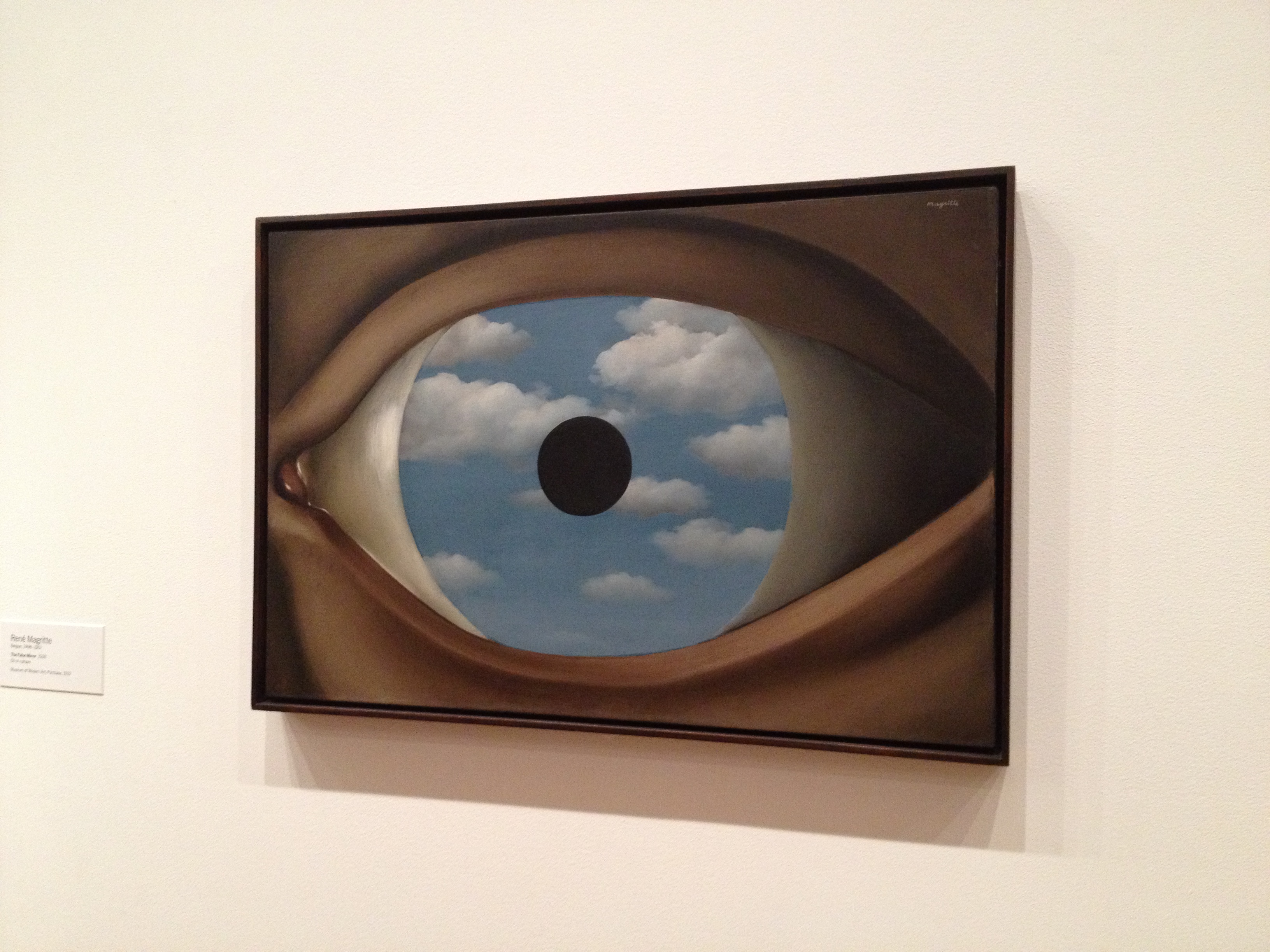
The roundness of nature is everywhere evident: eyes, raindrops, plant stems in cross-section, even the great circular wind storms that blow across the surface of the globe.  Objects that are round roll and tumble easily.  Rough edges get eroded away.  The square is artificial, but useful.  It means that the pixel will never replicate the flow and ease of the organic.  Given the nature of pi, each circle is infinite, in one of nature’s greatest paradoxes.  We are the denizens of a spherical world.  Our planet shows us the way to exist upon it, in harmony with the other organic, circular beings.  I linger before I pour the oat milk.  A revelation before breakfast is never a bad thing.  It’s only too bad that after this, the rest of the day becomes artificial.


Pagan Perspective

“I would live in a world of Christ-like humans, but not one full of Christians.”  So Kate Horsley’s protagonist Gwynneve writes in Confessions of a Pagan Nun.  This novel is an attempt to envision what life would’ve been like for a woman in medieval Ireland when Christianity came to the land.  Gwynneve is a spiritual seeker who comes to be a nun when it’s clear that this new religion has taken over the old ways.  Learning to write, she transcribes her story after hours in her clochan, or cell.  She recognizes that Christianity has brought good things to Ireland, but at a high cost.  The disparity between rich and poor increases, women are denigrated so that men can run things, and the land is ravaged for the benefit of their new way of living.

The novelty of the idea caught my attention when a friend pointed the book out to me.  I was a bit surprised to see that Shambhala, generally a nonfiction Buddhist press, had published the novel.  Since this is a story designed to make the reader think—it is contemplative, as a story from the point of view of a nun would likely be—the choice of publisher makes sense.  While it’s not likely that a book published there would make the New York Times bestseller list, as an erstwhile writer myself I can attest that novels outside the usual pale have great difficulty in getting mainstream publishers interested.  This too is a matter for contemplation.

One of the main themes of the story seems to be how a worshipper of the goddess Brigit has to become a devotee of St. Brigit when the church made the gods into saints.  This is something that happened historically as well as in novels.  Aware that it was easier to persuade individuals to convert to a new religion if they didn’t have to give up their gods, this seemed a small accommodation to make.  Horsley is not wrong, however, in pointing out that Christianity was not a free ride.  More than a religion, it was (and is) a powerful means for social control.  The vision it offers tends to benefit men over women, the wealthy over the poor, the powerful over the weak.  Despite what the Bible emphasizes, religion has its own conversion experience when it tastes power.  Confessions of a Pagan Nun is a story intended to shift perspectives.  The open reader will learn from contemplating its message.


Hybrids

Photo by Maria Lupan on Unsplash

Hybrids.  They’re everywhere these days.  From hybrid cars to the modified foods we eat, mixed forms seem to be in style.  I can’t think of myself as anything other than a hybrid.  A person not welcome in academia isn’t expected to research and write books, but I just can’t seem to help myself.  There a rare excitement in finding, and loving, a new idea.  Academic writing I can do without, but the writing up of ideas, that is intoxicating.  I’m afraid I can’t always share such things here since I don’t have release time for research and publication and it can take me considerable time to gather all my sources and write up the results.  Meanwhile I’m just a working stiff like anybody else.  A hybrid working stiff.

Describing the elation of a new idea is difficult.  Knowing that something nobody else has noticed before is coming into focus, and that someone might want to publish it is thrilling.  Okay, so many people find other things like sports or dangerous activities exciting.  That’s fine.  For me an afternoon in a museum or library can do it.  You see, after finishing a big project like a book, it’s normal for me to go through a slump.  People ask “what are you working on next?” and although I have many ideas racing along it can sometimes take up to a year before a front-runner emerges.  When it does, however, all bets are off.  Ideas like this can buoy my mood for days at a time.  Now if only I had a classroom to test them out.

I mentioned The Glass Menagerie the other day.  Plays can be, and often are, mirrors of reality.  In high school we had to read Arthur Miller’s Death of a Salesman.  Although that was approaching forty years ago I still remember our teaching pointing out the real tragedy was that Willy Loman had real skills that were evident to those who knew him.  Circumstances, however, had compelled him to become a salesman.  There is a difference between a job and a calling.  Callings, however, are no protection against an economy based on greed.  Perhaps we’re all being channeled into salesmen positions.  Even if that’s the case, however, we know what brings us our sense of meaning in life.  Although there’s no inherent reason that a person can’t research and write on their own, it can be a costly and time-consuming venture without institutional support.  But a hybrid does things a little bit differently.  And hybrids are everywhere these days.


Candid Camera

Early on in the pandemic, various meeting leaders—whether Zoom or Teams—asked participants to put on their cameras.  The point was that, missing seeing other people at the office, the video feed was psychologically reassuring.  I get that.  I began working remotely before the pandemic broke out and I’m still reeling from being ahead of the curve for once in my life.  Does it always feel this giddy?  In any case, we’ve got to the point where many people simply do not put on their cameras, even in small meetings.  Since we are trained for diversity we know that some people simply don’t want us to know how they look on a certain day (or perhaps how cluttered their background is).  And that’s perfectly fine.  It does make me think how artificial work in the office is.

At least you could see this kind.

You put yourself together a certain way to be seen by other people.  In fact, we sometimes even put “dress codes” together for work.  I even had an employer once say dress was “business casual,” only wrinkles were unacceptable.  I don’t iron my clothes, so I guess that particular employer was warning not to let them sit in the clothes basket too long after taking them from the dryer (or clothes line).  In any case, now that we’ve come to realize we may not always look our best, we have an option to leave the camera off.  How many days commuting into the office did we feel this way but were given no choice?  Since leaving academia I’ve never had an office at work.  I was a midlife cubicle denizen.  I never liked the idea. Who looks their best after getting out of bed at 3:00 a.m.?

Being on view isn’t the same as working productively.  The pandemic has also taught us that going into the office is often not necessary at all.  If they supply the tech, which we’d need anyway, we will do our work without Big Brother watching over us all the time.  We’ve become, it seems to me, more humane.  Turning the camera off is a way of perhaps admitting I didn’t sleep well last night.  Or something’s really bothering me and I don’t feel like smiling falsely.  Or any number of other things that might put us in the place of wanting some space.  For once now we have it.  It is my hope that once things start to get “back to normal” that we will have learned some lessons.  We can treat people more like humans want to be treated and still contribute to the bottom line.  It’s amazing how much people will do if they’re treated like human beings rather than cogs in the capitalist machine.


Whose DNA?

The name Francis Crick will forever be associated with the discovery of the double helix of the DNA molecule.  Indeed, he co-won a Nobel Prize for that particular insight.  Of course I didn’t learn about Crick when I was growing up—we weren’t an educated family.  I first learned about him in college when his book Of Molecules and Men was required reading for one of our religion classes.  This book is highly critical of religion, and Christianity in particular.  We read it not to assent to his logic, but rather to have it picked apart in class.  (Grove City was a conservative Christian college then, but less so than it is today.)  Although it has been over three decades since I’ve read it (I found my copy again when we moved three years ago) the sharp critique has remained.  Crick was a staunch materialist.

Image credit: brian0918, via Wikimedia Commons

Although I appreciated his contribution to science, I really didn’t have too much cause to think about Crick after that.  I’m not a geneticist and there are certainly a lot of people out there who make sharp criticisms against religion.  What brought Crick back to mind was when I recently read that he had later come to the conclusion that human DNA was too complex to have evolved by chance.  The piece I was reading used the unfortunate term “intelligent design” so I had to follow up.  Francis Crick hadn’t become a Fundamentalist, had he?  No, it turns out.  Crick had come to believe in “directed panspermia.”  Panspermia is the concept that life isn’t isolated on earth—it exists in space and was brought to our planet by space dust, or some such means.  The “directed” part was what caught my attention.

For a vocal critic of religion, Crick had come to believe that extraterrestrial intelligences had engineered at least human DNA.  This is of particular consequence because until recently the idea of extraterrestrial intelligent life was a laughing flashpoint among scientists and skeptics.  In fact, it’s still regularly labelled as “paranormal.”  I was surprised to learn that a scientist of Crick’s stature had come to this conclusion while being so utterly critical of religion.  Of course, views can change over a lifetime.  No one is born with all the correct knowledge.  It is interesting that Crick believed human DNA to require some outside intervention to become what it is.  Some religious believers share this outlook, but with quite a different origin source in mind.  It just seems to me that our collegiate discussion of his work seems to have been woefully incomplete.


Post-Literate?

Who would’ve thought that publishing could be a scary industry in which to work?  Apart from the constant changes, that is.  Or maybe the changes are the reason it’s scary.  Our society has never been through a revolution quite like the tech revolution.  Yes, writing was pretty radical when it was invented, but it took millennia before literacy got to the point where it created widespread change.  Tech changes everything, and it does so very quickly.  Writing changes everything, but does so over the longue durée.  It began in a pretty humble way.  Crude drawings, called pictographs, came to represent things that mattered to pre-capitalists.  Take an ox head, for example.  It could represent the entire animal.  While some pictographs can be discerned in cuneiform (just as they can in some Chinese characters), the best example is perhaps Egyptian hieroglyphs.

Photo credit:: Jon Bodsworth, via Wikimedia Commons

Whether wedge-headed oxen or beautifully stylized hieroglyphs, both writing styles came to be representative for phonemes.  Egyptian and Mesopotamian writing tended to be syllabic rather than strictly alphabetic, and indeed, the invention of the alphabet made learning to write simpler.  Even after this innovation, however, it still took over a millennium before its practice became widespread.  Writing meant that ideas could be preserved beyond a lifetime.  Instructions and history could be recorded.  When a mistake was known and noted, remaking that error could be avoided.  (This seems to be a feature that has been lost to history, judging by recent fascist political parties.)  One of the great advantages to writing is the precision with which ideas could be expressed and preserved.

So how does this make publishing scary?  Some analysts are now claiming we are in a “post-literary” society.  Reading is no longer necessary.  We download visual content to gain the information we need.  When ideas need to be expressed in writing, we have emojis.  What happens, however, to synonyms when emojis take over?  Our humble ox head that eventually morphed into the capital A may now be represented by a stylized cow.  Or is it a bovine?  What does that cow image convey?  Books—novelties at the moment—are being written with emojis.  Learning to read is difficult.  It takes years and changes our brains.  Technology is encouraging us to become post-literate.  Even blogs are now becoming outdated.  Yet, looking at those emojis we see the history of writing moving in reverse.  From the precision of clear and accurate description to vague notions that look cool but leave us guessing otherwise.  Perhaps those ancient scribes scratching sketches into clay had it right to begin with.


Watching The Witch

Good things often come in small packages.  I’ve read a couple of Brandon Grafius’ books before, and I’ve had The Witch on my reading list since I found out about it.  This is one of those books that benefits from knowing the raison d’être of the series of which it’s a part.  Devil’s Advocates is published by Auteur Publishing as a set of brief books on specific horror films.  If I didn’t have other financial obligations I could see myself purchasing the entire series.  Fortunately this volume was on a film I’ve seen (horror films have become so prolific that I can’t afford to see all of those I’d like either).  The Witch is a provocative movie, having gained critical acclaim as well as box office success.  It’s also a complex film.

Grafius ably takes us through the Puritan background that’s necessary to understand the social, and familial tensions that make this movie work.  Robert Eggers is a director known for his meticulous attention to period detail.  Even while weaving the fantastic into his stories, the plots are entirely believable.  Grafius has a solid grasp on how religion and horror interact.  That’s on full display here.  Looking at The Witch as an exploration of folk horror, he illustrates the importance of the landscape to the tale as well as how isolation sets a family off against one another.  The Puritan religion creates a monster, as it were.  Grafius doesn’t shy away from the misogyny behind the developing idea of the witch, either.  His explanations of—not excuses for—it are insightful.

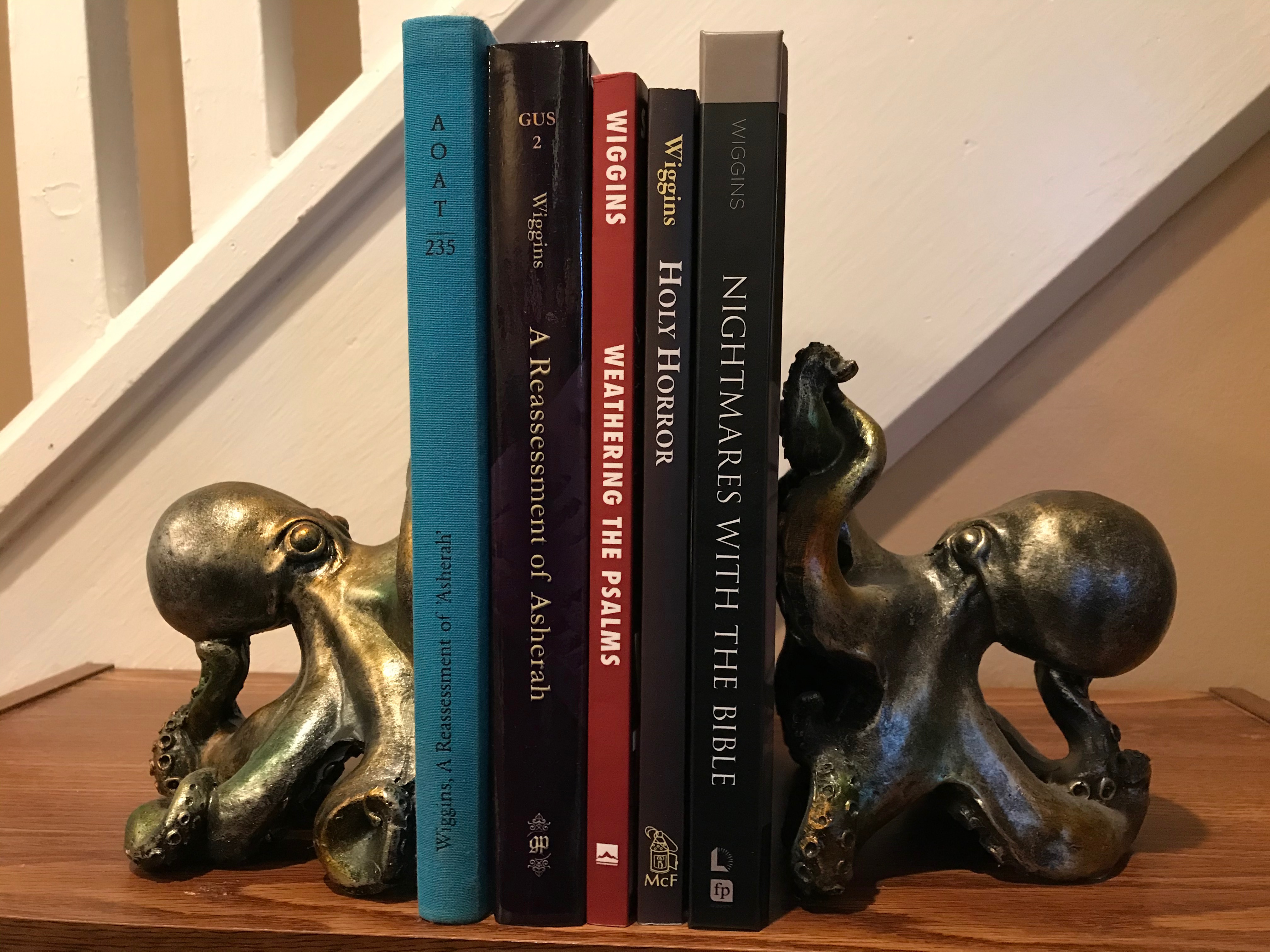
Granted, horror films aren’t everyone’s cup of tea.  Or coffee.  As I sensed when writing Holy Horror, fans of the genre enjoy reading about it.  I often wonder why those of us who watch it do so.  In my case, in any way, it feels like a compulsion.  It’s a coping technique and perhaps an antidote to the headlines.  Horror can be an intensely creative and socially aware genre.  The best of it critiques the flaws of society.  As Grafius points out, Thomasin only wants to be a good girl.  The Puritan society into which she was born projects the image of the witch upon her.  Eggers gives us a real witch in the woods, of course.  Grafius explains how this becomes the aspiration of a young woman who’s only trying to do what’s right.  I have a feeling I’ll be going back to the Devil’s Advocates series again.


The Heart of Memorial Day

The Memorial Day will be a somber one for the many people who’ve lost someone due to Covid-19.  Even as those who know that science can help to bring a pandemic under control have been vaccinated,  it is too late for millions who didn’t make it.  Memorial Day weekend, for many of us in northern climes, has been unseasonably cold.  Around here it’s been rainy too.  The official kick-off to summer seems to be a memorial to the long winter of 2020 and ’21.  It’s also hopeful, because things are starting to get better.  Having an organized national response helps, even as the Fascist Party is gaining strength.  “Memorial” means looking back.  Remembering the past.  I’m saddened, shocked, and distraught that one political party has refused to look at how insidious fascism is, and how it always starts under the guise of righteousness.  Remember this.

We tend to think of Memorial Day as a play day.  Indeed, the number of boats being towed as I’ve been out driving attests to the plans of many.  We’re ready for life to return to normal, but even that involves memory.  Remembering what was normal.  We have never been a fascist nation.  That’s not a memory but a sick future dream.  Those who attempt insurrection and then block any investigation into it can’t have the good of the nation at heart.  It should be a play day.  It should be frolicking in the sun.  Instead I’m wondering how we’ll ever stop this apparently inevitable evil that has taken over a country formed as a democracy.  Has it stopped raining yet?

Although I wasn’t close to him, my father was a veteran.  He fought for the cause of liberty, at least as it was understood before Trump’s America.  He was, according to his family, never the same after seeing war.  Bureaucrats, fat from the monies they pocket from special interest groups and lobbies, seem to have forgotten.  They’ve forgotten the frighteningly large national cemetery at Arlington.  They’ve forgotten that we fought to stop the very thing they are now promoting in their own country.  I’m sorry, Mr. Lincoln, these dead may have died in vain after all.  I had hopes of warm days and leisurely outdoor activities as the end of May rolled along.  Either that, or at least being able to get out and take care of all the yard work that’s been piling up over the past several weeks.  I wonder, will it stop raining today?


Buried Truths

I owe a lot to fossils.  Growing up just a block from a fossil-laden river in western Pennsylvania, as a kid I’d go fossil hunting with my brothers.  They weren’t difficult to find.  Maybe not museum-quality, but not bad considering that they were free for the taking.  I’d pour over some rock with many shells perfectly impressed in it and wonder.  Of course, my childhood religion taught that the earth was quite a young place because that’s what the Bible seemed to indicate.  Other than Chick tracts and related comic books we didn’t have many books around the house to explain this discrepancy.  One thing was pretty clear—the fossils were quite real.  We had no doubt that there had been dinosaurs.  How they fit into the Bible’s chronology (since the Good Book was written long before dinosaurs had been discovered) was unclear.

Mine was not an educated family.  We simply believed what the preacher told us.  Since Fundamentalist preachers don’t attend seminary, their response was probably something along the lines of, “the Bible says…”  Thinking about how to apply the Bible in a complex world was not their strong suit.  So we’d be taught that evolution was evil, but just literally a stone’s throw from the church hundreds of fossils could be found.  I suppose the evidence of those fossils kept me grounded.  I never could buy the “theory” that God created the world with apparent evidence of great age to test our faith.  A deity like that isn’t worthy of the name.

I still pick up fossils when I find them.  Apart from a brain coral and some crinoids, mostly I just find shells.  Knowing that this particular rock is evidence of the sea floor millions of years ago is thrilling.  It puts me in touch with the great antiquity of our planet, the times when people had not yet evolved to complicate everything.  Just a few days ago I found a rock with a vignette of life under the sea.  Looking at it closely there are crinoids among the shells, and what appear to be a drag mark where some unknown creature disturbed the silty Paleozoic sea bottom on its way someplace long before humans showed up.  Fossils always remind me of the responsibility of reading the Bible with an eye toward rationality and a recognition that a guide isn’t the same thing as a taskmaster asking you to believe the ridiculous.  That, I suppose, is why I can’t pass up a fossil on the ground. 


The Persistence of Forgetfulness

It has happened twice this past week.  Maybe you’ve noticed, but probably I’m presuming too much.  Last Sunday and Thursday past, there were no posts on this blog.  Both days a post was cued up and ready for me to hit the “publish” button, but other things interfered.  To get a sense of this you need to realize that my blog posts are always ready to go by 6:00 a.m.  By that point I’ve been awake for a minimum of two hours and have already lined up my initial thoughts for the day.  I also realize that many other people are not awake yet.  Since my blog posts feed out to Twitter I worry (rightly) that a tweet so early will be dismissed along with other early morning bird calls.  I load up my post and wait.

In an abundance of caution, I begin my job at 6:30.  The reason is clear enough—I was let go from two jobs after being told I was doing great.  I don’t want that to happen again.  I’m one of those people whose best time is the morning.  I’m aware this is unusual, bordering on the freakish.  I have come to a compromise—I push the publish button just before I start work.  When I began working remotely (I was ahead of the curve, for once), I knew we’d need a house with a dedicated office.  That office is upstairs and is reserved for work.  My creative writing is done downstairs.  Since I go upstairs before actually starting work to settle in, I need to remember to click “publish” before I read the first work email of the day.  If I don’t, Thursday happens.  (It very nearly happened again yesterday!)

What about Sunday, did I hear you ask (in my imagination)?  Fair question.  Weekends I try to hold out until after 7:00 (so late!) or later to post.  But on Sunday I’m in charge of the adult education program in my faith tradition.  I schedule and run the Zoom meeting.  Since that program is early, I need to be ready early.  By 6:00 a.m. on Sunday my post was loaded.  Many Sundays, however, are about as busy as a workday although it’s all volunteer work.  I awoke Monday morning and found Sunday’s post still in the dock.  The world has been spared my musings for a day.  Ironically, WordPress had been sending daily streak messages “You’re on a streak!”  My streak struck out on Sunday, and again on Thursday.  Maybe it’s time for a new routine.

It’s like there are two minds at work here.

Fragility

Who doesn’t like a play?  Since I’ve been reading many lengthy novels this year I like to intersperse them with some shorter pieces of literature.  Many of us are assigned plays in high school English class.  For those of us from non-literary families, these may be the only plays we’ll encounter in our youth.  Shakespeare and Arthur Miller ran the entire gambit for my high school career, but I’ve done some exploring on my own since then.  I’d heard quite a bit about Tennessee Williams’ The Glass Menagerie over the years, but I’d never read it.  I found a used copy at a book sale and so my excuse for not reading it was at an end.  Unlike when I read A Streetcar Named Desire, I really had no idea what to expect.  Dysfunction, it seems, spurs creativity.

I suspect the play is well enough known that my musings about its symbolism and impact wouldn’t add much to the discussion.  (Besides, I suspect few English teachers read this blog.)  My particular edition, however, comes with the essay “The Catastrophe of Success,” written by Williams after he found fame.  It reminded me a bit of a speech Ursula K. Le Guin gave late in her career, after receiving an award.  Both writers note that money drives far too much of what we consider creativity.  Williams notes in his essay that success leads to pampering and pampering is good for no one.  His description of staying in a hotel is a familiar one—poorly paid employees treat paying guests as if they were wealthy, cleaning up after them and tidying other people’s messes.

As many critics have noted, Williams grew up in a dysfunctional family and drew heavily on that for his fiction.  Another aspect, perhaps related to that, was the sense of pressure on his writing.  In his essay he mentions that writing grew more difficult when life was easy.  I often think about this myself.  My fiction suffered a bit when the pressure of the daily commute to New York ceased.  I had to catch an early bus and I was determined to get some writing done every day.  That was the origin of what now seems to be my permanent early wakefulness.  That pressure of knowing I had a very limited amount of time before I had to be showered, dressed, and at the bus stop, led to a tremendously creative output.  I see from my limited experience of reading Williams that I still have much to learn from those whose experience has become a lesson.


Come Together

When’s the last time a commercial made you cry?  Well, made you cry for joy?   A colleague sent me this commercial for chewing gum that left me nearly blubbering.  Go ahead and give it a watch, I’ll wait.  You see, I’m in the waiting period after my second vaccination (even scheduling that, it turned out, was difficult) and we’re waiting for everyone we know to reach that state where being together with strangers, unmasked, will become safe and normal again.  We’ve all been under enormous pressure for the past 14 months.  The absolutely directionless response of the Trump administration prolonged the agony in this particular country, and some places in the world are still having a difficult time of it, but there is a light.  There is a light.

Even we introverts are social creatures.  Like cats, we suffer in prolonged, enforced isolation.  We’ve been through difficult times.  It’s been the deepest hope of mine that we would come out of this pandemic better than we went into it.  The commercial, although clearly shot with humor, shows a more inclusive, completely accepting society.  As the couples separated for months reunite the only concern is that they have fresh breath.  It’s not what some other couple is doing.  It’s not who makes up that couple.  It’s simply that we are all ready to be back together instead of divided.  It’s about love, not hate.

Photo by Jamie Street on Unsplash

The most deadly poison of the Trump years was the normalization and acceptance of hatred.  We are already, and we have been from the beginning, a diverse people.  Like some mythological tower, we were divided because of fear.  There was nothing really to be afraid of down here.  Those at the top of the power structures (many of them sociopaths) want to protect their privilege.  It’s far easier to do that when the rest of the people are at one another’s throats.  Is English God’s own language?   Can people not be taught to pound swords into plowshares?  Perhaps when the time comes we’ll burst from these doors ready to accept those who are different as fully human.  Perhaps we’ll not judge them for who they love or how.  I don’t know why this commercial hit me so hard.  Perhaps it’s the Jim Steinman power ballad, perhaps it’s the quality of the acting, perhaps it’s the welling emotion that’s been suppressed alone in shadowy corners for over a year, but this particular commercial hit a chord.  And I don’t even chew gum, if that’s what it’s advertising.


Outside Subjects

As an erstwhile biblical scholar—the lines of time separating things are sometimes not easily discerned—I have to keep reminding myself to pay attention to those outside the academy.  That was, after all, the point of Holy Horror.  Academics assume that because they study a subject more deeply that only other scholars have insight into it.  Pop culture, however, begs to differ, particularly when it comes to the Good Book.  Far more people watch movies, surf the net, and read novels than ever pick up a copy of the Journal of Biblical Literature.  To learn what the Bible means to people you need to listen to people.  I had to remind myself of this repeatedly when finally watching Chris Bennett’s documentary, “Kaneh Bosm: The Hidden Story of Cannabis in the Old Testament” on YouTube.  I’ve never used marijuana, although I know many people who have, and I have no interest in starting now.  But still, this film led to a kind of revelation.

Biblical scholars, on their own, are unlikely to explore such “outsiders’” claims, like those who find references to cannabis in the Bible, do.  Clearly cannabis was known in the ancient world and people then didn’t have our modern filters of “the war on drugs,” or, as Bennett makes clear, prohibition, to tell them drugs were bad.  In fact, traditional cultures around the world believed natural hallucinogens were sacred, or at least gateways to sacred experiences.  Bennett presents an overarching revisionist view of the Hebrew Bible (including the Apocrypha).  There are many parts where my scholarly spidey-sense was tingling—one of the first things you learn in the academy is that connections have to be tested and retested and run by other scholars for their approval before they can be deemed valid—but overall it’s clear a lot of research went into this.

The academic heart that still beats in this weary chest says, “but wait, too many connections are made and it all fits into too tidy a package.”  The reason, I suspect, that I was contacted about this video is that I had written about cannabis before, and because I wrote a widely available book on Asherah.  And yes, Asherah is part of this tidy package too.  There are some very interesting ideas here.  While scholars argue about J, E, D, and P and their possible non-existence, others have already moved on to some interesting conclusions based on a fiery cup and its contents.  I was ousted from the academy for being too liberal in a conservative environment.  I have watched how the academy behaves for at least thirty years now.  It seems to me that we should pay attention to what those outside, who have larger followings than those in ivory towers do, are saying.


Kafkaesque

Although it’s a bit early—it’s never really too early—I just finished a banned book.  One of the main reasons I do annual book challenges is to help keep myself well rounded.  The categories often include books I might not otherwise read, although banned books are among those toward which I gravitate.  Lists of banned books are quite long, and so the choices are many.  I read Haruki Murakami’s Kafka on the Shore for this particular category this time around.  As the name Kafka in the title implies, there will be some surrealism here.  It was banned, as many books are, because of the sexual elements.  Anyone who made it through their teenage years without having struggled with that, however, is truly fiction.

Kafka is, in this instance, a fifteen-year-old Japanese boy running away from home.  On his journey, interlaced with that of an older, disabled man, he begins to discover what it is to grow up.  A number of unexpected things happen along the way, and pretty soon you’re not able to tell which world you’re really in.  The story refuses to be tied down to the ordinary.  The writing draws you in, however, and reminds the reader that being a teenager is indeed a liminal state.  Almost larval, to use a Kafka metaphor.  And yes, the metaphor is extremely heavy here.  There’s no denying two worlds bleed into each other as the story progresses.  Becoming an adult, it seems, involves having to make difficult choices.

Woven in with the base story is the Oedipus myth.  American cultural figures also appear.  Questions are raised but never really answered.  I’m not sure that I was fully ready for the mind-bending nature of the narrative.  Especially in these days when it’s considered okay, with a badly distorted moral compass, to hate those who are different, it’s important to read books like this.  There are characters you simply can’t figure out.  There are situations that seem unlikely, but that match some of the inherent strangeness of life itself.  I’m trying hard not to give away spoilers here, but this is a profound book.  I can’t tell if it was written for teenage readers or not—there’s clearly a lot of life experience behind it, and we were all teens at one time.  It was banned for being honest about sexuality, but perhaps, as is the case with most, if not all banned books, the real problem is that it’s simply too honest about being human.


Is This Contact?

And speaking of the X-Files—but ah, I shouldn’t jest!  In fact, I strongly advocate avoiding the ridicule response when a claim seems outlandish.  A few weeks ago I posted on a review of Alan Steinfeld’s Making Contact: Preparing for the New Realities of Extraterrestrial Existence, a book just out.  The review I’d seen made reference to the aspects of religion and paranormal in the book, and given the mainstream media’s treatment of the topic of UFOs lately, I thought I should see what was being said.  As you might expect for a collection of essays, the tome is a mixed bag.  While ridicule is excluded, a healthy skepticism is necessary.  Amid the contributors with known credentials are those who make claims that are difficult to verify.  Much like the rest of life, you’re left making choices.

Amid all of this, where does religion come in?  Books like this often reveal the deep biblical literalism of our society.  Amid the authors who haven’t held government (although that’s hardly a situation where critical thinking is necessary) or university posts, there is clearly the assumption that the Bible is literally true.  Cherry-picked verses are “explained” by the presence of UFOs or aliens, with the supposition that if it’s in the Good Book it must be true.  This kind of simple credulity is quite common, but it does make you wonder if all the homework’s been done.  I know, I know, biblical scholars spoil all the fun!  If one piece of the puzzle doesn’t fit, however, perhaps the picture hasn’t been put together correctly.

That’s not the extent of the religious—or better, spiritual side of the topic.  Many of the essays are written from a somewhat “New Age” perspective with vibrations, and energy, and universal guidance of spiritual beings.  Other essays deal with government whistle-blowers who seem to tell a coherent story of secrecy and deception on the part of those in power.  No matter how you slice it, reading this book without ridicule is a perception-bending experience.  It may not be the one book everyone needs to read to get up-to-date information on where things stand in public perception, but it will make you think.  Given how much the topic has been in the media lately, and how it has at last been treated without snide asides, may be cause for hope.  “No go” topics may be vanishing, if only because our military admits to taking this one seriously.  And there seem to be, as always, religious implications.