Moralizing Gods

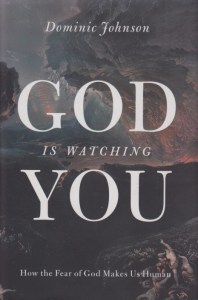
In my more radical moods I sing along with John Cougar about fighting authority.  Living in society means never being completely free.  This pandemic only amplifies that.  What I want may not be best for others.  Not to mention excessively corrupt authority *ahem* Washington DC [coughs into elbow].  Still, a friend sent me an article titled “Did judgmental gods help societies grow?  The piece by Lizzie Wade appeared in Science recently.  The article begins by noting that judgmental gods are rare.  It then suggests complex societies seem to have had judgmental gods at their beginnings.  Moralizing gods demand cooperation.  People want to do what they want.  If we’re going to reap the benefits of a highly specialized society we all need to play our part, however.  Authority always does win, I guess.

Wade’s article suggests that this kind of orthodoxy is now being called into question.  Moralizing gods, it’s suggested, appear after a complex society gets started.  Interestingly, these gods tend to be males.  (That point’s mine, not Wade’s.)  I have been wondering for quite some time just how the data from Göbekli Tepe will influence the re-construction of models concerning how civilization began.  It seems that long before settled populations emerged, back in hunter-gatherer days, people still came together to build temples.  Were they afraid of judgmental gods?  Certainly they thought it was important to gather occasionally at numinous places and ponder the larger questions.  Since they left no written records and they’ve all died out the best we can do is make educated guesses.  Who knows what might’ve been their motivation?

The one thing that seems certain to me, no matter how we nuance it, is that religion is integral to society.  Science is necessary for our survival (ancient people weren’t backward rubes, by the way—they had a kind of scientific outlook, but without all the advanced math).  Religion, however, seems originally to have brought us together.  Outside our comfort zones.  Hunter-gatherer societies limit their sizes to people you can know reasonably well.  They tend not to have private property and they share things most people in “civilized” settings wouldn’t.  To grow larger than a roving band that can sustain itself by moving from place to place once the food’s gone, agriculture was necessary.  But Göbekli Tepe suggests it only followed after religion began bringing people together in the first place.  Were their gods authoritarian?  There’s really no way of knowing that.  So when I’m feeling radical I have to remember than when it’s over I turn the volume down, comb my hair and go back into society.  Well, once the pandemic’s over.


See Monster

What happens when someone encounters something anomalous?  In real life this is often described as a religious event.  In fiction that sometimes happens as well, as in Christopher Coleman’s The Sighting.  Set on a beach somewhere along the Atlantic, the story is about a woman who encountered a sea monster and decided it was a god.  Gods, of course, require sacrifice, and thus the tale turns on her effort to placate the beast in its current appearance cycle.  Such sacrifice doesn’t come willingly, and this introduces a murderous main plot.  Unlike the gods of lore, however, this one literally eats, tipping the reader off that its divinity is somewhat of an illusion.  The hungry beast becomes the divine only to its blind follower.

I’ve not read any of Coleman’s fiction before, and this self-published novel appears to be a good introduction to his story-crafting.  His monster, like a god, comes with no explanation.  It simply is.  Since religion isn’t really susceptible to being examined under a microscope, the truth of not being able to locate an origin for gods seems natural enough.  Still, people are curious about monstrous origins.  Mary Shelley tells us the genesis of Frankenstein’s monster, but Bram Stoker leaves Dracula’s ultimate origins somewhat misty.  In the present day, with its ubiquitous cell phones and information, we do wonder if monsters can’t simply be explained.  Even if that simple explanation is complex.  Coleman’s title page tells us this is book one, so further elucidation perhaps comes later in the series.

The sea, in classical thought, gives rise to monsters.  Coleman’s creature comes from the Atlantic.  All the world’s oceans are organically connected, and their surface area is so massive that we really haven’t figured out all of what’s under there.  Stories still appear in newspapers announcing this or that unidentified creature that has washed out of the sea.  Its depth and relative impenetrability make it a natural birthplace for monsters.  By the end of The Sighting the reader is really still only given a glimpse of what this god might be, or why, indeed, it is considered a god at all.  Origin stories make monsters less scary sometimes—Shelley’s genius was to take it in the opposite direction.  Often in horror stories, the humans are more frightening than the monsters.  So it is here.  What makes this story so disturbing is the unquestioning human acceptance of belief, for it is often here that gods can become monsters.


Who’s To Blame?

Back at Nashotah House Episcopal Seminary, we were a closed community.  Well, not completely closed, as much as some may have desired it.  When a communicable illness came to campus it quickly spread.  No wonder—we were required to all gather twice daily in the chapel, and there was the passing of the peace during mass.  And the sharing of a common chalice.  The germs of the Lord were readily spread.  One of the faculty members would refer to the vector of the illness as “Typhoid Mary,” a rather sexist remark in the mostly male environment.  Still, Mary Mallon came to mind as the current crises has settled in.  “Typhoid Mary” was an asymptomatic carrier of typhoid fever.  A working-class girl from Ireland, outbreaks of typhoid followed her in the various houses in New York City where she worked.

Photo credit: National Institute of Allergy and Infectious Diseases (NIAID), National Institutes of Health (NIH), via Wikimedia Commons

The current coronavirus outbreak in New York City seems strangely similar in some regards.  Although COVID-19 is less likely passed by asymptomatic carriers, according to what I’ve read from the World Health Organization, it is still a possible vector.  While out getting necessary supplies in the area I recently noticed store employees without gloves or masks, both of which I had on.  One of us was underdressed.  I went home, washed my hands thoroughly, and pulled my copy of The Andromeda Strain from the bookshelf.  Self-medication can come in several forms.  Some people still look at me funny for wearing a mask, but many other customers are now doing the same.  The Center for Disease Control recommends it.

Before I’d ever heard of Nashotah House, I worked in a grocery store.  I was a college graduate with facial hair that had to be removed.  “Customers don’t trust a man with a beard,” I was told.  Back then if you walked into a store with a mask on there would’ve been trouble.  Contagion can drive you crazy.  Nobody wants to be a “Typhoid Mary,” and yet it’s difficult to be out in public with a mask on.  “Who was that masked man?” they used to ask of the Lone Ranger.  From the theater and psychology I’ve studied, I know that hiding behind a mask can be a liberating experience.  Aware that nobody knows who you are, you are free to act most any way you please.  But this is different.  Maybe it’s because my mask is made of a paisley-ish bandana,  the kind old westerns show outlaws wearing.  Or maybe it’s because of the guilt a religious upbringing so generously left with me.  After all these years the old cliches are coming back to life.


Connecting Connecticut

One of the many lessons of the current pandemic has been that my appreciation of horror is not misplaced.  Horror Homeroom has just published my piece “Demons or Ghosts?  Hauntings in Connecticut,” available here.  I’ve noticed that Horror Homeroom has had a surge of pieces since all of this began, which seems tacit evidence that horror is a coping mechanism.  It’s no wonder, really.  Horror often deals with “worst case scenarios” and specializes in isolating victims.  Now that we’re all practicing social distancing we’ve entered into one of the main framing plots of the horror movie.  Contagion isn’t an unusual trope either.  My article is about neither of these, but I still maintain that watching horror is therapeutic.  As with most therapy there’s good and bad varieties.

The films I write about in this instance aren’t good movies.  The Haunting in Connecticut franchise misses on so many levels that it doesn’t seem bound for classic status.  Yes, there are classics in the genre.  When the outbreak started many people referred to The Shining as how they felt being cooped up all the time.  There are those who vehemently deny that The Shining is horror, but given the association with Stephen King it seems difficult to deny.  Horror doesn’t have to involve slashers or bug-eyed monsters.  It isolates.  It imagines worst case scenarios.  All Jack Torrence needed was an inept national administration to put us all in the Overlook, one at a time.  

The pandemic has slowed down the release of new movies, of course.  The much anticipated A Quiet Place Part II has been pushed out to September.   Sitting here in isolation I wonder if that’s long enough.  Politicians with money in mind over their human constituents are chomping at the bit to get us mingling again.  Exposing one another.  Horror, however, knows all about aftershocks.  I don’t like jump startles.  I prefer my movies to built thoughtful, moody situations.  Despite their many sins, the Connecticut haunting movies do that correctly.  While they have other problems, they do throw us into a world where things aren’t quite right and we know it.  Elaborate plots really aren’t necessary, though.  The mind is pretty adept at filling in the story.  Like children asking to have the same book read over and over, we know how it goes.  We just like someone else to show us exactly how.  Isolation should continue for some time.  And horror provides a reasonable narrative to help.


Bug Eyes

Science fiction and horror are close kin.  Once relegated to the cheap rack of “genre fiction,” both have now developed considerable literary sophistication, perhaps in the wake of their ability to bring in money.  I used to attend used book sales.  Two of the big ones in central Jersey were the Bryn Mawr sale, held just outside Princeton, and the even larger Hunterdon County Friends of the Library sale.  Both were springtime events and highlights on my calendar.  I always had a list with me when I went, but there were also so many books I’d never heard of and that looked fascinating.  One such book was the science fiction anthology, Bug-Eyed Monsters, edited by Bill Pronzini and Barry N. Malzberg.  The garish cover was half the appeal, and, well, monsters go without saying.

Although I’ve mostly moved to the horror end of the spectrum, there were some good stories here.  Bug-eyed monsters were a staple of 1950’s sci-fi, gracing the covers of pulps, often menacing women with their tentacles.  Some of the tales here share that kind of wide-eyed wonder at the sheer power of imagination, while others are much more subtle.  Monsters, of course, lurk between genres, bursting into consciousness when something unexpected is discovered.  They also have strains of religious awe associated with them.  That’s obvious in a couple of the stories as well.  Since I’m trying to read through my own books while stores are closed, I decided to spend some time with my monsters.  The problem with story collections, however, is you can’t discuss them all in the short format to which I limit myself here.  Besides, some of them I didn’t like.

Monsters deserve to be treated with respect.  In the “golden age” of sci-fi they were often played for titillation.  Most of the monsters in this collection are from outer space.  Some are homegrown, generally in the scarier tales.  We are afraid of those who are different.  Monsters, as more than one of these stories indicate, can be more humane than humans often are.  It’s no surprise that they tend to represent the foreigner, the person whose culture and appearance are different than our own.  Titillation apart, these narratives often ask us to stop and consider what might happen if we really did listen.  Would we not improve ourselves if we could learn from those we fear?  In these days of government-approved xenophobia, perhaps we should dust off our copies of the old genre fiction.  Even in those days we were encouraged to be open minded like our monsters.


Peaceful Lessons

We are all, I think, looking for hope.  Probably due to the way I was raised, I often seek signs.  There’s no way to know if said signs are mere coincidences or the more intense variety known as synchronicities, yet we have a hopeful sign here at home.  On our front porch we have some plant hangers.  Spring crept up on us this year and we haven’t got around to putting any pansies in them yet.  The other day when I was stepping out to get the mail, I noticed feathers in one of them and feared there’d been a bird-related accident there.  As I took a step toward the planter, the head of a mourning dove popped up.  She blinked at me curiously, but didn’t fly away.  I knew then that she had built a nest in the as-yet unused planter and she was sitting on her eggs.

Monday was fiercely windy around here.  And rainy.  I wondered how any birds could fly in such weather.  A mourning dove flew up—perhaps one of the pair on our porch—and landed on the electric wire leading to our house.  The wire was swaying and bucking so furiously that the dove constantly had to shift and fluff and flutter just to stay in place.  The poor bird was in constant motion.  Then it showed a sign of animal intelligence.  There’s a much larger wire that runs down our street, from which other houses are supplied.  It’s more stable in the wind due to its girth.  The dove flew up to that wire instead.  There it was able to perch without having to constantly adjust itself to the gusts.  Peaceful and intelligent.  That’s what the world needs.  I have hope.

The dove has long been a sign of peace.  It’s understood that way in the Bible.  It was the dove that brought an olive twig to Noah, indicating that although all he could see was water there was, somewhere, dry land.  These days we need to be reminded that although it seems that the storm will last forever, even hurricanes eventually exhaust themselves.  The dove, clearly not happy about the horrendous wind buffeting it on that wire, nevertheless persisted in a kind of stoic optimism that things are as they should be.  There is great wisdom in the natural world.  If we can get to a window we can see it playing out before our very eyes.  Now when I step out the door, I glance at the dove, and she looks back at me.  We wink at each other.  She doesn’t fly away, for she understands.  She has a wisdom to which we all should aspire.


Learning To Fly

It’s perhaps the most deeply rooted human dream.  Flying.  Women Who Fly, by Serinity Young, is a fascinating book.  Subtitled Goddesses, Witches, Mystics, and Other Airborne Females, the book covers all of these and more.  The dream of flying is played out in many ways here, but often the narrative comes back to how patriarchy imprisons women.  Is it any wonder they want to fly?  Very wide in historical scope, the book can’t cover all cases in equal depth.  It nevertheless demonstrates how pervasive the idea is.  Beginning with ancient female figurines bearing bird-like features, Young moves through the related concepts of captivity, transcendence, sexuality, and immortality, showing how female characters are related to these idea in universal and unrelenting ways in the form of flying females.

There are many lenses through which to view patriarchy.  It can be explained as a consequence of settled agricultural existence with its subsequent division of labor.  Such a scenario raises questions of whether women dreamed of flight before that, and I believe the answer must be yes.  For as long as we’ve observed birds and associated the sky with gods we have longed for flight.  Although birds make it look easy, it is an incredibly difficult and costly adaptation.  Still, women dream of travel without obstacles (let the reader understand) to the realms where deities dwell.  It is difficult to summarize a book that covers so much historical territory.  Young doesn’t limit herself to western religions but also spends a fair bit of time among Buddhist, Hindu, and Daoist ideas of flying women.  She covers mythical, folkloristic, human, and historical flying females all the way up to modern astronauts.

As I was coming to the close of the book the real message hit me—I can be thick at times, although much of my own writing is metaphorical—men have actively tried to clip women’s wings for a long time.  Often under the auspices of religion.  Think of it: for centuries of existence the major monotheistic traditions have refused female leadership.  The one (inevitably male) god has set up a boys’ club of sacerdotal leadership.  As Young points out, even the named angels in the Bible are male.  I used to comfort myself with the explanation that male leaders were simply too self-centered to consider others, but it is becoming clearer, the more I read, that men have always had a tendency to try to keep women down.  And thus they fly.  There’s much in this book for both women and men to ponder.


Begging Your Question

I still remember when I first consciously heard it.  The phrase “begging the question,” I mean.  I was a doctoral student at the time and one thing you do in grad school is ask a lot of questions.  I asked my advisor what the phrase meant.  “Asking a question when you’ve already assumed the answer,” he replied.  I’ve been writing quite a lot about feedback loops these days, and this was yet another of them.  Begging the question, in other words, is a fallacy where the asker isn’t seeking an answer, but is attempting to persuade another of a pre-decided outlook.  The concept is subtle, but important.  That’s why it disturbs me that most academics these days use the phrase “begs the question” when they mean “asks the question.”

I’m afraid I don’t have statistics here, but I read academese all day long—it’s my job.  I can’t footnote where this occurs but I can attest that it happens all the time.  Whenever I read “begs the question” I stop and reason it out.  Does the author mean “begs” or “raises” or “poses” or “asks” the question?  Begging a question isn’t the same as raising or posing or asking it since the latter three indicate an answer is being sought.  Precision in thinking is difficult work.  It can give you a headache.  We all fail sometimes.  Perhaps that’s why we eschew it, as a society.  It’s much easier to beg the question.  Still, doesn’t that mean this valuable concept is in danger of losing its, well, value?

I realize that posing such a question makes me sound like one of those old guys who says, “back when I was a youngster…” but the fact is the educational system in the United Kingdom made you ask lots of questions.  In a way that’s unheard of over here, where money assures your credentials, I knew two students who failed out of the doctoral program at Edinburgh when I was there.  One of them an American.  It wasn’t just a matter of laying your money on the barrelhead and walking out the door with a diploma.  I’ve read certified copies of dissertations (not from institutions in the United Kingdom) where Zeus was spelled “Zues” (throughout) and the biblical seer was called “Danial.”  Now, I suppose that raises the question of the value of degrees where you don’t even need to spell your subject’s name correctly.  Begging the question is a fallacy, not a synonym for asking.  And I know that if your thesis begs a question then you’re barking up the wrong tree, but that won’t stop you from landing a job in the academy.


Reading Connections

It’s flattering to have someone notice your work.  The other day I had the very first email from someone who’d read Holy Horror and wanted to discuss it.  It was from an undergraduate, no less, who was doing a report on religion and horror.  She’d read my book (and yes, it’s undergrad friendly) and wondered if I’d be willing to talk about it.  I can’t express how surprised I was (and still am).  You see, I have emailed authors after reading their books.  Many of them show no interest in carrying on a conversation with someone they’ve “met” through email.  I’ve had so many single-sentence responses with no enthusiasm whatsoever that I’ve begun to think of those employed in academia as hopelessly stuck in tunnel vision.  If you write a book you’re wanting conversation with those who read it, I should think.  At least I am.

Those of us outside academe don’t have tenure committees to please or effectiveness committees to placate.  We write books to try to engage readers.  Unfortunately Holy Horror is priced for the library market.  During our phone interview, my interlocutor asked about the cover.  She said something publishers should hear: when walking around with Holy Horror her friends asked what the book was about because the cover is intriguing.  (It’s actually based on Chloë Grace Moretz from the reboot of Carrie, discussed in the book.)  In the midst of a pandemic, this first show of interest made my day, like seeing the first crocuses after a long, hard winter.  I do welcome conversation about my book.  I don’t have a classroom of students to force to buy and read it.  It’s out there for discussion.

Nightmares with the Bible is nearly finished.  Of course, publishers have hit a bit of a slow patch with many of their business partners shutting down.  Some publishers have gone into hibernation during the pandemic.  Books, though, will get us through.  A colleague of mine said the industry reports are showing that novels continue to sell while nonfiction is suffering.  Well, I’m no expert, but I do wonder if nonfiction might do better if authors would be willing to respond to this who express an interest in their work.  I know it’s a radical idea.  I also know that my books reach nowhere near what most publishers consider a viable readership.  What people are looking for during enforced isolation is a sense of connection.  Reaching out to find someone reaching back.  Books can do this, even if we never physically meet.


Cancelled Easter

The year they cancelled Easter.  Well, not exactly.  Perhaps I’m merely a product of the commercialization of my time, but my thoughts go back to the Grinch.  “It came without boxes,” he said, “it came without bags” (and any more might be copyright infringement).  You get the point—holidays aren’t reliant upon their trappings.  Can Easter come without colorful eggs?  Without baskets and bonnets?  Without Peeps and chocolates?  Yes, it can.  We’ve taken another holiday with religious origins and associated it with what you can buy.  I know it’s more than that for some people.  It’s singing stirring hymns (all of which can be found on YouTube), and dressing nice (which can still be  done at home), but mainly I think it’s the sense of togetherness that’s missing.  The freedom of bursting from our personal tombs in which we’ve been stuck for three weeks.

Around here snow was falling on Good Friday.  A friend told me her company decided since everyone was working remotely they would give them an extra holiday that day.  Others of us slogged on as usual, for unlike Christmas, the Easter/Passover complex is not about getting days off work.  These are, I guess, working class holidays.  Our capitalistic outlook wants us to spend money, though, on holidays.  Halloween (on which I foresee a plethora of plague doctor costumes) has become almost as lucrative as Christmas.  The spring holidays—St. Valentine’s, St. Patrick’s, and Easter—encourage spending as well.  Can we not get to the heart of a holiday without pulling out our wallets?  Spring holidays are all about the return of life after winter.  It was snowing, but I could hear lawnmowers in the distance.

With capitalism growing old and sluggish, the next spending holiday isn’t until Mother’s Day, yet another spring celebration associated with flowers and life.  My wife has been saying that what she misses is being out to see things coming back to life in spring.  Some of the trees are putting on quite a show already.  Magnolias and dogwoods have started to scatter their petals with the snowflakes.  Our daffodils have been blooming since March.  The forsythias are already going green.  Life is returning.  That’s what Easter, and in its own way Passover, is all about.  Life after imprisonment—freedom.  Liberation.  We have to put them off this year, but they’re all movable feasts.  We keep quietly apart in the hopes that life really will return after disease and death.  And it will come regardless.  It always does.


Bunny or No?

Since we’re in the midst of a smaller holiday season (capitalistic societies can only get away with one major holiday season because the workers must work) many people are wondering whether they should go to church for Easter tomorrow.  I’ll confess I woke up from a nightmare this morning where I accidentally forgot about COVID-19 and went to church.  I stepped inside and the building was full.  I tried to find an empty pew to socially distance myself from all but the Divine, and there was no room.  I felt infected as others started to cough around me.  In real life I’d just read from the World Health Organization’s situation report (number 80, located here, in case you want to see) that we’ve just reached day 100 since WHO received its first notification of this new disease.  The report has guidance for those who feel compelled to gather for religious services.  It makes for very interesting reading.

WHO, like certain political parties, knows that people will listen to their religious leaders rather than reason.  (And still our universities cut positions in their religion departments since, apparently, it is best not to know about such things.)  Recognizing that a secular, science-based organization simply can’t compete, WHO urges religious leaders to spread the word about evidence-based responses to the outbreak.  Don’t gather large Easter-day crowds (they also mention Passover and Ramadan), but, interestingly, do keep the services going.  WHO recognizes the psychological (you can’t say “spiritual”) value of religious belief.  It gives people hope and comfort.  It keeps them going in difficult times.  Call it mental health, but the World Health Organization has wellbeing right there in its title.

Photo credit: ItsLassieTime, via Wikimedia Commons

Ironically, the same day I saw an email from the other acronym in my life, SBL (the Society of Biblical Literature).  They were releasing their annual report showing the dismal job market figures for the discipline over the last year.  These jobs are fading and although WHO recognizes billions of people are motivated by religion our smartest institutions are shifting their money away from understanding it.  The COVID-19 outbreak puts us in this strange place where disjunctures become focal points.  If you look at a field of uniform gray long enough you’ll stop seeing anything at all.  You need contrast for vision to work.  WHO recognizes that religious observance constitutes a major challenge for the effort to keep people isolated.  Universities now in isolation, continue to see no reason to study this.  I’m waiting to awake from this nightmare.


Holiday Complex

Now that we’re in the midst of a complex of Judeo-Christian holidays (Passover, Maundy Thursday, Good Friday, Easter, as well as other spring rites), I’ve been thinking of obligations.  I’ve had people introduce themselves to me as “Chri-easters.”  This isn’t a new form of religion, but rather a way of indicating that they attend services on Christmas and Easter only.  For others of us it’s never been so easy.  I was raised with the stern belief that Sundays in church were a matter of absolute obligation.  Serious illness was the only reason to miss.  If you were traveling (which was rare for us, being not terribly affluent), you found a local church to attend.  Never mind that you’ll look like strangers and won’t know how it’s done (unless you’re in one of the “liturgical” denominations, where variations are minimal).  Every Sunday was an obligation.

The minister at our church has been offering virtual holy week services.  The idea haunts me.  You see, back in Nashotah House days the sternness of days of obligation was palpable.  Yes, you had to attend chapel twice daily, but there were still days of obligation.  At this time of year we’d have had long rehearsals already for “the Great Three Days.”  Forsaking family and fellowship, we’d be forced to be together for long hours while the dreary events of two millennia ago were replayed.  Of course they were reinterpreted as well.  Made more Episcopalian—even a crucifixion should be done properly and in good order.  Knowing they had to get to their own churches on Sunday, students were kept up until about two a.m. for the Great Vigil and First Mass of Easter.  Obligation, not love, drove all this.

Coronavirus has us separated, of course.  Some of us are daily seeking coping techniques to help us get through a crisis that throws off schedules and sets new priorities.  To have someone suggest in the midst of all this that we could “come to church” (virtually) transports me to those fearful days of obligation.  As a teen I sought them out.  I’d ask to be driven to a different town on Good Friday so that I could spend it in church, hoping to be in connection with the tragic events.  I’d curse the sunshine when I stepped back out after three p.m., if it was shining.  This was supposed to be a dark and dreary day.  Nature, however, had its own ideas.  Spring was in full swing.  It was time to be thinking about life, not death.


Post-Pandemic

Something I’ve noticed: throughout this crisis business people have been fretting how hard it will be to reestablish everything “like it was” when this is all over.  I wonder if they’re not thinking big enough.  It seems to me that a system as fragile as capitalism is bound to tumble when something suddenly becomes more important than money.  Humans and mortality.  Most people fear death.  Religion, historically, has come to fill in that space, but as we grew more and more confident in our ability to prevent large-scale death capitalism, the real opiate of the people, stepped in.  Make money!  Buy things so that those of us with lots of money will get even more!  We’ll live extravagant lifestyles and laugh at those of you who’ll keep spending to keep us where we are!  Then people stop spending.  Nobody’s laughing now.

Is there not a better way to construct society?  Sure, some means of exchange is necessary, but do we have to give such power to an abstract concept such as money?  Granted, gods are abstract concepts too, but at least they’re spiritual rather than material.  That which is made of mere physical stuff is bound to disappoint eventually.  When our sun balloons out into a red giant, everything we know here on earth will be gone.  The physical stuff anyway.  I know this opens me to accusations of wishful, wistful, escapist thinking—maybe something spiritual will come rescue us—but I assure you it’s not that.  What I’m referring to is meaning.  There’s value in it, and you can’t buy it.

The coronavirus crisis has us all, on some level, asking about the meaning of it all.  God hasn’t intervened, and the numbers are still climbing.  Nature dictates that they will eventually stabilize, and decline.  Our capitalist society, however, is scrambling to figure how to make sure everyone pays their taxes, their bills, and somehow manages to find toilet paper (which is a great investment at the moment).  Are these the bases for meaning in life?  Can’t we do better than that?  Can’t we find a system that values what is truly unique and rare?  Each and every person on this planet.  And some of us would go a step further and include our animal people too.  Life.  Life is value.  Money can be thrown away, as we all know.  Sometimes quite easily.  As long as it lands in the coffers of those with too much, everybody’s happy.  Well, not everybody.  Maybe not even most.  Perhaps it’s a good time to reassess our priorities.


Look, Don’t Touch

It’s spooky.  Going to the grocery store, I mean.  In the best of times I don’t get out much, but since groceries are only really in supply (somewhat short) after senior hour, and since I’m an early riser, I head to Giant at 7:00 a.m.  Nobody’s talking to anybody else, unless the check-out line is long.  Even then it’s brief.  Most people (including myself) are wearing rubber gloves and face masks.  I’m pretty sure I’ve seen this in a horror movie or two.  As in The Body Snatchers, we’re afraid of each other, not knowing who might be “one of them.”  Gun sales, meanwhile, are booming.  Since I get in once the seniors have checked out the toilet paper and high fibre cereal are decimated.  I’m glad I’m vegan because most of that stock remains untouched.

The funny thing is daily life for me is otherwise pretty normal.  I’m an introvert who normally works from home and has no one beyond family check in on me.  I don’t normally buy out the grocery store, however.  I don’t hoard.  (Yes, I have a lot of books but they’ve been bought slowly, over many years.  And only one copy of each.)  So it seems that when non-introverts are forced inside they hoard.  And purchase firearms.  Or maybe I’m missing something.  I think back (if I can) to before this all started.  Going to a crowded grocery store on a Sunday afternoon where nobody was wearing gloves.  You could see their faces.  There was chatter.  Now when we get home we’re supposed to leave our groceries outside where the squirrels will get them before we do.  Then we disinfect them and wash our hands before and after washing our food.

A work colleague in New York City reported seeing grocery delivery individuals wearing hazmat suits.  We can’t see with whom we’re dealing any more.  The truth about introverts is that we’re social creatures as well.  We just require smaller doses than most.  That doesn’t mean we all want to live on a desert island.  Our quietness is a mask, you see.  We observe.  We try to help when we can.  That’s why it’s me in the grocery store.  My special talent is waking up early.  I’m not yet a senior, according to public transit or grocery shopping guidelines.  My hair is turning gray, though, and my beard is white.  You won’t see it though, if we pass in the grocery store.  Like everyone else, I’m wearing a mask to get through this crisis.


All the Tea

I’ve been reading a lot about China lately.  Political scientists have been interested in its economic growth for some time and it has rivaled the GDP of the United States in such a way that it’s an open question as to which is the larger.  With so many things to keep track of in daily life, I’m loathe to add poli sci to the list, but I’ve always found history fascinating.  China has long been the target of Christian missionaries.  Finding a culture that had developed quite differently, in some sense socially distant, they were anxious to make them in their own image.  China had its own religious heritage of folk traditions, Confucian beliefs, and Taoism (as well as Buddhism and Islam), and Christianity’s claim of being the only true religion caused considerable social turmoil.  One such event was the Taiping Rebellion in the nineteenth century.

Image credit: Wu Youru, via Wikimedia Commons

A complaint of evangelical pastors, even in the United States, after Billy Graham had come through town was that local people, all riled up on revivalism, had unrealistic expectations for what their local churches could do.  Viewing this from a different angle, the issue was that one outlook on Scripture could lead to consequences that others didn’t understand.  The same thing applies to Taiping.  Hong Xiuquan, the leader of the Taiping Rebellion, had read his Bible (the activity encouraged by missionaries) and became convinced he was the brother of Jesus Christ.  He set about trying to establish what is called the Heavenly Kingdom.  This clashed with the government of China during the Qing Dynasty.  Eventually foreign powers even got involved.  The end result was between ten and thirty million deaths.  That’s right, ten to thirty million.

Religious ideas are powerful.  This is one reason that repressive governments often try to outlaw religions.  Other governments (including some not too far from here) use religions for political ends.  True believers are great followers.  I first learned about the Taiping Rebellion only relatively recently.  I’ve been reading snippets about China for several years now.  Its economic power may well be greater than that of the country in which I grew up.  Perspectives are shifting.  Vast numbers of people die because of religious conflicts.  If you’re one of them the real tragedy is that, in Stalinistic terms, you become simply a statistic.  There’s a reason authoritarian governments try to keep the opium from the hands of the people.  I’m no political scientist, but history reveals much about religion and its discontents.