Buzzy Headed

If you’re like me, and I sincerely hope you’re not, you spent your childhood worrying about killer bees.  You see, I was stung a lot as a child, having stepped on a yellow-jacket nest hidden in an old tree stump.  That event was one of the most formative of my life.  Oh, I act brave, shooing wasps and carpenter bees away, but that’s all a front.  I was repairing a piece of furniture out in the garage over the weekend and a big old bee got in and started buzzing around.  It drove me to distraction.  I once had a bee land on my back and sting me for no apparent reason.  Alone in the garage I had no one to watch my back.  I decided to do some repairs back in the house instead.  Let it have the garage.

During this pandemic, then, the last thing I needed to hear was that “murder hornets” have made it to the United States.  And Republicans are bad enough!  The murder hornet is responsible for double-digit deaths in its native land, and now my childhood nightmares of killer bees have reemerged.  We had a warming trend over the weekend.  There were so many wasps and bees around outside that I could even hear their buzzing with the windows safely closed.  Insects are the future, of course.  They adapt better and more quickly than we do, and there are many, many more of them.  The Bible often uses insects as vehicles of divine wrath.  No wonder horror movies often make use of them!

Image credit: SecretDisc, via Wikimedia Commons

More rational minds soothe us, saying that murder hornets seldom attack people or pets.  If provoked, however, they can do so fatally.  Perhaps it’s the anger of stinging insects that bothers me the most.  The yellow-jackets that attacked me certainly seemed angry.  My stepping on their home was an innocent accident.  It was also a learning experience.  I don’t step on old stumps any more.  I haven’t since the incident.  Such early traumas can stay with you all your life, and the buzzing co-inhabitants of the earth, I have to remind myself, have as much right to be here as we do.  In cases like killer bees, we invented them.  When we play Doctor Frankenstein nature responds in kind.  The monster was angry.  Bees, wasps, and hornets may be intelligent but they can’t reason out the motives of bumbling humans who accidentally disturb them.  And now a bigger variety has moved in.  It’s probably best to keep calm and not get anybody angry.


Divided by Eight

Analogies are useful, but never precise.  When Midsommar came out last year, people were saying “It’s like Wicker Man.”  It’s a good analogy, but not precise.  The plots have quite a bit in common and both are part of the genre that we might call intellectual horror.  Midsommar is a slow burn where you know from the beginning that something’s not right, and you can’t quite figure out what.  I’ll try not to give away too much, in case, like me, you’re late in seeing it.  It involves a group in Sweden, the Hårga, who celebrate a Midsummer ritual every 90 years.  A group of five graduate students—and the writers of the movie actually do know what grad school is like—go to study the ritual.  In central Sweden, far enough north that it’s never really night, they discover a pleasant group of white-garbed believers who use a combination of drugs, sleep deprivation, and folk magic to get the pawns into place.

What fascinates here is just how a fictional religion, with some basis in reality, becomes the vehicle for horror.  The deaths of three of the students are all in the service of a belief system that involves runes, fertility rites, scriptures, and ritual suicide.  It’s self-aware enough that one of the students compares it to Waco early on.  If there were no exotic religion here, there would be no horror.  Tragedy, yes, but horror, no.  The entire energy of the genre draws from four of the students (the fifth is from the community in Sweden) not knowing what is going on.  The village of the Hårga is isolated, and there is no law to keep them within the bounds of secular behavior.  By the end of the film you feel that secular is much safer than religious.

Midsommar foreshadows much of the horror in the illustrations that the community readily supplies.  Paintings show what is coming although the viewers, like the students, don’t know what they’re seeing at the time.  Some of the horror is based on shock, but the director doesn’t stoop to startle scares.  Well, maybe once.  This is horror that you can see coming and you’re fully aware that it’s because the white-robed ones truly believe.  The ending is similar to Wicker Man and the message is much the same.  Religion, when taken too seriously, leads to the sacrifice of those deemed outsiders.  And you don’t have to go to Sweden to find it.


Seeking Reality

I spend a lot of time struggling to figure out the fundamental basis of reality.  I’m hampered in this by a brain that was evolved—optimized—to help me survive in my environment, not to penetrate the depths of what’s really real.  That’s why I began studying religion in the first place.  The connection was organic.  Raised as a fundamentalist daily reminded that an eternal hell of torment awaited, it made sense to study the antidote (the Bible) as much as possible.  When I prepared for college, which wasn’t the plan at the beginning, I could think of no other major beyond religion.  In Paul Tillich’s nomenclature, it’s all about ultimate concerns.  I didn’t accept the very evolution that had made me this way.  That required thinking through.  

Attending a liberal arts college wasn’t really a conscious decision.  Nobody in my family had been to college and I didn’t know the difference between a research university and a stand-alone liberal arts institution.  Somebody has to teach you these things.  Religion, I found out, is a pretty good way to work toward perceptions of reality.  These days the award for that goes to philosophy, but the two fields are closely related, as much as philosophers socially distance themselves from theologians.  They’re both seeking the same thing, really.  Public perceptions of theology, however, trail after televangelists and their ilk, leading a wrong impression in the minds of the masses.  Even professors are prone to accept this facile supposition.  Seeking reality doesn’t mean you won’t get laughed at along the way.

Although there have been some among religious leaders who claim to have found the answer, the rest of us continue to struggle.  The more I read both of science and of religion the more complex it all seems to grow.  And of course human agendas require the keeping of secrets.  Knowledge that is for employees only because they kind of have to know.  The price on the sticker represents a mark-up that could be cut down.  What is this item really worth?  So it goes with the search for reality.  There’s no end to the searching.  Even after Siddhārtha Gautama was enlightened, he continued to have to work at it.  Christianity used to teach that love was the point of it all.  That message seems to have changed with the arrival of the messiah known as Trump.  Those of us who can’t stop searching even if we find can’t help but wonder if there isn’t something more worthy on which to spend our time.


Koyaanisqatsi

I recently saw Koyaanisqatsi for the first time.  This was initially prompted from an excellent blog post over on Verbomania, suggesting words to describe our current crisis.  I had never heard of the movie before.  In case you’re in that same jolly boat, Koyaanisqatsi is a feature-length film from 1982 with no plot and no spoken lines.  A score by Philip Glass underlies, and sometimes dominates, images of an earth beautiful in desolation (the Badlands, Monument Valley, Grand Canyon) juxtaposed with technology.  The images are fascinating and disturbing.  The title translates to something like “life out of balance” and the images of sausages being mass produced cross-cut with humans being lifted by escalators speaks volumes.  The long, slow footage of 747s on the ground was enough to make me wonder if they really can fly.

Frenetic is perhaps the word that best captures images of life in the early 1980s.  The images of Grand Central during rush hour show just how like ants we are.  On the other hand, some of the scenes of people waiting for trains show a high percentage of them reading—we have perhaps lost ground in the last four decades.  The mechanized, technologized way of life has perhaps made us something less than we could be.  There are people in the movie, but not many of them look happy.   Back when I commuted into New York I can’t think of any reason I would’ve been smiling on my way too or from work.  Crowded streets, often smelling bad.  Harried and harassed even before I reached the revolving door to my building.  I watched the movie that was a slice of my life and wondered if so much of my time commuting couldn’t have been better spent.

Of course, I did read on the bus.  On average I was able to finish about forty books more per year than I do now.  Even home owning participates in koyaanisqatsi.  It’s spring during an epidemic.  Cold, yet rainy, the grass continues to grow and there’s no sunny time off work to mow it.  It’s now May and it feels like we haven’t moved since March.  Watching Koyaanisqatsi during the pandemic was itself a haunting experience.  All those crowds.  So many people bunched so closely together.  I don’t miss the crowds.  The cross-cut images of computer chips and city layouts made me wonder just what it’s all about.  The SARS-CoV-2 reality has plunged me into a philosophical mood.  I’m hoping when the crisis is over we might strive for a better sense of balance.


Cross Quarters

Happy Beltane!  We could use a holiday right about now.  For those of us who are under the spell of intelligent horror, May Day brings The Wicker Man to mind.  Not the remake, please!  I first saw it about a decade ago—my career history has made watching horror an obvious coping mechanism—and I was struck by the comments that the film was a cautionary tale.  One of the problems with being raised as a Fundamentalist is that you tend to take things literally and I supposed that the cautionary tale was against Celtic paganism.  The Wicker Man is about the celebration of Beltane on a remote Hebridean island, and it was only as I watched it a few more times and reflected on it that I came to realize the caution was about those who took their religion too seriously, pagan or not.

Photo credit: Stub Mandrel, via Wikimedia Commons

Lord Summerisle, after all, admits that his religion was more or less an invention of his grandfather.  More of a revival than an invention, actually.  In other words, he knows where the religion came from, and he has a scientific understanding of the soil and how and why crops fail.  That doesn’t prevent him from presiding over May Day celebrations to bring fertility back to the land.  The people, as often is the case with religions, simply follow the leader.  Of course, Beltane is a cross-quarter day welcoming spring.  It is celebrated in Celtic countries with bon fires and obviously those fires are to encourage the returning of the sun after a long winter.  The days are lengthening now.  I can go jogging before work.  The light is returning.

Capitalism, which is showing its weak side now, doesn’t approve of too many holidays.  Like Scrooge they think days off with pay are picking the pockets of the rich.  The government stimulus packages show just how deeply that is believed in this country.  Celts we are not.  So as I watch the wheel of the year slowly turning, and see politicians aching to remove restrictions so that money can flow along with the virus, I think that cautionary tales are not misplaced.  The love of money can be a religion just as surely as the devotion to a fictional deity.  Herein is the beauty of The Wicker Man.  Beltane is upon us.  As we broadcast our May Day it could be wise to think of the lessons we might learn, if only we’d consider classic cautionary tales.


Ethics of Nations

If it hadn’t started two world wars last century, Germany would likely have a stellar reputation.  I don’t say this because of my own Teutonic blood, but rather because as a nation they seem both intelligent and troubled.  Philosophical, if you will.  A story in Times Higher Education explains how Germany is planning its reopening with the input of humanities experts as well as scientists.  The stance is driven by ethics.  We know that when strictures are loosed more cases of COVID-19 will break out.  More people will inevitably die of it.  Germany realizes that this makes it an ethical issue as well as an economic one.  And ethics are best discussed by those who study humanities.  I noticed that they’re even including theologians on their panels.  This seems smart to me.

Meanwhile Boris Johnson’s reopening team in Britain is secret.  Not wanting the public to know who’s making the decisions that will certainly kill some of them, they prefer to act under cover of darkness.  The thing about the cone of silence is that it never works.  Historians will scratch their heads over how, in the course of one century, the good guys became the bad guys and the bad the good.  Have the Allies become an—to borrow a phrase—axis of evil?  The wealthy alone are worth saving, and the economy takes presedence over the welfare of the greatest number.  Back in my philosophy classes we learned about utilitarianism and also its problems.  You see, being a humanities specialist means learning to think through thorny issues, looking at all different angles.  Being a conservative means looking only at the bottom line.

Humanities are related to the concept of humanitarianism.  I know that’s a big word, and it doesn’t bring in much mammon, but still, it encompasses all of us.  This crisis could bring out the best in humankind, or we can let the narrative go to the Clorox-eaters and those who believe winning elections are all that’s important, even if there’s nobody left to govern when its all over.  Being a politician is a zero-sum game I guess.  Looking at the numbers, Germany seems to have brought the number of deaths down when measured against the count of established cases.  That to me seems like a human goal worth striving for.  Of course, we could just incite riots in our own countries to infect even more people.  Being reelected so as to give oneself even more tax breaks is all that really matters.  At least among the axis powers.


Quiet Quarantine

I’m an introvert.  I require quiet time—quite a lot of it—to recharge and prepare myself to be social.  Some people think introverts don’t want to be around others.  That’s not true.  The fact is being with other people is enjoyable, but it requires a special kind of energy that introverts don’t have in great reserve.  When the COVID-19 outbreak began introverts collectively (yes!) felt a need to help their extroverted friends and colleagues deal with the “new normal” of isolation.  Now that we’ve been in the situation for over a month, I have seen a different pattern emerging.  Extroverts are now taking over the quiet space and trying to make it noisy.  I don’t think it’s intentional, but I do think that introverts may be the ones most stressed out by this situation.

Here’s an experiment.  Put an extrovert in self-isolation with a room full of communication devices.  What do you think will happen?  If you’re on the introverted receiving end, you already know.  Days interrupted by cheeps, dings, and chimes as someone needs to talk to you.  Why you?  You’re quiet, you know how to listen.  The extraverts can’t become quiet, and of quiet and noise the same one is always on the receiving end of violence.  Quiet shatters, noise doesn’t.  Five weeks into this and the introverts have bags under their eyes and the extroverts are exclaiming “It’s not half so bad!”

While Nashotah House ruined it for me, for many years I had considered whether I shouldn’t join a monastic community.  I need quiet as much as I need air, and although I can be outgoing when I have to, I need quiet at the end of the day to make up for it.  My case is somewhat mild.  I know introverts who truly struggle when they have to spend a lot of time in a crowded place.  The internet, my friends, is a crowded place.  It took these weeks for me to figure out why I have so much less time now than I used to.  The demand of making noise has been upped.

Sitting at home with quiet streets outside can be eerie.  It can also be rejuvenating.  Embracing the silence isn’t a bad practice.  One of the reasons, I suspect, that I still awake around 3:00 a.m. is that it is quiet.  Very seldom am I interrupted then.  Work will have its pound of flesh, of course, and from there on my day descends, or ascends, back towards quiet.  It’s not a bad way to live.  It just takes practice.


Misreading Melville

I make it a practice not to discuss books I’m still reading on this blog.  There’s no reason I shouldn’t, I suppose, but it just feels like cheating getting more than one post for a book.  Besides, there’s so much other stuff to blog about!  I’ll make an exception this time, because it involves an unusual typo.  Well, it’s not so much unusual as it is apt.  In chapter 82 of Melville’s classic, Moby Dick, “The Honor and glory of Whaling,” he discusses the mythical history of whaling.  In typical Melvillian style, he takes mythical stories to support his contention of how honorable whaling is.  After Perseus and St. George and the dragon, he mentions the curious biblical episode of Dagon and the ark of the covenant, found in 1 Samuel 5.  It’s here that my edition has a typo.  Melville writes “this whole story will fare like that fish, flesh, and fowl idol of the Philistines, Dagon by name” but my edition reads “Dragon by name.”

Image credit: Vignette by Loutherbourg for the Macklin Bible 12 of 134, via Wikimedia Commons

My very first academic publication was on this story about Dagon (I had intended to write my dissertation on that deity).  I had no idea of H. P. Lovecraft’s appropriation of Dagon at that point.  The interest was purely based on the fact that you couldn’t find much information on this curious god.  It was clear that he was well known among ancient cultures of West Asia.  He was attested at Ugarit, specifically as the father of Baal.  (Both would later be assumed to be demons.)  Further east, he was apparently a fairly major deity in Mesopotamian religions, although we are still awaiting a readable synthesis of that massive corpus of texts and the religions toward which it points.  In other words, Dagon is mysterious.  Lovecraft likely picked him up from the biblical story.

The tale in 1 Samuel is provocative.  After defeating Israel, the Philistines (who would eventually give Palestine its name) took the ark to the temple of Dagon as spoils.  The image of their god fell face-down before the ark overnight.  Disturbing as this was, the next morning after they’d replaced him, Dagon was again tumbled but also decapitated and with his hands broken off.  That meant his body was all that was left.  Somewhere along the line the name Dagon (close to the Hebrew word for “fish”) was interpreted as a maritime entity.  This seems unlikely, given what we know of his origins, but the idea stuck, leading to some compelling horror fiction.  Dagon does indeed become a kind of dragon in that realm.  My edition of Moby Dick has a typo that we today would blame on autocorrect, but in reality was likely the result of a copyeditor not knowing his or her Bible as well as Melville did.


White Rabbit

There are books that make you feel as if everything you know is uncertain.  D. W. Pasulka’s American Cosmic is such a book.  Its subtitle, UFOs, Religion, Technology, only pauses at the brink of the rabbit hole down which this study will take you.  Over the years I admit to having been jealous of colleagues who’ve been able to make an academic career stick.  The credentials of a university post open doors for you, even if you’re a professor of religion.  Pasulka has opened some doors here that I suspect many would prefer to have kept closed.  This is a compelling book, threading together many themes tied to religious studies.  There are things we might see, if only we’ll open our eyes.

Although immediately and automatically subjected to the ridicule response, UFOs are a fascinating subject.  This book isn’t about UFO religions—of which there are many—but rather it connects this phenomenon to the study of religion itself.  In Pasulka’s related field of Catholic studies, there are those anomalous accounts of saints who did the impossible.  Like UFOs, they are subjected to the ridicule response, making serious discussion of them difficult.  Might the two be related?  As you feel yourself spinning deeper and deeper down that hole, technology comes into the picture and complicates it even further.  Pasulka was a consultant on The Conjuring.  I’ve written about the movie myself, but what I hadn’t realized is how media connects with perceptions of reality.  Yes, it has a religious freight too.

Every once in a while I reflect that my decision—if it was a decision; sometimes I feel certain my field chose me—to study religion might not have been misplaced.  Perhaps all of this does tie together in some way.  American Cosmic is a mind-expanding book that assures me all those years and dollars learning about religion weren’t wasted after all.  I had a discussion recently with another doctoral holder who’s been relegated to the role of editor.  We both lamented that our training was in some sense being wasted on a job that hardly requires this level of training.  Still, if it weren’t for my day job I probably wouldn’t have known about this book, and that is perhaps a synchronicity as well.  Life is a puzzle with many thousands—millions—of pieces.  Some books are like finding a match, but others are like informing you that you’ve got the wrong box top in hand as you try to construct the puzzle with the pieces you have.  If you read this book be prepared to come close to finding the white rabbit.


WHO Believes?

These days it’s pretty clear that if you want to listen to anyone for advice it shouldn’t be the government.  I suppose that’s why I spend so much time on the World Health Organization’s page.  I’m no medical person and I certainly don’t understand epidemiology.  Contagion I get, because religion operates that way.  So WHO has been making somewhat frequent references to faith.  A recent status report noted that 84% of the world’s population reckons itself as religious and that many coronavirus outbreaks have taken place because of continued religious gatherings.  To that I suspect they’ll need to add political rallies supporting governments you shouldn’t trust, but what is such blind faith in leaders who don’t know what they’re doing if not religion?  People want to believe.

Religious gatherings also provide crucial support.  The community with which I associate has been using Zoom gatherings since mid-March.  It’s not perfect, of course, but during our virtual coffee hour I’ve been put in breakout rooms with people I don’t know.  I’m starting to get to know people I might be too shy to speak with in “real life.”  More than that, I’m asking myself what real life really is.  Technology has been pushing us in this direction for some time.  We relate virtually rather than physically.  I’ve never met many of the people with whom I have some of my most significant exchanges.  The internet, in other words, has an ecclesiastical element to it.  The words “church” and “synagogue” both go back to roots meaning “to gather.”  Faith, despite the stylites, is not lived alone.

WHO suggests that since religious leaders influence millions of people, if they would turn their message to prevention it could have a tremendous human benefit.  Consider how one man’s personal crusade in the mid-nineteenth century led to elections being decided on the basis of abortion alone.  If faith leaders were to take the good of humankind to heart and spread that message, it could well outstrip the virus.  Alas, but politics interferes.  Many religions also want to determine how people live.  There’s power in that.  We’ve seen it time and again with televangelists.  WHO has faith that these leaders might set aside their scriptures for a moment and read situation reports based in science and rationality.  WHO apparently has faith as well.  Until someone smarter than politicians sorts all of this out we’re probably safest meeting virtually.  Who knows—perhaps there are hidden benefits to that as well?


Bats and Bloodsuckers

In what looks (somewhat cynically) like at attempt to add newness to frightfully old news, the World Health Organization has renamed COVID-19 to the much scarier SARS-CoV-2.  The basics remain the same: the virus is transmitted the same way.  If it lands on a non-organic surface it soon dies without a host, rather like the elected officials of an old party once grand.  Like any parasite, it requires the life of another to prosper.  And so we find Mitch McConnell telling states to declare bankruptcy in a move taken from the Bible’s own playbook.  You see, during a famine in Egypt Pharaoh bailed out the food banks, and by buying all the land made peasants in essence slaves of the state.  The Good Book has all the answers.  A few generations later, however, and Pharaoh had to learn how to swim in the desert.  The divine economy is not without humor.

The WHO report also states that the vector has been traced to bats.  Bats make me think of vampires—I can’t help it, I’m a late monster boomer.  While WHO doesn’t make any connections with vampire bats, I researched them when I was younger.  Unlike elected members of the gOP, vampire bats aren’t selfish.  Nor are they greedy.  Finding a victim, the make a small incision with their sharp little teeth and lap up enough blood to survive.  If another bat goes a night or two without success, vampire bats will share their success, realizing in a way that politicians don’t, that helping one another is an assured way of establishing communal strength.  Or you could just be capitalist about it, let the unsuccessful starve, and go seeking another victim of your own.  Bloated bats don’t fly well.

If the Old Party learns from nature we’ll all benefit.  Greed is hardly the basis for sound government.  Nature would suggest that ingesting disinfectant isn’t the best advice to dole out to a nation about which you truly care.  The Old Party refuses to do anything, of course.  Having proven themselves unable to govern, they’re busy pulling together campaigns for November’s election.  With a leader who’s already said on national television that Republicans can’t win without gaming the election process itself, they don’t even blush.  I’m no expert, but it may be because they don’t have enough blood to rise to their cheeks.  If they’re short on blood it might be worth their while to learn a thing or two from vampire bats.


Paper or Electronic?

Publishers are scrambling (and who can blame them?) to get ebooks out.  Since bookstores have been closed (I’d classify them as essential businesses, in an ideal world), they need to get “product” to customers.  Still, I’m thinking back to my recent interview with an undergraduate about Holy Horror.  She told me the cover really generated interest as she walked around school with it.  (This was before the pandemic.)  That’s old school book advertising.  Although I do learn about lots of books online, I very, very seldom buy ebooks.  It seems like buying air to me, and I wonder if publishers are missing out on the free advertising of the person carrying an interesting book around.

Back before the pandemic I’d noticed how just about everybody was walking around with that awkwardly proud “I’ve got a cup of Starbucks in my hand” look.  It was everywhere.  No matter where I went, for there was free travel in those days, people had only one hand free, showing the world their craft coffee.  If only it were so cool to be seen carrying books!  I stopped commuting about two years ago, for all practical purposes.  When I did get on a bus, however, I always had a book in my hand.  Did publishers see any bumps from curious New Jerseyans who saw the strange cover of the weird book I happened to be reading at the time?  You never got a seat to yourself on New Jersey Transit, and I know I was always curious about other readers (there weren’t many).  I hardly have the profile to define “cool” and “some guy on the bus” probably doesn’t cut it for many people, but still, the thought of someone curious about a book because of the cover is very compelling.

Book covers are artworks.  At least some of them are.  I recall the ennui I felt approaching some academic books with just words on cloth for the cover.  (I later found out the cloth is usually paper made to look like cloth—there are layers in everything.)  It was difficult to muster the energy to open the book because you knew there would likely be hard slogging ahead.  That’s why I decided to stop writing academic books.  The next trick is to find nonacademic publishers so that prices in the range of real readers might be offered.  If people opt for the ebook version, how will others see it?  And viruses only last on paper for about a day.  That’s a quarantine I can live with.


Ancient History, Part 3

It was an old idea.  I had it when I was still teaching at Nashotah House, that’s how ancient it is.  It seemed to me that if brains evolve with the rest of us, our perceptions of gods might change over time.  I’d been working on this for an Ugaritic conference held in Sherbrooke, Quebec.  The conference took place, but I’d been ousted from my position at Nashotah House.  The conference organizer, in what was an amazingly magnanimous move, came up with funding for me to attend.  I delivered the paper and Jean-Marc Michaud, of blessed memory, encouraged me to submit it to the tome with the very academic title Le Royaume d’Ougarit, de la Crète à l’Euphrate. Nouveaux axes de recherche, Actes du Congrès International de Sherbrooke 2005, Faculté de théologie, d’éthique et de philosophie, Université de Sherbrooke, 5-8 juillet 2005 (Coll. POLO–Proche-Orient et Littérature Ougaritique 2).  Unemployed and unable to access libraries, I had to decline the publication.

In one of those great ironies of life, I began to be approached to take on projects after I lost my academic position.  (This continues to happen; I received an invitation to contribute just last week.)  I often have to turn them down because I still have no access to an academic library and academics generally have no idea just how draining a nine-to-five is, with or without the commute.  In any case, a Festschrift for Simon B. Parker was announced.  I knew Simon as a student at Boston University School of Theology, and he wrote many letters of recommendation for me.  His sudden death shocked many of us.  Herb Huffmon, of Drew Theological Seminary, asked me to contribute to the Festschrift.  I still had this article that required some work, so I decided to try to finish it.  I received a note that the volume is about to go to press with Pickwick.  Academic publications won’t let me go.

If I had my druthers, I’d be getting along with my fiction.  I’ve had over twenty short stories published, and I’ve got many more in the works.  Every time I think, “Now I’m in the clear, I can focus on writing that is fun to read,” I get another academic invitation.  Those invitations don’t come with job offers, so I wonder why I have such trouble saying “no.”  Anyone who writes wants to be remembered.  We have ideas that we hope others will find engaging.  In academia you publish to keep your job.  Most of your work will be forgotten unless you’re groomed as an academic superstar (yes, they exist!).  I’ve never been groomed.  I write because I have ideas that beg to be expressed.  One of those ideas, many years old, will soon be available for consumption at Pickwick Press.


Thoroughly Earth Day

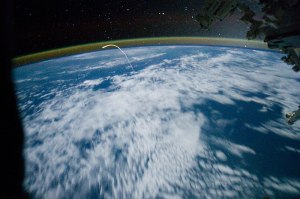
It’s difficult to say, since I don’t get outside much, but reports have come in that the earth is healing itself while we’ve been sequestered.  Rivers usually polluted have begun to run clean.  Smoke-smuggered skies have turned blue.  Animals have begun to explore human-made environments abandoned while we all shelter in place.  Could there be a more poignant statement about the reason for Earth Day?  If our worst behaviors are ceased even for a little while, the damage we do to our home planet begins to come undone.  To me that has been the most profound hope brought to light by this crisis.  Living more simply might be a virtue after all.

From NASA’s photo library

Going without can be difficult.  Every time the fleeting thought comes that I need to run to the store for this or that—and I’ve been taught that shopping is normal and natural and good for everyone—I have to stop and weigh the options.  Do I really need whatever it is?  Can I do without it?  Even bank accounts, for those fortunate enough to be able to keep working, have started to recover.  The frenzy we normally live under—earning money to keep buying things we don’t really need—is suddenly cast into perspective.  Times like this Earth Day I think of Henry David Thoreau.  Sometimes we like to laugh about our American saints, but his desire to live more simply does have appeal.  

Like many students who find themselves in Boston, I once made pilgrimage to Walden Pond.  The day I went there with some friends I believe we were the only car in the lot.  We lived simply in the way that grad students do, being under the sword of educational debts and loans, but we had come to see the place where nature had called one harried philosopher to solitude.  I knew, even as I stood by the marker of the cabin site that we couldn’t all live like this and still enjoy the benefits of medical science and technology (such as it was in the 1980s).  Perhaps it is possible, however, to reflect on better ways of living now that we’ve all been placed in a kind of enforced solitude.  I’ve begun reading more poetry.  I’ve started painting again.  Life has, in the midst of a pandemic, begun to feel more healthy.  It’s Earth Day.  Normally I’d be looking for an opportunity to join a community cleaning event, or even to go out and pick up trash on my own.  Since these are ill-advised, I stand before my bookshelf and reach for Walden instead.


Moralizing Gods

In my more radical moods I sing along with John Cougar about fighting authority.  Living in society means never being completely free.  This pandemic only amplifies that.  What I want may not be best for others.  Not to mention excessively corrupt authority *ahem* Washington DC [coughs into elbow].  Still, a friend sent me an article titled “Did judgmental gods help societies grow?  The piece by Lizzie Wade appeared in Science recently.  The article begins by noting that judgmental gods are rare.  It then suggests complex societies seem to have had judgmental gods at their beginnings.  Moralizing gods demand cooperation.  People want to do what they want.  If we’re going to reap the benefits of a highly specialized society we all need to play our part, however.  Authority always does win, I guess.

Wade’s article suggests that this kind of orthodoxy is now being called into question.  Moralizing gods, it’s suggested, appear after a complex society gets started.  Interestingly, these gods tend to be males.  (That point’s mine, not Wade’s.)  I have been wondering for quite some time just how the data from Göbekli Tepe will influence the re-construction of models concerning how civilization began.  It seems that long before settled populations emerged, back in hunter-gatherer days, people still came together to build temples.  Were they afraid of judgmental gods?  Certainly they thought it was important to gather occasionally at numinous places and ponder the larger questions.  Since they left no written records and they’ve all died out the best we can do is make educated guesses.  Who knows what might’ve been their motivation?

The one thing that seems certain to me, no matter how we nuance it, is that religion is integral to society.  Science is necessary for our survival (ancient people weren’t backward rubes, by the way—they had a kind of scientific outlook, but without all the advanced math).  Religion, however, seems originally to have brought us together.  Outside our comfort zones.  Hunter-gatherer societies limit their sizes to people you can know reasonably well.  They tend not to have private property and they share things most people in “civilized” settings wouldn’t.  To grow larger than a roving band that can sustain itself by moving from place to place once the food’s gone, agriculture was necessary.  But Göbekli Tepe suggests it only followed after religion began bringing people together in the first place.  Were their gods authoritarian?  There’s really no way of knowing that.  So when I’m feeling radical I have to remember than when it’s over I turn the volume down, comb my hair and go back into society.  Well, once the pandemic’s over.