See Index Saw

Too much of my life is taken up with indexes.  If life with technology is a teeter-totter, then my generation stands just above the fulcrum.  There are guys with whom I attended college who maintain no internet presence at all.  I’ve repeatedly searched for college buddies and come up blank.  Those in the decade following mine, if they want to work, have pretty much resigned themselves to tech.  Those in the decade before, not so much.  What does this have to do with indices?  Plenty!  You see, in academic publishing, and its consequent research, you need to look stuff up.  If you read multiple books on the same topic you’re not likely to be able to pinpoint a page number without an index.  You remember you read it here (you think) and so you stick a finger in the back and begin checking out the pages referenced until you (hopefully) find it.  That’s the old school way.

I’ve typed my fingers down to the marrow trying to explain to guys my age and older that the average academic no longer uses a print index.  Just about everything has been digitized.  Although I’m no fan of ebooks (I very seldom read them) looking things up is sure much easier with a searchable PDF.  Type in your search term and voila—an easy list of references appears that can be quickly clicked through and checked.  And yes, my colleagues, that’s what people are doing these days.  I lament the decline in print books.  When I set out to write a book I have a physical object in mind.  It has pages and a cover.  A spine.  I am writing a book, not “content” to be “exploited” in “multiple formats.”  And yet, the index is really no longer necessary.

The typical academic author whose book is at the production stage fusses greatly over the index.  Calmly I explain that indexes are very rarely used.  They must have detailed indices, they insist.  The thing about teeter-totters is that they move.  I have an inner-ear problem.  As a child this prevented me from doing the usual playground things like swinging and seesawing and spinning, to different degrees.  I still can do none of those things well.  My wife and I bought a gliding rocker early in our marriage, that seats two.  We quickly learned that I couldn’t rock with her.  Indexes, you see, are on one side of that long board.  It’s the side on which the heavy weight of time rests.  So ponderous is it that the kids on the other side just can’t get it off the ground.  And I spend my days over the fulcrum trying to get the two sides to play nice together.  Without rocking the thing too much.

Photo credit: Chicago Daily News, via WikiMedia Commons


More Classics

Western civilization, in as far as it still exists, has traditionally identified itself with a heritage that includes the classics and the Bible.  As study of the Bible grew beyond a bunch of guys discussing what they thought the text meant, realization dawned that comparison with the classics might not be a bad idea.  The main difference between the two was that one was considered revealed by God and the other was mere human invention.  Nevertheless, an educated person was expected to be well acquainted with both.  In today’s version of “western civ” it’s sort of an embarrassment to admit to being interested in the dusty old classics, and the Bible has reverted to being a bunch of guys discussing what they think it means.  In the interim there was some fantastic work done that helped us understand whence we came.

Those of us born in the sixties or later were raised in a culture where the classics were diminishing.  Yes, I’d heard of Cicero, Seneca, and even Ovid, but I couldn’t tell you what they wrote.  By the time I really took an interest I had the hundreds of volumes of the Loeb Classical Library to tackle—a daunting feat even for an undergrad.  Those guys wrote a lot.  Compared to the classics the Bible—a pretty big book—is miniscule.  As someone who deals with biblical studies all day long (and who has done so for decades) I’ve had to pick up on the classics a bit.  Those of us who were more inclined toward the Hebrew end of the spectrum discovered the vast, and still not fully translated, archive of ancient West Asian material.  If you wanted to include these ancient classics that influenced our civilization only indirectly, you wouldn’t have time even to tweet.

There are those who accuse classicists of any strip of being backward looking.  Those of us so accused are often amazed at how current events so closely resemble things the ancients encountered.  Historians, relegated to their shadowy corners, have been the Cassandras of us all, warning that if we don’t learn this stuff we’ll end up repeating it.  As often as they prove correct the rest of the “civilization” scratches its head in wonder at how we’ve come to this point.  I’ve not read all of the classics.  I’ve not even read all of the Ugaritic tablets—more have been discovered since my ill-fated dance with academia.  We have much to learn from ourselves.  About ourselves.  If only we could spend our time in the classic pastime of reading.


Ash + Hera

I’ve obviously been reading about the Greek gods.  Apart from being borrowed and renamed by the Romans they’ve remained pretty much unchanged through the millennia.  Those who read a blog like this will recognize the names of many Olympians and would recognize the name of the head honcho as Zeus.  The name of Zeus is Indo-European—this is a linguistic group, and not necessarily an ethnic one.  That is to say, the languages of ancient India and ancient Europe are related.  Zeus, it has been postulated, is related to the word Deus, familiar to many Catholics as a Latin word for God.  In antiquity most gods had personal names as well as titles, but this is something we see a little more clearly in the Semitic linguistic realm.  The texts of the Bible and its surrounding cultures often preserve titles as well as names.

Photo credit: Marie-Lan Nguyen, via WikiMedia Commons

Hera is widely recognized as the consort of Zeus.  It’s a bit of a misnomer to refer to divine couples as “spouses” since they really don’t comport themselves according to human-style conventions.  In any case, Hera in Greek mythology is an underdeveloped character.  She’s jealous of Zeus’ many affairs, and she sometimes punishes his children by other women or goddesses.  Her name is a bit of a mystery, and the other day I was trying to remember where I’d read that she may be a shortened form of Asherah.  My research on Asherah is now nearly old enough to fit in with the classics, but much of it still remains fresh in my mind.  In any case, the reasoning went like this: Asherah always appears as the consort of the high god.  The Greek Zeus was clearly influenced by Semitic ideas associated with Hadad, or Baal.  And while Asherah was not Baal’s consort, Zeus is clearly the high god so his main squeeze should be that of the highest order.

Greek, as a language, had trouble beginning words with a vowel followed by the “sh” sound, like Asherah.  The argument went that if you knock the “as” off the front of that divine name you’re left with Herah, and the final h isn’t pronounced anyway.  This line of reasoning always made sense to me.  Deities in antiquity were defined more by what they did than by what their names were.  In a patriarchal world, being the consort of the highest male was about the most a goddess could aspire to.  Still, we all know of the more colorful individuals who take a more forward position: Athena and Artemis—both powerful virgins—and the somewhat more naughty Aphrodite.  All those names beginning with alpha!  They could teach us something today, I suspect, if we read our classics.


Classic Monsters

Convergent evolution is a term that’s used for when two unrelated species, separated by some gulf, develop a smilier trait independently.  I began studying monsters in biblical reception history before I really knew others were doing so.  After I’d written Holy Horror I discovered an article by another scholar who was doing similar things, even looking at some of the same movies.  Liz Gloyn, it turns out, was also doing something quite similar with classical monsters.  Her Tracking Classical Monsters in Popular Culture just came out a couple months ago.  Having taught classical mythology for a few semesters at Montclair State University, I have retained an interest in the subject and I was delighted to find a scholar who suggested that to get at the real substance you sometimes have to look beyond the heroes to the monsters they fight.  It’s the monsters who often prove more human.

Covering both cinema and television, Gloyn considers how classical monsters are represented in modern reception.  She looks at their appearance in literary forms as well.  Obviously not all of these reception avenues can be examined, but those she chooses are entertaining and informative.  In the case of biblical studies, I long ago came to the conclusion that biblical scholars pretty much just speak to each other.  The average person doesn’t read their books and the average pastor doesn’t either.  Laity, for the most part, get their interpretation of the Good Book from pop culture.  There’s a very good case to be made that, shy of sitting down and reading through a very big book, people would have little access to the Bible, or classics, if it weren’t for media representations.

Concurrent with my teaching classical mythology, the release of the reboot of Clash of the Titans transpired. (Gloyn covers both the original and the remake in her book.)  Students were really excited, anticipating the film.  It was one of the rare times (The Book of Eli was another) when I felt compelled to watch a movie as an adjunct professor, simply to share the experience with my pupils.  Clash of the Titans had made an impact on me in high school but the reboot failed to take me to the same place.  Still, here be monsters.  Those who’d never read Hesiod, Ovid, Pseudo-Apollodorus, or Homer, may have thought they were getting the straight dope from the silver screen.  That’s what reception history is all about.  Gloyn’s treatment kept me riveted, and I used to teach the subject.  Monsters have a way of doing that to you.


Remarkably Green

Fame is something most of us never experience.  In a world of billions we imagine what it would be like to have others pay attention to us.  Care what we think.  Admire us.  I can’t help but suppose that a large part of our political crisis is based on this concept.  It’s one of the reasons Hank Green’s An Absolutely Remarkable Thing is such a timely novel.  I’ve read a couple of Hank’s brother John’s novels, mostly in the Young Adult category, and I’ve been curious about this one for some time.  April May, the protagonist, isn’t seeking fame.  In an almost parable-like way it happens to her and she becomes addicted to it.  Safety and human relationships fall aside as she follows what seems to be the next logical step in order to secure more fans, more followers.  (There may be some spoilers below.)

There’s more than that, however, going on in the story.  Tales of “first contact” with alien intelligence often pose the question of humanity’s readiness for such an encounter.  The Defenders, a group that looks an awful lot like the right wing, are afraid.  They’re afraid of what humans might face once a superior power arrives.  Their response is to attack April, who, for some reason has been chosen as the first contactee.  Her fame isn’t accidental.  I’ve watched enough of Hank Green’s excellent YouTube videos to suspect he’s not exactly looking for a Christian parallel here, but April is a kind of messiah.  The book, in many ways, could be read as a recasting of Christianity’s foundation myth.  This isn’t a book with which most Sunday School teachers would be happy—there are adult situations and adult language.  They don’t cancel out the message of the book, however; I’ve known evangelists to use these techniques as well.  They help capture attention.

With all the books I read I have to admit that many are forgettable.  I sometimes read an old post on this blog, or a review on Goodreads, and find myself having forgotten a novel completely.  Something Hank shares with his novelist brother is the ability to make an impression.  It’s too soon to tell for sure right now, but this has all the marks of a story that’s going to be my mental companion from now on.  There’s wisdom and humor in it.  There’s a touch of Qohelet as well.  Whether intentional or not, An Absolutely Remarkable Thing follows the line of a classical story arc.  And the reason that stories have become classics is that they make us think.  I’ll be thinking about this for quite some time.  Fortunately, I don’t have to deal with fame—that would only be a distraction.


Email Discover

One of the interesting things that happens to religion editors (yes—there are occasionally such things!) is that we receive emails from well-meaning evangelicals trying to convince us of the truth of their religion.  I don’t get such emails too often, but they do come with, as the commercial used to say, “occasional irregularity.”  These emails often tend to be long, as if someone who reads books for a living needs excessive verbiage to be shown the truth, and a bit rambling.  They claim to show, sometimes scientifically, why their version of Christianity is the only true one.  As an editor you have to pay attention until you find out whether it’s a book proposal or not (generally they’re not), because it’s good form to reply to all actual proposals.

Just as I’m about to type about not knowing why people do this, I recollect my own evangelical youth.  I was a charter subscriber to Discover magazine.  Growing up in a town where science was considered an unnecessary luxury, I was fascinated by it.  We had no local bookstore, and our town didn’t even have a library.  I subscribed to Discover and read several articles from each issue.  I was, however, troubled that the editors of the magazine seemingly weren’t aware of the proofs of Christianity.  I had Halley’s Bible Handbook in front of me and it stated in no uncertain terms that all of this had been proven.  I considered all of this to be my responsibility, so I wrote a letter to the editor explaining that the Bible really had been proven true.  If they’d accept that their great magazine would be even better.  They elected not to publish it.

The point is, deep down I understand this compulsion to convert.  My thinking has matured with the hundreds of books and articles I’ve read on the subject, but I can’t forget the evangelical terror of my childhood.  For the good news, it was pretty scary.  Of course, advanced study of the Bible—learning the original languages and their ambiguities—casts the whole thing in a different light.  Those who don’t share the evangelical view may have had an enlightenment of their own.  The thing is, admitting this doesn’t feel as good as claiming to have all the answers.  Admitting to having questions, to some forms of Christianity, seems to be admitting weakness.  And so I sit, reading through rambling emails that are well intentioned, but pointless.  I wonder if they read Discover magazine too.


The Wind and Trees

Being invisible, the wind is easily forgotten.  Until it begins to really blow.  I don’t know about where you are, but this past week was a very windy one around here.  Thursday especially.  My office has a couple of windows and each view shows different kinds of trees.  The south window reveals only a stolid oak or maple in a neighboring back yard a few doors down.  I don’t know this neighbor and I’ve never been close enough to get a good look at his deciduous tree.  Its leaves are down, of course, and although its branches moved in Thursday’s gusts there was never really a question of it coming down.  Trunk stout and sturdy, it has stood through many windstorms and will likely see many more.

My west window opens to some lofty pines across the street.  At least sixty feet tall, their trunks, like many coniferous species, stand fairly straight.  The way these trees bent in the wind worried me as a home owner.  And as a human being.  You see, I have done some woodwork.  A guy with as many books as we have either runs himself broke on buying bookshelves or learns to make his own.  I’ve spent plenty of my money on one-inch pine boards—the standard shelving material.  The 1 x 10, which is really 3/4 of an inch by 9 and 3/4, is the usual bookshelf board.  Not even an inch thick, it isn’t easily bent.  Incorporated into the trunk of a tree, it’s absolutely immobile if I press against it.  I’ve tried to move a mature tree trunk.  Even a good-size branch.  Mere humans can’t.  And yet I see these very same trunks swaying like they’re waltzing with the wind.

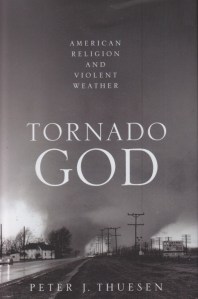
No wonder the weather has always been associated with the gods.  I mean, on Thursday last I saw these giants in the earth bending in arborescent obeisance.  The wind is easily forgotten.  As I worked on Weathering the Psalms, I easily sketched out the chapters on rain, lightning, and even snow.  But wind.  If you exegete a storm often the most damaging aspect is the wind.  Hurricanes and tornadoes damage due to their great wind velocity (the former also from impressive rain dumps).  What we call EF5 (or F5) tornadoes are so violent that any instrument directly in their path can’t survive its onslaught.  Winds swirling over 300 miles per hour are pretty much incomprehensible.  And yet when they dissipate, those violent winds are once again invisible.  Isn’t that just like the gods?


Leaping Years

Maybe it’s just me, but February seems long this year.  Wait, it’s leap year!  But that doesn’t explain it all.  Today may be a gimme—another day in what has already been a long year—but the calendrical weirdness began with the dates of our moveable feasts last year.  Thanksgiving fell as late as it possibly could—November 28.  Since it is the fourth Thursday of the month, and the latest fourth of any day is the 28th, there can never be less time between Thanksgiving and Christmas than there was in 2019.  For those of us who measure time by the days off work we’re allotted, the holiday season felt rushed.  And since New Year’s Day fell on a Wednesday, HR departments all over were scrambling to figure out how to make it a long weekend.  Wednesday is the Easter Island of holiday dates—too far from land to reach any second day.

By the time we could kick up our heels for a weekend it was already two work days into the new decade and business really began in earnest only on January 6.  Epiphany, according to those who follow circumcision-style New Year.  January ended on a Friday, and had this not been a leap year, so would’ve February.  A month with 28 days, after all, is a proper lunar-based one.  The other months were lengthened to stoke the egos of emperors and others who thought they were lords of time as well as space.  But this year we’ve ended up with an extra day of February.  I want to use it well, and as I look at my list of things to get done on a weekend (generally far longer than my list of things that I accomplish in a work week), I begin to think maybe this should be a holiday (and I don’t mean that sexist Sadie Hawkins tradition).  But it’s already a weekend, so HR’s off the hook.  This time.

We could use a few more holidays.  Every January I look at the sparse allocations of days off for the coming year.  There are normally ten of them, spread unevenly across twelve months.  There are long spells when, if you need a mental break from work you have to cash in precious vacation days.  Leap years make the total number of days even longer.  You get an extra work day but not an extra holiday.  Our lives revolve around our special occasions.  Yes, there’s not really a “holy day” to correspond to the necessary intercalary day to help us keep up with the sun.  Still, it feels like a missed opportunity to me.


Without Peer

Peer review makes the world go round.  Well, at least the academic world.  It’s based on a simple enough premise: if your academic work is passable other scholars will be able to tell.  It’s a process fraught with peril, however.  Scholars, being human, are subject to fits of pique or of hypersensitivity, or just having gotten out of the wrong side of bed that morning.  Perfectly good projects can be shot down with a single, well-placed arrow.  Or even dart.  Problem is, there’s no better system for deciding if academic work is adequate, or even good.  There may be some objective measure out there in the universe, but if there is we don’t have access to it.  We have to rely on peer review.

During my teaching years, which numbered nearly twenty, I was never asked to peer review anything.  My first invitation came while I was working as an editor.  Of course I said “yes.”  A number of scholars, however, don’t share the basic reality that if nobody peer reviewed their work, they’d never get published.  Many scholars decline offers to review their colleagues’ work.  I even had a very senior scholar once blithely tell me that he had his own research to do, so why should he take time to review that of others.  Professional reserve prevented me from pointing out that if his colleagues felt the same way he’d be as unpublished as a fresh doctorate-holder.  Scholarship is a cooperative venture, no matter how many Lone Rangers ride the cuesta.  So why is it so difficult to find peer reviewers?

I’ll read your book if you’ll read mine!

Something I’ve noticed is that many scholars are coddled.  Constantly told that they’re brilliant and gifted, they come to believe it like miniature Trumps.  More to the point, perhaps, is the shrinking number of academic positions.  The few who hold actual jobs are bombarded with other tasks, including committee work, advisory duties, and sometimes even teaching (depending on the adjunct pool).  I know it’s tough.  Been there, done that.  Nevertheless, academia cannot survive without the basic peer reviewer.  Education is a cooperative venture.  We may imagine the academic alone in her or his study, but breakthroughs generally come through when people work together.  Of course, my job is one performed in isolation.  Increasingly, academics can be found not in their offices, but working remotely from home.  Is the sense of “peer” itself breaking down?  My own book, Nightmares with the Bible, was slowed down by peer review.  In a sense I’m glad it was.  Hi ho Silver, away!


CBD

They found me.  I used to call them CBD, but because of the popularity of a certain hemp-based product, Christian Book Distributors changed its name.  Now I knew about them long before they had me on their mailing list when I taught at Nashotah House.  When I was a seminary student in Boston I made occasional trips to CBD’s Peabody warehouse for sales—this was quite a boon to students who never have enough money (little did I know!).  Books you’d heard about in class were there, for a fraction of the price.  At Nashotah I always looked over their bargain page, because, well, professors like books.  I recognized their catalogue in my mailbox instantly.  The name is now Christianbooks.com.  Grab some munchies and sit down.

Not only the name has changed.  Back in my student days I could find academic resources here.  As religion in America has become more and more polarized, what used to be CBD (if I use their current incarnation my computer insists on putting links in) has become radically conservative.  Page after page of study Bibles reveal no hint of the mainstream bestsellers in the genre.  It’s as if they don’t exist.  More than that, if you leave them out maybe people will come to believe they don’t exist.  Even the bargain books are nothing an erstwhile professor would buy.  Instead of academic titles there are all kinds of Barnes & Noble-type gimmicks to get shoppers to spend their money.  Like junk food for the soul.  I look at the books on my shelf.  Some of them were purchased, cash in hand on the ground in Peabody.  Not any more.

There will be those who claim (fake news is the only news now) that what has changed is me, not them.  The fact is places like CBD used to be more open minded.  They admitted the possibility of doubt.  Now your choices are Scofield or Ryrie.  That should be enough for any appetite.  Not only that, but many of the titles now sound militaristic.  Battlefields and all.  Thumbing through, I wonder where Jesus has gone.  The evangelicalism of my youth was clearly Prince of Peace centered.  Now it’s politicized to the point that I’m not sure what it represents beyond GOP values of greed, opportunism, and power.  Anyone who thinks differently need not apply.  How CBD found me after all these years, I do not know.  I wish they’d consider saving the environment rather than printing catalogues to send me.  The climate, despite what they would claim, has changed.


Speaking of X

The project that ultimately led to Holy Horror and Nightmares with the Bible was an article.  Intrigued that the quasi-horror Fox series Sleepy Hollow was so solidly based on the “iconic Bible” in its first season, I wrote an article on how the Bible functioned in it.  After that was published I realized that there was plenty of material for a book on how the Good Book appears in horror films.  That book, of course, appeared late in 2018.  Nightmares with the Bible was a kind of sequel, but moving in a different direction.  It looks specifically at how ideas about biblical monsters (demons) are mediated through horror films.  This post isn’t all an introspective about past projects; in fact, it’s about present watching.

At one point in my research I noted that the X-Files wasn’t as biblically based as Sleepy Hollow.  I stand by that assertion, but my wife and I’ve been rewatching the X-Files on weekends for several months now.  Nearing the end of season two I’ve noticed just how often the Bible appears in it.  Unlike Sleepy Hollow, where the entire story was premised on (largely) the book of Revelation, the X-Files has multiple episodes that focus on religion.  What we might call New Religious Movements feature in some of the vignettes while others posit older, hidden religions.  The Good Book appears visually many times, or, and it’s often quoted, even if not shown.  Although some of the episodes are lighthearted, many of them are played as straight horror and address the question of the reality of evil.  I hadn’t been alerted by Sleepy Hollow the first time we made our way through the X-Files, but if I had more time, and if anyone were still interested, there’s a book in this.

Ironically, even in the light of a political party that takes its energy from a religious base, universities are no longer interested in the study of the subject.  I have no reason to believe that these two television series are isolated instances that I’ve just stumbled across.  American culture is biblically based, no matter how secular it may be.  To my way of thinking, when something like the Good Book has such a strong influence, the response of the rational should be to try to understand it.  I know what biblical scholars do all day; I used to be one.  Only in recent years have some of them begun to turn toward the concept of the iconic Bible and to consider how it influences American thinking.  I can only do this on a small scale, in my free time.  What I see, however, like a good X-File, defies explanation.


Future Warming

It’s a good thing global warming is a myth, but somebody forgot to tell the hyacinths and lilies in my backyard.  February in Pennsylvania is not when you expect to see spring flowers.  Now I’m fully aware that unseasonal warm snaps and cold spells aren’t an indication of the global climate; they’re far too localized.  One thing I’ve learned in my several decades of life is that heat takes time to transfer.  If you’ve ever had to wait for a pan of water to boil when you’re hungry, you know that to be true.  On cold morning’s my coffee’s ice coffee before I finish the mug, but it does take time for that transition to happen as the cup empties.  With something so inconceivably large as the atmosphere, it takes time.  As our hemispheres take turns pointing at the sun and warming up, the air tries to reach equilibrium and so the weather goes.

Scientists are now talking about, once we get the deniers out of the White House, what long-term remediation plans we have to make.  We’ve already set in motion extreme weather events.  We’ve had decades of warning, but those who control the money just can’t bear to let any of it go.  It’s a safer bet to wreck the planet.  You can just cash in your insurance money and buy a new one.  That’s the way it works, isn’t it?  So I’m standing outside in my shirtsleeves in February staring at April flowers who think winter’s over already.  I don’t know what to say to them.

You can’t drive a car without a license, nor can you practice law or medicine.  To be a world leader you don’t even have to be literate.  I often imagine what the future survivors will say.  They’ll likely be there, since people have a way of getting by.  They may wonder if we knew this was coming.  Of course, the internet won’t be up and running then, and who knows what’ll happen to electronic information when there’s no power left to keep the servers going.  In any case, my perhaps futile answer to their imagined question is yes.  We did see this coming.  Some of tried every legitimate tool in the box called “democracy” (you’ll need a dictionary for that one) to introduce sanity into the discussion, but bluster wins over hard thinking every time.  I cup my hands around the tender, if resilient leaves.  They’re only doing as nature directs.  If only our species could pay such attention to what the planet is saying.


Horror Homework

Although I haven’t been writing much on horror here lately, I’ve been doing my homework.  At least for homeroom.  Horror Homeroom, that is.  I’ve published on Horror Homeroom before, and, surprisingly, they’ve let me do it again.  This piece is on the films of Robert Eggers.  It’s pretty unusual for me to get in on the ground floor with a director’s oeuvre, but my wife has a tolerance for what is being called “smart horror” or “intelligent horror,” or even “transcendent horror,” and so we can get to the theater to see movies like The Witch and The Lighthouse before they go to DVDs or Amazon Prime.  In order to write up my thoughts about these two films I had to rewatch them a few times.  There’s so much going on here that both stories are difficult to summarize.

Holy Horror treated The Witch in the context of its biblical worldview.  The Calvinistic religion of William, and by extension, his family, is pretty scary stuff.  In The Lighthouse we find two men each grasping for their own ideas of the divine, as found atop the eponymous structure they inhabit.  Both films explore the psychology of isolated individuals, and, perhaps not surprisingly, finds frightening things.  We are social creatures, even those introverts among us.  When deprived of the interaction of those who think differently (hear this, o Republicans!) we soon begin to wilt.  We need not agree with all we hear, but conversation cannot be had without being open to at least the possibility that one might be wrong.  Nobody wants to think they are incorrect, but unless they can admit that possibility, there will be no discussion, by definition.

Horror quite frequently thrives on separating people from their fellows.  One of the fascinating aspects of the genre is the way in which it does this.  Groups, even, that separate themselves from the rest of humanity soon begin to behave in odd ways.  Checks and balances are necessary for any health in a society.  Those who claim absolute positions often can’t admit this.  Do I hear the violins of Psycho coming to life?  I suppose community is why I try to publish once in a while in wider venues like Horror Homeroom.  Even people who like to watch horror prefer not to do so alone.  Maybe having seen The Witch and The Lighthouse in theaters was a crucial part of their impact upon me.  And what is a good shudder without someone with whom to share it?


Hearts are Dark

For the most part, reading introductions to literary works is tedious.  Since this edition of Heart of Darkness was brief enough, and the introduction wasn’t as long as the novel, I decided to follow through.  I’m glad I did.  I’ve read Joseph Conrad’s classic before, but it was helpful to have pointed out before this reading just how much darkness is in the story.  Drawn in by Kurtz’s famous last words, I suspect, many readers make the heart of the darkness the life lived by this contradiction of a man.  An individual who’d set himself up as a deity, and who pillaged the region for his own gain.  A man who wasn’t above using terror to acquire his ends.  An enigma.

But in actual fact, the story is about as full of darkness as an early Bruce Springsteen album.  The story begins at sunset and ends at night.  There is darkness to the Europeans’ dealing with the Africans throughout.  Even Marlow participates in that interior darkness that seems present in all people.  Delivering the deceased Kurtz’s letters to his still grieving fiancée, he meets her as darkness is setting.  He lies about her beloved’s last words, preferring to preserve her feelings than to reveal the truth uttered upon the deathbed.  There are layers of interlaced darkness here and Conrad never gives a definitive statement about what it really is.

We live in dark times.  I suspect that, for someone somewhere, that will always be the case.  The corruption of our government is so blatant and obvious that we seem to have fallen under the shadow that must’ve driven Conrad to pen his novel.  When living in darkness it helps to have a guide who’s been there before.  No matter what evil Kurtz has perpetrated, he’s treated as a god by those he oppresses.  He knows their suggestibility and preys upon it.  Although slavery was no longer (officially) a reality when Conrad wrote, the attitudes—embarrassing in the extreme today—lingered.  Even more embarrassing is the reality that they linger even today.  Not just linger, but assert themselves and then deny that they exist.  This is the heart of darkness, I believe.  We cannot allow others to live in systems that don’t kick money back into our own.  Trade on our terms, with our worldview being the only legitimate one.  Like so many writers, Conrad has been made a prophet by history.  And we all know the horror.


Reading Education

Perhaps like me you’re afraid of the news.  Not because it’s fake, but because it’s real.  Then every once in a while curiosity gets the better of me and I uncover my eyes.  Sometimes you can’t help but see.  With the utter mess we’re in over here, it’s difficult to keep up with news from other countries we know.  I’ve lived in the United Kingdom and I’ve worked for British companies.  Needless to say, I wonder what’s going on over there from time to time.  Lately I’ve been getting auto-replies to my emails to British colleagues stating that they’re on strike.  I asked a friend in the UK about this.  It used to be the professorate was treated with some regard in Her Majesty’s domain.  Not being a financially minded person, I haven’t been aware of how deep or devastating our capitalism-induced recessions and depressions are.  Apparently they’ve been bad enough to derail even British higher education.

Compensation for the professorate has been eroded away.  Their pension plans have been depleted.  Knowing the problems we have over here with professors refusing to retire, I was surprised to learn the UK has the opposite problem—professors unable to afford to retire.  Now, lecturing isn’t physical labor, but class preparation (and committee work) take a considerable amount of effort.  I could see not retiring if it meant lecturing only, but with everything else required, not retiring would be, well, exhausting.  As over here the root of the problem is that higher education is the route into which many smart people are steered.  You’d think it’d be a wonderful problem to have too many highly educated people.  It’s not.  With advanced study comes advanced debt.  And limited employment prospects.

There are nations in the world where higher education is deeply valued.  Where educated people are respected.  Ironically, the nations enamored of capitalism aren’t those places.  The only learning that’s required is how to get money from someone else.  Beyond that, the rest is commentary.  British higher education has fallen on hard times since I read for my Edinburgh doctorate.  Schemes have been put in place to ensure faculty are being productive.  Yes, there are some lazy ones.  The majority, however, pull their weight and then some.  And now they’re being told they must do so until the grave.  No retired professor wants to spend her or his old age bagging groceries at Sainsbury’s.  And so they’re going on strike.  If only the world valued knowledge more than money there might be some news worth reading.