Reasonable Religion

Part of the pushback against religion, it seems to me, is based on the fear that there might be something rational to it after all.  Sorry to get all philosophical on you on a Saturday morning, but the idea has been bothering me all week.  You see, reductionist thinking has already concluded that religion is “emotion” and science is “reason,” and only the latter has any validity.  When’s the last time you met somebody and asked “How are you thinking?” instead of “How are you feeling?”  Neurologists are finding that reason and emotion can’t be divided with a scalpel; indeed, healthy thinking involves both, not reason alone.  Funnily, this is a natural conclusion of evolution—we evolved to survive in this environment—our brains developed rational faculties to enhance emotional response, not to replace it.

I know this is abstruse; go ahead and get a cup of coffee if you need it.  What if emotion participates in reality?  How can emotion be measured outside of individual experience?  We experience it all the time without thinking about it.  From the earliest of human times we’ve had religion in the mix, in some form.  Perhaps we are evolving out of it, but perhaps neurology is telling us that there’s something to it after all.  Something immeasurable.  Chaos theory can be quite uncomfortable in that regard—every coastline is infinite, if you get down to nano-divisions.  When you measure something do you use the top of the line on the ruler or the bottom?  Or do you try to eyeball the middle?  And how do you do it with Heisenberg standing behind you saying there’s always uncertainty in every measurement?

Absolute reality is beyond the grasp of creatures evolved to survive in a specific environment.  Religion, in some form, has always been there to help us cope.  Yes, many religions mistake their mythology for fact—a very human thing to do—but that doesn’t mean that emotion has nothing to do with rational thought.  It seems that instead of warring constantly maybe science and religion should sit down at the table and talk.  Both would have to agree on the basic ground rule that both are evolved ways of coping with an uncertain environment.  And both would have to, no matter how grudgingly, admit that the other has something to bring to that table.  Rationality and emotion are entangled in brains whose functions are simple survival.  Pitting one against the other is counterproductive, even on a Saturday morning.


Russian into Things

It’s the holiday season.  The people I overheard at the bus stop the other day were discussing shopping on the bus.  It can be a long trip from here, and evening traffic out of New York (ironically) is quite heavy this time of year.  Bored commuters, sitting on the bus with their phones, shop.  I couldn’t help but notice that I was the only one with the overhead light on during the fully dark ride home this week.  At one point the driver seemed to think it was a mistake on my part and snapped it off.  I carry a book light with me for just such eventualities, but I had that odd feeling one gets when everyone else got the memo but you didn’t.  In any case, I was reading a physical book, not shopping.

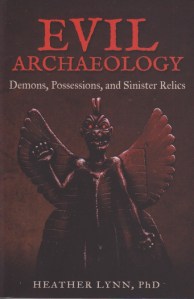
Then I read about a book I need for my research.  Problem is, I don’t have an institution, or a wealthy sponsor, so I often buy books used.  Back in my teaching days Amazon was new, and the idea of buying books online foreign and unfamiliar.  Now you can’t find a bookstore when you want one.  In any case, this particular book was on offer on eBay.  Now, I haven’t used eBay for quite a while.  I never think of it as a place to find reading material, but there it was.  Who would’ve thought research would ever lead in this direction?  The price was reasonable, so I signed in as a guest and placed my order.  With out of print books like this you run the risk of price-gouging or sudden unavailability—the independent researcher’s nightmare.

When the confirmation page came up, I couldn’t help but notice that the header was in Russian.  I wondered if Trump’s dream had really finally come true, or if the eBay on which I ordered an out-of-print book was really a trap.  How do you find out?  Who do you tell when your current government is completely at the beck and call of the Russian government?  I was in a brown study for a while.  The book, used, on Amazon was listed at over a thousand dollars, and this for a paperback published in 2009.  People will pay quite a lot for certain books, even if they don’t retain their resale value.  Ideas, it seems, are worth more than money.  But we no longer have a government to protect our interests.  Not even research, it seems, is safe any more.

If you squint, he could be St. Nick


Christmas at the Bus Stop

I had to make one of my periodic treks into New York City this week.  Unlike most years when a warm spell comes after the onset of winter, we’ve kind of fallen straight to the heart of the season this year and those of us standing in line for the bus were experiencing it via wind chill.  The cold got some regulars to talking about Christmas.  Although I’m not the oldest one who makes this long trip, the majority of the commuters this far out have yet to attain my years.  Those chatting at the stop had kids at home that still believe in Santa Claus.  It made me recall how we trick our kids with all kinds of quasi-religious folkloric figures, but also how seriously some adults participate in the mythology as well.

Among those chatting, the leaving out of cookies and carrots was almost canonical.  The cookies are for Santa, of course, and the carrots for the reindeer.  The more I pondered this, the more it became clear that this is a form of thank offering.  The story of Bel and the Dragon, in the Apocrypha additions to Daniel, tell of how priests leave out food for an idol.  The offering is gone in the morning and the credulous worshippers assume the statue has eaten it.  Religious offerings, except those entirely burnt up, were often used to support priesthoods.  Santa has his elfly acolytes, of course, but the priesthood for his cult is that of parents eager to make Christmas a special time for their children.  Capitalism’s big pay-off.

Then one of the commuters mentioned how she had her husband leave a footprint in the fireplace ash to add verisimilitude to the ruse.  We never had a fireplace when I was growing up, and I often wondered how Santa got in when we had no chimney to come down.  In any case, my hazy morning mind thought once again of Daniel and Bel.  The way that wily Daniel exposed the fraudulent priests was by sprinkling—you guessed it—a fine layer of ash around the offering after the priests had “left” for the night.  In the morning he showed the people the footprints of the deceptive heathens to the people.  The statue hadn’t eaten the food after all!  Serious consequences followed.  Christmas, despite its commercialization, brings fond childhood memories to many of us, and we’re reluctant to let that go.  The one man in on the discussion (it wasn’t me) said that when he was growing up they had a somewhat different offering.  “My dad,” he said, “told us to leave Santa a beer and a sandwich.”  This guy’s name might’ve been Daniel.


Carrie On

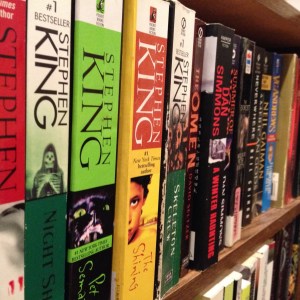
Stephen King was still a fairly new writer when I first read “Lawnmower Man” for an English class in high school.  Carrie had been published by then, but I didn’t read any more Stephen King until after my academic job ended.  (There is, for those who are curious, a correlation between that traumatic change and my interest in horror.)  Like many, I suspect, I saw some of the movies before reading the King books behind them.  With a writer as prolific as King there’s always the issue of where to start, and I’m often subject to the selections independent bookstore owners make.  I seldom buy fiction through Amazon—I have to see the book for it to grab me (a kind of King thing to happen).

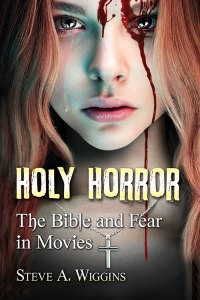
A used copy of Carrie recently came my way.  Now, I’ve seen the movie (both versions) many times; it is discussed at some length in Holy Horror.  I’d not read the novel until now.  Obviously there are differences between book and movie, but as this was Stephen King’s debut novel it struck me just how central religion was to the fearful scenario he paints.  That’s pretty clear in the film, I know, but it’s even more so in the novel.  Carrie is made into a monster by religion.  One could argue that she was born that way—telekinesis as a genetic marker is also a theme in the book, although absent from the films.  Still, it is Carrie’s rejection by others, largely because of her religion, that leads her to use her powers to destroy Chamberlain, Maine.

In a strange way, Carrie is a coming-of-age story from a girl’s perspective.  Strange because King is a man and some literary magazines won’t even accept stories written from the point-of-view of someone of the opposite gender.  Men can’t know what women go through.  Indeed, most of the male characters in the story are less than admirable, while some are downright wicked.  The real question is whether religion saves from wickedness or causes it.  There’s not much ambiguity here on the part of Mr. King.  Holy Horror, although it deals with movies and not novels,  makes the point that films based King don’t infrequently use religion as a source of horror.  Long-time readers of this blog know that I frequently make the point that this genre, more so than most, relies on religion as an engine to drive it.  And religion also has a role in repressing women.  Coincidence?  Ask Carrie.


You’re History

A story from Inside Higher Ed discusses a study of history majors and their rapid decline.  This occurs during a sudden onset of “job related” majors and the graph accompanying the article shows how STEM has taken over higher education.  These are the fields with actual occupations awaiting them at the end of the degree, while disciplines such as history and religion (also very near the bottom) have less clear career paths.  Indeed, when I’ve been in the job market I find that a religion degree is less than useless, no matter what the department recruiters tell you.  If you’re not bound for the clergy you undertake the study at your own peril.  History, I expect, suffers from a similar dynamic, but the peril in this case is to all of civilization.

We’ve seen over the past two years how a stunning lack of knowledge of history sets a nation on the path to chaos.  Businessmen with no classical education don’t make good national leaders.  Knowing where we’ve been, as Santayana so eloquently stated, is the only thing that keeps us from repeating past failures.  History is our only safeguard in this respect.  Over the Thanksgiving break I spent a little time delving into family history.  Since I don’t come from illustrious lineage, I felt the frustration of finding out what happened to obscure people from the last couple of centuries.  Lack of history on a personal level.  On a professional level, my doctorate is really in the history of religions (ancient religions) and I’ve become keenly aware of just how little history there is to the very popular modern Fundamentalist movement.

Maybe I said that wrong.  They do have a history, but the belief system that is touted as ancient is really quite modern.  Anti-modern, in fact.  When historical knowledge is lacking, however, people can make all kinds of claims based on nothing more than wishful thinking.  History keeps us honest.  Or it used to.  When we’ve outlived the need for history we’ve started down a path unlit by any embers of past human foibles.  We’ve been living in a culture in love with technology but not so much with critical reflection of where such innovations might take us.  Doctors are beginning to complain that they spend more time on their computers than with their patients.  The time freed up by the internet has been taken up by the internet.  And when all of this comes to its natural culmination, we would be well served by historians to make a record of what went wrong.  If we could find any.


Personal Gothic

As I continue work on Nightmares with the Bible, I am reminded just how influential Edgar Allan Poe has been in my life.  It’s not that I read Poe every day, but it’s more that his stories have stayed with me since childhood.  For an English term paper in high school, the last one I recall writing, I selected Poe as the subject.  Something of the sadness of his life made me feel as though we were kindred spirits, although I could never meet him, and never let him know that he would have had a friend if he had been born a maybe a century and a half later, and if possible, in Franklin, Pennsylvania.  If his fondness for drink came with him, he would likely have met my father in such circumstances.

Even today I feel a kind of fiercely protective interest in Poe, as if his poems and stories had been written exclusively for me.  Seeing a handwritten fine copy of “The Raven” on display in the Morgan Library and Museum brought tears to my eyes.  Like Poe, I strive to make a living as a writer, but unlike Poe, I cop out.  I’m too afraid of losing everything.  Jobs necessarily interfere with writing, and some jobs actively discourage it.  Nevertheless, I still feel the shudder when I think about the first time I read many of his stories.  This was, I suspect, what fed my young interest in horror.  It wasn’t the blood and gore of the slasher film, it was the quiet, sad, disturbing atmosphere of Poe.  It has been recaptured by few, in my experience maybe only by Shirley Jackson.

Those who write are connection seekers.  Writing is a way of testing to see if we alone see the world in our own way.  Will others respond?  Poe somehow, mainly after his own lifetime, touched a responsive chord with many.  His work is now very widely known.  His visage appears on everything from bandages to socks.  His stories and poems are endlessly retold, adapted, and parodied.  When I read Poe I hear someone speaking from a life of hard knocks.  His response was to strike back, through his writing.  The life story written by one of his relatives suggests that he wasn’t as gloomy and tortured as he is generally portrayed.  Perhaps not.  Nevertheless, those of us who find gothic literature somehow redemptive know, once we close the cover, who it is we should thank.


Beneath the Exorcist

William Friedkin rose to fame as the director of The French Connection.  William Peter Blatty had written the screenplay for the Pink Panther film, A Shot in the Dark.  Now Blatty had a serious project in mind as he considered whom to pitch to direct the film of his novel, The Exorcist.  He wanted, and got, Friedkin.  The two disagreed about the final cut of the movie, with Friedkin winning out.  The movie was a tremendous success.  Several years later the cut favored by Blatty was released, again with success.  Blatty died last year.  The year before that so did Fr. Gabriele Amorth, an exorcist for the Diocese of Rome.  Last night I watched The Devil and Father Amorth, a documentary by William Friedkin about the famed exorcist.

The Exorcist made an impact on the lives of many people, not least Friedkin.  Over four decades after making this film, the director is still mulling it over.  The Devil and Father Amorth is primarily footage shot by Friedkin of an exorcism performed by Amorth.  In general the filming of exorcisms is forbidden, but given his stature as a film-maker, Friedkin was given permission to film without crew, on a small, hand-held video camera.  Although nowhere near as violent as the fictionalized film, it is disturbing to watch.  As a documentary, it includes interviews with doctors, some from Columbia University, who agree that possession is “a thing,” but one suspects they might disagree with the director as to what that thing might be.

Although Friedkin isn’t an academic, society accepts that (at least some) film-makers are intellectuals.  Perhaps lacking subject specialization, they nevertheless read a lot and possess quite a bit of street knowledge concerning psychology.  Friedkin does.  At just over an hour, this documentary isn’t long, but it is provocative.  For me it raises once again an issue that I address in Nightmares with the Bible—the curious laity, due to lack of engagement by traditional scholars, must rely on such efforts to get information about spiritual entities.  The documentary, which deals with a heavy subject, is one that Friedkin tries to lighten a bit at the end by stating that if there are demons then angels must also exist.  This goes back to the idea, discussed more fully in my book, that demons derive from fallen angels.  The “one size fits all” approach of academia has shoehorned belief in one direction.  While The Devil and Father Amorth won’t likely convince skeptics, many who watch it will be left wondering.


Captive to Capitalism

Some people are born capitalists, while others are not.  I recall the old TIAA-CREF ads showing some famous thinker and stating that some of us don’t have time to think about money.  Since I’m an obscure private intellectual I feel hard pressed to put myself in such exalted company as university professors, but here I am anyway.  I just don’t think much about money, other than to panic over my lack thereof.  It doesn’t motivate me and as long as I can get along without too many worries, I seldom think about it.  Or so it used to be.  Then I bought a house.  Suddenly everything is about money.  This needs to be fixed, and that requires repair.  Instead of spending weekends writing (as I’m fond of doing), I now try my hand at skills like carpentry and masonry.  At least now the grass has started to turn brown.

I was never offered TIAA-CREF as a fiduciary option.  (I can’t believe I even know what fiduciary means!)   Having grown up poor I didn’t think much about things like retirement or dental care.  These were things middle class people did.  Now that I’m technically part of the club, I think back to being a poor kid working my summers away.  I had lots of time to write in those days.  It’s not that ideas for writing have stopped—they’re rather backed up—but the concerns and cares of this world have forced me to think about that thing I’d rather not face.  You see, capitalism takes no prisoners.  Once it starts the entire world has to play its game, otherwise the rich can’t keep getting richer.  Those of us who’d like to make a living by creativity take jobs that, in turn, take our time.  And more than just 8 hours a day of it.  Some people don’t realize that money doesn’t motivate everyone.

Accuse me of being a utopian; I promise I won’t take offense.  I can imagine a world where money would be an opt-in.  I’m careful to be discreet about it, but there are frankly some of us that would work for books, should our other basic needs be covered.  Secular monks, perhaps, unleashed from dogma and allowed to roam where the human mind can go.  Once you start thinking about money it’s difficult to stop.  You want to have a cushion that will soften unexpected eventualities—which seem to be coming somewhat more frequently these days—and every time you rub your back after a fall you think that pad should be a little thicker.  Getting paid for writing?  In your dreams!  I’d say more about it but I think Lowe’s is open now.


Mythic Truth

“Myth embodies the nearest approach to absolute truth that can be stated in words.”  I recently came across this quote from Ananda K. Coomaraswamy.  Coomaraswamy was a philosopher and metapmhysist from Ceylon, and like many eastern thinkers had a more holistic view of the world than western rationalism.  We’re taught from a young age that myth is something false, not true.  This colloquial use of the word is so common that those of us who’ve specialized in myth slip into it during everyday conversation.  Words, however, have uses rather than meanings.  Coomaraswamy was engaging this reality in the quote above.  Words can take us only so far in exploring reality when we have to break into either formulas or poetry.  Although they are under-appreciated poets are the purveyors of truth.

Having studied ancient mythology in some detail, it became clear to me as a student that these tales weren’t meant to be taken literally.  Instead, they were known to be true.  It takes a supple mind to parse being true from “really happened,” as we are taught in the western world that on what “really happened” is true.  In other words, historicism is our myth.  Meaning may not inhere in words, but when we use words to explore it we run up against lexical limits.  Is it any wonder that lovers resort to poetry?  On those occasions when I’ve been brave enough to venture to write some, I walk away feeling as if I’ve been the receiver of some cosmic radio signal.  We have been taught to trust the reality of what our senses perceive.  Myth, and poetry, remind us that there’s much more.

The Fundamentalist myth is that the Bible is literally true.  If they’d stop and think about it, they’d realize the mockery such thinking makes of Holy Writ.  The Good Book doesn’t look at itself that way.  In fact, it doesn’t even look at itself as a book—an idea that developed in later times.  The time and the cultures that produced the Bible were cool with myth.  They may not have called it that but the signs are unmistakable.  Ananda Coomaraswamy knew whereof he wrote.  The closest to absolute truth we can come takes us to the end of declarative, factual writing.  Scientists writing about the Big Bang devolve into complex mathematical formulas to explain what mere words can.  Myth is much more eloquent, even if we as a society, dismiss it along with other non-factual truth.


Where Was I?

Finally!  I have sent my proofs and the index for Holy Horror back to McFarland and I find myself in that state following intensive concentration on one thing.  Well, as much as work will allow such concentration.  Those who write books know how difficult it is to switch gears from fifth back to first while driving at highway speeds.  As soon as the email arrived stating that the proofs were ready, I dropped everything to get them read, outside work hours, of course.  With mind focused on a single goal—get the job done—I’ve managed to forget where I was before being interrupted by my own work.  I recall it had something to do with demons, though.

Perhaps the most taxing part of trying to write while employed full time is keeping track of where you are.  The luxury of spending hours outside of class doing the index, for example, is compressed into the little free time I have between writing for this blog and work—between a blog and a hard place, as it were.  Indexing, which can be quite pricey when a professional does it, is  much easier with a searchable PDF than it ever was going through a printout page-by-page to find obscure references you forgot you ever wrote.  It reminded me of the time I had Owen Chadwick over for dinner at Nashotah House.  I recalled someone asking him about something he’d once written and he looked puzzled for a moment and then replied, “One writes so many things.”  Indeed.  Millions and million of words in electrons, if not on paper, mark the status of a life.  And indexing will prove it to you somehow.

This morning I awoke with the proofs and index safely emailed back to the publisher.  What was I doing before that?  I know that work is looming just a short hour or two ahead, and I need to accomplish part of my life’s work before going to work.  I can’t afford to waste this time.  Nightmares with the Bible is coming along nicely.  A very drafty draft of the book exists.  I have some more research to do, however, and the annotated bibliography—ah, that’s where I left off!—is still a shambles.  Not only that, but I’ve got a stack of reading on the topic next to my chair.  Time to put on a pot of coffee and warm up those typing fingers.  I’ve got real work to do.


Free Cookie

So, it started out as a freebee.  The way I looked at it, I paid enough for my computer to justify some free software.  We had Quicken on our desktop for years before we started to use it.  Then came the notice that it would no longer work on our system (which upgrades apparently every nano-second).  If we didn’t want to lose our financial data we would, the note cheerily said, have to upgrade.  You have to buy what once was in the land of the free.  We consulted about it—I still have an objection to paying for something made strictly of electrons; when I pull the blanket off the bed this time of year I get a healthy jolt of electrons without having to pay for them.  We caved.  Then the notice came again.  Upgrade time!  Only you can’t buy Quicken, you can rent it.  The one-time fee for buying software is now an annual fee.  Isn’t everyone happier now?

I don’t mean to pick on Quicken, although that is the most insidious offender since you can’t very easily transfer all that data back to paper.  Services withdrawn.  Welcome to the internet of thieves.  Bakeries worldwide know that a free cookie leads to sales often enough that it’s worth the small loss in profits.  But electrons are free all the time.  Shuffle your feet across the carpet in you stocking feet and test it.  Amazon for a while sent the Washington Post headlines daily, for free.  Now, Amazon ought to know me by name since I’m a book addict.  Then, just at the midterm elections, they announced this freebee was over.  I don’t know what in the world has been happening since.  I do hope someone will tell me when our currency converts to rubles.

Who wants a cookie?

Humans are susceptible to the myth of permanence.  Although change is constant and time never ceases to flow, we tend to think things will stay where we put them.  Technological change, however, has become so swift that we now pay for the privilege.  Unlike that cookie which lasts a moment and the choice of buying more is up to you, the internet has swept up our lives and you can no longer opt out.  We pay our bills online because letter carriers drop things.  We communicate online because who has the time to pick up and dial an actual landline phone?  The fact that the signal cuts out now and again isn’t a problem, even when we lose valuable information.  It’s only electrons, after all.


Time Taking

Publishing is a slow business.  In a world of instant information, such plodding may appear to be old-fashioned.  Outdated.  Each step of the process takes time and anyone can sit down and type thoughts directly into the internet, so why bother with traditional publishing?  These thoughts come to me as I read through the proofs of Holy Horror, and work on the index.  This is time-consuming, and time is hard to come by.  That, I suppose, is a major reason for doing things this way.  Ironically, people don’t have a problem seeing that handmade items—which tend to take time and be less efficient than machine-made articles—are more valuable.  They represent care and quality, things that a machine can’t assess well.  This is the world beyond math.  It is the human world.

Those of us born before computers took over sometimes have difficulty adjusting.  The world of the instant goes well with inflation—the myth that constant growth in a limited world is possible.  The fact is that value is a human judgment and we value things that take time.  It’s true that most non-fiction books are instantly dated these days.  Often it’s because information flies more quickly than pre-press operations.  It takes a couple years to write a book and a publisher takes a year or two getting it into print.  Back when the process was invented news traveled slowly and, I venture to say as a historian of sorts, didn’t often carry the dramatic shifts we witness today.  A book could take a long time to appear and still be fresh and new when it did.  For the internet generation it may be hard to see that this is an issue of quality.

Most of us are content with the satisfactory.  We’re willing to sacrifice quality for convenience.  We do it all the time.  Then, in the recording industry, vinyl starts to come back.  Corporate bigwigs—for whom fast and cheap is best—express surprise.  Why would anyone buy a record?  The question can only be answered by those who’ve listened to one.  There is a difference, a difference that we’ve mostly been willing to jettison for the convenience of the instant download.  Our lives are being cluttered with disposable-quality material.  Even now I’m writing this daily update for my blog rather than continuing the drudgery of working on an index.  We all have expectations of alacrity, I guess.  The slower world of publishing is more my speed.


Creatio Nihilo

Just when I think I’ve reconciled myself with technology, this goes and happens.  These precise words, in this order, have been written before.  In fact, all words in the English language have already been laid out in every conceivable order.  Technology can be friend or foe, it seems.  The website Library of Babel—with its biblical name—has undertaken the task of writing every conceivable combination of letters (using our standard English alphabet) and putting them into a vast, if only electronic, library.  This was not done by a human being like me, with intent or even any interest in the meaning of the words, but rather as one of those things people do simply because they can.  This entire paragraph can be copied and pasted into their search box and found.

The Library of Babel has made plagiarists of us all, even as it plagiarized everything written before it was programed.  After I learned about this library the wind avoided my sails for a while.  You see, what’t the point in writing what’s already been written?  Then it occurred to me.  Context.  The fact is, had I not scriven these very words, and put them on this blog, they would never have come to the attention of the kinds of people who read what I write.  The words have been spelled out before, but they’ve never been written before.   Those of us who write know the difference.  We spend hours and hours reading and thinking of ways to combine words.  We’re not out to kill the creativity of our species, we simply want to participate.

There should be limits to human knowledge, otherwise we’d have nothing for which to strive.  The internet may make it seem that all knowledge has been found—it is so vast and so terribly diverse—and yet there are people who never use a computer.  Their wisdom counts too.  It may seem that everything is here, but there is material that still has to be looked up in physical books.  There are crates and crates of clay tablets from antiquity that have never been transcribed and translated.  When that finally happens, the words they contain may be found, in a strangely prophetic way, in the Library of Babel.  But they won’t have any meaning there until it is given by the context.  And what can a library preserve if it isn’t the context that a (human) writer has given the words?


Christmas Time

As children we can’t wait for Christmas because we’ll be getting things.  Now that I’m older I try to avoid the frenzy building up to the holiday, although I look forward to the vacation days that I’ll cash in to take time to be with family rather than business.  It’s not that I don’t like holidays—it’s just I’m no fan of hype.  Still, now that December is nearing, and Thanksgiving has reminded us that work isn’t everything, I can feel the anticipation.  Yesterday I attended the Christkindlmarkt  in Bethlehem.  Amid the backdrop of the truly colossal, rusting stacks of the former Bethlehem Steel plant, this is a seasonal event with nothing but good spirit.  People of all descriptions were crowded into the massive event, but rudeness and complaining were strangely absent.  Everyone seemed to be having a good time.

When I worked at Nashotah House, the atmosphere for Advent was austere.  We weren’t really encouraged to look forward to Christmas, bringing a tree home before the 24th was frowned upon.  It was a time to reflect on our sins, not to anticipate our rewards.  Still, I had a kind of epiphany among the secular crowds seeking to get into the spirit of things yesterday.  Bethlehem is a city that has known hard times.  Its industrial base eroded away, residents were left unemployed and wondering about a very (and increasingly) uncertain future.  Recasting itself as the Christmas City is a way of throwing new light on a holiday famous for its commercialism.

Christmas can be about resurrection.  It’s a season to think of birth.  It matters not if the mother is a virgin or if the child is for an exclusive sect.  People throng here for hope.  Beauty in the midst of ruin.  Some businesses clearly spend all year building up to Christmas, selling ornaments so delicate that I feared even to look too hard at them lest they shatter.  Handcrafted goods that represent the livelihood of others who compel strangers that art is worth more than money itself.  Wandering through the four tents of booths, the feeling of resurrection was palpable.  We were all here seeking something.  Loosening the grip on the wallet just a bit.  Wanting to make others happy for a while.  Birth is the symbol of hope.  Advent, it seems, need not be a dreary season of wallowing in unworthiness, awaiting a mythology taken too literally.  The proof of the goodness before us is just down the road in Bethlehem.


Family Names

Holidays are all about family.  In our society where families, due to jobs, often get spread across states, if not the world, we value holidays as times to get as many as possible of our close ones together.  They’re also rare days when work isn’t required, and true relaxation—a rarity—can take place.  This Thanksgiving break I’ve been reading the proofs for Holy Horror, but I put them aside after anyone else awakes.  We all, I think, come out of it feeling rested.  It has been many years, however, since I’ve had time to work on genealogy.  I don’t write much about it here because most people don’t find other people’s family history to be of interest.  Many of us are nevertheless fascinated by the ancestors without whom we would not be here.

One summer while I was teaching at Nashotah House I became fixated on one great-grandmother.  Nobody in my family knew her name.  I had a first name (a fairly common one), and, adding insult to injury, I grew up with her daughter (my grandmother) living in my home.  Kids, as nature dictates, aren’t interested in that kind of thing, and nobody thought to ask my grandmother her mother’s name before she died.  I found myself stuck at just two generations back.  I made trips to the repository of state and federal records at Madison, spending the summer in a basement room reading through microfiche—talk about ancient history!—trying to find her name.  Nothing.  I wrote to the federal agencies of vital statistics in Washington which gladly cashed my checks but never sent any information.  Later, when the internet began to fill up, I searched for her married name.  Nothing turned up.  I ordered books of gravestone inscriptions from the District of Columbia, where she’d died, but dug up nothing.  One of the cemeteries sends me newsletters now.  When my daughter asked why I was getting them in the mail I told the story.  We began to search online.

I couldn’t believe it.  At least a decade and a half after I’d found no clues, and after many web searches after that, we finally found her.  Someone had entered her on Findagrave.com.  As I pondered the dates, which seemed about right, my daughter pointed out that the site stated she’d been married to my great-grandfather.  My ancestry suddenly grew by two new surnames because her parents were also listed.  I was stunned.  I once calculated that, due to exponential growth, just ten generations back, (eight “greats”) we all have over a thousand ancestors, or 500 couples.  Genealogy could be a full-time addiction.  For the moment, however, I’m pleased to have found a long lost name, and an instantly larger family for this holiday season.