Banned Wagon

In celebration of Banned Book Week (go ahead, let your hair down!), I thought I might muse about some good news.  Since I already posted on my banned book (Slaughterhouse Five) I need another angle of approach.  One of the less envious aspects of being an editor at an academic press is being yoked to facts.  Many authors have a basic misconception about numbers in their heads.  They think their book will sell on the scale that Barnes and Noble, such as it is, will stock them on the shelves.  I have to admit that I dream of walking into a bookstore and finding one of my titles on the shelf—and I know it’s not likely to happen.  Those of us who work in publishing see the hard figures, how many copies have actually sold.  And the results can be quite sobering.

The news isn’t all bad, though.  I ran across an article by Andrew Perrin titled “Who doesn’t read books in America?” and the way the question was phrased made me think.  I’m used to thinking of it the other way around: how many people read, or buy, books?  I once read that about 5% of the US population constitutes the book-buying market.  Now, that is a large number of people, even if it’s on the smaller end of the overall spectrum, but Perrin’s article from the Pew Research Center states that only 24% of Americans state they haven’t read a book, whole or in-part, over the past year.  This, I think, is cause for celebration.  It means more of us are reading than are not, even if we don’t always finish the books we’ve started.

Think of it like this: whether print or electronic, people know to turn to books for information.  Oh, there are all kinds of details I’m leaving out here—the safeguards of a reputable publisher over the self-published manifesto, as well as the self-published brilliant book over what managed to squeak through the review process at a university press because an editor felt the pressure of a quota—but the numbers are encouraging nevertheless.  Looked at this way, more people are reading than are not.  And the best way to promote books is to suggest they should be banned.  That’s why I don’t despair of the shallow books praising Trump—if they’re banned they become prophetic.  Academic books, my colleagues, don’t sell as many copies as you might think, even if they’re not banned.  The good news is, however, that we haven’t forgotten whence to turn for knowledge.


Whelmed Over

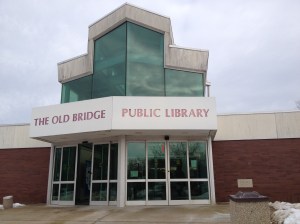
I have to admit I feel overwhelmed by the task.  You see, I spent twelve years living in a town that went from one small used bookstore to none.  Within a half-hour’s drive I could be at two bookstores—indies, of course, since B&N doesn’t always count.  One of the shops was the Princeton University bookstore, so that was almost unfair.  Now I live in a region with many bookstores.  I wasn’t truly aware of this when deciding on where to settle; the decision was made on practical matters such as being able to get to work, and affordability.  It turns out that central eastern Pennsylvania is unexpectedly bookish.  I’m not complaining, you understand.  I haven’t had much time to explore, and that’s why I’m overwhelmed.  That, and Banned Books Week.

I’ve been to the oldest continuously operated bookstore in the world, The Moravian Book Shop, in Bethlehem.  Twice already.  But there are many more within an easy drive from here.  “Lead us not into temptation,” the prayer goes, but if we’re honest we’ll admit we love the challenge.  Home owning is expensive.  There’s always something that needs to be done—the sort of thing you used to let the landlord handle—they are lords, after all.  And time for reading is scarce.  Add to this that there are bookstores I haven’t even entered yet, not far away, and a kind of anxiety grows.  You have to realize that even in Manhattan reaching a bookstore on lunch hour was difficult.  They are few and far between.  It’s overwhelming being in a region where indie bookstores have held on.

My wife recently showed me an ad for an indie bookstore over the border in New Jersey.  They were looking for new owners.  We’ve often discussed how perhaps a retirement job for us might be just such a thing.  Of course, business sense isn’t my strong suit—just learning how to own a house seems pretty hard.  The idea of making a living surrounded by books, however, is appealing.  (You might think an editor reads all day, and while that sometimes happens the reading is generally embryonic books.  Besides, there’s something serendipitous about discovering fully fledged books that you didn’t know were coming.)  To buy a business requires capital, and we’re more the minuscule type, when it comes to finance.  As we settle into our house we decide which books go where, and it is remarkably satisfying.  After I’m done being overwhelmed by all there is to do in the house, I’m looking forward to being overwhelmed by exploring the bookstores of central eastern Pennsylvania.


All Things Being Equinox

The weather around here has been appropriately gloomy for the autumnal equinox.  Although Hurricane Florence gave us a day of rain, the heavy clouds have been part of a pattern that has held largely since May.  Given the gray skies, we opted to watch Alfred Hitchcock’s The Birds last night.  My wife isn’t a horror fan, but she does like Hitch.  We’ve watched The Birds together many times, but this is the first time since I wrote Holy Horror.  I was somewhat surprised to recall how much Scripture plays into the script.  This is mostly due to a drunken doomsday sayer in the diner.  After the attack on the school kids of Bodega Bay, he declares that it’s the end of the world and begins citing the Bible.  He’s there for comic relief, but the way the movie ends he could be right.

When I was writing Holy Horror I had a few moments of panic myself.  Had I found all the horror films with the Bible in them?  Could anyone do so (without an academic job and perhaps a grant to take time off to watch movies)?  I eventually realized that I was merely providing a sample in that analysis.  Several weeks after I submitted the manuscript I watched The Blair Witch Project.  There was the Bible.  The same thing happened last night under a glowering late September sky.  The Birds has the Bible.  Two weeks ago I saw The Nun; well, that one’s almost cheating.  But you get the picture—the Good Book appears rather frequently in horror.  That’s what inspired me to write the book in the first place.

Now that nights are longer, and cooler, the grass has somewhat poignantly relinquished its aggressive summer growth.  Most of the ailanthus trees have been cut down (I must be part lumberjack).  My outside hours are limited not only by work but by the fading light.  In the words of the sage, “winter’s tuning up.”  We moved to a house we saw in the spring as days were lengthening.  Now we’ve come to the dividing line that will slowly leech the light from our evening skies.  I suspect that as I go back and watch some of my old favorites again I’ll discover something I already knew.  The Bible and horror belong together because both are means of coping with the darkness.  Call it puerile if you will, but there is something profound about this connection.  It just has to be dark for you to see it.


Just the Fax

Like most people I have a cell phone.  If I use it to take a picture, I can send that photo any number of places with a tap, swipe, and tap.  It works that way with scanned documents as well.  Using a hand-held phone, I can scan important papers, convert them to PDFs, and send them via email, text, “AirDrop” (whatever that is), Facebook, Twitter, Instagram—you name it.  Except fax.  That I cannot do.  The other day a company wanted me to send them a document by fax.  Within seconds I had scanned it with my phone and was ready to send it, but instead experienced electronic constipation.  The company had no email; it had to come by fax.

Now, like most reasonably modern people, we have no fax machine at home.  We still have some in the office in New York, but they are clunky, noisy, and seldom actually work.  The technology to receive documents has improved beyond the photostatic smear that facsimiles represent.  I worked for a company where the warehouse insisted on orders by fax.  You’d fax them the order and wait for the phone to ring.  They couldn’t read the fax and you had to tell them what it said.  Well, this particular company I was dealing with wanted a fax.  I downloaded two or three “free” fax apps.  They suspiciously wanted my credit card info.  Besides, if you send more than one page they wanted at least ten bucks for a “package” deal.  I had to send a three-page document.  I checked to see if my laptop could do it.  The manufacturer’s website said it could, but the menu option it told me about didn’t appear.  Who insists on faxes any more?

This is the dilemma of mixed technologies.  It’s like those movies where the streets of some exotic city are filled with rickshaws, cars, bicycles, and pedestrians.  The fax, in this analogy, is the pedestrian.  My mother doesn’t have email, let alone the capability to text (or fax).  Ours is a telephone relationship.  Yet in my hand I hold a device that can send this document anywhere in the world with a tap, swipe, and tap.  I recall my first trip to Jerusalem where hand-drawn carts, cars, and yes, camels, shared the streets.  This was in the days before the internet.  To contact home even by telephone was cumbersome and costly.  Yet somehow we survived.  I’d arranged the trip utilizing a travel agency and funded it by a letter-writing campaign.  The Ektachrome slides I took are now a pain to look at because technology has so improved our lives.  Unless, of course, you need to send a fax.  Delivery by camel can at least be arranged via the internet.


Capital Idea

Capitalism encourages a kind of racketeering among businesses, in my experience.  Take the case of utility companies after a move.  To date I have received well over a thousand dollars in bills for services not rendered.  These bills were from utility companies claiming that I owed them final amounts for bills that had been paid in full, on time, for over twelve years.  I should, it seems, be able to bill them for my time on the telephone setting their records straight.  The “final bill” is a racket.  And it is deployed just after a customer, formerly a “valued customer,” has entered into new financial obligations—moving is not cheap!  Most of these bills are for multiple hundreds of dollars for services, that when I used them, were generally billed at a mere fraction of that amount.

Corporations, according to the law, are people.  And like people, they are exceptionally greedy.  Just yesterday I received a bill from a heating oil company—which shall remain nameless for the moment—stating that I owed a multi-hundred dollar final balance.  I had notified them in April that we would be moving and that I had paid their final bill and no more deliveries should be made.  None were.  Fully five months later I receive a “final bill” politely reminding of an outstanding balance.  For what?  Heating oil delivered in July?  Have I suddenly switched hemispheres or is this some kind of racket?

Come to think of it, while unpacking I came across a budget book.  My accounting is pretty much in the range of horseshoes and hand-grenades—I know the regular bills and can guess how much they are likely to be.  I’ve got other things on my mind besides money.  The budget book had never been used.  Budgets, to my understanding, project a stable world.  That’s not like the capitalist world.  When we bought the budget book, some 30 years ago, could we have projected monthly expenses for the privileges of using an internet that at that time didn’t even exist?  Capitalism is creative in finding new things to make you pay for, even if they are only virtually real.  Like heating oil that was never pumped off the truck.  It’s always your word against theirs, and corporations are bullies, being bigger than regular people.  So I sit here with a blank budget book and a stack of “final bills” for things never delivered.  And I think to myself, what a crooked world.


Free Reading

I think I was driving through Montclair, New Jersey when I first noticed one.  A “little free library” in someone’s front yard.  Then I began to notice them around elsewhere.  Neat little outdoor kiosks filled with books.  Despite my love of literacy I’m not inclined to take books from such places.  For one thing my reading tastes are odd, and for another I want other people to catch the interest in reading.  And “free” is a great motivator.  The idea is simple: set up a little free library on your property, seed it with books, and watch it work.  People are encouraged to take what’s there for free.  And leave books they want to donate, if so inclined.  Now that we’re in Pennsylvania we discovered one in a nearby park.  A community feels more homey with books.

Searching for the concept online, I came to LittleFreeLibrary.org.  I’m not sure if they started the trend, but it provides the basic idea.  They even have plans for how to build your own and get your neighborhood reading.  If anyone wants a clue for making America great, here’s a free hint: it will involve books.  They’re a commodity unlike any other.  Mass-produced (often too enthusiastically so) they are generally inexpensive and can be used over and over again.  One of the biggest headaches for publishers is the used book market—since a book is a handful of ideas, once they’re released they’re difficult to control.  They can be sold again for less than market value, and yes, even given away.  Those who read see the value in giveaways, even if there’s no personal profit in it.

Early in our tenure here we decided to take a book to donate each time we go to the park.  Sometimes we forget, of course.  Our first donation was there for two weeks, but then found a new home.  A strange kind of joy accompanied finding the book gone.  Perhaps we’d done some good simply by opening a door and leaving something we were no longer using.  Then something unexpected happened—I saw a book from my reading list in the local.  Should I take it?  I have a list of books to seek in used bookstores, for, to the chagrin of my own industry, I participate in the used book market.  I had been looking for this tome for a few years, reluctant to pay full market value since it has been around since the sixties.  In the end I couldn’t resist.  Next week, I told myself, I’ll take two books to give back.  Literacy’s that way—it’s something even introverts can share.


Taking Turns

“Turn! Turn! Turn,” the Byrds sang.  “For everything there is a season,” quoth Solomon.  Perhaps it’s the way we acquire knowledge, but lately many fields in academia are experiencing “turns.”  The idea seems to be that if fields continue to turn, they will eventually all converge on the same intersection and true knowledge will be obtained.  The post-modern turn, however, suggests that there is no objective knowledge.  It kind of makes me dizzy, all this turning.  Although I find the use of this particular noun in such phrases a touch unsophisticated, it’s here to stay.  At least until academia takes another turn.  Public intellectuals, after all, have to have something to say.  And academics are capital imitators.

Ironically, within the same week I read of the “religious turn” in the humanities and a different turn within religious studies.  This “religious turn” is not to suggest the humanities have found that old time religion, but rather that many disciplines are now realizing that religion has played, and continues to play, a very important role in human affairs.  Fields that have traditionally avoided religious topics are now “turning” that way.  At the same time that others are turning toward religion, religious studies is taking a “material turn.”  The public intellectuals smile at the maze they’ve created as the paychecks roll in.  The “material turn,” if I understand correctly, is that the ideas of religion can be explained via the real world needs that various religions meet.  There’s no need for any divine character or intervention.  There is no sacred or profane, but rather kinetic movement of shifting patterns that at any one time or place might be denominated as religions.

I’m all for progress, but I think I might’ve missed the turn.  To my old school way of thinking, sacred and profane, Eliadian though they may be, still have great explanatory value.  I don’t know if there’s objective knowledge to be found by fallen mortals such as we.  The material world we experience through our senses is mediated by those very senses so our understanding is, of necessity, limited.  We can’t touch naked reality even if we try.  Our quest, in circumstances such as these, would seem to be digging deeper until we come to that which resists any tunneling.  It’s like coming to the end of the physical universe and wondering what’s beyond this natural limit.  Then, I suppose, you’d have to turn.  Until such time as that, however, all of this present day turning is for the Byrds.


Southern Turn

In America’s ever roving commercial eye, Día de Muertos has become an extension of Halloween.  Retailers have realized that people will spend a lot on their fear, and the autumnal holidays delve into that primal territory.  Since the Day of the Dead, being a mix of indigenous Mexican religions and the Catholic celebration of All Souls’ Day, comes two days after Halloween why not blur them together with greenbacks?  So capitalist thinking goes.  While certainly not free of monied interests, the Disney/Pixar movie Coco has the virtue of addressing Día de Muertos as the separate holiday that it is.  A form of ancestor worship—a religion extremely common around the world—the thought-world of the film shares in common with Tim Burton’s Corpse Bride this idea that the afterlife is colorful, if not joyous.

I realize I’m jumping the gun here, but I just saw Coco for the first time over the weekend.  Not just a culturally sensitive treatment of an indigenous holiday, it is also a celebration of music.  In a very real sense, music is life in the film, and even the dead continue to thrive in its presence.  Again, the connection with Corpse Bride suggests itself.  The key difference, from a religionist’s point of view, is that Coco is based on, to an extent, actual religious traditions.  An irony of this is that, together with the worship of Santa Muerte, the focus on death sometimes makes the Catholic Church nervous.  Focus should be on resurrection, not death.  But what if death isn’t seen as evil?  Where is thy sting?  This can be a real challenge when your organization is offering escape from death.

The fear of death is natural enough.  It’s the ultimate unknown.  It fuels both religion and horror.  In that sense films like Coco that show a joyful aspect of the hereafter do an end-run around traditions that base their wares on ways to avoid the consequences of death.  Hell becomes a threat to be avoided—the forgotten dead in Coco face annihilation, a fate that Héctor notes comes to everyone eventually.  Eternal torment isn’t in the picture.  I have to wonder if this view doesn’t present a form of salvation that is unwelcome among rival religions.  Although Catholics don’t have the hostility toward Halloween that many Evangelicals display, there is a challenge of rival faiths here.  Stores have already begun offering this year’s Halloween wares, and increasingly among them are Day of the Dead decorations.  The holidays are quite distinct, although related, and movies like Coco suggest what we fear may be more a matter of perspective than of the decree of an angry deity.


Binaries

Inside, outside, upside-down.  The more life moves toward binary code—what isn’t computerized these days?—the more scholars are moving away from simple binaries.  Just when I thought I was getting used to this sacred/profane divide, academics are scrapping it for more nuanced paradigms not based on any assumptions of presumed deities and their projected wishes.  Nothing as simple as “either/or” could justify all these salaries for stuff you can just look up on the internet, after all.  Still, binaries are a very human way of looking at the world.  Light and dark doesn’t mean there aren’t all the shades in between.  And the very basic difference between inside and outside may be far more helpful than it might appear.

Being inside a religious tradition—really being inside—creates a pattern of thinking that frames all of one’s experience of life.  While reading about the Book of Mormon recently this became clear to me.  Looking at it from the outside is something those on the inside have great trouble doing.  The same is true of various Eastern Orthodox Christian traditions, or Evangelicalism.  Those living on the inside of tightly constrained ways of thinking—believing—can’t see what it looks like from the outside.  I suspect that not all religions traditions fall into such ways of thinking; there are shades here.  “Mainstream” Christianities, for example, tend to blend at the edges and those inside might have an idea of how those on the outside view them.  Lutherans know the jokes about their outlooks and can even tell them.  Methodists and Presbyterians too.  They tend to conform a bit to expectations and  tend not to be extremist about things.  Being mainstream will do that to you.

It is unusual for a person to change religious traditions.  Those who do can see their former tradition from the outside—whether mainstream of not—with a kind of objectivity that frightens true believers.  Most religions have some tenets that look a bit unbelievable when viewed from outside.  Once seen from that perspective, however, there’s no unseeing it.  I grew up Fundamentalist.  After some time in the mainstream Methodist tradition I could see Fundamentalism from the outside.  When I eventually joined the Episcopal Church I had been viewing it from the outside my entire life up to that point.  Looking at faith traditions inside out offers perspectives otherwise not to be had.  Nobody wants to believe the wrong religion.  Perhaps that’s why it’s so difficult to look at your own from the outside.  You have to be willing to accept shades of gray, even if looking at it in a binary way.


Firestorms

Banned Book Week technically doesn’t start until the week after next, but I have a pathological fear of being late.  I don’t know why.  It could be that I’m aware time is of limited quantity and much of it is owed to the beneficent corporation that keeps you alive, so you have to trade it for food.  And books.  Not much of it is left to do what you want to do.  In any case, my last book for the 2018 Modern Mrs. Darcy Reading Challenge was in the banned book category.  Long ago I had decided it would be Kurt Vonnegut’s Slaughterhouse Five.  I’ve read it before, of course, but it had been long enough that the details had been sanded away and I could only remember parts.  One thing I’d forgotten is how much Vonnegut brings religion into the story.

Writers who avoid religion miss the motivating factor of the majority of human beings’ lives.  This has always seemed a strange denial to me.  I’m not suggesting that every novel should mention religion, but since it is concerned with ultimate interests, it is somewhat surprising that it’s so often overlooked.  Not that it plays a major role in Slaughterhouse Five, but any novel concerned with death is inherently in the realm of ultimate concerns, I should think.  Right, Dr. Tillich?  In any case, I’d forgotten that Slaughterhouse Five was such a poignant, funny, and sad novel.  Vonnegut’s experience of World War Two clearly haunted him—most writers are haunted by something—and his musings were, and often are, banned.

If there were banned books in my high school (and I grew up in a conservative area, so surely there were) I didn’t know about them.  Let’s face it, teens seldom sit around talking about significant novels.  Many, at least among my classmates, didn’t read those that were assigned in English class.  Slaughterhouse Five wasn’t one of them.  I learned about Kurt Vonnegut from a friend while in college.  This is the third of his novels that I’ve read in 2018.  The first two I’d never read before.  So it goes.  I’m keenly aware of time.  I’m also aware that those who would ban books are often those who obtain elected office.  And when you find that your own nation has turned on you, remembering the fire-bombing of Dresden is an appropriate response.  For such reasons Banned Book Week remains important.  It should be a national holiday, at least among those of us underground during the firestorm.


Jericho’s Folly

The sound was compellingly familiar although it had been years since I’d heard it.  We were visiting the Quakertown farmer’s market for the first time—this weekend event is widely advertised and we were curious.  Part fresh produce, but mostly flea market, it was a tribute to my generation.  You could find stuff from my childhood years here, making it a species of time travel.  We stepped out of the car on a gray morning when I heard it.  I was drawn to it.  I’m at the age where I recognize things before I can name them.  “Where are you going?” my wife asked.  “Toward Pink Floyd,” I replied.  Music has a way of doing that to you.  It took another minute for me to place the song.  It was from the album The Wall.

After we returned home I had to hear it again, uninterrupted by the distractions of a flea market to new home owners.  It was a frightening experience in the age of Trump.  Although they’d never been my favorite band, I had a long history with Pink Floyd.  My older brother used to listen to them, and when I was working as a church intern (yes, there is such a thing) while in college, the kids in a family I was staying with took me to see The Wall on laser disc—an affluent family in the neighborhood had just bought a player, and I was curious both about the technology and the film.  The Wall is one of those concept albums that requires attention—you kind of need to listen to the whole thing.  The accusations against those who are different being sent “up against the wall” chilled me with thoughts of Trump and American fascism.  I can only listen to the album within prescribed headspace.

Even those who’ve never been sent to boarding school can imagine how it lends itself to abuses and horror.  At Nashotah House the album was almost as frequently cited as Hotel California.  When the religious isolate themselves odd things begin to happen.  On one of the occasions when I was left home alone in our New Jersey apartment, I pulled out my DVD of The Wall and began to watch it.  As the years melted away, I suddenly felt young and intensely vulnerable.  The visuals, like a little pin-prick, were jabbing at nerves a little too close to the surface.  I had to turn it off and watch a horror film instead.  It’s even scarier to listen to the album when democracy has failed its constituents.  The wall, after all, is a most protean of metaphors.


Museum Monsters

Timing has never been my strong suit.  As soon as I stopped my daily commute to New York City, the Morgan Library and Museum opened a display titled “Medieval Monsters: Terrors, Aliens, Wonders.”  To appreciate the irony of this fully, you need to realize my office was just across the street from the Morgan Library, and the daily visits would’ve provided a good opportunity for a lunch-time break with my beloved monsters.  Instead I was spending the time moving further west and unpacking.  Still, displays like this are a tacit form of validation.  Those of us who admit, as adults, that we like monsters huddle under a cloud of suspicion.  Monsters are a matter for kids—like dinosaurs and fairies—not something on which an upwardly mobile adult spends his time.  We’ll take whatever validation we can get.

Perhaps we’ve been too hasty to dismiss our monsters.  Even the Bible, after all, has them.  They help us cope in a chaotic and uncertain world.  A world of hurricanes and Trump.  A world lacking compassion and sense.  Monsters have always been symbols of the borderlands.  Creatures that cross boundaries and that shouldn’t exist but somehow do nevertheless.  Science has helped us understand our world, but in our desire to grow up enough to use Occam’s razor, we find that it shaves a little too close.  Besides, what can be more unnatural than shaving?  When we lose our ability to believe in monsters, we lose a piece of our ability to cope with an unpredictable world.  Monsters have their practical uses indeed.

If the world were more predictable, I would still be teaching instead of editing.  Or I’d still be living in an apartment rather than a house.  Moving is chaos embodied.  Like monsters, it’s best left to the young.  It’s just like this world for a monster display to open just across the street right when you’ve moved out of town.  I should expect no less in a cosmos marked by uncertainty.  Medieval Monsters isn’t the only museum display of the weird and wonderful.  Monsters have a way of showing up again once you think they’re safely gone.  Family and friends share with me their visits to other monster exhibits at other museums.  They may wonder at my fascination with them—an adult with a sober doctorate in the field of history of religions, biblical studies, ancient Near Eastern religions, whatever.  It’s kind of a monster in its own right, on display here daily.  If you happen to miss it, don’t worry.  It’ll remain lurking in its own corner of the internet.


Scriptural Slashers

Let me relish this a moment.

Thanks.  You still there?  It’s not too often, you see, that I get to feel like I’m near the front of the crowd.  I began writing Holy Horror when there were a small handful of books on the market concerning horror and the Bible.  I wasn’t aware of Brandon R. Grafius’ work at the time, but it sure is gratifying to see that others have noticed the connection.  Reading Phinehas, Watching Slashers: Horror Theory and Numbers 25 is pretty much what its title says.  I’ll be having more to say on it in a different venue—don’t worry, I’ll let you know—so I’ll keep to the basics here.  My spellcheck, and I’m sure not a few others, might have trouble identifying Phinehas.

In one of those weird, short, violent episodes for which the Good Book is justly famous, the story of Phinehas is clearly part of a larger, untold narrative.  Like the sons of the gods marrying the daughters of men in Genesis 6.  The grandson of Aaron, Phinehas was one of the hereditary priests of early Israel.  The Israelites wandering for their 40 years in the wilderness were nearly as xenophobic as the Trump Administration.  When one of the chosen people chose a foreign wife, Phinehas, full of zeal, grabbed a spear and skewered the couple.  Tradition says in flagrante delicto.  This act of violence stops a raging plague sent by the Almighty, so Phinehas looks like a hero in context.  If you want to read the story the subtitle tells you where to find it.  Or you could read Grafius’ excellent book.

Horror, which should be already obvious, enters the picture in the form of theory.  Yes, there is such a thing as horror theory.  Grafius uses it to analyze this story, along with other methods.  This is what I’m relishing.  I certainly wasn’t the first to notice the connection.  Many years ago Phyllis Trible wrote Texts of Terror, noting how the Bible seems less holy (my expression, not hers) when read from the perspective of a woman.  Indeed, many accounts that seem like standard issue narratives of God laying down the rules and humans disobeying tend to fall pretty heavily on females.  And the punishments used are fit for horror films.  Grafius focuses specifically on slashers, but one gets the sense that this book is just the start of something larger.  This reader, at least, hopes that is the case.


Look Both Ways

One of the things I miss the most about my teaching career is learning from the young.  While some professors in my experience believed the learning only went one way, I always found a kind of reciprocity in it.  I passed on what I learned from taking classes and having my face in a book all the time, and they taught me about popular culture.  Academics don’t get out much, you see.  It’s a basic issue of time—we all have a limited amount of it and research, if done right, takes an incredible chunk.  In fact, when hot on the trail of an idea, it’s difficult to think of anything else.  Pop culture, on the other hand, is what the majority of people share.  Now it’s largely mediated by the internet, a place that some academics get bored.

Speaking to a young person recently, I was initially surprised when he said that his generation was more interested in the Devil than in God.  Parents have always been concerned that their children not go astray, but this was, it seemed to me, more of an intellectual curiosity than any kind of devotion.  God, he averred, was thought of as aloof, pious, self-righteous; in a word, Evangelical.  The internet can be downright ecclesiastical in its affirmation that our inclinations can be what used to be called “sinful.”  Not that these things are always bad, but they are the kinds of things we’re taught to feel guilty about.  The divine response?  Anger.  Displeasure.  Shaming.  Young people, my interlocutor thought, found the Devil more understanding.

Perhaps this is the ultimate result of Evangelical thinking.  We’re watching in real time as the party of Jesus is becoming the party of intolerance for anyone different than ourselves.  Rather than turning the other cheek, it’s fire when ready.  Eager to retain the “brand” of “Christianity,” they slap the secular label on any outlook different than their own, although their own faith is without form and void.  It used to be that this was the realm of the Devil.  This sheds a different perspective on what my young colleague was saying.  Instead of bringing people to God, the Evangelical movement is driving them away.  Traditionally, the Devil was after the destruction of human souls.  That seems to be one of the new values of the right wing of the church.  There’s quite a bit to think about in this observation by this young one.  I’m glad to know that traffic still moves both directions on this street.


Appily Ever After

While in the theater to see The Nun (which ended up being the biggest take) this weekend, I couldn’t help but notice that the pre-movie adds were all about apps.  I couldn’t help it because, much to my own chagrin, I’d left the house too quickly and I hadn’t brought a book to read while waiting.  This may not be news to some people, but different cinema chains have different “channels” of what passes for entertainment and ads to try to draw viewers in early.  The movie house we used to frequent in New Jersey had a variety of goods on show, most of the time.  The one we visited here in Pennsylvania presumed that everyone had their phones in hand, waiting for the show to begin.  On screen was the idolization of the app.

My phone is old enough that most modern apps don’t work on it.  Most of the time that doesn’t matter to me since I’m not addicted to the device.  Of course, when you’re trying to park your car in a town that offers only online options for such a convenience, I sometimes wish I could download the relevant necessary software.  Otherwise, I often wonder what we’ve lost in our lust for connectivity.  Coming out of New York on the longer distance bus recently, the driver called out, as leaving the Port Authority, “Lights on or off?”  The unanimous chorus, for I didn’t speak, answered “Off!”  I glanced around.  I was surrounded by devices.  I carry a book-light with me on the bus, for this has happened before.

“Drink the Kool-Aid” has become post-Jonestown slang for simply following the suggestion of someone without considering the consequences.  I sometimes wonder if our smartphones come in more than one flavor.  I’m not talking about features or physical colors.  As apps chip away at our money, a little bit at a time, they also take larger pieces of our time.  I’ve experienced it too, but mostly on my laptop (I don’t text—my thumbs aren’t that limber, and besides, the apocopated messages often lead to misunderstanding, emojis or not), the wonder of one link leading to another then realizing an hour has disappeared and I still feel hungry.  Perhaps that’s the draw to the modern commuter.  Or movie goer.  I’m sitting in the theater, taking a break from unpacking.  In my version of multitasking, I’m also doing research by watching a horror movie.  Around me eyes glow eerily in the dark.  I’m lost in the forest of unsleeping apps.