Getting Dirty

Composting is a very biblical activity.  Adam, according to the second creation account in Genesis, was formed from the divinely created dirt.  Some scholars try to capture the word-play in that story by suggesting “human” was made from “humus,” but since that sounds like chickpea dip it may not help so much after all.  Besides, we now know that soil has a complex and fascinating history.  Erosion grinds up rocks.  Organic matter dies and decays, forming the loosely packed substrate in which plants can survive, slowly breaking up the more dense pieces through the transformative power of water.  It is, imprecisely speaking, a miracle.  When Adam drops dead, he becomes once more part of the soil from which he was formed.  It’s poetic.  Elegant.  Economical.

Now that we have a house we’ve decided to try our hand at composting.  We’d considered it many times over the years since, what with recycling and hoarding, we’d managed to get our weekly garbage down to one fairly small bag.  Besides, since our government won’t be nice to the planet, somebody has to.  Institutional people that we are, my wife and I had to read up on composting before giving this very natural decomposition a try.  Things have to be just so for the process to work perfectly.  It was in the process of this reading that the biblical aspect became clear to me.  

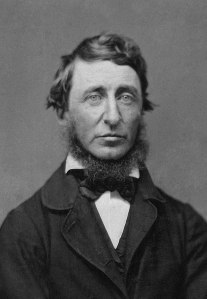
The trick is to make sure the neighbors don’t complain about the smell.  That, in part, determines what can or can’t go into the compost bin.  Meat and dairy can’t go into the mix.  Since I’m primarily vegan such things aren’t generally here to be disposed of in any case.  Even the drier lint can go there, for the clothes that we wear become part of who we are, right Henry David?  And here’s where there’s a danger of TMI, although it’s good theology—cast-offs from our selves can also be composted.  Hair, for example.  The composting literature we have seems to take Adam himself out of the equation by specifying pet hair, but hey, mammals are mammals.  The longer I thought about this, the more obvious it was that burial, ideally, is a form of composting.  Giving back to the earth from which we’ve sprung.  That simple wire bin out by the garage is in the process of making the substrate for new life.  We may not be farmers, or gardeners like Adam, but composting feels like giving back somehow.  It’s an act of creation.


Look It Up

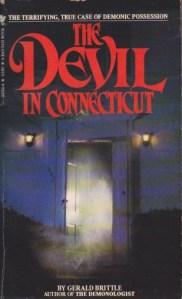
So my current book project involves addressing The Conjuring universe.  A few weeks back I posted on The Nun, the newest member of that diegesis and one with no claim to be based on real events.  Nevertheless, the film circles back at the end to “Frenchy” and his exorcism shown in the original movie.  One of the frustrating aspects of Ed and Lorraine Warren ’s oeuvre is that documented sources are difficult to locate.  When I found out Satan’s Harvest (by Michael Lasalandra and Mark Merenda, with Maurice and Nancy Theriault) was the “true story” behind Frenchy Theriault’s possession, well, let’s just say working on a book is a good excuse.  Overly dramatized, and somewhat padded, this account may be the closest we can come to this particular demonic encounter.

I don’t pretend to be certain about many things, so I reserve judgment about what actually might’ve happened to Maurice Theriault.  Unlike portrayed in The Nun’s storyline, he never lived in Romania.  He was physically abused by his father and was made to participate in unwanted sexual acts.  His was not an easy life.  Still, when Lasalandra and Merenda try to explain the origin of possession they go back to the same source as the original movie—Salem.  Credulously claiming that the Devil was behind what happened in 1692, they believe that demonic possession accounted for that unfortunate miscarriage of justice.  It’s difficult to say if they considered that such speculation implies that the innocents killed there were actually witches.  (They state that the Devil asks people to sign his book.)

Herein lies part of the problem with academics and the supernatural.  Sensationalized claims don’t help since academics are all about being taken seriously.  At the same time it’s clear that conventional explanations don’t always fit.  Neither credulousness nor extreme skepticism will lead to solving such mysteries.  This is why we need the monstrous.  That which falls outside the parameters of what quotidian experience leads us to expect.  Science can make everything fit only by leveling off the exceptional.  Academics won’t risk exploration of the anomalous.  This leaves the curious few means of finding out what happened beyond simple dismissal or overly gullible popularizing accounts.  Satan’s Harvest contains information that calls out for explanation.  Perhaps a hoax was involved, but that doesn’t add up when all the evidence is in.  Beyond that, we’re left to guess.  And some things it feels better to be sure about.


Beyond the Facade

Over the summer the New York Historical Society had an exhibit, now over, on Norman Rockwell, Franklin Roosevelt, and the Four Freedoms.  I think we may be down to one or two freedoms by now, but nevertheless.  One weekend my wife and I went to the exhibition.  She’d just read a biography of Rockwell, and although his Americana is my America, I suppose, his pluck is sometimes unnerving.  You see, an artist has to show emotions on people’s faces and in their gestures.  Long ago I learned that if you show what you’re feeling in real life, people will quickly take advantage of you.  I learned, even as a teen, to be subtle.  If you think you’ve got me figured out, here’s a hint—that subtlety continues even into my writing.  It’s often not what it appears to be.

Some months back I wrote a funny piece on this blog.  Some people who actually know me—or the part that I let be known—thought I was depressed.  Or angry.  Or both.  That’s a side effect of subtlety.  Episcopalians have it down to a science.  At least they used to.  The only place they showed emotion was in high mass, and that, if done right, packs a wallop.  One of my brothers comments that I seldom smile.  I might say too much about myself if I did.  What would you do with that knowledge?  In my earliest experience, you might use it to hurt me.  Walking through Manhattan to the exhibit, I noticed the stone facades.  Some buildings have solemn stonework, almost gothic is aspect.  Behind the windows, however, I can sense emotion left unshown.  It’s not very Rockwell.

I admire Rockwell’s outlook.  Indeed, I might share more of it than I want to reveal.  Rockwell, according to the exhibit, believed in America for all races and all creeds.  Strong women dominate his paintings and illustrations.  Equality was what America used to stand for.  And although I’m reluctant to admit it, when my writing’s most serious an element of humor enters in.  Like a Rockwell painting.  He wished to be taken for a serious artist, but had a difficult time suppressing the irony of life itself.  I get that.  It’s just that if other people see what’s beneath the surface—what goes on behind that stone facade?—they will find a means of extorting it.  Best to be subtle.  Words can mean the opposite of what they say or can be literally true.  The shades between the extremes are endless.


Sinful Thoughts

Nothing is quite so scary as that which is undefined.  I learned that as an Evangelical child.  There’s a verse in the gospel of Mark—I’ll use Mark because it’s the earliest, by consensus—that reads, “Verily I say unto you, All sins shall be forgiven unto the sons of men, and blasphemies wherewith soever they shall blaspheme:  But he that shall blaspheme against the Holy Ghost hath never forgiveness, but is in danger of eternal damnation.”  Now, that was heavy stuff for a kid.  There was an unforgivable sin.  Naturally, the mind goes to what exactly blasphemy against the Holy Ghost might be.  I hadn’t learned much about context by the point, but Mark places this statement right after the good people of Capernaum accuse Jesus of casting out a demon by the power of Satan.  In context the unforgivable sin in stating that what comes from God is of the Devil.  By extension, vice versa.  Keep that in mind.

A few chapters later Jesus is describing sin again.  This time he lists: “evil thoughts, adulteries, fornications, murders, thefts, covetousness, wickedness, deceit, lasciviousness, an evil eye, blasphemy, pride, foolishness.”  If you read the news these characteristics sound very much like the repeated and continued behavior of 45.  Jesus himself cites this as evil—and here’s where it’s important to remember the unforgivable sin—to claim that such things come from God is blasphemy against the Holy Ghost.  Yet Evangelicals are doing precisely that.  Every time they exonerate Trump and his ground in behavior that for any other human being would be condemned as “sinful,” they are committing the unforgivable sin.  And they’re not even scared.

When I was a child, Evangelicals took the Bible seriously.  It was more important than anything—even railroading anti-abortion judges through to the Supreme Court.  Little known fact: Evangelicals of the 1950s supported abortion.  Since that time they’ve lost their faith.  And their mind.  Sucked into a political activism controlled by forces they don’t understand—if any man have ears to hear, let him hear—they committed the unforgivable sin that kept me awake countless nights with the fires of Hell roaring in my head.  I set aside the gospel of Mark and scratched my head.  How’d we come to this?  A nation, one might say a house, divided against itself.  The kind that Jesus, again speaking of Satan, declared could not stand.  No wonder Evangelicals avoid the Bible these days.  It is a very scary book.


Fear Factory

Every politician knows that fear wins elections.  Just how deep into Orwellian territory we are became clear at 2:18 p.m. on Wednesday.  A man I loath and distrust, who happens hold high office sent out a national presidential alert to cell phones everywhere.  After being awakened at odd hours a time or two over my cell phone owning years, I’d turned off my smart phone alerts.  I wasn’t out driving to spot amber alert situations in the middle of the night.  If there’s a severe thunderstorm coming, I’m already awake.  The idea that if everyone with a phone is on the lookout we’ll all be safe seems a bogus one to me.  There is, however, no way to turn off a presidential alert.  Like most Americans I was working when my phone went off.  I wasn’t afraid.  Just annoyed.

Random scary sounds are among the most frightening things people experience.  I recently started writing in the attic (if you read this blog regularly you won’t even ask why).  As I was writing this post a gust of wind blew and it sounded like the roof might collapse upon me.  Sudden load sounds make us look for comfort in a strong person.  On a national scale that means, God help us, politicians.  When my phone alert goes off, it’s telling me to vote for the party in power.  There’s psychology afoot here.  This was no accidental coincidence.  Midterm elections are just weeks away.

I know something about fear.  Not only do I write about horror films, I grew up with so many childhood phobias that my mother wondered how I would ever get along.  Those phobias may have gone underground when I became an adult, but they never truly left me.  I don’t encounter them on a daily basis, but I can draw on them for my fiction.  I don’t, however, appreciate my government using them against me.  Perhaps this sounds paranoid.  If paranoid it’s by design.  Even if 45 can’t see beyond his own proboscis, those on his team know the fear factor works.  Winston will come to love big brother.  Fear robs rationality.  We’re mere primates, after all.  Was it coincidence that there was what appeared to be an impromptu Trump rally later that afternoon?  There is a difference between paranoia and naiveté.  We’re a wired nation and the Republican Party has the phone number of each and every one of us.  If this is not a drill, you know where to find me. 


Goblins out There

From Wikimedia Commons

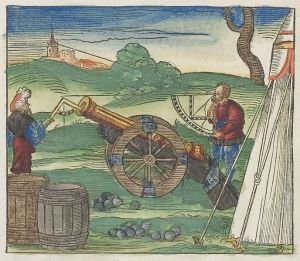
You step away from the telescope for a few months and see what happens.  That may sound like a recipe for some kind of cosmic soup, but as we find ourselves so busy with earthly matters it’s hard to keep up with the heavenly.  I’ve just been reading about the discovery of “The Goblin”—appropriate as we tiptoe into October.  The Goblin is officially a dwarf planet named 2015TG387, which falls trippingly off the tongue.  For those of us who never even saw Pluto before it was demoted as a planet, the distance of this planetoid boggles the mind.  It also makes space feel somehow less empty.  In fact, our solar system’s much more crowded than it was when I took astronomy class in college.

The universe—space—is close kin to our ideas of religion.  “God,” however defined, is “up there.”  As Galileo encouraged telescopes turned outward we began to discover mundane, if complicated, ways of explaining the universe.  Nobody looked through the eyepiece and saw the deity waving back.  Space was cold, dark, and largely empty.  Then the idea eventually grew that it was full of dark matter which, like spiritual entities, can’t be seen.  Unlike spiritual entities, however, it can be hypothesized.  Calculated, even if not measured.  And since it isn’t supernatural, it’s just fine to keep in our cosmic soup.  The problem with any recipe, however, is that it seems that each time you make it the results are slightly different.

It’s somehow appropriate that our new space neighbor is called the Goblin.  The idea of a cosmos devoid of any intelligent life—supernatural or no—is somewhat scary.  Looking at the headlines of what we’re doing to one another down here, and nobody willing to take the reins of reason, we increasingly hope for something beyond mere nature in the cold, dark reaches above.  And that we’ve found such a thing as a goblin—a supernatural entity if there ever was one—is telling.  In fact, all our planets are named after gods.  We can blame the Greeks and Romans (and even the Mesopotamians) for that.  Still, the tradition continued onto the worlds they couldn’t see: Neptune and Uranus and, for a while, Pluto.  We can’t escape the idea that what’s up there is more powerful than our minuscule human troubles.  Our slowly eroding atmosphere is all that keeps us alive down here.  And now there’s a goblin circling all around us, so far away that few will ever even catch a glimpse.


IAGY?

Here’s how messed up “America first” is.  As we’re forced to try to protect ourselves from a drunken, sexually abusive Supreme Court nominee, Indonesia is trying to recover from an earthquake and tsunami that have killed at least 1,400 people.  Of course, it’s “America first.”  The powers that be want us to buy their narrative that we only are important, the chosen ones.  You don’t even have to be non-American to be excluded.  Just ask the people of Puerto Rico.  No, it is far more important to railroad through an anti-abortion judge so we can cause misery to countless numbers of people in America first.  Natural disasters strike even here (Florence), and we can only glance away a moment from the constant drama being roiled in that ever bubbling swamp.  I thought it was supposed to be drained by now.  They did find some slimy choices for high offices, in any case.

This new form of Manifest Destiny is as bad as the old one was.  People are suffering from a terrible tragedy and our lips are chapped from calling our senators to try to get them not to vote for someone a vast majority of normal citizens find highly objectionable.  The Republican abuse of power is only overshadowed by its abuse of women.  When even Kellyanne Conway speaks out stating that we need to listen to the victims, it’s clear something is amiss.  How slowly they awaken, these creatures of the swamp.  “America first” looked like a party game for a while, but now that its true and ugly agenda is being shown those who climbed aboard that bus aren’t quite sure how to signal that they want off.

What of Indonesia?  What of a president who can’t even point to it on a map?  It’s not here, so it’s not our problem.  Nice drunken frat boys who feel up women are the best we can offer for the highest court in the land.  Elsewhere in the world they’re trying to address the global warming that is causing more and more extreme weather.  We can charge tariffs and still call ourselves Republican.  If we can’t start actual wars we’ll start trade wars.  You can’t be great until others bow before you, even if they’re bowed in grief for a natural disaster that claimed hundreds of lives.  We’ll make America first even if we have to fall into last place to do it.


Rich Rule

The perils of plutocracy should be obvious, but clearly they’re not.  This is somewhat ironic among its biblical fan base, which seems to be where the GOP draws its energy.  As the truth about Brett Kavanaugh becomes public knowledge, his religious supporters dig in their heels and blame the victims.  As one of the many who grew up far from privilege I found Shamus Khan’s analysis in the Washington Post eye-opening.  Khan makes the case that those who grow up in rich families and attend the “best schools” are endowed with the constantly reinforced message that the rules do not apply to them.  They can get away with things that others cannot and, in general, they are let off the hook for things that lead to imprisonment for other citizens.  What’s surprising is the Bible-thumpers applaud this.

It also explains more than Kavanaugh.  Trump is also a child of privilege and his entire term in office so far has been one of personal exceptionalism.  Many actual presidents were impeached or censured for acts far less offensive than those 45 commits.  The wealthy, however, are not held accountable.  Where is the Bible when we need it?  The Good Book is no friend to those who enjoy great riches.  In fact, one of the most constant refrains of Scripture is that against the privileged.  With great wealth comes great responsibility—the obligation to help those less fortunate.  The idea of getting away with what you can is hardly evangelical.

If the literalists can overlook the misuse of wealth, it is still more surprising that they can pardon lying.  Since the rules do not apply to the privileged, their own narrative bears the conviction of righteousness.  They can’t have made a mistake since their money proves them right.  Morality can be counted in dollars and cents.  It is for those of the underclasses to come up with high-minded ideals and hold themselves to them.  Wealth is its own justification.  Back in the days when America was young, the French lost patience with governance by the elites.  But then, the Fundamentalist class didn’t have much of a voice then.  It was the Age of Reason.  An Age out of which we’ve apparently grown.  Fake news, alternative facts, heavy-drinking frat boy justices, and women-groping presidents.  Can we not see the parallels with the other great plutocracy of the Roman Empire?  Ironically, it survives today only in the form of the church it sanctioned.


The Falls of Lucifer

The Devil is everywhere.  At least if we go by the many places named after the dark lord.  Over the weekend in Ithaca, we visited Lucifer Falls.  Like several of the cataracts in the area, this is an impressive waterfall that exposes the many layers of the gorge it has carved out over the eons.  Part of Robert H. Treman State Park, the falls were impressive after all the rain we’ve been having here in the east.  But why are they called “Lucifer Falls”?  The literature on the park begs ignorance as to the origins of the name, noting that it was likely taken from the original Iroquois name.  If that’s the case, it’s likely been distorted in transmission.  Many such satanic names are.

Apart from the fact that Native American names for geologic features weren’t based on the Christian trope of God v. Satan, early European settlers heard what they wanted to hear.  Devil’s Lake in Wisconsin, which we used to visit in my Nashotah House days, was more properly translated “Spirit Lake.”  Since the Christians who encountered the native name believed that indigenous religion was inspired by the evil one, they recast the spiritual lake into an infernal one, at least in name.  People will still vacation there, thank you very much, while retaining the baptismal moniker that an intolerant religion bestowed upon it.  There’s nothing evil about Lucifer Falls.  It is an astonishing testament to what nature can do when left alone.

Well, at least for a while.  Like its more famous cousin Niagara, Lucifer Falls, upriver, was harvested for its ability to turn a mill wheel.  The old mill still stands today in the park as a testament to how the river was exploited.  Mills aren’t naturally evil, of course.  They turn to produce the things people need—in this case flour.  They can also, however, be symbols of corporate greed.  Those who own them can exploit more than just the water, and mills became a name for many other places of industry that eventually stole the lives and livelihoods of those whose work in them was cheap.  William Blake’s “dark satanic mills” remains a memorable phrase testifying to what happens when the wealthy, when corporations—which are “persons” with no feelings—are allowed to make decisions.  Treman State Park’s old mill was the center of a community that apparently didn’t experience such exploitation.  It was just a mill.  It’s picturesque waterfall was just a waterfall.  The name, however, still speaks volumes.


Just Sagan

Perhaps the most famous resident of Ithaca, New York, during his career at Cornell was Carl Sagan.  The astrophysicist had had a noteworthy career, becoming a household name with his popularizing television programs and books.  When he died prematurely, there was a real sense of loss among many of us who appreciate those who dumb down science so the rest of us can understand.  Over the weekend in Ithaca, which still bears his physical legacy in a scale model of the solar system, we went to find his final resting place in Lakeview Cemetery.  There is something oddly peaceful about passing time among the dead.  It was late afternoon and we were the only ones in the graveyard.  We also had no idea where his plot might be, so we surveyed a good bit of the grounds, finding the Cornell family mausoleum along the way.

When my wife found his plot, with a simple tombstone laid into the ground, it was impossible not to notice the grave goods.  The leaving of mementos at the burial places of the famous is nothing new.  Douglas Adams’ grave in Highgate Cemetery in London had a profusion of pens pressed into the ground.  H. P. Lovecraft’s final resting place in Providence likewise had remembrances scattered about.  Among the items at Sagan’s grave were various bits of money, a teddy bear, and a somewhat lengthy letter written to the late scientist, expressing how much he had influenced the life of the writer.  After paying our respects, it struck me how even in a cemetery where death, the great leveler, has visited all, we still seek out the famous.

I couldn’t help pondering the implications of leaving behind something for the dead.  Money is of no use where goods and services can’t be traded.  Approaching the cemetery from the upper entrance, we first encountered a Jewish burial area where many of the tombs had rocks characteristically laid on top.  Sagan’s grave is on the border where stones on tombs begin to give way to crosses.  The custom of placing rocks on gravestones is ancient, but the reasons it’s done are disputed.  One of my favorite explanations is that flowers die but rocks do not.  There’s a simple elegance to it.  Many Christian graves appear neglected by comparison.  We don’t live in Ithaca, and it’s difficult to guess how often this somewhat hard-to-find cemetery is visited.  When it is, however, it is in the spirit of remembering a life that was ever focused outward, to an infinite yet expanding universe.


Come Salem Away

It’s the season.  Here in the fast waning days of September we can already taste October and thoughts turn toward ghosties and ghoulies and their kin.  Susan Fair’s American Witches: A Broomstick Tour through Four Centuries is, as any book in the nation of Salem, a mere skeleton crew of a long and feared tradition.  As is true of most things in the last two years, this book takes on a poignancy that was perhaps unintentional since it was written for fun.  It is a somewhat uncanny combination as it is—witch accusations often led to (and perhaps lead to, far from official eyes) someone dying.  We fear witches.  Fair reaches back pretty far, going even to the point of discussing those (generally women) hanged on ships on their way to America because their shipmates thought them witches.

Salem so dominates our witch consciousness that we sometimes forget these other episodes.  Fair explores, along with snarky asides, many early cases outside Salem.  In fact, the sad chapter in our history where hearsay became fact—one can’t help but think of “fake news”—the mass, “legal” murders carried out in Salem, is part of a larger pattern.  Not surprisingly women feature as the victims in this unholy web of fear and piety.  The combination is a dangerous one and otherwise rational people sanction evil rather than confront what is a mere perception of evil.  Fair moves on, however, to discuss other witchcraft scenarios—the witches (fortune tellers) of New York, the murder of a “witch” in Booger Hole, West Virginia (did I mention there was snark?), and the hex murder of York, Pennsylvania.  All of these represent an underlying fear that won’t go away.

This breezy tour ends near the author’s hometown outside Burkittsville, Maryland.  Although it is widely known that The Blair Witch Project was fiction from start to finish, this tiny town has been beset by those who refuse to accept that reality.  Such credulousness should stand as a warning to a country even capable of electing someone like Trump.  We are a suggestible nation with many people incapable of independent thought.  We are natural believers.  At the same time we’re a people that sees no value in studying religion even as it destroys us.  It’s like that embarrassing relative we never talk about.  But people still come to Burkittsville nevertheless.  Fair’s book was written before the election that showed who we really are.  Although the writing is charming, it’s hard to laugh about the subject these days.  We have forgotten Salem and all it taught us.


Express

Full sentences.  They’re underrated.  If, like me, you receive many tersely-worded emails—an inevitable result of the txt generation—you make know that disoriented feeling of not knowing what’s being said.  Sure, in caveman grunt style, you get the gist, but what of the tone, the context, or the art of polite human conversation?  Some colleagues think me quaint for beginning each email with a greeting, followed by a body, and a closing.  I try to articulate the purpose of my communication using full sentences, often explaining why I’m asking.  Sometimes I ask questions.  Sometimes multiple questions.  When I get an answer answer stating just “Yes” am I to assume that’s to all of the questions?  What if one of them didn’t accept a “yes or no” answer?

Scientists often suggest that it’s our ability to communicate vocally that set us on a different evolutionary track from other animals.  Our large brains, we’re told, were to accommodate the complexities of speech and the abstract thought that followed it.  Seems a pity that now that we communicate constantly we seem to have lost the ability.  Well, not so much lost it as have allowed ourselves to be completely distracted.  I get busyness.  There are times when new emails arrive every few seconds and everyone wants an answer.  At those times I try to envision the half glasses and green eyeshades of a telegraph operator.  Dots and dashes and a good deal of waiting and still business got done.  And I wonder what this cryptic email before me, not even a full sentence, was meant to convey.

Cave-dwellers, I imagine, had some pretty vital information to communicate.  Things like, “I just saw a cave-bear go in there, I’d avoid that place if I were you,” or “Do you think that saber-tooth cat looks hungry?”  The more precision they could put on their grunts the better advantage they would have.  Syntax wasn’t invented for the fun of it.  And yet, here we are.  No time.  Full sentences might serve to avoid confusion and mistakes.  None of us would have these jobs had we not the ability to communicate.  Would you apply for a job using anything less than full sentences?  In our rush to be more efficient we create situations where more information will be required further down the line.  A pity.  If we’d only take the time.  You know.


Riveting

The days of angry white men backlash are hopefully numbered.  One thing this strange phenomenon of privileged males feeling under threat has brought to the surface is the long struggle of women for the basic acknowledgment of human equality.  Ironically, it took a horrible war to move the cause forward.  Rosie the Riveter became a fixture during World War Two, blazing the message that women could do the tough jobs men had always done, now that males were off trying to kill one another overseas.  These images of Rosie have found new life in the era of Trumpism that has objectified women in the crudest possible ways, because it’s, well, monkey-see monkey-do in the world of politics.  Just consider Brett Kavanaugh and try to challenge the point.

One of the more famous portraits of Rosie, back when Fascism was an evil thing, is that painted by Norman Rockwell.  A pugnacious Rosie eats her lunch with her feet on Main Kampf and her riveting gun in her lap.  (These days she would need to have her feet on an elephant rampant.)  Something about this painting always bothered me.  I could never put my finger on it.  It certainly wasn’t the confident look on Rosie’s face—she’d earned that and deserved it long before it became a reality.  Even the patriotism at that time was tasteful.  No, it was her posture.  There was something uncanny about it.  Then I learned that Rockwell had consciously copied Michelangelo’s Isaiah from the Sistine Chapel ceiling.

Isaiah, according to that famous rendition (Isaiah has never been a popular subject for paintings, for some reason), has his head turned at that peculiar angle because an angel is whispering in his ear.  Instead of a riveting gun, he’s packing a nascent Good Book, but he is receiving a direct message from on high.  I like to think it might be “The Spirit of the Lord is upon me, because he hath anointed me to preach the gospel to the poor; he hath sent me to heal the brokenhearted, to preach deliverance to the captives, and recovering of sight to the blind, to set at liberty them that are bruised, to preach the acceptable year of the Lord,” but then I’ve always been a dreamer.  Rosie, in Rockwell’s rendition, is prophetic.  She is proclaiming an equality which, inexplicably, coming up on a century later, is still unrealized.  Why?  The angry white man only recognizes God made in his own image.


Virgin-Haunted World

One of the most frequent accusations of “idolatry” I heard as a child was leveled at Roman Catholic devotion to the virgin Mary.  Lessons learned during childhood are difficult to displace, especially when they concern your eternal destination.  I overcame this particular objection, a bit, during my sojourn among the Episcopalians, but I have to confess I never felt right praying to Mary.  In my Protestant-steeped mind, there were two classes of entities involved: gods (of which, properly, there was only one) and human beings.  Only the former received prayers.  The rest of us simply had to contend with non-supernatural powers and do the best we could.  Still, I met many believers devoted to Mary, and honestly, some accounts of Marian apparitions are pretty impressive.

A local source for inexpensive advertising in our area is essentially a weekly set of want ads.  For a small fee you can advertise just about anything you want to buy or have to sell.  Spiritual or physical.  A few weeks ago, someone ran a magnanimous piece on a prayer to the virgin never known to fail.  The words of the prayer were printed, along with the instructions, for nothing is quite as simple as “ask and you shall receive.”  The prayer must be recited thrice, and thanksgiving publicly proclaimed.  A number of questions occurred to me, regarding not only this, but all prayers for divine action.  One is the rather simple query of how you can know if a prayer has never failed.  I suspect this is known by faith alone.

There are any number of things most of us would like to change about our lives, and the larger issue of prayer is the daisy-chaining of causality.  One change causes another, causes another, and often that for which we pray will impact another person in a negative way.  This is the classic “contradictory prayer” conundrum—one person prays for sunny skies while another prays for rain.  Neither is evil, both have their reasons, perhaps equally important.  (The weekday is a workday for many, and that’s non-negotiable in a capitalist society, so I suspect prayers for sunny skies tend to be weekend prayers, but still…)  The prayer never known to fail is either a rock or a hard place.  It’s that certitude that does it.  I don’t begrudge anyone a prayer that works.  Faith alone can test the results.  And although we could use a little less rain around here, we could all benefit from a little more faith, I suspect.  And for that there’s no fee.


Forgotten Bible Verses

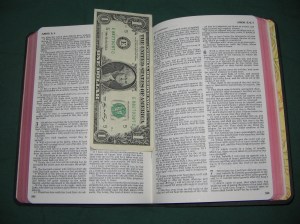
Bible believers are basking in the headlines these days.  What with Mr. “Meet My Genitals” gunning for the Supreme Court and displacing them for a few days, they must be getting anxious for more sonburn in the limelight.  If only they didn’t have the Good Book standing in the way.  As I was reading my Bible the other day, I was reminded of this little gem, “the love of money is the root of all evil.”  Now, liberals like myself know that Paul of Tarsus didn’t write 1 Timothy, but Bible-believers know he did.  So much the worse for them.  They elected a president who stands for nothing so much as the love of money, and the swamp has become quite a root of evil.  Senate Republicans, after hearing a second credible sexual assault allegation against their boy for the black bench responded by trying to rush through a vote before the news got out.  And this reminded me of the forgotten prophets.

“What doth the Lord require of thee, but to do justly, and to love mercy, and to walk humbly with thy God?”  Well, you see, Mr. Micah, we know we’re heading to defeat in the midterms, so we’ve got to railroad through as many of our personal agendas as we can.  Don’t you know, o Lord, that this is a lifetime appointment?  And really, what does justice have to do with it?  Sure, he gropes and demeans women, but you’re a dude, right?  I bet you did the same when you were in high school and college.  And the money thing?  We’re only trying to help the economy because, well, wealth trickles down.  Who said anything like it’s the root of all evil?  “Hate the evil, and love the good, and establish judgment in the gate.”  Now, don’t go quoting Mr. Amos to me.  Next thing I know you’ll be telling me to let justice to run down like waters, and righteousness like a mighty stream.

Forgotten Bible verses, in the new Evangelicalism, seem to be cropping up on the black market.  You might think we should turn back to the start of the Good Book and read from the beginning.  There the GOP will find its solace until they come to the 27th verse, “So God created man in his own image, in the image of God created he him; male and female created he them.”  That semicolon says a lot; they will claim.  Man is the image of God, and he had a son.  Just don’t listen too closely to what that son says, particularly when he makes remarks like “whosoever looketh on a woman to lust after her hath committed adultery with her already in his heart.”  Young men like to drink and grope.  When they grow old they then like to be Supreme Court justices.  What’s that?  One more short verse?  “Jesus wept.”