Eternity, Technically

When the robot uprising comes, we have a factor in our favor, we biological beings. That is our parts, although they do break down, generally heal themselves. I write this as kind of a forecast, because I’m not at home due to the holiday weekend, and neither is the internet at my home. You see, our internet service (which is not cheap) has been going out from time to time. Our service provider thinks it may be old parts. The box was installed in our basement over a decade ago and when the technician sent me down amid the cobwebs before leaving town I had to report to her that all cables were hardwired into the box. No clip and slip here. She thinks the cable has gone bad.

The cable just sits there. It never gets moved or jostled. How it could fail I don’t know. But the consequences are two. There may not be posts on this blog for a while once I return home. I’ve posted every day, holiday and secular-day, for years now. Technology, however, is a jealous deity and will not permit humans taking it for granted. The second consequence is more optimistic; when the robots rise up against us, their parts will wear out and they won’t be able to regenerate them organically. They’ll need to order them and hope they can find a delivery system even more efficient than Amazon’s. Good luck with that! I ordered a book the other day and less than 24 hours later it was at my door. That’s service.

I decided to post this advance warning so there may be no weeping and gnashing of teeth (please—dental work is expensive!) on Monday or Tuesday when no new post appears on this blog. It’s not that I’m not thinking of you all, it’s just technical. Robots may run system tests, but can they feel it in their bones when something’s about to go? Do they indeed sing the body electric? Can they feel the poetry they write? To be human is to think with our emotions and to reason ourselves out of irrational angst. I see the slaves to technology putting on weight as they rely more and more on labor-saving devices to make their lives automated. I’m guilty too. As I sit here many miles from home, however, I worry about the internet back there. Is it sick? Is it dying? And if so, to which mechanical god should I pray to save its technical soul?


Crafting Magic

There’s a disingenuousness about an extremely wealthy white man claiming he’s the victim of a “witch hunt.” Such super-slurring devalues the many thousands of lives lost in actual witch hunts, most of them female. Regular readers of this blog know that I’ve long been fascinated by witches, and since I have so little time, Very Short Introductions are appealing. Malcolm Gaskill’s such introduction on Witchcraft is a surprisingly sensitive book that manages to touch on many important aspects of those who spend time thinking. The relationship between religion and science, for example. Witches force that question in various ways. The main takeaway, however, is another that the witch-in-chief would do well to take to heart—we must learn from history. History may be the key to human survival.

Gaskill has an unnerving balance when it comes to witch hunts. In places his attempts at objectivity can appear a little cold—history has demonstrated that the numbers of people killed in Europe’s witch madness aren’t as high as often claimed. Still, the loss of over 100,000 lives to propitiate our collective fears is tragic. This little book crams a lot of information in and it carries an appropriately warning tone. We don’t really understand what witches are, and we do still live in a world where hunts for them take place. Our psychies, ever so rational, crave magic. Societies from earliest times feared as well as desired it. Our belief in witches, and witchcraft, betrays quite a lot of what it means to be human.

This quick study isn’t all about witch hunts, though. It also explores the world of witchcraft, both in ancient and modern times. From Mesopotamian diviners to Wiccans, “the craft” has always been with us and is believed in by a surprisingly large number of people in industrialized societies. Magic, of course, generally leads to unexpected results. And the metaphor of its power over our imagination is forgotten at a terrible price. As Gaskill makes clear, the “witch” can be a stand-in for the other—the other religion, the other nationality, the other we fear and, now with government sanction, drive out or destroy. There is no magic to a wealthy man buying the presidency of the nation. There is, however, a culpability, a reckoning, if you will, that must attend abuses of this metaphor. The GOP has become a party of familiars in this compact with the Devil, it seems. That’s just a metaphor. But then again, metaphors can sometimes truly be magic.


Holy or Not?

The ancient divine world was a slippery place. When you stop to think about it, this makes sense. The deities and demons of antiquity were invisible. Different opinions existed as to what they were. The idea of “the Bible” that contains infallible information didn’t exist. Apart from the books now accepted by Protestants, the “Apocrypha” and even more fun Pseudepigrapha contained many more traditions than the average reader might guess. I’ve been a student of that ancient divine world for decades now, and I learned quite a bit from The Watchers in Jewish and Christian Traditions, edited by Angela Kim Harkins, Kelley Coblentz Bautch, and John C. Endres, S.J. Appropriately divided into three parts (origins of fallen angels, Second Temple developments, and Jewish and Christian reception) these collected essays explore different dimensions of these mysterious beings.

Watchers are seldom mentioned in the Bible, in just a few verses of Daniel. In some traditions they are high angels—think the hymn that includes the word “ye Watchers and ye holy ones”—but mostly they are fallen angels. If you limit yourself to the Good Book you really get only four verses of Genesis 6 to explain them. Other ancient writers, some of whom likely influenced the New Testament, took up the subject. The book of 1 Enoch contains a section called The Book of the Watchers. Here the Watchers come down to earth with a couple of purposes—to share forbidden secrets with humanity, and to mate with human women. The offspring of these matings are giants, Nephilim, or demons. Perhaps all three. These events are retold in Jubilees and are taken up by early Christian writers especially.

Although this book isn’t a monograph with conclusions based on all the information it contains, it nevertheless gives a very good sense of the various traditions that developed around these Watchers. Even when reading through the Bible as a child, the Genesis 6 episode caught me off guard. The story isn’t highlighted in children’s Bibles, and the way it’s told in Hebrew leaves a lot of ambiguities in the adult reader’s mind. It’s almost as if this brief account is bing kept deliberately obscure. The Good Book drops this bomb then blithely goes on its way without mentioning it again. This episode reminds us just how little the Bible clarifies. It wasn’t written to be the “inerrant word of God,” and those heady days just after Eden were full of stories that it never bothered to tell. The Watchers, meanwhile, made their way into popular culture because the silence of Scripture allows readers to fill in the blanks with either angels or demons.


Wired for Good

I spend entirely too much time untangling wires. Recently I read a survey asking whether you’d rather face a robot uprising or a zombie apocalypse. There’s no question that the devices have already taken over. And they’re eager for your source of power. The work laptop, the home computer, the aging iPhone, the iPad—they all want feeding, like a nest of hungry chicks. And their cords get tangled. It’s up to the human servant to come along and try to introduce some order into this chaos. Then there are the devices that go the way of the iMac, and yet their cords somehow remain. We have boxes of cords that look like an octopus orgy—uncertain to what device they once belonged we’re afraid to send them to the recycling plant because you may have accidentally rid yourself of one you still need. If there was a robot uprising, they’d be tripping over their own umbilical cords.

We used to go camping. Completely unplugged. These days of state parks offering wifi, even a trip to the wilderness isn’t really wireless. I’m a little afraid of this new dependency. The joy of memorizing has been replaced with the internet in my pocket. Life has become much easier in some respects, no doubt, but it’s not a one way street. Technology has its price, as this tangle of cords I’m facing reminds me. There’s no cutting this gordian knot without going back to the Stone Age, it seems. What would I do if I couldn’t post on this blog daily? What would remain of me?

If electricians are the acolytes to this new religion, then programmers are the priests. Each keystroke produces a recognizable letter because of their prayers and supplications to the great god Internet. Without it my job would be impossible. It knows how much money I have and where. What I’ve spent it on. It even flatters me when I search for something I wrote. The robot uprising, you see, need not be violent. It’s subtle and gradual. When you can’t live without something—when you adore it and depend on it constantly—it’s become a deity. The god, however, depends on us for providing it the constant sacrifice of power that it demands. It hasn’t figured out how to extract electricity from the air, or suck it from our fingertips as we type. And for its needs it requires cables. Like a good servant, I’m going to sit down and sort them all out again.


Which Bible Again?

Which Bible? That’s a fair enough question. No matter how much you want to deny it, western culture always has been and always will have been biblically based. That being the case, it’s best to know which Bible we’re talking about. The Protestant Bible is America’s Good Book. Although there were Catholics before Protestants were a gleam in Luther’s eye, the latter laid early claim to the Bible. When a Bible appears in a social or civil religion context, it’s most likely Protestant. The Catholic Bible contains extra material—that which Protestants call The Apocrypha. Satisfied that Luther was right to leave the Deuterocanonical books out, their role as fake good news has never been questioned. If the King James was good enough for Jesus and Paul, they say, only half in jest.

Some Evangelicals belong to the King James only movement. They come up with alternative facts when faced with the reality that the King James translation includes the Apocrypha. Yes, it’s right there in black and white. The Authorized Version of the Bible included the “Catholic books.” I was reminded of this the other day when I was searching for a simple factoid—how many words are in the King James Bible? The vast majority of websites give the unquestioning answer of 783,137. They may then break it down into “Old Testament” and New. Almost always they leave out the Apocrypha. The word count there is 152,185, and if my math serves, that brings the total to 935,322—not quite a million words. The Good Book is a big book.

The King James Onlyists (yes, that’s a thing) have bigger problems than the Apocrypha. What King James is the onlyist? The KJV you buy in your Christian bookstore is one of the many 18th century revisions of the 1611 King James. You see, translations are hardly stable. They change over time. Even the Revised Standard Version isn’t completely standard. I noticed while reading it as a kid that words had been changed over time. If our beloved Onlyist friends want to be purists and go back to the 1611 then they’ll have the problem of the Apocrypha to deal with. So which Bible? It’s a fair question. Catholic Bibles are bigger. Some Orthodox traditions also include such exotic books as Jubilees and 1 Enoch. And, from this we should take a lesson. Where there’s 1 Enoch, there’s always another not far away.


Ask an Evangelical

News stories this year have plowed up a frequently repeated question: what’s an Evangelical? This was the subtext to a Washington Post story that declared “Half of evangelicals support Israel because they believe it is important for fulfilling end-times prophecy,” as if it’s news. The media’s a little shy, I get it. Those of us who grew up Evangelical could have told them that at least 40 years ago. As a child I knew that Israel had to be fully restored for Jesus to return. Politics, we thought, were holding God hostage. You see, if the Bible says something, and it’s infallible, then even the Almighty has to obey it. And some parts seem to indicate that Israel has to be restored—interpreted a certain way—before Jesus gets his invitation back.

This Evangelical support isn’t because they love the Jews. No, no. Let’s not get personal about this. It’s because the second coming isn’t coming until the pieces are laid out in order. The Bible’s like a crystal ball, only it’s holy. It can predict the future with great precision. You can be sure someone like Trump is in there someplace, maybe in the passage where an ass speaks. In the 1970s it was Nixon. The wonderful thing about prophecy is that it’s made with interchangeable parts. As Millenniarians know, if you get your year wrong never apologize. Simply recalculate and keep preaching as if nothing happened. The Almighty is a forgiving God. At least to those He likes.

Intellectuals seem to think Evangelicalism is contagious. Well, to be fair, historically it has been. That was the whole point of camp meetings. Most Evangelicals aren’t too shy to tell you what they believe. In fact, their reading of the Bible sort of insists that they do. If you’re too bashful, many of those in the academy (or even formerly so) started out in their ranks. Rare is the biblical scholar who decided on that field of study purely based on intellectual curiosity. There was likely a method to their madness. Yes, of course Evangelicals support any politician who moves the embassy to Jerusalem. Tis a consummation devoutly to be wished. The divine heels have been dragging for a couple of millennia now, so it’s time to get this show on the road. All you have to do is ask an Evangelical. They’re not hard to find; in fact, they seem to be everywhere these days.


Taming Shakespeare

It hardly seemed credible, from what I heard in high school, that anyone would read Shakespeare if it weren’t required. I’m not completely naive, but I do wonder if we insist on introducing kids to the Bard before they’re ready for him. The real stumbling block is the unfamiliar words from the Elizabethan period. With enough regular reading they’re less of an obstacle to adults. Or should be. Or not to be. In any case, one of this year’s reading challenge books required that I read The Taming of the Shrew. I’d never read it before and kind of shied away from it because of the chauvinistic theme—Katherine has to be “tamed” by Petruchio so that her poor, sweet sister Bianca can be married. The overall theme is biblical—Rachel can’t be wed before Leah, so Laban declares. The play’s a comedy at the expense of women.

Those who know Shakespeare better than I question whether the playwright’s motives were as undeveloped as all that, but it is in keeping with the time. That’s not to excuse such patriarchal thinking, but we can’t rightfully blame people for thinking in the terms of their time. Yes, we now realize (except on Pennsylvania Avenue) that women and men deserve equal treatment. We are all human beings and should be treated as such, not as if one gender were somehow more important or better than another. In the Tudor Era, however, that idea had not yet caught on. The Taming of the Shrew contains clues as to why.

Perhaps the most reviled part of the play is Katherine’s closing speech as to why women should be subjected to men. Her reasoning is distinctly biblical. Indeed, the edition of the play I was reading took pains to point out the biblical allusions in the speech—primarily to letters of the New Testament. The fear, unaccountably real after all these centuries, is that we might go back to such thinking. The Bible, after all, doesn’t change much. The most conservative of society still read it in the King James, although the Bible Shakespeare’s contemporaries knew best was the Geneva translation. And, like the schoolchild reading Shakespeare, such conservatives need a little help with the language since words have changed their usages over time. They also may need some assistance realizing that not only words evolve, but so does our understanding of what it means to human. It’s not women who need to be tamed, Mr. Shakespeare. No, it’s quite the opposite.


Belly Fires

A friend recently sent me a story from Smithsonian.com about how Evangelicalism arose partially in reaction to protests against the Vietnam War. Not that they were protesting it, but rather other mainline Protestants protesting drove evangelicals further to the right. Having grown up evangelical, I think I understand their strange reasoning fairly well. It was illustrated, for example, in a meeting of the Nashotah House board of trustees. Now, confidentiality rules—which I support—prevent me from providing details, but as you can imagine board meetings involved differences of opinion. I was a faculty representative (voice, but no vote), and I had a point to make. Being Episcopalian I politely and calmly raised my hand. At the same table one of the student representatives (voice, but no vote) was waving his arm like he had to find the nearest restroom, and quick. The chair called on him, ignoring my learned gesture. “He has a fire in the belly,” the chair said, “let’s listen to him.”

A fire in the belly. Not exactly an empirical—or even rational—reason to select one comment above another in my opinion. It was outward and dramatic gesticulation that caught the chair’s attention. Cooler considerations could be easily ignored. Nashotah House wasn’t exactly Evangelical. It was conservative, to be sure. What this episode taught me, however, is that society responds to those with bellies strangely warmed. Mainstream Protestants, for the most part, want comfortable faith experiences. Reason, after all, suggests decorum. Over 90 percent of the many, many mainline sermons I’ve witnessed have been staid and calm. Back in John Wesley’s day enthusiasm was an actionable offense in ecclesiastical eyes. Was the fire in the heart, or in the belly?

A little to the right…
L0006082 Self Portrait of Albrecht Durer
Credit: Wellcome Library, London. Wellcome Images
images@wellcome.ac.uk
http://wellcomeimages.org
Self Portrait of Albrecht Durer.
Finger pointing to left side of torso.
By: Albrecht DurerPublished: –
Copyrighted work available under Creative Commons Attribution only licence CC BY 4.0 http://creativecommons.org/licenses/by/4.0/

So, what does this have to do with the Smithsonian story? Evangelicalism is driven not by the head but by the midriff. John Wesley’s conversion account was famous for his statement that his heart was “strangely warmed.” An inveterate doubter of his own salvation, Wesley needed to be certain. His thermo-cardiac episode helped to comfort him in the face of the lapping waves of the lake of fire at his feet. Having been evangelical once upon a time, I think I understand this constant Wesleyan concern. The fear of Hell is never easily overcome. The Greek word for strong emotion can be translated “to feel it in the bowels.” Examined more rationally, we know what moving bowels lead to. We see it every day as Evangelicals drive all three branches of government. The fire in the belly wins over cooler heads every time.


Secularcist

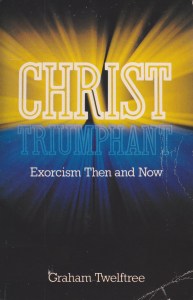
It should be fairly obvious that I’ve been researching demons lately. In the current political climate, it feels like a natural thing to do. Where there are demons, there are also exorcists. Many times those who write books on their experience in this realm will lapse into something along the lines of, “If there are demons, then Catholicism has to be true. All of it.” Or something like that. I have to admit that reading the better written accounts makes me start to think that way. R. H. Stavis’ Sister of Darkness: The Chronicles of a Modern Exorcist is another approach altogether. A secular exorcist, Rachel Stavis doesn’t use the time-worn rituals of movie fame. And her book offers an interesting rationale for her exorcisms—she sees entities.

I have often wondered if “growing up” isn’t largely teaching ourselves to discount what we perceive as children. I’m sure I’m not the only kid who was told there are no such things as monsters but didn’t fully internalize that “fact.” Besides, some things are worse than monsters. In any case, Stavis states that she sees entities and it’s clear from the book that she does indeed believe this. This isn’t for show. She describes various types of demons and how she learned to exorcize them. It’s a fascinating account. Her explanations won’t convince everyone, and her answers of where demons come from remain somewhat vague, but her clients swear by her methods. And she’s upfront about wanting her work to increase the good in the world by banishing evil.

I know many Christians who’d be ready to stone a pagan even for such a good deed as exorcizing a demon. Stavis doesn’t belittle any religion, however, and leans a bit toward Wicca herself. As I read I imagined what a reader convinced of the rectitude of one and only one religions would say. Only Jesus can drive out demons? (Judaism had, and still has exorcists, as do some sects of Islam.) Since a demon is a Christian monster, only a Christian can drive it out? One of the more interesting facts of the history of exorcism is that it was, in the Middle Ages, sometimes an interfaith exercise. The three major religions represented in Europe (the Abrahamic triad) recognized that any of the three could drive out demons. Each welcomed the help of the others. We’ve gone backwards since then. We haven’t again yet reached the stage where we realize that anyone doing good is on the side of good. Even demons, it seems, are conservative these days.


Latter-Day Scouts

Physically strong, mentally awake, and morally straight. And prepared. That’s what Boy Scouts are supposed to be. My attempts to become an Eagle Scout were about like my attempts to become a priest—fraught with peril from the beginning. As a child I wasn’t physically strong, for one thing. The runt of the litter, I was scrawny and often sick. Mentally awake remains a reasonable goal, as does morally straight. Such are the realities of life. Then why are the Mormons parting ways with the Scouts? In a recent Washington Post story by Samantha Schmidt, the Latter-Day Saints are formally separating from the organization now known as Scouts. Whether it’s because they now allow girls to join, or if it’s because they’ve openly permitted gays, the Scouts are no doubt becoming accommodationistic in the eyes of some. In a pluralistic world it’s the only way to survive.

Girl Scouts, on the other hand, have historically not raised the question of sexual orientation. When the social dynamics of a society disadvantage girls, it’s natural that an organization to help build confidence and positive self-attitudes should exclude boys. They have no official affiliation with any religious group. I didn’t realize until reading this article that Mormon boys were automatically part of the group formerly known as Boy Scouts. It fits the image, though. If you’ve ever been on a Boy Scout retreat, however, you know that image and reality aren’t the same thing. I dropped out of Troop 3 after frequent leadership changes frustrated me from getting beyond Tenderfoot. Besides, church was taking over more and more of my life at the time. I guess I was headed for morally straight. Our troop, after all, met in a church basement.

This is about symbolism, of course. To be a Boy Scout meant you were making an effort to be good. In fact, it was kind of hard to grow up thinking you could be good without that guidance. Boy Scouts, they used to say, helped the elderly across the street. Apparently what they do behind closed bedroom doors raises the specter of morality. When I was a kid the issue seemed to be more the mentally awake aspect. The Scouts I knew were like everybody else. There was no special purity there. I never knew anyone who made it all the way to Eagle. The Boy Scout law was like a twelve-step program: trustworthy, loyal, helpful, friendly, courteous, kind, obedient, cheerful, thrifty, brave, clean, and reverent. I wasn’t a Mormon, but the church had proved itself a rival. Especially for the reverent part.


Of Gears and Gods

We develop pictures in our minds of the kinds of things that belong together in different eras. Dinosaurs, for example, don’t belong with our own species, no matter how much we may occasionally wish it were so. Horseless carriages don’t populate the seventeenth century and complex machines, we tend to think, didn’t really come about until medieval Europe (and then they were often used for torture). Our view of the world is, of course, one of comfort with the certainties of history. That’s why the Antikythera Mechanism is such a fascinating artifact. A very sophisticated device with gear trains and cranks and dials, it astonishes those who first encounter it in that it was made before the Common Era somewhere in the sway of ancient Greece. It is, in essence, a kind of computer. Long before Joseph met Mary.

Alexander Jones’ A Portable Cosmos: Revealing the Antikythera Mechanism, Scientific Wonder of the Ancient World is a pretty thorough introduction to the device, including the mechanics of how it works as well as how astronomy works. You see, the Antikythera Mechanism was designed to demonstrate the relative motion of the planets, including the sun and moon. For a device in the geocentric world of ancient Greece, that’s pretty remarkable. It predicted eclipses and showed the phases of the moon. It also makes me ponder the fact that most ancient people considered the planets deities. Long before Newton, then, some were recognizing that even the gods could be made to work according to a crank and gears.

Science and religion coexisted peacefully in those days. Although only one such device has been discovered, it’s virtually certain that more existed. Gods and gears both had a place in such a world. Along the centuries, however, the idea grew that if gears worked, we no longer required a deity. Occam’s razor has its uses, to be sure, but it can shave a little too closely from time to time, nicking delicate flesh. The idea that one side only can be right—and since we can see with our eyes that science works—tends to favor the mechanistic universe. There’s no disputing that science makes our lives easier and that its method is self-correcting and generally effective. The hands that cranked that ancient geared device, however, likely belonged to a believer in gods. Such belief didn’t prevent progress, but then some kind of Fundamentalists killed Socrates for his own form of heresy. Perhaps the true answer lies in balance. It may also be the most difficult of principles, scientific or otherwise, to achieve.


Creating Afterlife

Once upon a time I wrote a book on commuting. It never got beyond my laptop, but I often wonder if it was simply premature. Some stories from public transit can be quite amusing. A few weeks ago I posted on how a woman spoke up after our bus missed it’s turn off the highway and made us all late for work that day. No matter what you think of developers and speculators, one thing we can say for certain is they lack imagination. If you’ve driven this stretch of highway 22 you know that the exits look very much alike. Early in my commuting days a young woman took the empty seat next to me on the way home and asked where we were. “I miss my stop because they all look alike to me,” she explained. She had a point.

So one morning last week I was in my usual seat, reading along, when the driver—new to our route—missed his turn off the highway. The same woman (for we are mostly regulars at this forsaken hour of the morning; if this doesn’t ring a bell search this blog for “commuting”) said, “No need to turn back, they have another bus coming.” I was pleasantly surprised at the learning that had taken place since the last time. I am, however, old enough to remember Greyhound commercials and their slogan, “Take the bus and leave the driving to us.” I also thought of those passengers waiting like evangelicals for the second coming for a bus that would never show up. Our gain in time was their loss. Such are the dynamics of life in a universe not built on the principle of fairness.

The bus can be a microcosm of the moral universe. Evangelists, for example, believe all people must have the opportunity to catch this express bus to Heaven. The bus that comes after the express makes more stops, somewhat like Catholic Purgatory, increasing the suffering for a while, but ultimately making the goal. Missing the bus completely are the Hell-bound for which some claim we must turn back while others insist we press on; there will be another bus. In this case, the same passenger insisted that we help those left behind just a few weeks ago. This led to lengthening of her own stay in Purgatory, so when it happened again she decided those waiting were simply too hard to reach. Or maybe she’d come to believe in predestination. Perhaps it was on some ancient bus that ideas of the afterlife emerged. Experience teaches that much depends on factors beyond your personal control.


Russian Passions

Dmitri didn’t do it; guilty anyway. That’s it in six words. I have to confess my tolerance for really long novels isn’t what it used to be. Blame it on being a child raised by television—every thirty minutes I’m ready for something new. I first read Fyodor Dostoyevsky’s classic The Brothers Karamazov when I was in seminary. Seminarians are an odd breed, and many of them relished the deep, ponderous novels with profound things to say about humankind. The Brothers Karamazov is such a novel. When you’re a student, reading’s part of the job description. As a writer Dostoyevsky gets away with things that’d lead to you failing composition class these days. Speeches that stretch on for chapters, characters taking 100 pages to die, and children talking like adults. It’s a heady mix.

I’ll have to admit that I remembered very little of the story from my last reading. I knew Fyodor Karamazov got killed. I couldn’t remember by whom. All the buzz in seminary was about the famous Grand Inquisitor scene. That’s the part where the Grand Inquisitor interrogates Christ and finds him wanting in the eyes of the church. So daring. So deep! And so early in the book. As I made my way through many heavy-lidded pages, with some dismay I realized that after I’d read the high point of the book I still had 457 pages to go, none of which I remembered from my reading three decades ago. I don’t mean to disparage the classic—I noted and underline several passages as I read. The blame is entirely on me. Still, the endless gloom of personal guilt that hangs on every character, even Alexei—whom Dostoyevsky states outright is his hero—become overbearing at times. This is a nation battened down by Christianity.

Often I’ve expressed the idea that we force children to read great novels before they’re ready to do so, ruining the classics for them for life. I first read Moby-Dick in seminary and I’ve read it several times since. It seems nobody’s really ready for Melville before their twenties. What is the age for Dostoyevsky? I think I comprehended more this time through. There were ideas here that, had I more time, I would likely have enjoyed lingering over. If life were so kind as to allow us the leisure to digest huge books I have no doubt that we would all be wiser, if not more satisfied. Fyodor Karamazov is dead. Alexei is cheered by the school boys. This long journey has itself been the goal.


For Mothers’ Sake

We try to be practical for Mother’s Day. I take my wife out to eat every year, but since we both work and Monday always comes earlier than we expect, we usually go on Saturday. It’s kind of a moveable feast for us. The patriarchalist nightmare of the past two years in this country makes it all the more important to celebrate our mothers. Our nation needs to be reminded that without women none of us would be here. When my wife chose an Afghan restaurant I didn’t shirk, although I had to admit I wouldn’t have considered cuisine from Afghanistan if the choice were mine. It would never have crossed my mind. The restaurant was nicely appointed, and busy. One the walls were posters with photos of the mountainous country and its people, stamped with the words “Free Afghanistan.” I realized Mother’s Day is about liberation.

New Jersey, apart from being the most densely populated state, is also the most diverse. Ethnic food here takes on a depth that leaves our days in Champaign-Urbana in the dust. I’d never even heard of an Ethiopian restaurant, let alone eaten in one, before moving here. And each of these diverse countries represented by their food has a story, often involving oppression. Mother’s children everywhere want to be free. The only reason they aren’t is that bullies exist in every language. You can’t go into the swamp any more without being overwhelmed by them. Such men—and they tend to be male—want to assert their control over others. They forget, it seems, that they have mothers.

I struggled to find a way to classify the food I was eating. Years of Euro-centric training led me to place it between the “Middle East” and “Far East,” which, skewed as it is, reflects that Afghanistan falls along the silk road from China to Turkey. Elements of West Asia blend with those of East Asia on my plate. There’s no war here—simply a harmony of tastes that should remind us that we’re all human. We all have the same need for sustenance and we all have mothers. If we thought of the fact that when we harm another we harm that person’s mother, we’d be appropriately ashamed of oppressing anyone. We would come to realize that the secret to being civilized human beings lies in honoring all our mothers.


Real Dreaming

I keep odd hours. Although we don’t live far from New York City, as the pigeon flies, public transit sets the schedule for my day. (I’m merely writing as a representative here, since I know others keep my hours as well.) Since I’m usually waking up around 3 a.m., I have to go to bed pretty early. One night recently I turned in around 8:00 p.m. and fell into a fitful sleep. When I awoke three hours later, it was as if my gray matter were a thunderhead. Ideas, worries, and memories flashing like lightning. Concerned, I watched the clock since I knew it was a work day. When three rolled around with no more sleep I hoped it would be like one of those rare days of interrupted rest when my conscious mind does just fine. Would it function that way on just three hours of sleep?

This incident brought home to me once again the mystery of consciousness. I had a meeting in New York I couldn’t miss that day, but by mid-morning (in real-people time) I was seeing things that weren’t there—an almost Trumpian dissociation from reality. Then I’d snap back to awareness and realize my mind was drifting off to steal some of the sleep it refused during the hours of darkness. Using the usual tricks I stayed awake for the workday and even for the bus ride home, with only brief momentary lapses where what had been reality had stopped making sense. Consciousness, it seems, functions best with a well-rested brain. A good night’s sleep put me back to normal the next day.

Reflecting back over that previous 24 hours, I thought how surreal they’d felt. Not to put too fine a point on it, but they were like an altered state of consciousness. Religions, some claim, began because of such altered states. They are strange and powerful. And fairly universal—almost everyone experiences them from time to time, whether by sleep deprivation, controlled substance use, or prayer and meditation. Even knowing the cause (going to bed with a lot on your mind when you have to wake early, for example) doesn’t change just how real the experience feels. This is one of the reasons that rationality doesn’t explain all of experience. In the same brain there are Jekyll and Hyde aspects to consciousness, interchanging with each other every few hours. As the movie Inception underscored, you don’t remember how you entered the dream. You’re just there. And when that world intrudes on the conscious, rationally ordered territory of wakefulness, the questions can become quite religious. Unless, of course, I’m still dreaming.