Addicted to Heaven

I once wrote a scene—please don’t look for it; it’s never been published—in which a character awakes after attending a concert the night before. In my own life this kind of thing is very, very rare. Even when I had a full-time job in the relatively inexpensive Midwest, shows in Milwaukee were a bit out of our range for regular consumption. Here on the East Coast you have to scrimp and save to pull it off once in an every great while. In the scene I wrote, the character awoke wondering why the world looked so different the morning after. I’ve been pondering that because of my own recent Broadway experience, and a realization came to me. Such events involve an altered state of consciousness.

For all of science’s dowdy physicalism, there are very few practitioners who’d deny that altered states of consciousness exist. Nearly everyone experiences them. Perhaps the most common form is the dream. We know it’s not real, but most of us have had one or two that we just can’t shake. Upon awaking, going to work, dealing with the drudgery of everyday, we come home still feeling as if the preceding daylight hours were somehow less than real. Shows, some movies, and meaningful music can all induce alternate states of consciousness. Perhaps rare these days, but so can religious services. Such states continue after the event ends, and cushion our harsh reentry to “reality” with pleasant reminders that there’s something better somewhere else. Historically these moments have been highly valued. More so than even money. They’re addictive.

Attempts to induce such alternate brain chemistry through drugs are now a national crisis. One draw of opioids is their ability to bring on such altered states of consciousness. Our experience informs us that such things must exist, and they are likely behind the very idea of Heaven itself. The cost for altered states of consciousness is, of course, daily life. As physical beings we could not and cannot survive in a perpetual state of bliss. What is truly sad is that physicalism has convinced many that such alternative states are “not real.” Materialism leads, so often, to misery. The tendrils of altered states, however, interweave themselves among the synapses of our gray matter, sparking just often enough to make us realize that yes, those transcendent moments were just as real—if not more real—than this illusory world we daily inhabit. My character, awaking the morning after, was learning something she already knew to be true. Even if it was only fiction.


Jedi Bible

A long time ago in a galaxy far away there was no paper. This is something I didn’t realize until I read a book of essays by Ryan Britt a couple years back. George Lucas, although a limited visionary, saw a Star Wars universe without paper. When I thought back over the original trilogy, and the harsh prequel trilogy, that seemed to be true. Nobody picks up a piece of paper to read anything. Like many people I went to the theater to see The Force Awakens and left stunned. After being battered by episodes I through III, it was good to see the old form return. It was as if the force really had awakened. Then I went to see The Last Jedi.

Overly long and often plodding, I wondered, after it was over, what was so different this time. Not only was Luke Skywalker annoyingly noncommittal to the force, but backstory and counter-backstory made the truth hard to discern. There was a lot more talk of the Jedi religion as a religion. From my perspective, of course, this isn’t a bad thing. I would like to know more about this. There’s a secret tree on Luke’s island wherein are the sacred Jedi scriptures. Yoda shows up and calls down lightning like a little green Elijah and burns the Jedi library and its Keebler home. Then it hit me: not only is there paper in this universe, there are actual books. Scriptures.

We’re never shown the inside of any of the books, but if the fact that fans tend to fill in the blanks holds true we may well see future publications of the Jedi Bible. H. P. Lovecraft’s Necronomicon, a fictitious tome, now exists because his devotees couldn’t live in a world without it. And paper scriptures add an entirely new dynamic to any religion. Most world religions (at least on this planet) have some form of text. Books tell us what to believe and how to live our lives. Given enough time people will realize that they were written by other people and need to be interpreted by people. After all, if God could write the Bible, what would prevent him from writing the Qur’an, or the Book of Mormon? So stuck here in the middle of a trilogy the rules have changed. First paper has appeared in Star Wars. And although it’s a little too early to be sure, it looks like Jediism will never be the same.


Middle Age Demons

One of the consequences of watching horror movies is the interest in the origins of various monsters. Since many such films feature demons, their backgrounds and origin stories have always been a point of curiosity. Time is always an issue and Juanita Feros Ruys obliges that hurried sense by packing a lot of information into her short book Demons in the Middle Ages. Covering the basics in the introduction, she moves on to discuss demons in the desert—the bane of the early monastic, and demons in the monasteries of populous Europe. A chapter on the Scholastics describes how early science was applied to incorporeal beings, and a final chapter on learned magic, i.e., raising demons via magic books, finishes off this brief study.

What is particularly striking here is that the Bible says surprisingly little on the topic. It says, however, just enough to kickstart the Late Antique and Medieval interest in the subject. Vast amounts of speculation were raised in the Middle Ages concerning what exactly demons were and what they were made of and what they could or couldn’t do. Ruys points out the trajectory of the male necromancer giving way to the female witch just as early modernity was getting started. The results, we all know, were horrific. Throughout it is remarkably clear that belief in demons was strong. People took them very seriously—the Bible says they’re there, so there. Belief, as always, has consequences. Beginning with the Scholastics, however, a reasoned understanding of the spiritual world was deeply desired.

Reason and faith aren’t really the strangers they’re often portrayed to be. Medieval monks could be quite clever and scientific in their outlook. Human mental faculties, created, as they believed, by God, were necessarily good. Something I’d never considered, but which Ruys explores, is the belief that God cannot experience emotions. Being an “unmoved mover” meant not experiencing emotion (which, she points out, includes a noun of movement). This also meant that demons, according to some, had no feelings. This is a very cold spiritual world, particularly when it’s put into conflict with the human one. Spiritual, rational beings subjected to emotions, we’re the ones at the mercy of supernatural beings more powerful than us, yet incapable of the warmth we crave. About a millennium and a half of shifting beliefs in demons crowd this tiny book. Although not intended to be especially profound, it gives the reader plenty to ponder. Including why some of us watch horror movies at all when religion can do the trick all by itself.


Setting Terms

I never met Jonathan Z. Smith, although he was hard to miss at conferences. By the time I was a doctoral student his writings were deemed essential reading in several areas of religious studies. Smith, like a few renegade scholars, had doctoral training in one area but went on to teach himself far more diverse subjects, earning him rare accolades as someone who understood a vast amount about religion. That’s something you can do if you have a university willing to back you up. The usual formula for academic success (degrees from Ivy League schools, one of which must be Harvard, dissertation published by Oxford University Press, and letters of recommendation from one or two key players) encourages extreme specialization. Siloed thinking. Only when you’ve found a school that believes in you can you branch out like Smith did. Like most people in my field, I’ve read his stuff.

Scholars can be remarkably naive about how “the system” works. Most, for instance, don’t know that Academia.edu is a for-profit website. Not that there’s anything wrong with that; most of my old papers are available on Academia. The thing is, publishers may not want you to post your research there. You see, academics often believe the results of their research should be free. Thing is, someone has to pay for publishing it. It’s not cheap to publish books or journals. Undercutting a publisher may seem like fun, but then the book prices go up and everybody’s mad. These things are interconnected. Jonathan Z. Smith would’ve understood that.

For reasons poorly comprehended, some academics get publishers’ eyes and they want to build this person up. It may be—more than likely is—that an early book sold well. Nothing says academic veracity like lucre. The more books printed with one’s name on them, the better known said scholar becomes. Some even make it to the level of public intellectuals. It’s not a journey over which an individual has much control. Quite often it’s the support structures offered—steady, tenure-track job, ready acceptance at prestige presses, media exposure. Smith, like my doctoral advisor John C. L. Gibson, never used a computer. Try to get a university post today with that stance. I dare you. He set his own terms. In a world where being an academic means knowing an awful lot about a very little, the shadow of those who’ve earned the right to say a lot about a lot lies long on the ground. But it’s a good idea to ask your publisher before you decide to post things on Academia. Be informed about this little bit.


The Big Shill

Once in a while I have to shill. As an erstwhile academic I’m aware of the cachet my employer bears for colleagues and the elite among the general public. Still, I find articles on the Oxford Dictionaries blog irresistible. I don’t work for the Dictionaries division, but I sometimes wish I did. A recent post by guest blogger Rebecca Teich discusses pulp fiction neologisms that have made their way into mainstream vocabulary. It’s not so much the individual words that interest me as much as does the phenomenon itself. Pulp fiction is antithetical to the sophisticated literature of the cultured class. Yes, there is status snobbery involved in such an assessment—we know those who find anything “common” to be vulgar and indicative of a lack of good breeding. The fact, however, that pulp fiction words make it to the mainstream belies the singular direction of cultural influence.

Many of us who grow up in working class families aspire to better things. We see (or used to see) on television and in movies how other people live. They have things and experiences that we covet. We work hard for many years to try to get there, often being kicked back down the stairs along the way. And yet we find some of our cheap, common vocabulary creeping into the consciousness of those who can afford better. There’s even a phrase for it. Guilty pleasures are those enjoyable books or other media that are really “beneath us,” but which we secretly enjoy. I post once in a while about Dark Shadows novels which are, quite literally, among the pulp fiction I grew up reading. They reached cultural cachet with a decidedly disappointing Tim Burton movie based on that universe, but regardless, they reached mainstream respectability.

Respectability. I suspect that’s what it’s all about. We want to be shown that our dirty collars and rolled-up sleeves mean something in this world of billionaire playboy presidents and congress that aspires only to greater wealth for itself. My first job, which I started when I was 14, involved physical labor. Brooms, paint rollers, and sledge hammers. I spent my evenings watching television and some of my weekends writing fiction. Pulp through and threw. Part of me finds its bliss in knowing that other rough-hewn writers have stamped their hallmark on the literary world by pounding out gritty stories of authentic human experience. Yes, I may be a corporate shill in this respect, but then, the shill is a respected member of the pulp fiction community.


What Year?

Dave Barry’s end of year review is part of our annual ritual for changing over the calendars. For those unfamiliar with Barry’s work, he was a columnist with the Miami Herald and is the author of numerous humor books. Known for his light touch, as well as his friendship with Stephen King, Barry has a way of finding the fun in what are often trying times. It should be no news that Barry’s work was quite easy this past year. 2017 was so bizarre that few humorous garnishes were required to make it look ridiculous. Even as Barry embellished the facts just a little bit, 45 was starting off 2018 in an even more unbelievably surreal mode. Congressional Republicans, of course, noses permanently stained brown, lock step with him.

I have to wonder when world leaders became so unaware. Perhaps because of the ad hoc declaration of fake news people like Trump think they can rewrite history. History, however, takes a long view. There’s no doubt whatsoever that the Trump administration will be remembered (if there are any of us left here to do so) as one of the strangest and most foolish periods of American history. Even Rome, of course, had its Caligulas. The thing was the evangelical would’ve despised the antics of such an emperor. If Trump had an ass he’d make it a senator. And the GOP would quickly confirm it. Rumor has it that he’s already attempted this.

Those who ignore history, to paraphrase George Santayana, are condemned to live through it again. And Trump, it is clear, doesn’t know history. As the Roman emperors grew more and more decadent, the Visigoths quietly awaited the implosion. When we see the beast and the false prophet squabbling we know that the end of time is near. A cold snap hits the east coast and the pretender-in-chief says we could use some global warming. Global warming, of course, is what triggers such erratic weather. The problem is you have to read to find out such things. And you have to read what you, as emperor, have decreed to be fake news. Historian Barbara Tuchman once stated that you need about fifty years to pass before writing history about an event. Right now we have a White House trying to rewrite history of last January, as if anyone alive then is incapable of remembering what happened a paltry year ago. And what a paltry year it was. Read Dave Barry’s take and find out for yourself.


Sticky Labels

Who gets to decide on their own label? We all generally know how we’d like people to think of us, but labels are limiting and divisive. An article by Tom Gjelten on NPR describes why “2017 Has Been A Rough Year For Evangelicals.” The label “Evangelical” is so protean that most people outside the specialist camp really have no idea what it means. A colleague of mine at Nashotah House used to defensively declare himself an Evangelical while holding somewhat progressive social views. I know Evangelicals who find the whole Trump charade distasteful and, quite frankly, wrong. They are, however, pasted with a label that has passed its expiration date. This label doesn’t come off easily.

The real issue is not Evangelicalism, but politics. In the version of Evangelicalism in which I was raised was non-weaponized. Yes, we believed that others should convert to “true Christianity” but whether they did so or not was their decision. In college, fellow Evangelicals in a very conservative setting declared that legislative morality was no morality at all. This was in the Reagan Era, when the GOP “discovered” the huge “bloc” of untapped voters—the Evangelicals. They discovered that this particular bloc could be rather easily swayed from voting in its own best interests, socially and financially, but emphasizing certain hot button issues. It was a political game that many Evangelicals simply didn’t recognize. You love Jesus, you vote Republican. Now these Jesus lovers must love Trump.

This discord is what Gjelten is addressing. Some Evangelicals are discussing changing their label. This can happen, of course, over time. The Moral Majority became the Religious Right became the Christian Right. Powered by televangelists when television was king, they now have to try to control the internet so the mediating influence of secular thought can be dammed. Among the casualties along the way is Jesus. The modern Evangelical movement no longer adheres to the teachings of the carpenter from Nazareth. The issues on which he spoke plainly and repeatedly have been relabeled as “liberal” and therefore evil. If you can keep the Jesus brand, eviscerated of its core beliefs, you can gather a bloc of dupes who’ll flush their own healthcare and financial wellbeing simply because sheep will follow any shepherd. Ironically, the Bible itself warns of the dangers of following false shepherds. None of that matters anymore. And those who joined the group because of that Bible wonder now who they really are.


Science and

Do science and religion have to fight? It’s not evident that they do, but some on each side of this divide like to keep the conflict going. Many religious believers feel threatened by the incredible success of scientific explanations. The gods who used to explain everything are now responsible for so little that it’s easy to feel foolish for believing. It doesn’t help that the most vocal scientists have made religion their personal court jester, adding ridicule to the mix. Krista Tippett’s book of interviews with scientists, Einstein’s God: Conversations about Science and the Human Spirit, is a refreshing counter to this trend. Although it’s a few years old now, the book just landed under my tree, so I started off the new year with it.

A blend of interviews with scientists, quotes from their books, and personal observations, Einstein’s God is a fascinating and quick read. Covering topics from the wonder many scientists feel about their discoveries to medical understandings of how spirit effects healing to the ongoing debates about evolution, this book looks at the big picture. The scientists Tippett interviews, although some are atheists, don’t dismiss religion. In fact, many of them suggest religion in some form is necessary for healthy human living. As scientists they don’t dismiss science either. It’s refreshing to read about how those with scientific bona fides sometimes come to the same conclusions that those of us without the credits have surmised.

Once I began working at age 14, one of my earliest purchases was a subscription to Discover magazine. I was a charter subscriber. I was also a Fundamentalist. Not realizing that science and religion should be squabbling, I read science that could be digested by someone without professional training. Until I felt the tug of the ministry, I had intended to be a scientist. The only professional religionist interviewed in Tippett’s book is John Polkinghorne. A physicist cum priest, Polkinghorne has come to prominence among those involved in the debate between how we know what we know (the fancy term is epistemology). I wondered as I read this how it might differ from the other direction. Some of the interviewees were raised religious—Jewish and Hindu, notably—but none started out as professional religionists who went into science. That, I learned after college, is a much harder transition. Perhaps it says something about the nature of reality that to move into science as a career you must start with the undergrad prereqs if you ever hope to make the switch. Otherwise, those who start out with A’s in high school physics end up watching from the sidelines while others set the terms of the conversation.


Gaston Avenue Freeze-Out

I was not, as yesterday’s post indicated, looking forward to the renewed commute into New York City. We’ve been having a cold snap here in the Northeast, and although it’s nothing by Midwest standards, standing in it waiting for a bus isn’t the most comfortable of situations. It was cold enough that I didn’t dare take my gloves off to check the time, but my body clock told me the bus was late. The cold was creeping through all my layers and the thermometer said it was in the single digits, and breezy. I’d been a human popsicle for about a quarter of an hour when a pair of headlights pulled in the parking space nearest me. The driver got out—one of the regular commuters on my line—came over and said, “The bus is running late, won’t you sit in my car?” I was truly touched.

It’s easy to think people just don’t care. Those of us on the early morning commute know each other by sight, but not by name. We all awake far too early and put up with expensive, but unreliable bus service. We don’t talk on the bus, each of us using the time as we see fit. It feels like being alone. This offer of kindness was a welcome start to 2018. Many women would be rightfully leery of letting a man they don’t know sit in their car in the dark. Human kindness, however, is a quality that overlooks differences in times of need. She asked what line of work I was in. When I said “publishing” she replied “Ah, so that’s why you read all the time!” I was surprised she even knew that about me. Commuters touch only at the edges, like marbles in a jar.

In the Middle Eastern desert regions there’s a law of hospitality. If you find anyone lost in the wilderness, you help them. It doesn’t matter if they’re a friend, enemy, or stranger. Knowing that anyone might find themselves in such a hostile environment needing help, the tradition is to give assistance. You give water to the person in need. In these days of foreigner-bashing, I feel compelled to note that this woman is not a native-born American. Standing in the exposed cold of my shelterless bus stop I was at the mercy of the weather and human kindness. In a nation bent on expelling “the other” I could’ve had an even more uncomfortable long wait for an expensive government service for which I handsomely pay and which often doesn’t deliver. There are parables everywhere for those with eyes to see.


The Grind

I’m headed back to New York City after a staycation of almost two weeks. Even shifting standard arising time back only an hour from 4:00 a.m. seems cruel and unusual punishment this morning. New York is a very different place to go for work than it is for play. Serious New Yorkers, of which I am not one, tend to avoid the fun places visitors go. Times Square is simply a venue from which the hike to work begins. Most of the buildings are gray and dedicated to the making of money. My thoughts go back to my one transgressive trip in over the holidays to see a show. How different New York was then! Ethereal lights, sublime music, and the magic of story. Today it will be unsmiling crowds surly to make cash flow again. The concrete underfoot today will be much harder.

When I come in with family I feel less cold. New York can be very lonely for such a crowded place. Indeed, it isn’t unusual for me to go for days with no one at the office saying a single word to me. That’s the kind of place Manhattan is. Too many humans to be humane. Unless you’re here to play. Such play is, however, costly. Magic never comes for free. The holiday lights will still be up here and there. Warm memories of the past few days will linger for a little while. Soon the steel and cement will be the only realities once again. Soft skills meet the cold razor of cash with predictable results.

It seems to me that I’m yearning for boyhood once again. Those first tentative years of learning about life are all misleading. Suddenly it dawns on you that good will is reserved for the holidays and the remainder of the year is dedicated to money and things others deem as important. The bus is approaching, but the last time I was in the city was for fun. Today I won’t even glance at the theater district as I dodge cars to get out of Times Square as quickly as possible. There will be the all-too-familiar lines at the Port Authority during rush hour this afternoon. I’ll leave work wondering how a city can possibly be so schizophrenic. Yes, I’ve been profoundly happy in New York City. I’ve also been ground down to the very nub by the exact same place. Such is the nature of a world where money reigns.


2017 in Books

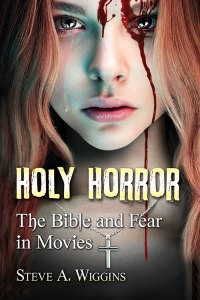
At the end of each year I think back over the books I’ve read in the past twelve months. Since I don’t blog about every single book, I use Goodreads to keep track of my numbers. I pushed my reading challenge at that site to 105 books for last year, and the meter stopped at 111. In 2018 I’m planning on reading some bigger books, so I’ll scale the numbers back a bit, I think. In any case, what were the most memorable books of 2017? It’s perhaps best to divide these up into categories since the number of books has become unwieldy. I’ve written a book about horror movies, and much of this year’s reading has been in support of that. Since my book addresses, among other things, possession movies, I’ve read several tomes on the topic. Noteworthy among them have been the three books by Felicitas D. Goodman that I read over the year. J. H. Chajes’ Between Worlds was exceptional, and Jeffrey Burton Russell’s The Devil, was likely the overall best on the topic. Also noteworthy for purposes of my book research were Catherine Spooner’s Post-Millennial Gothic and Monstrous Progeny by Lester Friedman and Allison Kavey.

For books on religion, Stephen Prothero’s Religious Literacy was an important start. Amy Johnson Frykholm’s Rapture Culture and James William Jones’ Can Science Explain Religion? addressed aspects of the topic that will continue to bear further exploration. God’s Strange Work by David L. Rowe and American Apocalypse by Matthew Avery Sutton stand out in my mind as a memorable treatments of William Miller, and of understanding American religion respectively. Chris Hedges’ American Fascists is remarkably urgent and should be read widely, especially since he has shown where current political posturing will lead if it’s not stopped cold. We will be struggling against a situation like Nazi Germany for many decades to come, and forewarned is forearmed.

It wasn’t all doom and gloom, however. Much of the fiction I read was excellent. Bill Broun’s Night of the Animals, Auður Ava Ólafsdóttir’s Butterflies in November, Robert Repino’s D’Arc, Matt Ruff’s Lovecraft Country, Christobel Kent’s The Crooked House, and Leah Bobet’s An Inheritance of Ashes all stayed with me long after I read them. And of course, Neil Gaiman’s The Ocean at the End of the Lane. Some non-fiction read just as engagingly. The autobiographies by Carly Simon and Bruce Springsteen were deeply engrossing. The Hidden Life of Trees by Peter Wohlleneben and John Moe’s Dear Luke, We Need to Talk were great guilty pleasure reads along with Dani Shapiro’s Still Writing, W. Scott Poole’s At the Mountains of Madness, and Mathias Clasen’s Why Horror Seduces. The latter title brings us full circle. I suspect that’s appropriate for rounding out a year. Many of the other books were also quite good; I tend to rate books favorably. Read the revolution—make 2018 a memorable year with books!


Let the Memory

One of the rare and long-anticipated treats of being near New York City is the prospect of a live show. For practical reasons we don’t go to shows very often—years separate the occurrences—but once in a great while we manage to afford such a boon. Yesterday we attended the penultimate performance of the Cats revival on Broadway. The experience was transcendent. I’ve seen the movie version a number of times, and over the years I’ve caught a few live performances here and there. For whatever reason, this musical speaks to me. Although it doesn’t really have much of a plot—it’s more a series of vignettes—it is about redemption and being comfortable in one’s own skin. T. S. Eliot was a poet who knew spirituality intimately. Andrew Lloyd Webber, no one needs me to say, writes stirring music.

Cats, unlike many shows I’ve seen, requires athleticism as well as vocal ability. The performers are in nearly constant motion as they play out their roles, often with acrobatic flourishes. Most of the parts are for the young, while those dwelling on the experience of older characters—Gus, Grizabella, and Old Deuteronomy—tend to be recollections of youth as a commodity that slips away leaving as residue the wisdom that comes with age. It’s quite biblical in that respect. Even the old can appreciate back flips and double cartwheels and the grace of ballet. For this particular production the lighting stood out as an integral part of the story. Illumination, I might add, is a powerful metaphor.

In our family discussions afterwards, comparison with other versions dominated. Although my wife and I saw a community theater production long ago (placing us, I reluctantly suppose, in the ranks of the older characters), our main introduction was through the filmed adaptation. Again, like the Bible, we tend to think of canonical versions. This is how it should go. Because of both its running time and its demands on the players, not all vignettes are included in each production. The character who narrates the story may change. Choreography is adjusted. Each show, as is the case with live theater, is a little different. Standing in the snow on a cold, New York City December afternoon awaiting the opening of the doors, we wondered what would be changed. The original Broadway run had ended while we lived in the Midwest, so this was both our first exposure but also our fourth rendition over the decades. None, it turns out, could be called canonical. That, however, took nothing away from the inspiration of the event unfolding before our very eyes.


Reading Preferences

How do you decide on a favorite author? The question has been looming in my head as I’ve been reading through old novels on my shelves. It’s a question that strikes me whenever I walk into a bookstore. You see, my parents weren’t readers. As a child my literature was selected from the book table at the local Goodwill. I had no literary advice of ancestral pedigree. Teachers had assigned some books I’d liked, but nothing that really grabbed me. How was I to go about finding a favorite author? My favorite novel, hands down, was discovered in seminary. Moby-Dick is, to my way of thinking, the perfect novel. But I’ve never read anything else Melville wrote. I’d discovered Edgar Allan Poe as a child, but he was no novelist. Who suggested these books on my shelf?

Among those responsible was a young woman I knew when I was in college. She was in high school, but she’d grown up in an educated family and she was passionate about her authors. Thomas Hardy and Kurt Vonnegut, Jr. Were among her favorites. I was startled to realize that among the books I found myself reading as 2017 draws to a close were both Hardy and Vonnegut. A blast from the past. Then, of course, my wife has suggested many books to me. We still read together—a practice we started as newlyweds (today commemorates the start of that status, by the way, which occurred 29 years ago today). There’s an intimacy involved in sharing books.

For the past few years I’ve been participating in Modern Mrs. Darcy’s reading challenge. Since it involves only a dozen books it’s seldom a problem to finish it. We go to our local independent bookstore and seek advice. I encounter writers unfamiliar to me. I still struggle, however, with that favorite author question. As I lay down each book I say to myself—was that the best I’ve ever read? Maybe the point is that there is no favorite author. If I were to sit down and try to list everything I’d ever learned from the fiction I’d read, I’d never stand again. The list would be endless. The lingering longing after closing a book, feeling as if I’d just had an intimate evening with the author, requires a certain literary promiscuousness. I enjoy many authors in many different ways. More often than not, they have changed my life. I look forward to the reading challenge of 2018. No matter the disappointments of politics and human folly, I’ll have good books to read as the world wobbles onward with no particular goal in mind.


Ancient Perspectives

Around the holiday season, on social media, stories relating to the Bible tend to pop up. When my wife mentioned a New York Times story about “Gabriel’s Revelation” on the second day of Christmas, I was suspicious. The story, which was nearly a decade old—the internet keeps things in circulation far longer than those old library tomes consisting of physical newspapers bound together—describes the unprovenanced inscription as predicting a messiah will rise after being dead for three days. I assumed this meant evangelicals would be overjoyed, but it turns out that the artifact, if authentic, predates the New Testament. That means that it can’t be traditionally ascribed as a prophecy, since it’s not in the Bible, and therefore it becomes a threat because it suggests Jesus’ story isn’t unique.

Image credit: The Telegraph, from Wikimedia Commons

This is an interesting dynamic. A potentially important ancient artifact can only have value if it’s in the Bible or proves the Bible “true.” When that happens the faithful crow about how the evangelical position was right all along. If such a document implies that the gospels were borrowing from widespread cultural assumptions, however, it becomes just another unimportant bit of junk from days gone by. Confirmation bias, of course, is something in which we all indulge. Nobody likes being wrong. The difference is that the scholar is obliged to admit when the evidence overthrows his or her position. New options have to be considered.

Since I was between jobs in 2008 when the inscription was announced, it escaped my notice. Now that nine years have settled the dust a bit, there seems to be no sustained case for declaring Gabriel’s Revelation a forgery. Neither does it appear to have changed Christianity at all. The period known as that of Second Temple Judaism has shown itself to have been rich in messianic expectations. We know little, historically speaking, of Jesus of Nazareth. We know from the Dead Sea Scrolls that some were expecting a messiah along the lines of what Jesus was said to have been. But those documents aren’t part of the magical book that contains the truth, the whole truth, and nothing but the truth. In as far as they back the Bible up, they are celebrated. When they call the Good Book into question, they are rejected. I have no idea whether Gabriel’s Revelation is authentic or not. It seems pretty clear, however, that a faith that’s based on one unquestioned source might be more fragile than even other artifacts that have managed to survive, somehow, from ancient times.


Unidentified Angelic Phenomena

Few topics have to be approached as gently as space aliens. Those who’ve seen UFOs are subject to an immediate ridicule response partly generated by the belief that galactic neighbors, if any, are simply too far away to get here. So when the Washington Post runs not one, but two stories in the same week about the subject of UFOs, without a hint of snark, it’s newsworthy. I’m in no position to analyze the journalistic findings, but I do consider the idea that other species might be more advanced than we are not at all unlikely. Look at what’s going on in Washington DC and dare to differ about that. Human beings, now that we’ve rid ourselves of deities, have the tendency to think we’re the hottest stuff in the universe.

I’ve admitted to being a childhood fan of science fiction. Space stories were always among my favorites in that genre. When I learned in physics class that travel faster than the speed of light was impossible, I was sorely disappointed. I also learned about the posited particles known as tachyons that do travel at such speeds. This to me seemed a contradiction. Or at least short-sighted. If our primitive physics suggests that some things can travel faster than light, why limit our ET visitors to our technological limitations? This wasn’t naivety, it seemed to me, but an honest admission that we Homo sapiens don’t know as much as we think we do. The universe, I’m told, is very, very old. Our species has been on this planet for less than half-a-million years. And we only discovered the windshield wiper in 1903.

Around about the holiday season people’s thoughts turn to heavenly visitors. What would the Christmas story be without angels? (For the record, some evangelical groups have historically claimed UFOs were indeed angels, while others have called them demons.) The idea was championed by Erich von Däniken, if I recall correctly from my childhood reading. Where angels might come from in a post-Copernican universe is a bit of a mystery. As is how they’d fly. Those wings aren’t enough to bear a hominid frame aloft, otherwise we’d see flying folks everywhere, without a two-hour wait at the airport. Then again, belief in angels almost certainly will lead to ridicule among the cognoscente of physicalism. The presents have been unwrapped, and angels have been forgotten for another year. And who could know better what’s possible in this infinite yet expanding universe than “man the wise,” Homo sapiens?