Naming Evil

WetikoBooks don’t tell us what is true; books tell us what could be true. When I was growing up, under the influence of the Bible, I thought that non-fiction books were the truth. I came to understand that people disagreed about the truth, but it took a long time before I realized that books were merely the attempts of their writers to argue their version of the truth. If someone knew the actual truth that person would be a god. These thoughts came to me as I read the fascinating and mystical Dispelling Wetiko: Breaking the Curse of Evil, by Paul Levy. In many ways this is a mind-altering book. For one thing, Levy has made me reconsider how real evil is. Looking at what’s going on in the world it is increasingly difficult to deny the reality of objective evil. Levy’s book gives it a name and even attempts to analyze whence it comes. He calls it “wetiko.”

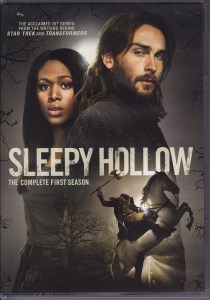
For several years now I have tried to find information on the monster known as the wendigo. Wetiko is a version of the same word, and it was this that drew me to Levy’s book. The wendigo is a shape-shifting creature that preys on humans. It is mentioned or featured in a few fictional books, and most recently featured in an episode of Sleepy Hollow. Since most academics don’t treat monsters seriously, it is difficult to find accounts of the beast. It is often discussed as a fictionalized version of cannibalism. It is a monster always hungry. The more it eats, the hungrier it becomes. It is this aspect that leads Levy to use it as his main metaphor for evil.

The evil that Dispelling Wetiko focuses on is the extreme selfishness our society has come to embrace. For example, our entire economic system is a fiction propagated by the ultra-wealthy. By defining a fiction as valuable and making it available to everyone else by a system of debt, the one-percenters keep everyone else, literally, in thrall to them. There is no gold to back up the fictional value they claim they have, and yet they consume others constantly in their evil greed. In a nuanced argument Levy suggests that this evil is real. Becoming conscious is the only way to combat it. There’s so much going on in this book that it has to be read several times, I’m sure, to get it all figured out. As I finished this one, however, I thought I had read a book that may actually be true.


Star Lords

Things are done differently in the UK. I suppose that’s obvious, but I have always noticed on my trips between our respective countries that some things that go without saying here or there receive the opposite treatment overseas. We are, however, united by a common religious heritage that sometimes goes unrecognized. A recent opinion piece by Giles Fraser in the Guardian discusses the banning of a commercial featuring the Lord’s Prayer in cinemas. The first difference that came to mind is that advertisements for something like the Lord’s Prayer seem unlikely in the United States. We are a biblically-based, biblically illiterate society, and if someone is willing to put up the money, advertisements are a no-brainer. A second difference is, as Fraser points out, there is fear that the Lord’s Prayer might offend people. Surely there are those who will take offense, but Fraser points out that there is nothing offensive in this prayer. It isn’t an attempt to convert. It is reflective, irenic, peaceful.

The point of this opinion piece, apt when Christmas wars are in the air, is that freedom of religion requires a dose of common sense. Yes, many atheists are offended by religious practices, but the question is whether we can ever completely avoid offending one another over belief. Beliefs differ. Not even everyone agrees with “live and let live.” The problem is that some offensive ideas lead to violence. We’ve forgotten how to talk with one another. In this world of uber-security, we find difference terrifying. Religious difference especially. So the angry atheists suggest religion should be driven indoors and rendered mute. Which violates what some religions are all about.

The British ad was to take place before the airing of the new Star Wars movie. One need not be a detective to discern the deep and inherent religious message in the original series of the franchise. Indeed, people were disappointed with the prequels because they had lost that sense of mythic grandeur that Joseph Campbell had been so helpful in instilling in the original trilogy. The films were made with religion in mind. Hidden behind a mask, perhaps, but clearly there. If Yoda had uttered something like the Lord’s Prayer, it would have been accepted as merely part of a movie. And as the reboot trilogy shows without doubt, movies have the power to offend.

Star_Wars_The_Force_Awakens_Theatrical_Poster


Let There Be

President Dwight D. Eisenhower was, as everyone knows, a military man. With the role of Commander in Chief, United States Presidents control a military that eats up an enormous amount of tax dollars. To keep us safe, we’re told. Even though he was a military man, in his farewell address Eisenhower warned the American people of the Industrial Military Complex, a group of companies that not only eat national budgets for breakfast, but also control the most dangerous technology in the world. Secrecy, we’re told, is key. We don’t want any other nation on earth knowing what we’re up to. In fact, most Americans have no idea of and no control over what we’re up to. When people like Edward Snowden come out, their tales are so extreme that it is fairly easy to dismiss them. Would a good government ever do that? Nah. We’re the good guys, right? These were the thoughts going through my head after I watched Star Trek Into Darkness. I always run a couple years behind, it seems, on major movies. This one disturbed me in a way uncharacteristic of the Enterprise and its crew.

StarTrekIntoDarkness_FinalUSPoster

Since it’s been out a couple of years I don’t need to give spoiler alerts unless some readers are even further behind than me. Okay: here’s a spoiler alert.

As James T. Kirk gets busted down in rank for violating the prime directive to save Spock, he takes over the Enterprise when Admiral Pike is gunned down in a top-level Star Fleet meeting. Vowing revenge, he encounters Khan, the eponymous villain of the old series Wrath of Khan. As Admiral Marcus had made an alliance with Khan the parallels with the Bush family and Sadam Hussein became clear. And when Scotty finds a super starship on a moon of Jupiter, secretly developed by Star Fleet to go to war with the Klingons, more than a touch of the Black Ops came to mind. Here was a government that couldn’t be trusted and that didn’t trust its people to know its intentions. When Khan pilots this Black Ops starship into San Francisco, the shot of it falling out of the air so resembled classified military craft that I actually shuddered. The destruction was a parable of 9/11.

Throughout the movie there is a dialog of ethics. Is it right to kill a known criminal without trial? Is it permissible to start an unprovoked war? Does might make right? Khan, despite being evil, tells the truth. The movie disturbed me because I can’t remember the last time I could truly trust the government. I vote Democrat because they are the party that seem to do the least damage to the planet and actually care for the poor. I was born, however, after the Eisenhower administration. John F. Kennedy was assassinated after my first birthday. My reading since leaving college has convinced me that we will never get the full story. Star Trek, although set in the future, has always been a projection of the present day. Those few groaners of episodes from the late ‘60s that delved into popular culture proved that. As I watched the crew of the Enterprise battling an enemy under its own flag I realized little has changed in the final frontier.


Trench Warfare

Once something becomes socially acceptable, it is nearly impossible to change. I’m no prude, but I remember when “swearing” in public was considered bad taste. When I was a tween (and there was no such thing as tweens then) I heard a guy talking to a friend in a department store. They were on the other side of those kinds of shelves where you can see through to the other side. One of them cussed and his friend said, “Man, you shouldn’t say that when there’s a little kid just there.” I wasn’t shocked by the word; I’m more worldly than most people grant me credit for being. Still, the sentiment was appreciated. These days I dodge f-bombs all the way to work. It’s effing acceptable.

Vickers_IWW

The tragic multiple shooting in San Bernardino to which I opened the paper yesterday morning was completely dispiriting. The statistics showing more multiple shootings than there have been days in the past year while Republican hopefuls chain their wallets to their pockets backing the NRA should give anyone pause to reflect, no matter their party. Our gun madness has led to a collective deathwish for our country. The only acceptable solution, according to the GOP, and Texas, is to get more guns out on the streets. The Old West is called “Old” for a reason. We should’ve become more civilized by now. Instead we accept fantasy for reality.

In a land where politics is making love to gun lobbies, the surest investment is the casket industry. It has become socially acceptable to shoot lots of people and then kill yourself or get yourself shot. Hardly a day goes by when we don’t read about such an incident in the news. Swift, decisive action is called for but we’re mired down by politicians who need ever so much more money to campaign. Bread and circuses. I know responsible gun owners. It has become clear that the only real solution now is to do what is socially unacceptable. Give up our guns. If those who are responsible gun owners were willing to lead by example we might stand a chance against a socially acceptable plague that we’re unwilling to name. Even US citizens can be terrorists in their own country.


Private Miracles

Despite rumors to the contrary, the Roman Catholic Church is skeptical of miracles. Quick to point out pareidolia where it occurs, looking like the Blessed Virgin in a tree stump or highway underpass, this is no credulous organization. Everyday miracles, doctrinal ones, of course are accepted. Transubstantiation is a quotidian miracle as the mass is no mere ritual. Flashier miracles—even some very impressive ones—are treated with suspicion and the rigor of Scotland Yard. When one of my regular readers pointed out the bleeding communion host in Kearns, Utah, I knew I had to check it out. As is to be expected in such cases, the Catholic Church does not disappoint. Some are calling it a miracle, but those who are do not speak for the Diocese.

Keeping in mind that my source for the story is Fox (Fox news seems more interested than most in this incident), apparently what happened is that a parishioner returned a host to the priest during communion. The priest put the host in a glass of water to dissolve it, but instead it began to “bleed.” Church officials were called in to investigate. There are several things odd here, although I’m no inquisitor, that make me wonder about the veracity of the story. First: Fox news. There are other outlets as well, so I’ll let that go at the moment. When a person was given a wafer at Nashotah House and for whatever reason turned it back in, the celebrant simply ate it. Priests, by definition believers in miracles, need not worry about germs. Protecting the host from desecration was the main thing. Putting it in a glass of water? I suppose that’s acceptable in some places, but even an Episcopalian would be shocked. And why was the host returned? Surely it wasn’t defective.

The Eucharist is the central rite of the liturgical churches, and it isn’t taken lightly. Although it is a miracle-laced event, it is expected that the transformation will follow the prescribed rite. I sometimes ponder what priests would do in the face of a genuine, unexplainable wonder. The side of the believer that yearns for validation would surely want to put it on Fox news for all the world to see. The private side would want to let it happen without any need to say anything about it. Keep it a private miracle. In a year when Starbucks red is a sign of an impending war, I wonder if a bleeding host is the most apt way to get the attention of the unfaithful when a simple cup of coffee will do.

800px-Última_Cena_-_Juan_de_Juanes


Forward Planning

Smallmindedness bothers me.  Now don’t get me wrong, I don’t claim any great intelligence for myself.  I’m just an average guy who thinks too much.  No, the smallmindedness that I despise comes in capitalist colors.  More specifically, it comes in the form of business-speak.  This is a language in which I make no claims of fluency, but in which I am forced to converse from time to time.  I believe there is a secret coven of businessmen hidden in a dark board room determined to make themselves sound intellectual by cobbling together polysyllables.  Business is, at the heart of it, really simple.  I want your money; how little can I give you for it?  They call economics the dismal science for a reason.  In any case, the other day I was confronted with the phrase “forward planning.”  It was like one of those moments when you walk into the wrong room and you’re disoriented for just a second or two because what you see is not what you expected through that door.  Forward planning.  What other kind of planning is there?  Backward planning?  Victims of time have no choice in the matter.
 
I’m bemused by the ubiquity of “best practices.”  No, thank you.  I prefer to use worst practices.  Of course we all want to do things the best way possible.  Putting insipid neologisms in the way is not how one achieves it.  What’s wrong with just saying what you mean?  Oh, I forgot—the guys in the shadowy boardroom.  There’s nothing like lingo to substitute for depth.
 
At a campus book sale a few weeks ago, I found a copy of the Compact Oxford Dictionary.  Fully aware that any word can be instantly searched online, I hefted the two, heavy volumes and for six dollars walked out with over a million words.  People on campus looked at me funny.  Someone even asked why in the world would I buy a dictionary?  There are plenty of answers I could give.  I could say that I like the feel of something solid in my hands when I practice scholarship.  I could say that it impresses people when you show them how small the type is.  I could say that I have some leaves I’d like to flatten effectively.  The truth, I suspect, you’ve already divined.  I bought these books because no matter how much you look, you won’t find “forward planning” listed anywhere as a legitimate concept.

IMG_2618


R’lyeh Reality

It’s always a sign that I’ve been too busy when I lose track of Cthulhu. Few created deities receive the attention of the web like the terror dreamed up by H. P. Lovecraft. The internet has created an environment, like the bottom of the sea, where the old gods may lie dead but dreaming, ready to reawaken. It was with great pleasure that I was pointed to Cthulhu for America. At last, a presidential candidate who is willing to admit that he is merely a myth. His agenda of destruction and domination is not at all hidden. If only real politicians would be so honest!

In a world with millions of diversions, it amazes me that Lovecraft’s nihilistic creation has taken on such popular interest. Perhaps it’s because those of us who grew up with monsters have now reached a dubious sort of adulthood where we are bossed around like children and given only those limited freedoms that capitalism will allow. We can’t go into public places without seeing heavily armed guards in fatigues. We can’t get into work without electronic chips in cards to keep us safe from those of our own nation. We can’t fly without being scanned like a week-old loaf of bread. We can’t even store our own files on our own personal computers any more since some software company would rather charge us for the privilege. At least Cthulhu says what he wants. Orwell may have had his Big Brother, but Cthulhu is an obvious overlord who wants nothing but his own satisfaction.

IMG_1551

Watching the circus of candidates vying for position, I can’t help but think of Rome before the fall. Historians are still debating the causes—lead poisoning may be too easy a way out. Perhaps it is, as Lord Acton declared, the result of power itself. Those who taste it can’t stop eating it until every microscopic crumb is devoured. It’s shameful to watch. I’m embarrassed when Dumb and Dumber sounds intelligent next to the utterances from political talking heads. Cthulhu would have none of it. Although the website is a parody, it, like all myths, is truer than what we often call reality.


Rumors of Wars

Now that Black Friday and Thanksgiving are behind us, the holiday season compels us to think of what comes next. Whether it is Hanukkah or Christmas or Kwanza, people are preparing to celebrate during the longest nights of the year, hoping to encourage light to return. It is a most primitive urge. Darkness is easy to come by; light takes a little more effort. In the western world the season was largely instituted by the celebration of Christmas, although this took many, many years to catch on. Now it is a begrudging nod in the direction of workers who spend more and more of their time on the job since the internet makes it difficult to claim that we are unavailable. Smart phones, smart watches, tablets, and computers are ubiquitous, so access to work email is only a click away. In any case, the holiday season invariably brings stories of offended people to the surface.

A recent piece in The Baxter Bulletin, sent to me by my wife, rehearses the story of Baxter County, Arkansas and the challenge against a nativity scene on a courthouse lawn. Such stories always seem to me to be cases with no winners. A courthouse should remain neutral territory, but the nativity scene hardly seems an offensive weapon. I can’t claim to know a great deal about the history of creche scenes, but it doesn’t appear likely that they were ever covert attempts to convert. They were celebrations, and nobody has a problem with them as long as they’re kept on private property or church garths. I do wonder, however, if driving them out of public sight really has any purpose. We all know that this time of year is gearing up to holidays when the ordinary takes the back seat for a few days and we can stop the rat race and reflect on a wonderful myth of biblical proportions.

Tree, bush, or asherah?

Tree, bush, or asherah?

Similar stories are unfolding in countless venues now that December is practically here. Even stopping into Starbucks for a cup of coffee can land you in the middle of a culture war. It would seem to me that in this troubled world we might instead try to focus on peace. Whether or not the story of the manger has any historicity at all, the fact is the first century was a period of extreme unrest. This was a moment to pause and imagine what a world without war might be like. Now the holidays have become an occasion for declaring a new kind of sniping war about who has the right to make reference to a legendary event. Or where they may do so. In some cases there may be legitimate cause for concern. Most of the time, however, only those fixated on belligerence manage to draw everyone in to a fractured fairy tale of a holiday season where money is at stake.


Deserted Village

Hands up, anyone who’s heard of David Felt. Until just recently my hand would’ve remained down too. In his day, however, Felt was famous enough to have a town named after him (Feltville, New Jersey) and wealthy enough to leave it when it failed. Today the Deserted Village is a small tourist attraction, a wooded site on the National Register of Historic Places, and the residence of a few locals who prefer the quiet life. David Felt settled in Union County back in the days when it was rural, and established an industry around a mill. The available literature is frustratingly silent on what kind of a mill it was, but it was important enough for him to build housing to accommodate his workers out in the middle of nowhere. While many of the houses no longer stand, including that of Felt himself, the property has a few remaining buildings and a sense of history.

2015-11-06 22.16.35Upon walking into the park, part of the Watchung Reservation, the first building you meet, after a private residence, is the Union Church. Felt was a Unitarian. He nevertheless insisted that residents—his employees, remember—attend services weekly. The church, which is one of the few buildings open to the public, was a center of communal life. The timeframe here is the mid 1800s. Today employers are more likely to try hard to distance themselves from any religious activities, renaming any holiday gatherings with more neutral titles and hoping, rather than praying, that they won’t offend anybody. Of course, Felt’s business venture failed. Others that followed, sans church, didn’t fare much better.

The man that employees knew as “King David” went on to other ventures and has largely faded from history. Incredibly in this age of internet fame he doesn’t even have his own Wikipedia page. Symbolically, the only building that remains accessible to the public in the church—now a museum with a few artifacts from a century-and-a-half ago. Having lived not far from Feltville for nearly a decade now, I had no idea of its presence until a chance meeting held there brought it to my wife’s attention. We can build our own little kingdoms, it seems, and call them after our own names. They are no guarantee, however, that what we leave behind will not become a ghost-town as the interests of civilization move in directions we had never anticipated.


Reptile Fantasy

LizardPrincessThe generous folks at Exterminating Angel Press graciously sent me a copy of Tod Davies’ The Lizard Princess to review. A fantasy novel that includes a conflict between a world that admits of the supernatural and skeptics who deny anything beyond the material, it is a tale for our time. Indeed, the antagonism is real enough. We live in a world where fantasy can bring in untold wealth while we are taught that not an atom of it is true. Clearly material explanations fit the physical world we inhabit. It’s the world inside our heads that often rejects such materialism being taken to its “logical” conclusion. Davies clearly feels the angst of this discord. The Lizard Princess is a fantasy in the face of harsh reality. And we still need fantasy—perhaps we need it more than ever.

Throughout The Lizard Princess, whether intentional or not, biblical imagery pervades. The Bible offers classical stories that, no matter how we might receive them, continue to influence our ideas and ideals. Here, in a world created especially for the reader, the battle between good and evil is an everyday reality. The turns taken along this path are unconventional, and at times even uncomfortable. The awareness that there is a larger story in the background, however, offers some consolation. Angels, the Devil, and even a subtly veiled God are all players in this fantasy world of Arcadia. Mythical creatures abound, and transformations lead to new perspectives along the way.

In my conversations with other scholars I’m reminded that academics don’t often turn to novels for escape. Some do, of course, but the academy recommends a steady diet of technical non-fiction for those who wish to make an impact upon the world of knowledge. I have always been grateful for literature, however. During my years in graduate school and early in my teaching career I neglected the kinds of books that were my constant companions growing up. In a rural setting far removed from any institutions of higher learning, novels were often the only reading readily available. I never considered the time between their covers wasted. I found in The Lizard Princess a vivid world strangely like our own, but different enough to be more a parable than a simple piece of fiction.


Seeing Red

Not being commercially minded, it took many years for me to understand why it is called Black Friday. To many people “black” indicates negativity, sort of the opposite of Good Friday which, when you think about it, doesn’t seem so good. After I was forced into jobs in the money-making business, I came to realize that budgets were written in black and deficits were written in red. Since my lifetime, with a few exceptions, has been a series of economic disasters following one another (the implications should be obvious) and businesses operate in the red while projecting budgets ever higher the next year. This model is, in a world of limited resources, the very definition of unsustainable, and yet we keep raising our sights and getting disappointed. Nobody knows for sure where the term Black Friday originated, but it is a modern term. A holiday for those who measure celebration in terms of dollars and cents. (Mostly dollars.)

As I was pondering this phenomenon, my thoughts turned to red letter days. Red here is a positive thing—special days on the calendar that let us step outside the usual routine of pushing ourselves to make this year’s budget and allow us to relax with family and friends. The black and the red have switched places here. In fact, red letters, apart from the dismal science, have historically been considered good. Think of the red letter editions of the Bible. These Bibles had the putative words of Jesus printed in red so that they would stand out. The concept dates back to the change of the twentieth century. Red letter Bibles caught on among Evangelical readers. Red letters, however, go back even further in history.

Who said what now?

The book that Catholic priests used to set on the altar was a missal. Missals contained the instructions for saying mass, and during certain parts of the ceremony priests were supposed to make specific gestures. The places at which these actions were to be made were printed in red to draw the priests’ attention. They were called “rubrics” since they were written in red. Missals date back to the Medieval Period and they give us perhaps the first positive use of red writing that we know. Even further back in history when inks were organic, red writing was found. Epigraphers of antiquity know of red inscriptions but the meaning at that time remains speculative. We call this Black Friday because the one percent hope to get a bit richer. Those of us further down are supposed to enjoy the trickle. For me, in principle I don’t go shopping on Black Friday. I see it as a red letter day.


To Whom? For What?

Thanksgiving remains one of the few relatively uncommercialized holidays. Not tied to a specific religion, but with a general sense that gratitude is important, there’s nothing really to sell. Grocery stores may see a bump in profits, but we need to eat every day, so this is only a matter of degree. The icons of Halloween quickly transform to those of Christmas and even Thanksgiving begins to pale next to Black Friday as companies give employees the only four-day weekend of the entire year. Without money changing hands what can there possibly be to celebrate?

The strident question of to whom one is thankful is graciously subsumed under that of for what. History has demonstrated that the relative abundance that we enjoy in matters of gustatory gifts is indeed not to be taken for granted. Droughts are realities. Dustbowls and depressions occur. In many parts of the world starvation is stark reality. Having enough—even too much—to eat is less a sign of blessing for good behavior than it is an obligation to help others. Want is a specter that no one can debunk. The homeless here in a land of plenty remind us that holidays are truly opportunities to be thankful. Thankful simply for being able to get by. Not for what we buy.

IMG_2601

Holidays have their origins in religion. They may wander far from their foundations, but we have religions to thank for every day there’s a break in the routine of trooping into the office for yet another stint of work. Days when staying home is acceptable and spending is purely optional. The stretch from Labor Day to Thanksgiving is long. This goal can only be reached by a frame of mind rather than a state of one’s bank account. Having a day when money falls from focus is cause for thankfulness indeed.


Bucking Star

Entitlement comes in many forms. Culturally we’ve been sensitized to substituting “holidays” for “Christmas,” although the reason we spend money at this time of year is well known. Although technically not a Christian nation, the United States has a large number of Christian believers and always has. Charles Dickens certainly participated in the invention of Christmas, but the commercial aspect is very much an American thing. So much so that we can’t wait to get Thanksgiving out of the way to dip our fingers into Black Friday, a holiday in its own right. Starbucks has, for many years, shifted to a banal, neutral winter-themed cup design, to get customers into the spirit of spending. Who really needs to pay five dollars for a cup of joe? Wrap it like a present and the cash flows more freely. So the tempest in a coffee pot over the “war on Christmas” by choosing a simple red (and by default green) cup design became front-page headline news recently. Had we dissed the Almighty or the babe in a manger by going red?

Religious groups feel increasingly threatened. Not everyone thinks globalism is a good thing. We try to educate our children, but many religious groups insist on home schooling to avoid the contamination of an open mind. Any act, no matter how trite or banal, may be perceived as an attack. Nobody seems to think that stopping in to pay so much for a cup of coffee may be a sin in its own right. The economy has tanked and bumped along the bottom ever since I’ve entered the professional sector. And yet, Starbucks has flourished. No matter how down you are, a little arabica stimulus can’t hurt. It has, apparently, become the bellwether of how Christmas-friendly we really are.

IMG_2605

Ironically, the Christmas decorations begin appearing in stores before the spectre of Halloween. Stop in to pick up some last-minute scares and you’ll find them on the bargain rack as the red and green tide take over the valuable shelf-space. We gleefully move from one spending holiday to another. And in the midst of it all, we stop to complain about the design of our coffee cup? I try to avoid disposable items whenever I can. I don’t collect holiday cups from coffee vendors. I wonder what all the fuss is about when the world is full of so many serious problems. If I sound cranky to you, there’s a good reason. I haven’t had my morning coffee yet.


Book Deaf?

It’s Tuesday morning and I have been listening to authors pitching their books for three solid days now. Truth be told, I am a bit jealous. I’ve got a few more books in me yet, but research time simply does not exist in the world of capitalism and its discontents. Not that I envy being on the author’s side of the table—I remember how it felt to pitch Weathering the Psalms to several editors and to receive an icy “no” in response. I think now I begin to understand. Yesterday one of my appointments asked if I was “book deaf” yet. It was a term I’d never heard, but I immediately knew what he meant. Editors hear pitch after pitch. I pull out my phone and look at my calendar and see a new project every half-hour throughout the day, but no, I’m not book deaf. In fact, I have to constrain myself to keep my credit card firmly inside my wallet. Being surrounded by books is like being in a jungle teeming with deadly animals.

IMG_2614

From the exhibitor’s booth, Tuesday is a day of relief and worry. Most of the papers are over at AAR/SBL, and most of the participants have already left. As at any conference, fair, or exhibit, we are strictly forbidden from taking down the booth before closing time. We stand about, straining our ears to hear that first transgressive ripping of strapping tape from its roll, indicating that someone in another booth is being naughty. We’re tired, weary even, but not book deaf. Never book deaf.

IMG_2615

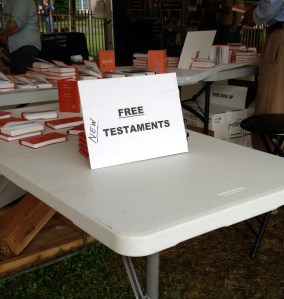
In my unguarded moments I sometimes think that maybe some day I’ll have a book here that others will clamber to find. Maybe someone like me will prowl to a pre-selected booth with a specific title firmly in mind, and that title will bear my name. I suppose it could happen, although it isn’t likely at this point. I hear each pitch and more. I hear the dreams and deep desires of every author. We want to be heard. We want others to think us respectable, honorable even. There are publishers out there who will publish anything. They will accept books to fill catalogues and websites and you’ll never hear from them again. Still, you’ll find some interesting things if you wander by their table. And if someone sees that you’re an editor while you’re browsing you’ll never turn a deaf ear. This is what religion scholars live for. Books are our reality.

IMG_2617


The Religion Industry

The American Academy of Religion and Society of Biblical Literature annual meeting can be a heady place. Religionists tend to be “big picture” people, looking at things from the perspective that this is what life is all about. How much bigger can you get? Religion is, after all, a matter of perspective. As quickly becomes clear from glancing across the crowds—there is a literal myriad here—a great diversity exists. Ironically and irenically violence, beyond an occasional rudeness, is absent. There are believers and non-believers and they actually talk to each other civilly. They want to understand, and in an increasingly polarized world understanding religion seems like a very sensible thing to do.

It feels, however, like an industry to me. Religion evolved out of primal fears. Nobody knows for sure where it started, but someplace (or someplaces) along the course of human development, the idea took hold that humans weren’t the final word in terms of power or direction of their own destiny. There is something beyond us. It may be a tao, or it may be a god, or it may be something we haven’t even conceived yet, but there is something larger than us. The scientific paradigm, on the other hand, starts by assuming human superiority, at least in terms of rationality, over the entire universe. Teasing things apart, looking at the smallest units and building up a big picture from there, it all comes down to equations and concepts understandable in empirical terms. If there is a tao, or gods, and if they don’t leave some physical footprint, they must be left outside the frame. Until the religion industry arrives.

Every field of study has its crackpots, but those thousands milling about me as I stand in a booth with knowledge for sale are mostly sincere. The official study of religion takes place in higher education. Its practice is left elsewhere. The Dalai Lama is not here. The Pope is not passing through adoring crowds. Even Mike Huckabee hasn’t put in a guest appearance. We are not always the friends of those who do religion, for this is a complex industry. Our role is to ask how religion works. Beyond that, we try to fit it into a larger picture—one that expands beyond the universe itself. Out to where a mysterious force may lurk. A force that reminds us that human effort, as strenuous as it may be, must acquiesce in the presence of the unknown.

IMG_2612