I recently came across a website with academic papers available on it. Although the internet has yet to achieve its promise as a locus of solid academic material, such sites are becoming more common. I’ve been uploading my own papers onto Academia.edu since they seem to be old enough not to impact anyone’s sales aspirations. In any case, this particular website I found noted that a paper had been updated at such-and-such a time, and that anyone who had downloaded the previous version should delete it and use the new one instead. This is a dilemma. I know of publishers who make corrections without issuing new editions. When I buy a book, what it actually says will depend on the printing rather than on the edition. I wonder if such retractions are really fair. How does one know when she’s reading something outdated?
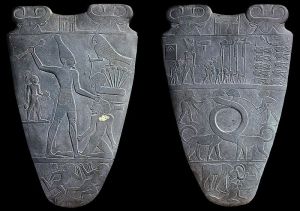
Picture this: a young kid, perhaps an unknowing fundamentalist, reading his Bible. Then he gets a newer copy of the same translation. But soon he notices that there are differences. Although the example may sound overly Talmudic, it is factual. Bibles, being printed in large quantities, are especially susceptible to error. When did the printed word become something that’s negotiable? I’ve been pondering clay tablets and their apparent immutability. Contrary to popular belief, most clay tablets weren’t fired—it was a lot of effort for something that had limited value. Some tablets show signs of erasure or additional words being added. In the case of clay, this is often very clear. Besides, the readers were few and specialists. They knew what they had. But for a modern person staking the salvation of her soul on a document, is it not problematic to change a jot or tittle (of which not the least shall pass away)? Has technology made us immune to fixed texts?
Back to the website I found. What if I downloaded the faulty paper and wrote my own paper based on it? How would I know to go back and check to see if a new version had been uploaded? Am I to spend all my time revisiting web pages to see what has changed? Knowledge itself seems now to have become whimsical. What is true depends on the date and time you accessed it. Perhaps I’m just a dreamer, but there was a time, it seems to me, before post-modernism, when you might purchase a book and be fairly certain of what you had. Errata sheets (or the more fancy addenda et corrigenda) didn’t intrude into the typeset page. You could still read correctly, assured that someone had spotted and acknowledged the mistake. We have, I fear, outlived the need for sic. And it is only a small step from siclessness to truth that changes second by second. Is this the siclessness unto death?
Think Bigger
I’ve spent a lot of time with academics. Having been one myself, I know something of their habits. Getting through a doctoral program involves, at least in some fields, becoming the specialist on a very tiny piece of information. Since people have been thinking about things for millennia, finding something new to say can be a challenge. Often, by the time they’re done, newly minted doctors know an incredible amount about a very specialized topic. This is, in many ways, simply an intensification of the human experience. We think small. Part of the problem is that our brains haven’t evolved to think big. Having learned an awful lot about the weather in the book on Psalms, I have instinctively taken an interest in natural disasters. Charles Officer and Jake Page share this interest, as is evident in When the Planet Rages: Natural Disasters, Global Warming, and the Future of the Earth. This, however, is a big idea book. Globally big.
Throughout the first two sections of the book, which deal with humans in the face of nature, God often comes up. As scientist and science writer (respectively) Officer and Page simply reflect common beliefs. Nowhere do they advocate invoking God, but they note that throughout history, in the face of just about any species of natural disaster, people have. Many people still do. Disasters and God. What a team! We worship what we fear. Once Officer and Page reach the third section of human impacts on nature, however, God drops out of the picture and the fingers are pointing solely at us.
When I read about what we’ve already done to this planet, I, as a colleague once said, start seeking another species to join. We have destablized the atmosphere so throughly that it will take at least ten-thousand years to return to it’s pre-Industrial Revolution state. Ten-thousand years. At the same time, the largest industrial pollutor (the United States) has jury-rigged politics so that only the wealthy can attain high office. Votes can be bought and we simply won’t sign the Kyoto Protocol. Those who knowingly doom their children are the smallest thinkers of all. We have changed the course of the biosphere well beyond our share of time, and even those scientist who deny global warming know that it is true. You don’t bite the hand that signs the pay check. After all, specialists have a tendency to be very small thinkers.
Northern Ghosts
It is the time of year when respectable publications can, in a half-serious way, address the unconventional. The New York Times, for example, recently ran a story on ghost hunting in Norway. Andrew Higgins points out that Norway, among the most secular nations in the world, has come under the spell of ghosts. In a country where church attendance and religious belief seem to be endangered, there is a growing belief that people might somehow survive this mortal coil. Since such a story has to come off as bemused, we don’t get any indication that people have good reason for believing in ghosts—as one of the officials in the story says, they represent something that isn’t “generally accepted as existing at all.” But I wonder if that’s true. Scientifically, in our heads, there just doesn’t seem to be any room in this godless world for ghosts. Skeptics ask questions like “why do they wear clothes?” or “how can a soul remain behind if we have no souls?” Who told you that you have no souls?
Even with the constant materialist discourse of only physical reality, some ghosts cases have been very well documented. So have some hoaxes. People have the spirit of being tricksters, and that doesn’t always help when it comes to understanding the unseen. The point that the article is making, however, is that ghosts seem to be filling a need that the church hasn’t. Church has long been understood as being trapped in the past—concerned with issues deemed irrelevant by people who are just trying to get by in the world. I’ve heard hundreds of sermons in my life and remember less than ten. What is it that we’re trying to do?
I don’t know if ghosts exist. Many days I’m not sure what reality is, because if it is simply crawling out of a warm bed into a cold apartment before 4 a.m. so that I can go to work, I’m not sure this isn’t some kind of afterlife already. And maybe not the best kind. I know that as soon as people began to record their thoughts in writing, ghosts have been assumed to exist. Despite Ghost Hunters and other popularizers, vague traces are caught by enough people that we can legitimately wonder about the narrative we’ve been fed that says if it can’t be measured it can’t exist. There isn’t a nation in the world where people don’t see ghosts of some kind. Why should Norway be any different? And we wouldn’t even be asking this question if Halloween didn’t provide us with a buffer that makes forbidden topics chic.
Loving It
Given my remarks on occasion, some readers may conclude I dislike science. Nothing could be further from fact. Ever since I was a child I’ve been fascinated by science and secretly—or not so secretly—wanted to be a scientist. Complex mathematics, however, has always been beyond me. My brain simply doesn’t think that way. My gray matter is more inclined towards literature and abstracts, ideas. I am, it is true, distressed by a type of science that starts making philosophical claims as dogma: materialism. Those who make this claim have no scientific basis for doing so—it is a belief. They are entitled to their beliefs, of course, but to belittle those who suggest that maybe we don’t know everything there is to know about the unseen world seems poor sportsmanship to me. Case in point: IFL Science is a fun website. I enjoy the articles I read and it is refreshing to have those who stand up to creationists and other posers get such limelight. Interestingly, a recent article strayed into the uncanny valley.
Leading with the questions “Why Are So Many People Afraid of Clowns?” the article is categorized The Brain. Or psychology. This is one of those fields where we’re really out of our depth. We don’t understand the way that we think, and even raising the question of clown phobias seems a little odd. History can help to answer some of the questions, but IFL Science does a nice job of suggesting a scientific approach. Historically clowns were outcasts. They are liminal figures who create unease by their very existence. Those who didn’t feel accepted came to do what those who don’t feel accepted often do: try to get others to laugh at you. Sad comedians are more than a stereotype. Those who’ve clowned already know that.
Since I was a clown in college, I’ve read quite a bit about the history of the craft. Clowns were a way of laughing at misery, but also of gaining some sympathy. By exaggerating human features, they become caricatures. We aren’t allowed to discriminate against those who are different, but clowns exist to be excoriated. And deep inside, I think we all know, that those who are ill treated will eventually demand payback. It is a lesson that the world could stand to learn even today. Of course, we don’t want to be told that those who are different share something as personal and important as human feelings. Clowns make natural targets for our fears because they represent something that we know shouldn’t exist—inequality. If you can’t get accolades through hard work, making others laugh provides its own reward. The phobia may arise, I suggest, because we know that every laugh comes with a price.
Legend Quest
Legend questing is often considered a teenage pastime. Getting away from the mundane, or the oppressively normal, such road trips often lead to a place of spiritual significance, whether religious or secular. New Jersey, whose unofficial state song is about getting out, has its share of questing destinations. Reading Weird N.J. from time to time, one gets an introduction to such destinations handily served up in magazine fashion. The weird, as some scholars have noted, has roots in the religious—the uncanny. At times it is something about the physical landscape. Sometimes an historical event led to this status. Sometimes it’s just a name. Finding accurate information about Shades of Death Road, in Warren County, New Jersey, is somewhat of a fool’s errand. Although my wife and I aren’t teenagers anymore, on Halloween we decided to visit the reputedly haunted location.
The area is not easy to locate, even in a state with as much road cover as the Garden State. Still, it is a beautiful road, once found. Huge boulders from the nearby Jenny Jump State Park—a place with its own legendary past—interspersed with old trees come right down to the edge of the road. A gorgeous lake, called Ghost Lake, also delights the passer by. The road signs, which are frequently stolen, were nowhere to be seen on our trek. It is, however, easy to see that in days before hermetically sealed cars with auto-lock doors that practically drive themselves such a locale may have brought danger to mind. Local legends claim it as a haunt of highway men, not a few of whom were hanged among its many trees. It was a partially sunny afternoon as we drove along, and lawns were decorated with faux graveyards and ghosts floated down from trees. It was a pleasant way to be haunted.
The typical legend quest involves getting out of the car and engaging in some kind of ritual to see if anything happens. Since this was a spur of the moment trip, I hadn’t done my homework to find out what manner of incantation should’ve been said. Had I prepared, I would’ve had to have selected from the many disparate legends that circulate around the road. Even in the sunshine with little traffic, the place could easily stoke some unexpressed fear. Although the road was named long ago, for reasons that no one truly knows, it maintains its mystique. Curvy, and in places with the roadsigns heavily vandalized, it is clear that a more modern sort of danger might lurk here after dark. Nevertheless, as we emerged back onto a road with a less dire name, I couldn’t help but smile. Shades of Death Road ends at Hope Road. And that, surely, is no accident.
Supernatural Quest
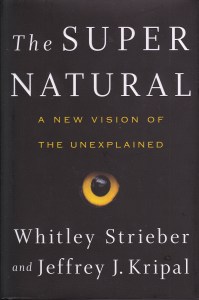
Two things we’re told about the supernatural: one, it doesn’t exist and two, it can’t be studied. Of course the vast majority of people in the world don’t buy into number one and hardly care about number two. Both, it seems to me, could be wrong. As Jeannie Banks Thomas says in her introduction to Putting the Supernatural in Its Place: Folklore, the Hypermodern, and the Ethereal, belief in the supernatural is not declining. In fact, the more we’re told by cocksure scientists that all of reality is quantifiable and material, the more we become aware of the many exceptions to the rules. Of course, “supernatural” may be a misnomer. It could be that anything sloughed off into that category is simply not understood well enough to be empirically studied. Thinking back over the history of science I find it ironic that the very system that had to convince people that something couldn’t be seen (many gases) could be deadly. Now if it can’t be seen it can’t exist. We certainly don’t want any deities hanging out around here.
But back to the book. Putting the Supernatural in Its Place is a folkloric study of place. The contributors to the volume look at popular beliefs, some serious, some not, that accrue around certain places. As I’ve often stated on this blog, we are aware as humans that some places are fraught with meaning. Scientifically we know this shouldn’t be true, but we feel it when we approach any space of significance. The contributors to Thomas’ book look to some very interesting places: New Orleans, Salem, St. Ann’s Retreat, Lily Dale, Japan, and even movies and the internet. If any of these places aren’t familiar to you, it’s worth picking up a copy of this accessible book to learn more. Supporting folklore is a very good thing. Folklore, after all, is the wisdom of the people.
The places in this book are rumored to be haunted by ghosts, witches, zombies, vampires, and even fairies. Folklorists, of course, don’t try to prove that beliefs are true. Like any academic they study and analyze. The main form of exploration for the non-academic is the legend quest. Many of us have gone legend questing from time to time. A place where something happened is said to have a certain feel or manifestation, so we go to see what it’s all about. If such trips are given religious sanction we call them pilgrimages. We want to see. But more than that, we want to experience something that the past has left behind. In the part of the year when each night grows longer than the last, my thoughts turn to what is usually termed “the supernatural.” And I, for one, am glad to have able guides along the way to make the simple voyage into a quest.
Uisce Beatha
The idea of a state church, I have to admit, sometimes seems not so bad. Before you click off this page in disgust, please let me explain. Once in a great while, I think about what state churches really are. From the most ancient of times, religious institutions supported governments and governments gave money to state religions. It isn’t a perfect system, but the reason it sometimes appeals is that it might prevent the kind of religious quarreling that we see in the run-up to every election: whose religious vision will govern us? I get theological whiplash. Wouldn’t it be easier to have a state church and be done with it? After all, those who live under state churches really aren’t obligated to believe in the teachings, but just to pay for them.
I’m only being facetious here, of course. We all know that in reality where religions and governments get too intertwined human misery results. The Reformation should have taught us that, if nothing else. The crimes of ISIS continue to show that religious belief makes a poor basis for government. Another case that my wife recently pointed out to me is in the quiet and civil nation of Ireland. Ireland has the stereotype of being Catholic, but according to an article in The Guardian, more than 90 percent of state-run schools there are under the control of the church. For some residents, like the family featured in the article, this becomes a conflict when schools won’t admit the unbaptized. Admissions committees with holy water may be a concept that many people find strange, but the fact is churches can set rules just as strict as secular bodies. No baptism, no confirmation, no matriculation.
I would, I think, be concerned as such a parent. Once my child was admitted and enrolled, would not the teaching go against what was being taught at home? Do governments have the right to decide a child’s religious outlook? Here is the dark underbelly of the apparently benevolent state church. Belief, of all things, is an intensely private matter. Many church goers do not understand the deep beliefs of their religious body, and since we seldom stop to think about religion we just do as we’re told. Education, it seems to me, should be very much aware of religion. Instead we see the opposite happening, at least in this country. If we pretend religion doesn’t exist, it will just go away, right? There is a reason that the church teaches that baptism is symbolic drowning. Only for those, however, who pay attention.
To the Tower
A recent article in The Independent shows once again how deep our human need of magic can be. The Tower of London, among the oldest buildings in the city, and often considered the most haunted, was apparently protected by magic. Archaeologists have discovered ritual marks on the support timbers of the representative of the Queen’s residence that they believe were intended to keep the devil out. Given that building has been around for a few hundred years, that’s really not all that surprising. The amazing aspect, at least to me, is that the signs are a rare admission on the part of those in power that they are occasionally not in charge. In any case, now that Halloween is in the air, it seems appropriate to think about how even the most rich and powerful aren’t secure from spiritual anxieties. It’s no wonder that bishops were so powerful, back in the day.
Since I’m writing a paper that discusses grimoires, magic has been on my mind lately. Anyone who follows the books I post on either this blog or Goodreads might easily discern that. The concern that Medieval people had with witches was their supposed ability to work magic. Ironically, historians of science are now suggesting that the study of magic may have led to what we now think of as science. In order to manipulate the physical world, you have to understand how that world works. Magic might have had some benefits for society after all. And we are still prone to magical thinking. It is deeply embedded in the human psyche. Magic, like miracles, can be fortuitous, but the prudent know better than ever to count upon them.
The Tower of London was the, or one of the, castle(s) of the city. Political prisoners were held there and often left with their heads in separate compartments. Even a regular tour of the grounds will include references to ghosts. A city as large and as sophisticated as London still can’t escape the past. The hex marks found by archaeologists may date from the early modern period—the time of the Reformation and thereabouts—but the human mind has not much changed since then. While we may not put secret marks on our buildings any more, we still instill them with a sense of magic. And people move out of haunted houses so often that some states have requirements to reveal troubling histories of properties before someone decides to buy. We are a society enamored of technology and future progress, and yet we stop and wonder when Halloween is in the air.
Anything Free
“Anything free is worth saving up for.” That’s a bit of wisdom I picked up some time ago. There’s another side to free, however. That other side is called the hook. So, I started this blog with the help of my niece, back in 2009. Word Press offered free web hosting and, at first, support. Nearly every single day for about six years I’ve been posting here. Well over half-a-million words offered, rent free, to the world. Lately Word Press is giving me trouble. Somebody’s system isn’t working well with somebody else’s (I’m having trouble loading pictures, for instance) and I have to login and post about three times per blog entry. It takes up most of my free time before the bus comes. Finally I decided to call for help. Scanning the website I learned that help is indeed available! Only for premium customer, however. If you want to pay, your free website will be available to the world. The hook.
I can’t remember exactly when things got cloudy. It was a laptop ago, in any case. Suddenly I was receiving emails about starting up my iCloud account. In fact, now your devices can’t communicate with each other unless you have an iCloud account. The benefits: it’s free. You can access your pictures, music, and documents on any device with the correct app. So I click “okay.” Anything free… Then I receive the dreaded red-colored alarm. My iCloud storage is full. Any attempted transaction will lead to the modern equivalent of Hell—data loss. There is a solution, however. If I pay for an upgrade I get lots more space an my files will be secure. Let the music play on. It will only cost you a song.
Examples could be multiplied. Since internet fame is the only kind of fame attainable to most of us—only if something goes viral—we buy our lottery tickets and stoke our social networks and write our blogs. Then the bill comes. Call me a curmudgeon, but I remember when you could lease a phone without having to take out a mortgage to afford the monthly bills. Bakelite was the old silicon. I remember when if you wanted to write someone a letter you knew up front it would cost you 13 cents. I remember when Blog was a radio station on the Twilight Zone. Don’t worry, I’m not planning to quit the blogging just yet. I do have to warn you though; it’s free.
Ordinary Magic
The concept of grimoires, as well as being seasonal, has been on my mind as I finish up my paper for the Society of Biblical Literature annual meeting next month. Grimoires, books of magic, have eluded, for the most part, the interests of scholars. Who takes magic seriously, anyway? Slowly our gaze is working its way away from our noses and out to the magical world beyond. Conjuring Spirits: Texts and Traditions of Medieval Magic is a textbook example of what happens when you bring the two together (scholars and magic, that is). Like most collected works, the pieces range from fascinating to somewhat magical in their ability to cause the eyes to close. Nevertheless I learned quite a bit from this book edited by Claire Fanger. Magic is not nearly so rare as we like to claim it is.
Perhaps the biggest takeaway from these essays is that grimoires were not only written by witches. Indeed, in the Middle Ages many of them were written by clerics and monks. They were avidly used by doctors, as science likely has its roots in magic rather than in some sudden enlightenment that matter is all there is. Medicine was still beholden to Aristotle, Hippocrates, and Galen. Humors and stars could make you unwell, and the wise physician would do well to pay attention to magic as well. Today we’re too sophisticated for that, but we still call the unexplained the placebo effect.
Although the church became the great enemy of magic, it was also one of its main sources. The Mass, with transubstantiation, seemed alchemical. Miracles of healing, known throughout the Bible, suggested that the improbable was indeed possible. A number of grimoires contained instructions to work such wonders. One of the most vehemently condemned was a book informing how to attain the beatific vision—a worthy enough goal—but it did so in a way that circumvented the power of the church. Garden variety magic was also available, of course, as were recipes calling for brain of black cat and blood of bat. Witches, after all, were mainly sought out by the church. Those with power are not easily compelled to relinquish it. It should surprise no one then that magic continues to thrive.
Yes, Virginia, There Are Ghosts
Universities find themselves in a strange position vis-à-vis the supernatural. I suspect that many institutions of higher education are slightly embarrassed at the fact that universities began primarily as training grounds for clergy. We’ve moved away from all that superstition and now believe that only science leads to knowledge. That’s why I find the University of Virginia’s magazine article on ghosts so refreshing. We all know better than to expect a straight answer from academics faced with the awkward question of belief, but the campus magazine invited six department representatives to a discourse on ghosts. The article, which can be accessed online, asked Art History, Anthropology, Religious Studies, Literature, Neurology, and Archaeology faculty about ghosts. At least they were willing to talk about the subject.
Even in this world where skeptical ridicule is an accepted part of academic practice, we can’t quite let go of the idea of ghosts. They are among the most ancient of beliefs, and even despite the proliferation of apps that let you add specters for any occasion of selfie or digital shot, people still see them often enough to make academics wonder what is going on. Since science only studies that which can be measured, we suppose ghosts lie outside that realm. Those who’ve popularized “scientific” approaches to ghost hunting on television don’t bring their scientific credentials to the discussion. Anyone can be taught to use technology. (Well, not anyone—I sometimes still find my computer at complete odds with me. Technically, however, it is just an inert piece of matter.) From time to time serious scientists have turned their attention to ghosts. Results have been inconclusive.
As the leaves are beginning to fall, and the temperature follows suit, we know that many months of long nights lie ahead. Trees without leaves and air without warmth tempt our minds to believe that perhaps the microscope can’t reveal all that exists in this world. Halloween, after all, has become a major spending holiday and that assures its veracity. Driving through town, it is clear that it is quite an investment for some. Down in Charlottesville they are hunched over their desks, writing lecture notes and grading papers. As the wind blows that empty branch against your window on a overcast evening, however, it won’t matter what department you call home. There will be ghosts about tonight.
Still There?
Keeping up with much of anything is hard to do, given work and commuting schedules. Often a horror movie will pass without even a notice until it’s on the sale shelf or free on Amazon Prime. On an October afternoon nothing feels more appropriate than a moody, ghost driven film. All these caveats are to introduce We Are Still Here, a movie that has received commendable ratings from the critics but which seemed pretty conventional to me. I’m not a fan of gore, and the finale has plenty to go around, still, the pacing is about right and the landscape is vacuously beautiful. I have to confess that I’m not sure of what was happening, although the newspaper shots during the credits were supposed to explain things. Haunted house, check. Townspeople acting badly, check. Spooky presence in the domicile, check. The menace is referred to in several different ways, but what is clear is that it wants a sacrifice.
To me this is what is at the heart of the connection between religion and horror. Sacrifice is wasteful by definition. Gods, who are demanding creatures, ask for people to give up something they could use to propitiate divine displeasure. We’re never really sure why gods have such anger issues, but it does seem like a universal trait. In We Are Still Here the “god” lives in the basement described as “hotter than Hell” and its choice of not slaying the intended victims is never really clearly explained. Perhaps that’s the point. Sacrifice is something that gods want. Reason has nothing to do with it. People in films like this seem to be minding their own business, doing what people do. Then the gods demand death. It is a religious trope older than the Bronze Age.
The film reminded me about the somewhat earlier and scarier Burnt Offerings. Ironically in the latter, there aren’t any burnings as there are in We Are Still Here, but there is a house that thrives on human sacrifice. Both houses demand a family and destroy it. Indeed, apart from sacrifice, such movies tend to be a critique of ownership. The house owns the people, not the other way around. And the house, in some sense, is a deity. We Are Still Here doesn’t give a full explanation. It puts the viewer through the usual paces for a horror movie with appropriate startles and grotesque deaths. Like most members of its genre, it reaches for religious backing to make it all hang together. It has the good grace not to be obvious about it as well.
An Apple a Day
Corporate logos are among the most instantly recognizable symbols in the world. Even in “developing” countries, kids know what the golden arches represent. Not a real fan of large corporations, I still buy things not knowing who the manufacturer is, if it is something I need. I find the frenetic need of non-profit organizations—even colleges and universities—to “brand” themselves vulgar and distasteful. Why do those who truly have something to offer feel like they have to snuggle up to Wall Street and its resident demons? Still, the corporate logo has a way of drawing attention to products. And sometimes we look for more significance in them than they actually have. Keep in mind corporations’ goals are merely to separate you from your money. Often it doesn’t take much thought.
When I was a child I thought the golden arches were supposed to be french fries. And when I started to use computers—always Apple—I wondered if their logo might not be the most infamous bitten apple of all, the apple of Eden. Forbidden knowledge. It seemed to fit perfectly. Too bad it’s incorrect. Interviews with Steve Jobs, Steve Wozniak, and various marketing designers have revealed that the Bible had nothing to do with it. The original Apple logo was Isaac Newton under an apple tree with the apocryphal fruit falling toward his head. It was felt that this detailed and complex logo didn’t have the instant recognition that a trademark requires, and so a marketing firm came up with the apple we all recognize. Initially it was a rainbow apple, but now the mere outline tells us what we need to know.
But what’s with the bite mark? Surely that must be a throwback to Eden? No, apparently not. We don’t know that Newton ate his apple, but a stylized apple looks a lot like a stylized cherry. The bite mark was added to the logo for scale. You don’t want to confuse the buyer. Corporate logos are markers that say, “place your money here.” Non-profit organizations used to exist to provide valuable services—services that couldn’t be rendered in matters of dollars and cents. Now there is no other way to show value. We have followed the false idol of corporate thinking and the only way we can imagine to draw attention to what we offer is to brand ourselves. So it has always been with cattle, where branding was much more obvious. Yes, those who follow corporations should remember that the brand began with red-hot iron and it left an indelible scar. Of course, I’m writing this on an Apple computer.
Playing God
College is a rare time in life. Unlike any time after you find yourself with a diversity of intelligent and talented people open to possibilities that life tends to close shortly thereafter. At Parents Weekend at Binghamton University we took advantage of this wondrous juxtaposition to enjoy student talent. One of those offerings was the play “God of Carnage” by Yasmina Reza. It isn’t literally about God, but rather about two couples whose children had a playground fight. Parents try to solve the crisis, only to end up showing that they are really the ones who need to grow up. One of the vexed parents claims he believes in a God of carnage—that all people will seek their own good first and will eliminate those who get in the way. Perhaps might is right.
The play is quite funny as the negativity grows and hidden assumptions come to the surface. There are no heroes here. In fact, any factor that might divide people does: gender, socio-economic status, race, sense of importance in the work one does. Each is turned into a weapon to make oneself appear more acceptable than others. Ironically, acceptance is just what’s missing here. Each of the four characters is alone and only finds company in teaming up with another to point out someone else’s foibles. As in most plays, the circumstances are exaggerated, and as in real life, peace is harder to attain than it should be. The god of carnage here is the individual desire to exceed at the expense of others.
The play reminded me, in a rather literal way of the verse stating that a child shall lead us. Not that children are entirely innocent, for they are people too. They can’t be held accountable in the same way adults are. We do our best, but our intentions seldom rise to our ideals. Our own needs and desires get in the way. In my experience of over half a century, most of us never really grow up. Selfish behaviors are magnified in a setting like New York City where so many agenda are crowded in together. If we believe in a god of carnage—that our own desires are more important than those of others—our differences will only emphasize that. Apart from high school and college performances, I have been to few plays in my life. Each time I attend one, however, I learn a bit more about how art reflects reality. And if we could only learn to consider others to be just as important as ourselves, the god of carnage would be the one who ends up unemployed.
I Am Legacy
The word “legacy,” I fear, is losing its meaning. Well, words really don’t having “meanings” as much as they have “usages,” but still you get my point. When I was young (before the Internet had been invented) a legacy was a time-honored contribution. Something that had, perhaps, been a family heirloom or a significant school of thought. Legacy today simply means something outdated. It’s a polite word for “old.” I’m reminded of this constantly in our computer age. I’ve never been a fan of lingo. In fact, I seldom use slang. (I think it was being raised with Holy Writ that said, “Let your yea be yea and your nay be nay.”) It’s not that I don’t hear slang frequently. I can even replicate it when necessary. It’s just my legacy.
The other day I attended a meeting about fonts. I never stop to think much about fonts. I’ve designed a few (on paper only, that most archaic of ancient mediums) and I enjoy the wonder of knowing that no matter how embellished or plain, an A is still an A, just as surely as a yea is a yea. When discussing fonts, however, “legacy fonts” kept coming up. Perhaps alone in the room I could recall the days before computers. The days when a font was a set of clearly defined green dots that you could trace with your eye as they appeared on the cathode-ray tube. The legacy fonts under discussion were much more recent than that. It was simply a way of saying fonts we no longer use. Old fonts. Outdated fonts.
Unicode, to be sure, is a thing of wonder. As a scholar who struggled to get Hebrew vowel points to line up correctly on the pages of his dissertation, I knew well the benefits of having a system to organize any sign we use in writing. Even as recently as my last book, published last year, I was still struggling to find transliteration symbols for some words in Ugaritic. I’m sure they must exist in Unicode, although I don’t know if Unicode Ugaritic is yet a reality. It’s barely a reality in biblical studies any more. So maybe I’m just feeling like the memory of ancient things has been devalued. We go after the new, the fresh, the simply coded. Meanwhile, I still prefer to write with pen on paper. I’m old-fashioned in that way. Those who are too kindly disposed might even say, although I would blush at the compliment, that I’m a legacy.