As on Earth

Today’s version of the afterlife requires simple assent to a belief system, at least according to prominent interpretations of some religions. Belief alone is enough to ensure an eternal reward. The ancient Egyptians, however, considered the path longer and more torturous. Anticipating modern GOP ideals, they believed that only the wealthiest deserved a place in the beautiful west, while the poor and struggling should just fade away with the sunset. At an even earlier period the afterlife was reserved for the king alone. Even he didn’t have an easy time of it, however. To get to the afterlife you had to face many perils and trials. To help him along, as a royal crib-sheet, many kings had the requisite spells inscribed on the inside walls of their pyramids. After time these “pyramid texts” were copied by the wealthy and inscribed inside their coffins. These “coffin texts” allowed the rich potentially to buy their way into eternity.

Eventually the afterlife became democratized. The spells were inscribed on scrolls and sold to those who could afford them. This final development gives us our “Book of the Dead.” Egyptians had an organic view of death as a continuation of life itself into the inevitable future. That future offered a continuation of the prejudices of the present. Kings continued to reign, peasants worked the fields of Osiris. It may have been work, but it was better than the alternative. Christianity’s version of the afterlife was strikingly fair. At first.

At first simply being resurrected was gift enough. After all, otherwise standing in line for martyrdom at an obscenely young age utter madness. Before long, however, like the Egyptians Christians began to create Heaven in their own image. Mary inherited the heathen title Queen of Heaven. When Heaven grew too crowded with questionable types, Purgatory was invented. Social stratification became a hallmark even among the clouds. Perhaps it is our primate biology, but we humans just can’t seem to accept and promote true equality. In that respect the Bible has become a kind of Christian book of the dead. Even eternal life seems to have its drawbacks.


Divine Checkmate

The first time I met Jehu I did not recognize him. When I first visited the British Museum a couple of decades ago I hadn’t had the benefit of teaching students long enough to realize the importance of the Black Obelisk of Shalmaneser III. But then, who really does? The obelisk, one of many artifacts essential to understanding the Bible in its context, contains the only known image of an Israelite king from a contemporaneous period. Jehu is here mistakenly considered the “son of Omri,” but is correctly identified as the king of Israel. He is bowing in tribute to a foreign king, a position in which no monarch likes to find himself. Before leaving the British Museum this time around I made sure to include him on my list of ancient people to meet.

The Bible contains far less history than we are accustomed to think, so when we find a case of convergence where Assyrian and Israelite agree, mostly, it is worth pausing to consider. Assyrian interests can only in the most abstruse way be considered religious; ancient peoples lived in a world where gods were both ubiquitous and largely irrelevant to daily life. Irrelevant in the sense that probably most people only tried to access a god’s pity when a time of trouble arose—priests existed to keep the deities happy on a daily basis. Citizens supported this system with taxes. How reluctantly we can only guess.

We have no reason to suppose that Israelites were more religious than the rest. Eventually, after the Assyrian and Babylonian conquests, they came to see their religion in terms of monotheism. Still, the work of keeping Yahweh happy devolved on the priests, with the backing of the king. The king was God’s representative on earth. In this sense the only surviving image of a king of Israel, showing him bowed before the unflinching might of the Assyrians, becomes an unexpected paradigm. Both kings were pawns of the gods, and at the end of the day one stands regally and the other bows in utter submission.


Pharaohs of Stonehenge

Stonehenge on Easter Sunday is a remarkably popular place. Tourists from all over the world crowd the pathway around those ancient stones as if they hide some arcane secret in their tumbled, massive form. Stonehenge may be the most iconic location in Britain, surpassing even such modern structures as Westminster Abbey and St. Paul’s Cathedral. Far pre-dating the art of writing, the purpose and nature of Stonehenge involve considerable speculation, but given the unquestionably costly years of labor required to plan, dig, transport, and align the monument, it stands to reason that it must have been religious in nature. One of the standard—perhaps even hackneyed—critiques of archaeological interpretation proves true in this case: if you can find no sensible reason for it, it must be religious.

The main phase of Stonehenge, the one that incorporates the iconic monoliths instantly recognizable today, came under construction some six hundred years after the pyramids of Egypt. In the case of the latter we know their language and we know the motivation behind the structures. More than just buildings to demonstrate the power of the king, they were celestially aligned portals to the afterlife. Although the Egyptians had no word for religion, the pyramids were as religious as the great temples that would soon surpass them in the energy consumption of the empire. In England of the time, we know no names, nor even an accurate assessment of the “nationality” of the inhabitants. Even nations, as we know them, did not yet exist. The builders of Stonehenge surely had something close to our concept of religion in mind. Otherwise, like the great cathedrals of millennia later, it would have been simply a waste of time and resources.

Wiltshire Downs on the Salisbury Plains is studded with ancient locations of significance. On the near horizon, among the eternal green of the English countryside, are dozens of barrows where people of unknown significance are buried. In that respect Stonehenge is emblematic of the individual struggle for eternal recognition. The name Menkaure stirs instant recognition among few. His pyramids stand as eternal monuments to a decidedly faded greatness. Stonehenge and its environs hold the remains of unknown numbers of unknown nationality bearing unknown names. It symbolizes the fate of us all. Yet on Easter, many believers in resurrection crowd in and gaze in awe at a pagan monument to human striving that no one truly understands.


Cemeteries and Certainties

A visit to Highgate Cemetery is a reminder of a different way of life. Built as a fashionable burial ground for an overcrowded London of the Victorian Era, the cemetery demonstrates a closeness of life and death that we have very much sublimated in the twenty-first century, as if by avoiding the topic we might make death go away. As a tour guide led us through the overgrown, moody grounds with ivy-covered tombstones and doleful trees, she explained how those of just over a century ago wove death and life into a continuous fabric with elaborate rituals of mourning and a sure sense of the afterlife. Monuments commissioned by the families of the departed used symbols from a variety of traditions syncretized to assure the survivors that death was not the final word. The departed, one presumes, had little concern in the matter.

Symbols from the newly discovered wonderland of ancient Egypt combined with classical symbols of Greco-Roman antiquity and Gothic revival combined to assure the living that death was not really the end after all. How easy it is to forget that death, for most of human history, was very near at hand. Only with our recent medical innovations and concern not to overpopulate our environment have developed nations (something certain religious sects blithely overlook in their enthusiasm to conquer the world by dint of numbers) been able to shove death into the dark corners of our minds. Unless inspired by ghost hunters, we seldom linger in cemeteries. We separate ourselves from the dying as if the inevitable were some disease we dread catching. We can’t reconcile ourselves with the most biological aspect of our lives.

The Egyptians did believe in an afterlife, but at first it was not a democratic one. Kings and courtiers might live forever but the common person was only accorded a brief time in this world. The idea that death could be cheated by religion eventually grew, and Christianity came to accept such assurances as a hallmark of faith. The symbols for that faith figured prominently in Highgate Cemetery. As we came out from the tour, I was reminded that the radical Karl Marx, champion of the proletariat, was buried just yards away. Even those we today recognize as having borne immortal ideas still rest in the same chilly ground. Is the hope that binds them with the heavens an illusion left over from ancient times or is resurrection an idea from which we just can’t escape?


Good Morning, London

First of all, Virgin-Atlantic Airlines gets a gold star in my book. Having flown quite a bit over the past six months, I’ve been reminded on just how stingy airlines can be, making even a brief flight a test of endurance. They are very generous with full body scanners and less so with basic human services, such as food, entertainment choices on long flights, and a sense that you’re doing anything other than propping up a flailing, deregulated industry. Virgin-Atlantic demonstrated that air time need not be torturous. So, with many choices of movie to watch, on Good Friday, I decided on one of my favorite genres of religious movie—the vampire flick.

I have been anticipating Dark Shadows for well over a year now, but I had heard nothing about Fright Night. Really, in many ways Fright Night was an unremarkable vampire movie, but then again, watching on a plane is maybe not the place where one would expect the gothic mood required for full enjoyment. Nevertheless, the full range of religious cures of vampires was present with one notable exception: crucifixes. Crosses abounded, but here on Good Friday I saw no corpi. There was holy water, so clearly it wasn’t purely Protestant sympathies that led to the abandonment of crucifixes in the movie. In any case, crosses were only a minor deterrent in this scenario. What finally dispatched the chief vampire in this case was a traditional wooden stake. Which, somehow reminds me of typical airplane food on most airlines.

Driving around a secular London dressed in religious garb, St. Paul’s Cathedral lit splendidly in the night, was a reminder of the hold Christianity still has on even non-religious culture. It was kind of like the corpus-less crucifix in the movie. The inspiration behind the great gothic stylings of Big Ben and Parliament arise from their long association with Christian culture. On the streets people were milling about London late in the evening, not apparently fresh from church, standing in the shadow of Westminster Abbey and happily snapping photos. This may be a montage of disparate images colliding in my jet-lagged mind, but somehow virgins, vampires, crucifixes, and churches seem to fit naturally together.


One of Us

I suspect quite a few people are thinking about Jesus today. He does seem to be in the public consciousness with appearances on both Newsweek and the Watchtower. Newsweek, I have to admit, was an impulse buy. I’m flying to London today and I wanted something light to bring on the plane, so why not take Jesus along? I’ll have to report on the contents later. What caught my attention was the contemporary, very Caucasian Jesus standing in what appears to be Times Square. Since I walk through here a couple times a day, the immediately striking aspect is how unremarkable this would be. Perhaps that’s what the cover artist was going for, but people who think they’re Jesus—or at least a close approximation—are hardly rare. It seems that many of them are interested in running for president. Many others run Megachurches. Very few live on the streets.

My Jehovah’s Witnesses friends stopped by recently. I used to chat with them when I was unemployed, but I’m no longer home during missionary hours. This edition of Watchtower also features a very Caucasian Jesus, but one who wears his hair in a style no first-century Jewish man would have. He has been stripped of his own faith heritage just as surely as the blue-eyed Jesus on Newsweek. The funny thing about Christianity is the chimera they make of the human half of Jesus. This is one part of the Bible nobody wants to take literally. Does Jesus need to look like us to effect salvific results?

It is often said that beauty is skin deep. One has to wonder just how profound faith is as well. People seem to be better at believing what they see. When it is time to consider what God might look like, we inevitably consult a mirror. Where is the comfort in an all-powerful being that looks like he’s not one of us? Well, maybe we could ask women what it’s like. For all the variables in Jesus’ appearance, he’s always male. Funny, so are the people who profit most from promoting his brand. Maybe my ideas are just taking a flight of fancy. The rest of me is on a flight as well. And I have no idea what the captain looks like.


Contextual Criticism

As I was reading Brian Pavlac’s Witch Hunts in the Western World, I learned about klikushi, or “shriekers.” These were Russian “witches” who appear as early as the seventeenth century and who are characterized by screaming, “wailing, barking, and writhing during worship services” (184). In that day this was taken to be a sign of witchcraft and women were arrested and tried for it. Fast forward a century or two. In the wilds of Kentucky what is generally called the Second Great Awakening was taking place. Manifestations of the Holy Spirit were, well, wailing, barking, and writhing, significantly, during worship services. These “signs” triggered the beginning of the Pentecostal movement, today one of the largest sects of Christianity. If the exact same behavior had taken place in a different context, the coverts would’ve been convicts.

It is safe to say that psychological explanations may be found for the bizarre activities of people living under a great deal of stress. No supernatural agency is required for glossolalia, spontaneous dancing, or canine vocalizations. If you look closely you’ll probably find any combination of the three in secular contexts during an average stroll through Manhattan. In a haunted country full of tales of the devil, they will be attributed to witchcraft. In a tent-meeting revival under the influence of an emphatic preacher, they will be called signs of the spirit.

Religions like to teach that they are universal, but in fact they are highly contextualized. What I used to tell my students about words applies also to acts—the meaning depends on the context. Whether somebody getting up off their ass is vulgar or merely a statement of fact depends on where the person is sitting. Religions are often rose-colored glasses, casting events in the shades we prefer to see. They are ways of interpreting the world around us and speculating on what, if anything, is outside our apparently closed system. There’s a lesson here to be learned by all. One person’s Monday may be another’s Thursday, but there’s no need for anyone to be crucified if they do it differently. Wouldn’t the world be a better place if we only believed that?

It's all a matter of perspective.


Disputed Territory

Revisiting a childhood home can be a bittersweet experience. As my wife reflects on the first house she remembers going up for sale, we are glad that we spent the holidays there one last time a few months back. In my case sentiment is a little harder to find. The three residences I recall from a fractured childhood all bear the same distinction: they were torn down after we left. All that remains of my youth is three parking lots. Things are a lot more level now than they were back then. Whenever I visit the area, however, I still slow down the car and remember. Memory, whether singular or collective, makes a geographic location a sacred space. We rented when I was growing up, so those spaces that I think of as mine were occupied by others before and after us. (The razing did not take place immediately after we closed the door for the last time.) Whether those others—strangers to me—consider the place special I have no way of knowing.

Holy, holy, holy?

In other cases the sacral nature of a place is hallowed by tradition. Say “the Holy Land” and most people will know that you’re referring to what is now Israel/Palestine. I only traveled there once, but was privileged to stay for about six weeks. Working on an archaeological dig is a rite of passage for young biblical scholars (for such I was at the time), and weekends were spent visiting the places I’d read about since I could first remember. One of the most jarring aspects of the holiness was the evidence of violence. Cars burning by the roadside. Bombs going off in a post office in Jerusalem. Sounds of heavy artillery lobbing explosives through a blue sky during the sunny afternoon. A place so sacred as to be continually baptized in blood. Humans, human memory, are what make a place sacred.

All of this comes to mind with the political posturing of New Jersey governor Chris Christie visiting Israel. God knows New Jersey has enough problems of its own, but it is a relief not to have him hanging around for a while. Nevertheless, what has Trenton to do with Jerusalem? One thing the Middle East doesn’t need is one more bully. Pushing, shoving, crusading, shooting, and bombing haven’t worked for that elusive peace. What value can our dauntless leader add to this unholy mess? Maybe I’m just old fashioned, but I thought governors were supposed to take care of their own problems at home and leave international schmoozing until they got to the big offices. Maybe the race for a GOP nomination isn’t over yet. The most sacred space in this country is a white house that gets sold to the highest bidder every four years. At times there is more wisdom to be found in a parking lot.


Strixology

One of the fascinations of parenthood is learning to see things through the eyes of a young person again. When my daughter was fascinated with dinosaurs, I found myself learning such tongue-twisters as micropachycephalosaurus (I spelled that without looking it up just now) and struthiomimus just to remain conversant with her. (That, and I never really grew up.) When she took a childhood interest in insects, I found myself picking up bugs that would have sent me running just a few short years before, in my bare hands, to take them home to show her. All of this is by way of introducing my current continuing interest in witch trials. My wife (and consequently our daughter) is a direct descendent of the Towne family that included three innocent women accused as witches in the 1690s—Rebecca Nurse, Mary Easty, and Sarah Cloyce. When my daughter found out, the next long weekend from school we drove to Salem. I’ve been reading about witches ever since. I recently finished Brian A. Pavlac’s excellent Witch Hunts in the Western World. Well, as excellent as any book about such a gruesome topic can be. In the course of reading it, an unexpected connection dawned on me.

Many of those accused of witchcraft in the early modern period in Europe were accused of killing babies. The vast majority of them were women, often midwives. Those so accused had their bodies stripped and examined in public venues, generally only to have confessions tortured out of them later, under the eyes of male magistrates. The church had given credence to the superstition that witches actually existed and were in league with the Devil. Suddenly as I read, I heard the echo of a familiar refrain that comes from modern witch hunters. Those who, like the magistrates of old, are men; men telling women what they may or may not do with their bodies. Who draw their self-righteousness from their religion and who claim that birth control is of the Devil. Who accuse women of killing babies. Texas begins to sound like the rebirth of the Holy Roman Empire. In all of Europe that was where the most women were slaughtered, in thousands, by men who burned with the zealotry of a religion that had lost touch with reality.

Time spent on history is never wasted. At times we seem to have come so far, but then I look back over my shoulder and see the suchomimus of unbridled male fantasy closing fast. We have worked hard to bring equality to all people, but at the start of yet another millennium, we are still measuring the worth of humans by the gonads they carry. Based on outdated views from a book that was once meant to be inspirational. Sadly, the legacy often left by religion is only a residue of superstition. The reasoning behind the witch hunts of yesteryear and those of today is the same—the desire to control the behavior of others. It is the cocktail of religion and politics that inebriates those who crave power. What was true then remains true today. In the words of Pavlac, “A history of the Middle Ages shows the intensifying entanglement of magical thinking with political power, which produced the European witch hunts.” Substitute “Modern Day” for “Middle Ages” and “Planned Parenthood” for “European” and see if you can’t find a pattern.


Lower Education

Is there anything that can’t be sold? I think in the context of the free market, with its oxymoronic name, the answer must be a resounding “No!” A concept may be sold as a piece of writing or a patent or a trademark. Souls may be sold to the devil, at least according to the entrepreneurship of demons, if centuries of folklore are to be believed. A person who has betrayed his or her ideals is a sell-out. We can sell anything. Two related stories in the Chronicle of Higher Education confirm, in very different ways, this truth above all truths. The first piece, “More Notes on the Rise of Thrun Credits,” by Kevin Carey, notes how universities are in the business of selling academic credentials. Those of us who’ve gone through the educational grind-mill that leads one to poverty with the dubious benefit of a Ph.D. diploma to hang on the wall of our cardboard hovels, found this out the hard way. What matters is not what you learned or how well you learned it: where did you go to school? That is the most important commodity that a university sells—its name. It is sad that academia has gone after Wall Street, but there’s no changing the direction of this charging bull.

The second article, which I only spied because of a link on the first, was a tribute to Irving Louis Horowitz, world-renowned social scientist and founder of Transaction Press. In my days of desperation at Gorgias Press, looking for a new position that would make use of my editing and higher education (sales) background, I had contacted Transaction and ended up having three lengthy interviews with Dr. Horowitz. He was well known for his quirks, but he always had a kind word for me, and even read my book to find out more about me. Such determination and depth of investment are rare these days. In the end, I never did find a place at Transaction, although it was literally a ten-minute walk from where I taught my Rutgers classes on Livingston Campus. Publishers, it stands to reason, are also in the business of selling on the basis of reputation. Once Dr. Horowitz said as much during one of my interviews. “Without reputation, what does a publisher have to offer?” he asked.

Both of these ventures in which I have participated began as sources of disseminating knowledge. I was naïve enough to suppose that such ideals could survive the onslaught of that hissing serpent called finance, yet it is sad to be in a world where nothing falls outside its coils. Long before the birth of capitalism universities managed solvency and provided the intellectual inquiry that eventually led to its own demise. Publishers always sold their wares, but many pieces were published for the sake of their content, not their earning potential. That world no longer exists. In order to be paid you must have something to sell. All other transactions are null and void. We send our children to college to find jobs, not to learn. Maybe it’s just as well. Schools are busy with marketing and branding, so let our young ones learn the only system that works. For those interested, I have some swamp-land in Florida to sell…


Robot Crossing

With my new job I haven’t been able to be as active on our high school’s robotics team this year. Not that I ever contributed much beyond moral support, but there is a very profound satisfaction at seeing teenagers concentrating on such technological marvels and building self-esteem. Yesterday was spent at a regional competition. Noisy, colorful, chaotic—it was like being a teenager again myself. I overhead engineers talking during the course of the day about the great technological marvels of the future made possible by robots. These people have no apocalypse hidden among their endless optimism. We’ve got robots on the ocean floor and rolling around on Mars, snaking into our bodies even down to the cellular level. No end of times here, only forward motion. I know that computers now define my life. If I miss a day on this blog I grow dejected; one of my biggest worries about going to Britain later this week is how I will continue posting from overseas. But I sometimes feel as if our love of technology will be our undoing.

Experts—of which I am not, I hasten to add, one—tell us that within a lifetime artificial intelligence will be indistinguishable from real intelligence. As I watched the robots playing basketball (this year’s FIRST Robotics challenge), I began to wonder about the motivation of our robot slaves. Humans are driven by biological and emotional needs. Robots, as far as we can tell, do not want anything. It is a vacuous life. Yet as the robots played basketball all day, I noticed they didn’t suffer the obesity problems so evident among humans, nor the weariness that accompanies having to awake before dawn to catch a school bus to the competition. They are built for a purpose and they stick to it. Even as I watched hours of competition, I began to miss my laptop—driven by my own emotional needs as I am. I begin to wonder who is really the slave here.

Last night my family participated in Earth Hour. We try to do it every year with a kind of religious fervor. Turning off all electronics, including lights, we sit in the dark and talk by candle light. There is a profound peace to it. As my daughter commented on how spooky the shadow play could be, I imagined our ancestors who had no choice but to rely on pre-electric light in drafty houses where real wild animals still prowled the dark nights outside. How quickly that would become a trial for us. The same thought occurred to me as I watched M. Night Shyamalan’s The Village again last weekend. We are helplessly tied to our technological advancement. We might like to get away from it all for a few days or weeks, or even months. But we want the comfort of knowing that the robots are waiting for us when we turn back to reality again. Perhaps no apocalypse is needed after all.

Robot crossing


Paradise by Half

Some times the Bible is best taken in small doses. I’m no technical guru, but I do know that Twitter doesn’t always display the Bible bits I type in daily. Perhaps in some far distant future civilization that has learned how to recover “data” from fried pieces of digital storage devices, the Bible will be woefully incomplete. Maybe not woefully, depending on whose point of view sees it. Reading over passages worn smooth by timeless repetition, it is sometimes difficult to notice the harsh undertones. My twittering is up to Genesis 3 now, the infamous Garden of Eden episode. Over the last few days I’ve tweeted, “And the Lord God called unto Adam and said unto him, Where art thou? And he said, I heard thy voice in the garden, and I was afraid, because I was naked; and I hid myself. And he said, Who told thee that thou wast naked? Hast thou eaten of the tree, whereof I commanded thee that thou shouldest not eat? And the man said, The woman whom thou gavest to be with me, she gave me of the tree, and I did eat. And the Lord God said unto the woman, What is this that thou hast done?”

The weary “blame it on the woman” trope aside, several things stand out. God seems to be interested only in Adam. Perhaps the divine Dad wants to take his boy aside for a man-to-man chat, but it seems more likely in the context that Eve is simply irrelevant. Even Adam’s response is completely void of Eve, “I heard,” “I was afraid,” “I hid.” For a man about to shove the blame off onto his significant other (sorry, Tea Partiers, nowhere does Genesis say Adam and Eve were ever married), he is strangely circumspect about his recondite female. Even God sounds surprised, “Who told thee that thou wast naked?” Hmmm, who else is there in the Garden? Adam suddenly abandons the first person singular and begins his response with, “The woman whom thou gavest…” Blame anyone but Adam. The tragic disappearance of Eve until blame is to be attributed should warn us that the remainder of the Bible will not be a happy book.

The first chapters of Genesis have a lot of uncovering going on. God, like a detective in a CSI drama, tries to uncover the mystery of the naked man. When man is found naked he blames the woman, not even bothering with her name. Much is revealed here. Coming as it does as the first biblical story of human interaction, this tale sets the stage for all subsequent developments. From this point onward, with rare exceptions, the story will be a male narrative. Women will be assigned to, literally, support roles. Is it any wonder that women gather to protest against women’s rights, when under the thumb of such teaching? I suggest that what is required is even more uncovering. If we examine the bare facts of the Bible, we might be able finally to get to the root of this problem. That root lies deep in the literal interpretation of mythology.

Who's missing?


Where’s Waldo?

I first learned about Waldensians in a class on the Middle Ages. In the centuries before the Reformation took place, some Christians in Europe resented the wealth and ostentation of the Catholic Church—the only show in town. In response the Waldensians preached a radical simplicity, including poverty. The established church, enamored of plutocracy and power, didn’t appreciate this challenge. To the average peasant, I suspect, the sincerity of the Waldensians was a bit more obvious than those who represented an institution enamored of its stature. When Catholicism learned about Waldensians and their imitation of Jesus’ lifestyle they did what came naturally. They killed them. Accusing those who insisted on helping the poor and needy of heresy gave the justification to the church’s decision to eliminate them.

What occasioned the most surprise, as I was recently reading about them again, was the discovery that the Waldensians still exist. The church has often been thorough in its elimination of those who cross it (note the antics of Rick Santorum), but somehow some Waldensians managed to live on through the persecutions of the trials of heresy. Yet the church still likes to bluster and condemn many to Hell, even if just metaphorically. I must admit that such posturing worries me. It is not in vain that the church has frequently insinuated itself into politics. Anyone who has been awake in America since the 1980’s can’t have helped but to have noticed.

Ironically, the three major monotheistic traditions began as counter-cultural movements. Once the religions gained political power the oppression of others began, thus starting the cycle all over again. The Waldensians are an excellent paradigm of what occurs when a religious body attains too much power. Heresy is so dangerous because it highlights hypocrisy. Claiming divine sanction for human weakness is a charade easily understood by those who take the time to watch closely. The revisionist history of America that we hear presidential hopefuls espousing are warning signs. The church may not have reached all the Waldensians in the Dark Ages, but it still keeps on trying. Fortunately the followers of Peter Waldo are sometimes hard to find.


Renters, All

Ownership is an odd concept for mortal creatures. With limited time to spend on a finite planet, we devise rules that give exclusive rights to some while denying access to others. I have never owned property (tellingly called “real estate”)—the life of those who stumble into higher education doesn’t really lend lenders any confidence of one’s ability to repay debts. I spent too much income, I guess, on my education. In any case, the concept of ownership seems to be endemically human. In most societies we want that thing that we found, that we picked up and moved with us, to remain where we put it so that we can access it again. That particular stick or stone that caught our eye for utility or beauty—it is that we wish to own. Soon humans are building vacation homes in the regions of stunning natural beauty that dot an industrialized landscape, vacation homes where they can get away from it all. Humans owning nature.

Recently I read a story in the New Jersey Star-Ledger about beachfront property “owners” in New Jersey suing over beach reclamation. Now before bursting out into peals of laughter, please be aware that those who claim New Jersey lacks natural beauty have never visited the state in the spring. Once outside the urban sprawl surrounding New York City, Jersey is, for the most part, very pleasant. Many of the beaches are pristine. Of course, pristinity invites affluence. The wealthy like to settle where the views are nice. And so when the state tried to prevent beach erosion by building dunes the rich cried foul and began to sue. It looks like the state will have to pay out. The very state that I, along with countless others who can’t afford a single house, support by our taxes. That money is now being piped into the pockets of those whose summer homes now have a slightly diminished view. My heart bleeds.

One of the facts of life on the Atlantic coast is hurricanes. Another is nor’easters. Both of these storms erode beaches at a terrifying rate. And when the beach is gone, whose house will be in the ocean? Those who wanted the dunes removed. Money is just distilled ownership. Those flimsy pieces of paper have no inherent value. It is difficult even to believe in money when you never see it. Electrons zipping through the Internet are the only sign that I’ve been paid. Yet we value it above all else. I’m not sure how this fits in with a gospel that condemns money and a Jesus who suggests the only way to heaven is to give it all away. Well, maybe it all fits, as long as you don’t block my view of the ocean. After all, owning part of a planet entitles you to some feeling of self-importance. Or so I suppose.

Who's really in charge here?


Brother, Can You Spare a Term?

Last Friday the Chronicle of Higher Education had a blog post asking how NTT (Non-Tenure Track) faculty pay the rent. In the light of recent news stories about the nascent gathering of data on the forgotten generation of scholars, universities are finally starting to scratch their heads and wonder, like Frankenstein, what they’ve created. Well, the article asked a question and invited responses. I couldn’t help myself—six scary years of my life were spent in that dark chasm of no security—and since I offered a few sentences about my experience, email reminders popped up for the next several hours when other comments were added. It made for a depressing day. All day long stories appeared of women and men with PhDs who live on food stamps, fall behind in their rent, and even cancel the classes the unsuspecting parents pay so much for because they can’t afford gas for their cars. Meanwhile, let’s build a new stadium.

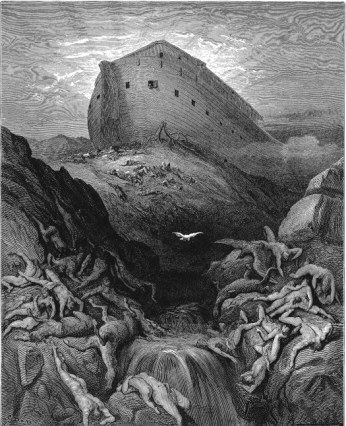
Education is the most important invention of all time. Without it we’d still be warming our toes around the fire in our cave, wearing smelly animal skins. The natural enemy of education is sometimes the institution. Institutions, especially those that continually turn an envious eye towards corporations (often among the least enlightened of human ventures) as a model for emulation, are steering a sinking ark. Both church and university have become poster children for the corruption that creeps so insidiously into organized structures that have lost the way of pure intentions. The call of the wealth is far more savage than the call of the wild. The wolf pack does not devour its own.

Well-paid industrial analysts, I’m sure, are being offered handsome sums to figure out how to make universities more efficient. University presidents and sports coaches drawing down six-or-seven figure salaries shrug their flummoxed shoulders—what could possibly be the problem? Perhaps we need even more upper-level administration to sit and think this out. Meanwhile parents stressed to their financial wit’s end are slowly beginning to learn that the ones teaching their daughters and sons are the adjuncts who now make up well over half the teaching force in higher education. I would not presume to guess which direction higher education is going. It does seem entirely probable, however, that when the wolves are done with this meal, a scattering of bare bones will be all that’s left. After all, in the wild a lone wolf is a dead wolf.

The corporate emblem.