Lead us not into Dominion

Christian dominionists emulate the Roman Empire, it seems. The Viewpoint in last week’s Time magazine, entitled “In God We Trust,” points out several of the objectives of the dominionist camp. Taking their cue from a decidedly modern and western understanding of Genesis 1, this sect believes the human control over nature to be a divine mandate in which our species dominates the world, with divine approval. As Jon Meacham points out, that dominion does not end at other animal species, but includes control of the “non-Christian” as defined by their own standard. This non-negotiable “Christianity” is a religion guided by utter selfishness and self-absorption. So thorough is this directive that those indoctrinated in it cannot recognize Christians that do not share its perspective as part of the same dogmatic species. It is a frightening religious perspective for a nation founded on the principle of religious freedom.

Rehearsing the rhetoric from Rick Perry’s “the Response” rally, Meacham rightly points out that when dominionists quote the Bible it is most important to note what the Bible does not say. Herein lies the very soul of the movement—filling in the void where God does not talk with human desires and ambitions. As any good marketer knows, however, packaging can sell the product. Introduce a rhetoric that claims to be biblical to a nation where most people have never read the Bible and smell the recipe for success. People want to believe, even if what they think they believe is not what it claims to be. Christianity is claimed by so many vastly differing factions as to have been drained of its meaning. This is the danger in the game of injecting religion into politics. Surely the Perrys and Palins and Bachmanns know what they believe, but they do not say it aloud, for their Christianity does not coincide with the various forms of the religion advocated by the churches historically bearing the torch of Christ’s teachings, insofar as they might be determined.

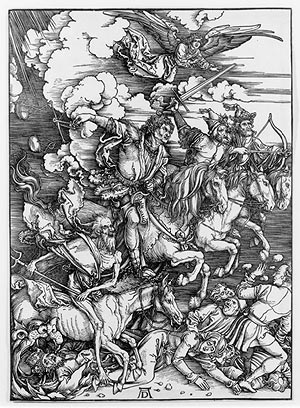
Dominionism is nothing new. Even the most pristine believer must see that Constantine had more than a warm fuzzy feeling in his heart when he adopted a foreign religion and fed it to his empire. No, Christianity was an effective, non-violent means of control as well as a way of achieving life after death. Rome was nothing without dominion. The parallels with the United States have been noted by analysts time and again. As we watch the posturing of political candidates wearing some form of their faith on their sleeves, the unsuspecting never question what might be up those sleeves. It is fairly certain that when the parties sit down at the table and the cards are dealt, it won’t be Bibles that we find scattered there. This is not a kingdom of God’s making. When dominionists take over all others must scan the horizon for the advent of the Visigoths who will not be dominated.


Brain Death

The computer revolution has spoiled some of the wonder associated with old films that had been formerly staged with cheap props and poorly written dialogue. (Well, computer literacy has not always improved the dialogue, in all fairness.) Nowhere is this more apparent in the science-fiction/horror genre where CGI has made the impossible pedestrian. There’s little we’re not capable of believing. Back in the fifties and early sixties when even color film often went over budget, some real groaners emerged. Over the weekend I watched one of the movies at the front of the class for poorly executed. The Brain that Wouldn’t Die, however, is experiencing something of a renaissance with a stage musical coming out next month in New York based on this campy classic. Most horror movies don’t really scare me much, probably due to overexposure. The Brain that Wouldn’t Die, however, creeped me out in an unexpected way. Daring toward exploitation status (the movie was shot in 1959 but not released for three years), the “protagonist” is Dr. Bill Cortner who specializes in transplants. When his girlfriend Jan is decapitated in an automobile accident, Cortner keeps her head alive while seeking a body onto which to transplant it. Ogling over girls in a strip club, or even stalking them from his car while they’re walking down the street, the doctor imagines what features he’d like grafted onto his girlfriend’s still living head.

Campy to a nearly fatal degree, the film is nevertheless disturbing on many levels simultaneously. Although I was born the year the film was released, I was raised to consider both genders as equal. The unadulterated sexism of a man grocery shopping for the body he wants stuck onto his girlfriend’s head was so repellant that I reached for the remote more than once. A bit of overwritten dialogue, however, stayed my hand. Kurt, the obligatorily deformed lab assistant, while arguing with Cortner declares that the human soul is part in the head, yet partially in the heart. By placing a head on another body, the soul is fractured. Now here was a piece of theological finesse unexpected in such a poverty of prose. The question of the location of the soul has long troubled theologians, an inquiry complicated by the growth of biological science. Heart transplants are common today, but the resulting people are in no way monstrous. The amorphous soul, theologians aver, is non-material yet resides within a specific biological entity. Some have even suggested that you can capture its departure by weighing a dying body at the moment of death. Others suggest no soul exists—it is a mere projection of consciousness. Cortner, however, once his eyes have opened the possibilities, can’t look back.

Our social consciousness has grown considerably since the late 1950s. Politicians and Tea Partiers who hold that era up as a paradigm of sanity do so at the price of half the human race. On the outside with the oiled hair, polished shoes, spotless automobiles, society seemed clean cut and orderly. Women, however, were relegated to inferior roles while men made the rules. Life was less complicated then. We knew who was in charge. Or did we? As a species that has evolved via sexual reproduction, it has taken us surprisingly long to realize that both genders are essential to humanity. We still tolerate gender disparity in pay scales, often shored up with the tired excuse that pregnancy and childbirth disrupt “productivity” and therefore female efforts are worth less than male—never changing due to biology. Such trumped-up excuses ring as hollow as a head without a body. Many Neo-Cons will even use the Bible to support it. John Q. Public (always male, please note), they insist, yearns for the “good old days.” The days they desire, however, were days of cheap horror and unrealistic dialogue. If they can watch The Brain that Wouldn’t Die without flinching, our future is bleak indeed.


Springing up Moses

“Springsteen’s work and person invite analysis in terms of the biblical themes of exodus and promised land,” so wrote Kate McCarthy in “Deliver Me from Nowhere: Bruce Springsteen and the Myth of the American Promised Land” (conveniently in a Routledge title, God in the Details: American Religion in Popular Culture, second edition, 2011). Having just finished Bruce Feiler’s America’s Prophet (not Routledge), I am attuned to the exodus theme at the moment. Feeling an unaccountable, personal connection to the other Bruce (Springsteen), I have felt the sense of exile in his songs since I was a teenager. I had no idea who Springsteen was when “Born to Run” made it to the charts. Living in a nowhere town at the time (population less than 1000), I felt the burning need for a personal exodus that eventually landed me in the largest city in the country. But still the sense of exile remains.

Lest readers be too confused, it might be politic to point out that the biblical concept of exodus likely had its origins in the Exile. Without rehearsing too much history, the Babylonian Empire, under Nebuchadrezzar, conquered Jerusalem in either 587 or 586 BCE, leading to the deportation of a significant number of Judahites who would become, over a generation, the “Jews.” These people were exiles, forced to live under the watchful eye of a political overlord with whom they shared only the most basic of heritages. Their religions had grown apart over the centuries, and as the Jews began to think back on their homeland, the exodus came to mind. Archaeological evidence for an exodus of biblical proportions (literally) does not exist. Why, then, the story of the exodus? Did not the desire to return home involve crossing the desert, with a divinely appointed leader? One who carried the law (Torah) with him? When Ezra led returnees home in the fifth/fourth century, he had the Torah in hand. Like Moses, he led the people out of bondage under the Persian plan. Exile and exodus are twin children of oppressive regimes.

So, how do ancient desert wanderers come into the orbit of a very damp New Jersey, and in particular, it’s arguably most famous resident? Alienation is home. Very few teenagers don’t understand this. As we attempt to integrate them into adult life, something vital, essential, is left behind. Consider all the long-haired artists of the ‘60’s and ‘70’s who still perform, now shorn to conservative acceptability and sometimes churning out very conventional songs. The fire has gone out. It is difficult to escape exile when you carry it with you. That’s something I think Bruce understands. His look may have changed, but his message has not. America has always been a haven for exiles. Simply because an exile moves into a new setting, however, does not mean that the promised land has been reached. As McCarthy seems to be saying, and as I have often felt, the promised land disappoints. The seeking is what must persist. America may have its Moeses, but it will find, from atop Nebo, that the path is where your feet already are.

Look carefully at your prophets!


Declining Prophets

Prophets aren’t what they used to be. Was a time when you had to be real to make an impression on the world. The historical evidence for Moses is slim. So slim, in fact, that it can’t be seen. As a child learning that the Bible contained no mistakes (it does) and no contradictions (too many to count), there was never any doubt of Moses’ historicity. Charlton Heston’s iconic portrayal of the man who wouldn’t be king left little room for doubt in pliable young minds. Not bad for a man who probably never lived.

I finally got around to reading Bruce Feiler’s America’s Prophet: How the Story of Moses Shaped America. Initially I found the book difficult because I started it the day after finishing Kent Nerburn’s The Wolf at Twilight. There seemed a disingenuousness to America’s development that had been built on oppression. The retelling of sacred histories can be quite diverse. Nevertheless, Feiler’s book is well researched and compellingly written. Beginning with Columbus and coming up through the first years of the twenty-first century, Feiler shows again and again how Moses is lurking in the shadows of some of America’s grandest monuments to self.

Moses is the liberator who lays down the law. As such, nearly all the great political leaders in America’s Bible-saturated history have been compared to him. The funny thing about the actual Moses is that history’s chroniclers somehow failed to mention him. He does not appear in the annals of Egypt, where, according to Exodus, he was the near equal of Ramesses II. He is not mentioned by the political watchers among the other great powers of ancient western Asia. The Bible is all he’s got. Political commentators in early America, however, were not worried about whether he existed or not. The Bible says he did and that’s good enough.

Feiler builds a compelling case for Moses standing behind American figures and institutions. He also seems to be aware that Moses may never have walked the earth. An avenue he doesn’t explore is how entire national identities can be built on myths. Mythology gives us the meaning by which we live. Some times that mythology will include historical personages. Other times the myth must stand on its own. Moses may be one of the latter. Does it matter that Moses does not appear in history? No. He has already left his imprint, as Feiler ably demonstrates, on Columbus, the Pilgrims, George Washington, the Liberty Bell, Abraham Lincoln, the Underground Railroad, the Statue of Liberty, Martin Luther King, Jr., and even—God help us!—George W. Bush. Anyone capable of pounding a Bible loudly enough will eventually make the ranks, it seems. Ahistorical Moses has accomplished in his sleep more than historical people can ever attain. Amazing what you can achieve, real or not, with mythology on your side.


Ezekiel’s Equinox Paradox

Like the great celestial wheels of antique imagination, the seasons continue their wearisome roll across the earth. On a day long marked as a holiday among those more closely attuned to nature than most modern people in developed nations, we face the beginning of autumn. Change is in the air and already the gray skies that have predominated the eastern seaboard over weeks since Irene seem to have winter on their minds. Changes always call to mind how the human mind tends to divide what it sees into categories. The Bible is one place that this tendency is crucial. The whole scheme behind clean and unclean comes down to the need to make discrete that which nature shamelessly blends. When it comes to deity, the party line has always been (at least in the monotheistic religions) that God is like one of us. We can’t imagine human very well without gender, and so God becomes a guy. Notwithstanding protests to the contrary, early religions did take that distinction literally; divinity and masculinity were of a piece.

This fact makes it all the more intriguing when the Bible itself offers a few passages that call this orthodoxy into question. A few verses explore the trope of God as female, but they quickly back away and revert to the male God when taking on more literal terms. Hebraic culture was monistic, not dualistic. God as “spirit” was not really a possibility in the Hebrew Bible. God as a big man fits the picture better. One of the voices that claims dissent is that of Ezekiel. No surprise there—Ezekiel has been analyzed as everything from a dreamer to a dropper. Ezekiel’s understanding of God, however, is deeply imbued with temple imagery. Ezekiel was a priest without a sanctuary, and so his view of God suffered from temple vision. Nevertheless, the strange account of Ezekiel’s vision of Yahweh coming to Babylonia that opens his book demonstrates a startling lack of clarity when it comes to divine gender.

When two people meet, as psychologists have long noted, the first bit of information they attempt to discern is gender. Perhaps it’s the old fight or flight reflex from our reptilian brains, or maybe it is the opportunistic mating behavior that so obviously characterizes our species, but we are very uncomfortable when we can’t make a gender assignment. It is the whole premise behind Saturday Night Live‘s old sketch of “It’s Pat.” When Ezekiel first espies God he describes the deity in terms of glowing metal. But notice that he begins, “And I saw as the colour of amber, as the appearance of fire round about within it, from the appearance of his loins even upward, and from the appearance of his loins even downward, I saw as it were the appearance of fire, and it had brightness round about” (1.27). Beginning at the loins the prophet looks the deity up and down and concludes God is like fire. This image does not long survive the vision, for Ezekiel quickly reverts to masculine imagery for God. Even in the face of evidence that God is not gendered, the faithful must make him so, for the age-old appurtenance of male superiority suffers immeasurably without the camaraderie of God.


Bibles and Broomsticks

Continuing my musings on Kent Nerburn’s The Wolf at Twilight, I must pause for a moment on chapter eight, “Bibles and Broomsticks.” I must confess to having learned quite a bit in this account, and among the more disturbing facts is that government agents routinely removed Lakota children from their homes so that they would be sent to boarding schools to learn “white ways.” Many of these schools were run by Christian groups; in “Dan’s” case, the school was Roman Catholic. Confused and frightened, away from home, these children were compelled to give up their traditional ways so that they would be more accommodating to the people who had taken over their land. In the midst of the difficulties faced, Dan makes some pointed observations about the difference between what he had been taught as a child and what the establishment schools proclaimed. In punishment for speaking his own language, Dan was once sentenced to kneel on several marbles while holding a heavy Bible out at the end of each outstretched arm. Later he reveals that many of the children were sexually abused by the priests out on the prairie, far from the help of any non-religious adult.

Despite the grimness of this scenario, a parable may lurk for those of us who live in supposedly more enlightened times. The Bible being used as a physical weapon may be rare today, but it certainly has lost no force as a metaphorical one. We see this constantly when overly eager televangelists and politicians unilaterally declare that natural disasters are of divine origin, the god of the black book punishing the country he founded. Their logic twists like the rubber band on the balsam toy airplane of their mental depth. Complexity is the work of the devil when God can be blamed for every misfortune against those of whom they disapprove. The truly sad part is that they are continuing the oppression that was behind the mistreatment of the Native Americans. Books only enlighten minds when they are opened. Making a Bible into a cross is about as pagan an idea as can be conceived (my apologies to any pagans reading this—pagans are not nearly so barbarous).

At one point Dan explains to Nerburn that the Creator’s lessons could be found by observing nature, such as listening to the song of a bird. He said, “We could have taught your people, too. But they never listened…They just looked in their Black Book. They said it had everything they needed to learn the Creator’s lessons.” We are starting to learn this lesson, but very, very slowly. It was not by accident that the Navi in Avatar were portrayed as symbolic of Native Americans while the greedy industrialists mining their planet considered it manifest destiny to take charge. The Bible does not have all the answers. Those which it does contain in no way justify the abuse of others for one’s personal gain. It is one of history’s legitimate mysteries how an intelligent people can shut out reason when personal gain is at stake. It is easier to do, apparently, when there is a divine book to blame. When the Bible is used to punish others, however, it is always a safe bet that it has never been opened.

Differing worldviews


Who Are the Wolves?

Last week I finished reading The Wolf at Twilight by Kent Nerburn. To be transparent here, I’d picked up the book at a Borders’ closing sale based largely on the subtitle: An Indian Elder’s Journey through a Land of Ghosts and Shadows. It sounded like a good book for autumnal reading. The first chill breezes of fall swept through Manhattan last week, and I curled up with the book on the bus. I’m not sure what I expected, but what I found was nothing short of epiphanic. Those of us who’ve spent long years in religious studies, no matter what specific branch, know of the deeply spiritual writings of Native Americans. Black Elk Speaks is a classic often required in Religion 101 and it is still as potent today as it was back when first penned. The danger, which Nerburn clearly states, is in assuming a mystical kind of stereotype for a very real people who have continually been—and still are—hidden away as an embarrassment of the United States’ melting pot image.

The Wolf at Twilight is a follow-up to Nerburn’s Neither Wolf nor Dog, a book that I have not read. In that original narrative, Nerburn describes his encounters with “Dan,” a Native American, Lakota elder. The Wolf at Twilight is the story of how Dan finds closure in locating the resting place of his sister, from whom he was separated at childhood. The journey, spiritual though it may be, is a wrenching one. Speaking from my experience, many children grow up in America learning only cursory pieces of the large and tragic mosaic of how the Native Americans were treated by own government. The story of Dan is one of clashing worldviews where any system that stands against the ideal of private ownership—sadly embodied in the Christian settlers of this nation—is inevitably shredded, and, if embarrassing enough, hidden from future generations. Our ancestors did a great disservice to our fellow human beings, in the name of religion. Manifest destiny had an overly healthy dose of the divine right of Christians in it. An idea poisonous to anyone who might challenge the concept of personal gain.

As a neophyte in this field of reading, I was sickened by much of what I read here. It will take more than a single post to outline some of the more poignant inconsistencies between Christian practice and preaching perpetrated upon those who were here before us. A people forcefully converted to a religion that was openly oppressive to them reveals the dark underbelly of missionary zeal and the truth of the evils religion can hide. Or even justify. Often Dan decries the religion that believes all the answers are in a black book. What was done to his own family in the name of Christianity led to several restless nights for this reader. Kent Nerburn writes with the conviction of a man haunted by an experience of rough reconciliation. From the title, I had expected maybe werewolves or specters to roam this book, but instead what I found was much more terrifying. It was the naked lust for personal gain—a monster that no crucifix or prayer ribbon can ever banish or dispel.


Material Whirled

With the moon and Jupiter waltzing slowly so high in the sky, radiating such brilliance early in the morning over this past week, it is understandable how ancient people came to see the gods as material objects. The course of progression seems to have been physical gods to spiritual gods: the earliest deities ate, drank, made love, fought. They were of the same substance as humans, or at least of the same psychological makeup. The Egyptians, Zoroastrians, and Greeks all toyed with ideas of beings of “spirit”—non-corporeal entities that did not participate in our material world, but were able to influence it. In the world but not of it. The tremendous gulf between great goddess and material girl was born. Today that concept is taken for granted, especially in western religions. We are locked into physicality while God is free to come and go.

Many religions respond to this by suggesting that we should look beyond the physical to the majesty hidden from biological eyes. And yet, physical creatures that we are, we are drawn back to material means to demonstrate our spirituality. One of the perks of working for a publisher is the constant exposure to new ideas. At Routledge I have been learning about the rising interest in material religion: the manifestation of religion through physical objects and rituals. This aspect of religious life easily devolves into a cheapening of faith into mass-produced, religious knickknacks and kitsch. Some mistake this for the real thing. While living in Wisconsin, my family used to visit the spectacular Holy Hill, the site of a Carmelite monastery atop a large glacial moraine. On a clear day you can see Milwaukee from the church tower. It is a large tourist draw.

No visit to such a shrine would be complete without the obligatory stop at the gift shop. Even the non-believer feels compelled to buy some incredibly tasteless artifact to keep them grounded in reality. Many of the items—giant glow-in-the-dark rosaries, maudlin mini-portraits of the blessed virgin Mary (BVM as the insiders call her, not to be confused with BVD) and the crucified Lord on all manner of crosses, line the walls and shelves. This commercialization is not limited to the Catholic tradition. Evangelical groups realize the importance of branding as well, passing out cheap merchandise (or better, selling it) with Bible verses emblazoned on it. These signs of faith sell themselves, but they blur the sacred distinction between human and divine. Does religion point to a reality behind the physical? This is its claim, but what is the harm in making a bit of cash on the side, just in case?


A Peculiar Resurrection

Although it is not my regular practice to splash melodrama across my blog, my recent experience with losing the Internet for four days prompts me to consider resurrection. After consulting with three technical agents and giving my laptop a kind of electronic enema, I am now once more able to access that mysterious nirvana called the world-wide web (and even the www2, whatever that is). This experience has taught me something about the human craving for resurrection. I began this blog in July of 2009. Since then I’ve added new entries almost daily. Even in places as remote as the northwoods of Idaho, if my laptop receives a signal, I can post my unorthodox thoughts for the world to read (at least the very small cross-section of the world that stumbles upon my pages). Being forced to go without Internet connectivity in New York City, of all places!, was itself a surreal experience. I literally wept in frustration. No one could help. This morning the Verizon tech assistant had me connect via an Ethernet cable and with his omnipotent hand remotely guiding my cursor, brought these dry bones back to life. Praise the landline!

The writers of the Hebrew Bible did not believe in resurrection. The book of Daniel, written just before the death of Antiochus IV Epiphanes (“the manifestation” as he humbly called himself) in 164 BCE, is the earliest hint that Jewish thinkers were beginning to consider the resurrection concept. The Egyptians had, many centuries earlier, played with the idea. They eventually developed it into a national pastime—building pyramids to ensure the king got to live again—but other ancient people were more pragmatic. Death was the end, so live this life to the fullest. As far as we can tell, Jesus taught his followers about the possibility of life beyond life. Some take that to mean a literal reconstituting of life after death while others understand it metaphorically. Both ideas can be, broadly speaking, labeled “Christian.” Some Jewish thinkers accept resurrection, others do not. Other religions, as mentioned earlier this week, go for the cyclical approach of reincarnation.

Ezekiel, according to chapter 37 of his surreal book, saw a valley of dry bones. These people were, as the Munchkin coroner croons, “really most sincerely dead.” Ezekiel did not believe in resurrection. If he had the miracle would have been lost on him. Reviving the dead was considered the most extreme, impossible feat in his entire (if limited) universe. The people of Judah, defeated by Babylonia, carried into exile, their temple—God in their midst—destroyed, believed it was all over. There was nothing to bring home into such a desolate landscape. Some suggest Ezekiel was schizophrenic or perhaps addicted to psychedelic mushrooms. In reality, I believe, he owned a MacBook that could not connect to the Internet. Once that divine signal from on high penetrated the arid air of exilic lassitude, he rebooted and without the aid of any drugs, saw God in all his/her glory. (Ezekiel refuses to give God a gender, but that is a topic for another post.)


Confessions of a Luddite

I am not now, nor have I ever been, a techie. I learned my computer skills on a Mac, and I have been an adoring follower of Apple ever since. Every time I see Windows at work, I sneer at how they try to emulate the real thing: the Mac operating environment. Only clunkier. It is like watching hand-drawn cartoons in high-definition. Regular readers of this blog expect a daily post, but my valiant laptop, alas, had what is akin to a religious experience and I’m losing it. I’ve done my blog posts from that laptop for nearly two years. I sometimes work on them during the long commute to New York City. When my Mac Book encountered the plethora of signals from a Manhattan office building, it froze up. At home it no longer recognizes my base-station router. With my limited technical knowledge I’ve tried every trick on the Internet that doesn’t involve some Geek God going off into jargon that a humble reader of ancient languages can’t understand. I am grieving.

Yesterday, thinking about my plight, I saw the parallels with religious experience. My laptop in my eighth-floor office is like Moses climbing Mount Sinai, but less robust than the 80-year-old prophet. Having encountered a higher being—signals from the heavens, hundreds of them—it has bowed in acquiescence. It has received an epiphany that I missed while going about my daily editing duties. When it returned home, it was not able to recognize the one signal that has been its lord and master since it was first booted up. Nothing from restarting the router to reinstalling the entire factory-set system to clearing and restricting the access to the one true network has helped. My computer, to borrow a phrase from Atwood, has gone into a fallow state. That is a kind way of saying it is a mere paperweight or doorstop.

According to the standard interpretation, that is similar to an encounter with the divine. It leaves you marked, transformed. Sometimes incapacitated. Or perhaps the correct analogy is that of idolatry. My computer has gone on after foreign gods and no longer recognizes the one who gave it birth. I have suffered through two sleepless nights because of it. I even visited the local Apple store where they suggest I clear the AirPort history. Like I know what that means. Perhaps I have the analogy all wrong. Maybe my computer is the deity and I am the acolyte. It is mysterious and powerful and I am left in tears after an encounter with it. But really, it feels like a friend has died. I haven’t been able to post my quirky observations. I have to borrow a friend’s computer. Am I a prophet or just another Luddite awaiting my own theophany?


Unanswered Questions

Attempting to write a blog post everyday on the single subject of religion can be a challenge when you don’t share the freedom of the Internet with most faculty. Once in a while a topic just drops in your lap like a gift from God. It helps that New York City is such a religious place. Despite the many critics who claim New York is godless and completely secular, it my experience there are a goodly number of the godly in it. It is not uncommon to see street preachers on a sunny day (apparently God has less need of saving on rainy days). On my way home from work today I was presented with a tract in which “God Answers Your Questions.” It was a little odd that the acolyte with the tracts knew what my questions were, but since the leaflet quotes extensively from the Bible it must be true. From this pamphlet I learned what my hidden question were.

The first question, rather flatteringly, states, “I am young yet, and likely to live for a long time.” Once I’ve been buttered up, the other shoe drops: “Why should I think of eternal things now?” Rather than the Bazooka Joe Bible verse, I thought I might field that one myself. I grew up thinking about eternal things on a nearly daily basis. By the time I was in high school I was somewhat creepy about it. In a college course on the psychology of death and dying, we were asked how often we thought of death. My honest answer was, “every day.” Now, a person with that kind of background may be overthinking this a bit. Death is a relatively simple matter: you need do nothing to achieve it eventually. I had been taught that if you worked to make sure you were honest and true, it would be rewarded. I was fired from my first job for being true to what I’d learned with intellectual honesty. I thought about death a lot.

Death, given its finality, is a universal religious concern. Some religions offer an afterlife—generally it is not an option—while others do not. The life well-lived is its own reward. Others suggest what seems to me a more insidious option: reincarnation. Those religions that take this approach are generally honest up front, stating outright that life is suffering. Reincarnation is goal-directed: break the cycle and achieve Nirvana. And there is no reason to flatter people with the long life yet ahead of them. The evangelist ignored my white whiskers and gave me an anonymous tip for salvation. Perhaps all I really needed was a sip of cold water. Having spent the better part of one life thinking about its end, reincarnation could be a cruel reprisal indeed. I don’t need to worry, however, because I’ve got the answers—along with the questions—right here in my pocket.


September’s Child

This was an appropriate weekend for a scary movie. With Guillermo del Toro in the news of late, I selected The Orphanage to fit the mood. Foreign language films can present a challenge when too much action is interspersed with dialogue, but the pacing and deliberate unfolding of The Orphanage solved that problem. As always when screening horror films, I was watching to see how religion played into the plot. The story follows the disappearance of a child adopted by a couple who wish to open a home for special needs children. Laura, the mother, is unwilling to accept her child’s disappearance while her rational, physician husband, Carlos, feels that the outcome is inevitable. In a show of support, however, Carlos lends Laura his Saint Anthony’s medal, just until their son is found.

The association of Saint Anthony—perhaps the most famous Franciscan after Francis himself—with lost items is a worldwide phenomenon. The city of San Antonio bears his name (although it is easily found). In the movie he is invoked to find the lost child. The distraught Laura religiously wears the medal until the child is found (in what state I’ll not say, for the benefit of those who’ve not seen the film). When Carlos comes to seek his wife, he finds the medal, bringing the movie to a close. The orphanage also features a very gothic chapel that sets the mood in a few scenes as well. “The Good Shepherd” is the very biblical name of the institution. Although not central to the story, religion is woven throughout, demonstrating once again that fear and religion are closely related.

Like Saint Francis before him, Anthony was born to a wealthy family in the Middle Ages. Both young men forswore their material goods to seek spiritual wealth. Both died relatively young (not uncommon in the Medieval Period) and in poverty. Choosing such a selfless character as the means of recovering that which has been lost may seem counter-intuitive, and The Orphanage exploits that idea very nicely. Over this gray weekend when many people were thinking about loss, an orphanage seems an appropriate metaphor. Although a Saint Anthony medal may inspire confidence, it can never restore what is truly gone. Even so, religion may assuage the anxiety, but in the end we still must find our own way home.


Remembrance Day

September 11, 2001 is on America’s collective consciousness. A decade ago thousands lost their lives in a religiously motivated and misguided attack on what some see as a wicked culture. Those who hate America have never come to know it. What a sad commentary it is that religious belief lends its strength of conviction to those whom it has convinced that evil is righteousness and that terror is divine. It is somber to experience this tenth anniversary so close to New York City. When I ride in to work now every day I see the new World Trade Center rising, literally, from the ashes. It is a monument to what America tries to embody.

Twin towers, 13 years old.

Our nation is not perfect. None is. Too easily we accept the casual relegation of various minority groups to poverty. Too easily we allow the obscenely wealthy to escape all sense of social obligation. Too easily we focus on our selves rather than our community. No, we cannot claim to be perfect. Nevertheless, we strive for an ideal that will not die.

Some have boldly claimed twentieth century notables as “the greatest generation.” I believe that praise, although deserved in a sense, to be misplaced. The greatest generation was that rag-tag group of colonial citizens who’d fled from cesspools of oppression to find freedom in a new world. They were not perfect. They oppressed and displaced Native Americans who still suffer under repressive policies that ensure the great embarrassment of their treatment will remain out of sight. The greatest generation I envision is those who, at the risk of their own lives, decreed that the world should, must contain a haven for those who cannot live without a free conscience. A place where religion, or even the very words you say or write, cannot be dictated by the government. A place where people could go on to become the putative “greatest generation”s of the future.

When I first heard about the attacks on 9/11 I was at Nashotah House. Those first moments of confusion were terrifying—our daughter had just started school and was not close enough to hold. My wife and I watched the television in sheer unbelief, tears on our faces, our lives being forever wrenched and twisted in new directions. In was a day that sobered up an entire country.

(Please read the remainder at Full Essays.)


Moosechief

The moose, depending upon which standard you use, is either the largest or second largest known land animal in North America. This aspect of the moose, as well as its general docility, has often spurred me to the northwoods in search of the elusive beast. Those of us with few tracking skills, however, often must be approached by the greater party rather than finding it. My trips to Maine have seldom yielded moose, but in my periodic forays to Idaho the creature sometimes makes an appearance. This past summer I spotted two of them in the west. In their ungainly way they are beautiful animals. Large they may be, but intelligence is not a necessary corollary to size.

Moosing around.

From about the 1840s, up to its formal passing into law in 1919, prohibition ranked high in the list of evangelical Christian concerns. A distinctly Protestant issue—Catholics still recognized that any tipple good enough for Jesus was good enough for them—the outlawing of alcohol was understood to be in keeping with the Gospels. Some groups even suggested that Jesus had been quaffing Welch’s, or the first century equivalent thereof, rather than Mogen David (the shield of David, after all). Latest research seems to indicate that fermentation was known before the Sumerians ever appeared, and we all know what happens when cavemen have too much to drink. Strangely, this became a religious issue along about the time Fundamentalism began to appear. But Fundamentalists considered neither the practices of Jesus nor the moose.

A story in today’s New Jersey Star-Ledger concerns a moose in Sweden. Known for their liberal social values, the inhabitants of Sweden are often presented as champions of free lifestyles. A moose near Gothenburg apparently had trouble steering herself after eating several fermented apples that had fallen from a tree. The inebriated moose lodged herself in a tree fork. The rescue involved bringing a crane to the scene to release the trapped, and slightly disorderly, animal. Such a story makes me wonder if prohibition should not be among the laws of the jungle. After all, the observation of nature often calls the certitude of many religious doctrines into question. If God prohibits alcohol, we might rightly wonder, why are there moose in Sweden sleeping off a hangover?


Do Unto Others

Having just finished my first week as Religion Editor at Routledge, I have learned many things. The lengthy commute into New York City is filled with many lessons along the way and working for a publisher of some distinction is a privilege. My working life began with the work of a common laborer at 14. Conditions weren’t bad although the work was hard—we have laws to protect minors against exploitation. Funnily, after people reach a certain age exploitation is freely allowed, as long as someone benefits from it (not the one doing the labor). Being from a working class family, I gravitated towards dirty jobs. My college career was supported by many long hours in the dishroom, washing the cups and plates sent back by kids whose parents could foot their bill. I didn’t complain—physical work has always been relaxing to me. Mind work is much harder.

The majority of my adult life has been whiled away under the Damoclesian stare of religious institutions or individuals. Christians don’t make good bosses. My years at Nashotah House felt like some combination of Alcatraz and Bedlam. Under the authority of the religious I was taught to quake and fear. After over a dozen years of this, released into an empty academic void, I found a job with a Christian publisher who once again lived to dominate. I try hard to believe it is not inherent in religion itself, but often those who wish to bend others to their whim have some sacred sanction. For a brief respite I had a wonderful experience at the University of Wisconsin Oshkosh. My boss was secular and very caring. The same applied at Rutgers University. When Gorgias Press tired of my efforts, the secular academy came to my rescue.

Routledge once again reinforces that paradigm. For the first time in my professional life I feel that I am truly valued. As a rule, adjuncts are like Kleenex—there when you need them, but disposable after used. The university people were kind but could offer little. Now I am accepted among the secular and the little knowledge I’ve gained over the decades is appreciated. The scars, however, still show. The fear of long years of subservience are not easily dismissed. It is my hope that some day they may become effaced enough that the terrors wielded by the religious might be only nightmares recalled vaguely in the full light of day. If such deliverance comes it will have been because of my non-religious bosses. Such a parable should teach us about what religion has become in this “Christian country.”

No mean city.