Hallowed Be Thy Wolfbane

Anti-pesto to the rescue!

Anti-pesto to the rescue!

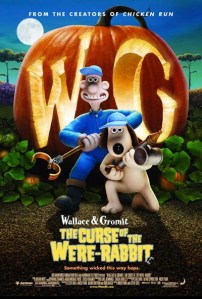
With autumn in the air and the harvest season looming near, my family recently watched Wallace and Gromit: The Curse of the Were-Rabbit. Quite apart from the inspired improbability of Aardman Studios productions, the central role of the village vicar in this film aroused my interest. Confirming an oft-cited proposition of this blog that mythical creatures burst from the same mental regions as religion, at Lord Quartermaine’s inquiry as to what might kill a were-rabbit, the vicar promptly pulls down a monster book from his shelves to reveal the secret. It is the church that knows about monsters.

In my continuing research into religious reactions to death and the afterlife, I constantly run into the name of Montague Summers. Summers was the author of the definitive books, in his period, on vampires, werewolves, and witches. He is best known for his translation of the Malleus Maleficarum, “the hammer of witches,” the main witch-hunting tome of the Middle Ages. A deacon of the Church of England before converting to Catholicism, Summers was a believer in the phenomena that he researched. Styling himself a witch-hunter (he lived from 1880 to 1948), he tried to live the fantasy world he helped to create.

The more that neurologists study the brain, the more we discover how deeply embedded religion can be. Any number of researchers have suggested various “God-shaped nodules” in the gray matter that provide for continuing religious belief in the face of advancing scientific knowledge. I would suggest, as a “religionist,” that perhaps nestled next to our mental menorahs, crucifixes, and statues of the virgin, there are also ghosts, witches, werewolves, and vampires lurking in the dark corners of the God node.
God and the Boss

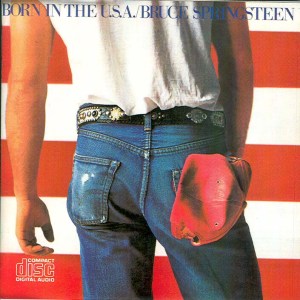
I seldom gush, nor am I given to great displays of emotion. Although I appreciate great accomplishments in others, I have never considered a living person a hero. Only Bruce Springsteen. An article in the newspaper yesterday described the first academic conference on the Boss’s music, held right where it all began — New Jersey. Unfortunately unable to attend, I relish the fact that others see in Springsteen what must be something like I see.

Last year at the Society of Biblical Literature Annual Meeting in Boston, I picked up a copy of a new book, The Gospel according to Bruce Springsteen, by Jeffrey Symynkywicz (Westminster John Knox, 2008). I am not a fan of “Gospel according to —” books, but there is a trenchant depth of struggle with religion embedded in Bruce’s songs that transfixes me almost as much as Melville’s Moby Dick. Now, this is deeply personal with me. I don’t discuss my amazement that borders on worship of Springsteen with anyone. Coming from a decidedly blue-collar background, and having wrestled against circumstance for everything I’ve earned, including my degrees, I hear resonances of empathy throbbing through what Bruce sings. He is not an icon; he is an authentic human being. And his music is a gospel.

Boss

I haven’t read Symynkywicz’s book yet. Whenever I’ve tried to read the popular bios of the Boss I soon become frustrated at how trite they all make it sound. Having survived (barely) the Reagan-Bush era with its utter lack of sympathy for the condition of most Americans, sometimes I just need to crawl into the corner alone, slip on the headphones, and listen to Nebraska over and over again.


Religion or Death

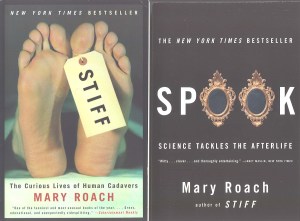
Researching traditions about death can lead to some occluded avenues shunned by many Ancient Near East scholars (generally anything after about the rise of the Roman Empire is irrelevant). It has long been my contention that death and religion are intricately intertwined, well nigh incapable of being teased apart. I’m also very interested in the research of writers on popular culture. Findings, no matter how erudite, if they don’t reach the public will only fail to impress. Mary Roach, ever masterful, wrote a morbidly fascinating account of the afterlife, so to speak, of corpses. This work (Stiff) was followed shortly by Spook — her foray into the science of ghosts. Anyone who can have you mortified one minute and laughing out loud the next deserves to be read.

Can't have one without the other

Can't have one without the other

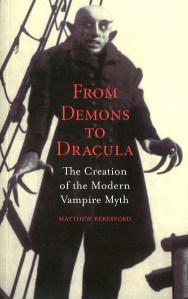
I recently finished Matthew Beresford’s From Demons to Dracula: The Creation of the Modern Vampire Myth (Reaktion, 2008). I was pleasantly surprised that Beresford ambled back to the Neolithic Period in his quest for vampire origins. A number of unexpected facts jumped out at me from his pages — vampires historically have very few traits that last through the folklore about them over the ages. Primarily all they share is being improperly dead. This horrific concept is among the most deeply rooted of human terrors. We prefer the properly dead who stay dead, thank you. Whether revenant or still alive, the vampire somehow threatens the lives of the living and must be dispatched by making him (or her) properly dead.

More rat than bat

More rat than bat

Having been a youngster and woefully unaware of international news at the time, I had never heard of England’s Highgate Vampire of the 1970s. A disjointed and confusing account involving an actual vampire-hunting Catholic priest, a rival vampire-hunting occultist, and ending with the actual staking of a corpse (in 1970! CE!), the tale in Beresford’s book is almost incredible. A little web research demonstrated that the story still has a much wider following than this blog will ever have. Overall, however, it convinced me that my inklings of the danse macabre between religion and death were as accurate as a vampire hunter’s stake.


For God and For Gold

The Associated Press today released a story about an Anglo-Saxon treasure hoard discovered in England this summer. The trove, which likely contains at least 1500 items, many of silver and gold, is calculated to cause substantial reassessment of Dark Age England. Leslie Webster, a former curator at the British Museum, suggested that given the nature of the artifacts, new light could be cast on the relationship between warfare and Christianity.

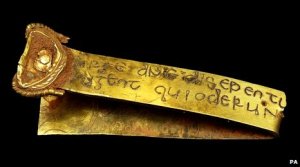
Apart from the obvious deliria of daydreams of wealth that such finds always drag in their cloaks, this treasure once again underscores the connections between religion and violence. The Anglo-Saxons, Germanic invaders of England following the decline of the Roman Empire, had been early converts to Christianity. Even Alaric the Goth was a good Christian, although he had little patience with the oversight of Rome. The recently uncovered hoard contains mostly military trophies, but among the finds was a gold strip reading “Rise up, O Lord, and may thy enemies be dispersed and those who hate thee be driven from thy face” (Numbers 10.35). Already bloggers are drawing comparison with Jules’ quote from the fabricated Ezekiel 25.17 in Pulp Fiction, but the connection of Christianity and conquest is much more intimate than that. Once Christianity became the official Roman religion under Constantine, the imperial imperative took over. It became a religion of conquest. A similar phenomenon occurred after the advent of Islam. The zeal of the converted should never be underestimated.

I'm trying really hard to be the shepherd

I'm trying really hard to be the shepherd

So, what are we to make of this scriptural quote among sword knobs and doom sticks? Is it simply more evidence that religions, like the Roman Empire (according to Octavius) “must grow or die”? Those who believe carry a deep-seated fear that their religion might be proven false. On it ride serious (and often eternal) consequences. One way to ensure the quelling of that fear is to silence the heretics who decry the one true faith: take up your swords and nukes and threaten the infidel. The road less traveled, however, is to rise above our insecurities and simply enjoy the ride.


Fundamentalist Foibles

Podcast 11 deals with the phenomenon of Fundamentalism, particularly biblical Fundamentalism, and its history. The podcast begins by setting the historical parameters, in the early part of the twentieth century, and considers some of the reasons that the movement may have begun. German biblical criticism, Darwin’s theory, and the First World War among them. A brief sketch of the movement is then offered, starting with the Niagara Bible Conference and the publication of The Fundamentals. The basic tenets of the belief system are summarized, again with suggestions as to why this may have been the case. A cautionary conclusion ends the presentation.


The Original Mud-bloods

“Let Nintu mix clay with his flesh and blood.
Let that same god and man be thoroughly mixed in the clay.”

This quote is from the myth of Atrahasis (Benjamin Foster’s translation; my Akkadian’s a bit shaky these days), an early version of the flood story. Although I have a burning itch to write about the flood, I would rather focus on the creation of humanity in this post. Maybe it is because in my unemployed mode it is easy to think of myself as only dirt and blood, but maybe it is because in my evening class we’ve just been talking about creation stories.

One of the benefits of polytheism is the lack of a pressing need to ascribe uniformity to your myths. Ancient peoples who believed in a multiplicity of gods had a wide variety of versions about how the world was created, where people came from, who sent the flood, and so forth. They were not writing about what actually, factually happened — these were myths, for the gods’ sake! Nobody was there to see the creation of humanity, so who’s to say what really happened? One element that is repeated in ancient accounts, however, is the creation of people from dirt.

Perhaps it is because people often treat each other like dirt, frequently with religious motivation, but a more likely explanation is that in ancient times the dead were known to return to soil after they were buried. Logic dictates that if the dead turn to dirt, their living version must have been created from dirt. So far, so good. But dirt isn’t exactly alive. The ancients differed on what animated this soil with a soul.

The Bible presents a lofty account of God breathing air into the soil-man. It is clear that the Hebrew Bible equates breathing to being alive. A person is alive when they first breathe; when they stop breathing, they die. At the same time, blood is an essential component too. This is so much the case that the Bible dictates that “the blood is the life” (Deuteronomy 12.23). For this idea the Israelites were indebted to the Mesopotamians. As seen in the Atrahasis Epic, humans are a mix of clay and the blood of the gods, the original mud-bloods. For all their differing opinions, the ancients realized that in this messy world of dirt and dread, human beings, for all their problems, had a bit of the gods within their very veins.


Sky God

The latest issue of Wired arrived in my mailbox yesterday. Generally the people who write for the magazine frighten me — they are so smart and hip and ahead of the curve, something that a scholar of very ancient stuff hardly even aspires to. When I can understand what they are writing about, however, I am often fascinated. A story that caught my attention is entitled “Sky Wave” by Mike Olson. Around the world people have been noticing a new type of cloud that is being called undulatus asperatus. undulatus1 Here is a Gnu-license photo of one of these clouds; there are more dramatic images, but they are mostly covered by copyright. What immediately caught my attention in the Wired article was the subtitle: “Weather Geeks Are Championing a New Armageddon-Worthy Cloud.” The Bible appears in the sky yet again.


Back when I was doing the research on my (still unpublished) book on weather terminology in the Bible, one of the pitches I used to potential publishers was the upward inclination of religion. Ask any kindergarten-dropout where God is and the fingers inevitably reach skyward. From earliest times people have associated the divine with the sky. Among the Sumerians, keepers of the earliest recorded religion, the deity An, the sky-master, was the most ancient of deities. While the origins of religion will forever remain obscure, it is certain that they have a celestial component.

I have to confess to being in love with the sky. If I didn’t have to earn a living I would spend hours each day staring upward. It is the repository of endless potential and ineffable beauty. Clear skies remind me that no matter how far we might go upward, there will always be more of it ahead of us. Cloudy days provide a palette and a canvas for the imagination. Even the brilliant writers at Wired can be forgiven for a foray into the mythology of the sky. Its power over us is as endless as its very expanse.


Harry Potter and the Evangelical Emperor

There’s a chill in the air this morning that warns of impending winter and the visceral melancholy of autumn’s graceful death. As I try to warm up like a lizard awaiting the ascending sun, I think that maybe I’d better write this post before everyone forgets Harry Potter completely. It is the beginning of the witching season as sometime late tonight fall officially begins and people in temperate climes are permitted to show their fears as the barrier between seasons becomes effaced and the darkness slinks in. A few Harry Potter novels ago, a local town in Wisconsin sponsored a downtown release party for the book with a street-fair sporting a feel of general bonhomme. While sauntering down the incongruously sun-lit streets, enjoying the sense of people just having fun, I spotted this man with a placard across the street.

No caption necessary!

No caption necessary!

The truly scary part of this scenario is that I knew exactly where this fellow was coming from: the Bible says it, I believe it, that settles it. Black and white. Right and wrong. Good and evil. Strangely enough, there was no such dividing line for fact and fiction. Yes, I knew that the Bible condemns witchcraft, but I also knew that J. K. Rowling was a fiction writer. I had read the Bible enough times to know that it contains no commandments about what genre of fiction is permissible and to know that some biblical heroes were deeply flawed characters. Jonah and his big fish. David and the giant monkey on his back. Hezekiah and his doubts. I can’t pretend not to know the searing sting of needing a clear answer, and yet I had already discovered the infinite shades of gray that reside between pure white and absolute black. Bible covers should all be gray.

That very year a conservative evangelical administration had axed a highly praised job of over a decade’s duration, believing it to be in the name of righteousness. A conservative evangelical president was unleashing hellish terror on a country that had the misfortune of being the victim of a bloodthirsty dictator. And this man with a placard felt he had to underscore that even a flight of fantasy on a broomstick over a quidditch field of imagination was evil incarnate. Once again my mind turned to Molech, the perhaps fictional Canaanite deity who is never satisfied. In the Bible it was enough simply to believe that people were sacrificing their children to the fiery Molech. “White and black,” I could almost hear the tremulous author whispering as he penned his horrid fiction. History tends to paint a different picture, but then, historians make liberal use of the myriad shades of gray.


Rosslyn, New Texaco

Back before Dan Brown had becoming the Most Important Human Ever, even before he published Angels and Demons, my wife and I visited Rosslyn Chapel in Roslin Glen, Scotland. While not actually seeking the Holy Grail, I had been doing some research on Celtic lore, ostensibly where the Grail legend originates, and so we made our way to the remote and (then) desolate site of this unusual church. Officially the Collegiate Chapel of St. Matthew, it is, without doubt, the busiest piece of architectural stonework I have ever witnessed. We went for the grail. We stayed for the art.

WikiCommons image, ours isn't this good

WikiCommons image, ours isn't this good

The research I had been conducting (finally published just last year as a contribution to a Festschrift for Nicolas Wyatt) involved the Mabinogian, a repository of Celtic mythology, and the legend of Bran. For sharing the name of a healthful breakfast cereal, Bran is renowned for also having had a life-restoring cauldron. He even made a journey to the netherworld and his head kept singing even after having been dissociated from his body. An uncommon hero indeed. All historical indicators, however, point to the cauldron as the original of the Holy Grail. Certainly the Bible does not mention it, nor does it appear very early in Christian mythology.

People, as Dan Brown’s financial independence loudly indicates, like a good conspiracy theory. There is a comfort in believing that a magical object of great power is out there somewhere and that a rather ordinary Harvard professor (!) might be able to find it, yet resist taking it. Far truer to life is Indiana Jones and the Final Crusade; people feel the need to touch, to control the power beyond themselves. Even at the cost of their lives. Despite the fact that the Grail is a fiction, it simply will not disappear — although no one can find it and it has never been seen. Faith tends not to be based on tangibles. This is attested every time Dan Brown makes his way to the bank and the population reads with wonder about meanings that simply don’t exist.


Of Cats and Goddesses

During one of my periodic forays into current Asherah lore on the web, I discovered a new breed of cat. Well, actually, I didn’t discover it, I just became aware of it. Because of a misspelling on a website I learned that the Ashera (trademarked name!) is the most expensive cat in the world, retailing for $22,000. A blend of three species (the mind boggles), the African Serval, Asian Leopard, and domestic cat, this feline comes in at least three varieties, including the especially appropriate Royal Ashera. If you’ve come into an inheritance and want to waste a few grand, take a look at Lifestyle Pets to see the wonder.

According to Kirta she has a temper!

According to Kirta she has a temper!

Curious, I searched to find if anyone would tip a hand as to where the name of the cat was derived. Choosing the name of the queen of the Ugaritic divine world seemed a little too much coincidence for me, but then again, homophones happen. When the Prince of Egypt, Dreamworks’ answer to The Ten Commandments, was released, I had several people ask me why the Israelites were singing about “Asherah” after they crossed the Red Sea. I had to watch the movie very closely, but I figured out that they were singing “I will sing,” which, in Hebrew, sounds suspiciously like “Asherah.” I never did discover Ashera’s origins.

Cats, however often maligned as associated with witches and vampires and other creatures of the night, are certainly among the most divine of domesticated pets. If I were free to purchase an animal companion the Ashera would be in the ranking (after I’d won the lottery, of course). Whether intentional or not, who would not want to own a cat named after the only goddess to be mentioned in connubial relations both to El and perhaps even to Yahweh? (The latter association, like the naming of the cat, is entirely open to question!)


Devil Went Down to Jersey

I have to confess to being a fan of Weird NJ. For those of you not fortunate enough to live in New Jersey, Weird NJ is an unconventional travel-guide published twice a year, celebrating the strangeness of the state. Ironically, I discovered Weird NJ while living in Wisconsin. I was attending the 150th birthday celebration of a couple of friends (combined ages, not paranormal!) where one of the gifts was the then recently published Weird Wisconsin. After the original magazine had caught on, books about individual states were commissioned and this was the first one I’d encountered. My wife knows that look in my eye, so on my birthday that year I had my own copy. Even though it is written for a decidedly non-academic readership, I learned more from it than most textbooks I’ve read. When New Jersey loomed large in our future, I added the book version of Weird New Jersey to my growing collection and soon came to rely on it as a repository of local folklore and interesting places to visit.

Thanks to Matt for permission to use his art, see Matt Can Draw for more!

(Thanks to Matt for permission to use his art, see Matt Can Draw for more!)
This short flight of fancy relates to religion in a very decided way. Within the pages of these publications many locations (popular with teenagers, I’m guessing) bear the moniker, “Devil’s —“ where the space may be filled by any number of nouns: Footprint, Kitchen, Pit, Pathway, Tree, or even Tea Table. This decided interest in naming places after the dark lord seems whelming, even for New Jersey, home of the infamous Jersey Devil. The need to have an evil entity to explain the darkness in our lives is very powerful. Certainly it is not limited to New Jersey as the well-known examples of Devil’s Tower, Devil’s Lake, and Devil’s Postpile attest (although mistranslation may frequently be responsible). Those cultures bound by a monotheistic outlook mark their fears with the Devil.

A relative latecomer to the Bible, the Devil had not been available for earlier attributions of evil. Thinkers of the pre-diabolical period reached widely varied conclusions as to who or what caused the troubles they experienced. Some blamed God while others simply accepted the vicissitudes of circumstance. (Then again, they didn’t have New Jersey as a frame of reference.) Once the Devil entered the picture, the problem of good and evil took on a sharper focus. That sharp distinction, however, frequently belies human experience where issues and situations are seldom as clean cut as they seem.


The Lady or the Lion

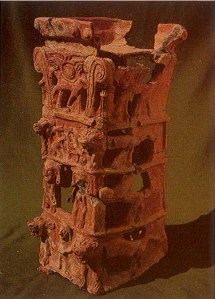
Ancient West Asian society utilizes a striking image that causes no end of confusion — the lady and the lion. Although not always identified, the lady generally appears to have been a goddess. Pairing a female figure with the most ferocious predator known in that society ripples with significance; there can be no question that the cultures involved were patriarchal, a fact of life in that part of the world at that time. If it was a man’s world, why depict the glorious lion with the feminine? Because we fear what we cannot control?

The infamous cult stand from Taanach

The infamous cult stand from Taanach

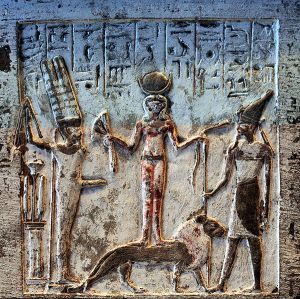
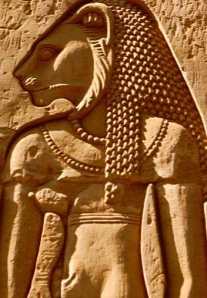
Ostensibly the rationale for this correlation may be traced back to Ishtar, the goddess sine pari of ancient Mesopotamia. The exact reason for her leonine associations is unknown yet she is among the fiercest females connected to warfare and strife in the ancient world. Her lion companions ranged over the realms of the Levant where other goddesses also assimilated her imagery. Curiously, one goddess who has no specifically leonine attributes is Asherah, the consort of the god most high, El. In Egypt the fierce goddess associated with war was Sekmet, often portrayed with a curiously male lion head.

Min, Qedeshet, and Resheph — a ménage à trios?

Min, Qedeshet, and Resheph — a ménage à trios?

In an earlier post I suggested that the biblical prophet Amos may have known that lionesses generally make the kill. Could it not be that although most women were locked out of public power structures in the ancient world they still may have retained the utmost respect and reverence of the populace? Long before male monarchs claimed titles such as “Lionheart” even gods would tremble before an enraged goddess. Morphed through time and continued patriarchal culture, the connection once again recurs in Frank Stockton’s The Lady or the Tiger where the metaphor has lost its teeth and the lady is no longer the source of destruction, but of male desire. Has the male prerogative once again usurped feminine independence? If only Ishtar or Sekmet could have been behind door number three!

Behind door number 3

Behind door number 3


Leggo my Ego!

Last week on my way to an interview, as I was merging onto the interstate, a state trooper in the center lane let out a whoop on his siren and broadcast on his speaker, “the left lane is for passing — got that?” Naturally I assumed the broadcast was directed toward me; I was in the right lane and the trooper was moving considerably slower than the posted limit. Should I pass him on the right or slow down? Now I was apparently joining a highway drama already in progress (status quo for New Jersey) and after a few intense heart-thumping minutes I realized that the cynical lawman was likely addressing a slower driver in the left lane. All of this is to introduce the problematic mindset of egocentrism.

The human brain, we are informed, is the most complex thing in the universe. It is also our gateway to all experience, knowledge, revelation, insight, and inspiration. We are limited in all our ventures by the tangible limits of our biological brains. Everything we associate with religion is mediated and filtered by our brains. As my friend and seminary professor K. Marvin Bruce likes to say, “consciousness is as much a curse as a blessing.” Our brains can be traps as well as explosive openings into new worlds. Everything begins and ends with the humble ego.

I was recently reminded of this while looking at the latest round of Hubble Space Telescope images released from NASA. We consciously know the universe is incomprehensibly large, the number of stars way beyond human imagination. And yet, on this smallish planet racing around a medium-sized sun somewhere in the outer banks of the universe, people have always thought the gods were concerned with them. The earliest cultures believed that humans were created in the service of the gods. We live, we wonder, we die. As long as the gods are pleased, the world continues much as it always has. In their eyes the stars that far outnumber the human population were gods. Their universe was more divine than profane. Yet even in our galaxy-filled universe, our brains can’t help but believe that somehow we’re in the very middle of it all.

Where's Wiggins? Not even on the map!

Where's Wiggins? Not even on the map!


Turning Brown to Green

Dan Brown’s The Lost Symbol comes out tomorrow, and I, for one, will not be standing in line to purchase a copy. I actually read his previous two Langdon stories in the correct sequence — Angels and Demons then The DaVinci Code — and what immediately struck me was their similarity of plot and lack of historical veracity. Perhaps as a sometime writer who has had difficulty finding publishers I am just jealous, but the stories to me seem to draw on tired theories of some great conspiracy in antiquity that involved Jesus and Mary Magdalene eloping to France after the crucifixion where they happily raised a family only to be forgotten by history while he was off becoming a deity some thousands of miles away.

I read an interview with Dan Brown about his new book in which he confesses that he’s not a believer in conspiracy theories. To me some of the Area 51 stories sound more convincing than the trite material from Holy Blood, Holy Grail that has been recycled into a fictitious field of academics — symbology — and given a fake pedigree by placing Langdon at Harvard. I was in college when Holy Blood, Holy Grail came out and my literature prof told our class that the work was revolutionary and would restructure modern society. The only restructuring I’ve seen is the planet tipping a little towards Brown’s bank account trying to readjust to all the cash rushing in.

Perhaps my real frustration is with the fact that the ancient world is already fascinating without requiring fictionalization, yet those who actually do know something about it experience difficult times finding non-fictional university posts. Meanwhile average citizens will swirl around bookstores like the insects in an Indiana Jones movie waiting to purchase a copy of a book that fictitiously recreates that ancient world. If Harris tweeds are as miraculous as they seem to be in Brown’s books, maybe I should click my elbows together and say three times, “There’s no place like Rutgers” and I’ll end up in a fulltime professor of Symbology instead of teaching Ancient Near Eastern Religions as a mere adjunct tonight.

An authentic Harris tweed in its native Scottish environment

An authentic Harris tweed in its native Scottish environment