Ordinary Magic

ConjuringSpirits copyThe concept of grimoires, as well as being seasonal, has been on my mind as I finish up my paper for the Society of Biblical Literature annual meeting next month. Grimoires, books of magic, have eluded, for the most part, the interests of scholars. Who takes magic seriously, anyway? Slowly our gaze is working its way away from our noses and out to the magical world beyond. Conjuring Spirits: Texts and Traditions of Medieval Magic is a textbook example of what happens when you bring the two together (scholars and magic, that is). Like most collected works, the pieces range from fascinating to somewhat magical in their ability to cause the eyes to close. Nevertheless I learned quite a bit from this book edited by Claire Fanger. Magic is not nearly so rare as we like to claim it is.

Perhaps the biggest takeaway from these essays is that grimoires were not only written by witches. Indeed, in the Middle Ages many of them were written by clerics and monks. They were avidly used by doctors, as science likely has its roots in magic rather than in some sudden enlightenment that matter is all there is. Medicine was still beholden to Aristotle, Hippocrates, and Galen. Humors and stars could make you unwell, and the wise physician would do well to pay attention to magic as well. Today we’re too sophisticated for that, but we still call the unexplained the placebo effect.

Although the church became the great enemy of magic, it was also one of its main sources. The Mass, with transubstantiation, seemed alchemical. Miracles of healing, known throughout the Bible, suggested that the improbable was indeed possible. A number of grimoires contained instructions to work such wonders. One of the most vehemently condemned was a book informing how to attain the beatific vision—a worthy enough goal—but it did so in a way that circumvented the power of the church. Garden variety magic was also available, of course, as were recipes calling for brain of black cat and blood of bat. Witches, after all, were mainly sought out by the church. Those with power are not easily compelled to relinquish it. It should surprise no one then that magic continues to thrive.
Missing Apocalypses

Sharknados aside, we seem to be in a lull of apocalypses at the moment. In the run-up to the change of the millennium and 2012, we perhaps had our fill of dire predictions of the end of all things. Funny how the fears seem to run so high when the Grand Old Party is telling us what to believe. When we settle down and try to wrestle with real-world issues with real-world ideals, the need for watching it all burn seems to settle down in the back seat and let the adults drive for a while.

IMG_1309

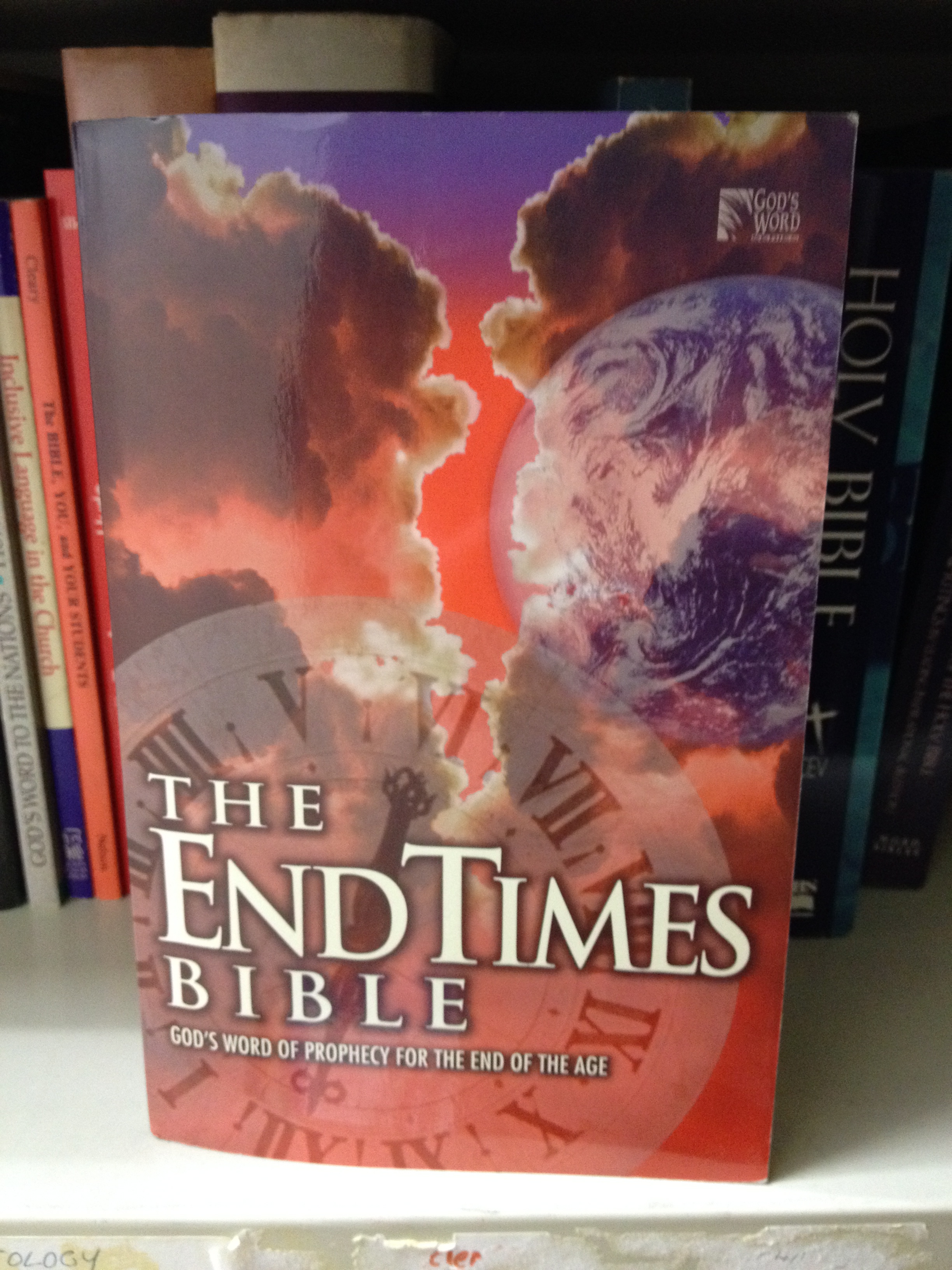
I recently came across The End Times Bible (now out of print). Published in 1999, this Bible had a not-so-subtle message that the end of all things was nigh. As it had been before, and, knowing human nature, will be many more times again. I imagine myself, in a Left Behind fantasy, watching a neophyte trying to make it in the post-apocalyptic world with a Bible. References to the end times are rare in Holy Writ, and dreadfully obscure. Reading Tim LaHaye or Hal Lindsey you might think the Bible has step-by-step directions for negotiating the wrath that is to come. As if the Bible were a recipe book and you wanted chocolate-chip cookies. Ironically the world is full—over-full in point of fact—of people with advanced degrees in Bible who’ve spent years and years of their lives learning to uncover the minutest hints that the Bible gives. Most of these folks are unemployed and wouldn’t mind sharing a bit of that simplistic apocalyptic pie baked up by the premillennialists. And yet, the world goes on.

Even as I was researching The End Times Bible, however, I began seeing references to the next apocalypse. Some are hopefully suggesting 2019, since, apparently, God likes round numbers. The reprieve we’ve been feeling, I have no doubts, is only temporary. In the course of human events we will have alarmists elected to high offices and once again panic will begin to build. The Maya let us down, and Howard Camping up and died. No worries—there are other arcane civilizations and the world knows no shortage of prophets in button-down shirts. Still, I’ve kind of enjoyed this little vacation without having to hush the irrational fears that God’s non-biological clock is inexorably ticking.

The biblical world is a simple one, in its own way. Created in six days just a few thousand years ago, it topples off its pillars and ends in a fiery demise in some millennial scenario, if only it can keep its own story straight. And like any good story, children will come back to it time and again.


Out with the Old

It’s become a time-honored tradition, as an old, secular year ends and a new one, brimming with potential commences, for various pundits to sum up the past twelve months for us. And since there hasn’t been a year without religion since Adam and Eve were created, it stands to reason that the religious year in review is yet another perspective to take on this mid-winter’s day. The New Jersey Star-Ledger, my state’s answer to the New York Times, ran a 2012 top stories in religion feature on Sunday, the one day that anyone might be tempted to pay attention to things spiritual. The list reflects the view of A. James Rudin and it features several stories, most of which tend to show the embarrassing side of belief. Rudin begins his list with an amorphous Islam as reflected at unrest in the Middle East. One of the misfortunes I often deal with in my editorial role is this association of Islam with violence. There are deep roots to the trouble in the Middle East, many of them planted and watered by Christians. Religious extremists, however, are the more sexy side of the story and they always abscond with the headlines.

I should take care with my word choice, however, because yet another of the stories—dominated as they are by Christians—concerns the Catholic Church’s continuing troubles with hiding away child molesters (number five). The number two story, also about Christians, is also about sex as well. That story highlights the chagrin of the Religious Right at the recognition, long overdue, of same-sex marriages in three states. Gender plays a role in story four, the succession of Rowan Williams as Archbishop of Canterbury, but also the related story of how the Church of England still refuses to recognize women as bishops. A deity who can’t see past genitalia should be troubling to any believer. Yet a full quarter of one commentator’s top religious stories are concerned with sex. That’s how the world sees the issue.

The remaining stories Rudin points out have to do with Jewish-Christian relations, aging pontiffs, and the growth of Nones in the US religious marketplace. Anyone who spends time reading contemporary accounts of religion will be familiar with the Nones—that increasing number of people who declare no religious affiliation. Ironically, those involved in such scandals as we often see in the headlines are troubled by the number of people opting out of traditional religions. I almost wrote “opting out of faith” there, but that’s not really the issue. The Nones I know, and there are many, don’t necessarily not have faith. They have lost confidence (if they ever had it) in religious institutions. Interestingly, Rudin concludes his list with the tragedy in Newtown, Connecticut, along with the death of Sun Myung Moon and a few others. The Newtown tragedy remains the least and most religious event in the past year. And unless those of us who survive do something about it, these dead will have died in vain. Let’s hope 2013 has something better on offer.

Father_time


2012 + 1

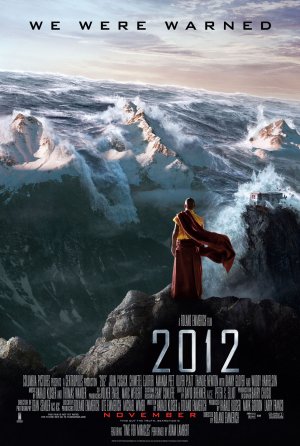
2012I just watched 2012. The conceit that the world will end last year must be getting tired by now, but I’d been curious about the movie since it came out three years back. As I suspected, there was plenty of religious banter as the putative version of us prepared for the end of the world. I noted that the little boy of the average family that managed to make it all the way to China to seek rescue bore the name of Noah. When the animals were being airlifted to the rescue station with its titanic boats meant to float out the world wide flood, it was clear that the myth of the ark was alive and well. (As I hope all of you reading this in the future are.) So this disaster movie turned out to be a bit of harmless fun, but I nevertheless shuddered at the implications. Those chosen to survive were, naturally, those who could afford to find a place onboard the secretly constructed arks. As even some of the film’s characters recognized, those who had money could buy a place on the ark, and of course they did. I do wonder what their brave new world would have been like. The whole idea of wealth has to do with the perceived value of specific commodities, and apart from our last minute stowaways, you can bet that everyone on board wanted their assets valued highest. Once the waters receded, if I recall the story at all, sacrifices would be made. Even the opening of the decks and the buzzing of helicopters like doves and ravens did Genesis proud.

The end of the world is a funny concept. Those of us who experience the world as mortals can’t really image the place without us, so I suppose it is natural enough. Nevertheless, the tone of the last four apocalypses I remember has been distinctly religious. There was a serious scare (perhaps local, because no internet existed) when I was in tenth grade. The next one I recall was Y2K, a silly episode where even priests I knew were seriously worried. With the Camping and Mayan “predictions” coming so close together, some no doubt supposed the Big Guy had it in for us all. When Christians tell the story it’s always the version with God glaring at us, belt in hand. Remember what Homer Simpson says of the song he wrote: “I’ve come to hate my own creation. Now I know how God feels.” Our cultural sense of disapprobation could be better addressed by helping those in need rather than building arks (or tax write-offs) for those who require no more to live like petty emperors. Emphasis on petty.

The world didn’t end and I wasn’t really worried that it would. The fact is we don’t need God to design an apocalypse for us because we’re very good about engineering our own. Unequal distribution of goods and services throughout a world where means exist for alleviating the suffering of countless numbers of the poor and disadvantaged has already created a purgatory on earth. We don’t need a Mayan calendar, or a New Testament whose message of compassion is overlooked in favor of its putative apocalypse, to show us the end of time. But since we made it to 2013, perhaps we should consider this a stay of execution. Let’s use our post-apocalyptic future wisely and hope humanity will live up to its name. And maybe it’s time for a new calendar.


No Year’s Eve

So the world’s supposed to end tomorrow. Again. These apocalypses have been coming thick and fast lately; it’s getting so that each end of the world is within sight of the previous end. Of all the strange ideas that religions have given us, the end of the world is the most insidious. While some may choose not to believe it, many politicians of record have actively attempted to provoke the end of time to force the divine hand at bringing a little bit of heaven to earth. Scary thing is, some of them had the power to annihilate us all in the process. Unlike past eschatons, however, this one derives from the interpretation of Mayan artifacts, strangely making it more believable to some people. Those exotic peoples of the past! They just knew so much more about worlds ending than we do. And I know otherwise intelligent people who believe that this is the last day of the earth.

Of course, if we take the earth’s temperature there does seem to be some cause for alarm. That’s not the Mayans’ fault, though. Some of these self-same fracking politicians have insisted that since the Second Coming is near it is alright to destroy the ecosystem that supports all life on the planet. Those are pretty high stakes if they turn out to be wrong. Oh, but they can make a healthy profit margin on the side, so at least they can go out in style. But what would a Mayan apocalypse mean to the firmly committed Christian? It would be very hard to recover from that, should Q’uq’umatz be behind it all.

The events of the past week have been more than a little rough. And the self-same politicians line up on the side of the NRA as they campaign for Jesus’ early return plan. The overall prognosis seems iffy at best. It is like the feeling the dinosaurs must’ve had on the evening of the asteroid. Some of them had brains the size of walnuts, an allegory too plain to require spelling out. What these eschatological episodes teach us is that human life is fragile. Madmen with guns remind us of the same point. I’m expecting, however, that things will be pretty much the same as ever tomorrow morning. I’ll be expected at work, the wheels of the sluggish economy will turn ever so slowly, and politicians will keep doing what they do best. Those counting on Mayan counting will find themselves in the company of Jehovah’s Witnesses and Harold Camping. All of us will find ourselves in a world where religion is perhaps the only power actually capable of total destruction. But if we wake up with aliens swarming the planet tomorrow we’ll honestly be able to say that we’d been warned.

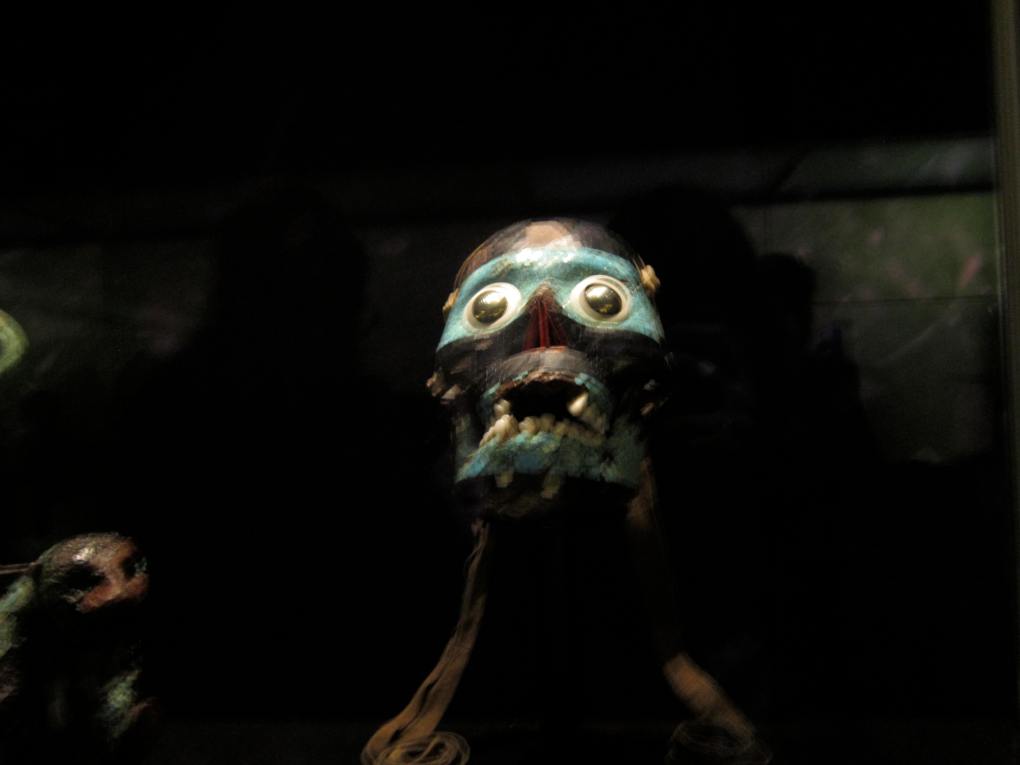
The face of things to come?

The face of things to come?


Bleak December

Tragedy follows on tragedy in 2012. Maybe the world really is ending this year. Not even a week after a man accidentally shot his own seven-year-old son in western Pennsylvania, a gunman kills twenty school children, six adults and himself in Connecticut, and still the “Religious Right” advocates our God-given sanction to own guns. Various commenters rail that guns don’t kill people—please allow the evidence to disagree. Loudly. Violently. Twas the fortnight before Christmas and all through the school… Nightmare before Christmas indeed.

As a nation we have outlived our need for guns. The only real threat out there is other people who have guns. Even a simpleton can see that it is an insane spiral because no one trusts the other guy. A miniature arms race. A cold war within a nation, state, town, or school. Like the journalists who write the sad stories for the papers, I think of Virginia Tech, Columbine, and children who will never grow up. Wikipedia has an entire article entitled “School Shootings.” America has its own sub-page. I think of other children scarred for life because some people think that it is our right to “protect” ourselves. From what? Still, they’d swear it on a stack of Winchesters. Having been shunted around from job to job and apartment to apartment, I’ve lived next to many people that I found unstable and thank local laws that they were unarmed. The sack on Santa’s back this year is a sack of serpents, and it has been opened and there’s no way to get them back in.

If the Church wanted to make itself relevant again, all denominations would band together and demand stricter gun control. No, it won’t stop every madman from massacring children, but if the Christian community really believes the Gospel it claims, it is far better to die than to kill. The next world is supposed to be better than this. The mother of the shooter, Nancy Lanza, appears to have been the owner of the guns. Probably they made her feel safer. She is now cold in the morgue because of them. Along with a classroom of children in the school where she worked. As the families of the murdered face Christmas this year, they will think that 2012 is the year the world ended. If only it would. But then, nature, and gun-ownership-rights activists ensure a future much more bleak than that.

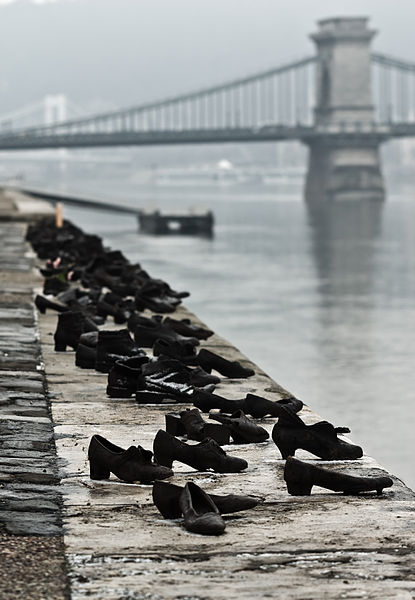
Nikodem Nijaki's photo of shoes on the Danube Promenade

Nikodem Nijaki’s photo of shoes on the Danube Promenade


The Last December

December 2012—it is supposedly the last month in the world. Yesterday did dawn with the date being 1212012, but since the local tree farm opened its gates yesterday, my family set out to select a tree anyway. As we wandered amid the pines it was clear that for many the iconic sign of Christmas is the tree. We learned on our first year in New Jersey that you’d better not wait until reasonably close to Christmas to pick out a tree—we visited this very lot then only to discover that precut trees were all that were available (and they were from Pennsylvania) and we had established a tradition of picking our own. Getting to know the tree first. Walking around and looking from all angles, trying to learn if it was healthy or too dry. Were there any gaping gaps that would be an obvious problem? Hard to tell when the tree is wrapped up in fishnet plastic and tucked into a corner like an old umbrella. Here, so close to the Big Apple, you need to claim your tree early. If you don’t want to cut it down right away, you can tag it—claim it as your own and come back later to chop it down. We weren’t the only ones taking great care in selecting.

IMG_0514

Tree farming is a business with a long view. Trees don’t mature overnight. When it’s the last month of the world, one must take these weighty things into consideration. Even before this terminal date, you would need to make an awful lot of money in just one month of the year to keep the business going. Maybe they need a green Christmas. Of course, greenery in winter symbolizes life in the midst of death. The germanic originators of the tradition were keeping a very appropriate pagan idea alive when they dedicated their trees to Christmas. Last year when we couldn’t have a real tree, it felt like we’d lost a friend. Our tree farming friends know that feeling very well.

The “Keep Christ in Christmas” signs and bumper stickers have begun sprouting up in yards and on bumpers in their annual exuberance. Funny thing is, Christmas has its base in ancient pagan customs. To hear the Bible tell it, Jesus’ birth was an understated event. The only people who had an angelic concert were some shepherds (we don’t know how many) on the hills outside of a small town. And, as far was we can tell, it would have probably been in April. As the days grow wearily short, however, we need a little light to keep us going. That was the pagan wisdom behind the Yule Log and various festivals of light to encourage nature to bring some brightness back. These short days can be difficult enough even in the age of artificial light and constantly glowing electronic screens. And knowing this is the last month of the world, we want to festoon our trees with tiny pinpoints of expectation and hope that nature somehow gets the message that we’ve had enough of darkness and wish for a 2013 redolent with light. But we’ll just have to wait and see.


New Prometheus

Nothing portends the wrath of the Almighty like an unseasonal storm. The late season Hurricane Sandy, now dubbed the Frankenstorm because of its potential hookup with two wintery systems making their way east and south, is poised to make an apocalyptic scenario on the east coast, we’re told. Well, it is 2012, the year of apocalypses, after all. In an interesting shift, however, this storm is named after not a divine character, but Frankenstein’s monster, the human-made nightmare. I first read Mary Wollstonecraft’s Frankenstein back in high school, and I was immediately subdued. The story, undoubtedly frightening when first heard, is unremittingly sad. The “monster,” like all of us, finds himself in a cold and lonely world where he is rejected because he is different. It is cruel and Republican kind of world. All the monster seeks is companionship, acceptance. I found the story so sad that I’ve had trouble reading it ever since.

The naming of a storm after a terror created by humanity may be prescient, in a regrettable way. Only the most gullible (read “greedy”) believe that industrialization had nothing to do with it. We toasted our own planet for a buck or two. In biblical terms we have sowed the wind, for which there is only one kind of produce. Hurricanes are quite natural, and although the irregular weather of 2012 may prove simply a meteorological anomaly, it may be the result of our tinkering with the baubles of divinity. They certainly seem to be getting bigger than they used to be.

I have to admit to having a persistent fear of those doing the cobbling. Too often their motivation appears to be flat and green and indigestible. And nothing like stockpiling it makes a person somehow less human. Mary Wollstonecraft wrote Frankenstein not for money, but for love of words. The modern chimeras we construct are mere carnival side-shows by comparison. And like Victor Frankenstein we have engineered beyond our capability to understand. Our best option may be to stand silently and wonder at the forces that hold us enthralled. For in the novel, at least, the real monster is not the cadaver stitched together underneath the sheet.


Revealing the End

I knew the end of the world was near when I saw the phrase “butt crack” in the Chronicle of Higher Education. As I turn over the February page in my 2012 Apocalypse Survival Guide calendar, I find that the Romans predicted an end of the world to arrive at 634. B.C.E. I’d say the Romans are still waiting, but they are long gone, the only residue remaining of their empire being the Vatican and its spiritual, rather than political, power. So why did the Romans think the end was near? It had, according to my calendar, to do with a dozen eagles being seen at once. In the spirit of Hal Lindsey we can parse that vision a bit. 634 was just 32 years after the infamous 666 B.C.E. Of course, no one knew it was 666, or even B.C.E. for that matter. Nevertheless, when God picks his super-three he stays with it. Thirty-two turns out to be nearly the traditional age ascribed to Jesus, but minus one year. Keep that in mind.

Eagles make occasional appearances in the Bible, but since God is a forward-thinking deity, the reference is surely to the United States! And how many colonies were there originally? Was it not 13? Again, the significant number is off by one. In some cases we might count this up as poor arithmetic, but with the subtle destroyer of the universe we know it is not only intentional, it is also significant. So, Rome saw the 12 eagles—the United States—in 634. What they really meant was the Maya, obviously. That would account for the missing one, since central America is less than the greatness that is the United States. And besides, there were twelve apostles, but when Judas was replaced by Matthias there were 13. What more proof do we need? These dozen eagles were indeed a divine sign. Only the world did not quite end in 634.

Maybe the problem was with the Julian calendar, or maybe the eagles were just confused. As my calendar says, “Antichrists been and gone” and yet we are still here. The transient nature of apocalypses never dampens the truly hateful spirit. We can’t comprehend this cobbled-together doomsday without at least trying to understand the evangelical despising of the world. This view is based on a quasi-biblical determinism that emphasizes God’s ultimate plan to destroy the universe that is only revealed in piecemeal fashion throughout select books of the Bible. But God is like a mystery writer who sadistically leaves out the last chapter of the book. The tension is unbearable. How much more before we begin to crack? But isn’t that what started this whole apocalypse in the first place?

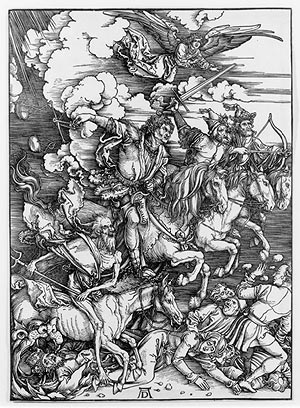
The horsemen close in


Alas, 2012

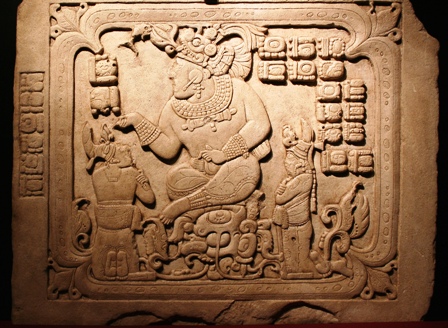
Having just survived a year with two purported Christian apocalypses, we now enter 2012 with its more potent Mayan apocalypse. The mysterious Mayan people, we are led to believe, could not foresee a world beyond 2012, and many otherwise rational people are seriously nervous about it. Whether it is the unread pages of the Bible or some stone inscription in a language most people have no hope of verifying, we venerate ancient wisdom. Especially when that wisdom indicates the dissolution of the entire world. I would suggest that the reason we do this has to do with the society the Bible built.

All the available evidence suggests that many early Christianities existed. Even the early disciples couldn’t always agree among themselves. Serious research over the past several years has indicated that what won out as “orthodox” Christianity was but one stream of the many faiths inspired by Jesus’ life and teaching. Gnosticism, surviving only in very small pockets today, was equally deserving of the title “Christian” and perhaps even outnumbered the “orthodox” variety early on. Other sects and splinter groups counted themselves among the followers of Jesus only to be labeled “heretics” by more dominant groups. Eventually one branch received government sanction and became the official copyright holder of the title “Christianity.” Amid all this confusion brewed a concern of correct teaching. The main reason was that many early Christianities believed the end of the world was imminent.

Gathering the writings to prove their point (more or less) into the Bible, this “orthodox” variety continued to grow and splinter. By the end of the First World War, technology had revealed just how much damage people could do to one another. “The war to end all wars” proved to be anything but, launching the world into a sequel within less than two decades. These wars were apocalypses in the own right for millions of people. Armchair theologians yearned for that old time religion and since saints and apostles were all long gone, the Bible was the only thing tangible left. Throughout the twentieth century the Bible grew in grace and stature until it became a god itself. Because of the veneration of this now ancient document, other ancient texts became sacred by association. Enter and exit the Mayans. These people would have been forcibly converted to Christianity, had they hung about. Because their writings are old, however, they are treated like Scripture. Therefore we tremble.

You don't have to read it to believe it!

We have lost our fluency with ancient rhetoric. Our finesse with self-destruction has underscored the point. 2012 will not see the end of the world unless it is caused by our own death-wish that has grown from the Mayan earth heavily fertilized by misinterpreted writings of early Christianities.


Lost Knowledge

While an actual apocalypse for many turkeys ensued on Thursday, Fox News announced that a second reference to the Mayan apocalypse has been “admitted” by Mexican authorities. So I guess the world will end next year after all. And it figures, I just finally got a full-time job. For some reason, for all of our modern technology and scientific knowledge, many people still fear ancient “prophecies.” This remains true after countless failed apocalypses, two of them just this year proposed by Harold Camping in the name of the Almighty. People who trust the science of their cell phones—which, from any trip to the airport or bus station proves, humans are incapable of surviving without—nevertheless fear the “lost knowledge” of the ancients who believed myths were the most parsimonious means of comprehending a cold and uncaring universe. Yes, I’ll trust my entire life, finances, travel plans, social calendar, to a plastic box barely the size of a credit card. But if the Mayans said the world was going to end… these are the Mayans, after all! The Mayans!

Never mind that we know little about this antique people; we have had predicted ends to the universe from disaffected visionaries and disgruntled prophets ever since the Zoroastrians suggested this might not go on forever. And now that two predictions appear to coincide, it looks like its time to sell some stocks, cash in some IRAs and party like it’s 1999. When 2000 came in with its baleful symmetry, as some saw it, with events two millennia earlier, not many were dissuaded from the concept that never emerges. Doesn’t the book of 2 Peter state that the universe is reserved for a fiery destruction? Perhaps the Mayans had access to Holy Writ?

The fact is that most cultures concoct origin myths, stories of beginnings. The way the mind works, it is almost a necessary corollary to construct myths of the end as well. And somehow we trust that arcane knowledge on such matters is more accurate than the scientific scenario that, given the limited longevity of any single species, no humans are likely to be present when old Sol balloons out to be a red giant. Far more spectacular to suggest some ancient sage or savage saw it coming and grow anxious with the waiting. Strangely, many people seem ready to discard all the progress, the monuments, the essence of our humanity for the sake of ancient predictions. 2013 does not seem so far away. Many of us are planning to be here, even if they find an entire library of Mayan predictions. Perhaps the truest prophecy of all is that we, as humans, make our own future no matter what other humans have said in the past.


And I Feel Fine

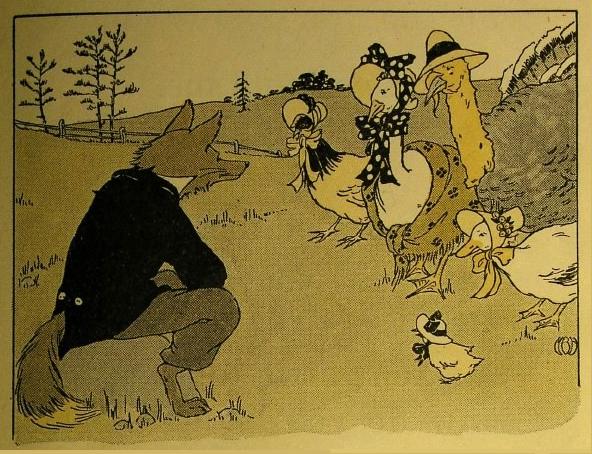
“Is something supposed to have happened?”—Jane Banks in Mary Poppins. The world was supposed to have ended yesterday, but I haven’t yet looked out my windows to make sure. I suspect that everything is pretty much the way it was on Friday. Nevertheless, I have to admit to a tiny bit of relief. I do not believe in a mythic end of the world, and yet there is always that taunting doubt that maybe somebody knows more than me. To calm my jitters, I watched Chicken Little last night. This particular Disney movie has never been one of my favorites, but yesterday it struck me as a parable for our times. Even better, the original folktale is a parable for our times. No one knows when the story originated; it is an example of a folktale that belittles paranoia and the mass hysteria that tends to accompany it. A common ending has a fox eating all the concerned animals as they make their way to the authorities.

Our culture is rife with end-days beliefs. Since this is an idea clearly traceable to non-biblical origins, one might suppose that Fundamentalists would eschew it, but as we have seen the last few days, quite the opposite is true. Those who like Chicken Licken or Cocky Lockey go around declaring the end of all things clearly believe they will be rewarded for their special efforts. Instead, history will class them along with Goosey Loosey and Turkey Lurkey—those who are easily led. Perhaps the oddest result of this recent scare is that many people will not abandon the belief, but will simply push it off. We have another scheduled apocalypse for the end of 2012. Is it because we are now so closely connected by the umbilical Internet that our natural fears have become international?

The claims seem to be arriving thick and fast. I remember the end of the world scare of 1979 when I was in high school. There seemed to be a hiatus until 1999, and since then the dates have begun to bottleneck. What we are seeing is the role-playing of a Christian mythology, and herein is the real danger. A true believer can try to initiate the end times. We only need recall 9/11 to test that. Like most religions, Christianity has developed its own unique mythology that freely borrows elements from both other religions and popular culture. The apocalypse has a history, you know. Overall the false scare of the end of all things has been good for this blog. It was not without irony that I noticed my post for May 21 was number 666. But like the clock that is still ticking, this post will clear that hurdle, and the world will be around for a long time yet to come. Now I need to go and pull back the curtains, just to make sure, and keep an eye out for Foxy Loxy.


This Year’s Apocalypse

Sundays are notoriously slow news days. The local paper, therefore, ran a whimsical headline: “Will the world end on May 21? Are you ready?” Nearly 40 billboards are asking Garden State commuters (as if they aren’t already stressed enough) if they are prepared to meet their doom. This year’s apocalypse is sponsored by Howard Camping, a California prognosticator with an history of calculating the world’s end. Given that our daily experience confirms uniformitarian processes on this planet have been in place for millennia – and even longer – the belief in a cataclysmic termination of billions of years’ work is rampant as ever. The end of the world, as touted in the media, is always based on religious precepts of some sort or another. Our scientifically scheduled apocalypse is about five billion years away when the sun becomes a red giant. (The biggest threat to capitalism since the collapse of the Soviet Union.)

Why do so many religions want to see it all burn? Life certainly has more than its fair share of misery and suffering. Apocalyptic scenarios abound in disadvantaged communities – the final leveler of all inequalities will put us all in the same place. Privilege creates as many problems as it does boondoggles. A truly evolved race would wish to share its good fortune to those without access to resources of the more fortunate. It is a severely effaced line between inequality and iniquity at the best of times. Those who don’t get a fair shake in this life look for a better lottery pick in Heaven’s jackpot.

But why do affluent people share this urge to watch it all explode to a theological fantasy-land? The local electrical engineer funding the billboards, is quoted by Star-Ledger staff as saying, “Seven billion people are facing their death! What else could I do?” My humble suggestion would be to put that money toward helping those who do not have enough. The underprivileged could be made to suffer considerably less with the obscene income of the Left Behind franchise. Instead that money is being funneled into questionable political causes. Maybe it is best that the world end next month after all. I’ve put it on my calendar, but I’m still expecting to be around for the 2012 apocalypse as well.

An apocalypse worth waiting for!


Third Mile Island

Sitting in the shadow of the cooling towers of Three Mile Island along the banks of the Susquehanna River the night before a friend’s wedding is one of the college memories that remains vividly in my mind. The accident had occurred some six years earlier, but seeing those ominous blinking red lights, no doubt to warn low-flying aircraft of the massive towers, left me with an irrational sense of danger. It will be a sad day when we have nothing left to fear. The next year, the Chernobyl disaster took place. This tragedy has results that are still playing out among the millions exposed to the radiation. Perhaps these events explain why Alan Parson Project’s Ammonia Avenue remains among my favorite albums.

While having my oil changed yesterday, the waiting room television was fixated on the story of the Fukushima Daiichi meltdown, settling it comfortably between Three Mile Island and Chernobyl. With anxiety about the year 2012 running amok, many people are looking for signs. Perhaps the most unfortunate meme the Bible has introduced to the world is the Apocalypse. In origin apocalyptic concepts emerged from the Zoroastrian idea that a dualistic change in ages was coming. Believing this world to be under the baleful influence of Angra Mainyu, a day was eventually going to arrive where all this would be turned around and Ahura Mazda would set things right. Christianity borrowed the idea, shrouded it in secrecy, and began an unhealthy interest in the end of all things.

Fukushima Daiichi may feel like the end of the world, but it is not. In fact, all that we know of our planet shows its great resilience. The late Stephen Jay Gould, in his popular book Bully for Brontosaurus, opined that the earth is not as fragile as is often supposed. He notes in the prologue, “Our planet is not fragile at its own time scale, and we, pitiful latecomers in the last microsecond of our planetary year, are stewards of nothing in the long run.” Not that we should not attempt to protect our environment – we do that to preserve ourselves and other species – but if we should fail, earth will carry on. Our globe is expected to support life for another 500 million years. Instead of following false positives, we might be better off reminding ourselves that Gaia still has a few tricks up her metaphorical sleeves.

One way or another


Ring of Fire

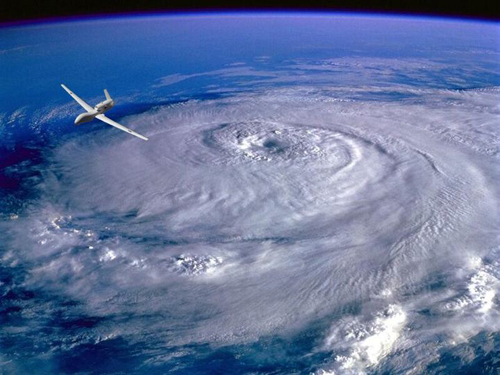
It looks so peaceful from above

The great tragedy unfolding in Japan has many Internet pundits wondering if this is a sign of the 2012 apocalypse. In reality it is simply a great human tragedy, a reminder that we are creatures who’ve evolved in a dangerous, often inhospitable universe. Natural disasters may have been one of the stimuli for the development of religion in the first place. Now we can look to seismology and tectonic plates to find out “why” hundreds had to die in Japan, but the human psyche demands a metaphysical reason. Some Christian websites are quick to point out that only a very small percentage of Japanese are Christian. Born with the sin of not being American, well, Shinto happens.

Like last year’s Chilean earthquake, this current disaster has once again shifted the earth on its rotation axis, according to the U.S. Geological Survey. GPS markers on the coast of Japan indicate that the large island has shifted over two meters because of the quake. The world was not made for us, however. We evolved on a planet, peopled it with gods, and decided that they created this place for us. In reality, we survive on the basis of our adaptations to this planet. Any planet dynamic enough to support life will be volatile enough to demand life from its inhabitants.

This is not as fatalistic as it sounds. Religions reflect the impotence humans feel in the presence of raw nature. We’ve shed many physical defenses for the advantages of large brains that require us to piece together a sensible view of an event that has no inherent meaning. The fact is that we are not in control. Once we eliminated the smaller-scale threats of exposure and the dangers of predation, we left ourselves open to macro-scale disasters that no human is large enough to impact. And we know, deep in our psyches, that this is simply part of the price we pay for being human. 2012 will come and go with its own share of natural disasters, but right now we should focus on helping those who’ve experienced their own current apocalypse.