Meeting Places

It’s one of those quirky British television plays that’s its own movie.  It was part of the Play for Today series.  I turned to Penda’s Fen after receiving some very distressing news, as a means of self-healing.  (I may seem distracted for some time, please forgive me.)  Sometimes considered folk horror, it really isn’t a horror film although it may be treated as one.  The dialogue is heavily religious, involving a lot of theological discussion of Manichaeism, the “heretical” belief in the struggle between the powers of light and powers of darkness.  It plays out through the maturing of Stephen Franklin, son of the local vicar who is, unbeknownst to himself, adopted.  He also discovers his homosexuality as he begins to rebel against the strictures of his private school education.  Underlying all this is the fact that he lives in Pinvin, in reality Penda’s Fen.

The story deals with the past interrupting into the present as Penda’s pagan kingdom never really fell.   A local writer claims that there is an entire escape city beneath the British landscape to which those deemed “important” to the government are to be evacuated in case of emergency.  In reality, the kingdom beneath, and overlapping, Pinvin is that of Penda.  Penda was an actual Anglo-Saxon king and here he encourages Stephen to know himself—one of the mottos of the school.  That knowing involves coming to question the conservative, Christian belief system he has wholeheartedly embraced.  His adoptive father, the vicar, has broader beliefs, including the reality of other gods.  Stephen discovers this and learns of his adoption, making for some heartfelt religious dialogue.

My reason for watching, apart from the much-needed therapy, was that it had been recommended as a piece of religion and horror.  There are some horror moments, but generally it’s difficult to say whether they’re hallucinations of Stephen or they’re really happening.  One is presented outside his viewing, which suggests that they are meant to be real.  One involves a demon, but not the scary kind of The Exorcist, which had been released just a few months ahead of Penda’s Fen.  In all, it’s a thoughtful movie, the kind you might expect when based on a play.  Given the themes, I’m not sure it was the best therapy, but it did engage the religion and media dialogue.  I hope to come back to it some day under better circumstances.  The dialogue is worth engaging with more depth than I’ve been able to muster here right now and there’s much I still don’t understand.

Time Keeps on

Do you want to feel old?  Consider this BBC headline: “TikTok overtakes YouTube for average watch time in US and UK.”  If you’re like me you first heard of TikTok at some point during the pandemic and had only a vague idea what it was.  A new platform yes, but platforms come and go and I was really just starting to get into YouTube.  In fact, I remember when I first heard of YouTube.  A colleague at Gorgias Press was telling me about it.  It was a place to post videos.  I didn’t own a video camera and besides, what does a washed-up professor have to say?  No only that, but my computer didn’t have the memory capacity to upload and edit videos and who even has the (figurative and literal) bandwidth?  (I do have a YouTube channel, but it turns out that a nine-to-five and writing books on the side take up pretty much all of your time.)

Speaking as a homeowner, YouTube has been a lifesaver.  Most of what I have to do in household repair (a lot) I learn how to do from YouTube.  I know younger people who prefer YouTube to movies and never watch television.  It turns out that people are pretty good at entertaining each other even without the studios telling us what to watch.  (Although discoverability benefits from sponsorship, so money does change hands and the economy is happy.)  I was just beginning to get YouTube figured out when TikTok came along.  I was under the impression it was a music app—does Napster even still exist?  CDs are getting hard to find, as are DVDs.  I guess I can learn out where to buy them on YouTube.  Or TikTok?

I recently watched a horror movie on one of those services where they break in with a commercial at the absolutely worst moment time after time.  As the excitement began to build the commercials became more frequent.  As soon as it was over I was wishing for a DVD.  Too much content is on somebody else’s terms unless you’ve got a physical disc that you can slide in on your own timetable.  It’s strange being in that transitional generation between print and ebook, vinyl/VHS and streaming, paper maps and Google maps.  Now I guess I have to figure out what a TikTok is and how to use it.  I think I’ll go to the library and see if I can find an old-fashioned reference book on it.


Thinking Plants

Consider your sources.  As an erstwhile professor I grew accustomed to repeating that, and this was before the internet started up, making claims of all kinds.  Certain news sources—think New York Times, or the BBC—earn their reputations slowly, over many, many years.  That doesn’t mean they don’t make mistakes, but it does mean they’re often on the mark.  So an article on plant consciousness on the BBC is worth considering.  Consciousness is still something we don’t understand.  We have it, but we can’t always say what it is.  Many, if not most, people tend to limit it to humans, but it’s become very clear than animals share in it too.  Why not plants also?  A few years back I read a book by philosopher Thomas Nagel.  He made the argument that human consciousness must come from somewhere, and as we look down toward animals, and plants, what we see are smaller pieces of the same thing.

I’m not stating this as eloquently as Nagel did, but the idea has stayed with me.  The BBC article  notes how plants seem to react to human interaction.  And they seem to communicate back.  We lack the natural range to hear their responses, but some experiments indicate that plants at least communicate among themselves.  Being the BBC, the story reports but doesn’t necessarily advocate this point of view.  Still, it makes sense.  For too long we’ve supposed human beings to be the only intelligent creatures on this planet, taking the arrogant view that animals are automatons with no thinking ability.  To give them that would be to make them too human-like.

That particular viewpoint still exists, of course, but more and more scientists are starting to consider whether consciousness isn’t emergent from, as Nagel put it, smaller building blocks.  I tend to be on the more imaginative end of the spectrum—consider your source here—but it seems to me that plants could well have a consciousness too.  Trees move.  They do it too slowly for our species to notice it, fixated as we are on our own brief time in the world and our human affairs, but that doesn’t mean they don’t move.  It simply means that if we want to see it we need to shift our perspective.  Communication, it would seem, pervades nature.  If it does, isn’t consciousness somehow implicated?  Plants may respond when we pay attention to them.  To me that makes the world an even more wonderful place.


No, uh, It Won’t

Irony comes in all shapes and sizes.  Over the past several decades various fundamentalist groups have built replicas of what they believe to be life-size versions of Noah’s ark.  All of these are approximations because the cubit was never an exact measure.  Nobody knows what gopher wood was.  Most of them ignore the fact that the story of Noah clearly borrows from the more ancient Mesopotamian flood story where the measurements of the ark differ.  In any case, these arks—some containing dinosaurs and others not—are made for convincing people that Genesis is to be taken as history.  While there is some irony in that itself, the larger irony comes in the various proofs that are given that such things really would work to preserve all species since evolution could not have happened.  To work such models have to be seaworthy.

One such ark, according to the BBC, has been detained in Ipswich because it is unseaworthy.  An ark may be useful on dry land for drawing tourists, but would such a large boat work on the open ocean?  All of this brought to mind a Sun Pictures documentary from my younger days.  Giving the ark a makeover, various literalists re conceived the classic design from children’s Bibles to a more boxy, sturdy shape.  This was based on alleged encounters with the ark on Mt. Ararat.  To test this new design, the producers made a scale model and tested it in a pool of water and declared it eminently seaworthy.  Of course, there’s no way to make water molecules shrink to scale to test whether a full-sized ark could actually handle the stresses and strains of a world-wide flood.

Ship building is an ancient art.  Peoples such as the Phoenicians, the neighbors of ancient Israel, achieved some remarkable feats in ocean travel without the benefits of modern technology.  They didn’t have boats large enough to hold every species of animal that exists today, but they sure knew how to get around.  The real issue with literalism is the failure to recognize ancient stories for what they were—stories.  Such tales were told to make a point and the point was often obvious.  The obsession with history is a modern one—indeed, the ancients had no concept of history that matches what our current view is.  Borrowing and adapting a story was standard practice in those days.  Unaware that centuries later some religions would take their words as divine, they told stories that, in the round, just wouldn’t float.


Neologism

I like a good neologism as much as the next guy. Oxford English Dictionaries recently released a covey of new words added to the famed lexicon. Most of them, it seemed to me, had to do with dangers of technology, like “drunk text” and such fare. Still, increasing vocabulary is one of those rare joys in life that is continues to be free, so I indulge. A friend sent me a BBC story about another new word: champing. Well, my spell-check recognizes that one so maybe it’s not new. In any case, this champing is derived from two words “church” and “camping.” Some locations with medieval churches—which kind of rules out anything on these shores—are now opening them up as camping spots, thus church-camping. The article asks what it’s like to stay overnight in such a place.

Growing up in western Pennsylvania, medieval churches were hard to find, but I spent more than one night sleeping in sacred spaces. It’s an uncanny experience. In what may have been more innocent days, our United Methodist Church allowed youth group sleepovers, as long as there were counselors present. (Ever naive, I only learned later that there were ways around such obvious strictures.) On a Friday night, then, we could occasionally gather with our sleeping bags and slumber under the sanctuary. For theological reasons we couldn’t sleep in the sanctuary itself (although that couldn’t be prevented on the occasional very long sermon) but we could go in. Churches are scary at night with the lights out. We may give lip service to holy ground, but large, cavernous spaces suggest so much by absence and implication that it would take a stout soul indeed to sleep there.

Looks okay from the outside.

Sleeping in sanctuaries in ancient times was an acceptable practice. In fact, there’s a name for doing so: incubation rituals. A person who slept in a sacred place believed any dreams had that night were a message from God. Knowing the dreams I tend to have, I do wonder. Once, at the United Methodist camp called Jumonville—famous for its large white, 60-foot, metal cross visible in three states—we counselors (still naive) had our charges sleep outdoors at the foot of the sigil on the bare top of the mountain. In the morning my champers gleefully informed me that I’d been praying in my sleep. “You kept saying ‘Amen. Amen,’” they told me. Alas, I don’t remember the dreams of that night. Perhaps when I find a medieval church on my journeys I’ll be brave enough to try an incubation ritual once again. This time I’ll take a tape recorder.


Daily Bread Plus

I have a confession to make. I’m not a foodie. These days such an admission is tantamount to a venial sin, but the fact is I’m one of those who eats to live, not lives to eat. Still, like many people I’m concerned about whence my food comes. I can’t grow my own and just about all of it comes wrapped in plastic. Thus I found a BBC article my wife sent me to be of great interest: “An uncanny mixture: God, alcohol and even cannabis” by Kait Bolongaro. Focusing on monasteries and their brewing and distilling traditions, Bolongaro uses the foodie angle well. People want to know where their grub comes from, and the current interest in knowing the location of the source plays well into this. European monasteries have long been known for their production of alcohol. Even Jesus drank wine.

I’m no connoisseur of spiritous liquors, but the story is quite interesting. Many people don’t realize that monastic orders, in addition to praying and not having sex, also support themselves through industry. Many make goods to sell. Those in this article make booze. As Bolongaro points out, the fermentation and distillation process is an exacting one. In fact, it is a science. In the case of Chartreuse only three monks know the secret formula. They control the temperatures and conditions remotely, by computer. And I thought Bible Gateway was the only place the religious spent their time.

IMG_2642

Science and religion actually have a very long history of cooperation. Gregor Mendel, whose work gave Darwin’s theory of evolution by natural selection its actual mechanism, was a monk. Other religious have been close observers of nature and processes. There is no commandment against good beer, as many Teutonic brothers would no doubt point out. But to get it right you have to know your chemistry. As the article says, some things can’t be rushed and monastic life lends itself to such slow processes. The rest of us in our secular pursuits rush through life far too fast for religion or science. Contemplation requires “down time.” Time off the clock. The kind of time, we’re told, that simply doesn’t exist any more. The story, after all, appears in BBC Business. I’m no foodie, but I have to confess that the cheese and pretzels purchased from the Amish in Lancaster do tend to taste better than those that come wrapped in plastic. There may be a religion to science after all.


The Religion Code

People have strange ideas about what religion can and cannot do. Yes, many religions face the past—founders of various sorts gave dictates and statutes that were appropriate for all time. At their time. Few religious visionaries can see very far into the future, so their rules have to be massaged over time. When we see an Amish buggy clopping along next to a highway we suppose that this is a religion mired in the past, but we could be wrong. The BBC ran a story the other day expressing some surprise at “ultra-Orthodox Jews” and their getting into tech fields. What hath the Talmud to do with coding? Stop and think about that.

One of the aspects of this dynamic unaddressed by this story is how unescapable the internet has made learning tech. Your religion may have you following outdated principles at home, but unless your community can get on without the outside world, like the Amish, you’ll need to learn to negotiate technology. As the article points out, learning Torah and Talmud are transferrable skills. People genuinely seem surprised when what we might broadly call “the humanities” come in handy. Religion, when it requires serious reflection, builds critical thinking skills. It is only the blind adherence to principles that haven’t been thought through that leads to trouble. Even a Fundamentalist knows that this all has to make some kind of sense or something’s wrong. In fact, the article doesn’t suggest that a Fundie as a tech expert would be any cause for wonder. A humanities education might have helped with that.

Photo credit: Musée d'art et d'histoire du Judaïsme, Wikimedia Commons

Photo credit: Musée d’art et d’histoire du Judaïsme, Wikimedia Commons

One can’t speak of Judaism as a monolithic religion. In fact, religion scholars regularly speak of “Judaisms” just as they speak of “Christianities.” The various branches of Judaism hold study of scriptures in common, and the BBC article makes the point that this kind of thinking helps with problem solving. The great irony here is that when the problem solving comes in the form of getting computer glitches worked out it is considered valuable. When the problem solving merely helps people figure out how to get along in the world it is backward and parochial. Such is the strangeness of a world impressed by its own creation. The internet has brought a great many religions together. It has, I would suggest, created new religions as well. It is a myth to suppose that the rational rules of any hypertext markup language are that different than sages and rabbis arguing over the best way to make progress in a confusing world. No matter what our religion, we all need to make money, don’t we? And isn’t that the most truly ecumenical enterprise of them all?


Being Humanity

KindnessOfStrangersWhat do you want to be when you grow up? The question kept recurring as I read The Kindness of Strangers. The name Kate Adie may be more familiar to readers from the UK than to those from the US. While spending three years and a bit in Scotland, my wife and I grew accustomed to hearing her name as a reporter with the BBC. I’ve just finished reading her memoir and it brought to mind several points that hit quite close to home. Apart from being engagingly written, her biographical essays highlight the difficulties women still face in much of the world. As a journalist, Adie traveled to many vexed locations where some expressed surprise that a woman would have such freedom as to run around with men, investigating, reporting, and being seen by many, many viewers. Meanwhile, those she sojourned among had to deal with oppressive regimes, low standards of social justice, and, not infrequently, the fear of rape. It is a poignant and at times maddening account. Men the world over seem to share a horrid, deeply ingrained and reinforced concept that women are somehow there to serve them. Here we are in the twenty-first century and we’re still struggling with basic biology.

If I might tear myself away from that particular observation for a moment, I also found Adie’s firsthand accounts of the atrocities she witnessed deeply troubling. In this day of Holocaust awareness and the belief in human dignity, it is distressing to see how cheap life is under many governments in the world. How humans can be so inhumane boggles the mind of those with any sense that we’ve somehow evolved. Often the hatred is based in differing religious outlooks, but often religion is only an excuse. The offending religions that are touted almost all teach the descent treatment of your fellow human beings. Sadly, nothing appears to have been learned from the all-too-intentional violence of the past century. The real issue, reading between the lines, is power, not faith. It is easy to have a scapegoat, and some analysts (not Adie, I would emphasize) like to suggest a simple solution by placing their hands on the head of religion and confessing the deadly sin of being human over it.

The book, I should add, is not all gloom. Adie is witty, sophisticated, and a charming writer. One of the positive takeaways I had from her life story is that the question “What do you want to be when you grow up?” is all wrong. Adie never wanted to be a journalist, but through a series of circumstances eventually found herself one. A much decorated and honored one, no less. This is a lesson for our time. The old stabilities of choosing a career and staying with it seem to have eroded from beneath us. It is increasingly difficult to plan ahead for an uncertain future. Adie is a fine example of how to adapt along the way. More than that—and men pay attention here—she’s an exceptional example of what it means to be human. This is what we should all strive to be when we grow up.


Under the Weather

A friend, knowing my penchant to watch the skies, sent me a story about the British and the weather. The story by Alastair Sooke on the BBC’s cultural page is discussing Alexandra Harris’s book Weatherland. I have to admit that I haven’t read the book (yet) but the report of it appeals to someone who’s written a book on the weather, but for a much older timeframe. According to Harris, according to Sooke, the British are rumored to be obsessed with the weather. While living in the United Kingdom, my wife and I observed this. It is not merely casual conversation when someone discusses the weather. It is a serious topic. For a nation so accustomed to rain and gloomy skies, the weather has a religious import. It rarely goes without comment. I suppose that’s the point I was trying to make in my book. The weather is important. Vital, in fact, to human survival.

What really caught my attention here, however, was Harris’s observation that weather is used to characterize mood. Sooke mentions ice and snow and melancholy. The image is vivid: early Anglo-Saxons turing a wary eye to a winter sky with its low clouds and preternatural chill. It is so universal, it seems, not to require comment. Yet at the same time, weather can be a great trickster. C. S. Lewis once wrote that the image of the Arctic north filled him with an inexplicable joy. Winter can be fickle that way. In the world of the Psalmists, rain was a blessing and a weapon. How you look at it depends, well, on your mood.

DSCN0904

The British may take their weather more seriously, on a day-to-day basis, than those of us across the Atlantic. We tend to treat the topic casually. In reality, it is just as serious here. Drought, which has gripped the western half of the country for about half a century now, is a serious concern. Winter storms, hurricanes, tornadoes. A lightning storm can still be a theophany. (One awoke me in the middle of the night, just hours ago.) Weather impacts our bodies as well as our moods. It is all-pervasive, but we generally don’t like to articulate it. I suspect our understanding of the weather says more about us than we’re willing to admit. Our British colleagues, however, are less squeamish about the topic than we tend to be. There’s more to the sky than it might appear.


Henging Our Bets

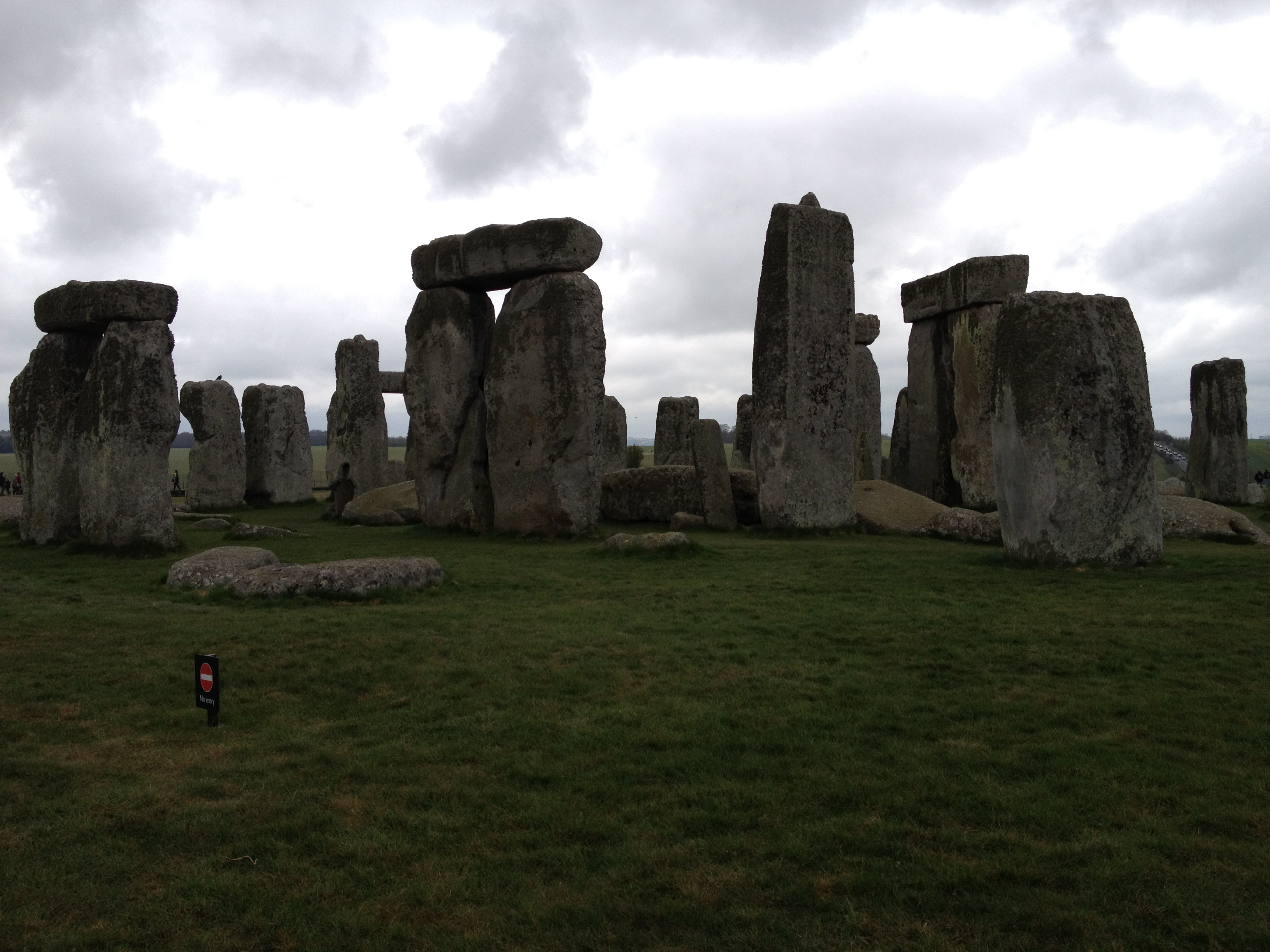
With the discovery of Göbekli Tepe, the history of civilization has received an unexpected prologue. In the view of the archaeologists involved in the excavation, the site can only be religious in nature, indicating that the earliest communal efforts of humans were not for mutual protection or for the benefits of growing crops, but for worship. In an era of angry atheists and nones, this isn’t really welcome news. Many people are ready to flush religion once and for all, claiming that it inspires only terrorists and fanatics to more and more extreme deeds. Well, I suppose Göbekli Tepe can be considered a form of extremism. Massive amounts of energy were required for the building of the site. And it was buried, intentionally, when the builders were finished with it. The news of a new component to the much later Stonehenge complex, the Durrington Walls, has recently been presented. Stonehenge, in England rather than in Turkey, and much closer in time to us than Göbekli Tepe, is a site that has touched the human imagination in a profound way. Still primitive at the time of its construction, Britain was a land already brimming with religious monuments. The new discoveries make it even more intriguing.

IMG_0234

Stonehenge is only a small part of what is now being called the Durrington Walls super-henge. Those who visit Salisbury Plain know that Silbury Hill and West Kennet Long Barrow are both impressive in their own right, and not far from the more famous sarsen stones that appear on everything from coffee mugs to tee-shirts and in movies and television shows of all genres. This part of prehistoric England seems to have been a sacred site many hectares in extent, with various “temples” and monuments dedicated to a religion we simply don’t understand. What is clear is that massive human energies were put into the building, expanding, upkeep, and functioning of this site. People have a deep, and very passionate urge to answer the religious longing that even sophisticated engineering can’t placate.

It could be argued, of course, that we’ve outgrown our childhood need for parents in the sky. Science and rational thought have shown us the way forward and although ancient monuments might be a fun diversion, they really mean nothing. I would disagree. Places like the Durrington Walls super-henge indicate what it is to be human. Clearly, given that even Stonehenge fell into disrepair and lay neglected for centuries, it was not a continuity that stretches, uninterrupted to today. Nevertheless, the effort expended to fill a void we feel should tell us something about what being conscious creatures is all about. Life doesn’t always make sense. The rational cannot explain everything. It would be naive to try to make Stonehenge reveal its secrets, but even standing at a distance (which is the only way you can gain admission any more) you have the sense that you are among those who knew what the human spirit required. Even if pagan and illiterate, they have spoken to us through the ages and we can only continue to wonder at what we’ve lost.


Excavating Religion

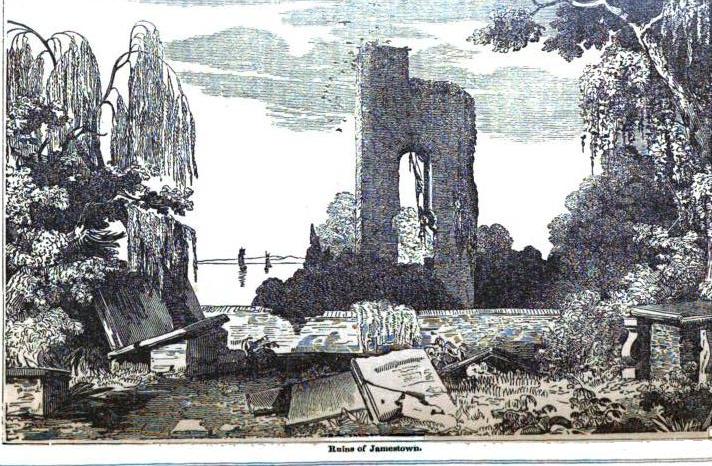
Jamestown, Virginia has the distinction of being the first British American colony to have survived. I’ve only been to Jamestown once, and that was about two or three years before the site was scheduled to celebrate its four-hundredth anniversary. William Shakespeare was still alive back in the home country. The King James Bible was not yet available. It was a gray day when we drove to the site and there were no other people around. Without a guide there was not much really to see—just a sense of being in touch with history by standing where the first English would eventually remake the land in their own image. Even the pilgrims tried to reach Virginia, but missed and landed in Massachusetts instead. Jamestown, however, lays a claim no other site can make.

A recent BBC article describes four graves lately found at the site. Located in the church, those buried were men of status. One of them was Reverend Robert Hunt, a clergyman of the Church of England and the first Anglican minister in North America. Interestingly, the BBC story points out, the Church of England was only half a century old at the time. Having spent many years among the Episcopalians at Nashotah House, I learned a great deal of the church’s history. The fact that the Episcopalians made it to America so shortly after their establishment is something I never heard emphasized. Concerned that the Catholic Church, under Spain, was collecting so much territory, the C of E wanted to stake a claim in the New World early on. Partially because of their persistence, we speak English even today. Church and empire were hand-in-glove in those days, and both the church in Spain and in England were state sponsored. Having God on your side can be pretty handy when you want to claim something that really doesn’t belong to you.

The reverend was buried west, facing the people he served, and, according to the article, this helped initially identify him as clergy. The church, in the service of the government, supported the conquest of new lands. The implicit belief that God was on the side of the strong has never really gone away. Mega-churches measure their spiritual assets in terms of fiscal influence. There are those today who believe that the Almighty wants the righteous to be rich, of course, at the cost of the wicked. Jamestown may have, at least partially, set the tone for a new nation that wanted to take more land than it needed. Land that others had occupied, and indeed, still lived upon. Only with the backing of a deity could such claims be made. The biggest god, after all, wins the day. Jamestown tells us more than we might suppose about what we’ve become as a nation. The early years are often the most formative of all.

Jamestown_Virginia_ruin


Social Media and Persia

A story appeared on the BBC recently about “sin free Facebook.” The website, which started in Brazil, is based on the idea that users don’t like having swear words and violence among their friends. According to the story some 600 words are banned from use, making me think that I’m seriously behind the times. With an “amen” button and a keyword of “bless” Facegloria has been growing dramatically. Some 100,000 friends are now on board. Of course, the concept of friends in a religious conceptual context goes back to the Quakers, but they tended not to use computers, if I remember my history correctly. The odd thing, to me, is that on social media you get to select your friends already. If you don’t like what they post, why are you friends?

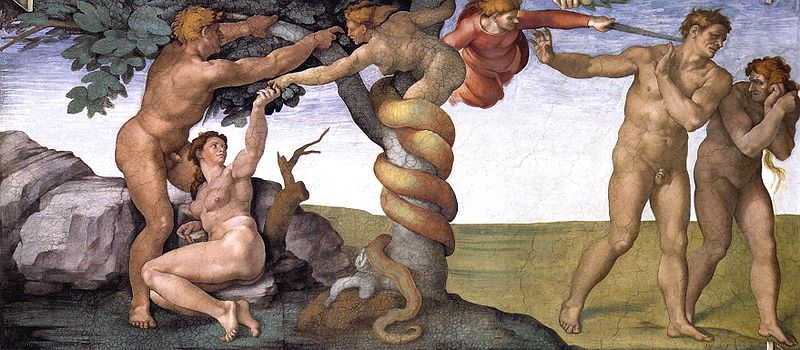
Sin is going through a resurgence of academic interest these days. One of the features that emerges from all this exploration is that sin is not as clearly defined as we might think it is. Wrong and right. White and black. Things in their proper order. In the biblical world the word “sin” seemed to mean missing what you’d aimed at. From there it grew to cover all kinds of infractions. Today most people think of sin in sexual terms—those things you aren’t allowed to do. Ironically we call other things phrases like “hate crimes” rather than “hate sins.” And crime is supposed to make it worse, since sin is often not illegal. Or if it is illegal, it’s not often brought to the law.

800px-Forbidden_fruit

I have a Facebook account, but I have to confess to not looking at it much. My days are busy and although the marketing departments of publishers use Facebook, those of us with editorial roles are seldom encouraged to spend time on it when we could be doing something more valuable. I arrive home so late I don’t even check my email before bed. I guess I haven’t had the time to notice the sin on Facebook. Yes, a few of my friends use what Spock might term “colorful metaphors,” but I seldom feel the need for confession after reading a post or two. My friends, like me, are fallible and many of them are in less-than-ideal circumstances. I really don’t think social media with further restraints would help the situation. Of course, I could use an “amen” button on this blog, I suppose. I think I’d rather have it read “verily,” though.


Forbidden Words

800px-Norsemen_Landing_in_Iceland

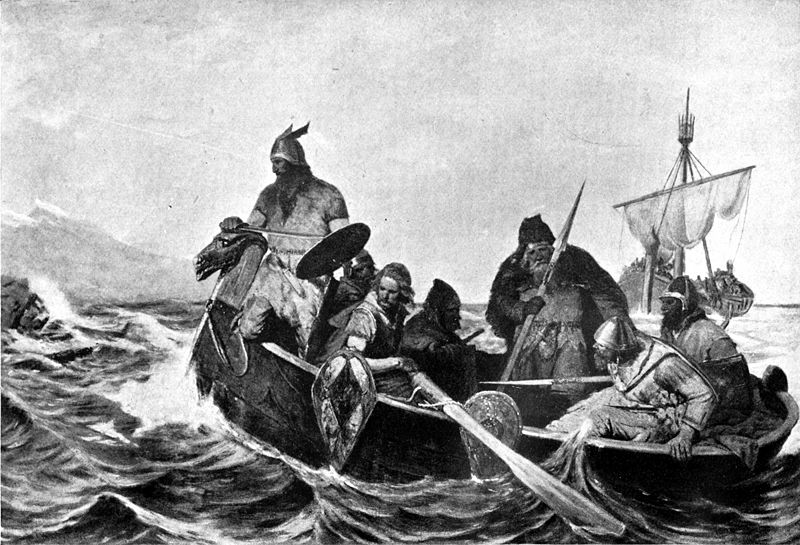
In keeping with the spirit of freedom, just before July 4 the BBC broke the story of Iceland’s blasphemy laws having been struck down. Although the state Church of Iceland (Lutheran by denomination) supported the move, other churches have been grumbling. It’s an odd notion, that blasphemy should be illegal. Part of the oddity revolves around disagreement of what blasphemy is. Even if taking the name of God in vain is used to define it, several questions remain. Which name of God? Certainly “God” is not a name, but a title. Is taking the title of God in vain blasphemy? What does it mean to take a name in vain? If you don’t mean it? I’ve surely heard many invoking the divine in curses that were most certainly sincere. Were they blaspheming? Does blasphemy really mean failing to believe in God? And, pertinent to Iceland, which god is protected under such laws?

Religious pluralism is the clearest threat to those supporting blasphemy laws. Underlying to very proposition is the idea that there is only one true God and that is the God of Christianity. Judaism might be tacked on there, as might a reluctant Islam, but the notion of blasphemy does not seem to bother the deities of other cultures as much. Honoring and respecting belief in deities is fine and good. In fact, it is the decorous way to behave. Still, privileging one deity as the “true god” protected by state statutes is to bring politics into theology. Since when have elected officials really ever understood what hoi polloi believe? In Iceland the old Norse gods have recently come back into favor. Should they be respected to? Why not as much as the Christian God?

It is perhaps ironic that the Pirate Party put forward the successful bid to strike down the law on blasphemy. According to the BBC, the Pirate Party began in Sweden and has now established itself in 60 countries. Since it’s fight for accountability and transparency in government, it’s sure to have a hard time in the United States where bullies can run for President unashamed. What is clear is that although governments make and enforce laws, the will of the people seldom makes itself heard. We may have won some victories in recent days, but there are many entrenched ideas that benefit those in power and not their underlings. Sounds like the Pirate Party may become the Democratic Party of tomorrow. If it does, however, when it loses sight of the ideals that launched it, we may need a new party to board the ship and ask for the people to be heard. Politely, and without swearing, of course.


The Last Word

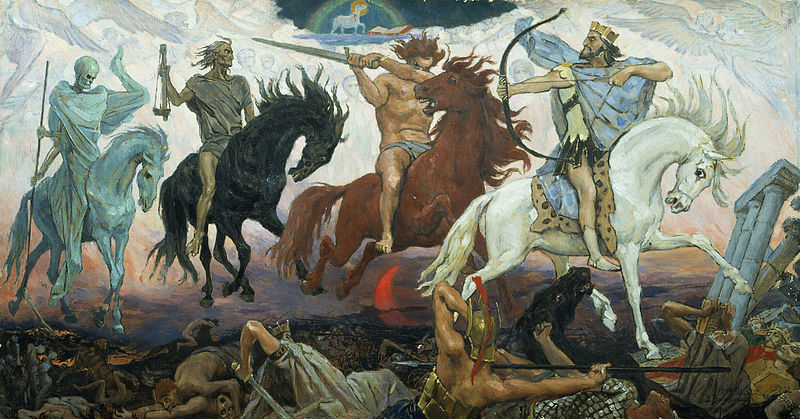
The end of the world, it seems, never goes out of fashion. My wife shared a story on the BBC about CNN (such self-referential media hype may be a sign that society is collapsing already) having a video ready to release for the apocalypse. In a bit of end-of-time sangfroid, it is rumored, CNN’s Ted Turner ordered a last-second video to be made so that loyal CNN viewers would be ushered out with his version of the last word. The media, of course, is a powerful segment of society. Occasionally schools and businesses are shut down due to their meteorological predictions. The media tells us who the experts are, and why we should listen to them. The media provides us with some of the only fact-checked material from far-flung ends of the globe—or even outer space—to which we, the people, would not normally have access. The media, in other words, determines reality.

800px-Apocalypse_vasnetsov

Meanwhile I wonder, as I often do, what gives those who own media corporations the right to determine reality for the rest of us. For example, if the rumor of Turner’s video is true, what would give the rich and powerful the right to determine what flashes before our eyes as the world winks out of existence? The apocalypse, after all, is a religious concept. Although largely developed from biblical scripts, other religions do occasionally have their end-of-the-world myths, just like most religions have beginning-of-the-world myths. If you have billions of dollars, does that mean you have the right to determine end-times viewing? When money determines the truth, the world has already ended.

Nevertheless, the idea lives on. We are constantly reminded that one or another religious sect has declared that the end is nigh. We’ve heard it so often that we’ve ceased to pay attention. In a world where the media has largely dismissed the rest of the Bible (except when blockbuster movies come out featuring a biblical story) why does Revelation still hold such currency? After all, the apocalypse takes its very name from the final book of the Christian Bible, and without Revelation we might be none-the-wiser about the looming end of all things. Revelation was very much a product of its time. Despite the progress of science and technology that gave us the media corporations we blandly recognize today, we still harbor doubts deep down about the longevity of it all. Even those who write the news look to other media giants to get some hints of the truth. Ironically, they don’t seem to want to ask scholars about it. After all, sensationalism is news. At the end of the world, we really don’t care what scholars have to say, as long as we’re entertained.


Weather for the Birds

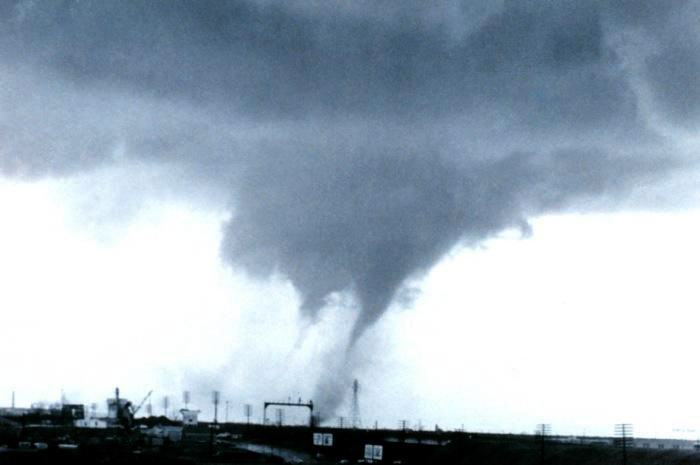
As Christmas nears so does a warm front, dashing hopes of a white Christmas in New Jersey. Well, at least there are no tornadoes coming. The weather, as my readers know, has long been perceived as a divine barometer. In a time when patience is wearing thin with religion, and weary headlines ask if it will ever finally disappear, our animal cousins seem, as usual, to pick up on clues more readily than we. An article on the BBC science page describes how a set of tagged golden-winged warblers vacated their nest a day before a tornado struck. Scientists suspect that the birds—and likely other species of birds as well—picked up the infrasound of the tornadoes that is well below human hearing range. Sensing the danger, they flew nearly a thousand miles, stopping just south of the storm’s track.

1957_Dallas_multi-vortex_1_edited

Of course, tornadoes don’t last an entire day. If the birds fled that long in advance, they couldn’t, I suspect, have heard a tornado that hadn’t formed yet. Since I’m no scientist, I’m not really qualified to offer an explanation, but I do wonder if such behavior isn’t related to consciousness. Several books that I’ve read recently have explored the concept of animal consciousness, and although we are reluctant to admit them to the realm of the self-aware, I wonder how long we can deny it. No doubt, if the birds fled (and returned after the danger had passed) there was an intentionality to their actions. Jealous of our intelligence, we must find a way to explain that animals can predict natural disasters of many kinds long before humans detect their more obvious traits. Our technology gives us seconds, or minutes, of warning. Dogs, cats, and birds know well in advance. But we are the superior beings here.

One of the problems with consciousness is that we can never get outside our own. Other people act in ways similar to us, and describe similar mental states, so we assign them the same kind of consciousness we have. Animals, not using human language, also act in similar ways to us. We call it “instinct” and continue on to the truly important stuff. I have no idea if birds can detect infrasound; I wouldn’t be at all surprised if they could. Without the ability to place it in the context of danger, however, I doubt they would take a thousand mile vacation just after their annual migration. We could learn a lot from our fellow creatures, if only we’d admit them to the conscious club and not the food club. And perhaps they might be able to explain to us why, despite all we know, religion never seems to go away.