Magic Bibles

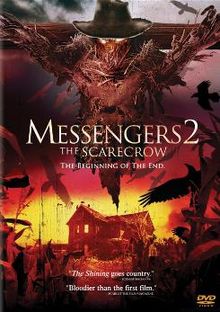
With autumn not far down the road, my mind turns to scary things. Actually, it is that way quite a bit of the time. Nevertheless, movies about farms are often the setting for the creepy—the sense of isolation, the sharp implements farmers use, the rustling of the drying crops in the wind. A couple years back I watched The Messengers. As a horror film it had a number of good scares, but the menace always seemed somewhat restrained. Nothing profound happens, and it is a film fairly easily forgotten. It was a rainy Saturday afternoon and The Messengers 2: the Scarecrow suggested itself to me. I began watching in an ambivalent mood, but when the first scene began with the protagonist (whose name I’ve forgotten) dropping his Bible on the porch chair as he loosens his tie to work on a derelict water pump, I was curious. When his wife arrives home and asks why he left church before it was over, my interest grew. This direct-to-video prequel turned out to be a cut-budget horror flick based squarely on a religious parable.

In a faustian moment of abandon, and at the advice of a jocular neighbor named Jude (Iscariot, anyone?), our hero erects a scarecrow to try to improve his lot (literally). To give credit where it is due, the scarecrow is distinctly disturbing. The scene of John (okay, I looked it up) nailing the scarecrow to the cross is clearly a crucifixion scene, and the blood that will later appear at the foot of the cross bears this out. Before he realizes that the scarecrow is evil, John hears ghostly children singing in his cornfield. The song is “Jesus Loves Me.” There is a strong fertility goddess theme running through the film and when Jude reveals that his wife has a magic book that explains all the benefits of the scarecrow, John decides to cut it down. The scarecrow, predictably, resurrects.

Meanwhile, John’s Christian family thinks he has gone insane. Or worse, backslidden. As he tries to explain to his wife what has happened, John shows her the magic book and she insists “It’s just your old Bible,” and it is. Heathenish occult instruction transubstantiates into Christian scripture. It is tough to tell one sacred writing from another. For cut-rate horror fodder, this is wonderful commentary on religious sensibilities. Although straight-to-video movies are not high art, and will never receive academy award nominations, they do reflect popular religious beliefs. Scholars are now in search of such beliefs in ancient societies since “official religion” almost never reflects what actual hoi polloi think. Lived religion seldom conforms to the intricacies envisioned by religious founders, and yet it is out there on the Internet for all to see. Maybe the messengers in this film are not the crows after all. The point of the parable? Stay true to your Christian upbringing or else the scarecrow will get you.
Adult Reading

Book Expo America is porn for readers. I couldn’t believe how large a space was dedicated to literacy, even if only for a week. It is cheering to see what seem to be so many people flocking to the support of the written word, until one steps outside. The city is busy, fast-paced, and frenetic. Books have almost no place here—in fact, bookstores are increasingly difficult to find. This is the world of finance and action, not quiet, reflective thought. Stepping back into the Javits Center what do I find? As a long-time attendee of academic conferences, I am no stranger to book stalls. In religion conferences one expects to find hundreds of religion titles. Thousands even. One of the surprising aspects of the Book Expo, to my eyes, was the volume of religion titles there. To be sure, they were not the erudite, and recondite tomes that populate religion conferences, but there were many Bibles and many books on faith. The religious, it seems, have always loved their books.

Books offer a stability that is not unlike the ideal of religious teaching. One of the main reasons for the plague of fundamentalisms the world is experiencing is the obvious disconnect between the world of ancient books and a culture that refuses to stand still. Once words are laid down, they have a way of becoming stable, apparently written in stone. To borrow a phrase from those long nights playing hearts or gin rummy, a word laid is a word played. Thus Scriptures, with all their foibles, are born. Even in a world increasingly tied to electronic devices, the written word still voices an air of authority. They may be merely electrons projected onto a glowing screen, but words tell us what we need to know. Some of them may become future bibles.

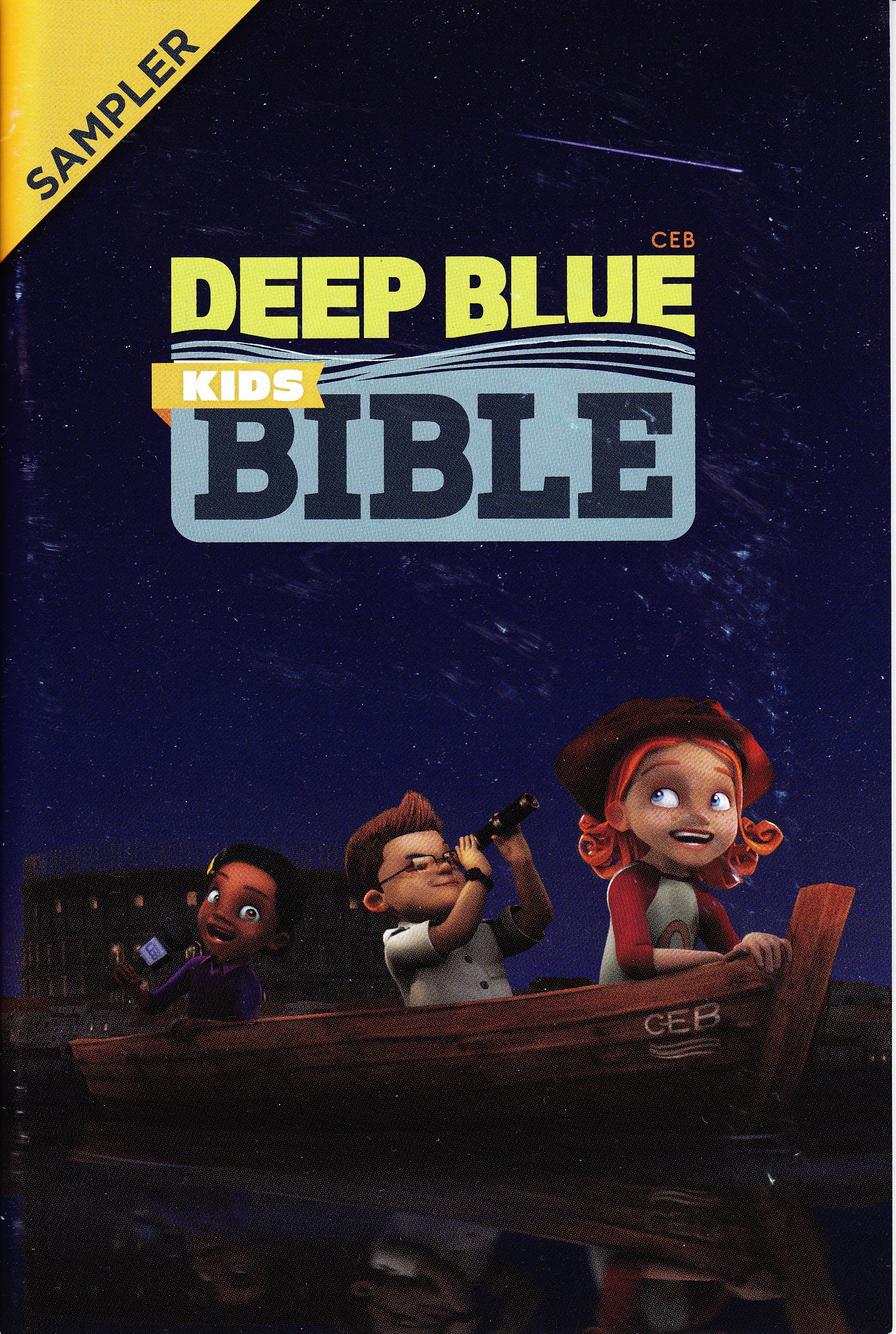
At Book Expo I found Bibles in child-friendly form. In a world where vegetables are the purveyors of the Gospel truth, and we can’t believe anything that hasn’t been animated by a major corporation, the Deep Blue Kids Bible caught my eye. Based on the Common English Bible, it is not the work of amateurs, but it did bring to mind a scary story I read long ago. (The story and this Deep Blue Kids Bible are only related in the labyrinth of my gray matter, not in any business sense whatsoever.) The story was in a children’s Christian magazine and it still evokes a shudder forty years later, when I recall it. An unthinking parent, it seems, decided to keep rat poison in a peanut butter jar. I really need recount no more of the story than that—as the child lay dying the moment of spiritual crisis came to make that decision for salvation upon his deathbed. I started reading the Bible (KJV, of course) before I was a teen. The Bible is not a children’s book. As I walk through BEA on weary feet, I am very glad for the books, but part of me is somewhere between the devil and the deep blue sea.


Lost Purpose

In a move that demonstrates its love of Inquisitions, the U. S. Conference of Catholic Bishops is officially investigating the Girl Scouts. Seemingly forgetful of the fact that a bunch of unmarried men with a record of protecting pedophiles is not above scrutiny itself, the Catholic Church now seems to think it has the right to police other organizations. The concern these men show for what goes on in other people’s underwear is beyond perverse—WWJD indeed? Both my daughter and my wife are Girl Scouts, and so I know it is not a perfect organization. I also know that it lives up to its goal of offering girls the chance to gain self-confidence and become empowered women. Women who are not trodden under the heavy feet of doctrine are tied to stakes and burnt, in good old-fashioned Christian charity. And why the fuss among our Roman companions? They’re afraid because of demonstrably false allegations that Girl Scouts “associates with” organizations to which the church also objects.

I was a Boy Scout for a few years. Already in those days jokes of homosexual leaders—and a few actual cases—were de rigueur. Where was the Catholic Church? Yet this year alone they have made strident moves against their own nuns and now, again, against the Girl Scouts. Where two or three women are gathered together, the Catholic bishops will begin to pick up stones. Better not read what Jesus is scribbling in the dirt. Some of my readers have problems with my biblical interpretation. I will now ask if anyone can produce a biblical prooftext for the church’s mandate to oversee the organizational structure of secular, non-profit, non-religious associations. What does the Bible say about that? Clearly what the Bible does allow sexually favors men. Where your testosterone lies, there will be your heart also.

All of this belies a lost of purpose for the church. Like the empire whose epithet it shares, the Roman Catholic Church is perceiving paranoid threats from every quarter. The purpose of Christianity, at least according to a guy called Jesus, was to help the poor and underprivileged and to love all people. Even those who crucify you. Now the message the headlines declare is that any organization offering women sexual autonomy will be investigated by the bishops. It matters not whether any allegations have a basis in fact. Christianity’s purpose? To assert male authority. To prevent any organization of women from achieving confidence or equality. To subjugate an entire half of the human race to the will of a single man. Does that sound like the true purpose of religion to you?


Battle Bibles

“There are no atheists in foxholes,” so the old saying goes. No doubt, war is among the most stressful circumstances in which humans insinuate others (who goes to war happily and without reservation?). As a corollary, to keep soldiers comforted in hellish surroundings, it has at times been common to supply them with Bibles. In an exhibit I’ve not yet seen, the Museum of Biblical Arts in New York currently has a display of soldier’s Bibles. A poignant dissonance accompanies such a concept. In the newspaper story announcing it, the phrase that leapt out at me was “Bibles clothed in camouflage.” To be sure, the Bible contains many narratives of war, even demanding genocide in certain circumstances, but as a whole the most valued commodity appears to be peace. Too often, however, it is peace on our terms.

According to the article, Bible distribution began in the United States in the Civil War. Bibles were offered to belligerents on both sides. Naturally, taken into the viewpoint of the chosen ones, God is on the side of the reader. God is the ultimate conflicted deity. This is cold comfort to a soldier dying on the battlefield of all-too-human contention. In keeping with religious differences, over time Protestant, Catholic, and Jewish versions have been offered. Notes in these government-issued religious documents urge the soldier to find succor here. One need not read too deeply between the lines to find the message is the willingness to lay down one’s life.

In a world acutely aware of religious differences, the idea of supplying fighting forces with religious backing may seem questionable. Can there be sincerity in the message that Scripture of any description ought to comfort a person who has been placed in this unenviable position by human greed, powerlust, or self-aggrandizement? What reason have we for war any longer? If religion be true, why have we not matured by even a millisecond since Joshua invaded Canaan? Giving a soldier a camouflaged Bible is to place a Band-Aid on a gaping wound requiring many stitches. Far better to take the message of peace to heart and look for reasonable ways to solve our differences. Idealistic? Without doubt. But it might help to save the cost of distributing Bibles to those whose lives are seemingly less valued than those who begin armed conflicts in the first place.

There is no “holy” in war.


Biblically Married

The Bible says—. Fill in the blank. Go ahead, someone will believe you. The problem with biblical literalism is that it is often held by people who don’t read the Bible. Well, it is a gosh-darn big book—well over a thousand pages—do you know how much quality television watching time that represents? So many fundamentalists are surprised to find out how little the Bible has to say about marriage. In fact, it says almost nothing. There are no marriage rites given, and marriages are mentioned but not described in detail. So when modern-day readers want to find guidance about political policy they have to—to be frank—make a lot of stuff up.

Take North Carolina, for example. Next week they are scheduled to vote on an issue of defining marriage. The intent, apparently, is to bring the state in line with the Good Book. In comes Matthew Vines, an evangelical Christian who’s also gay. Being a Harvard student, he has immediately impressive credentials. He has an on-line biblical exegetical exploration of what the Bible says, and more importantly, doesn’t say, about homosexuality. The other solution, to actually read the Bible, is a little too much to ask. Another part of the problem is that the Bible was written in a very different context, and to understand the Bible’s view on anything, you need to fit it into its context. All this Bible reading—and context too? Better leave it to someone on the television to explain it all.

Leonard Pitts Jr. is a columnist that I’ve come to trust. His good sense comes through in all his work. In Wednesday’s column, he highlights Matthew Vines’ hour-long talk as an example of what happens when common sense meets the Bible. For those who bother to read it, it will become clear that the Bible nowhere defines marriage. It says nothing about sexual orientation. The few passages on homosexual acts have a narrow context (that word!) that must be considered. Nowhere in the Hebrew Bible nor the New Testament is marriage considered a religious matter. It’s simply what people do. So as North Carolina heads to the polls, Bibles clutched in hands, but not in their heads, it might do to watch Matthew Vines as homework. I haven’t seen the video myself. An hour is just too long to take from my busy television-watching schedule.


Paradise by Half

Some times the Bible is best taken in small doses. I’m no technical guru, but I do know that Twitter doesn’t always display the Bible bits I type in daily. Perhaps in some far distant future civilization that has learned how to recover “data” from fried pieces of digital storage devices, the Bible will be woefully incomplete. Maybe not woefully, depending on whose point of view sees it. Reading over passages worn smooth by timeless repetition, it is sometimes difficult to notice the harsh undertones. My twittering is up to Genesis 3 now, the infamous Garden of Eden episode. Over the last few days I’ve tweeted, “And the Lord God called unto Adam and said unto him, Where art thou? And he said, I heard thy voice in the garden, and I was afraid, because I was naked; and I hid myself. And he said, Who told thee that thou wast naked? Hast thou eaten of the tree, whereof I commanded thee that thou shouldest not eat? And the man said, The woman whom thou gavest to be with me, she gave me of the tree, and I did eat. And the Lord God said unto the woman, What is this that thou hast done?”

The weary “blame it on the woman” trope aside, several things stand out. God seems to be interested only in Adam. Perhaps the divine Dad wants to take his boy aside for a man-to-man chat, but it seems more likely in the context that Eve is simply irrelevant. Even Adam’s response is completely void of Eve, “I heard,” “I was afraid,” “I hid.” For a man about to shove the blame off onto his significant other (sorry, Tea Partiers, nowhere does Genesis say Adam and Eve were ever married), he is strangely circumspect about his recondite female. Even God sounds surprised, “Who told thee that thou wast naked?” Hmmm, who else is there in the Garden? Adam suddenly abandons the first person singular and begins his response with, “The woman whom thou gavest…” Blame anyone but Adam. The tragic disappearance of Eve until blame is to be attributed should warn us that the remainder of the Bible will not be a happy book.

The first chapters of Genesis have a lot of uncovering going on. God, like a detective in a CSI drama, tries to uncover the mystery of the naked man. When man is found naked he blames the woman, not even bothering with her name. Much is revealed here. Coming as it does as the first biblical story of human interaction, this tale sets the stage for all subsequent developments. From this point onward, with rare exceptions, the story will be a male narrative. Women will be assigned to, literally, support roles. Is it any wonder that women gather to protest against women’s rights, when under the thumb of such teaching? I suggest that what is required is even more uncovering. If we examine the bare facts of the Bible, we might be able finally to get to the root of this problem. That root lies deep in the literal interpretation of mythology.

Who's missing?


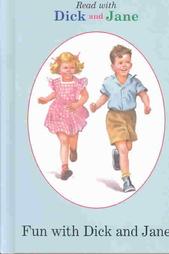
Fun with Dick and Jane

Occasionally somebody will ask me what the purpose of this blog is. I’ve read enough blogs myself to admit the question itself puzzles me. Those of us who are driven to write (and I know some of my readers can verify this—I’ve been a writer all my life, no matter what my job) are all Pontius Pilate. The reference is in the Bible, if you are unfamiliar with the allusion. Anyone uncomfortable with ambiguity will not find much satisfaction here. Our society likes to believe the truth comes in two shades only—black and white. Our society really should get out more. Even “black-and-white” pictures are actually shades of gray. Some people believe we should stick to our assigned roles, but a person is larger than the job society will allow her or him. Religions have often called this embiggening a “soul,” others have recognized it as “personhood.” No matter what you call it, an individual defined only by their job is mere shadow-play.

Back when I was teaching I always told my students that we are taught to read so early that we soon do it unconsciously. Yet, somewhere below the surface we know different materials hold different reading requirements. It is my sincere hope that the Constitution is not read with the same expectation as the sports page. For those who are willing, however, profundity can even be read in road signs. Reading is a two-way street: we bring to it nearly as much, if not more than, we take away. Truths may be out there, but no one down here can lay claim to their totality. If such were the case, there would be no need of elections, or more than one publisher. Bibles, properly speaking, have no covers.

Writing is an end in and of itself. Those few untrammeled moments of each day when the demands of work or responsibility lessen their grip just a bit, and the universe seems to welcome your thoughts. My experience of life from rather humble family circumstances has been that those better off like to tell you what to do. I have never been a boss, nor do I ever really want to be. My dreams are more vapid, vacuous, and vivacious. In my writing I can actually have fun. After I lost my long-term teaching post a career counselor told me that I had to separate myself from my job. Every day there are those who try to undo that sage advice. A blog is nothing more than a tall ship and a star to steer her by. If you can figure out what that means, please let me know.


A Strange Confirmation

I’ve been tweeting the Bible. Many years ago I lost track of how many times I had read it, but tweeting seems to be a way to examine the text carefully, 140 characters at a time. As a college student who’d recently learned about textual criticism (many years ago), I approached my local pastor and asked him if we could try something at church. I had a big, old, black leather Bible set up in the vestibule and made announcements—and even had it printed in the bulletin—that we were going to copy the Bible. I placed a three-ring binder and a pen next to the Bible, and I asked the parishioners to write down a verse in the notebook on their way in or out of church. I wanted to see how long it would take, and to give the laity an idea of how difficult it was to copy accurately. (Hey, I was young and idealistic!) The Bible sat there many months, perhaps a couple of years. I would occasionally check on progress, and was surprised to see we were still in Genesis. We hadn’t even reached the flood yet. And mistakes? Ye gods! It was like the Bible had been written on another planet. I now see the many problems with the way the experiment was set up, but copying the Bible is a revealing exercise nonetheless.

My tweets are with the King James Version of the Bible, and over the weekend I discovered something. According to the KJV, seed-bearing plants are male. Note Genesis 1.11 “Let the earth bring forth grass, the herb yielding seed, and the fruit tree yielding fruit after his kind, whose seed is in itself.” This corresponds to a post I wrote late last year about the notion of distorted masculinity in the biblical worldview. The operating assumption seems to be that male and seediness go together. Since the Bible is literally right, somebody better get out there and explain the facts of life to the female plants that constitute roughly half the flora on this planet. Herein lies the rub: ancient assumptions no longer hold sway. Trees are not all “hes,” and yet many treat the surrounding context of a literal seven days (only one day in Genesis 2) as worthy to take down science itself.

Once in a while I have my own gripe with science—or at least its cousin technology. I was looking forward, many years down the road, to putting all my Bible tweets together into a seamless whole. The tweet I twittered on Sunday, however, never appeared. I can’t go back and add the missing 140 characters now, because that would throw the order off. And those ancient scribes thought they had it hard! Maybe there is an object lesson at play here. Maybe the utter devotion to a text has the potential to lead the righteous astray. As a society we’ve built a tremendous world of luxury around ourselves (well, most of us), and isolated ourselves from the wild animals and masculine fruits of biblical times. And yet, when we look at the text up close, we often find things we might not expect. Or even support. I will dutifully carry on my Bible tweeting, but like any human venture, my Bible will never be perfect.


Tweeting the Bible

I have an underused Twitter account. My life isn’t so interesting that I need to give my few followers (fewer even than those who read this blog) updates throughout the day. In fact, I mainly use it to let my Tweethearts know what I’m blogging about on any given day. While reading a book on the influence of technology on religion (more anon) it struck me that one of the more interesting aspects of biblical studies is the fact that the well never goes dry. For those who read sacred texts, there is no end of interpretation. I’ve addressed this before on this blog—religion is as individual as each believer. The more I read biblical interpretations, however, the more I see the subtle textures and layers that readers find in the text, despite what most religious leaders desire. And I don’t restrict this to the Bible—any sacred text can be read in multiple ways. The Bible, however, has been foundational for this person that I’ve become, and so I’ve decided to do some close reading.

I’m going to tweet the Bible. (If you are one of my rare followers, don’t worry—read on.) I’m going to tweet the maximum 140 characters per message once a day. For this task I will be using the King James Version, arguably the most influential book ever written in the western world. Doubt me? Watch a presidential candidate debate. Or google Girl Scout cookies. Why am I doing this? Well, I wonder what the Bible says when it is broken down into byte-sized nuggets. At character 140 I will stop, and the next day I will begin where I left off the day before. This exercise will be a way of looking at the Bible from a fresh angle. Besides, it’s been a few years since I’ve read the entire KJV. I don’t pretend that nobody else has thought of this—I’m sure there are many Bible tweets out there. I’m curious, however, at 140 characters a day how long it will take, and what will emerge. Yes, I know that there are mathematical whizzes out there who could calculate the answer in a matter of seconds, but I just have to see for myself. The doubting tweeter.

A new look at an old book.

There may be occasions when I fail—isn’t the Bible about forgiveness anyway? In my job I travel quite a bit, and sometimes Internet access is dicey. Most hotels, however, still sport a Gideon Bible, so resources should be no problem. It will be an adventure, and the Bible could stand some adventure these days. Besides, interesting pericopes will give me something to blog about occasionally. For those who haven’t been subjected to years of higher education on the Bible (or other texts), a pericope is a passage cut out from its surroundings. It is the favorite of televangelists and other proof-texters who prefer to not to face the larger implications of reading the whole Bible in its context. I like to think of this exercise as Internet hermeneutics. So let the adventure begin. If you are really bored and want to follow a glacially paced Bible reading, my Twitter name is stawiggins. When interesting observations emerge, however, I will let my blog readers know as well. In the technical age, life is tweet.


Bible Review

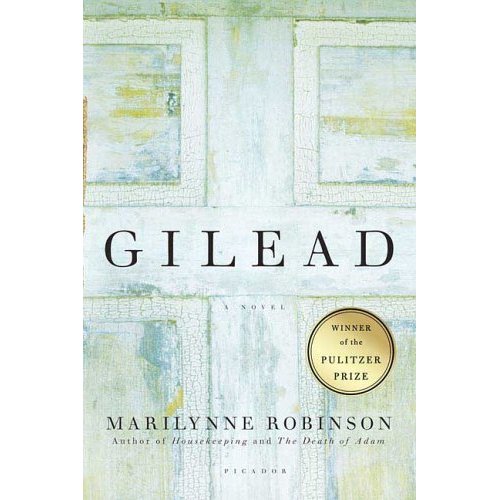
The Christmas edition of the New York Times Book Review begins with the Bible. Appropriate enough for a book that gave us “in the beginning” and the Christmas story in the first place. Reviewed by Marilynne Robinson, the Pulitzer Prize winning novelist, the Bible is presented as the unacknowledged source of much of our literary culture. It is a message that bears repeating every now and again, since the Bible itself is often equated with those who thump it instead of trying to comprehend it. The Bible is often guilty by association. Like any book, it has parts that we wish weren’t in it, but that is only problematic for those who think of the Bible in authoritarian terms, a book that must be rebuilt into modern culture, jot and tittle. Taken alongside other ancient writings, however, the Bible is a fine example of human evolution. It represents a segment of our developing culture. And, every now and again, atheist and evangelical should acknowledge, the Bible gives us profound insights.

Robinson’s article mostly focuses on reiterations. The Bible’s influence is deep, and in the English literary world, nearly universal. What authors have written in the past—and what they are still writing today—bears the stamp of the Bible. It was the first formative book in western culture, and to dismiss it completely is to throw away a valuable part of our selves. At the same time, even so able a writer as Robinson can’t escape the subtle supersessionism that coheres to the mythic reading preferred by a large cross-section of society. The Bible is a self-referential text, but the Bible does not know that “the Bible” exists. Books that eventually made it into the collection were written without an awareness that they would become authoritarian tomes millennia down the road. Modern believers still invest the books with the mystique of divine authority, often in subtle ways.

A point made by Robinson should be read by those aspiring presidential candidates super-bussing their ways across Iowa. “Moments of the highest import pass among people who are so marginal that conventional history would not have noticed them,” she writes of the biblical narrative. The vast majority of us are marginal in this sense. Those in seats of power frequently forget that it is the unassuming compliance of those further down the food chain that lends them their power. The Bible is nearly always on the side of the oppressed. The Bible, however, can also empower those deprived by the crass world of politics. It must be rescued first. Once they are done kissing babies and shaking hands, once they settle in their opulent offices built with the money that would have otherwise gone to those babies, politicians forget the basic truths of the Bible. As long as it can be thumped once in a while, however, they will keep it in the bottom drawer until it is needed again. Only by dealing with the Bible sensibly can its abuse be stopped.

There is, I hear, balm there.


Bookless in Manhattan

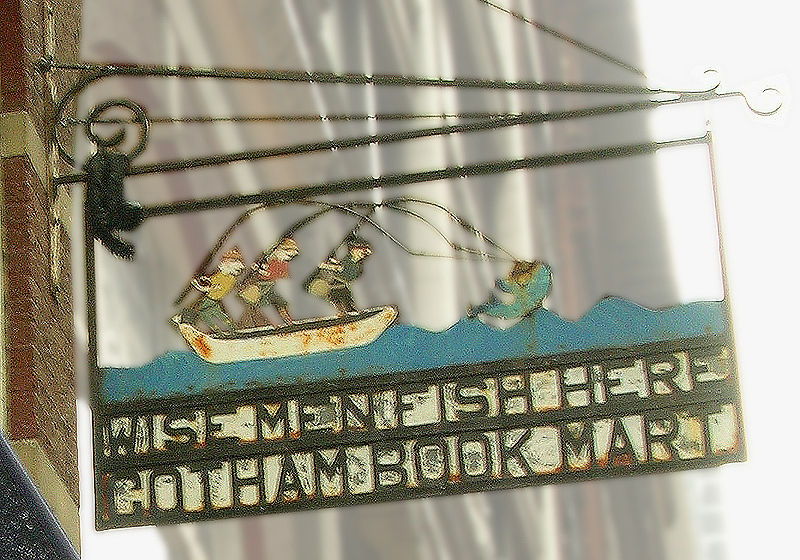
I suppose the fact that I still harbor an inordinate love of dinosaurs, geology, ancient civilizations, and liberal politics should prepare me for the demise of books. The short road to extinction lies along the path of my interests. Except, of course, Bible. There must be a portrait of a very old, decrepit scroll somewhere in someone’s attic. The culture of books, apart from the library, is a fairly recent one in human history. Even the concept of stores dedicated to books is one that has had a very tenuous lifespan. Now that Borders is gone, I’m sometimes reduced to skulking about Barnes and Noble to find my quarry. So on my lunchtime yesterday I decided to visit the Barnes and Noble on Fifth Avenue and then swing by the Gotham Book Mart. I had heard of the Book Mart before—the store that hosted visits by Truman Capote, James Joyce, Arthur Miller and many, many more luminaries. I thought it would be a good antidote to B&N, and besides, the address is just blocks from my office.

Barnes and Noble is the last resort of a reading man. I don’t have much time for holiday shopping these days, so I figured I’d nip in with my list (nothing too obscure; in fact, I’d seen the titles in an indie bookstore over the weekend, but my family was with me) and be back out in a jiff. Fifth Avenue. Midtown Manhattan. The choice of books was atrocious. Purely lowest common denominator selection. It is symptomatic of America’s love affair with the ordinary, the lower-quality-if-higher-quantity mentality. Cosco of the intellect. Barnes and Noble is the only show in town and they don’t have the selection or panache of many a much smaller Borders. I had to walk out empty handed. Well, at least there was the Gotham Book Mart to look forward to!

I suppose my first clue should’ve been the fact that the photo on Google maps showed a storefront reading “Food World” at the address which still maintained the bookstore name. I thought maybe the Book Mart was behind it or something. No Gotham Book Mart. Back at the office, chewing a dry peanut butter sandwich, I stared crestfallen at the computer screen. Wikipedia informed me that the famed Gotham Book Mart closed four years ago. Rising rents in Manhattan and the very Barnes and Noble I’d just visited drove it out of business. e e cummings, George Gerschwin, Jacqueline Kennedy Onassis, and J. D. Salinger passed their hours here. Katharine Hepburn, Woody Allen, and Charlie Chaplin were no strangers here. When the remaining stock—valued at 3 million dollars—came up for auction, it was purchased for $400,000. By the landlords. So ended an era.

From monks hunched over their vellum by the sallow light of candles to the modern dreamer in the glow of her or his laptop screen, we have brought writing an unimaginable distance. Unfortunately, many of the landmarks along the way have vanished without the blink of an entrepreneurial eye.


Name Recognition

Some two and a half years ago when my brother-in-law Neal Stephenson suggested I start a blog (primarily for the podcasts to which I intend to return), he asked me what I would call such a site. “Sects and Violence in the Ancient World,” was my attempt at a witty, non-committal riposte. Since I was unemployed at the time and still hoping some deus ex machina might put me back into a full-time university post, complete with an Ancient Near Eastern religions component, the title seemed apt. I determined that I would not exploit my relationship to a best-seller author since I wanted to earn my own readership. Sects sells, does they not? Since then I’ve had a number of curious readers wonder why I tend to address modern religious issues, unlike my title suggests. The reason goes back to what I want to be when I grow up.

How many eighteen-year olds really know what their lives will hold in store? Our society asks them to select majors and pick a career path far too young. I had visions of clergyhood in my head so I majored in religion. Like many children of alcoholics, I tend to be addictive in my devotion, so after completing a Master’s in religion, I had to have just one more degree—then I’ll stop—and a doctorate in religion finished ossifying my career track. Having been weaned on the Bible, I’d stuck with it for three degrees and found that during that time the job market had evaporated around me. As I watched society from the sidelines, I saw so many people at the place I had started out, staring wistfully at the Bible, looking for answers. Uncritically, magically expecting a miracle. Just like Oral Roberts said. Once my teaching career had been derailed by misguided Fundamentalists, I realized my interests were much more in the effect religion has on people. It was too late, however, to go back to school.

My way of dealing with any dilemma is to parse its history. That’s why I studied pre-biblical religions along the way to my doctorate in Bible. A couple of things had become clear along the way: religions are very fragile and easily splinter into sects. And most of the large-scale violence in the history of the world has a religious basis. (Probably much of the small-scale violence does as well.) Its origins are literally more ancient than history. What is religion in today’s world if not the direct descendent of sects and violence in the ancient world? And since my idiosyncratic musings have passed the 200K hit mark, it seemed all right to acknowledge the role my brother-in-law has played in all this. So, in good academic fashion, I’d like to acknowledge the suggestions and support of Neal Stephenson in starting this blog, but any errors are, of course, my own.


The Shawshank Reversal

You go away for a few days and look what happens to the neighborhood. With the Bible scholars safely out of town, a South Carolina woman used two hollowed out Bibles to smuggle weapons and drugs to a friend in prison. According to a story in the New Jersey Star-Ledger, the eviscerated Bibles contained knives, a cell phone, ecstasy and cocaine. Bibles often act as metaphors, and in this case the image of trouble coming in the form of a sacred book is poignant. No one thinks to suspect a Bible (well, Stephen King did), so conservative and clean-cut. What lies inside, however, is seldom closely examined. What is found there often defies biblical scholars and prison guards.

The Bible, as an icon, is spotless in the public eye. You can place a hand atop its venerable cover and, magically, you won’t be able to lie. You can heft it aloft and demons will flee in fright. You can even use it to measure chastity. (Back in my college there was a four-feet-six-inches rule. Men in women’s dorm rooms during brief, allotted visiting hours could sit next to their sweeties, but they had to keep all four feet on the ground and remain six inches apart—a distance, we were told—that could be filled by placing a Bible between the lovers. And the door had to be kept open, just in case.) The book has become the deity. Placing God between the desires of lovers is a metaphor ripe for the picking.

Few can forget the scene in The Shawshank Redemption when Warden Norton opens Andy Dufresne’s Bible to find the rock-hammer-shaped hole cut out of the pages. The Bible had set Dufresne free. And it did so unwittingly. The Bible’s message, in the film, was intended to keep prisoners in a state of submission, but human interest brought the Bible much closer to its noble purpose of setting the prisoner free. The Bible has been a privileged book throughout American history, and even before. In England it used to be chained to the lecterns of churches to prevent it from being privately studied. Its great power, however, lays not within the manipulation it excuses, but in the human spirit that finds liberation through, and sometimes despite, the famous black book.


Raising Cain

The Bible doesn’t contain many good horserace stories. The early stages of a presidential candidate race, however, are rather like a horserace (I don’t pay much attention to either). Unless one (or more) of the horses get religious. It seems that a candidate can’t cinch a Grand Old Party nomination without laying bets on religion. I’ve no idea how religious Mitt Romney is, but his religion itself forces the issue. Rick Perry wears it on his sleeve and in his pious grin. The keep in the heat, Herman Cain has now pulled out his religious credentials. God told him to run for president. So he says. Since the Bible doesn’t mention any candidates by name, we have to take his word for it. (Although I doubt Cain actually wants to be associated with his biblical namesake.)

God’s been down a bit on the divine luck lately. With all the causes the Big Guy has supported being lost to others (one thinks of the “Gott und Ich” mentality that stretches far back beyond World War One) you’d think that those chosen by God might keep the matter quiet. At least until the results are assured. Once that card has been laid, to shift metaphors, it can’t be trumped by any other. A card laid is a card played. How can a candidate climb higher than God for the next debate? And when one or another of God’s chosen loses—and this is inevitable—it is clear that God is dragged into the mud with the almost chosen candidate.

There has been much talk and debate about the role of religion in government. In a nation as religious as the United States it is purely impractical to keep the two impolite subjects apart. We only want a religious man in the White House. Preferably Protestant, but beyond that any flavor will do. In the 80’s at least one was Tutti Frutti, in a manner of speaking. The actual religious beliefs expressed by our national leaders would certainly lead to raised eyebrows among the truly conservative, if such matters truly mattered.

Back in college, it was considered wise advice never to try to stuff any variety of underwear in order to create an illusion of size—such tactics are bound to end in disappointment. It is lesson that politicians never learn. There will always be some disillusioned followers the morning after, unless, of course, the racehorse analogy is the proper one. And the Bible will back me up on that.

It's all in the reading


Ezekiel’s Equinox Paradox

Like the great celestial wheels of antique imagination, the seasons continue their wearisome roll across the earth. On a day long marked as a holiday among those more closely attuned to nature than most modern people in developed nations, we face the beginning of autumn. Change is in the air and already the gray skies that have predominated the eastern seaboard over weeks since Irene seem to have winter on their minds. Changes always call to mind how the human mind tends to divide what it sees into categories. The Bible is one place that this tendency is crucial. The whole scheme behind clean and unclean comes down to the need to make discrete that which nature shamelessly blends. When it comes to deity, the party line has always been (at least in the monotheistic religions) that God is like one of us. We can’t imagine human very well without gender, and so God becomes a guy. Notwithstanding protests to the contrary, early religions did take that distinction literally; divinity and masculinity were of a piece.

This fact makes it all the more intriguing when the Bible itself offers a few passages that call this orthodoxy into question. A few verses explore the trope of God as female, but they quickly back away and revert to the male God when taking on more literal terms. Hebraic culture was monistic, not dualistic. God as “spirit” was not really a possibility in the Hebrew Bible. God as a big man fits the picture better. One of the voices that claims dissent is that of Ezekiel. No surprise there—Ezekiel has been analyzed as everything from a dreamer to a dropper. Ezekiel’s understanding of God, however, is deeply imbued with temple imagery. Ezekiel was a priest without a sanctuary, and so his view of God suffered from temple vision. Nevertheless, the strange account of Ezekiel’s vision of Yahweh coming to Babylonia that opens his book demonstrates a startling lack of clarity when it comes to divine gender.

When two people meet, as psychologists have long noted, the first bit of information they attempt to discern is gender. Perhaps it’s the old fight or flight reflex from our reptilian brains, or maybe it is the opportunistic mating behavior that so obviously characterizes our species, but we are very uncomfortable when we can’t make a gender assignment. It is the whole premise behind Saturday Night Live‘s old sketch of “It’s Pat.” When Ezekiel first espies God he describes the deity in terms of glowing metal. But notice that he begins, “And I saw as the colour of amber, as the appearance of fire round about within it, from the appearance of his loins even upward, and from the appearance of his loins even downward, I saw as it were the appearance of fire, and it had brightness round about” (1.27). Beginning at the loins the prophet looks the deity up and down and concludes God is like fire. This image does not long survive the vision, for Ezekiel quickly reverts to masculine imagery for God. Even in the face of evidence that God is not gendered, the faithful must make him so, for the age-old appurtenance of male superiority suffers immeasurably without the camaraderie of God.