Name Recognition

Some two and a half years ago when my brother-in-law Neal Stephenson suggested I start a blog (primarily for the podcasts to which I intend to return), he asked me what I would call such a site. “Sects and Violence in the Ancient World,” was my attempt at a witty, non-committal riposte. Since I was unemployed at the time and still hoping some deus ex machina might put me back into a full-time university post, complete with an Ancient Near Eastern religions component, the title seemed apt. I determined that I would not exploit my relationship to a best-seller author since I wanted to earn my own readership. Sects sells, does they not? Since then I’ve had a number of curious readers wonder why I tend to address modern religious issues, unlike my title suggests. The reason goes back to what I want to be when I grow up.

How many eighteen-year olds really know what their lives will hold in store? Our society asks them to select majors and pick a career path far too young. I had visions of clergyhood in my head so I majored in religion. Like many children of alcoholics, I tend to be addictive in my devotion, so after completing a Master’s in religion, I had to have just one more degree—then I’ll stop—and a doctorate in religion finished ossifying my career track. Having been weaned on the Bible, I’d stuck with it for three degrees and found that during that time the job market had evaporated around me. As I watched society from the sidelines, I saw so many people at the place I had started out, staring wistfully at the Bible, looking for answers. Uncritically, magically expecting a miracle. Just like Oral Roberts said. Once my teaching career had been derailed by misguided Fundamentalists, I realized my interests were much more in the effect religion has on people. It was too late, however, to go back to school.

My way of dealing with any dilemma is to parse its history. That’s why I studied pre-biblical religions along the way to my doctorate in Bible. A couple of things had become clear along the way: religions are very fragile and easily splinter into sects. And most of the large-scale violence in the history of the world has a religious basis. (Probably much of the small-scale violence does as well.) Its origins are literally more ancient than history. What is religion in today’s world if not the direct descendent of sects and violence in the ancient world? And since my idiosyncratic musings have passed the 200K hit mark, it seemed all right to acknowledge the role my brother-in-law has played in all this. So, in good academic fashion, I’d like to acknowledge the suggestions and support of Neal Stephenson in starting this blog, but any errors are, of course, my own.


The Shawshank Reversal

You go away for a few days and look what happens to the neighborhood. With the Bible scholars safely out of town, a South Carolina woman used two hollowed out Bibles to smuggle weapons and drugs to a friend in prison. According to a story in the New Jersey Star-Ledger, the eviscerated Bibles contained knives, a cell phone, ecstasy and cocaine. Bibles often act as metaphors, and in this case the image of trouble coming in the form of a sacred book is poignant. No one thinks to suspect a Bible (well, Stephen King did), so conservative and clean-cut. What lies inside, however, is seldom closely examined. What is found there often defies biblical scholars and prison guards.

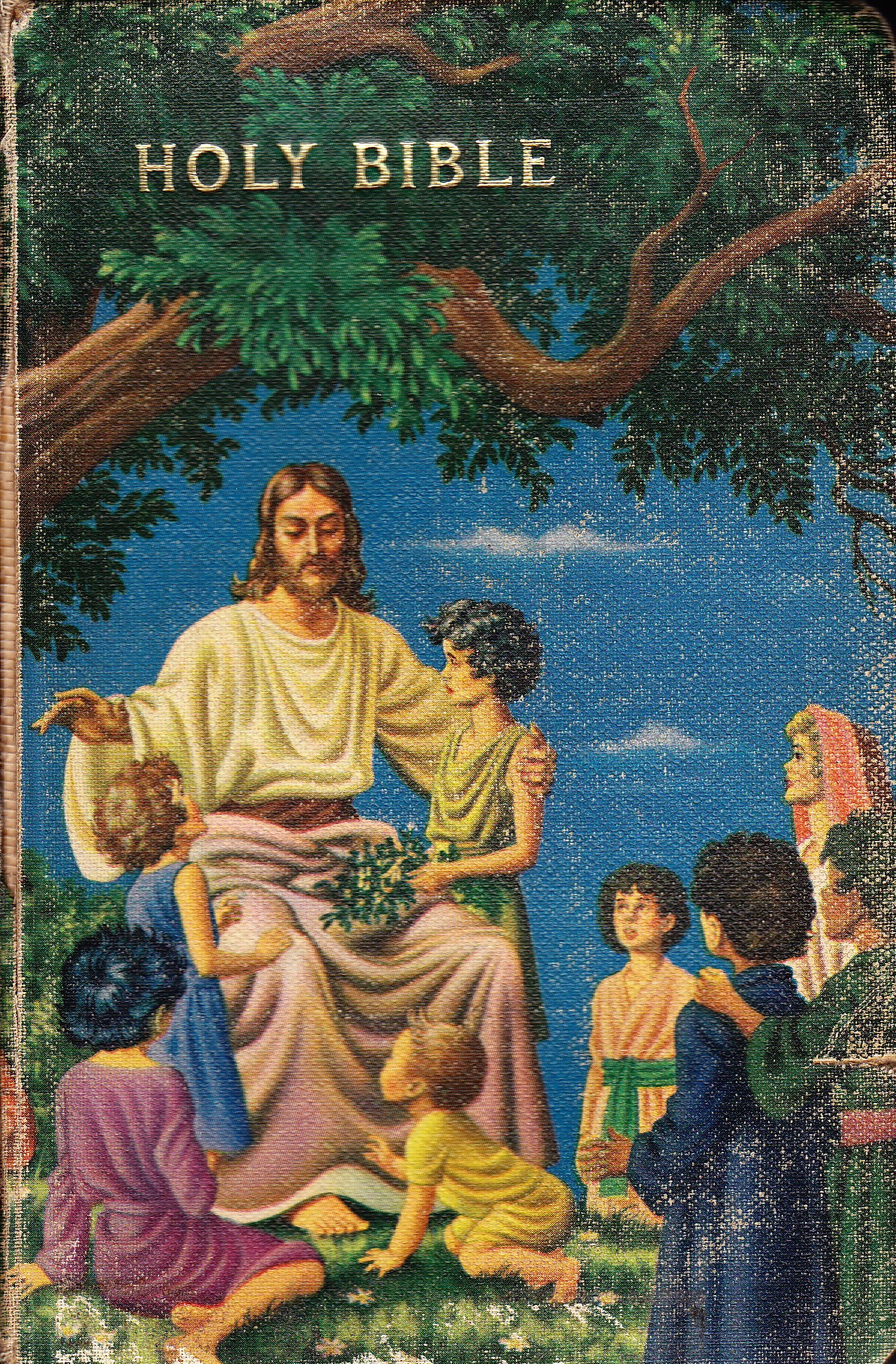
The Bible, as an icon, is spotless in the public eye. You can place a hand atop its venerable cover and, magically, you won’t be able to lie. You can heft it aloft and demons will flee in fright. You can even use it to measure chastity. (Back in my college there was a four-feet-six-inches rule. Men in women’s dorm rooms during brief, allotted visiting hours could sit next to their sweeties, but they had to keep all four feet on the ground and remain six inches apart—a distance, we were told—that could be filled by placing a Bible between the lovers. And the door had to be kept open, just in case.) The book has become the deity. Placing God between the desires of lovers is a metaphor ripe for the picking.

Few can forget the scene in The Shawshank Redemption when Warden Norton opens Andy Dufresne’s Bible to find the rock-hammer-shaped hole cut out of the pages. The Bible had set Dufresne free. And it did so unwittingly. The Bible’s message, in the film, was intended to keep prisoners in a state of submission, but human interest brought the Bible much closer to its noble purpose of setting the prisoner free. The Bible has been a privileged book throughout American history, and even before. In England it used to be chained to the lecterns of churches to prevent it from being privately studied. Its great power, however, lays not within the manipulation it excuses, but in the human spirit that finds liberation through, and sometimes despite, the famous black book.


Raising Cain

The Bible doesn’t contain many good horserace stories. The early stages of a presidential candidate race, however, are rather like a horserace (I don’t pay much attention to either). Unless one (or more) of the horses get religious. It seems that a candidate can’t cinch a Grand Old Party nomination without laying bets on religion. I’ve no idea how religious Mitt Romney is, but his religion itself forces the issue. Rick Perry wears it on his sleeve and in his pious grin. The keep in the heat, Herman Cain has now pulled out his religious credentials. God told him to run for president. So he says. Since the Bible doesn’t mention any candidates by name, we have to take his word for it. (Although I doubt Cain actually wants to be associated with his biblical namesake.)

God’s been down a bit on the divine luck lately. With all the causes the Big Guy has supported being lost to others (one thinks of the “Gott und Ich” mentality that stretches far back beyond World War One) you’d think that those chosen by God might keep the matter quiet. At least until the results are assured. Once that card has been laid, to shift metaphors, it can’t be trumped by any other. A card laid is a card played. How can a candidate climb higher than God for the next debate? And when one or another of God’s chosen loses—and this is inevitable—it is clear that God is dragged into the mud with the almost chosen candidate.

There has been much talk and debate about the role of religion in government. In a nation as religious as the United States it is purely impractical to keep the two impolite subjects apart. We only want a religious man in the White House. Preferably Protestant, but beyond that any flavor will do. In the 80’s at least one was Tutti Frutti, in a manner of speaking. The actual religious beliefs expressed by our national leaders would certainly lead to raised eyebrows among the truly conservative, if such matters truly mattered.

Back in college, it was considered wise advice never to try to stuff any variety of underwear in order to create an illusion of size—such tactics are bound to end in disappointment. It is lesson that politicians never learn. There will always be some disillusioned followers the morning after, unless, of course, the racehorse analogy is the proper one. And the Bible will back me up on that.

It's all in the reading


Ezekiel’s Equinox Paradox

Like the great celestial wheels of antique imagination, the seasons continue their wearisome roll across the earth. On a day long marked as a holiday among those more closely attuned to nature than most modern people in developed nations, we face the beginning of autumn. Change is in the air and already the gray skies that have predominated the eastern seaboard over weeks since Irene seem to have winter on their minds. Changes always call to mind how the human mind tends to divide what it sees into categories. The Bible is one place that this tendency is crucial. The whole scheme behind clean and unclean comes down to the need to make discrete that which nature shamelessly blends. When it comes to deity, the party line has always been (at least in the monotheistic religions) that God is like one of us. We can’t imagine human very well without gender, and so God becomes a guy. Notwithstanding protests to the contrary, early religions did take that distinction literally; divinity and masculinity were of a piece.

This fact makes it all the more intriguing when the Bible itself offers a few passages that call this orthodoxy into question. A few verses explore the trope of God as female, but they quickly back away and revert to the male God when taking on more literal terms. Hebraic culture was monistic, not dualistic. God as “spirit” was not really a possibility in the Hebrew Bible. God as a big man fits the picture better. One of the voices that claims dissent is that of Ezekiel. No surprise there—Ezekiel has been analyzed as everything from a dreamer to a dropper. Ezekiel’s understanding of God, however, is deeply imbued with temple imagery. Ezekiel was a priest without a sanctuary, and so his view of God suffered from temple vision. Nevertheless, the strange account of Ezekiel’s vision of Yahweh coming to Babylonia that opens his book demonstrates a startling lack of clarity when it comes to divine gender.

When two people meet, as psychologists have long noted, the first bit of information they attempt to discern is gender. Perhaps it’s the old fight or flight reflex from our reptilian brains, or maybe it is the opportunistic mating behavior that so obviously characterizes our species, but we are very uncomfortable when we can’t make a gender assignment. It is the whole premise behind Saturday Night Live‘s old sketch of “It’s Pat.” When Ezekiel first espies God he describes the deity in terms of glowing metal. But notice that he begins, “And I saw as the colour of amber, as the appearance of fire round about within it, from the appearance of his loins even upward, and from the appearance of his loins even downward, I saw as it were the appearance of fire, and it had brightness round about” (1.27). Beginning at the loins the prophet looks the deity up and down and concludes God is like fire. This image does not long survive the vision, for Ezekiel quickly reverts to masculine imagery for God. Even in the face of evidence that God is not gendered, the faithful must make him so, for the age-old appurtenance of male superiority suffers immeasurably without the camaraderie of God.


Unanswered Questions

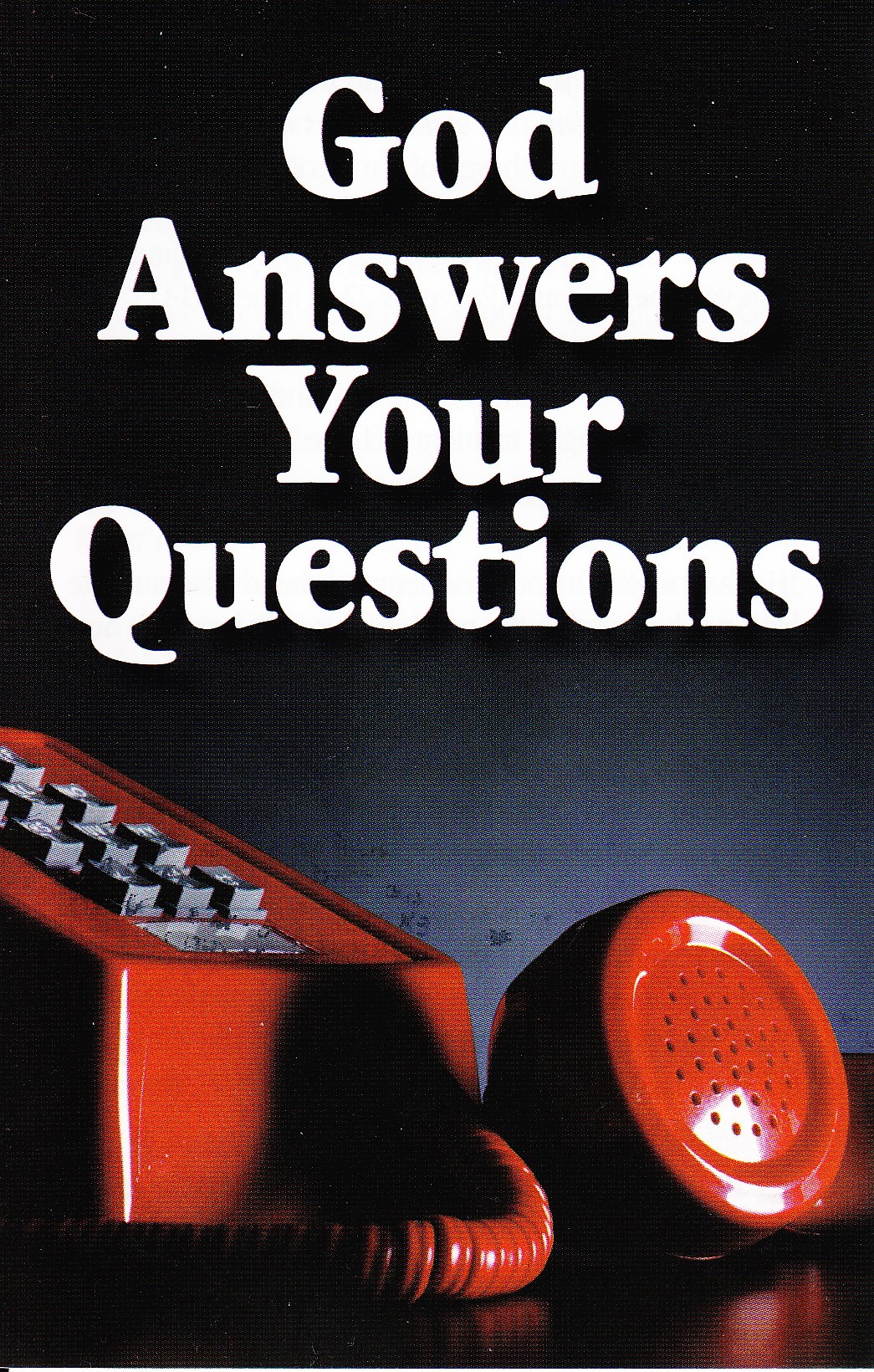
Attempting to write a blog post everyday on the single subject of religion can be a challenge when you don’t share the freedom of the Internet with most faculty. Once in a while a topic just drops in your lap like a gift from God. It helps that New York City is such a religious place. Despite the many critics who claim New York is godless and completely secular, it my experience there are a goodly number of the godly in it. It is not uncommon to see street preachers on a sunny day (apparently God has less need of saving on rainy days). On my way home from work today I was presented with a tract in which “God Answers Your Questions.” It was a little odd that the acolyte with the tracts knew what my questions were, but since the leaflet quotes extensively from the Bible it must be true. From this pamphlet I learned what my hidden question were.

The first question, rather flatteringly, states, “I am young yet, and likely to live for a long time.” Once I’ve been buttered up, the other shoe drops: “Why should I think of eternal things now?” Rather than the Bazooka Joe Bible verse, I thought I might field that one myself. I grew up thinking about eternal things on a nearly daily basis. By the time I was in high school I was somewhat creepy about it. In a college course on the psychology of death and dying, we were asked how often we thought of death. My honest answer was, “every day.” Now, a person with that kind of background may be overthinking this a bit. Death is a relatively simple matter: you need do nothing to achieve it eventually. I had been taught that if you worked to make sure you were honest and true, it would be rewarded. I was fired from my first job for being true to what I’d learned with intellectual honesty. I thought about death a lot.

Death, given its finality, is a universal religious concern. Some religions offer an afterlife—generally it is not an option—while others do not. The life well-lived is its own reward. Others suggest what seems to me a more insidious option: reincarnation. Those religions that take this approach are generally honest up front, stating outright that life is suffering. Reincarnation is goal-directed: break the cycle and achieve Nirvana. And there is no reason to flatter people with the long life yet ahead of them. The evangelist ignored my white whiskers and gave me an anonymous tip for salvation. Perhaps all I really needed was a sip of cold water. Having spent the better part of one life thinking about its end, reincarnation could be a cruel reprisal indeed. I don’t need to worry, however, because I’ve got the answers—along with the questions—right here in my pocket.


Biblical Muppets

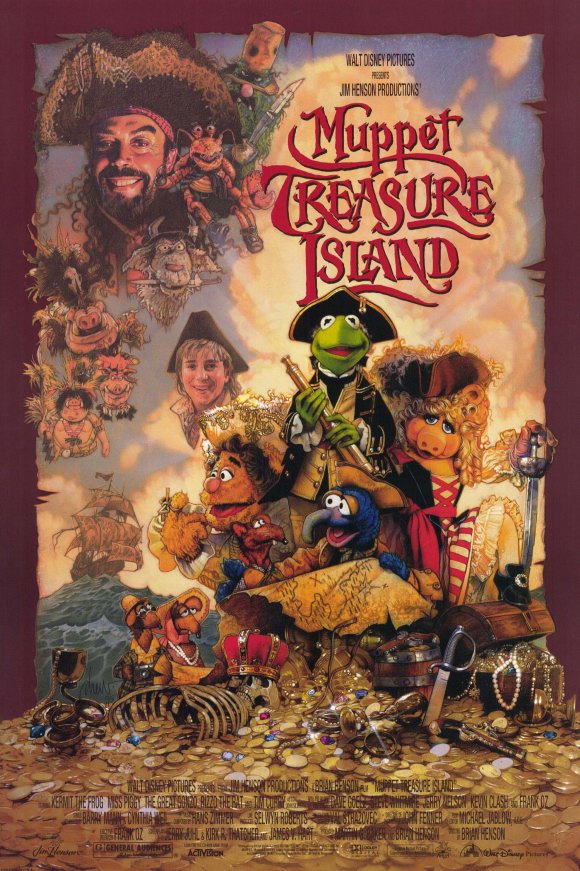
Back in the days when I was teaching intensive summer courses, I frequently used movie clips to help break up the three-to-four hour class sessions. I would find movies in which the Bible featured in what I’d call a minor supporting role—almost as a character—and would try to get the class to discuss it. One of the immediate observations is that such an exercise is starved for choice: the Bible appears frequently in films, both secular and religious. Sometimes its role is pivotal, at times incidental. Last night as my family prepared to return to work and school, we watched a movie to say goodbye to summer. The movie was Muppet Treasure Island.

Like most children of the 60’s I learned about Muppets from Sesame Street. By the time I was a teenager The Muppet Show had emerged on prime-time. Before long Muppets made their way onto the silver screen. Muppet Treasure Island was a movie I had missed until my daughter saw it in primary school. I have used it as an example in my summer classes for years. The story follows, as faithfully as Muppets can, Robert Louis Stevenson’s Treasure Island. Tim Curry—selected for Long John Silver because of his fame in the Rocky Horror Picture Show—makes a believable singing pirate. In this version of the story, when the pirates reach Captain Flint’s treasure it has been absconded by Benjamina Gunn (Miss Piggy). The pirates, now guilty of mutiny, give Long John the black spot. (For a generation raised and weaned on Pirates of the Caribbean, the black spot requires no explanation.) Long John, playing on the superstitious nature of the other pirates, sermonizes them because they used a page of the Bible to draw the black spot. Terrified of this sin, the pirates beg Long John for forgiveness.

This is a textbook example of the Bible acting as a magical book. Often in the movies it functions in that role; the Bible has the invisible authority to bring mortals to their knees. Pirates in need of paper might dismember any other book (I might suggest Going Rogue: An American Life), but the Bible is itself sacred. This particular role for the Bible reflects American sensibilities about the nature of religion particularly well. Without ever reading the Bible many people venerate it as if ink on paper is a little piece of God. There is a grain of truth in that, for literacy is a little piece of God and books do guide us. The problem is limiting that role to one single exemplar. Perhaps after all the Muppets shall guide us to a deeper truth.


Demo-God

Not having access to the news wires, I am generally scooped by CNN’s Belief Blog. Of course, blogs dealing with religion are a pretty cheap commodity these days, especially since, as I’ve mentioned before, everyone’s a self-proclaimed expert on the subject. So it appears appropriate that God’s approval rating was put to the polls. According to Public Policy Polling, God only enjoys a 52 percent approval rating. Only 9 percent of those surveyed dared give God a negative “disapprove,” but that still leaves a large middle ground where— to borrow a phrase—God is in the dock. The scenario where a democratic society expresses its opinion on leadership, both human and divine, makes me recall the movie The Mission. Fr. Gabriel has to remind Fielding at one point, “We [the church] are not a democracy.” Religion is handed down from on high and those who inherit it have no right to question.

Or do they? When I was growing up in the sixties one of the common social references in the media was the teenager (oh, what rebellion!) yelling at his parents, “I didn’t ask to be born!” In the current universe, however, that is where all religious believers find themselves. With the exception of the few who suppose themselves somehow self-generated, we all realize that we are subject to the whims of the creator. That, of course, does not prevent us from sharing our opinion on the issue. Fr. Gabriel is right: this is not a democracy. The stereotypical 1960s teenager is also right: we did not ask for this. No wonder the approval ratings for the divine have plummeted. It seems that the tenets so readily accepted in more submissive times have eroded. Is God about to retire? Step quietly from center stage?

What’s next for the Big Guy? Will he write his memoirs—wait, he’s already done that; what do you think the Bible is? Perhaps an unemployed creator would be interested in making another universe. The problem is that wherever consciousness exists, ideas will soon follow. Some ideas fit comfortably in the system: do as you’re told because I’m stronger than you, for example. When the expression of power as an inappropriate means of governance evolves, however, the voices of democracy will emerge. Maybe it is safer to schedule an apocalypse after all. Let’s just hope that God doesn’t take a page from the politicians’ handbook, otherwise nothing will ever really change.


Parry Hotter

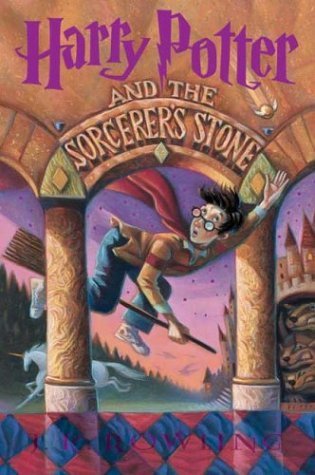
With the final Harry Potter movie opening this weekend, it is clear that the brainchild of J. K. Rowling will live forever. When the books first started to gain popularity numerous Christian groups protested that children would be tempted into witchcraft by the appeal of the young protagonists. Ironically, standard Christian teaching denounces the power of witchcraft, although some groups do still acknowledge a very active devil. Now that the series has run its course–all the movie spin-offs of the novels are complete–many are coming to the realization that the message is profoundly ethical if not downright religious. As usual with knee-jerk protests, the message is missed for the medium, and those with fragile faith clamor for a spell of their own to put an end to opposition.

Joining the bandwagon late, I first started reading the Harry Potter books when the third or fourth volume had been published and public interest was riding high. I haven’t kept up with the movies, however, last watching Goblet of Fire at a theatre in Wisconsin while contemplating my own position at a school like Hogwarts, minus the magic. The books, however, convey the message more clearly–the power of evil is real, good is not always what it seems, and institutions can’t save you. The importance of love (the main thrust, many would contend, of the preaching of Jesus) is the driving force behind the story from the moment Lord Voldemort (the Darth Vader of the twenty-first century) failed to kill young Harry Potter. Perhaps the true concern that many religions have with Rowling’s work is that it has trumped the traditional mythology with a bit more style and panache.

As a regular Protestant Christian, Rowling expresses traditional beliefs in her writing. The fantasy of witchcraft, however, has always maintained a lure for those cut out of society’s pathway to wealth, recognition and ease. In the days before Christianity, the early Israelites believed the power to be real to the point of making witchcraft a capital offence. Of course, omnipotence had not yet been invented. Once a deity becomes all-powerful, why should fear remain concerning magic? More likely protests against Harry Potter had less to do with the witchcraft than with the insecurity that many believers feel about God. The plan doesn’t seem to be unfolding as the Pat Robertsons and Timothy LaHayes are saying it should. Doubt is a much more powerful force, it appears, than magic.


How Great Thy Art

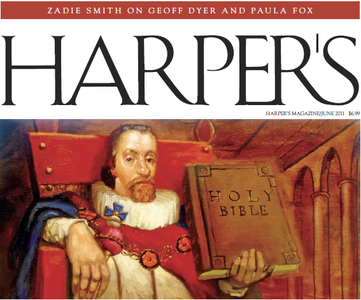
Celebrating the four hundredth birthday of the King James Bible, last month’s Harper’s magazine featured seven popular writers giving their take on various passages from the Bible. Noting the Bible more or less gave the English language its shape, this little exercise in eisegesis represents, in small measure, the power of the Bible even today. While many lament that America is no longer Bible-centered, with its misuse and abuse in the political arena the Bible still seems to be the heavyweight champion of the country, albeit altered through the eyes of certain key players. I was happy to note Harper’s chose novelists and poets to respond rather than theologians, biblical scholars, or—God help us—televangelists or politicians (frequently the same thing). What emerges is a tapestry that alike puts biblical scholars’ teeth on edge and makes fundamentalists wince.

Novelist Howard Jacobson looks at the creation story and takes the angle that God is a lonely artist. Writes Jacobson on the creation of light: “It’s good because it reveals an idea. The artist isn’t obligated to explain what that idea is.” Here, in the words of a non-specialist (can one say “amateur” of an accomplished novelist?) lies the heart of the matter. Art is creation and creation must be interpreted. Anyone who has undertaken a creative enterprise knows the feeling—the casual, disinterested glance at your work hurts. Any artist wants to be appreciated. Once the metaphor of God’s authorship of the Bible is recognized, there is a group of human artists hiding somewhere outside the annals of history. One of the great mysteries of the Bible is that we know very little about who wrote it (with the exception of Paul in the Christian Scriptures.)

The Bible is a work of art on a broad canvas. Today it is frequently criticized for the abuses it endures, but if we allow it its original purpose the view should become more sympathetic. The Bible was composed by individuals struggling with ideas. For millennia it served as a useful guide to the human experience until the church became politically powerful during the reign of the emperor Constantine. From that point on, deep knowledge of the Bible became power. For centuries the church guarded that power, keeping it in the hands of the clergy. Now that the Bible has become democratized, it threatens to take over democracy itself. Out there, somewhere unseen, the original artists are snickering as they chink their glasses and toast their accomplishment—they are writers who changed the world. But I suspect Paul is there too, warning them against partying too much.


Vital Statistics

While going through a folder looking for some vital record recently I ran across my baptism certificate. The more I pondered this piece of paper the more reflective I became. In this electronic age when you can pay your bills online, keep all your bank records online, apply for and (perhaps) be offered a job online, we still hold stock in simple pieces of paper. Even without a pre-nup, couples are given a piece of paper to prove that they are married. When we’re born the first gift of the government is a birth certificate. Most of us don’t get to see our own death certificates, which, I suppose, is mostly a good thing. With the exception of the latter, we often have occasion to show these official papers to prove we are who we say we are. But what of the baptism certificate? Who do we show it to? Is it for God’s eyes only?

As an occasional dabbler in genealogy I have come to know the value of the family Bible. Sometimes the family tree recorded therein contains records that even the government may lack, often tucked away between the testaments as if we were all Maccabees. It might seem a curious place to keep personal records, but the practice dates back to the time when, if families could not afford to surround themselves with books, they would at least have a Bible. That Bible was a logical place for vital records since many people believed their own lives were recorded in God’s great book and having your name in a Bible was a species of insurance: after all, if God wrote it surely it was good to have your name there.

Like much of commerce, genealogy has now shifted to the Internet. The Church of Jesus Christ of Latter Day Saints has extensive online databases available (for a fee). We are all curious about where we’ve come from—how this spark of consciousness got inside this body. We can look at our birth certificate and learn some of the vital statistics, but we know that we are somehow more than the simple blending of gametes to form a zygote. At thresholds along the way we are given papers by which we might later prove ourselves. My box full of diplomas lies moldering away in some mildew-infested closet while on my bookshelf rests a Bible with the record of how it all began. At each major junction some form of religion is there, and more often than not, when it is all over we’ll end up with a piece of paper to prove who we’ve been.

A bureau of vital statistics


Garden of Nede

Dystopias fit the Zeitgeist of the twenty-first century a little too well. The level of disillusionment has soared since the administration of Bush the Less when an unprecedented degree of ridiculousness tempered every political decision filtering out of a Washington that has become a little too religious. So it is that the genre of the dystopia is strangely therapeutic. I first became aware of Margaret Atwood because of an introduction to the Bible that pointed out the misuse of Holy Writ in her classic The Handmaid’s Tale. An allegory that demonstrates the power of religion to reduce women to mere reproductive objects is frightening enough in itself, let alone the post-optimistic view of a future of endless possibilities gone bad. Now that I’ve finished her more recent Oryx and Crake, I see that her outlook has grown more bleak, if more believable.

Like most dystopias, Oryx and Crake is filled with religious and biblical allusions. A society that does not know its Bible is easily manipulated by it. The book has been out long enough that I won’t worry about spoilers – does any dystopia end well? The basic idea is that the eponymous Crake of the title has tried to replicate Eden with genetically improved human beings. To prevent them from entering a world filled with human-inflicted suffering, he devises a way to wipe out the world’s population, leaving these innocents to carry on a genetically modified human gene pool. One survivor of the old days, Snowman (Jimmy), has to explain to these innocents what their world is about. He concocts a myth where Crake becomes a new god. Although Crake tried to modify the brains so that the “bundle of neurons” that make up God are gone, the new generation stubbornly develops a rudimentary religion.

Is it possible for humans to build a better future? I have never been swayed by the perverted notion of total depravity; people are quite capable of doing good. Our great ape cousins demonstrate that it is within our genes to produce a harmonious society. Although religions have motivated some extremely noble behavior in the past, they have also introduced heinous distortions of anything of which it might be said “behold, it was very good.” Atwood has offered us a world to ponder seriously. It is a world where humans play God and end up rotting under an unforgiving sun. Perhaps if politicians were more literate and less religious we might be able to counteract our partial, self-inflicted depravity.


Thy King Dumb Come

Is it legal to be Muslim? It is against the law to be religious? What about an extremist? The Peter King Trials, under the auspices of the almighty House Homeland Security Committee, are attempting to put radical Islamists on trial. My question is: when was the last time they cleaned their own backyard? Religions make extreme claims. As long ago as Yahweh thundering from Mount Sinai, adherents to monotheistic religions have claimed that their interpretation of God demands many unsavory actions – genocide, infanticide, war-time rape – all permissible in the Holy Bible. When terrorists draw their inspiration from the Quran, however, it crosses that invisible line in the sand. During the deepest chill of the Cold War nobody thought to bring Russian Orthodox Christians to trial. After all, they are cut from the same monotheistic cloth.

The damage done by Christian extremists is less visible, or at least more forgivable, in American eyes. Innocent mistakes, people doing what they thought that God demanded. It could happen to anybody. As long as they are Christian. As we daily watch the infectious creeping of Fundamentalism and its subtle (or overt) violence against those who are different, in a great move of theatrical diversion, King and his minions try to focus blame on “pagans.” Right belief, the afterbirth of monotheism, has taken on a life of its own. It can brook no rivals. If it is Christian right belief it can support the sale of fellow human beings, the dehumanization of prisoners of war, the starvation of the young. They are, after all, not Christian. Not like us.

In the words of the King, “Too many of the leaders of the Muslim community… are not cooperative and are not willing to speak out and condemn this radicalization that’s going on.” Physician, heal thyself. Radicalization in the name of Christianity is acceptable, even laudable. It is just part of the frontier, pioneering spirit of this great nation. Other religions, however, need not apply for freedom. After all, what do they think this is – a democracy?

Just following the king of kings


Origins of Evil

The Bible might have benefited from a good editor. The final product is a world classic, of course, but contemporary people with their busy lives prefer straight and simple answers. These, often, the Bible refuses to yield. During a discussion of prophecy in class the other night the question of the origin of evil arose. I incidentally made reference to Isaiah 45.7 where God casually drops the line, “Forming light and creating darkness, making peace and creating evil, I am Yahweh making all this.” Many English translations attempt to mask the bald use of ra‘ “evil,” in this passage with nicer words such as “woe” or “calamity.” As I explained to my students, however, in a truly monotheistic system all fingers must point the same way for the ultimate responsibility. In this passage of Isaiah, Yahweh is presented as causing evil.

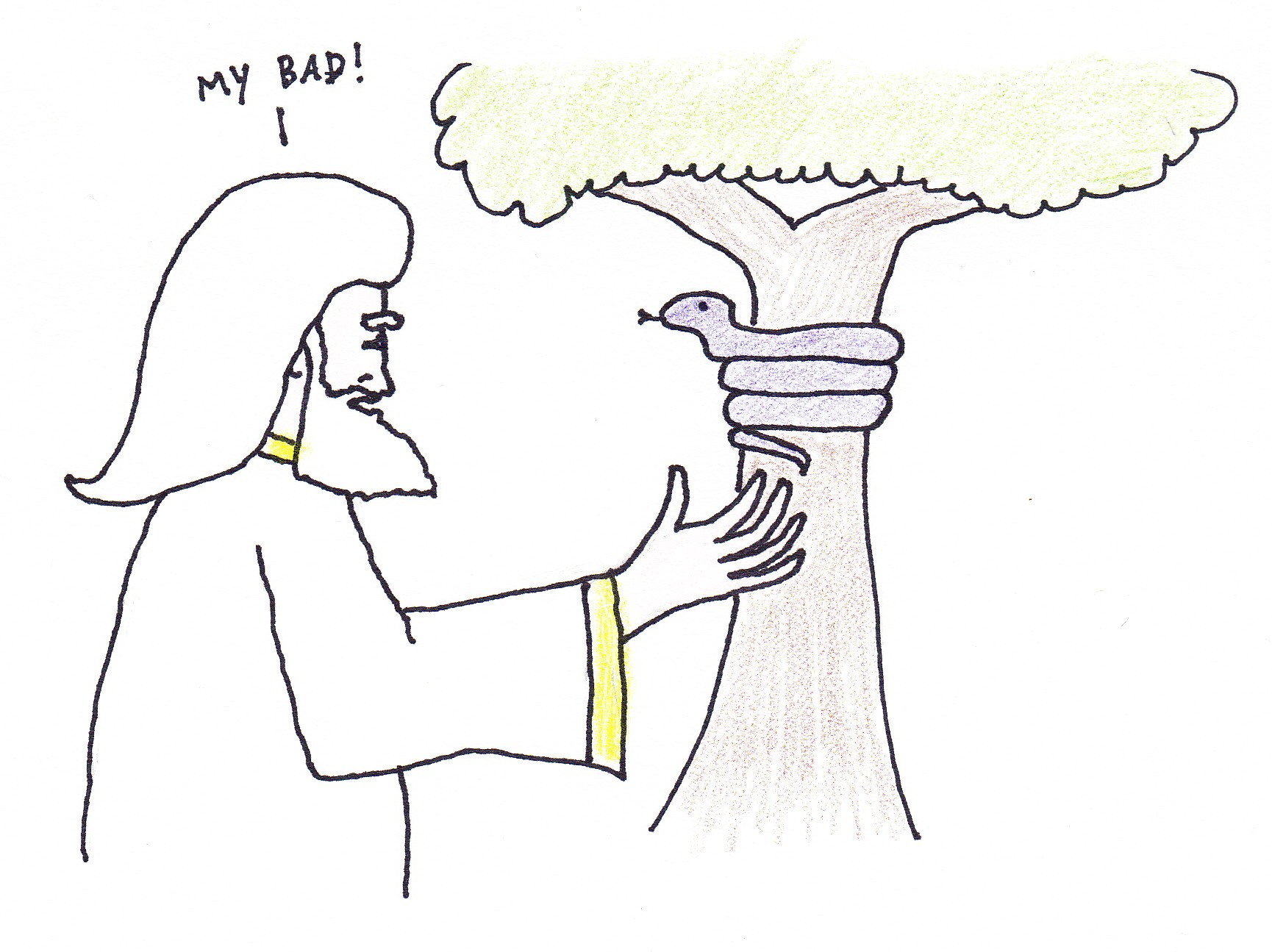
Now the editing of the Bible was never undertaken with the intention of creating uniformity, despite the railing of Fundamentalists. There are plentiful internal inconsistencies and disagreements. We should expect no less of a book written over a period of about a thousand years by several different writers grappling with life’s big questions. Inevitably students ask about the Garden of Eden. Genesis 2.17 has Yahweh state that newly created people must not eat of the “tree of knowledge of good and evil (ra‘).” Here the evil grows on a tree. Who planted that tree? It’s like blatantly laying the keys before your teenager and saying, “now don’t take the car.” Who is the source of that tree? (And, less frequently noted, the eating of the fruit in Genesis 3 is never called “sin.”)

The quintessential problem with a compilation is lack of uniformity. This did not bother ancient people as much as it does modern Fundamentalists. One reason is that many people equate the Bible’s value with it being a book that has all the answers from a single viewpoint. This the Bible lacks. According to the Bible there are various sources of evil. According to a strict monotheism (late in the Hebrew Bible) there can only be one. Enter the devil. To save the goodness of God a Zoroastrian anti-God had to be introduced. But the devil must stand in line to make his patent claim on evil.


Agenda in Pink

One advantage of the technological revolution is that it is a lot easier to look things up in the Bible now. As a biblical scholar who cut his teeth the hard way by reading and rereading Holy Writ until great swaths were committed to memory, now I find it much easier to visit BibleGateway.com rather than haul out the old print concordance and crack my knuckles before straining a muscle to lift the thing. The other day while looking up a passage for class on BibleGateway, I saw an advertisement that made me cringe. Zondervan, owned by Rupert Murdoch’s News Corporation, is now offering a “Precious Princess Bible.” I did a literalist double-take at the banner. My imagination began to spin: does this edition offer all the misogynistic passages in pink letters? Should not the owner of all FOX News do all that is possible to keep women in their place?

Even a short list will serve to make the point:
Exodus 21.7: And if a man sell his daughter to be a maidservant, she shall not go out as the menservants do.
Leviticus 27.3-4: And thy estimation shall be of the male from twenty years old even unto sixty years old, even thy estimation shall be fifty shekels of silver, after the shekel of the sanctuary. And if it be a female, then thy estimation shall be thirty shekels.
1 Corinthians 11.3: But I would have you know, that the head of every man is Christ; and the head of the woman is the man; and the head of Christ is God.
1 Corinthians 14.35: And if they will learn any thing, let them ask their husbands at home: for it is a shame for women to speak in the church.
1 Timothy 2.12-13: But I suffer not a woman to teach, nor to usurp authority over the man, but to be in silence. For Adam was first formed, then Eve.

The Bible is hardly a tome to affirm the “precious princess” concept that many modern parents believe they are fortunate enough to claim. No matter how much we candy-coat it, this is salvation with a double standard. One of the truly remarkable aspects of Christianity is the number of women who adhere to it despite the secondary status the foundation document lends to them. Despite a few harsh words, Jesus is depicted as treating women well. But the Bible tantalizingly refuses to tip even his hand in favor of feminism. The Bible is a man’s world. I am personally awaiting the He-Man Combat edition. It would fit many parts of the Scriptures remarkably well.


In the Name of Hate

Saint Valentine’s Day: a minor holiday that no one gets off work or school, but which has both naughty and nice aspects to it. A day with long pre-Christian associations (sorry St. Valentine), the celebration has become an icon of love in the Hallmarkian holiday world. It is a welcome change to the weariness of winter that drags on around the northern hemisphere, reminding lovers and curmudgeons alike spring is on its way. A holiday of hope.

At the same time, an editorial in Saturday’s New Jersey Star-Ledger raises the ghosts of less pleasant times. The Mississippi Division of Sons of Confederate Veterans is attempting to sponsor state license plates honoring General Nathan Forrest, first Grand Wizard of the Ku Klux Klan. While pointing out that Forrest eventually distanced himself from the movement, state officials want to acknowledge his contribution to their state’s history. License plates advertise to the nation as a whole what states uphold as their most attractive traits. In a world where the Klan is still seething under the surface, with active groups in nearly all states, it is not hard to see that hate can not lead us forward. It has failed in the past and it has no hope of success in the future.

Among the most distressing, if not revealing, features of various hate groups is their outspoken adherence to “old time” Christianity. Religion is but one tool in their arsenal, but what makes it so deadly is that even “peaceful” religions such as Christianity have a violent heritage. The Bible can be used to justify genocide as well as rescuing the widow and orphan. Christianity has a long history of being used for political, often hateful, ends in America. It is a trend that is dressed up in its Sunday best for glib talk-show hosts and windbag politicians who claim that “old time” values (read “white privilege”) are what America needs. Do we really need more hate? It’s Valentine’s Day. Let’s give it a break on the rhetoric of hate for at least a day. Who knows? It may become a habit.