What Would Noah Do?

Unfortunately, religion and politics do mix. A story on POLITICO.com announced on Wednesday that the House Energy and Commerce Committee chair hopeful, Rep. John Shimkus has declared Genesis on the side of conservatives. Stating that the Noah myth (not his exact words) promises God won’t flood the earth again, Shimkus claims we have nothing to fear from global warming. In a twist that makes some of his fellow conservatives squirm, Shimkus admits global warming is a reality but suggests that we really don’t need to worry about it because “the Bible tells me so.” Time for Shimkus to go back to Sunday School.

Part of the problem lies in the concept of Bible itself. The Hebrew Bible isn’t too much of a self-referential work, claiming to be pure words of divine gold. Paul, on the other hand, found the Hebrew Bible useful to cite against enemies, and his admirer who wrote letters to Timothy in his name took the idea even further. For all that, the Bible wasn’t finally settled on for a couple more centuries. Once the concept took hold, however, the world could never be the same. A book written by humans had become direct revelation from the word of God himself. The Bible makes few such lofty boasts about itself, but its less conscientious followers are not nearly so shy. As I demonstrate repeatedly in my classes, the Bible has become a magic book.

Politicians now feel comfortable claiming God as their ally because “he said so.” Without having ever critically engaged Scripture, or even having read it in its original languages, those in positions of public trust know enough to flaunt it. And it always scores points with Americans. Liberals fear the ramifications of using the Bible while Neo-Cons charge bravely ahead to places Noah himself would fear to go. Maybe it’s time to put the Bible back in the schools. Only this time it should be taught by people who realize that the Enlightenment has taken place and that we can’t rely on magic to save us from dangerous situations we ourselves have created.
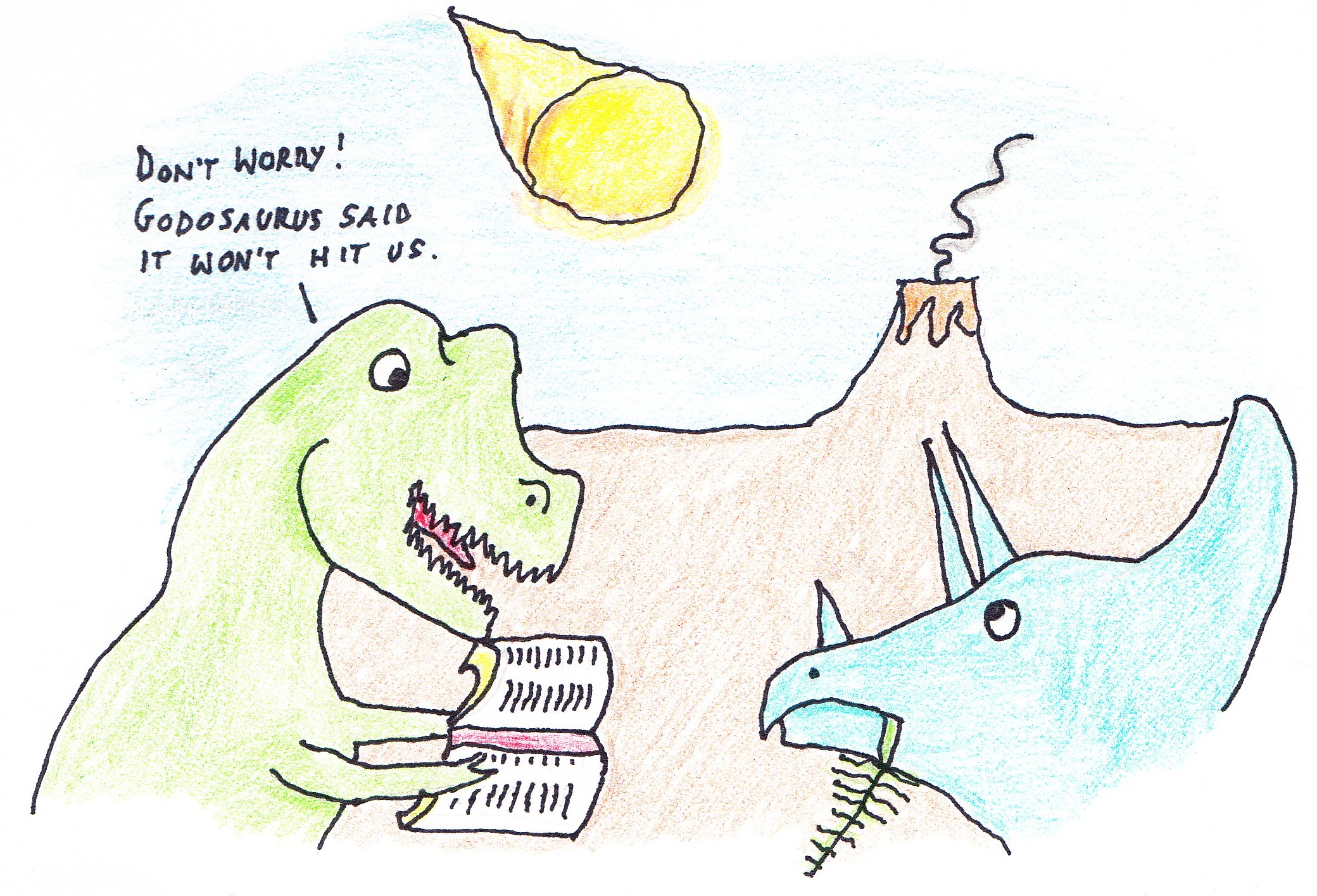
The lesson from the Cretaceous Period

Bible, Bible, Who’s Got the Bible?

Rutgers University boasts a truly diverse population. In my fourth year as an adjunct in the Religion Department at the New Brunswick campus, I am continually reminded of the religious and cultural mix of the human race. As I began my twelfth section of Introduction to the Hebrew Bible last night, it occurred to me just how tight a grip Christian-based publishers have on the Bible. I generally spend my first class session on defining the Bible since many students enter such a course (and it is always full) with notions of what the Bible is. In fact, “the Bible” is a difficult document to define.

Binding a book together indicates that what is between the covers belongs together. This is almost a subconscious fact that we pretty much take for granted. If a publisher put all of this in the same place, it must belong together. For the general consumer market, that translates into Bibles that contain the Hebrew Scriptures and the Christian Scriptures. This mix of 66 books satisfies most customers in the United States and Canada, but the Catholic reader expects some 13 additional or expanded books in her or his Bible. Jewish customers expect somewhat less, with 27 books normally in “the Bible” being specifically placed there by a later, revisionist sect. Orthodox Christian Bibles may add or leave out a book or two, depending on the tradition.

The irony of this situation strikes me as we have Bible-thumpers constantly appearing in the news. Their well worn, black leather King James Versions are “the Bible.” For them. Their message to the American public: we must get our lives back in line according to (my interpretation of) this book. What of those in this country who have fewer or more books in their Bibles, or, Yahweh forbid, completely different scriptures? Is there no room in a nation of religious liberty for them? I have a modest proposal. For the politicians who want their Bible to drive our society, stop by my class at Rutgers sometime. I am always glad to see the diversity. And it shouldn’t be too hard to find a section to fit in your schedule – I teach four sections of the class throughout the year, including summer and winter terms.


Woeful Wisdom

“There is a wisdom that is woe; but there is a woe that is madness. And there is a Catskill eagle in some souls that can alike dive down into the blackest gorges, and soar out of them again and become invisible in the sunny spaces. And even if he for ever flies within the gorge, that gorge is in the mountains; so that even in his lowest swoop the mountain eagle is still higher than other birds upon the plain, even though they soar.” Herman Melville takes the credit for this passage. It is one of the many pericopes that make Moby Dick the greatest book ever written. Those who know me only as a biblical scholar may be surprised to read that, but I invite anyone who has ever instantly fallen in love with 1 Chronicles 1-9 to reply and argue the point.

Although Moby Dick has fallen into the provenance of books that are kept alive only by required high school and undergraduate required reading lists, this novel still comes back to me at many points in my life and fractured career as both a solace and a warning. Melville was clearly a man tormented by his search for meaning. He drew heavily on the Bible for Moby Dick, likening Ishmael to Ecclesiastes at one point, and the whaling haunts of New Bedford to tophets. To appreciate Moby Dick deeply, one must be familiar with the Bible.

Is this the Bible, or what?

Considering the great changes that are taking place in society, I often wonder if we have reached a breaking point. In my university life, I see students absolutely frantic to achieve an A in an easy class, one that would not have broken a sweat in my undergraduate days. Their anxiety is real; grade inflation has forged the B into the new D, or F. Yet these same students know nothing of life apart from the internet. In times like these, I betake myself to the Catskills, and with Melville, turn my eyes upward, seeking madness.


Star Trek Paradise

I am not now, nor have I ever been, a Trekkie. I did watch the reruns of the original series after school on our black-and-white television, but I have never owned “Spock ears” nor does my cell phone look like a communicator. To the best of my recollection, I haven’t even seen all the episodes. I’ve mentioned before that some generous in-laws purchased the first season of the series for a gift last year. Since then my wife (a convenient excuse) has been interested in watching the remaining two seasons. We found a reasonably priced second season set and have been working our way through over the weekends of the summer.

Paradise-busters?

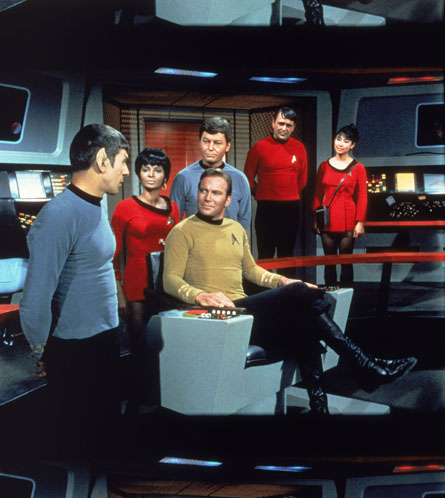
This weekend we watched the episode entitled “The Apple.” Even a fair-weather Star Trek watcher such as myself can’t help but notice that the series as a whole is biblically literate. Biblically literate, however, only in a popularist way. This became clear once again in “The Apple.” Stranded on a planet modeled after a troubled Garden of Eden, Captain Kirk and his landing party soon must destroy a serpentine “god” that keeps the luau-ready inhabitants in a state of perpetual ignorance. Diametrically opposed to Eden where it is the serpent who tempts with knowledge, this is a serpent that tempts with ignorance. Long, pleasant life without intellectual development and the “god” receives daily sacrifices. A world of status quo.

Back on the Enterprise, Kirk points out that the only one on the ship that bears resemblance to the Devil is, by implication, Spock. This is where the popularist interpretation grates most heavily. The Genesis version of Eden has no Devil, no Satan in it. Only a much later, revisionist re-reading, (certainly post-Zoroastrian) equates the snake with Satan. Genesis does not condemn the acquisition of knowledge. It comes with pain, true, but that is simply the way life is. Perhaps it would be easier for us all if some great Kirk might vanquish the inhibiting serpents of our apotheosis, but that’s simply not the way life works. In this instance, the Bible trumps Star Trek.


I Think, Therefore I Believe

This week in Time, an article by Jeffrey Kluger explores the intelligence of animals. Quite apart from many examples of how bonobos can string together relatively complex concepts using symbol cards (thus evidencing more intelligence than New Jersey’s current governor), the article demonstrates that many animal species display what we would recognize in other humans as intelligence. The article then develops the corollary that if animals think then perhaps they sense emotion as well. Having raised my daughter on Kratt’s Creatures and Zoboomafoo, none of this was new to me. I may be no scientist, but watching closely how animals behave, it has always been obvious to me that we are more like points on a continuum rather than a “special creation.”

Not to put too fine a point on it, this is what lies behind the human obsession with its non-animal status. As Kluger states, “For many people, the Bible offers the most powerful argument of all. Human being were granted ‘dominion over the beasts of the field,’ and there the discussion can more or less stop.” Unfortunately for our animal companions, the use of the Bible to repress others does not stop at human beings who don’t share your religious views. Many use the Bible as an excuse to do as they please to creatures who demonstrate similar emotional responses to people in similar situations and who, increasingly we realize, also think. Kluger’s article opens with an interview with Kanzi, a bonobo. One of the inevitable conclusions is that this great ape is able to think ahead and make plans. Evolution on this point has apparently skipped many Neo-Cons.

For years I have been telling my students that animals display behaviors that we label as “religious” in humans. The difference is that we are able to ask other humans what they are thinking and thereby gain somewhat direct access to their thought process (if they are telling the truth). Because we fail to share language with animals, we assume we are superior thinkers. To me this does not stand to reason. Animals are as fully members of this planet as humans are. Our desire to exploit them is more a reflection of human dominionist tendencies than a reflection of their lack of intelligence. We may even have animals to thank for the basic tenets of religious thought since religions are better described as evolved than revealed.

Maybe not the best sign of animal intelligence, but consider the Neo-Cons...


Lost Apocalypse

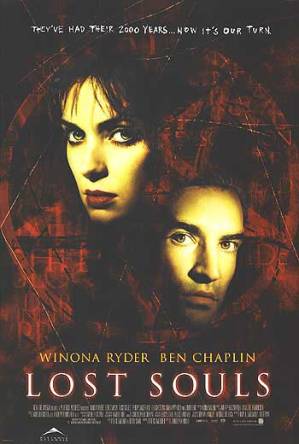
The Bible has many eminently quotable passages. I suspect that is one of the reasons it has the staying power that it does. Many critics of the theologies spun off by the Good Book have turned their vitriol toward the Bible itself, but I believe such hostility to be misplaced. Not everyone enjoys reading the Bible – that much is true for any book. The Bible, however, is foundational for not only our society, but the entire western literary tradition. Its influence on Shakespeare alone, who has, in turn, influenced just about every writer since the seventeenth century, underscores its literary importance. That’s why I’m always surprised with film-makers use concocted verses from the Bible when actual passages would produce the same effect. Granted, few Bible scholars comprise movie audiences and producers and directors seldom worry about writing the story for them. Last night I watched the “horror” film, Lost Souls, released in 2000. I’d read about the movie in Douglas Cowen’s Sacred Terror, so I wanted to see how it rated.

The movie begins with a false Bible quote: “… A man born of incest will become Satan and the world as we know it, will be no more. Deuteronomy Book 17.” Now granted, the movie failed to rock the critics, but the sheer weight of errors from pre-scene one should be the first warning to start from a better script. Beginning with an ellipsis for dramatic effect may be acceptable, but it serves no purpose – and what’s with the misplaced comma? A man born of incest in Deuteronomy is a non-starter because his potential parents could only be found dead, crushed together under a pile of hurled stones before the unfortunate could even be born. Satan as a devil is never mentioned in the Hebrew Bible, let alone Deuteronomy. Deuteronomy is almost never quoted by apocalypticists since it does not predict the end of the world, and Bible books are divided into chapters, not “books.” Well, the biblical illiteracy of Hollywood may be overlooked for a good story, but this is no such thing.

Lost Souls fails on the premise that a biblical “literalism” (and that is only if certain Evangelical interpretations are given unwarranted credence) about the coming of an Antichrist should be shored up by a fabricated quote from the Bible. I’m not trying to be a movie critic here, but a cultural one. The whole “end of the world” scenario held by many Evangelicals is a hodge-podge of biblical verses brought together by clever nineteenth-century clergy with little exegetical training. It is like trying to connect the dots while having to change pages constantly. The idea caught on amid the discarded lives left behind by advancing industrialism and the perceived threat of evolution. Apocalypticism has become its own industry as some otherwise unknown writers can attest. Movies like Lost Souls, or even The Omen, however, pale when compared to the antics of religiously motivated apocalypticists in the real world. Some of the rules in Deuteronomy itself are more frightening, if better written.


True Colors

Over the past year several colleagues have urged me to join Facebook. To put this in context, I am one of those dinosaurs who made it through a Master’s program without having touched a computer – all theses and term papers were typed on a typewriter. It was only with the sheer volume of written material for my doctorate that I finally gave in to the technological revolution. Since then I’ve been sucked further and further into it, always a little bit reluctantly. When I read I like to have a book or magazine or newspaper in hand. When I communicate, I prefer a conversation to an electronic chat. Well, there are advantages to the technological world, but Facebook seemed a little too much. Caving to pressure, however, I eventually gave in and became a Facebooker.

One of the things I’ve learned from the daily updates of people – many of whom I’ve not seen since high school – is just how religiously conservative many of my friends are. I get daily, sometimes hourly, news updates about what the Lord is doing. He’s a pretty busy guy. Sometimes these friends look at my blog and wonder what has happened to me. When they ask, I have to wonder how deeply down the rabbit hole do they really want to go. I’ve been a professional religionist for nearly 20 years now – unfortunately several of those years have not included regular employment, but the work it took to get here can’t be undone – and prior to that I spent nearly 10 years in school studying religion. Anyone who makes it through an advanced degree in this field and comes out with the same viewpoint as when they entered it has had their mind firmly closed all along.

Religion is a phenomenon that can be studied, just like pottery or fashion history. Once a genuinely open mind is brought to it, perspectives begin to shift. Some of my friends who are less gracious about this respond by quoting the Bible at me, as if I’ve somehow learned how to forget the Bible while earning a Ph.D. in it. What they don’t realize is that if you want to learn about your religiousness in any serious way, there will be several Rubicons to cross and some pithy snippet from Paul is not going to change that. I don’t use Facebook to announce my religious thoughts to the diverse body of “friends” on my account. I use this blog for that. Those who are truly curious about religion might learn something from someone who’s been in the biz for nearly three decades. Others are content to announce to the world what the Lord is doing through Facebook.


Sharks and Apostles

There are sharks in the water. For the third day in a week, some New Jersey beaches have restricted access to the ocean because of sharks. As a particularly hot July trundles along, this is not really welcome news. Also yesterday, the Vatican codified revisions to its clergy sexual abuse crisis. According to an Associated Press article in the New Jersey Star-Ledger, women’s ordination groups are angry because sexual abuse and the ordination of women are classed together as crimes against the church.

Venus of Willendorf

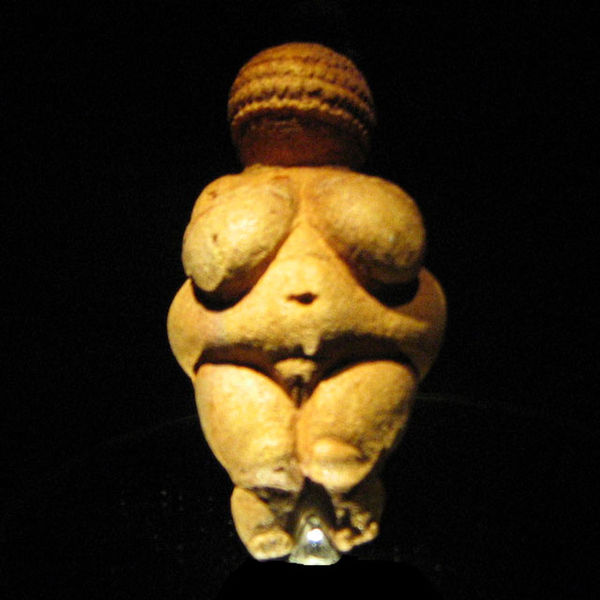
Even before civilization began, it seems, religion and sexual dimorphism were tied together. Beginning back 35,000 years ago Paleolithic humans carved female figurines. In a hunter-gatherer society where struggle for survival was the best paying job available, the execution of such objets d’art in a brutish, hostile environment reveals religious sensitivities. Stone Age humans knew something that organized Christianity forgot within its first century: sexuality is never far from religion. The Bible itself, particularly the Christian Scriptures, emphasize that celibacy is a putative gift, not something that can be learned or forced on someone. In typical Roman fashion, however, the church quickly mandated celibacy as the norm and ruled that women were the source of evil.

Nothing could be further from the indications of both Paleolithic remains and scientific thinking. Women, long the source of spirituality, were now cast aside in an arrogant aberration of earlier practice. Largely based on the angry writings of one man, the church decided that men alone should determine the eternal fates of others. Masculine men who knew self-control and who could turn off millennia of evolutionary pressures by a sheer act of will. Centuries later, and the Vatican with its own Pontifical Academy of Sciences, the church still can’t get beyond basic reproduction and sexuality issues. I would go to the beach to try to think this one out, but there are sharks in the water.


Wasting our Breath

The internet is alive with the sounds of musings about the appropriateness of various types of scholars doing biblical research. The discussion revolves around a recent article by Ronald Hendel in Biblical Archaeological Review, a useful, if sometimes overeager, magazine. In it Hendel laments the policy of the Society of Biblical Literature, a professional group to which I have belonged for nearly two decades, of accepting overtures from evangelical groups in return for money they are able to bring in. The Society’s web page has a rebuttal and has invited discussion. I prefer to give my views on my blog – a place that I consider neutral territory.

I am not privy to the inner workings of the SBL. I have served as a chair of one of the program units in the annual meeting for several years, but I do not pretend to know the politics behind the scenes. I joined the society, like most young scholars, to find a job. Since that has never happened I have not become more deeply involved since I have no institutional base. It is clear, however, that over the past years conservatively motivated groups have felt an assonance with the Society, given that it is the gateway to academic respectability. The problem is that conservative/evangelical groups approach the Bible with doctrinal shackles firmly locked in place. Fearful of angering their image of God, there are questions they simply can’t ask. Secular or unaffiliated scholars are free to go wherever they believe the evidence leads. In the job market, the evangelicals are better placed to find work. In the wider academic world, however, their work is suspect.

Little did I realize as I laboriously worked away on my dissertation that many evangelical scholars flock to the field of ancient Near Eastern studies, providing, as it does, a way to avoid critical interaction with the Bible. They may thus become “Bible scholars” while leaving the confessional virgin Holy Writ intact. I entered ancient Near Eastern studies to get to the bottom of it all – to explore the origins of the Bible itself. All of us end up interviewing for the same jobs.

At the end of the day what it comes down to is an issue I’ve addressed before: who has the right to interpret the Bible? The answer often distresses scholars. It does not require a Ph.D. to read and interpret the Bible. Most times an advanced degree is a decided liability. A friend has recently pointed out that scholars write for scholars, intent on demonstrating their erudition while losing all public credibility. I’m not sure where the debate will end, but when it’s over not a ripple will be felt among the general public. The Bible will continue its reign in American society unchallenged.


Bible Experts All

I seldom write follow-ups to my own blog posts – I’ve always found self-referential academics somewhat distasteful, and besides, what is creativity without some variety? Nevertheless, it seems that yesterday’s post has garnered a bit of interest in the disaffected outlook of a self-professed biblical scholar. (Actually, I have three “higher education” diplomas rolled up neatly in tubes in some untidy closet that show that some universities also accuse me with this charge.) Perhaps I need to clarify.

When reading a blog post, it is very difficult to determine the position of a writer’s tongue in relative proximity to his/her cheek. (Those with eyes to see, let them hear!) The subject might be funny if it weren’t so deadly serious. Despite my reservations with Christopher Hitchens, Sam Harris, and Bill Maher, they have all underscored a vital point – biblical literalism is very dangerous. This is even more so the case when, in their own minds, all people are Bible experts. We attend school and learn to read. Some learn to read more deeply than others, yet all “know what the book says.” There is no way to dispute that belief. Belief is belief, requiescant in pacem. Some commenters wondered why the opinion of “Bible experts” should matter at all.

When I’m feeling ill, I would prefer to ascertain the opinion of someone who has actually earned a proficiency in human physiology. When the car breaks down (again), I prefer to have someone who understands machines well as the repairer. When many, many people want to know what God doth require of thee, they turn to individuals who have not been thoroughly trained in Bible. I taught in a seminary for many years, and as an administrator, became quite familiar with the accrediting requirements of the Association of Theological Schools, the nation’s main seminary accrediting agency. I may unequivocally state that few seminarians emerge as full-fledged Bible scholars. Some “denominations” do not require any seminary training at all. So when your spiritual life breaks down, most folks head to an “expert” ill-equipped to handle the Bible, a homeopathic (no slur intended) literary diviner.

Purely from my own perspective, I would prefer to know what the Bible, in its own context, language, and words, is more likely to have meant. Delusions and all. Can’t buy that at your local church, with rare exceptions. That is the role of the humble Bible expert. As with any field of study, it is obvious when you have found a true expert. Such a one will readily admit that she or he has more questions than answers.


Suddenly the Bible

Universities are generally reluctant to hire Bible faculty (except in the case of “Christian” colleges where Bible faculty must be a particular brand of “scholar” who has already decided the case before the evidence is presented). The stock reason given to department heads and deans is that religion just doesn’t make money. Universities thrive on the income from science grants and wealthy business and finance donors who want buildings named after them. Religion, it is claimed, doesn’t bring in money. The real problem is that universities don’t know how to market religion.

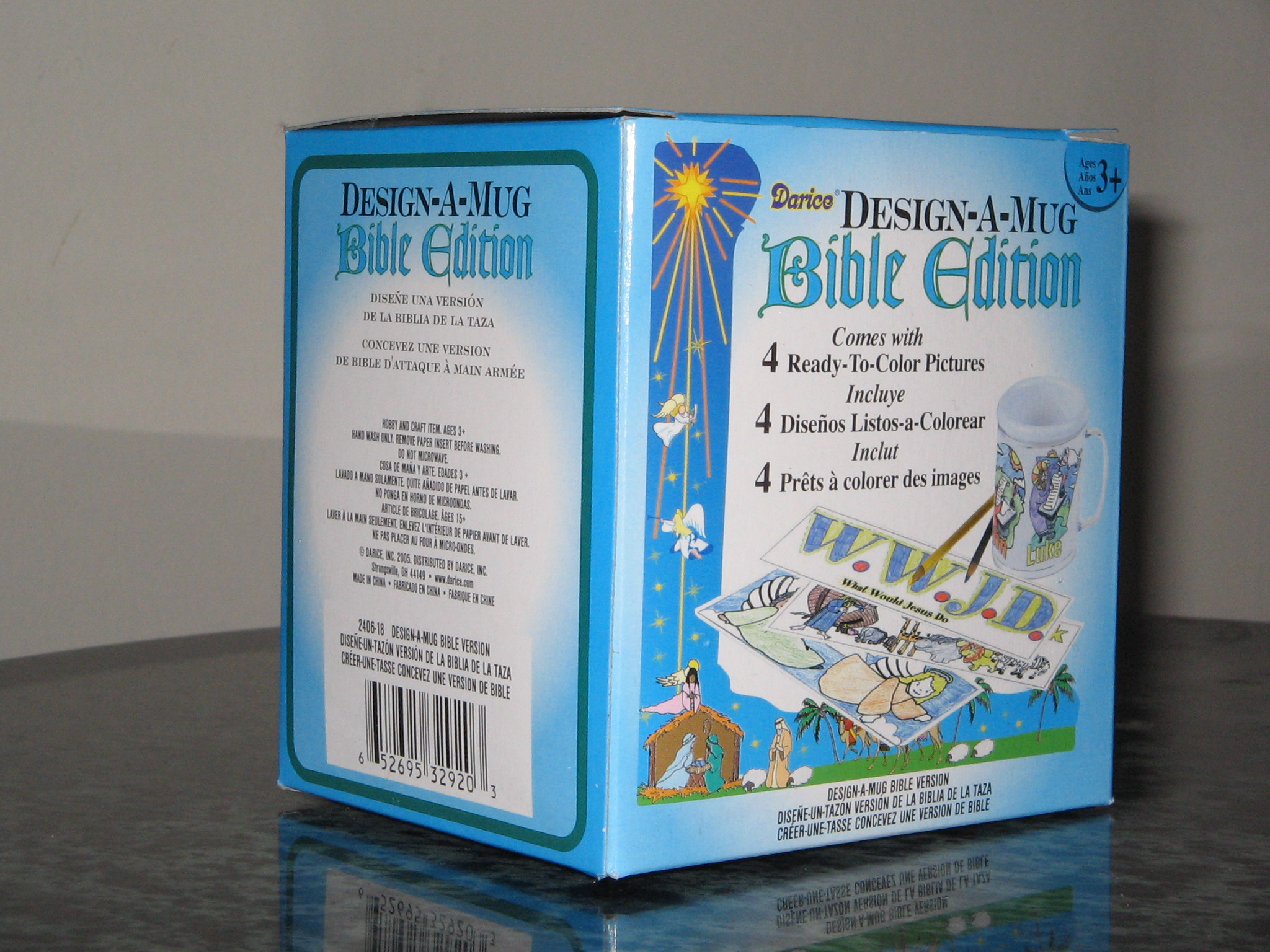
The other day I visited the local craft store to pick up supplies for a project my wife is working on. While in line I spotted this novelty item:

God in a box?

The shelf was full of them. When I returned later in the week, the supply was severely diminished. Someone had reasoned, correctly, that by putting a cheap length of paper-roll with “biblical” designs printed on it in a kit for making a throw-away mug, it would sell. Obviously universities and colleges couldn’t stoop to such a level, could they? Isn’t it far more respectable to draw your finest students into a mega-stadium to watch guys in tights throw around a fake pig-bladder and emerge drunk enough to vomit up all the costly snack foods they purchased? This is, after all, where the leaders of tomorrow are formed!

While looking up a troublesome word I can’t spell in an online dictionary, I was intrigued by this promotional inset (click to see). All I had done was type in a word on the Merriam-Webster site (it was not a biblical word), and when the answer popped up, so did this self promotional add for “Kiss of Death, Feet of Clay: Words From the Bible.” I don’t pretend to know how online advertising works, but it was clear that Merriam-Webster wanted the cyber-visitor to linger on their site, and the Bible was an effective way to achieve this.

The Bible is all around us. It would be difficult to nominate any other icon that would better illustrate American social self-consciousness. So immediately the sophisticated academic shuns it. Those of us who’ve put our lives into trying to understand the Bible phenomenon are deemed useless as money-makers while our counterparts in marketing and sales laugh biblically all the way to the bank.


LOL Cat Bible Commentary, Part 1

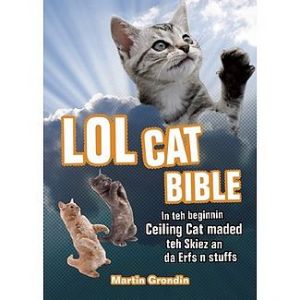
It was bound to happen. Here is the first installment of the LOL Cat Bible Commentary.

Genesis 1.1 Oh hai! In teh beginning Ceiling Cat maded teh skys an teh Urfs, but he no eated them.

In teh beginnin
In teh beginnin ub teh dai — Ceiling Cat nawt wurk at nite, cuz datz wen
Basement Cat come owt to do ebil stuffz.
Ceiling Cat
Ceiling Cat writed da Bible. He’z the mos smartess an strongess kitteh ever. An him reely good — he no eat other kittehs fud, an he nebber jumpz on another kitteh in da middul ub teh nite (but for hoomuns dis ok).
maded teh skys
But first him taked a nap. Den Ceiling Cat maded teh skiez so him had place to liv. An den him putted a hole in da ceilin so him kood peep down on teh Urfs. Wait, him nawt maek teh Urfs yet! Ai sowwy, plz to furgive? Kthx.
an teh Urfs
K, nao Ceiling Cat maek teh Urfs. Urfs is where the hoomuns howse iz.
Ceiling Cat no maek teh udder Urfs, jus da wun wif da howse.
but he no eated them
Ceiling Cat can has a hunger after awl taht wurk, Aifinkso! But him no eated teh skiez, cuz den him fall owt, an den dere no moar kittehz to wurk on da Urfs. An him no eated teh Urfs howse, either. Him wanted to maek teh birdiez an teh moal an teh fishiez. An him also want to maek teh hoomuns for to maek his fud.

1.2 Teh Urfs has no shayps an has darwk fase, an Ceiling Cat roed invisible bike ovah teh wawters

Teh Urfs has no shayps
Cuz Ceiling Cat nawt evur maded a Urfs befoar. Him not no wut Urfs shayp iz!
an has darwk fase
Ceiling Cat can to seez in teh darwk, but dere nawt eny shayps to seez. The Urfs has dawrk fase liek teh howse wif no elec…elek…elekt…wif no lytes.
roed invisible bike
Liek him wuz dreemin. Invisible bike is hawrd to be finded in teh dawrk, but Ceiling Cat maded it an him finded it.
ovah teh wawters
Ceiling Cat nawt liek to get him feetz wet, so him no rided teh bike thru taht wawter. Wawters has see monsturs an stuffs.

1.3 At furst, has no lyte. An Ceiling Cat sez, “I can has lite?” An lite was.

At furst, has no lyte
Ceiling Cat nawt need lyte, but him noes taht hoomuns will to need lyte for to maek noms.
An Ceiling Cat sez
Ceiling Cat has to tawk to himself cuz of monokittehism. No udder kittehs arownd yet, not ebben Basement Cat.
I can has lite?
Ceiling Cat reely wanted a cheezburger. But him needed a hoomun for to maek cheezburger. So him has to maek teh lyte for to get noms.
An lite was.
Nao him can to see howse an da Urfs he maded. Den him maded lolz an udder stuffz, but first him taek moar napz.

(Translated into LOL Speek by the world’s greatest CATS! Fan Kthx)


Thoughts Off de Waal

Although Frans de Waal’s Our Inner Ape was published half a decade ago, the monograph remains terribly relevant. I gave some primary impressions of the book last week, but one section has remained firmly in my head and has mingled with all the harsh rhetoric in the news about health care reform in the United States. Asking the question of whether Homo sapiens are still evolving biologically, de Waal withholds his final opinion on the matter, but he points out that statistics indicate Americans are falling behind much of the rest of the developed world in terms of general health. This he ascribes to the competition inherent in a free market economy that favors the best health care only to the wealthy while the average citizen is offered substandard options. The numbers bear him out on this – he notes that on the standards utilized to measure general health, the United States is not even in the top 25 industrial nations.

With the conviction of a true prophet, de Waal notes that privatization of health care has led to a precarious imbalance in medical care in the United States, where the top 1 percent of citizens has more income to spend than the bottom 40 percent combined. This, he believes, is because we have lost sight of the altruism inherent in apedom. Although the great apes are endangered (ironically, by their overly greedy genetic cousins) their societies show no such disparity. An ape family will assist a weakened or feeble member and give it extra care to ensure that it is offered a life as comfortable as possible. They do not discard the fragile and “expendable” members. Republicans, however, wave placards trying to shout down basic health coverage for the poor.

Does biological evolution continue among the human species? Have we stopped natural selection’s eternally ticking clock? Only time will tell. It does seem, however, that the very Bible pounded by the Religious Right (health care reform’s greatest opponent) would argue that the apes got it right. We should care for the poor, disadvantaged, and underrepresented. While the Tea Party belles are busy trying to rewrite history with America founded as a Christian nation they daintily wipe their mouths on the pages of the very book they treasure so deeply and claim as their authentic heritage.


Bibles and Dolls

To celebrate my wife’s birthday, yesterday we drove to the historic Bucks County Playhouse in New Hope, Pennsylvania to see a show. The Playhouse has an illustrious history, having hosted performances including such players as Kitty Carlisle, Lillian Gish, Bert Lahr, and Robert Redford. We went to see a production of Guys and Dolls, the musical based on characters and situations penned by Damon Runyon. (My first introduction to Runyon, I must admit, was in the Alice Cooper anthem, Department of Youth.) Although we attended a performance of the musical back in the Edinburgh Fringe Festival a couple of decades ago, I’d forgotten how much the Bible moves the plot along.

Naturally, any love story that involves a Salvation Army cadet will have its religious conflicts, but it is Sky Masterson’s knowledge of the Bible that drives Sarah Brown to first give him serious attention. Without the arresting power of the Holy Bible, the love interest would never have sparked. As I frequently tell my students, without some knowledge of the Bible, American society just can’t be understood. Even Sky Masterson’s real name is Obadiah (“servant of Yahweh”).

Damon Runyon was anything but a saint. His lifestyle was diametrically apposed to that envisioned by his fictionally pure Sarah Brown – a heavy drinker, smoker, and perhaps womanizer, he was a friend of crime bosses and a noted gambler. But Runyon, like most Jazz Age Americans, knew his Bible. One of his famous phrases derives from the book of Ecclesiastes: “The race is not always to the swift, nor the battle to the strong, but that’s how the smart money bets.” From the quiet streets of an artsy hamlet in Pennsylvania to the glitzy lights of Broadway, the Bible still makes itself known. The smart money is on the one who learns to spot it.

An unorthodox sort of prophet


Not My Cup of Tea

The cutesy and puckish title of “Tea Party” is intended to sound whimsical among a group of political activists who lack imagination and creativity. They wear biblical-sized blinders that block out all enlightenment, trying to appear trendy and radical when what they really want is a return to the Dark Ages. Trying to make turning the clock back on progress chic and sexy, they stand for old-fashioned selfishness and the preservation of privilege for those who deserve preferential treatment – others just like them.

They grab headlines and limelight. So diametrically opposed to the progress that the real Tea Party (in Boston, 1773) strove for – progress against the privileged and mighty holding down those at disadvantage, the Tea Party movement seems to have convinced the media that it is worthy of their absconded moniker. Once again the Bible finds itself slave to an outlook. Ironically, Christians who look to the Bible as an unchanging anchor in modern society have no desire to return to the dietary restrictions and apparel requirements of yesteryear. They do not comprehend the vast gulf in morality outlooks that separate flat-earthers from space-age technocrats. A disconnect that would short-circuit the most robust processor drives their fantasy-world desire for a yesterday than never really existed.

What can a concerned biblical scholar do? Is it possible to force a conscientiously willful party that disregards facts and history to face reality? Perhaps the response should be that of the eighteenth-century Bostonians: board their ships of privilege and jettison their valued cargo utilized to create and uphold a system of abuse. Should that happen, we would soon see front-page pictures of Boston Harbor bobbing with saturated Bibles.

Mutiny on the Bountiful?