From God’s Mouth

If book banners would actually read the book they claim to protect, the Bible, they would run across the account of Jehoiakim and Jeremiah.  It’s in Jeremiah 36, if you care to follow along.  Jeremiah was not a popular prophet.  In fact, he was often in trouble for speaking what God told him to say.  He wasn’t wearing a “Make Israel Great Again” cap.  In fact, his message was that the kingdom of Judah had to fall in order to be restored.  So in chapter 36 he dictates his message, straight from God, to Baruch, his secretary.  Baruch reads the words in the temple and this comes to the notice of the royal staff.  They arrange for a private reading and it scares them like a good horror novel.  One of them reads the scroll to the king, Jehoiakim, who cuts off a few columns at a time and burns them in the fire.

My favorite part of this story has always been the coda: “Then took Jeremiah another roll, and gave it to Baruch the scribe, the son of Neriah; who wrote therein from the mouth of Jeremiah all the words of the book which Jehoiakim king of Judah had burned in the fire: and there were added besides unto them many like words.”  Many like words.  So we have book banners around the nation trying to stop children from reading.  The hope is they will become unreading adults because reading expands your mind.  Jehoiakim was a book banner—a book burner, in fact.  But the response from God himself is to write the whole thing over and add many similar words.  

The Bible has been, and still is, fairly constantly abused.  What it seems to be is unread, at least by those who use it to stop other books from being read.  I came to believe, while majoring in religion in a conservative college, that if literalism was truly from God there would be no way to stop it.  I took a route unlike my classmates, who tended to go to the most conservative seminary they could find to have their minds further closed.  I figured that if it was true then testing it by reason couldn’t hurt it.  It’s pretty obvious the way that turned out.  I don’t stand with book banners.  This is Banned Book Week.  Read a banned book.  Stand up to those who do the banning.  And if you need something to convince them that their tactics don’t meet with divine approval, point them to Jeremiah 36.


Dictionary Dreams

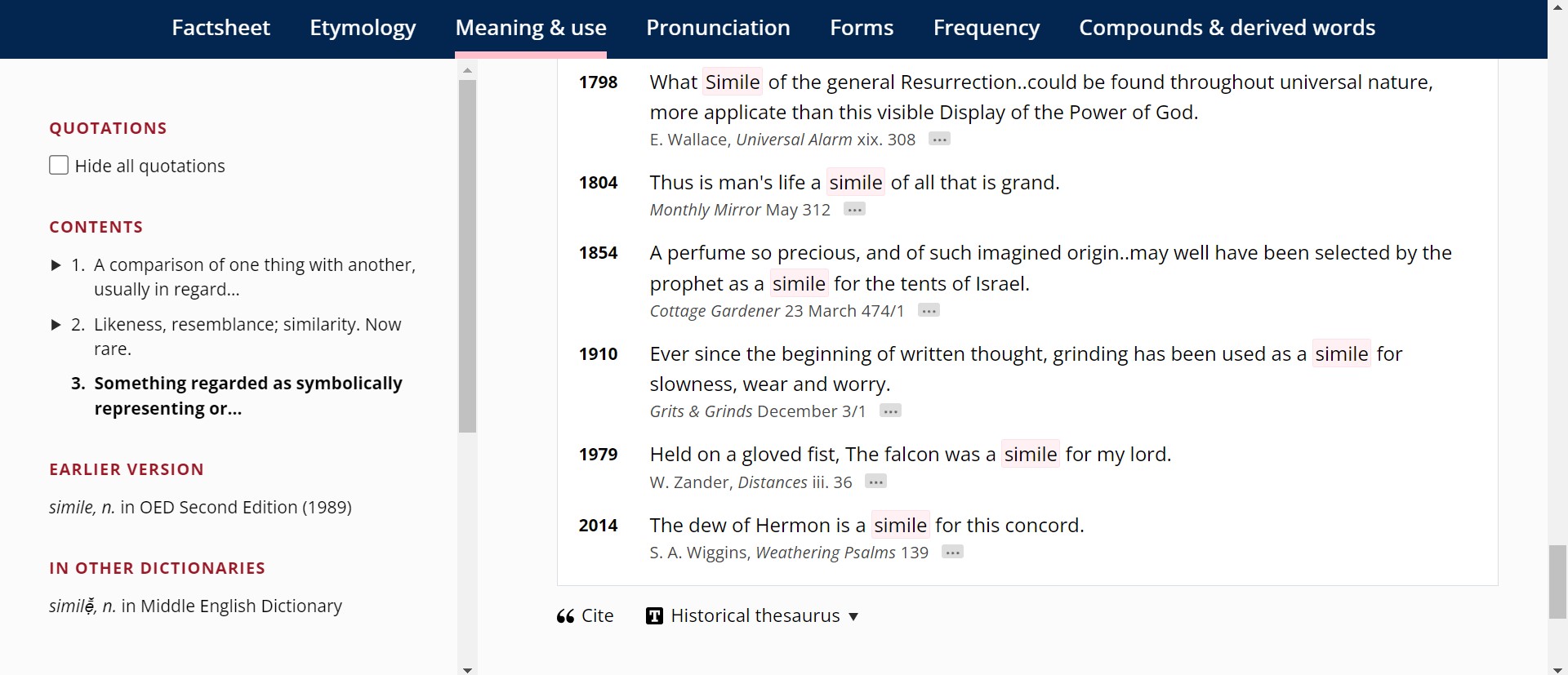
“Lord, now lettest thou thy servant depart in peace.”  Thus begins the venerated Nunc dimittis, familiar from so many years of chanting evensong at Nashotah House.  It comes to mind when I’ve reached a milestone I never dreamed of attaining.  One that makes me feel as if I’ve accomplished my life’s work.  Strangely, it didn’t occur when my name ended up in a study Bible’s front matter.  But a friend recently sent me a note that immediately brought old Simeon’s words to mind.  I have been cited in the Oxford English Dictionary.  My book Weathering the Psalms is quoted (in the web version) under “simile.”  I have no idea how examples are selected for the OED.  It used to be scraps of paper sent in by astute readers, but I suspect things have changed.  How my obscure book ended up there, I haven’t a clue.

There’s an irony here as well.  Like most academics clueless about publication, I initially proposed Weathering the Psalms to Oxford University Press, assuming they published such things.  It was turned down on the basis of a reviewer—one or two I know not—that I later met at a social function, where he was clearly embarrassed.  I really just wonder how the OED found the book to cite in the first place.  In terms of copies sold, it has been my most successful book, but that’s not saying much.  As far as I can tell, it’s only sold less than 400 copies (the royalty statements don’t have the total and I haven’t received a check in years).  I guess all things in the world are connected, whether we notice it or not.

Those who know me personally are aware that validation is a huge thing for me.  I suspect that is true of most people who grew up in difficult circumstances and who managed—and this is never a certain thing—to pull themselves out.  Having been fired from my long-term teaching post (where I was working on this book) only made me want to prove myself more, I guess.  Insignificant things like getting a Choice review for one of my books (which continues to sell poorly) and having that behemoth of a dictionary notice that I used a fairly common word in a fairly common way do tend to release the endorphins.  It’s like maybe someone noticed that I’ve passed this way.  Maybe there was a reason for trying to capture the Wisconsin thunderstorms in a book about the Psalms.  Maybe there’s a reason each working day there concluded with the Nunc dimittis.


Free Word

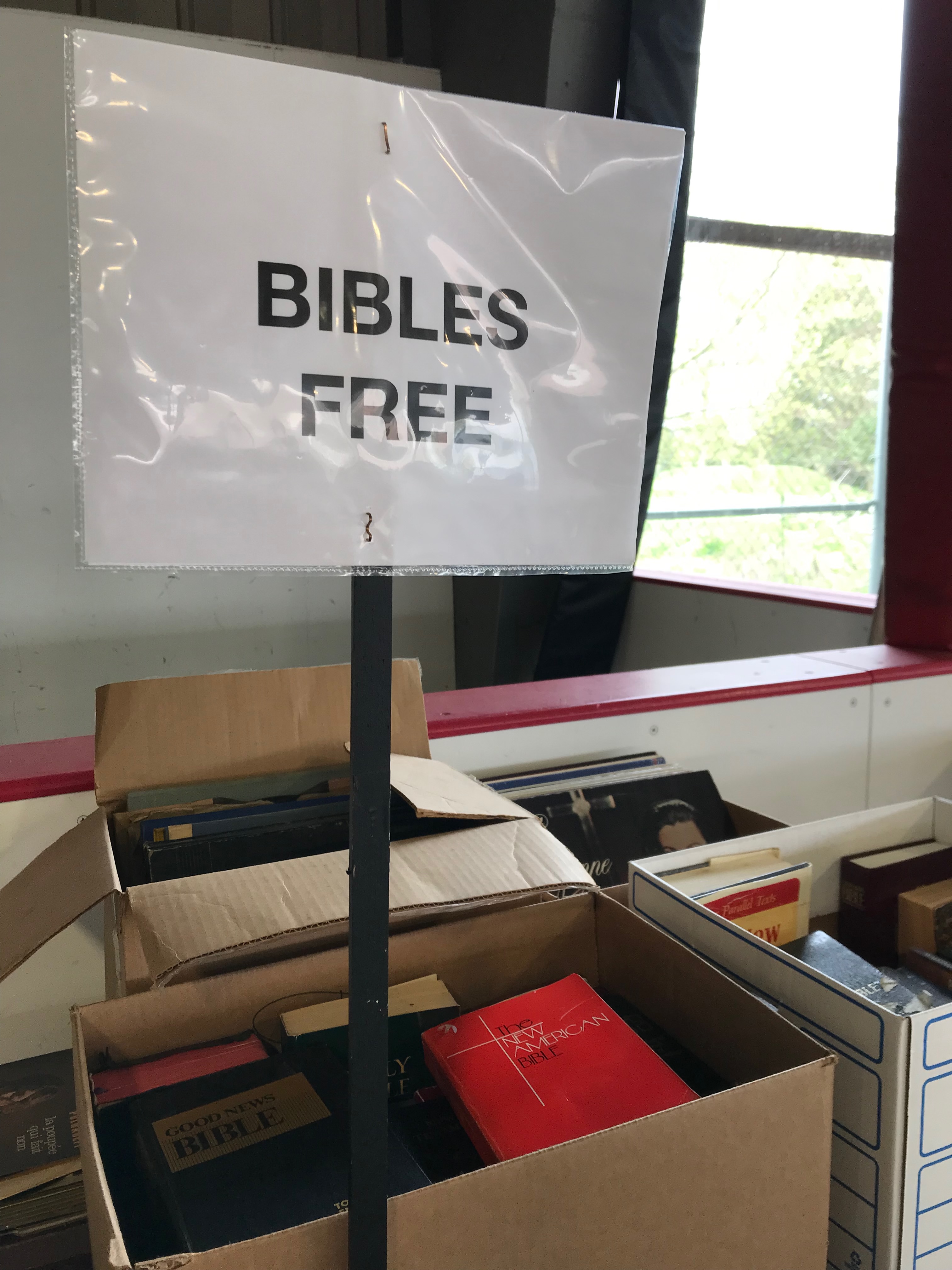
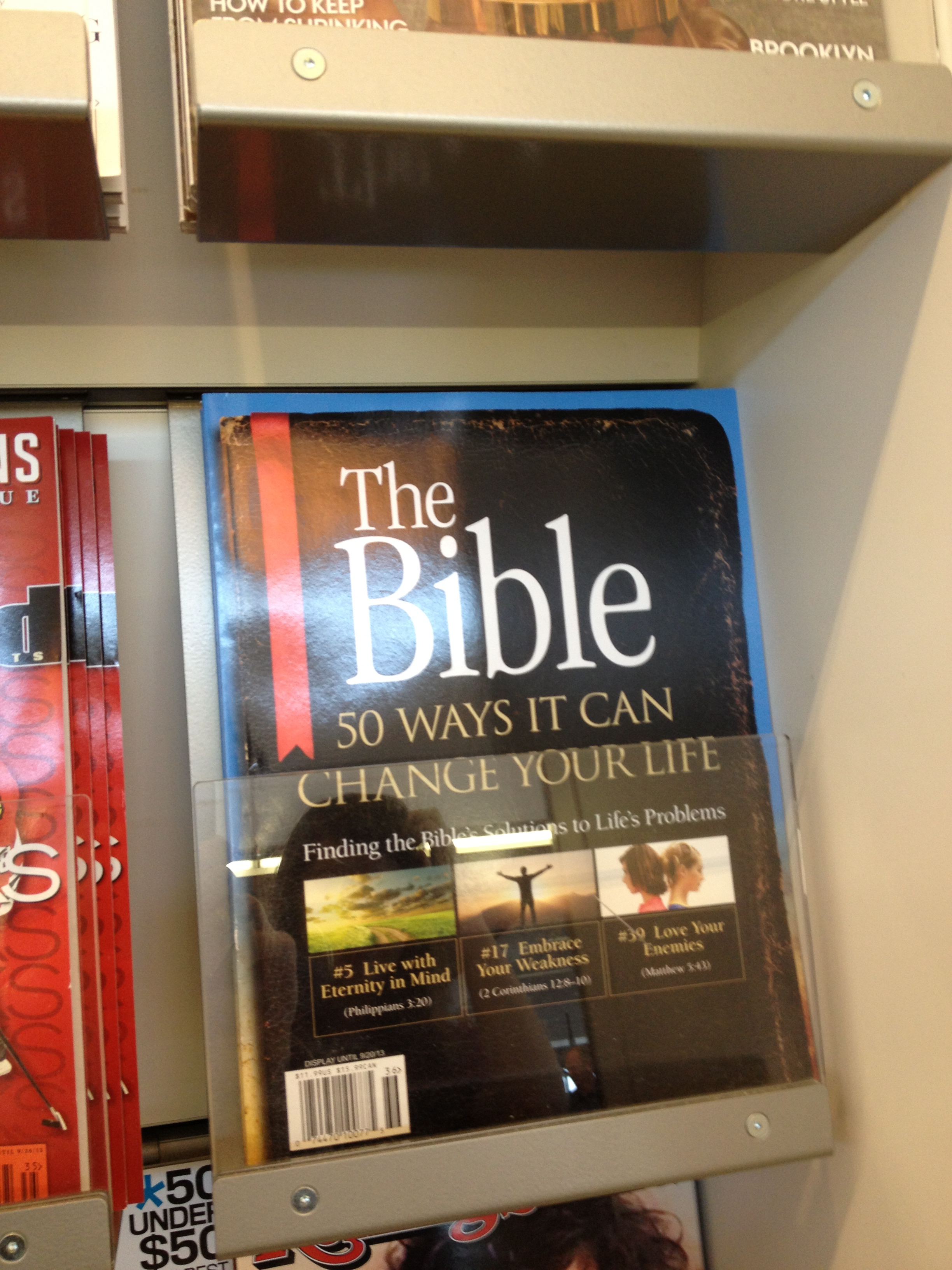
“Anything free is worth saving up for.”  That’s a line from one of my favorite movies of all time.   Free, though, can mean many things.  The “free cookie” is something good to entice you to buy more.  It often works.  Free, for a person, indicates the ability to do what we want (within the constraints of capitalism, of course).  But “free” can often mean cheap, overly abundant.  I like to decorate our lawn with rocks, which are often free, but if you want decorative rocks you’ve got to pay for even the ground beneath your feet.  So it is that when I attend book sales I marvel about the fact that Bibles are nearly always free.  It occurred to me again when I attended a spring book sale a few months back.  I always look through what’s on offer—call it an occupational hazard.

I used to attend the Friends of the Hunterdon County Library book sale in New Jersey.  I believe it is the largest I ever visited.  I used to get there early opening day to stand in line.  One year, one of the volunteer friends came out and announced that they had a really old Bible (only 1800s) that would be $100.  People do, however, tend to donate Bibles to book sales in great numbers.  I suspect organizers are reluctant to put Bibles in the trash.  They also know that people aren’t going to shell out money for them, so they try to give them away.  What does this say about being free?  Is it desirable to be so abundant that you’re left on that table in the back while everyone else is leaning over the more exciting items on offer?  There’s perhaps a message here.

Of course, Trump is selling Bibles for $60.  That’s a bit steep, even for an academic Bible (which his is not).  It might be suggested that this $60 is cheaper than free.  Now, I work with Bibles that are sold at a profit.  One thing I’ve learned is that Bibles sold are always for profit. Those who are honest admit what they do with the lucre.  Although he’s tried to keep it under cover, the Trump Bible does funnel profits to the GOP hopeful.  Yes, he is making money off the Bible and wants to be elected.  If that happens, freedom will disappear.  He’s said as much at his rallies.  Looks like stormy weather to me.  There are organizations that give away Bibles.  Somebody, however, pays for them.  In this strange experiment of a country, anything free is worth pondering.  Nothing, it seems, comes with no strings attached.


Bible Lives

How well do we know our parents?  Occasionally I think about the things I’ve never told my daughter.  This was brought home to me when, looking through a box hurried packed after my mother’s funeral, I came across an artifact.  I should say that my mother died going on a year ago, and the emotions had been a bit too raw to look at the things I’d picked up in a moment of grief.  This particular artifact was one of her Bibles.  Mom never had as many Bibles as I do (or did).  I remember distinctly asking for, as my sole Christmas present, the New International Version when it came out in 1978.  I have no idea how I knew about it (pre-internet) but I was pretty tapped into evangelicalism then.  I still have that Bible.  I also have the Bible my grandmother gave me in 1970, when, at the age of eight, I was, as it is termed, “saved.”

What makes my mother’s Bible an artifact, to me, is the information inscribed on the various dedication pages.  The Bible was my mother’s sixteenth birthday gift.  That made me stop and think.  Mom used to tell me about being a rebellious youth (she did not get along with her mother).  She smoked and drank and eventually married someone her parents disapproved of.  She gave up smoking when she was pregnant and gave up drinking when she saw what it was doing to her alcoholic husband.  I wonder what my mother’s rebellious years were like.  My entire life she was just “Mom.”  As stable as she could be, religious as she needed to be, and as selfless as a saint.

How did she feel as a sixteen-year-old receiving a Bible as a birthday present?  I never got to ask her that, but she saved the Bible and even did a DIY recovering of it with shelf-paper when the faux leather cover began to come apart.  It was a King James Version, and I knew from conversations with her that she preferred The Living Bible because it was easier for her to read (she never finished high school).  Ours were lives defined by the Good Book.  I don’t know the story of what prompted that sixteenth birthday gift.  I was sixteen when I begged for the NIV.  Now I work surrounded by Bibles.  And I’m no closer to knowing what it was that my mother really wanted when she turned sixteen.  I do know, however, that it eventually defined my life.


Spirit Storm

Some time ago, we experienced quite a windstorm.  More than wind, there was a dump of rain, thunder, hail, and all that.  My wife and I were attending a Tibetan singing bowls sound-bath with some others in the cancer support community.  I’ve described this practice before, here.  In any case, the meditation is held in a large room with a tin roof—the kind of place you don’t want to be during a tornado.  We’d just got inside when the gust front hit and knocked out the power.  The instructor still went through the meditation, but the storm sounds blended with those of the singing bowls.  Afterwards my wife asked about Job.  Specifically, God speaking from the whirlwind.  I told her that was God on a bad day, but I understood what she was getting at—there’s a spirituality to the weather.  (I was going to suggest Elijah instead, but “but the Lord was not in the wind.”  Alas.

I thought of Weathering the Psalms.  My contribution to biblical studies, had I been allowed to remain in academia, would’ve been further explorations of weather terminology in the Bible.  But the Lord was not in the wind.  I wrote that book because I noticed the juxtaposition of severe weather with daily chapel at Nashotah House.  We were required to attend, no matter what the weather.  (Such is life on a fully residential campus.)  We were reciting the Psalms one day when a storm blew the power out.  It may have happened more than once, since we’re getting on past two decades hence my memory’s a touch imprecise on the point.  In any case, the spirituality of the power of the storm fascinated me.

It still does.  The next morning, out for my jog, I marveled at the number of branches down.  Thousands in the Lehigh Valley were without power.  This is probably why the ancients considered the storm god chief of the rest.  The violence of nature is something that suggests divinity.  Other primates have been observed screeching back at the sky during thunderstorms.  It’s deep in our DNA.  That doesn’t make it any less spiritual.  There’s a lot of weather in the Bible.  I only explored a tiny piece of it by trying to tackle the Psalms.  The Good Book, however, doesn’t say much about the spirituality of weather.  It’s there nevertheless.  Anything that can snap a tree a foot in diameter like a toothpick has a spiritual message for us.  I mused on the way home—we had to take a detour because of downed trees—that had the storm claimed us as victims, dying while meditating is probably not the worst way to go.  Now I wonder, what might God’s nice words from the whirlwind be?


Mustard Monster

Speaking of mustard seeds, as a child something troubled my literalist brain.  Mark 4.31, “It is like a grain of mustard seed, which, when it is sown in the earth, is less than all the seeds that be in the earth…” According to subsequent translations after the KJV “less than all” reads, “the smallest.”  Of course, in Elizabethan English that’s what “less than all” denotes.  Since these words came from Jesus, and since the Bible was factually true on every point, I wondered how this error had crept in.  The mustard seed, I knew as a child, wasn’t the smallest seed.  Not by a long shot.  I knew, for example, that poppy seeds were smaller.  Why had Jesus said the mustard seed was the smallest when it wasn’t?  I was too young for the casuistry called exegesis, so a small crisis of faith emerged.

Pardon the resolution: I don’t have a macro lens any more. Mustard (left) meets chia seed (right).

The mustard seed has other roles in the gospels as well.  I still frequently recite “If ye have faith as a grain of mustard seed, ye shall say unto this mountain, Remove hence to yonder place; and it shall remove; and nothing shall be impossible unto you” (Matthew 17.20).  All of this made me curious as to the history of mustard.  While in Wisconsin we used to visit the Mustard Museum in Mount Horeb.  It’s now the National Mustard Museum and is in Middleton.  It seems that mustard, in its familiar paste form, was developed in China centuries before Jesus.  And people had been using mustard seeds as a spice long before that.  Jesus, like earlier prophets, used nature to make a point.  The problem wasn’t Jesus, it was literalism.  

Jesus also said “For as Jonas was three days and three nights in the whale’s belly; so shall the Son of man be three days and three nights in the heart of the earth” (KJV) in Matthew 12.40.  Modern translations of “sea monster”—for the Hebrew says it was a fish—forced me to dust off my Greek New Testament.  So Jesus said “in the belly of Cetus.”  Cetus was mythical sea monster, not unlike the mythical Leviathan God describes in Job 40.  Good thing I couldn’t read Greek or Hebrew as a kid!  Well, it seems we’ve gone from mustard to monsters.  If you’re familiar with the history of this blog, that shouldn’t surprise you too much.  I wonder what literalists believe about the Loch Ness Monster?  But don’t get me started on that or we’ll be here all day.


Demons and Gremlins

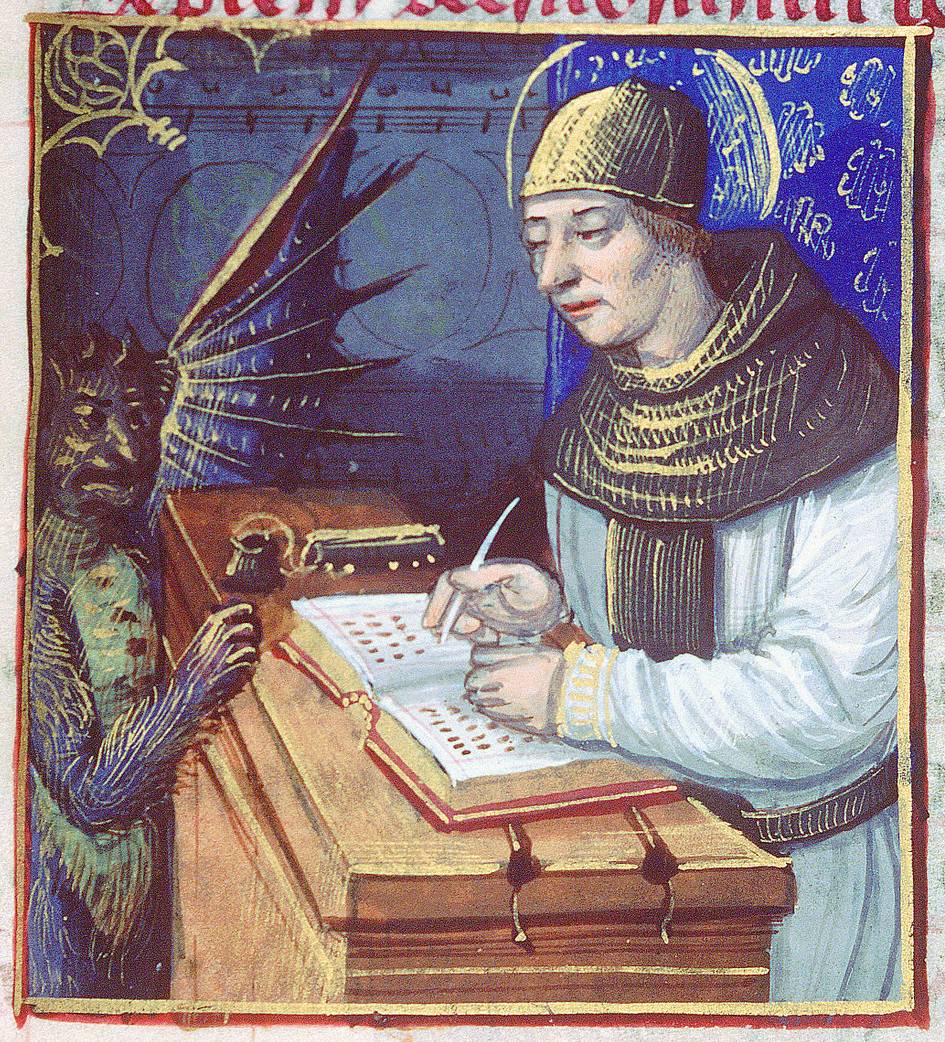
Gremlins have an ancient pedigree, whether they know it or not.  Credited with airplane problems during the Second World War, these meddlers in technology had an older cousin in the demon named Titivilus.  Titivilus was a demon said to be responsible for errors in the works of scribes.  Long before the printing press hit Europe, manuscripts were copied by hand, of course.  Anyone who works with Bibles, for example, knows that no ancient manuscript exists without errors.  But scribes copied more than Bibles, and anyone who has tried to copy an entire manuscript knows that errors always creep in.  (When I was a college student I tried to get my local church back home to set up a Bible-copying station so that when hungry parishioners were leaving the service they might stop and copy a verse.  This was to show how errors appeared in biblical texts.  The experiment took place but results were disappointing—full of errors but we didn’t get past the early chapters of Genesis).

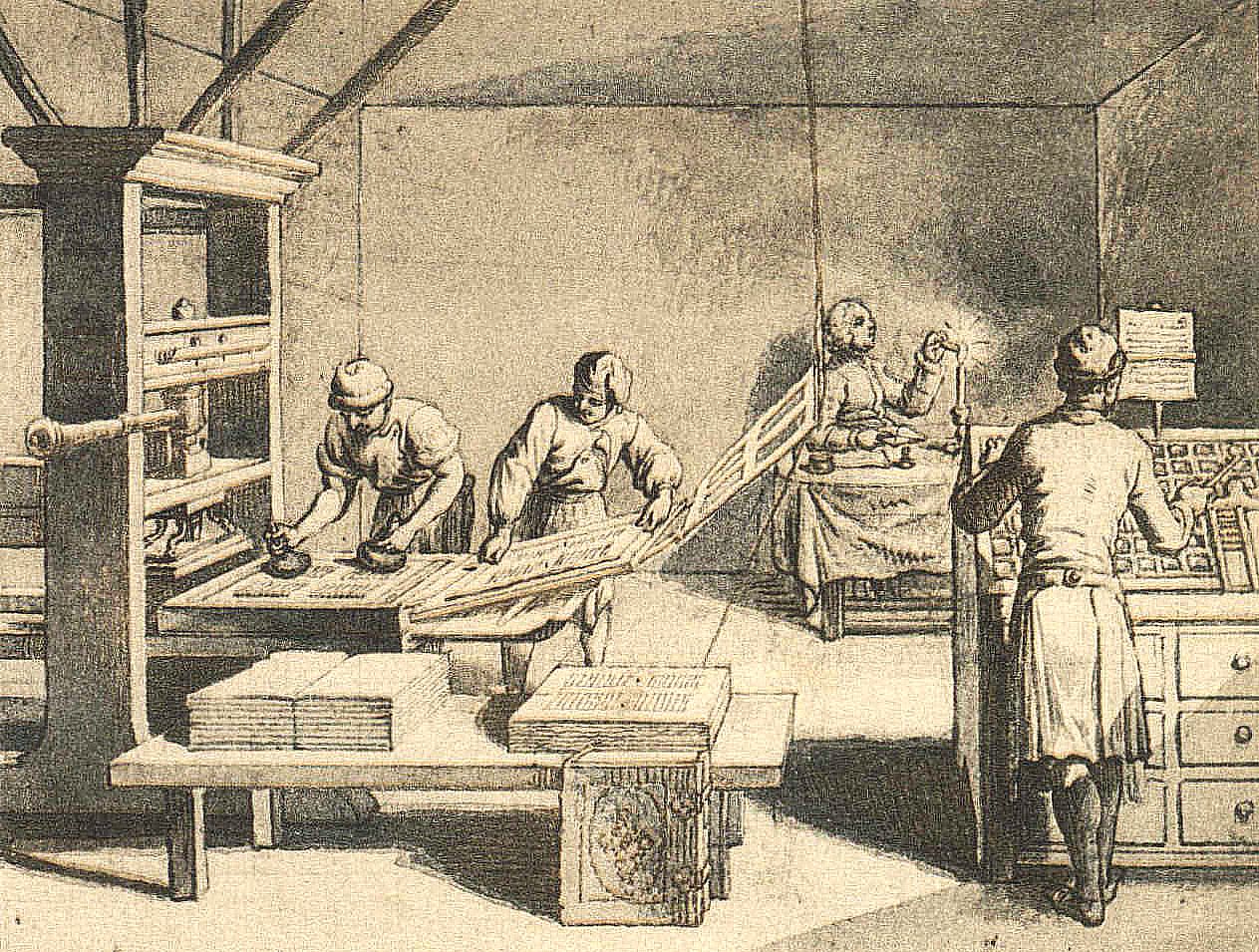
However that may be, having a demon to blame for things going wrong proved to be mighty handy.  The tradition lasted well into modern times.  In the days of manual typesetting the young printers’ apprentices were called “printer’s devils.”  Demons were blamed for spilled cases—capital letters were kept in the upper case, and minuscules in the lower case—and other mishaps.  It may be a stretch, but such a demon interfering with humans trying to accomplish something important, led to ideas such as gremlins.  Most of us, I suspect, don’t like to confess that we’re sometimes clumsy or sleepy and make errors.  One of my notebooks is all crinkly because I knocked a nearly full water bottle over onto it while trying to catch a bug in my office.  ’Twas no demon, just haste making waste, as it does.

The idea of someone not human to blame is compelling.  All the more so because sometimes we are the legitimate victims of circumstance.  Life offers many opportunities to wander, unknowingly, into situations that might not turn out so well.  We don’t have minds well equipped to see the entire picture.  Even if we could the universe, we’re told, is infinite.  Who doesn’t make mistakes because of limited knowledge?  And sometimes those mistakes can eat up years of your life.  Doesn’t it seem more likely that a demon or gremlin lurks behind an all-too-human error in a judgmental world?  I’m sure that, for most people, if we knew better we wouldn’t have done it.  So we invent our demons.  We sometimes even give them names, and thus Titivilus was born.

Image credit: artist unknown, public domain via Wikimedia Commons

Monopoly by Statute

The Bible is an odd book.  It is foundational for the modern world, no matter how much we might want to deny it.  Even so it’s a strange book.  The King James Version (KJV) of the Bible is a masterpiece of English literature.  There’s not one King James Version, however, as several variants exist.  Nevertheless, the KJV remains quite popular among some religious groups and it is still studied in English Departments as part of our cultural heritage.  It is also in the public domain, which means anyone can print and sell it.  Unless, of course, you wish to do so in the United Kingdom.  Here’s where the story gets interesting.

Because of England’s troubled religious history—remember the whole Catholic v. Protestant monarch thing?—the printing of religious books became a contentious issue shortly after the adoption of the printing press.  In 1577 a monopoly on Bible printing went to one man, Christopher Barker, the Royal Printer.  Ostensively to control the version of the Bible approved for use in the Church (of England), this royal privilege became law.  In perpetuity.  Now rights, as commodities, can be bought and sold.  And this happened from time to time.  Cambridge University, however, had been granted a royal charter earlier—also perpetual—to print “all manor of” books.  Since this arguably included the Bible (a lucrative business) it wasn’t prevented from printing them as well.  Oxford University was granted a similar charter some years later and so the two ancient universities and the Royal Printer were the only ones allowed to print the Bible for sale in the United Kingdom (except Scotland, but that’s a story for a different time).

Image credit: Daniel Nikolaus Chodowiecki, public domain via Wikimedia Commons

This privilege, which still exists on the books, did not apply to later versions of the Bible.  The KJV became wildly popular and really wasn’t challenged much for over two centuries.  By the nineteenth century British lawmakers, presumably, had better things to do than argue about who could print the Bible.  Meanwhile other translations divided and conquered the profits coming in from the sale of what had been, in essence “the” English Bible.  As late as 1990 the Royal Printer status landed with Cambridge University, so the sale of rights continues.  A similar story accompanied the Book of Common Prayer, which has always been in the public domain but can only be printed in the UK by the two major university presses.  The story of the Bible is a fascinating one, and since it has shaped western civilization, it seems appropriate to give it the last word: “where your treasure is, there will your heart be also.”


Sodom Returns

Somebody really ought to write a book.  It’s not me, but when new archaeological discoveries with large explanatory value emerge, they begin to paint an interesting picture.  Archaeologists have determined that Tall el-Hammam, a city in Jordan of about 8,000 residents, was wiped out by a cosmic airburst, or meteorite.  If you missed it in the headlines it may be because this happened in 1650 BCE.  Barring volcanoes and other melting phenomena, since they don’t get hot enough, the cosmic airburst is the best theory.  Given that Tall el-Hammam is not far from the Dead Sea, it has been posited that the sudden destruction of this city led to the biblical story of Sodom and Gomorrah.  This makes sense to me.  Just like the theory that the flooding of the Black Sea by the Mediterranean led to stories of the flood.

Sodom and Gomorrah afire, by Jacob Jacobsz. de Wet; image credit: Daderot, public domain via Wikimedia Commons

People who had no other ways to explain such things would naturally consider them forms of divine punishment.  Deep-seated guilt seems to be a universal of human psyches, sometimes for good reasons.  In any case, an entire city wiped out by a meteorite looks like the finger of God just as much as lightning does.  Biblical scholars have long supposed that the story of Sodom and Gomorrah was an etiology, or origin story, of the formation of the Dead Sea.  This is partially based on the famous salt pillars, more than one of which bears the name “Lot’s wife” or the equivalent.  And the Dead Sea is unlike any other body of water on the planet.  

I suspect that over time other biblical stories may find logical explanations in ancient catastrophes.  I haven’t found convincing those that try to explain the “plagues of Egypt” based on a scientific daisy-chain of events, although they are interesting.  There’s no doubt that between the expulsion from Eden and the arrival of Moses there were dramatic events narrated by Genesis.  If these were ghosts of memories of ancient tragedies that makes sense to me.  They’re moralized, of course.  Aesop’s Fables also ended with the moral of the story.  We still like to know what a story means, and a good movie or novel will have some kind of message to convey.  There’s no way to prove that Tall el-Hammam’s destruction led to the biblical account, or that memories of a catastrophic flooding of the Black Sea led to tales of arks.  But still, somebody ought to write a book.  I’d read it.


As We Know It

The end of the world, as we know it, is really more recent than we think.  Yes, Christians of a certain stripe have been looking for the second coming since the first leaving, but that detailed map of how we’re living in the end times, courtesy Hal Lindsey, is a new thing.  Here are the fast facts.

First and second centuries, Common Era: early Christians tended to think Jesus would “be right back.”  When that didn’t happen they began to look in the Bible for reasons why and started to develop theologies to cover the bases.

Late Antiquity to the Middle Ages: settled in for the long haul, theologians developed eschatology.  Although that sounds like a disease, it’s actually a system for thinking about how the end of the world will come down.  There were conflicting theories.  The two main flavors were premillennialism and amillennialism.

Early Modernism: Protestants came along and searched the Bible for minute clues to make into a system.  In response, postmillennialism became a thing.  Now there were three options.  Various phases were discussed: tribulation, resurrection of the dead, and the already-met millennium.

1820s: William Miller, a Baptist minister, began number-crunching and figured the end of the world would take place by 1843.  His followers, “the Millerites,” continued on after what was called “the Great Disappointment.” 

1830s: John Nelson Darby, a Plymouth Brethren leader, came up with Dispensationalism, a scheme that divides history into eras, or “dispensations.”  He thought we were living near the end of that scheme about 200 years ago.  The idea of “the rapture” was added to the other phases.

1917: Cyrus I. Scofield, published the Scofield Reference Bible.  A man with little formal education (and a “colorful” background), he applied Darby’s dispensations in his Bible, giving the United States a road map to the end times.

1970: Hal Lindsey, a seminary educated evangelical, published The Late, Great Planet Earth.  It became the best selling book (classified as nonfiction) for the entire decade.  New ideas, such as “the Rapture” and “the Antichrist” began to be read back into the Bible.  The book was made into a movie.

1976: David Seltzer, a Jewish screenwriter, penned The Omen.  The movie made use of Lindsey’s adaptation of Scofield’s adaptation of Darby’s ideas.  The wider public, seeing it on the big screen, believed it was about to happen.

2000: the world still didn’t end, either with a second coming or Y2K, as many predicted.  Round numbers will do that to people.  It didn’t stop predictions of the end of the world.

2012: the Mayan calendar gave out.  A movie was made.  People believed. Apocalypse averted.

2024: you fill in the blanks.

Image credit: Albrecht Dürer

Sinful Thoughts

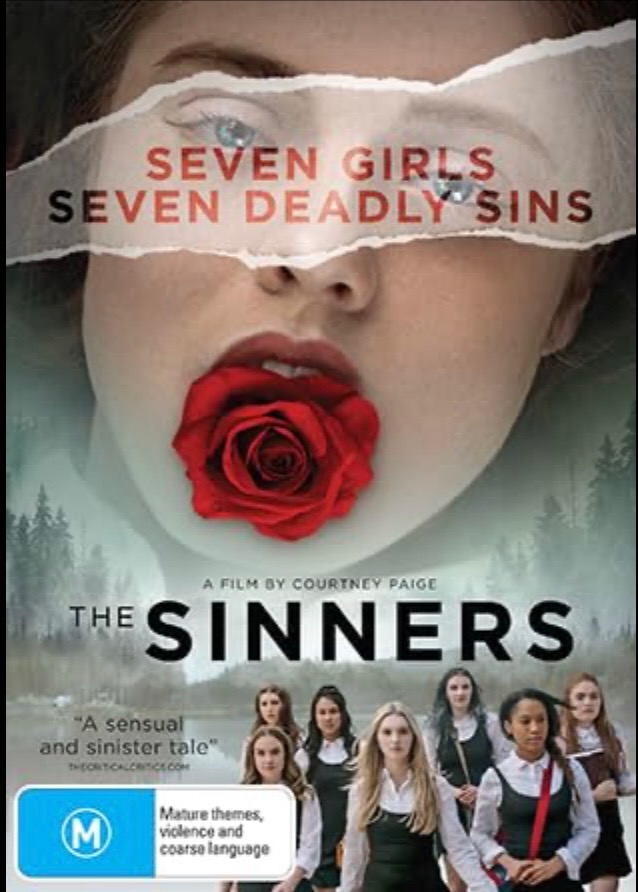
The driving force behind Holy Horror is the fact that the Bible appears in lots of horror movies.  More than might be expected.  Although I’ve moved on to other projects, I still keep an eye out.  There may not be time or opportunity in my life to write a sequel, but you can’t unnotice the Bible in The Sinners.  The title drew me in, as did its free status on Amazon Prime.  It’s a Bible-based flick, for sure, but even the basic description gets religion wrong.  I generally like movies by female directors, and this one was a project of Courtney Paige whose name, for some reason, sounds strangely familiar.  In any case, one of the biggest blunders movies like this make is that the religion doesn’t hang together.  Of course, it doesn’t say what variety of Christianity it is, but it’s of the literalist stripe.

Seven alpha females at a Christian school in a Christian community form a clique in which they’re each characterized by one of the seven deadly sins.  They’re lead by the pastor’s daughter, of course.  One of the girls keeps a journal in which she confides that she confessed their activities to the pastor.  The betrayed girls decide to scare the offender but she escapes when they’re intimidating her.  She’s found dead but then the other sinners start being murdered.  The police aren’t really effective and the girls try to figure out who’s behind this.  I won’t say who but I will say that it doesn’t really make much sense.  Scenes jump around and characters appear with little or no introduction—it’s disorienting.  But that religion…

I know enough PKs (preacher’s kids) to know they often aren’t as innocent as dad thinks (and it’s generally dad).  I also know that forced conformity of religion builds resentment and resistance.  But there’s something wrong here.  The pastor drinks wine.  Even the truly religious girls drop f-bombs.  One even attends a Satanist meeting with no explanation.  The pastor’s wife is having an affair.  The school librarian has sex with her husband at the school between classes.  They can all quote scripture, and often do.  What religion is this?  I couldn’t really engage with the movie because there were too many distracting religious gaffs.  Hey, I don’t mind when movies show the problems with religions—they’re fair game for commentary, after all.  But if you’re going to do it, try to understand the mindset of the religion you’re criticizing.  There’s a lot to think about in this movie, and it really isn’t that bad.  But for those who know religion there’ll be some question of which it is that’s under fire.  If I ever get back to Holy Horror I’ll say more.


Good Book Selling

A few weeks back, probably several now actually, the New York Times ran a story about the Bible.  In this age of declining interest in the Good Book such things catch my attention.  Of course, the reason that the story ran was because of the money involved.  Let me explain.  Or at least give the headline: “Oldest Nearly Complete Hebrew Bible Sells for $38.1 Million.”  Money talks, even when it comes to Scripture.  The story was about the auction of the Codex Sassoon, which went to a museum.  Most regular Bible readers aren’t aware of the textual criticism behind their favorite translations—yes, even the good ol’ King James.  You see, no original biblical manuscripts survive.  Not by a long shot.  Every biblical manuscript in the world is a copy of a copy of a copy, etc.  And these copies differ from one another.  Often quite a bit.

Textual criticism is the job of comparing manuscripts and using scientific—yes, scientific—principles to determine which one better reflects what was likely original.  Since we don’t actually have the original we can’t say.  Those who hold views of extreme reverence for one translation or another have to resort to divine guidance of the textual critics to make the case.  For example, they might argue that God inspired the translators of the King James to follow one manuscript rather than another.  The King James was based on manuscripts known at the time (only about six of them) and far older manuscripts—inherently more likely to reflect earlier views and potentially closer to the original—have been discovered since then.  And are still discovered.  That was one of the reasons behind all the fuss over the Dead Sea Scrolls.  They represent some of the earliest biblical manuscripts ever found.

The Bible is an identity-generating book.  In this secular age, the failure of “the educated” to realize this simple fact often leads to underestimation of the importance of religion.  It motivates the largest majority of people in the world.  We should pay attention to it.  It doesn’t make headlines too often, though.  Instead, politicians who pretend they respect the Bible but live lives about as far from its precepts as possible, gather the limelight.  When money gets involved the Bible becomes interesting again.  We think about that thirty-eight-million.  What we might do with that kind of money.  How we might be able to pay somebody to paint that fence that desperately needs it, or better, to help those in desperate need.  The many victims of capitalism.  Where their heart is, there their treasure will be also.


Half Full

Is the glass half full or half empty?  Perhaps trite, this is the textbook example of optimism.  In times when hope is important—and that may be always, but at times it’s really much more keenly felt—we need to see the glass filling again.  Emily Dickinson famously wrote “‘Hope’ is the thing with feathers.”  Although published posthumously, many refer to this poem when the glass starts to look empty.  Recently a friend pointed us to a more realistic version of this by the contemporary poet Caitlin Seida titled “Hope Is Not a Bird, Emily, It’s a Sewer Rat.”  It’s easily found with a web search but I’m hoping to buy Seida’s book because most poets have a difficult time of things.  The gist of it is that hope is a scrappy, gritty rodent that knows how to survive in a dark, noisome world.

Of course, the Bible has a lot to say about hope as well.  Sometimes we tend to see the half-empty glass of the judgment verses, but what truly makes it Scripture is the hope.  In fact, hope is all around if we look for it.  For example, I recently had to get a new set of glasses.  I really liked my old frames and they had stopped being produced.  I had to try something new.  This pair, instead of screw-hinges holding the arms on, has a mechanism that uses tension between the two pieces of metal so they retain their shape but can also be folded.  The end result is they don’t have a solid fixed “normal” position, but one which can be slightly adjusted because they’re more pliable than fixed screws (it’s clear why I’m not a technical writer).  In any case, their ability to adjust is a sign of hope. If things don’t look right, literally, a nudge can fix it.  You can find resilience even in your eyeglasses.

In times of difficulty doubt can be the thing with feathers.  What we need is one of those water-drinking birds.  You know, the kind that’s made of glass filled with a red liquid that bobs its head up and down into a glass of water.  (It turns out they have their own Wikipedia article under the title “Drinking bird.”)  Here is the ultimate symbol of hope that spans both Seida and Scripture.  The bobbing head always dips into the glass even though it can’t actually drink.  We might be tempted to say it’s a foolish waste of time.  With the correct perspective, however, it shows the glass to be half full. At least when seen through the lenses of hope.

This bird knows hope! Photo by Matt Flores on Unsplash

The Idea of Scripture

Although the academic field of biblical studies is slowly dying—this is something I wrote about a long while back on this blog—the Bible and its kin nevertheless continue to shape and control society.  I was recently reading that Islam takes quite a different view of the Qur’an than Christianity does of the Bible.  It’s also clear that Judaism has yet another way of looking at Scripture.  What underlies these Abrahamic faiths is, however, the idea of sacred texts.  They don’t have to be understood, let alone read, in order to alter perceptions of reality.  The idea that God wrote a book, combined with the idea that God doesn’t show Godself or intervene in the world for good in any obvious way, has transferred a kind of godhood onto sacred scripture.

People desire the second coming because of a deep-seated need for God to part the clouds and demonstrate that their way of looking at things is the correct way.  It may be influenced by Scripture or politics or a favorite news channel, but the result is the same—they want divine intervention and since it’s not forthcoming, their sacred texts become the rallying point around which they gather.  Like many people I’m puzzled how a man like Trump, known for his proud womanizing and lack of care for anyone other than himself, came to be seen as a messiah.  Perhaps the key is that moment he gassed American citizens for a photo op holding up a Bible he never reads.  How this comes to be interpreted as a kind of divine moment only makes sense when we realize it’s the idea of Scripture that becomes the reality of many.

I’ve read through the Bible many times.  I have to confess that trying to get through the Qur’an is a struggle for me, but I suspect quite a lot of that is cultural.  I’ve read a few other sacred texts over the years, and have found some wisdom in all of them.  It’s when they become divinities in their own rights that society begins to pay the price.  If a non-interventionist God remains invisible, that identity will be transferred to the divine surrogate—Scripture.  People will coalesce around the idol they can see rather than the invisible one they can’t, right Elijah?  These sacred books have survived partially because they contain old wisdom, and old wisdom is often better than new knowledge.  But they also survive because they have become, in some sense, gods.


Kenyan Mourning

We ignore religion at our peril.  I may be a voice crying in the wilderness here, but just because church numbers are declining it doesn’t mean religion still can’t motivate.  And in large numbers.  A New York Times story tells how 179 Kenyans starved themselves to death because their preacher told them they’d meet Jesus that way.  It’s amazing how many demons pose as angels of light, even if well-meaning.  All it takes is to hold up a Bible.  People are religious by nature and they tend to believe what they’re told.  Jonestown and Waco taught us nothing about religion.  Universities continue to hack away at its study, declaring it no longer of importance.  Meanwhile useless deaths still occur because of something that “doesn’t matter.”  Religion is so easily weaponized you’d think the Pentagon might want to get in on the action.

How am I to read without an interpreter?

Our world is increasingly secular but that may not mean what it seems to.  Belief, whether in traditional religions or not, is still belief.  We may believe we know certain things, but knowledge is a lot rarer than we often suppose.  Religion evolved—co-evolved, more accurately—with our species.  We need it, even if its gods have lost their divine luster.  And if we don’t have people who can teach us about it without resorting to mere metrics we may be on our way to perdition.  You see, here in America we tend to be a pretty literalist bunch.  I don’t know what it is about our culture, but we’re uncomfortable with metaphor.  Even so we believe in all kinds of things and then deny that we do.

My mind keeps going back to those Kenyans who, trustfully believing, starved themselves to death.  No doubt the introduction of the Bible, without proper instruction, into their culture, meant that such interpretations would eventually arise.  Perhaps inevitably.  Religious thinking isn’t a bad thing, but taking sacred texts from thousands of years ago as roadmaps for today is.  We so want answers in black and white—we want someone to tell us that life isn’t this complex and that “it’s all really quite simple.”  But it’s not.  Religion does help us get through this complex world.  Even though he was a Transcendentalist, Henry David Thoreau tried the monastic approach.  It works for a while, but if we all did it there’d be untold suffering in the world.  In other words, there’s no easy answer.  There never likely will be.  Until such a time as that, we should be studying religion more, not less.  And trying to make lives better, not worse.