Shadow off Campus

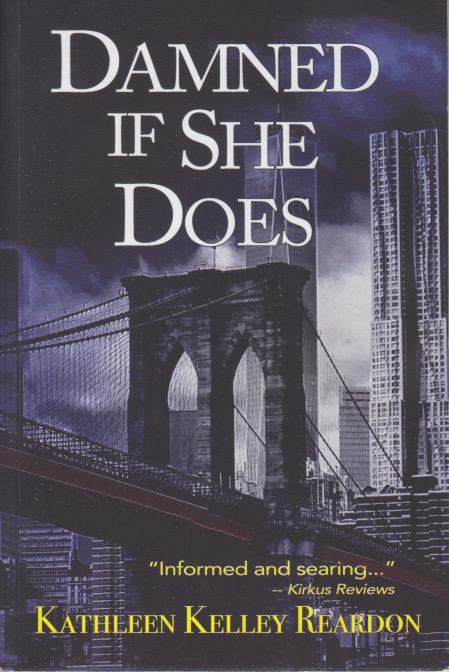
I’ve been to quite a few academic conferences in my life.  Some have been held in neighborhoods declared “unsafe.”  I even had a job interview in a hotel room (such can’t happen now) with a college that didn’t want to pay the fee for using the society’s services.  (A friend who’d also interviewed with the same school said to me afterwards, “I thought they were going to jump me!”)  (Neither one of us got the job.)  I even went to a conference where I had to drive through a crime-ridden neighborhood to get to an off-site hotel.  But I’ve never been to a conference where someone was murdered.  That’s the premise behind Kathleen Kelley Reardon’s Damned If She Does.  Reardon’s keenly aware of the kinds of issues women face in the professorate.  There are some unsavory guys in the profession and power is very difficult to wrest from those who hold it (generally white men).  In this follow-up to Shadow Campus, she tells Meg and Shamus Doherty’s experience with murder, and more, at an academic conference.

Academics are so necessary for studying things closely, opening up true understanding.  They are, however, people too.  And people can be petty, vindictive, and selfish.  They’re usually not inclined to murder, however.  I’ve been meaning to read that book about the murder of a religion professor at the University of Chicago several years ago precisely because such things are so unusual.  In dark academia, however, events like that are fairly common.  The thing is, many academics are also quite smart.  If someone were to put their mind to an undetectable murder, hmm.  The old gray matter starts churning.

In Damned If She Does, the apparent motive is publication in prestige journals.  In the end, it turns out that there’s more to it than that, but it’s somehow believable that a matter like publication could lead to homicide in academia.  As an editor, and writer, myself, I know how important publication with specific presses can be.  Even after doing this for over thirty years, an acceptance notice creates a sense of validation like no other.  Dark academia explores such territory.  I suspect that I’ve always been a bit naive when I’ve attended conferences.  I go, present papers, and keep interactions, well, academic.  I’ve heard whispers of them being places of temporary flings and I’ve seen colleagues use them as places to party.  On occasion I’ve seen established scholars very inebriated.  They’re people too, of course.  And as long as nobody is murdered, the code seems to be that what happens at a conference stays at the conference.


Around Us

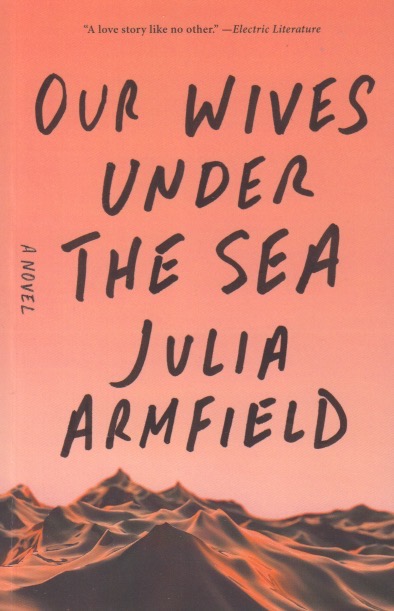
Our Wives Under the Sea is a gentle, but chilling horror story by Julia Armfield.  Two women are married and one of them is a marine biologist being sent on a submarine to explore deep ocean life.  A planned three-week voyage becomes six months and when the sub finally surfaces again, Leah, the biologist, has “come back wrong.”  She’s transforming.  Something happened to her under all that water.  Told alternately by Leah and Miri, the story is one of loss and mourning and lack of any reasonable explanation.  Haunting, in a word.  The writing is exceptional.  And probing.  I quite enjoyed this book.  I can’t recall how I first heard about it—it was published in 2022—but I knew I wanted to read it even then.  The sea is that way.  Moby-Dick, cited in an epigraph, has always been my favorite novel.  One of my early reading memories is Rachel Carson’s The Sea Around Us (also cited here).  The story is a winner.

There’s something about the ocean.  We, in reality, know little about it.  Penetrating the crushing depths requires a well-funded science, something we’ve moved away from in favor of personal greed.  Life takes unexpected forms deep under the surface, even as we deplete the resources we can reach—over-fishing and consuming.  We’re never told what it is Leah and her crew-mate see so far down.  We all know of lantern-fish (lately in the news) and other sub-surface terrors.  We don’t know the potential life we might discover if we only cared to look.  The company that sent Leah down, however, is as shadowy as the government.  Promising help but not answering the phone when you call.  Yes, this is a haunting book.

Mostly, however, at least in my reading, it is about coping.  We attach our lives to others and when something changes them we have to try to adjust, because love is that way.  Caregivers understand.  The novel evokes both the endless draw of the ocean and its mystery.  Even as a child I wanted to live on the stormy east coast, preferably in Maine.  I wanted to be near the water.  As my mother was in her final decline, one of her dearest wishes was to return to the ocean.  She’d spent a fair bit of her childhood in New Jersey and always felt the draw of the sea.  She was no swimmer, but just being near the ocean was something she loved.  And that has passed down, it seems, to my generation.  Fearful yet drawn.  It is the dilemma that can lead to effective horror stories that make you both think and feel.


Seeing the Forster

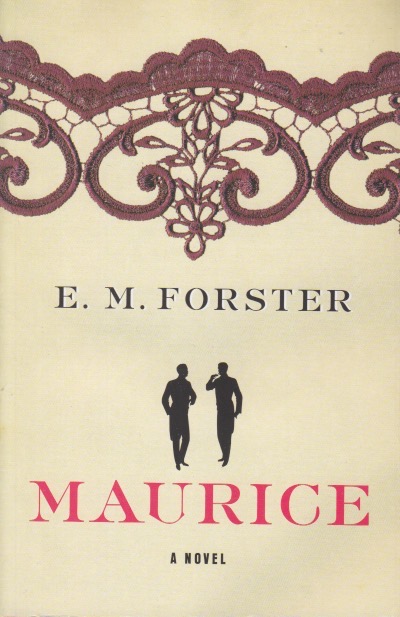
The thing about exploring dark academia is that its recognition is fairly new.  It seems that the “concept” emerged only ten years ago and the longer that it’s around the more sources it gathers, like a dust bunny growing under the bed.  I’ve never read E. M. Forster before, although I’ve seen movies based on his novels.  He was an interesting chap, trying out sci-fi (or at least dystopian fiction) as well as his literary novels.  Maurice was not published during his life because it explored homosexuality.  Forster was gay when it was technically illegal, and this novel reveals much of the struggle faced by homosexuals during the early decades of the twentieth century.  The novel has been cited as an example of dark academia, I suspect because much of the early part takes place in Cambridge.  Although it has a happy ending it’s not an easy novel to read.

Quite apart from the hideous paranoia of society at the time towards any kind of homosexuality, Forster’s style was, for me, difficult to decipher.  I know this is my issue, and not his.  His use of British expressions underscored for me how difficult it is to understand idiom in another culture.  At more than one place I was unsure what the speaker meant because the British slang used was so different from what I encountered living in the UK in the early nineties.  Not that the story is difficult to follow.  It is movingly written, demonstrating the torment of those who realized their orientation as they faced in an intolerant society.  Maurice even tries to “cure” his homosexuality, but efforts fail.  There is a darkness here, appropriate for dark academia.

Forster died in 1970, just when homosexuality was beginning to be understood not as a sickness, but a disposition.  It’s not a choice, and as the animal kingdom tells us, it’s certainly not limited to human beings.  The novel makes note of the fact that Greece, the origin of much of western culture, approved and promoted homosexual relationships.  Maurice is told that he could move to France of Italy where such relationships were not illegal.  There’s no question that the societal stance toward homosexuality was based on particular understandings of biblical texts, some now thoroughly discredited by biblical scholars (Sodom was not destroyed for homosexuality as biblical intertexts clearly show).  Generations of people, including Forster, were put through lives of torment in order to keep a prejudice alive.  Academia may be dark indeed.


Late Shift

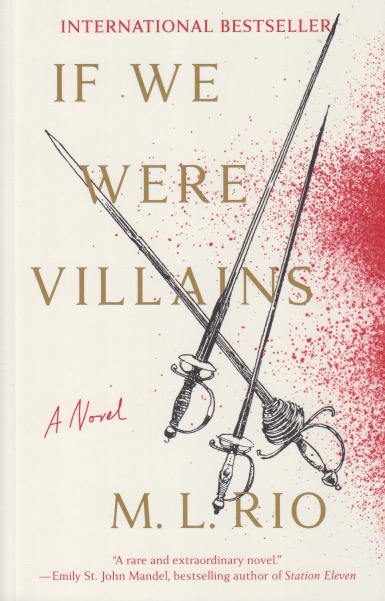
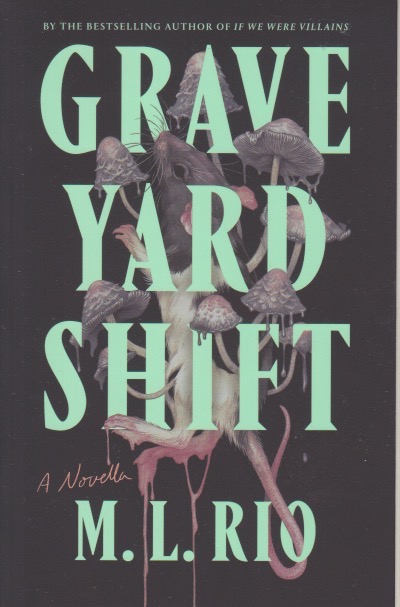
M. L. Rio is best known for If We Were Villains, a book I have on my shelf but haven’t read yet.  She’s one of those rare PhDs who can write, and her punchy, irreverent style has a way of drawing you in.  Graveyard Shift is actually a novella (a cynic would say a way to get you to pay a full novel price on a piece a bit too short to qualify), so it’s a quick read.  It’s a little difficult to classify, genre-wise.  The copyright page suggests thriller, which means not-quite-horror, but with elements of it.  Taking place over one night (and just over 100 pages), its the story of how a college student journalist and her friends crack the case of a mysterious shallow grave they discover one night at their usual hangout, behind an abandoned church, Saint Anthony the Anchorite.  Edie, the journalist, has to find a story to headline the next day’s edition, and the grave provides it.

The story involves mushrooms and rats, sleep deprivation, and lots of smoking.  Still, it’s a well-crafted tale that holds your interest.  Of course, I noticed the centrality of the church to the story.  It’s so much a part of things that the disparate group of friends identify themselves as Anchorites.  An anchorite is essentially a hermit—a monk who prefers not to live communally (cenobites, a name taken up by the Hellraiser franchise, are monks in community).  Of course, the friends aren’t monks, just young people in a college town who like to be out at night, and maybe solve mysteries.  The church is both a focal point and a kind of vector in this world where unusual activities take place after dark.  It shouldn’t be a spoiler to say the friends solve the mystery and begin to help address one another’s problems.

I like brief books.  I don’t mind moderately long novels—when they start getting over 400 pages I get a bit anxious.  I have to admit that Goodreads has made me conscious of how many books I read in a year.  And since I like to blog about books, it also helps to finish them in a timely way.  Besides, escapism is especially important at the moment.  If you like stories about college kids, under-employed professors, bartenders and others who manage to eke out a living before family and mortgage change everything in your life, you’ll probably like this one.  It’s not really a horror story, but it’ll keep you turning pages, which is what books of any size are meant to do.


Cloistered

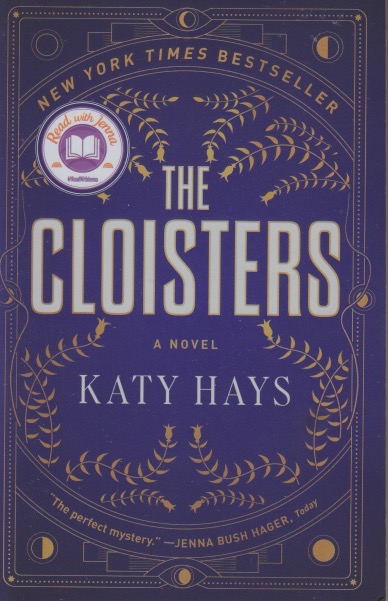
Free will.  I’ll go on the record as a proponent.  Any kind of determinism gives me the willies.  At times, however, it does feel as if we’re merely pawns.  Katy Hays deals with the concept of fate, and the occult world of tarot, in The Cloisters.  The writing is quite compelling and the story moves along at a good pace.  It follows Ann, a graduate from eastern Washington who wants to get away from the town where her father was killed.  She accepts the offer of a summer program at the Met in New York City, but because of a mix-up ends up at the Cloisters instead.  I’ve never actually been to the Cloisters, but this novel makes me want to go.  At this museum of Medieval and Renaissance art, Ann works with Rachel, another assistant, Leo, a gardener, and the curator, Patrick.

Rachel has been at the Cloisters for some time and Patrick, her boss, has become enamored of tarot decks and their history.  He’s been seeking perhaps the oldest complete deck known and has come to believe that perhaps the cards do have the ability to tell the future.  Ann befriends Rachel.  The two begin to make discoveries, particularly Ann, but Rachel, who is independently wealthy, manipulates her, taking advantage of the fact that Ann never wants to return home.  Then Patrick is poisoned.  I won’t reveal whodunnit here, but the last half of the book has several twists that make you reassess whatever conclusions you may have drawn.  It’s a fascinating story, well told.

This novel is another example of dark academia.  Much of it takes place in the library of the Cloisters and Patrick holds a Ph.D. while Rachel is a graduate student.  Ann is about to enter a doctoral program.  All of them have some fairly dark secrets in their lives.  And all of them are driven.  The story has elements of social commentary as well, particularly concerning how life in New York City will drive people to extremes when the competition makes this necessary to survive.  Although three of the four commit crimes, they are all likable people.  Three of them are academics as well.  All four are quite intelligent.  I was drawn into this tale from the start and even as the darkness was revealed couldn’t bring myself to dislike any of the characters.  Some novels have antiheroes that you just can’t feel for.  The Cloisters moves in the other direction, and it does make you wonder just how much choice you actually have and how much is left to fate.


Contours of Dark Academia

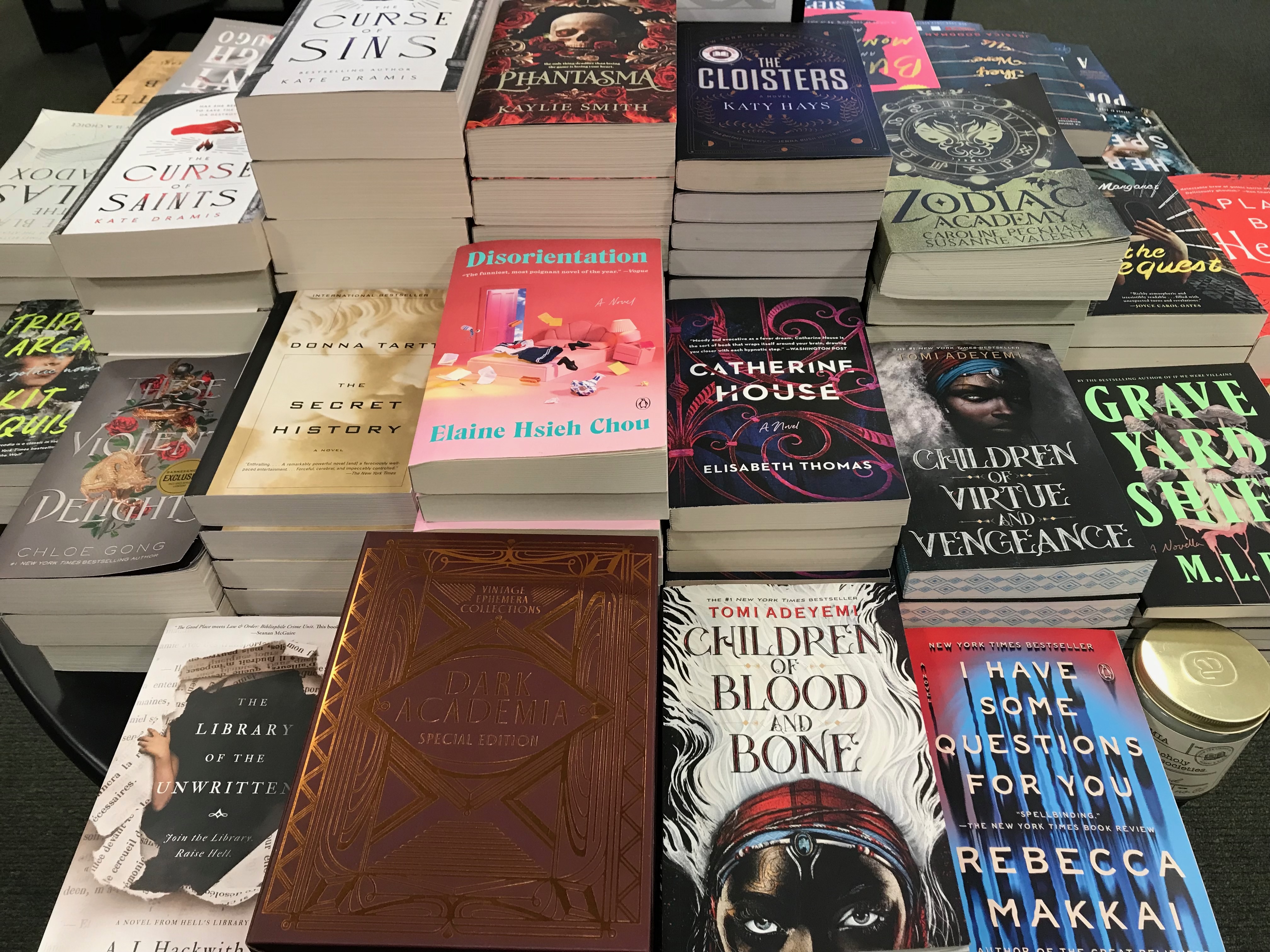
As I attempt to trace the contours of dark academia, I’m learning that much of my reading has been classified that way by others.  My main engine for discovering this is Goodreads, making me think I should shelve my own books more.  Also, I recently visited a local Barnes and Noble where one of the front tables was dedicated to dark academia.  Looking over the titles gave me fiction reading ideas for months.  In any case, apart from classical dark academia, where the setting is an institution of higher, or specialized learning, the category for many includes books about books.  This would pull in titles such as Carlos Ruiz Zafón’s The Shadow of the Wind, which I read before my current conscious interest in the genre.  I think I was looking for gothic books back then.  I include, on my personal list, books about students with dark experiences, such as Familiar Spirit by Lisa Tuttle.

The books about books category does shed some insight.  I love Italo Calvino’s If on a Winter’s Night a Traveller, but it’s not really dark enough to be, well, dark academia.  I understand the critique that dark academia tells stories of privilege, but that dissipates somewhat when including books about books.  Higher education is, and remains, a domain of privilege, but it is possible for those raised poor (such as yours truly) to break in.  I enjoyed higher education throughout the eighties and into the aughties.  After that it began to get far too political and business-oriented.  (Not that I wouldn’t go back if I had half a chance.  Or even a quarter.)  My point is, dark academia can deal with those who lack privilege, but I also believe there’s no point in denying privilege does exist.  And opens doors.

Dark academia is new enough that its parameters are permeable.  To me the real draw is that a fair bit of sculduggery really does exist in higher education.  The reading public seems eager for it.  Thinking of all the odd, somewhat tenebrous things that occurred in the course of my couple of decades in academia, the genre rings true to me as well.  As I think back over the books I’ve read, I think maybe I should build a shelf especially for dark academia.  I’m trying to read in it more intentionally now, but I’ve been unintentionally exploring it for decades.  When you add books about books, Umberto Eco’s The Name of the Rose joins the crowd, and I read that one all the way back in seminary.  I tried to be part of academia, but there’s a darkness about an unrequited love, and so it just makes sense to me.


and Seek

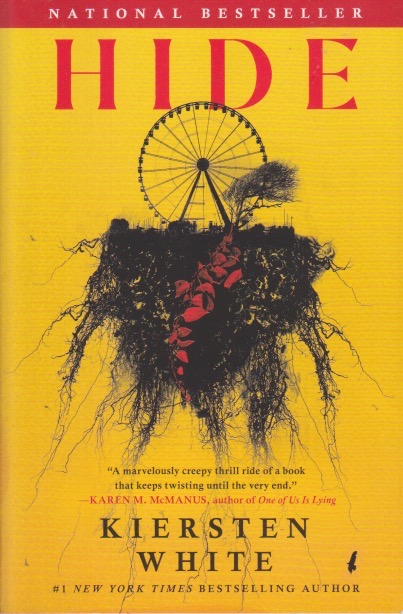
I’m afraid there may be spoilers—but not for the ending—below.  Discussing this story will be difficult without giving some things away.  Kiersten White’s Hide has given us an imaginative world with masterful misdirection.  Fourteen people a bit down on their luck, and strangers to each other, are offered an opportunity to win $50,000.  They have to hide in an abandoned amusement park for a week where two of them will be caught each day and the last person remaining wins.  The novel mostly follows Mack, a woman whose father killed her family while she survived by hiding.  Not only does she have survivor’s guilt, but she’s been homeless and the shelter director thinks she’ll have a chance at winning the prize.  There is a lot of social commentary here, as well as a monster.  Okay, spoilers below.

The minotaur is a most useful monster.  The backstory here isn’t in Greece (well, the deep backstory is, but that is only played out partially here) but in Asterion.  No state is given for the town, and the contestants can’t be given that information.  They’re locked in the park, with supplies, but very little information.  Then the contest starts.  After a couple of days Mack and a couple others begin to suspect that something’s wrong.  Those who get caught while they’re hiding leave personal effects behind, and since they all need the money that seems unlikely.  Then their host stops coming, leaving the bewildered contestants on their own.  Mack and those she’s befriended come to understand that being “out” is really being eaten by the minotaur.  Well, they don’t realize it’s the minotaur.  The one who does gets eaten before he can tell.

In any case, this is a tense horror story based on a classic tale.  There is, of course, a rationale for the murderous behavior in a modern setting.  White keeps you waiting quite a while to learn what it is, and there are plenty of places where I thought I’d figured out how it’d end only to be proven wrong.  And she gives believable character sketches and explores the kinds of motivations that drive different people who find themselves needing an income.  (One of the characters was raised in a religious cult—bonus!)  Those who are poor aren’t always at fault, but those who are wealthy will do anything to preserve their excess.  We see that playing out in daily life, even as it’s being explored in fiction.  The minotaur isn’t always what we think it is.  And the more you think about its insidious origin story provided here, the scarier it becomes.


Deep Backlist

It’s kind of a personal archaeology.  Exploring the terrain of one’s own mind, that is.  Back in January, I mentioned my “deep backlist,” which is actually my “to read” list stored on an online book vendor site.  When it comes time to buy (or provide a gift request for) a new book, this list is my first stop.  I started the list in 2010.  Since I’m cautious about book buying (believe it or not), there are many items on that list that never got purchased.  And if I go back far enough, I have to confess to myself, there are books I really don’t want to read anymore.  At least not at this time.  That list, however, is a snapshot of my interests at the time an item was entered.  I don’t delete things from it unless I actually get them.  Life has taught me that when interests fade it’s usually not permanent.

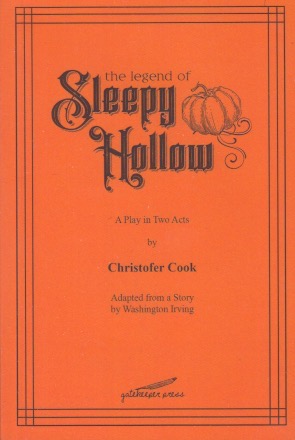
Sometimes I think I should be more intentional about my reading.  When I was writing Sleepy Hollow as American Myth, I was adding lots of books related to the subject.  Many of them came off the list as I purchased and read them, but not all.  Although I’m currently involved in my next writing project or two, I don’t remove the remaining Sleepy Hollow-inspired books because I may well, depending on length of life, come back to them.  The same is true of all my books from Holy Horror on.  Depending on where I am on that list, I can tell what book I was working on, and not a few that never got finished.  An accountant once told me that if you are writing books to earn money (as paltry as those earnings may be), the books you buy may be tax write-offs as business expenses.  Such is the mind of capitalism.

My wishlist is a personal archaeology of some poignancy.  It took me many years after being shunted out of academia (no matter how dark) before I found employment stable enough to allow for me to start writing books again.  Weathering the Psalms was started around 1997 or 1998.  It was published in 2014.  Even after that it took a couple years to realize that I could write Holy Horror.  And there are other books that, if I’m honest with myself, I know I won’t have time to write or finish.  I find scrolling through my “deep backlist” an inspiring but melancholy exercise.  We all have layers, and strangely enough, even the books that we wanted to read, or just remember, can speak volumes about who we are.


First Tower

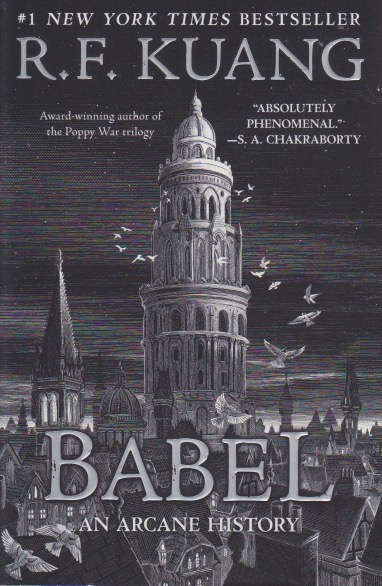
In these days when daring to think feels dangerous, R. F. Kuang’s Babel: An Arcane History feels dangerous to read.  Good literature is like that, even if it’s uncomfortable to read as a “white” man.  A fantasy largely set in Oxford, it’s based on the premise that languages, when placed next to one another, engraved in silver, have enormous power.  The power to run an empire.  This is a post-colonial story, and I took comfort in the working class support, for their own reasons, of exposing the very dangerous world of capitalism.  With its “human capital” as we’re now being called by businessmen.  But I digress.  Four students, three from abroad, are brought to Babel, a tower in Oxford that houses the Royal Institute of Translation.  Their use of their native tongues helps build immense power in this Oxford tower.  Power that fuels Britain’s imperial goals.  But all is not well in academic paradise.

Slowly three of the four scholars come to realize that their home countries are being exploited for purposes of yet further exploitation.  The wealth always flows back to England, and even the small emoluments it offers to those other nations cannot negate the fact that the end goal is British superiority.  The protagonist is Chinese, taken from poverty to live in academic luxury, in exchange for what was his birthright—his linguistic ability.  It doesn’t end well.  This is not a happy novel.  But it does highlight something we seldom consider; our language ability is truly an amazing thing.  We try to convey a fraction of what’s going on in our heads to another person, and that person has some ability to understand it.  And languages are ways of thinking.  I used to tell my students that all the time.  It’s more than just words.

This is also a fairly long book.  As with most fairly long books, you’re left feeling it once the story concludes.  Even though language allows us to communicate, it’s sometimes uncomfortable to hear what someone else is thinking.  We don’t have to be woke to realize that Black, or Asian, or indigenous experience is quite different from what we call “white.”  And such voices deserve to be heard.  We live in a time when white men don’t like to be told that they’ve participated in oppressive behaviors.  Probably most of them (for I believe people are generally good) are not intentionally evil, but they participate in a system which can be.  And often unthinkingly so.  Thus these days thinking feels dangerous.  And this book will make you do so, nevertheless.


Not Afraid

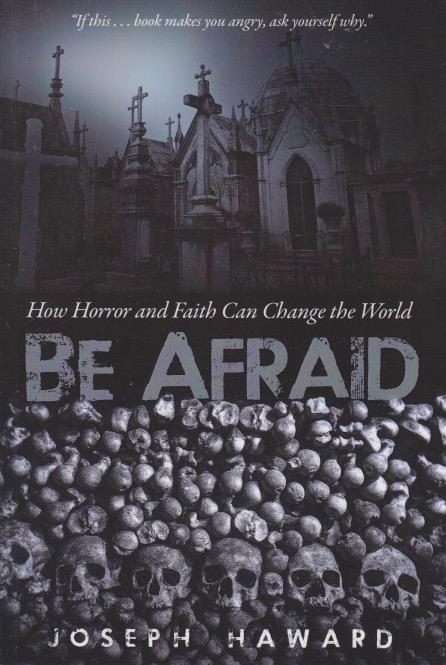
It’s something many of us do.  Trying to explain why, while religious, spiritual, and moral, we find horror fascinating.  I read Brandon Grafius’ Lurking under the Surface, and when I learned about Joseph Haward’s Be Afraid: How Horror and Faith Can Change the World, I figured I’d better read it too.  Haward is a British Baptist minister who seems to support progressive causes.  He also enjoys horror.  He even finds it prophetic.  I have to admit that when I read the foreword by John E. Colwell I was afraid that this would be one of those books.  You know, the kind that only half-likes horror because their religion tells them so.  Colwell is no horror fan, and his foreword doesn’t set the tone for what follows.  Haward finds horror homiletical.

When I was young I used to see movies and analyze them theologically with my friends.  This was in college and seminary, mostly.  We’d discuss the implications of movies—sometimes horror—and how they fit into our Christian worldview.  This book is like that.  It’s Haward’s reading of various horror films, some television, and some novels, integrating them into his theological outlook.  The book is more about theology than it is about specific horror films, although it does mention quite a few.  The discussion is sometimes hard to follow because the paragraphs are so incredibly long and the style is very theological.  I got the feeling that Haward would be an interesting person to have a conversation with.  His book didn’t really do it for me, however. Some things are simply better in person. (I do know Brandon Grafius, and enjoy our talks.)

I’m not into horror for the violence.  Haward tends to point to that element, but I’m generally looking for the mood.  And avoidance.  Also when I was young I learned the truism, “He who lives to run away, lives to run another day.”  I like to think that I’m brave, but violence really bothers me.  My family finds me a contradiction; I won’t watch movies that are based on “true events” unless they’re speculative.  I don’t need reminding that people can be horrible to each other.  I know that from scanning the headlines and from watching the election results.  No, I use horror to help me cope.  And it works best when I know there’s something supernatural going on.  I’ve grown out of theologizing about movies.  I took plenty of theology courses in college and seminary, but they seemed a bit too abstract to be helpful.  Then I’d go out with my friends and watch a horror movie on the weekend so we could talk about it.  There’s a bit of that nostalgia here.


Trouble on Campus

I know what it’s like to have a story living within you.  Academics writing novels don’t always qualify as Dark Academia, but Kathleen Kelley Reardon’s Shadow Campus does.  Continuing my current kick of that genre, I eagerly read of the skulduggery taking place at the fictional Pacific Coast University and found myself nodding with recognition.  Higher education is highly political.  I have to wonder if where two or three are gathered politics will inevitably be in their midst.  Perhaps thus it has always been, but it seems to me that when universities decided to model themselves on corporations, it grew much worse.  In any case, Meghan Doherty is a business professor up for tenure.  Her only family is an estranged brother in Connecticut.  Then one night someone attempts to murder her on campus and make it look like a suicide.

Shamus, her brother, flies to California to see her in the hospital and soon begins to suspect things are not as they seem.  I don’t want to give away too much here, in case you want to read it too.  I can say that sometimes life on campus is like this.  I’ve made the claim to have lived Dark Academia, and I’ll stand by it.  After the unpleasantness at Nashotah House, I was hired for a year as a replacement professor at the University of Wisconsin Oshkosh.  I really enjoyed teaching there, apart from having to leave my family in Oconomowoc; I stayed with a former Nashotah House student to whom I’m eternally grateful.  The department chair and colleagues liked me.  I was a good fit.  There was talk of making this a full-time position for which I’d be the inside candidate.  Then one of the other professors began to dislike me (long story).

I was called into the department head’s office and told that my eight courses for the next year had been reduced to one.  Permission to hire had been granted, but it had to be a specialist in women’s studies.  I was welcome to stay on as an adjunct, of course.  I’m a blue-collar guy and I recognize a boot when I see one.  And that was only the second time something similar had happened to me, and it wasn’t the last.  I’ve paid my dues to academia and yes, it is often dark.  So I enjoyed reading Reardon’s fictional account of underhanded dealings at Pacific Coast.  In my own experience guns were never brandished, but then, you can’t have it all.


Worse Seed

Not too long ago I watched The Bad Seed.  In the 1950s it probably wasn’t considered horror, but it is quite a scary movie.  I’d classify it as horror—not all fifties horror was guys in rubbery suits.  When reading about the movie afterwards, I learned the novel had a darker ending (the movie was pretty dark as it was).  So I decided to read the book by William March.  The movie’s fairly faithful, up to the ending.  As usual, the novel adds more detail and reveals some things rather differently.  For example, Christine Penmark, the mother of Rhoda, can’t ask her father if she’s adopted.  She “learns” this through inference.  Indeed, the book leaves you wondering if she’s actually mentally unstable.  The proof that she’s the daughter of a serial killer is strong but not definitive.  And her father is already dead when the story opens.

The school outing, where Rhoda claims her second victim, is where the movie opens.  Rhoda is expelled from the school because the women who run it can’t abide Rhoda’s dishonesty.  The character of Leroy is very well portrayed in the movie, but he too seems to have some kind of mental illness.  Monica Breedlove is accurately presented as a busybody, but she too spends a lot of time analyzing people, including herself.  Rhoda is, of course, a literal sociopath.  It’s fair to say the novel is an extended exploration of mental illness of various sorts.  I remember from growing up in the sixties that many conditions that are now regularly diagnosed simply weren’t recognized.  Kids were blamed for bad behaviors that were, in all likelihood, caused by being somewhere on the spectrum.

Much water has passed under the bridge since the fifties.  This book was a bestseller then, but I only learned about it last year.  Indeed, it’s been adapted to film three times and was a Broadway play before all that.  There was a sequel released a couple years back.  Rhoda Penmark is herself a trope of the narcissist who lacks empathy.  Hmm, where else do we see that?  It’s still analyzed as primarily a “nature verses nurture” novel, but I suspect there’s something more going on.  We’ve moved beyond Freud and this novel probes what goes on in the minds of those who spend too much time alone, as well as who happen to be the mothers of pathological child murderers.  And the ending is different, but the movie’s is equally as bleak.  The Bad Seed a good book for this particular January.


Getting By

There are some books, such as Trina Paulus’s Hope for the Flowers, or Charlie Mackesy’s The Boy,  the Mole, the Fox and the Horse, that are inherently hopeful and that you like to have around.  Especially in the coming four years full of hate-filled rhetoric.  My wife asked for Regina Linke’s The Oxherd Boy: Parables of Love, Compassion, and Community, for Christmas.  Of course, I read it too.  It is yet another to add to this hopeful shelf.  The thing about these three books is that you could easily read them all in an unrushed afternoon.  All three are profoundly hopeful outlooks on life.  I would recommend having them at hand.  The Oxherd Boy is a combination of beautiful artwork with bits of wisdom drawn from Taoism, Buddhism, and Confucianism that can keep you centered in difficult times.

There’s no real storyline here, but rather reflections.  “Eastern wisdom” is kind of a tired trope, but the “religions” of that part of the world can infuse a bit of sanity into many of the facades western religions throw up.  I’m not anti-Christian; I fear our society is.  It has taken one of these facades and claimed the name “Christian” so that it can get its hate on and feel righteous doing so.  There are seldom positive benefits when politics finds religion.  If any.  The Oxherd Boy reminds us to look for the good in simple things.  A life with friends and one in which love is the primary outlook.  I believe Christianity began that way, but it became politicized in under four centuries and politics tend to engender hatred.  A truly Christian state, through and through, has never, ever existed.  And it’s not coming here.

We know hate mongering will take the norm.  In fact, while out driving recently I noticed an increase in rude and angry behavior on the part of not a few drivers.  There was a noticeable uptick in such behavior shortly after Trump’s first election.  In a nation of people that imitate what they see on the media, I suggest staying inside and reading a book.  I would recommend The Oxherd Boy among them.  As long as you’re stocking up, don’t forget Hope for the Flowers and The Boy, the Mole, the Fox and the Horse as well.  Books don’t need to be written by academics to try to make the world a better place.  In fact, sometimes I wonder about the choices I’ve made.  So I’ll pull down the books that give me hope, and reflect.


Steering

I’ve always been self-critical.  Often when someone points out something I’ve done wrong I’ve already figured out that I’ve made the mistake and the reminder is painful.  I can’t help but think that my childhood made me this way.  In any case, since I haven’t ever found much success is writing, I figure I must need help with it.  Recently I’ve read books on various aspects of writing by Stephen King and H. P. Lovecraft (published posthumously).  I’ve read quite a few more over the years.  I recently saw Steering the Craft: A 21st-Century Guide to Sailing the Sea of Story by Ursula K. Le Guin.  I confess that I haven’t read a ton of Le Guin’s fiction, but she is treated with a great deal of reverence in literary circles that I figured a bit of advice from a master couldn’t hurt.  Besides, it isn’t a long book.

Books about writing aren’t volumes that you fly through, though.  Steering the Craft has ten relatively short chapters and ten writing exercises, some in multiple parts.  As I read through I stopped and did each of the exercises.  I really didn’t want to cheat myself of the experience of learning from a departed sage.  The experience was refreshing.  As will surprise none of my regular readers, I’m in the midst of another writing project.  The thing about steering is that you’re constantly doing it.  And if the captain is someone who’s been through these waters, it’s best to listen.  At the same time—and Le Guin was very aware of this—hard and fast rules tend to be neither.  What spells success for one author becomes abject failure for another.  Some of us write because we must, whether anybody reads us or not.

But the exercises.  Exercise is good for your health.  Even writers with native talent need to stay in shape.  I’ve been doing creative writing, in one form or another, constantly, since at least the Nixon Administration.  Publication began in the academic realm when I was working on my doctorate.  I had my first fiction piece published in 2009.  Keen eyed readers will notice that is the same year I began this blog.  I’d been pretty much booted from academia by then, but I’d been writing in the meantime.  Essays, novels, short stories.  Then I tried a nonfiction book or two.  There is a great gulf between writing and publication.  An ocean, in fact.  And if you hope to cross an ocean, it is always helpful to learn how to steer.  I’m still trying to learn why my boat seems to be leaking, though.


Reading Unwritten

There’s a style of writing—I’m not sure what it’s called—where an author keeps revealing new, and necessary information on nearly every page.  The effect on me, as a reader, is almost as if the book is backwards; too much wasn’t revealed up front and that kept me from understanding the story as it unfolded.  I confess that the fault is mine.  I’ve always appreciated a narrative that begins with much of what you need to know and then reveals unexpected things along the way.  This unwieldy preamble is to say that I had trouble getting into the otherwise delightful fantasy The Library of the UnwrittenA. J. Hackwith is a solid writer, but since this is fantasy there’s some introduction to the unfamiliar world that readers like yours truly needs.  At least a bit more than is on offer here at first.

This is a fun book with a fun premise.  Books in Hell’s library are unwritten and restless.  If not watched, their characters come to life and the book goes missing.  The idea of the unfinished also applies to paintings and other creative endeavors.  At first I thought this was going to be like Jasper Fforde’s Tuesday Next novels (several of which are discussed on this blog; you’ll have to use the search function) but the character from a book quickly gets swallowed up in a larger story involving demons with backstories slowly revealed, as well as a librarian and a muse, also with baggage that we only see once the train has left the station.  About halfway through, the story really starts to move and becomes quite enjoyable.  I guess I need more orientation than some readers.

The novel unfolds into a potential battle between Heaven and Hell, but those aren’t the only realms in play.  There’s Earth, of course, as well as Valhalla, and some nameless realms where the gods have died out.  And it focuses on a library.  It’s this final aspect, I suspect, that leads many people to categorize this novel as an example of Dark Academia.  Indeed, that’s where I discovered the book, on a display table with that label.  Although written with a light hand, and often somewhat funny, there is a deeper meaning here, a narrative about the importance of books that faces the reality that some would rather destroy them than read them.  I’m sure there are some religious folk that would see this book as promoting satanism and darkness, but instead it emphasizes loyalty and goodness.  I’ll be pondering it a while.