The Help

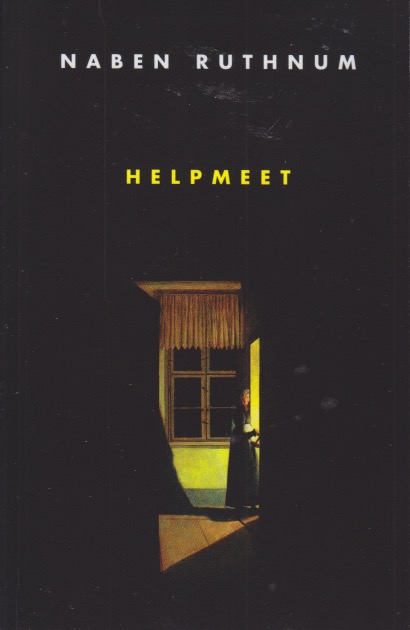
Helpmeet was recommended to me by a friend.  Since most of my reading these days seems to be in the form of long books, I welcomed a brief one.  And the story, which is gothic and distinctly creepy, unfolded quickly.  I’ll not give away the ending, but the premise is spooky enough.  Edward is a physician who is married to Louise.  This is in the late 1800s.  Louise is aware that Edward has been unfaithful, but she loves him nevertheless.  He is dying.  His request is to end his days in his ancestral home near Buffalo, New York.  Travel is difficult because his body is literally falling apart.  Other doctors don’t know what’s wrong with him.  Some acquaintances suggest a venereal disease, since, well, he hasn’t kept his love in one place.  Louise agrees to the move.  Edward has lost both his eyes and his nose, and some other extremities.

He has to be wrapped carefully for the move, which is by train.  In a private car.  Secrets are revealed.  The mysterious woman with whom he had an affair.  How she was able to reach inside his body.  And how she is coming to visit in their new location.  After all this the plot takes an unexpected twist, which I’ll leave out in case it’s a spoiler.  Atmospheric and melancholy, this is one of those horror stories that is easy to get into and difficult to put down.  Body horror is a sub-genre that can be disturbing since we all have to deal with bodies and their issues.  And bodies are tied to mortality.  We are pretty sure from the beginning that Edward is not long for this world.  His body has begun to decompose with him still in it.  Louise’s care for that body is also a factor that forces us to look at what we’d rather not see.  Out of love, in her case.  And maybe revenge.

Spare stories such as this can still be powerful.  There’s a supernatural element to the twist, but it doesn’t feel like a deus ex machina.  It has been there from the beginning, but the reader couldn’t see it.  Helpmeet also raises the question of how well we really can know another person.  Even couples have to spend much time apart and individual experiences can change a person.  Edward isn’t a sympathetic character here, but he’s not evil.  Louise has to accept him as a man with weaknesses, and one who requires, as the title suggests, a helpmeet.


Little Gems

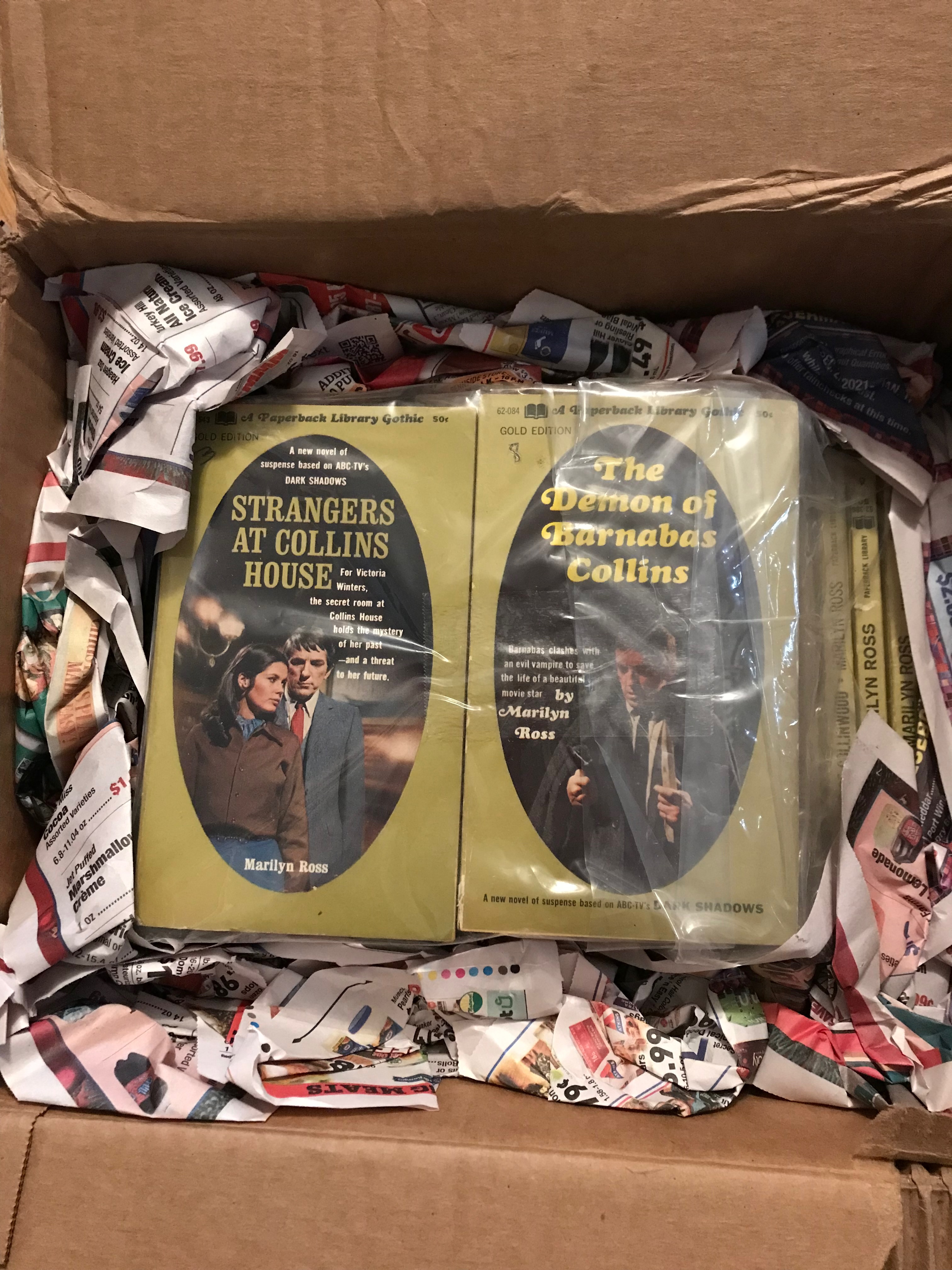
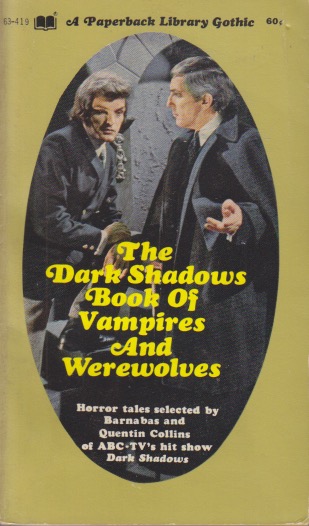
On a recent diversion to a curio shop we like, I found that one of the “Dark Shadows” paperbacks they had was one I hadn’t read.  Dark Shadows had, of course, spurred a pretty amazing franchise for its day.  It’d sunk its fangs into many young people who would not have otherwise been inclined towards soap operas.  I’ve written several times about the spin-off books by Marilyn Ross.  That series encompasses much of my childhood.  This particular book was a knock-off with the same branding titled The Dark Shadows Book of Vampires and Werewolves.  Now, to be fair, the asking price was about the same as a trade paperback price today—a little less, even—and the collection included, I saw at a glance, Polidori’s “The Vampyre.”  So now it sits on my shelf next to the other Dark Shadows books.  Apart from the gimmick of listing the book as edited by Barnabas and Quentin Collins, it is actually a nice period piece.

In addition to Polidori, eight stories I’d never read.  Two of them make the claim of being non-fiction, and a third maybe.  The tales, which favor vampires over werewolves, also include what are some little gems.  One is a story by M. R. James (“Count Magnus”).  Other noteworthy members are “Wolves Don’t Cry” by Bruce Elliott and “The Vampire Nemesis” by “Dolly.”  “For the Blood is the Life,” by F. Marion Crawford, is also good.  In other words, the collection was better than I suspected it would be.  I’d not read any of these before, so they were all new to me.  I was particularly intrigued by “Dolly.”  Apparently the author of The Vampire Nemesis and Other Weird Tales of the China Coast has remained anonymous since its 1905 publication.  The book has been rediscovered in modern times, and I’m now curious about it.

Although I like to think myself immune, I am sometimes susceptible to branding.  For whatever reason, that olive-green oval-cutout cover design, when spotted in the wild, makes me ecstatic.  My childhood wasn’t ideal, and I remember when I started to find these books used.  It was a very challenging phase in my younger years.  I knew even then that these cheap paperbacks would take me away from my troubles for a while.  And they would transport me back to an even more troubling period of my childhood when I would watch the show after school with my brothers.  A visit to the curio shop from time to time may be just what the doctor prescribes.


Cool Book Festival

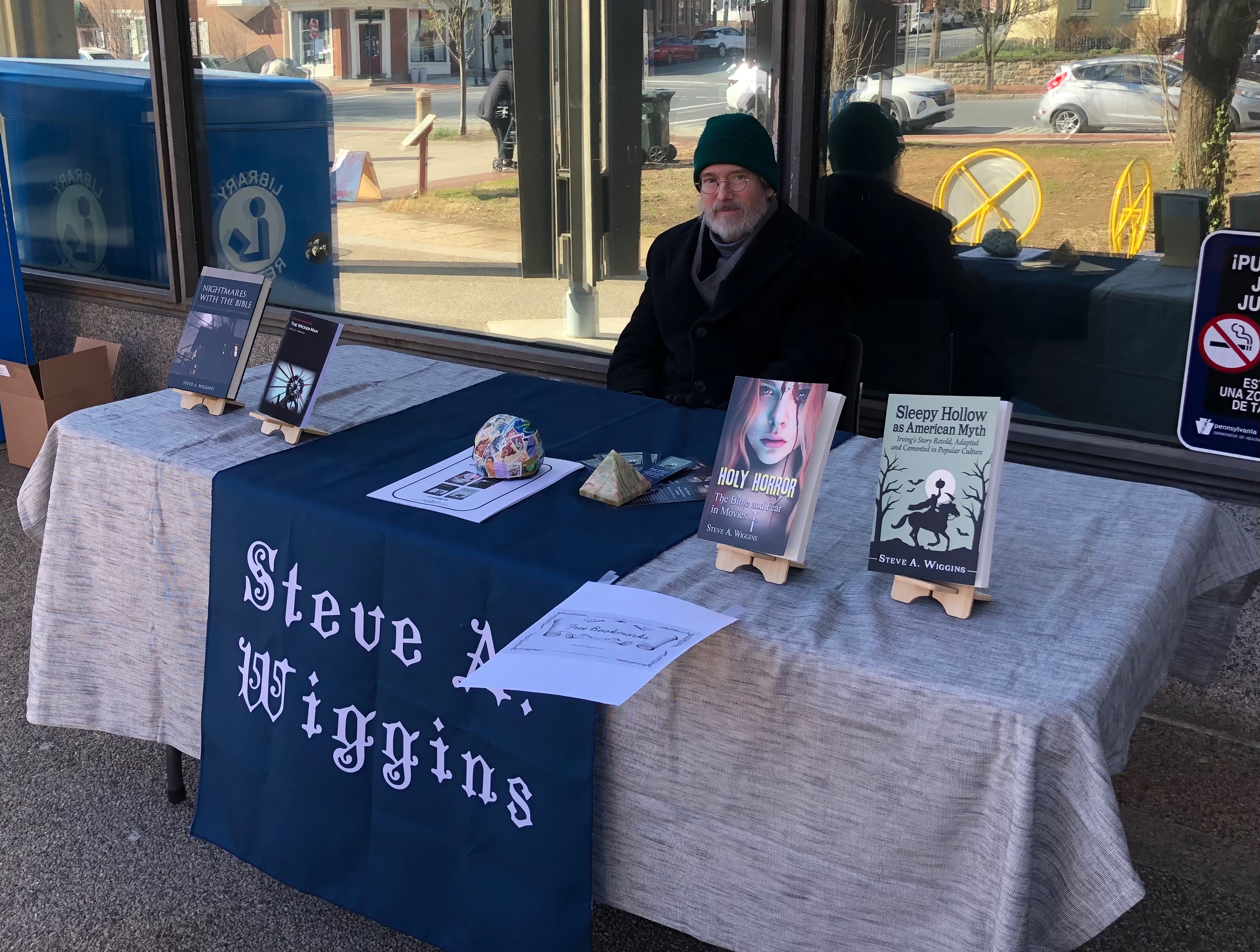
So yesterday I was at the Lehigh Valley Book Festival.  (It occurs to me know that I should perhaps post such notices in advance, but I know few people in the area where I live.)  I was there displaying my books.  I have participated in the Easton Book Festival for at least four years now, but I had only recently learned about this event held in Bethlehem.  The weather was clear, but cold for an outdoor event that involves a lot of sitting—it put me in mind of having to put on gym shorts and tee-shirts to go outside one November in college to have the coach lecture us about football, with no moving or actual playing involved.  It turned out to be an endurance test.  Not quite of the Shackleton magnitude, but I am sensitive to cold and it was struggling to reach 40, and this on the 28th of March.  At least there was a cool breeze.

Several lovely people stopped to talk and showed some interest in my work.  I’m grateful to all of them.  As an author you often wonder if you really are alone in your interests.  Since my table was next to a run of three tables of children’s books—when those authors decided on an unauthorized move of their tables into the sun (we were on the shaded side of the building), they did not invite me to join them—I was a bit self-conscious.  Parents hurried their kids past my modest display.  I took a quick swing through the other stands and I think mine was the only one for adults.  Many people glanced and frowned as they walked by, but several people got it.  I know there are local horror fans out there, but I have trouble finding them.

The Lehigh Valley Book Festival isn’t huge and several people just happened upon it, asking why we were there.  It was held at the main branch of the library and it is fairly centrally located in town.  Also, there was a cherry blossom festival taking place on the other side of the library.  I couldn’t be certain but it seemed that many more people were headed for that.  And honestly, I’ve lived in this area for going on eight years and I just learned about the festival last fall.  And I’m a book guy.  Not too connected locally, I’ll admit.  There was enough interest that I might consider it again next year (if selected again).  Especially if the temperatures are back towards the seasonal norm.


Vengeance Is Hers

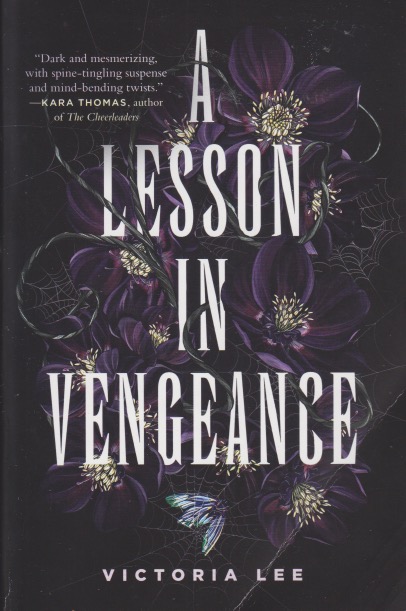
A Lesson in Vengeance, by Victoria Lee,  is a novel with some twists that I’ll try to conceal.  It is a kind of young adult horror-themed dark academia novel.  I really enjoyed it although there are a few improbable events.  That’s the way of fiction with an unreliable narrator.  Felicity Morrow, a girl from a wealthy Boston family, is enrolled at Dalloway School.  Dalloway is a girl’s prep school in upstate New York.  Felicity had to take some time off, during which she was institutionalized, after the death of her best friend, and lover, Alex.  Now that she’s back at school she feels the ghost of her friend coming back for vengeance.  She lives in Godwin House, which only has space for five.  It’s also part of the story of the Dalloway five, girls accused as witches when the school was founded, who all died there.

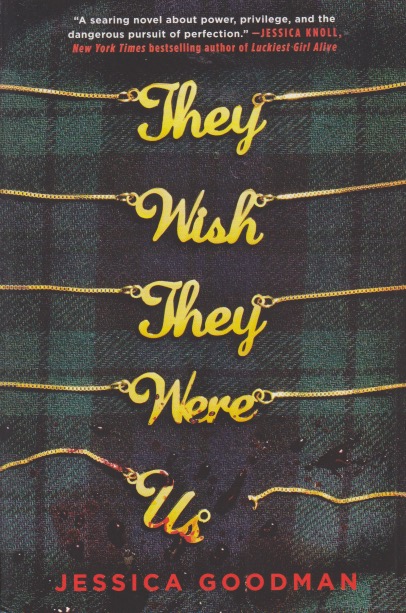
A new girl is starting at Dalloway this year.  Ellis Haley has already written a published novel and is working on a second.  She lives in Alex’s old room.  In spite of their rocky start, Ellis and Felicity become friends.  Then more than friends.  Meanwhile, they’re both working on their senior projects but Ellis wants to form a fictional coven and replay the way the Dalloway five died, for her novel.  Things grow tense as Felicity begins to remember more and more about what happened to Alex.  Then a murder takes place.  I won’t say more about the plot.  The last several chapters are ones where putting down the book is a real struggle.  You want to know who did it.  And since Felicity is the narrator, you gather that she must survive.  But this isn’t without danger.

The horror elements involve ghosts and witches.  Since Felicity is revealed to be an unreliable narrator it’s unclear whether the ghosts are real or not.  Most of the events are revealed to have had naturalistic answers, but one remains as either a real ghostly visitation or a delusion on the part of Felicity.  I read this book as part of my ongoing fascination with dark academia, and I’m glad I did.  It’s quite a well-told story.  Enough information is held back and revealed in moments of insight as the story unfolds that I was kept guessing until very near the end.  And the final realization only hits at the very end.  This is a good entry into dark academia for anyone wondering where to start, at least in my opinion.


Creepy Cryptids

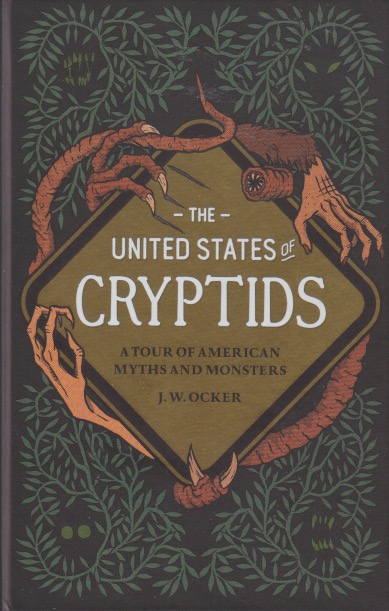
J. W. Ocker and I have a few things in common.  We’re both Edgar Allan Poe fans.  We both have an interest in the odd.  And we like to visit places where something strange is commemorated.  It gives me hope that there are likely more such people out there.  I read Ocker’s Poe-Land a few months back and knew I’d be coming back for more.  The United States of Cryptids caught my eye.  This book is for fun, but with a serious subtext—our world is a weird place.  Dividing the country into four regions: Northeast, South, Midwest, and West, Ocker traveled across the country looking for stories, or better yet, memorial statues and/or plaques, of cryptids.  Defined broadly.  These cryptids can be sightings of something unusual, folklore, or, in some cases, confessed hoaxes.  He makes the point repeatedly that cryptids make for great tourism opportunities.  There are people like me that will seek out such places, given half the opportunity.

Quirk Books, which has been unfortunately experiencing some difficulties of late, functions as a sort of home to oddities.  And cryptids fall into that category.  Ocker does point out, on a serious note, that any animal reported to have been encountered prior to scientific description was a cryptid.  Perhaps the most famous case is the gorilla, which many non-Africans believed to be mythic until one was actually found.  Or the coelacanth.  In any case, discussing cryptozoology is a dicey thing to do.  If you take it too seriously you’ll be ousted from polite society and if you handle it with too much humor, true believers will shun you.  Ocker manages to find the middle ground here with a book that is fun to read and yet gives you ideas of places to visit or concepts to explore.

Reading Ocker’s books makes me think that maybe I take things a bit too seriously from time to time.  That’s one reason that it’s important for me to read authors like him.  I’m plagued with a need to know.  Not everybody is, of course.  I do tend to take things with an amount of earnestness that others sometimes find too intense.  It’s probably my childhood that’s to blame.  That doesn’t mean I can’t enjoy a lighthearted treatment of unknown animals.  And I do try to keep a somewhat open, if critical mind.  There’s a line, sometimes fine, between having fun with and making fun of.  Ocker enjoys the odd enough to know which side of that line to walk.  Or drive.  Now, where did I leave my car keys?


Googling Books

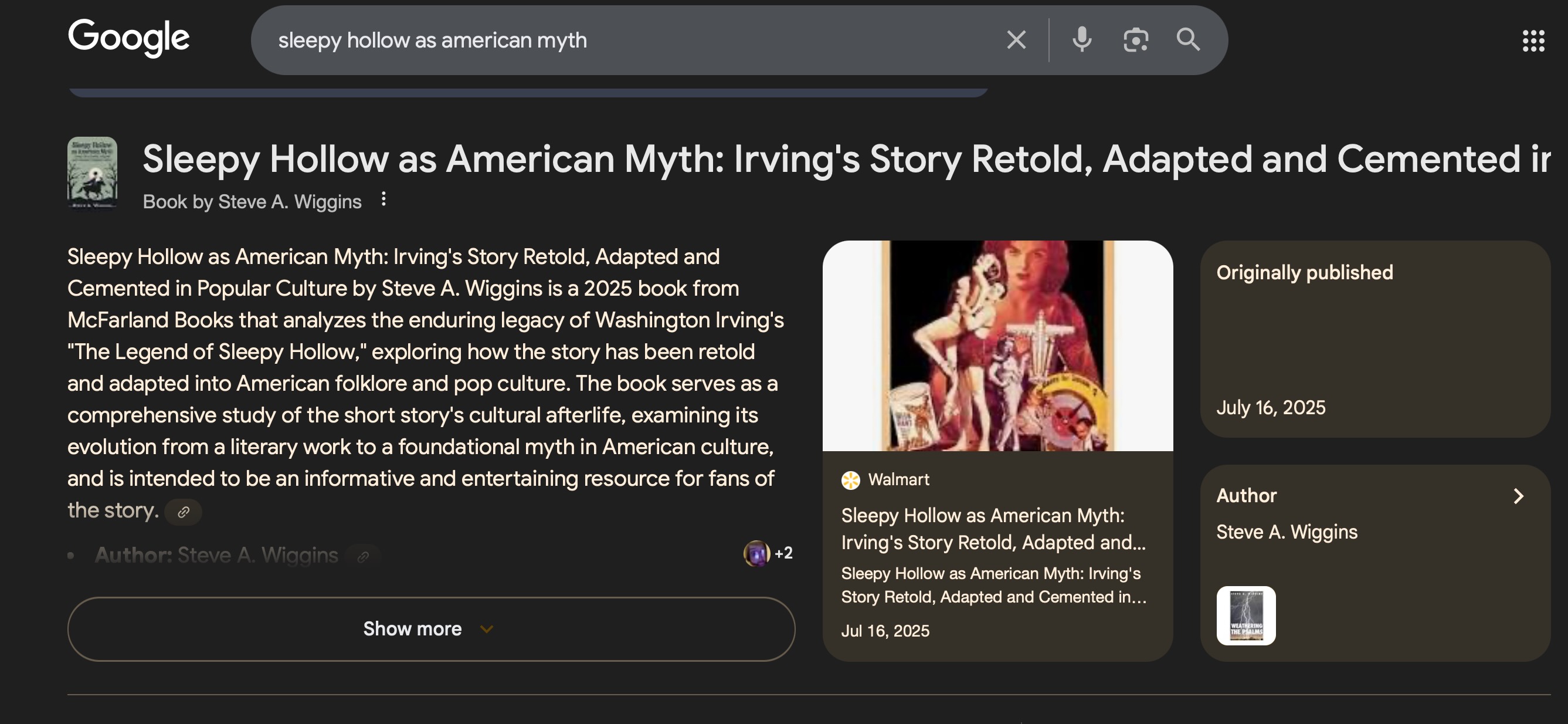
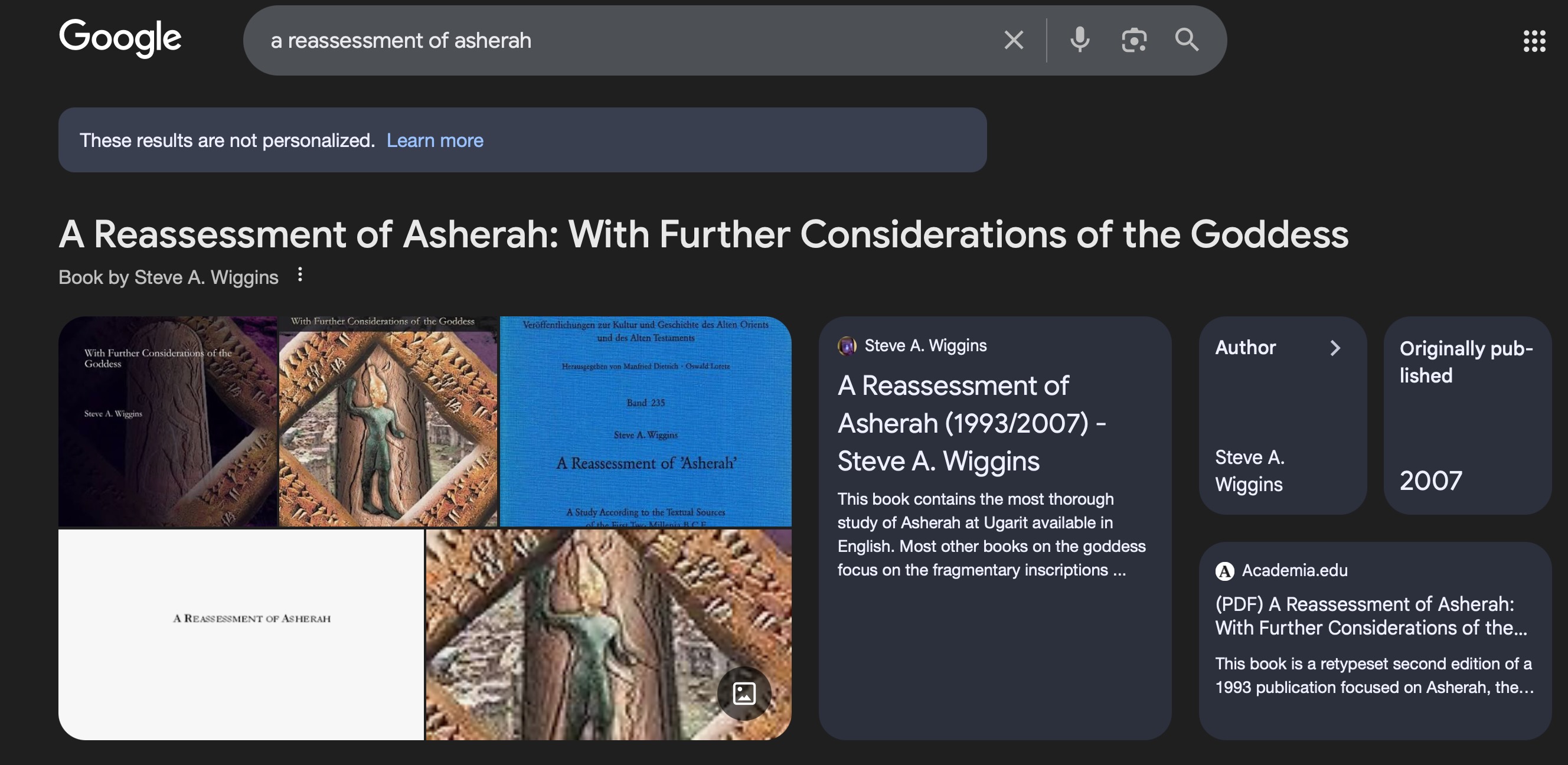
I admit to Googling my own books from time to time.  (I know, I know!  You’ll go blind if you don’t stop doing that!)  Since I haven’t yet seen any royalties (or reviews) yet for Sleepy Hollow as American Myth, I searched for it.  Google now has a page topper, generated by AI, I suspect, that goes across specific searches such as for a person who’s got some internet presence, or a book.  Not all books get such a banner, however; yes, I’ve looked.  My Sleepy Hollow book, however, pulled up a page topper.  It was still a work in progress, however.  By the way, I did this search with results not personalized; Google knows people like to see themselves topping a page.  So here’s what I saw:

Okay, so they got a number of things right.  This is the correct book and the description seems correct.  The publication date is right and I did indeed write Weathering the Psalms (still my best selling book).  But what’s going on with Wal-Mart?  They have the title correct but that picture?  Although I watch a lot of movies, I’m pretty sure this one has nothing to do with Sleepy Hollow.  What I tried to do in that book was find every extant movie on the story and watch them.  It is possible I missed some (the internet isn’t built to give that kind of comprehensive information, which is why human authors are still necessary).  Besides, AI has hallucinations, and this seems to be one of them right here.  It couldn’t find a copy of the cover of my book (which appears on the left-hand side, but apparently the right…) so it filled something else in instead.

None of my other books get their own banner/topper on Google, except A Reassessment of Asherah.  That isn’t my best selling book, but it is my most consulted.  That banner, however, also has mistaken information.  It says it was originally published in 2007.  The original date as actually 1993.  Web-scraping may not help with that.  The book, as originally published, didn’t have an ebook, and the information about it largely comes from the second edition, published by Gorgias Press.  But then, only humans are concerned with such things.  There are no sultry women staring out of one of the topper windows, so the images appear to be correct.  That’s one of the funny things about being a human author—you want the information about your books to be right.  Of course, I should probably cut down on the Googling of my own books.  It’s unseemly.


The Black Monk

Back at Nashotah House the local ghost was called “the Black Monk.”  A plausible origin story circulated with the name; a student broke through the ice on the lake one winter night and met his demise.  Some even claimed to know which was his gravestone in the cemetery on campus.  I really didn’t give much thought to any of this until I learned that Anton Chekhov wrote a short story titled “The Black Monk.”  Now, I don’t know if some literate Nashotah student was referencing Chekhov or if the color was just fitting for a cassocked community of quasi-monks.  In either case, I decided to read the story.  The Russian tale involves a man named Kovrin.  He holds a Master of Arts degree, in the way that degrees in Russian stories bring the holder a great deal of respect.  He was raised by a wealthy farmer who owns extensive orchards, and, needing some time to relax from his city schedule, goes to stay with his former guardian and his daughter.  While there he relates the tale of the Black Monk, who was seen all around the world, and maybe even in space, from where he walked in Arabia or Syria, a thousand years ago.  It was rumored that he would return a millennium later, and, as it turns out, Kovrin sees him.

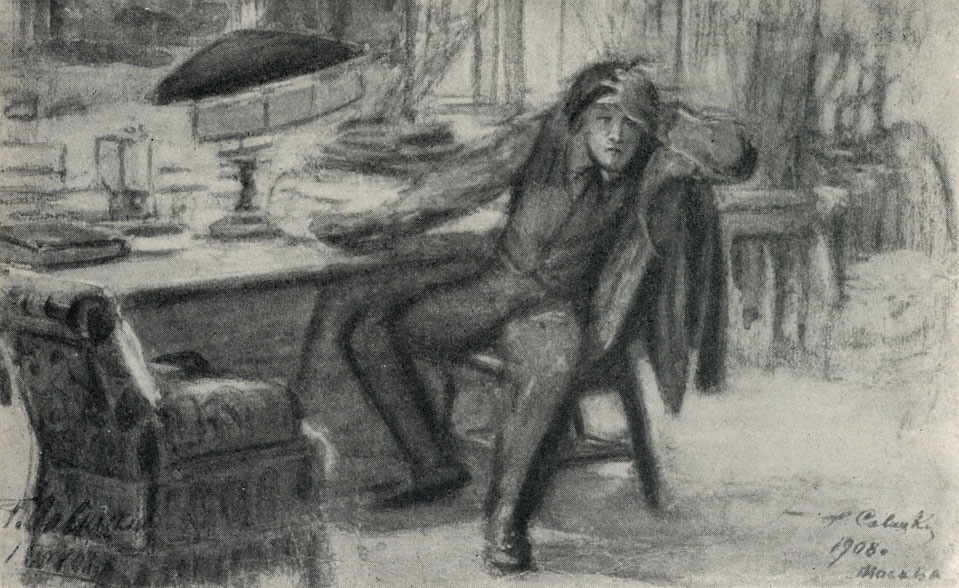
G.K. Savitsky’s illustration “The Black Monk,” public domain via Wikimedia

Kovrin is a successful, bright, and cheerful scholar.  He begins to see the phantom and have conversations with him.  The monk assures him that he (Kovrin) is extraordinary, a genius even.  That other people, satisfied with mediocrity, melt into the herd.  True genius, however, is often perceived by others as madness.  They have long conversations.  Kovrin marries the farmer’s daughter but their relationship is troubled.  One night she awakes to find him speaking to an empty chair—nobody else sees the Black Monk.  Convinced that he is mentally ill, she and her father put him in a doctor’s care and his new regime of lifestyle changes prevents further visits of the Monk.  Kovrin, however, grows sullen and dull.  He realizes that his genius is gone and that he has become ordinary.  His marriage falls apart and when he goes on a vacation to the Crimea, he once again sees the Black Monk.  His feelings of being extraordinary begin to return, but he dies that night.  His corpse wears a smile.

This tale had me thinking.  It’s not clear that Kovrin was really mad but no doubt he’d been quite intelligent.  He was given a university chair and received the praise of others.  It was the cure that destroyed him.  It robbed him of his enjoyment of life and also led to the downfall of the farm since his father-in-law died and his daughter, now separated from Kovrin, writes to curse him for his insanity.  The farmer and his daughter aren’t always sympathetic characters, but until his dying day (literally) Kovrin had lost all that made his life meaningful.  The Black Monk admits he’s an apparition, but Kovrin was clearly brilliant while he met and conversed with him.  I’m not sure of any parallels with Nashotah House, but it has a character in common with Chekhov’s story.


On the Run

I come down on the side of book.  Usually.  In the book or movie first debate.  I have to confess, however, that I learned about Logan’s Run because of the movie.  It was quite impressionable on a teenage me, thinking that in such a world I’d have less than ten years left.  I bought the movie tie-in book and read it.  It was very different from the film.  I only remembered one scene from the book and so, nostalgia smothering me, I had to read it again.  The book was actually published in 1967, when I was quite young.  The movie came out in 1976, as did the tie-in novel.  The story has been replicated since then but the basic idea is that in the future overpopulation leads to the radical decision that everyone dies after turning twenty-one.  This is a world of the young.  Politics are handled by computer, and Sandmen, like Logan, hunt down and kill runners—those who try to escape their mandatory death.

There are a number of things to say about this.  One is that the two authors, William F. Nolan and George Clayton Johnson, had distinguished writing credits.  Another is that this is good sixties sci-fi, but belles lettres less so.  I still enjoyed reading it again.  It had been literally fifty years.  When this was written a population of six billion was considered unsustainable.  We’re now at over eight billion and it does seem as if we’ve tipped some kind of balance.  Another thing that stood out, one of the dangers of future-projecting sci-fi, is that newspapers are still a thing in the future.  They’re hardly a thing now.  They do make predictions for 2000, so maybe they should’ve pushed things out a bit further before committing.

In real life, the “developed” world actually has a problem of too many of us seniors and falling birth rates.  Nobody to take care of us when we no longer can.  This seems to be true in the United States, Japan, and China, at least.  Hopefully we won’t go to Logan’s solution.  So, as the book title suggests, Logan decides to run.  There’s a fair bit of religion in here.  He runs to find Sanctuary but, until very close to the end, intends to kill Ballard, the guy who helps runners escape.  There’s lots of adventure, several changing scenes, and a fair bit of testosterone.  Still, the story isn’t a bad one.  It’s old enough (ironically) to be a classic.  And yes, it’s still in print.  Part of my childhood has been restored.


Gothic Dreams

I love this book.  Roger Luckhurst understands that the gateway to horror is the gothic.  In Gothic: An Illustrated History he offers a world-wide, luxuriantly illustrated tour of both classic and contemporary gothic.  As a category, it’s difficult to diagram precisely.  Luckhurst does it through a series of themes: architecture and also form, various landscape settings, how the four cardinal directions appear in the gothic imagination, and, of course, monsters.  Each of these themes is divided into four or five chapters.  Not wanting to rush, I limited myself to a chapter a day, but I’m sure I’ll be dipping back in again.  This is the kind of book that both gives you ideas of new books to read and movies to watch, and affirms the choices that you’ve already made in those regards.  In other words, this is a place horror fans would naturally feel at home.

The gothic entered my life at a young age, partially because I was living it (unwittingly) but mostly because it appealed to me.  It made me feel good watching monster movies and Dark Shadows with my brothers, and later, reading gothic novels.  There’s definitely a nostalgia to it.  I loved gothic architecture from the moment I first saw it.  Not that Franklin had soaring cathedrals, but there were some very nice Victorian houses in town.  And when I saw cathedrals I felt a strange stab of joy.  Although I sublimated my love of gothic while working on my academic credentials, I couldn’t stay away from ruined castles and abbeys  in Scotland.  Although I was trying to be a scholar, I knew what secretly inspired me was made of coal-blackened stone.  Even if I didn’t say it aloud, the monsters of my imagination lurked there.

The narrative accompanying the wealth of images in this book probes what makes gothic tick.  It would be impossible to cover it all in one tome, of course.  My current fascination is with dark academia (an aspect perhaps too new to be in Luckhurst).  Dark academia’s draw is that it revels in the gothic, placing it in educational settings.  But it can occur anywhere, as Luckhurst clearly shows.  Anywhere that there might be shadows or reflections.  Anywhere that experiences nightfall and autumn.  Anywhere people must face their fears.  While my usual avocations always please me, when I see the gothic addressed directly it takes my breath away.  No doubt, mine has been a strange life.  One in which, even before I reached my first decade, I found the gothic vital and necessary to an odd kind of happiness. This book brings it clearly into focus.


With Thorns

I’ve seen T. Kingfisher’s books on the tables of various bookstores and I’ve noted them.  I wasn’t sure if they were horror since the tables have always had ambiguous labels, such as Books to Read at Night, or some such.  I was in a new independent bookstore a couple weeks back and A House with Good Bones was decisively shelved with horror and so I decided to give this new (to me) author a try.  I’m glad I did.  Kingfisher writes in the vein of humor and horror, like Grady Hendrix.  This is a fetching kind of horror writing, if it’s done well.  A House with Good Bones keeps the pages turning with winsome writing as things start to get more disturbing and dark.  Samantha Montgomery, an archaeoentymologist (an archaeologist who studies insects, or an insect scientist who’s into archaeology) waiting for a dig to resume, visits her mother in North Carolina.  She learns that her mother has been acting strange.  There could be some spoilers below.

Overall, the plot is a bit complex, so some aspects will be left out.  Even if there are spoilers, you’ll need to read the book to reconstruct it all.  Fair warning.  The house seems to be haunted, but Sam doesn’t believe in ghosts.  And the haunting is unconventional—it focuses on roses.  The roses were planted by Sam’s grandmother, a woman she and her mother lived with, but who was anything but nice.  She was, however, dedicated to her roses.  While staying with there as an adult, Sam tries to do some research.  She learns that her great-grandfather was a kind of local wizard, or warlock.  Her grandmother wasn’t well liked in the small community where she lived.  As things begin to get creepier, Sam is forced to realize that despite her scientific training, houses can be haunted.  Her dead grandmother shows up, made of roses.  With the aid of a local witch, they banish the grandmother.  Then more trouble comes.

The grandmother had warned Sam of “the children underground”—her version of the bogeyman—and when the house suddenly becomes half buried, Sam and her mother learn that the children underground are real.  The novel also has a vulture theme.  I’m not doing a good job summarizing, since the story is, as I said, complex.  But it’s very enjoyable to read.  Kingfisher is funny and then scary, and passes easily between the two.  I enjoyed this book quite a lot, and I’ll be coming back for more.  And I think I know, after reading her, why Kingfisher is sometimes placed on ambiguously labeled tables at bookstores.  I always appreciate writers who make up their own genres while telling a compelling story.


Whose Smile?

Amazon’s smile logo is a mask.  I use Amazon when I need something specific and I don’t have time to run around to six or seven stores to see if I can find it (I usually can’t).  This means that many of the items come from other vendors and Amazon takes a cut.  Taking a cut, by the way, may be the best way to make a living.  In any case, I seldom write reviews of such orders.  Most of them are books and generally they arrive in the condition in which they’re described.  I did, however, receive a non-book item which did not work.  I tried contacting the seller and their email didn’t work.  I decided to alert the world.  So I took some of my precious time and wrote a review on Amazon.  The prompt promised me that if I wrote seven reviews they’d tell me a joke.  What can I say?  I’m easy.

So I reviewed books, etc. until I reached seven reviews.  The next screen simply said “Awesome! Thank you for helping other shoppers!”  Is this meant to be a joke?  What about that Amazon smile?  I just gave them ten minutes of my time for a promised joke that never materialized.  Now I’m grumpy.  By the way, I started the review process with the most altruistic of motives; I don’t want anyone else to waste money on a product that doesn’t work, and you can’t contact the seller.  To make matters worse, it was a Christmas gift, so that by the time it was open and tried out, it was too late to return it.  Is this supposed to make me happy?  I was looking forward to at least a dad joke.  None at all.  This happened a few months after I fell for a scam, so I’m not feeling especially generous to the internet today.

It’s a little thing, a joke.  I’m not good at making them up myself (although I’ve been told now and again that I can be witty).  Ten minutes easy labor, feeding the beast and the best they can come up with is “Awesome!”?  An overused word at that!  Don’t promise me a joke if you don’t intend to deliver one.  Probably some AI trick, if you ask me.  They lure you in with promises and when it’s all over you’re left with nothing.  (Kind of like the product I bought as a gift).  In the end, the joke’s on me.


Beautiful Reality

Although it is central to understanding all human experience, we are far from comprehending consciousness.  It’s clear to me, based on the fact that our senses are limited, that rationality alone can’t provide us with all the answers.  And brilliance often comes at a cost.  These were my thoughts after watching A Beautiful Mind.  Having hung around Princeton quite a bit when living in New Jersey, it was nice to see it in a film.  The movie is, of course, a somewhat fictionalized account of the mathematician John Nash’s life.  Although extraordinary in his grasp of math, Nash suffered from mental illness as well.  A Beautiful Mind takes liberties, but then, most biopics do.  The film is well done from a cinematic point of view, and for those of us without any real knowledge of Nash (although we only lived about 15 miles away) it effectively fools you into mistaking reality.

I wanted to see the movie because it’s often cited as an example of dark academia.  Clearly the mental illness—called schizophrenia here—is the source of the darkness.  Academia is obvious.  This biopic genre of dark academia includes a number of films and many of them explore the disjunction between deep thinkers and social life.  It seems that we may be only in the early stages of mapping the intricacies of the human mind.  I was recently reading that psychology is still, after all these years, struggling to be considered a “real” science.  The human mind is a slippery place and emotion and intuition play into making someone really stand out from the rest of us.  And also, their stories have to be noticed by someone.  In Nash’s case, a book that was later made into a movie.

Academics in general aren’t given much notice.  Many operate in the rarified world of extended study.  Those who, like myself, are expelled, often have difficulty fitting in to other lines of work.  Thinkers often have trouble not thinking.  That can get you into trouble on the job.  Movies like A Beautiful Mind have some triggers for me because I often question what reality is.  I always have.  Please don’t take it personally, dear reader, when I say I’m not sure you’re real.  (You may think the same of me.) It’s just the way I look at the world.  I’m no mathematician, though, nor a scientist.  Not even a philosopher, according to the guild.  Academia, however, was my home and seems to have been what my mind was made to do.  At this point, I’ll settle for watching movies about dark academia.


Dark Library

Although it’s booming, I’m not a romance reader.  Not in the modern sense, anyway.  I’m a big fan of the Romantic Movement, which gave us the gothic novel, but the distant descendant of the latter is dark academia.  And dark academia is what brought me to Rachel Moore’s The Library of Shadows.  That, and ghosts.  I’d read somewhere that this novel (probably classified as young adult as well) brought dark academia and ghosts together and indeed it does.  I’m finding dark academia to be quite liberating.  I may no longer be a card-carrying member of Club Academe, but that setting is never far from my mind.  Enough about me.  Here’s the story: Este is a student at Radcliffe Prep, reputed to be the third most haunted school in the country.  She doesn’t come from money, however, since her father, a former Radcliffe Prep student, died prematurely and her mother has gone in search of anything that might remind her of him.

Este, unlike her wealthy cohort, isn’t sure how she fits in.  She doesn’t believe in ghosts.  Until she falls in love with one.  (This isn’t really a spoiler since it’s on the back cover copy and you can infer as much from the cover art.)  The story revolves around how to resolve that tension.  I’m sorry to admit that I’m not sure if “fades” are a traditional kind of ghost or if they were invented for this story, but they are behind the somewhat-horror elements to the tale.  Moore lays out the rules for her ghosts: they can’t walk through walls (so they can be locked out of a room), they tend to be not seen in natural light, but artificial light brings them into view, if they want to be seen.  And those that inhabit the library at Radcliffe, have bodies that can affect the physical world, but they can’t connect with anything living.  The fades are much worse: they kill mortals.

Moore’s story is a romance and a fantasy, but it is fun to read.  As a first book it has the freshness that somehow fades when writers become too jaded with the system.  (As someone who has tried repeatedly to get fiction published, believe me, I know.)  I suspect those looking for serious adult fiction might find it on the light side, but romance does have its attractions.  Since this is for younger readers there’s nothing too explicit here.  Just a story that keeps you interested as the pages turn.  And if romance has ghosts, and fits dark academia, I wouldn’t rule out reading more.


Interiors

I first started reading Stephen Graham Jones after hearing him do a reading on YouTube.  I’ve always had a great deal of respect for Native Americans and his style was so sincere and down to earth that I was immediately drawn in.  Jones is now a well-established horror writer.  I’ve read a couple of his books and I have a couple more on my shelf, waiting.  Mapping the Interior is an early novella that has recently been repackaged and re-released.  You get the sense that even established authors have to prove themselves and then people will go back and read what they wrote before becoming somewhat famous.  In any case, it’s a haunting story about loss, growing up, and belonging.  At least that’s the way I read it.

Junior, the narrator, lives with his mother and younger brother in a modular house, off the reservation.  They are just barely getting by, Junior’s father having died and leaving them to live on one modest income.  But then Junior, who sleepwalks, sees his dead father in their house.  He becomes convinced that his father is victimizing his younger brother, Dino, who has a disability, in order to gain a body again.  Meanwhile, the kids at school all pick on Dino and the next door neighbor doesn’t like having Indians living so close.  He has mean dogs and an attitude.  Tension grows throughout the story as Junior has second thoughts about his father, whose death was never really explained to him.  There are some frightening scenes in this short book.  And a kind of matter-of-fact sadness.

Jones is a compelling writer.  He reminds us that American Indians know very well that they were wronged, but also have little or no recourse to justice.  The characters here keep on keeping on because that’s all you can do.  The end of the story does have a twist that is wrenching, especially after reading all that Junior has done to help his brother.  I read a fair amount about and by indigenous writers—the kinds of things many of those in power would like to ban and deny.  The experience of those whose heritage includes being colonized or/and enslaved is very important to know and to hear.  These are people who’ve been victimized and their stories need to be told.  I’m glad to have discovered this particular book, even as I’m awaiting the time to take on his longer, more recent work.  His is a voice worth listening to.


Can’t Read?

Andrew Laties has lived a remarkable life.  He runs Book & Puppet, a local bookstore in Easton, Pennsylvania.  He’s run other bookstores before this one, but now that he’s in the Lehigh Valley he started the Easton Book Festival.  I’ve blogged about his previous books here and here.  In addition to running a bookstore and book festival, he’s also a musician and puppeteer.  In the current climate of book banning, things aren’t exactly easy for those who live literature.  My wife and I just finished reading his latest book You’re Telling My Kids They Can’t Read this Book?  These are the thoughts of a book seller about book banning.  Beyond the many other hats he wears, Andrew is also an activist.  It makes me tired just thinking about all of this.

I remember when the US government promoted reading.  I grew up when we were concerned about Russia and the arms race.  I was alive for (but don’t remember) the Cuban Missile Crisis.  The response, from both parties, was that Americans needed to be educated.  And that meant reading.  Reading is fundamental, so the saying went.  Since 2016, and especially 2024, we’ve taken a 180.  Book banning is in vogue although anyone who reads knows it doesn’t work.  Still, those who sell books can either sit back and worry or choose to do something about it.  Andrew is one of those who is doing something.  Reading is the way we improve human lives.  Daily I read about how some people are preferring books “written” by AI—which has never been and never can be human.  And right-wingers around the country are carrying out their war on books.

Andrew and I talk about publishing whenever I visit Book & Puppet.  His first book got picked up by Seven Stories Press, but he, like the rest of us who have jobs for a living, hasn’t found sympathetic agents or publishers, as he describes in this book.  That hasn’t stopped him from writing or from achieving remarkable things.  I was fortunate enough to be involved in the first Easton Book Festival, and a few after that.  It is wonderful to walk around a town where book events are going on all over the place.  Like much that is good, the event took a hit during Covid, but it still goes on.  And it does so because of something that reader and writers have: vision.  Part memoir and part a call to action, You’re Telling My Kids They Can’t Read this Book? deserves to be widely read.