Captive to Capitalism

Some people are born capitalists, while others are not.  I recall the old TIAA-CREF ads showing some famous thinker and stating that some of us don’t have time to think about money.  Since I’m an obscure private intellectual I feel hard pressed to put myself in such exalted company as university professors, but here I am anyway.  I just don’t think much about money, other than to panic over my lack thereof.  It doesn’t motivate me and as long as I can get along without too many worries, I seldom think about it.  Or so it used to be.  Then I bought a house.  Suddenly everything is about money.  This needs to be fixed, and that requires repair.  Instead of spending weekends writing (as I’m fond of doing), I now try my hand at skills like carpentry and masonry.  At least now the grass has started to turn brown.

I was never offered TIAA-CREF as a fiduciary option.  (I can’t believe I even know what fiduciary means!)   Having grown up poor I didn’t think much about things like retirement or dental care.  These were things middle class people did.  Now that I’m technically part of the club, I think back to being a poor kid working my summers away.  I had lots of time to write in those days.  It’s not that ideas for writing have stopped—they’re rather backed up—but the concerns and cares of this world have forced me to think about that thing I’d rather not face.  You see, capitalism takes no prisoners.  Once it starts the entire world has to play its game, otherwise the rich can’t keep getting richer.  Those of us who’d like to make a living by creativity take jobs that, in turn, take our time.  And more than just 8 hours a day of it.  Some people don’t realize that money doesn’t motivate everyone.

Accuse me of being a utopian; I promise I won’t take offense.  I can imagine a world where money would be an opt-in.  I’m careful to be discreet about it, but there are frankly some of us that would work for books, should our other basic needs be covered.  Secular monks, perhaps, unleashed from dogma and allowed to roam where the human mind can go.  Once you start thinking about money it’s difficult to stop.  You want to have a cushion that will soften unexpected eventualities—which seem to be coming somewhat more frequently these days—and every time you rub your back after a fall you think that pad should be a little thicker.  Getting paid for writing?  In your dreams!  I’d say more about it but I think Lowe’s is open now.


Leftovers

It looks like I forgot to click “publish” yesterday, so my blog post never appeared.  With apologies for doubling up, I need to complete the trilogy today.  So here goes…

Unlike All Saints Day, which, we were told, was a day of obligation, All Souls Day, today, was not.  It was kind of a leftovers day.  Ironically, it developed into Día de Muertos—the Day of the Dead—along with Halloween and All Saints.  Yes, there are many who declare, and rightly so, that Día de Muertos is something different.  It is and it isn’t.  Cultures around the world have always felt that at this point in the year something odd was going on.  The carnal summer was becoming the spiritual autumn.  Thoughts of those who’d died come back.  So it is a three-day celebration—not officially recognized in the United States (it would interfere with business, which is, as we all know, a thing not to be imagined)—has become a commercial boon.

Still, not being among the saints, I have to wonder if the leftovers—All Souls—are somehow second-class citizens in the afterlife.  Does the social stratification we experience daily here carryover to there?  The view of Heaven among the poor is generally one of comfort and equality.  Fairness, which is in very short supply down here, will finally see the end of the moral arc of the universe, to borrow from a departed sage, bend toward justice.  And sharply.  The idea is ancient and powerful.  Primates of other species don’t object to having leaders.  They do, however, reject leaders who abuse power.  And so it is that we’ve evolved beyond that.  Civilization teaches us our place.

The Day of the Dead has become commercial, along with Halloween.  Why not stretch out the profits, which, after all, come from the leftovers?  There is a capitalist vision of Heaven, you see, and it is one we see working out on earth these days.  Those with money take power and use their money to buy more power that in turn leads to more money for them.  We call it “making a living.”  Those who are wise, however, recognize something deeper in Día de Muertos.  It is the time when we welcome family home, indeed, when family becomes more important than job, or status, or power.  It is a very human, if supernatural, holiday.  All Souls, it seems, has received less than its fair share of attention.  The Day of the Dead, in its own way, warms up those leftovers.


Capital Idea

Capitalism encourages a kind of racketeering among businesses, in my experience.  Take the case of utility companies after a move.  To date I have received well over a thousand dollars in bills for services not rendered.  These bills were from utility companies claiming that I owed them final amounts for bills that had been paid in full, on time, for over twelve years.  I should, it seems, be able to bill them for my time on the telephone setting their records straight.  The “final bill” is a racket.  And it is deployed just after a customer, formerly a “valued customer,” has entered into new financial obligations—moving is not cheap!  Most of these bills are for multiple hundreds of dollars for services, that when I used them, were generally billed at a mere fraction of that amount.

Corporations, according to the law, are people.  And like people, they are exceptionally greedy.  Just yesterday I received a bill from a heating oil company—which shall remain nameless for the moment—stating that I owed a multi-hundred dollar final balance.  I had notified them in April that we would be moving and that I had paid their final bill and no more deliveries should be made.  None were.  Fully five months later I receive a “final bill” politely reminding of an outstanding balance.  For what?  Heating oil delivered in July?  Have I suddenly switched hemispheres or is this some kind of racket?

Come to think of it, while unpacking I came across a budget book.  My accounting is pretty much in the range of horseshoes and hand-grenades—I know the regular bills and can guess how much they are likely to be.  I’ve got other things on my mind besides money.  The budget book had never been used.  Budgets, to my understanding, project a stable world.  That’s not like the capitalist world.  When we bought the budget book, some 30 years ago, could we have projected monthly expenses for the privileges of using an internet that at that time didn’t even exist?  Capitalism is creative in finding new things to make you pay for, even if they are only virtually real.  Like heating oil that was never pumped off the truck.  It’s always your word against theirs, and corporations are bullies, being bigger than regular people.  So I sit here with a blank budget book and a stack of “final bills” for things never delivered.  And I think to myself, what a crooked world.


Dawn’s Early

Early to bed, early to rise, and people’ll think you’re weird. At least in my experience. Making an island into the place where hundreds of thousands have to commute to get to work may not’ve involved a great deal of foresight. My bus leaves early, and I don’t argue. On the days when I work from home I still rise early—I’m old enough that constantly shifting schedules is more effort than it’s worth, so I like to greet the sun with coffee in hand and say to it, “what took you so long?” This time of year I like to jog at first light when I don’t have to commute. As I do so, I notice where the lights are on. You get an idea who sleeps in and who doesn’t.

With all the political nonsense about lazy immigrants, I wonder what time congressional leaders get out of bed. I sometimes go jogging before 5 a.m. The lights I see on at that time of day are often those of the apartment complexes where immigrants tend to live. The affluent houses of the white are generally dark. If you have the luxury of driving to work in one of your cars, you can afford a little sleep, a little slumber, a little folding of the hands to rest. Immigrants often take the bus. In fact, the majority of early morning commuters, it seems, are not the privileged classes. It may have been Benjamin Franklin who said “Early to work, early to rise,” but it was the foreigners who saw the wisdom of his words.

It’s a sad nation that denigrates its hard workers. I realize I’m looking in the mirror as I write this, but sitting at a desk all day is not hard work. My first job, starting at 14, was physical labor. Most of the time it was light enough—such things as painting curbs, bus shelters, or fences. At other times it involved sledge hammers under the hot sun. The kinds of jobs few people enjoy, but which are necessary. Jobs that don’t pay well, but will keep you alive. Now I sit behind a desk and have to jog just to stay healthy. I see the monied in Midtown walking slowly to their expensive health clubs where they can sweat and let other people see. And I know that there are many out there—immigrants mostly—who are sweating from doing the jobs that likely pay less than the membership fee for this swank gym. And I wonder which is healthy and wise. The wealthy part is fairly obvious, even this early in the morning.


Driving Truth

One of the problems with driving is that you can’t get pictures of billboards. Well, given the way people drive around here, I suspect that may not always be true. Nevertheless, I always think of billboards as trying to sell something. There’s sometimes fairly easy to shut out, but in long stretches of otherwise uninteresting road you fall into their trap. Now having grown up in western Pennsylvania, we always thought the people out east—Philadelphia was the largest city in the state, after all—were more sophisticated. It is around here, however, that I often see billboards selling evangelical Christianity. If you put out your wares, you’ve got something to sell. Money to make.

As I was traveling that stretch of somewhat plain highway 33 between Stroudsburg and Easton I noticed a billboard reading “In the beginning God created the heavens and the earth.” To shore up its academic credentials the billboard footnoted Genesis 1:1. An inspirational sunrise, if I recall, shown over the Bible. Of to the left—of course to the left!—was a small “no circle” and inside the famous skeletal progression from ape to human. The message was “no evolution.” The more I pondered this, the more strange it became. Most Americans are well aware that billboards aren’t exactly the locus of truth. They are gimmicks to try to get you into the store. Like the one a few miles down that advertises the world’s largest humidor; even those with no interest in tobacco might feel just a touch curious what such a place might look like. Why would you take your most intimate personal beliefs and put them on a billboard? Does that make evolution any less likely?

A strange perception has lately taken over this country. The idea that an individual’s wants equate with the truth. Shout it loud enough and it has to be true. Billboards would never stretch the truth, would they? Is that image enlarged to show texture or what? And wouldn’t a better choice of anti-evolution rhetoric have been Genesis 2? That’s where God makes Adam from lowly dirt. Yes, Genesis 1 gives us the dramatic six-day creation, but Genesis 2 manages to say it all happened in one day—isn’t that more in keeping with capitalistic ideals? Greater efficiency leads to greater profits, after all. And profits, we all know, are the real purpose behind billboards for any product under the sun.


Day of Memorials

I admit that I’m as guilty as the next guy of thinking of holidays primarily as a day off work. A boon from the gods of capitalism so that we can come back to the job rejuvenated and more productive than ever. It doesn’t matter the occasion—I don’t have time for things like haircuts and dentist appointments with the usual round of early to rise, early to work. Holidays become islands of blessed respite in an endless ocean of labor for the man. So I wanted to take a moment to reflect on Memorial Day. Memorial Day is a time to remember those who have died—grandfather, grandmother, America. We take a moment to consider what we have lost. Then it’s back to business as usual.

My father was a veteran. He died many years ago now and I don’t write much about him because I really didn’t know him at all. That doesn’t mean I didn’t want to please him. Any boy wants to make dad proud. I tried the hard work route, and even gave Boy Scouts a try. The things of my youth have been slowly dying. Democracy is merely the latest victim. I shouldn’t be surprised—when it no longer becomes profitable, even the least offensive system of government can be bought and revamped to fit the needs of the greedy. Never mind the will of the masses. They’re the ones who lie under the gravestones for which today stands. No one can be rich without great numbers of poor against which to measure himself. Remember that; it’s Memorial Day.

Since Memorial Day doesn’t lend itself to commodification—let’s face it, outside Halloween death’s a downer—we can make it a day of sales. While you’re earning money without working, why not spend some of it? We seem to have lost the gist of holidays. Those who’ve died in vain believed in a democracy that their heirs have thrown away in scorn. If that for which we say we believe has become moribund, it appropriately becomes the focus of Memorial Day. My grandparents lie buried far from here. They were Evangelicals who wouldn’t recognize their faith reflected in those who still cling to the brand. I remember grandma sending money to Oral Roberts. She didn’t live to see him claim God would take him unless he had even more money. Now we hear the same thing from Pennsylvania Avenue. And tomorrow we all go back to work.


Ithaca Musings

Ithaca may be the ultimate hippie town. Open and accepting of diversity, it’s a place where anyone can speak out against what’s going on in the government and not worry about finding any objectors. Yesterday when I was in Buffalo Street Books, customers openly vented their frustrations with the way Washington’s handling things, and others joined in. There’s a sense of righteous anger here that hasn’t been fashionable since the days of the biblical prophets. You have heard it was said Watergate was a bad thing, but verily I say unto thee something much worse than Watergate is here. And although winter is still holding on in upstate New York, nobody doubts global warming is real.

From my first visit here, I knew that I wanted to live in Ithaca, but it is one of those places you can’t afford to live. Amazing how the liberal cities are the places people want to reside. Places where you can’t just turn off the realities of a diverse world just because some things make you uncomfortable. Places where if you notice that other people are different you are reminded that you, in their eyes, are the different one. There is no static, monochrome, cookie-cutter American. Why is this an idea so hard to sell? Capitalism leads to and fuels the desire to own. And owning leads to the desire to own more. I’ve often noticed this since being out of higher education—even within your own company others want what you have. The basic civility of the socialist is missing. That’s where the “me first” attitude leads.

In upstate New York, as in many parts of the nation, the very names remind us that others “owned” the land before Europeans arrived. Native American concepts of ownership were so different from the capitalist ones that forcefully landed on these shores that those views were forced, under firearms and steel, to assimilate to the foreigners’ ways. Capitalism takes no prisoners. Turnabout, they used to say, is fair play. We no longer feel that way as a nation. The interlopers have taken over. We’ve made the country in our own image. And it certainly isn’t any more noble for it. Being in a place like Ithaca always makes my spirits ebullient. The very concept of ownership is an odd one, I realize. Mere mortals can never really own anything. We can pretend to, or perhaps we can take a more enlightened view. We are all borrowing things here. And I would love to borrow a piece of real estate here in Ithaca.


Heavens Above

When things get bad down here we start to turn our eyes to the heavens. A couple of news stories in the past few weeks have encouraged such star gazing. We’ve read about Curiosity’s long look back over five years on Mars, and the possible discovery of planets billions of light years away. The thing about other planets is that we still haven’t learned how to live on our own without ruining it. Endless thoughtless “development” doesn’t make major religions rethink their declarations on birth control even as we destroy our arable land to make way for more shopping malls. People may starve to death but you can always count on the survivors shopping. Those who collect the money at the end always look so strangely familiar. Have I seen your portrait on some currency or other?

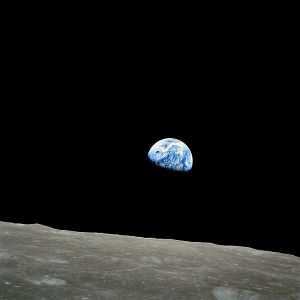
Curiosity has been five years on our most similar neighbor. Having long outlived its life expectancy, it seems to be a harbinger with an important message to tell us, if we were willing to listen. Mars is a beautiful wasteland. Some look at it and think it could become another earth. A little on the chilly side, perhaps, but nothing you can’t fix with fossil fuels and shopping venues. Who needs to go outdoors anyway? Amazon can deliver it right to your airlock. We can hurl disco balls into orbit and still pass legislation that strips basic human needs from large swaths of the population. Space, they say, is the final frontier.

At the same time we’re discovering our universe is chock full of planets. So much to acquire! Of course, with each new planetary discovery we have to think that maybe there’s life out there somewhere. Since Homo sapiens are the measure of all things—if you don’t believe that you haven’t been listening to the White House—we are entitled to exploit anything we can reach. It’s called capitalism, stupid! The assumption is that anything can be owned. And if flying saucers are buzzing around our military jets like metallic mosquitoes we say they can’t be from out there because the universe is for our exploitation, not for sharing. “Now I know,” Victor cries “what it’s like to be—“ as thunder covers that last bit. There are billions of galaxies out there, made up of billions of stars. Many of them have their own planets. Some surely have intelligent life. And we wonder why aliens don’t land on the White House lawn. Appropriately named, Curiosity sits on Mars and stares backward in wonder.


Popularity for Purchase

I only watch the Macy’s Thanksgiving Day Parade with one eye. Since my office is just two blocks from the store, it’s a little too much like work. Still, I can’t help but hear the music and announcements. Is it just me, or are most of these floats and balloons trying to sell me something? Okay, so it takes a while for the light to dawn—it is Macy’s parade, after all. This is the kickoff to the holiday shopping season. Santa Claus is the greatest shopper of them all. We are a nation that defines itself not by what it can produce, but what it can consume. Conspicuous wealth. Showing what you’ve got. I’m afraid I just don’t get it.

Those of us who grew up poor, so the thinking goes, should want to display our accomplishments like a peacock. We should want to show others that we’ve made it. That we can play the spending game just like everybody else. We’ll always have the poor with us, so why not demonstrate to them the vapidness to which they can aspire?

An old-fashioned guy, I check my email on a computer. Gmail divides my messages up into three tabs so that I can pay attention to people who actually want to contact me. The third tab is reserved for those seeking my money. Sitting in a waiting area, I decide to check my email on my phone. It says I have close to two-thousand messages. It’s that third tab. I tend to ignore it since I already know what everyone wants me to play. The messages in tab three build up to biblical proportions while I try to figure out how to handle all the other things I have to do.

Not only did I grow up poor, I was also a small guy. That meant when teams were being picked in gym class I was always among the last selected. I’m not aggressive. The indigent know their place. My religion taught me that this was about right. Seeking for one’s self instead of for others is wrong. Although I’ve been through advanced training since then, those early lessons remain with me. When those who have goods to offer discover my email address, they crowd it full, hoping that I’ll be one of many to spend the little I earn on them. Instead, I remember standing on the vacant lot while the neighborhood kids are dividing up into teams. The lines are getting small, and I’m awaiting someone to notice my potential. Of course, they’ll have to wait until I get through all of this email because, in reality, I’m obviously quite a popular guy.


De-programming

I’m no foodie. That’s not a trendy thing to admit, I know. I’ve never been a good consumer. I think it’s because I don’t like being programmed. One area of life where we are most open to programming is in what we eat. Raised to masticate animal flesh, we’re told that it’s healthy for us, and besides, where on earth are you going to get protein if you don’t eat animals? Without thinking too much about it, we step in line. I remember asking my mother, as a child, what part of the animal “the meat” is. I was kind of hoping, I guess, that it was some part that might be kind of painless to lop off, because I didn’t like to think of the implications otherwise. Even when the answer wasn’t satisfactory, I didn’t change my diet.

Once, when eating with a friend, my host commented that you shouldn’t be allowed to eat meat unless you were willing to kill the animal yourself. He wasn’t advocating vegetarianism—he was serving meat—but he was thinking through the process logically. I became a vegetarian, because of that logical thought process, about 18 years ago. I continued to be programmed, however. Yesterday I attended a vegan lunch. I always thought of vegans as spare, acsetical types, emaciated and gaunt. I learned that they are often people who think through the consequences of our love affair with meat. And other animal “products.” The problem is industrial farming. In a word, the commodification of animal suffering. Those who don’t work in the agri-business—to which most looming environmental disasters can be directly traced—are prevented from seeing the conditions in which their “food” is being kept. Animal cruelty on a scale that is, well, industrial. Decisions are made based on one metric—profits.

I don’t think about food a lot. It has become clear to me that my friend’s logic works. One of the things our vegan presenter pointed out is that pigs are considered the fourth most intelligent animal species. Our love of bacon has them kept in conditions where they literally lose their minds. We don’t see it, so we continue to be programmed. Go to the grocery store. The healthy foods are more expensive—“consumers” are punished for refusing to play the “no thinking” game. I don’t know much, but I do know that it’s often the things I do without thinking that ultimately lead to trouble. Capitalism rewards the greedy only. The rest of us, including our animals, pay the price. Think it through and consider the conclusions. I don’t like being programmed.


Imagine Devils

One of the more encouraging events of recent times took place on Tuesday. In elections across the country many public offices were won by women. After a year of official misogyny from the Comrade in Chief—it started long before the election, of course—I felt hope for the first time. You see, I’d been reading Carol F. Karlsen’s The Devil in the Shape of a Woman: Witchcraft in Colonial New England. I’ve been interested in witches as part of my general exploration of religious views of monstrosity, and in the Early Modern Period, witches were still lurking in the imagination of many. Karlsen’s book isn’t focused solely on Salem. There were other outbreaks of witchcraft accusations, and a general air of suspicion had hung over New England from its founding.

Why women? Karlsen’s question haunts much of human history. Why one gender, or gender construct, why one race, or racial construct, feels itself superior to others is an issue not easily resolved. It doesn’t come, necessarily, from being a “white” male, but it is a disease that primarily effects that demographic. It’s a myth of superiority. The Devil in the Shape of a Woman is not an easy book for a man to read. Centuries of bad behavior don’t exonerate those who, although their belief was sincere, found an outlet for their faith in the destruction of others. Karlsen demonstrates that quite often the background issues were those of inheritance—in a patriarchal society, land passed to male heirs. Women who owned property complicated a social picture that was already under stress. Consider: any family with two sons would halve (although the proportions were not equal) its land each generation. The only way to keep the wealthy wealthy was to snatch land wherever they could.

It wasn’t so simple as that, but the basic economics—which haven’t changed much—set colonial New England up for disaster. Birth control was considered evil. Men still had to be gratified, however, and population increased as land size remained the same. The system is untenable. Just a year ago the electoral college made love to an angry white man. A man who “owns” lots of “valuable” property. A man who demeans women and those of other “races.” When his own shady dealing come into the light he cries “witch hunt!” History is full of ironies. One of the greatest of them in the fact that women have been held back long after circumstances had advanced enough to allow equality in a stable society. There may still be witch hunts, but they flow in the direction they always have—toward those denied autonomy and civil rights. Maybe Tuesday was finally a sign of hope.


All Hallows Eve

I can tell that I’ve been far too busy when I don’t have time to prepare for Halloween. I don’t mean commercially—running out and buying decorations and the like—but mentally. For reasons perhaps only understood by psychologists, Halloween is my favorite holiday. I love the comfort of being with my small family on Thanksgiving and Christmas, huddled inside while the cold whistles against our windows. The sense of relief at not having to go to work even though it’s a weekday, and that increasingly rare luxury of simple breathing space. Still, Halloween takes me back to a childhood with which I resonate in a way against which other holidays only vibrate in sympathy. The days are undeniable darker. My fears, I’m told, are not unfounded. I wear a mask and am free to be myself.

Commuting prevents me from getting out to see the decorations for which some neighborhoods have become notorious. The large, billowing, air-filled frights, however, are just hot air. Even the younger generation at the office, whispering among themselves that this is also their favorite holiday, decorate their cubicles in a way that’s more cute than chilling. No, I’m not a fan of gore—this is more subtle than that. Those who’ve long dwelt with existential angst are connoisseurs of dread. We know, for example, that it will be many months now before we step out into the morning light or come home from work able to see our way clearly. The shades of darkness aren’t always the same. There’s a texture to them. To prepare properly, you need time. The very commodity of which I’m being drained.

Those who know me as a mild, “uncomplicated” sort of person don’t know me. They’ve only become accustomed to the Halloween mask that I wear almost constantly now. Life can do that to you. Instead of the creepy novels which generally crowd my autumn, I’ve been spending time with the existentialists, listening to them reflect on death and its meaning. Or lack thereof. Religions, of course, hurl themselves into that void offering plans of escape. And yet in October that man who walks his dog before dawn wearing a white bathrobe sure looks like a ghost to me. And I’m standing on this street corner utterly alone as the wind blows down the avenue, chasing frightened leaves past me, sending a chill down my spine. I’m looking forward to sitting on a bus to get out of the cold. I’m complicit, I realize, in the death of Halloween.


Uncomfortable Truth

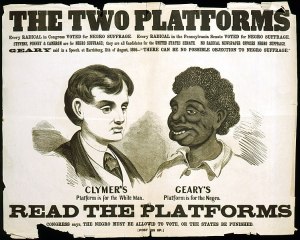
Ugly. That’s not a word I use lightly. The phenomenon of racism is ugly. More than that, it’s insidious. I recently attended a community course on racism sponsored by the Central Jersey Community Coalition. Since our government won’t condemn racism our communities must. This five-hour course was an eye-opener for me. I had known that race was a social construct with no basis in biology or any kind of science. What I hadn’t realized is that race was invented as a means of maintaining “white” power. And it was done so deliberately. The course leaders outlined the history of the modern concept of race and showed how it is primarily an American phenomenon (not exclusively, but it was intentionally orchestrated here). The idea was to keep property in the hands of wealthy whites.

During the discussion many topics came to mind. The primary two, for me, were capitalism and the Bible. These strange bedfellows are far too comfortable with one another. Both can be made to participate in the racism narrative. Capitalism appeals to the basest and most vulgar aspects of being human. Greed and selfishness. Wanting more for me and less for you. As one participant put it, it’s a zero-sum game. Your loss is my gain. We support this system every time we buy into the myth that life is about consuming. Buying more. Contributing to the economy. That which is lost is mere humanity. This is the narrative our government has adopted. The election of one of the uber-wealthy has demonstrated that with a nuclear missile shot heard round the world.

And what of the Bible? As the story of the flood unfolds in the book of Genesis, Noah develops a drinking problem. Naked in his tent, his shame is seen by his son Ham. Hungover the next morning, the only righteous man alive curses his son’s progeny. Then after the tower of Babel story, those cursed races, in biblical geography, end up in Africa. Christian preachers long used this myth as the justification of slavery. Races, after all, were decreed by God at that very tower. The tower shows us for who we truly are. Human hubris led to divine folly. And now we have a nation of liberty built on the basic premise of inequality. Racism is beyond ugly. It’s evil. The Bible may be complicit, but we need to take over the narrative. Race does not exist. Scientifically there is no such thing. Although race doesn’t exist, racism most assuredly does. Like all evils we must bring it to the light to make it disappear.


Nicholas of Myra

It may be a little early to start thinking about Christmas, but archaeologists don’t often worry about timing. A piece in the Washington Post announced something of potential interests to hagiographers everywhere—Saint Nicholas may still actually be in his tomb. According to the article by Cleve R. Wootson Jr., bandits broke in and stole the relics of the saint centuries ago. In fact, they took them to Bari where a thriving cult grew up around the giving bishop. It seems, however, that they got the wrong tomb. If the analysis is correct, Nicholas of Myra is right where they put him sixteen centuries ago.

Photo credit: Bjoertvedt, via Wikimedia Commons

None of this, however, impacts Christmas as we know it. The relationship between the historical Saint Nicholas and Santa Claus is a wide-ranging and fascinating one. Stories of generosity surrounded Nicholas during and after his earthly life. It took centuries of evolution to get from that to what we now accept as standard Christmas mythology. In the early—pre-rampant capitalist—United States Christmas wasn’t much observed. It was even illegal in some places. Too Popish to appeal to the dissenter sensibilities that made up the colonial majority, the holiday season simply did not exist. It was, in the words of C. S. Lewis, “winter without Christmas.” For those of us who grew up with warm memories of presents, special foods, and days off the obligations of school, such an existence is difficult to imagine.

The feast of Saint Nicholas falls on December 6. Because of its proximity to the revisionist birthday of Jesus on December 25, the gifts of the Magi and the storied presents of Nicholas to families in need eventually merged. The holy days eventually became spending days and the whole jumble of Yule and other solstice celebrations got mixed into a wonderfully tolerant holiday. And all this time we thought Saint Nicholas was missing. He was missing in his own grave.

Miracles are attributed to the relics of saints. I suspect they work even if the wrong bones are plundered. Belief is like that. Historically, little is actually known of Nicholas of Myra. Little is known of Jesus of Nazareth, for that matter. The holiday that grew up in the wake of those willing to give, and to give to those who were undeserving, is a lesson that seems to have been interred with their bones. “So let it be with Santa,” you can almost hear Mark Antony say, standing before Congress, itching to slash any safety nets so one-percenters can have the happiest holiday season ever. Yes, Saint Nicholas is well and truly dead.


Self-Conscious

Cassini is no more. The Saturn-bound satellite was launched in 1997 when the earth was a very different place. As it’s four-year sell-by date passed, the little robot who could kept on snapping photos around the ringed giant and its moons. Remote controlled from three planets and an asteroid belt away, it was decided that the explorer had to be destroyed in Saturn’s thick atmosphere rather than contaminate one of the moons where life might someday be found. Yesterday the probe burned up on its way through Saturn’s perpetual cloud bank. This has led to many emotional tributes, even among scientists who believe Cassini was just a machine. It also shows us how little we really know about consciousness.

During the two decades that Cassini was in space, we’ve learned quite a bit about animal consciousness here on our own planet. Many are now finally becoming convinced that we share this strange quality we can’t even define with other biological entities. Well, at least the “higher” kind. And we can’t help but think that maybe our more intelligent machines possess it too. We treat them as if they’re alive and willful. That could be a case of our own consciousness projecting itself onto inanimate matter—that’s something consciousness is pretty good at too—but since we lack the ability to measure consciousness, we can’t know if it’s there or not. To hear the astronomers talk, we’re going to miss Cassini, a machine that outperformed expectations. Ironically, once we get machines off the earth they tend to do that, even without oil changes every 5000 miles.

Down here on earth we complicate consciousness with cash. Devising an elaborate economic system to demonstrate who can buy power in the White House and who can’t, we want to know who is more important than whom. It’s a simple metric. Bank accounts tell the truth, no matter what the level of consciousness—or even of sentience—that the account holder may have. And then we wonder why a nation that can send a satellite three planets away can’t even figure out that all races should be treated equally and fairly. Cassini was a collaborative effort. Different races, genders, and economic classes contributed to its remarkable voyage. Eyes around the country were moistened when its last image was projected to earth. We wisely decided to immolate our satellite before we could contaminate another world. Meanwhile on our own planet we’re barely conscious of what we continue to do.