Cool Cash

The seller’s market is the place to be in a capitalist society.  Last year, when we were looking for a house, it was a seller’s market.  Our realtor said he’d never seen inventory so low and staying so low.  We found a domicile we liked, but it was older and had obviously (only after moving in) been neglected.  The previous owners, it was clear, had simply let things go (and they were younger than us, and had no excuse).  When we asked for a new roof they had flat-out refused.  With no other options (our lease was about to expire) we agreed to take it on anyway.  We’ve been having the roof done in installments—and if you’ve been getting the record levels of rain that Pennsylvania has, you know our decision was, in a literal way, short-sighted.  Ah, capitalism!

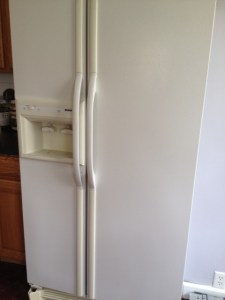
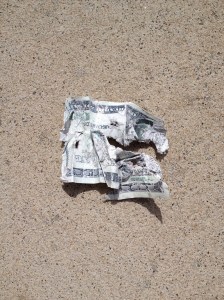
So, just after I noticed the piles of sawdust that the web tells me are carpenter ants, the refrigerator died.  Of course.  I tried to keep cool.  We don’t have what the overlords call “liquidity.”  Our cashflow is dammed at the source, as it were.  A new major appliance was not a welcome addition to the fixer-ups that appear nearly every day.  The first warning was that my soy milk was room temperature when it splashed on the cereal yesterday.  All of this made me reflect on how much we rely on our appliances, our modern conveniences.  When talking to my mother later in the day, I realized that as recently as her generation not everyone had a refrigerator.  You could live without one.  You could also live without a dishwasher, believe it or not!  

The whole episode of packing the food in ice sent me on a Calvino-esque reverie of what we keep in the refrigerator.  There are foods that must be kept cool or they’ll spoil, foods that are better if they’re kept cool but can be left at room temperature, foods that you prefer to drink cold but can be kept anywhere, and items which are technically not food.  Considering the state of our kitchen, there are also foods that you keep on top of the refrigerator because no amount of cupboard space is ever enough.  As the carpenter ants make their free lunch of our porch, we have to throw away food for which we paid because an appliance has come to the end of its life cycle.  And since it’s a holiday weekend we’ll pay for a more expensive replacement unit because it’s on a holiday sale.  For unlike my soy ice cream, I lack liquidity.


Thunder Towers

It sounded like brontide.  The Martin Tower, the tallest in the Lehigh Valley and once corporate center for Bethlehem Steel came down yesterday morning.  Completed only in 1972, the following decade saw the collapse of the steel industry, and the building has sat vacant a dozen years.  Now it’s gone.  The reasons the building could no longer stand are many and I won’t try to explain them as if I understood.  The fall of the tower, however, put me in mind of human folly and the belief that corporate profits will only ever grow.  Capitalism is built on a set of myths that the wealthy truly believe—I suspect many others do too, otherwise the system couldn’t possibly last.  Adam Smith may have been right academically, but in reality humans are greedy, venal, and shortsighted.   At least those who “rise to the top” are.

We didn’t move to the Valley for the steel.  Having settled in New Jersey just about when the Martin Tower was abandoned, like many other displaced academics I was looking for a job.  There were cities in the Midwest—we weren’t far from Milwaukee or Madison—but there was no work.  If you’re “overeducated” your best bet is to settle near a huge metropolitan area, as closely as you can afford to.  Then hang out your shingle.  Capitalism, however, has made New Jersey affordable only for the excessively wealthy.  Besides, I was born within the imaginary lines that we call the Commonwealth of Pennsylvania.  In fact, when I got my license transferred last year the computer asked me if I still lived in Venango County, where I was born.

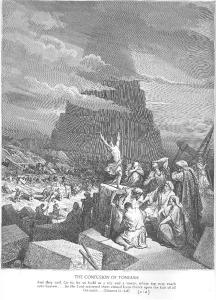
I didn’t see the tower come down.  It’s not visible from my house, but it was always right there when I drove to Lowes to pick up some necessary hardware to survive in this area.  (Weed-whacker and lawnmower—reel variety.)  My mythology of towers always takes me back to Babel.  In the biblical worldview towers were a sign of arrogance.  God seemed to think they were trying to invade divine turf, and so he made it so we could no longer understand one another.  There hasn’t been a moment’s peace since.  We build towers tall to show what we can do.  We don’t really need an angry deity to come down and confuse our language any more.  We’ve got capitalists and their excess money to lead the way.  The sound of thunder roared and I divined just where such leadership will guide us.


Price of Learning

Holy Horror, as some are painfully aware, is priced at $45.  Even those of us in publishing have lessons we must learn, and one of them is that writing a trade book involves more than just a “friendly narrator” style and non-technical language.  It also involves a subject the public finds engaging (or at least what a literary agent thinks the public will find engaging).  Holy Horror throws two apparently disparate topics together: horror films and the Bible.  The fans of each don’t hang out in the same bars—the fans of the latter, in some circles, don’t go anywhere near bars!  My thinking was that this juxtaposition was odd enough to qualify as trade, but I also knew that you have to work your way up to that kind of readership.  That’s why I’m on Goodreads, Twitter, and Facebook (followers and friends welcome!).  It’s not like I’ve got tons of spare time, but platforms must be built.

Book publishers face a dilemma: they have to sell books, but as I’ve noted before, they must do so profitably.  There are people like yours truly who’ll occasionally pay essentially a dollar a page (or at least a two-page spread) for a book that’s essential to their work.  As the capitalists grin, it’s “what the market will bear.”  I never thought of myself as a market.  To me, knowledge is priceless.  The effort that it takes to write a book is truly unimaginable to those who haven’t done it.  Obstacles exist almost from the inception.  Getting the resources you need, unless your employment comes with a free library pass, involves sacrifice.  I still look at other books I must read priced at about $45 and groan—how can I justify the expense?  It’s a strange club to which to belong.

My mother asked about Weathering the Psalms: “Is it the kind of book you get money for?”  In theory, yes.  I’ve yet to see any kind of profit from it since the tax forms you need to file for royalties cost more than the actual checks contain.  At least it’s not vanity publishing.  And you truly learn what it means to rob Peter to pay Paul.  It has nothing to do with gentiles.  Publishing is the price you pay for following your curiosity.  My books are very different from each other, a fact that comes with an invisible price tag that has little to do with money exchanging hands.  Well, maybe it does.  And maybe it does have something to do with gentiles.  Or maybe it’s an appeal to a higher power.  In a capitalist nation we all know what that is; herein lies holy horror.


Linking In

Like many in the internet age, I have most of my “connections” online.  It’s somewhat of a rarity to be invited, for example, to connect on LinkedIn by someone I actually know.  I remember the early dissemination of information from that network—it was strictly for people you really did know in real life, because they could help or hurt your career.  I took that seriously for a year or two, but it became clear that this was another Facebook with a more professional cast.  I’ve been told of authors who try to build their online platform by adding thousands of connections on LinkedIn.  The website, however, is not intended as an advertising venue.  It has, however, become one.

I’m not denigrating LinkedIn.  I’ve found two jobs through it and I’ve had recruiters reach out to me because they found my profile there.  For a religionist that can be quite flattering.  Academia and society tend to tell you that such a skillset is okay but basically useless.  Having others who know the wide diversity of human employment these days can be a sign of hope.  Nevertheless, advertising has crept into LinkedIn.  I’m not talking about the frequent invitations to go professional on the site, which will only cost a small fee that will suddenly show up on your credit card bill when you least expect it and thought you were in the clear.  No, I’m talking about connections contacting you to do gratis work for them.  Advertising their book, or their services.  Letting others know, they ask, that they can provide this or that service.  (Just to be clear, I’m not referring to people who contact me personally because we have an actual connection!)

For those of us working stiffs not in a position to hire anyone—professionally or personally—this is another symbol of how any form of communication becomes commodified.  Fully over half of my email is soliciting money in one form or another.  Hearing from an actual person with an actual message for me is so rare that I’m stunned to find one in my inbox.  Capitalism just doesn’t know when to let go.  And it doesn’t have a good read on what little I actually do buy.  Underwear (and just using that word will color the tailored ads I receive for weeks) vendors seem to think I’m concerned about the fashion of garments others don’t see.  The books Amazon suggests, based on a solid track record, are generally far off from my interests.  What hope do those who don’t know me have of selling me their wares through LinkedIn?  The dream of connection without cash changing hands nevertheless remains alive.

Old school connectivity


Patchwork

I don’t wear clothing with advertisements.  Perhaps it’s my Quaker-like sensibilities, or maybe it’s just that I hate being a shill.  What has any corporation done for me that I should give it free advertising?  Actually, not free—advertising that I have to pay to give?  I do have a few college sweatshirts, though.  Always a booster for education, I don’t mind wearing that brand.  Otherwise, I sit back and marvel how marketers get people to think it’s cool to strut their (the marketers’) stuff.  Brand names declare one’s tribe, one’s level of affluence.  I used to rip any exterior labels off my clothes but it became clear it was a losing battle, especially when brands are incorporated (note the word) into the very design.  And we play along.

I shouldn’t be too harsh.  After all, corporations are people too.  At least in the cataract-infested eyes of the law.  They have rights just like, or even more than, individuals do.  We live this fiction and watch the wealthy grow loftier, and we wear their brands so that others will sense where we belong.  Long ago I began to object to this.  Maybe it was because I grew up poor and wearing cheap knock-offs of brand names was embarrassing.  The cut of your trousers said something about what your folks could afford.  I actually began buying all my own clothes at the age of fourteen and, consequently, habitually wear things until not even Goodwill will consider them appropriate for resale.  And I still tend to buy generic.  Thoreau, in a patched quote from Walden and Civil Disobedience can be made to say it well:

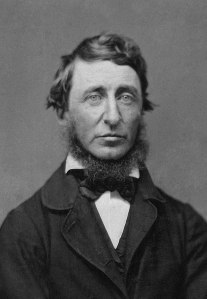
As for clothing, […] perhaps we are led oftener by the love of novelty, and a regard for the opinions of men, in procuring it, than by a true utility. […] No man ever stood the lower in my estimation for having a patch in his clothes; yet I am sure that there is greater anxiety, commonly, to have fashionable, or at least clean and unpatched clothes, than to have a sound conscience.

The fact is we despise the patch-wearer for not playing the capitalist game.  You’ve got to pay good money for jeans with tears already in them and the world of the facile has no room for posers who actually wear through the knees.  If we ever meet you’ll know me by the frayed edges of my sleeves and cuffs.  I’ll likely be the guy sitting on a bench without a Starbucks cup in my hand, cradling Henry David and nodding vigorously.


Edifices

In a process that’s been going on for decades, church buildings have been sold and repurposed.  Part of the reason is the fact that spirituality has come to resemble a free market and there’s increasing competition from the Nones.  Thinking back over a lifetime of attending various services, many of which seemed to do nothing more than demand I pull out my wallet, I can understand this lack of public engagement with established religions.  At the same time the rather shallow, but emotionally based evangelical tradition continues to grow, largely based on the emotional payoff it gives.  Ironically, it makes the claim that it’s the doctrine responsible for this appeal, but it seems more likely that it’s the way the doctrine allows you to feel about yourself that’s the key.  And still the wallet comes out as the mega-churches grow.

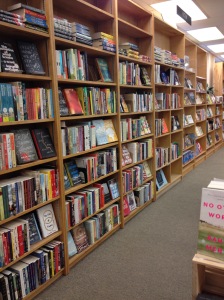
There’s a profound beauty in dereliction.  Some of the more solidly built structures—for even the way a church was constructed was a theological statement—have lent themselves to creative reuses.  I’ve visited churches converted to used bookstores, and this seems fitting.  The trade-off of doctrine for knowledge is appropriate.  In Pittsburgh, years ago, I was intrigued by the Church Brew Works.  Occupying a closed Roman Catholic Church, the brew pub is a trendy gathering place and the titillation of drinking in a once hallowed location is part of the draw.  People find such irony irresistible, it seems.  Better than letting an abandoned building simply fall to ruin.  When it first opened some were scandalized—a lingering belief in sacred places may account for this.  People were married here.  Baptized.  Funerals were held.

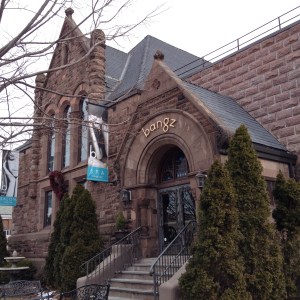
While walking through an unfamiliar neighborhood recently I found a church building that has been converted to a spa.  The idea struck me as so counterintuitive that I had to think through the implications.  Churches, for all their faults, are places advocating spiritual growth.  Whether or not it takes place is quite a different question, of course, but this is all about interior life.  Spas are about the surface, physical beautification.  Indeed, often personal pampering.  This is building space come half circle.   An edifice built of heavy stone, implying the gravity of the business inside might have eternal consequences is now a place to beautify the body.  Perhaps the building itself has gone through a similar process.  What used to advertise to the world that depth could be found  here has now become merely an exterior.  Market forces dictate what it will become on the inside.


For the Love of Dog

All I have to do is say “Old Yellar,” and everyone will know the feeling.  Everyone of a certain age, I should add, who’s owned a canine.  The love of dog.  From where I pass my days I can see out the window into the neighbors’ back yards for four houses over.  They all have dogs.  Big dogs, mostly.  They also have fenced in backyards.  One of the things I haven’t seen too much in our neighborhood is dog walking.  People let their dogs out to frolic, and do their, ahem, other outdoor activities in the yard.  Once a day some member of the family, either with the basic plastic bag or with the specialized, long-handled brush and scooper, slowly surveys the yard to remove any offensive matter so the space may be used for human activities.  It’s a level of care that most would shudder to provide for their own species.

Wolves were the earliest domesticated animals.  In those hunter-gatherer days either they or humans—the jury’s out on which—realized the advantages of working together.  Kind of like we were fated to be partners.  Besides, unless the dog turns on us, there’s no question of who’s the master here, and everyone likes to be the boss.  When I catch a glimpse of one of the neighborhood pets being scolded, or praised, it’s clear they share emotions with us.  The bond is deep.  I often wonder about this—they recognize the tone of voice, something that takes humans a while to learn.  I grew up with dogs and I found out that even if you insult them in a friendly, encouraging tone of voice they’ll love you for it.  Dogs are just that way.

Our first real dog—the one that ended up staying with us his whole life, was a beagle pup we got at a farm.  Dogs like to be with others.  Unlike humans, they don’t have to pretend.  (Although they can do that too, as when they growl at you during a game of tug-o-war.)  Then we leave home and go to our places of business, where capitalism reigns.  We treat other humans coldly, clinically.  “It’s only business,” we’ll parrot, especially if we feel bad about doing what the boss tells us.  That’s the way we treat our own species when money’s involved.  And we’ll sit at our desks, daydreaming of our dog at home that will be so glad to see us when we walk through that door.  And we’ll gladly clean up after our pets what we find obscene even to write in human language.  It kind of makes me wonder when I glance out the window while at work.


Christmas Lights

How many people read a blog on a major holiday?  The process of writing takes no vacations, however, and I often think of holidays as a time to write.  It doesn’t really matter if anyone reads it; writing is our witness to the cosmos that “Kilroy was here.”  Even if most of us have no idea who Kilroy was.  So I find myself awake earlier than most children on Christmas morning.  My long habit of rising early to catch the bus hasn’t been easy to break.   I creep down the stairs and water the tree before turning on its colorful lights.  I make a cup of coffee and wash the dishes left in the sink after a festive Christmas Eve.  And I think.  There’s always the thinking.

The meaning of Christmas, as the holiday classic tells us, eludes Charlie Brown.  Linus van Pelt gives one rendition—that of the Gospel of Luke—as the canonical meaning, but in my experience it shifts during a lifetime.  Christmas, after all, is one of a host of solstice celebrations.  My thinking these days is that it’s all about light.  Shimmering angels, glowing stars, light coming into the darkness.  These ideas seem to have, for the most part, Zoroastrian origins, but they’ve been thoroughly appropriated and, in true American style, commercialized.  The news headlines read how disappointed retailers always are.  The take could’ve been bigger.  Capitalism relies on Christmas to make the third quarter.  Light in the darkness, in its own distorted way.

As I sit for these quiet moments in the glow of only a tree, I think of those for whom the holiday has become a kind of disappointment.  Not a cheery Christmas thought, I know, but an honest one.  As families grow and diversify the childhood Christmas of excited children scrambling under the tree to excavate the next gift for me starts to fade.  Our economic system separates, and the dearth of days off around the holidays makes travel back to childhood homes difficult.  We do the best we can, but the fact is the sixties (speaking for me) are over.  Our reality is colder and darker than it used to be.  I part the curtains and look for any sign of dawn.  It will be a few hours yet before the sun brightens this winter sky, but then, that’s what the holiday has come to mean for me.  At least this year, it is the hope of light returning.  And that, alone, makes it a holiday.


Captive to Capitalism

Some people are born capitalists, while others are not.  I recall the old TIAA-CREF ads showing some famous thinker and stating that some of us don’t have time to think about money.  Since I’m an obscure private intellectual I feel hard pressed to put myself in such exalted company as university professors, but here I am anyway.  I just don’t think much about money, other than to panic over my lack thereof.  It doesn’t motivate me and as long as I can get along without too many worries, I seldom think about it.  Or so it used to be.  Then I bought a house.  Suddenly everything is about money.  This needs to be fixed, and that requires repair.  Instead of spending weekends writing (as I’m fond of doing), I now try my hand at skills like carpentry and masonry.  At least now the grass has started to turn brown.

I was never offered TIAA-CREF as a fiduciary option.  (I can’t believe I even know what fiduciary means!)   Having grown up poor I didn’t think much about things like retirement or dental care.  These were things middle class people did.  Now that I’m technically part of the club, I think back to being a poor kid working my summers away.  I had lots of time to write in those days.  It’s not that ideas for writing have stopped—they’re rather backed up—but the concerns and cares of this world have forced me to think about that thing I’d rather not face.  You see, capitalism takes no prisoners.  Once it starts the entire world has to play its game, otherwise the rich can’t keep getting richer.  Those of us who’d like to make a living by creativity take jobs that, in turn, take our time.  And more than just 8 hours a day of it.  Some people don’t realize that money doesn’t motivate everyone.

Accuse me of being a utopian; I promise I won’t take offense.  I can imagine a world where money would be an opt-in.  I’m careful to be discreet about it, but there are frankly some of us that would work for books, should our other basic needs be covered.  Secular monks, perhaps, unleashed from dogma and allowed to roam where the human mind can go.  Once you start thinking about money it’s difficult to stop.  You want to have a cushion that will soften unexpected eventualities—which seem to be coming somewhat more frequently these days—and every time you rub your back after a fall you think that pad should be a little thicker.  Getting paid for writing?  In your dreams!  I’d say more about it but I think Lowe’s is open now.


Leftovers

It looks like I forgot to click “publish” yesterday, so my blog post never appeared.  With apologies for doubling up, I need to complete the trilogy today.  So here goes…

Unlike All Saints Day, which, we were told, was a day of obligation, All Souls Day, today, was not.  It was kind of a leftovers day.  Ironically, it developed into Día de Muertos—the Day of the Dead—along with Halloween and All Saints.  Yes, there are many who declare, and rightly so, that Día de Muertos is something different.  It is and it isn’t.  Cultures around the world have always felt that at this point in the year something odd was going on.  The carnal summer was becoming the spiritual autumn.  Thoughts of those who’d died come back.  So it is a three-day celebration—not officially recognized in the United States (it would interfere with business, which is, as we all know, a thing not to be imagined)—has become a commercial boon.

Still, not being among the saints, I have to wonder if the leftovers—All Souls—are somehow second-class citizens in the afterlife.  Does the social stratification we experience daily here carryover to there?  The view of Heaven among the poor is generally one of comfort and equality.  Fairness, which is in very short supply down here, will finally see the end of the moral arc of the universe, to borrow from a departed sage, bend toward justice.  And sharply.  The idea is ancient and powerful.  Primates of other species don’t object to having leaders.  They do, however, reject leaders who abuse power.  And so it is that we’ve evolved beyond that.  Civilization teaches us our place.

The Day of the Dead has become commercial, along with Halloween.  Why not stretch out the profits, which, after all, come from the leftovers?  There is a capitalist vision of Heaven, you see, and it is one we see working out on earth these days.  Those with money take power and use their money to buy more power that in turn leads to more money for them.  We call it “making a living.”  Those who are wise, however, recognize something deeper in Día de Muertos.  It is the time when we welcome family home, indeed, when family becomes more important than job, or status, or power.  It is a very human, if supernatural, holiday.  All Souls, it seems, has received less than its fair share of attention.  The Day of the Dead, in its own way, warms up those leftovers.


Capital Idea

Capitalism encourages a kind of racketeering among businesses, in my experience.  Take the case of utility companies after a move.  To date I have received well over a thousand dollars in bills for services not rendered.  These bills were from utility companies claiming that I owed them final amounts for bills that had been paid in full, on time, for over twelve years.  I should, it seems, be able to bill them for my time on the telephone setting their records straight.  The “final bill” is a racket.  And it is deployed just after a customer, formerly a “valued customer,” has entered into new financial obligations—moving is not cheap!  Most of these bills are for multiple hundreds of dollars for services, that when I used them, were generally billed at a mere fraction of that amount.

Corporations, according to the law, are people.  And like people, they are exceptionally greedy.  Just yesterday I received a bill from a heating oil company—which shall remain nameless for the moment—stating that I owed a multi-hundred dollar final balance.  I had notified them in April that we would be moving and that I had paid their final bill and no more deliveries should be made.  None were.  Fully five months later I receive a “final bill” politely reminding of an outstanding balance.  For what?  Heating oil delivered in July?  Have I suddenly switched hemispheres or is this some kind of racket?

Come to think of it, while unpacking I came across a budget book.  My accounting is pretty much in the range of horseshoes and hand-grenades—I know the regular bills and can guess how much they are likely to be.  I’ve got other things on my mind besides money.  The budget book had never been used.  Budgets, to my understanding, project a stable world.  That’s not like the capitalist world.  When we bought the budget book, some 30 years ago, could we have projected monthly expenses for the privileges of using an internet that at that time didn’t even exist?  Capitalism is creative in finding new things to make you pay for, even if they are only virtually real.  Like heating oil that was never pumped off the truck.  It’s always your word against theirs, and corporations are bullies, being bigger than regular people.  So I sit here with a blank budget book and a stack of “final bills” for things never delivered.  And I think to myself, what a crooked world.


Dawn’s Early

Early to bed, early to rise, and people’ll think you’re weird. At least in my experience. Making an island into the place where hundreds of thousands have to commute to get to work may not’ve involved a great deal of foresight. My bus leaves early, and I don’t argue. On the days when I work from home I still rise early—I’m old enough that constantly shifting schedules is more effort than it’s worth, so I like to greet the sun with coffee in hand and say to it, “what took you so long?” This time of year I like to jog at first light when I don’t have to commute. As I do so, I notice where the lights are on. You get an idea who sleeps in and who doesn’t.

With all the political nonsense about lazy immigrants, I wonder what time congressional leaders get out of bed. I sometimes go jogging before 5 a.m. The lights I see on at that time of day are often those of the apartment complexes where immigrants tend to live. The affluent houses of the white are generally dark. If you have the luxury of driving to work in one of your cars, you can afford a little sleep, a little slumber, a little folding of the hands to rest. Immigrants often take the bus. In fact, the majority of early morning commuters, it seems, are not the privileged classes. It may have been Benjamin Franklin who said “Early to work, early to rise,” but it was the foreigners who saw the wisdom of his words.

It’s a sad nation that denigrates its hard workers. I realize I’m looking in the mirror as I write this, but sitting at a desk all day is not hard work. My first job, starting at 14, was physical labor. Most of the time it was light enough—such things as painting curbs, bus shelters, or fences. At other times it involved sledge hammers under the hot sun. The kinds of jobs few people enjoy, but which are necessary. Jobs that don’t pay well, but will keep you alive. Now I sit behind a desk and have to jog just to stay healthy. I see the monied in Midtown walking slowly to their expensive health clubs where they can sweat and let other people see. And I know that there are many out there—immigrants mostly—who are sweating from doing the jobs that likely pay less than the membership fee for this swank gym. And I wonder which is healthy and wise. The wealthy part is fairly obvious, even this early in the morning.


Driving Truth

One of the problems with driving is that you can’t get pictures of billboards. Well, given the way people drive around here, I suspect that may not always be true. Nevertheless, I always think of billboards as trying to sell something. There’s sometimes fairly easy to shut out, but in long stretches of otherwise uninteresting road you fall into their trap. Now having grown up in western Pennsylvania, we always thought the people out east—Philadelphia was the largest city in the state, after all—were more sophisticated. It is around here, however, that I often see billboards selling evangelical Christianity. If you put out your wares, you’ve got something to sell. Money to make.

As I was traveling that stretch of somewhat plain highway 33 between Stroudsburg and Easton I noticed a billboard reading “In the beginning God created the heavens and the earth.” To shore up its academic credentials the billboard footnoted Genesis 1:1. An inspirational sunrise, if I recall, shown over the Bible. Of to the left—of course to the left!—was a small “no circle” and inside the famous skeletal progression from ape to human. The message was “no evolution.” The more I pondered this, the more strange it became. Most Americans are well aware that billboards aren’t exactly the locus of truth. They are gimmicks to try to get you into the store. Like the one a few miles down that advertises the world’s largest humidor; even those with no interest in tobacco might feel just a touch curious what such a place might look like. Why would you take your most intimate personal beliefs and put them on a billboard? Does that make evolution any less likely?

A strange perception has lately taken over this country. The idea that an individual’s wants equate with the truth. Shout it loud enough and it has to be true. Billboards would never stretch the truth, would they? Is that image enlarged to show texture or what? And wouldn’t a better choice of anti-evolution rhetoric have been Genesis 2? That’s where God makes Adam from lowly dirt. Yes, Genesis 1 gives us the dramatic six-day creation, but Genesis 2 manages to say it all happened in one day—isn’t that more in keeping with capitalistic ideals? Greater efficiency leads to greater profits, after all. And profits, we all know, are the real purpose behind billboards for any product under the sun.


Day of Memorials

I admit that I’m as guilty as the next guy of thinking of holidays primarily as a day off work. A boon from the gods of capitalism so that we can come back to the job rejuvenated and more productive than ever. It doesn’t matter the occasion—I don’t have time for things like haircuts and dentist appointments with the usual round of early to rise, early to work. Holidays become islands of blessed respite in an endless ocean of labor for the man. So I wanted to take a moment to reflect on Memorial Day. Memorial Day is a time to remember those who have died—grandfather, grandmother, America. We take a moment to consider what we have lost. Then it’s back to business as usual.

My father was a veteran. He died many years ago now and I don’t write much about him because I really didn’t know him at all. That doesn’t mean I didn’t want to please him. Any boy wants to make dad proud. I tried the hard work route, and even gave Boy Scouts a try. The things of my youth have been slowly dying. Democracy is merely the latest victim. I shouldn’t be surprised—when it no longer becomes profitable, even the least offensive system of government can be bought and revamped to fit the needs of the greedy. Never mind the will of the masses. They’re the ones who lie under the gravestones for which today stands. No one can be rich without great numbers of poor against which to measure himself. Remember that; it’s Memorial Day.

Since Memorial Day doesn’t lend itself to commodification—let’s face it, outside Halloween death’s a downer—we can make it a day of sales. While you’re earning money without working, why not spend some of it? We seem to have lost the gist of holidays. Those who’ve died in vain believed in a democracy that their heirs have thrown away in scorn. If that for which we say we believe has become moribund, it appropriately becomes the focus of Memorial Day. My grandparents lie buried far from here. They were Evangelicals who wouldn’t recognize their faith reflected in those who still cling to the brand. I remember grandma sending money to Oral Roberts. She didn’t live to see him claim God would take him unless he had even more money. Now we hear the same thing from Pennsylvania Avenue. And tomorrow we all go back to work.


Ithaca Musings

Ithaca may be the ultimate hippie town. Open and accepting of diversity, it’s a place where anyone can speak out against what’s going on in the government and not worry about finding any objectors. Yesterday when I was in Buffalo Street Books, customers openly vented their frustrations with the way Washington’s handling things, and others joined in. There’s a sense of righteous anger here that hasn’t been fashionable since the days of the biblical prophets. You have heard it was said Watergate was a bad thing, but verily I say unto thee something much worse than Watergate is here. And although winter is still holding on in upstate New York, nobody doubts global warming is real.

From my first visit here, I knew that I wanted to live in Ithaca, but it is one of those places you can’t afford to live. Amazing how the liberal cities are the places people want to reside. Places where you can’t just turn off the realities of a diverse world just because some things make you uncomfortable. Places where if you notice that other people are different you are reminded that you, in their eyes, are the different one. There is no static, monochrome, cookie-cutter American. Why is this an idea so hard to sell? Capitalism leads to and fuels the desire to own. And owning leads to the desire to own more. I’ve often noticed this since being out of higher education—even within your own company others want what you have. The basic civility of the socialist is missing. That’s where the “me first” attitude leads.

In upstate New York, as in many parts of the nation, the very names remind us that others “owned” the land before Europeans arrived. Native American concepts of ownership were so different from the capitalist ones that forcefully landed on these shores that those views were forced, under firearms and steel, to assimilate to the foreigners’ ways. Capitalism takes no prisoners. Turnabout, they used to say, is fair play. We no longer feel that way as a nation. The interlopers have taken over. We’ve made the country in our own image. And it certainly isn’t any more noble for it. Being in a place like Ithaca always makes my spirits ebullient. The very concept of ownership is an odd one, I realize. Mere mortals can never really own anything. We can pretend to, or perhaps we can take a more enlightened view. We are all borrowing things here. And I would love to borrow a piece of real estate here in Ithaca.