Supergod

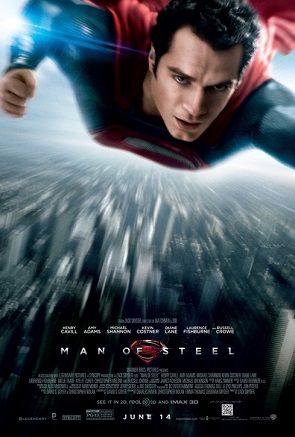
ManofSteelThis weekend the most-seen UFO in the skies was the Man of Steel. I didn’t see the new Superman movie, partly because, I suppose, of my own inadequacy issues. Also partly because I’ve always had trouble warming up to Superman. He’s just got too much going for him. Don’t get me wrong—I love heroes. But heroes are vulnerable. In fact, their vulnerability is the key to their strength. Superman, truly threatened only by kryptonite, is maybe just a little too perfect. A little too… messianic? So it would seem, according to CNN’s Belief Blog. According to a post by Eric Marrapodi, Warner Brothers is pushing hard on the Christian imagery of Man of Steel, encouraging church discussion groups, and even providing a study packet of Jesusesque tropes to discuss with the faithful. All this for a hero dreamed up by a couple of Jewish kids in the 1930s.

A telling observation appears somewhere in the middle of the article, where Ted Baehr is quoted as saying “I think it’s a very good thing that Hollywood is paying attention to the Christian marketplace.” Did you catch it? Christian marketplace? No surprises here, really. Christianity has “been good” to many who advocate the prosperity gospel—god wants the good to be rich. And since I haven’t been able to walk through Times Square for two weeks without seeing the Man of Steel, larger than life, flying off of massive billboards into the crowds of tourists and locals, I have no doubt the movie did very well over the weekend. Some may have even had their faith restored. Others will have had their pockets lined.

A few years back I was asked to present a program for adult education for a church in Princeton. They wanted someone to talk about religion and movies, and this is something I’d often addressed in my classes. I selected movies to discuss that were not “religious”—no films premised on religious characters or situations—and had no difficulty filling an hour with example after example. Movie makers have long known the benefits of movies based on Christian concepts. Self-sacrifice, redemption, and resurrection permeate the movie industry. This is a Christian culture. The parallels between Superman and Jesus have long been noted by critics of religious imagery in both films and comic books. And those who make films have also realized that Christianity is more than just a belief system. Indeed, it is a marketplace. And with enough money, even a regular mortal can bend steel.


Continental Religion

In the course of my duties as an editor of religious studies, I was pondering the origins of the world’s major religions. Now, agreeing on what the major religions are is an exercise fraught with political incorrectness. What does “major” mean, after all? In any case, when we count in terms of numbers, there are more Christians, at the moment, than any other single religion. They are followed by Muslims and Hindus. So far there is little upon which to disagree, at least according to self-professed affiliations. Buddhists are usually counted as the next largest group, followed by Sikhs. When religionists mention “the big five,” however, they usually mean Judaism, Christianity, Islam, Hinduism and Buddhism. There are likely far more followers of traditional Chinese folk religion, perhaps mixed with Confucianism and Taoism, than most accountings record—such beliefs aren’t neatly categorized. Jains make up a sizable population, and Shinto is often classed in with all those religions of the far east. Many of the more modern religions, such as Mormonism and Jehovah’s Witnesses, sprang from Christianity, and so can safely be classed as a form of that faith.

What occurred to me that day was that all the major religions of the present world began in Asia. Judaism and Christianity, with all their numerous progeny, started in Israel or Palestine. Islam, as we all know, began in Arabia. Hinduism, Buddhism, Sikhism, and Jainism all have their origins in India, the big winner for the seed-bed of religions. Traditional Chinese religions and Shinto trace themselves to the far east. Yes, there are indigenous religions throughout the world. Native American and African religions are not to be discounted, yet they never quite attain the level of public awareness to be qualified as “major” religions. In this spiritual accounting, “major” has nothing to do with importance. For the religions with the largest followings we must turn our eyes to the one-stop continent, Asia.

Where major religions begin

Where major religions begin

Considering this, the obvious question is why. Why Asia? Civilization itself began in Asia, and one of the marks of a civilized society, at least until the day of the New Atheists, has been religion. Religion may be abused, as might any human innovation, but it has also been a harbinger of a more civil world. Not only fear of the divine, but also a sense of gratitude toward whatever forces might be greater than humanity, allowing us to survive for another season, or through another storm. Even in the world of science, religion has been a motivator. Gregor Mendel, the scientist who gave us genetics, was a monk experimenting in a monastery. Sir Isaac Newton was an occultist. Francis Collins is an evangelical Christian. Religion is at least as old as civilization. Its forms may be morphing, but, I suspect something our Asian forebears knew: religion will never truly go away.


Sacred Herstory

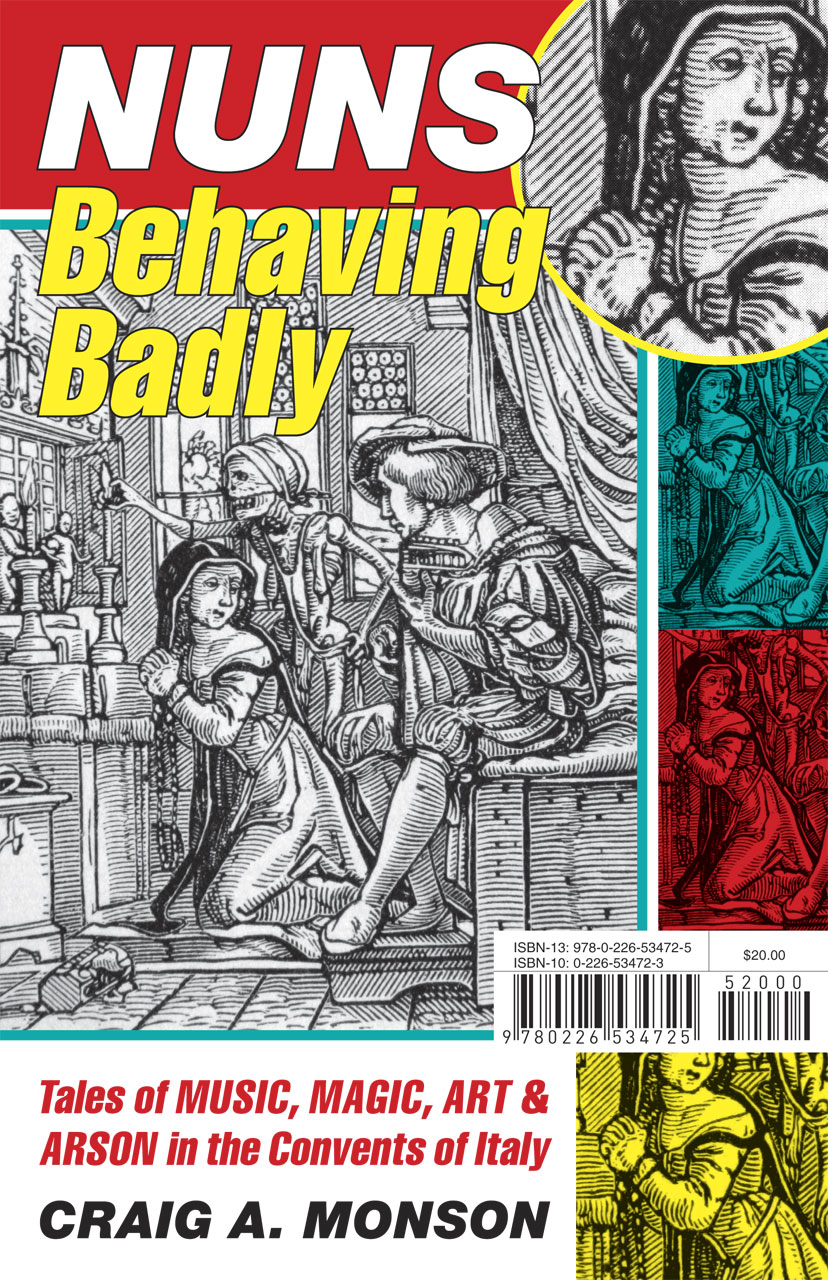
NunsBehavingBadlyHave you ever read a book thinking the author was a woman, but later learned that it was written by a man? Or vice-versa? This creates a disturbing kind of cognitive dissonance, and I suspect that it is hardwired to our communal instincts. We want to know whether it is a man or a woman who is talking to us. Expectations of gender are deeply embedded in all societies, and they become problematic when they ossify into rules. Gender roles, in earliest societies, were a matter of biological necessities. In a modern, urban context such roles are obsolete, and certainly damaging—especially to women. Craig A. Monson’s Nuns Behaving Badly: Tales of Music, Magic, Art and Arson in the Convents of Italy raised this issue to a conscious level once again. Christianity, always very sensitive to issues of sexuality, had developed in a social context of women as property. In the Middle Ages, where dowries were expected, families couldn’t afford to marry off all their daughters, and convents provided an easy, if not always spiritual, solution. Monson’s book, although not filled with salacious tales, illustrates the point well. In a society where wage-earning was limited to males, females had few options.

Monson narrates the stories of five different convents where a nun (or sometimes groups of nuns) refused to play by the rules established by the male hierarchy. The infractions, viewed from the twenty-first century, seem minor: playing with magic, singing, producing art work, wanting to go outside the cloister walls, visiting (gasp!) an opera! (There are a few more complex issues too, such as arson and the love that dare not Ave Maria its name.) In each case, the masculine authorities were called in to investigate, punish, and restore order. The end result is, although fascinating, somewhat melancholy. These willful women were often acting against boredom. Their lives had no impact beyond the convent wall, and, ironically, I learned, even their enclosures had prisons. A nun could be moved from her cell to the cell. And sometimes the only crime was wanting to hear a professional singer perform.

Nuns Behaving Badly is a clever title for a book. As I read the histories, however, I became increasingly convinced that those behaving poorly were not the nuns. A society fabricated on the premise that men are the divinely ordained masters of their universe is no stellar example of men behaving well. Even the occasional bishop, archbishop, or cardinal who sided with the accused had to bow to the will of the Holy Inquisition. The victims, although not physically tortured, were women who had thrown their entire futures into the service of the church, in one of the few roles allowed females in an era already pressing into the early modern age. The nuns were not behaving badly. They were simply being human. The truly bad behavior came in the form of a male hierarchy that brooked no dissent.


Running to Stand Still

“You have faith, Professor Barnhardt?” Klaatu asks the scientist in the classic The Day the Earth Stood Still. Barnhardt demurs, stating that curiosity is what makes good science, not faith. But sometimes I wonder if the professor or if the alien is correct. Science fiction was young in 1951, and Robert Wise would go on to give us such diverse fare as West Side Story, The Haunting, The Sound of Music, and the first Star Trek movie. Still, The Day the Earth Stood Still has always been my favorite movie that he directed. In 1951 quite a bit could be assumed about America’s religious sensibilities. Yes, diversity had been part of the mix from the very beginning, but the view of America as a “Christian nation,” although not in any way official, was not seriously challenged in those days. This shows through clearly in the movie. Although the opening sequence is intended to be a Klaatu eye-view of descending to earth in his space ship, it is reminiscent of the stock “creation” imagery that would become so familiar to those of us who watched Bible movies. It is a God’s eye-view as well.

Christ-like, Klaatu descends to earth to bring a message of peace, but also an apocalyptic threat, from the powers beyond. He is capable of miracles, such as the eponymous day the earth stood still—the ultimate in non-violent protest because hospitals and airplanes still have power and nobody is harmed. In his human incarnation Klaatu not so subtly takes the name Carpenter, making the corollary clear. In case you missed that, however, he is killed, resurrected and in the end ascends to heaven. Klaatu becomes the prototype of the messianic alien, a figure we would see in guises from ET to Starman. Believers in ancient astronauts or not, the makers of our space movies know that God is an alien.

daytheearthstoodstill

The Day the Earth Stood Still came early on in the Cold War. The obviousness of distrust in the Soviet Union is placed in the mouths and knowing glances of various characters. Some even suspect that Klaatu is a Russian rather than a spaceman. Sputnik was still six years in the future, but the atomic bomb was already in the past. We had learned to destroy ourselves before we had learned how to escape the only planet we have. Klaatu delivers his final homily not to politicians, but to scientists of all races (and, unspoken, creeds). Seated on folding chairs in the outdoors, as if at a revival meeting, they listen as Klaatu tells them the decision of how to live is up to us, but Gort, a kind of avenging angel, is always overhead. The invocation that can save humanity, however, is given to the female lead Helen Benson. She alone knows the sacred words “Klaatu barada nikto.” Amen.


Bridge over Troubled

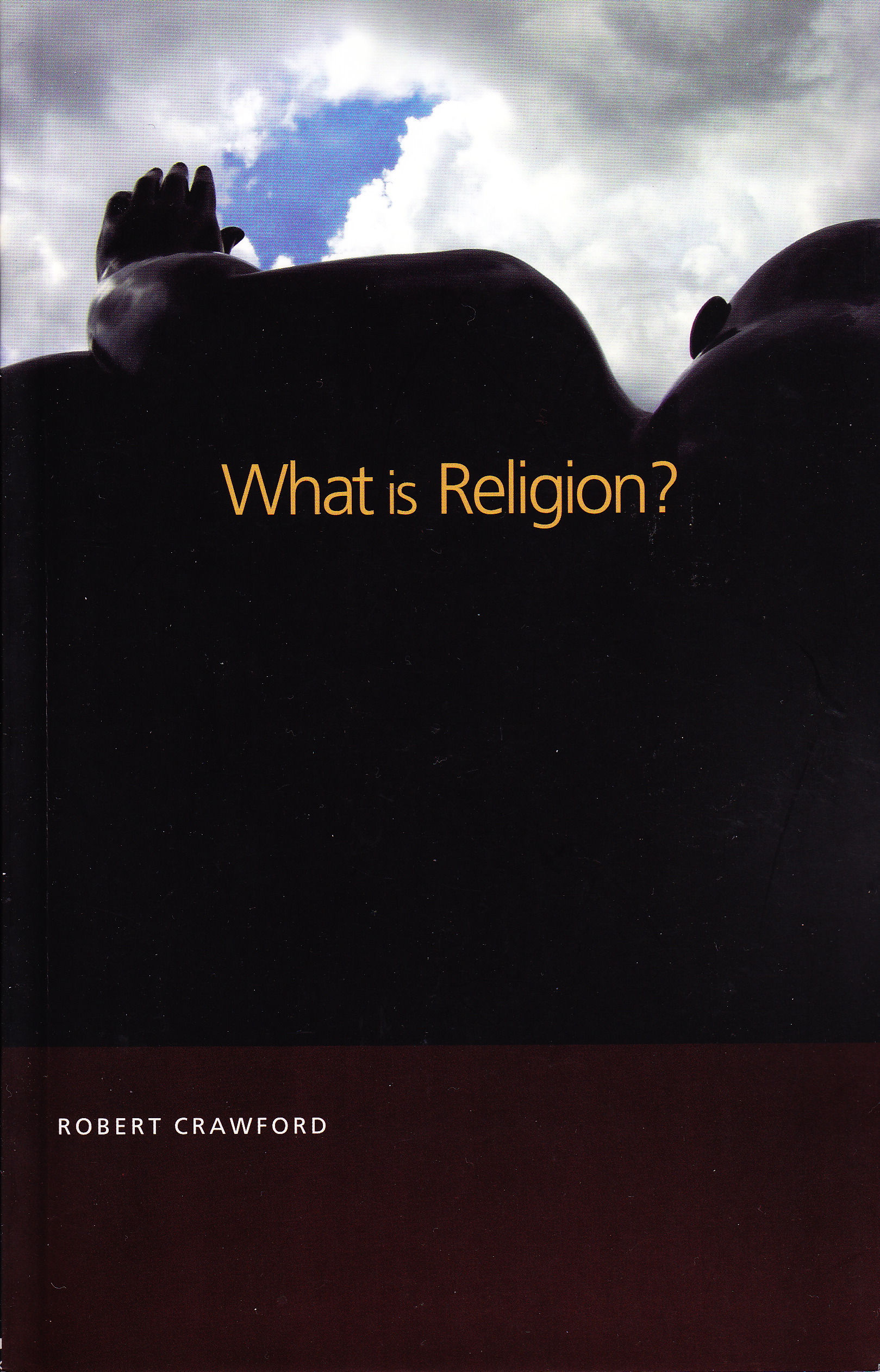
ReligionThe fundamental question of what counts as religion remains elusive. I read Robert Crawford’s What is Religion? hoping to find out. Crawford begins with the admirable assertion that in a pluralistic world all religions must learn to get along. Unfortunately, learning hasn’t always been one of religion’s strong suits. And we still don’t even know what religion is. As becomes clear within minutes of starting the book, consensus will be a stranger in this room. Nevertheless Crawford plows on, hoping against hope that comparison will reveal conformity. Religions aren’t really team players in that way.

Crawford keeps his focus on the “big six”: Judaism, Christianity, Islam, Hinduism, Buddhism, and Sikhism. Although these faiths contain the lion’s share of numbers, they in no way corner the market on religion. I wonder if Crawford’s net is really large enough. When trying to define religion, cutting corners gets you into trouble every time. No matter how we count it, religion is more than a matter of belief and broader than prescribed rituals. It must take seriously the attempts of even small knots of seekers in its preternatural accounting. Crawford sometimes gets bogged down in the details. Science plays a key role in his discussion but then the scope shifts to Christianity, a religion with more than its share of scientific troubles. Islam, for a while anyway, led the world in scientific thinking. What of Sikhs and science?

The more I read of What is Religion?, the more I got the feeling that all of these pieces don’t go to the same puzzle. Religions develop out of historical circumstances and needs. They, with a few exceptions, are not consciously devised by a bunch of eggheads shut up in ivory towers. Religions develop from people in difficult situations, whether physical or psychological. Think about it. If the Bible is to be believed Judaism grew out of slavery in Egypt (either that or Abraham’s childlessness). Christianity out of Roman oppression. Islam from Muhammad’s conviction that polytheism didn’t add up. Hinduism’s old enough to have lost its origins in deep antiquity, but Buddhism is clearly a reaction to pervasive suffering. Sikhism tried to steer between the clashes of Hinduism and Islam. We could go on, but I don’t wish to try your patience. I’m not suggesting I’ve finally done the impossible and defined religion. In fact, I may be suggesting the opposite. Religion encompasses many ways of being in the world. Crawford maybe got a start on the discussion, but it will go on as long as people have troubles.


Fearful Christianity

So some North Carolina Republicans want to declare themselves a state religion. I wonder which one it will be? Hmmm, let me think… Whatever that religion will be it will be one that is afraid. Only religions that are uncomfortable with challenges have to back themselves with militaristic force. Seems to me some North Carolina politicians have never read a book on Medieval history. Ironically, the religion they wish to select was probably itself the result of the Reformation, the original challenge to state religion in the history of Christianity. It is also clear that these misguided lawmakers have not fully acquainted themselves with the vast diversity of forms of Christianity. The Christianity they want is televangelist, conservative, Protestant Christianity. Even that, however, is no longer a uniform religion. Why would there be more than one channel?

Those who spend long hours gazing at religion, both from inside and outside, realize that religious belief is not, cannot be, a static entity. Should a genuine apostle walk into an evangelistic Christian service today, chances are great that said apostle would leave wondering what religion this was. According to the Bible itself (ironically, taken only partially seriously by those who promote it) the first Christians were communists. Those who refused to sell everything and give it to the common good were struck dead, or so the book of Acts tells us. My guess is that free market economics has trumped the Holy Spirit here. What legislators really, really want is a religion to back up their secular plans.

Which Christianity would they choose? Who would be welcome in New North Carolina? Mormons? Mennonites? Methodists? Catholics? Well, at least Catholics vote the right way on key issues. Or some of them do. What we are talking about is actual state support of religious ideology. In a country where some of the finest state universities do not even have departments of religious studies, the University of North Carolina, Chapel Hill, has one of the finest in the country. And not all the faculty fill North Carolina’s preferred demographic.

IMG_0019

Religions do not take such rear-guard actions unless they are afraid. What does Christianity fear? It depends on which Christianity you mean. Studies have shown that over 41,000 Christian denominations exist. Think about that a minute. If one flavor-of-the-month Christianity becomes official state religion, what becomes of the other 40,999? I’m no math whiz, but it just doesn’t add up. Seems to me that before states start declaring their religions publicly funded, legislators should go back to school. They should be required to take Religion 101. Might I suggest they enroll at UNC Chapel Hill?


Trouble Feature

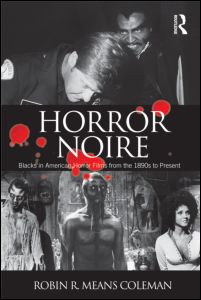
HorrorNoire I must be a glutton for punishment. My fascination with horror films grew more out of enjoying the unsettling mood these movies used to set. That creepy, shadowy world that resembles in such a degree my experience of the everyday world. Like most people I don’t enjoy being scared, and as a pacifist I find violence extremely distasteful. And yet, horror movies. I suppose they serve to remind me that no matter how bad things might seem, they could be worse. This fascination also accompanies reading about scary movies as well. Robin R. Means Coleman’s Horror Noire: Blacks in American Horror Films from the 1890s to Present is a fascinating study of how race perceptions have found expression in horror movies. As Coleman points out, it’s not a pretty picture. I suppose, however, that it could be argued that no one should want to find themselves the subject of a horror film. They tend to be a form of self-punishment, and, psychologically speaking, that makes a lot of sense.

African-American characters, I had noticed, in early horror films are portrayed as easily frightened and their reactions are used for comic effect. I still squirm when I see such representations in early movies: the cultural and racial arrogance rises like bile in the throat. What I hadn’t realized, however, is that the Black role in horror films is frequently tied to religion. Coleman makes this clear—from early films centering on African-American issues to Caucasian efforts to portray Blacks, religion is often the vehicle. Black films make a strong use of Christian themes, while White films not infrequently present Africans as purveyors of voodoo or some mysterious, and dangerous religion. This is a fascinating trend and it shows mixed perceptions of how religion is understood. Christians who dismiss the “superstition” of other faiths should have no fear of “false gods.” Yet it makes for great horror fare.

Despite their low-brow reputation, horror films are among the most successful genre of movies. Many people find them cathartic, I would guess. It is uncomfortable, however, to be faced with how race self-perception is embedded in such films. Like any artistic effort, movies reflect the values of those who write, produce, and direct them. At the same time they reinforce or even channel the expectations of the viewing public. Reading Coleman’s study, I was given a glimpse of the perception of one of my favorite genres from the perspective of “outsiders.” It is not always a comfortable place to be. Horror movies sometimes showcase terrors more frightful than the special effects and improbable beasts flashed upon the big screen. The realities of our own past can be the worst of monsters.


Beg Your Martyr

Despite the extreme antipathy shown toward religion by the educational establishment, the Chronicle of Higher Education doesn’t shy away from the topic. In the March 1 edition of The Chronicle Review, a piece by Candida Moss presents one of the uncomfortable facts of religious history to the academic world. Many of us who are “specialists” have known for quite some time that the record for mass persecution among early Christians is sketchy at best. In “The Myths Behind the Age of Martyrs,” Moss reveals that historical documents don’t present the first few centuries of Christendom as quite the blood-bath that early hagiographies do. It is true that perceptions vary depending on one’s point of view. If your auntie were thrown to the lions, it might look like everyone you knew was being persecuted. If you were a Roman historian, the numbers might seem small in comparison with, say, those pesky Carthaginians, heathens the lot of them. Still, it was this persecuted self-image that left a lasting imprint on Christianity. Until Constantine, anyway. When Christianity became imperial, it didn’t hesitate to get medieval on a few posteriors.

As Moss points out, early Christians (as well as Jews and those of other bookish traditions) rewrote their stories over time. Even altering the Bible—not yet the Holy Bible—was fair game. The whole discipline of textual criticism grew up to answer the question of what the original Bible likely said. As soon as believers take their writings as factual, however, the story will change. Were early Christians persecuted? Almost certainly. By the tens of thousands that tradition asserts? Less likely. The Romans were practical. Like most domineering classes, lording it over someone isn’t nearly as satisfying when your subjects are dead. You want that superior feeling? Keep the masses in servitude. But alive. That’s not to say that it didn’t feel like everyone you knew was being murdered for trying to do the right thing.

When I was little, I was taught that it is more important to put others’ needs and wants in front of your own. It is a basic Christian teaching. Somewhat naively, I approached the academic empire with that simple basis deeply embedded in my mind. I didn’t realize just how often others would use this trait to their own advantage. Other Christians as well as the non-religious are happy to take from the willing giver. This didn’t prepare me well for life in the business world where, I am learning, the delight in taking from the giver has only grown stronger over the centuries. So I end each day spent and weary and feeling like I’ve been thrown to the lions. Not literally. Still, I believe in the plain idea that if we all treated others’ needs before our own the world would be a much better place. I’ve never outgrown my idealism. Until others join in, however, I’m sitting in the stands trying hard not to watch what the lions are doing down below.

800px-Jean-Léon_Gérôme_-_The_Christian_Martyrs'_Last_Prayer_-_Walters_37113


Religion and Its Discontents

IMG_0575

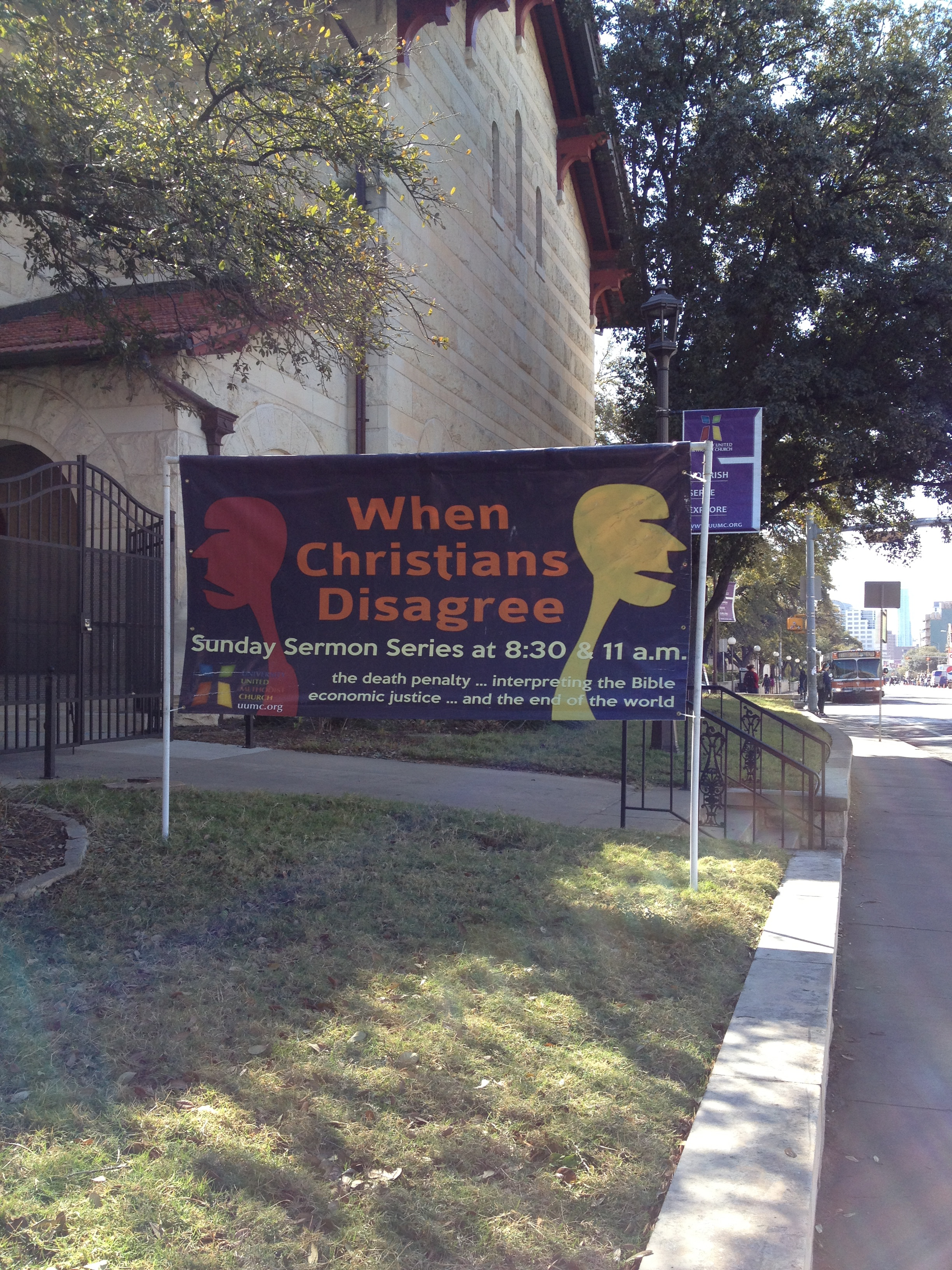
Travel broadens the mind. I’ve always felt that travel, for those who pay attention when they do it, is one of the best forms of education available. When I do campus visits for work, my time is spent talking to faculty, but on my walks between appointments I keep an eye out for my own education. This past week at the University of Texas in Austin, I couldn’t help but notice how much religion still plays into the lives of many people—even undergraduates. One of the first things I noticed as I approached campus was the sign outside a Methodist Church announcing a sermon series entitled “When Christians Disagree.” Anyone with experience within, let alone between, denominations knows that disagreement is endemic. It would be difficult to find a single point of Christian teaching that is universally held among Christians without at least one group of dissenters. In my own experience, disagreements run deeply within Christian denominations, and the hatred experienced is often more fierce than that between Christians and “heathens.”

IMG_0574

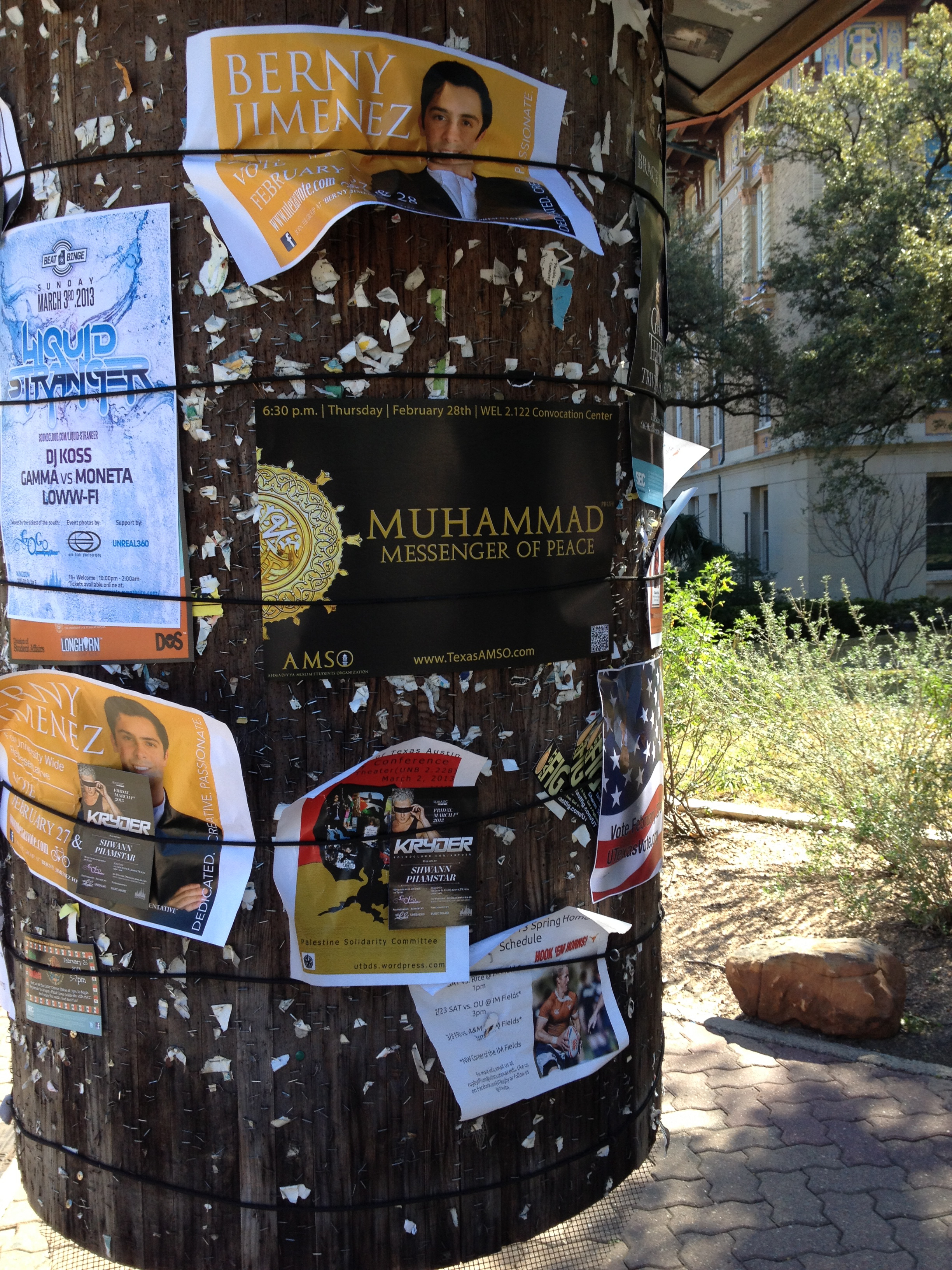
Well, maybe not between some Christians and Islam. So on a campus kiosk I found posters for a seminar entitled “Muhammad: Messenger of Peace.” In a largely Christian context, Muslim students have a difficult time with their religion being castigated in the media and in popular thought. Almost all religions are capable of violence (I was going to write “All religions” but I couldn’t think of any instances where Jains have incited violence), but most highly value and promote peace as the ideal. Few religions are actually founded on violence. I’ve heard many Christians make the claim that Islam is about conquest, pointing to the rapid expansion of Islam following the time of Muhammad. They often overlook the Crusades, one of the most violent Christian reactions to another religion in history. Is Christianity all about violence? Who is “the prince of peace” anyway?

IMG_0579

On a bulletin board I saw a notice for Asatru, the Pagan Student Alliance. If any religious group is misunderstood, surely it is Pagans. Christian missionaries liberally used “pagan” to denigrate the old religions they encountered throughout the world. Often attempts were made to eradicate such beliefs completely. With some success. Many forms of paganism today are revivals of the old religions, and a few are actual survivals. The Pagans I know are moral, peace-loving people as well. Claims of human sacrifice (often fabricated) aside, paganism was, and is, an attempt to make peace with the planet upon which we find ourselves. Peace, it seems, is a desideratum of many religions. If we studied college campuses, where such beliefs are encouraged to coexist, we might find a model that would work for people in the “real world.” And perhaps peace really would have a chance.


Old-Tyme Religion

Run, two, three, jump, slap, run, two, three, jump. I can’t believe that I’m Molly dancing on a January afternoon with total strangers and it’s just over freezing out. And my big brother’s on the side watching me mess up every step. It must be wassail season again. In a festival that always reminds me of The Wicker Man (1973, please!), I visited the 16th annual wassailing of the trees at Terhune Orchards on Sunday. Molly dancers and Morris dancers, or Mummers, from Philadelphia help make this occasion festive. The ceremony of wassailing the trees clearly has deep pagan roots and is influenced in some respects by Christianity. We sing a wassailing hymn (one that many would recognize from Christmas time), say a wassailing prayer, make a loud noise to drive the demons from the trees, dunk bread into a pail of cider and hang it from the trees. Another festivity involves writing a wish on a slip of paper and burning it in the fire. My wish from last year came true—I can’t say what it is here—giving it a success rate better than some prayers.

DSCN2639

Watching this year’s wish rise up in the smoke, I have high hopes for the apples and dreams.

Christianity owes much to various pagan traditions. Often we don’t see it because Christianity (and many religions, actually) tends to absorb former beliefs and practices, “baptizing” them when it can’t expunge them. Pagan gods have often become saints, whether they want to or not. When the Christianity is peeled back there is a very human charm underneath. We worry whether the fruits will return, whether the days will get longer, or whether the cold will ever break. There are powers that exist outside our grasp, and call them Christ or call them spirits, we want them to be on our side.

DSCN2638

Throughout Europe and much of the rest of the Christianized world, the pagan traditions are called “the old religion.” Religions like to claim antiquity as part of authenticity. In fact, the earliest religions were surely shamanistic and very earth based. Revealed religions claimed to supplant much of what people did to ensure the continued regularity of nature. Even though we know the earth is spinning around the sun and that the tilt of its axis makes for seasonal change. I know that whether or not I dip bread into cider and jamb it onto the bare branches, even if I don’t shake the noisemakers to frighten the demons, the apples will grow. But we are all human too, and I’m only too happy to join the Molly dancers if only next summer the apples will come.


Out with the Old

It’s become a time-honored tradition, as an old, secular year ends and a new one, brimming with potential commences, for various pundits to sum up the past twelve months for us. And since there hasn’t been a year without religion since Adam and Eve were created, it stands to reason that the religious year in review is yet another perspective to take on this mid-winter’s day. The New Jersey Star-Ledger, my state’s answer to the New York Times, ran a 2012 top stories in religion feature on Sunday, the one day that anyone might be tempted to pay attention to things spiritual. The list reflects the view of A. James Rudin and it features several stories, most of which tend to show the embarrassing side of belief. Rudin begins his list with an amorphous Islam as reflected at unrest in the Middle East. One of the misfortunes I often deal with in my editorial role is this association of Islam with violence. There are deep roots to the trouble in the Middle East, many of them planted and watered by Christians. Religious extremists, however, are the more sexy side of the story and they always abscond with the headlines.

I should take care with my word choice, however, because yet another of the stories—dominated as they are by Christians—concerns the Catholic Church’s continuing troubles with hiding away child molesters (number five). The number two story, also about Christians, is also about sex as well. That story highlights the chagrin of the Religious Right at the recognition, long overdue, of same-sex marriages in three states. Gender plays a role in story four, the succession of Rowan Williams as Archbishop of Canterbury, but also the related story of how the Church of England still refuses to recognize women as bishops. A deity who can’t see past genitalia should be troubling to any believer. Yet a full quarter of one commentator’s top religious stories are concerned with sex. That’s how the world sees the issue.

The remaining stories Rudin points out have to do with Jewish-Christian relations, aging pontiffs, and the growth of Nones in the US religious marketplace. Anyone who spends time reading contemporary accounts of religion will be familiar with the Nones—that increasing number of people who declare no religious affiliation. Ironically, those involved in such scandals as we often see in the headlines are troubled by the number of people opting out of traditional religions. I almost wrote “opting out of faith” there, but that’s not really the issue. The Nones I know, and there are many, don’t necessarily not have faith. They have lost confidence (if they ever had it) in religious institutions. Interestingly, Rudin concludes his list with the tragedy in Newtown, Connecticut, along with the death of Sun Myung Moon and a few others. The Newtown tragedy remains the least and most religious event in the past year. And unless those of us who survive do something about it, these dead will have died in vain. Let’s hope 2013 has something better on offer.

Father_time


Buyer Beware

Pain, it is said, has a wonderful way of focusing the mind. So when I woke up in what can best be described as a body position used for extras in the movie, Twister, I took a few aspirin and got on with my life. I had purchased non-refundable tickets for a campus visit, and capitalism is nothing if not unsympathetic. The lower back pain was fine when sitting, or standing. Try anything in between, however, and you’ll learn the real meaning of reading the riot act. Once off the train—slowly, slowly—I was fine again, until I had to sit down. The next morning, facing a day of meetings (why is everyone’s office on the fourth floor? Why do Brownstones still lack elevators?), I decided I’d better pop into CVS for some meds. It was with considerable irony and not a few groans that I noted all the products for back pain were on the bottom shelves. The condoms, in the same aisle, were right at eye-level. Sitting on the floor, pondering the relative merits of chemicals of which I’d never heard, I thought about what we take for granted.

Parents and guardians are our first teachers. Among those early lessons are often the religious ones. Recently speaking with both seminary professors and pastors, I have heard the common refrain that church membership is declining and the number of younger people listing themselves as religiously unaffiliated is growing. I noticed this in my teaching outside the seminary setting; quite apart from students of other religious traditions, many undergrads took my class knowing nothing at all of the cultural matrix of Christianity in which they’d been raised. It is also true in a consumer mentality that one shops for religious experiences just like one shops for backache medicine. You go with the one that works for you. Few bother to ask if they agree with the theology, after all, Methodist = Baptist = Presbyterian = Lutheran in many people’s minds. Doan’s or Bayer? Take your pick.

Now that Dark Shadows has been released for home viewing, another component may be added to the equation. We pass on what we value to those we love. While the writing for Dark Shadows leaves quite a lot to be desired, there are a few memorable lines. Angelique, you may recall, cursed Barnabas Collins for unrequited love, turning him into a vampire. When he laments to Elizabeth Stoddard that Angelique hates him, she replies, “No, if she had hated you she would have merely killed you. A curse takes devotion.” Passing on our beliefs, perhaps, somehow ties into all this. As believing creatures, perhaps we each need to find our own solutions. My only fear is that when I find the right remedy, it may very well be on the bottom shelf.

Read the caption


Five Century Hypothesis

More than likely it is simply an oddity of history, but roughly every five hundred years a new major religion appears.  The newcomers sometimes grow into a serious concern for conservatives in the older traditions, but at other times they are simply ignored until the two (or more) come into inevitable contact.  Peering far back into history, the roots of the earliest religions of lasting durability are sometimes lost.  For a very rough starting point, we can consider Hinduism.  With roots going back to about 1500 BCE in the “Pre-Classical” era of the religion, Hinduism developed independently of the monotheistic traditions that would appear in the western half of Asia.  Although some would credit Judaism with equal (or even greater) antiquity, we get an idea that some of the basic thought that would coalesce into Judaism seems to have, very roughly, begun around 1000 BCE.  About five centuries later, Buddhism appeared.  At the turn of the era, Christianity had emerged from Judaism.  About five centuries later, Islam appeared.  Countless other religions, of course, existed concurrently with these early exemplars, but each of these has grown into a major world religion. 

Around about 1000 of the Common Era, Christianity began to fragment.  The first major, official split was between Orthodoxy and Catholicism. Christianity’s penchant for fragmentation would eventually lead to Protestantism—a religious form quite distinct in many ways from traditional Christianity—and that happened roughly five centuries later.  The most obvious split took place around 1500 with the Reformation, but it was also around that time that Sikhism appeared.  The new religions of the common era often involve irreconcilable differences within an established religion. In the western world we tend to overlook Sikhism, but in sheer numbers it is one of the largest religious traditions. And of course, there are many, many others.

As with any over-simplified scheme that tries to make sense of history, I am certain that no historian will be convinced. To me it seems obvious. Once every five centuries or so, some new religion will be born and will flourish. Perhaps it is already among us. We are about due. Like the evolution of new species, some new religions are poorly adapted to survival: one thinks of Branch Davidians or Heaven’s Gate, or Jonestown. Others, however, quietly thrive until someone looks around and says, “Where did Mormonism come from anyway?” Some will argue that it is just another sect of Christianity. Those who study its theology will realize that its conceptual world is vastly different. But anyone with a long enough calendar can see that it began about five centuries after Sikhism and the Protestant Reformation occurred. And anyone with two cents can sense its enormous bankroll—no surer sign of a religion’s viability can be offered.


Life After Mirth

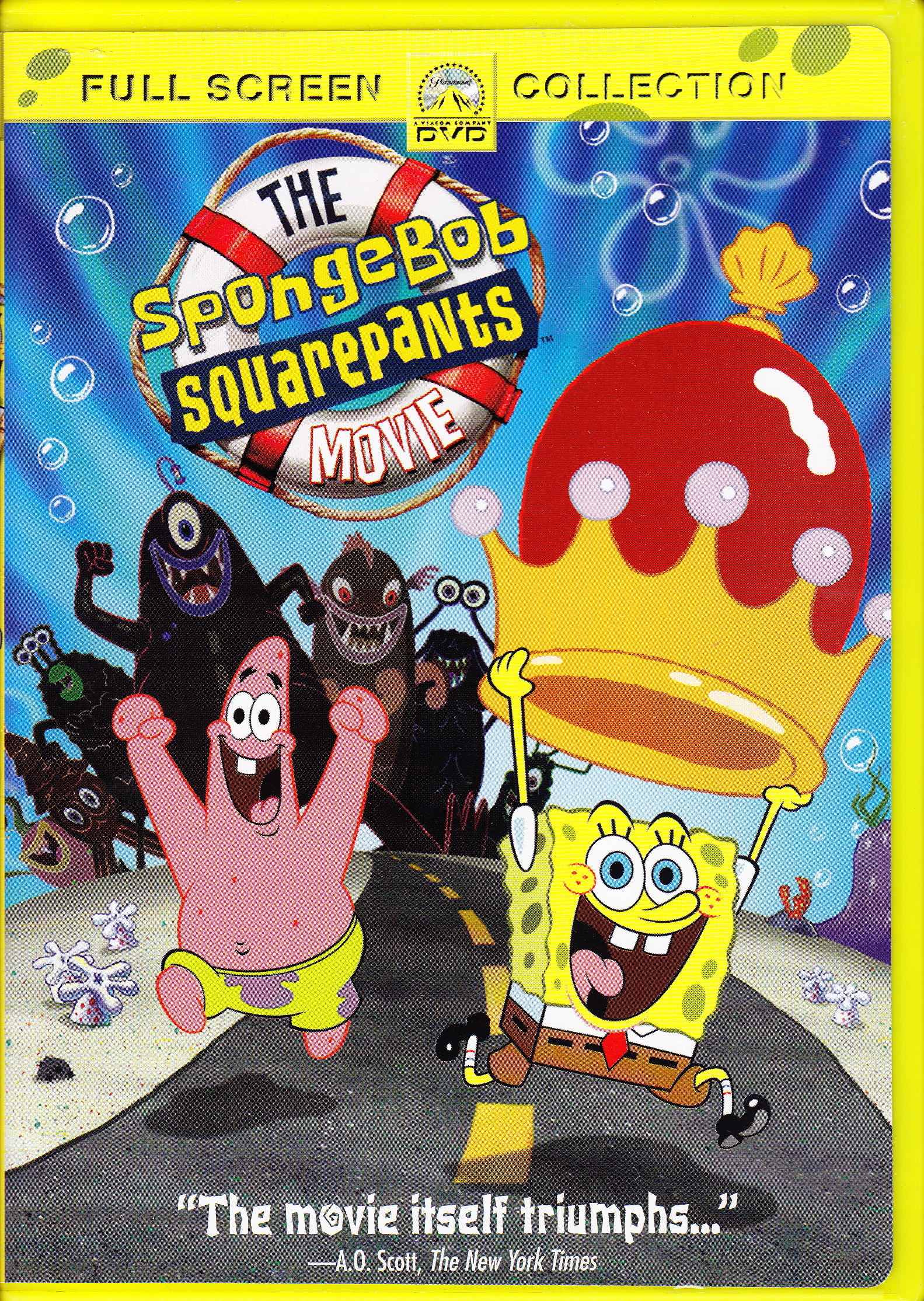
Who lives in a pineapple under the sea? In this era of fast-paced technological change, I’m probably displaying my terrible penchant for the passé when I confess to having watched Spongebob Squarepants with my daughter. I even went to the theater, back in Wisconsin, to watch the much hyped Spongebob Squarepants Movie. We eagerly awaited its release on DVD. Well, maybe not eagerly. In any case, after repeatedly watching it for several months, it was shelved and forgotten. Until recently. Playing archaeologist in our apartment, I sometimes unearth artifacts that have been hidden since our hurried and harried move from Wisconsin to New Jersey. We have never really fully unpacked since leaving Nashotah House, and opening a dusty box in a corner can feel like Christmas sometimes. Or, maybe you just discover the Spongebob Squarepants Movie.

It was a rare three-day weekend. School was about to start, and the commute to work would begin to take longer now that the leisured class had to admit to summer’s end. A little silliness seemed just the prescription I needed to face the work week. A little softness before hard reality.

I have noticed for several years now that American movies (and this may be true of movies from elsewhere, but I can’t say for sure) frequently make use of the death and resurrection theme. I suspect that a country that identifies itself so closely with Christian ideals finds this reiteration reassuring. Sure, the scenario is cathartic on a very basic level, and yet, it lies at the very heart of a central Christian belief—death is not the final word. So as Spongebob and Patrick are laid out on the drying table in Shell City and the water vapor rises from them like their departing souls, the viewer is left with a desiccated porifera and echinoderm and a profound sense of loss.

Of course, resurrection is right around the corner. The fire alarm goes off, showering down life-giving water from above, and our stars pop back to life. Resurrection in nature is limited, by appearances, to plants. With the annual cycles of death and rebirth, an individual plant may attain that for which animals only hope. This is a most robust religious symbol and movie viewers would be bereft without it. Even if the next time you see a sponge is when using it to clean the toilet, remember that resurrection crops up in the unlikeliest of places.


Ring

Absence of evidence is not evidence of absence. So goes a trite little statement meant to calm the fears of new students of biblical studies who worry that the historical record for biblical events is so sparse. The professor can head off many confrontations by declaring that such-and-such an event could have happened, but if it did it left no mark on the historical record. As I was watching the Japanese movie Ringu last night, I wondered about the apparent absence of religious imagery or themes. I am fully aware that not all horror movies have religious components, but the juxtaposition of religion and fear is so common in the western world that it often shows up in scary movies. I wondered if this translated to other cultures or not. Ringu is a decidedly creepy ghost story that creates considerable tension with little gore and not much in the way of special effects. The social commentary is evident even without the benefit of first-hand knowledge of the culture. The paranormal pervades the film.

Christianity is the matrix of many scary movies made in a North American, or even European, context. Although I have read about Buddhism and Shinto, and even occasionally taught courses on “World Religions,” my knowledge of eastern religious traditions is admittedly still quite basic. I can usually spot a biblical allusion a country mile away, but subtleties of foreign religions are harder to discern. Although many religions coexist in the United States the overall context is still Christian—there can be no doubt for anyone who follows politics. Japan is, like America, largely secular. The religious base, however, tends to involve both Shinto and Buddhism and I’m not sure which, if either, forms the recognizable “religious” basis of the collective consciousness. In many ways “religion” only applies to the Judeo-Christo-Islamic model. Much could have been transpiring in Ringu that I simply missed.

After the first mysterious death in the film a short sequence of a family in mourning is shown. Clearly this is what we in the western world would consider a religious context. The decision to try to calm the avenging ghost by uncovering her murdered corpse also conforms to what we might term religion. The fact is, these are very human concerns. Religions throughout the world treat death with a religious reverence since it is the great mystery of the living. Religion frustrates many scientists just for the fact of its mysteriousness. So, does Ringu revolve around religious fear? I don’t know. With the karmic implications of the story-line I would suggest that maybe it does. I’ll remain agnostic on the point, however. The same goes for the absence of evidence is not evidence of absence. Is it or isn’t it?