Old-Tyme Religion

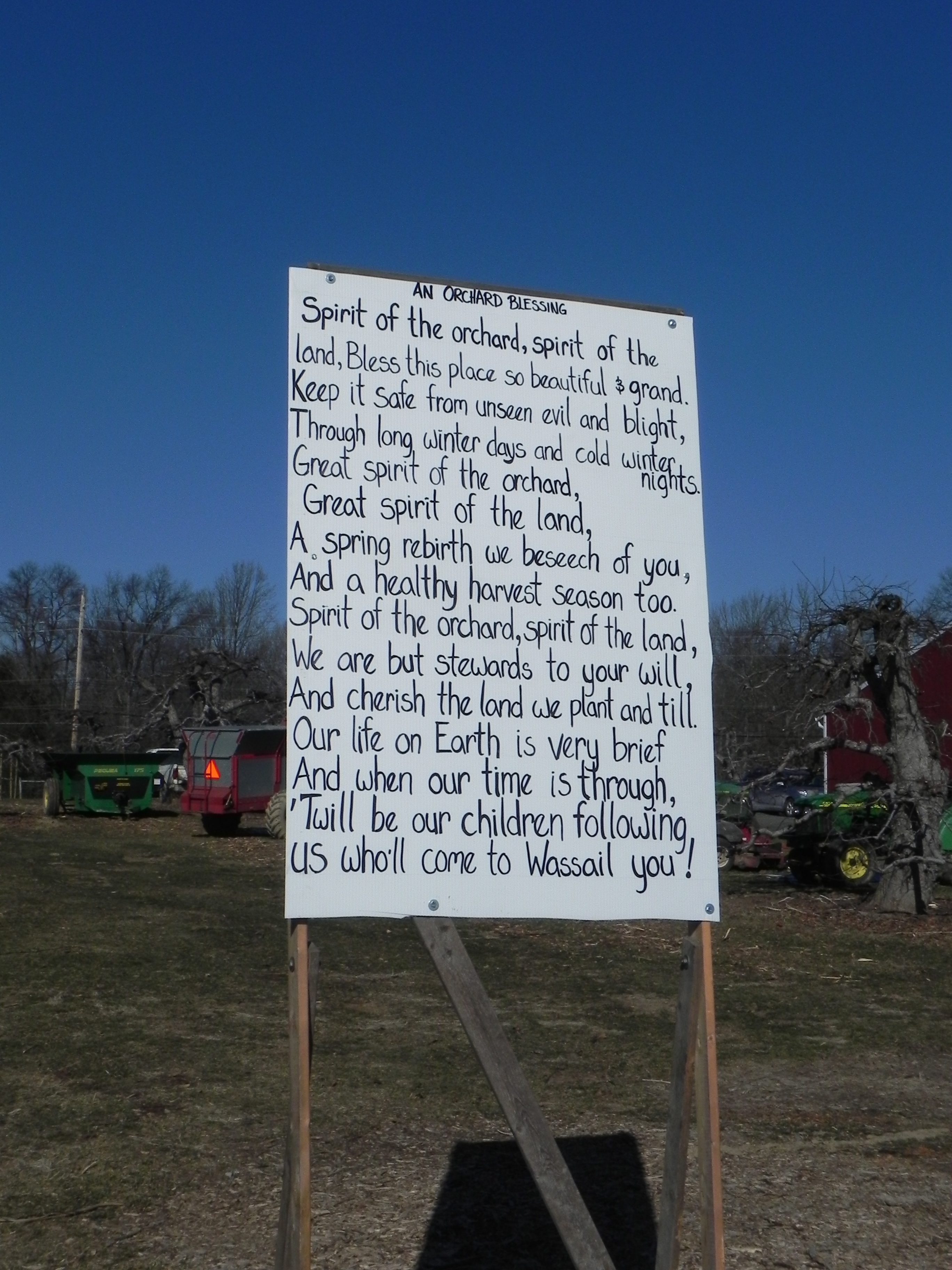
Run, two, three, jump, slap, run, two, three, jump. I can’t believe that I’m Molly dancing on a January afternoon with total strangers and it’s just over freezing out. And my big brother’s on the side watching me mess up every step. It must be wassail season again. In a festival that always reminds me of The Wicker Man (1973, please!), I visited the 16th annual wassailing of the trees at Terhune Orchards on Sunday. Molly dancers and Morris dancers, or Mummers, from Philadelphia help make this occasion festive. The ceremony of wassailing the trees clearly has deep pagan roots and is influenced in some respects by Christianity. We sing a wassailing hymn (one that many would recognize from Christmas time), say a wassailing prayer, make a loud noise to drive the demons from the trees, dunk bread into a pail of cider and hang it from the trees. Another festivity involves writing a wish on a slip of paper and burning it in the fire. My wish from last year came true—I can’t say what it is here—giving it a success rate better than some prayers.
DSCN2639

Watching this year’s wish rise up in the smoke, I have high hopes for the apples and dreams.

Christianity owes much to various pagan traditions. Often we don’t see it because Christianity (and many religions, actually) tends to absorb former beliefs and practices, “baptizing” them when it can’t expunge them. Pagan gods have often become saints, whether they want to or not. When the Christianity is peeled back there is a very human charm underneath. We worry whether the fruits will return, whether the days will get longer, or whether the cold will ever break. There are powers that exist outside our grasp, and call them Christ or call them spirits, we want them to be on our side.

DSCN2638

Throughout Europe and much of the rest of the Christianized world, the pagan traditions are called “the old religion.” Religions like to claim antiquity as part of authenticity. In fact, the earliest religions were surely shamanistic and very earth based. Revealed religions claimed to supplant much of what people did to ensure the continued regularity of nature. Even though we know the earth is spinning around the sun and that the tilt of its axis makes for seasonal change. I know that whether or not I dip bread into cider and jamb it onto the bare branches, even if I don’t shake the noisemakers to frighten the demons, the apples will grow. But we are all human too, and I’m only too happy to join the Molly dancers if only next summer the apples will come.
Out with the Old

It’s become a time-honored tradition, as an old, secular year ends and a new one, brimming with potential commences, for various pundits to sum up the past twelve months for us. And since there hasn’t been a year without religion since Adam and Eve were created, it stands to reason that the religious year in review is yet another perspective to take on this mid-winter’s day. The New Jersey Star-Ledger, my state’s answer to the New York Times, ran a 2012 top stories in religion feature on Sunday, the one day that anyone might be tempted to pay attention to things spiritual. The list reflects the view of A. James Rudin and it features several stories, most of which tend to show the embarrassing side of belief. Rudin begins his list with an amorphous Islam as reflected at unrest in the Middle East. One of the misfortunes I often deal with in my editorial role is this association of Islam with violence. There are deep roots to the trouble in the Middle East, many of them planted and watered by Christians. Religious extremists, however, are the more sexy side of the story and they always abscond with the headlines.

I should take care with my word choice, however, because yet another of the stories—dominated as they are by Christians—concerns the Catholic Church’s continuing troubles with hiding away child molesters (number five). The number two story, also about Christians, is also about sex as well. That story highlights the chagrin of the Religious Right at the recognition, long overdue, of same-sex marriages in three states. Gender plays a role in story four, the succession of Rowan Williams as Archbishop of Canterbury, but also the related story of how the Church of England still refuses to recognize women as bishops. A deity who can’t see past genitalia should be troubling to any believer. Yet a full quarter of one commentator’s top religious stories are concerned with sex. That’s how the world sees the issue.

The remaining stories Rudin points out have to do with Jewish-Christian relations, aging pontiffs, and the growth of Nones in the US religious marketplace. Anyone who spends time reading contemporary accounts of religion will be familiar with the Nones—that increasing number of people who declare no religious affiliation. Ironically, those involved in such scandals as we often see in the headlines are troubled by the number of people opting out of traditional religions. I almost wrote “opting out of faith” there, but that’s not really the issue. The Nones I know, and there are many, don’t necessarily not have faith. They have lost confidence (if they ever had it) in religious institutions. Interestingly, Rudin concludes his list with the tragedy in Newtown, Connecticut, along with the death of Sun Myung Moon and a few others. The Newtown tragedy remains the least and most religious event in the past year. And unless those of us who survive do something about it, these dead will have died in vain. Let’s hope 2013 has something better on offer.

Father_time


Buyer Beware

Pain, it is said, has a wonderful way of focusing the mind. So when I woke up in what can best be described as a body position used for extras in the movie, Twister, I took a few aspirin and got on with my life. I had purchased non-refundable tickets for a campus visit, and capitalism is nothing if not unsympathetic. The lower back pain was fine when sitting, or standing. Try anything in between, however, and you’ll learn the real meaning of reading the riot act. Once off the train—slowly, slowly—I was fine again, until I had to sit down. The next morning, facing a day of meetings (why is everyone’s office on the fourth floor? Why do Brownstones still lack elevators?), I decided I’d better pop into CVS for some meds. It was with considerable irony and not a few groans that I noted all the products for back pain were on the bottom shelves. The condoms, in the same aisle, were right at eye-level. Sitting on the floor, pondering the relative merits of chemicals of which I’d never heard, I thought about what we take for granted.

Parents and guardians are our first teachers. Among those early lessons are often the religious ones. Recently speaking with both seminary professors and pastors, I have heard the common refrain that church membership is declining and the number of younger people listing themselves as religiously unaffiliated is growing. I noticed this in my teaching outside the seminary setting; quite apart from students of other religious traditions, many undergrads took my class knowing nothing at all of the cultural matrix of Christianity in which they’d been raised. It is also true in a consumer mentality that one shops for religious experiences just like one shops for backache medicine. You go with the one that works for you. Few bother to ask if they agree with the theology, after all, Methodist = Baptist = Presbyterian = Lutheran in many people’s minds. Doan’s or Bayer? Take your pick.

Now that Dark Shadows has been released for home viewing, another component may be added to the equation. We pass on what we value to those we love. While the writing for Dark Shadows leaves quite a lot to be desired, there are a few memorable lines. Angelique, you may recall, cursed Barnabas Collins for unrequited love, turning him into a vampire. When he laments to Elizabeth Stoddard that Angelique hates him, she replies, “No, if she had hated you she would have merely killed you. A curse takes devotion.” Passing on our beliefs, perhaps, somehow ties into all this. As believing creatures, perhaps we each need to find our own solutions. My only fear is that when I find the right remedy, it may very well be on the bottom shelf.

Read the caption


Five Century Hypothesis

More than likely it is simply an oddity of history, but roughly every five hundred years a new major religion appears.  The newcomers sometimes grow into a serious concern for conservatives in the older traditions, but at other times they are simply ignored until the two (or more) come into inevitable contact.  Peering far back into history, the roots of the earliest religions of lasting durability are sometimes lost.  For a very rough starting point, we can consider Hinduism.  With roots going back to about 1500 BCE in the “Pre-Classical” era of the religion, Hinduism developed independently of the monotheistic traditions that would appear in the western half of Asia.  Although some would credit Judaism with equal (or even greater) antiquity, we get an idea that some of the basic thought that would coalesce into Judaism seems to have, very roughly, begun around 1000 BCE.  About five centuries later, Buddhism appeared.  At the turn of the era, Christianity had emerged from Judaism.  About five centuries later, Islam appeared.  Countless other religions, of course, existed concurrently with these early exemplars, but each of these has grown into a major world religion. 

Around about 1000 of the Common Era, Christianity began to fragment.  The first major, official split was between Orthodoxy and Catholicism. Christianity’s penchant for fragmentation would eventually lead to Protestantism—a religious form quite distinct in many ways from traditional Christianity—and that happened roughly five centuries later.  The most obvious split took place around 1500 with the Reformation, but it was also around that time that Sikhism appeared.  The new religions of the common era often involve irreconcilable differences within an established religion. In the western world we tend to overlook Sikhism, but in sheer numbers it is one of the largest religious traditions. And of course, there are many, many others.

As with any over-simplified scheme that tries to make sense of history, I am certain that no historian will be convinced. To me it seems obvious. Once every five centuries or so, some new religion will be born and will flourish. Perhaps it is already among us. We are about due. Like the evolution of new species, some new religions are poorly adapted to survival: one thinks of Branch Davidians or Heaven’s Gate, or Jonestown. Others, however, quietly thrive until someone looks around and says, “Where did Mormonism come from anyway?” Some will argue that it is just another sect of Christianity. Those who study its theology will realize that its conceptual world is vastly different. But anyone with a long enough calendar can see that it began about five centuries after Sikhism and the Protestant Reformation occurred. And anyone with two cents can sense its enormous bankroll—no surer sign of a religion’s viability can be offered.


Life After Mirth

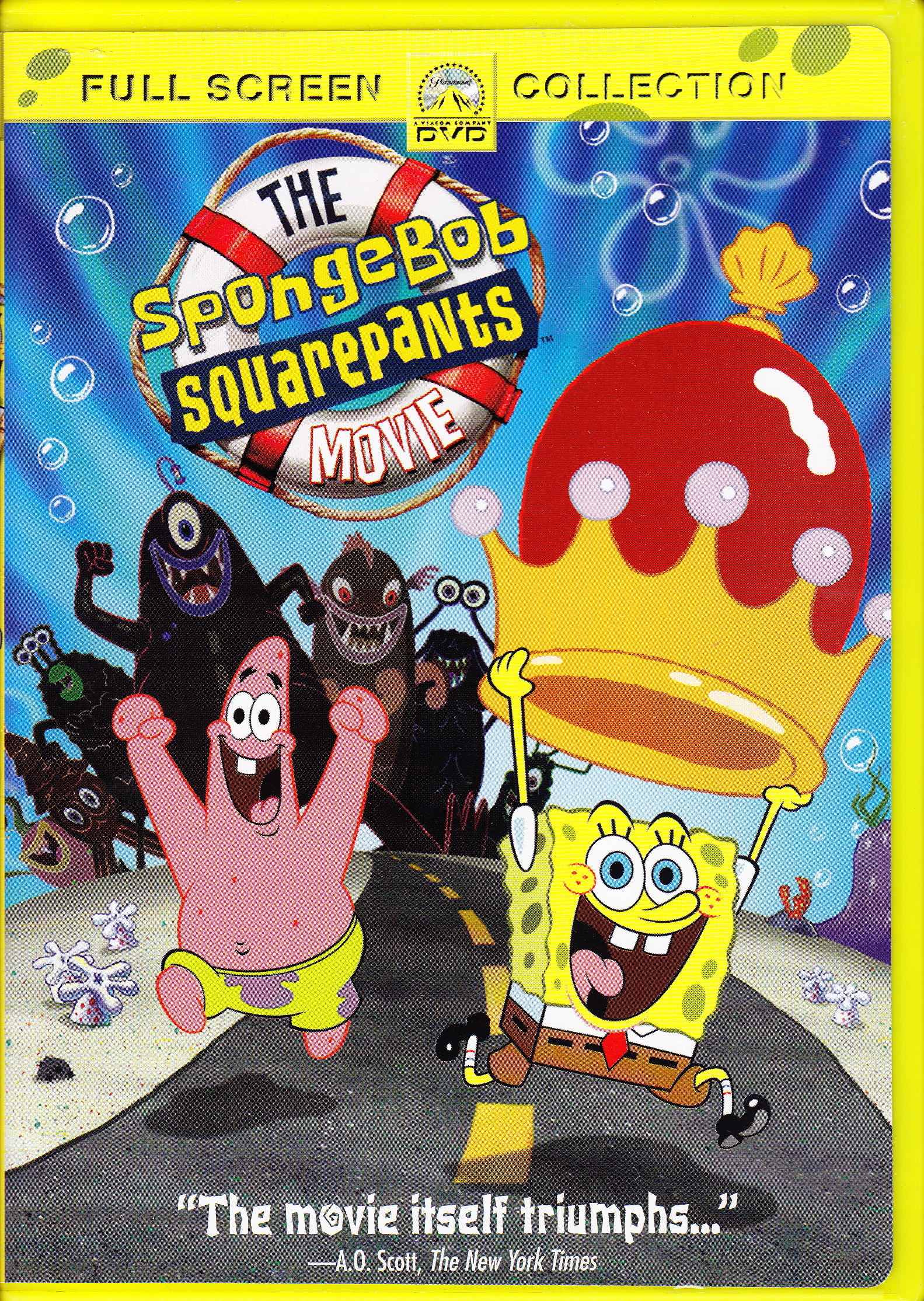
Who lives in a pineapple under the sea? In this era of fast-paced technological change, I’m probably displaying my terrible penchant for the passé when I confess to having watched Spongebob Squarepants with my daughter. I even went to the theater, back in Wisconsin, to watch the much hyped Spongebob Squarepants Movie. We eagerly awaited its release on DVD. Well, maybe not eagerly. In any case, after repeatedly watching it for several months, it was shelved and forgotten. Until recently. Playing archaeologist in our apartment, I sometimes unearth artifacts that have been hidden since our hurried and harried move from Wisconsin to New Jersey. We have never really fully unpacked since leaving Nashotah House, and opening a dusty box in a corner can feel like Christmas sometimes. Or, maybe you just discover the Spongebob Squarepants Movie.

It was a rare three-day weekend. School was about to start, and the commute to work would begin to take longer now that the leisured class had to admit to summer’s end. A little silliness seemed just the prescription I needed to face the work week. A little softness before hard reality.

I have noticed for several years now that American movies (and this may be true of movies from elsewhere, but I can’t say for sure) frequently make use of the death and resurrection theme. I suspect that a country that identifies itself so closely with Christian ideals finds this reiteration reassuring. Sure, the scenario is cathartic on a very basic level, and yet, it lies at the very heart of a central Christian belief—death is not the final word. So as Spongebob and Patrick are laid out on the drying table in Shell City and the water vapor rises from them like their departing souls, the viewer is left with a desiccated porifera and echinoderm and a profound sense of loss.

Of course, resurrection is right around the corner. The fire alarm goes off, showering down life-giving water from above, and our stars pop back to life. Resurrection in nature is limited, by appearances, to plants. With the annual cycles of death and rebirth, an individual plant may attain that for which animals only hope. This is a most robust religious symbol and movie viewers would be bereft without it. Even if the next time you see a sponge is when using it to clean the toilet, remember that resurrection crops up in the unlikeliest of places.


Ring

Absence of evidence is not evidence of absence. So goes a trite little statement meant to calm the fears of new students of biblical studies who worry that the historical record for biblical events is so sparse. The professor can head off many confrontations by declaring that such-and-such an event could have happened, but if it did it left no mark on the historical record. As I was watching the Japanese movie Ringu last night, I wondered about the apparent absence of religious imagery or themes. I am fully aware that not all horror movies have religious components, but the juxtaposition of religion and fear is so common in the western world that it often shows up in scary movies. I wondered if this translated to other cultures or not. Ringu is a decidedly creepy ghost story that creates considerable tension with little gore and not much in the way of special effects. The social commentary is evident even without the benefit of first-hand knowledge of the culture. The paranormal pervades the film.

Christianity is the matrix of many scary movies made in a North American, or even European, context. Although I have read about Buddhism and Shinto, and even occasionally taught courses on “World Religions,” my knowledge of eastern religious traditions is admittedly still quite basic. I can usually spot a biblical allusion a country mile away, but subtleties of foreign religions are harder to discern. Although many religions coexist in the United States the overall context is still Christian—there can be no doubt for anyone who follows politics. Japan is, like America, largely secular. The religious base, however, tends to involve both Shinto and Buddhism and I’m not sure which, if either, forms the recognizable “religious” basis of the collective consciousness. In many ways “religion” only applies to the Judeo-Christo-Islamic model. Much could have been transpiring in Ringu that I simply missed.

After the first mysterious death in the film a short sequence of a family in mourning is shown. Clearly this is what we in the western world would consider a religious context. The decision to try to calm the avenging ghost by uncovering her murdered corpse also conforms to what we might term religion. The fact is, these are very human concerns. Religions throughout the world treat death with a religious reverence since it is the great mystery of the living. Religion frustrates many scientists just for the fact of its mysteriousness. So, does Ringu revolve around religious fear? I don’t know. With the karmic implications of the story-line I would suggest that maybe it does. I’ll remain agnostic on the point, however. The same goes for the absence of evidence is not evidence of absence. Is it or isn’t it?


The Price of Tolerance

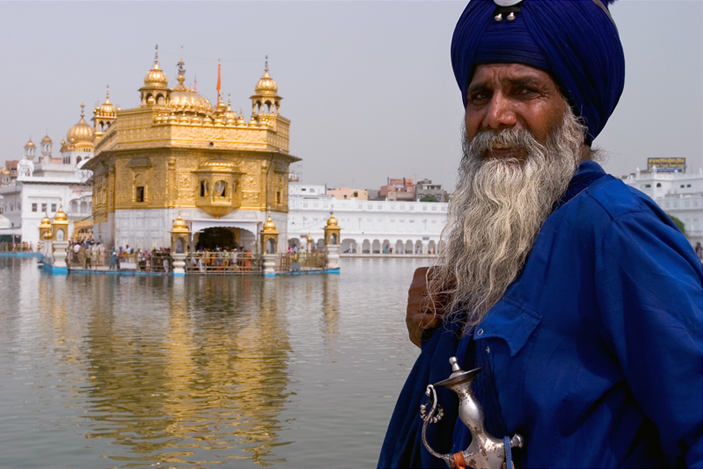
While on a trip to New England recently, my family had taken an exit to look for a bite of lunch. We followed one of those innocuous dinner-plate symbols that often grace roadside signs next to a stylized hotel bed and a gas pump that looks like a suicidal robot. This particular exit, however, seemed unwilling to deliver on the food part. As we wound down an unfamiliar road, we came across the golden cupolas of a Sikh temple. This was the first Sikh temple I’d ever seen, and my daughter asked why she’s never heard of Sikhs before. “Because they never cause problems,” was my reply. Of the major world religions, Sikhism is notable for its lack of overt violence even though a sword is one of the religion’s symbols. Unfortunately, over the weekend, violence found some innocent Sikhs.

As of the moment, no one is able to identify the motives of the man who gunned down four Sikhs preparing to worship in Wisconsin. For many Americans the religion is a mystery. We hear of Hinduism and Buddhism in the course of many historical and literary ventures. Sikhism is somewhat newer on the world religious scene, but it still predates regular European trade with India during the “age of exploration.” Although the classification of religions is always disputed, Sikhism is generally considered around the sixth largest world religion in terms of numbers, and they have avoided the limelight in the western world, showing that a religion can rest on its principles. One of the truly praiseworthy principles of Sikhism is toleration, an idea that his held in very high regard.

From WikiCommons

Toleration often clashes with gun ownership in the United States. Just weeks after twelve people were murdered for going to the movies, we have more headlines of private citizens (some mentally disturbed) with ready access to firearms. And more innocent people are dead. Even the shooter is dead, so we will never likely know whether this was simply a case of mistaken identity or hideous intolerance at work. In my time in Wisconsin I came across many Christians who were extremely intolerant of any viewpoint other than their own. Fortunately, they were the vast minority among the people that I knew. Still, the paradigm that I see emerging disturbs me to the core: we claim it is our right to own guns while identifying with a deity who let himself be tortured to death rather than harm anyone. I wonder if a culture can spell schizophrenia?


Disputed Parentage

What has Athens to do with Jerusalem, Tertullian famously asked. Much, seems to be the rhetorical answer. Today, August 1, is Lammas. It is said to commemorate the wheat harvest and Lammas is taken to be derived from Anglo-Saxon hlaf-mass, or “loaf-mass.” Beneath this apparent Christian celebration is the pagan festival of Lughnasadh. I’ve posted on Lugh before, but holy days are often seasonal, and it is time to consider Lammas again. Lammas is the last of the cross-quarter days that divide the European pagan year. Some communities bake bread to celebrate it, sometimes in the shape of a person (those of you who’ve seen the original Wicker Man know what I mean).

Christianity was born a persecuted religion that grew to be a persecutor. Deeply rooted pre-Christian traditions were eradicated or sublimated in the growth of Christendom. The modern pagan movement may not have an unbroken line of tradition, but it is a tradition that has ancient antecedents. What Christianity could not conquer it assimilated. Much of what became Christianity derived from Judaism. Much of Judaism had its origins in folk religions of ancient Western Asia. In its European context, Christianity adopted the heathen traditions that fit within the pattern of Christian thought. Agricultural celebrations quite frequently matched events in the imperial religion. Or, if no so events existed, new traditions were invented. It is quite plain that that is why we celebrate Christmas in December.

Why is it that Christianity has so vociferously disavowed its lowly parentage? Being a chthonian religion should be no mark of shame. What is wrong with different but equal? Many people fear and despise those who declare themselves pagan, but paganism is a religion like any other, concerned with morality, justice, and living in accord with the power “out there.” So as August wends its way into the calendar, and the earth begins its inevitable tip towards lengthening nights and the cooling of the days, we might do well to consider Lammas. Whether from the Christian angle of Saint Peter in Chains or from the Pagan angle of Lughnasadh, Lammas is a time to eat bread and reflect, two of the most human of activities. And perhaps with thought will come tolerance.


Cabin Fervor

It’s a sure sign that work is growing overwhelming when I’m too tired to watch my weekend horror movies. Well, I decided to fight back the yawns and pull out Cabin Fever this past Saturday night. I’d seen the movie before, and I’m not really a fan of excessive gore. The acting isn’t great and the characters aren’t sympathetic, yet something about the story keeps me coming back. In short, a group of five teenagers (it always seems to be five) are renting a cabin for a week when they get exposed to a flesh-eating virus. They end up infecting just about everyone in the unnamed southern town before they all end up dead. It doesn’t leave much room for a sequel, but that hasn’t stopped one from being made. One of the unfortunate victims of the virus is torn apart by a mad dog. The locals, fearing their safety, decide to hunt down the surviving youths.

On the way to the now gore-smattered cabin, one of the locals mutters that they’ve been sacrificing someone—a natural enough conclusion when body-parts are scattered around, I suppose. He says, “it ain’t Christian.” Well, yes and no. Sacrifice is at the putative heart of Christianity, although human sacrifice (beyond infidels and women) was never part of the picture. As is often the case with horror film tropes, the victim who has been dismembered is a woman. The guys whose deaths are shown are all shot. Now, I have no wish to attribute profundity where it clearly is not intended, but there does seem to be a metaphor here. Our society and its staid religion tolerate the victimization of some over others.

One of the hidden treasures of the best of horror movies is the social commentary. George Romero made an art form of it in Night of the Living Dead and its follow up Dawn of the Dead. Many other writer/directors have managed to do it quite effectively. We can critique our world when hidden behind the mask of the improbable. While the commentary for Cabin Fever may be entirely accidental, I still find a little redemptive value in it. That, I suppose, is the ultimate benefit of social commentary—it is true whether intentional or not. Is there a larger message here? I wonder if the fact that when women are victimized no one survives is pushing the metaphor a little too far. It’s hard to say; I’ve been working a little too much lately.


Do Not Enter

“Sign, sign, everywhere a sign, Blockin’ out the scenery, breakin’ my mind,” so runs the chorus of Five Man Electrical Band’s only hit, “Signs.” It is hard to imagine a more righteous hippie classic. When I was a younger man, I believed in signs. It made sense that if the world were unfolding according to a divine plan laid out for good, Christian folk, signs should be scattered throughout the world, pointing us in the direction we should go. I used to look for them assiduously. As I grew a bit more cynical with the years, and learned a bit more about science and probability, the idea that coincidences bore anything more than incidental meaning became a fixed paradigm. Every now and then something happens to make me question my assessment.

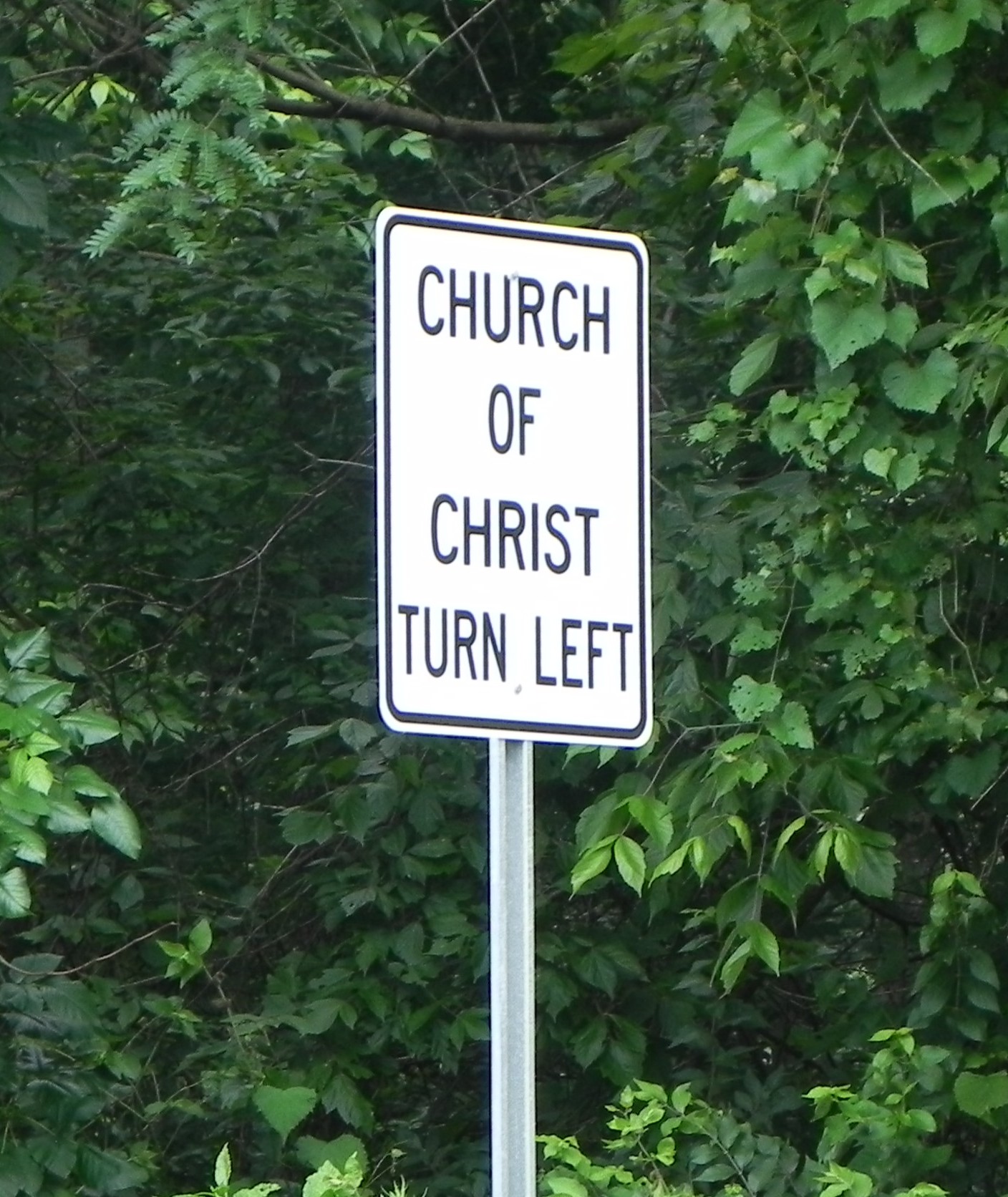
On my way into New Brunswick recently, I passed a sign. I used to drive this road several times a week when I was teaching at Rutgers, but I hadn’t been this way in a few months. I knew there had been construction going on, but a new road sign caught my attention:

Now, I’m one for finding the significance of buried statements. Here was a bold-face declaration that seemed to come directly from the almighty. In a day when Christianity is portrayed as an intolerant, bigoted institution, the simple truth of a road sign might actually bear considerable significance.

Throughout my life I’ve taken road signs a little too literally. When I worked at Nashotah House and I spied an orange sign on the road toward the seminary reading “Detour Ahead,” I knew that it was personally meant for me. The fundies from my college days frequently exploited the One Way signs liberally scattered across our nation, pointing their arrows into the mythological air. Anybody, of course, can make good use of a stop sign. A sign miraculously appearing that spells it out: Church of Christ Turn Left, can be nothing other than a divine message for a weary world. At least for those who still remember hippie bands with a certain fondness, and who don’t take themselves too seriously.


Same Sex Sanity

When the people speak, sometimes it’s just nonsense. So the people of North Carolina believe in the exclusive rights of dysfunctional heterosexuals over committed homosexuals. And President Obama makes a powerful statement. As Americans we are reared to respect personal freedom. And what freedom could be more personal than the open expression of love? The reasons given for exclusivity of heterosexual marriage are spurious—certainly the Bible considers marriage in purely pragmatic, not sacred, terms. As citizens of their own time they were as much programmed by their environment as are people today. Marriages were arranged and the concept of sexual orientation simply did not exist. It is not that I castigate marriage—having been married nearly a quarter of a century myself I would be a fool to do so—but I in no way feel threatened by anybody falling in love with anybody else. Nor is it the right of any loving Christian to stand in anyone else’s way.

A God who created gender-changing fish to fry in Hell (particularly on Fridays) seems unnecessarily cruel. (Yes, such fish do exist.) A God who created other animals that exhibit homosexual behavior (bonobos, penguins, elephants, lizards—at least 450 animal species have been caught in the act) and then condemns it is surely working at cross-purposes with the nature he (always he) created. It has become quite clear from nature that sexuality is far more than procreational activity. If your kit is for kid making only, why do so many good, Christian couples have trouble conceiving? And don’t say “God only knows” because Fundies have no monopoly on questions that demand a verdict. What is God playing at here?

Intelligence and sexual behavior seldom go together. Religions, however, have a hard time keeping themselves out of the bedroom. Loving, committed relationships hurt no one. For a religion claiming to be based on love, declaring various expressions of love wrong is diminishing the good in the world. The Bible has very little to say about homosexuality. Good, Bible-believing Christians often turn blind eyes to the many more stringent passages about divorce and remarriage, but single out the very few that mention specific same-sex acts. Do they not see how such cherry-picking makes a mockery of calling anything holy? With all the excised bits, it might be more appropriately called the Holey Bible. For me, it seems they might find it more instructive to observe the moray eels rather than trying to cover their wrasses.


Fighting Jesus

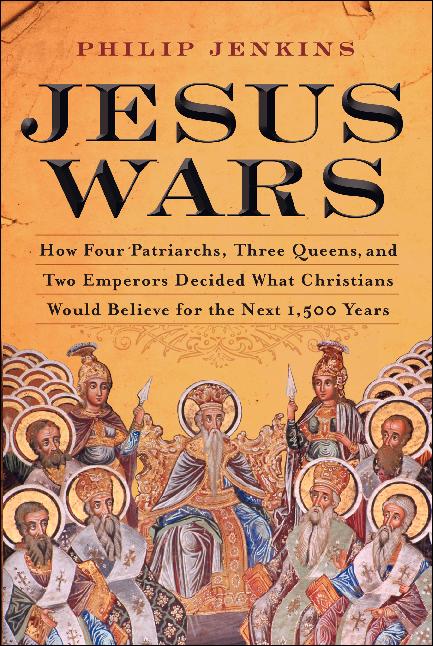
Jesus Wars, by Philip Jenkins, accomplished something no other book has ever done for me—it actually made the doctrinal debates of Late Antiquity interesting. An historian of religion with wide interests, Jenkins produces fascinating books on what might appear to be esoteric aspects of religious life. I remember yawning through theology classes where we learned of crusty, if utterly convicted, monks and bishops arguing over single prepositions in their efforts to define exactly who Jesus might have been. When Jenkins turns his attention to this dusty, unwashed phase of Christianity’s gamy early years, new avenues on regulated belief structures open the way to understanding just how little most believers know of their own traditions. On its way to feel-good evangelicalism, Christianity frequently paused along the way to brutally murder some of its own for disagreeing about whether Jesus shared the same essence as his dad.

Today many Christians are taught by their clergy that their faith differs little from that of the earliest Christians. All who are taught this should be compelled to read Jesus Wars in order to get a grip on what really happened. From the very beginning Christianity was deeply divided about who was truly a follower of Christ and who was not. Even within a generation of the death of Jesus his various groups of followers could find little that they all agreed upon. As Jenkins demonstrates, over the next few centuries that sad history was worked out with extreme cruelty and cudgels and swords. The side with strongest force of arms got to decide on doctrine. Nor did matters improve with the Protestant Reformation. Many Reformers lapsed into what would have found them tied to a stake for heresy, had they been fortunate enough to have been born in the early centuries of “the Christian Era.”

The one figure that seems to have been lost during the Jesus Wars was Jesus of Nazareth. Instead, human constructions of who Jesus might have been became the source of great suffering. Bishops beating bishops to death, saints having women murdered, monks forming an unwashed militia—it’s all here along with the debate over how many angels might dance on the head of a pin. Jenkins does an excellent job of demonstrating that what is now known as “orthodox” Christianity was often a matter of political accident. In the case of Theodosius II, the future of Christianity literally rode on the horse that stumbled, tossing the emperor to his death. No doubt, there will be those of one or another brand of Christianity who will see the divine will behind the ultimate outcome. That outcome, however, will always insist that all others are wrong. For those seeking a bit of balance, Jenkins will make enlightening reading. For others it may give the lie to doctrines made what they are by mere mortals. In any case, the words attributed to Jesus about loving your neighbors and enemies will nowhere be found amid the debates of who he might have really been.


As on Earth

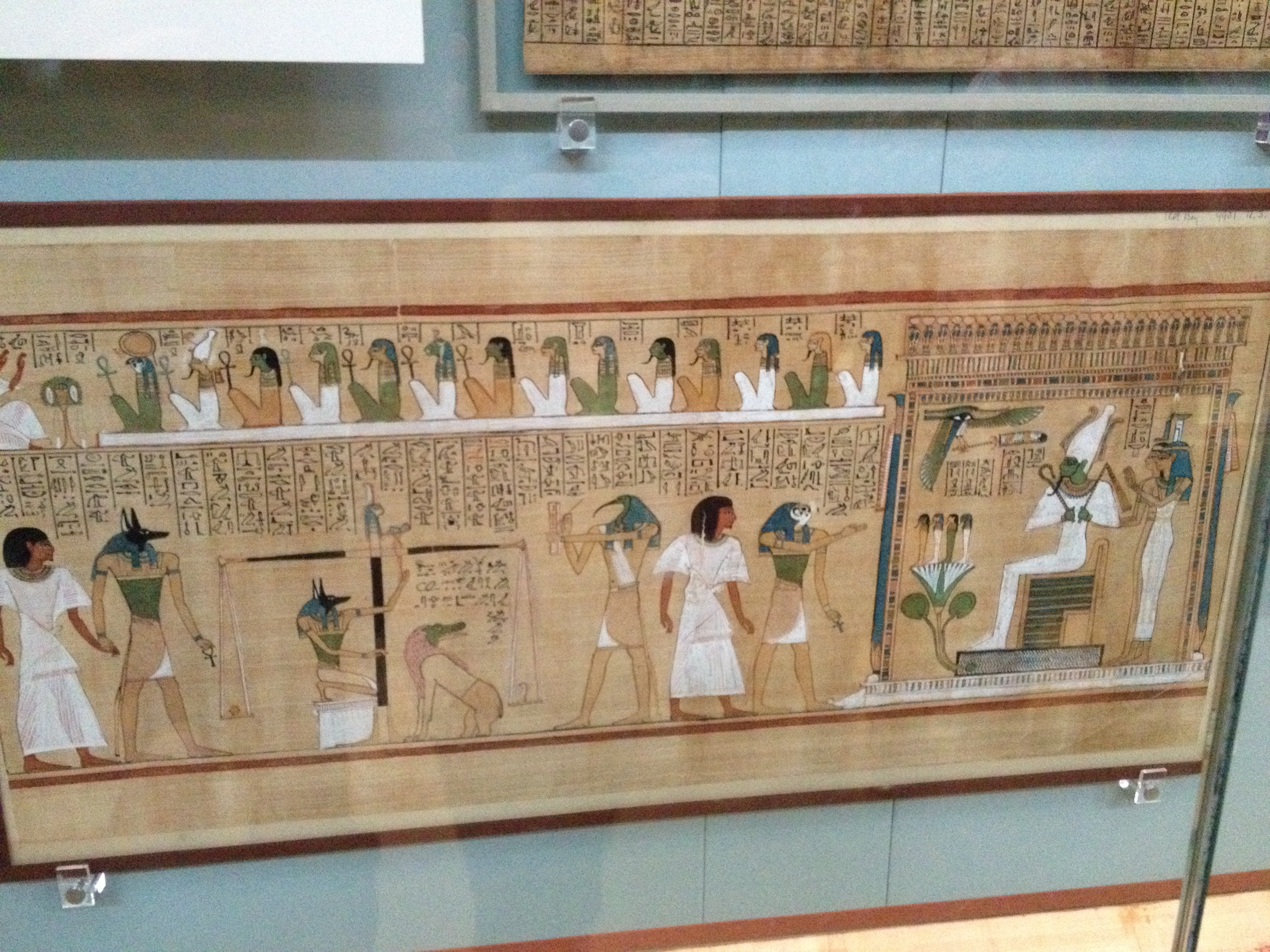
Today’s version of the afterlife requires simple assent to a belief system, at least according to prominent interpretations of some religions. Belief alone is enough to ensure an eternal reward. The ancient Egyptians, however, considered the path longer and more torturous. Anticipating modern GOP ideals, they believed that only the wealthiest deserved a place in the beautiful west, while the poor and struggling should just fade away with the sunset. At an even earlier period the afterlife was reserved for the king alone. Even he didn’t have an easy time of it, however. To get to the afterlife you had to face many perils and trials. To help him along, as a royal crib-sheet, many kings had the requisite spells inscribed on the inside walls of their pyramids. After time these “pyramid texts” were copied by the wealthy and inscribed inside their coffins. These “coffin texts” allowed the rich potentially to buy their way into eternity.

Eventually the afterlife became democratized. The spells were inscribed on scrolls and sold to those who could afford them. This final development gives us our “Book of the Dead.” Egyptians had an organic view of death as a continuation of life itself into the inevitable future. That future offered a continuation of the prejudices of the present. Kings continued to reign, peasants worked the fields of Osiris. It may have been work, but it was better than the alternative. Christianity’s version of the afterlife was strikingly fair. At first.

At first simply being resurrected was gift enough. After all, otherwise standing in line for martyrdom at an obscenely young age utter madness. Before long, however, like the Egyptians Christians began to create Heaven in their own image. Mary inherited the heathen title Queen of Heaven. When Heaven grew too crowded with questionable types, Purgatory was invented. Social stratification became a hallmark even among the clouds. Perhaps it is our primate biology, but we humans just can’t seem to accept and promote true equality. In that respect the Bible has become a kind of Christian book of the dead. Even eternal life seems to have its drawbacks.


Cemeteries and Certainties

A visit to Highgate Cemetery is a reminder of a different way of life. Built as a fashionable burial ground for an overcrowded London of the Victorian Era, the cemetery demonstrates a closeness of life and death that we have very much sublimated in the twenty-first century, as if by avoiding the topic we might make death go away. As a tour guide led us through the overgrown, moody grounds with ivy-covered tombstones and doleful trees, she explained how those of just over a century ago wove death and life into a continuous fabric with elaborate rituals of mourning and a sure sense of the afterlife. Monuments commissioned by the families of the departed used symbols from a variety of traditions syncretized to assure the survivors that death was not the final word. The departed, one presumes, had little concern in the matter.

Symbols from the newly discovered wonderland of ancient Egypt combined with classical symbols of Greco-Roman antiquity and Gothic revival combined to assure the living that death was not really the end after all. How easy it is to forget that death, for most of human history, was very near at hand. Only with our recent medical innovations and concern not to overpopulate our environment have developed nations (something certain religious sects blithely overlook in their enthusiasm to conquer the world by dint of numbers) been able to shove death into the dark corners of our minds. Unless inspired by ghost hunters, we seldom linger in cemeteries. We separate ourselves from the dying as if the inevitable were some disease we dread catching. We can’t reconcile ourselves with the most biological aspect of our lives.

The Egyptians did believe in an afterlife, but at first it was not a democratic one. Kings and courtiers might live forever but the common person was only accorded a brief time in this world. The idea that death could be cheated by religion eventually grew, and Christianity came to accept such assurances as a hallmark of faith. The symbols for that faith figured prominently in Highgate Cemetery. As we came out from the tour, I was reminded that the radical Karl Marx, champion of the proletariat, was buried just yards away. Even those we today recognize as having borne immortal ideas still rest in the same chilly ground. Is the hope that binds them with the heavens an illusion left over from ancient times or is resurrection an idea from which we just can’t escape?


Grapes of Mirth

Growing up in a teetotaling family, when I first encountered Greek mythology I paid scant attention to Dionysus. Assuming him to be “just the god of wine,” I had no interest in the wares he was peddling. Of mythology itself there was no end of fascination, and many of the great classics have been toned down to Disney, or even more insipid, for the entertainment of children. What we often fail to appreciate is that this is religion. Mythology that does not address the very real human concerns of sex, intoxication, and false dealing is really of no help at all. If in doubt, read your Bible. (Not the children’s version.) When I came back to Greek mythology as an adult, it became clear that Dionysus differed from other gods in considerable ways. While teaching my mythology classes, I decided to read more about this intriguing god. Well, it was just like the Fates that I would get a new job before reading Walter Otto’s book, Dionysus, but the urge was still strong and I was glad I’d read it.

Otto wrote in the days of Frazer’s technique of comparing sometimes questionable sources, and yet he produced a masterful, and poetic study of Dionysus. What quickly becomes clear is that the popular association of Bacchus with wine is a gross oversimplification. Dionysus is the god of madness, of blurring distinctions, and of losing control. He is the most frequently represented god in Greek art because, like us, he sometimes loses it. Greek society is famed for its rationality and order. It is sometimes overlooked by the reasoning mind that creativity, emotion, wildness are part of the complexity of humanity. Dionysus is the god who understands the need to let go once in a while. This is not hedonism, nor is it debased. Bacchus represents the human in full form. He is the god who comes to humanity, the god of appearing. Dionysus, the friendly god.

In the early days of Christianity in the Greek world, many Greeks supposed that the Jesus preached to them was Dionysus (to the chagrin of many missionaries). The connections, however, are remarkable. Like Jesus Dionysus has a god for a father and a human for a mother. He lives a carefree life and is the god who actually comes down to live with people. He is a god who dies and who is resurrected. Like Jesus, he enjoyed a glass of Bordeaux every now and again. And his followers were fanatical. As Otto makes clear in his dated, but insightful, book, Dionysus left a deep imprint on culture itself that continues to affect us even today. Even if we’re teetotalers, we can appreciate the depth of character and the complex nature of a god like Bacchus. And if we’re honest we’ll admit that there are times when we just have to let it go.