Who Knew?

Reading about Jesus is an occupational expectation for an editor of biblical studies. Not that this is anything new for someone who grew up thinking of him constantly. One of the issues often raised about the son of Mary and Joseph is what he did during his childhood. There are apocryphal gospels that address that question since the canonical ones don’t, other than a Lukan visit to the temple in Jerusalem where the professors were stumped by the student. A query that’s pondered from time to time is why nobody thought to write down the early years. A related question is less often asked: who knew in the early days that Jesus would amount to what he did? It’s pretty much accepted that the tales of a miraculous birth were borrowed from the common stock of quotidian cultural heroes of the day. Anybody famous had to have had a spectacular start. If they knew from the beginning, however, that he was going to be great, why didn’t they write his story?
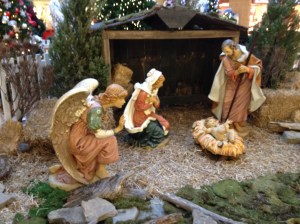
Unless, of course, they didn’t know. Jesus was born, according to the best that we can reconstruct, in a working class family. He had brothers and sisters, according to the gospels, and since Joseph disappears from the story rather early, he was likely raised in by a single mother. Who pays attention to such mill-fodder as this? One of the common people who will, more likely than not, come to nothing? A statistic to make great the egos of Herods and Caesars. Who bothers to write such things down? It’s only after fame that we become interested. What made him so? How did his meteoric rise get started? Before then, who really cared?

Stuck here in the middle of Lent, it’s easy to forget that even Jesus started life as a nobody. Many who start life privileged end up obscure. There’s perhaps a cosmic balancing act taking place here. The fulcrum—and who thinks of the fulcrum while riding on the teeter-totter?—the fulcrum is the common person. Fame may ease the path to halls of power. Cronies will fall over themselves to kiss the hem of any robe headed toward the Oval Office. Those who claim such rights will do so on the back of a guy so occluded we don’t really even know where he was born. Or what he did before he was thirty. And had he lived out his life like the rest of his neighbors we wouldn’t be asking the question even now.

The Morning After

dickens_gurney_head

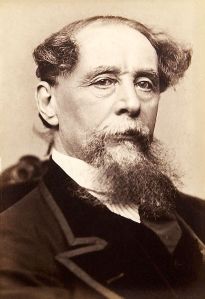
Quite apart from seeing a live performance of A Christmas Carol, Charles Dickens has been on my mind a bit this Christmas season. I suppose that’s not surprising since it has been suggested that Dickens “invented” the modern Christmas, but it is really, I think, because of how the wider world seems to be spinning backwards. The poor have always been a personal concern of mine. I grew up poor and I know how much suffering it entails. My case was a rather mild poverty—we were never out on the street, and we didn’t actually go hungry. We had nothing in the way of luxuries, though, and I could see the possibilities even as I could see the sky where the boards on the roof were pulling apart. It wouldn’t have taken much for us to have been cast out in a cold Pennsylvania winter. Others have it much worse.

On my daily walks to work, I see the homeless. Some sleep in cardboard boxes, some in tents. Others are out under the stars. One morning I walked by a particularly creepy and sad sight of a person sitting, shrouded in a blanket over his or her head, on a subway vent to catch some of the ambient heat. I know that I don’t have the means to buy each one a meal. Their number has been going up, not down. And I think of Bob Cratchit, threatened and bullied by Ebenezer Scrooge. He will lose his job if he’s not in early today, the day after Christmas. Because of his change of heart, Scrooge buys his clerk a pot of “smoking bishop.” And herein lies the only possible cheer.

My wife got me started on Dickens. She also sent me a story from NPR on smoking bishop. It seems, according to the story by Anne Bramley, that British Protestants delighted in making fun of church offices by naming their tipples after titles. Churchmen (and they were men) were largely exempt from being poor and, according to historians, often supported the Poor Laws that made the fate of the poverty-stricken even worse. In a kind of perverse revenge against privilege, drinks were named after various ecclesiastical offices. There’s little that the poor can do, except to try to find the scant humor in a situation where no one has the reach of a Charles Dickens anymore. Ebenezer, unlike Bob, is a biblical name. It means “stone of help.” In these chilly days dare we hope that help may come, even from a stone?


Capital Carol

The idea of exchanging presents on a holiday emerges from the impenetrable veil of time. We don’t know when the practice began—the idea of copying the Zoroastrian wise men in Matthew is a bit of a stretch and the date of Christmas wasn’t settled until much later in time. However and whenever it started, giving gifts at this time of year has become one of the defining features of late capitalism—it’s almost as if Jesus of Nazareth was born for this. An economy that measures self-worth in terms of money is just the place to have God-incarnate celebrated by giving lavish gifts. Those of us who make no money off the holidays can’t deny that it feels good to give someone something. People like, in general, to make each other happy.

This year my wife asked for a non-material gift. We made our way to the McCarter Theater in Princeton to see their acclaimed performance of Charles Dickens’ A Christmas Carol. A gift of a memorable family time and a truly spectacular play. Seeing this story in 2016 felt especially important. Dickens was a famous advocate for the poor and was well aware of how they suffered at the hands of the wealthy. Indeed, those with too much money lose their humanity almost completely. The story is focused around Christmas, but the message is needed for every day, especially in over-long years such as this. Capitalism is a form of social evil. Anything that lowers humans to mere ciphers on a page is the very definition of sin.

christmas-carol

We all know how the story goes, but to see accomplished actors undergoing conversion is nevertheless a strangely hopeful experience. As the story makes abundantly clear, it requires so very little to make others happy. The point of having money, after all, is to use it for the good of others. Seeing one man facing his own mortality only to realize that he has isolated himself from the care of others is a powerful experience. As we move forward into the long and dark days ahead, there is a reminder here that we need to keep close to our hearts. There may be fewer presents under the tree this year, but we are all the richer for it. This is the kind of gift that we need to share with the entire world.


Hoping for Light

Although the stores have been playing Christmas music for some weeks now, it is technically Advent. I think we could all use a little Advent as days grow shorter and dark nights increase their influence over our lives. As a nation we’ve been brutalized by a minority candidate and this has become a bleak December that Poe would certainly have understood. The spinning mind occasionally falls upon George W. Bush who somehow has begun to look normal. The president who told us when America was under attack we should shop. After all, that’s what people do in December, right? We buy things to make ourselves feel better. It sure is dark outside most of the time. Advent is all about candles and light and hope.

img_2638

One of the more endearing aspects of human beings is our ability to see the positive amid negativity. Darkness is the natural state of the universe. Stars are tiny points of light in an endless cold and dark universe. Most of what’s out there has no light beyond those willing to burn bright enough for others to see. We, however, see the light of daytime as normative, slumbering away the hours of darkness. We thrive in light and the light has to be augmented by candles as we struggle against the natural darkness that would, if it could, encompass the universe. Darkness, despite its emptiness, is endlessly hungry. Advent reminds us that we must be light if we want anyone to see in the growing nighttime.

We miss this important dynamic if we leap straight from Halloween to Christmas, pausing briefly for Thanksgiving. The church has made its fair share of mistakes, but Advent wasn’t one of them. Experts tell us Jesus wan’t born in December. Christmas isn’t really a physical birthday. It’s an ancient rite concerned with the return of light to darkened skies. A fervent appeal for our colorful lights and candles to encourage the light that we know, we believe, is out there to return to us. Scientists tell us that it’s just that the earth lolls at 23 degrees on its axis and all of this is just a balancing act. That may be so. I’ve never been off the earth to check. Down here on the ground, however, the days come only reluctantly and the nights linger longer and longer. And we can choose to see darkness as our natural state, or we can ignite a candle to encourage the light to return.


Holiday Season

Now that the holiday season is upon us, I stop to think about what holidays really do. “Keep Christ in Christmas” signs have popped up like winter dandelions as Trump signs consider to litter the landscape. Thanksgiving, however, gave me the opportunity to forget about all of this for a while. The culture of signs. Signs telling us we must bow down and worship. The holidays signal a season when it is okay to hibernate and forget that more powerful forces out there may wish you harm. Part of the trouble is that those who are coming sometimes can’t see beyond their own interests. Perhaps what I do for a living conflicts with the job I’m paid to do. Conscience dictates that one or the other must go. But conscience is such an old fashioned idea.

img_3092

The holidays start with Thanksgiving, but it is now the Monday after. Those in liturgical traditions of Christianity will note that we are in Advent, a season of anticipation. I do wonder what we’re anticipating. Perhaps it’s because Thanksgiving came and went in a blur of travel weariness this year. The few days when commuting wasn’t an issue were the opportunity to stay still for a while and not look at news feeds and reflect on all we’re thankful for. I started hearing Christmas carols in stores shortly after Halloween. We’re entering the season of money in a country in love with lucre. Take a close look and see what lies in that manger.

Most years the stretch of dark months of November through January are accompanied by a sense of peace. Human beings loving each other and getting along. I guess I’ve been away from the news for a few days. I know there was a Black Friday last week. I also know that money has a strange way of funneling upward, a kind of osmosis of Mammon. On my quiet strolls I wonder what we, as a country, truly value. On the highway stuck in traffic with thousands of others returning home, I try to think that in these metal shells are living, breathing, loving human beings. Many of them only trying to get ahead. We’re all in a rush since there’s so much to do before we allow ourselves another holiday. Wouldn’t life be better with more days for reflection? I’d rather not politicize the holiday. Keeping Christ in Christmas seems to be asking for one not to forget the offering plate. I’m wondering about those sleeping in the street not far from Trump Tower. I’m wondering what ever became of conscience.


Christmas Music

While reading about holidays recently, I came across the idea of Christmas as a cultural holiday as well as a religious holiday. Now that it’s here, it feels like a little of both. My wife grew up in a musical family and Christmas music was a large part of her experience of the holiday. Although I grew up in a family where the religious aspect of the holiday was as preeminent as it could be with young boys, I don’t recall music being much a part of it. Perhaps we had enough of Christmas carols in church and on every shopping excursion. I don’t recall having a record player beyond maybe a close-and-play for our few 45’s. Now a large part of our holiday experience is the music. We listen to contemporary secular and classical religious and, to borrow an expression from popular parlance, it’s all good. Music spans the sacred and secular and suggests that we might all get along if only we were willing to try.

IMG_2649

Scanning our shelves we have a wide variety of Christmas music. It begins with Medieval carols and spans to a Very Metal Christmas and the most recent Pentatonix album. Even Amy Grant has a place in there from my college days. Like a kid I awake early on Christmas, from the long habit of getting up around 3:30. The house is quiet and, rare for New Jersey even the street outside is silent. In the hush I can still hear a kind of music. The music of peace, of a dream, of an ardent hope, of Christmas.

Christmas is all about sharing. We know Jesus of Nazareth was unlikely born this time of year, but we take it as a symbol. The peace of a silent night is best enjoyed in mixed company. With the political rancor of exclusion burning in our ears other days of the year, maybe we could think about sharing today. Sharing our land. Sharing our sense of hope. Sharing our music. The world could be such a wonderful place if we would only listen for Christmas.


Away in a Manger?

The holidays are a time for getting together. At a friend’s house over the weekend, we were talking about nativity scenes. I mentioned a story about how a nativity scene had been missing the infant Jesus and he said he’d be right back with a solution. I have to admit that I’ve never seen Sweet Baby Jesus porter before. “Place that in your manger,” he said. I assume this is a seasonal brew, intended to draw the semi-religious toward a kind of holiday cheer. Now, blasphemy in a bottle is nothing new. In fact it’s quite common, I expect. Nevertheless, a bottle that says “One sip and you’ll claim the name” might be offering a salvation that it simply can’t deliver.

IMG_2642

Growing up, Christmas never had any connection with drinking. My father was an alcoholic, and inviting this particular spirit to the holidays seemed misguided. Still, I recognize that in many cultures tipples were a way of coping with the excessive periods of darkness. Even in these days of ubiquitous artificial lights, I find that the darkness just outside bears a considerable weight. We festoon our houses with colorful lights to ward off the night. We prepare special foods to take our minds from the bleakness outside the window. And yes, some turn to Sweet Baby Jesus to offer its own kind of shine.

The holidays mean many things to many people. The commercial aspects appeal less and less as the years go by, but having some time off work to be with family and collect my thoughts grows more important each year. What makes a day holy, I expect, is that you have things that are otherwise difficult to find. Life, for many, is a long series of denials of what they really want. When the holidays come, they indulge. Who am I to begrudge someone else of what makes their ordinary days sacred? Who indeed?


Holiday Fervor

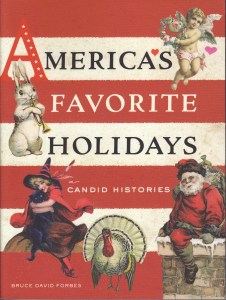
AmericaFavHoliTime comes in different varieties. In temperate regions where the changing seasons keep the time of year for us, we tend to have seasonal holidays. Christmas and other December holidays mark the shortest days of the year with the hope that light will soon become more abundant. Spring rituals, near the time of the vernal equinox, encourage the return of fertility to the earth. Autumnal holidays mark the approach of darkness once again as the world twirls endlessly on. Summer, bright and warm, doesn’t really lend itself to so many holidays. These thoughts came back to me as I read Bruce David Forbes’s America’s Favorite Holidays: Candid Histories. Forbes doesn’t cover all the special days, but focuses on Christmas, Valentine’s Day, Easter, Halloween, and Thanksgiving. These are five holidays marked, in some sense, by spending. They are often, although Forbes doesn’t really spend too much time on it, the focal point of cultural wars where various Christian groups wish to reclaim a certain day for its “rightful heritage.”

One of the real values of books like America’s Favorite Holidays is that it is clear that these claims of “keeping Christ in Christmas” and its kin are samples of collective amnesia. Many “Christmas” traditions predated Christianity. Others developed concurrent with it, but in “pagan” contexts. Christmas trees, for example, didn’t originate in the latitudes of Bethlehem. The same may be said for just about any holiday. Valentine’s Day and Thanksgiving, of the five explored, are the lone exceptions. These are fairly recent holidays and neither one marks a solstice or equinox. They celebrate aspects of life we value, making them sacred time. Don’t expect to get Valentine’s Day off of work, however. Capitalism never makes room for love.

Christmas, of course, is the holiday most under dispute. All holidays may be commercialized, but for Christmas spending is central. Forbes insightfully shows that Christmas is, and may always have been, both a cultural holiday and a religious holiday. The cultural aspect of the season is the one that most people celebrate. The birth of Jesus—which we are fairly certain was not in December—was a latter add-on. A baptism, if you will, of a pre-existing holiday. The winter solstice holiday is a staple of cultures in climes where the difference in available light and warmth is appreciable. It marks the point of the year when things start getting better. Yes, the real cold of winter has not yet set in, and there will be months of snow and ice. Still, once the solstice is passed, there is more light to help us cope. Celebrating sacred time, whether secular or not, is the natural reaction of people who crave light over darkness.


Rumors of Wars

Now that Black Friday and Thanksgiving are behind us, the holiday season compels us to think of what comes next. Whether it is Hanukkah or Christmas or Kwanza, people are preparing to celebrate during the longest nights of the year, hoping to encourage light to return. It is a most primitive urge. Darkness is easy to come by; light takes a little more effort. In the western world the season was largely instituted by the celebration of Christmas, although this took many, many years to catch on. Now it is a begrudging nod in the direction of workers who spend more and more of their time on the job since the internet makes it difficult to claim that we are unavailable. Smart phones, smart watches, tablets, and computers are ubiquitous, so access to work email is only a click away. In any case, the holiday season invariably brings stories of offended people to the surface.

A recent piece in The Baxter Bulletin, sent to me by my wife, rehearses the story of Baxter County, Arkansas and the challenge against a nativity scene on a courthouse lawn. Such stories always seem to me to be cases with no winners. A courthouse should remain neutral territory, but the nativity scene hardly seems an offensive weapon. I can’t claim to know a great deal about the history of creche scenes, but it doesn’t appear likely that they were ever covert attempts to convert. They were celebrations, and nobody has a problem with them as long as they’re kept on private property or church garths. I do wonder, however, if driving them out of public sight really has any purpose. We all know that this time of year is gearing up to holidays when the ordinary takes the back seat for a few days and we can stop the rat race and reflect on a wonderful myth of biblical proportions.

Tree, bush, or asherah?

Tree, bush, or asherah?

Similar stories are unfolding in countless venues now that December is practically here. Even stopping into Starbucks for a cup of coffee can land you in the middle of a culture war. It would seem to me that in this troubled world we might instead try to focus on peace. Whether or not the story of the manger has any historicity at all, the fact is the first century was a period of extreme unrest. This was a moment to pause and imagine what a world without war might be like. Now the holidays have become an occasion for declaring a new kind of sniping war about who has the right to make reference to a legendary event. Or where they may do so. In some cases there may be legitimate cause for concern. Most of the time, however, only those fixated on belligerence manage to draw everyone in to a fractured fairy tale of a holiday season where money is at stake.


Bucking Star

Entitlement comes in many forms. Culturally we’ve been sensitized to substituting “holidays” for “Christmas,” although the reason we spend money at this time of year is well known. Although technically not a Christian nation, the United States has a large number of Christian believers and always has. Charles Dickens certainly participated in the invention of Christmas, but the commercial aspect is very much an American thing. So much so that we can’t wait to get Thanksgiving out of the way to dip our fingers into Black Friday, a holiday in its own right. Starbucks has, for many years, shifted to a banal, neutral winter-themed cup design, to get customers into the spirit of spending. Who really needs to pay five dollars for a cup of joe? Wrap it like a present and the cash flows more freely. So the tempest in a coffee pot over the “war on Christmas” by choosing a simple red (and by default green) cup design became front-page headline news recently. Had we dissed the Almighty or the babe in a manger by going red?

Religious groups feel increasingly threatened. Not everyone thinks globalism is a good thing. We try to educate our children, but many religious groups insist on home schooling to avoid the contamination of an open mind. Any act, no matter how trite or banal, may be perceived as an attack. Nobody seems to think that stopping in to pay so much for a cup of coffee may be a sin in its own right. The economy has tanked and bumped along the bottom ever since I’ve entered the professional sector. And yet, Starbucks has flourished. No matter how down you are, a little arabica stimulus can’t hurt. It has, apparently, become the bellwether of how Christmas-friendly we really are.

IMG_2605

Ironically, the Christmas decorations begin appearing in stores before the spectre of Halloween. Stop in to pick up some last-minute scares and you’ll find them on the bargain rack as the red and green tide take over the valuable shelf-space. We gleefully move from one spending holiday to another. And in the midst of it all, we stop to complain about the design of our coffee cup? I try to avoid disposable items whenever I can. I don’t collect holiday cups from coffee vendors. I wonder what all the fuss is about when the world is full of so many serious problems. If I sound cranky to you, there’s a good reason. I haven’t had my morning coffee yet.


Commandments by Committee

Something about the holiday season seems to bring out atheistic activism, or at least media interest in atheism. Now that we’re safely in 2015, I suspect things will quiet down a bit until the next major religious holiday comes along. Ironically, since I was a child I’ve heard about how secular Christmas, in particular, has become. Reactions to this have led to “Christmas wars” that give the lie to sleeping in heavenly peace. In any case, back in December CNN ran a story on the atheist ten commandments. This was just before the holidays, but just after the release of Exodus: Gods and Kings, so it was a story sure to capture human interest. The atheist commandments were chosen by a committee, and, of course, have no binding value. Many of them are more precepts than commandments since, it seems, you need a deity to command all of humanity. Nevertheless, the number 7 commandment has a very biblical sound: “Treat others as you would want them to treat you, and can reasonably expect them to want to be treated.”

More interesting than the list, in my way of thinking, is the form of delivery. The ten commandment format is an obviously religious one. Atheists have long tried to make the case that non-belief is not the same as immorality, and there can be little doubt that this is correct. One need not believe in order to be a good person. Yet, the force of the symbolic ten commandments comes from a divine mandate. Committees, as efficient as they may be, don’t have the same kind of authority. You can hear it now—“Why should I listen to you? Who are you to tell me what to do?” With God there is always the threat of eternal damnation or the sending of plagues. Commandments by committee appeal to reason.

The ten commandments—here I mean the traditional ones—haven’t fared especially well among the faithful. Survey after survey shows many people don’t know all ten well enough to cite them. Some, such as the one against coveting, are hard to demonstrate or prove one way or the other. Honoring parents, in some extreme cases, seems sinful in itself. What doesn’t count as a graven image? So my question is, who has the authority in a post-Christian world to give commandments? The religious certainly won’t take advice from atheists, and religious leaders disagree among themselves about what the deity demands. No committee, it seems, can capture the true essence of divine demands. Perhaps it is a matter of boiling the ten down to one (similar to number 7 cited above) and getting our leaders to truly believe this before imposing it on all.

480px-Rembrandt_-_Moses_with_the_Ten_Commandments_-_Google_Art_Project


Mother’s Night

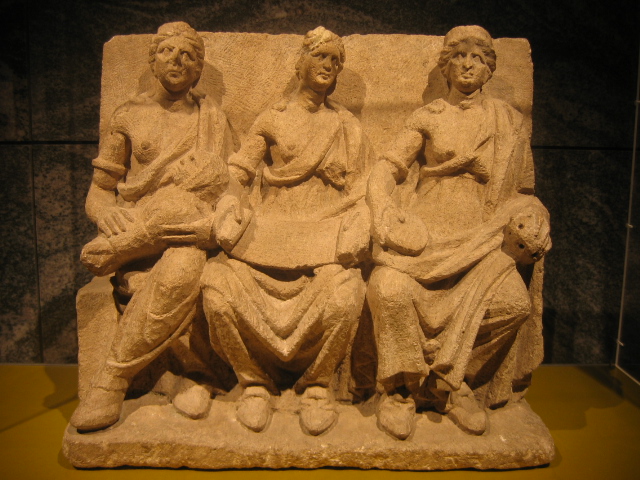
It wouldn’t be Christmas, in the Christian tradition, without Mary. Still, apart from her later enhanced role in Roman Catholicism, Mary’s part beyond Christmas is minor in the church. She seldom features in biblical accounts of Jesus’ life. It is easy to forget the female role that was so much a part of winter solstice celebrations that coalesced into our modern twelve days (really only one, for work purposes). That’s why I was glad that a friend sent me a link to a site about Mödraniht, or Mother’s Night. Honestly, I had never heard of this holiday before. Given the Germanic penchant for dramatic festivities, it comes as no surprise that Yule involved a night celebrating the feminine aspects of the season. Apart from the occasional references to Mary, we tend to think of this as the time a male son of a male God came to save mankind. What of the women without whom none of this would have been possible?

As Carolyn Emerick notes on her page, we know little about this sacred day because Christianity managed to wipe out most of the pagan traditions of northern Europe. Some, of course, survived and worked their way into Christmas. Modern holidays, being primarily days off work rather than deeply felt celebration (for we live in a world with no need for religion), have gravitated toward what had once been the male preserve of earning a living. Watching movies of Dickensian times, it is clear the women continued to work—likely even more than usual—to bring off a holiday celebration. It was the male prerogative to be the recipient of largess.

Photo credit: "Urban" WikiMedia Commons

Photo credit: “Urban” WikiMedia Commons

My concern is that gender equality may sometimes be confused with gender stereotyping, or even with patronization. How is it possibly to build equality into a system put into place by generations of men? Is civilization truly civilizing when half of the race and only a very small portion of the planet benefits? The Christmas season, even now rapidly slipping away, is a time for considering equality. Every year modern non-believers and humanists ask for equality—a dream always held at arm’s length, since the holiday earns record profits as it is, and the financial year revolves around it like a Pole Star. It is the time of year when we see if we’ve turned a healthy profit. The rules in the system were set long ago. Even with Mary in the manger, she blends into the background while shepherds, wise men, and other interested males plan to make a holiday of it.


Lords a’Leaping

As I’m writing a not insubstantial check for the rent, as I do every 25th, I am participating in a Christmas ritual. Having grown up with trees, presents, cookies, and a general warm glow about the holiday where you got things for free and didn’t have to do any work (home or otherwise), it is hard to believe that this kind of Christmas is a modern invention. Some years ago I wrote an unpublished book about the holidays. In researching it, I learned that Christmas was only gradually accepted as a day of celebration. For many it was too popish, and for others it was too frivolous. It was the day when tenants paid their rent to their landlords—and here is the tradition in which I’m participating—for landlords who don’t make money from their tenants are no lords at all. Indeed, this commercial transaction gives the lie to the common lament that Christmas has become commercial. It has been commercial for a very long time.

Some suggest that Charles Dickens—who wrote not just A Christmas Carol, but several stories about Christmas—is largely responsible for our sentimental image of the holiday. Individual traditions of the day go back to Medieval or earlier times, but the conglomeration of events that occur around December 25 come from many sources. Human beings, entrepreneurial by nature, recognize the economy of bringing various disruptions to the flow of money onto a single day. Indeed, the day after Christmas is often a day to rival the holiday itself, with people returning items and purchasing more. Soon enough Epiphany will ring in austerity. In watching for economic recovery, Christmas is a mere indicator of financial health. There need be nothing more to it.

A capital Christmas

A capital Christmas

As I was sitting in my windowless cubicle this week, receiving little email from academics (who are the main business partners for publishers) already out on a semester break, my thoughts turned toward the deeper meaning of the holiday. Business is business. Meetings with recurring set dates popped up for Christmas reminding me of events that, one senses, are only reluctantly cancelled. The true entrepreneur can’t wait to get back to the office. I’m busy looking deeper. The trappings may be modern, but the idea of celebrating in the darkest time of year is very ancient. We are hoping for something better. We are looking for a new start. Christian or not, anyone looking over the sprawl that we’ve made of everyday life can appreciate the symbol of a baby on the day the rent is due.


Weather for the Birds

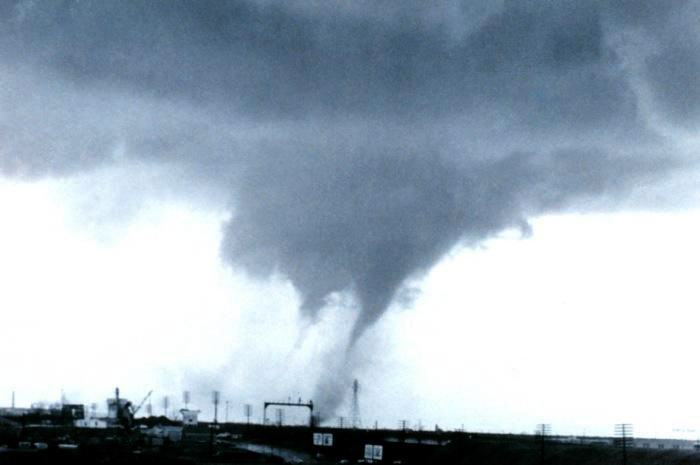
As Christmas nears so does a warm front, dashing hopes of a white Christmas in New Jersey. Well, at least there are no tornadoes coming. The weather, as my readers know, has long been perceived as a divine barometer. In a time when patience is wearing thin with religion, and weary headlines ask if it will ever finally disappear, our animal cousins seem, as usual, to pick up on clues more readily than we. An article on the BBC science page describes how a set of tagged golden-winged warblers vacated their nest a day before a tornado struck. Scientists suspect that the birds—and likely other species of birds as well—picked up the infrasound of the tornadoes that is well below human hearing range. Sensing the danger, they flew nearly a thousand miles, stopping just south of the storm’s track.

1957_Dallas_multi-vortex_1_edited

Of course, tornadoes don’t last an entire day. If the birds fled that long in advance, they couldn’t, I suspect, have heard a tornado that hadn’t formed yet. Since I’m no scientist, I’m not really qualified to offer an explanation, but I do wonder if such behavior isn’t related to consciousness. Several books that I’ve read recently have explored the concept of animal consciousness, and although we are reluctant to admit them to the realm of the self-aware, I wonder how long we can deny it. No doubt, if the birds fled (and returned after the danger had passed) there was an intentionality to their actions. Jealous of our intelligence, we must find a way to explain that animals can predict natural disasters of many kinds long before humans detect their more obvious traits. Our technology gives us seconds, or minutes, of warning. Dogs, cats, and birds know well in advance. But we are the superior beings here.

One of the problems with consciousness is that we can never get outside our own. Other people act in ways similar to us, and describe similar mental states, so we assign them the same kind of consciousness we have. Animals, not using human language, also act in similar ways to us. We call it “instinct” and continue on to the truly important stuff. I have no idea if birds can detect infrasound; I wouldn’t be at all surprised if they could. Without the ability to place it in the context of danger, however, I doubt they would take a thousand mile vacation just after their annual migration. We could learn a lot from our fellow creatures, if only we’d admit them to the conscious club and not the food club. And perhaps they might be able to explain to us why, despite all we know, religion never seems to go away.


X-mas Time

As predictable as crocuses in early spring are the controversies that crop up around holiday billboards. Even living in the quite blue state of New Jersey, I see plenty of advocating for the keeping of Christ in Christmas that the “keep Christ in Christie” campaign seems to lack. This year, however, the American Atheists billboard kerfuffle has shifted to Memphis and Nashville. There protests have been lodged that using children on “holidays for all” billboards is a kind of exploitation. And as we all prepare for the visit of baby Jesus, or Santa Claus, or any variety of mythical nighttime visitors, American Atheists are only asking that we all share the presents. It is an odd kind of culture war. Christmas, as we’ve long known, predates Christ. The holiday was usurped from pagan tradition and baptized into a holy day that was barely observed until the nineteenth century. The commercialization of the holiday gave it the current shape we recognize, and some Christian groups feel compelled to reclaim it in a kind of cultural crusade that will only end with complete acquiescence.

This is a holy war in which neither side is right. In the work-a-day world that I inhabit Christmas is above all a long weekend with a respite from the drudgery of a long commute to ensure that the system continues. Thousands stream into New York City, which, amazingly, does seem to transform for the holidays. The city that is, for most of the year, cold and heartless, suddenly displays a more human face. Giant wreaths and tall trees appear, bright decorations hang in windows. Menorahs and dreidels become manifest. Signs of Kwanzaa or other solstice-related holidays are evident for those who know how to spot them. People in general seem more generous than usual. Even many businesses relax their time-grabbing strictures a bit. Christmas did not begin as a Christian holiday, nor, it seems, will it ever be fully supersessionist.

IMG_1849

Celebration, I would suggest, is worth celebrating. Should atheists use a poster-child for the secular celebration of the holiday season? Should Christians have displays of mangers on church property where all passers by can see? Should Mensch on a Bench be displayed in stores? Should Santa be advocating for corporate giants who only want us to spend? Perhaps the answers are obvious. In my mind they are. We gather our families in, and in the northern style that has always resonated deeply with me, we look out the window and await the coming of the purifying snow.