Fanpire Club

FanpireIt has become an odd world indeed when thousands of people look to vampires for family values. Although I’ve not read any of Stephanie Meyer’s Twilight books, I have been curious at the reception they have received. A literary agent said, a few years back at an event I attended, that publishers want vampires. There is no end in sight. Perhaps it is my inherent trust of scholars that led me to read Tanya Erzen’s Fanpire: The Twilight Saga and the Women Who Love It. Why would a religious studies scholar write about Twilight? Because Erzen realizes, as many scholars are beginning to that: 1. vampires are very religious monsters, and 2. many more people care about books like Meyer’s than they ever will about scholarly minutiae. I, for one, learned that I’ve missed out on a huge part of pop culture by insisting that my fictional reading must have at least an attempt at depth. Erzen ably points out that there may be truths beneath the surface even here.

When I first became aware of the Twilight books, I was surprised that no one seemed to be making the connection with Dark Shadows. I grew up with the subtle, sensitive vampire who was deeply conflicted. The books that serialized the television series were not profound either, but they evoked an angst that bespeaks a religious need deeply buried. Erzen is able to dig some of this out of Twilight as well. By interviewing fans for whom Twilight has become an ersatz religion, Erzen can show that even squeaky clean Mormon men can’t possibly live up to the vampire standard. The fantasy that has engrossed so many is an image of selfless love. As if Edward Cullen were a less chaste, and more undead Jesus. After all, he gives Bella eternal life and his love never grows cold. The values fit rather well with Latter-Day Saint theology, and provide a model for mortal family values.

More striking is Erzen’s revelation that fandom does not equate to feminism. The women who are empowered to love in unorthodox ways are very much controlled by their men-folk in Meyer’s universe. As Erzen points out repeatedly the ideal lover here is an obsessive stalker with a penchant for abuse (although mostly unintentional). Freedom for women comes at a cost. They may be offered the best in some fields, but even today women do not find equal representations in positions of power in our society. CEOs? Evening news anchors on major networks? Senators? Presidents? Our society is one that talks the talk of equality, but stumbles when it attempts the walk. Vampires cannot exist without victims. Even in the most “advanced” societies in our world, women must struggle in a hierarchy for which the architects, contractors, and supervisors are mostly men. Perhaps women find vampires so fascinating because it matches their experience of a society that takes far more from them than it is ever willing to give back.


Buyer Beware

Pain, it is said, has a wonderful way of focusing the mind. So when I woke up in what can best be described as a body position used for extras in the movie, Twister, I took a few aspirin and got on with my life. I had purchased non-refundable tickets for a campus visit, and capitalism is nothing if not unsympathetic. The lower back pain was fine when sitting, or standing. Try anything in between, however, and you’ll learn the real meaning of reading the riot act. Once off the train—slowly, slowly—I was fine again, until I had to sit down. The next morning, facing a day of meetings (why is everyone’s office on the fourth floor? Why do Brownstones still lack elevators?), I decided I’d better pop into CVS for some meds. It was with considerable irony and not a few groans that I noted all the products for back pain were on the bottom shelves. The condoms, in the same aisle, were right at eye-level. Sitting on the floor, pondering the relative merits of chemicals of which I’d never heard, I thought about what we take for granted.

Parents and guardians are our first teachers. Among those early lessons are often the religious ones. Recently speaking with both seminary professors and pastors, I have heard the common refrain that church membership is declining and the number of younger people listing themselves as religiously unaffiliated is growing. I noticed this in my teaching outside the seminary setting; quite apart from students of other religious traditions, many undergrads took my class knowing nothing at all of the cultural matrix of Christianity in which they’d been raised. It is also true in a consumer mentality that one shops for religious experiences just like one shops for backache medicine. You go with the one that works for you. Few bother to ask if they agree with the theology, after all, Methodist = Baptist = Presbyterian = Lutheran in many people’s minds. Doan’s or Bayer? Take your pick.

Now that Dark Shadows has been released for home viewing, another component may be added to the equation. We pass on what we value to those we love. While the writing for Dark Shadows leaves quite a lot to be desired, there are a few memorable lines. Angelique, you may recall, cursed Barnabas Collins for unrequited love, turning him into a vampire. When he laments to Elizabeth Stoddard that Angelique hates him, she replies, “No, if she had hated you she would have merely killed you. A curse takes devotion.” Passing on our beliefs, perhaps, somehow ties into all this. As believing creatures, perhaps we each need to find our own solutions. My only fear is that when I find the right remedy, it may very well be on the bottom shelf.

Read the caption


Dark Light

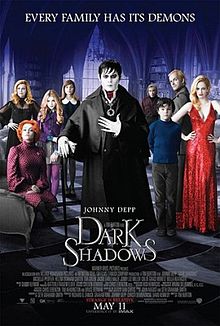
It took a few weeks and five states, but I finally got to see Dark Shadows. Although I’d seen the trailers, there was quite a bit over which I remained in the dark. After all, the television series ran daily for several years and the story of Barnabas Collins was never really resolved, to the best of my knowledge. Trying to fit all of that into a couple hours of cost-intensive Hollywood showmanship would be a tall order. I have come to trust the Burton-Depp collaboration, however, and I had read some time ago that Johnny Depp had wanted to be Barnabas Collins when he was growing up. It is difficult nevertheless to resurrect a vampire after some three-and-a-half decades of slumber. Speaking with some friends after the movie I discovered that I was not the only child discouraged from watching Dark Shadows after school as a child. But watch I did.

Barnabas Collins became a monster as the result of a curse. The series—which I remember principally as a series of impressions and images—and the movie make that clear. The man who has lost control of his own fate is a reluctant monster. An aristocrat who lives by draining the blood of the common folk. Despite the humor and carnality of the movie, social commentary is there. Sometimes buried in an iron coffin, and sometimes in a vintage VW bus from the early ‘70’s. It may not appear full blown on the big screen but it pulses through the veins nevertheless. Barnabas Collins is a reluctant and conflicted vampire, but he does kill others to survive.

Why would a kid raised in a religious setting be so drawn to a creature of evil? Perhaps it was because Barnabas was the ultimate penitent. He had to victimize others, but he always regretted doing so. Like any living (or undead) creature, his nature compels him to survive. He is sad about his lot in the world, but is helpless to change it. Like many children of the monster generation I was nourished by a long series of movies featuring impossible creatures, including vampires. The earliest vampire I knew, however, was Barnabas Collins. Although Bram Stoker had set the type nearly a century earlier, my measure of the vampire was the reluctant denizen of Collinwood. Although I read my Bible dutifully, and never missed church, I still found the plight of this lonely monster compelling. The movie may not live up to the standard of all Dark Shadows aficionados, but if it brings a subtlety of moral ambiguity to a generation of absurdly self-assured modern-day fundamentalist children, the curse of Barnabas Collins may really be a blessing in disguise.


Dark Shadows Indeed

Part of my childhood died today. Like millions of others, I have been eagerly anticipating Tim Burton’s new Dark Shadows movie to wash the treacle of Twilight from the vampire’s mouth. Barnabas Collins was the epitome of the conflicted gentleman vampire, fully aware of and repulsed by his curse. After school I would religiously sit in front of the black-and-white television and watch the waves crashing into the cliffs of Maine as the moody story began to unfold in daily episodes. So when I read this morning that Jonathan Frid had died, I knew the vampire had found peace at last. And I was sad.

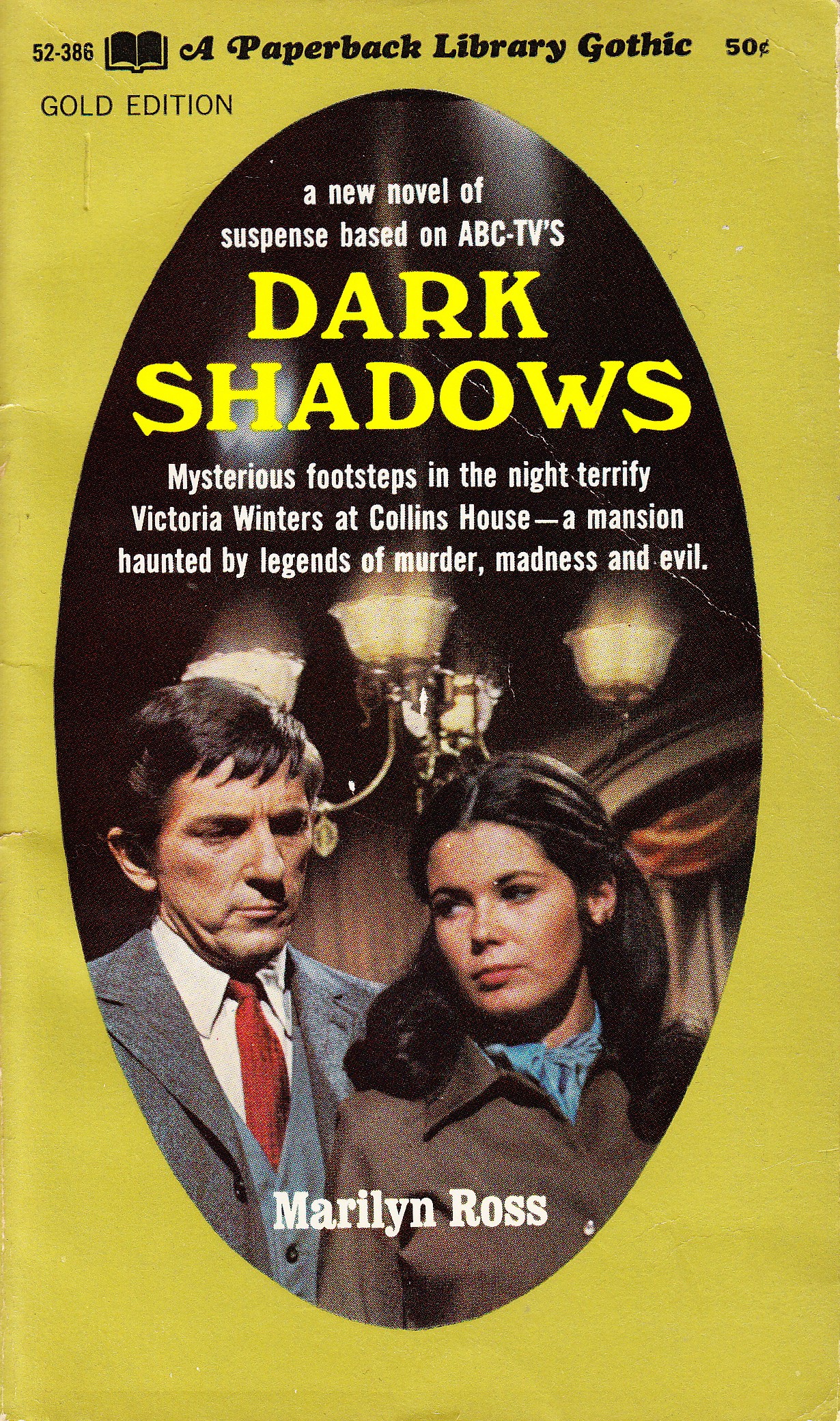
Although I’ve read scholarly analyses of monster fascination, nothing sets me back to childhood so directly as my beloved monsters. I don’t know why I feel a thrill in my chest and my pulse quickens when monsters appear before me. Perhaps it is a child’s way of coming to grips with a world beyond his or her control, or perhaps it was my way of dealing with a broken family. Lacking a father figure in life, I was fascinated by the gentle care and predatory nature of Barnabas Collins. He really did care, but he still had to bite you in the neck to survive. To my pre-adolescent mind, Jonathan Frid was Barnabas Collins. When I grew old enough for gothic novellettes, I consumed the serialized Dark Shadows books by Marilyn Ross, no matter how predictable or trite. I was reading about my heritage.

I have no doubts that Johnny Depp will portray a believable Barnabas Collins next month. Jonathan Frid, it is said, was consulted and was often present on the set of the new movie as it was being filmed. His turn to portray the tortured ancestor of the Collins family had lapsed, but he was the original. What is the draw of the vampire if not life after death? And although Jonathan Frid is gone, next month I will stand in line to see the resurrection of the vampire on the large screen.


Dark Night of the Ark

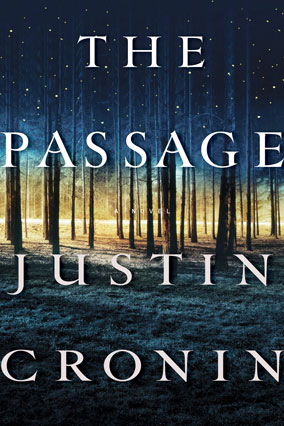
Vampires continue to be the rage of the age. My own interest began back in the days of Bram Stoker, Bela Lugosi, and Barnabas Collins. Stoker’s Dracula is one of the earliest novels I remember reading. Dark Shadows was a regular, gloomy fixture of 1960s daytime programming, and black-and-white vampire movies were often available on Saturday afternoons on commercial television. I have not kept pace with the current fetishism surrounding our toothy friends, but I did read Justin Cronin’s new novel, The Passage. I didn’t know the book featured New Age viral vampires, but they do make for a compelling story.

What particularly captured my attention in Cronin’s work, however, was the crossover between religious and monstrous themes. I have mentioned this connection previously, so I was glad to see confirmation that religion still features in monster stories. The religious element comes in the form of a virus developed by the military to create super-soldiers (a theme X-File affectionados might find familiar) that ultimately goes awry. The result is a girl who is part of a project named Noah; she lives the tremendous lifespan of the biblical hero without the debilitating effects of old age. She is also the ark by means of which humanity might survive the ordeal. The novel is apocalyptic and yet vaguely hopeful. It is also very difficult to lay aside for too many minutes at a time.

The tie-in of Noah and vampires is a novel one. The point of comparison is longevity – those who imbibe the blood of others do not age and wither as mere mortals do. Noah’s survival is a matter of grace (or science in the case of the novel). The last mortal to breech the two-and-a-quarter century mark (thank you, Terah), Noah is symbolic of those who stand out as examples of righteousness in a wicked world. It was refreshing to see the theme so creatively rendered by Cronin. The biblical flood is a kind of prepocalypse, a foreshadowing of what might recur if evil prevails. The Passage has left me strangely sentimental for both vampires and ark-builders alike.


The Life Is in the Blood

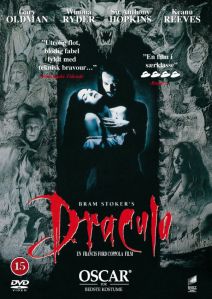
Finally, after a couple of decades, I got around to watching Francis Ford Coppola’s Bram Stoker’s Dracula. As viewers know to expect of a Coppola film, the cinematography is stylish and artistically exaggerated. It has been even more years since I’ve read Stoker’s novel, the book that gave birth to the modern vampire, but I am pretty sure that the many oblique references to the Bible count among the film’s innovations. Coursing like an artery through the movie is the phrase “the blood is life,” taken from Leviticus 17. I’ve posted earlier concerning the biblical outlook that life is equated with breath, and so it is. The Bible does not always remain consistent on this point — natural enough for a book with multiple authors living centuries apart. Blood and breath obviously share crucial functions in maintaining life.

Stoker

Ancient peoples believed in a world peopled with unusual, quasi-supernatural beings, including blood-drinkers and nocturnal baby-snatchers. Theirs was a world of harsh realities where death was more closely observed than it tends to be in many parts of the world today. The fascination, often coupled with religious underpinnings, continues to engage our imagination today, as can be seen in any given Halloween season or on el Día de los Muertos.

Whether el chupacabra or Bela Lugosi, the fascination with mythical creatures of the night that thrive on the life-source of others is a concept never far from religionists. No matter how many stakes we pound through undead hearts, the unholy bloodsuckers continue to show up in our theaters and on YouTube. A childhood penchant for Dark Shadows books has recently been reactivated in the restless gray-matter in my head. As the days grow shorter and shadows become an increasing element of daily experience, I marvel at how the human imagination parodies our daily experiences, dressing them up in fanciful garb to parade about with the other ghosts of October. What is perhaps even more unusual is that money is still to be made in this business of selling the parasite. How else can we explain Buffy and all her cohort? The life is indeed in the blood.