Remembering Downtown

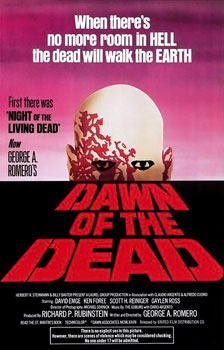
Monroeville Mall.  Even those who’ve never been to Pittsburgh may recognize it as the site of George Romero’s Dawn of the Dead.  I have to confess that, although living in Pittsburgh for a little while I never got there myself.  It has nevertheless been a pilgrimage site for fans of the movie, but, according to the New York Times, the mall has been purchased by Walmart.  Their plans?  Tear it down.  No empathy.  No sense of decorum.  Just cheap prices and sub-par goods.  I recently had to go to a Walmart.  It had literally been perhaps a decade since I entered one.  I dislike their business practices and they have ruined many a small town downtown area as well as many a mall.  In fact, the one I’d be in prior to this recent trip was the store located in Seneca, Pennsylvania.
Across from that giant Walmart stands the husk of the once trendy Cranberry Mall.  Not far away is the struggling downtown of Oil City.  My aging mother lived in Seneca—had once worked in the mall—but getting down the hill into Oil City was more difficult than nipping over to the super Walmart for groceries or other necessities.  Prices were cheap and she wasn’t flush with cash.    The same applied to many of her neighbors.  Walmart exploits such situations, becoming the only show in town.  Mom and pop stores can’t compete with their prices.  Malls, although many affluent specimens still exist, have struggled in working-class areas.  They served for more than shopping, however.  They were meeting places.  They too contributed to the troubles downtown.

Monroeville Mall never went upscale enough to survive.  Ironically, it was the message that shopping had become a source of meaning that was critiqued by Romero’s movie.  It’s that same corporate greed for more and more market share that will be the eventual death-knell of capitalism.  Any system founded on greed is the same thing as “might makes right.”  We’re seeing that in the politics of our own day.  The paradox of this ouroboros will become clear eventually, if our species survives long enough to observe.  We become attached to places.  While not all movie props can be preserved, we’re compelled toward pilgrimage, and Pittsburgh is the home of the modern zombie.  A message that may not always come through in Dawn of the Dead is that all of us are being made into zombies.  Not by some satellite picking up something in space and then returning to earth, but by good old capitalism.
Cabin Fervor

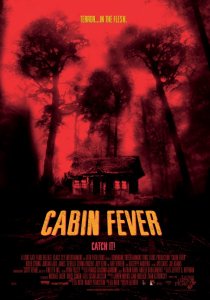
It’s a sure sign that work is growing overwhelming when I’m too tired to watch my weekend horror movies. Well, I decided to fight back the yawns and pull out Cabin Fever this past Saturday night. I’d seen the movie before, and I’m not really a fan of excessive gore. The acting isn’t great and the characters aren’t sympathetic, yet something about the story keeps me coming back. In short, a group of five teenagers (it always seems to be five) are renting a cabin for a week when they get exposed to a flesh-eating virus. They end up infecting just about everyone in the unnamed southern town before they all end up dead. It doesn’t leave much room for a sequel, but that hasn’t stopped one from being made. One of the unfortunate victims of the virus is torn apart by a mad dog. The locals, fearing their safety, decide to hunt down the surviving youths.

On the way to the now gore-smattered cabin, one of the locals mutters that they’ve been sacrificing someone—a natural enough conclusion when body-parts are scattered around, I suppose. He says, “it ain’t Christian.” Well, yes and no. Sacrifice is at the putative heart of Christianity, although human sacrifice (beyond infidels and women) was never part of the picture. As is often the case with horror film tropes, the victim who has been dismembered is a woman. The guys whose deaths are shown are all shot. Now, I have no wish to attribute profundity where it clearly is not intended, but there does seem to be a metaphor here. Our society and its staid religion tolerate the victimization of some over others.

One of the hidden treasures of the best of horror movies is the social commentary. George Romero made an art form of it in Night of the Living Dead and its follow up Dawn of the Dead. Many other writer/directors have managed to do it quite effectively. We can critique our world when hidden behind the mask of the improbable. While the commentary for Cabin Fever may be entirely accidental, I still find a little redemptive value in it. That, I suppose, is the ultimate benefit of social commentary—it is true whether intentional or not. Is there a larger message here? I wonder if the fact that when women are victimized no one survives is pushing the metaphor a little too far. It’s hard to say; I’ve been working a little too much lately.


Halloween All Year

Despite the obvious consanguinity with the Dawn of the Dead, I am not a mall person. Last week, however, I had a job interview and I discovered that most of my white shirts would be appropriate garb only for the undead, so my wife forced me to look around the local mall for some new apparel. As we walked down the interior boulevard crowded with people younger than us, we couldn’t help overhearing the conversation of some young women behind us. “Yeah, it’s so cool! He’s a vampire; he’s got fangs and everything!” And they weren’t discussing Edward or Lestat, but a (presumably) flesh-and-blood beau one of them knew. Yes, Halloween season is upon us again.

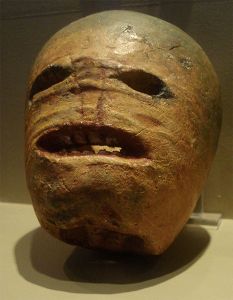
An early Celtic turnip Jack-o-lantern
(An early Celtic turnip Jack-o-lantern)

I loved Halloween when I was growing up. Despite the innate conservatism of my family, we always enjoyed dressing up, trick-or-treating, and being just a bit scared. When I reached college, however, I discovered that Halloween was perceived by many to be satanic, and I had to dig deeply into the past to argue that it came from Christian tradition and was, itself, nothing to be afraid of. Still, my friends looked at me askance. When I reached Nashotah House, a perfectly Gothic setting for the twilight of the year, I discovered that despite the theological conservatism there, Halloween was a time-honored tradition. My first year there while driving home after picking my wife up from a conference in Madison, I drove the familiar road into campus only to see a single, ghostly white face float across the road in front of us. I was so astonished I pulled the car to a stop to look back and could just make out several of the students I knew, dressed fully in black cassocks and cappa negras, only their faces showing, painted white. They stood alongside the lonely road and “floated” across it as slowly approaching cars rounded the bend. (I guess that, being potential priests, they were not too concerned with eternal consequences of metal meeting mere flesh in the dark of night.) On the campus, until the takeover by a Fundamentalist administration, All Hallows Eve was a bone fide sacral event.

The reason for Halloween’s popularity, I believe, is that deep down people really are frightened. At some level we know that we aren’t really in control of our lives and we seldom have a say about them ending. Halloween, with its dark Celtic origins, is the acknowledgment that it is acceptable to be afraid. Each year as more and more elements appear beyond our control, our pantheon of Halloween specters grows. One of our neighbors’ houses has a fake cemetery in its front yard. One of the headstones reads “The Stockmarket / 2008.” Even with the economy dipping and reeling like a drunken bat, lawns sport larger, more expensive and expansive Halloween displays. Halloween represents the pulse of fear than animates religions. We should all be afraid!