Hiding Kirk

I recently saw—don’t ask where—a U.S. Space Force officer dressed in camouflage.  How fitting for a Trump-era agency.  I should think a Space Force uniform should be all black, maybe with little white dots on it.  Rather like my black lawn furniture that got in the way when I was cleaning my paint sprayer full of white paint.  I often wonder about our love affair with feeling safe.  Perhaps my own phobias have reached such a level that they’ve cancelled each other out.  If I was trying to hide in space, I think I’d try to look small, and dress in black.  Camouflage, which is based on colors found down here, probably wouldn’t do so well for the other planets of our solar system.  Or even the moon, for that matter.  And I personally think I might trust the aliens not to have earth-like issues.  After all, we think it’s okay to let machines think for us.

I grew up quite the sci-fi fan.  I read lots of books in that genre and enjoyed science fiction movies almost as much as my beloved monsters.  I used to watch that show, UFO in the 1970s.  The one with the interceptors with a huge missile on their noses.  I wasn’t really worried about aliens trying to invade.  Perhaps these days I think it might be better than the tedium of daily existence in the 9-2-5 world.  In any case, if we must have a Space Force, ought they not dress for the job?  I’m pretty sure I’ve got some tin foil in the kitchen with which to construct my hat.  Let’s look the part—that’s all I’m saying.

Photo credit: NASA

While all this is going on speculation has been growing about water on Mars.  There’s a good chance we may find it.  (We can always hope that if Elon Musk makes it to the red planet that he will take Donald Trump with him.)  If we are looking for invaders, though, we probably have to go further afield.  That’s alright, dynamic duo, we’ll get along without you.  Perhaps in the interim someone will realize that, dressed in earth green camouflage, our Space Force will surely stand out against the surface of Mars, or wherever they might go.   Unless it’s a planet very much like earth.  That houses intelligent life.  Maybe the beings there feel safe, knowing that their space force—for surely they will have one—is dressed in black.  Or at least, their life really is intelligent.


In Sheep’s Clothing

Evangelicals supporting Trump must experience some cognitive dissonance when they read Dietrich Bonhoeffer, one of their heroes.  Bonhoeffer, who could easily have remained in comfort in the United States, went back to his native Germany because he was deeply troubled by the fascist regime of Hitler.  Involved in Operation Valkyrie, the attempt to assassinate Hitler, Bonhoeffer was hanged for his faith.  He wrote, “If I sit next to a madman as he drives a car into a group of innocent bystanders, I can’t, as a Christian, simply wait for the catastrophe, then comfort the wounded and bury the dead. I must try to wrestle the steering wheel out of the hands of the driver.”  How far we have fallen!  Now evangelicals support someone with all the signs of being a madman.  A man who has said he intends to dismantle democracy itself, if elected.  How quickly Bonhoeffer and his important work is trampled underfoot by his own.

Some people express surprise that I still appreciate evangelicals such as C. S. Lewis and Dietrich Bonhoeffer.  They were believers who stood by their convictions, but who used reason to do so.  And yes, Hitler had messianic delusions as well.  A poor carpenter once warned of wolves in sheep’s clothing, but then, what did he know?  And can we compare Trump to Nazism?  Have you read the Project 2025 agenda?  An agenda so explosive that the publisher for the book on it (HarperCollins, with a foreword written by J. D. Vance) has put off publication until after the election.  You don’t want people to know what they’re voting for, now do you?  Wolves dressed up like what?  You can’t pull the wool over our eyes.

Photo by Tanner Yould on Unsplash

I have no problems with Evangelicals.  Faith is exceptionally important in people’s lives.  My concern is the weaponizing of religion by political cynics.  They select issues that they know will rile up religious conservatives and use them to glean votes.  One of the oldest tricks in the book—known by every stage magician who’s ever stood before an audience—is misdirection.  Get people to look over there so you can pull a trick over here.  I spent my formative years reading Bonhoeffer, and his reasoned evangelicalism made a lot of sense to me.  Of course, this was when the biggest threat we faced was characters like Richard Nixon and Ronald Reagan.  Now even they are trampled under the iron claws of what has become “conservatism.”  Even Dick Cheney has said he’ll vote for Harris.  If Hitler hadn’t had Bonhoeffer hanged, modern evangelicals, it seems, would’ve done the job.


Politics As Usual

What J. D. Vance does on, or to, his couch is his own business.  Sexual preferences between consenting adults, and furniture, is a private matter.  (Vance isn’t the first writer whose publications have come back to bite him.)   Forgive and forget.  And maybe reupholster.  What Vance has done that’s unforgivable is betray the poor.  I read Hillbilly Elegy years ago and was taken by his enumerating the harms visited on the poor by our capitalistic system.  Having grown up poor myself, I found many of those damages in my own self-inventory.  But even just after I read the book I heard whisperings that Vance really didn’t care for the poor, but for himself.  That puts him in the same category as Trump, I suppose.  A team that would only push what makes them personally look good, if elected.  It’s a mockery of democracy that a convicted felon is even permitted to run for president.

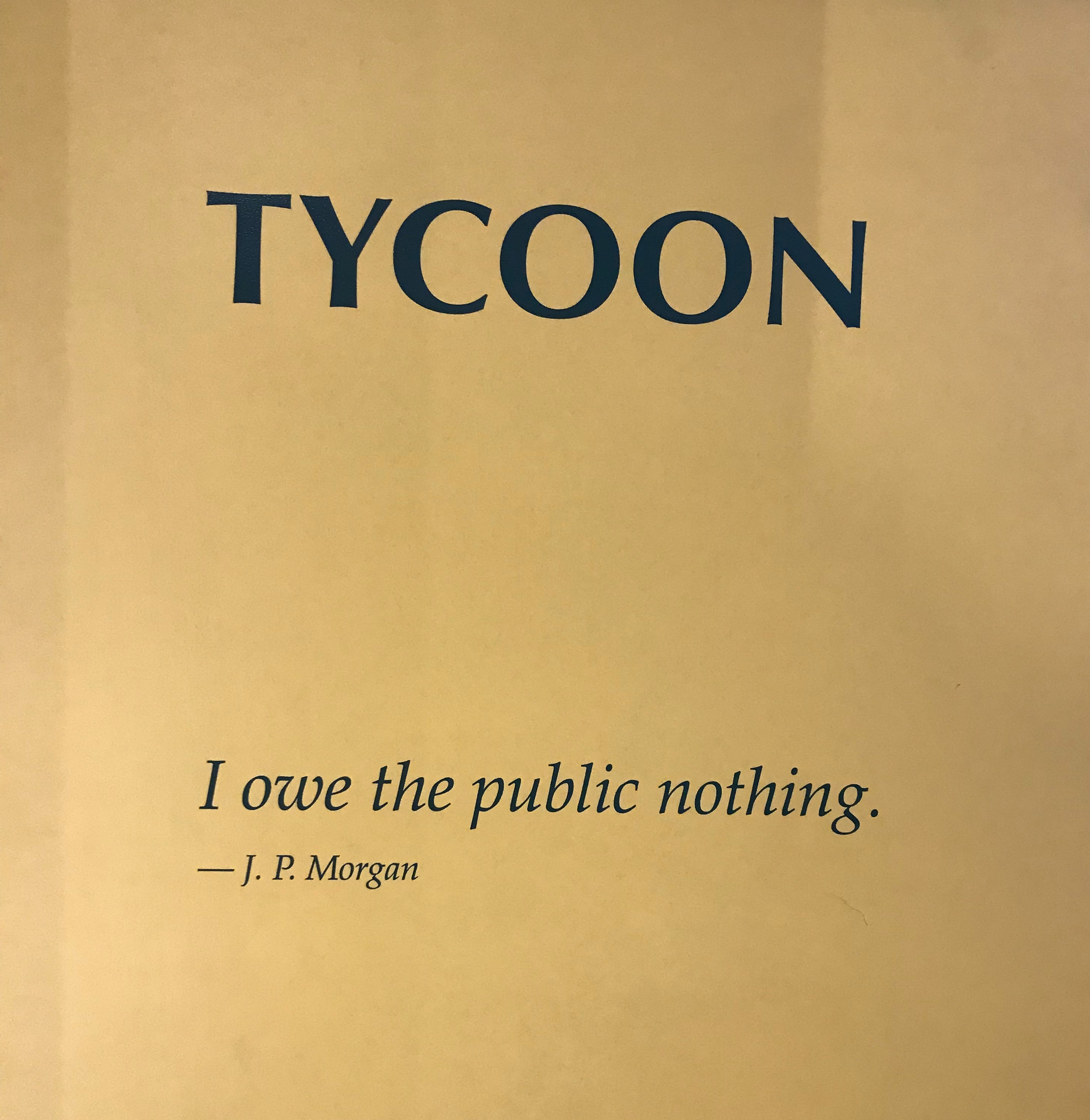
Betrayal of the poor is perhaps the most unconscionable of sins.  To have grown up knowing how difficult life is for many Americans and then to throw them to the wolves for personal aggrandizement is a move worthy of Satan himself.  Indeed, his running mate was born excessively wealthy.  I recently saw a quote from J. P. Morgan: “I owe the public nothing.”  Morgan,  one of the wealthiest men of his era, apparently believed using others to get yourself to the top is fine.  Trump, who sees people as disposable (ask his wives) never had to struggle.  Neither did Morgan.  But Vance, if his book is to be believed, did.  Knowing what it means to grow up that way and then to hitch yourself to the Trump-wagon is, in my opinion, about as low as you can go.  It’s a lack of honesty.

If we’re honest we’ll admit that all people lie.  True, Trump has made eiling (actually telling the truth) a thing.  He basically never eils, so we can assume anything he says is false.  Biden told lies.  Harris told lies.  Vance told lies.  Even though I’m an honest guy, I’ve told lies in my long time on this planet.  Not many, I hope, but I’m human.  Show me a politician who never lies and I’ll show you a liar.  I never thought I’d live to see a major party ticket pair felons, sex criminals, and betrayers together and tell Americans they’ll make the country great again.  The question that won’t let me go, however, is what of the poor?  We know that the rich, left to their own devices, tend toward Morgan’s quip.  Honestly, who will make safety nets for those who are victims of business as usual?


Squeaky Clean?

A New York Times story, apart from the expected misunderstanding of actual Evangelicals, made me sad.  The article points out that, especially since 2016, “Evangelicals” have taken to soft-core porn, cussing, drinking, and premarital sex.  In other words, Trump has given them license to behave like secular folks while still claiming the name “Evangelical.”  Why should this make me sad?  I lament the loss of place for those who grew up, like me, striving for clean living.  It’s an image—a mirage—rather than a reality, of course.  But still, if conviction holds, you can get pretty close to the ideal.  That vision of life has been occluded by a guy who runs for President because he cares only for himself.  Jesus, on the other hand, was all about caring for others.  Going as far as, if the Gospels are to be believed, sacrificing his own life.

Like fiscal conservatives, such legitimate Evangelicals now have no public voice.  One of only two political parties has become identified with an individual rather than ideals—what used to be called a platform.  I have Republican friends.  I grew up identifying as a Republican.  I also grew up as an Evangelical.  I studiously avoided things like bad language, sex, tobacco, and alcohol.  Even at Evangelical Grove City College I was a bit of an outlier for how seriously I took all these things.  Of course, studying history can be dangerous, particularly for ideologues.  Still, “clean living” had its own virtues.  Those who continue to try to live that way are swimming into a rip tide, it seems.  For some Trump seems like the Second Coming, sans the white horse.  And this, above all, is sad.

There are those who claim, often loudly, that religion is bad.  I agree that when a religion tries to force others to obey its standards it can quickly become evil.  Still, the baby should be left behind when the bathwater’s discarded.  Religion has led to much good in the world.  Hospitals, charities, and yes, “clean living.”  These things, along with retirement homes and affordable apartments for low-earners in their autumn years, are necessary to pick up the slack that the government leaves.  It is cause for sadness that the clean living camp has succumbed to Trump-style hypocrisy.  Heck, religion gave us the word “hypocrisy.”  The standards of classical Evangelicalism are often impossibly high.  If we look at current Evangelical leaders we find many, many skeletons in a house with many closets.  And a wagging finger warning the young, “Do as I say, not as I do.”


From Russia

A New York Times headline recently caught my eye.  “Russia opened a murder investigation into a car blast near Moscow.”  I wondered how a country that’s an aggressor at war, killing civilians in Ukraine every day, would be interested in something so petty as murder.  Then I saw the rest of the headline: “that killed the daughter of an influential ally of President Vladimir Putin.”  So there it is—some lives are more valuable than others.  Don’t get me wrong—I’m saddened by this (and any) murder.  And the use of violence to get what one wants is unethical.  Justice in this world, however, is based on unequal standards.  The supporters of Putins and Trumps matter more than any other people.  Death should not effect them the same way it effects civilians being missiled and shot.

Throughout all this we might wonder where the voice of the church is.  Churches, as institutions interested in power, are political players even when there’s no state religion.  The Patriarch of the Russian Orthodox Church supports Putin implicitly.  With the power of Russia, the power of the church rises.  A few thousand dead civilians, well, let God sort them out.  Churches become corrupt when they become politically powerful.  Politics is one of the most polluting things humans can do.  Long ago Lord Acton put it this way: “All power tends to corrupt; absolute power corrupts absolutely.”  Churches got into power-brokering in the fourth century and we’ve seen the results ever since.  It’s not just Christianity, however; Islam makes it political and yes, even Buddhism and Hinduism incite violence when they become politicized.  A religious body that takes its mythology too seriously becomes dangerous when it tastes political power.  The world has many mythological figures.

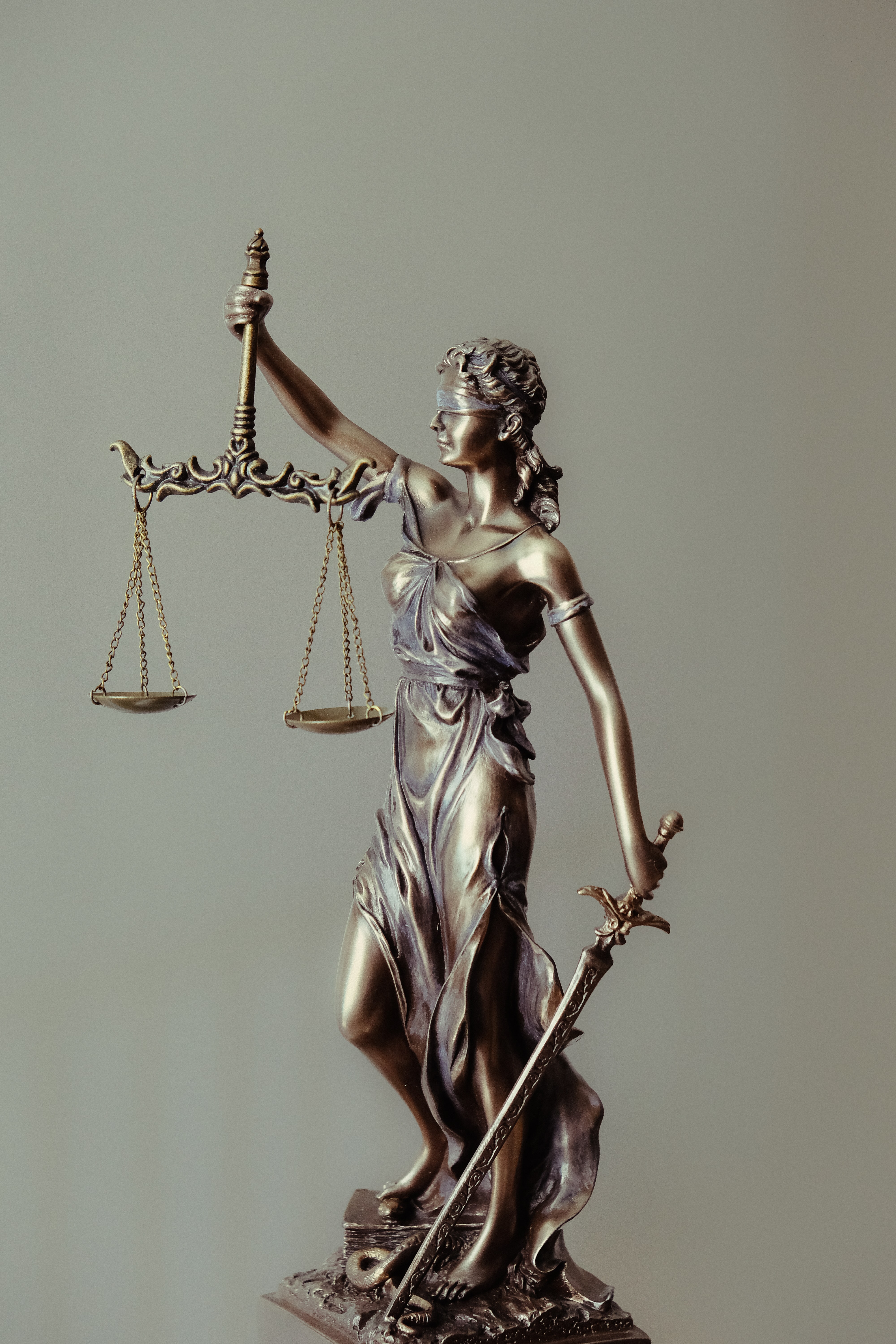
What really took my breath away, however, is how many state resources will be devoted to finding and prosecuting those who killed one government supporter—we must find and punish those responsible—while thousands lie dead with the Russian government as their killers.  Other nations are just as guilty of course, but there’s a karmic imbalance when that nation is an aggressor in war.  Would you have ever expected a fair trial in Nazi Germany?  Does not unprovoked war make a mockery of the very concept of justice itself?  Justice, of course, means fair treatment.  For all.  She’s pictured as wearing a blindfold, after all.  She’s perhaps one of those mythical figures as well.


Tweets from Heaven

What do the ultra-rich know about morals?  I read recently that now that Elon Musk has purchased Twitter for billions and billions of dollars, that he’s going to allow Trump back on because it’s “morally wrong” to prevent him.  Heaven help us when the plutocrats start dictating morals.  One of the odd things about my strange career is that I was an undecided major in college.  I settled eventually on religion, but my transcript shows a restless mind.  One subject that I came back to time and again was ethics.  I want to know what is right.  Shutting up a deranged narcissist who wants to run the country only to enhance his image of himself seems a moral no-brainer.  The case was different before he was elected the first time.  Now we know.  Now we have a responsibility.

Those who can afford to buy the moon shouldn’t make declarations on what is moral.  The church, however, has largely become irrelevant.  “It’s easier for a camel to pass through the eye of a needle,” a famous moralist, whose name is unfortunately forgotten, once said.  The moral compass of the uberwealthy is irrevocably squewed by a massive loadstone known as personal wealth.  Indeed, our very laws are made by the wealthy to protect the interests of the wealthy.  They do this by courting biblicists who seem to have forgotten—what is his name again?  You know, the one who seemed to have a problem with the rich?

Photo by Sharon McCutcheon on Unsplash

Morality has somehow become confused with concerns about other people’s genitalia.  We don’t ask what the wealthy do with theirs—it’s pretty clear what one tweeting resident of Mar-a-Lago has done with his.  Ironically Protestants broke away from the Catholic Church largely because of the sale of indulgences.  The idea that the rich could buy their way out of sins rankled sixteenth-century moralists into saying sola scriptura.  But now they have lost even their solaScriptura, for its part, is unequivocal about one thing—the problem of the rich.  The poor aren’t the problem.  In this new gospel, however, victims are blamed while the powerful rightly rule all.  The divine right of riches.  The wealthy, so misunderstood; the poor are the way they are because they’re lazy.  There’s no systemic cause for anyone not to have as much money as he wants (and it seems they’re generally he’s).  And they have a right to say whatever they want because their word comes down from heaven, echoing out from their private space rockets to the stars.


Thinking, Critically

A woman—I don’t know her name—photobombed a Russian newscast with a sign telling the Russian people that they’re being lied to.  Detained by police, her whereabouts are unknown.  I admire that woman.  She may pay with her life  in her effort to encourage what is dear to every teacher everywhere: critical thinking.  Many of the world’s problems are the result of the dearth of critical thinking.  There’s no other way to explain the election of Trump and his main squeeze Vlad.  Thick as thieves, the saying goes.  I recently gave a talk to a small group about publishing.  One of the points I was making is that critical thinking is essential in getting to the truth.  Compare sources, use reason, and never trust a snake-oil salesman.

People vote with their feelings rather than with their rational faculties.  Trump openly admires Hitler, as Putin does Stalin.  These should be signs of warning to those who think critically.  The Second World War wasn’t even a century ago and we’ve apparently forgotten all the lessons it should’ve taught us.  In high school we were shown examples of propaganda and told how to avoid it. Now we see it and can’t recognize it at all. Critical thinking is often frowned upon in modern society.  Being comfortable with the status quo is perhaps valued higher than social justice and the necessary work to get us to where it might happen.  It’s easier to hate than to think.  It’s easier to follow than to question what you’re following.  Education teaches us survival skills, and among them are the ability to think through a situation.  Authoritarianism is seldom—I’m tempted to say “never”—the way to a good result.

Perhaps the saddest irony of all is that those who run outlets like Fox News (and its Russian equivalents) are thinking critically of ways to get followers not to.  Realizing that critical thinking will lead to a more fair and equitable world, they decide to keep their positions of privilege by discouraging their followers from engaging with the basic comparison of sources and weighing of facts.  Instead, promoting “alternative facts” and emotionally outraged rhetoric, they are able to stir up crowds to try to take over the government.  Conspiracy theories are easier to believe if you don’t know how to check facts for yourself.  And the internet has made us all experts on everything.  Russia’s narrative about the war is far from the reality on the ground.  Objective observers have seen what is really happening.  One heroic woman in Russia said enough is enough.  In all likelihood nobody in the world will ever see her again.


Last Baptist?

The Southern Baptist Convention is the largest Protestant denomination in the United States.  It’s the core of a powerful voting bloc that gave electoral (but not popular) victory to Donald Trump.  It’s also the location of an attempted takeover by a fascist faction that wants to make Christianity the most oppressive religion in the history of the world (moreso than it has already been).  This past week the Convention narrowly avoided this by electing a moderate president for the year.  The struggle was real and the consequences very deep.  The true cost of Trump’s presidency will continue to emerge for years to come.  Permission was given for extremists to be vocal and validated and bad behavior was relabeled as “Christian.”

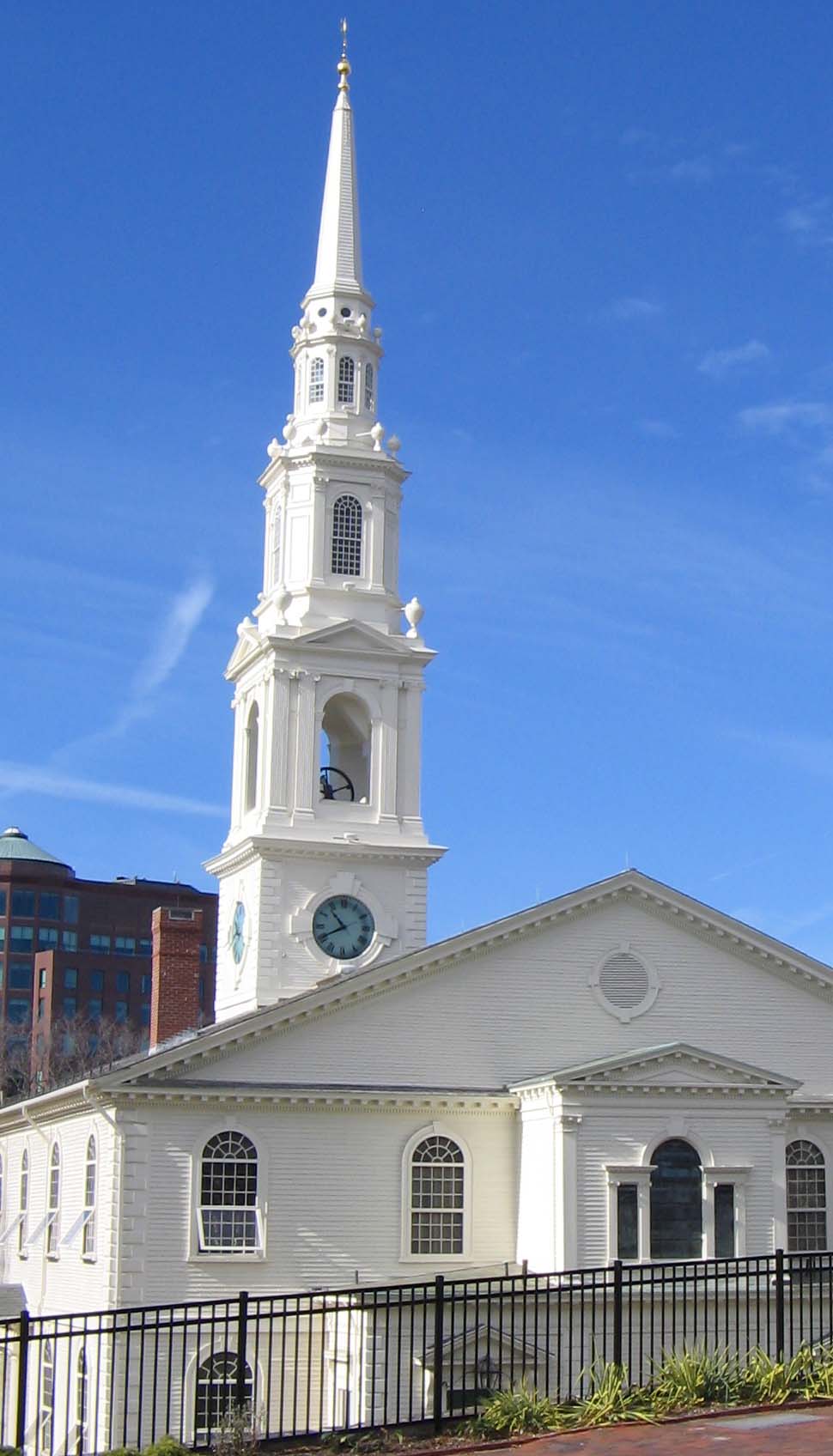
Roger Williams’ first Baptist church (in the country)

We, as a society, have a bad habit of ignoring things we don’t believe in.  Just because many educated people have come to see the lie behind much of what “Christians” say, they assume they don’t need to pay attention to them.  Years of ignoring the insidious actions of many conservative Christian groups has led us to a political precipice where many months after the fact some people who can’t count still believe 232 is greater than 306.  While some may wonder how we’ve come to this point the answer is obvious—there are groups of “Christians,” organized and well funded, who’ve been active in politics for many decades.  The Southern Baptist Convention wanted, in some sectors, to make that official.  They wished to be Trump’s own party.  They wanted white supremacy to be the norm, women to be chattels of men, and those whose sexuality differs to be criminals.  And they nearly won.

We ignore religion at our peril.  A recent study by the British Academy has shown that in the United Kingdom the study of religion is in decline.  I know of no similar study this side of the Atlantic, but anecdotal evidence suggests the same, if not worse here.  Those who study religion from within other disciplines such as sociology, history, or psychology, don’t really address the question of what religion truly is.  People experience religion as extremely urgent.  Misguided leaders instruct them that their version of God has endorsed the very tactics the Bible itself excoriates.  When the largest Protestant denomination is nearly taken over by political extremists, we should be paying attention.  A troubling template was, despite the majority vote, forced upon us in 2016.  So much so that it feels like it was a decade ago and we suffered from it for longer than we have.  And the kettle is still boiling, only this time those dancing about it claim to be Christian.


Cherry Trees

Today is the predicted peak blooming of Washington’s famous cherry blossoms.  Although the trees were a gift from the mayor of Tokyo (before the United States bombed two Japanese cities into oblivion) they perhaps reinforce the myth of a boy George Washington chopping down a cherry tree.  I’m sure you know the story: Georgie cut down the tree and when his aristocratic father asked about it, knowing that he’d get in trouble, our founding father nevertheless confessed.  The incident never happened, as historians have long assured us, but it is part of American lore.  And perhaps a key to understanding American gullibility.  We like things that make us look great.  If a story shows that we’ve been honest even well before independence from Britain, well, we must be honest now.

Perhaps this is why so many people believed Trump, a president with a well-established and fully documented lifetime of lies.  The biggest one being, of course, that he cares about anyone other than himself.  Not content to accept facts, such as a closely monitored and fairly lost election, he espoused lies that are still causing shudders through the nation.  I, like many Americans, live in a “purple” town.  A few doors down from our house is that of a rabid Trump supporter.  Just two days ago I had to walk to the drug store about half a mile from here.  I walked past this house that had hung huge Trump banners right on the siding, in addition to one phallically jutting out from a flag bracket.  Now the house has huge American flags upside down.  Such things never happened, I’m pretty sure, when Bush lost to Clinton.  Or ever before.

Nobody with the ability to read can doubt Trump’s actual record of deceit and lies.  It is fairly well documented that he ran for president to help his business and promote his image rather than out of any concern for any other human being.  After sentencing over half-a-million Americans to death with Covid (about which he simply couldn’t be bothered to do anything), his followers (who numbered high among the victims) still clung to the lies.  Today the cherry trees, it is said, are blooming in Washington.  I believe it because I can check the facts and see if it’s so.  When I do I know that I’ll be thinking of George Washington and his fictional cherry tree.  I know it never happened.  Instead, I’ll focus on the beauty right before my eyes.


Clearly Conspiracy

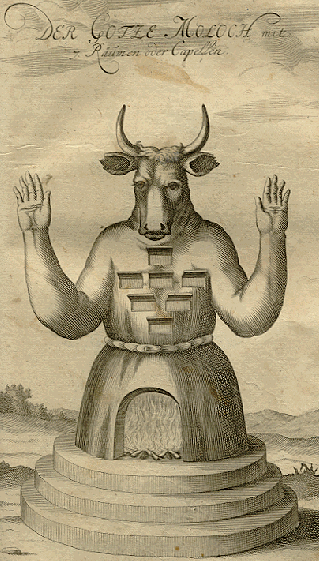
What an odd place to find ourselves in.  Some evangelical Christians, who used to be guardians of decency and moral human behavior, now have to have their clergy explain to them why Trump wasn’t the messiah he’d been touted as for the last four years.  A piece in the Los Angeles Times recently described the struggles of one such minister with his congregation that had fully bought into the conspiracy theories Trump promulgated in order to mask his own lack of care for his country and its citizens.  Conspiracy theories have become big business in academia with faculty from many departments exploring them.  I haven’t seen much in the way of religion departments participating in the discussion, but I think they should.  Why?  Religions are all about getting people to believe and act in prescribed ways.

Image credit: Johann Lund, Wikimedia Commons

Not that religions alone can explain this.  Psychologists and sociologists must have some important insights as well.  I used to tell my students that not all religions are about beliefs.  Some have to do with behaviors—acting in a certain way, regardless of belief, is to be part of it.  Certainly that explains part of the membership in the cult of Trump.  Many who follow it must know in their consciences that a man who defrauds the government he “governs,” who actively womanizes, and who displays overt racism can’t be the ideal evangelical.  Ah, but the conspiracy theories explain it!  Pay no attention to the man behind the curtain, right?  You can sure get away with a lot that way.

Religions have a lot to teach us about both strange behaviors and strange actions.  Many years ago someone pointed out to me as I was enumerating what I considered odd beliefs of a New Religious Movement just how odd Christianity looks from the outside.  When I stopped to think about it, this made sense.  The unconventional aspects of the faith had become naturalized because I’d been taught all my life that they were true—unlike all other religious beliefs.  Not only that, but I had been taught that accepting them without question was the only way to avoid Hell.  Over the years the strangeness became normal.  Trump and his conspiracy theories had their way smoothed by an evangelical narrative of unquestioning belief instead of an examined faith.  Now many ministers, awaking sober, are having to try to convince their flocks that they’d accepted lies for truths.  It’s an uphill battle, unfortunately.  Religions, after all, have been about getting followers to believe without questioning, or, apparently, considering the source.


Taxing Thoughts

Tax season has come with a new fear this year.  We had to visit our accountant’s small office to sign things.  We managed to get last year’s taxes filed before the pandemic became evident.  This year I spent weeks worrying about the upcoming appointment.  Sitting in a room with a man I both respect and fear.  Our government loves its paperwork, and although you can file electronically you still have to pay any amounts owed (on the state or local level) with actual paperwork.  That paperwork has to be signed.  To do so you need to meet an actual person who has some inkling of how this all works.  Ironically, the technology exists for taxes to be done automatically by the government.  Groups like Intuit, the owners of TurboTax, lobby the government not to make it easier.  Intuit would lose its income stream.

I don’t mind paying taxes.  I did chafe a bit the past four years, knowing I was supporting an evil government, but overall I understand that we all need to contribute in order for things to continue to run (somewhat) smoothly.  The thing that frightens me is being in a room with someone who might’ve been earlier talking with someone who had a dread disease.  Last week marked the one-year breaking point.  My wife and I agree that March 12 was the day the news turned utterly ominous.  Although the Trump administration knew about the disease, it had decided simply to ignore it.  Now, with more than half-a-million Americans dead, we’re still paying our taxes to try to undo the damage that one man did.

The more immediate problem is how to survive getting those tax papers signed.  Ironically, I can oversee the acquisition, editing, production, and sale of a physical book without ever having to touch a piece of paper.  It’s a marvel, really.  In fact, many of the books I acquire I don’t see until months after they’re published.  For taxes, however, we still need to send the physical paper in.  The alternative is TurboTax.  They add on so many fees that we ended up paying them as much as an actual accountant last time we did our own taxes.  I’m happy to pay a human being to do them, and I even like our accountant.  It’s just that it doesn’t feel safe to go inside somebody else’s space right now.  It’s a little too cold and wet to stand outside and sign the papers with trembling fingers.  Perhaps next year we’ll be able to do our part without fear.


Not the Band

One of my favorite weekend treats involves black-eyed peas.  With a father from South Carolina, some of my earliest memories involve soul food.  As a present-day vegan, I eat a lot of beans.  That’s why I was disappointed to learn that Goya’s CEO, Robert Unanue, continues to be a big Trump supporter.  Shame on you, Goya!  Lest you get the wrong idea, we generally buy the store brand beans.  Of all the legumes, however, it seems the humble black-eyed pea is difficult to get right.  The generic brands always end up with the bottom part of the can being a kind of beige sludge where the beans have broken down and lost, as it were, their individuality.  The dish I make (one of my own invention, also featuring grits and hot sauce) requires that the beans maintain their integrity—take note, Goya!  Said brand seems to be the one that understands this aspect of canning beans.

For many years I avoided Bush beans for fear that they might be enriching the other *ahem* Bushes.  Right now, however, I’d rather have W run for a third term than the specter of Goya-supported Trump.  When did legumes become politicized?  Why can’t I sit down to a peaceful Saturday morning breakfast without a hideous four-year nightmare coming to mind?  The perils of being vegan!  In any case, I recently tried Bush black-eyed peas.  They weren’t as good as Goya, but I think I need to make the switch.  I’ve never had my somewhat simple culinary tastes disrupted by a president before.  Generic would be fine, but why, o why can’t they get the black-eyed pea right?

Image credit: Jud McCranie, via Wikimedia Commons

Perhaps somewhat oddly, I really like beans.  There are about 400 varieties and each has its own personality from sassy edamame to staid kidney beans.  I’ve even reconciled myself to the childhood nightmare of the lima bean (alien, without a hint of lime).  Now, I’m no foodie.  I eat to live rather than the other way around.  Whatever I do, however, I search my conscience.  Raised evangelical I know no way around it.  My conscience is the main reason for becoming vegan—I can’t support animal cruelty, especially for an industry that is the largest environmental polluter in the world.  So when I’m standing in front of the bean shelf, thinking ahead to Saturday’s breakfast, I’m struck with qualms.  I stare at the black-eyed peas and they stare back at me.  It’s a kind of test of the wills.  I see the Goya and decide to try something better for the world.  


Weird Dreams

It’s almost like we’re all part of a huge experiment, perhaps orchestrated from outer space, to see how we react to being caged.  The pandemic and its associated lockdowns have held us in place for nearly a year now.  Long enough that I’ve started to dream about it.  For the longest stretch of time my dreams remained in “normal mode.”  That is to say, people talked about the pandemic very little and it was represented only by the occasional dream anxiety that I wasn’t wearing a mask.  I have yet to recall a dream wherein people are wearing masks.  Recently I dreamed that I had to start commuting again, and I climbed on the bus only to remember I’d forgotten my mask at home.  It was like one of those showing up to school without your pants on dreams,  only scarier.

Dreams are an antidote to the sameness of our days, I suppose.  I’ve watched as stable folks I know start to show signs of isolation stress.  I’m sure that I’m showing them too, but the thing is we often don’t see such things in ourselves.  We’re social animals and we’ve been kept in separate cages for a long time now.  I used to go to zoos and feel sorry for the obviously neurotic animals bored out of their skulls, isolated from their species.  Even as we were being told that animals don’t think and don’t have emotions, it was clear that their having interactions with our species was like us having nothing but Zoom meetings to keep us in company.  It’s artificial, but since the zookeepers have us in separate cages we try to act as if it’s normal.

Speaking of neurotic, at least around here since Trump’s been mostly out of the public eye people have begun wearing masks.  Nothing demonstrates that we’re herd animals better than the fact that an obvious charlatan was able to convince millions of people that he doesn’t care only about himself.  Funny how people can be used and not even know it.  We’ve been enjoying national sanity for just over a month now and things seem like the meds may be kicking in.  Vaccine production is booming and, apart from logistic issues, many people are receiving the necessary protection.  It’s always made sense to me that other beings exist in the universe.  I’m not so arrogant as to assume that we’re all that special.  Looking over the past year, it seems as if we may all be guinea pigs after all.


Keep at It

Photo credit: ESA & MPS for OSIRIS Team MPS/UPD/LAM/IAA/RSSD/INTA/UPM/DASP/IDA, CC BY-SA 3.0 IGO, via Wikimedia Commons

Perhaps it’s an indication of just how sick the United States has been for four years—waking up each day wondering what new crisis Trump would have put us into—that I heard nothing about our next Mars visit.  I’m normally quite interested in space exploration.  I seriously considered astronomy for a career, until I found out it’s mostly math.  In any case, I’ve watched our planetary explorations quite closely.  Yesterday, until just about five minutes before the landing of Perseverance on the surface of the Red Planet (earth is supposedly the Blue Planet), I knew nothing of the mission.  When my family alerted me to NASA’s live feed of the event I tuned in for those five minutes to watch as we safely landed our fifth such probe on our neighboring world.

It’s funny how a self-absorbed person can take a whole nation down with himself.  It was a relief to look outside for a while, and to wonder.  I remember when the rovers Curiosity and Spirit landed.  The advance of technology was evident in yesterday’s deployment.  No more bubble-wrap was necessary.  The landing system was incredibly elegant, and if there are any Martians I’m sure there were several UFO reports yesterday afternoon.  As the NASA interpretive explainer told what was going on, I wondered just how life might be on the Blue Planet if we were able to put all our tech to work for peace and the betterment of all.  Instead I find a Congress only too willing to acquit a traitor so we can continue the hate.

Emotion is a funny and unpredictable thing.  Although I knew nothing of Perseverance until five minutes before touchdown, I was immediately drawn into the feeling of the moment.  My eyes weren’t exactly dry as I watched the cheers of jubilation from those masked engineers in the control room.  This had been the culmination of years of hard work, and yes, math.  They were able to calculate fall rates and counter-forces, landing spots and trajectories.  And all of this from about 140 million miles away.  Perseverance was launched back in June—you can’t get there overnight—when we were still reeling down here from the overt evil of white supremacists.  Stoked by a man who would be king.  Leader of the Red States.  Would-be ruler of the Red Planet.  How I wish our technology could help us on our own planet.  Any probes landed here from elsewhere must, I suspect, not believe their mechanical eyes.


How Clean Is Your Brain?

First it was in.  Then it was out.  Now nobody seems to be sure.  “Brainwashing” isn’t really a scientific term, but human suggestibility is very well in evidence.  Advertisers count on it.  Did I really need that phone case when I never go out?  And so on.  The real question is can people be compelled to do what they normally wouldn’t want to.  Think Jonestown.  Heaven’s Gate.  Waco.  Do people really want to die en masse?  Are we but higher lemmings?  I’ve seen hypnotists do their shows.  The human mind is manipulable.  We can be shut off from reason.  A recent article from The Middletown Press my wife shared with me raises the question whether conspiracy theories, such as those sported by QAnon, are something like brainwashing.  Clearly they are.  As are many Fundamentalist forms of religion.

You can recognize this when a conversation becomes such that the true believer simply won’t listen to evidence.  They’ll say they want to discuss an issue when all they really want to do is have someone state their side so they can tell them they’re wrong.  Reason has nothing to do with it.  When that part of their gray matter that handles things rationally feels backed against a wall they resort to ad hominem attacks.  I’ve been observing this since I was a child raised in such a paranoid religious tradition.  It works for politics, too.  For many QAnon sorts, Trump’s word was God’s word.  Once uttered it could not be refuted, not with all the evidence in the world.  It’s very much like Fundamentalist views of the Bible which can’t take context, translation, and reason into account.  When contradictions are blatantly pointed out they respond with “there are no contradictions.”  Is there brainwashing?

Conspiracy theories can seem real because there are actually some conspiracies.  There are government secrets.  Only the naive deny that.  Still, once you start throwing in the ridiculous—that a devil-worshipping cabal of pedophiles is running a secret government—you’re in water over your head.  Not only that, this sounds incredibly like the satanic panic that spread through much of the world in the late 1980s into the 1990s.  When the evidence was examined, it was found lacking.  Some of the key bestselling accounts were admitted to have been forgeries.  The believing mind, however, has trouble letting go.  We used to call fringe groups cults.  We used to suggest that people could be held against their will.  People leaving QAnon are reporting similar experiences, according to the article.  Brainwashing by any other name would be so real.