The Bells

No matter how naïve I find myself, reading student papers always rings bells. They may be alarm bells of my own obsolescence or the tintinnabulation of a new era dawning. Either way, they scare me. Having spent many, many days concentrating on reading papers to the detriment of daily life, I have been submerged into a world that is foreign to me. Yes, I am used to students texting in class, and I know when their laptops are open for “taking notes” that university wi-fi networks are freely available for surfing the net. I know they are only paying half-attention. I may be old, but I’m not completely stupid. Well, not all students do this, but the practice is ubiquitous enough to be considered normative. Their world is a realm of electronic information. The old ways are passing.

I recently learned that footnoting is dead. Already-in-the-tomb-four-days dead. An art that my mediocre high school drilled into every student in English class is no longer even remembered. I even had good students report to me that the campus writing center housed no one who even ever used the Chicago Manual of Style, although some of them had heard of it. In mythology class, any book is referred to as a “novel” or “story” with no regard paid to its actual genre. For those weaned on electronic reading, the old distinctions no longer apply. The Internet is full of information, and many young people can’t discern the wheat from the chaff. Raise your hand if you know what “chaff” is. I didn’t think so.

Seeing all of this in the context of a mythology course is fascinating. Many students refer to the days when gods and monsters actually existed. It is as if the Creationists have won without a struggle. The concept of religion, as reflected in the fiction of mythology, no longer fits the paradigm. Reality is electronic, and paper is fiction. Bells, bells, bells, bells, bells, bells, bells! At least as I get shelved with dusty books, I will be in a familiar environment with gods, monsters, and dinosaurs. This is the world I was born into and which will not long survive the passing of my generation.
Fearsome Fish

It must be October. As I was looking up a word on Dictionary.com, I noted one of their “the hot word” features entitled, “Scientists discover a fish they name ‘dracula.’” The fish, which is native to the eastern part of Asia, was discovered in 2009 but is just now starting to draw attention. The name apparently derives from its fangs. Vampires, however, have their ancient origins in creatures that draw the life force from humans. In the ancient world the “life force” could take different forms: blood, breath, and even semen. Soon a whole array of life snatchers populated the ancient mind – incubi, succubae, Lilith, demons, and any of a number of other contenders for the human essence. The fear of being drained is a very ancient one indeed.

While in my adjunct office at Montclair yesterday I met a colleague. We discussed the visit of the exorcist to campus that I missed but he attended, and while discussing the mythology class we both teach he mentioned how vampire movies make use of mythic themes. I have been using this information from the beginning for my class, but I was fascinated that another part-time instructor would latch onto the same film motif as I did to illustrate modern myth. The vampire is such a part of our culture that people often forget its religious origins.

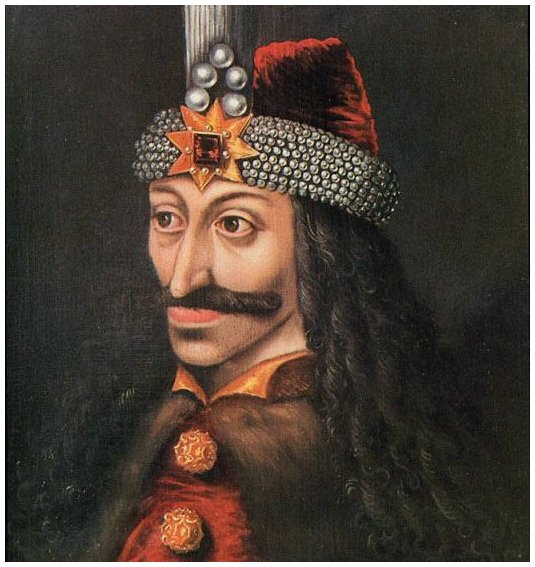
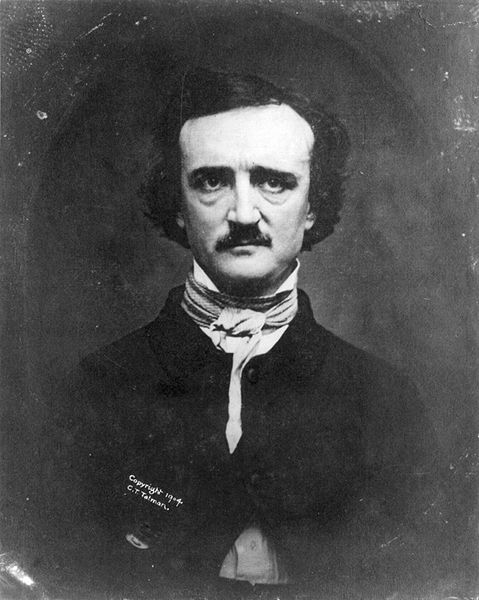
I attended a public performance of a two-man play at a local library this week. The play was a conversation between Edgar Allan Poe and Bram Stoker. Naturally, vampirism played a strong element in the single-act show. While Poe and Stoker were not contemporaries, they did both share an awareness of how religion tied in with the macabre. The Frank Ford Coppola movie Bram Stoker’s Dracula makes this connection explicit as an enraged Vlad Tepes stabs a cross in his chapel with his sword, starting a flow of blood that he greedily drinks.

Vlad Tepes on a good day

We’ve just crossed into mid-October and I already find myself surrounded with vampires. It is characteristic of religion to deal with our deepest anxieties, and the more we reflect on vampires the deeper we find they reside in the religious sensibilities of both fish and phantom.


Portrait of Poe as a Young Man

An obscure portrait of Edgar Allan Poe has come to light and is scheduled to be auctioned off. Reports indicate that the watercolor painting reveals a young man without the world-weariness of the more familiar images of Poe. He may even be smiling.

Poe has long been one of my personal muses. His writing captivated my imagination as a young man, and his sense of tragedy encased a golden nobility. Although many consider his works to be juvenile, like the slightly later stories of Sherlock Holmes by Arthur Conan Doyle, Poe grew to a mature sensibility concerning life that rivals that of Job. Intrigued, years ago I wrote a high school term paper about the writer and discovered a spiritual compatriot who couldn’t outstrip the “unmerciful Disaster [that] Followed fast and followed faster.” Now on the side of years beyond the lifespan of my muse, I begin to understand how a happy young man becomes a Qohelet in his time. In his personal difficulties, Poe was able to speak for many of us.

To me this young portrait is cast in the tint of Dorian Gray. The real image of Poe is that of a man given few breaks in life. A man of keen sight and keener insight. There have been thinkers like Poe from ancient times, but they are generally resigned to the depths rather than to be found basking in sublime sunlight. When Ludlul bel Nemeqi or Khun-Anup pour out their souls to an unhearing sky, they create a fellowship for latter day Poes and Melvilles and Lovecrafts. I hope the portrait of a young Poe finds a good home and the message of its subject rings as loudly as the bells.

Poe-ever Young