Small Town Heroes

When World War Three starts I hope someone will let me know. You see, I barely have time to satisfy the needs of employers and tax collectors to get everything done in a day, let alone read newspapers. Or Facebook. I check my page, very briefly, twice a day and get on with the business that I’m assigned in life. But yesterday I had a notice from a high school friend that one of my teachers had died. Since I don’t name people I know here without their permission, suffice it to say I took a current events course with this teacher in either my junior or senior year. Then, as now, I didn’t read newspapers. Given the small town rags available in rustic regions, there was often not much mentioned beyond deer season and local tragedy anyway. Originally enrolled in the regular curriculum, several friends told me, “You’ve got to take Current Events! The teacher is great!” Those who’ve influenced my life for the good were great teachers, and despite my reservations, I took the class. When it came time to sign up for projects, I was a bit flummoxed. What did I know of current events?

Our teacher kindly allowed me to offer evolution as a topic. It was occasionally in the news then. Six of us decided to debate the issue, three for, three against. My religion having held me in a headlock, I was the lead debater against evolution. The day for the debate came and we ran over the bell. Our teacher, with his usual calm wisdom, suggested we continue the next day. And the next. Three days of sometimes acrimonious debate and it looked, from my point of view, as if creationism had demolished evolution. How terribly naive I was. Ironically, I had just posted a piece on evolution yesterday when I saw the notice about my teacher’s demise. The position in my post was a sharp 180 from high school. It was a tribute to the love of education.

Source: Wellcome Images, Wikimedia Commons

Source: Wellcome Images, Wikimedia Commons

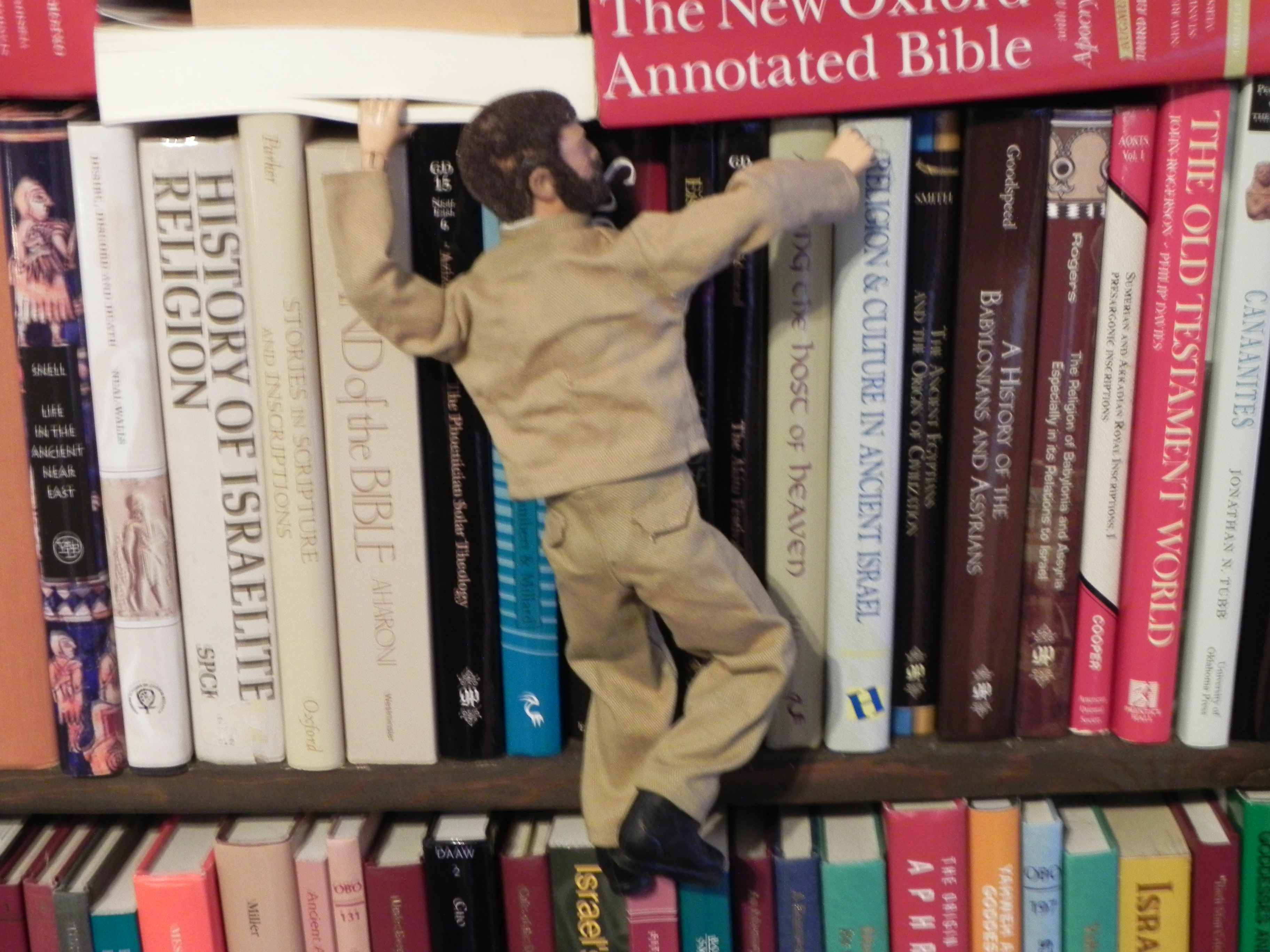
I was an outsider in high school. I literally lived outside of town and after school activities were not really feasible. We were poor and couldn’t afford extra-curriculars anyway. I wore a large cross on my chest and although I was shy, I felt that it said all I had to say. My teachers, to their eternal credit, let me explore. In college I learned about Fundamentalism. I had never heard the term although I grew up in it. Gently my teachers nudged me to think more deeply about things. Through three degrees delving more profoundly into the origins of religion, as well as humankind, I came to see the errors of my ways. Had I been forced in high school I would’ve fought back. Instead, a persistent, patient wisdom guided many of my teachers. I don’t know how they recognized that I might be worth salvaging, but they apparently did. They let me speak, they let me trip. Just as I was about to fall they caught me. And I hope, in my own small way, to repay this favor in kind.

Literally Biology

In a New York Times opinion piece on a recent Sunday (ironically, always on a Sunday), college biology professor David P. Barash submitted an article entitled “God, Darwin and My College Biology Class.” Barash notes that increasingly students come to his class thinking evolution is more or less optional. I found the same thing teaching religion classes. When student presentations at state universities addressed Genesis it was fairly common to have a large number of undergraduates suggesting that evolution is “just a theory” and “intelligent” design was a viable option. I tried to show them in class that the Bible does not support the shenanigans that creationists impose upon it, but the message rolled off like rain from an evolved waterfowl. Still, I do have to take exception to some of Barash’s broad strokes. He feels that religion and science cannot coexist. I wonder, however, what he means by religion.

Religion is an ill-defined word. One of the most pragmatic usages I’ve heard is that religion is what people use to give meaning to their lives. Religions may be theistic or a. Religions may be anti-science or pro. Religion, per se, is no threat to science. Fundamentalism is not religion. Fundamentalists use religion to further their ends, which are often political. Since many religions grew up around sacred writings the urge was there from the beginning to take these holy words literally. They gave meaning in a pre-scientific era. Newton, Galileo, Darwin—and even before them Plato and Aristotle—simply shifted the angle of illumination. The problem is that many religious believers feel they have the answers already. New facts only confuse the issue. Left to their own devices such beliefs quietly go extinct.

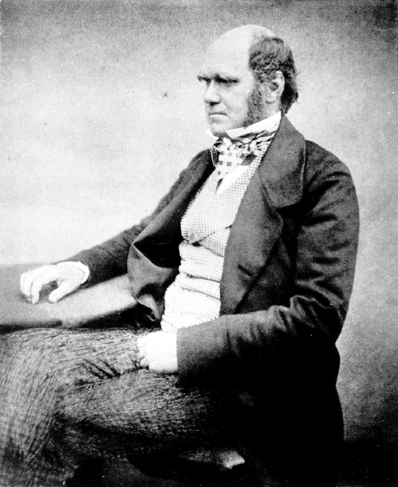
Charles_Darwin_aged_51

It is only when a conscious decision is made to champion archaic writ against empirical evidence that science and religion join combat. Most religious people in scientifically advanced societies have no problems with evolution or particle physics. They simply show the way the world is. The vastness of the universe should give us all pause, but it does make you wonder which way to point your telescope to spy the almighty. I sympathize with Barash. It is not easy to find many of your students, in either science or religion classes, with their minds already made up. Still, it might help to realize that religion is not the culprit here. Literalism is a kind of mental problem. Until it is rightfully separated from religion we will all be left wasting valuable class time trying to convince students of the facts of life.


Evolution’s Snapshots

DarwinsCameraIn America’s political climate any book about Darwin takes on a religious cast. As strange as it may seem, an odd equation exists between Darwin, evolution, creation, and the Bible. We forget that Darwin was a retiring man with many interests and a very keen intellect. Erstwhile groomed for the clergy, he lived at a time when much of the world was known really only to the local inhabitants, and observations were still mostly made by the human eye in person. So it was that as photography developed, a new avenue into science opened up. Darwin’s Camera, by Phillip Prodger, is a rare look into, as the subtitle says, Art and Photography in the Theory of Evolution. Darwin wrote several books. Among them was The Expression of the Emotions in Man and Animals. This book was among the first scientific tomes published with photographic evidence to illustrate, if not prove, the points being made. Prodger takes us through the process by which Darwin procured and commissioned his photographs for the book and reveals some deeper truths about his life.

Interestingly, one of the sources of early photos was asylums. There was a belief, apparently, that photographs might be used diagnostically. One of the emotions that was presented to Darwin for his consideration was religious rapture. (Not that I can make any great claims here, but having experienced at least mild versions of such states—whatever their physiological cause—I know that they are powerful.) The observation comes through that religious rapture is difficult to distinguish from insanity, on the face of it. This may sound like an anti-religious slur, but it’s not. Ask around the mystics and you’ll see what I mean. Sanity has its uses, to be sure, but mysticism is all about letting go.

The only real religion in this book comes in the confrontations to Darwin’s evolutionary theory. Prodger does, however, briefly delve into Darwin’s late (and brief) concern about spirit photography. Shortly after cameras were developed, photographic tricks evolved. The Victorians, as we all know, had a very palpable sense of death’s nearness. It is no accident that Spiritualism developed during this time period when a reasonable lifespan was anything but assured. Spirit photographers claimed to capture ghosts of the dead revisiting the living. Darwin, who’d lost a beloved daughter prematurely, knew what grief was. He did not, however, allow it to interfere with his critical thinking. Photographs could be used to prove a point, but they could also be used to make a false claim. Darwin’s success in his book on emotions falls somewhere in the middle. He did have to have some staged shots to illustrate his point. Ever the gentleman, however, Darwin’s decisions were made to enlighten, not to deceive. One wonders whether creationism can even remotely make that same claim.


Flying Sorcery

In a post on the Huffington Post recently Michael Zimmerman, founder of the Clergy Letter Project, wrote about the strange antipathy of Ken Ham to the search for extraterrestrial life. Ham, founder of a creationist museum and self-appointed spokesman against evolution, has gone on the record saying that aliens cause problems for a creationist worldview. Therefore they can’t exist. Indeed, creationists should reject aliens because of the flat earth the Bible presents. Zimmerman, with his usual unfailing reason and wry humor, demonstrates the multiple difficulties both with Ham’s understanding of science and of the whole alien agenda. The Bible doesn’t address the modern world on many fronts, which is why literalists so often find themselves out of step with the issues of the day. When the final period (an anachronism, I know) was placed at the end of Revelation, it was expected that the world wouldn’t be around much longer, tottering as it was on the underground pillars that held it up. Somehow the Roman Empire came and went without any kind of cataclysm ending it all, and literalists have been backing and filling ever since.

Ham’s angst about extraterrestrials, however, is not shared by all Fundamentalists. I recall going to a session way out at a country church as a child where the guest speaker, a firm believer in aliens, talked about the “sheep in other folds” referred to by Jesus as aliens. I recall the eerie feeling as we drove home under a dark sky with fliers depicting flying saucers and assurances that we were not alone. In college, when I discovered Larry Norman’s music, I was struck by his lyric “If there’s life on other planets, then I’m sure He must know, and He’s been there once already, and has died to save their souls.” Literalists, like Catholics, take multiple views on the question. It seems a terrible waste of space if, in this infinite universe we’re the only sparks of consciousness around. I’ll leave “intelligence” for time to decide.

What would Genesis do?

What would Genesis do?

Ironically, Ken Ham doesn’t seem to have considered the up side of aliens, at least for his point of view. If the extraterrestrials end up looking like us, that does raise some serious questions about evolution. How did it work identically on two different planets to produce such similar results? You’d think maybe Fundamentalists might welcome aliens with open appendages. Of course, some have gone far off the other end and declared that angels and aliens are the same thing. The problem of the literalist world view is that it is severely limited. The Bible never foresaw the internet or the airplane or even the true nature of our own solar system, let alone the infinite sea of space beyond. In charting a course for belief, accurate maps are necessary. As Zimmerman points out, those maps, of necessity must contain the stars. And as we continue to evolve infinite worlds of possibilities await.


Back to School

“We want to make certain that we view culture through the eyes of faith, that we don’t view our faith through the eyes of culture.” The words are those of Stephen Livesay, president of Bryan College, according to a recent New York Times article. Bryan College in Dayton, Tennessee, already famous as the school that evolved out of the Scopes Monkey Trial, has been toying with adding a more specifically fundamentalist statement to its panoply of faith. Instead of stating simply that humans (more precisely, “man”) were (was) created by God, Livesay wants to clarify that this means by special creation, no evolution involved. Hey, we’re all thinking it. Why not just say it?

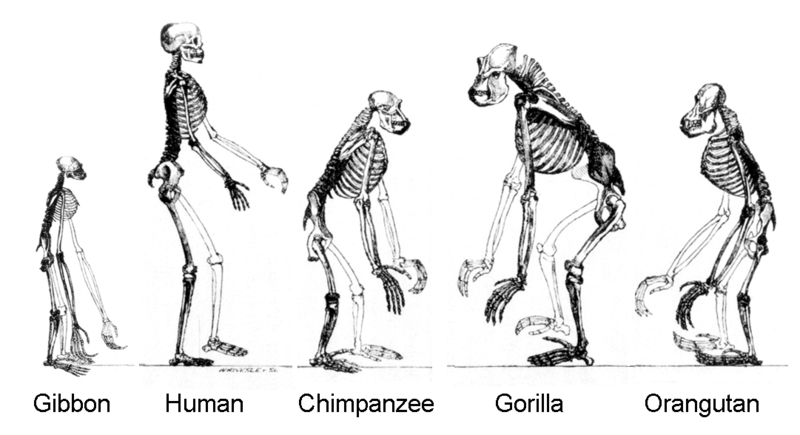
800px-Ape_skeletons

With the characteristic, journalistic eye-rolling that inevitably accompanies stories about creationism, I frequently wonder why there aren’t more calls to try to understand this viewpoint. It’s easier to condemn and say that narrow minds can’t widen out, but some of us who had believed in Bryan’s hypothesis at one time have managed by dint of reading and reason to climb our way out of the slime. If we understood what made literalism so appealing, we might be able to figure out why only America lags behind the developed world in accepting what is otherwise universally regarded as a fact. Instead, faculty members nationwide willing to call this into question are summarily fired and nobody bothers to do a thing to support them. Collateral damage of the culture wars. Perhaps we should add a statement about not letting the door hit you on your way out.

Evolution through natural selection stabs very deeply into the heart of human self-worth. We still refer to other animals as “lower” than us, and we exploit them in any way we see fit. Then we don’t wonder why being told you’re just like them isn’t disturbing. This is trench warfare. Lines in the sand dug deeper and deeper. Those who believe in creationism aren’t simple. Even with all our space telescopes and Mars rovers, we’re told the most complex thing known to humanity is still its own brain. And that brain makes people with Ph.D.s think that they’re special—either a separate creation by an invisible god, or because they can recognize how irrational our own brains make us. No intelligent being would want to understand why this is so by studying it rationally. That would make far too much sense.


Science Fiction Double Feature

Two news stories last week—one from the Associated Press and one from the Chronicle of Higher Education—hit upon a common theme: scientific illiteracy. Both articles presented scientists who felt that if they could just reach the (mostly) American public with easily digested facts, then belief in the Big Bang, evolution, and global warming would suddenly make sense to everyone. It may not be my place to say, as I’m not a scientist, but I believe they’re wrong. Don’t misunderstand. I do believe in the Big Bang, evolution, and global warming. In fact, I spent part of last week flagellating myself (metaphorically) for not posting something appropriate on Earth Day. I worry a lot about global warming and what we do to our only planet. What I mean is, these scientists don’t understand religion. People don’t willfully reject the facts. That takes religion.

One of the reasons that I continue my daily efforts on this blog is that our educated elite constantly refuse to acknowledge the blue whale in the room. People are naturally religious. Some grow out of it, some are educated out of it. For most, however, the price to do so is far too high. Science offers little to take the place of faith. For all of its innuendo, the Big Bang tends to leave most of us cold. I don’t support religions spreading ignorance, but even the Bible recognized that it is useless to say to a poor person, “stay warm and well fed” if you don’t offer a blanket and some food as well. It’s chilly in an infinite, yet expanding universe. Why don’t scientist understand that if you give a jacket, maybe people might actually warm up and listen?

hs-2010-13-a-large_web

Religion, however we define it, is a coping mechanism. Even many atheist biologists admit that it has an evolutionary utility, embarrassing as that may be. Evolutionary scientists also tell us that we don’t evolve according to plan. Nature (de-personified, of course) opportunistically uses what’s at hand to help creatures survive. Instead of trying to understand religion, many in the hard sciences think that speaking loudly in single-syllable words will convince those who’ve found meaning in evolution’s solution of religion that somehow evolution was wrong. The worst thing we can do is to waste more money trying to understand religion! I hear it’s very cold in outer space. Still, things seem to be warming up down here. For those who can’t evolve gills, it’s time to learn to swim.


Brave Old World

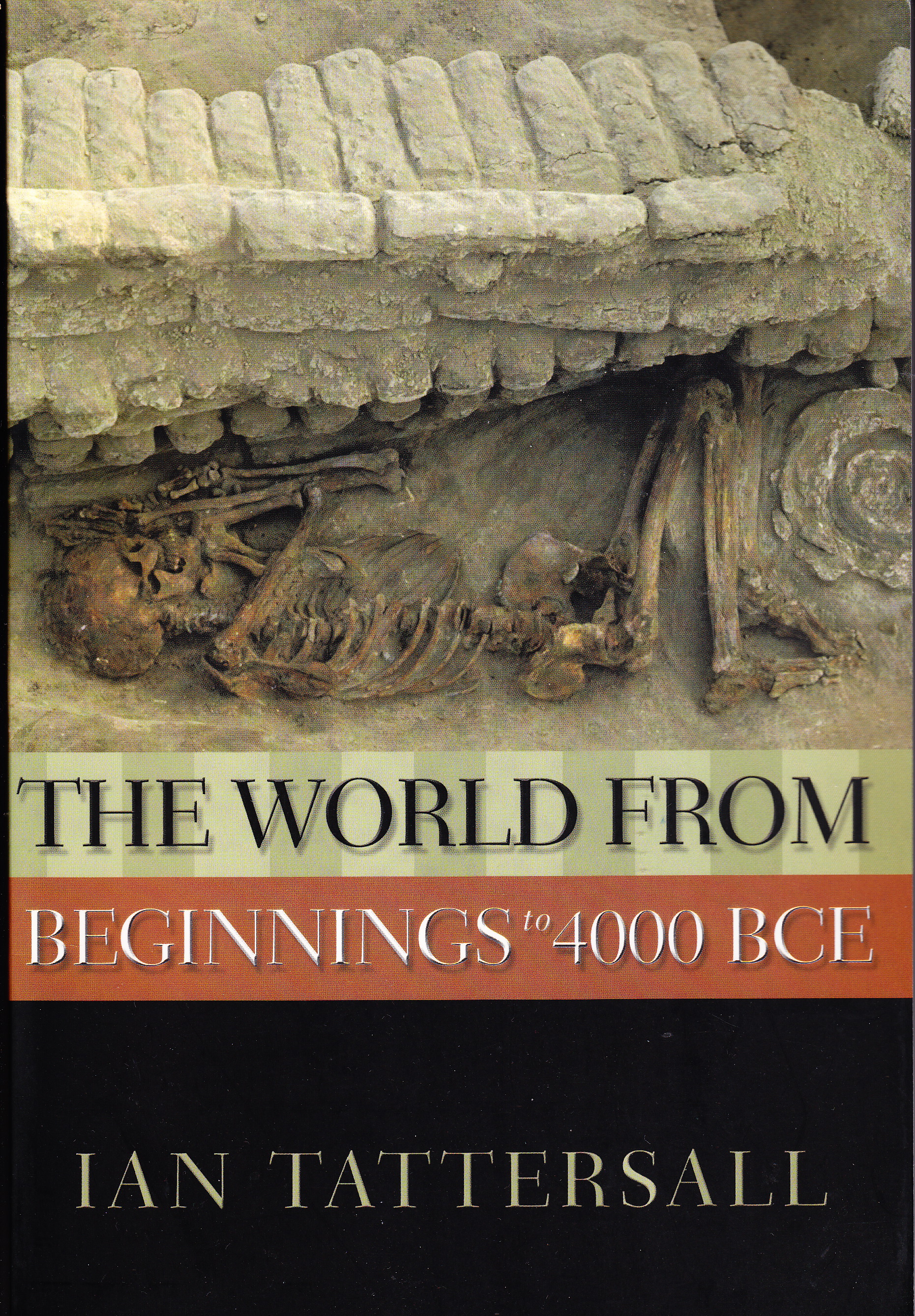
WorldFromBeginningsAs we continue to evolve, it is helpful to learn where we’ve been. Besides, the title, The World from Beginnings to 4000 BCE is difficult for an old Genesis reader to pass up. I knew Ian Tattersall’s book was about human evolution—a subject that has made me feel naughty ever since being raised to believe, quite opposite of reality, that evolution was a myth and Genesis fact. I remember the strange disconnect from my earliest years. Standing under the 13th Street Bridge, just before French Creek joins the Allegheny River, the main tributary of the Ohio, and, in turn, the Mississippi, my brothers and I would look for fossils. And find them we did. If you found the right kind of rock, preferably with a recent fracture, you could find the impressions of dozens of sea shells jumbled together in a glorious, fluted profusion. These were the exoskeletons of animals dead for millions of years, and thinking myself a budding scientist, I stared at them in awe, not quite sure what to make of it all. At church I learned the earth was young—not even a teenager in geologic terms—and yet, in my hand, encased in rock, contrary evidence.

Indeed, Tattersall begins his book, as many college-level texts do, apologizing to the culture that still somehow believes that the earth is just 6000 years old, despite the Tyrannosaurus towering over your head at the Carnegie Museum. Humans are latecomers on this scene, however. Tattersall gives a solid introduction to the current human family tree. Instead of being ashamed of our heritage, I’m more inclined to feel a little pride. Our ancestors, prey to large carnivores, took a distinctive evolutionary track that enlarged our brains to help us outwit our natural enemies and learn how to destroy the very planet we inhabit. Well, maybe pride is a little too strong a word. Good and evil, it seems, always stroll hand-in-hand. So we evolved, but not yet to perfection.

Evolution always makes me think of the future. A strange sense of accomplishment makes prominent thinkers, particularly those who declare themselves bright, marvel at our greatness. I can’t help but to think that something better must lie ahead. We’re told that evolution has no direction in mind—traits that help to survive until reproduction are all that really count—and yet, having the minds we do, it seems that something more might be going on. Have we built all this merely to have sex and die? Glorified May-flies? Isn’t the future a wonder of what we might become? Evolution takes so long, even with punctuated equilibrium, that we’ll never live to see it. I have a suspicion, however, that if we give it enough time, we might offer our as yet unimagined offspring a world as full of wonder as it always has been. And they’ll still be standing by the river, staring in amazement at animals made of stone.


Apes and Atheists

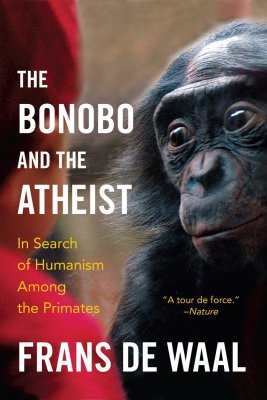
Bonobo&AtheistFrans de Waal is among the sanest of popular science writers. I’ve been following his non-technical work since Our Inner Ape through The Age of Empathy to The Bonobo and the Atheist. As de Waal himself explains, he tended to leave religion out of his earlier works since, for a scientist such topics are generally taboo. His direct address to religion in The Bonobo and the Atheist is refreshing and enlightened. As he notes, de Waal does not believe in God, but he doesn’t believe in the abolition of religion either. This sets him against his fellow biologist Richard Dawkins, who is so bright that the rest of us are burnt out dimmer bulbs by comparison. As de Waal soberly asks: what does science offer in place of religion? What is the point of taking away something that has evolved from our early primate days without offering anything to fill its spot? Even an ape would object.

What makes The Bonobo and the Atheist so engaging, apart from de Waal’s writing, is the openness of his outlook. De Waal suggests that the origins of morality and empathy can be glimpsed in apes and monkeys. He cites the reaction of chimpanzees to rain storms and even waterfalls that hint at early religious development. As I’ve suggested on this forum before, religion may even be allowed to animals. Their experience of religion is certainly not the same as ours, but there is evidence of both thought and feeling. When these are brought together they form religious belief in Homo sapiens. Why not in our ancestors and fellow animals? No, animals don’t develop elaborate doctrines or precious rituals. They do, however, reverence the powerful, ponder death, and feel emotion. Some of our great thinkers are ready to cast all that aside in the name of progress. More humbly, and circumspectly, de Waal considers that evolution is telling us something. And when evolution speaks, its children should pay attention.

Descriptions of reactions and behaviors that we consider unique to humans among the animal world draw me to de Waal’s books. As a scientist de Waal has to draw logical conclusions, and those conclusions point to an inner world that is not so much unique in humans as it is evolved. Religion, I believe, is one of those traits. If animals show some of the early stages of religious development, including a basic form of ethics, how does that devalue our human efforts to explain our universe? Religion is in good company, along with opposable thumbs and basic language comprehension. Looking at how we treat each other, I consider being related to animals a compliment most of the time. Without a doubt some of the ethics Frans de Waal illustrates among the bonobos exceed those I’ve experienced at the hands of many who think of themselves as made in the image of God.


Raptor Attention

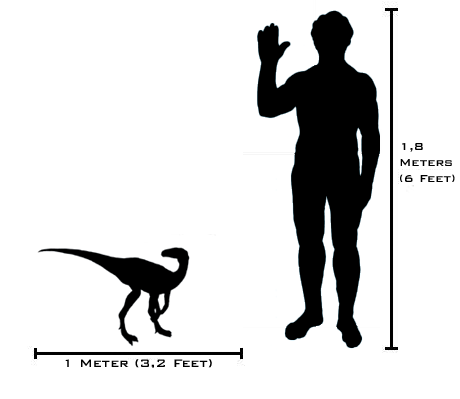
Comments on internet sites are quite revealing. Not that many comments ever make their jolly way to this blog, but, like many people I spend too much time on the internet, and you can’t help but read a few now and again. My wife sent me an ad for the Jesus-raptor tee-shirt offered by Six Dollar Shirts. The image has been floating around the web for some time now, but I haven’t been able to determine its origin. It could be from creationist groups that believe dinosaurs coexisted with people as an end-run around evolution, but more likely it represents an effort to belittle that view. Creationists are the ultimate backward-looking crowd. Fearful of Hell, they see evolution as tantamount to damnation, and must eradicate the biological evil for the sake of their immaterial souls. Reading through the comments on the Six Dollar Shirts page, I had to wonder. Why are we so concerned with getting the past right?

Don’t get me wrong—I have an undying interest in the history of religions and the origins of religious thought. Nobody wants to get the past wrong, otherwise the present is incorrect. Dinosaurs, however, are the great corrective to a major historical error. It is easy to assume that homo sapiens represents the highest point possible on the earthly scale of measures. Dinosaurs remind us that anything can happen. Up until about 65 million years ago, there would have been no reason to suppose that dinosaurs wouldn’t be here forever. Of course, Adam was over 65 million years in the future, and even if he evolved, his primate lineage was tiny and trying to avoid the gigantic footsteps of their distant Jurassic cousins at the time. Some scientists theorize that if the asteroid never hit, the dinosaurs may have evolved distinctly humanoid features. After all, we’re clearly at the top.

The past must always be approached with humility. Relativity may tell us that it is still here, but I can’t even access the moments just seconds ago as I typed these words. The delete key is a dangerous thing. Science has pretty much unequivocally demonstrated the evolution is a fact of life. It is our past. No matter what Ken Ham says, I’m pretty sure even Moses would’ve noted the spectacle if dinosaurs trudged aboard the ark. So Jesus never met any raptors in real life. Some of the commentators on the tee-shirt page appear offended at the blasphemy of the joke. Or maybe they’re just being ironic. In either case, that’s now the past and the best that any of us can do is comment on it and watch out for the big feet that are stomping this way.

Image credit: Dropzink, Wikicommons

Image credit: Dropzink, Wikicommons


A Toy Story

As a life-long pacifist, it might seem strange that I find myself waxing sentimental over a military-themed toy. You see, I just found out that G. I. Joe is turning fifty. For those of us who grew up in the 1960s, G. I. Joe was the acceptable “boy doll” (now, technically, “action figure”) that all the guys had. Some of us had several. We didn’t have much money, but Christmas always gave an opportunity to accessorize Joe with either the latest developments (life-like hair in a buzz cut, pull-string vocalizations, “kung-fu grip”) or the many vehicles that could be purchased separately. As the Vietnam War wore on, Joe turned his interests to science and humanitarian causes, but boys like to anthropomorphize as much as girls do, and Joe continued to get himself into many bizarre adventures. At least in our apartment he was known for fighting dinosaurs, robots, medieval knights, and even General George Custer. Joe was a fighting kind of guy. He had guns and gear and shoes that were almost impossible to remove when you wanted to change uniforms (only when Mom was out of the room). So G. I. Joe has been around for half a century now. I can’t remember childhood without him.

G. I. Joe often had near fatal encounters in our home. One of them, the talking one with life-like hair, suffered a severe war wound that left his bottom half completely dissociated from his top. I don’t think we kept the lower abdomen and legs—there was something slightly unnerving about plastic buttocks—but I did keep his top half, the talking bit. It shocked me when my Mom asked if she could take him to church. We were a “Bible believing” family since it was the days before people much talked about Fundamentalists. My mother was a Sunday School teacher. (Thus my early amazement at the magic of flannelgraphs, still primarily used for religious teaching.) We didn’t believe in evolution, and we certainly thought war was a bad thing. I did wonder, though, why Mom wanted to take a toy to church, particularly a dismembered, violent one.

Being the son of the teacher did have some perks. I knew enough to read my Bible and learn the lessons, but we were not given sneak previews for Sunday School. Seeing the trailer might make actually attending superfluous. So when Joe went to church I learned why: people are not animals. The pull-string voice box, although the sounds emerged from holes in his perforated chest, was proof. People talk, animals don’t. We didn’t evolve after all. The other kids were seemingly impressed by my evangelistic Joe. Who would’ve thought that “G. I. Joe, U.S. Army, reporting for duty” could have ever converted a lost soul? On Ebay, I see, some of these vintage talkers can fetch up to $600. Mine, I’m sure, ended up in a landfill somewhere in rural Pennsylvania where, I have no doubts, he is still preaching to the other toys about the dangers of evolution.

The ultimate adventure...

The ultimate adventure…


Who Loves You?

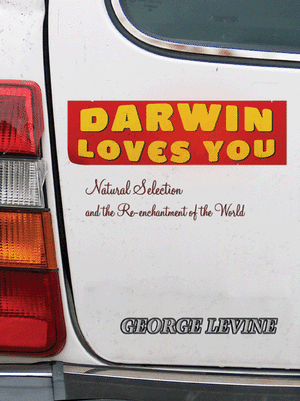
DarwinLovesYouWonder is too easily lost in a reductionistic world. Even when we get to the level of quantum mechanics we’re told, “it’s just physics.” How depressing. Such ideas seem to have been in the mind of George Levine as he wrote Darwin Loves You: Natural Selection and the Re-Enchantment of the World. Don’t get me wrong, Levine does not back away from the secular starkness of biology. What he does, however, is ask whether or not evolution by natural selection shouldn’t create a kind of secular enchantment. Almost from page one Levine has to address religion, the tyrannosaurus in the room. Religion, for all its shortcomings, has provided people with a sense of purpose, even enchantment, from days long before any temples or priests existed. The materialist response of “buck up, there’s nothing more than biology going on here,” has proved to be of little consolation to the vast majority of people on the planet. One of the reasons, and I speak only for myself here, is that it just doesn’t feel true.

Truth is a slippery concept. In origin the word seems to derive from something like “to have good faith.” In terms of factuality it also has the meaning of conforming to reality. Reality, however, is equally perilous when it comes to authoritative definitions. Reality means nothing if it is not perceived. Perception may actually bring something to the table, if particle physics are to be believed. Empirical method is pragmatic—I believe that every time I grudgingly climb aboard an airplane, or turn on a computer. At the same time I sense that there may be more to it than that. No matter how much science I read, that perception simply won’t go away. The professors of materialism have learned to quash that still, small voice. The hollow feeling with which it leaves me, however, may be significant.

Evolution and religion are inextricably interwoven. Religion, although poorly defined, has to do with finding meaning in a world that is often harsh and cruel. No doubt such feelings evolved, and some of our animal kin may share them with us. When molecules break down into atoms, they generally lose the characteristics of the molecule. We now know that we can keep breaking even the invisible apart until we’re left with only theory as to what might be below. This may be true. At the same time, the wonder with which we might stand before a cyclotron or a little robot rolling around the surface of Mars, the question of truth emerges like a rock that wasn’t there just a few days before. A gnawing sense that we don’t have the full picture. A sense that no matter how far we tear apart, the total will always be far more than the sum of parts. Levine is right; evolution can induce wonder. And truth, at its very heart, is a matter of faith.


Religious Education

The elephant in the room is exposed in a New York Times op-ed piece last week. “Indoctrinating Religious Warriors,” by Charles M. Blow, puts a finger squarely on the pulse of the ailing science stance of American religious believers. Noting that the Republican party has made no secret of its attempt to capture conservative votes by touting the religious intolerance of the theological right, Blow points out that more Republicans now believe that humans were created separately from animals than accept the scientific fact of evolution. And not just human origins suffer—our future will as well. The same mentality attends denial of global warming and advocating against fair treatment of committed, loving couples (depending solely on the visible sexual equipment). It is all of a piece. Blow points out that white, evangelical Protestants make up only 18 percent of the US population, but 43 percent of the Republicans who are classified as staunchly conservative. This imbalance leads to one of the world’s wealthiest nations being sidetracked from serious global issues while we continue to debate whether the Bible in inerrant or not.

I would add a further note of concern to what Blow says: higher education refuses to take religion seriously. As a life-long sideliner who has never been permitted fully into the halls of academe, I have watched as business schools have grown from the rubble of religion departments that have at best stagnated—when they have not been actively dismantled. In the worst case scenarios, universities have closed such departments down. With the exception of evangelical institutions. Very large departments of confessionally indoctrinated religionists thrive across the country. I am not the only religion scholar to have been kicked out of the academy for an intellectually honest approach. The wider society, with eyes wide shut, has decided that religion is a passing fancy while statistics indicate the exact opposite. We as a society will continue to be manipulated by religions as long as we continue to pretend they don’t pose a real concern.

Religion serves a purpose.

Religion serves a purpose.

Nor does castigating all religion, as Richard Dawkins, Sam Harris, and the late Christopher Hitchens do/did, solve any problems. Science itself appears to indicate that religion is part of the human condition, as surely a product of evolution as our opposable thumbs. Basic psychology would dictate that such direct challenges to religion will only result in retaliation. In fact, this is something that I recall learning from kindergarten. Until our society learns to go back to school and study the four R’s—yes, religion has to be there among the basics—we will continue to suffer from those who have vested interest in using religion for their own ends while those who could educate us on the subject continue to suffer the cut jobs of those who might be part of the solution. Charles Blow wonders if he is being too cynical. I suggest that he’s not nearly cynical enough.


Revelations

BeringWhyIsThePenisSex. Religion. Death. One of these things is not like the others, if Sesame Street taught me anything. But in this case, the three actually are of a piece. In my teaching days I pointed out that every religion, without exception, tries to deal with sex and death—the two great, towering markers of human experience. Nevertheless, I cowered close to the window on the bus, choosing the left-hand side so the cover wouldn’t be visible, to read Jesse Bering’s Why Is the Penis Shaped Like That? From the first sentence you’ve got to like this guy. Although irreverent, Bering is never obnoxious as he asks questions about the basics of human existence that few would be willing to take on in the name of science. It’s a fascinating book, and, as I knew it would, it addressed religion and death as well as, well, you know.

Bering is an evolutionary psychologist, and he tends to lean toward a materialistic universe. His book raises a very important point, however; the belief in determinism statistically correlates with anti-social behavior. That is to say, those who believe they have no free will tend, to some extent, not to care about society. As Bering also points out, perspective is very important. I wonder if truth is subject to perspective. Actually, I’m rather certain that it is. I have fought determinism from my youngest days, although I generally feel out of control of my own life. I first encountered determinism in that insidious theological position known as predestination. The deity of a universe that predestines most people to Hell is a monster, no matter how saintly his/her portrait. One professor conceded after a vigorous debate in class: “on philosophical grounds free will wins, but on scriptural grounds, predestination does.” I disagreed. Still, he could go home happy—my challenge had, after all, been predestined.

Worse yet were the “double predestinarians.” They were those who believed that every little detail of life was predestined. I actually had a professor say, “if you fail an examine, it was predestined.” Already the illogic of it all struck the same timbre of distaste that materialistic determinism does. By its fruits you shall know it. As much as I enjoyed Bering’s book, I wondered how anyone obviously so intelligent could believe that this magnificent mental world we inhabit is nothing more than sparks tickling chemicals in our brains. Or even the biological wonders he explores. As I huddled up in a ball on the bus, my book close to my face, I knew that this behavior wasn’t natural at all. Not even science could have predicted it.


Not Knowing

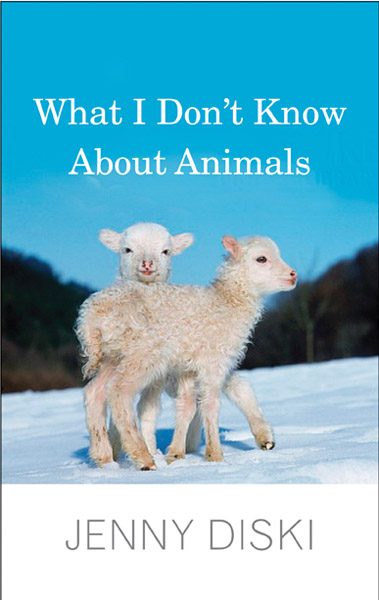
WhatIDontKnowAboutAnimalsBegin with a basic premise: we cannot know what a creature without language thinks. Add in the thoughtful anxieties of a post-domestic writer who knows about animals and you have What I Don’t Know About Animals, by Jenny Diski. Part biography, part science, part philosophy, wholly human. I knew from the day the book was released that I would read it since, like the author, I am one haunted by the relationship between the exploited and the exploiter. Diski’s confessions are difficult to read at times, veiling herself, as she does behind the curtains of one’s most private experiences, but she reveals plenty to those who read on. We can’t know for certain what another person thinks, so how can we know what a sentient animal thinks? Some, following Descartes and Skinner, would declare that animals don’t think, they simply do as programmed. The rest of us know that they are wrong. The evidence accumulates more each year that animals think and feel, but, as Diski repeatedly points out, we need to drive with the brakes on. We can’t get inside them to actually know if human experience corresponds at all with animal experience. We’ve shared the planet for millions of years, but we’ve lost track of our common origins.

As I suspected, the Bible came into the discussion. The book of Genesis lurks in the background of most human-animal rationalizations. The divine division into separate “kinds” must be kept discrete at all times. The problem is, nature won’t always play along with that game. One type slowly morphs into another and some biologists are even questioning the usefulness of “species” at all. Fear of bestiality, as Diski points out, is found already in the Bible. Best to keep everything in its proper pigeon-hole, whether that’s where it belongs or not. Genesis gives us the right to exploit, and so we continue to use animals for our own purposes. Although the feline, it turns out, may have figured out how to set this order on its head. In some cases.

What I Don’t Know About Animals is not a defense of vegetarianism or of radical, thoughtless abandon. Diski writing on spiders will cause many heads to nod in agreement, and her rage against the loss of the common lady-bug struck an amazingly responsive chord with this reader. The lady-bug’s demise came at human tampering, importing asian beetles as pest control—beetles that eventually edged out the harmless lady-bug, replacing the Volkswagen of beetles with a biting, omnivorous, massing pest. In Wisconsin the southern side of our faculty house was literally blanketed with them in the spring. Diski uses the same word I did then: biblical. Swarms seem to be the way that the Almighty has of telling us too much of even a good thing will go bad. Although I couldn’t agree with every statement Diski makes, I have the feeling this is a book I will reread more than once. Wisdom often comes in the form of admitting just how little we know.


Crowing Up

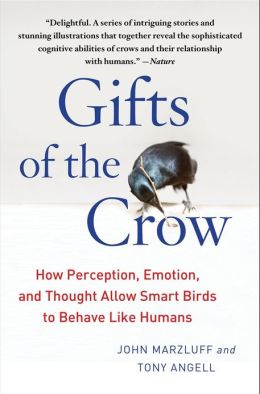
GiftsOfTheCrow Whether we climb up or down the evolutionary scale, one factor remains constant—our human sense of superiority. Despite the castigation of biblical-era thinking in the eyes of many scientists, few are willing to relinquish that Genesis-bestowed sense of being the pinnacle of nature. We know the universe is vast, but we assume we’re the best and brightest in it. Climbing down the ladder a bit, we like to distance ourselves from our fellow creatures because of our superior mental capacity. That is why I am so engrossed by scientists who explore animal intelligence. We find we are not so different after all. Gifts of the Crow: How Perception, Emotion, and Thought Allow Smart Birds to Behave Like Humans, by John Marzluff and Tony Angell is such a book.

If you’re like most people in this electronic age, you probably haven’t given much thought to corvids. Corvids are the members of the crow family: ravens, jays, magpies, and, of course, crows. Scientists have long known that these birds are exceptionally intelligent, and Marzluff and Angell have written a spell-binding little book that shows a remarkable level of intellect among the birds. Documented cases of tool making and use, conscientious interaction, and perhaps even language, have occurred among the corvids. We try to shoo them from our crops with “scarecrows” and we poison them en masse when they become “pests,” but when we take the time to understand them, we find that we may be far darker than the crows.

Not that Gifts of the Crow is all that easy-going. There is plenty of brain physiognomy and quite a bit about brain chemistry here as well. Knowing that not all of us are scientists, though, Marzluff and Angell include a generous portion of narrative description of what corvids have been observed to accomplish. For three days in a row I climbed off the bus stunned, scanning the skies for crows, just to see for myself. In this suburban jungle outside the New York City metropolitan area, crows aren’t so abundant as they were when I lived in the Midwest. They will, however, serve to remind me, when I see one, that our privileged place in nature has more to do with our thumbs than with our intelligence. When I saw a solitary crow atop a tree during a neighborhood stroll after finishing the book, I stopped, smiled, and bowed. Nature belongs to each and every creature, and there sat one intelligent enough to appreciate it.