Talking Sleepy Hollow

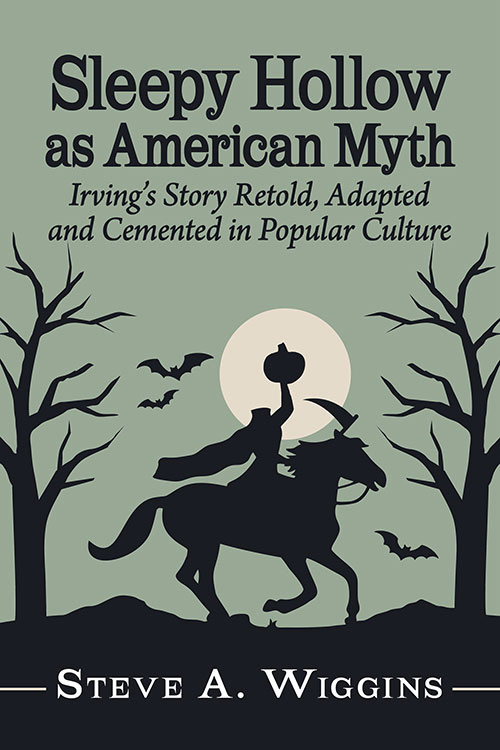
After writing a book comes talking about it.  I very aware that this blog has quite a limited reach, which is why I’m very grateful for friends who are willing to chat about my books.  John Morehead’s TheoFantastique is a blog I’ve known about, and appreciated, since I began this blog sixteen years ago.  John has always been very gracious and generous with his time and has interviewed me about each book since Holy Horror on.  Yesterday we had a chance to talk about Sleepy Hollow as American Myth.  The blog post with the recording is located here.  Please give it a watch if you have any interest.  To those of us not inclined to inflate opinions of ourselves, doing self-promotion feels awkward, and so it’s always good to have a friend willing to help us over the hurdle.  John has written and edited many books himself, and we’ve both published with McFarland. You might enjoy some time on his blog.

Writing a book on a subject may not automatically make you and expert, but it does give you a voice in the conversation.  Talking about a book helps you to think of aspects you might’ve missed or things that you really need other eyes to see.  Those fortunate enough to have academic posts sometimes have colleagues willing to read their nascent books and discuss them.  I never had colleagues who wanted to read what I was working on, but then, I was never really in a position where people paid much attention.  As a result, I work on my books alone.  This one had a peer reviewer when an agent took a temporary interest in it, and I received some feedback then, but otherwise it was me wondering what others might think of it once it was available.  The strange thing is, after writing a book you often feel like you could write another on the same subject, looking at different angles.

Since I’m trying to break into that rare sphere of getting a supplemental income from my books (free advice: academic writing really isn’t the way to do this), getting even a little buzz is immensely helpful.  I have contacted bookstore owners and museum shop holders in the Hudson Valley to tell them about my book.  I’m trying to arrange for a local book festival slot to talk about it.  But, of course, I have a 9-2-5 that doesn’t really make an allowance for time off to support your sideline job.  So I’m very grateful for John Morehead’s willingness to talk about my work.  If you’ve got some time, and interest, you can hear a bit more here.


Dark Romance

My study of genre leads me to believe that there really may be no such thing.  Or at least many aspects of genre are open to question.  In the case of Steffanie HolmesPretty Girls Make Graves, there’s no doubt that one genre is dark academia.  Indeed, this is book one of a duology titled “Dark Academia.”  Although self-published it is quite well done.  There’s a lot of backstory, and George (Georgina) Fisher, the protagonist and narrator, is a character from a previous series by Holmes.  Another genre that fits here is romance, although this novel is more than that.  Maybe a bit of the story will help.  George is a new student at Blackfriars University in England.  From California, she has trouble fitting in among the blue bloods that are the usual make-up of the student body.  She soon learns about the Orpheus Society, the secretive organization that pulls the strings on campus.  Then her roommate, the girlfriend of a prominent Orpheus Society member, goes missing.  George decides to investigate. 

Consciously aware of dark academia, Holmes aims directly at the heart of it and offers a compelling story that keeps readers interested from cover to cover.  I was never quite sure what was going to happen, and I do have to add a warning—this first book does end on a cliffhanger, so be ready to commit yourself to book two.  George is so well drawn that it’s not hard to care for her and start rooting for her against the secret society types who can buy themselves out of anything, including murder.  (I have to say, that part is a little too close to reality in the current US of A, so it may be a trigger for some.)

My regular readers (if any) know that I’m on a dark academia kick at the moment.  There’s so much to like in the genre.  Holmes makes clear the close ties between dark academia and horror; they share a common ancestor in the form of gothic literature.  The sheer variety in the novels classified this way means that not all of the books will contain every element associated with the genre, but Pretty Girls Make Graves comes close.  Holmes also effectively writes the ostracism of the outsider into the tale.  Anyone who’s had trouble fitting in (or may still have trouble fitting in) will recognize the scenario and its fallout.  Let’s hope, though, that they don’t end up like George at the end of volume one, even when they enjoy reading the book.


Editorializing

One of the realities of being an editor is that you have authors consistently ignore your advice and then ask you for solutions when what you predicted would happen does.  Oh, that sentence!  Let me put it this way: there used to be a time when simultaneous submission was frowned upon.  Even “forbidden” by some publishers.  The internet has changed all that.  Publishers who won’t accept submissions if anyone else is also considering them, lose out.  There are lots of publishers out there.  Many more than most people think.  Some of them are small and fly-by-night, but others are also ultra-specialized so they can hit their markets.  Even among academic publishers there are many to choose from.  If you submit to only one, wait to hear, and then get a “no,” you have to start all over again.  Or submit simultaneously.

Peer review can take a long time.  I mean a l-o-n-g time.  Especially since the pandemic, but even before, overwrought academics have trouble committing to adding one more thing to their plates.  If they do accept a review offer, the response is likely to be quite late; more often after the deadline than before.  I’ve been an anxious author waiting.  It’s the kind of limbo few actually enjoy.  It’s a reality, however.  If your book is about current events, or something trending, well, godspeed.  That’s a tough place to be.  Submitting to more than one publisher at a time gives you the leg up of not losing time if someone turns you down.  Some authors prefer a certain publisher and want to hold out for them.  Publishers get lots of proposals.  If I had so many proposals when I was in college I wouldn’t have been nearly so lonely.  Holding out is bad dating advice.

The best piece of editorial advice I can muster is to research publishers.  Academics are researchers by nature, but few take the time to research publishers.  There’s plenty of information out there.  When I couldn’t get an agent interested in Holy Horror, I turned to McFarland.  Why?  Because I’d familiarized myself with the kinds of books they publish and mine seemed a good fit for them.  Sure, there were more prestigious places to go, but I’m a bit too busy to bang my head against that wall all day.  Even a little bit of web searching on publishers can pay off.  Publishing is a business.  Never forget that.  If you only want to get your ideas out there, starting a website (which isn’t expensive) is probably a better way than getting a book published.  Writing books is great, and getting them published is incredibly validating.  But do yourself a favor, if your editor suggests a course of action to you, take it.


Being Perceived

The philosopher George Berkeley argued that to be is to be perceived.  This perspective goes by the name of immaterialism and I have to admit to being sometimes seduced by it.  The real question comes down to who counts as a perceiver.  In any case, as a book author there’s always a worry that the book sent to the publisher isn’t real until it appears in print.  I’m Berkeleyian enough to think that ebooks aren’t really perceived, and so I mean in print.  Until I see a copy of the book, I don’t really believe it exists.  This entire week I’ve been waiting.  Sleepy Hollow as American Myth was released on either Monday or Wednesday, depending on who you believe about such things, and my author copies have been on their way.  At last, the book exists!

In the publishing industry there are those who consider a book like a box of puzzle pieces.  They often refer to books as “content,” or “product.”  Something that can be divided up and sold piecemeal in electronic form.  A chapter at a time.  Never mind what the author was trying to do when s/he wrote the book.  Such people, it seems to me, should be forced to spend several years working on an integrated project only to see the producer of said product take it apart and sell insubstantial pieces of the whole.  It feels like being eviscerated.  Books are objects and those who love them form cultures.  I know there are people who read ebooks, and I don’t judge them for it—readers are readers and we need more of them!  But for me, book culture involves, well, books.

One of the greatest thrills a writer can know is opening that first box of their author copies of a book.  Many academic publishers are cutting down the numbers, to save money, of course.  McFarland, I’m happy to report, still provides ten, which used to be standard.  So before I start doling them out, I have, for the moment, ten copies of my sixth book.  I have only one copy of the second edition of A Reassessment of Asherah and two copies of Nightmares with the Bible.  They’re both too expensive for me to buy more.  (Income from writing books may bring images of Stephen King or J. K. Rowling to mind, but they’re household names because their situation is so exceptional.)  Right now, however, I’m bathing in the glow of knowing, at least at the moment, my latest book is being perceived.


Letting Go

I should’ve known from the title that this would be a sad story.  Kazuo Ishiguro’s Never Let Me Go won the Nobel Prize in Literature, despite being speculative.  It’s only mildly so, but enough that it is sometimes classed as science fiction.  It’s appropriate that a twentieth anniversary edition was released because it is an extended consideration of the price of technology as well as dehumanization.  I’ll need to put in some spoilers, so here’s the usual caveat.  I read this novel because it’s often cited as an example of dark academia and it certainly fits that aesthetic.  It starts out at a private school called Hailsham, in England.  The students are given some privileges but their lives aren’t exactly posh.  Most of their possessions are purchased on days when a truck sells them things they can buy with money they earn by creating art.  They aren’t allowed to leave the school.  Spoilers follow.

The special circumstances of the children are because they’re clones being grown for replacement organs.  The public doesn’t want to know about them or interact with them.  In fact, most people believe they don’t have souls, or aren’t really human.  They’ve been created to be used and exploited until they die, always prematurely.  While this may sound grim, the story is thoughtfully told through the eyes of one of these children, Kathy.  She becomes best friends with Ruth and Tommy, who later become a couple.  Ruth is a difficult personality, but likable.  As they grow they’re slowly given the facts about what their life will be.  They’re raised to comply, never to rebel or question their role.  Most simply accept it.  Kathy, Ruth, and Tommy, in a submissive way, try to get a deferral regarding their “donations.”

I suppose it’s presumptuous to say of a Nobel Prize winner that it’s well written, but I’ll say it anyway.  Ishiguro manages to capture the exploratory friendships of youth and reveals what you need to know in slow doses, all told with a compelling, if sad and accepting voice.  Although the genre could be sci-fi, it’s set in the present, or, more accurately, about twenty years ago.  The technology, apart from the cloning, is about what it was at the turn of the century, or maybe a decade or two before that.  With what we see happening in the world right now, people should be reading books like this that help them understand that people are people, not things to be exploited.  And that Nobel Prizes should be reserved for those that are actually deserving for their contributions to humanity. 


And Bones

Often making lists of dark academia movies, The Skulls plays right into that territory.  A secret society, an elite college, and something’s definitely gone wrong.  It’s not a great movie, feeling somewhat contrived, but it fits the mold pretty well.  Things are a little too pat in the film, and the writing isn’t the best.  It’s entertaining, if overblown.  The story begins at an unnamed Yale (actually University of Toronto) with working-class Luke being invited to join the Skulls after an impressive rowing competition victory.  From the first, the Skulls meetings seem to lack gravitas.  Rich and powerful, they are above and beyond the law.  The problem for Luke is that his friends, Will and Chloe, are being edged out of his life.  Will, who writes for the school paper, breaks into the Skulls headquarters but is caught by Caleb, Luke’s “soul mate.”

Will is killed in what follows, and Luke wants to get out but it’s too late. Caleb’s father is the head-honcho for the Skulls and decides to have Luke committed to an asylum when he refuses to cooperate over his friend’s death.  Chloe and the second-in-command of the Skulls, Senator Levritt, rescue Luke and he challenges Caleb to a duel.  I’ll leave it off there so as not to spoil too much.  That gives you a sense of the darkness, in any case.  But the film doesn’t feel that dark.  Yes there is a murder, and there are bad guys, but something I can’t define prevents it from having the tone that you might expect from a grim tale.  As I say, things are a little too pat.  The characters’ emotions are a little too close to the surface.

The movie did well at the box office, but the sequels were released direct to video.  As far as the academia side goes, there are, no doubt, secret societies.  Privilege doesn’t let go once it gets a grip.  But the above-ground “Yale” sees a bit too light and airy.  Maybe more classroom and library scenes might’ve helped.  Likely it would’ve been better had it been based on a novel.  Films that are based on books have a solid development on which to stand and it’s often a matter of figuring out what to omit.  The writer and director had gone to Yale and Harvard, respectively, and wanted to portray what secret society life is like.  But that’s the thing about secret societies—you can’t really know, can you?  It’s a matter of imagination.  And dark academia is where such things fit.


End of the Story

You know that feeling?  Like when you’re driving in thick fog and you know you should stop but you’re late and you have to keep going?  There comes a moment as you’re driving when you know that it’s going to end, and probably badly.  Yet you keep on going.  Trump has me thinking of the end of the world quite a bit.  I know there are many evangelicals out there praying for it fervently while the rest of us would like a little more time on this beautiful planet.  I’d be lying if I said I didn’t understand this outlook, because I do.  I grew up with it and I’ve never forgotten the sensation it caused.  And then I pondered that we are story-telling, and story-thinking creatures.  Perhaps other animals don’t think this way, but we constantly tell ourselves stories.

A story has a beginning, a middle, and well, eventually, an end.  We all know, at some level, that we’re mortal.  Life will end, and every completed story has an end.  Why not the world?  It’s a strangely haunting idea, the world continuing on without us here to make it interesting.  Plants will grow in any soil they can find, even microscopic cracks in the pavement.  Every year it’s like one day everything is suddenly green where only the day before we could see the sky through the branches.  And animals continue their quests for food, mates, and shelter.  Some live to hide while others strut.  Each has a role to play and if you watch them closely you’ll find yourself narrating their stories.  That rabbit.  That bluejay.  That fox.  They have a beginning, middle, and end.  If they can’t tell it, we can do it for them.  It comes naturally to us.

Long ago I learned how one version of Bible interpretation came up with the end of the world as we know it.  I also learned that this was contrived, just as all interpretations are.  This particular one has landed, like a seed, in the cracks of our mind.  It grows, just like that weed in the pavement.  This story must have an end.  We can imagine it no other way.  Even when we grow up and realize that the story was only one we told to children—children old enough to handle it, of course—we still have this certainty that an end is coming.  Like driving in the fog, we just know it.  Even when we realize that in reality we should be putting on the brakes.


Cat Tales

Sometimes I go into an independent bookstore and just look what’s on the shelf.  Often this ends up being an attempt to find a book that isn’t monstrous in length.  Much of what’s currently on offer is long, but I grew up reading 128-page paperbacks (not great literature, granted) that set my expectations.  Now, I do read long books.  Since books and movies are staple topics for discussion on this blog, however, I need to keep things moving in both kinds.  All of which is to say that I picked up Sosuke Natsukawa’s The Cat Who Saved Books because it was short.  This particular bookstore was one where I know and trust the owner’s taste.  I’d bought Haruki Murakami’s works there before.  I really didn’t know what I was getting into this time, though.  I like cats.  I like short books.  I like the Japanese authors I’ve read.  So.

The BISAC code on the back of this one didn’t state that it was fantasy.  I like some fantasy fiction, but my tolerance is limited.  The fault is mine entirely; I own that.  I enjoy speculative fiction and a book with a talking cat felt like it might fit that niche.  I thought the story of The Cat Who Saved Books was good, and the message was sound.  But it felt a bit trite.  The previous Japanese author I’d read was Murakami, and he’s pretty incredible.  I can give you a taste of this book, however, and raise a question about it.  A teenage boy is left taking care of his grandfather’s bookshop after his guardian dies.  A talking cat appears and leads him to four labyrinths where the boy has to rescue books that are being misused.  His arguments to save them don’t seem profound, but something might’ve been lost in translation.

The question is that one of the characters claims to be a book almost two-thousand years old that has had more influence than any other book. Was this the Bible?  Interestingly, nearly every book mentioned in this novel is from the “western canon.”  I have to wonder if this particular book, which is a rather severe character, is the Good Book.  I don’t suspect there’s any way to find out, really.  Still, it seems to fit the sense that Natsukawa uses.  This is an innocent enough fantasy novel.  I guess I prefer my fantasy to have solid rules laid down so that I have an idea what to expect.  But then again, my perspective is that of a primarily western reader, and one who craves short books now and again. I’m open to learn.


Death in Cambridge

In an effort not to give too much away, I’ll try to give only the bare bones and some impressions.  The Maidens, by Alex Michaelides, is considered a dark academia novel.  It revolves around a series of murders in Cambridge and the informal investigations by a psychologist (Mariana), whose niece attends St. Christopher’s College.  There is, not surprisingly, a lot of psychological tension.  It’s also a good illustration of the human condition—our psychology can often be disrupted by those closest to us.  We’re a complex lot.  The whole story is also set against the backdrop of classic Greek tragedies.  Mariana is half Greek herself, living in England.  She’s also a widow and, although not a minor, a woman without parents or siblings.  As a psychologist, she tries to help others sort out their lives.

Perhaps some of us are born prone to trauma through some combination of naiveté, innocence, and neurodivergence.  It’s well known that what simply rolls off one person will traumatize another.  People sometimes comment that it’s surprising that I watch horror, but the fact is that it’s generally removed from my personal traumas.  Looking back over some sixty years, I see quite a lot of trauma and I empathize with Michaelides’ characters who experienced such deficits, some of them without even knowing it.  This really stood out to me while reading the novel.  With the exception of some of the maidens, just about everybody is hurting.  Who are these eponymous maidens?  A group of students who have coalesced around an American professor of ancient literature.  And they’re also the ones who tend to get bumped off.

This is a book that moves along.  Part of the reason is that it has short chapters, something I’ve come to appreciate over my life as things get busier and busier.  Long chapters can be a challenge.  A novel I read recently had no chapters at all (but at least there were scattered extra-spaces between collections of paragraphs).  But what really keeps the pages turning is the story.  Michaelides is very good at misdirection, which is why I didn’t describe the plot in any detail.  You have to read it to see how things unfold and I don’t want to spoil that for anyone.  A literary murder-mystery, it has no speculative elements, apart from a few coincidences.  It does, for at least some readers, have quite an impact.  For me, it influenced my thought process for the rest of the day after I finished it.  At that, with all the books I read, is pretty rare.


More Writing

I keep a list.  It includes everything that I’ve published.  It’s not on my CV since I keep my fiction pretty close to my vest.  The other day I stumbled across another electronic list I’d made some time ago of the unpublished books I’d written.  Most were fiction but at least two were non, and so I decided that I should probably print out copies of those I still had.  As I’ve probably written elsewhere, I started my first novel as a teenager.  I never finished it, but I still remember it pretty well.  Then I started another, also unfinished.  After my wife and I got engaged and before we moved to Scotland, I’d moved to Ann Arbor to be in her city.  Ann Arbor, like most university towns, has many overqualified people looking for work and I ended up doing secretarial support for companies that really had nothing for me to do quite a bit of the time.  I wrote my first full novel during dull times on the job.

My writing was pretty focused in Edinburgh.  My first published book was, naturally, my dissertation.  I started writing fiction again when I was hired by Nashotah House, but that was tempered by academic articles and my second book.  An academic life, it seems, doesn’t leave a ton of time for writing.  What really surprised me about my list was what happened after Nashotah.  In the years since then I’ve completed ten unpublished books.  Since my ouster from academia I’ve published five.  I honestly don’t know how many short stories I’ve finished, but I have published thirty-three.  What really worries me is that some of these only exist in tenuous electronic form.  I guess I trust the internet enough to preserve these blog posts; with over 5,700 of them I’d be running out of space.

I see a trip to buy some paper in my future.  For my peace of mind I need to make sure all of this is printed out.  My organizational scheme (which is perhaps not unusual for those with my condition) is: I know which pile I put it in.  Organizing it for others, assuming anybody else is interested, might not be a bad idea.  I know that if I make my way to the attic and begin looking through my personal slush pile of manuscripts I’ll find even more that I’ve forgotten.  That’s why I started keeping a list.  Someday I’ll have time to finish it, I hope.


Hugo’s Invention

After watching Hugo, and wishing that the story were history, I found a copy of Brian Selznick’s The Invention of Hugo Cabret.  Martin Scorsese’s adaptation is fairly close to the book but there are, of course, additions and omissions.  One key character is left out and some subtleties to the book didn’t find their way obviously into the movie, or at least not until having read the book.  The story of Georges Méliès’ life in the book is largely accurate.  Hugo, however, and Isabelle, are fictional.  As is the automaton around which the story is based.  The lovable train station vendors in the movie are quite a bit less lovable in the book.  And the station inspector isn’t shown until late in the story and he doesn’t have the leg brace that lends a kind of steampunishish vibe to the film.

Apart from being a tale of redemption—in real life Méliès’ rediscovery didn’t lead to an end of his poverty—the story is an exploration in psychology.  Méliès lost his dream job due to competition after the First World War.  The book makes clear that the clicking of heels drives him to rage because his films were reputedly melted down to make shoe heels.  The story in the book goes so far as to say that ghosts follow those who clack their heels loudly.  The ghosts, of course, are those of Méliès’ lost success as a filmmaker.  One of the reasons this story appeals to me is that I too lost a job that gave my life a sense of purpose.  My writing largely does that now, even if it doesn’t sell.  I can relate to a man who is ready to retire but can’t, daily reminded that he once had a satisfying job but now has to sit behind a desk all day.

The Invention of Hugo Cabret is a book for younger readers.  About half of the book’s 500-plus pages are illustrations.  The images include stills from Méliès’ surviving films, but mostly drawings by Selznick.  The focus on the young people makes this a children’s book, but the truths it tells of adults with lost dreams are especially appropriate for those who’ve learned that life isn’t always kind to dreamers.  The book, like the movie, inspires me to seek out the surviving films of Georges Méliès and think of what can indeed happen to those who dare to dream, even when the world has already discarded them as irrelevant.


Storytelling

Those who know me personally say that I’m a good storyteller.  My own head houses, however, my harshest critic.  Since I tend to work alone this creates an inherent conflict.  This is most evident in my fiction.  I finished a draft of my eighth novel earlier this year, but it still needs work.  (No, really it does—not just harsh critic speaking.)  Part of the problem is obviously time.  My morning writing period is frequently held hostage by my moods.  Some of my past novels are, I think, publishable.  I’ve tried repeatedly with one of them, getting as far as having a signed contract, but things collapsed after that.  It sits brooding on my hard drive.  Another—I think it may be number four or five—seems publishable but it requires reworking with magic pixie dust.  Sometimes my supply of it runs low.  (Moods again.)

I sometimes wonder if I read too much nonfiction.  I’m a curious sort of chap, interested in the world around me.  When that world seems to be falling apart, however, fiction is my friend.  I’ve been reading a lot of novels and I’m often struck by the beauty of the prose.  Head critic says, “why can’t you do that?”  Then I recall the writing advice that I picked up from Stephen King’s nonfiction, On Writing.  Adjectives may be bad for your health.  Just tell the story.  With style.  My current novel (eight) tells an interesting story, I think.  If I’m honest I’ll say that I started working on this before any of the other completed novels (except number one, and that was a throwaway).  It was an idea that just wouldn’t go away.  I knew the beginning and the ending, and part of the middle.  I even found a potential publisher, but it has grown too long for them.

About three chapters from the end I realized that I hadn’t tied things up as well as I’d initially thought.  What I need is time away from work to think about it.  Thinking time is rare, even in the time I manage to wrestle from the 9-2-5.  There’s always more to be done, trying to stay healthy and out of the weather.  And really, maybe I should be reading even more fiction.  But what about the “real world” out there, which requires nonfiction to face it boldly and with informed decisions?  It’s dramatic, isn’t it?  Like a protagonist (hardly a hero) on the edge of a cliff.  How does the story end?  Perhaps an actual storyteller might know.


No Ordinary Picnic

I will be including spoilers in this review, so please be advised!  Joan Lindsay’s Picnic at Hanging Rock is a novel that began as speculative but then turned naturalistic.  Mostly, anyway.  Born in 1896, Lindsay published the novel just after she turned 70.  Since she was Australian, it stands to reason that the story is set there.  Hanging Rock is an actual place and, according to multiple sources, Lindsay ended the book with a speculative chapter that explained the mystery.  What is the mystery?  On Valentines Day 1900, the girls at Appleyard College set out for a picnic at, well, Hanging Rock.  While there, three of the girls and one of their chaperones disappear.  Since everyone travels by literal horse power, getting back and forth from the scene of the mystery takes hours.  The head mistress of the college is frantic, mostly because she’ll be losing tuition because of this.

Eventually one of the girls is found, somewhat mystically, by a young Englishman with whom a romance starts and seems to end abruptly.  The found girl remembers nothing of what happened that day.  Further investigations are held, but the mystery is never solved.  Meanwhile, Mrs. Appleyard, the mistress of the college, takes a strong dislike to one of the girls who was devoted to one of the missing.  After one of the girls’ governesses, recently dismissed, burns to death, the headmistress appears to have murdered the girl she disliked (or she fell/jumped from a window; the novel isn’t explicit on the point).  Mrs. Appleyard, realizing she is ruined, goes to Hanging Rock where she dies by suicide, throwing herself down the rocky side of the outcropping.  The speculative ending—no longer part of the novel—had the missing girls disappear into a kind of time warp.  Lindsay’s editor had her remove that chapter.

The novel became quite well known in Australia, and to the wider world when a movie was made from it.  The interesting thing is that the novel presents itself as describing factual events, like the Blair Witch Project.  This is so much the case that the rumor grew that the events really did happen.  A book was even written, suggesting a solution regarding what happened to the missing girls.  Had the excised chapter been published with the book, it would’ve been clear that this was a fictional tale.  Lindsay had a savvy editor, however.  Nothing sells like a dramatic story that readers believe to be true.  Witness The Amityville Horror.  Even though naturalistic, a bit of the speculative still hangs about the story, making for a good gothic novel without a firm resolution.


Hop In

Especially the first part, of Mona Awad’s Bunny, is so well written I almost laid down my pen for good.  I really enjoyed this one.  Once the story gets deeper, into the second and third parts, questions begin to arise as to what’s going on.  One reason for this is the story becomes speculative in nature and Awad’s not about to give away what’s “really happening.”  Set among a set of five graduate students at the prestigious Warren University (the name is a hat-tip), the novel is often considered dark academia.  It starts out pretty light, and although Awad maintains her deft hand, it grows progressively darker as the tale goes on.  Samantha Heather Mackey is enrolled in the writing program with a cohort of four “perfect” women—the kind many guys go for.  Sam’s an outsider, though, writing dark and troubled stories while her classmates garner the professor’s praise.

The “perfect” women call each other “Bunny” and they eventually invite Sam into their clique.  This annoys Sam’s best friend and sometimes roommate, a local artist who isn’t a student.  But Sam is caught.  She learns that the Bunnies actually transform rabbits into their ideal boyfriends.  They haven’t got the process down pat, though, and the resultant hybrids often have various deformities.  Sam is the only one who can’t do this transformation.  Until she does.  But it doesn’t turn out like anyone expects.  I’d better draw my plot summation to a close there, otherwise I might hop into spoiler territory.  I wouldn’t want to do that because I recommend reading this one for yourself.  Awad’s writing is beautiful and compelling.  I did wonder if I’d interpreted everything correctly when I finally put the book down.

Dark academia comes in a rainbow of colors.  Here, although comi-tragic, there’s something seriously wrong at Warren University.  There are plenty of books and classes, as well as intrigues among ingenues.  And also some serious reflection on expectations and how they affect relationships.  Friendship and what it really means.  Loneliness, and how it creeps into the lives of creative people.  It’s also a story about writing and learning to write.  As noted above, it succeeds wildly in this.  There are definitely horror vibes about the tale, but it’s so well told that you might lose track of the fact that they’re there.  When Margaret Atwood praises a book, it’s worth paying attention.  While not dark and dreary, Bunny shows the sub-genre off as one of great potential.  It’s worth twitching your nose over.


Night Fears

Have you ever had one of those dreams?  The kind where your subconscious turns on you brutally?  I’ve often said I’m my own worst critic but this one took it to a whole new level.  In real life I’m working on novel number eight.  One through seven haven’t been published (and at least two don’t deserve to be).  I’ve kind of been thinking that this one might see the light of day.  I finished a very rough draft about a couple months ago and I’ve been working on revisions since.  Meanwhile I keep reading novels and seeing how well they flow compared to my story.  That must’ve been on my mind because in my dream I was in a room with five or six publishing moguls.  In the way of dreams it seems that perhaps an agent had arranged this.  I was in the room with them and when they finished, each took their turn telling me how awful it was.  Their critique was brutal.  So bad I couldn’t get back to sleep.  I found tears on my cheek.

Of course, my writing time is early morning.  Work is uncompromising.  So I had to get up and work on what my subconscious had just told me was, in the words of Paul, skubalon.  (Look up the commentaries on Philippians 3.8, if you dare.)  Like any writer, I have my doubts about my own work.  This particular novel I’ve been working on, off and on, for almost three decades.  It’s an idea I can’t let go.  Just a couple months back I was proud of myself for finally finishing a draft of it, and this morning I’m tempted to delete all the files.  Why does one’s subconscious do this to a person?  My very first attempt at a novel, as a teen, was torn up by my own hands.

The other dream that has been recurring, in various forms, is where I’ve been hired back by Nashotah House.  I taught there for a decade and a half, and I wasn’t very happy toward the end, but I did my job well.  In real life I wouldn’t go back, but in my dreams I’m always overjoyed.  I wake up happy and optimistic.  Some version of that dream comes to me at least once a year, I suppose.  Sometimes several times.  Dreams are mysterious.  They’re telling us something, but they’re coy about exactly what.  That’s what made last night’s dream so bad.  There was no ambiguity.  This was pure, unadulterated self doubt in the room with me and it gave me no quarter.  I got up and continued work on the revisions anyway.  Who’s afraid of omens?