Groan

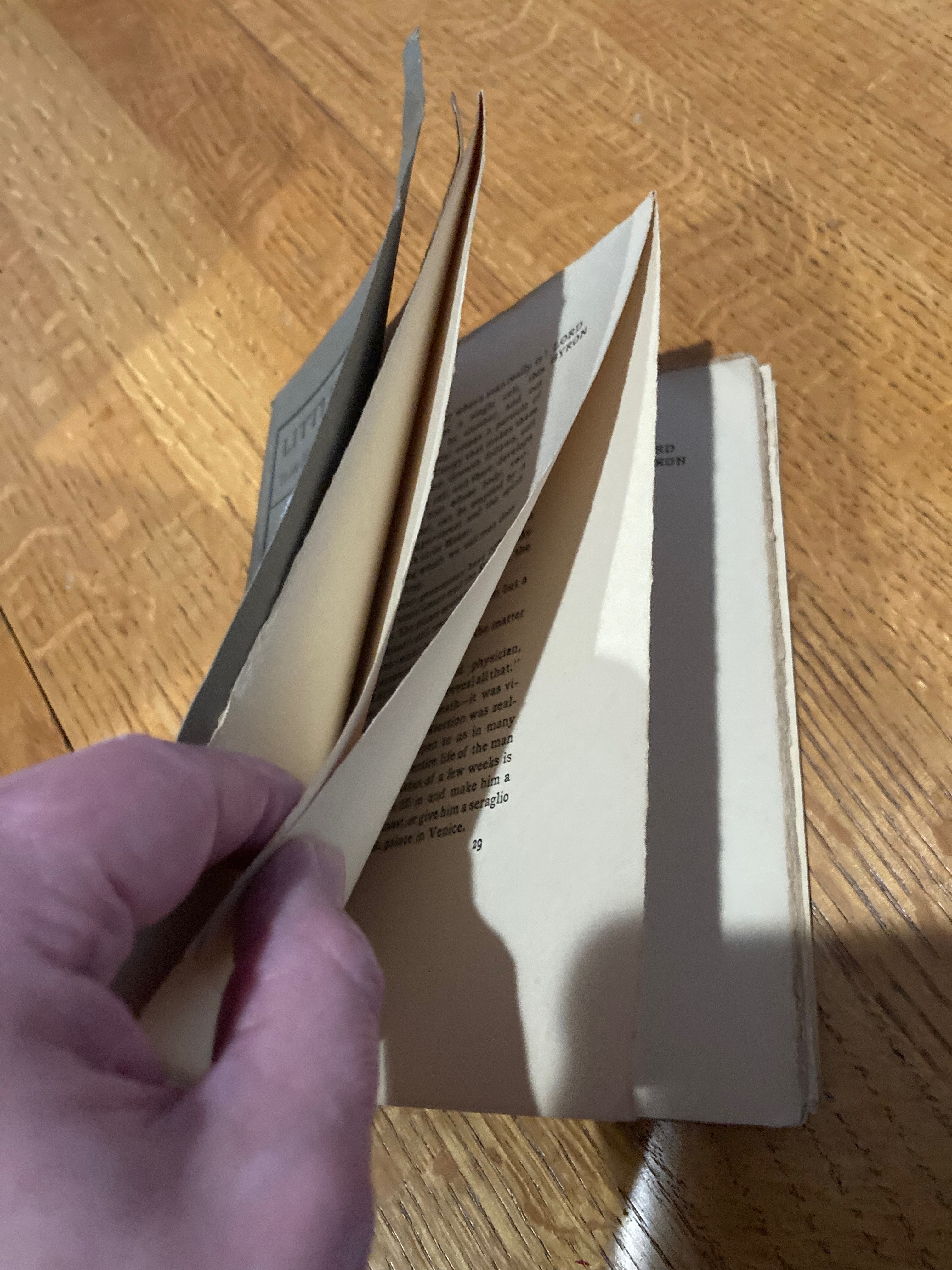
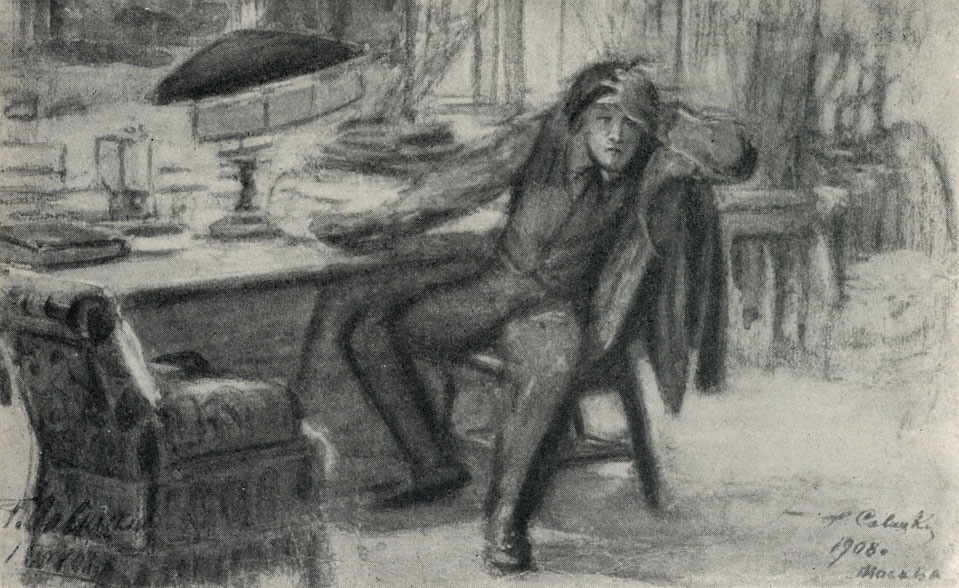
Authors are a peculiar but definite taste.  Some noteworthy voices have vociferated regarding the wonders of Mervyn Peake.  Mine has not been among them, but then, I’m not noteworthy.  Having read somewhere that the famous Gormenghast universe was one of the most gothic in mid-twentieth century literature, I read Titus Groan many years ago.  I understand the linkage between grotesques and the gothic, but this simply didn’t appeal to me.  I never felt interested in moving on to the second book of the trilogy.  At the same time, I held onto it.  Just in case.  Recently, I thought my younger self might’ve been prematurely harsh on the book and so I gave it a second try.  This time through, I appreciated some of Peake’s famous wordplay, but the novel, to me, dragged. The victim, perhaps, of the foreshortening of time, I just couldn’t get into it.

J. R. R. Tolkien once explained that he wrote The Lord of the Rings cycle to see if a really long story could be made interesting.  He succeeded.  I read the trilogy, after The Hobbit, when I was in college.  I really enjoyed it.  Titus Groan isn’t cut from the same fabric.  Peake’s thick description is sometimes a thing of wonder.  It is also very ponderous, to the point of being tedious at times.  The action is interesting enough, what there is of it.  The characters are well drawn, even if overdrawn.  And it’s clear by the end of Titus Groan that to make any sense of any of this you will need to commit yourself to two-plus volumes more.   Peake died before he could finish the fourth volume.  The first three are now solidly referred to as a trilogy, but I fear that if I were to force my way through the other two I’d still be left hanging.  I really do appreciate resolution.

It’s a personal failure, in my opinion.  I mean, Peake was obviously a talented writer.  The question is whether you can stretch a story out for too long.  Part of me wants to know the resolution, but not enough of me to get me through at least two more books like this.  I’m not sure that I’d declare this terribly gothic.  I can see why some would: castle, skulduggery, and one very well drawn villain.  Again, some of the characters are too comical to be effective gothic.  To me it felt like a mismatch between style and vehicle.  I realize that should any of his fans perchance read this, I’ll be declared a Peake imbecile.  I’ll admit that the fault is mine.  It’s a matter of taste.


Naming the Dead

It probably just goes with the territory, but I’ve noticed something.  A big part of my job is searching for people on the internet.  (Academics, of course.)  Mostly these are folks I don’t know, some of them with very common names.  This presents special challenges, of course.  Every once in a while, though, you search for a name and pretty much every entry you find is an obituary.  I’m not talking about someone prominent who has died, but rather several people with the same name who’ve passed away.  The other day, after four or five pages of Google I found nobody alive.  That particular name wasn’t an “old fashioned” name either.  It could be (perhaps is) still a very common name.  It does get me pondering whether some names are “safer” than others.  Is anyone by this name still alive?

We place a lot of stock in our names.  Being the way that others get our attention, and identify us, they do have importance.  And many names are common—parents aren’t always the creative sort.  And the internet is a source of frustration when trying to narrow down a common name and attach it to someone you don’t already know.  Growing up, kids want to be like everyone else—no standing out in the herd.  “Wiggins,” where I grew up, was an unusual name.  We got teased for it quite a lot.  When my mother remarried, my brothers and I went by our stepfather’s common last name for a few years.  In seminary I decided to revert to my birth name—Wiggins.  I was wanting to do two things: reclaim my heritage, and stand out a little.  Even so, a web-search for Steve Wiggins will bring up at least four or five individuals not me, including an obituary or two.

Before the web, when trying to find a scholar you had to use letters.  (Or maybe the phone, but cold calls weren’t really professional). You’d send them a letter.  In a way, the web is a great equalizer.  But it favors those with names that are somewhat less common.  Some people change their names—performers and some authors do this to make their persona more to their liking—but this is a fraught activity.  I know from switching back to my birth name that the process is complex and if you try it after you’ve started to publish things it adds whole new layers of complications.  So I spend quite a bit of time searching for people who aren’t easily found.  Not infrequently I seem to be naming the dead.


Author Pages

It takes me awhile, sometimes.  Maybe it’s a generational thing.  I’ve been blogging for sixteen years now (my blog is a teenager!) and it only just occurred to me that I should be putting links to authors’ pages when I post about their books.  I know links are what makes the web go round but I assumed that anyone whose book I’ve read is already better known than yours truly.  Why would they need my humble help?  Well, I’ve been trying to carve out the time to go back and edit my old posts about books, linking to authors’ pages—there are so many!  In any case, this has led to some observations about writers.  And at least this reader.  Most commercial authors have a website.  Not all, of course.  People my age who had earlier success with writing tend not to have a site since they already have a fan base (I’m guessing).  Most fiction writers in the cohort younger than me have pages, and I’m linking to those.

I’ve noticed, during this exercise, that my reading falls into two main categories: novels and academic books.  I suppose that’s no surprise, although I do read intelligent nonfiction from non-professors as well.  In the nonfiction category, it’s fairly rare to find academics with their own websites.  They probably get the validation they require from work, and being featured on the school webpages.  Or some will use Academia.edu to make a website.  As an editor I know that promoting yourself is important, even for academic authors.  Few do it.  Then I took a look around here and realized, as always, that I fall between categories.  No longer an academic, neither have I had any commercial success with my books.  I’ve fallen between two stools with this here website.  I do pay for it, of course.  Nothing’s free. 

Almost nobody links to my website.  This isn’t self-pity; WordPress informs you when someone links to your site and that hasn’t happened in years.  Links help with discoverability on the web, so my little website sits in a very tiny nook in a low-rent apartment in the part of town where you don’t want to be after dark.  And I thought to myself, maybe other authors feel the same.  Maybe they too need links.  So I’m adding them.  As I do so I hope that I’ll also learn a thing or two.  I’m trying to learn how to be a writer.  It just takes me some time before things dawn.  Maybe it’s just my generation.


Hallowed Halls

Every time I read a short story collection I tell myself I should do so more often.  Knowing that you’re only committing yourself for maybe thirty or forty minutes at a time is one way to incorporate more reading into a life that’s incredibly busy.  I read In These Hallowed Halls, edited by Marie O’Regan and Paul Kane, because, as its subtitle declares, it’s A Dark Academia Anthology.  As with nonfiction anthologies, it is a mixed bag.  The stories are all well written and all were enjoyable to read.  They also display some of the breadth of dark academia.  Most of the stories are literary (as a genre), others dip into science fiction and horror.  Dark academia doesn’t specify whether a book (or story) will be speculative or not.  As someone who writes short fiction, it seems that some of my tales might wag that way.

In any case, discussing a collection is tricky because there is such variety.  Some of the stories stayed with me beyond reading the next, which could be quite different.  Others I have to go back to remind myself what happened.  These days it can take several weeks to finish a book and a lot can happen in real life in that time span.  The stories that stay with me the most have obsessive narrators, or characters who are obsessed.  This kind of story, I know from experience, is difficult to get published.  Many of us who write, I suspect, do get obsessed.  An idea latches on and won’t let go.  Of course, most of us also have jobs that force the jaws open and drop us down in the world of the ordinary again.

Another thread that runs through many of these stories is how students struggle for money.  That’s true to life.  Thinking back to both college and seminary, there were times in both settings that I was working two part-time jobs as well as being a full-time student.  And living like, well, a student.  That experience, except for the truly privileged, is fairly common and our writers here recognize, and perhaps remember, that.  The other unavoidable theme when writing about young people in college is, shall we say, hooking up.  For many of us, college is that period in life when, thinking of our futures, and following our hormones, we start looking for love.  (I know, high schoolers do that too, but college has a way of focusing your energies.)  All of that swirling around the darkness that sometimes falls over our tender years makes this dark academia collection worth reading cover to cover.


Unwritten

It has been clear to me for some time now that I won’t live long enough to finish all the books I’m writing in my head.  A good number of them have a head start on my hard disc, but as Morpheus says, “Time is always against us.”  The largest culprit in the 9-2-5 job.  Eight hours is a huge amount of time to devote each day, no matter how you slice it.  Since eight hours are required for sleep, or trying to sleep, that means work is half of each day’s waking hours.  The other half includes things like making meals, washing clothes, family time, paying bills, running the vacuum, exercising because you sit in front of a screen all day, and, of course, yard work.  Plants don’t have the same constraints that humans do and can get to the business of growing larger 24/7, as long as the weather cooperates.

Some days I grow reflective about this.  My daughter often asks why I don’t draw or paint more.  I love doing both.  The answer is time.  Even weekends are eaten up with shopping for the food you need to get through the week, and yes, the yard was bigger than I realized, and the house needed more repair work than anticipated.  You see, writing well requires a lot of practice.  And even more reading.  Any successful writer (which I am not yet) will tell you that reading is essential.  I do read a lot.  A friend recently sent me an article about a writer whose heirs calculated he’d read at least 4,000 books.  I know that I’ve read about 1,200 since 2013.  I also know that I can’t count them all before that time.  I went through our living room shelves and counted 500 I’d read there, and that’s only one room.  

Ironically, as a professor reading time is limited.  Unless you have a research only post.  I read a lot as a kid and a ton as a student.  When I started teaching I had less time, except on semester breaks and I tried to read as many books as possible during those interludes.  Then the 9-2-5 began.  My current pace of reading began when trying to live as an adjunct between Rutgers and Montclair State.  Montclair was a 70-mile drive, so between classes I started reading voraciously.  Ironically, the commute to my 9-2-5 spurred me to start writing books again.  By then I was practically fifty.  Since my nonfiction books take about five years to write, well, the math’s not in my favor.  Time to stop my musing, because the 9-2-5 begins shortly.


Banning Books

For many years I’ve celebrated Banned Books Week by reading a banned book.  What with Republicans wanting only white, hetero, history-denying titles approved, I’m pretty sure that most books I read are banned somewhere.  Banned books, of course, see sales bumps and benefit the publisher and author.  So instead of reading a noted banned book, this year I’ll hang out my shingle here with but shallow hopes that it will be read.  I’m pretty sure, any agents out there, that at least one of my novels would be a banned book.  Maybe all of them.  You see, in my fiction I’m not the mild-mannered, inoffensive person who blogs here everyday for free.  There’s a reason that I keep my pen name secret.  I’m pretty sure that most people who know me would be surprised, if not shocked, by what appears in my fiction.

Writing, you see, is where we express the ideas in our heads.  I may seem to yak about everything on this blog, but in reality, I’m quite guarded.  Many of the horror movies I discuss, for instance, have ideas or scenes that I simply leave unaddressed.  I’m trying not to offend anyone here.  (A friend of mine who does publish fiction mentioned recently that a significant other in her family suggested that her writing wasn’t controversial enough to be picked up by publishers.  I think there could be something to that.)  While my mother was alive, I took special care that she wouldn’t discover any of my fiction.  Now that she’s gone these two years, I still protect her name with my own nom de guerre.  I really don’t want to hurt anybody.  I do, however, need to express myself.

Some of my fiction is horror.  Some is just plain weird.  The novels are well written, I think, and I’m open to editing.  (Agents, I am an editor—I know how this game works!)  As long as we’re stuck in a morass of banning books, why not look at a writer who’s more controversial than you might believe?  I’ve been writing daily for going on half-a-century now.  Think about that.  Think about the sheer number of controversial thoughts one might have in that amount of time!  Add graphomania to the recipe, with just a squeeze of talent and you’ve got banned books to last a lifetime!  I’m not sure any of the books I’m currently reading (five actively, at this point) formally appear on a  banned list.  But if you want to find one that almost certainly will be, well, my shingle’s out there if you care to take a look.

A banned book, in some districts

The Season

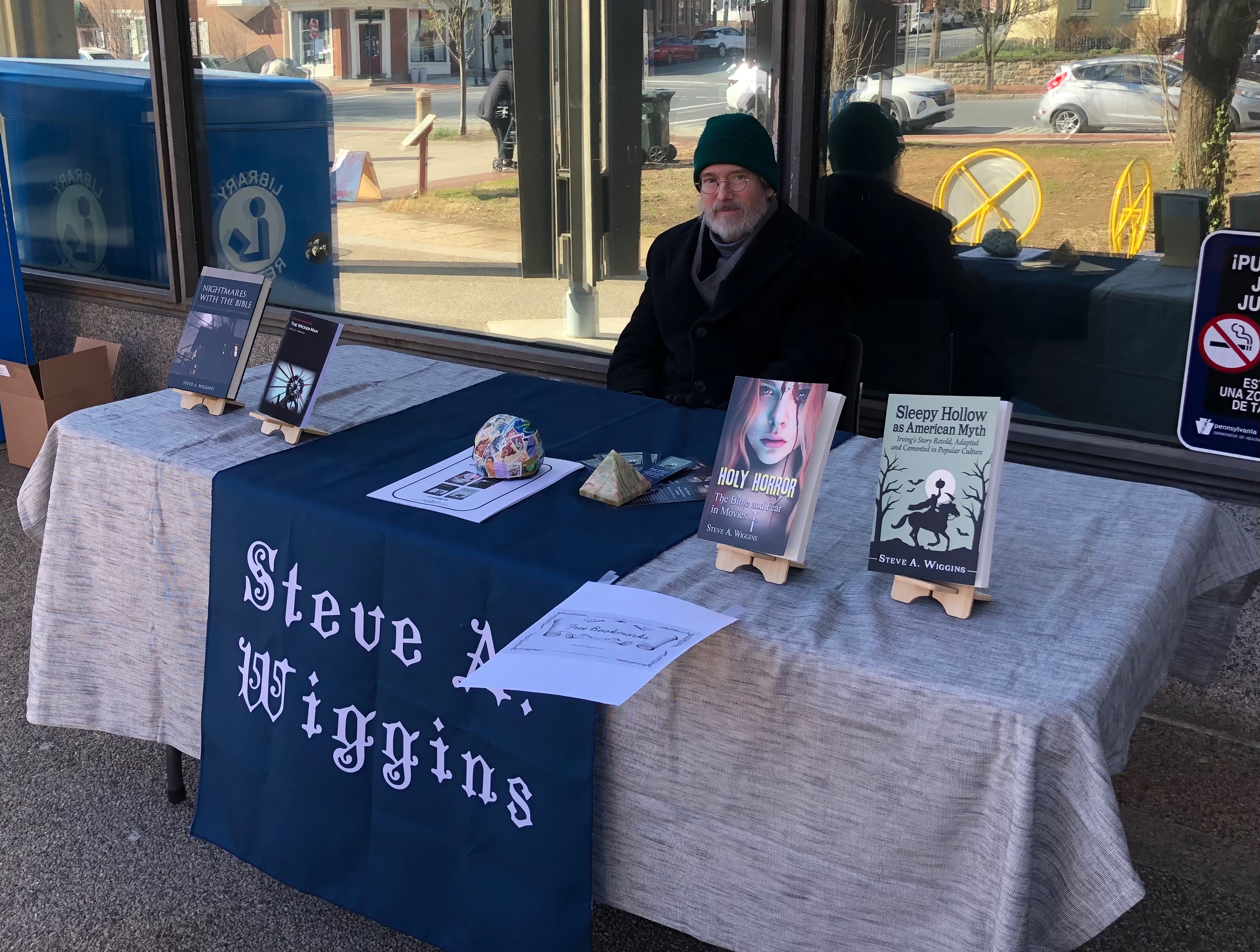
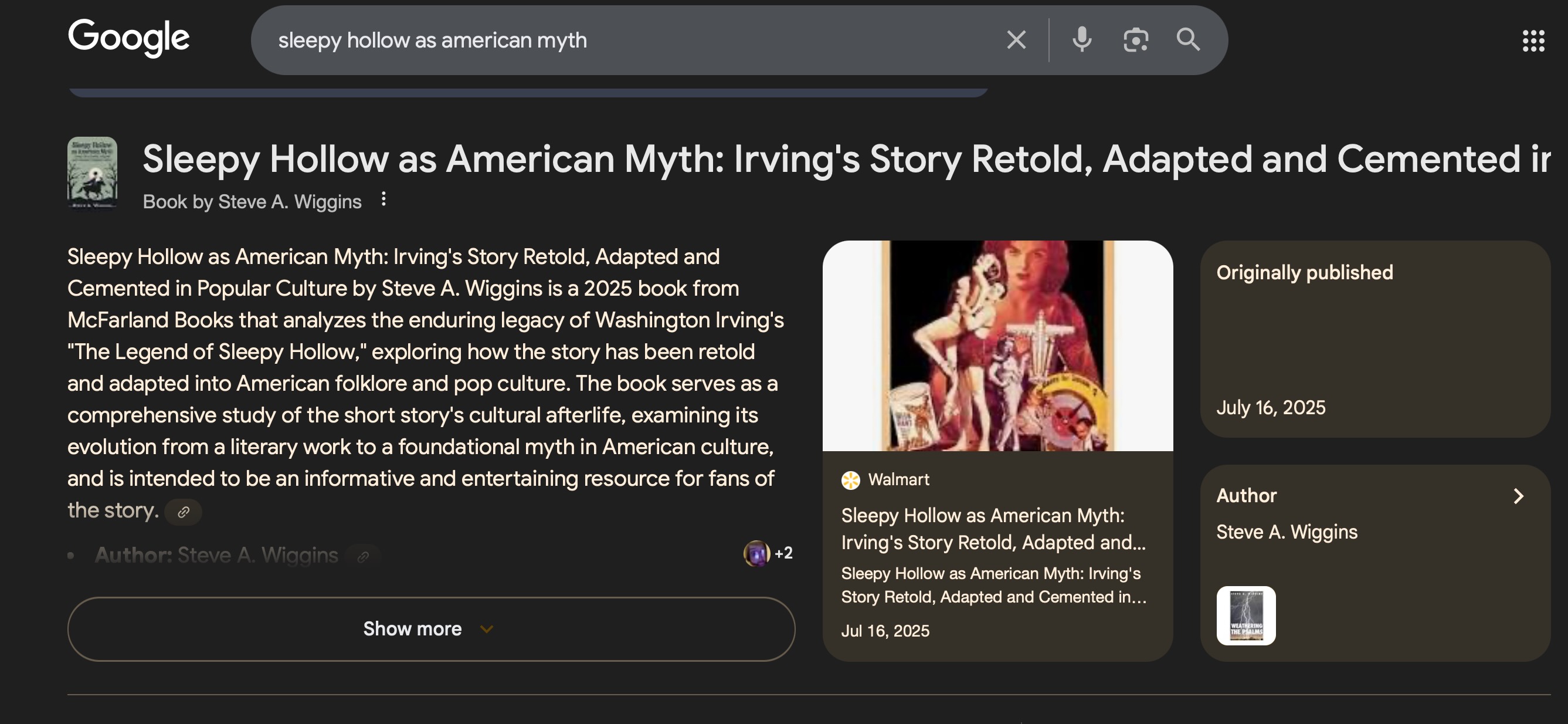
I learned about the Horror Writers Association years ago, shortly after I started publishing horror stories in 2009.  I couldn’t join because you had to have earned at least $30 from a publication.  I took this to mean a fictional one and I never made it beyond that benchmark until this year.  (It’s possible I misunderstood and could’ve joined for Holy Horror and beyond.  I think the point is they want to know you’re serious.)  In any case, these folks may be my tribe.  During the month of October the website has a set of free blog posts available to the public.  Mine—located here—dropped yesterday.  It deals with nonfiction, of course, since I’m still not finding much traction in getting novels published.  One of the weird things about book publishing is that you don’t know, unless you’re already successful, how well your sales are going until after about six months or so.  Sleepy Hollow as American Myth may be flopping for all I know. 

I’ve tried to promote this one as much as I can.  I contacted bookstores and libraries in Sleepy Hollow itself.  I had bookmarks printed and put them in local libraries and bookstores.  I arranged a discussion at the upcoming Easton Book Festival.  I told my local writers’ group about it.  Posted on a Halloween Facebook group.  All of this is tricky rather than treaty when a book is priced near $40.  That’s quite a trick, I know.  As Halloween approaches I keep seeing memes and posts about the Headless Horseman.  But I’m not sure if anyone’s finding my book or not.  It’s an anxious period when you write.

Working in publishing for nearly two decades now, I’m starting to realize that there are two ways to relevancy.  One is to be hired by an institution with name recognition—that automatically makes you an expert and everyone want to know what you think.  They’ll even pay you for it.  The second way is to write a book that sells well.  That one’s a bit of a catch-22, however.  To get published these days you need to already have a following.  I suppose that’s what the internet is for.  The best forums at the moment seem to be YouTube and TikTok, but there’s more much traffic there than on a Los Angeles freeway during rush hour.  I’m not sure if many people read the Horror Writers Association Halloween Haunts blog posts.  These folks, however, seem to look at this from a similar perspective.  Maybe a few of them will buy Sleepy Hollow as American Myth.  ’Tis the season.


Dark Pliny

My current dark academia kick has me looking at the Classics again.  I taught Greek Mythology for three semesters as an adjunct at Montclair State University.  In the course of my New Testament studies I’m sure I encountered some of the classical Greco-Roman writers, but being focused on the Bible at the time, I never really followed through.  Then my doctorate got me interested in even earlier classics.  In any case, I’ve been trying to self-educate myself about Pliny the Younger.  To be honest, this is because he wrote one of the most famous Roman ghost stories.  Pliny wasn’t some guy into woo-woo subjects.  He was a magistrate and a lawyer and a noted orator.  His most famous work is the collection of his letters.  One of those letters tells his ghost stories.  Others describe Mount Vesuvius’ eruptions.  So, Pliny.

Image credit: Daderot, Angelica Kauffmann’s Pliny the Younger and his Mother at Misenum, 79 A.D. (detail), public domain via Wikimedia Commons

My fully-loaded bookshelves don’t have any Pliny.  I’m sure he’s mentioned in many of the books on these shelves, but I don’t have a copy of his letters.  I used BookFinder.com to search for used copies only to discover that the Loeb Classical Library divides his letters into three volumes, which feels like too much for casual reading.  Then I realized that most editions are edited, leaving out some of the, I suspect, less interesting missives.  Even as an editor, I don’t trust editors.  What if they left out the ghost stories because, well, serious scholars pay no attention to such things?  I discovered that Penguin Classics has an edition and from what I can tell, it seems to be complete.  I mark books that I want to remember on Amazon because they have pages even for the obscure stuff.  I try to buy the actual books from Bookshop.org.

What makes all of this noteworthy is that as I was on the Amazon page I noticed that you can “follow the author”—Pliny the Younger himself!  He must be a ghost by now.  So what the heck?  I clicked “Follow.”  I’m not in the habit of following authors on Amazon; I find my books in many different ways and most authors I know don’t like to talk about their writing, so why add another social media commitment?  I’m hoping that Pliny will be more willing to chat about writing.  He may be dead, but I’m not a prejudicial sort of individual.  I won’t hold it against him.  Who knows, maybe in addition to ghosts, I’ll learn something about Vesuvius?  And if he ghosts me, well, at least he’s a professional.


Fragments Etc.

I’ve never counted, but there’s well over a hundred of them.  And a notebook with at least a thousand more.  What have I got in such abundance?  Ideas for stories that remain unfinished.  I’m not exaggerating or inflating numbers, I assure you.  I’ve been writing short stories for a half-century now, many, no, most unfinished.  Thirty-three have been published.  I was reminded of this recently while reading a nonfiction book that suddenly gave me the ending for a story I’d started many months before.  Perhaps even a couple of years.  I started searching through my electronic files for it and couldn’t find it.  Why?  There were too many stories started with frustratingly short titles (my bad).  To find the culprit, I would need to open each one and remind myself what was inside.

A few months ago, I printed out copies of all eight of my unpublished novels.  I also printed out copies of all my published stories as well.  I never got around to the unfinished majority.  I have a feeling that if I printed them I’d find what I was looking for more easily.  This, even with the ease of electronic life, will be quite an undertaking.  I think it may be a necessary one.  Although I’m hardly well known—I’m an obscure, private intellectual, after all—I do have many fiction ideas.  The stories generally come to me with an impression.  The start of an intriguing tale, for instance, or the end of one.  I then begin writing and either write myself into a corner or I scribble until I realize that I don’t know what happens next.  The story sits, unfinished.  Now and again, however, the missing piece is found.  I try to find the story so I can complete it to send out for several rejections.  Such is the writing life.

Now, if I could do this for more than the paltry time allotted to personal pursuits, courtesy of capitalism, I’m confident that I’d have far more than thirty-something stories published.  At current count I have seventeen stories ready to send out to literary magazines, several of them already rejected a time or two.  Another twenty finished and nearly ready to send out.  And forty just finished, but requiring a bit of spit and polish.  And these aren’t the fragments.  Don’t get me started on the nearing 6,000 posts on this blog.  Is it any wonder I can’t find anything?  I grabbed my notebook of a thousand fragments and jotted a physical note of how that particular story ends, in case I ever find it again.


Brutal Boys

Some time back I posted about Steffanie HolmesPretty Girls Make Graves.  It was a first book in a duology and since I’d been trying to keep up with dark academia, it was a recommended exemplar.  As I mentioned in that post, the book ends with a cliffhanger, so I got to Brutal Boys Cry Blood as quickly as I could.  Holmes is a prolific self-publishing author and I found Pretty Girls much better written than the majority of self-published material I’ve read.  Brutal Boys picks up right where the previous novel left off, freeing George Fisher from her predicament and moving her into new ones.  At Blackfriars University, George is investigating the death of her former roommate.  The Orpheus Society, consisting of old money blue bloods, seems to be involved in more than wanton destruction of property and orgies.

Much of the first half of Brutal Boys sets the scene for a relatively happy period in George’s life.  She establishes a polyamorous relationship with the uberwealthy student William Windsor-Forsyth and Father Sebastian Pearce, a teacher and college chaplain.  The three of them are mutually in love, but even as George is admitted the Orpheus Society, a deeper part of the sect emerges.  This group is even more insidious and has designs on human sacrifice.  But I’ve already said too much.

Reading is, of course, a subjective exercise.  My personal experience of this duology is that the first book is better than the second.  It’s not that I feel Brutal Boys is a bad story—it keeps your interest pretty much the whole way through—it just seems to be far more improbable than the first novel.  It is fiction, of course, and there is nothing speculative here.  There are no ghosts or monsters or divine intervention.  Speaking strictly for me, it might’ve helped with believability if there were a little of this.  I was not one of those swept away by Donna Tartt’s inaugural dark academia novel The Secret History, but she did include just a little of a speculative element that allows for a reader to perhaps convince him or herself that this might just possibly happen.  Some writers and readers prefer not to use that escape hatch.  I’ve read good dark academia both with and without speculative aspects to the story, but to me, such mystery adds a little depth to what might be happening.  And I admire self-publishing authors who write well enough to draw you into a second book, which can be a rare thing.


Covid Books

There’s a fairly new phenomenon called “Covid books.”  No, I don’t mean books about Covid-19, but books affected by the virus.  (Not infected.)  Let me explain.  Many publishers, unaware of the menace, continued scheduling books through what became the pandemic.  You see, books take a long time to put together, and, interestingly, much of the work can be done remotely.  That meant that even as we locked down, books still published.  But in 2020, few people were interested in books on other subjects.  Children’s books and others intended for young readers did really well.  Online ordering made this possible.  Fiction for adults didn’t fare too badly.  What suffered was nonfiction on topics unrelated to the pandemic.  This is so much so that publishers designate as “covid books” those that underperformed and appeared in the early twenty-twenties.

To put a more personal spin on it, I published a covid book.  Nightmares with the Bible came out late in 2020.  Granted, the topic didn’t appeal to everyone, and the price was about $100 when people were wondering if their jobs would be there after this was all over.  (Is it over yet?  I still wear a mask in crowded places.)  The reason that I consider it a covid book is that although it has received more reviews than any of my other books, it has sold the worst of them all.  Less than its dollar amount.  The publisher, which was bought by another publisher, has no inclination to do it in paperback, so it will remain an obscure curiosity.  Interestingly, I found a Pinterest page that was a listing of unusual book titles and mine was there.  But it was a Covid book.

In the wider world, even in 2025 publishers discuss Covid books.  A promising author whose book appeared in the height of the pandemic may have sold down at my levels.  What with the gutting of government programs and agencies since January, it’s difficult to tell if we’ll ever get a pronouncement that the pandemic has ended.  Where two or three are gathered, I’ll be wearing a mask.  And I’ll likely be thinking of books of that lost generation.  Information that will never be processed.  Book publishing survived, despite being a nonessential business.  People still buy and read books.  Some day some bibliophile might write a book for other readers about the year that robbed us of interesting but ultimately irrelevant books.  There’ll be too many to list, of course.  But we have been given a lesson.  Let’s hope we continue to do our homework.


Dangers of Dark Shadows

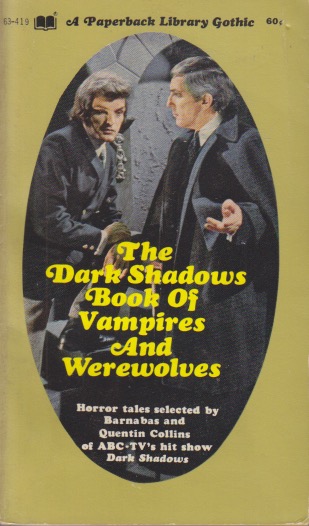
A friend’s recent gift proved dangerous.  I wrote already about the very kind, unexpected present of the Dark Shadows Almanac and the Barnabas Collins game.  This got me curious and I found out that the original series is now streaming on Amazon Prime.  Dangerous knowledge.  Left alone for a couple hours, I decided to watch “Season 1, Episode 1.”  I immediately knew something was wrong.  Willie Loomis is shown staring at a portrait of Barnabas Collins.  Barnabas was introduced into the series in 1967, not 1966, when it began.  Dark Shadows was a gothic soap opera and the idea of writing a vampire into it only came when daily ratings were dismal, after about ten months of airing.  Barnabas Collins saved the series from cancellation and provided those wonderful chills I knew as a child.  But I wanted to see it from the beginning.

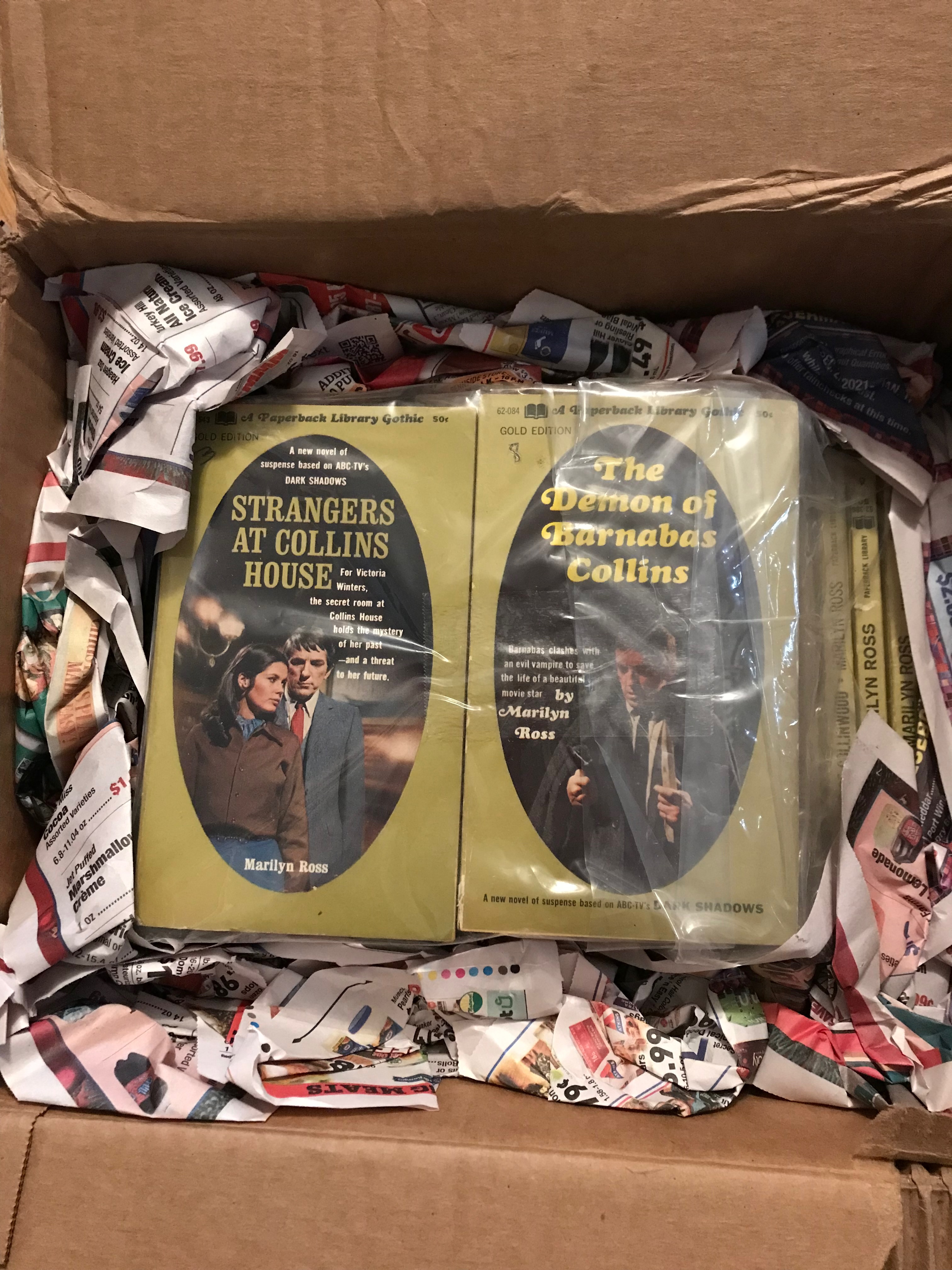
I’ve gone on about digital rights management before, but something that equally disturbs me is the re-writing of history.  Dark Shadows did not begin with Barnabas Collins—it started with Victoria Winters.  There were 1,225 episodes.  Some of us have a compulsion about completeness.  The Dark Shadows novels began five volumes before Barnabas arrived.  Once I began collecting them, I couldn’t stop until, many years later, I’d completed the set.  I read each one, starting with Dark Shadows and Victoria Winters.  Now Amazon is telling me the show began with Barnabas Collins.  Don’t get me wrong; this means that I have ten months of daily programming that I can skip, but I am a fan of completeness.

You can buy the entire collection on DVD but it’s about $400.  I can’t commit the number of years it might take to get through all of it.  I’m still only on season four of The Twilight Zone DVD collection that I bought over a decade (closer to two decades) ago.  I really have very little free time.  Outside of work, my writing claims the lion’s share of it.  Even with ten months shaved off, I’m not sure where I’ll find the time to watch what remains of the series.  The question will always be hanging in my mind, though.  Did they cut anything else out?  Digital manipulation allows for playing all kinds of shenanigans with the past.  Ebooks can be altered without warning.  Scenes can silently be dropped from movies.  You can be told that you’ve watched the complete series, but you will have not.  Vampires aren’t the only dangerous things in Dark Shadows.


King and the Rest

Stephen King is an author I admire, although I haven’t read all of his books.  Not even close.  Still, his cultural cachet is high, as it has been pretty much since the seventies when horror literature was first being recognized.  I’ve been fascinated by his outlook on religion, or, in broader terms, the supernatural.  Rebecca Frost approaches things from a different angle, but her Surviving Stephen King: Reactions to the Supernatural in the Works by the Master of Horror is a volume worth pondering.  Quite often, as was the case with Douglas Cowan’s America’s Dark Theologian, I haven’t read all of the books and short stories the author discusses.  Frost gives good summaries, however, which help frame the discussion.  One of the reasons I enjoy King is that he allows the supernatural in, but something I hadn’t really realized until reading this book was that the supernatural is generally a threat.

Now, knowing King as a horror writer, it’s obvious that there has to be a threat, but in what Frost explores, standard Christianity doesn’t always work well against the supernatural.  One of the points I made in my expensively-priced Nightmares with the Bible is that physically fighting a demon crosses ontological lines if demons are spiritual beings.  Frost discusses how quite often “success” in a King story involves destroying the physical aspect of the supernatural threat.  It doesn’t always work permanently, but for the protagonists, at the time, it tends to be sufficient for them to get on with their lives, sans supernatural.  Having studied religion through three degrees, this made me stop and think.  The impetus to start on that career track was the idea that the supernatural tends to be good.  Enter King.

I only started reading King after my doctorate, and I haven’t read as much as true fans, I suppose.  Still, I tend to try to analyze what I read—thus the many posts about books on this blog—and it helps to have the guidance of someone more familiar with his oeuvre than myself.  Reading books like Surviving Stephen King also gives me an idea of which of his books I should pick up, and also which I might safely avoid.  Frost is an able guide, considering the various appropriations, or Christian solutions to the supernatural, in King’s imagination, and whether they work or not.  The ideal reader for Frost has probably read King a bit more widely than me, but I still found this study enlightening.  And it added some novels to my to read list.


Word Words

So, in the old days, when books were paper, printers would rough out the typesetting on trays called galleys.  Prints from these plates would be sent out for review.  Naturally enough, they were called galley proofs, or simply “galleys.”  After those came back from an author marked up, corrections and further refinements, like footnotes, were incorporated.  Then page proofs, or second proofs, were produced and sent again.  The process took quite a bit of time and, as I’ve now been through six sets of proofs for my own books, I can attest it takes time on both ends.  Electronic submissions have made all of this easier.  You don’t have to physically typeset, much of the time, unless you merit offset printing—books in quantity.  You can often find uncorrected proofs in used bookstores, and sometimes indie bookstores will give them away.  That’s all fine and good.  The problem comes in with nomenclature.

These days proofs are sometimes still called “galleys” although they’re seldom made anymore.  If someone asks about galleys, it is quite possible they’re asking about page proofs.  It is fairly common in academic publishing for an author to see only one set of proofs—technically second proofs, but since no galleys were set, they could be called that.  Or just proofs.  Now, I have to remind myself of how this works, periodically.  It was much clearer when the old way was in force.  There were a couple reasons for doing galleys—one is that they were, comparatively, inexpensive to correct.  Another is that authors could catch mistakes before the very expensive correction at the second proof stage.  Even now, when I receive proofs I’m told that only corrections of errors should be made, not anything that will effect the flow, throwing off pagination.  This is especially important for books with an index, but it can also present problems for the table of contents.

Offset printing. Image credit: Sven Teschke, under GNU Free Documentation License, via Wikimedia Commons

The ToC, or table of contents, also leads to another bit of publisher lingo.  When something is outstanding and expected before long, many editors abbreviate it “TK” or “to come.”  Why?  “TC” is sometimes used to mean “ToC” or table of contents.  There are hundreds of thousands of words in the English language, yet we keep on bumping up against ambiguities, using our favorites over and again.  That’s a funny thing since publishers are purveyors of words.  None of my books have printed in the quantity that requires galleys.  In fact, academic books, despite costing a Franklin, are often pulped because they’re more expensive to warehouse than they are to sell.  This is always a hard lesson for an academic to learn.  The sense behind it is TK.


Then Again…

C. S. Lewis wrote somewhere (I can’t recall, but it was probably in Surprised by Joy) that when reading autobiographies, he found the youngest years the most informative.  I found that true for So, Anyway… , John Cleese’s memoir of his life up until the founding of Monty Python.  My wife and I read this book together—I tend not to gravitate towards autobiographies of living persons unless it’s someone I’m utterly fascinated by, but since we both enjoy Monty Python, why not?  It gave me quite a bit to think about.  Some parts are very funny, others more mundane, but mainly it was the path to a writer’s life that interested me.  I typecast Cleese in my mind as an actor, specifically a comedic one.  Of course, comics often write their own material.  Or at least some of it.  What became clear is that Cleese thinks of himself primarily as a writer.  That helps me understand.

It struck me that becoming a writer might’ve been easier had I started trying to get published when I was younger.  Of course, I didn’t have the advantage of attending Cambridge, or any other university where connections might’ve paid off.  Or having my writing encouraged after high school.  Already by college I’d been writing both fiction and non for many years.  In any case, Cleese found a teaching job because he’d attended the school himself, and then studied for a career in law.  Performing, however, and the attendant writing, soon came to be his self-identified career.  Anyone interested in Monty Python would find this an interesting account.  It only goes up to that point in the author’s life, which was, of course, only until he was still a fairly young man.  These days it’s difficult to be taken seriously as a writer without a degree in English or journalism.  The rest of us founder.

Monty Python was a group effort.  My wife and I read Eric Idle’s memoirs a couple years back (for some reason I didn’t post about it).  So, Anyway… was, however, a find at a used book sale, and we’re not actively looking for Michael Palin, Terry Jones, or Terry Gilliam’s reflections.  (Graham Chapman died young, of course.)  Mental typecasting is probably a crime against a fellow creative but the space someone moves into in our consciousness tends to be the same room they will always rent there.  It’s difficult to make a living as a writer and many who declare that as their identity work other jobs to make it possible.  Sometimes, such as the case of the famous, that other job may be the one where all the recognition lies.  Such is the creative life.