House of Catherine

A blend of horror and dark academia.  That’s how I’d classify Catherine House by Elisabeth Thomas.  For some time I’ve been pondering the connection between the two genres, and this novel is one of slow-building dread.  I’ll attempt to avoid spoilers, but I will say there’s a somewhat optimistic ending to the tale.  The eponymous Catherine House is a three-year college.  Well, not exactly a college.  It is a highly selective school that works with something called plasm.  Only the most select of those admitted are permitted to work in the department that handles plasm.  The others pursue different academic fields.  When they’re done, they’ll be connected for life and will succeed because of the many Catherine graduates who’ve shared their intensive program and reached positions of power.  The novel follows Ines, a girl who had a rough upbringing and who isn’t sure how she ended up at such a school in the first place.

The tip off to the unsavory part of the House is the secrecy.  Students cannot leave campus for their three years.  Their families are not permitted to be in touch and the students are encouraged to forget about their past lives.  Their thought process is influenced by plasm pins.  They are given a freedom many college students would crave—alcohol is freely available and sex is encouraged.  They also have a very rigorous course of studies.  Students do fail out.  Ines, finding close friends for the first time in her life, has trouble believing that she belongs here.  She’s not bright enough to work with plasm, but her boyfriend is.  And then Ines discovers a dark secret.  One that forces her to a very difficult decision.

The dark academia aspect is more pronounced than the horror one.  In fact, the horror is more by implication than by direct narration.  We’ve got an academic setting where something has clearly gone wrong.  We don’t ever really learn what plasm is, but it becomes the ultimate concern, to borrow language from Paul Tillich, for those who research and work with it.  It seems to have supernatural attributes.  Catherine House explores what it means to be young and learning about relationships, and love, and the harder lessons life gives.  At first Catherine House seems like a noble academy, but soon suspicions begin to build into a quiet horror.  An existential variety of horror more than the kind induced by monsters or people that are purely evil.  The characters are likable but flawed.  It’s the system, however, that introduces the darkness at the House.


Welcome 2026

I put great stock in holidays, but I’ve never felt a deep connection to New Year’s Day.  I’m more of a morning person than the stay up late sort, and the New Year also seems cold after the coziness of Christmas.  But here we are in 2026 nevertheless.  We’re encouraged to look ahead.  I’m not much of a corporate person and I don’t see much wisdom in devising five year plans in an unpredictable world or any such nonsense.  The way things have been going in the news, it’s hard to have a five-day plan that bears any resemblance to reality.  But New Year’s Day does seem an appropriate season for optimism.  Hope stands here, anticipating better days ahead.  I am, despite appearances, an optimist.  I do believe in progress and the calendar keeps on ticking over regardless.  What will 2026 hold?  Who knows.  Best to take it one day at a time.

For me personally, I’ve got a couple books nearly complete and I do hope to find publishers this year.  And I’ve got many others started as well.  Writing is an act of optimism.  I’m always touched when someone lets me know they’ve found my work interesting, or even helpful.  Someone once contacted me to let me know Holy Horror had helped them through a difficult time.  This made me happy; writing books is a form of connection.  When I read books—a major planned activity for 2026—I’m connecting with people I don’t know (usually).  Writing to me feels like giving back.  The funny thing about it is the tension of having little time to do it seems to make it better.  I always look forward to the break at the end of the year but I find myself using the time to recover rather than for the intensive writing I always plan to do.

I have spent the last several days doing a lot of reading.  That too is a coping technique.  I’ve got some good books that I’m looking forward to finishing in 2026.  And the blog bibliography continues to grow.  Looking ahead I see reading and writing.  That to me is a vision of hope.  I didn’t stay up to midnight last night—that only makes me start out the new year grumpy.  No, instead I woke up early to start the year by writing.  And reading.  What does 2026 hold?  I have no idea.  I’d rather not speculate.  I do believe that as time stretches on some improvements will begin to take place.  I do believe holidays are important, both looking back and looking ahead.


2025 in Books

As has become traditional on this blog, the last post of the year recaps my favorite books from the preceding 365 days.  I’ve finished 68 books this year, a little down on my usual pace.  My only excuse is that some of them took me longer to get through than I anticipated they would.  And life doesn’t always afford the time for reading you’d like, even for those of us who are intentional about it.  As for the books, it’s easiest to discuss them by category.  I read quite a few contemplative books this year that I quite needed to read.  They included Katherine May’s Enchantment, Brian Treanor’s excellent Melancholic Joy, Carlos Alberto Sánchez’s Blooming in the Ruins, and Viktor Frankl’s classic Man’s Search for Meaning.  These books underscore that thinking can be its own reward, and experiencing life is an opportunity for thought.  I should also add The Oxherd Boy by Regina Linke.

For general nonfiction, Ursula K. Leguin’s Steering the Craft was a good start.  Although older, I enjoyed Martin Tropp’s Mary Shelley’s Monster.  Although sobering, Peter Fleming’s Dark Academia: How Universities Die was an important read.  The Secret Life of a Cemetery by Benoît Gallot was also informative.  I do think my favorite nonfiction book for the year was J. W. Ocker’s Poe-Land.  Dan Sinykin’s Big Fiction was quite informative, a learning experience in its own right.  

The largest category for the year, overall, was fiction.  I’ve been trying to read more novels and most of them this year fit into dark academia.  My favorite among them was Mona Awad’s Bunny.  I see the sequel is out, but I’m waiting for it to be released in paperback.   Others that I quite enjoyed were Katy Hays’ The Cloisters, M. L. Rio’s If We Were Villains, Kazou Ishiguro’s Never Let Me Go, Goldy Moldavsky’s The Mary Shelley Club, and Brittany Cavallaro’s A Study in Charlotte.  These represent quite a diversity of what dark academia can be.  Among the horror novels, The Bad Seed by William March is another older title, but still scary.  Kiersten White’s Hide and Julia Armfield’s Our Wives Under the Sea were both memorable.  Kanae Minato’s Confessions spanned dark academia and horror.  

None of this is meant to detract from the many other very good books I read this year, some by authors I know.  Looking back is a funny thing; some books seem to stand out for the impression they made.  This is quite individualized for each person, I’m sure.  I’m grateful to have been able to spend another year reading, and to all the authors I’ve read for providing the necessary ingredients.


Dreamscape

I remember them but imperfectly, my dreams.   This can be frustrating when, for example, I dream up a story, complete with an ideal ending, then wake up with only fragments left.  I suppose I’m like most people in that I go through phases when I remember dreams and other periods when I don’t.  Lately my sleep patterns have me recollecting much of the strangeness in my sleeping head, but not enough to get it all written down into the story that was playing out so perfectly upstairs.  Dreams are one reason that we don’t understand consciousness.  We’re not 100% rational creatures.  And we know that other animals dream.  Our minds stay active when we’re asleep and they seem to have no limitations.  The stories we tell ourselves when our eyes are closed!

I have some recurring dreams.  The details always differ, but I regularly dream that I’m teaching once again.  The offending institution apologizes for having dismissed me.  Would I please come back?  Of course, one-off dreams are more common.  Sometimes I have the presence of mind to write them down, but I’m at an age when waking up is often in the service of finding the bathroom and that really breaks the mood and sometimes makes me forget.  From my childhood I’ve been told that you don’t die in your dreams, and indeed, usually you wake up before you hit the ground, or whatever.  I have, like Maggie Evans in Dark Shadows, dreamed of myself as dead.  That’s generally not one of the more pleasant of the species, but the mind ranges widely across the dreamscape.  I have a deep sense that we should pay attention to dreams, but being a 9-2-5 worker, getting the morning routine underway has to take precedence.

Lately my dreams seem to be working out fictional stories deliberately.  It’s as if my subconscious is saying, “You have unpublished stories sitting on your hard disc, why aren’t you doing something about it?”  I sometimes wake up feeling guilty that I’ve been writing nonfiction books when I have several weird stories scrawled out that could use a little more attention.  And some other writers I’ve met on social media have been encouraging me to self-publish those stories.  So far I’ve resisted, but the temptation is growing.  I work in publishing and I can say that the industry is quite difficult to navigate and finding an editor who “gets you” is almost impossible.  Maybe I should be basing more of my stories on dreams.  At least in the dream world, they’d find a publisher.


Religious Zombies

Zombies never quite add up in my brain.  I’ve read a few zombie novels, nevertheless.  Joseph Hirsch’s Church of the Last Lamb is one such novel.  I’ll try to avoid spoilers in the note below.  The story begins with zombies already a part of the landscape.  An Army outpost in Ohio is trying to hold out until mortals get the upper hand and reestablish civilization.  The outpost is run by the military and civilians, “softies” have menial jobs as well as other support duties.  One of these civilians, Jon, has dreams of saving enough to be able to settle down and have kids with his girlfriend.  In this world, however, this privilege has to be purchased and generally only those in the military can afford it.  Violating rules about conjugal visits, Jon is brought before the colonel in charge and given the duty to accompany five soldiers on a dangerous mission out among the undead.

Surveillance has shown that a private individual living in the Church or the Lost Lamb has found a way of repelling—killing, actually—zombies.  The squad’s mission is to find the secret and bring it back.  Chances of returning aren’t great.  Zombies respond to the canonical head shooting, but ammunition is in low supply.  Swords and axes play a part in the tale.  The soldiers make it to the church, but one of them dies when zombies swarm their transport.  The others make their way into the church, where a scientist takes on the persona of a priest.  He has, however, come up with a formula to make zombies really dead.  In exchange for it he has a mission of his own that he wants the remaining men to undertake.  Two more die on the adventure.

Jon was a teacher in previous life.  He has to learn how to adapt to this new way of thinking to survive.  Making things more difficult, there are rival groups fighting against the surviving remnants of civilization.  There’s lots of combat and a fair bit of gore.  But then again, this is a zombie novel.  I won’t say more than that.  I enjoyed reading this more than World War Z, but it underscores how much those of us who are softies have trouble understanding military culture.  I found it engaging that religious imagery was drawn into the story as well.  As I’ve often noted on this blog, horror and religion interact well.  The church plays a pretty central role in the narrative, underscoring this winning combination. 


About Books

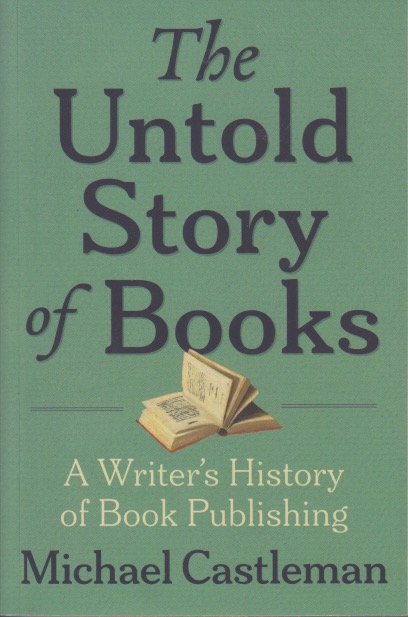
I have tried my hand at fiction writing at least since I was ten.  My first attempted novel was at about fourteen.  Fiction has always been a large part of my life.  Now I work in publishing and still struggle to get my fiction published.  I picked up Big Fiction by Dan Sinykin because of another blogger praising his work.  Subtitled How Conglomeration Changed the Publishing Industry and American Literature,  it is an ambitious book.  I learned a lot by reading it but also found myself putting the book down in a huff.  Not because of the author, but because of the subject.  I grew up in the sixties and seventies, before conglomeration took over big fiction.  Conglomeration is simply the practice of companies buying out other companies.  Even I know that diversifying your portfolio is considered good business practice.  So companies buy one another out.  Thing is, that makes a difference as to what is available to read for the general public.

I’m old enough to idealize elements of the past.  I’ve worked in the corporate world for nearly a decade and a half now and I miss the time prior.  Still, this is fascinating history to read.  Currently there are five major fiction publishers (all of which also publish nonfiction).  They are Penguin Random House, HarperCollins, Simon & Schuster, Hachette, and Macmillan.  How did there come to be only five?  Sinykin will answer that question for you.  He also explores the smaller nonprofit publishers and the independents.  There’s one big independent publisher left, Norton.  Reading through this book I realized how woefully inadequate my knowledge of fiction authors is.  I read a lot, but there were many, many names I didn’t recognize.  Sinykin tells the stories of many people whose individual tastes may very well have decided which authors you’ve read.

Publishing is a vast and sprawling world, but a very small industry.  In these days when self-publishing is widely practiced, and some authors make a living writing, publishing, and promoting their own books, it may seem that big fiction is less relevant.  Still, these publishers stock the shelves of Barnes & Noble as well as your favorite indie bookstore.  A few things stand out for me: all of this development is recent.  Most of it happened during my lifetime.  There are still powerful editors, but they don’t have the power they used to.  And business-speak has become the language of publishers instead of the countercultural impulse that drives many writers.  This book is an education in itself, even for those of us who work in the book business.


Half-Way Through

Here’s a writing phenomenon.  Maybe it only happens to me (I am self-taught), but when I’m writing a book a strange thing happens.  When I’m doing my rewrites, and there are usually several, about halfway through I’ll have an epiphany.  Something I should’ve been doing from the beginning.  Then you’re left standing at a crossroads: should I go back to the beginning again now?  But still need to address a basic rewrite as well as the new approach in the second half, so should I just carry on and then start rewriting from the beginning, catching up with the second half?  That may sound like a trivial question, but I assure you it’s not.  You see, right now I have two books in a complete stage.  “Complete” here means done in draft form.  When I write a book it gets rewritten several times before I consider finding a publisher, but when an important point comes to you halfway through, you’re between worlds.

Now, I work alone.  I am part of a local writers’ group and I’m only now starting to get to know others who’re willing to talk about writing.  I know several writers who don’t talk about it.  They’re still friends, but for me, there are few topics I’d rather discuss.  That’s how I learn.  You see, I have no idea what’s normal.  Do other writers labor over multiple rewrites?  I know some do, but I suspect some don’t.  I know that when I write a short story sometimes the first version seems best to me, but try to get such a thing published.  No, you need to rewrite.  Polish.  Make it shine.  But what if one half is shinier than the other?  This is starting to be a regular occurrence.

Inspiration is fickle.  That’s something we can all agree on.  But when you’ve been scrawling on a topic for weeks, or months, and then a realization dawns, you’ve just added yourself additional weeks or months of revision.  I’m sure a great deal of it is due to my own psychology.  Another part is due to writing under the constraint of a 9-2-5 job.  There are only so many productive hours in a day, and since mine come early they necessarily end when the work day begins.  I’ve tried writing after work but my brain and body feel like a CPR dummy when work’s through with me.  The next morning I start at it again, but the question is still should I finish this up with my new insight, or should I go back to the beginning?


Reading Habits

I keep track of my reading on both this blog and Goodreads.  It’s a little easier to follow the numbers on Goodreads, so I tend to use their stats.  One thing I’ve noticed in tracking my pacing this year is that academic books slow me down.  I desperately hope this isn’t endumbification, but I feel the need to consult the experts even as I try to write for a wider audience.  Having been trained as a professional researcher, it’s difficult to let go and just read the popular books—those with the style I need to learn to emulate.  But academic books take so long to get through.  Maybe it’s because they’re consciously designed not to be fast reading.  They take time and have concepts that require thought as your eyes consume the words.  They’re also the language I spoke for a good few decades.

My nonfiction reading pile constantly grows taller and I can’t seem to keep up.  Largely it’s because many of them are academic books.  I’m aware that in the real world, where books sell more than a couple hundred copies, that those who can’t claim “Ph.D.” after their names make the most successful writers.  A few of my colleagues have broken through to mainstream publishing, but they generally have university jobs, and tenure.  They don’t have a 9-2-5 schedule that holds their feet to the fire for the lion’s share of every day.  There are writers, I’m learning, who hold down jobs and write more successful books.  They generally aren’t academics, however.  Normal people with intense interests that they express beautifully in words.  Then they go to work.

I’m trying to break into that world.  I know that the publishers I’ve resorted to have been academic publishers.  They don’t really compete with the trade world, nor do they really even try.  Their’s is a business model adjusted for scale.  When you can’t sell in volume, you need to jack up the price.  But to have something intelligent to say about a subject, you have to read books.  I guess I need to learn to read non-academic non-fiction.  Kind of like I have to drink decaf when I have coffee (rarely) and have them add oat milk to make it a latte.  This is difficult for an old ex-academic like me.  I want to know how writers know what they do.  What are their sources and how deeply did they dig?  As I set my shovel aside I realize that I’ve begun to dig that academic hole yet again.


Elementary, Academia

Continuing my dark academia streak, I enjoyed Brittany Cavallaro’s A Study in Charlotte.  Although I’m not really a Sherlock Holmes fan, I know enough of the lore to appreciate how deeply steeped this novel is in Sherlockiana.  In the world of the novel Sherlock Holmes and John Watson were real people.  Watson wrote the books authored by Sir Arthur Conan Doyle in real life.  The books are well known and widely read in the universe of A Study in Charlotte.  The adventures in those novels and stories are, here, factual.  The book is narrated by Jamie Watson, a descendant of John Watson.  While at Sherringford Academy in Connecticut he finally meets Charlotte Holmes, descendent of Sherlock.  They become friends and have a campus murder to solve (thus, dark academia).  I have to confess that I had the image of Jenna Ortega, of Wednesday, in my head as Charlotte.  The two (Wednesday and Charlotte) are similar in many ways.

Although flawed, Charlotte is an inherently likable character.  The story contains enough fun to prevent it from being too grim, even with the death of a Sherringford student and the violent attack of another.  The murderer goes to great lengths to frame Charlotte, and the novel introduces some of the Moriarty descendants as well.  Watson tries to get close to Holmes, but she holds everyone at a distance.  The story includes some family dynamics—the Holmeses rational to the point of being cold, Watson’s mother constantly warning him to stay away from Holmeses while his father eagerly observes how Charlotte works.  Putting the action in Connecticut allows for a trans-Atlantic element since both families are, naturally, British.  The story is well told.

The novel should appeal to those who enjoy detective stories and who appreciate a smart, if troubled female lead.  In this latter aspect, Cavallaro shows herself a perceptive Doyle fan.  Sherlock Holmes isn’t always a perfect character.  He uses drugs and is an eccentric.  This story transfers all of that to Charlotte but making her a young woman while Watson is a rather love-lorn young man, opens the potential for a relationship unlike the classic Holmes and Watson.  I don’t say “romantic” relationship, because Charlotte isn’t really receptive to romance, although her strict rationalism wears thin when something goes seriously wrong.  We all like to believe that there are people a few steps ahead of everyone else, as long as they’re good.  The Moriartys are also masterminds but the novel doesn’t allow us to decide that they’re all bad.  This is an intriguing tale that fits into dark academia in an elementary way.


Being Written

Some books want to be written, no matter what major publishers have to say.  The truth is, being an author is more like being a radio receiver than a transmitter.  Books come to you, begging to be written.  Given our culture, we equate importance with money.  Tomes that earn the most are obviously the most important and erudite.  So the (capitalistic) wisdom goes.  We follow the lucre.  If you read this blog you’ve probably had an experience like this: you find a book that you’ve never heard of that captures your interest.  You read it, transfixed.  When you tell others, nobody seems to have heard of it.  I’d say a number of books I’ve blogged about fall into that category.  The “general reader” follows what the big five publishers suggest they should.  It becomes a feedback loop.

Academic presses—university presses and others that cater to either students or professors as their primary readerships—produce some fascinating books.  Often they’re priced a bit higher than we want to pay.  That’s because they don’t sell at the volume that a big five book does.  The higher the quantity the lower the unit cost, right?  Books that wanted to be written but either price themselves out of sales, or aren’t backed up by a team of marketers and publicists, may be some of the most interesting reading material out there.  You’d never know it, though.  From the point of view of an author, most of my books came begging to me.  I occasionally think of commercial potential because, well, if you’re going to put years of your leisure time into something, you’d like to get at least a little back.  And you’d be glad for feedback, or someone what wanted to ask you about what you’d been begged to write.

Sadly, we have tunnel vision.  It only sees the shining spots crowded with dollar signs.  And since others are willing to pay for it, we have to assume that it’s good.  I’m working on my next set of imploring projects praying to be written.  I can’t handle them all, being gainfully employed helping others who write books that want to be written.  We write them for each other.  I figure that if I’m receiving the signal somebody must be sending it.  And I have a difficult time turning down an idea that pleads with me.  And if someone unexpected picks one of our books up and gives us a like, we show that even receivers can smile.


Spades Are Trump

Sometimes it feels like the world is against you.  I can imagine that if you’re African American it feels like that much more often than if you’re not.  Racism, systemic and horribly pervasive, should disappear with education and with exposure to other people and cultures.  Still it persists.  Faridah Àbíké-Íyímídé’s novel Ace of Spades, conveys what it feels like to be singled out because of race.  This it does in a dark academia setting.  Nevius Academy is a private school where typical teen concerns loom large—sex, drinking, getting into a good college.  Chiamaka is a queen bee, a hard-won position that she struggles to keep her senior year.  Devon is also a senior, but from a poor family.  His mother works hard to keep him in the music program there, with the hopes that he’ll make it into a premier program to develop his talent.  Then threatening things start to happen.

Not natural allies, Chiamaka and Devon eventually team up when they realize that Nevius Academy’s secret society, Aces, attempts to destroy the lives of students of color.  The plot runs very deep; a white supremacist faction runs the school and for the pure thrill of it, ruins the chances of the two Black students they admit every ten years.  These two victims fight back.  Added to the racial drama, Devon is also gay.  As the story unfolds, Chiamaka discovers that she is also.  This proves yet another facet of life that leads to ostracism and, in Devon’s case, beatings.  In other words, this isn’t exactly a cheerful story.  Given what has happened politically in the past year it becomes believable that such places might exist.

The darkness of this academia is right there on the surface in this novel.  Our high school years are formative ones and the decision to build up only to destroy during this period is a particularly monstrous one.  In this case the school itself almost becomes a monster.  Fueled by the collective hatred of generations of administrators and alumni, it consumes students of color.  Of course, this story was likely intended as a parable.  Fiction is often where we cry out to be heard.  Àbíké-Íyímídé’s novel became a bestseller a few years back, so hopefully that cry has been heard.  To be effective, however, hearing is nothing without action.  Books can be agents of change.  Our current climate of trying to ban them only perpetuates misplaced hatred.  If only we could encourage reading and understanding instead.


Revisiting

It’s funny returning to a city you once felt you knew well.  Cities are constantly evolving creatures and even though I got around Boston as a student and then as an employee of Ritz Camera, there were places I simply never found.  There was no internet in those days so we relied a lot on word of mouth.  If others weren’t talking about it, I’d never hear.  I first realized Boston had a Chinatown when attending my first AAR/SBL here.  That was in the day when you had to mail or fax hotel registrations in, if I recall, and I do remember staying up to midnight to try to get first choice after that.  Ironically, this year I again ended up in that neighborhood, south of the modestly-sized Chinatown.  I really didn’t mind, though, since the hotel isn’t too far from Edgar Allan Poe.

I first learned about “Poe Returning to Boston” from my daughter.  She saw it while visiting Boston with a friend.  I learned more about it by reading J. W. Ocker’s Poe-Land.  When I lived here, from 1985 through 1988, I knew of no public markers of Poe’s presence.  None of the more prominent ones were here then.  On a trip to Boston for Routledge I sought out the Poe birthplace plaque—the actual house had been torn down—and found it.  It’s still here as I saw last night.  But the place that was formerly marked only by a painted electrical box now has a statue.  Poe, preceded by his raven, walks across the area named for him with a suitcase in hand.  Behind him, pages from his manuscripts lie on the ground.

It’s long been known that Boston and Poe had an ambivalent relationship.  Poe was born here and lived here for a time, but never felt that the city accepted him.  He lived in New York City, Philadelphia, and Baltimore for some time, but mostly considered Richmond, Virginia home.  That’s where the Allans lived and where his mother is buried.  Poe himself famously and mysteriously died in Baltimore.  He had some measure of fame at the time but still lived in poverty.  The feeling seems to be that Poe would’ve liked to have liked Boston—it has been my favorite major US city ever since I first moved here four decades ago.  Now, of course, I only get back on occasion, mostly when AAR/SBL comes to town.  Although Poe wasn’t here the last time I was, I always find something new when I return.


Sleeping Below

I’m not sure how I missed What Sleeps Beneath.  I suppose it’s a matter of being time-starved in a world with so many websites.  That, and I’m only now starting to get integrated into the horror community.  A comment on this blog brought What Sleeps Beneath to my awareness.  A horror review site—they feature both books and movies—it’s based in that epicenter of weird (at least in my experience) of Pittsburgh.  I lived in the city for a couple of summers and grew up between it and Erie.  And, of course, Pittsburgh is George Romero territory, the birthplace of the modern zombie.  I often reflect on it.  Growing up in a small town north of there, I was fascinated by large cities.  When I was in high school, Pittsburgh was the 16th largest city in the country, now it’s down in the 200s somewhere.  That’s what happens when a big industry packs its bags.

In any case, I haven’t been able to keep up with all the horror websites.  Again, it’s a matter of time. One reason is reasonable precaution.  I believe in vaccines.  I hate being sick in any way, and I’m of an age that I’d probably have been long dead without the many sticks I’ve had in my life.  However, time is precious and I’ve lost two weekends this year just to vaccine recovery.  Keenly aware that I no longer have all the time in the world—this dawns on you with a kind of horror fierceness as you read obituaries of friends who seemed so much better adjusted than you—the loss of a weekend is a kind of major deficit.  It’s sort of a sloppy reboot.  You enter a weekend with anticipation of how much you can get accomplished without the 9-2-5, but instead you have a day or two as groggy as your computer is when you first turn it on.

I say all this because I’d been planning to explore What Sleeps Beneath then I lost this past weekend to recovery.  Pittsburgh, like most places, has an identity to it.  And like most places that identity evolves over time.  Tomorrow I head to Boston, a city I used to know, for the American Academy of Religion and Society of Biblical Literature conference.  I’ll also be visiting, I hope, the Poe Returning to Boston statue in Edgar Allan Poe Square.  What with Boston making a belated overture to Poe and Pittsburgh embracing its zombies, maybe horror is starting to become mainstream after all.  Now I just need to get the time to explore What Sleeps Beneath.


Not Personal

I’ve read that horror and dark academia go together.  You might almost say like peanut butter and chocolate.  One example of this is Confessions, a novel by Kanae Minato.  There are no monsters in it, but two people driven by revenge.  The difficulty with such a book would be to describe it without giving too much away.  So I’ll start by placing it in the category of dark academia.  It is a middle-school story with a distinct darkness and dread to it.  As a kind of epistolary novel, it’s told in several voices, beginning with a teacher in Japan and her final lecture to her students.  The lecture is final because her four-year-old daughter had died on the school grounds.  More than that, she was murdered by a couple of the students.  The novel explores the motivations and actions of the students involved, and sometimes their parents.  The school setting makes it dark academia.

The horror part comes through the slow building of the ruined lives that follow in the wake of the murder.  Believing that one form of revenge is at play, the reader finds subtle shifts as characters become monstrous.  One is clearly a sociopath.  Another is becoming one.  The idea of people harming one another because of their grievances is real enough.  We are emotional beings and sometimes our pain for those we love reaches a point of striking out.  Most of us learn to refrain, accepting that suffering comes into every life.  A minority insist on bringing others into their personal hell.  This novel explores people like that.  This makes it a horror story.

Originally written in Japanese, it has a kind of gentleness to it.  A decorum.  Underneath, however, trouble is brewing.  It accumulates over the novel as additional perspectives join the narrative of what happened.  Stories like this take a bit of rethinking for those of us who like to believe our narrators.  Most events have more than one outlook and Confessions ably guides us through several, reaching a conclusion that is both satisfying and chilling.  This is one of those novels that underscores what a fraught time middle school is.  Powerful emotions are at play and even though they may be sublimated for adults in society, they still exist.  We learn when we can and can’t act upon them, and how we may do so.  That’s a large part of education, beyond simply learning from books.  As reading becomes more and more electronic, I do wonder if we’re ushering in a new darkness that hasn’t been fully considered.


Dreaming

To be honest, I’m not quite sure what to make of NightBorn.  It’s not a bad novel but some of the action isn’t explained enough, leading to a little confusion as to what’s going on.  This is pretty minor, however.  I was enjoying Theresa Cheung’s debut novel but I kept thinking of Dream Scenario and how the premise, at least at first, is so similar.  I was very impressed by the movie Dream Scenario, and wondered if this was going to play out in the same way.  The basic idea is that Alice Sinclair, a professor of psychology, begins appearing in people’s dreams.  The dreams of people who don’t know her.  Then the dreams start to become scary.  If you’ve seen Dream Scenario you’ll recognize the many touchpoints: professor, appearing in strangers’ dreams, dreams becoming nightmares.  Back in the novel, Alice joins forces with her psychic boyfriend, two psychic friends of his, and her dog, to explore why this is happening.

Alice discovers that her absentee father, whom she’s never met, is also a psychology professor and he’s been experimenting with a technology that makes a person go viral in other people’s dreams.  He randomly chose her, not ever knowing Alice as his daughter, or knowing her at all.  The novel deals with synchronicities, and this is one of them.  Her father, who is rather a slime-bag, is working for the government where an unpopular president (this is a novel of its time) is paying to have himself interjected into people’s dreams to get reelected.  Alice was simply a test case to see if it was possible to, well, do a Dream Scenario.  In the movie, of course, a company has been developing the technology for profit, so that advertising can be interjected into dreams.  Another synchronicity.

I won’t spoil the ending of the story.  The ethical concerns of the author come through clearly.  In many ways this is a Trump book—that category of books that, had this particular individual not been elected (or reelected) would likely never have been written.  It’s more, however, about the power of dreams than it is about the power of potentates.  The publisher, 6th Books, prefers paranormal plots, so expect a bit of that when you pick this one up.  Dreams not only feature Alice, they also guide the plot.  In the end, the scenario isn’t the same as that in Dream Scenario, but the vehicle is quite similar.  It may, if viewed from a certain angle, be considered dark academia.