Mind Echoes

One of the things that must be frustrating about making movies is that so much competition exists.  Even when you hit on a great idea, such as using a Richard Matheson novel for a story basis, others might be producing something similar.  This isn’t unique to movies, of course.  Some of us have had the experience while writing books.  For those of us who watch movies online, rather than in theaters, the timing differential can still warp perspectives.  I’d not heard of Stir of Echoes until I stumbled onto a website that lists horror movies that have a little something extra.  While watching it I couldn’t help but think of The Sixth Sense, which I also saw at home, but quite a few years earlier than Stir of Echoes.  The acting in the latter is quite good.  The haunted kid pulls this off effectively.  And Kevin Bacon and Kathryn Erbe do a great job as parents (actor-wise).  Spoilers follow.
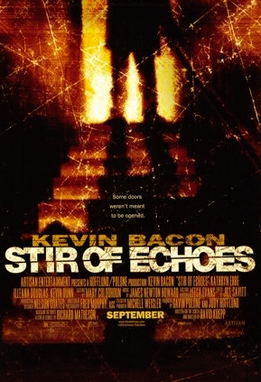
If you’ve intuited that the child sees dead people, you’re not far off.  It’s actually only one dead person and it’s not a Shyamalanian counsellor.  But the spooky part is his dad begins to see them too, after he’s been hypnotized by his sister-in-law, who’s an amateur.  At its heart the story follows the traditional trope of the undiscovered murder.  It does a good job of hiding the perpetrators until near the end.  The build-up is good also, with Bacon portraying Roy Neary-like obsession (interestingly, they’re in similar professions) quite well.  

The scary part, for me, was the sense that you’re not in control of your own mind.  There’s perhaps just a little too much possibility here.  We tend to think we own our minds, but what if they’re really just on loan?  I remember reading, as a high schooler, that religious people are difficult to hypnotize.  Hypnosis is still not well understood.  The larger fish in the pond is consciousness itself, which we really can’t even define.  We do know that memories are altered with time, and we can demonstrate this to ourselves by rewatching an old movie and seeing what we got wrong.  I suspect that’s why Stir of Echoes is so effective as a horror film—taking us into the realm of mind exposes us to so much that we really don’t understand.  And since ghosts seem to be pretty believable, well, the combination works.  Stir of Echoes is unsettling and a cut above much of what’s available for free streaming.  So if you’re in the mood for a ghost story, this might just fit the bill.

Early Ghosts

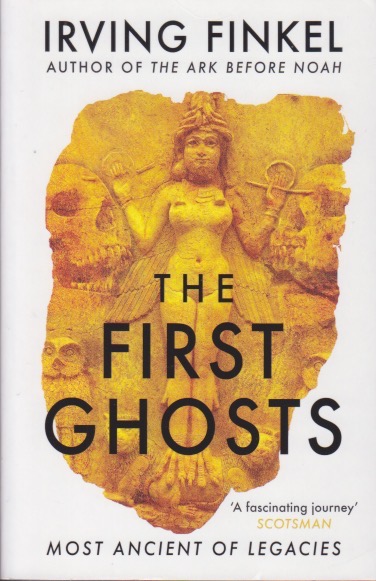
I’m not the most impulsive person in the world, but certain books I know, as soon as I see them, I will read.  Irving Finkel’s The First Ghosts was one of those books.  This wasn’t an easy book to get.  I’m guessing it was some minutiae about transAtlantic rights or some such nonsense, but it was announced a couple of years before it became available in America.  Then, of course, it had to wait its turn on my reading pile.  For those of you who don’t recognize his name, Finkel is a well-regarded Assyriologist who works at the British Museum.  Assyriology (which encompasses Babylonian and Sumerian studies as well) is, perhaps unavoidably, a highly technical field.  The languages are complex and a lot of that has to be explained before a reader can figure out what’s going on.  Some parts of this wonderful book are, unfortunately, technical.

The idea, however, is brilliant.  Ghosts have always been with us.  Finkel is well-placed to open the cuneiform world and he presents the earliest recorded ghost stories in history.  They’re not exactly modern horror, be warned.  Nevertheless, they demonstrate that from as soon as people figured out how to write, ghosts were one of their favorite topics.  Or at least, ghosts were assumed to exist and were written into many myths and legends.  Non-judgmental books like this are rare from academics; indeed, it’s difficult to imagine anyone else having written this particular book.  Even in the small world of academia not too many people read these languages and those who do are busy trying to impress tenure committees and businessmen deans.  (The reboot of Ghostbusters demonstrates this in a comical but too serious way.)

There are plenty of takeaways from this book.  A good general point in that myths do not reflect the everyday beliefs of individuals.  It’s easy to forget that.  Another striking idea occurred in his one chapter on the Bible where Finkel notes that the Good Book tends not to dwell on things considered “detestable,” such as foreign gods or demons.  That makes it an outlier concerning everyday information from antiquity.  After looking through that one window for so long, I suppose that’s why I focused by doctoral work on a “foreign” goddess.  If you can handle the technical bits and try to keep in mind multiple multi-syllabic names from forgotten languages, you’ll find a lot of really surprising and fascinating information here.  I’ve known for years that I’d be reading this book, and as autumn approached the time felt right to seek ancient ghosts.


Ghostly Book

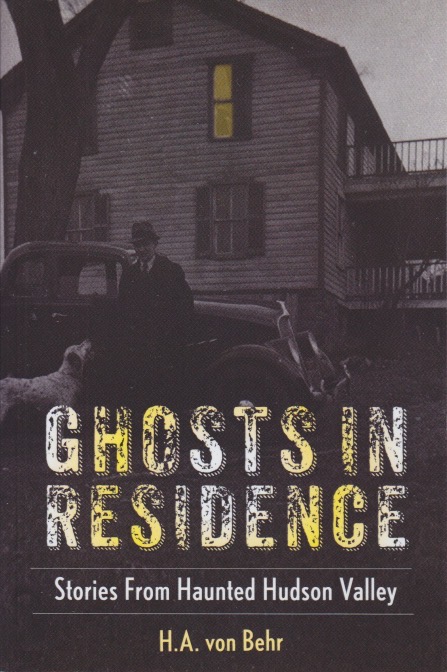
Recently I’ve been thinking about internet searching—how some information is difficult to find.  This book provides an example.  I saw what we in the biz call a “new book announcement” (NBA for bookish sorts).  Since I’ve been reading about the Hudson Valley the subtitle of Ghosts in Residence (Stories from Haunted Hudson Valley) caught my eye.  I assumed it was a new book and eagerly awaited its release.  When it arrived I discovered that it was a “new in paperback” (NiP) edition of a book published in 1986.  This edition, published this year, didn’t update things, including author information.  Given that H. A. von Behr was born in 1902, I doubt he’s still alive, but the book simply borrows the LCCP (Library of Congress Cataloging-in-Publication) data from 1986, showing the author’s dates as 1902–  .  Perhaps unintentionally appropriate for a book about ghosts.

This is an odd book, all around.  Although published in 1986, much of it deals with even earlier times—the author’s recollections of the forties—as well as some more recent events.  Hans von Behr cuts the image of a country gentleman while his neighbors in the Valley go on fox hunts and he has what seem like daily cocktail parties on the lawn.  He dashes off an article about his favorite dog and gets a healthy check from Outdoor Life.  This is a different world.  But then there are the ghosts.  But more than that, also strange happenings.  The ghost tales are intriguing, and some of the other strange events head-scratching.  The whole has a quasi-autobiographical aspect to it, but while not revealing too much.  A couple chapters deal with hauntings in Germany.

My web searching for H. A. von Behr revealed very little.  He was a retired scientist and photographer (he had some high profile clients) and the book contains many of his photographs of the locations discussed.  This short book explains how he came to purchase a haunted farmhouse upstate for a second home (again, a different world), how he discovered it was haunted, and how many of his friends and acquaintances revealed, over time, that their houses also had ghosts.  The book is charming in its own way, and a quick read.  Still, it’s a little disorienting when you can’t find more information about someone online.  The options are to do library research (my favorite kind) but am I really that curious about this author?  I wanted to read about the ghosts, and that I did.  And many other incidental things besides.


Haunting Hudson

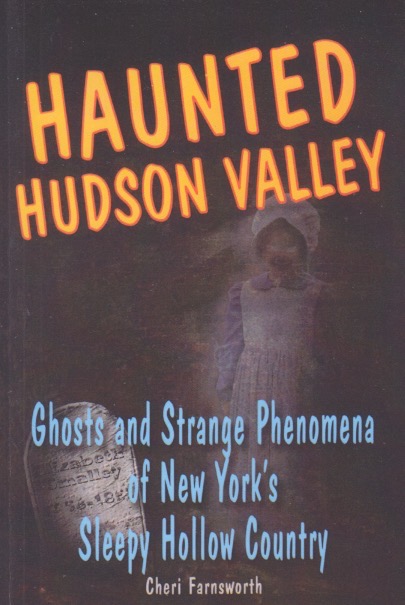
After Maine, the one place I’ve always wanted to live, but never had the opportunity, or could never afford, is upstate New York.  My ancestors were from the state but I just happen to’ve been born in Pennsylvania.  So it goes.  Perhaps it comes with professionally studying mythology, but one of my longterm interests is folklore.  I’m always fascinated by what people tell of their local setting.  Now when I approach books about the paranormal in a region, such as Cheri Farnsworth’s Haunted Hudson Valley, I know to take most of it with a grain of salt.  People love to tell stories and local people like to talk about where they’re from.  The Hudson Valley has had a long history of strangeness and several tales that reflect that are collected here.

I often think of ghosts.  They generally seem to prefer a single place that’s familiar.  And although you can’t take everything everyone says as gospel, there do seem to be regions beset with them.  I wonder if regions early settled by Europeans are particularly prone to haunting.  It’s difficult to imagine that, at the time with the unquestioned rectitude of church and empire, that they ever stopped to think “Hey, we’re stealing land that belongs to someone else.”  Did that idea ever come back to haunt them?  Perhaps such unspoken guilt leads to ghosts.  Or maybe simply dwelling in a place for a long time leaves plenty of opportunity for ghosts to gather.  And, of course, people do stretch the truth at times and misinterpret things otherwise explained.

No matter the reasons or rationale, these kinds of books are always a guilty pleasure read for me.  I don’t expect the get the truth, the whole truth, and nothing but the truth from them, but I enjoy them nevertheless.  Since I can’t afford to live in the Hudson Valley, the other result of such books—and one of the reasons locals appreciate them—is to make me want to travel to the region and see for myself.  For many years we lived not too far from the Hudson while in New Jersey.  Still, we didn’t make it up that way very often.  It’s a bit more of a hike now, but isn’t a hike worth making when you might see something unusual after you arrive?  My ancestors had settled north of the Hudson Valley and eventually migrated further south.  The end up in Pennsylvania, where I find myself.  But I’m still haunted by upstate New York.


Chilly Ghosts

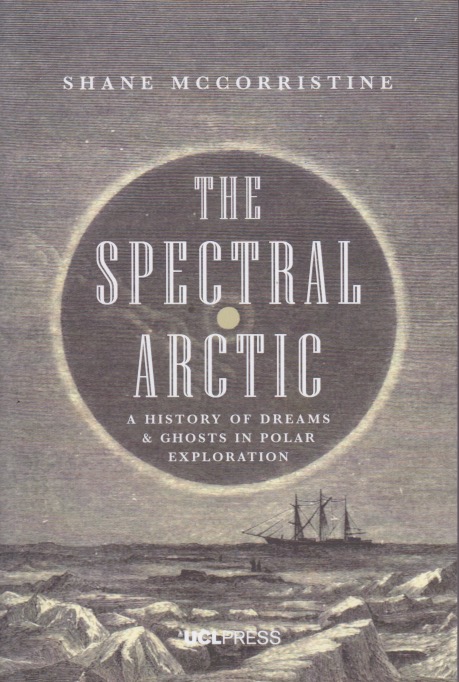
The names of many Antarctic explorers are more familiar to me than Arctic ones, so John Franklin was a name unknown to me.  A nineteenth-century British explorer, his expedition was lost beginning in 1845 when his appropriately named ships, Erebus and Terror, became icebound.  Franklin was seeking the famed Northwest Passage and given the slow communication of the time, nobody knew for years whether he’d survived or not.  (He hadn’t.)  Shane McCorristine’s The Spectral Arctic: A History of Dreams and Ghosts in Polar Exploration is a fascinating account of the attempts to find Franklin and his ships, often with speculative means.  Franklin’s widow, Jane, was famous in Britain for her constancy and her unwillingness to give up on the search for her husband.  She also consulted clairvoyants and paid attention to noteworthy dreams.

What drew me to this account was the involvement of the supernatural.  Significant dreams and many clairvoyants—all in the Victorian Era—made suggestions and claims about Sir John’s health and survival, as well as his whereabouts.  This was, of course, in the era before anyone reflected on the rightness of the imperial ideology of exploration and exploitation.  (We seem to have a hard time shaking that even today.)  In any case, these unusual, supernatural means of gaining information were often utilized and sometimes even functioned to set the destinations for other ships sent on rescue missions.  The chapters dealing with spectral landscapes of the Arctic are riveting and hard to put down.  Arctic imagination, even for those of us who don’t care for the cold, is powerful.  And we tend to think of it in spiritual terms.  There’s something about the far north.

There are many names involved and there are some places where it’s difficult to keep track of all the characters on a casual read, but overall this study is gripping.  McCorristine, as an academic, can’t tip his hand regarding the authenticity of the phenomena he explores here, but it simply doesn’t let go.  His chapter on women in Arctic discourse is likewise engaging.  Franklin and his crew had died by 1847 but the ships weren’t “discovered” until 2014 and 2016 by Canadian expeditions.  As McCorristine points out, even such political use of resources makes statements about how indigenous people continue to be treated by nations established as colonies.  There is much to say on this point, but the book focuses instead on “polar terror and sublimity” that comes to the surface in supernatural beliefs.  Tying all of this together is an astonishing feat and the results leave much room for wonder.


Sacred Hudson

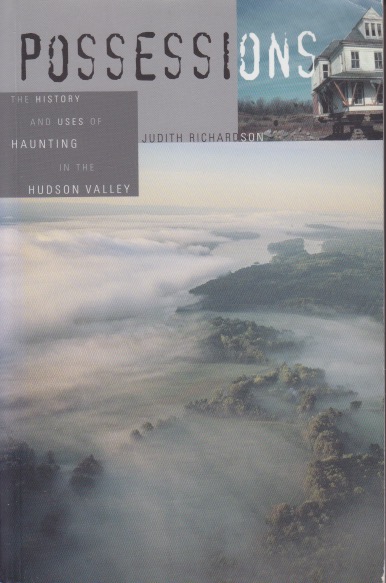
As scientific as we may wish to be, there’s no denying that there is a sense of place.  We know that some animals, at least, also feel it.  Whether theirs is a more pragmatic desire to return to where conditions were favorable to be born, or whether something deeper draws them there, we have no way of knowing.  People feel it too, this sense of place.  We know where we’re from, and if we don’t we often want to find out.  The space is somehow part of us.  There’s a compelling exploration of this in Judith Richardson’s Possessions: The History and Uses of Haunting in the Hudson Valley.  While not America’s first haunted location, the Hudson Valley was singled out for this treatment by Washington Irving.  He, however, didn’t invent it.

I’m not from the Hudson Valley.  I could never afford to live there.  That doesn’t mean the area can’t speak to me.  Richardson’s approach is academic yet readable and she considers how hauntings fill needs and how they play a role in that ever-contentious enterprise of land claims.  Ranging through literary treatments, whether the fiction of Irving or tour books of the next generation, or indeed, more recent literary efforts, Richardson deftly guides the reader through American Indian and Dutch and other inhabitants’ stories of themselves.  Race inevitably plays a part, and her tracing of the origins of some traditional tales is really remarkable.  Who owns the land?  Who truly owns anything?   

Similar treatments (I can’t help but feel somehow lesser) must exist of other haunted locations.  Richardson doesn’t engage in arguments over whether ghosts are factual since ghosts serve so many other functions.  Our lives are the stories we tell about ourselves.  Many of those tales involve the place we are or places we’ve been.  In our highly mobile society, few of us, it seems, can make a living where we’re from.  Those of us born in small towns range far and wide to find employment.  In many cases we may not want to go live where the drama of our childhoods unfolded.  Yes, there are pleasant memories there, but there are also ghosts.  Richardson explores how this plays out in one small stretch of the country.  Indeed, it’s a small stretch of New York state.  Stories of hauntings continue in that particular valley.  Uncanny, perhaps, but there are places in this world like that, and this book is a sure road post on this particular overgrown trail.


Old Ghosts

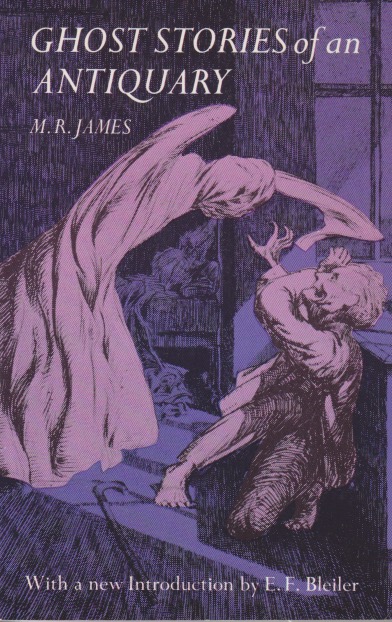
As someone who reads about ghost stories, as well as ghost stories themselves, I’ve long been aware of M. R. James.  His Ghost Stories of an Antiquary is regarded as a classic in the ghost-story genre.  Sometime in the haze, I recollect it was years ago, I found a copy at a used bookstore on the sale rack.  Something I’d been reading about ghost stories lately made me decide to read it through.  Now James was an actual antiquary.  He was also an academic at Cambridge University.  His tales are erudite, generally focusing on some ancient secret that releases ghosts, or sometimes monsters, after the individual who discovers the antiquity.  The stories are varied and inventive, but not really scary to the modern reader.  They assume a different world.  One in which antiquaries were monied individuals—often university men—who have both servants and leisure time, rarities today.

I found myself constantly asking while reading, how could they get so much time off?  How did they access such amenities that they could even get to the places where the ghosts were?  James’ world is both textual and biblical.  It’s assumed the reader knows the western canon as it stood at the turn of the nineteenth century.  The Latin, thankfully, is translated.  James, it is said, was a reluctant ghost-story writer.  A university employed medievalist, he had academic publications to mind as well.  Nevertheless he managed to publish five ghost-story collections.  Clearly the idea seemed to have had at least some appeal to him.

The aspect I find most compelling here is that an academic could admit to such an avocation.  While it’s becoming more common these days among the tenured, I always felt like I was walking the eggshell-laden pathway to academic respectability.  I was, after all, at a small, haunted seminary that few outside the Anglican communion knew about.  It was risky to admit being drawn to anything speculative.  Come to think of it, although I read novels while I was there I don’t recall reading many, if any ghost stories.  It was scary enough to be about on campus at night, particularly if you were going to the shore of the small lake to try to photograph a comet alone.  There were woods punctuated by very little light.  On campus ghost stories were fine—the librarian even showed me a photograph of a ghost in the archives—but off-campus such things could never be discussed.  I was an antiquary without any ghost stories. James showed the way.


Haunting History

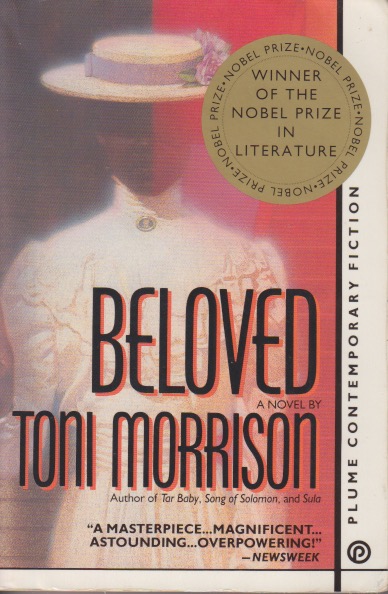
It’s difficult to do without feeling guilty, even if you personally had nothing to do with it.  It does seem that “Whites” have to take the initiative to dismantle systemic racism before any kind of fairness can settle on the world.  Toni Morrison is a great example of why that’s so important.  Beloved is perhaps her best-known work.  Although it involves a ghost it’s not so much a ghost story as it is a haunted story.  Black experience has been one of enforced poverty, after the emancipation proclamation—much like the American Indian experience.  Morrison represents this in a non-accusatory way, but she indicates in her story how the pain and mistreatment persists.  Her work is more important now than ever.  White supremacists are controlling the narrative in much of the country although they are the minority.  They need to read this book.

There will be spoilers here, if you’re even later coming to Beloved than I am.  Sethe was a slave.  The novel is set just after manumission, but she escaped before that.  She had four children and when she was sexually assaulted she realized this could happen to her children and she decided to spare them that fate.  Although she was stopped before she could kill all four, her first daughter, Beloved, was her victim.  This story is about what happens when Beloved returns to live with Sethe and her remaining daughter.  It is a haunting story.  No “boos” or jump startles, it sets up a sad atmosphere of a woman falling apart because of guilt.  Guilt for an event that would’ve never happened if she’d been treated like a human being.

Apart from the schoolteacher and his cohort, the whites in the story are kindly to Sethe.  Her “owner” was a slaveholder who gave his “possessions” respect.  She was saved from hanging after the death of Beloved by a local white man who understood what slavery might do to a person’s mind.  Even so, these kind people think of Blacks as servants rather than as people in their own right.  It’s difficult to read books like this.  That’s one of the reasons that it’s important to do so.  There is a lot to analyze here, much to reflect over.  If we put books like this on reading lists instead of banning them, it would help to bring understanding and sympathy rather than hatred and fear.  The future only improves when we admit our past errors and move to heal the scars we continue to inflict.


Ghost History

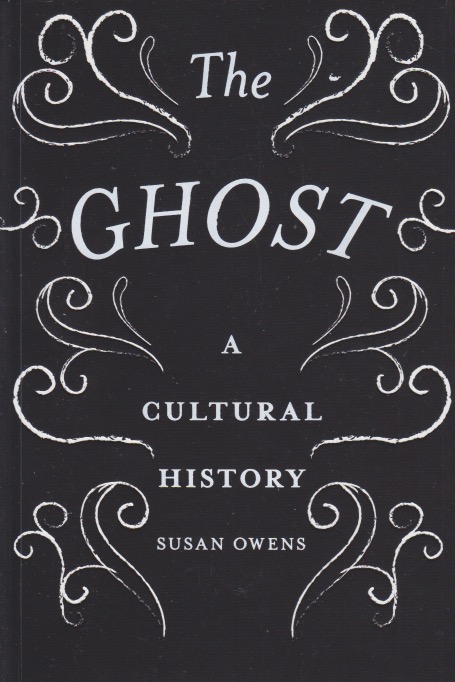
Books on art are often eye-opening to me.  When I was young and trying to escape the working-class hell in which I grew up, I discovered high culture.  This was mostly through local libraries.  I would check out classical music LPs and look at books of classical art.  I did the latter until I could identify several artists by their styles.  (It was probably originally because they’d painted pictures of Jesus and I went to see what else they’d done.)  In any case, I never studied art history.  I recently read an art-historian on the Devil, and now I’ve read one (Susan Owens) on ghosts.  The Ghost: A Cultural History does not address the question of whether ghosts exist, but rather traces the history of how they’ve been portrayed in literature and art throughout time.

Owens quite ably takes us through ancient to modern, pointing out that ghosts change to fit the Zeitgeist—the spirit of the times (not her pun).  In the early modern period ghosts were portrayed as physical revenants.  They were dead bodies that came back to physically harm the living.  We know this fear was widespread because some burials were clearly intended to keep the dead in their graves.  The idea of the physical ghost still comes up in modern horror as the monster you can’t kill because it’s already dead.  It was only gradually that ghosts became spirits and this was largely through emphasis on purgatory, which made it possible for the dead not to be in Heaven or Hell.  Once the idea caught on the literature and art began to focus on the spiritual nature of revenants.  As cultural interests turned towards ruins ghosts inhabited haunted houses.

This is a fascinating study of the way ghosts have evolved over time.  One of the things that struck me was that early commentators often didn’t distinguish clearly between ghosts, demons, and devils.  Demons, as we think of them, really depend quite a bit on The Exorcist.  The use of “devils” in the plural complicates the spiritual geography where we have God v Devil as the main poles of spiritual rivalry.  These ideas, and also those of ghosts, likely blended throughout most of history until a renewed emphasis on literalism came in.  Medieval scholars composed angelologies and demonologies, trying to keep everything straight.  They puzzled over ghosts, however, which don’t fit the scheme very neatly.  They would have benefitted, perhaps, if they had had Susan Owens’ book to help guide them.  It’s an exciting nighttime journey.


Are Ghosts Monsters?

It’s a question as old as my interest in horror.  As a child I kept ghosts distinct from monsters.  Ghosts may be scary, yes, but they’re people who’ve died.  Then zombies came along.  I was too young to watch Night of the Living Dead when it came out (I was only six).  Depending on how far you want to go with this, among the classic monsters they’re pretty much all human.  Dracula is undead, but originally human.  Frankenstein’s creature is dead folks stitched together.  The mummy is a person reanimated.  The invisible man is, well, a man.  So is the wolf-man.  The latest of the Universal line-up, the gill-man was more a human-like reptile with gills.  To add a few other favorites, Mr. Hyde was Dr. Jekyll.  Witches were magical women.  For sure, there are plenty of non-human monsters (Godzilla, the blob, and those various giant spiders) but it seems much of what we fear is warmed over human.

So ghosts—are they monsters?  I still have a difficult time sorting that out.  They seem different from other revenants, don’t they?  Uncle Joe or Aunt Sally don’t really pose an existential threat, do they?  (Unless one of them was a psychotic killer or something.)  Yet we still fear ghosts.  Many horror movies and novels feature them.  It seems more because they represent the unknown in a kind of ultimate way.  We can’t die to find out and then come back.  Although, it seems, that’s just what ghosts do.  That liminal line, or terminal line in the sand is the point of no return for the human imagination.  Yet on a dark night in a creaky old house it feels like more than just imagination.  Of course, other monsters could be lurking in the dark.

Image credit: Henry Justice Ford, public domain via Wikimedia Commons

The thing about horror is that it holds up a mirror.  We see what really does scare us and what we see reflected back is human.  We all die and most of us don’t like to think about that.  Ghosts force us to.  They make us confront perhaps the most primal of fears.  There are, of course, bad ghost—dybbuks and hungry ghosts and whatnot.  Of course they’re monsters.  But considering the garden variety, or perhaps haunted-house variety ghost suggests maybe our fears are misplaced.  Monsters can be scary.  Ghosts don’t have to be.  We classify them all together as horror, but that may be a hasty judgment.  As least for someone who used to be, and maybe still is, simply human.


Ghost Chasing

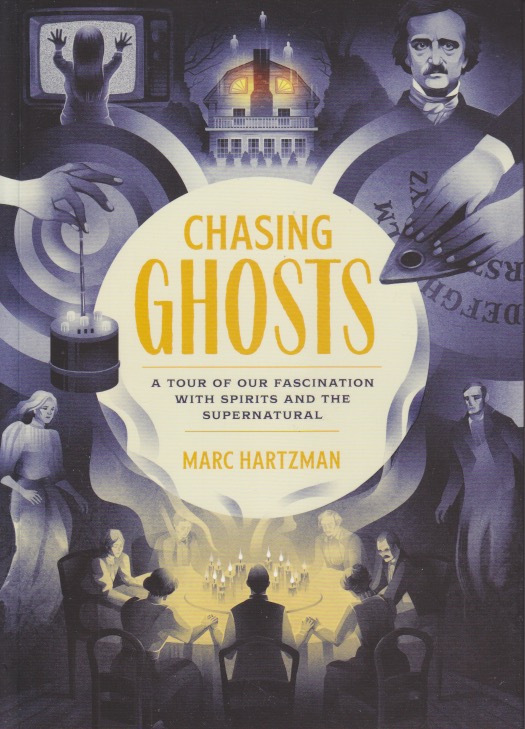
I’ve known about Quirk Books from their very first publication.  That’s a rarity, I suppose, since many publishers have been around far longer than I have.  I tend to think of Quirk as mainly a purveyor of unusual fiction.  I’ve pitched a book or two to them myself over the years.  In the last few years they’ve been producing some good nonfiction as well.  The topics are, well, quirky.  I just finished reading Marc Hartzman’s new book with them titled Chasing Ghosts: A Tour of Our Fascination with Spirits and the Supernatural.  It’s a good compendium of material that traces the very long history of human obsession with the restless dead.  It begins with some ancient ideas about ghosts and comes up to contemporary times.  Not all of this can be covered with great detail, of course.  But there’s a lot here.  And it has a great cover.

The chapter on Spiritualism and seances is necessary, but it also reveals one of the reasons, perhaps, that modern skeptics still scoff at ghosts.  Mediums (not necessarily Spiritualists) were often caught in trickery, but as Hartzman points out, that doesn’t logically imply that everything was a hoax.  For me, when the rules start to include special boxes or sitting behind a curtain the old skeptic meter starts clanging loudly.  Still, some of this happened because, it seems, you can’t force a ghost to attend.  If there are ghosts and if they retain personalities, well, how do you like it when people tell you that you must be here at this time so I can make you do what I want you to do?  

The chapter on haunted locations covers many of the expected and a few lesser known haunts.  Often a very real human tragedy has occurred in such places.  Is it unreasonable to think we might impress such things on our environment somehow?  Or that our consciousness—which we still can’t explain scientifically—might not hang around to resolve unfinished business?  The final section on using devices to “capture” ghosts brings us up to the present ghost hunter craze.  The pursuit of ghosts is extremely popular, leading to the predictable result that academics shy away from it.  It’s a shame, really.  A few universities have, and some still quietly do, sponsor(ed) departments or facilities to study such things.  It seems to me that if people have been seeing, hearing, and feeling something for millennia, it might be worth some serious effort to find out what’s going on.  Until then, quirky books like this one will always be a guilty pleasure.


Ghosts Again

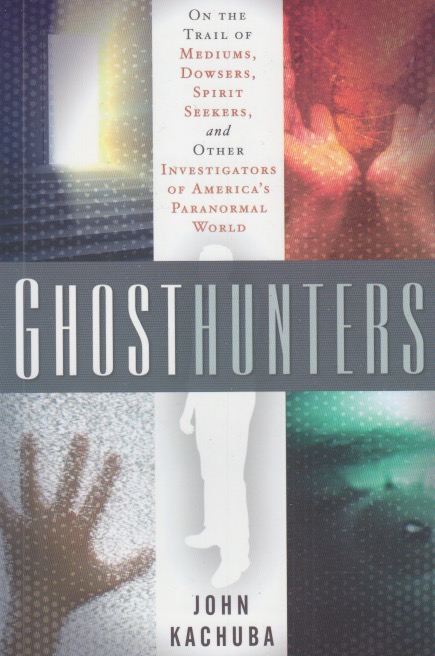
In keeping with my holiday ghost interest, I read John Kachuba’s Ghosthunters: On the Trail of Mediums, Dowsers, Spirt Seekers, and Other Investigators of America’s Paranormal World.  Yes, that subtitle is a mouthful.  The book is a series of essays without an overarching thematic arc, but it does contain some interesting accounts.  If you’re hoping to walk away with proof of ghosts this probably isn’t your book, but a few of the people the author interviews have some pretty convincing stories.  Ghosts remain one of the great unknowns.  People of all intellectual backgrounds, every socio-economic class, and every religion have encountered them, and this is true throughout history.  Ghost hunting isn’t a science and has no developed methodology, but then ghosts don’t seem to perform on demand.

I was particularly interested to see what Kachuba had to say about Ed and Lorraine Warren.  They were the original ghost hunters and their work was controversial from the beginning.  One of the consistent problems with the paranormal is that advanced degrees tend to make you quite skeptical.  You look for proof in the fields recognized by your peers and although a few departments of “parapsychology” have cropped up from time-to-time, mainstream science is doubtful and drives doubt into all comers.  Those who investigate ghosts suggest that if you don’t believe you won’t see.  Here’s the basic paradox between faith and proof.  And it only raises questions when you learn that science doesn’t prove but rather provides the best answer, given the data as currently understood.

Kachuba presents himself as neither a firm believer nor a dismisser.  He clearly enjoys ghost hunting himself and several times mentions his Ghosthuntermobile.  He interviews not only Lorraine Warren (Ed had had a stroke by this time) but also a variety of mediums, Spiritualists, and ghost whisperers.  He writes about various haunted locations, but in the accounts he shares he doesn’t see anything that can’t be explained.  Some of the essays are written with a humorous take on the subject, while others are entirely serious.  It’s kind of a grab-bag of a book in that regard.  Like many readers, I suppose, I hope to pin down something certain when it comes to the unknown.  My guess is that if anything definitive appeared we’d know about it.  Given the goings on in the world these days it probably wouldn’t be front-page news, as much as any information on eternity should be.  In the meanwhile we can read and wonder.


Ghosts and Puritans

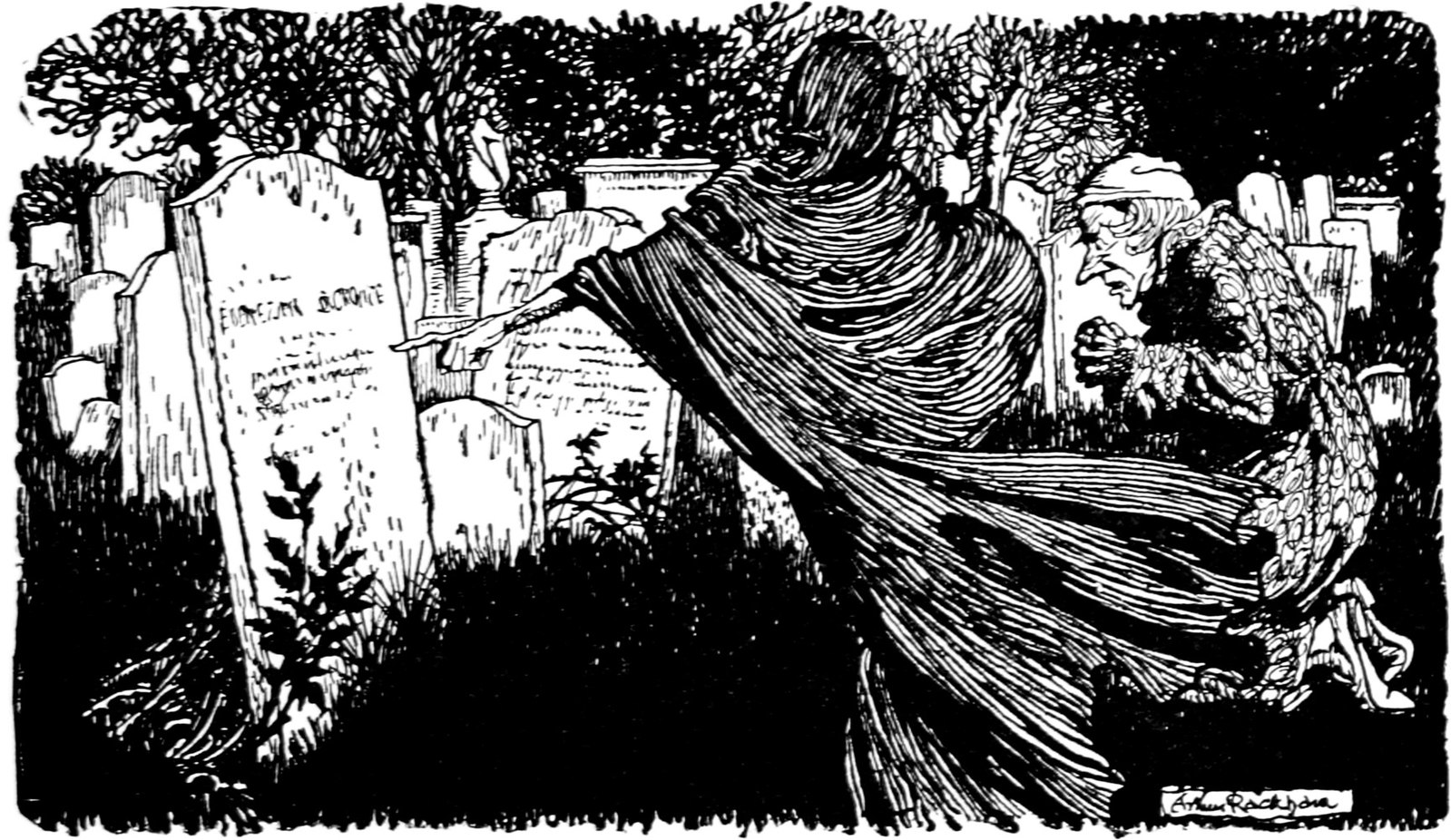
One of the victims of capitalism is the tradition of telling ghost stories at Christmas time.  We tend to relegate such downers to Halloween.  Christmas is a cozy time of getting new things, right?  Who wants to think of ghosts?  I recently read Charles Dickens’ A Christmas Carol.  An article in the Smithsonian  a few years back makes the point that Dickens was cashing in on a venerable tradition.  Instead of sending children to bed expecting Santa Claus, it used to be the custom to tell ghost stories on Christmas Eve.  That makes sense in context.  Christmas was established near the date of the Roman festival Saturnalia and the germanic Yule.  These festivities celebrated the passing of the equinox and the slow, but steady increase in light.  A liminal period.  It seems a natural time to tell ghost tales, no?

Image credit: Arthur Rackham, public domain via Wikimedia Commons

The article by Colin Dickey (who has a history of writing about ghosts), calls for bringing back the tradition.  Do we want our cozy capitalism interrupted by revenants?  Why not?  For me the Christmas season is largely about time off of work.  I spend the time working on fiction writing that I tend to put off when I have a book under contract.  Most of those stories I write are some species of horror, often ghosts.  The real haunting factor is I don’t have time during the rest of the year to do the amount of writing that recharges my batteries.  Work seems to take more and more time and the Scrooge-like results are, I think, pretty obvious.  It’s time to bring back the Christmas ghosts.

Dickey points out that one reason Christmas ghost stories never caught on in America was that Puritans had little taste for them.  The more I look at society the more amazed I am at how Puritan we still are, but without their religious ideals (apart from various prohibitions of human behavior).  The fact that this article appeared in the respectable Smithsonian makes me feel a little more accepted for my disposition.  I know there are many horror fans out there.  Poll after poll indicates that people like horror, but, it seems, most don’t like to admit it.  At least among those I know in the neighborhood.  There are a slew of Christmas monsters.  For those who keep track of holiday horror as a sub-genre the most common holiday represented is Christmas.  In fact, I just had a Christmas horror story published (under a pseudonym, of course).  Maybe ghosts will be able to frighten off the specter of capitalism and bring us back the holiday spirit.


Ghost Publishers

Ancient Near Eastern studies, where my academic work has the widest recognition, is still an area of fascination.  I have to hold myself back when I see a new book published in the area.  You see, I learned when I researched in this field that there is little academic opportunity in it.  As per usual, the public seems quite interested so academia is not.  A few practitioners, however, have been able to break through.  One of them is Irving Finkel, a curator at the British Museum.  He’s been writing popular books about ancient ideas and getting respectable press for doing so.  His most recent book (The First Ghosts), as described in an article in the Smithsonian, deals with the earliest depiction of a ghost.

Perhaps because of copyright complications, his book on the subject doesn’t seem to be widely available in the United States, despite having been published by a trade house.  It could be that the publishers don’t think anyone will be interested.  Hello?  Ghosts and Mesopotamia?  Haven’t you been paying attention?  This is part and parcel of the academic publishing world.  The editorial board has to decide which books see the light of day and which won’t.  And how to price them.  Is this primarily a library book or can it somehow claw over into the crossover market?  Academic publishers will casually add five or ten dollars to the price, assuming it won’t hurt sales.  Guess what?  It does.  As much as I’d like to read Finkel’s book, my interest doesn’t hover around the 60 dollar range.

When I first studied Hebrew I wanted to buy a textbook my professor mentioned, but it cost nearly $100 in the US.  This was back in the 1980s, so that really was steep.  When we moved to Scotland I discovered the same book was available there is paperback for a reasonable price, so I bought it.  That’s when I began to realize copyright laws direct the shape of scholarship.  Publishers decide what makes it into reputable book form and who will be able to afford it.  That’s power.  You see, people have believed in ghosts from as long as we could convey the idea.  The dead never really leave us.  Finkel’s book examines a clay tablet used to exorcise ghosts and may contain a line drawing of a spirit.  Who wouldn’t want to read such a book?  It’s getting press coverage but those who make such decisions have decided, apparently, there’s no market for it.  When that happens a book hasn’t a ghost of a chance.

Postscript: Checking Amazon one last time before clicking “publish,” I see the book has now come down to the $30 range. I can’t take credit for that, but my point still stands.


Who Ya Gonna Call?

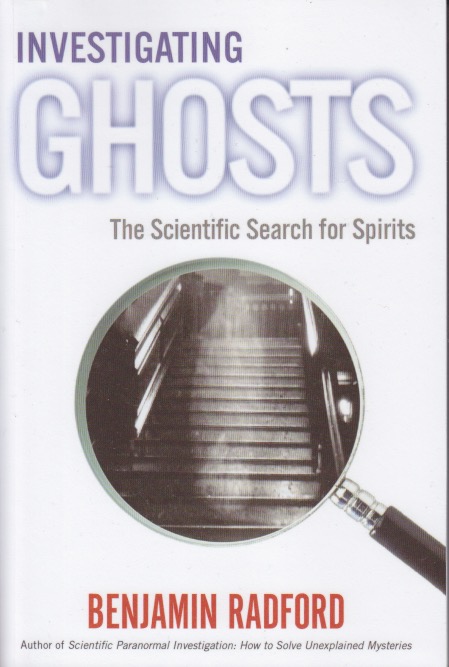
The haunting season is nearly upon us.  Apart from the usual fun of ghost stories, those of us with appreciation of science wonder about whether there’s any hope of confirming some of these tales.  Benjamin Radford’s Investigating Ghosts: The Scientific Search for Spirits is a handy guidebook for those who don’t wish to be gullible.  Radford demonstrates just why much of popular ghost hunting reality television really isn’t scientific at all.  Knowing how science works, Radford is unusual in that he’s open to the possibility of ghosts.  He points out, however, that from the point of view of science there’s a conundrum—there is no consensus on what a ghost actually is.  Different readers and experimenters and experiencers have different ideas about them—everything from the spirits of the dead to “recordings” made by the environment to demons to time-travelers.  Radford’s quite right that to test an hypothesis you need to agree on what you’re testing for.

Ghost hunting groups, as he points out, are actually gathering evidence hoping to prove the existence of ghosts (whatever they are).  Evidence gathering isn’t the same as science, however.  If you’ve ever watched any of these shows you’ll likely enjoy Radford’s take-down of their flawed methodology.  Wandering an unfamiliar location at night with the lights off and gadgets in hand, they go here and there, possibly contaminating each others’ “evidence.”  Their theories behind why ghosts do this or that—make cold spots, turn lights on and off, make white noise into EVPs, or electronic voice phenomena—don’t match the science of basic ideas of ambient temperature, wiring, and audio pareidolia.  These things are well understood, but you have to read about them to apply them. 

The larger question, however, remains.  If ghosts exist, and if they choose (if they have will) not to cooperate, how can we learn about them?  Radford makes the valid point that coming in for one night with lots of equipment and little knowledge of what we might term “the deep history of a location” stands very little chance of achieving results.  It may be fun, and entertaining, and it may catch a legitimate anomaly or two, but it doesn’t, can’t scientifically prove the existence of ghosts.  We still seem to be stuck with the materialism that only measures the physical.  This fact may indeed fuel skeptics to suggest it’s “only this and nothing more.”  But science isn’t the only way we know the world.  It’s a pleasure to read a book from an investigator of this topic who has his head on straight.