Bibliography

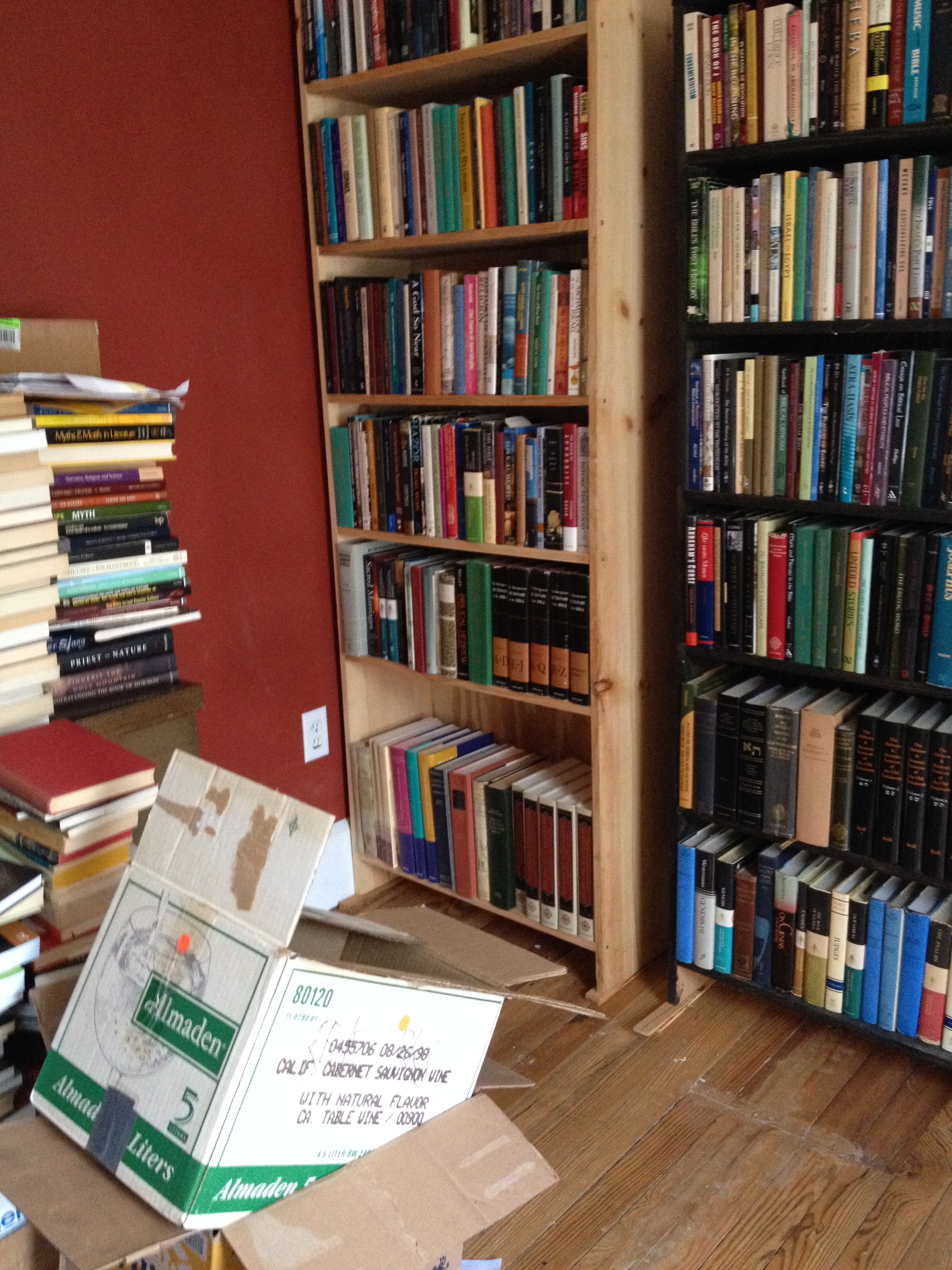
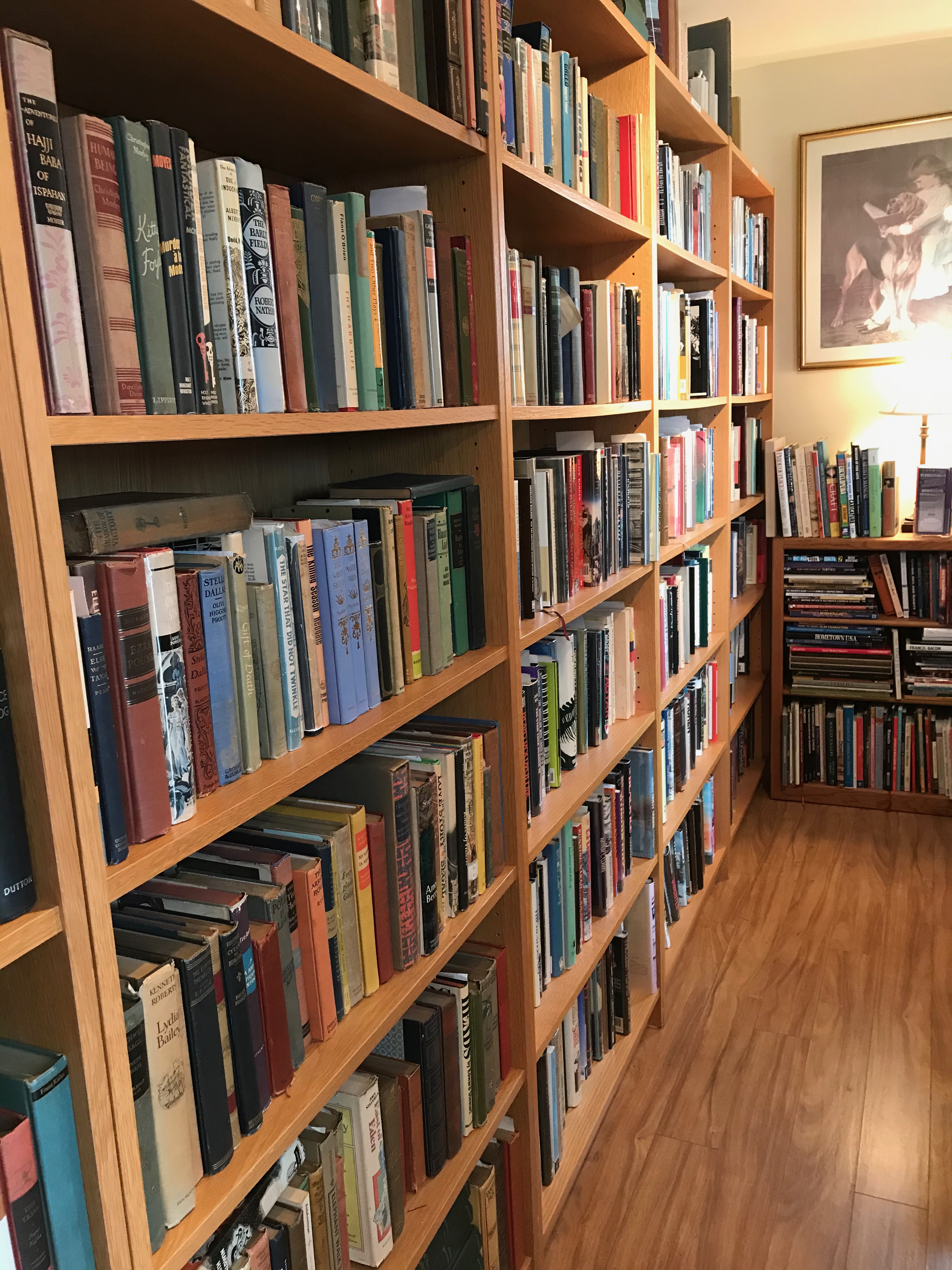
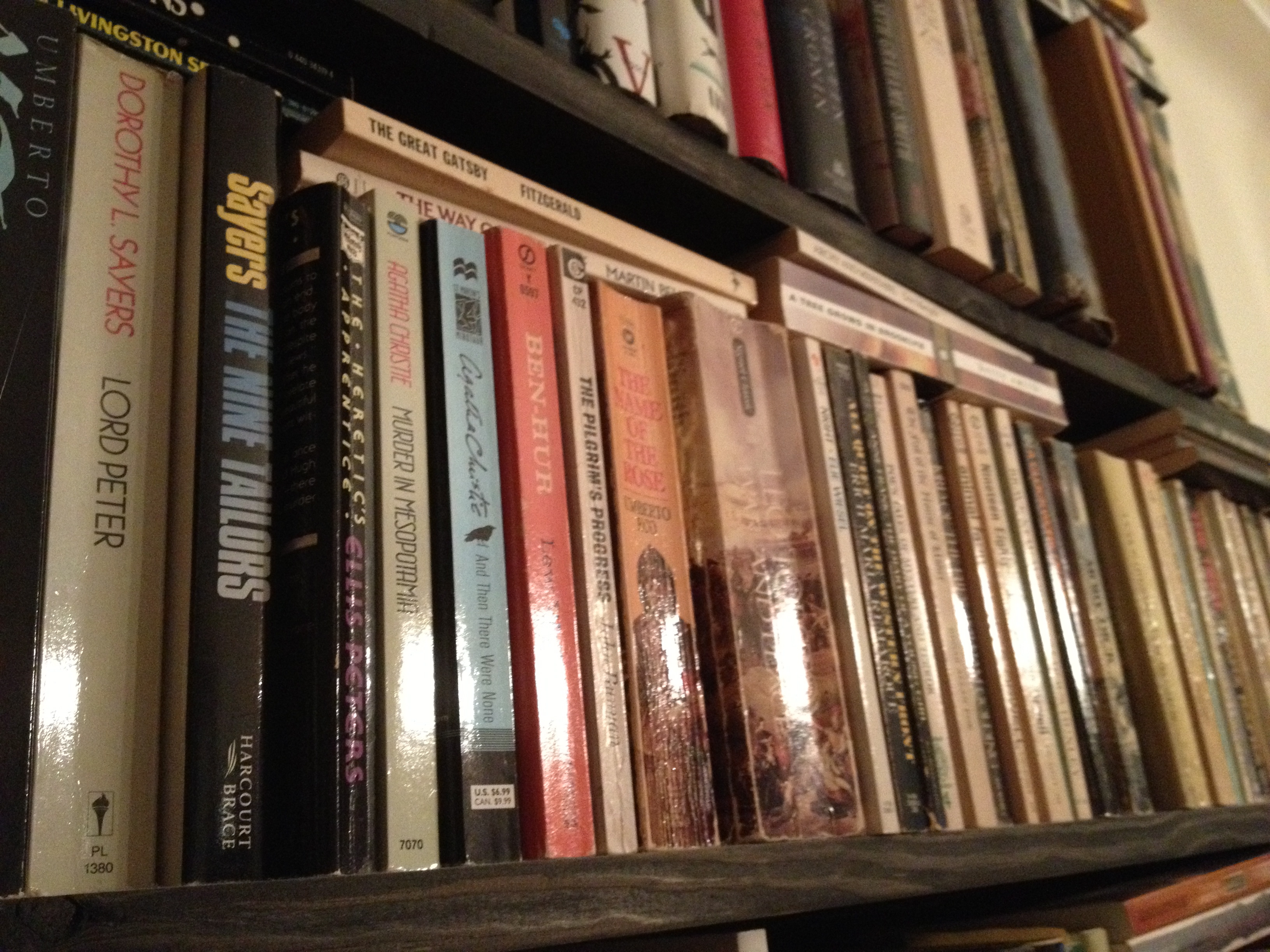
For serial readers, my Horror Homeroom piece is now live, here.  Speaking of websites and blogs, you never know where a project might go when you start it.  This blog has a search function, as well as category options, but I know I have a few readers on Facebook and Goodreads who might never set foot here.  The other day someone asked me about a book and I had to do a search myself to see if I’d ever blogged about it.  This project has been going for more than a decade and a half and it’s nearing 6,000 posts.  I can’t remember everything.  Then it occurred to me: I could put together a bibliography for this blog.  This has to be a long-term process, though.  As a test, I scrolled through the first year, writing down the books.  There were about sixty of them.  Since there are over 170 months to go through, well, it’ll be a big bibliography when it’s done.

I’ll need to find a way to note the books I haven’t read.  Sometimes I’ll post on a book, or mention it, without having read the whole thing.  I don’t want to misrepresent myself here.  Other times I mention a book obliquely without actually citing it.  I need to include those as well.  Only, however, if I’ve actually read them.  Then there’s the problem of not remembering if I read a book or not.  After 2013 I can check on Goodreads, but between 2009 and then, I rely on memory.  Those were tumultuous years.  In 2009, just before I started this blog, Gorgias Press let me go.  I made a living for a couple of years as an adjunct professor at both Rutgers and Montclair State Universities, feeling like I was driving at night without the headlights on.  I was reading a lot, but job security was a mere myth.

Then in 2011 Routledge recruited me and my commuting life began.  I started reading about 100 books a year as I commuted my life away.  Most of those got discussed on this blog.  I was still at Routledge when I began my Goodreads account, not aware that there was employer writing on the wall.  I started my current job that same year and commuted to Manhattan for five more years, reading all the while.  It’s going to be a big bibliography when it’s done.  The nice thing is I don’t have to annotate it since that’s what this blog does.  Since I’ve got about a thousand other projects going, and a 9-2-5 job, don’t hold your breath for it.  But the bibliography’s been started and, God willing and the crick don’t rise, it’ll eventually appear here.  That’s the way of ongoing projects.


2024 in Books

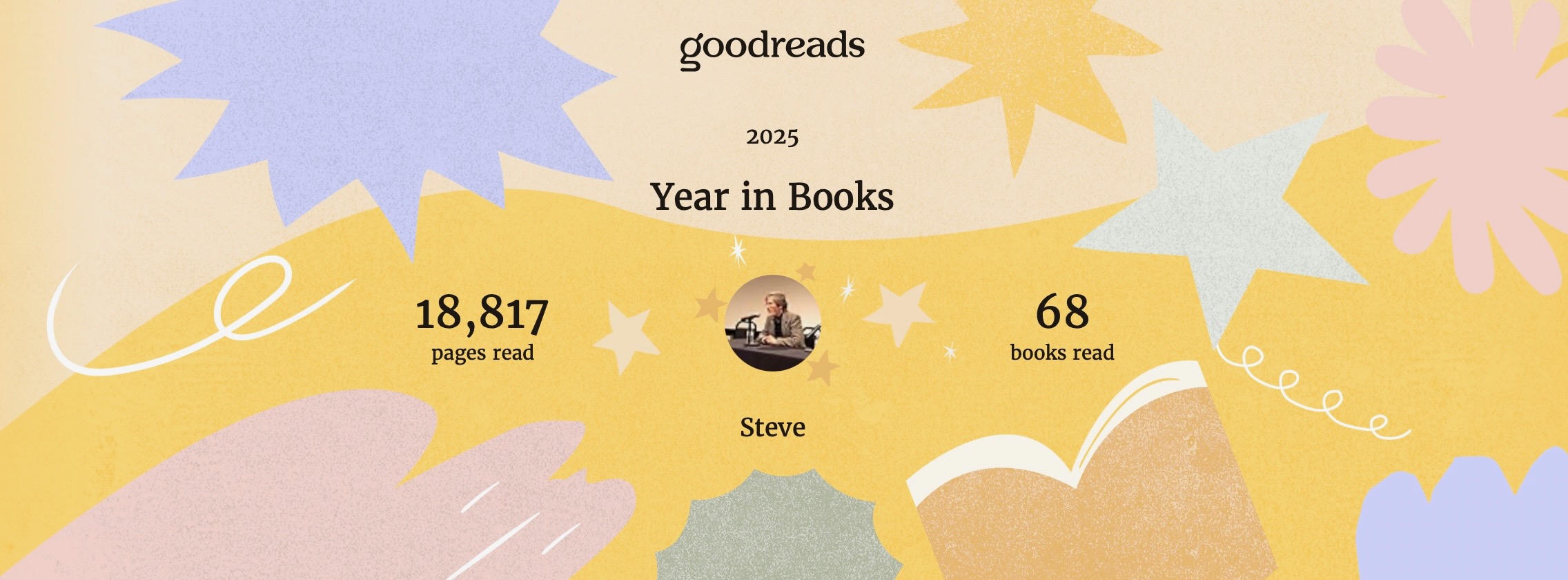
I’m trying to figure it out.  My annual last post is my book reflection for the fading year.  I keep track of my books on Goodreads, and I always join their reading challenge to keep myself honest.  What I can’t figure out is why I fell below 70 books this year.  (The official total is only 61.)  I set my goal below that, of course, because I’m no fan of setting targets impossibly high.  The only thing I can figure is that some of this year’s books took longer than usual to get through.  Maybe on average they were longer than my typical fare.  In any case, my favorites among the fiction I’ve read are these:

For standard horror I especially liked Thomas Tryon’s The Other, and Ivar Leon Menger’s What Mother Won’t Tell Me.  Interestingly, neither was speculative.  I do seem to have slipped in that category a bit.  Gothically speaking, Thierry Jonquet’s Mygale, Rebecca James’ The Woman in the Mirror, Alix E. Harrow’s The Once and Future Witches, and Erin Morgenstern’s The Night Circus were all memorable.  I started reading Dark Academia somewhat intentionally this year and I would argue that Sarah Moss’ The Ghost Wall fits since the professor’s up to no good in the woods.  Piranesi by Susanna Clarke also fits for a similar reason, only not in the woods.  I enjoyed both.  For literary fiction, edging back into horror, A Children’s Bible by Lydia Millet was very good.

My reading tends toward nonfiction (occupational hazard) and here there are categories also.  In the general category, Andrew Laties’ Son of Rebel Bookseller stayed with me.  Don Foster’s Author Unknown was enjoyable and eye-opening.  I also really enjoyed Mark Thomas McGee’s Fast and Furious.  For books on horror I read Stephen King’s Danse Macabre and his On Writing.  (I also read one of his novels.)  Both of these were quite good, I thought.  I also learned a lot from Olga Gershenson’s New Israeli Horror.

I see that I also read quite a lot of unusual nonfiction.  Most of it I quite enjoyed.  The most conventional of them was David Robson’s The Expectation Effect.  I’m fascinated by the power of the human mind, so Mitch Horowitz’s Uncertain Places and D. W. Pasulka’s Encounters gave me considerable pause early in the year.  Carlos Eire’s They Flew, a weighty tome, was well worth the time it took.  Among the reflective/spiritual nonfiction my favorite was Katherine May’s Wintering.

I very much enjoy my end of year reflection over the books I’ve read.  I don’t plan my reading for the year in any systematic way.  I will say that I received quite a few titles over the holidays that I’m looking forward to posting on these this coming year.  And I suspect a few new titles will appear along the way as well. I do hope to get past 61, in any case.  Read through 2025!


History Lesson

This blog, which has come to define me in many ways, wasn’t my idea.  A niece started it for me when Neal Stephenson suggested I should have a place for podcasting.  I still have ideas for podcasts, but finding the time to put them together (and a place to host them) has proven quite challenging.  In any case, the title, “Sects and Violence in the Ancient World,” reflected where I was at the time.  I started posting when I was 46, and now I’m over 60.  Things are bound to change a little.  From the start, I wrote about books.  Indeed, for things I’ve read since summer of 2009, I check the blog to find out when.  I also noted significant movies.  In the early days I tried to limit the posts to religion-themed topics since, well, I have three degrees in the field.

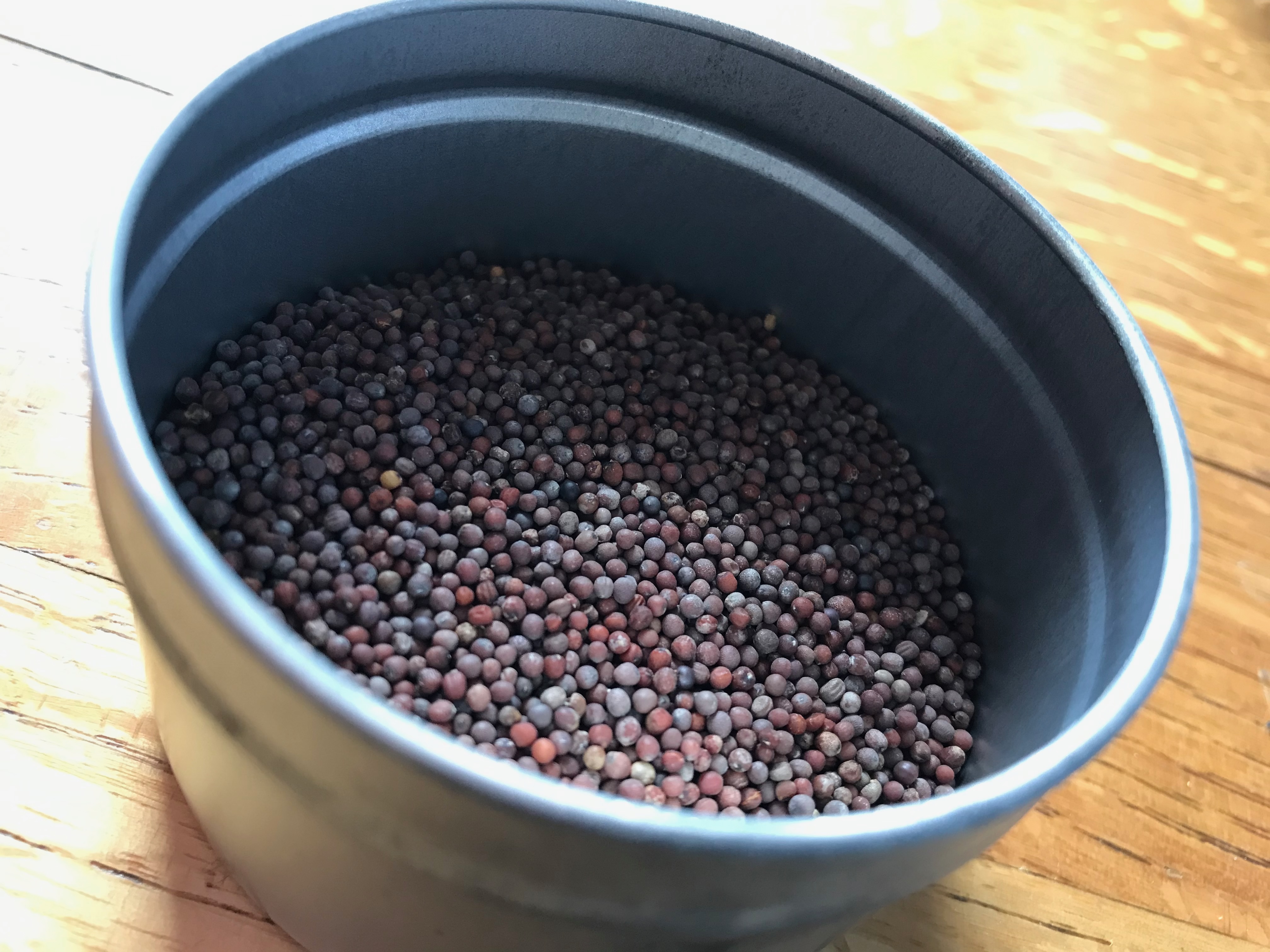
As I gradually grew comfortable discussing pop culture (generally horror), I gradually addressed movies and books without a religious bent.  It could be that I didn’t record everything I read or watched here, and that makes things before 2009 kind of a muddle.  While the muddle really began before 2005—my last year at Nashotah House.  That period was a kind of maelstrom of desperation to find a job, teaching classes, pretending to be an editor, making my way in a world unfamiliar to me and certainly unchosen.  Eventually this blog came to focus on horror movies more than religion.  Now, like my life, it’s a jumble of conflicting impulses trying to make sense of the world as an existentialist with a bit of faith.  I’m still aspiring to that mustard seed.

I’m not sure when it was that I began commenting on most movies I watched.  I’ve used movies as therapy since 2005—for some reason horror made me feel better.  Even now, when I want to remember when I saw a movie I check this blog.  Or if I want to know when I read a book.  My wife pointed Goodreads out to me in 2013, and that became another place to post on books, even if they didn’t qualify for “Sects and Violence.”  But that slushy period between 2005 and 2013 was full of books, I know.  In addition to movies, I read incessantly.  If I want to remember when I read what, however, I’ve only got the last decade really covered.  Goodreads says I’ve read about a thousand books since 2013.  For movies, I have no way of knowing how many I’ve seen.  Or where, for the most part.  Maybe I need to start keeping a proper diary.  Maybe one with a lock and a key.


The Goodreads Zone

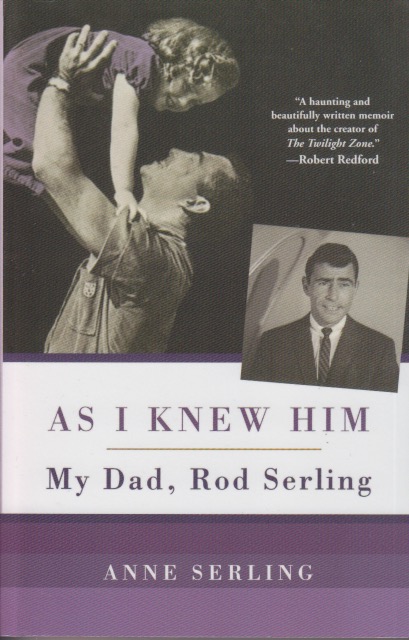
It happened on Goodreads.  I suspect she had no idea how much that simple “like” meant to me.  Social media is too big to be everywhere, so I primarily engage with those who reach out to me (without trolling), on Twitter, Facebook, YouTube, and Goodreads.  Even with my activity on these venues, comments are rare.  Likes a bit more common, and always appreciated.  Several months after I posted a review of her book, As I Knew Him: My Dad, Rod Serling on Goodreads, Anne Serling liked it.  That may not seem like much, but this was the actual daughter of Rod Serling himself, liking something I wrote.  If you feel the way I do about The Twilight Zone this will be a personal brush with greatness.  Almost as if Serling himself approved.

I’ve met a few famous people in my time.  Mostly they are ordinary people and act like ordinary people.  Only those of us around someone famous know that millions of people have heard of one of us.  Heard of and admire.  The rest of us manage to get along, but we do so without notice.  Unless someone “likes” what we do.  It’s kind of like having someone famous blurb your book.  In any case, my childhood consisted of many snippets of things that made me who I am.  One of those snippets was The Twilight Zone.  I watched a lot of television growing up.  We were not a reading family (neither parent finished high school), so the television was the item of choice after work/school.  Much of what I watched washed off.  Not The Twilight Zone.

Like reading through the Dark Shadows novels, I’ve been slowly watching my way through The Twilight Zone alone.  Nobody else in my family cares for it and since I don’t have much free time I only get to it on rare occasions.  Now that mowing time is here, those occasions are even fewer.  I guess I feel that I have to justify why I’ve come around to writing about horror as an adult.  You don’t get to be an adult without having some kind of childhood first, and mine involved The Twilight Zone.  Anne Serling’s involved being raised by the creator of The Twilight Zone.  To me, that’s a validating kind of fame.  To be seen by someone who could, if she wanted, have an instant and ready-made audience.  A reverie, started by something that happened on Goodreads.


Reading 2022

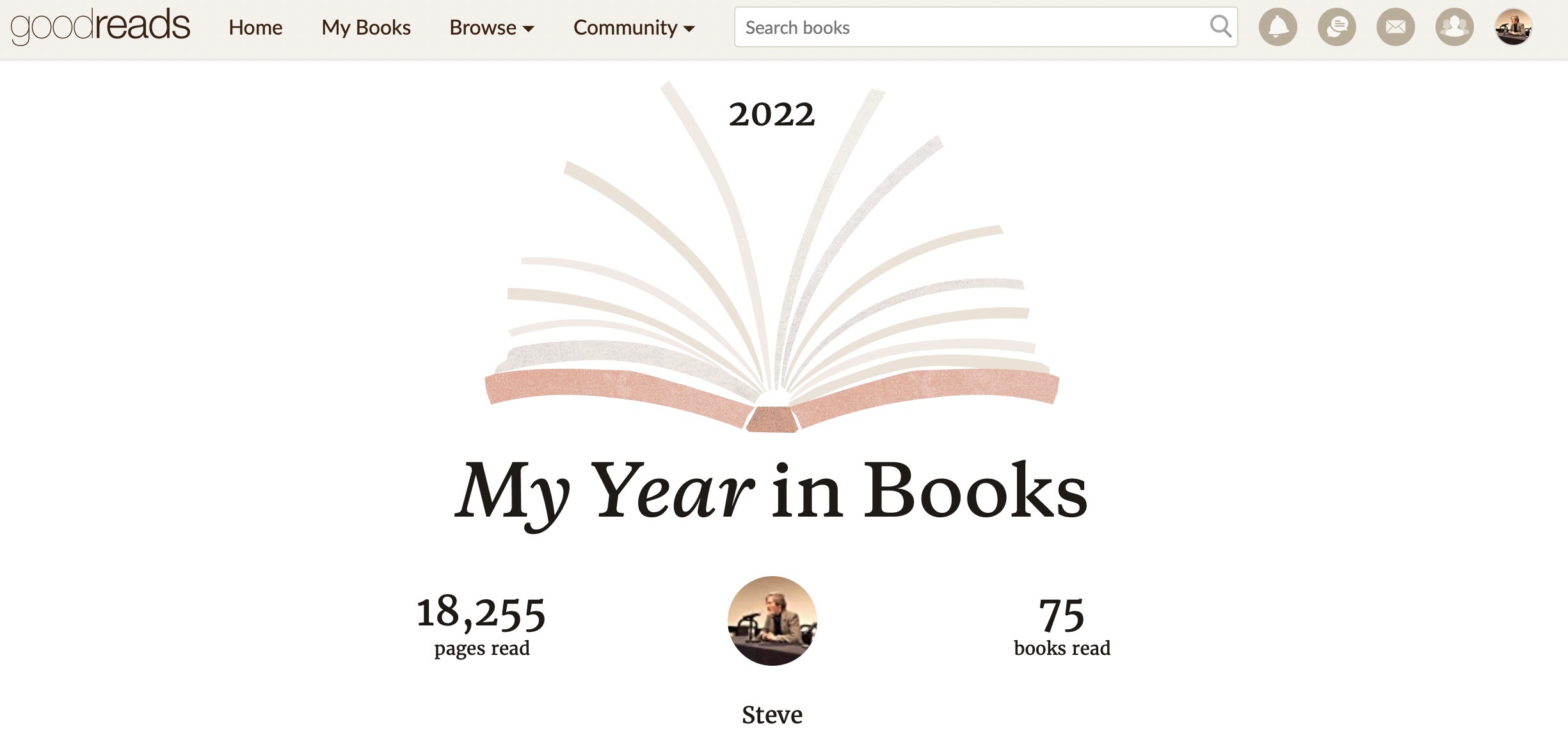
Reading.  The crank of time seems to rotate faster each year.  For me, it’s noticeable when I look back on my year in books.  I find Goodreads indispensable for keeping track of what I’ve read, but also for giving me a snapshot of where I was.  On the cusp of 2023, I finished the year with 75 books read.  In general, my nonfiction reading at any one time is geared toward my research writing, non-university style.  So I began the year reading about ghosts for an article I was writing, then I read about Celtic religion for my Wicker Man book.  I started reading quite a bit about “The Legend of Sleepy Hollow” toward the end of the year.  And I try to keep a healthy selection of fiction going as well.  So looking back over 2022, what were the most memorable tomes?

In nonfiction Brett Hendrickson’s Border Medicine, Gwen Owens’ Ghosts: A Cultural History, Harry M. Benshoff’s Dark Shadows, Edward Jarvis’ Sede Vacante, Grady Hendrix’s Paperbacks from Hell, Douglas E. Cowan’s The Forbidden Body, Shane McCorristine’s The Spectral Arctic, Russell Shorto’s The Island at the Center of the World, W. Scott Poole’s Dark Carnivals, and Philip Ball’s The Modern Myths stand out.  I think the most lyrically written book also falls into nonfiction was probably Alberto Manguel’s The Library at Night.  There were many other good books mixed in there too, but these give a pretty fair snapshot of the year, as I experienced it in the quiet hours before work, mostly, when the real work gets done.  (If you ever get curious, one of the categories on this blog is “Books” and that will bring up the many posts written on my literary year.)

Fiction’s always a little more subjective, it seems to me.  For example, I read Dark Shadows novels for nostalgia, not because they’re good.  What was good this year?  Leigh Bardugo’s Ninth House, Laura Purcell’s The Silent Companions, Andrew Michael Hurley’s Devil’s Day, Christina Henry’s Horseman, Shaun Hamill’s A Cosmology of Monsters, and Yan Ge’s Strange Beasts of China particularly suggest themselves by being memorable.  I also started reading collections of stories again, and Jorge Luis Borges’ The Alpha and Other Stories, Angela Carter’s The Bloody Chamber, and Daphne du Maurier’s Don’t Look Now were all well worth the time getting back into short fiction.  So many of the books I read were good on multiple levels.  Even those I didn’t so much enjoy, I learned from.  And I’m already anticipating a 2023, knowing no matter what else it will bring, there will be books.


Reading Algorithm

I appreciate help.  I really do.  It’s easy to feel overwhelmed in this world and others offering to help out are welcome.  But you do have to wonder about algorithms.  They seem to lack human sympathy.  And perhaps the ability to count.  Every year I enter the Goodreads Reading Challenge.  I would read without it, of course, but having that extra pressure doesn’t hurt.  Because of my convoluted mental makeup, I try to get things I have to do done early.  That means I want to finish my reading challenge before I have to.  In my commuting days I read about 100 books per year.  When I stopped commuting I had to bring that number down by about half—frankly, I don’t know where the time went, but I do spend more awake time with my family, which is good.

So I’ve settled on setting my Goodreads goals at about 50-60 books per year.  I often exceed it, depending on how many big books, or ponderous academic tomes I read.  Lately I’ve set the goal at 55, which is just over a book a week.  That seems doable to me.  This year I achieved that goal in September, but that doesn’t stop me from reading, nosiree!  I’m currently somewhere near the 60 book mark and I’ll keep going.  Now the help I was referring to is this: Goodreads typically sends an encouraging email in October suggesting how to meet your goal.  My message showed, via tracker, that I’d already met my goal, but telling me I could still meet it with these suggested books.

The books suggested are fine, I’m sure.  And that this message was sent via some formula that I have no hope of being able to comprehend, I’m also sure.  An algorithm, however, doesn’t feel for you.  I’m relieved to have the goal behind me and to continue pressing on regardless.  I could use some help in getting the lawn mowed, should an algorithm like to apply.  I particularly resent having to do so while wearing a jacket and stocking cap.  It’s time for the grass to be settling down for its year-end nap, isn’t it?  Or maybe an algorithm could do my job for me.  I guess that’s not funny, because that fate has befallen many humans, I suppose.  Maybe the solution is simply to read more.  That’s not a bad thing, but I don’t need an algorithm to get me to do it.


2021 in Books

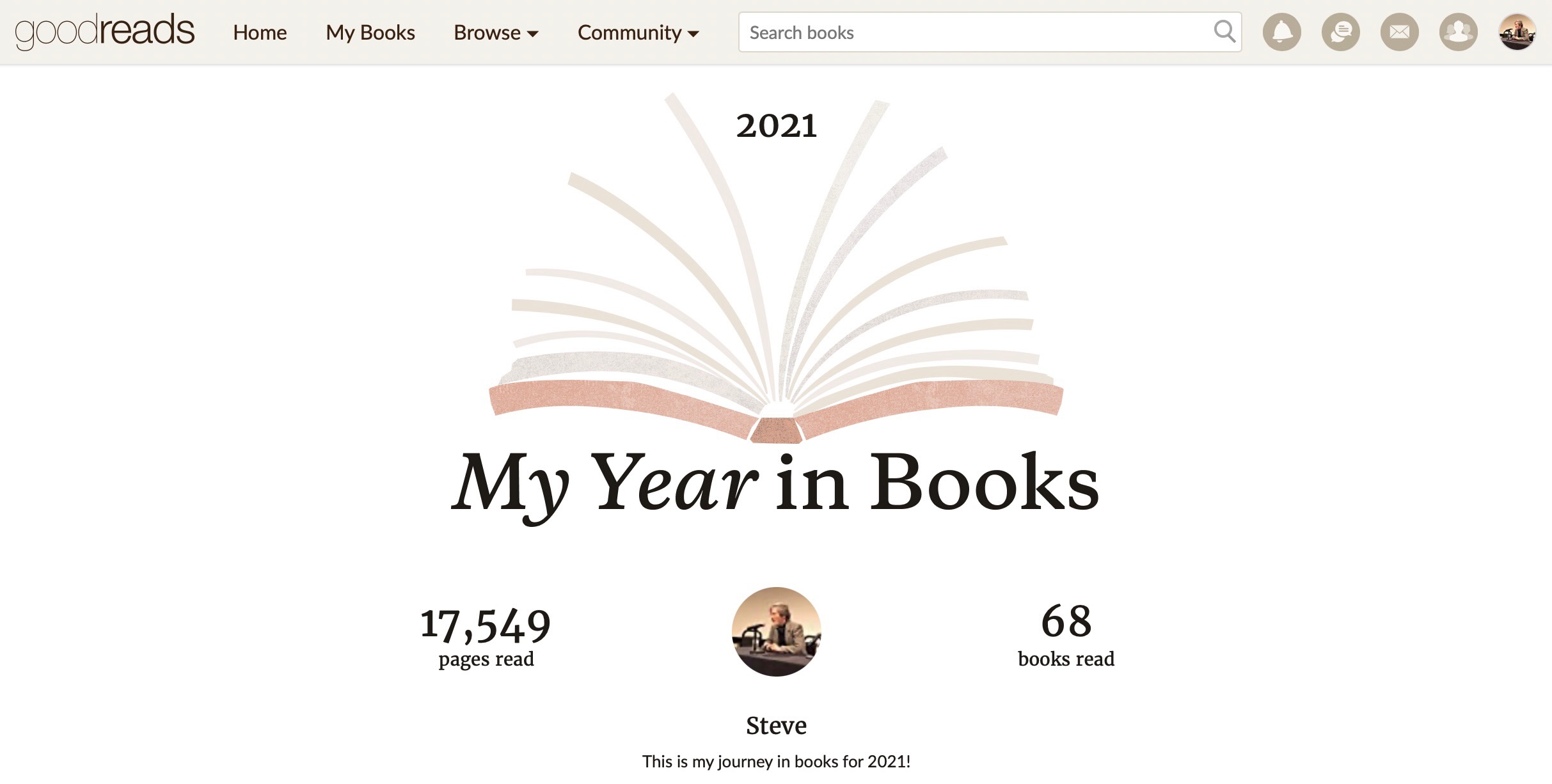
It’s become my habit, on the last post of the year, to think back over the year in reading.  This gives me a chance to give a separate boost to the books I found particularly valuable, for a variety of reasons.  My Goodreads total for 2021 will end up being 70 (two haven’t yet shown up on my page).  It’s easiest to do this by category, so I’ll begin with fiction.  My favorite novels of this past year were Haruki Murakami’s Kafka on the Shore, Stephen Graham Jones’ Night of the Mannequins, Lisa Tuttle’s Familiar Spirit, Hank Green’s A Beautifully Foolish Endeavor, and Christina Henry’s The Girl in Red.  I really enjoyed Joseph Bruchac’s Bearwalk as well, but it’s for younger readers.

For what might be called spiritual memoirs I found Ernestine Hayes’ Blonde Indian remarkable and Heather and Gary Botting’s The Orwellian World of Jehovah’s Witnesses revealing.  Vine Deloria’s God Is Red was stunning.  (It should be clear by now that I read quite a lot from indigenous writers.)  If you count love of books as spiritual I would include Andy Laties’ Rebel Bookseller as well.  As long as we’re on spiritual, books by religion professors might count, so I would add Intimate Alien by David Halperin.  If you count just memoirs, I would also add Follow the Rabbit-Proof Fence by Doris Pilkington.  And if reflective essays count, John Green’s The Anthropocene Reviewed.  And Thich Nhat Hanh’s Love Letter to the Earth.  I learn so much from reading about how others deal with their lives.

Books in the nonfiction category tended toward horror movie analyses (ahem), but some stood out even among the weirdness.  Daniel Ogden’s The Werewolf in the Ancient World inspired me.  Kendall R. Phillips’ A Place of Darkness was a well-written account of early horror movies.  Tanya Krzywinska’s A Skin for Dancing in was insightful and helpful to my research, if difficult to locate.  Likewise Hammer and Beyond by the late Peter Hutchings.  Mathias Clasen’s A Very Nervous Person’s Guide to Horror Movies was fun and informative.  For importance I’d rate Dag Øistein Endsjø’s Sex and Religion at the top.  So much of the world’s conflict is based on these two factors.  It’s difficult to believe that we don’t talk about them and end up fighting and killing over them.  If we can’t talk about it, at least we can read about it.  There are many other books I enjoyed over the year.  Enough that even a brief mention of each would put me over my usual word limit.  (They’re easily found, in any case, by using the “Books” category to the right.) 2021 may have been a challenging year, but books helped me make it through it.


Next Year’s Reading

One of my year-end rituals, apart from looking back at the past year’s books, is to look ahead for the next year’s reading.  This is such a pleasant exercise because Christmas often comes with gift cards from Bookshop.org or Amazon.  Until this year I’ve used the Modern Mrs. Darcy’s reading challenge to push me into some areas I might not read, but that challenge has now been discontinued.  I participated (this is strictly self-monitored, of course) in six of the seven years that challenge ran, starting in 2016.  Part of each late December was spent in visiting book stores, planning new reading projects, and thinking about the year ahead.  Of course, you can’t predict anything with too much accuracy, but I start the year with a stack of books and a head full of literary dreams.

Also in 2016 I began doing the Goodreads book challenge.  This is merely numerical—you pledge a certain number of books to read in the year.  According to my Goodreads stats (there are some books I don’t publicly admit reading, of course), I’ve read 517 books in the past six years.  Numbers were higher in the commuting days, of course, but I try to read more than a book a week and that practice gets me through some difficult times.  It always looks sunny when planning ahead for a year’s reading, but you never know where the other parts of life will actually take you.  Anyway, this year I’m planning my reading without Mrs. Darcy, mostly culled from my Amazon wishlist, which is unwieldy and constantly growing.  I try to buy the books from Bookshop, however, as it benefits independent bookstores.

This year I may set a slightly lower Goodreads goal.  The main reason for this is that books seem to keep on getting longer.  Novels grow to multiple hundreds of pages but time doesn’t increase in proportion to that number, unless it’s an inverse proportion.  Even with a lower goal I won’t plan on slowing my reading down.  In my commuting days it was fairly easy to read a hundred books per year.  I still tend to get over sixty without those hours on the bus, and hopefully all that reading is doing something useful to the world as a whole.  I write to give back for all the good I’ve been given.  If this in any small measure offsets the headlines that meet us daily, it will have been time well spent.


Face Away

I’m avoiding Facebook for a while.  Here’s why.  I started a Facebook account when I first got involved in social media.  (Publishers say you have to build a platform.)  The instructions were very basic and I checked my feed once a day for a total of about 5 minutes.  I still do that.  Some people contact me on Facebook, and often I don’t see it.  In fact, I seldom open it after 6:30 a.m.  I’m pretty easy to reach on the internet.  I have a blog and a Twitter account, Linked-In, Goodreads, and Academia.edu.  They all send me email notices when someone messages me.  Facebook doesn’t.  Also Facebook keeps telling me people have sent friend requests.  It was manageable up until recently.

I thought it was because of the Incarcerated Christian podcast.  (There’s another one coming up on Tuesday!)  The next day I started to get 20+ friend requests a day.  You’ve got to build a platform, right?  I tend to accept friend requests because I spend very, very little time on Facebook.  Then more requests came.  And more.  And more.  Just yesterday I had 846 pending friend requests.  That’s a lot of clicking!  I was going to have to hire an assistant just to say “you’re all welcome.”  Or maybe, “why not follow me on Twitter?”  I would devote my 5 minutes on Facebook to clicking friend requests.  I quickly grew bored with it.  Then the friend requests started coming from other academics.  “Cool!” I said, “people I actually know!”  But when I clicked on the “Accept” button it said, “Friend request sent.”  No, no, no!  That’s not what I wanted to do!  I was responding to a request sent to me, not the other way around.

Lead us not into Facebook…

I quickly clicked out of Facebook in embarrassment.  I don’t want a bunch of academics to know how needy I am—that’s just for you blog readers to know.  I know Facebook sends updated instructions from time to time.  I don’t have time to keep up with them.  If they just sent me a tweet I might read it.  My main social media channel is this blog.  You can read it on Facebook, or Twitter, or even Goodreads.  I think it also shows up on my Amazon author profile page.  I may be needy but I’m not hard to find.  So I’ve decided to retreat from Facebook for a while.  The price of building a platform, it seems, has gone up with just about everything else.


Reading Ahead

One of the highlights of the changing year, for the past five years of my life, has been the Modern Mrs. Darcy’s reading challenge.  My wife pointed this out to me at the start of 2016 and I’ve used it to guide some of my reading for each year since then.  The idea is fairly simple: many of us get set in our reading habits.  The reading challenge listed categories of books, with a total of twelve volumes, that often forced you to read things you normally wouldn’t.  In pre-pandemic Januaries we’d go to a local independent bookstore and pick out some of our chosen books to fit the various categories.  It became kind of an extended holiday ritual.

It must be tricky to come up with new categories all the time.  Therefore it’s understandable that the Modern Mrs. Darcy has decided to shake things up a bit for 2021 with a somewhat more complex scheme of determining what to read.  Unfortunately for me, I have about enough complexity in my life right now.  For a reading challenge what I crave is simple-minded direction: read a book in (blank) category.  So now I’ll be left to my own imagination for 2021.  Not that that’s ever a problem.  My reading wishlist is enormous and, like the universe, expanding rapidly.  Every year new books of great interest appear.  Every year I learn of books I should’ve read long before now.  I also do research, in my own way, and these books can be rather insistent regarding one’s time.

Goodreads also has a reading challenge (which I also started taking in 2016), but it’s based purely on the number of books you pledge.  There’s a sense of accomplishment when you can tick off that final pledged book (hopefully in September or October), and still have a few months of bonus reading left.  Each year becomes a year in books.  Like many people, I’ve survived the pandemic so far by spending lots of time with books.  For my last post of the year tomorrow I’ll do my traditional summary of the year’s reading.  I began the year thinking of Sea Lab 2020, a formative, optimistic Saturday morning cartoon from my childhood.  We were then hearing rumors of a new disease in China, not anticipating that 45 would decide to sacrifice over 300,000 Americans on the altar of his personal disinterest and pride.  Through it all, however, there have been books.  Reading improves intelligence.  Let’s all hope, then, for a much more intelligent 2021 ahead.


Chick Tracks

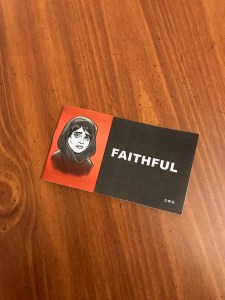
Goodreads isn’t the only booklover’s website, but it is one that publishers pay attention to.  Having a following on Goodreads helps for making marketing manageable.  Or so the thinking goes.  In any case, I recently had a message on Goodreads about Holy Horror.  It seems someone has, against all odds, found the book and is reading it.  This particular reader asked me in a comment about Chick tracts.  I’ve written about Jack Chick before.  He was a veritable one-man evangelical force of super-nature.  He is responsible for many of my personal nightmares with the Bible.  His cartoon tracts were designed to scare the Hell out of kids, literally.  I read them religiously.  My Goodreads reader pointed out that I could’ve made use of them in Holy Horror.

This made me ponder the reticence of academics to address religion as a cultural force.  Chick tracts are extremely common, even today.  As I posted last year, we were handed one while walking between venues at the first annual Easton Book Festival (an event forced virtual this year by, well, you know).  Not that Chick’s intellectual ability deserves study, but his influence is undeniable.  How many of us fundamentalist kids were set on our life trajectories by tracts that looked like mini-comic books but which had an unwavering, uninformed viewpoint held as gospel?  Chick tracts broached no dissent.  The Bible alone, and the Bible as interpreted by fundamentalists alone, was the only possible way of avoiding everlasting hellfire.  Nightmares indeed.

Chick died in 2016 after half-a-century of terror (his first tract was published in 1960).  Apparently Chick was a shy evangelical and his prolific cartooning was a way of assuaging his own fears of not evangelizing.  Ironically, in his tracts he offloaded that burden onto others—kids were made to feel inferior if they didn’t talk about Jesus to their friends, no matter how shy they might have been.  There’s not much information easily available on this influential man.  A motivated scholar, I’m sure, could dig up information—nearly any life can be illuminated to some degree—but I’m not sure the will is there.  If it ever happens, I suspect the study will be done by someone like me, raised on Chick and fed steady doses of childhood Bible reading.  My Goodreads interlocutor was perhaps onto something by suggesting my watching horror has something to do with Chick tracts.  Stranger things have, I’m sure, happened.


Strange Reading

The internet has changed things.  Perhaps forever.  I’m thinking particularly of the way we read.  Not just ebooks, either.  I’m primarily a book reader.  That is to say, I prefer long-format, print writing.  Since we’re fairly isolated (this applied to me even before Covid-19), one of the ways we discuss books is via social media.  There are any number of sites where this takes place such as Book Riot or Goodreads.  I tend toward the latter because that’s what publishers tend to pay attention to.  Each year I participate in a couple of reading challenges.  On Goodreads my goal is a set number of books.  But this has a hidden aspect as well.  What counts as a book?

As a matter of course I don’t count the odd Dr. Seuss book I pick up and read in a matter of minutes.  Nor do I count the many, many books I read as part of my job.  The ideal method of tracking reading on Goodreads is to use the ISBN.  Older books, especially, come in multiple editions, often with differing content.  One way that publishers make money on public domain books is by adding a new introduction or preface to which they own the copyright even though the majority of the text is in the public domain.  The first commandment of capitalism includes the phrase “what the market will bear.”  You can price up until people stop buying.  In order to get value for money, short books are often bound together with other material.  This especially applies to novellas.   Who’s going to pay ten bucks for a book of under 100 pages?

The problem is counting them on Goodreads.  In order for the ISBN to count, you really need to read all the stories in a book.  In steps Amazon.  Making it simple to self-publish, many individuals have rushed in and have saturated the market with public domain material bound and distributed by their own print-on-demand editions.  If I want to read Joseph Conrad’s Heart of Darkness, the older dilemma was you couldn’t buy it alone.  It was almost always bound with some stories I didn’t want to read.  Now, however, some savvy book smith can download an electronic copy, word-process it, format it and sell it to you at a nice markup.  And you can enter the ISBN and get credit for only what you actually did read.  This is a strange new way of reading.  Before I had challenges to complete I’d read a short story or novella and not worry about the rest of the book.  For now, anyway, my reading patterns have changed just to keep up with the challenge.


Gothic Tales

Each year when autumn worms its way into my consciousness, I begin looking for the ideal gothic book.  I can test this by looking at the Goodreads lists of best gothic novels and noting how many of them I’ve already read. The thing now, since I’ve already covered much of the canon, is to discover modern writers who can still evoke that feeling I seek.  This is all complicated by the subjective nature of what readers term “gothic.”  Many of the books on the lists don’t fit my own working connotation, so I keep looking.  One recommended title was Jennifer Giebrecht’s debut novel The Monster of Elendhaven.  I’m still trying to decide whether it is gothic or not.

It’s a little hard to classify, actually.  It certainly has some gothic elements, as well as some horror.  There are secrets and plagues and gruesome murders.  There is a monster from a polluted sea, but not quite your grandfather’s monster.  A human monster.  Or at least partially.  The tale is written with some tongue in some cheek.  There are funny elements and there are many serious moments.  There’s magic and mayhem.  If I were to try to characterize it the closest I might come would be a Tim Burton treatment of horror.  Like Burton, Giesbrecht creates a Halloween mood, but sometimes the humor undercuts it.  This makes it difficult to pin down the work as a whole and figure out if this is the gothic I’ve been seeking.

Set in a time difficult to define and in a fictional nation, it is the kind of novel that can be read without much consequence.  The references to the Allfather make comparison with Nordic regions natural, and there is perhaps a touch of Beowulf here.  In crafting the monster Giesbrecht has made a pretty unlikeable character.  He is a monster, after all.  But not a sympathetic one.  As in other modern treatments he is a stand-in for chaos.  There’s also an environmental sensitivity here.  The monster arises from a polluted sea that derives from, of all things, human greed.  So maybe there’s a parable here.  A short book, it doesn’t take too much of a time investment, but it may leave you wondering what exactly it is that you just read.  It is dark, and gritty, and fun.  A nice combination for an October night.  Is it gothic?  That one’s a little harder to answer.  It depends on how I’m defining it on any particular day.


Remarkably Green

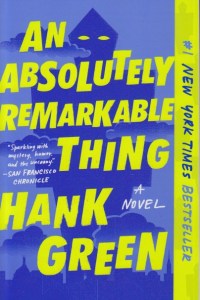
Fame is something most of us never experience.  In a world of billions we imagine what it would be like to have others pay attention to us.  Care what we think.  Admire us.  I can’t help but suppose that a large part of our political crisis is based on this concept.  It’s one of the reasons Hank Green’s An Absolutely Remarkable Thing is such a timely novel.  I’ve read a couple of Hank’s brother John’s novels, mostly in the Young Adult category, and I’ve been curious about this one for some time.  April May, the protagonist, isn’t seeking fame.  In an almost parable-like way it happens to her and she becomes addicted to it.  Safety and human relationships fall aside as she follows what seems to be the next logical step in order to secure more fans, more followers.  (There may be some spoilers below.)

There’s more than that, however, going on in the story.  Tales of “first contact” with alien intelligence often pose the question of humanity’s readiness for such an encounter.  The Defenders, a group that looks an awful lot like the right wing, are afraid.  They’re afraid of what humans might face once a superior power arrives.  Their response is to attack April, who, for some reason has been chosen as the first contactee.  Her fame isn’t accidental.  I’ve watched enough of Hank Green’s excellent YouTube videos to suspect he’s not exactly looking for a Christian parallel here, but April is a kind of messiah.  The book, in many ways, could be read as a recasting of Christianity’s foundation myth.  This isn’t a book with which most Sunday School teachers would be happy—there are adult situations and adult language.  They don’t cancel out the message of the book, however; I’ve known evangelists to use these techniques as well.  They help capture attention.

With all the books I read I have to admit that many are forgettable.  I sometimes read an old post on this blog, or a review on Goodreads, and find myself having forgotten a novel completely.  Something Hank shares with his novelist brother is the ability to make an impression.  It’s too soon to tell for sure right now, but this has all the marks of a story that’s going to be my mental companion from now on.  There’s wisdom and humor in it.  There’s a touch of Qohelet as well.  Whether intentional or not, An Absolutely Remarkable Thing follows the line of a classical story arc.  And the reason that stories have become classics is that they make us think.  I’ll be thinking about this for quite some time.  Fortunately, I don’t have to deal with fame—that would only be a distraction.


2019 Books

  Goodreads is always a little eager to put the tally on a year’s worth of reading.  This year, however, since I’ve been engaged in some larger books, they may be on target.  According to their count I’ve read 71 books this year.  (I re-read two, so my personal count is 73.)  New Year’s Eve, for me, is a time to reflect about what I’ve learned in the past year.  Much of that involves books I’ve read.  A good deal of my reading has been for Nightmares with the Bible.  To write a book you need to read books.  Frequently it means taking them on regardless of your mood—and I tend to be a mood-driven reader.  So what books stand out from 2019?  (They all have individual posts on this blog, in case you missed them.)

My first nonfiction book of the year was Christopher Skaife’s The Ravenmaster.  Animal intelligence always makes for good reading and this was reprised in Jennifer Ackerman’s The Genius of Birds.  I’ve fallen behind in my Frans de Waal reading, though.  Of the many research books on the Devil and demons, Jeffrey Burton Russell’s Mephistopheles stands out.  Russell’s clear thinking and wide view make him a pleasure to read even on unpleasant subjects.  Other books in that category didn’t quite rise to his level.  Monster books, on the other hand, rocked.  I loved James Neibaur’s Monster Movies of Universal Studios, Mallory O’Meara’s Lady from the Black Lagoon, and Kröger and Anderson’s Monster, She Wrote.  These were all excellent.  Tipping toward the unusual, Guy Playfair’s This House Is Haunted and Jeffrey Kripal’s The Flip gave me pause for thought.

Perhaps because I was reading longer books, this year didn’t have fiction in the numbers I usually strive for.  Most of it was quite good, though.   David Mitchell’s Cloud Atlas was memorable and Italo Calvino’s If on a Winter’s Night a Traveller (strangely similar to Mitchell) became an instant favorite.  My young adult fix came through Christy Lenzi’s Stonefield and Lois Lowry’s The Giver.  Victor Gischler scored with Vampire a Go-Go and Cherie Priest made a fine impression with The Toll.  I mentioned Neal Stephenson’s Fall yesterday, but it will stay with me into 2020.

A couple of memories/biographies also made deep marks on my mind.  Anne Serling’s As I Knew Him brought me close to Rod Serling and Barbara Taylor Brown’s Learning to Walk in the Dark found me where I live.  America’s Dark Theologian by Douglas E. Cowan isn’t really biography, but it was thought-provoking (as his books always are) and increased my resolve to read some more Stephen King.  The books I read make me more myself.  At the end of each year I think back over it all.  And this year I pondered what got me through a difficult 2019.  I have ended the year more myself than ever, I suspect, and I looking forward to a reading through the new decade.